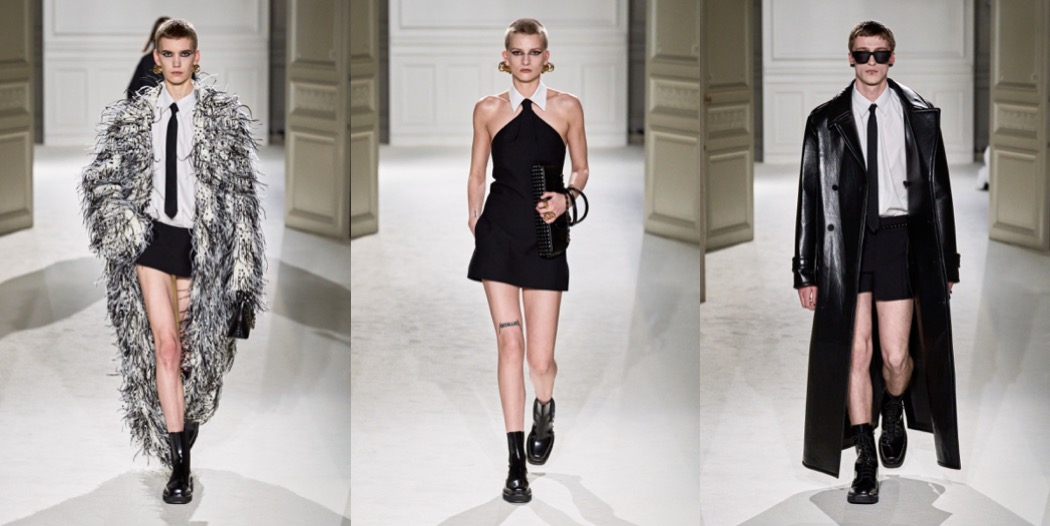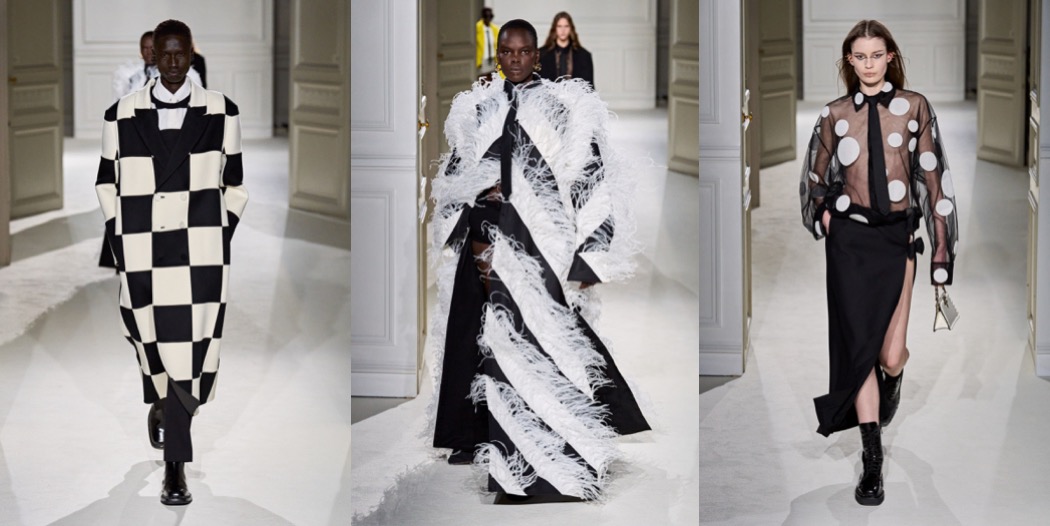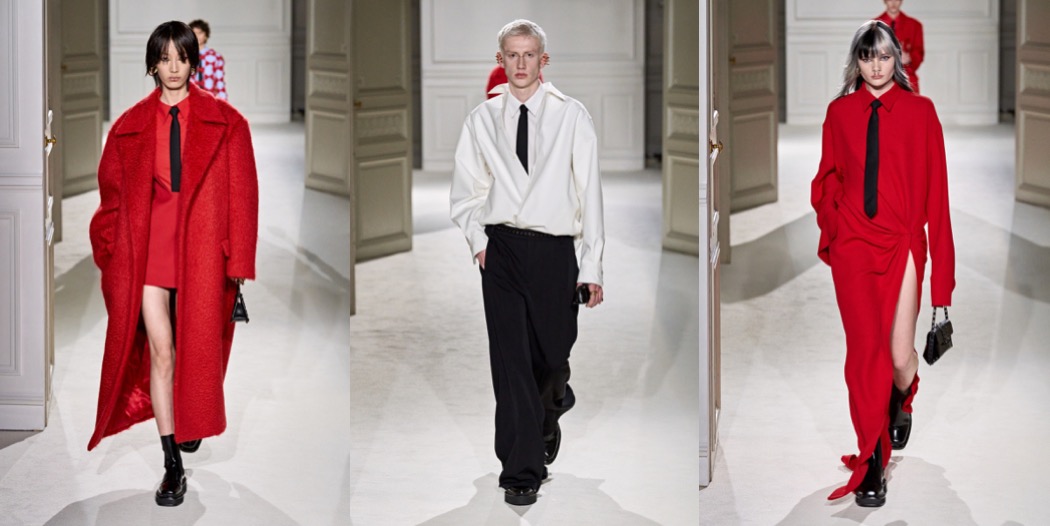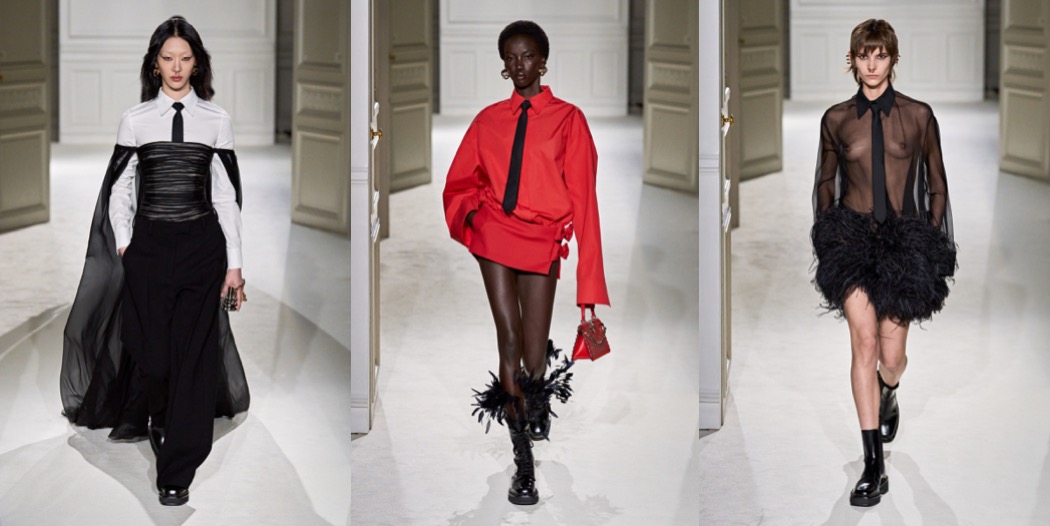
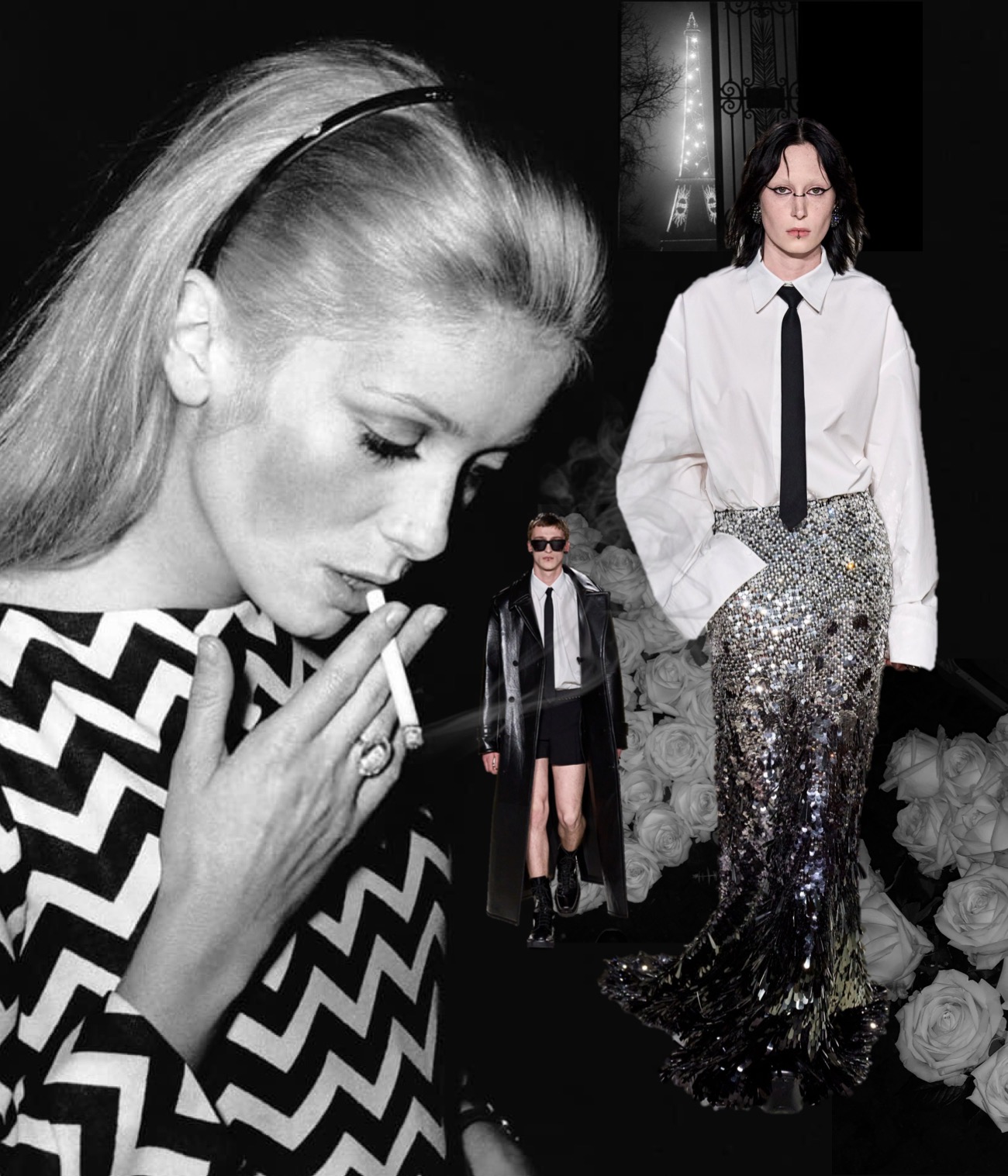
Party People. Valentino AW23

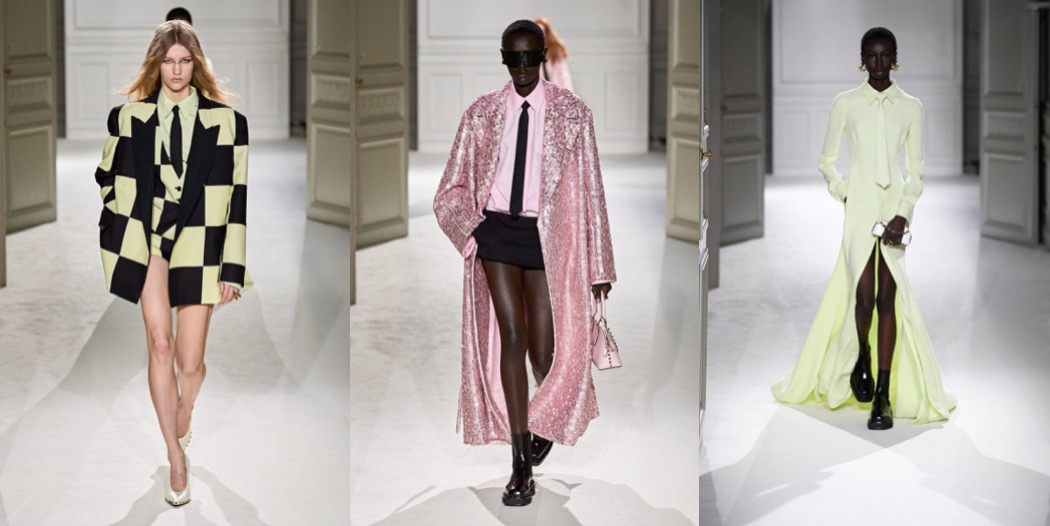
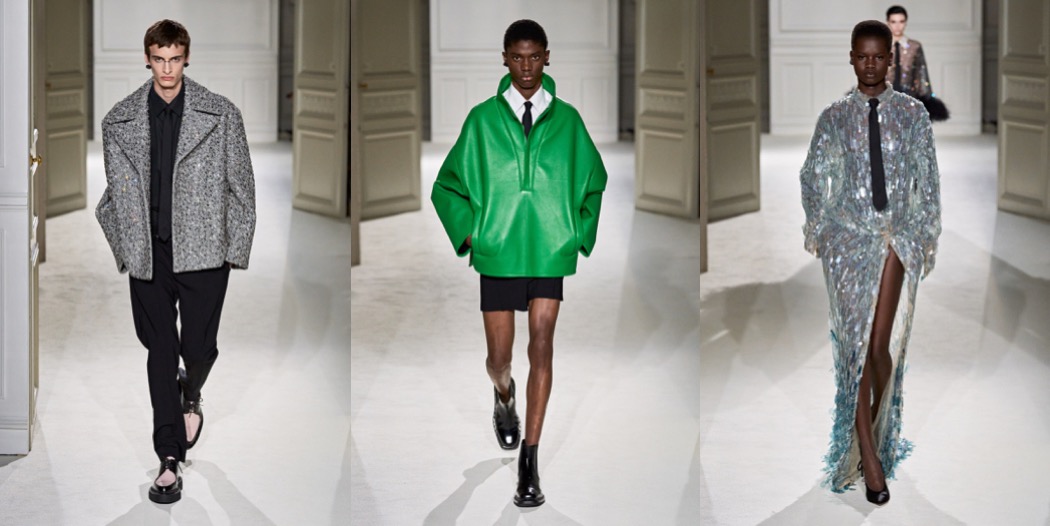
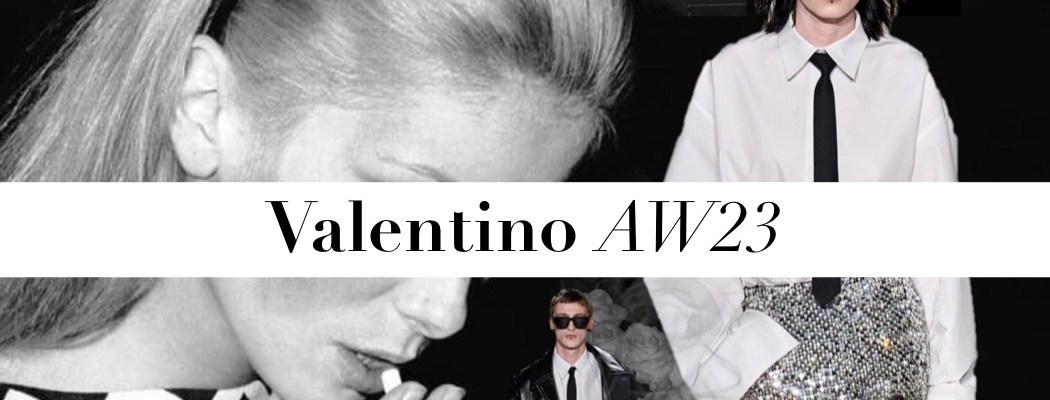
Pierpaolo Piccioli is loosening it up lately. Less of sublime, heavenly elevations, more of party vibe. His Valentino autumn-winter 2023 collection is for party people. Maybe not ravers (with thick pockets), but definitely fans of chic soirées, ambient cocktails and events with great music. The concept for the latest collection came up quite spontaneously: when Piccioli came home from work at the Valentino office in Rome recently, he was astonished to see that his 15-year-old daughter had raided his wardrobe for a night out with her friends. “She’d taken one of my black suits, white shirt, and black tie and was on her way out the front door. It was amazing to me, because she’d never seen me wearing a suit to the office. I keep some I wear with a bow tie to things like the Met Ball and other events, but never on a daily basis.” He realized his kid had no idea about ascribing socially-conditioned ideas to the conventions of formal dressing. “It was just, she liked it, and it was a new thing to her. In the end, I think that’s the way to approach fashion, as a personal choice of freedom.” And he was off, with ideas aplenty, inspired to design his ‘Black Tie’ collection. The neo-punk tribe of people he sent stomping around the rooms of the Hotel Salomon Rothschild had face-jewelry, tattoos, and heavy boots, the better to demonstrate the individuality he wanted to spotlight amongst his reinterpretations and deconstructions of traditional formal attire. Of course, it was Yves Saint Laurent who first broke the boundaries between women’s and menswear with his evening ‘Smoking’ suits in the 1960s. At the time, Valentino Garavani was focusing much more on creating a language of femininity which attracted conventional aristocrats, Hollywood actresses, and socialites. “I always think about what Valentino was about – it was about the idea of lifestyle, the perfect life, success,” Piccioli said. “I think, now what I’m doing is more switched to the idea of the lifestyle of community, our community, communities that are about the sort of gang of kids who are saying, look, we can wear the same sort of clothes, but giving them their personality with that.

Collage by Edward Kanarecki.
Don’t forget to follow Design & Culture by Ed on Instagram!

NET-A-PORTER Limited

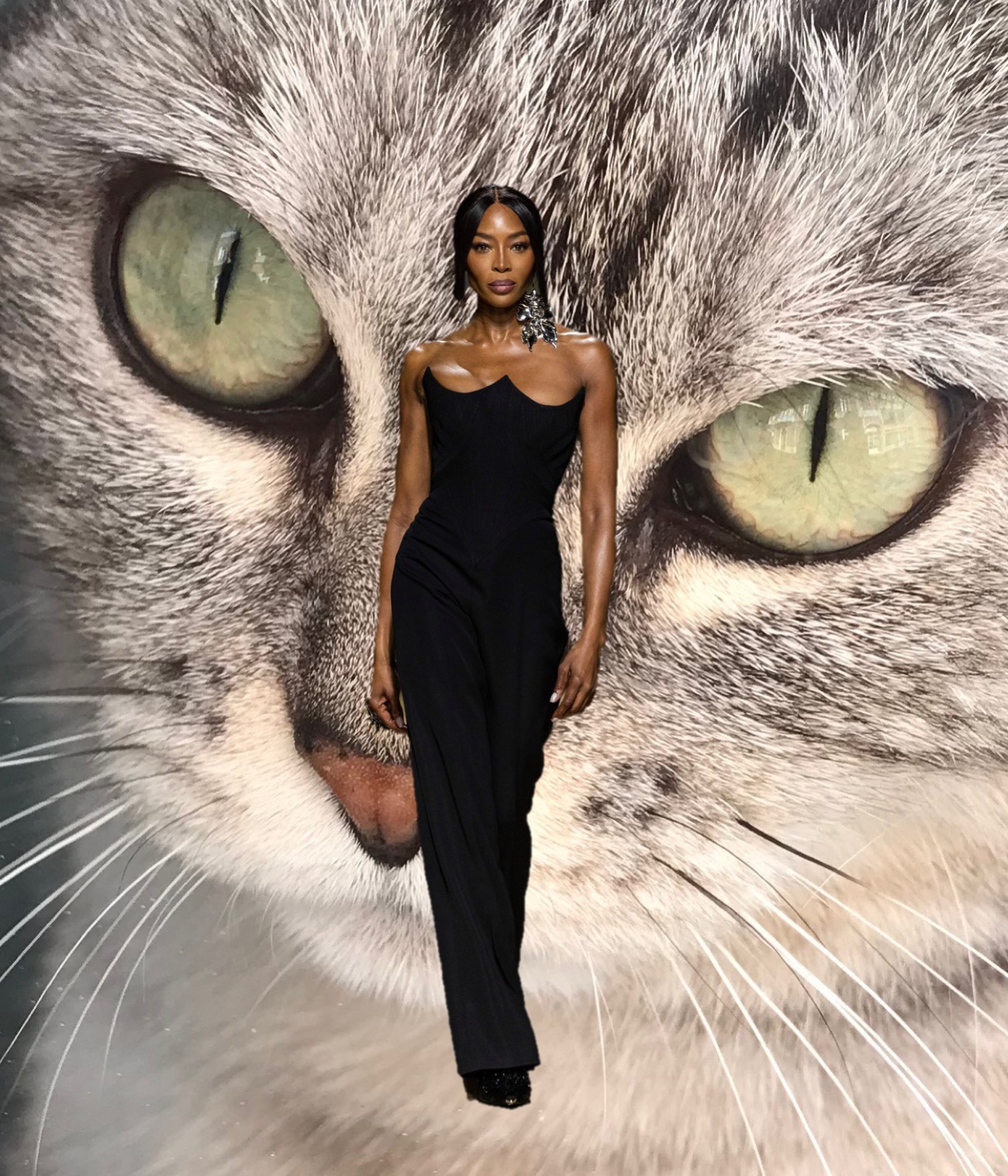
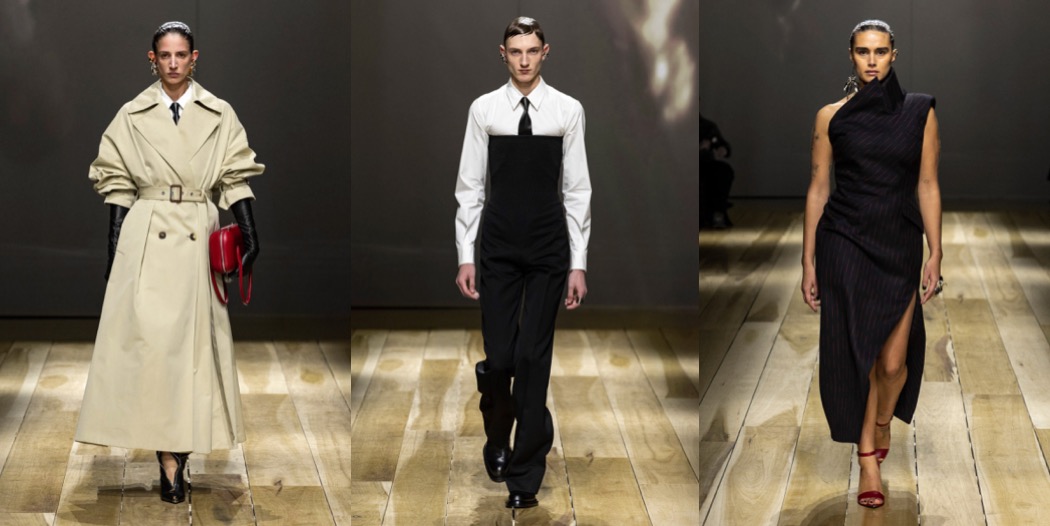
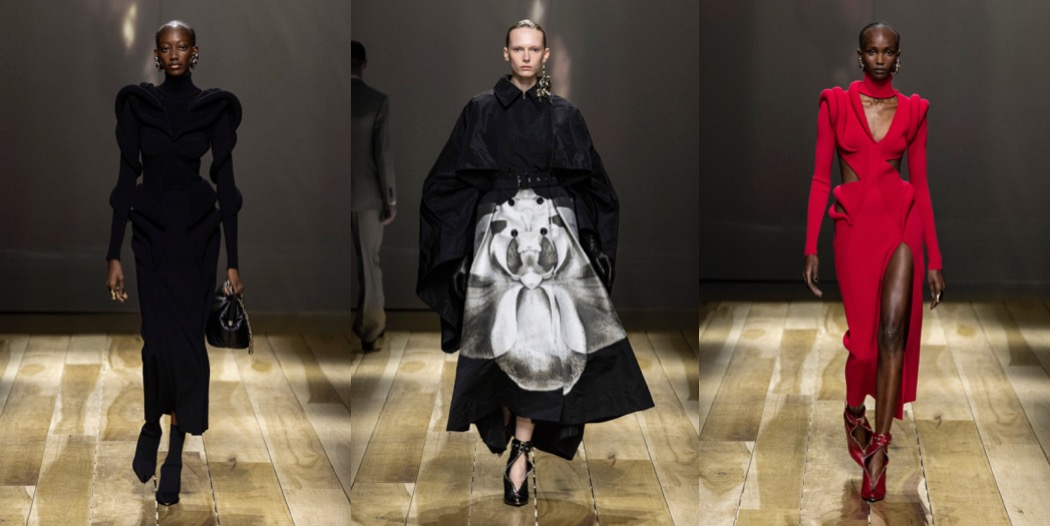
Anatomy of Tailoring. Alexander McQueen AW23

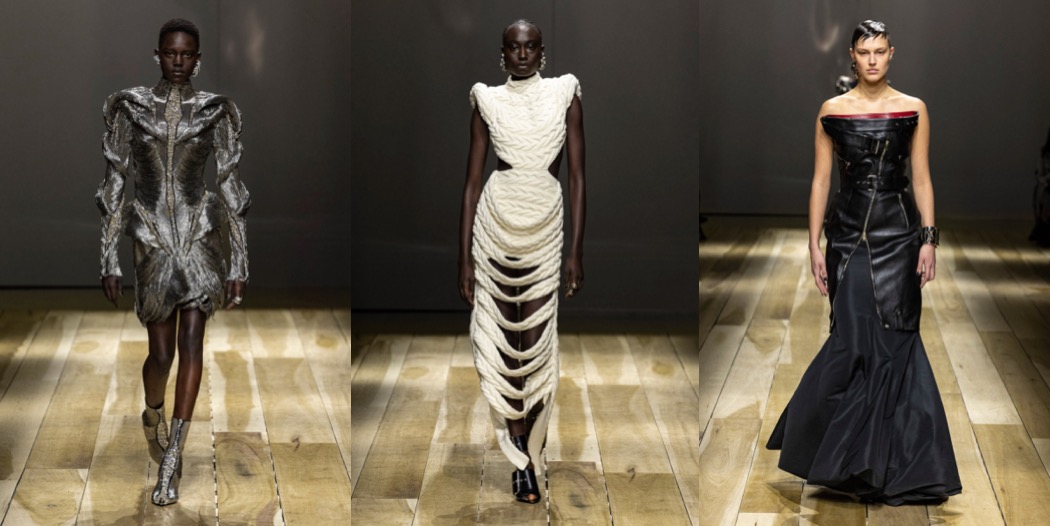
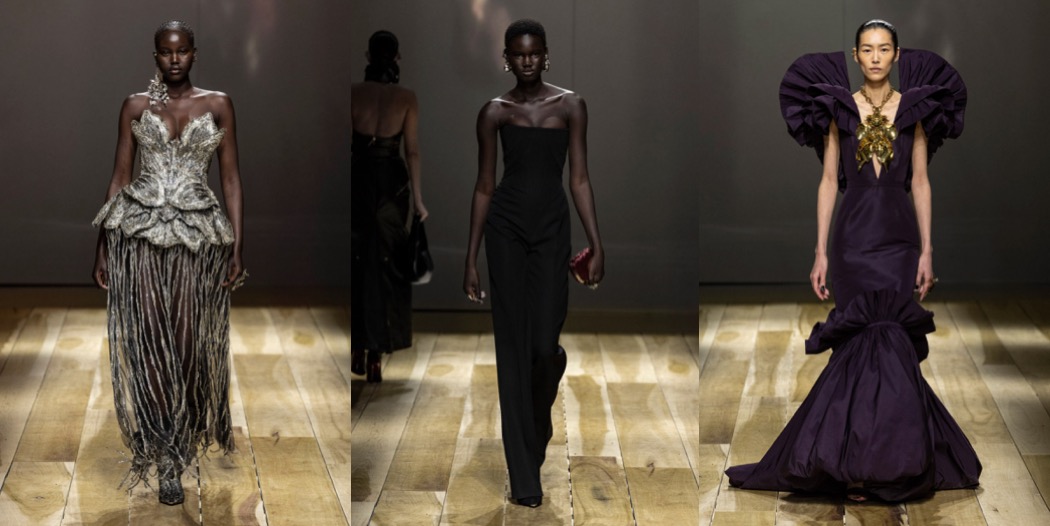
Alexander McQueen is back on the Paris Fashion Week schedule. Last time when Sarah Burton presented her fashion show in the city, Europe was at the verge of full-scale pandemic. This season, the designer chose to remind the fashion audience about the sharpness and excellence of her tailoring, and the expression of a darkly explosive imagination that is well and alive in the McQueen ateliers in London. “It was looking at anatomy, the anatomy of tailoring,” Burton said backstage. “Almost back to the beginnings of McQueen on Savile Row. It was a progression, which starts very kind of straight and structured. And then it begins to flash and twist and turn upside down. It’s like how you begin with a garment – you have to know that there’s a way to construct it, the bones of it, before you can dissect it and subvert it.” Naomi Campbell, in a black jumpsuit with a swooping corseted bustier, led out a march of impeccable black suits, white shirts and black ties, and pinstripes cut into jackets and morphing into tailored strapless dresses. Strictness and pulled-together uniform have been surfacing as a theme this season; here, there was a precision and controlled tension of kinkiness where nothing was quite what it seemed. Burton partly put that down to having watched the stunning Cate Blanchett in the Oscar-nominated film TÁR: “That part where you see the tailors making their chalk-marks on the cloth.” The broken lines she had woven into the pinstripes vibed on that process. Her idea about dressing and studying the body led her to the anatomical drawings of Leonardo da Vinci. Once you knew that, the peeled-back sections of knitwear dresses, incised on the hips, took on a new, sinister context. Surreptitious references to blood and guts were transformed and sublimated into asymmetric frills and prints which looked like giant orchids at some points, and drawings of dissected cadavers at others. In calling up the past and reconnecting with the earliest days she’d worked with McQueen, Sarah Burton projected this collection right into the here and now. It had drama and strength, and many options for all genders to dress very differently than the over-blown theatrical costume that has passed for event-wear these past few years.

Collage by Edward Kanarecki.
Don’t forget to follow Design & Culture by Ed on Instagram!
NET-A-PORTER Limited

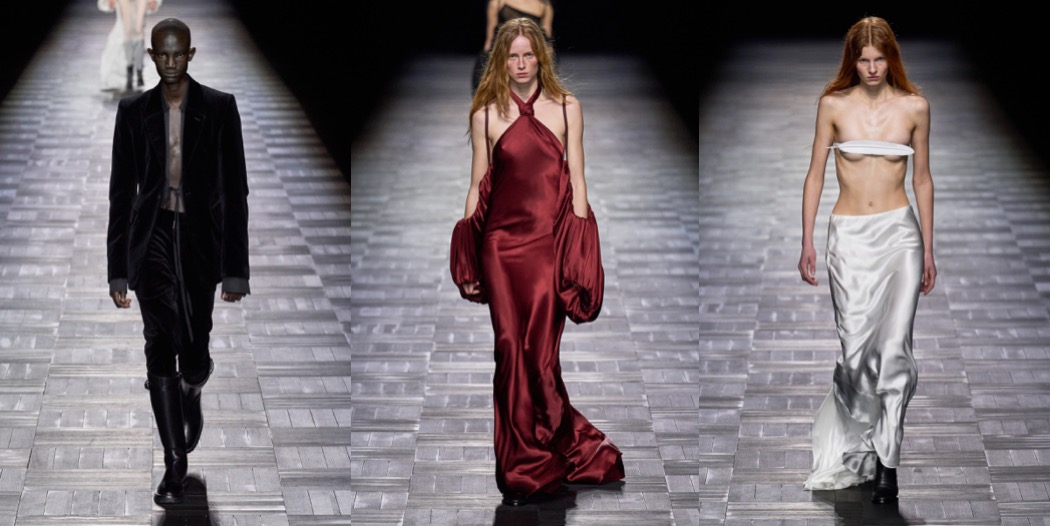
The Nipple Isn’t Freed. Ann Demeulemeester AW23

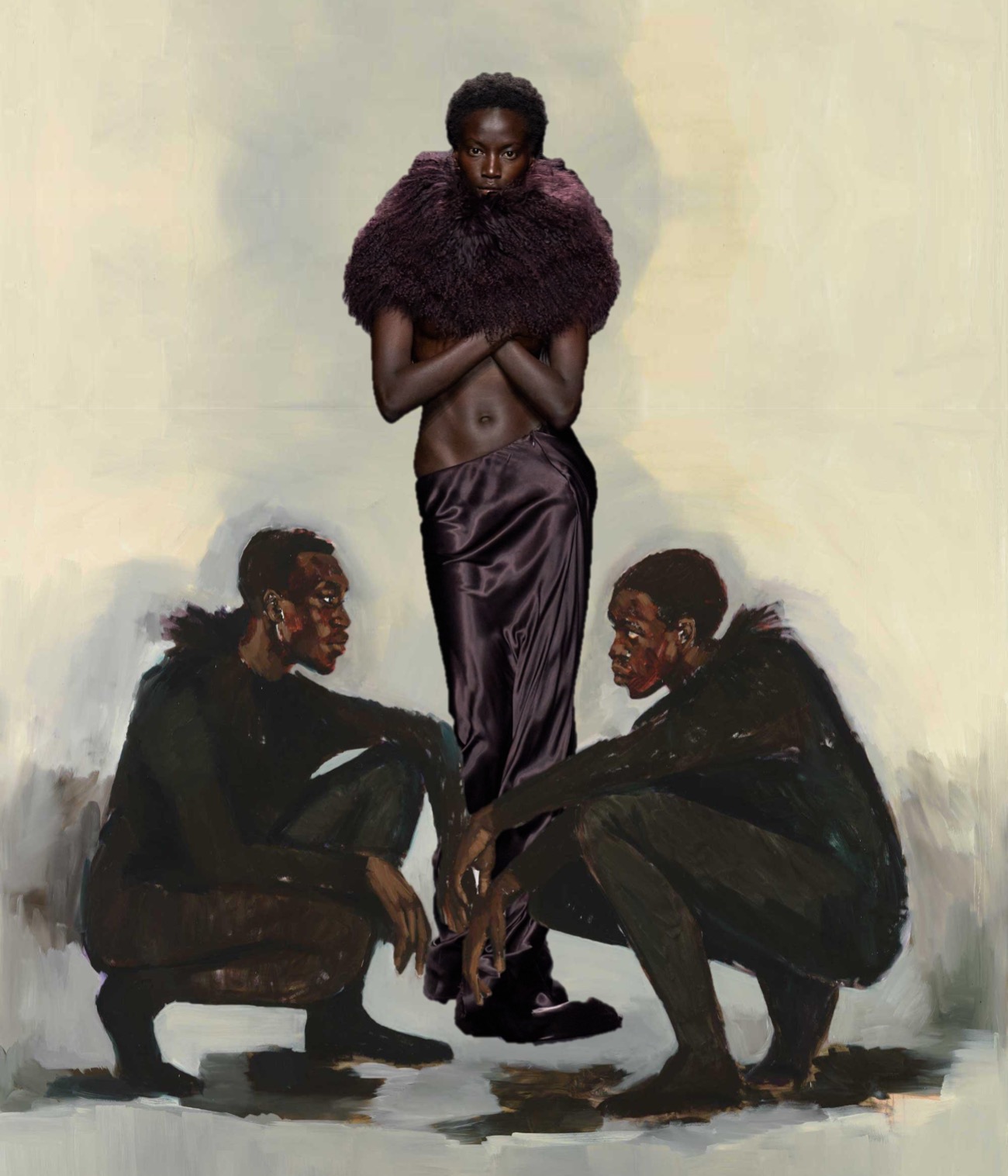
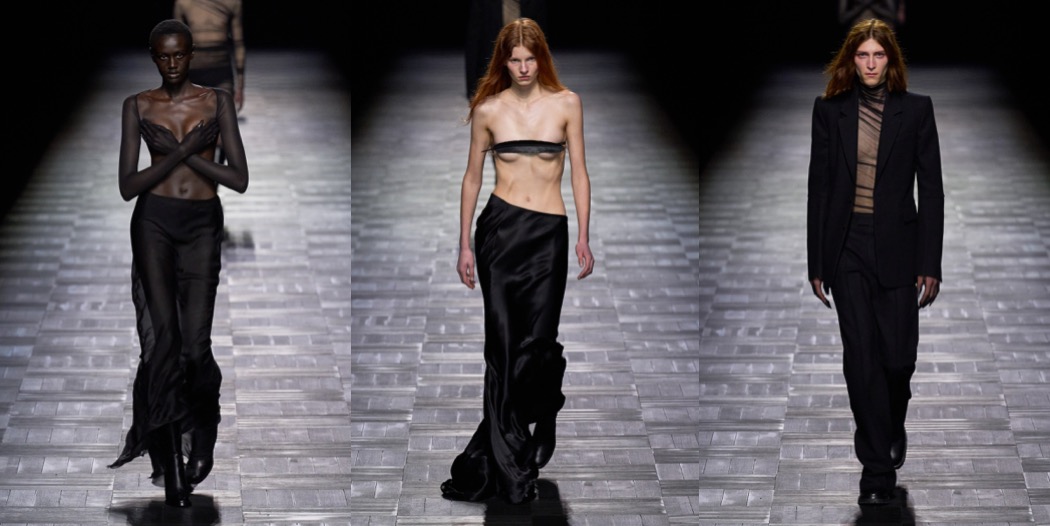
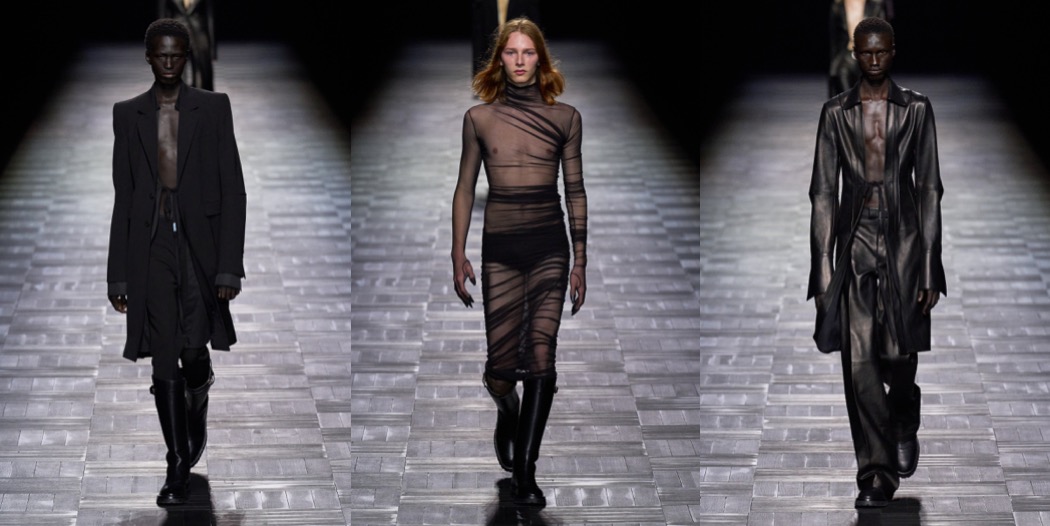
Ludovic De Saint Sernin as the creative director at Ann Demeulemeester: this sentence still surprises. The Antwerp-based brand – and its founder – affiliate with a certain depth, as evocative and raw as Patti Smith’s poetry and music; it’s about a humble crisp white shirt so well-tailored it will serve you for years; her brand used to be the epitome of sensuality that was mysterious, fluid and in a way ephemeral, blink-and-you-will-miss-it. Ludovic De Saint Sernin, meanwhile, judging on his Parisian namesake label of hyper-sexualizing clothing, isn’t really about those elusive notions. His debut collection for the Belgian house seemed to check all the boxes of the preconceived image Demeulemeester has in the mind of general public: long floor-sweeping lenghts, boy-ish black suits, a dark colour palette with drops of maroon. What certainly felt like an ambiguous idea was De Saint Sernin’s choice of covering female models’ breasts. With an exaggerately big feather (another Demeulemeester code), with a shearling capelet, or with hands. The brand’s founder, who through clothes celebrated women’s liberation and their bodies, would never censor her models. Probably, De Saint Sernin’s idea sprang from Instagram’s and TikTok’s disturbing, AI-generated anti-nipple policy (being applied to women only – because men’s nipples appear to be absolutely acceptable, and ironically, De Saint Sernin didn’t cover them in his menswear looks…), which is a topic for a whole another post. And here’s the problem: Ann Demeulemeester, the designer, wouldn’t seek approval from such thing as Instagram, while Ludovic De Saint Sernin’s vision of sexuality is conceived for that specific platform. The autumn-winter 2023 clothes weren’t bad – they might even sell well – but they weren’t an innovative take on Demeulemeester’s design legacy. Except for a couple of Ludovic-look-a-like models (this designer has a certain level of heavy narcissism about him), you wouldn’t be able to distinguish this line-up from what the brand had in offer for the past couple of studio-designed seasons.

Collage by Edward Kanarecki.
Don’t forget to follow Design & Culture by Ed on Instagram!
NET-A-PORTER Limited

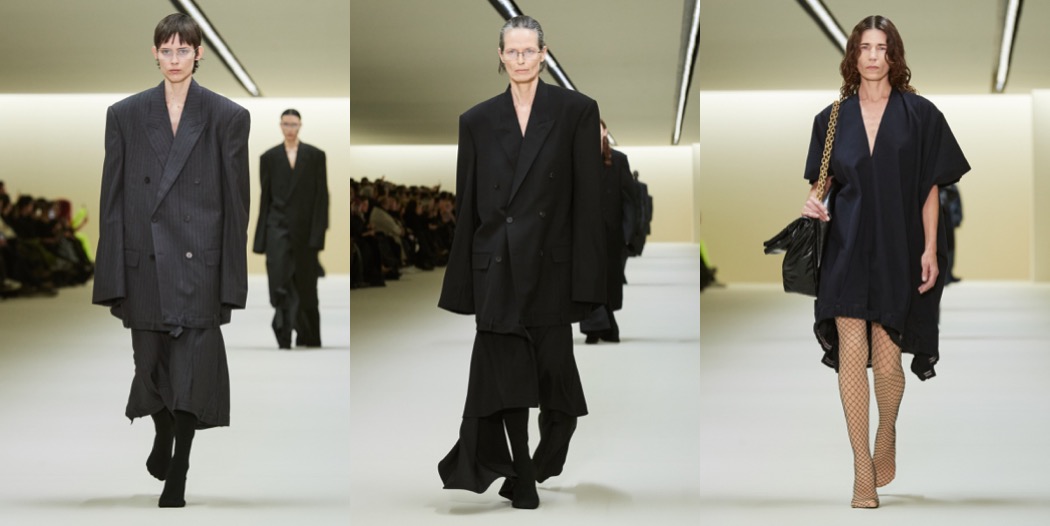
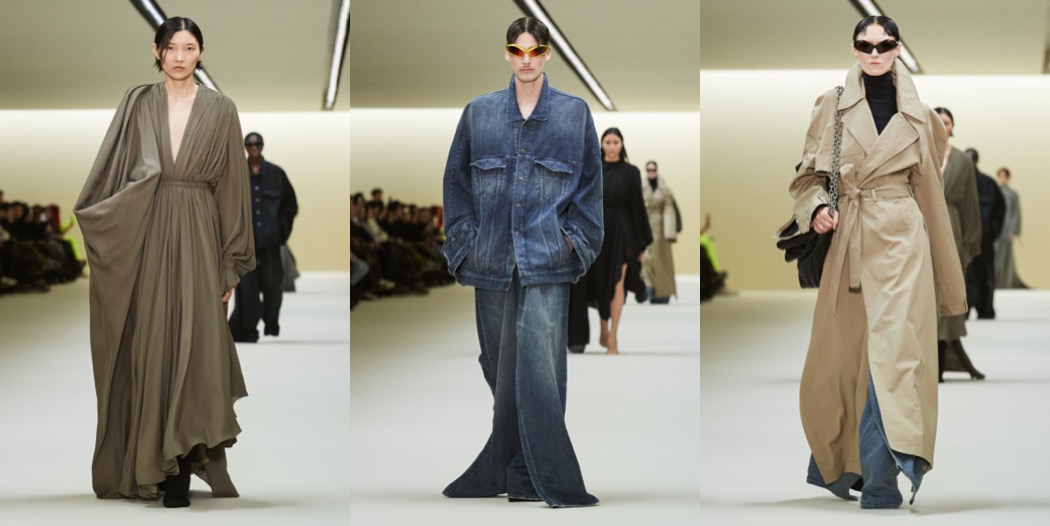
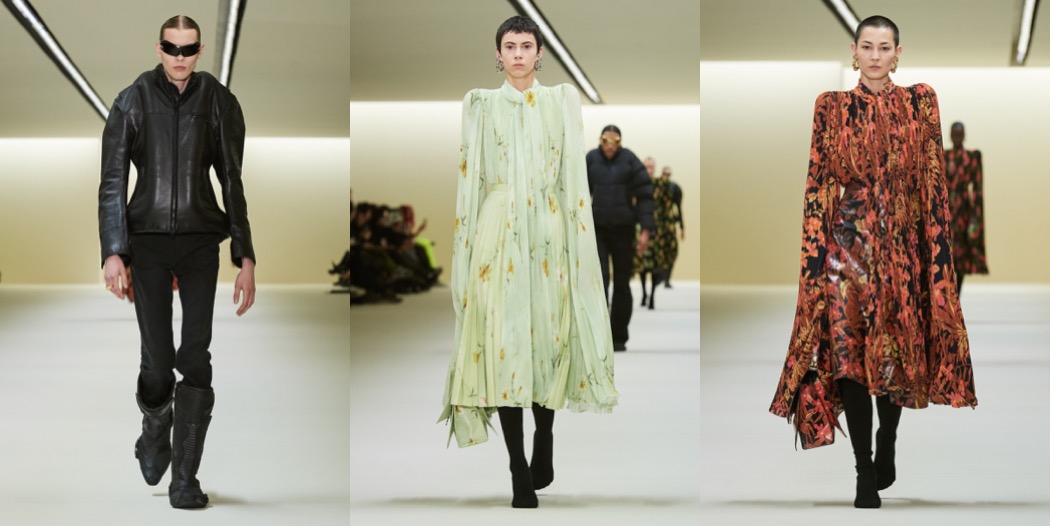
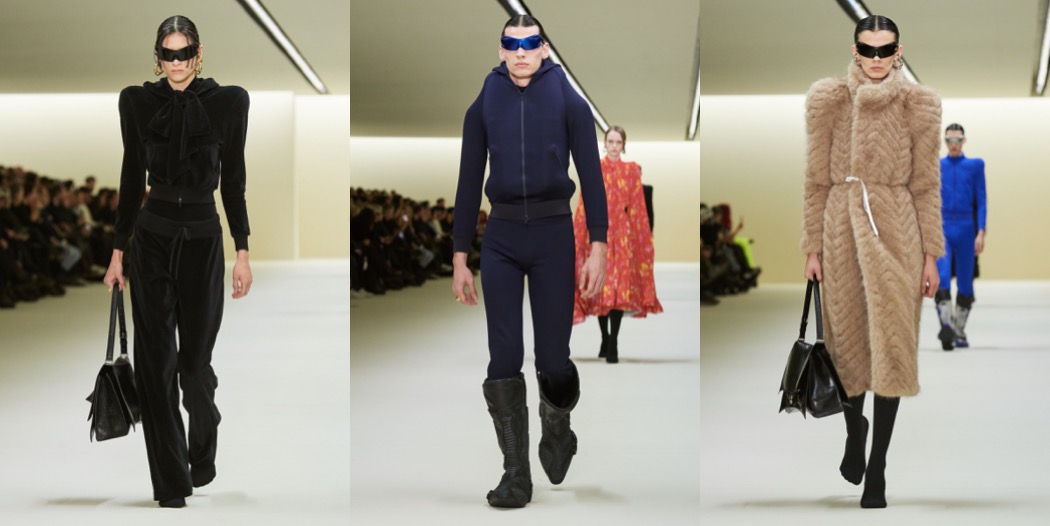
Radical Carte Blanche. Balenciaga AW23

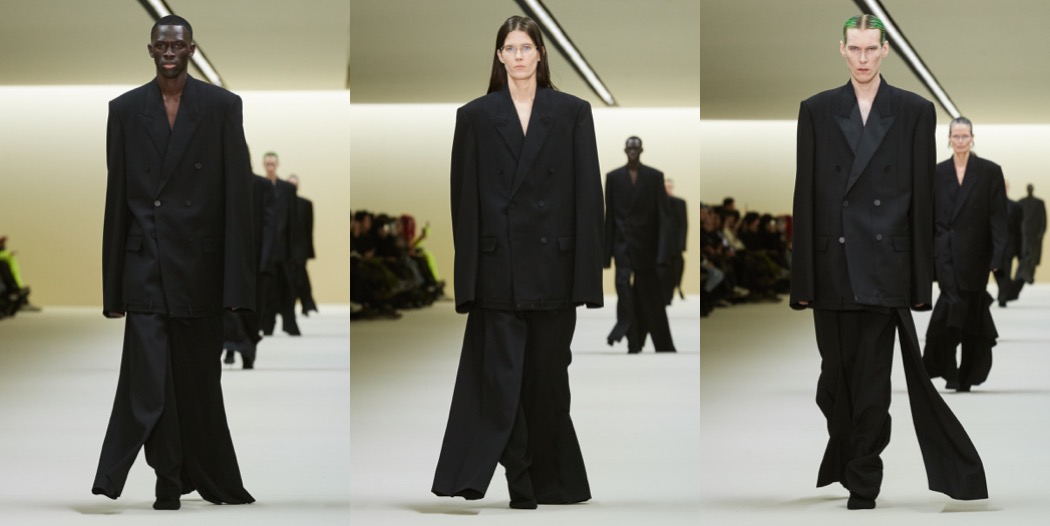
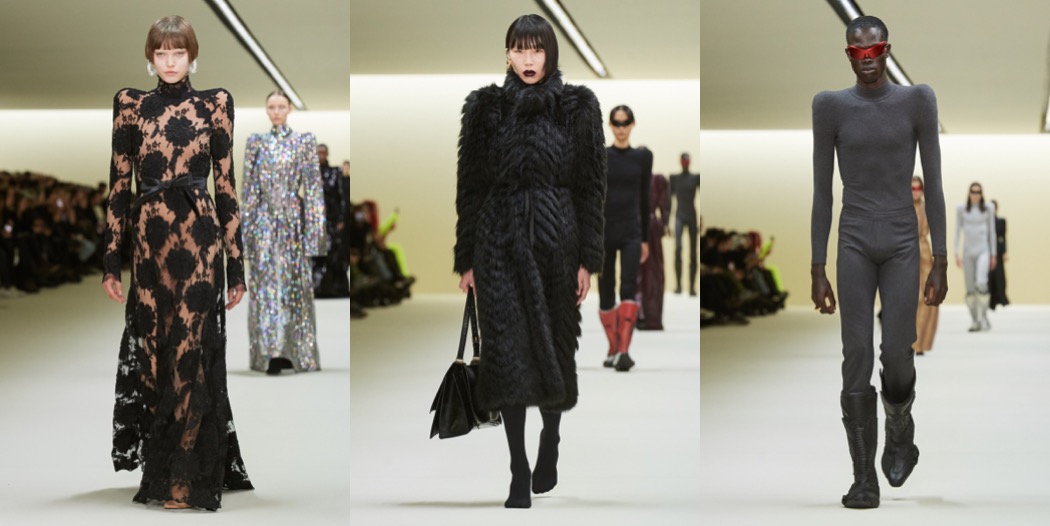
After THE controversy – which became an unprecedented case study that polarized the fashion industry – that escalated in the second half of December and continued to be dynamically scrutinized in the beginning of 2023, Balenciaga and Demna are back. Cautiously. The autumn-winter 2023 fashion show was provocation-free: just a white-cube venue and models in clothes, with no sociopolitical context playing in the background or a performative, highly-viral shock value. Stripping back to the fundamentals of design has been a thrust of this latest round of shows, but nowhere was the extreme tension between those two poles felt more sharply than at this show. Demna’s explanation and apology, with information about the brand’s plans for internal reform and its offer of reparation through a three-year partnership with the National Children’s Alliance was published by Vogue in early February. “I needed to have a show because I need to move on. I need to liberate myself – through my work, and what I do, and put it out there,” he’d said in a one-on-one conversation held at Balenciaga headquarters in the days before the show. “Because it has been a hell three months, and I really don’t know how I had the strength in me, mentally, to go through it.

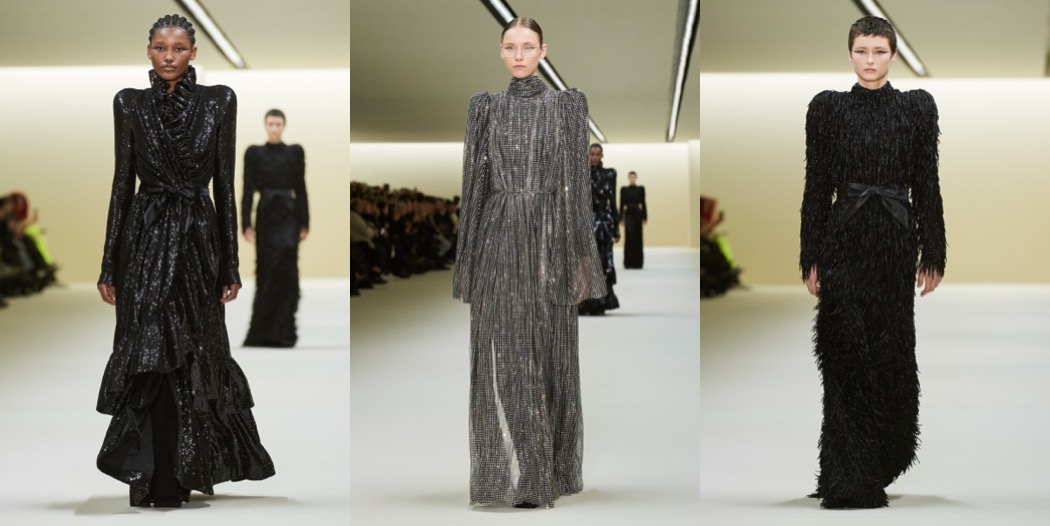
The choice he made was to ditch his mega-set methodology and showcase his personal bid for reputational integrity as a designer. “It had overshadowed the collections – most people didn’t see the clothes even when it was packed with great clothes. You know, I just felt almost like [I was] betraying that by doing those kinds of set designs, because the most important thing for me in my work was being overshadowed by 15 minutes of buzzy concept. I was like, I was like, ‘Okay, I need to change that anyway,’” he said. “And this whole situation really just confirmed to me that it cannot be about that anymore. I love doing that. But I don’t love doing that more than making clothes and I felt like I needed to put this in focus. It came together with something that truly represents me as a designer. I feel like this is the message I want to give: This is who I am.” Who he is, and where he is now: it was hard not to read the imagery of a world turned upside down in the makings of the long, somber sequence of 17 black oversized tailoring looks that opened the show. Black is a Balenciaga core non-shade; it syncs with the mood of fashion at large, and it was a reminder that Demna was, after all, the progenitor of the super-sizing that’s swept fashion in the last decade. Nothing new there. What was different: all these pieces were constructed from reverse-tailored trousers. There were coats and jackets with pant-loops and pockets in the hems. And below them hung doubled pairs of trousers, giving, from the side, the surreal illusion that the people were walking on four legs. In the next part of the collection, Demna refocused on Cristóbal Balenciaga’s legacy. “Evolving it is the number one reason why I am here,” as he’d commented to Vogue earlier. Shorn of distractions, critically, the collection could be seen as a hybrid of Demna-isms – cyber-avatar menswear, his familiar flower-printed knife-pleated dresses – segueing into more of a distinct homage to the founder’s archival evening gowns. These were long, slim, covered-up dresses, minutely embellished, and with a new signature rounded-bump of a shoulderline. Aside from the styling, there is one far more radical change on the way for Balenciaga. It was heralded only by its absence – the fact that the clothes and accessories were wiped clean of logos. The attraction of highly visible branding has been part and parcel of the cult of Balenciaga that Demna has brought to popular street culture everywhere. “It’s a big thing,” he admitted. “But I think we’re going to enter the stage in my work where it doesn’t need to be justified by the brand on it. To be honest, it’s necessary, and I use this opportunity now to convince that this is the right thing to do. And of course, you know, doing that means not doing it only once. You have to persist to be able to change.

Collage by Edward Kanarecki.
Don’t forget to follow Design & Culture by Ed on Instagram!

NET-A-PORTER Limited

Return To The Source. Comme Des Garçons AW23

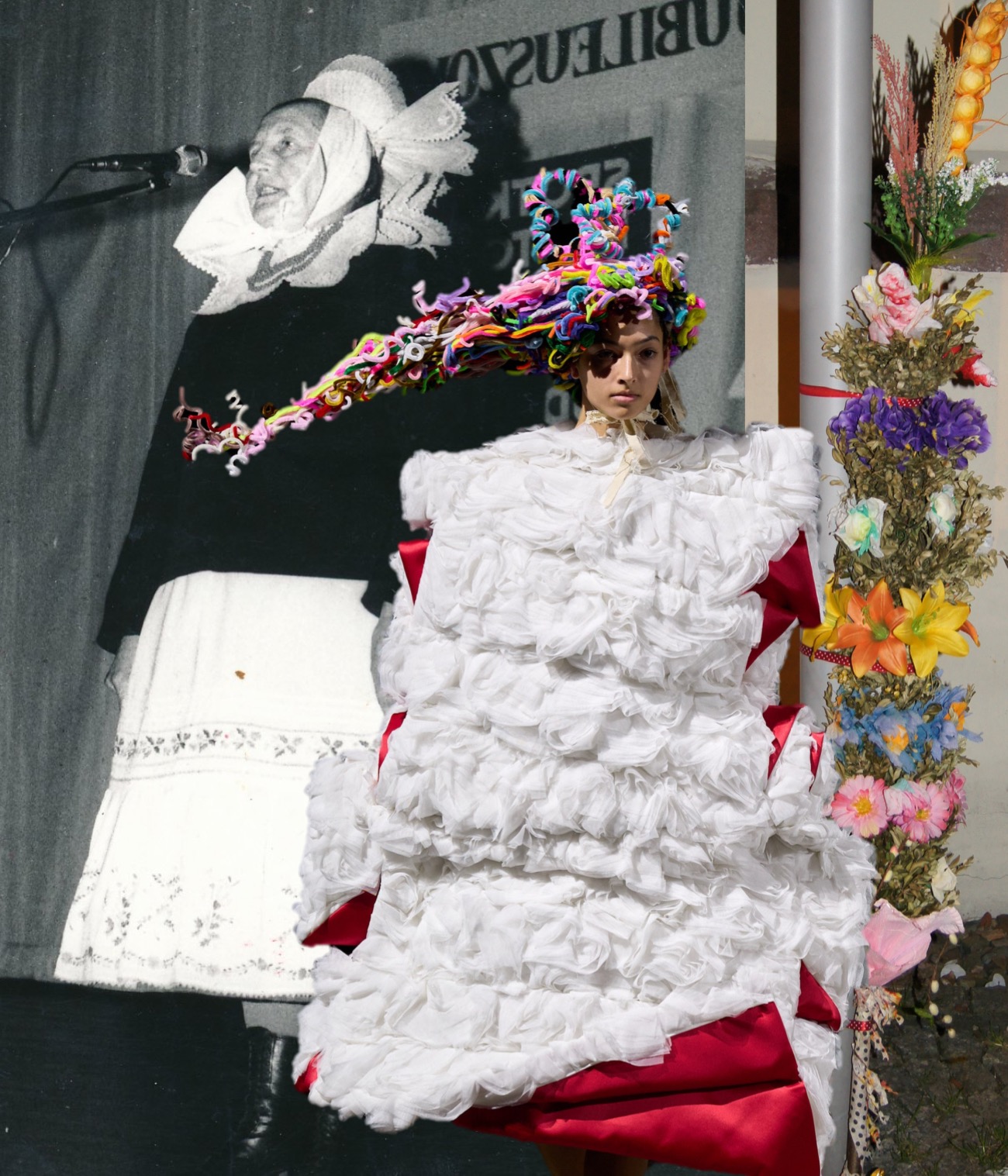
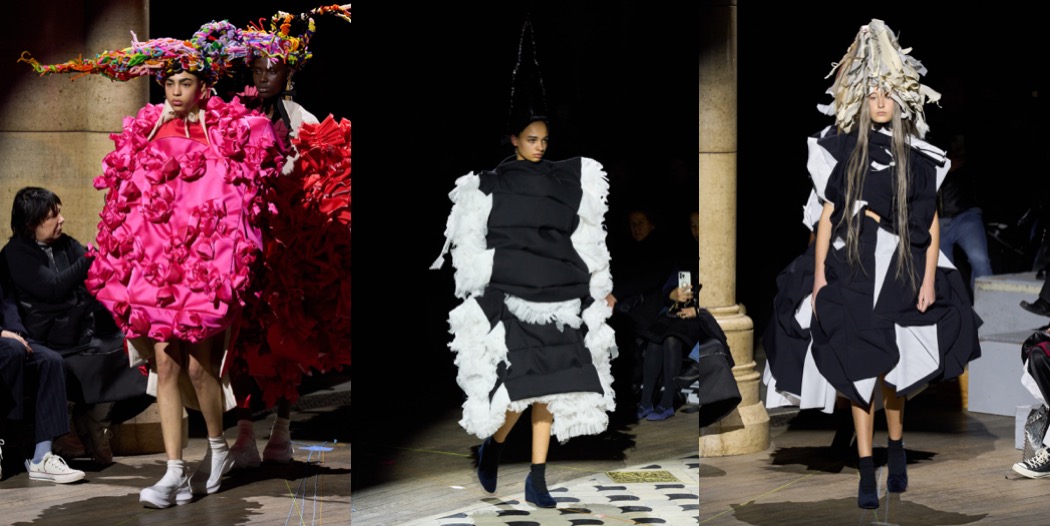
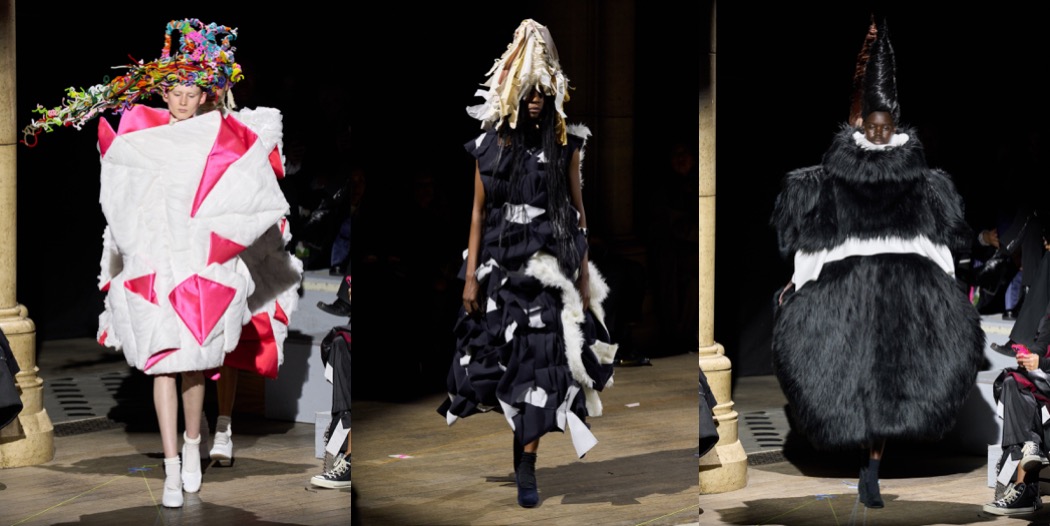
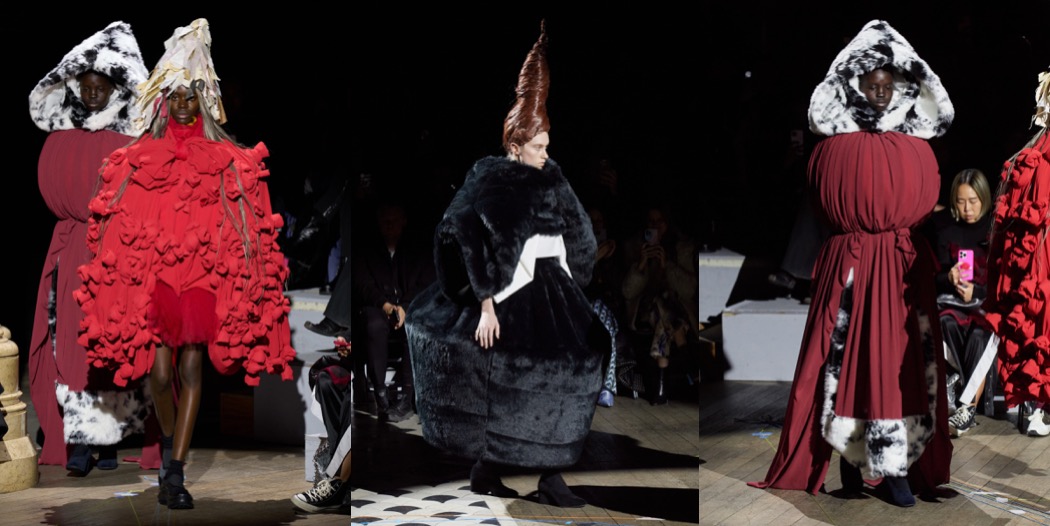
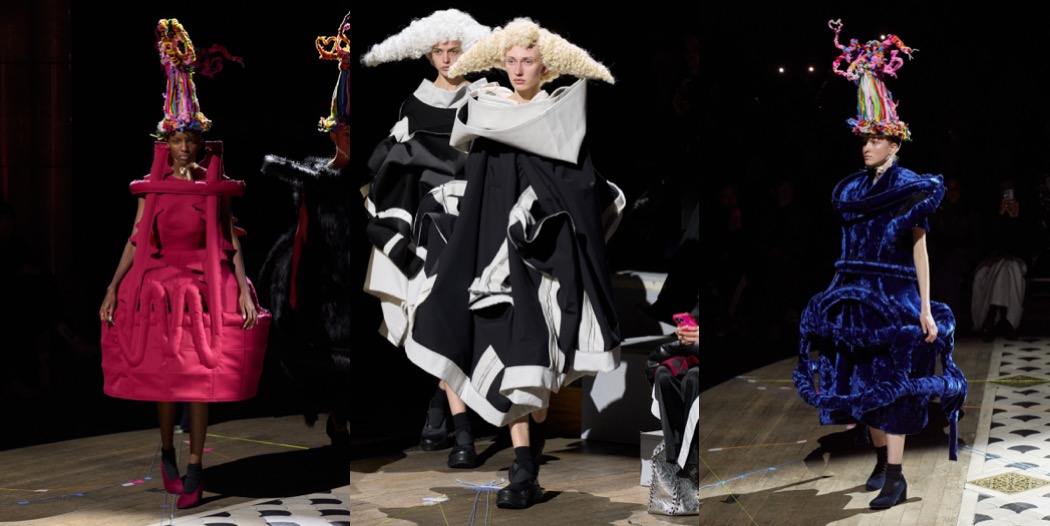
Trust Rei Kawakubo to deliver a powerful, ritual-like show. The show notes from Comme des Garçons “Return to the Source” collection mused about “a feeling of wanting to go back to the starting point”. For the Japanese designer, the concept of creating something completely new through the medium of a garment has always been a relentless, sometimes brutal, yet deeply beautiful motivation. For autumn-winter 2023, Kawakubo talked of “working with free patterns” and “using basic materials” in terms of her wearable, highly-deconstructed forms. She sent out 11 separate groups, like mini-families. Each group had their own idiosyncratic mood and music. Some wore recognizable Comme garments (rosettes on a full skirt topped with a quilted funnel neck poncho that stood proud of the body), other looks were far more abstract (a pilgrim collared black wool box, paired with another box-shaped dress). Another piece looked like an exploded dress, its wadding and padding violently bursting out from within. The gorgeous headwear could be read as an interpretation of different East-European folklore traditions. All of that was a truly touching fashion moment.

Collage by Edward Kanarecki.
Don’t forget to follow Design & Culture by Ed on Instagram!
NET-A-PORTER Limited