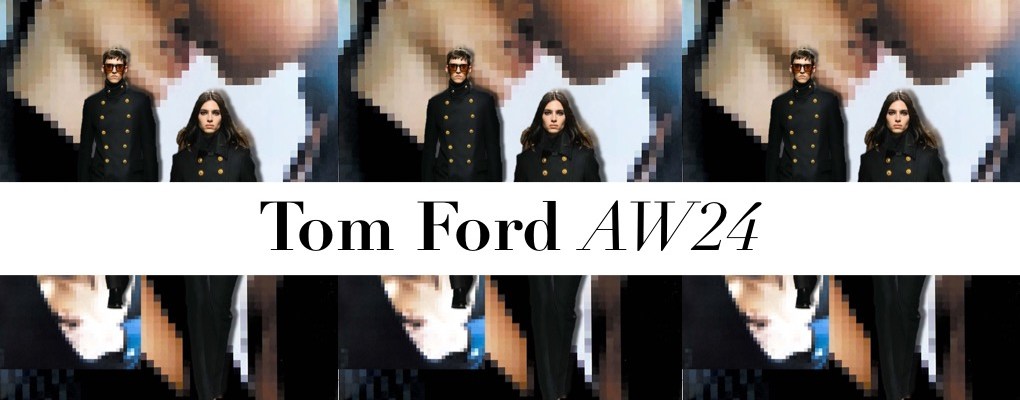
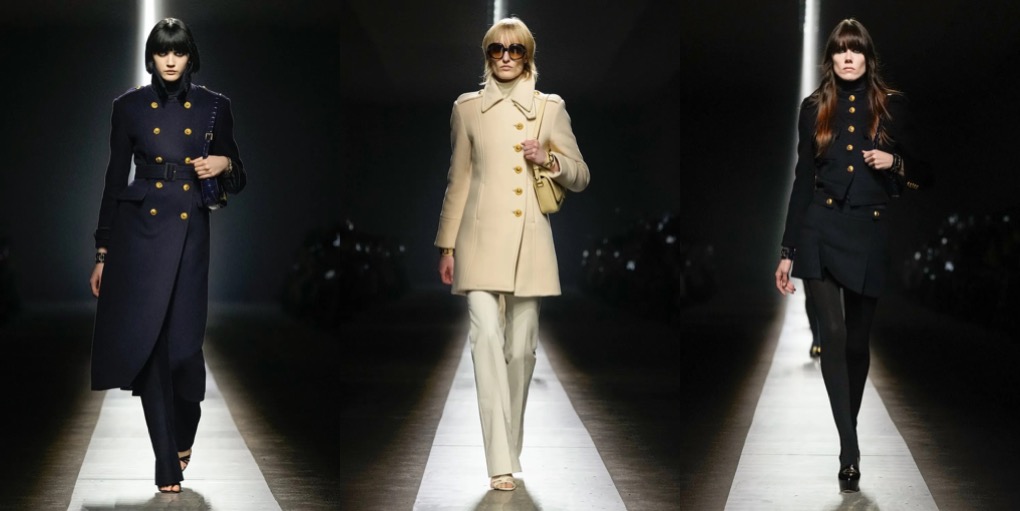
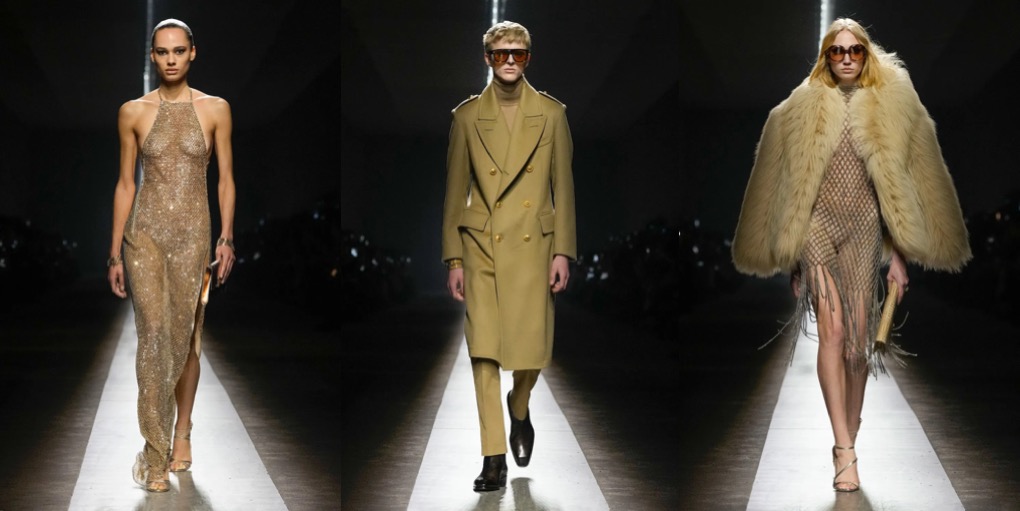
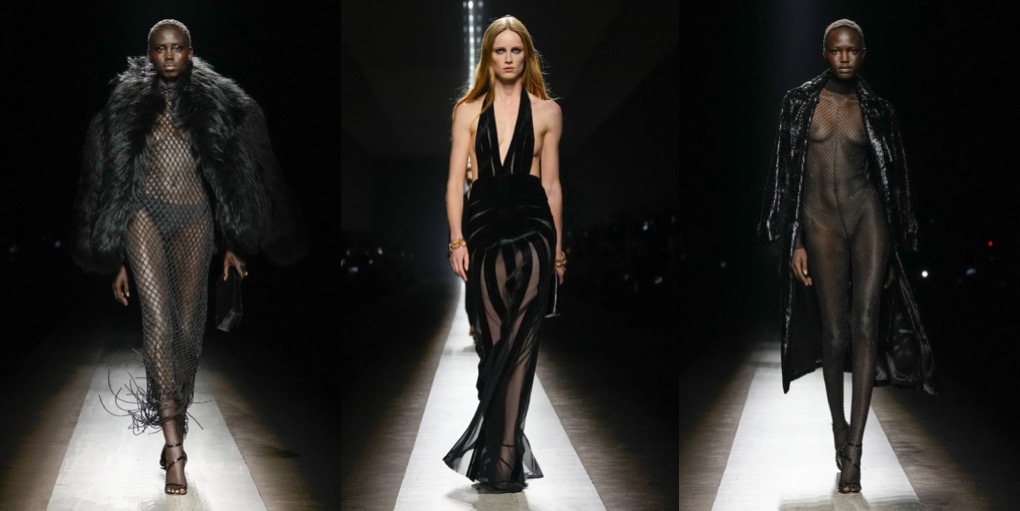
Peter Hawkings‘s sophomore collection for Tom Ford leaves you with a hard pressing question: what’s Tom Ford without Tom Ford? Unfortunately, the designer who used to work with the legend doesn’t reinterpret his legacy, but tries to mimic it, imitate it, in a very commercial, unreflective way. And that doesn’t work. The autumn-winter 2024 collection, presented in Milan, is bared of any emotions or feelings. What’s the point of all these proper, handsome peacoats and party dresses if there’s no charisma behind them? Some AI generator could do a far more creative piece of work. If Tom Ford, the brand, wants to thrive, it can’t move forward in such uninspired manner. Or else it will lag.
Collage by Edward Kanarecki. Don’t forget to follow Design & Culture by Ed on Instagram!
Hey, did you know about my newsletter – Ed’s Dispatch? Click here to subscribe!
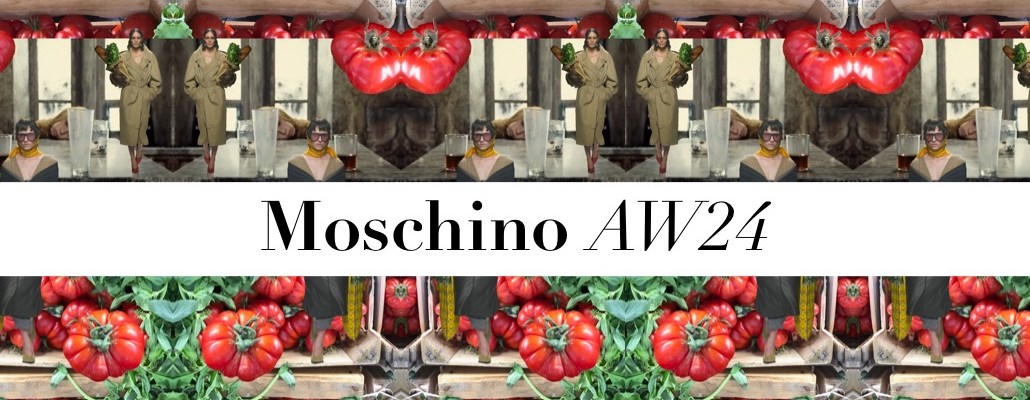
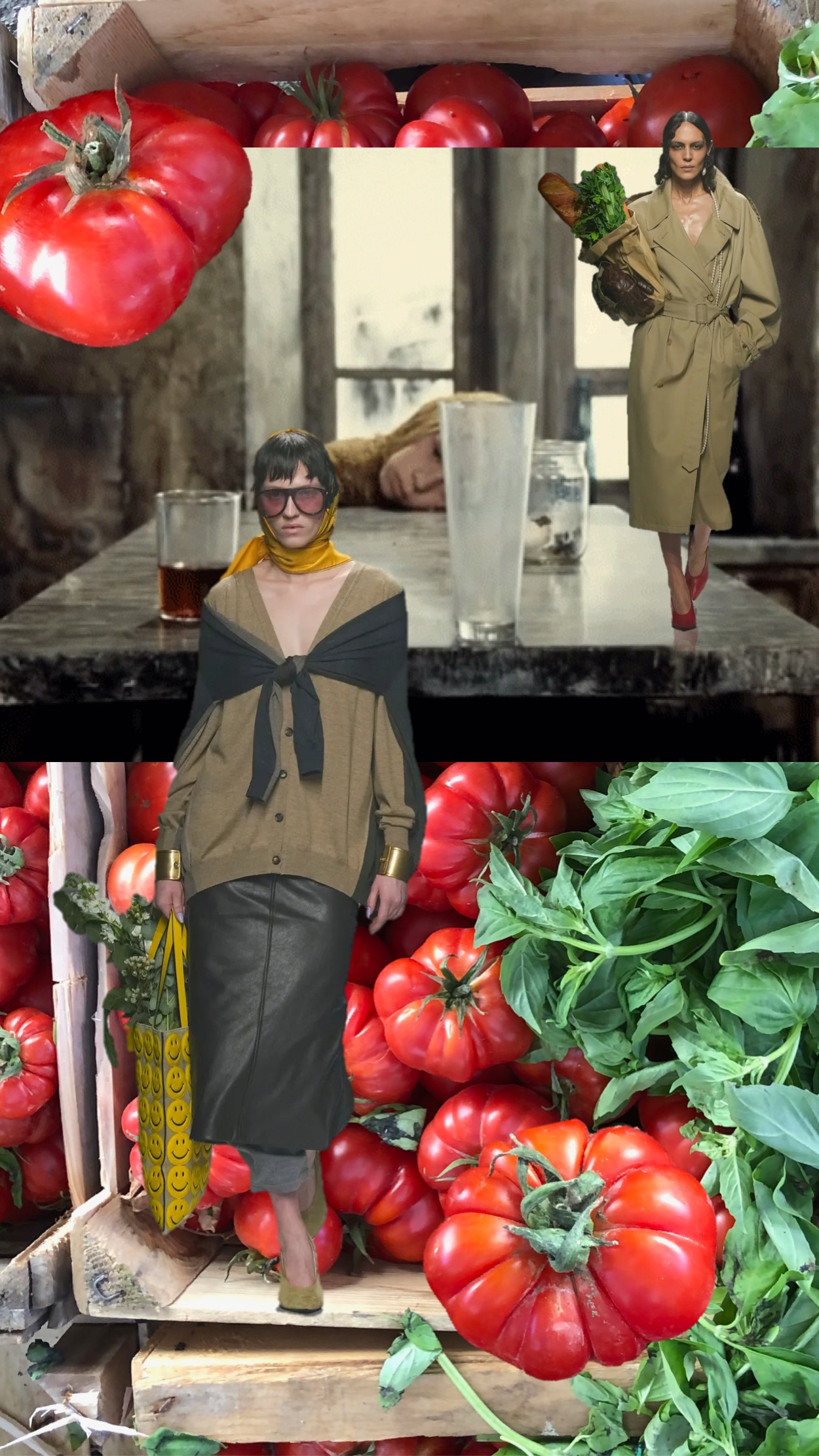
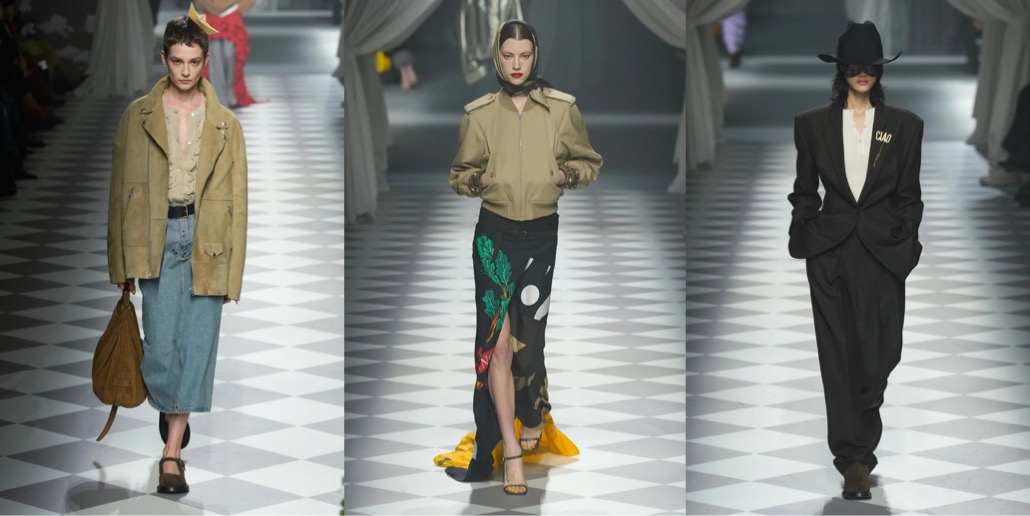
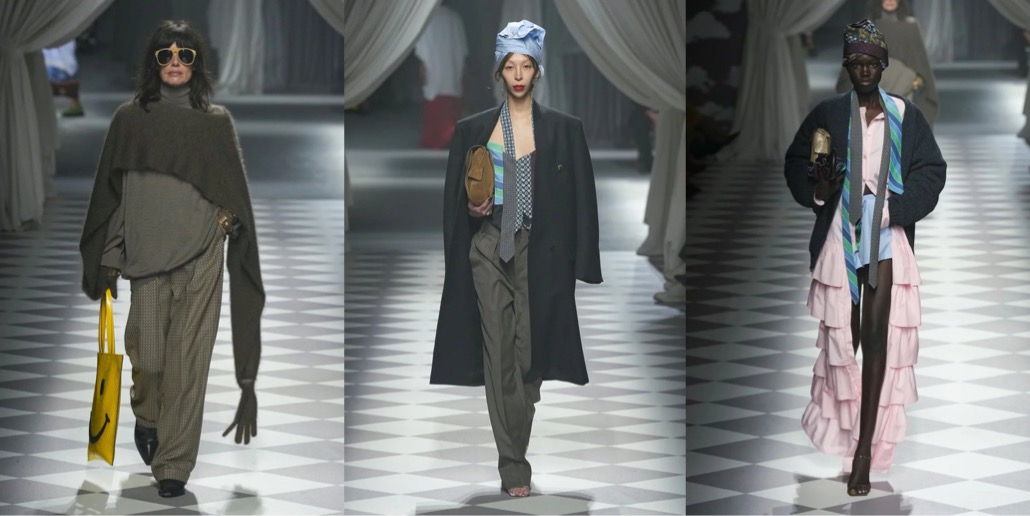
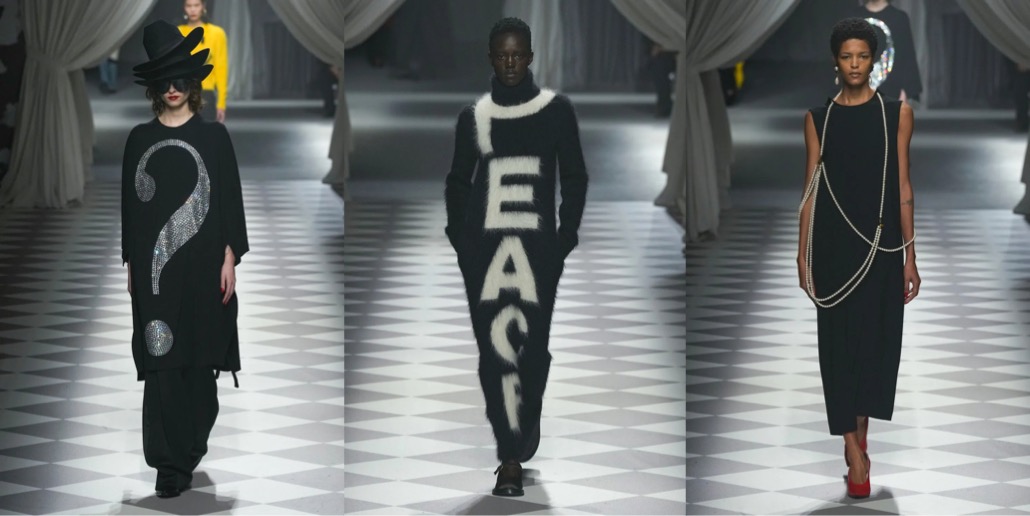
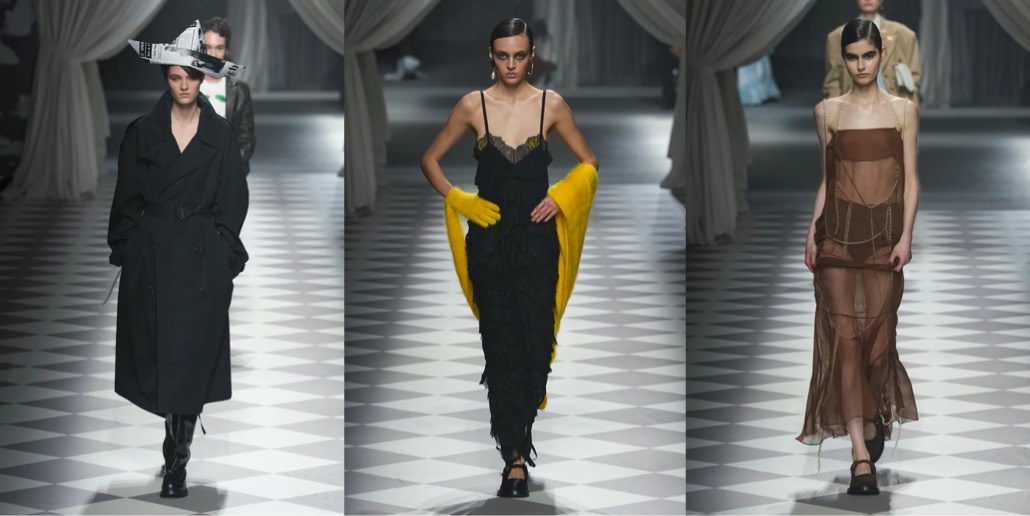
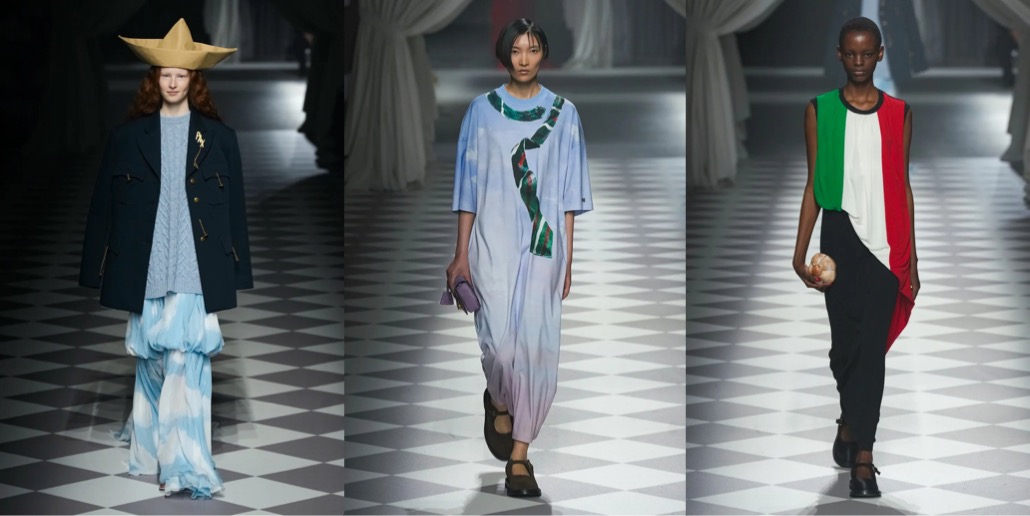
Adrian Appiolaza‘s Moschino debut collection felt like a gush of much-needed fresh air in Milan – and the beginning of a very promising, new chapter. The brand needed an urgent revamp after a decade of Jeremy Scott’s camp over-the-topness. In November, the heart-breaking passing of Davide Renne (who became the forth creative director of Franco Moschino’s label just a month earlier), shocked the entire fashion industry. Appiolaza’s appointment was announced barely a month ago, and his first collection – completed in such short period of time – proves that he’s a supremely talented designer. The autumn-winter 2024 collection reflects the tongue-in-cheek spirit of the brand’s founder through a number of riffs and referenced: the over-sized silhouettes, XXL polka-dots and tomato prints, Rene Magritte-esque prints and the in-your-face flag of Italy used as the colour blocking palette for a couple of dresses and tops. Appiolaza also managed to convey the nearly-forgotten, super-chic spirit of the house which was contrived by Rosella Jardini in the 2000s: think slip-dresses covered in pearl necklaces or finely cut tailoring. But the line-up tells us a lot about Appiolaza himself, who for a decade worked at Loewe, and earlier with such creatives as Clare Waight Keller, Marc Jacobs and Miuccia Prada. The Buenos Aires-born designer is an avid vintage fashion collector – make sure to follow his page on Instagram! – with a soft spot for Martin Margiela and Comme Des Garçons. There’s an interesting connection between Moschino and Margiela – both designers played with surrealism and deconstruction, but in aesthetically different ways. Appioloza showed a bustier made from ties; trench coats worn inside-out; hats that looked like paper boats. Those little moments of humor are what Moschino used to be in its origins, and the new creative director certainly embraces that in a stylish, unconstrained way. Bravissimo!
Collage by Edward Kanarecki. Don’t forget to follow Design & Culture by Ed on Instagram!
Hey, did you know about my newsletter – Ed’s Dispatch? Click here to subscribe!
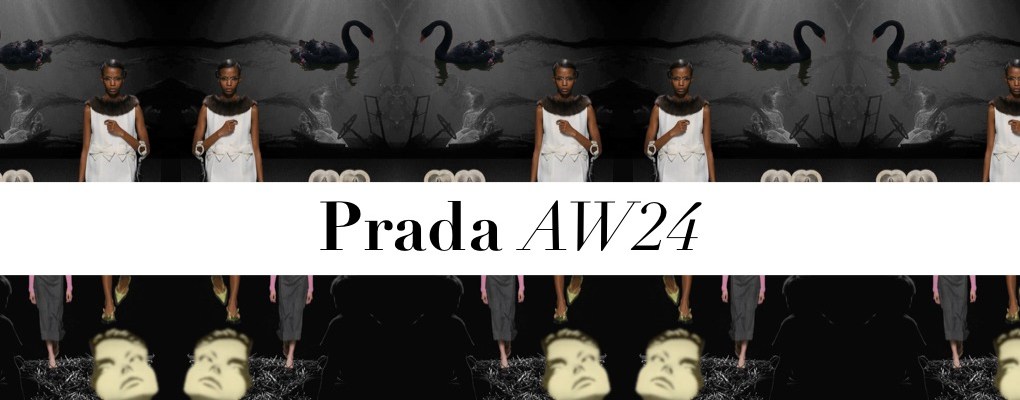
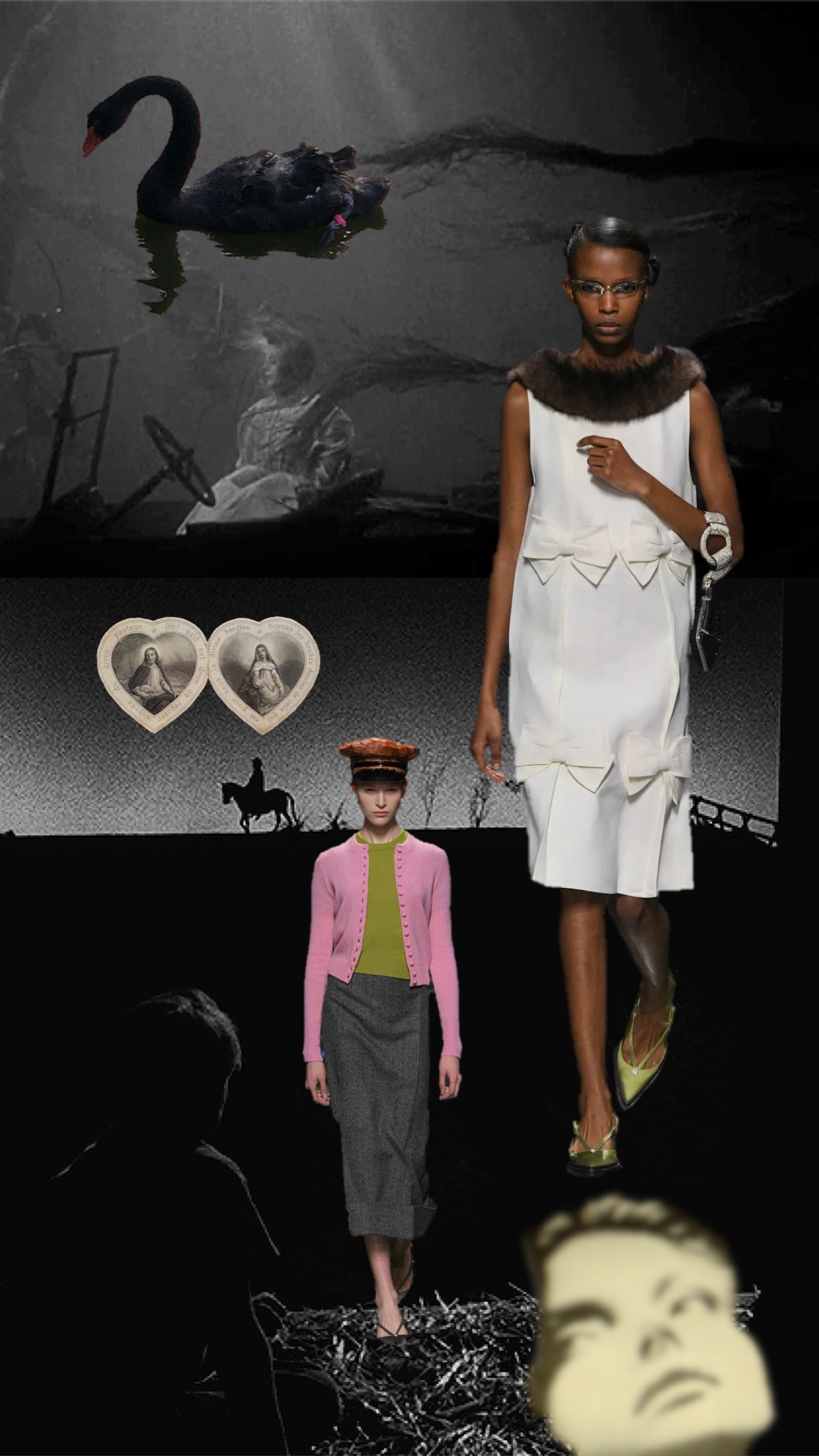
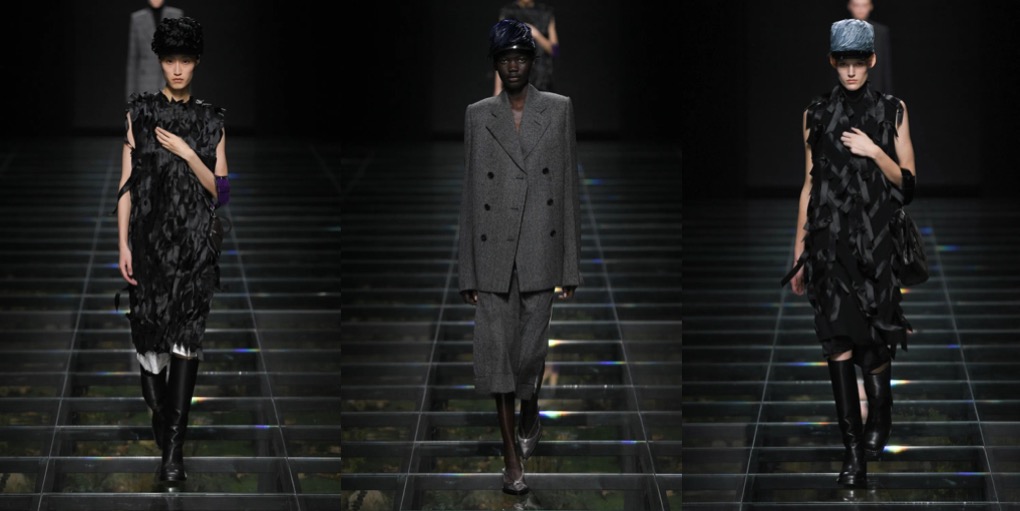
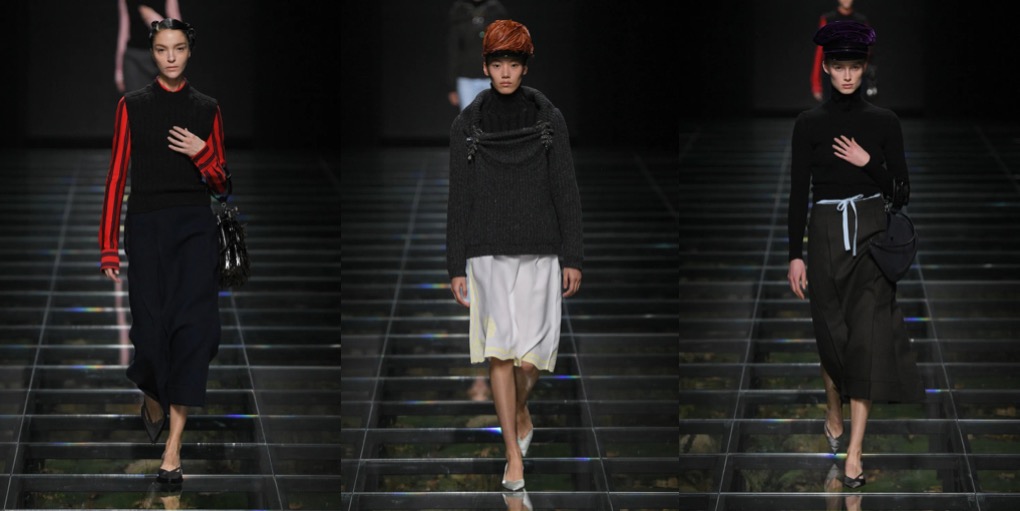
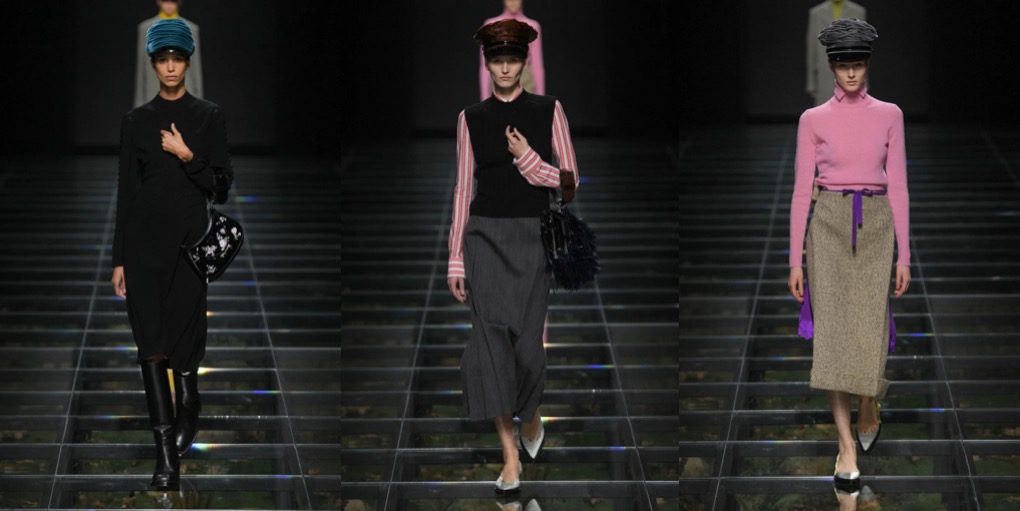
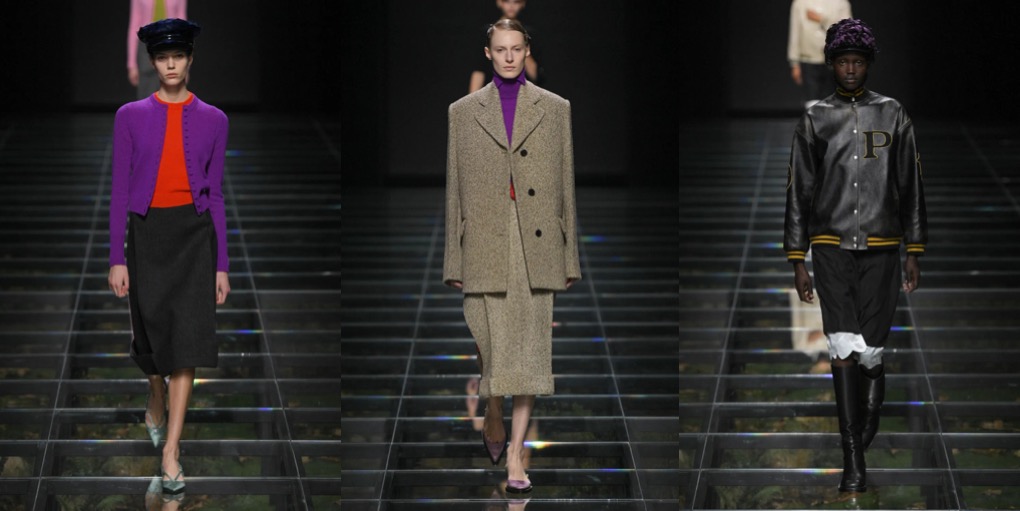
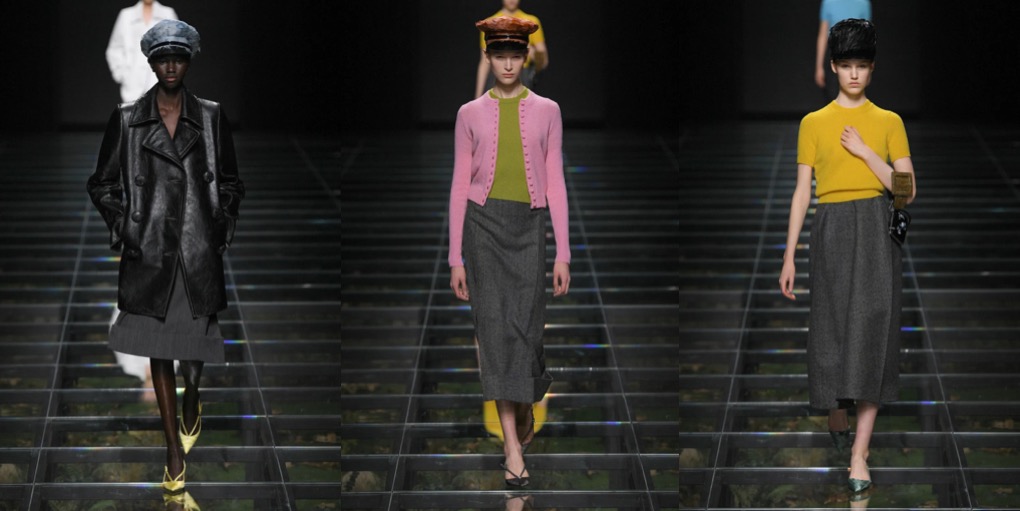
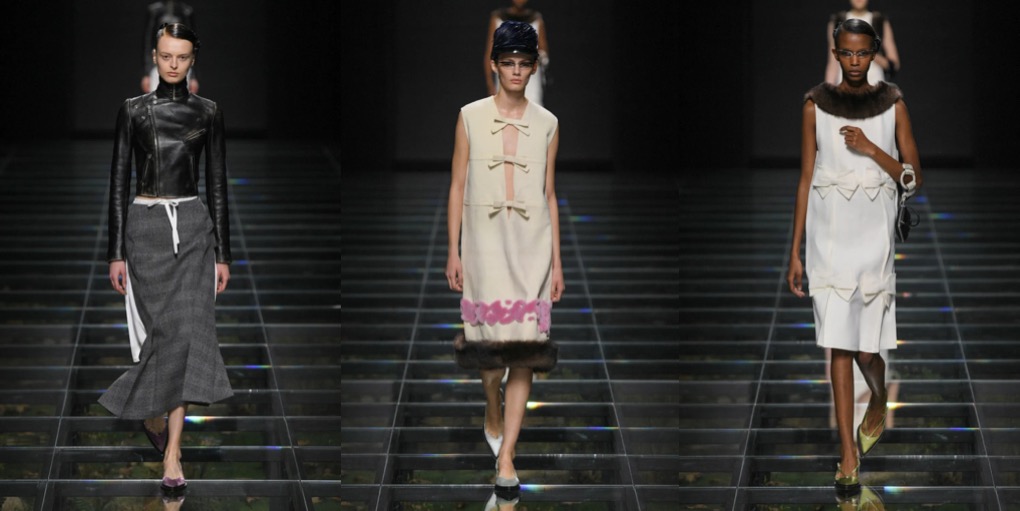
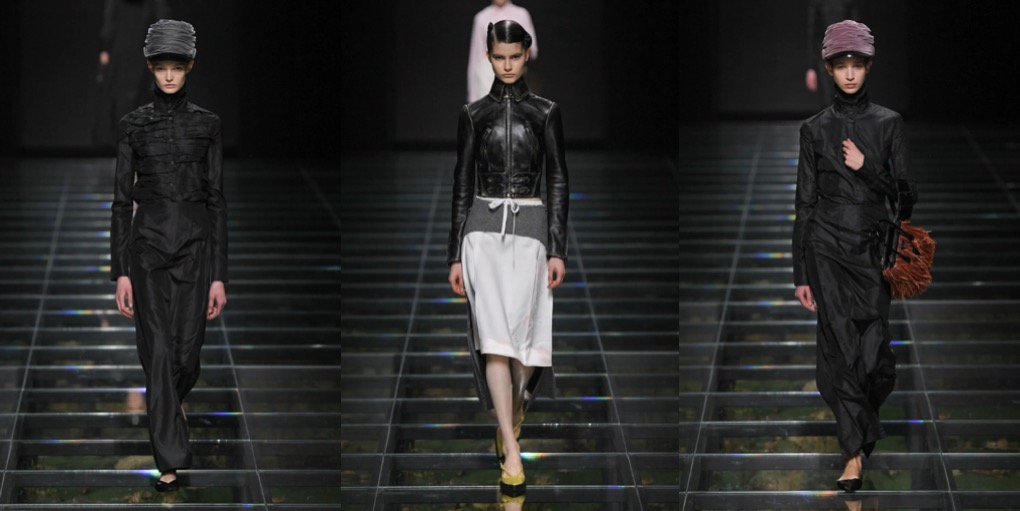
Prada o’clock is Milan Fashion Week’s prime-time. And with a collection like today’s outing, Miuccia Prada and Raf Simons once again confirm that their dialogue is the ultimate creative powerhouse. The autumn-winter 2024 collection, presented on a glass runway elevated above terrarium of moss and streams, is an exploration of notions of beauty, of a contemporary world formed by memories. Romance with the past is a recurring theme in Miuccia’s work, and it seems that Raf is feeling more and more comfortable with playing around with the old-fashioned feminine decorum: prim cardigans, lace, bows. But in case of Prada, the old always feel new, revelatory and simply unexpected. Dresses were covered in layers of ribbons, but don’t you dare calling it “coquette“. These women, a bit bourgeoisie, a bit activists, in their knee-length boots and biker caps, aren’t here to lounge. The suiting and outerwear looked “normal” in the front, but in fact was absolutely revealing in the back. Prada and Simons really indulged themselves in the richness of textures and layers: we have feathers, crushed velvet, butter-smooth leathers, technical cotton, fur trims. Speaking of leather, these cropped perfectos – styled with apron-like skirts – felt so good. If “sexy” wasn’t really addressed so far in the creative duo’s work, then this collection delivers many levels and ideas of sexuality, from something kinky, even perverse, to classic Old Hollywood allure (think housecoats with sharp waists and the cold-shoulder moment of the finale dress kept in the most hypnotic shade of Victorian purple). A total YES.
Collage by Edward Kanarecki. Don’t forget to follow Design & Culture by Ed on Instagram!
Hey, did you know about my newsletter – Ed’s Dispatch? Click here to subscribe!
The first day of Milan Fashion Week was hard to watch: messy and silly-looking Diesel where the Y2k-mania starts to feel stale; Kim Jones’ Fendi that left you with no impression (a worst feeling a collection can give); lots of Prada knock-offs and a couple of emerging Italian designers that literally have no direction.
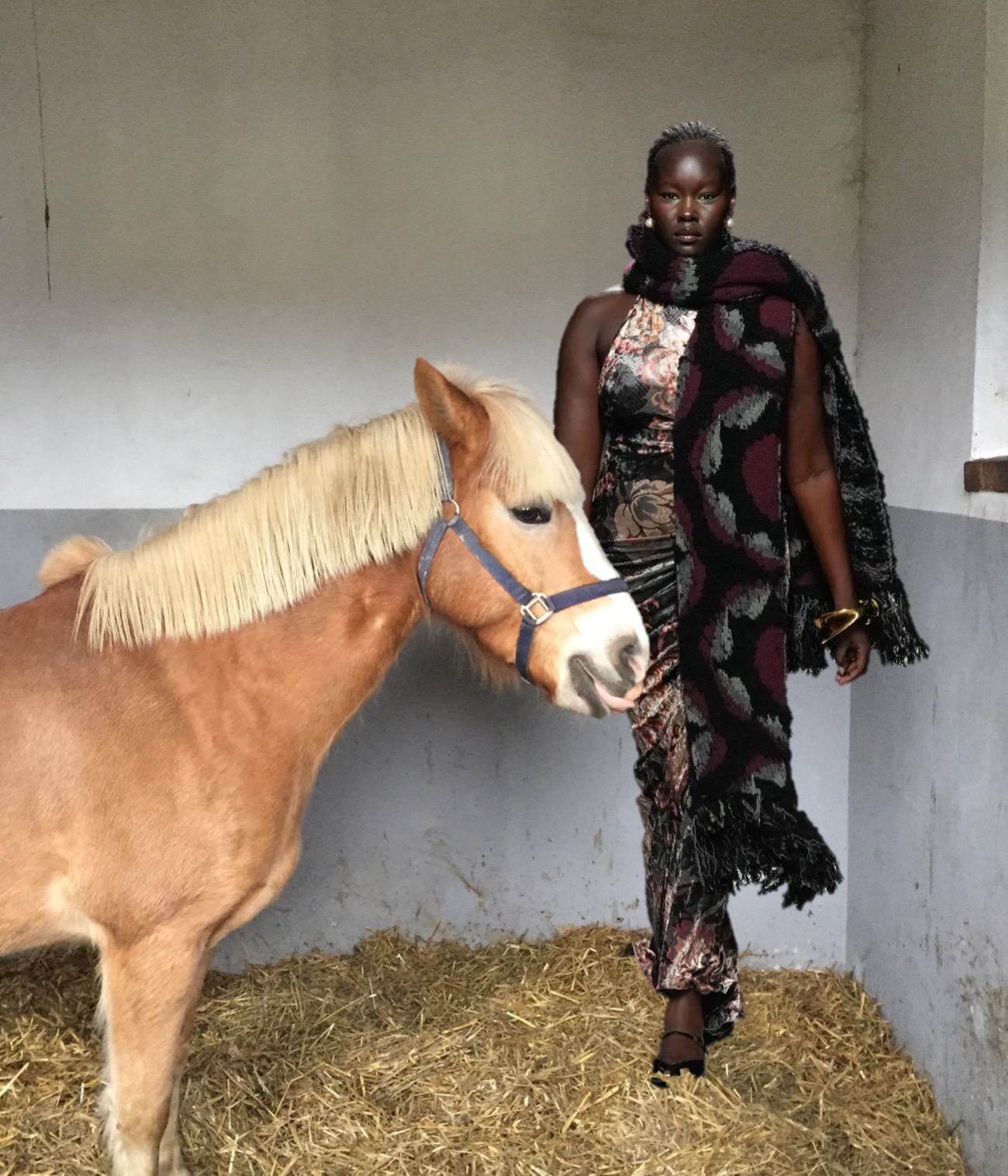
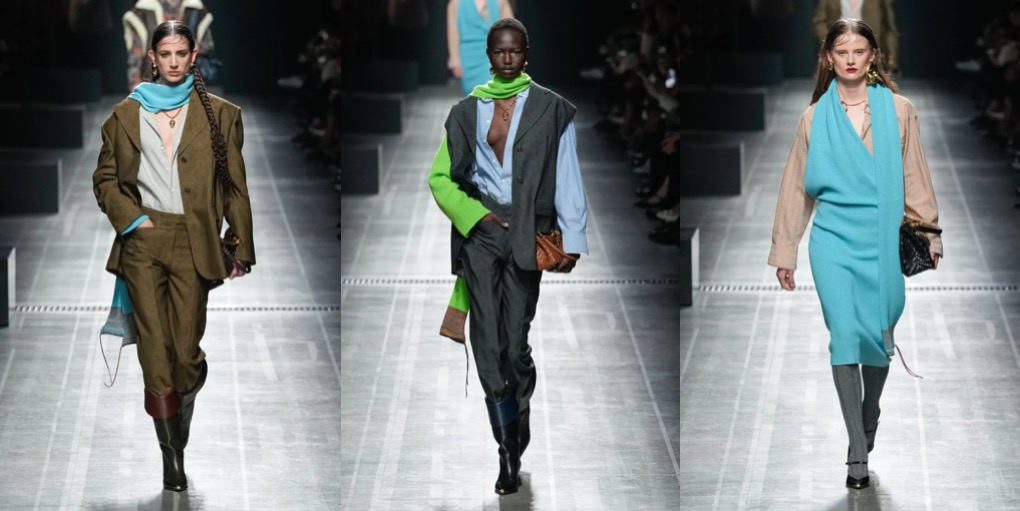
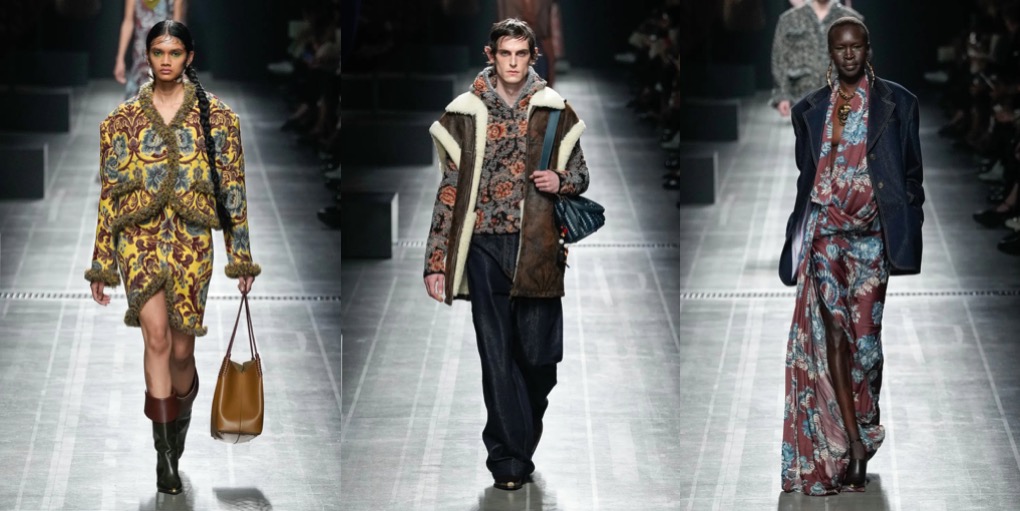
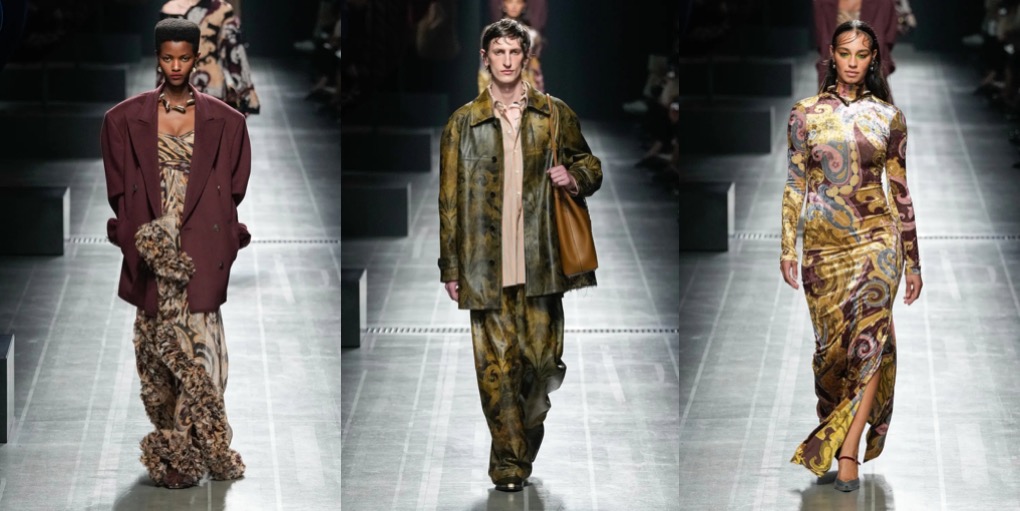
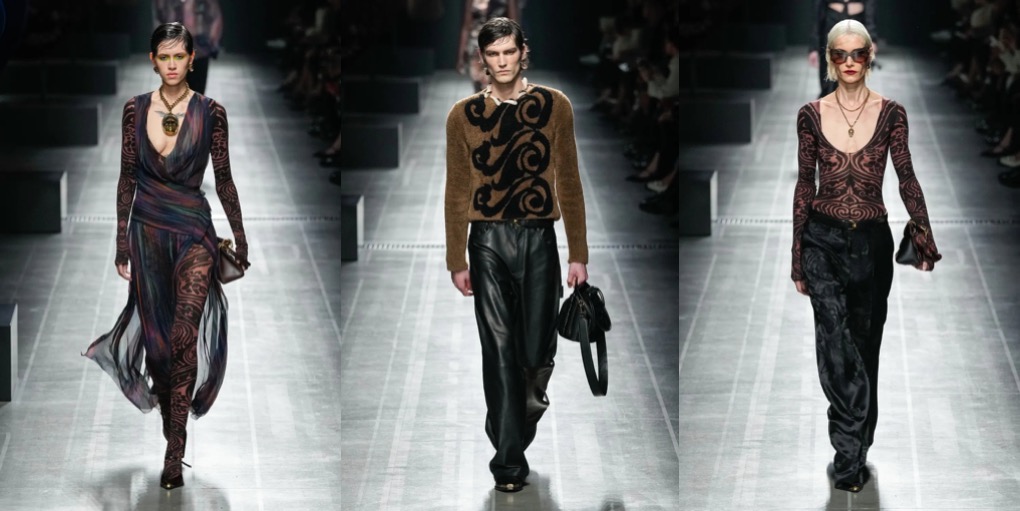
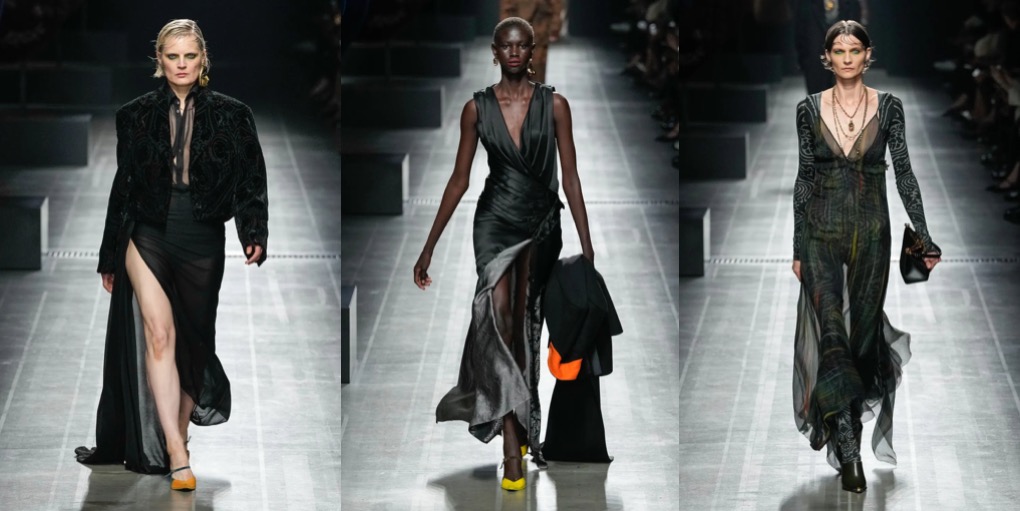
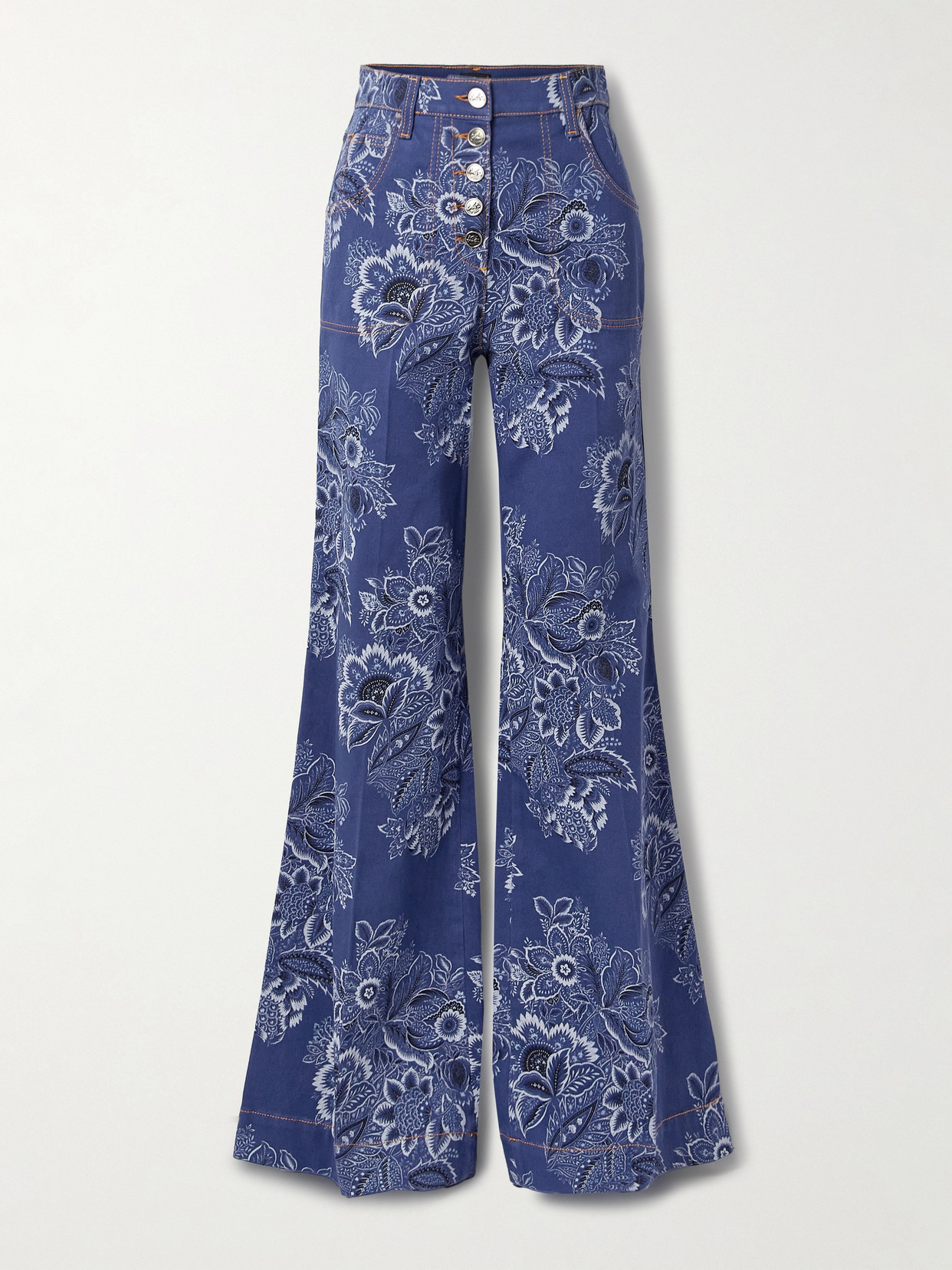
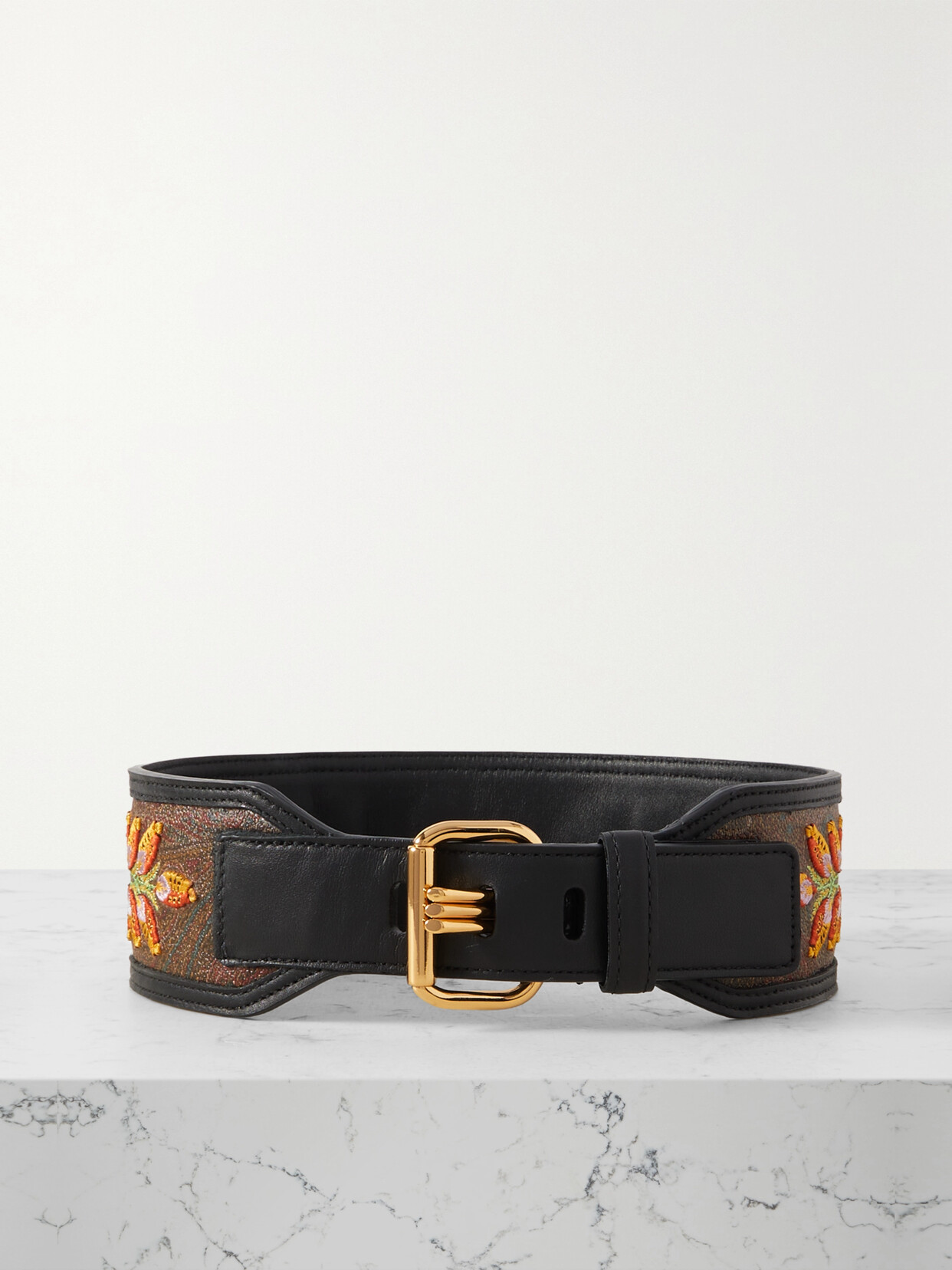
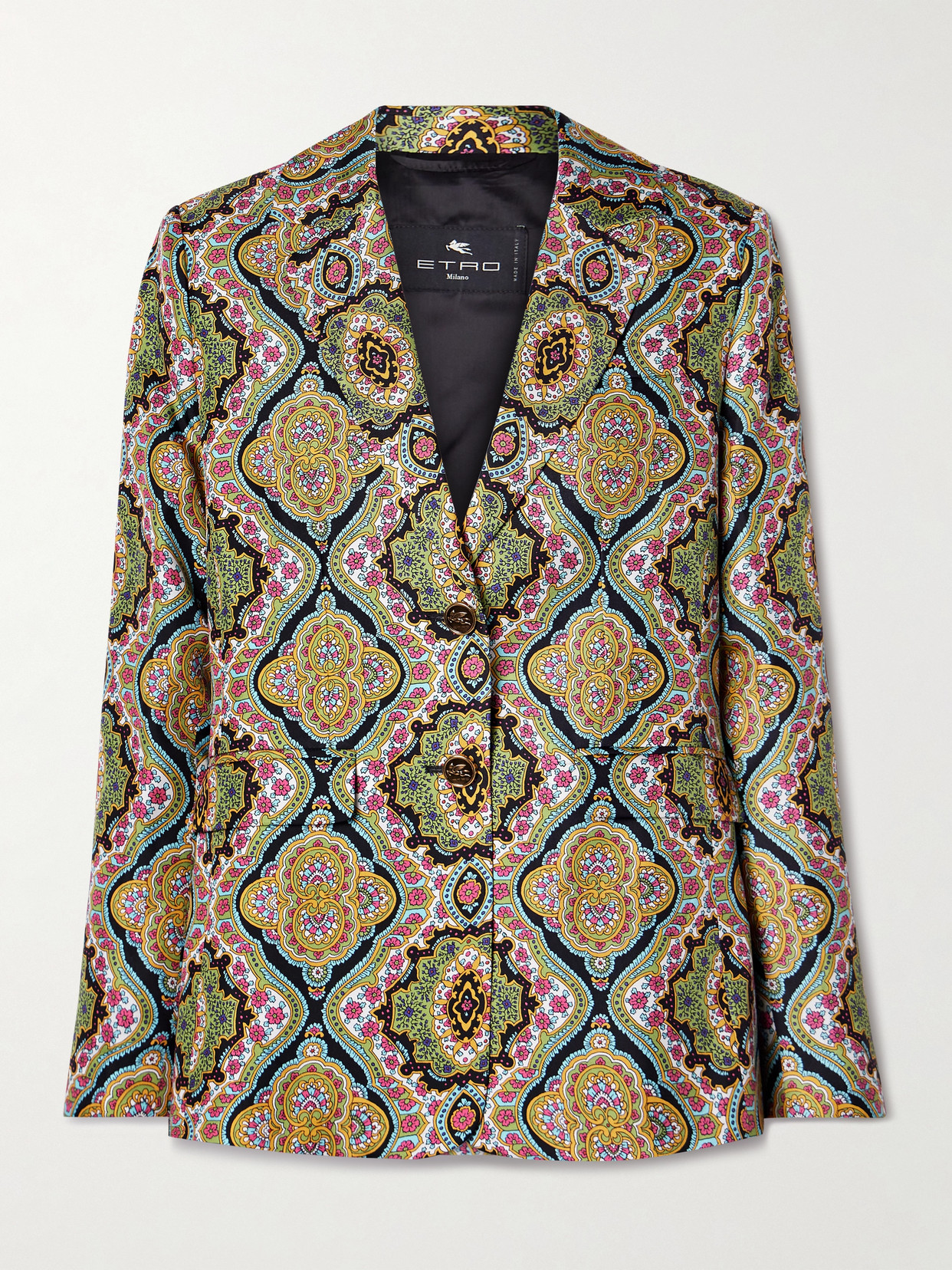
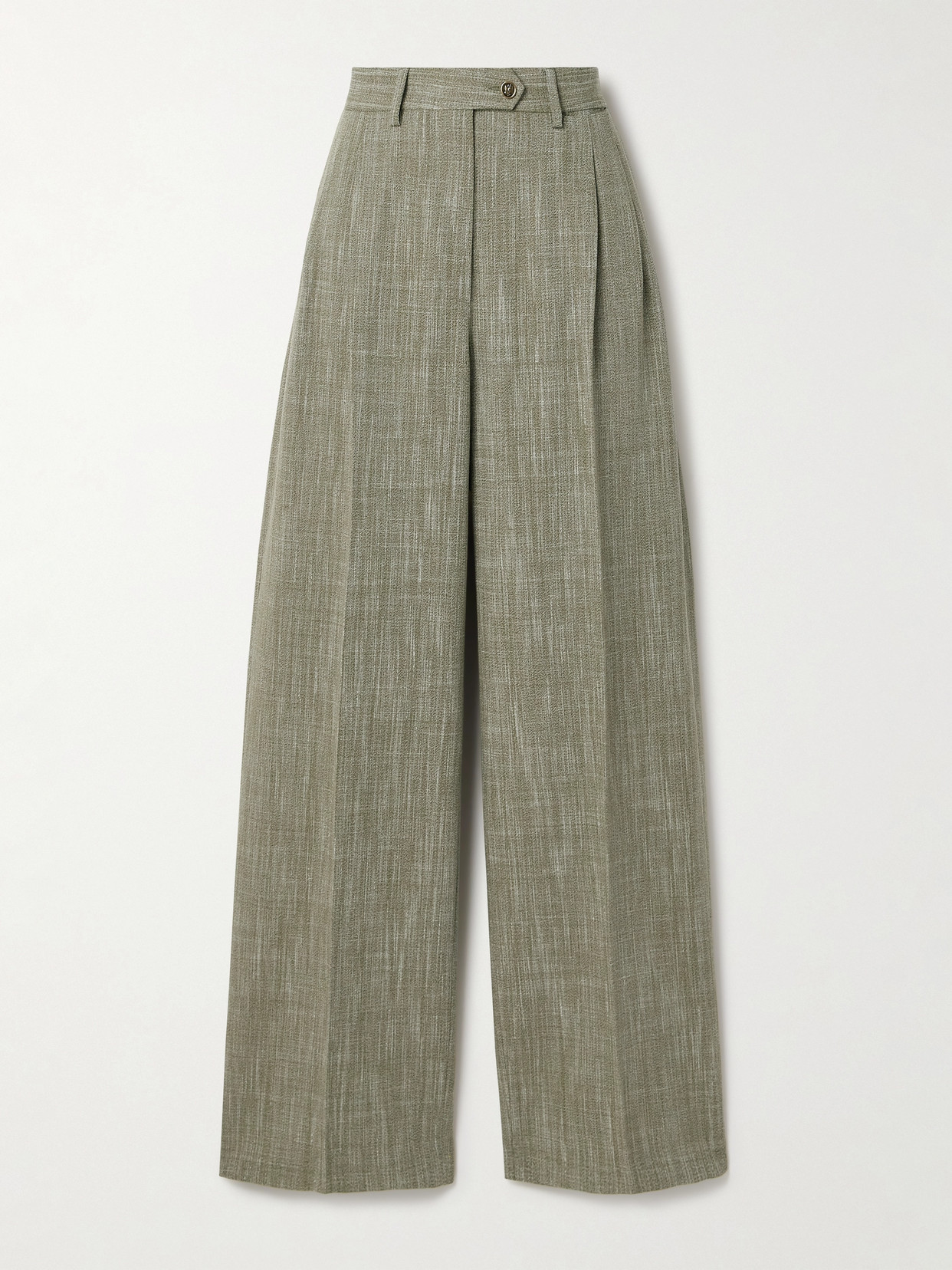
A light of hope was seen at Etro – metaphorically, as the venue was bathed in darkness. Marco De Vincenzo‘s vision for the Italian label is taking shape. Sometimes, designers really need time to find the right balance at a brand. The autumn-winter 2024 show had huge, slightly disquieting effigies of masks inspired by Greek tragedies placed in the middle of the runway. The collection was called Act. “It’s that in my role as Etro’s creative director, I feel torn between authorship and interpretation. It’s a constant struggle that sometimes takes an emotional toll, yet it’s deeply generative. The masks are a symbolic manifestation of this inner turmoil.” The co-ed collection had an almost somber undertone, as if De Vincenzo had tried to unearth a darker, unknown side of Etro, bringing the brand along on an unmapped journey of self-discovery. Colors were muted, progressing from sensuous earthy tones to the intriguing depths of pitch black – a first for Etro, a brand which is usually affiliated with chromatic exuberance. But De Vincenzo is keen to experiment, and he feels confident and mature enough to chart new paths. His penchant for quirk can be both disconcerting and surprisingly fresh. De Vincenzo’s take on the brand is also much more radical and unapologetic rather than romantic. Silhouettes were kept fluid and unstructured, yet draping and plays on asymmetries read as a bold statement, counterpointed by oversized tailoring that had presence and charisma. “I’ve felt the need to raise the bar,” said De Vincenzo. “I sense around me the desire for more intensity in fashion, for a creativity that doesn’t have to justify itself but can just be, that doesn’t seek perfection, but rather emotional expression.”
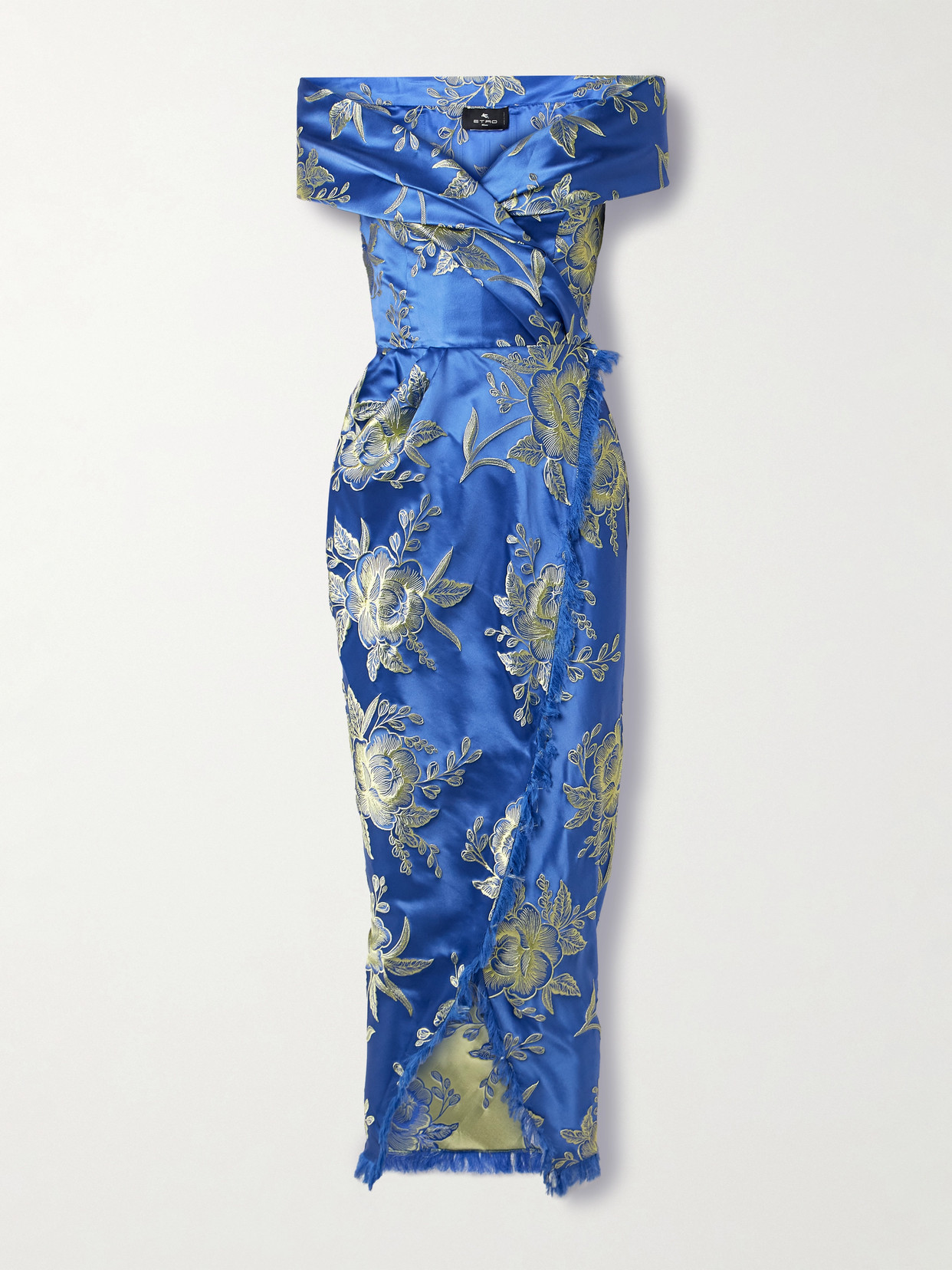
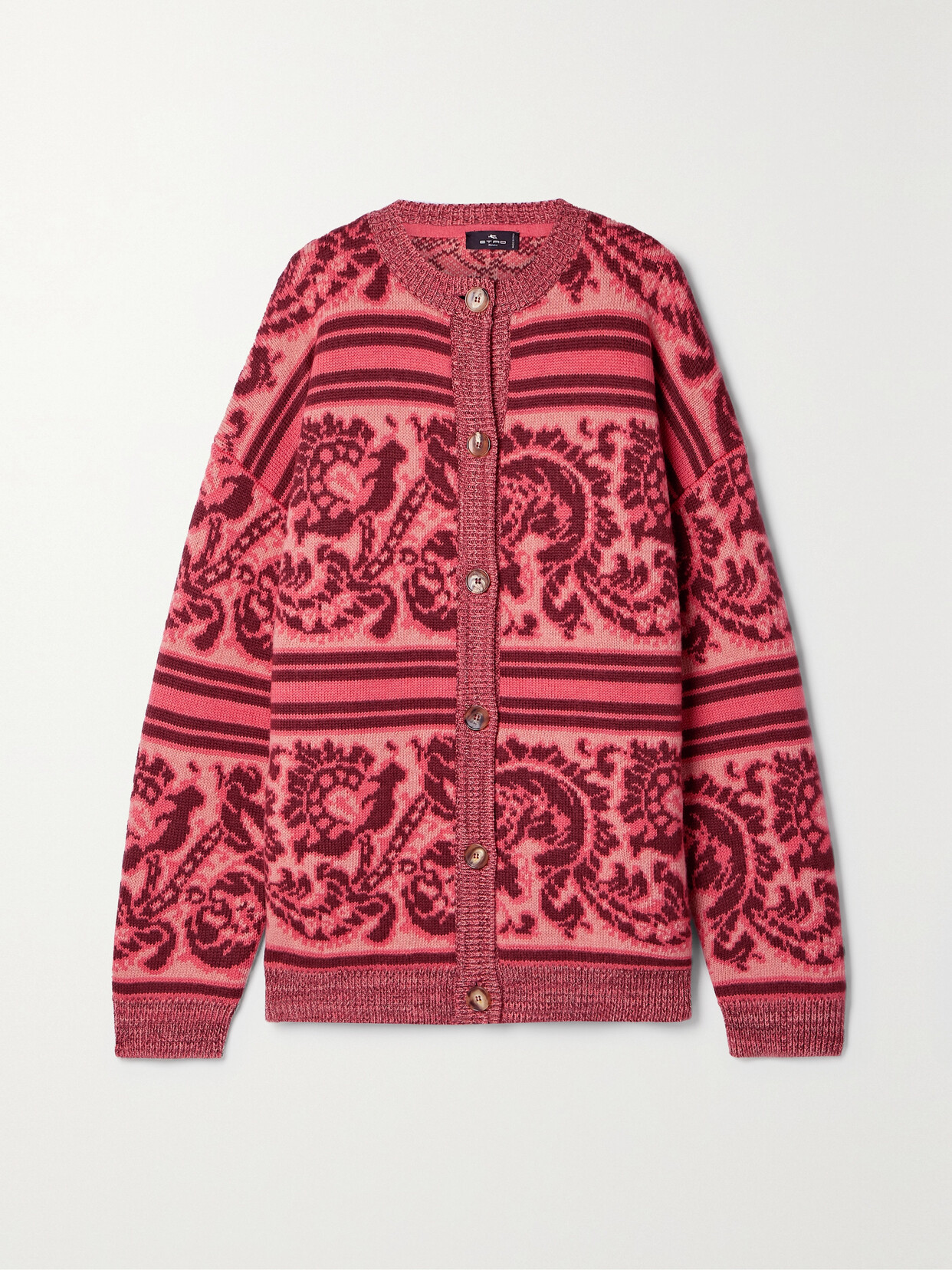
Here are couple of my favourite Etro pieces you can shop right now!
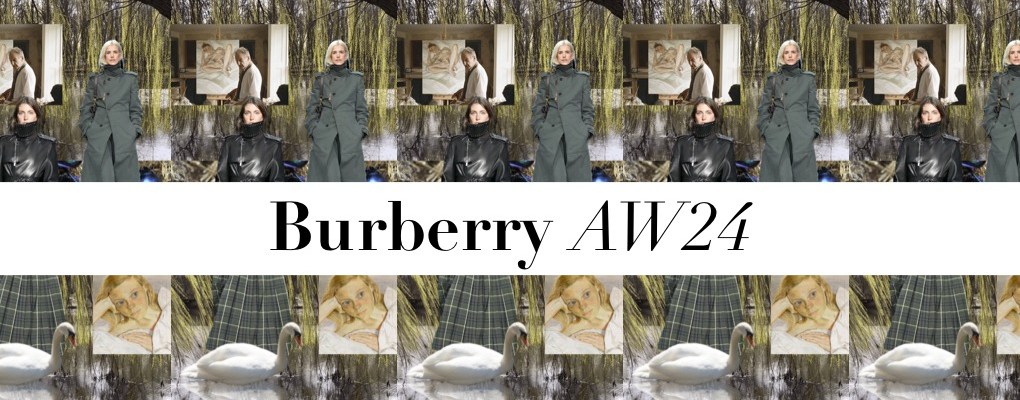
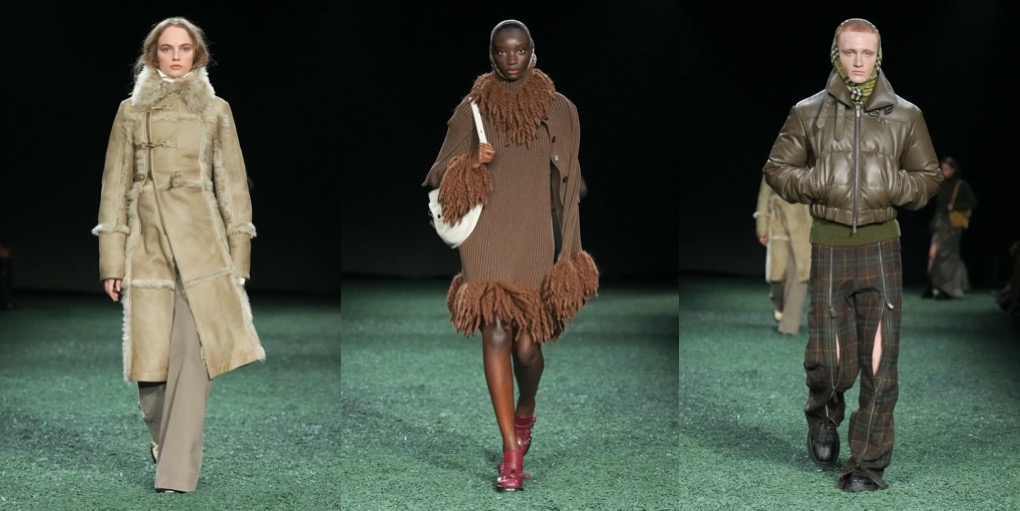
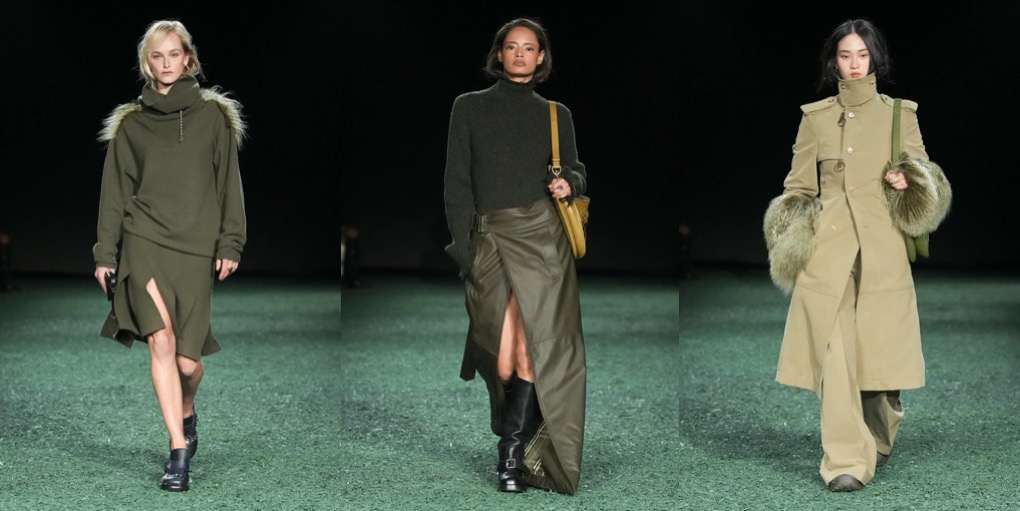
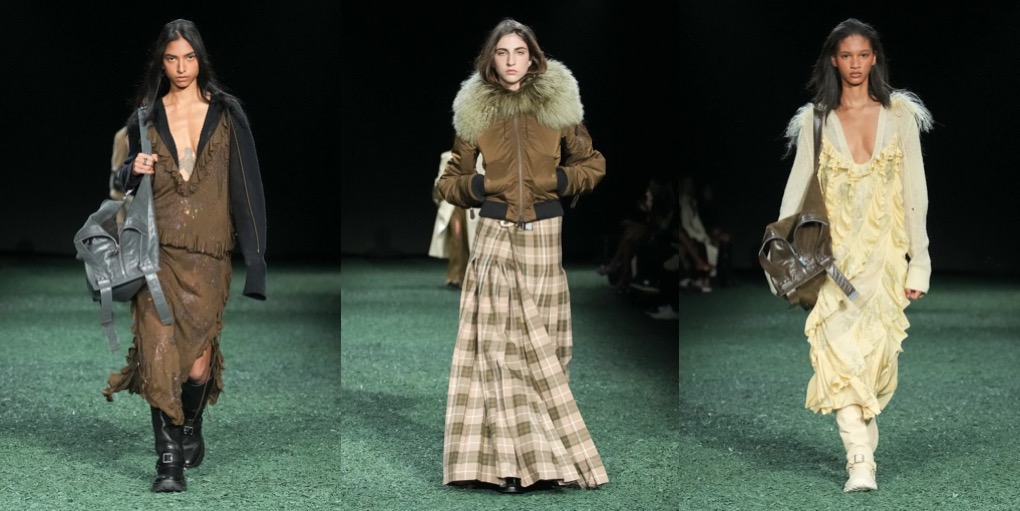
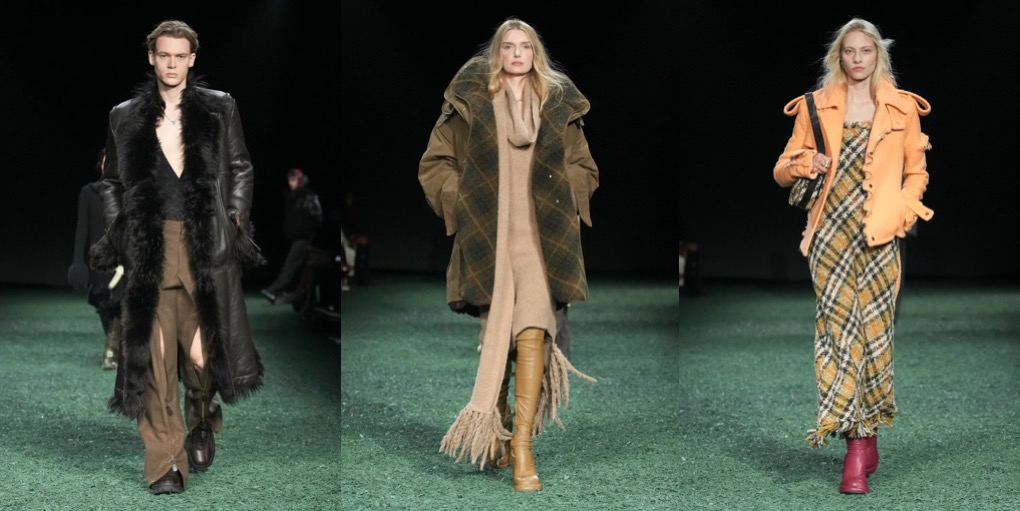
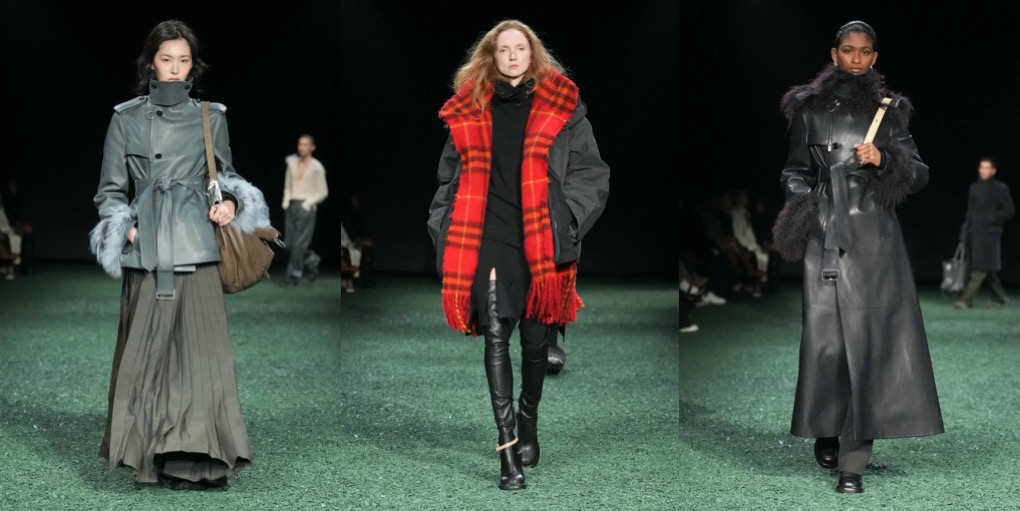
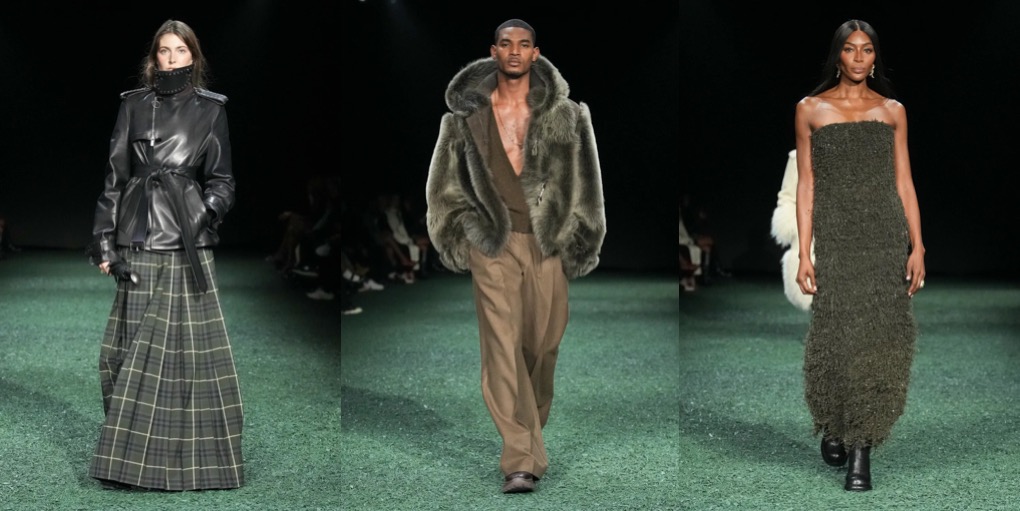
Daniel Lee is finding his ground at Burberry. Well, it’s high-time: the sales don’t look good at the British brand, and the plans of making Burberry a high-class-luxury player seem to be too ambitious. But what Lee presented under the tent in Victoria Park yesterday was quite convincing. To the tune of Amy Winehouse’s biggest hits, London’s O.G. models – Agyness Deyn, Lily Donaldson, Karen Elson, Lily Cole, Nomi Campbell – marched in desirably-looking outerwear, no-nonsense knitwear and plaid flannels. Maya Wigram – Phoebe Philo’s daughter! – closed the show. This gesture felt like a blessing from the fellow London-based designer who schooled Lee at her Céline studio. The styling of the show was persuasive as well: maxi-skirts styled with short varsity jackets, slouchy shearling coats mixed with super-oversized pants, and of course, a range of revisited moleskin trenches in shades of earthy greens and browns. Echoes of Christopher Bailey-era Burberry were heard and seen all around. All this certainly felt good to watch, but will it actually lure the clients to invest in Burberry just as they did in the early 2010s? Time will tell.
Collage by Edward Kanarecki. Don’t forget to follow Design & Culture by Ed on Instagram!
Hey, did you know about my newsletter – Ed’s Dispatch? Click here to subscribe!

















 Design & Culture by Ed