
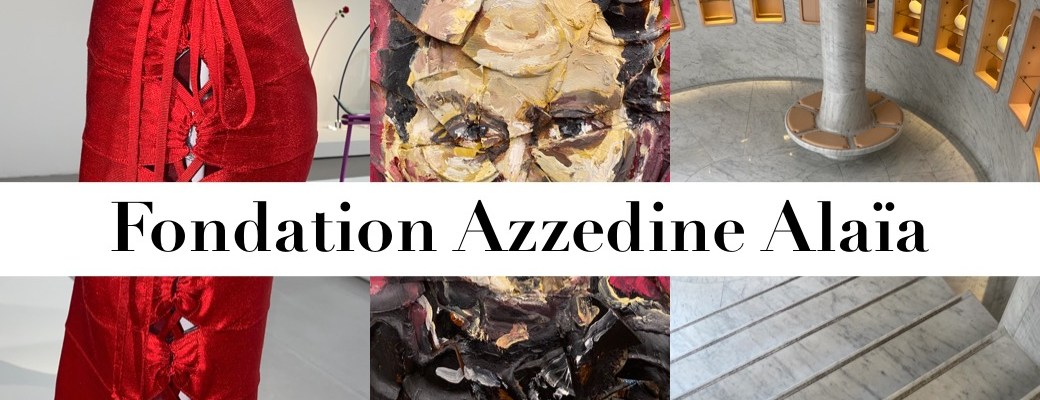
The Fondation Azzedine Alaïa, located at 18 rue de la Verrerie in Paris, is an institution that pays tribute to the work of the Tunisian fashion designer Azzedine Alaïa. Together with his partner, Christoph von Weyhe, and his close friend, Carla Sozzani, Alaïa established the foundation with the aim of preserving his creative legacy and maintaining his private clothing collection. In 2007, the Association Azzedine Alaïa was created—a project that, in 2020, evolved into the Fondation Azzedine Alaïa following a decree by the French Ministry of the Interior, which recognized the institution as being of public utility. The designer remained actively involved in the foundation’s activities until his death in 2017, shaping it as a space where fashion—beyond just his own work—could engage in dialogue with art.
Though the Fondation Azzedine Alaïa was born out of the designer’s own residence (much like the Musée Yves Saint Laurent originated from Saint Laurent’s atelier on Avenue Marceau or the Palazzo Fortuny from Mariano Fortuny’s home in Venice), this institution is an unconventional example of a fashion designer’s museum. Unlike other biographical fashion museums, the Parisian foundation does not operate a permanent exhibition, instead focusing exclusively on temporary shows. The foundation, which functions as a museum, is closely associated with the thriving fashion brand Alaïa, owned by the Swiss holding Richemont; and although it operates entirely independently from the conglomerate, it coexists with the brand’s flagship boutique—which, as will be discussed, is itself a kind of legacy project by the late couturier. In addition, Alaïa’s private collection, consisting of 35,000 garments and recognized as one of the most significant in the world, is still in the process of being fully catalogued and conserved. The Fondation Azzedine Alaïa is indeed a fashion designer’s museum—but one that operates on its own terms, with statutes still in the making.
When referring to the designer’s residence, I draw on the definition proposed by Andrzej Pieńkos, for whom such a site is a “territory of life and creation,” and subject to “various modes of shaping.” Alaïa’s residence follows a unique formula, and does not align with the traditions of other artistic dwellings that Pieńkos describes, such as the “artist’s palace” or “temple.” I propose defining the Fondation Azzedine Alaïa as a maison: not only in the sense of a fashion house (an atelier where collections are created), but also as the designer’s home—a private space inseparable from his creative domain. The site where the foundation is located was, during Alaïa’s lifetime, fully adapted to his work, and became his own universe—a place where haute couture, an obsession with art and design, and fashion commerce came together.
Today, this multidisciplinary institution merges a variety of functions—from exhibition space to an independent publishing house. The foundation is housed within a complex that includes three types of spaces: public (including the foundation’s exhibition hall, a café-bookstore, the courtyard, and the fashion house’s flagship boutique with an entrance at 7 rue de Moussy), semi-public (formerly the couture ateliers, the foundation’s office, Alaïa’s famous kitchen, and three apartments designed by the couturier himself, available for short-term rental), and private (such as the designer’s living quarters and the quasi-archives housing his private garment collection, spread throughout the buildings). It’s worth noting that not all these spaces are officially part of the foundation (e.g., the boutique and rental apartments, which are excluded from this research). Nevertheless, they form part of the maison intrinsically tied to the designer’s identity.
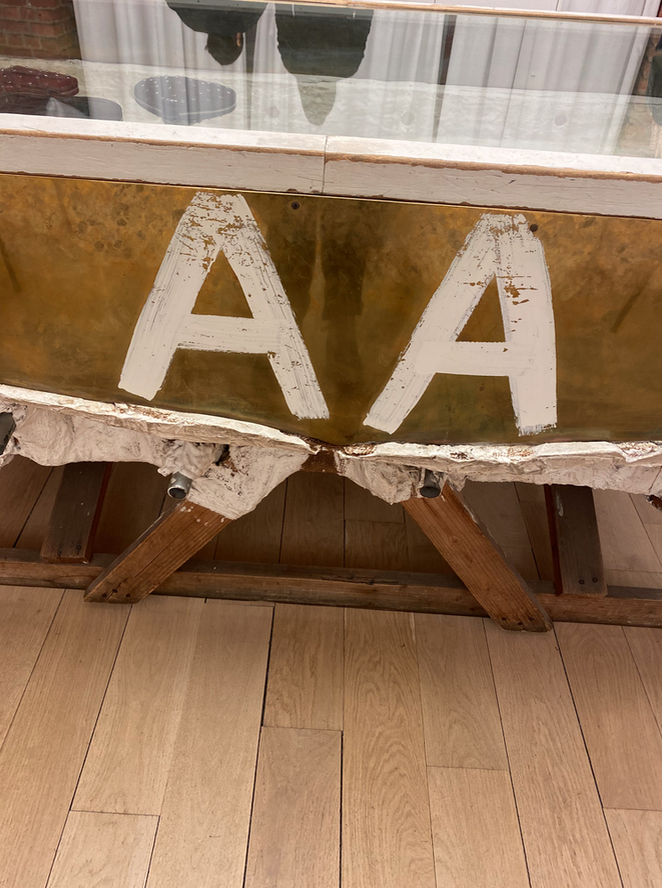
To fully grasp the essence of the Fondation Azzedine Alaïa, one must first understand the figure of the designer himself—who, throughout his career, operated against the conventions of both haute couture and prêt-à-porter, and who made a lasting mark on fashion history with his revolutionary approach to the female form.
Azzedine Alaïa was born on February 26, 1935, in Tunis, the capital of Tunisia, and was raised by his grandparents. From an early age, he believed he would one day emigrate to Paris—the city where he would eventually find success. He began his artistic education by studying sculpture at the École des Beaux-Arts in his hometown. At the same time, he worked at Madame Pinot’s clinic, a local midwife’s practice. Working in a place dedicated to women, Alaïa had the opportunity to observe their bodies and understand their needs. In the clinic’s waiting room, he would pore over French fashion magazines between appointments. It was there that he discovered the leading names of the Paris fashion scene at the time, such as Madeleine Vionnet and Cristóbal Balenciaga. Combining his sculptural training with a deep understanding of the female body gained during his time at the clinic, Alaïa came to the unexpected realization that designing clothing was his true calling. He soon abandoned sculpture to pursue the art of dressmaking. However, the limited fashion industry in Tunis made it clear that he would need to move elsewhere to gain experience and train as a couturier.
In 1956, after receiving permission from his grandfather to move to Paris—the undisputed capital of fashion and the city he had dreamed of since childhood—the aspiring couturier secured an internship at Christian Dior’s atelier. However, he was dismissed after just five days. The Algerian War had just broken out, and Alaïa’s Arab heritage was unwelcome both to Dior himself and his collaborators. In retrospect, Alaïa admitted he did not hold it against them—he was not interested in the “archaic” clientele that Dior’s designs targeted.
For the next two seasons, he worked with Guy Laroche, a representative of the new generation of couturiers. At Laroche’s atelier, Alaïa had the opportunity to refine his skills in haute couture craftsmanship. Privately, he began taking on clients in the apartment of the Contessa de Blégiers, where he was living at the time, designing custom garments for them. His early clientele included such notable figures as Greta Garbo, Arletty, and Cécile de Rothschild. Throughout the 1960s, he gradually built up his own client base and focused on creating made-to-measure eveningwear. He gained recognition among the Parisian artistic elite—actresses, poets, and creatives disillusioned with the conservative approach of other haute couture designers.
Thanks to the support of one of his most influential clients, Simone Zehrfuss, he moved into his first apartment at 60 rue de Bellechasse, which he partially transformed into an intimate atelier.
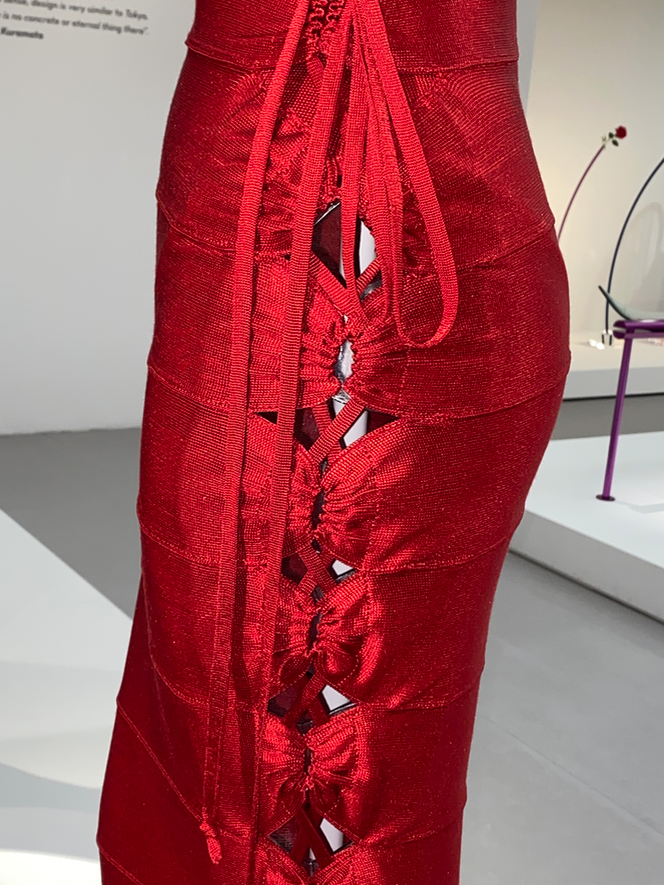
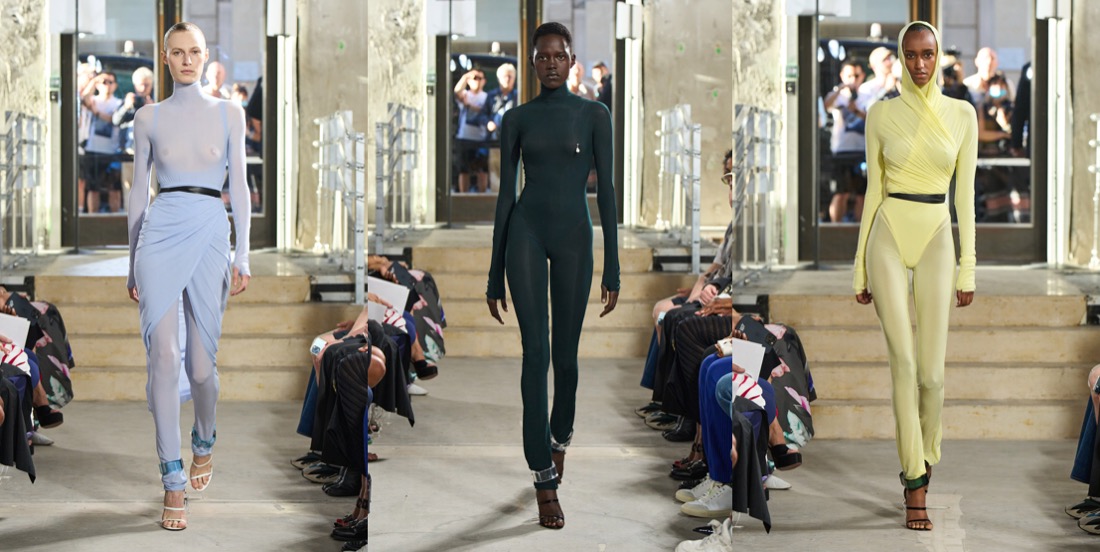
As society changed—especially after the 1968 student protests—the importance of haute couture began to decline. Alaïa adapted relatively quickly to the shifting market, redirecting his work toward a younger clientele more open to experimenting with their image. His interest in the female body and his sculptural background inspired him to use materials such as Lycra and viscose—still uncommon in the early 1970s—which, due to their technical properties, offered stretch and pliability. Body-hugging dresses, fitted tops, and tight, slimming pants—now known as leggings—became Alaïa’s signature innovations and soon attracted the attention of the Parisian fashion press.
Naturally shy and modest, Alaïa avoided publicity. Nevertheless, he became a recognizable public figure, thanks to strong relationships with journalists at French fashion magazines and a close friendship with Thierry Mugler, the flamboyant figure of a new generation of Parisian designers—a generation in which the Tunisian couturier found a place.
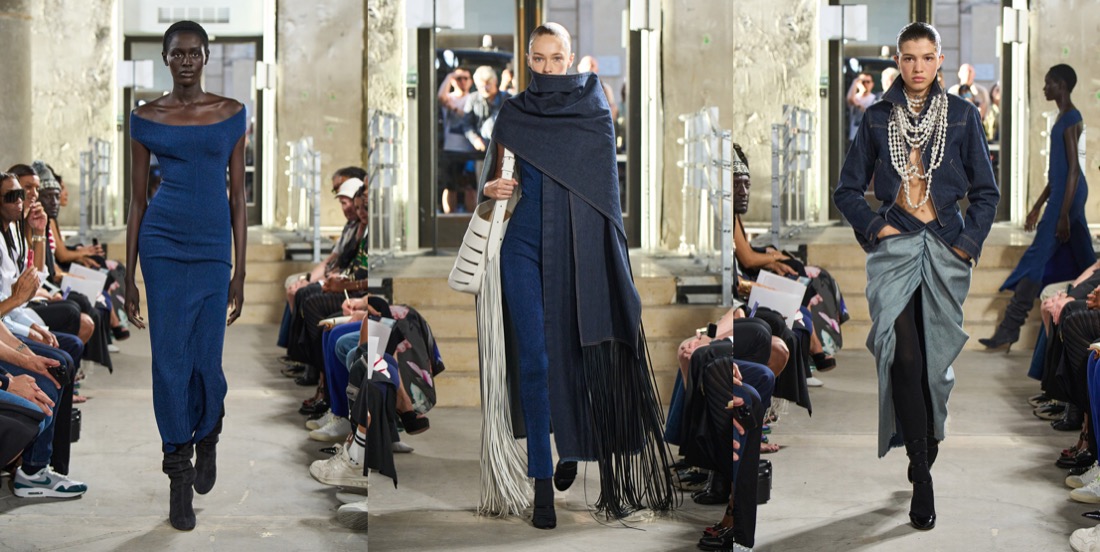
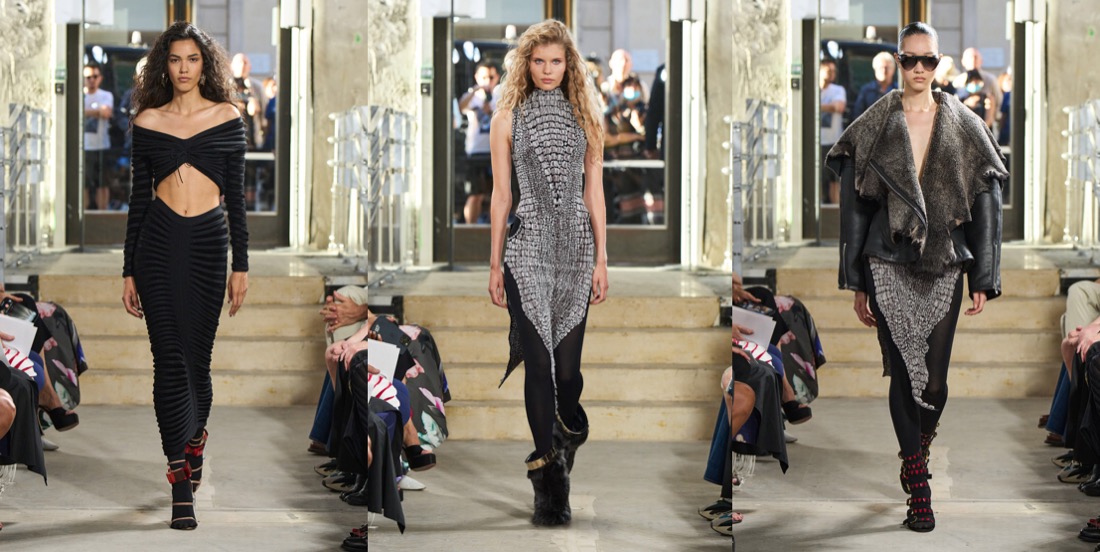
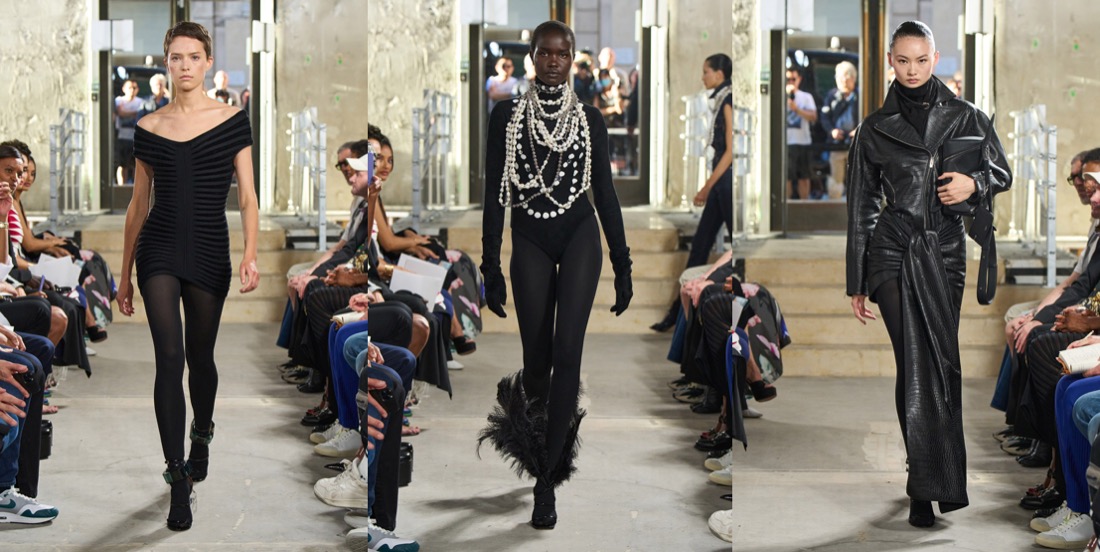
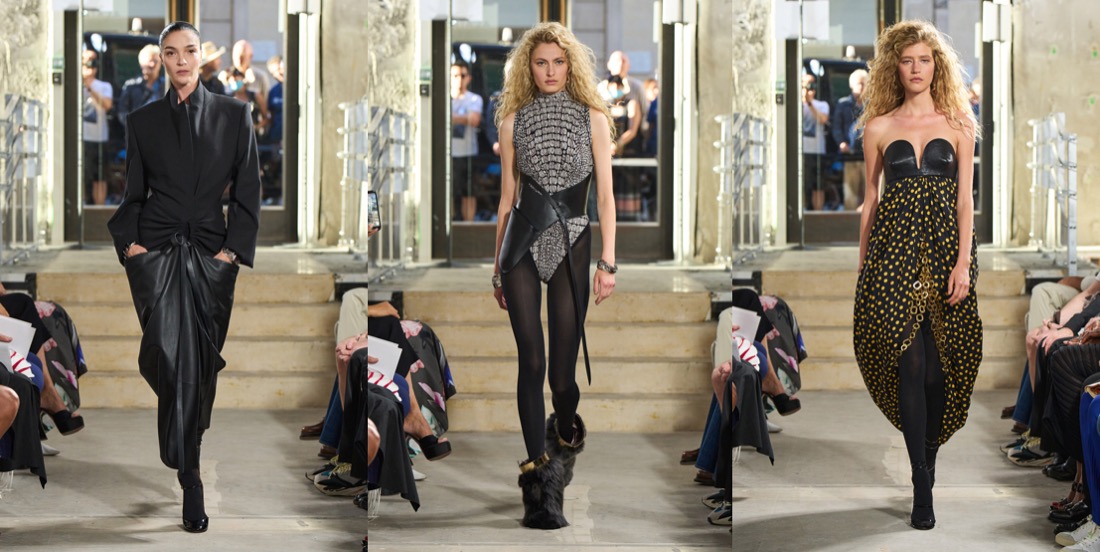
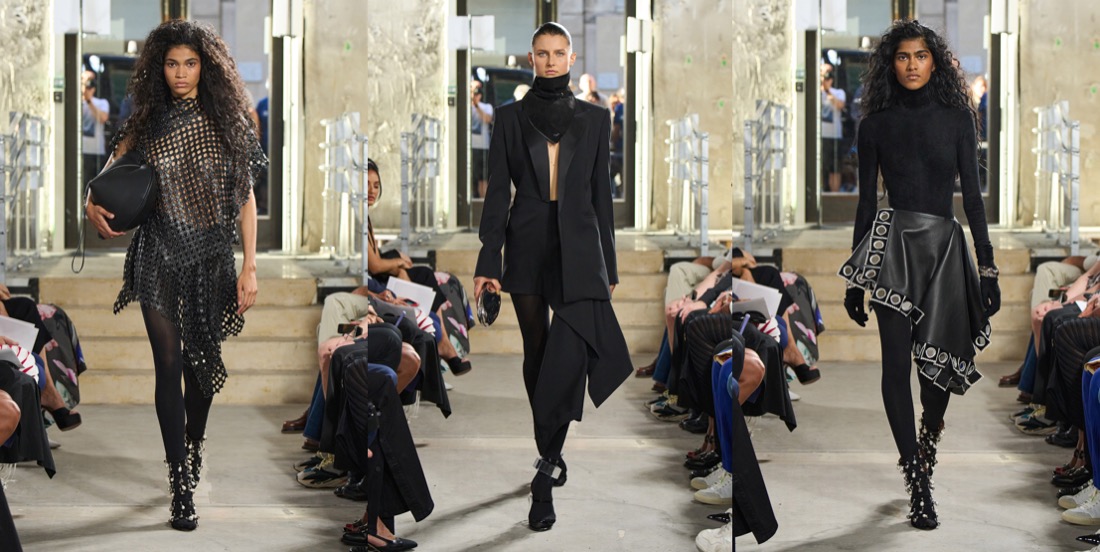
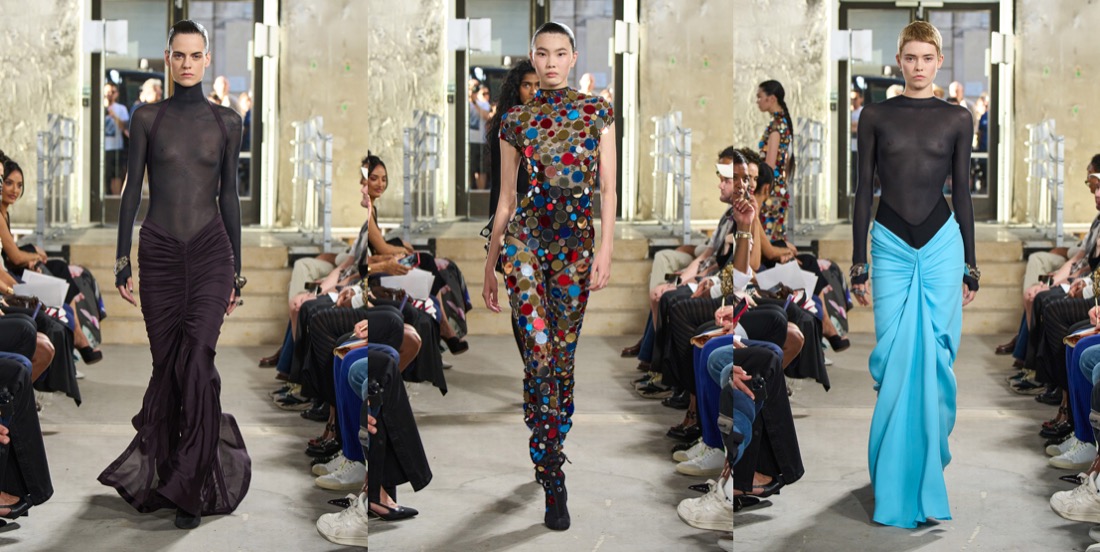
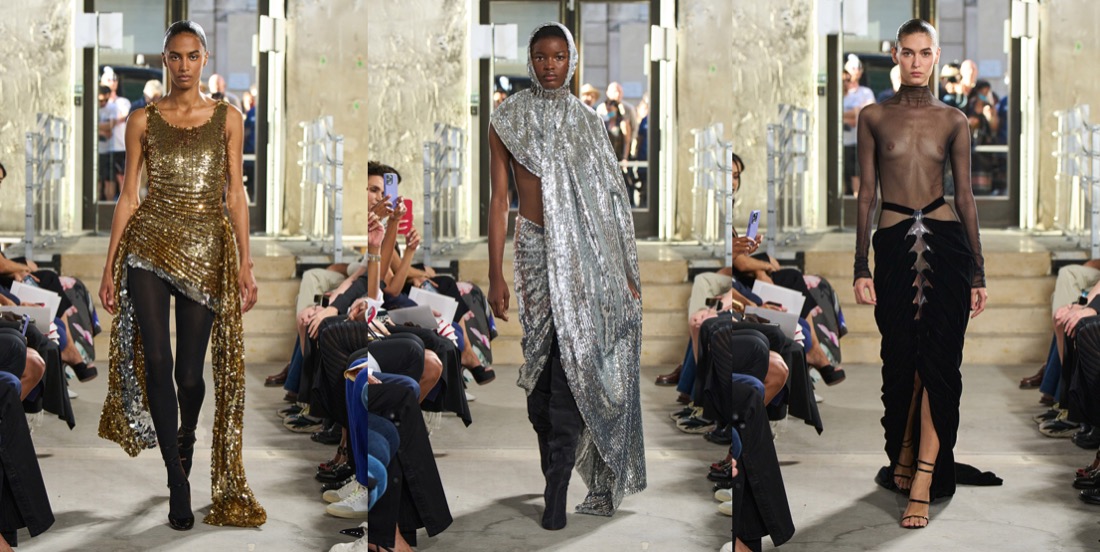
By the early 1980s, Azzedine Alaïa’s name was synonymous with tunics adorned with metal eyelets, waxed fabric silhouettes, corset-like designs, and tightly-fitted, back-baring dresses. In 1981, he presented his first complete collection under his own name, introducing his signature fashion concept: the “Body.” These garments celebrated the female figure in a way never seen before, offering both comfort and, as Carlyne Cerf de Dudzeele—renowned art director and loyal client—put it, a “sense of protection.”
Alaïa’s fashion shows, staged outside the official Paris Fashion Week calendar, took place in his apartment on rue de Bellechasse and drew journalists, buyers, and celebrities from around the world. Models prepared in the designer’s bathroom, while final garment details were adjusted in the bedroom, which doubled as a makeshift backstage. Guests gathered in the space between the kitchen and living room, waiting patiently for the presentation of the Tunisian designer’s latest collection. Although these shows were low-budget and radically different from the grand productions of designers like Yves Saint Laurent—lacking music, formal seating, or theatrical staging—they received critical acclaim and achieved commercial success. Orders from private clients and American luxury department stores quickly followed.
By the late 1980s, Alaïa’s creations had become integral to the visual identity of pop culture icons like Madonna and Tina Turner. A pivotal year for the designer was 1986, when he met Naomi Campbell, then an unknown 16-year-old model of Jamaican descent with a striking presence. She would become the embodiment of Alaïa’s ideal woman—so much so that her figure served as the basis for the fashion house’s signature translucent mannequins, still used today in Alaïa boutiques and the atelier of current creative director Pieter Mulier. Campbell was not only a model and longtime ambassador for the brand, but also a close personal friend of the designer, whom she affectionately called “Papa.”
In his later career, Azzedine Alaïa’s work was recognized by many international fashion institutions and celebrated in numerous museum retrospectives, including at the Guggenheim Museum in New York in 2004 and the Palais Galliera in Paris in 2013.
The story of the Fondation Azzedine Alaïa began in 1987, when the Tunisian designer purchased a group of former industrial buildings in the Marais district of Paris. The renovation of the over 4,000-square-meter complex took three years. In 1990, Alaïa moved both his business and private life into this new space. The complex consists of several spacious and interconnected rooms stretching between rue de la Verrerie and rue de Moussy.

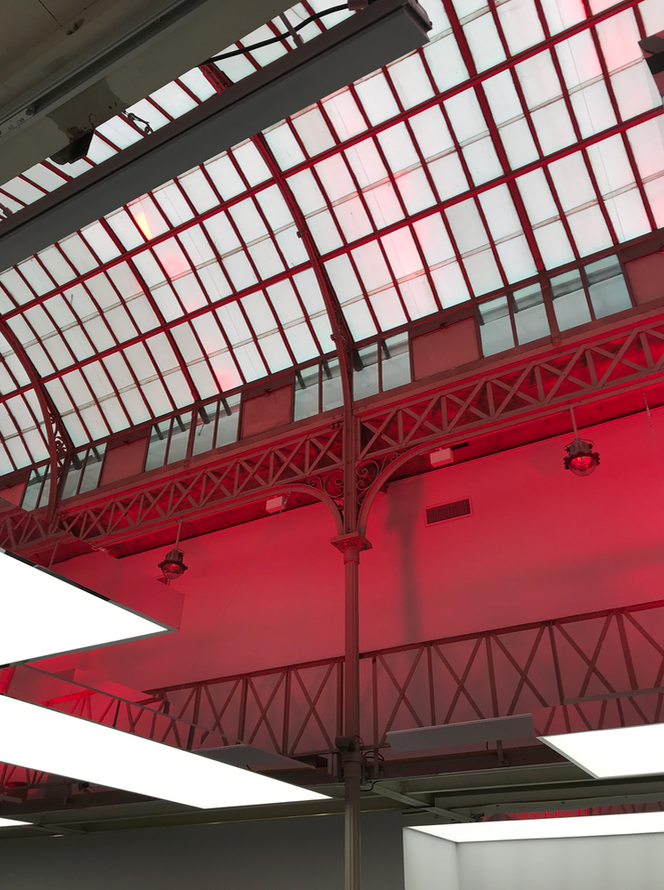
From 13 rue de la Verrerie, a glass-covered courtyard leads into a vast, two-story hall. Built in the 19th century according to the plans of architect Pierre-Étienne Harouard, the hall originally served as a factory workshop, and later as a storage facility for the Bazar de l’Hôtel de Ville department store. Alaïa referred to this space as the “Grande Halle.” It features a glass roof supported by a cast-iron frame. Renovation work carried out in the late 1990s revealed wall frescoes—painted directly onto the plaster—depicting hand-painted world maps. These details are remnants from the late 19th century, when the building housed a charitable restaurant.
This restaurant was a philanthropic initiative by François-Xavier Ruel, founder of the Bazar de l’Hôtel de Ville, aimed at providing meals to impoverished families at minimal cost. In reimagining the loft-like interior, Alaïa collaborated with American artist Julian Schnabel, with whom he also co-designed other parts of the maison, including the on-site boutique.
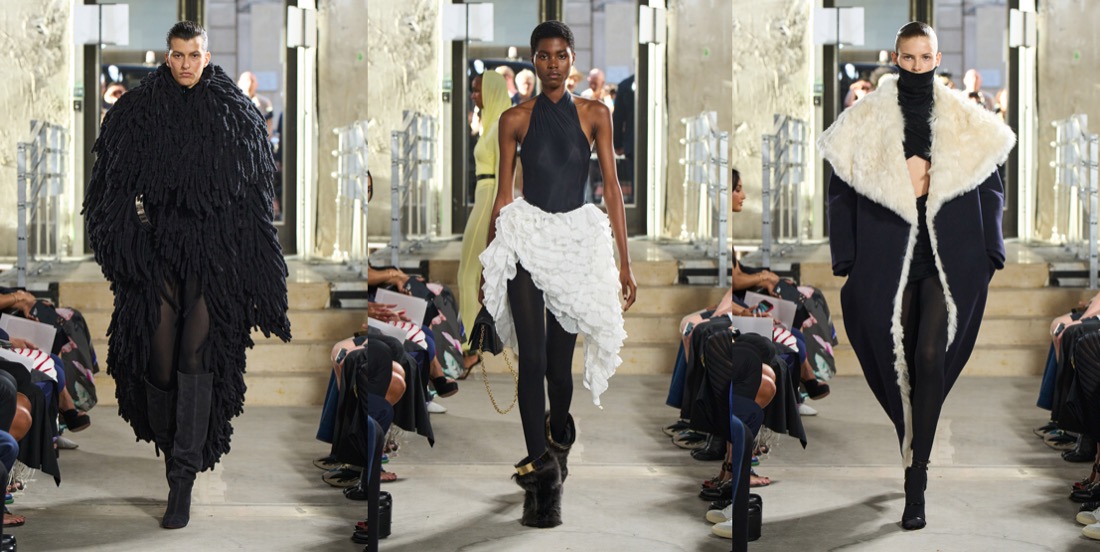
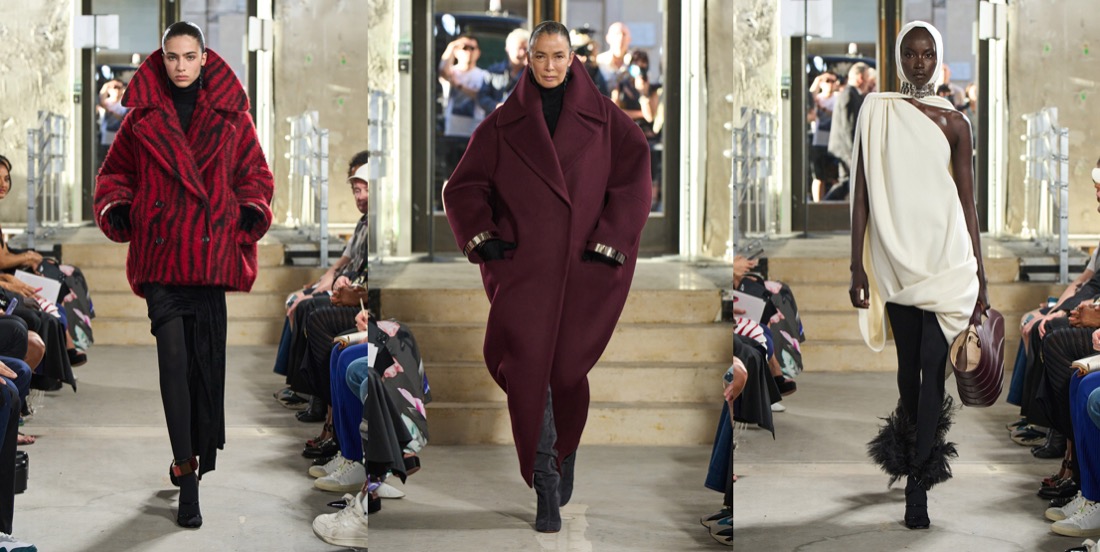
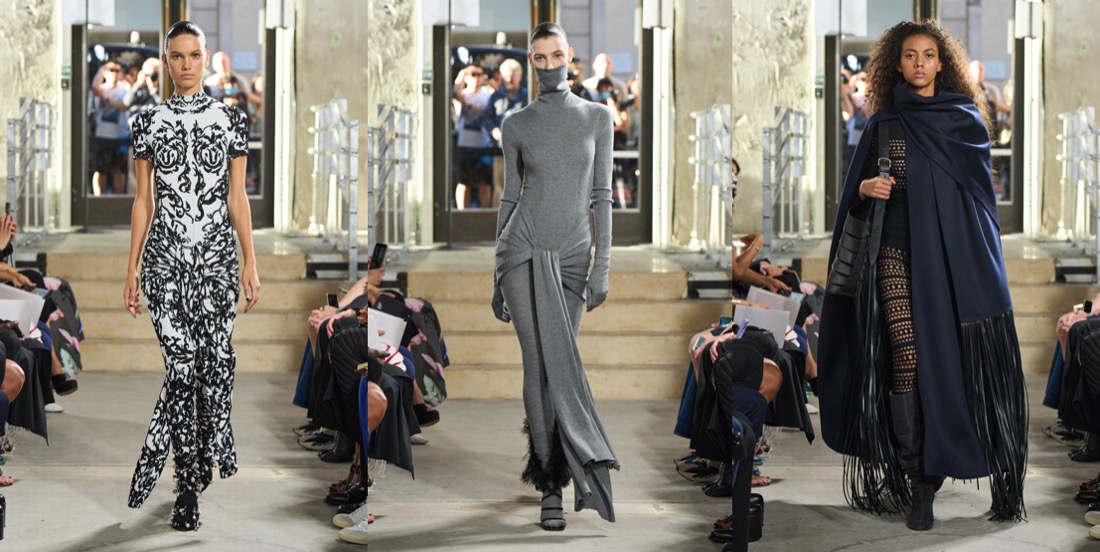
The “Great Hall,” with its vast open space and abundance of natural light filtering through the glass ceiling, proved to be the ideal venue for presenting Alaïa’s haute couture and prêt-à-porter collections. Throughout the 1990s and the early years of the new millennium, the designer showcased his work there to a select audience of journalists, critics, buyers, clients, and friends of the fashion house.
Notably, Alaïa also made the hall available to other designers he admired and supported—such as Vivienne Westwood, the British visionary and “godmother of punk,” whose shows were held there from 1993 to 1995. Even before the foundation was officially established, Alaïa hosted his first short-lived exhibitions in this space, dedicated to artists and fashion designers he revered and collected—including Paul Poiret, Pierre Paulin, Ettore Sottsass, and Richard Wentworth.
The central role of art in Alaïa’s life—ranging from personal interest to professional collaborations—is powerfully symbolized by Le Sein, a sculpture by César, which stands at the foot of the staircase leading to the “Great Hall”. Commissioned by Alaïa, this monumental metal sculpture in the shape of a woman’s breast was interpreted by the designer as a tribute to women and their bodies—the ultimate inspiration for his fashion. To this day, the artwork greets visitors to the foundation.

The “Great Hall” now serves as the main exhibition space of the Fondation Azzedine Alaïa, whose director and chief curator is Olivier Saillard—a French fashion historian and creative director. The Fondation’s core mission, as defined in its charter, is to organize two exhibitions per year: one that presents Alaïa’s work in a new context (for instance, a lesser-known biographical dimension or in relation to applied arts or photography), and another that stages a dialogue between the “Patrimoine” collection—comprised of 15,000 garments from the Tunisian designer’s private holdings—and his own creations. Since 2020, Saillard has curated eight exhibitions, all of which have been shown in the “Great Hall.”
The Fondation Azzedine Alaïa, formerly the designer’s residence and studio, now functions as an evolving repository of his garment collections. For Alaïa, collecting fashion was more than an archival act of inspiration; it was, in his words, “a gesture of solidarity with those who came before me, who held scissors in their hands and created clothes with the same pleasure and precision.” In an interview, the late designer described his collection as “a tribute to all the techniques and all the ideas that these clothes carry.”
Alaïa began collecting garments in 1968, when he had the opportunity to acquire pieces from Cristóbal Balenciaga following the closure of the latter’s fashion house. Mademoiselle Renée, then co-director of the Basque couturier’s atelier, contacted the Tunisian designer and offered him sample dresses and leftover fabrics, suggesting he use them however he wished—possibly for his own tailoring experiments. This gesture undoubtedly marks the beginning of Alaïa’s private collection.
Over the following decades, Alaïa assembled a comprehensive archive that spans key periods in fashion history—from the birth of haute couture in the late 19th century to the avant-garde designers of the 1980s, such as Rei Kawakubo, Yohji Yamamoto, Issey Miyake, Jean-Paul Gaultier, and the aforementioned Thierry Mugler, who was also a close friend. The collection even includes an original Mondrian dress by Yves Saint Laurent, acquired at auction—the very same piece Alaïa himself had sewn for the house in 1965, temporarily filling in for one of its tailors.
Alaïa was particularly fascinated by designers from the first half of the 20th century. The most significant among them, in his view, were Madeleine Vionnet; Madame Grès (from whose house he collected some 600 pieces); Jeanne Lanvin (about 500 garments); Jean Patou; Paul Poiret; Gabrielle Chanel (at one point, he owned more historical Chanel suits than the fashion house itself); Elsa Schiaparelli; and, of course, Cristóbal Balenciaga (with more than 700 of his creations in the archive).
“He saved the heritage of French fashion. He was consumed by the fear that it might all disappear,” Saillard remarked in The Business of Fashion, emphasizing the cultural urgency behind the collection. Alaïa’s approach set him apart from his contemporaries: while many designers—such as Chanel or Saint Laurent—collected art, sculpture, or painting, Alaïa was unique in his dedication to collecting and studying the work of his predecessors and peers. He viewed garments as tangible evidence of countless hours of labor—not only by designers but by skilled artisans. As a couturier himself, he understood how much time and expertise went into the realization of a fashion concept, even for garments that might appear deceptively simple.
According to Saillard, Alaïa could not bear the thought that the memory of any couturier’s work—or the craftsmanship of their ateliers—might be lost forever. This conviction fueled what might be described as his obsessive drive to collect, even garments by so-called “secondary” designers whose reputations had faded with time, such as Augusta Bernard or Claire McCardell.
When the designer passed away, Carla Sozzani, co-founder of the Foundation, knew she would need the help of experts to catalogue and archive a collection that turned out to be far larger than anyone had anticipated. She reached out to Olivier Saillard, whom, as she recalled in an interview with System magazine, Alaïa “adored and respected.” Today, the collection is dispersed throughout the entire Fondation Azzedine Alaïa building, from attic to basement. According to Saillard, it is likely the most outstanding private fashion collection ever assembled. “[Azzedine Alaïa] was a curator from beginning to end. Since 1968, he was the only person selecting, acquiring, researching, and building the collection – which means that very few pieces are without value. Some parts of the collection surpass even the holdings of the greatest fashion museums – you could never organize an exhibition on Jean Patou based solely on museum collections, but with Alaïa’s – it is finally possible.” Before Saillard began his work, the garments were well-preserved and relatively well maintained, though not according to museum standards. The collection was vast and inaccessible to anyone but Alaïa himself. It was not organized in a chronological or systematic order, so—as Saillard recalls—“a Jean Patou dress lay flat in the same box with pieces by Vionnet and Vivienne Westwood.” Saillard formed a small but dedicated team to assist him in the inventory process, which includes proper storage and digital archiving of the collection. Various rooms of the Fondation Azzedine Alaïa have been transformed into dedicated storage spaces with movable shelving that both protects and facilitates access to the historic garments. However, completing the archiving project will still take several more years, and no definitive end date has been set.
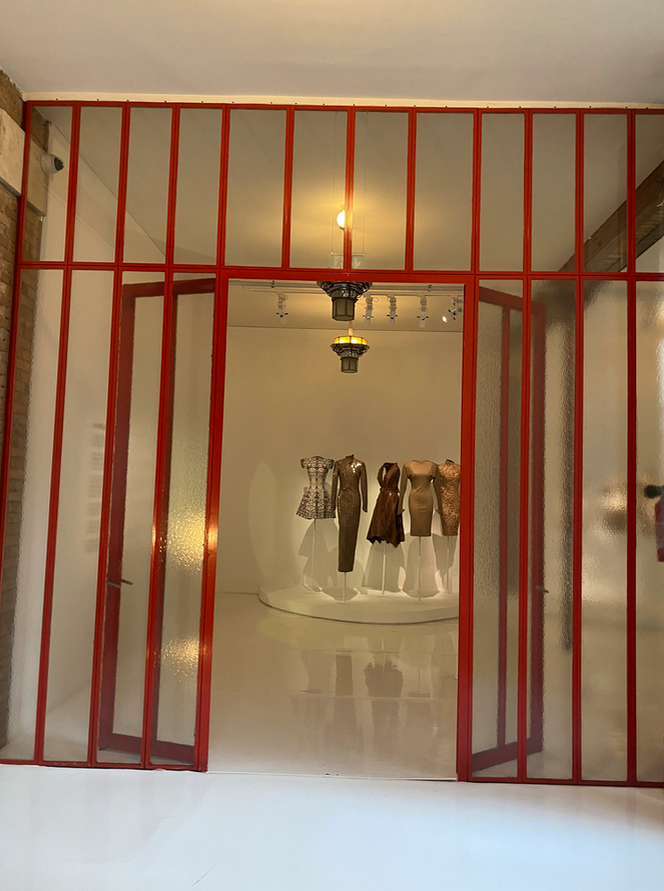
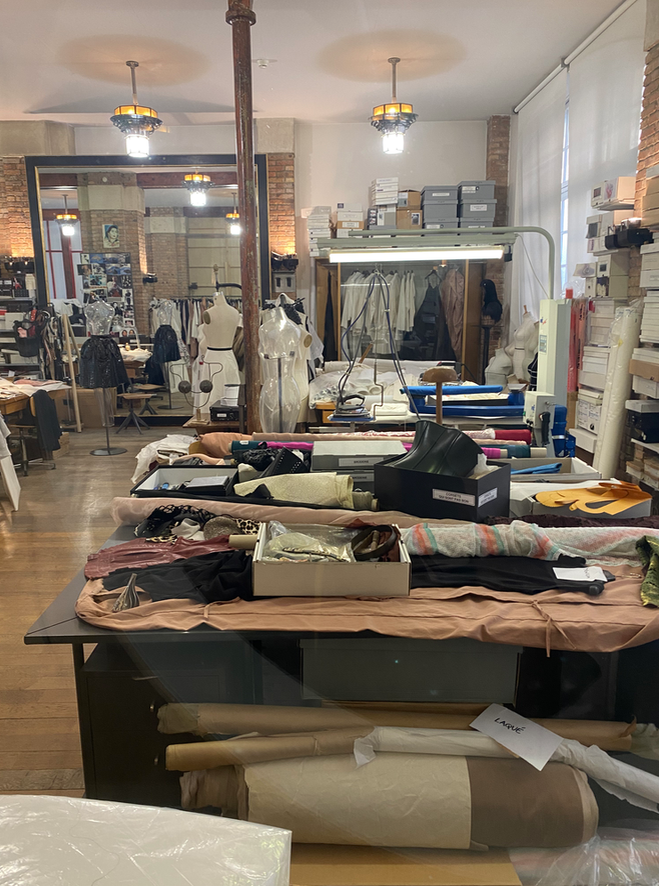
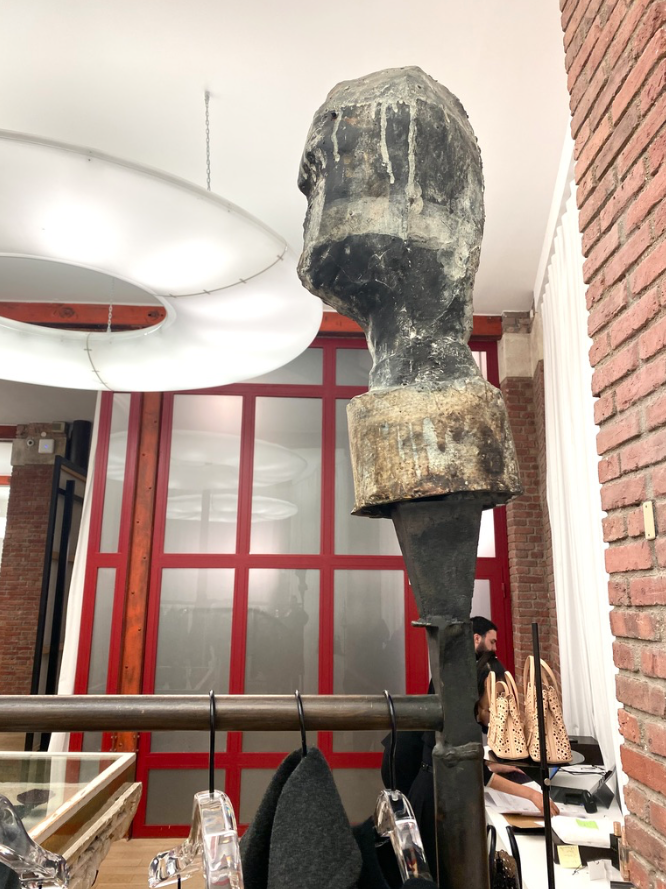
Between the “Grand Hall” and the aforementioned boutique is a stairwell with an elevator. It leads to the tailoring studio on the first floor and the designer’s apartment on the second. The studio, where the fashion house’s seamstresses worked alongside the Tunisian couturier himself, was accessible to select journalists—who previewed new collections there—as well as so-called fitting models, on whose bodies Alaïa’s designs were often sewn, adjusted, and perfected. The atelier, preserved in the raw, post-industrial aesthetic of the building’s original architectural design, was a “chaotic” place, as fashion critic Cathy Horyn—who visited regularly for nearly two decades—once described it. The space was filled with clothing racks, piles of boxes against the walls, fabric rolls, prototypes laid out on massive wooden tables, and the aforementioned transparent plastic mannequins. Near a brick pillar covered with photographs of film legends (some of whom were former clients) and snapshots of favorite models stood Alaïa’s worktable, cluttered with fabric swatches, patterns, sketches, and pushpins. Next to the desk was a television—the designer liked to keep it on, especially when working late at night, often past two or three in the morning. An essential element of the atelier was a long, horizontal mirror leaning against the wall, which visually enlarged the otherwise narrow and confined space. It was in front of this mirror that Alaïa would conduct the first fittings on a model, looking at her reflection, then back at the fabric, which he shaped, draped, and pinned with his hands. The tailoring studio ceased to function after the designer’s passing. Today, it can only be viewed through a large transparent window set into the wall opposite the elevator—and admired as a kind of artistic environment. Inside still stands a mannequin with the dress Alaïa was working on during the final days of his life.
Alaïa’s private apartment, located on the second floor directly above his studio, is a space entirely closed to visitors and researchers—it is also off-limits to the Foundation’s use, out of respect for the late designer’s privacy. The exact layout of the apartment is not known from available sources. It was only photographed once, by Ivan Terestchenko, for the interiors book Beyond Chic, published in 2013. The duplex apartment—which also functioned as the building’s attic—was accessible via the same elevator, allowing Alaïa swift access to his studio at any hour. From Terestchenko’s photos, it is clear that the apartment maintained the same loft-style character as the rest of the maison’s architectural ensemble. The images reveal raw brick walls and exposed ceiling beams. In the living room were rattan chairs designed by Dan Jansen and a dark green velvet sofa brought back by the designer from India. In the other spacious rooms stood personal mementos of the fashion creator and selected works from his private art collection, including abstract canvases by Julian Schnabel.
One particularly significant space for the designer—and for the life of his maison—was the kitchen, which had a semi-public character. Staying true to family traditions and Tunisian customs, Azzedine considered it the heart of gatherings. It was also a reminder and reference to the historical context of the rue de la Verrerie premises, once a charitable restaurant for impoverished families. In his free time away from fashion design, Alaïa fully devoted himself to his second passion—cooking. At lunchtime, all activities in the atelier would come to a halt. Around the table gathered guests: the designer’s friends, house staff, models, and prominent visitors to Paris, including politicians, actors, writers, painters, and musicians. Alaïa cooked alongside Ibrahim Soumaré, a chef he had met in the 1970s, and always sat down to eat last. In 2000, the kitchen was significantly enlarged, and a large frosted-glass table was installed, capable of seating up to thirty guests (each one sitting on a “Standard” chair designed by Jean Prouvé). Today, the kitchen serves as the Foundation’s conference room—and stands as a lasting testament to the hospitality embodied by the couturier and, after him, by his maison.
An exceptionally important part of the Tunisian designer’s fashion house was the boutique opened in 1990, with its customer entrance located at 7 Rue de Moussy. As previously mentioned, the interior of the store was designed in collaboration with Julian Schnabel, a multidisciplinary artist. Although not officially part of the Fondation Azzedine Alaïa, the boutique space should be interpreted as an integral part of Alaïa’s headquarters. Instead of a conventional store layout with racks full of garments, the boutique was intentionally designed to resemble a contemporary art gallery. The industrial character of the space was preserved, going against the grain of prevailing Parisian trends in luxury boutique design during the 1990s, promoted by brands such as Chanel and Louis Vuitton. The exposed brick walls were retained, as were remnants of the former industrial workshop, including cast-iron columns, massive doors, and large windows.
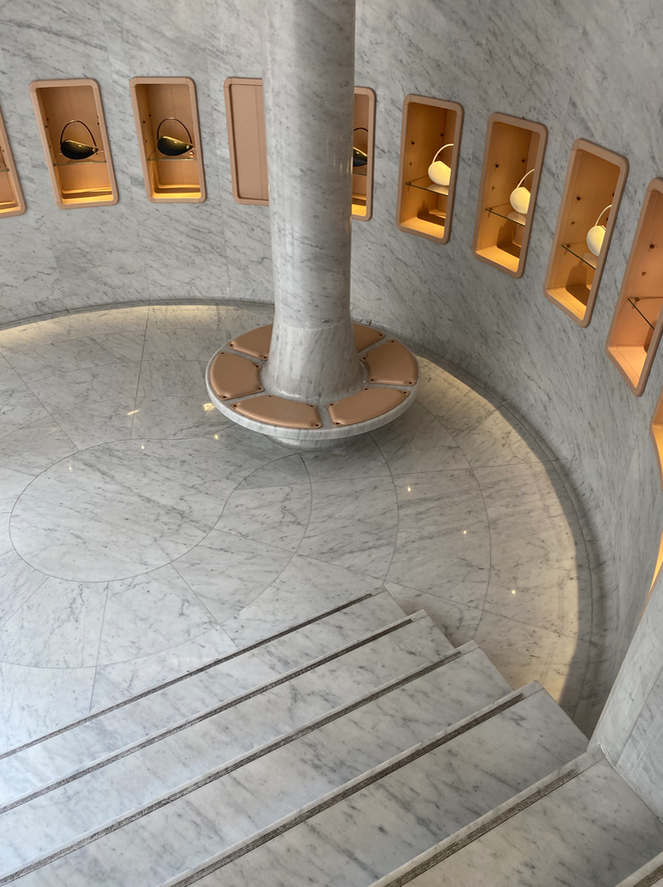
The clothes were displayed on metal racks designed—one could say sculpted—by Schnabel, whose forms resemble irregular tree branches or distorted human figures. In the boutique, Alaïa placed furniture by his favorite designers, including sofas and armchairs by Jean Royère and “Pelota” lamps by Marc Newson. In 2006, Newson was asked to design a shoe annex and a new entrance to replace the original heavy, industrial door. The Australian architect created a minimalist, round room with a glass façade facing the street—markedly contrasting with the interior of the boutique and the overall aesthetic of the maison. Twelve niches were set into the curved marble wall to display shoes. An existing support column was transformed into a pillar that serves as a circular bench for customers trying on footwear. Every element, including the floor, was made of white Carrara marble, and the bench and display niches were upholstered in leather.
The Tunisian couturier’s flagship store clearly expressed his interest in contemporary design. Importantly, the boutique was not only a place for selling new collections but also a space where the designer maintained direct contact with his clients. Alaïa valued cultivating an intimate relationship between himself and the women who wore his clothes—something rare among other Parisian fashion houses. This was crucial to him, as he believed he could not design clothing without understanding the real needs of modern women. That is why the fitting room, located adjacent to the elevator leading to the couture atelier, was so essential. Still in use today, the space was where fittings and adjustments for custom-made creations took place.
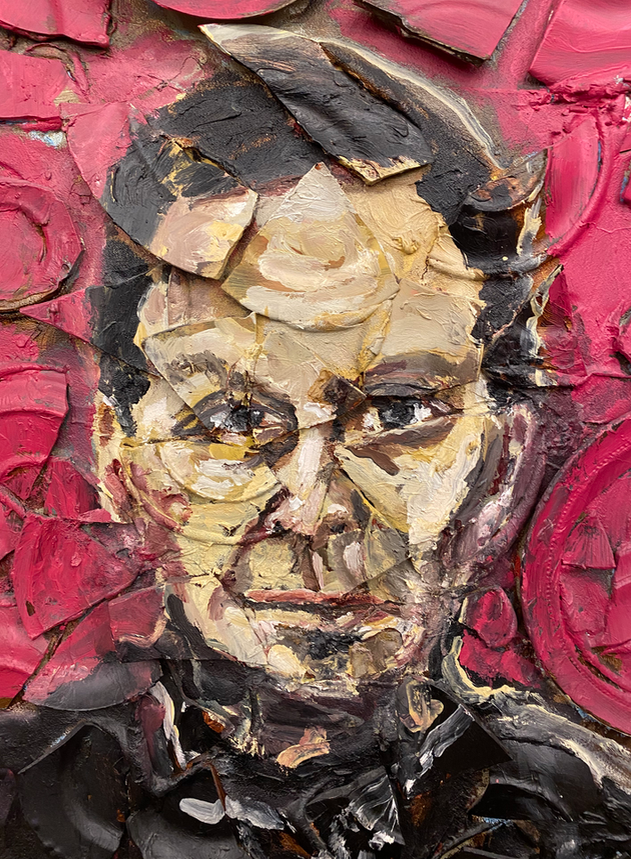
The fitting room contains a mirror in a baroque, gilded frame leaning against a brick wall, a portrait of Azzedine Alaïa by Schnabel, and velvet curtains in red and green draped over the side glass walls. As the only fitting room in the maison, it was here that women tried on the creations of the Tunisian designer. Encounters between ordinary clients and film stars were not uncommon. Although Alaïa created expensive garments, and his haute couture pieces could cost tens of thousands of euros, one gets the impression that through the boutique’s seemingly “unfinished” interior and a fitting room without conventional divisions, he subtly questioned the elitist nature of luxury fashion.

Interestingly, in the 19th century, the location now occupied by the boutique was once home to the Hôtel des Évêques de Beauvais, where Jeanne Antoinette Poisson—later known as Madame de Pompadour—received her education in both academic subjects and the so-called “ornamental branches.” It was there that she learned the skills that enabled her, despite her non-aristocratic background, to be welcomed into the royal court of Louis XV. Azzedine Alaïa was fascinated by the life of this woman, who, though born into poverty, became a key figure at Versailles. One can see a similar analogy in his own biography: a man from a modest immigrant background who became one of the most important fashion creators in Paris, breaking the conventions of the fashion industry.
Text & photos by Edward Kanarecki.
Don’t forget to follow Design & Culture by Ed on Instagram!
Hey, did you know about my newsletter – Ed’s Dispatch? Click here to subscribe!








 Design & Culture by Ed