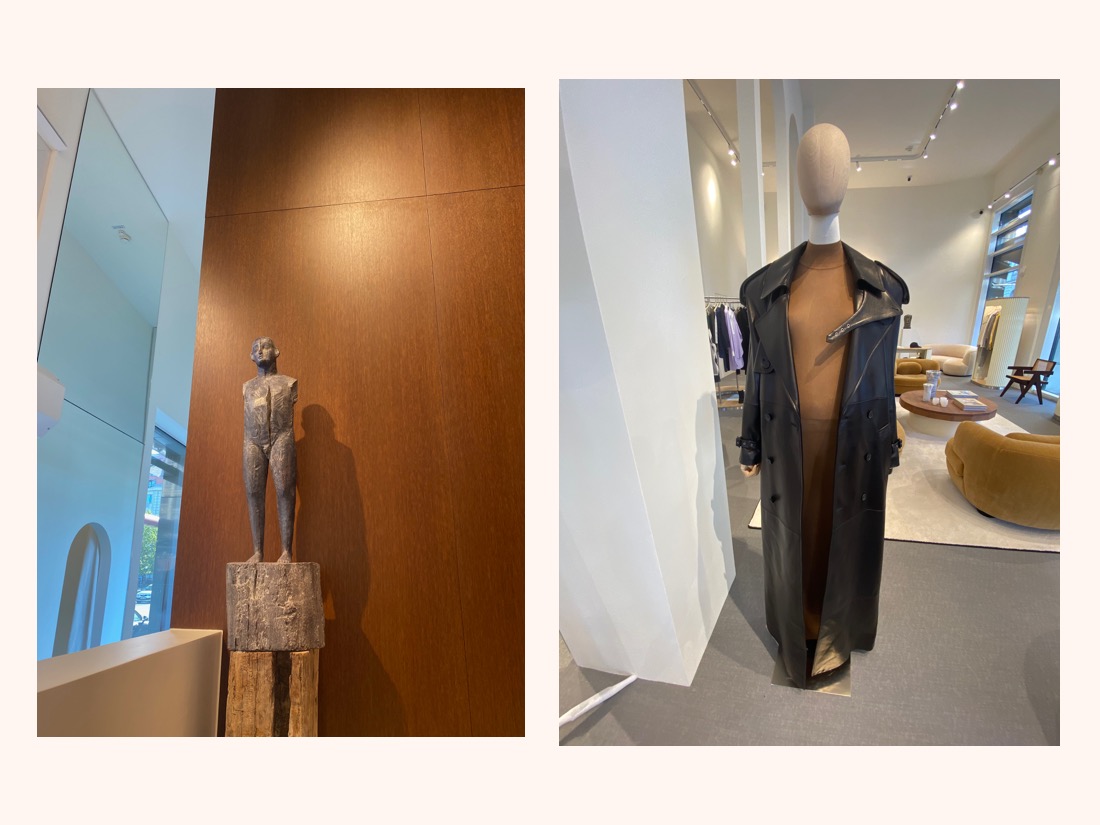
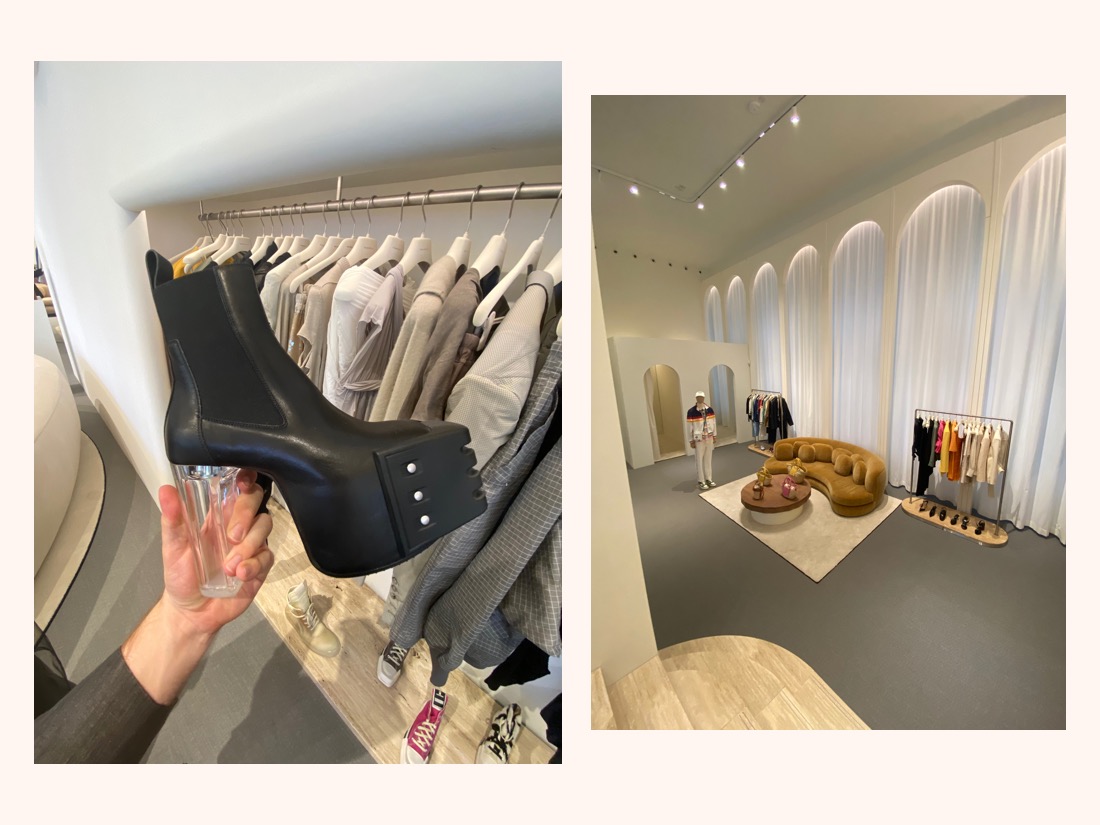
Formerly known as The Corner, Berlin’s cult multi brand concept store The Square has reopened after its renovation – and I must admit the new store is amazing. After the pandemic, I truly appreciate beautiful brick-and-mortar boutiques that capture the feeling of luxury through a gorgeously furbished and curated space. Try out the latest Manolos while sitting on the fluffy Pierre Augustin Rose armchairs, or browse the newest Saint Laurent collection and try out the heavenly Loewe candles in the zen-paced, art-gallery-like interior.
Am Gendarmenmarkt (Französische Straße 40) / Berlin
Collage by Edward Kanarecki. Don’t forget to follow Design & Culture by Ed on Instagram! By the way, did you know that I’ve started a newsletter called Ed’s Dispatch? Click here to subscribe!
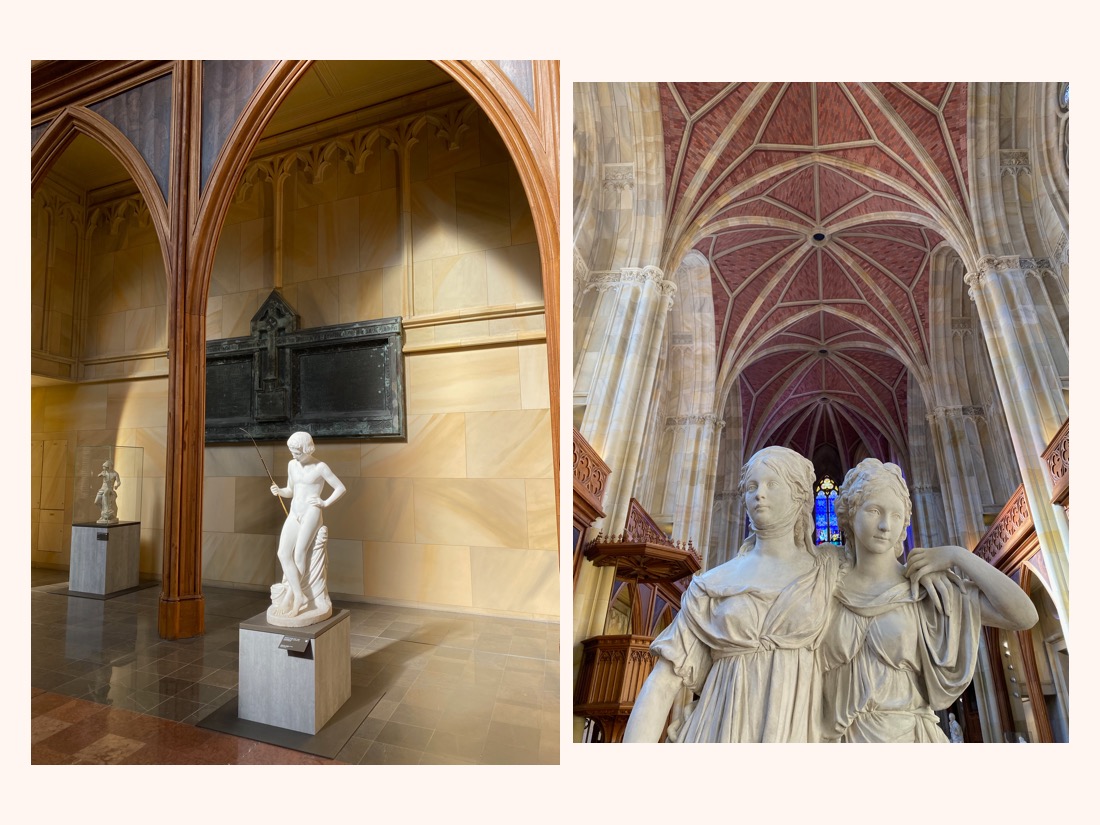
In Berlin, I stumbled upon another sort of sci-fi scenario. Johann Wolfgang von Goethe once adoringly described Luise and Friederike, the Mecklenburg-Strelitz sisters as “heavenly visions, whose impression upon me will never be effaced”. Sculptor Johann Gottfried Schadow erected a monument to their elegance and grace, creating an icon of European classicism with his double sculpted portrait of the “Crown Princess Luise of Prussia and her Sister Princess Friederike of Mecklenburg-Strelitz”. The statue of these two figures, which has come to be known under the abbreviated title Princess Group, is one of the highlights of the Alte Nationalgalerie’s collection. Now, the sculpture is back on permanent display at the breathtaking Friedrichswerdersche Kirche. The original plaster cast has a particular significance within both the broader context of Schadow’s oeuvre and that of 19th-century sculpture: it is here that not only the artist’s creative signature is at its most palpable, but also the thrilling genesis of the double-figure statue.
Showcasing sculpture from Karl Friedrich Schinkel’s era through to the German Empire, the exhibition “Ideal and Form” at Friedrichswerdersche Kirche traces the medium’s lines of development through the long 19th century into the modern era. It also invites visitors to rediscover the Berlin School of sculpture, a movement whose international outlook was ahead of its time. With more than 50 sculptures – some monumental in scale – this exhibition provides a comprehensive survey of the work of the Berlin School and of its complex international ties. On display are major works by Johann Gottfried, Emil Wolff and Christian Daniel Rauch, and by female sculptors such as Angelica Facius, Elisabet Ney and Anna von Kahle.
Werderscher Markt / Berlin
All photos by Edward Kanarecki. Don’t forget to follow Design & Culture by Ed on Instagram! By the way, did you know that I’ve started a newsletter called Ed’s Dispatch? Click here to subscribe!
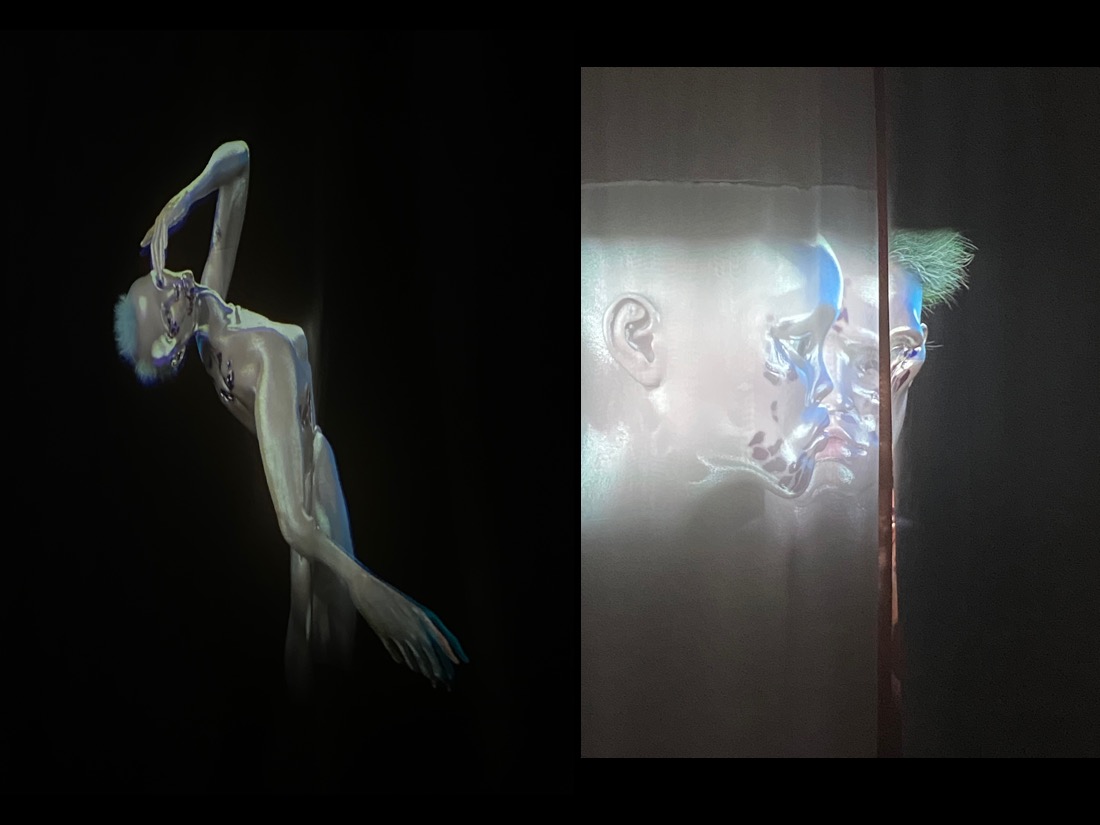
“HUMAN IS” is the best exhibition I’ve been to in a while. Don’t walk, run to Schinkel Pavillon if you happen to be in Berlin this summer. Sci-fi spirituality meets post-human aesthetics. Bodies, fakeness, AI, reproduction, mutation, realness, primal instincts, fluidity… all that in the ultimate cocktail-party spot of the DDR Germany times. You feel as if you were abducted by the aliens in the solemn 1970s Berlin and were about to get high on out-of-this-world ~vibes~. Curated by Nina Pohl and Franziska Sophie Wildförster, the exhibition offers distinctions between dystopia and reality that are increasingly collapsing in the face of inexhorable technological and ecological upheavals. “HUMAN IS” borrows its name from the eponymous short story by Philip K. Dick (1955) and investigates the idea of being human as a contestable and reversible category.
Since the 19th century – and its notions of capitalist, scientific and technological progress – science fiction has held up a mirror to the changing contemporary conditio humana with its values, fears and limitations. The seemingly external threat of extraterrestrial, supernatural or artificial beings often reveals itself as self-made anxiety and part of our cultural condition. The monstrosity of the unknown arises to shake up limitations, in effect, decentering the human protagonist. “HUMAN IS” juxtaposes historical with newly produced artworks. The exhibition paints a polyphonic picture of the mutual penetration of body and technology: it addresses the often violent interdependence of humans on their technological surroundings and opposes any promises of salvation through trans-humanistic progress. Simultaneously, it opens up spaces of possibility in which dualistic taxonomies can be overcome in favor of a networked and interdependent existence. The art show engages science fiction to transcend the humanistically inscribed human, on the one hand, and the species of anthropos, on the other, through both material and perspectival liminality. For many, the collapse of the systems we have come to rely on is no longer a distant apocalyptic future. Visionary science fiction writer Ursula K. le Guin sees fiction as a container for reinventing the possibilities of human experience and knowledge beyond any linear narrative of progress. And it is through these stories that the destruction and alienation of contemporary existence can trigger creative processes and a new ethics of relationality, which may no longer be truly human.
Oberwallstraße 32 / Berlin
Photos by Edward Kanarecki. Don’t forget to follow Design & Culture by Ed on Instagram! By the way, did you know that I’ve started a newsletter called Ed’s Dispatch? Click here to subscribe!
By the end of March, we’ve learnt that Benjamin Huseby and Serhat Işık are stepping down from their creative director roles at Trussardi. The exit came on the heels of the resignation of the Italian company’s entire board of directors, which has also prompted the departure of CEO Sebastian Suhl. In other words, Trussardi is a financial shipwreck, with its future looking very, very misty. The good thing about this event is that these two brilliant designers will be able to again fully focus on their Berlin-based label, GmbH – which to be very frank is a way more fascinating endeavor to be invested in creatively than Trussardi.
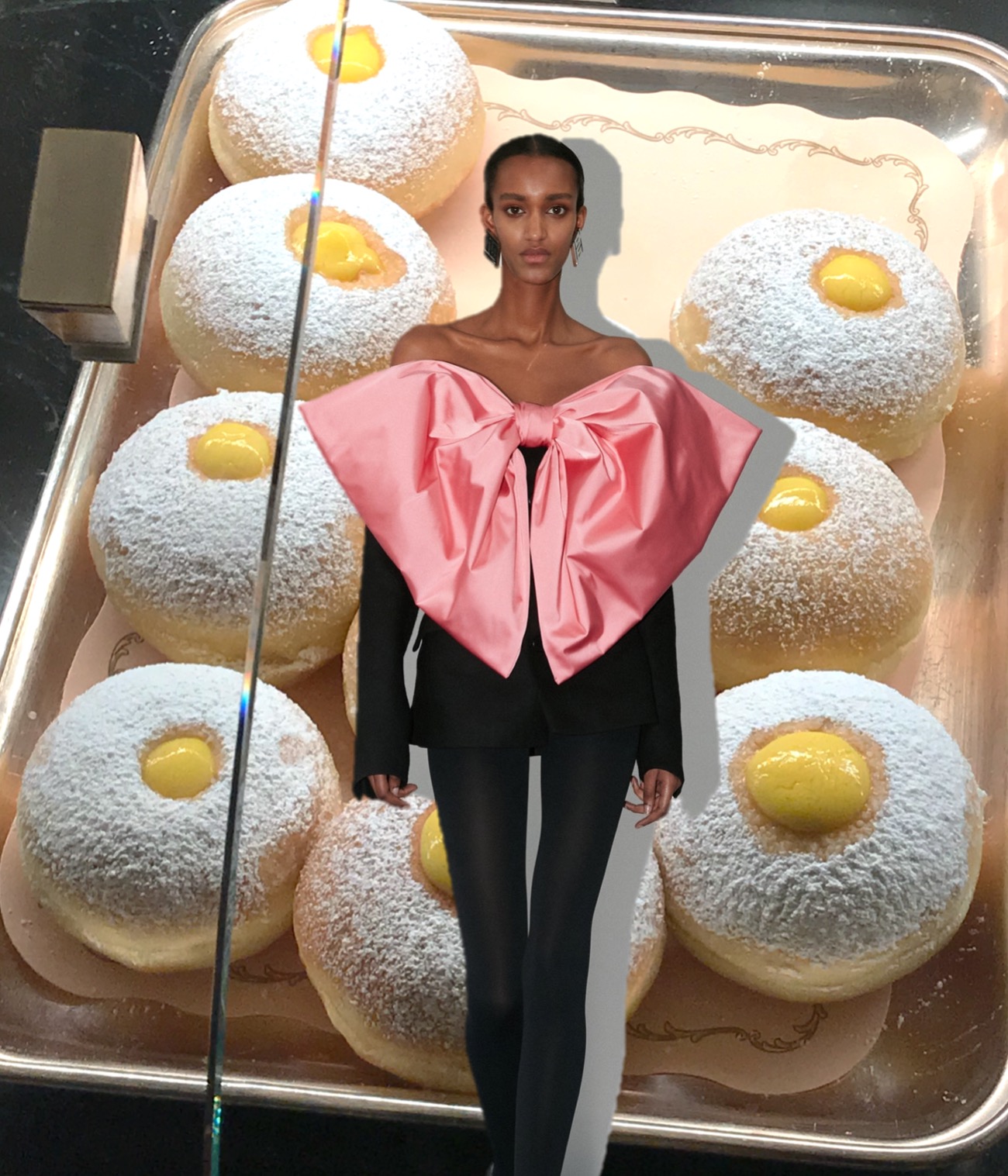
For autumn-winter 2023, Huseby andIşık tried something new at their label. Nothing says couture more than an oversize bow, and there was more than one of them – as well as stoles and streamers – in the GmbH collection, which might be described as a study in atonal glamour. The lookbook pictures are a world away from the smoky, dark setting of the performance the designers staged in Paris with the help of friends from their hometown. Dancers from its city ballet performed to the live music of Labour, using gestures to convey elegance through different lenses. Their glitch-like movements referenced both the hauteur of ’50s couture and its reclamation by marginal communities in the ballroom (vogueing) and drag cultures. At GmbH changing the focus from personal history and trauma to fashion history was, noted Huseby, “a way of finding freedom with fashion for us.” Added Isik: “I also think we are really interested in challenging ourselves with taking on full-on glamour because it’s not something that we’re necessarily associated with, or even so comfortable with.” No jitters were revealed in this confident collection, which the designers said included references to Yves Saint Laurent and Azzedine Alaïa. Many signature silhouettes were back, such as the short coat dress, but it was transformed – and transformable – with streamers that could be tied tight to bound the corset or fly free, with a train-like sweep. The off-the-shoulder bow tops in velvet or with big bows were especially unexpected takes on menswear. Huseby and Isik have been recontextualizing womenswear tropes in menswear since the beginning, but it hit different within the “couture” framework of this collection.
Here are some of my favourite GmbH items you can get right now:
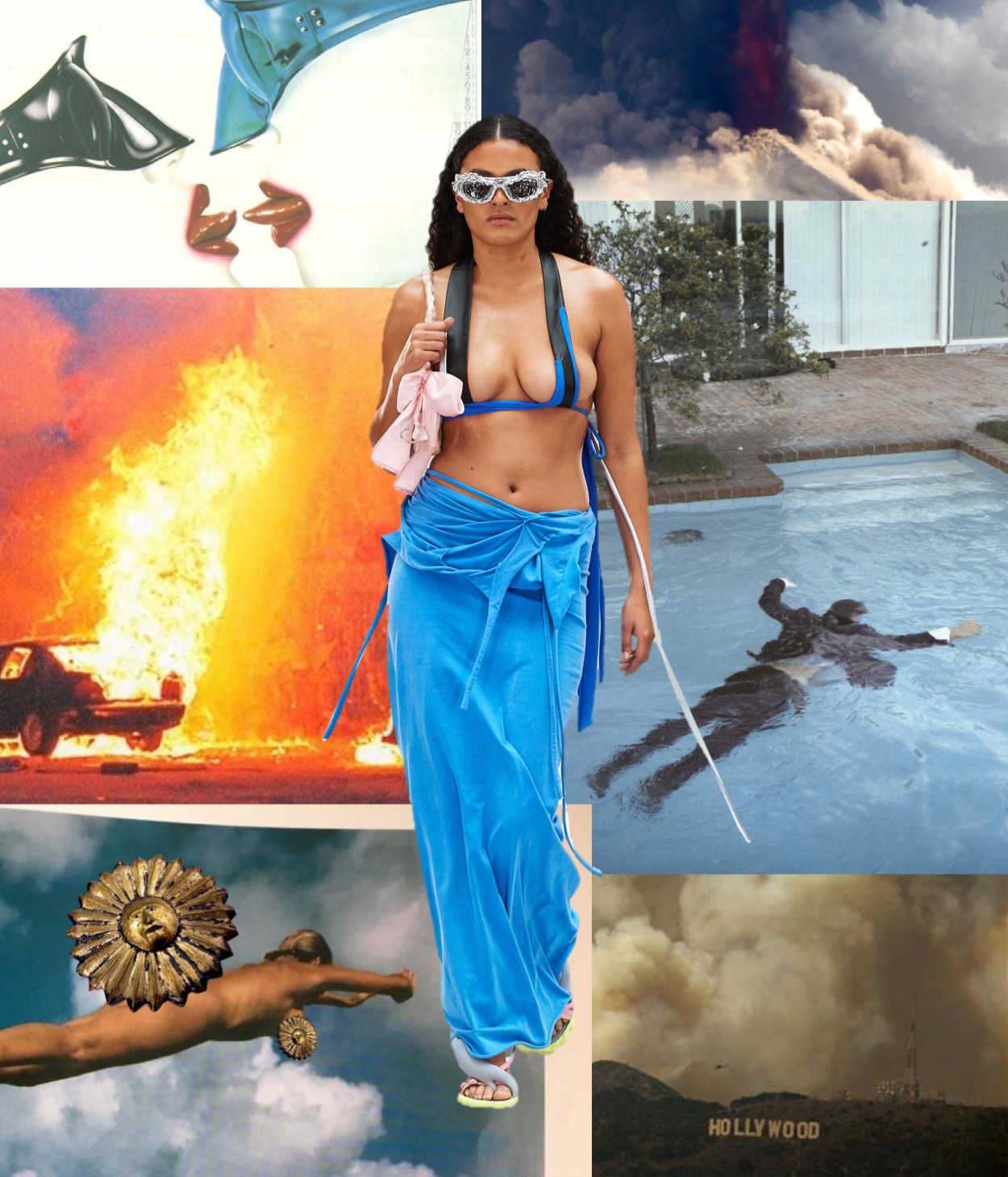
Ottolinger designers Christa Bösch and Cosima Gadient opened their spring-summer 2023 fashion show with a sharp look: a deconstructed belt–meets–bra top whose straps covered the nipples and little else, paired with low-slung leather-look trousers made from recycled polyester. Gen Z’s love of near nudity knows no bounds, and the fan base that lounged on the show venue’s mattress seats wearing skin-baring looks from the Berlin-based label would think nothing of wearing a crop top to talk shop. The designers recently launched a pre-collection that they said had allowed them to tackle more conceptual ideas in their runway shows. No longer beholden to showing denim and mesh dresses, which are their big commercial hits, this freed them up to present deconstructed biker jackets and skintight bodysuits. Ironically, though, the strongest pieces were arguably the most commercial, especially the dresses that draped and hugged the body with some rubbery-looking embellishments. Dipping items in rubber is a trait that reads recognizably Ottolinger: The punked-up court shoes, which saw a classic pump wrapped in a futuristic rubber-like casing, were as covetable as the diamanté jewelry dipped in brightly colored rubber that currently sells well on the label’s website. They’d do well to continue hammering home those codes as the Y2K trend keeps rolling and numerous other labels look to replicate their success with the sexy and the skintight.
Collage by Edward Kanarecki. Don’t forget to follow Design & Culture by Ed on Instagram!












 Design & Culture by Ed