Back At König Galerie

It was my second time at König Galerie, and I must admit that this Berlin gallery just doesn’t disappoint. It’s located in the impressive, brutalist building of the fromer Saint Agnes Church in the Kreuzberg district. König Galerie was founded by Johann König in 2002, and currently represents 39 international emerging and established artists, mostly belonging to a younger generation. The program’s focus is on interdisciplinary, concept-oriented and space-based approaches in a variety of media including sculpture, video, sound, painting, printmaking, photography and performance. During my visit two weeks ago, I had a chance to see two fascinating and absolutely relevant, temporary exhibitions that took place in the gallery’s vast spaces.

Alexandrinenstraße 118–121 / Berlin
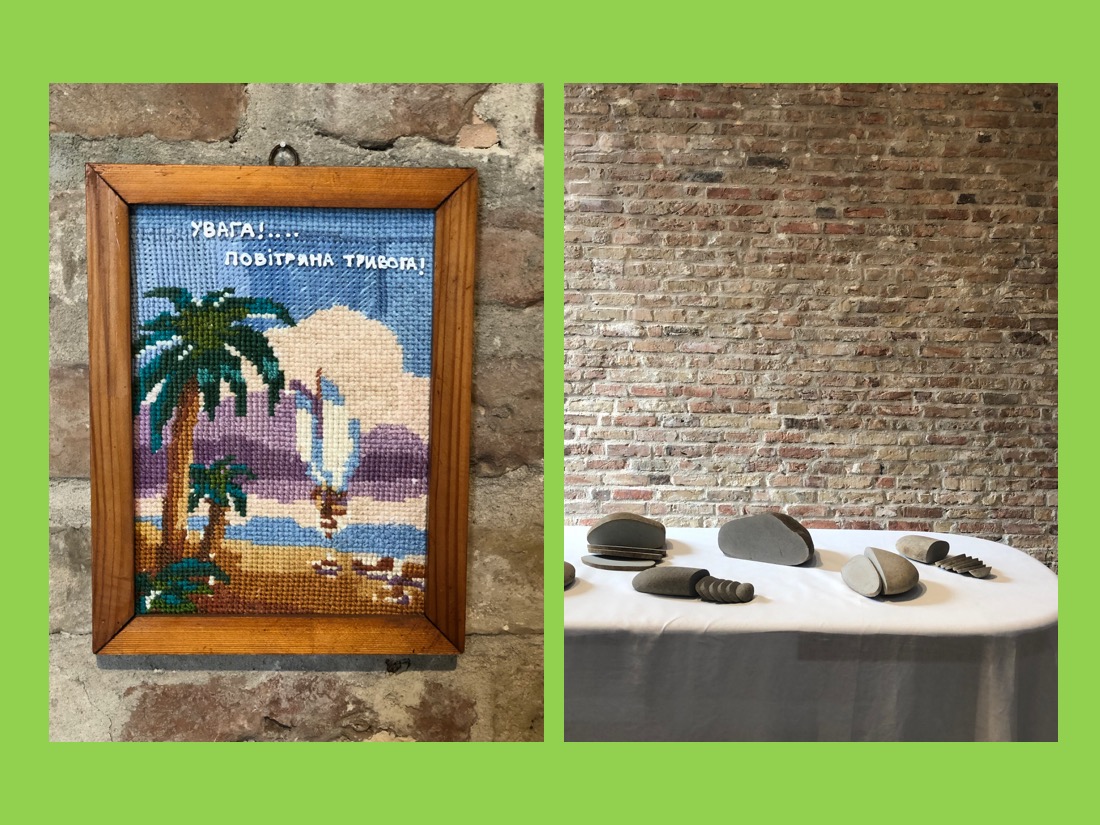
PALIANYTSIA – a solo exhibition by Ukrainian artist Zhanna Kadyrova. Kadyrova works in a variety of disciplines such as sculpture, photography, video and performance. Her practice is often site-specific and informed by the malleable and symbolic properties of urban building materials. Collecting stones from her nearest river in western Ukraine, Kadyrova’s sculptures, drawings and short film, take on the urgent situation currently playing out in her home country. Before the Russian war of aggression on Ukraine began, Kadyrova was based in Kiev. Due to the ongoing conflict she fled to the western part of the country. After relocating to the Transcarpathian region, the artist began her latest series which culminated in the PALIANYTSIA project, co-authored by Denis Ruban. Palianytsia is the name of a Ukrainian round wheat bread that Russian occupiers cannot pronounce correctly and therefore acts as a password or recognition mark among Ukrainians. During her days-long search for accommodation and a functioning studio, Kadyrova collected round stones polished smooth by the river’s current. As a symbol of Ukrainian resistance, she produced this series of illusory sculptures by slicing these collected stones whose form take on that of the Palianytsia bread. “During the first two weeks of the war, I had the impression that art was only a dream, that I had only dreamed these twenty years of my professional life. And that art at all is powerless and ephemeral compared to the ruthless machinery of war that destroys civilian cities and human lives,” the artist states. “Today I don’t think that way anymore, and I see that every artistic gesture makes us visible, and our voices audible!” Kadyrova has previously presented these sculptures and drawings in her temporary accommodation in Ukraine. With the proceeds from the sold works, she supplied herself and others with bullet-proof waistcoats, petrol, food, and medicine. She has also supported people in need in Kiev and different volunteer organisations in Kharkiv and Mariupol.

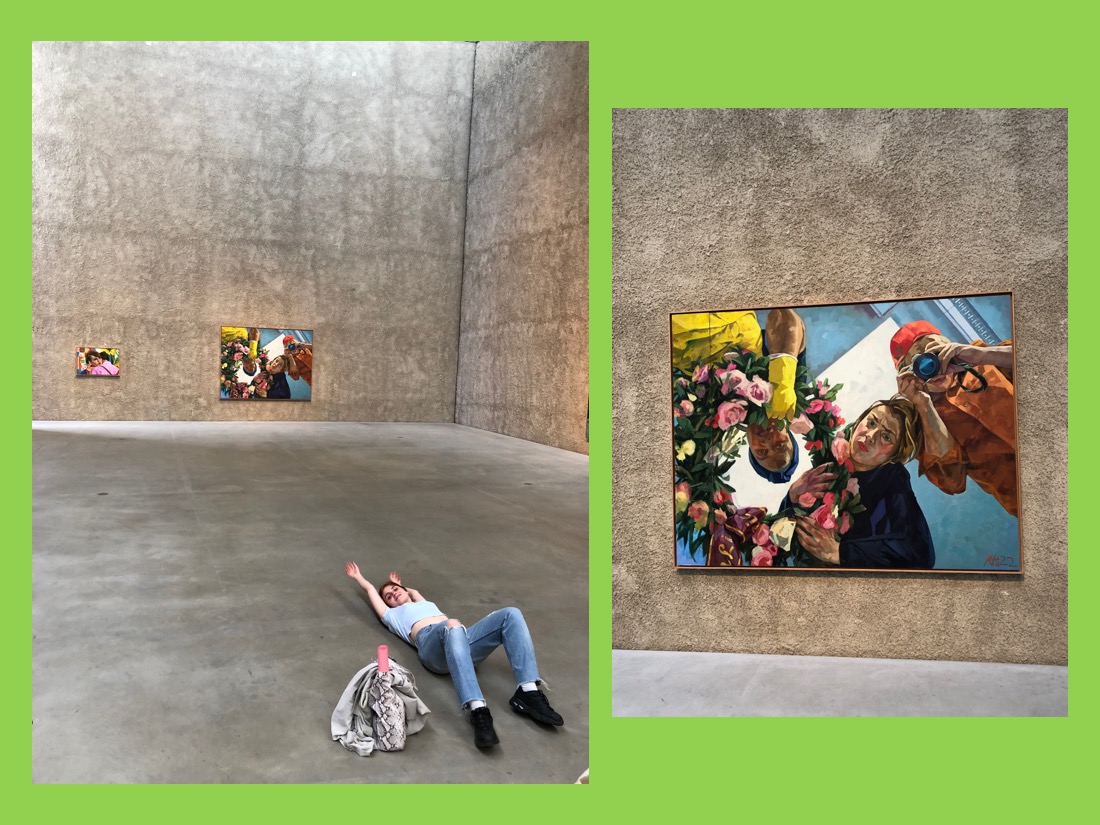
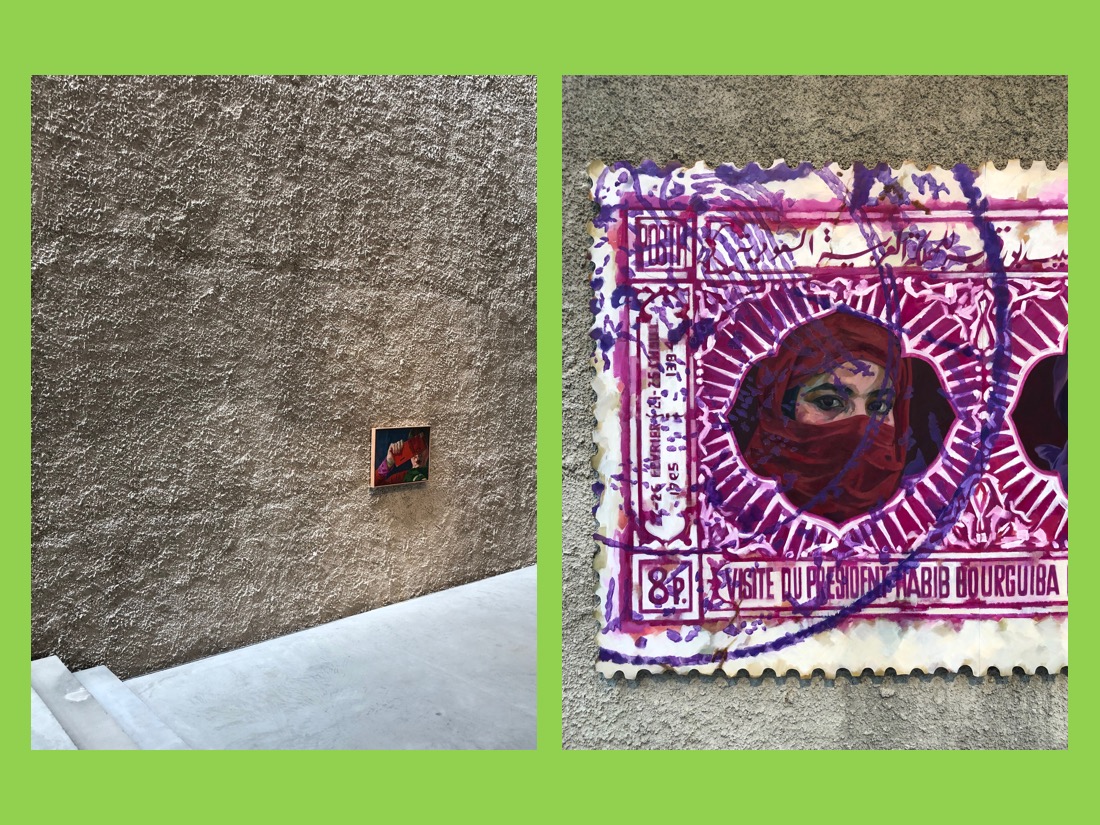
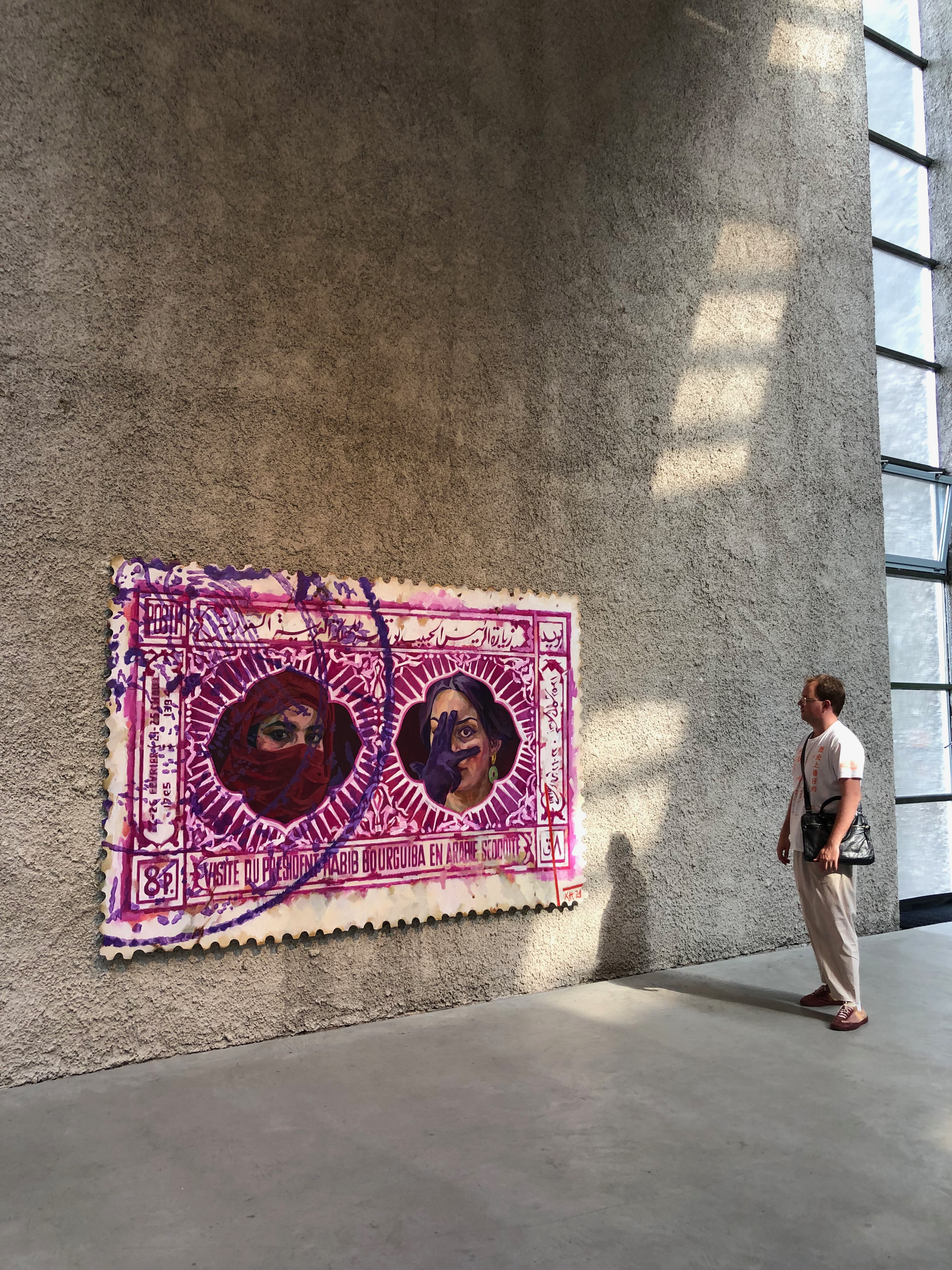
UNINTENDED BEAUTY – another temporary exhibition, this time by one of Austria’s foremost contemporary painters, Xenia Hausner. Here, Hausner explores questions of beauty in her latest show comprising twelve new paintings. UNINTENDED BEAUTY displays how Hausner redefines notions of beauty with an eye towards its treatment in contemporary art. Underpinning the paintings in her current exhibition is also the question of how beauty and dread relate to one another. Hausner shows how the distinction between them can be fluid. “Every angel is terrifying”, according to the oft-cited line from Rainer Maria Rilke’s Duino Elegies. The Austrian poet continues, “For beauty is nothing but the start of terror, which we are barely able to endure, and it amazes us so, because it serenely disdains to destroy us.” Hausner adapts Rilke’s sentiments for her own practice, suggesting that “in art, terror is nothing but the start of beauty”. From these apocalyptic murmurings a glimmer of hope suddenly emerges; prophecies of destruction are countered with the inventiveness and power of art. Chance moments are also written into Hausner’s art alongside her mise en scènes. But Hausner, who uses photography and interior settings to produce her art, does not set out to distort her co-actors. Quite the opposite, in fact: the artist says that she attaches great importance to “the figures retaining their authentic body language”. Yet, at the same time, Hausner adds, the people she paints are also “like actors playing a part in my story”. The traditional power dynamic between painter and subject is transformed by Hausner into a more equitable, bi-directional exchange, where each side of the painterly equation reveal aspects about the other. “Painting has to do with affection”, says Hausner. Her images, painted in acrylics and oils on Dibond aluminium sheets, reflect her continuing interests in the structures of composition, light, and the power of colour. UNINTENDED BEAUTY counters the values of our zeitgeist by holding on to other, contradictory notions of beauty. According to cultural critic Laurie Penny, the toxic-normative core underlying this slickness means that women are bombarded by images in film, TV, ads, print media, and even fleeting encounters, which transmit subtle messages that they are not young, slim, light-skinned, or submissive enough to meet the standard. The actors in Hausner’s predominantly female cosmos appear as counter examples to this world, drawing their aesthetic power rather from everyday reality. They are depicted as confident and fully occupying the spaces around them. Does this amount to a defence of beauty through the medium of art? Hausner’s paintings cleave to the everyday while also opening an unchartered, utopian vision of beauty.

Photos by Edward Kanarecki.
NET-A-PORTER Limited

Prada SS22 Close-Up in Berlin

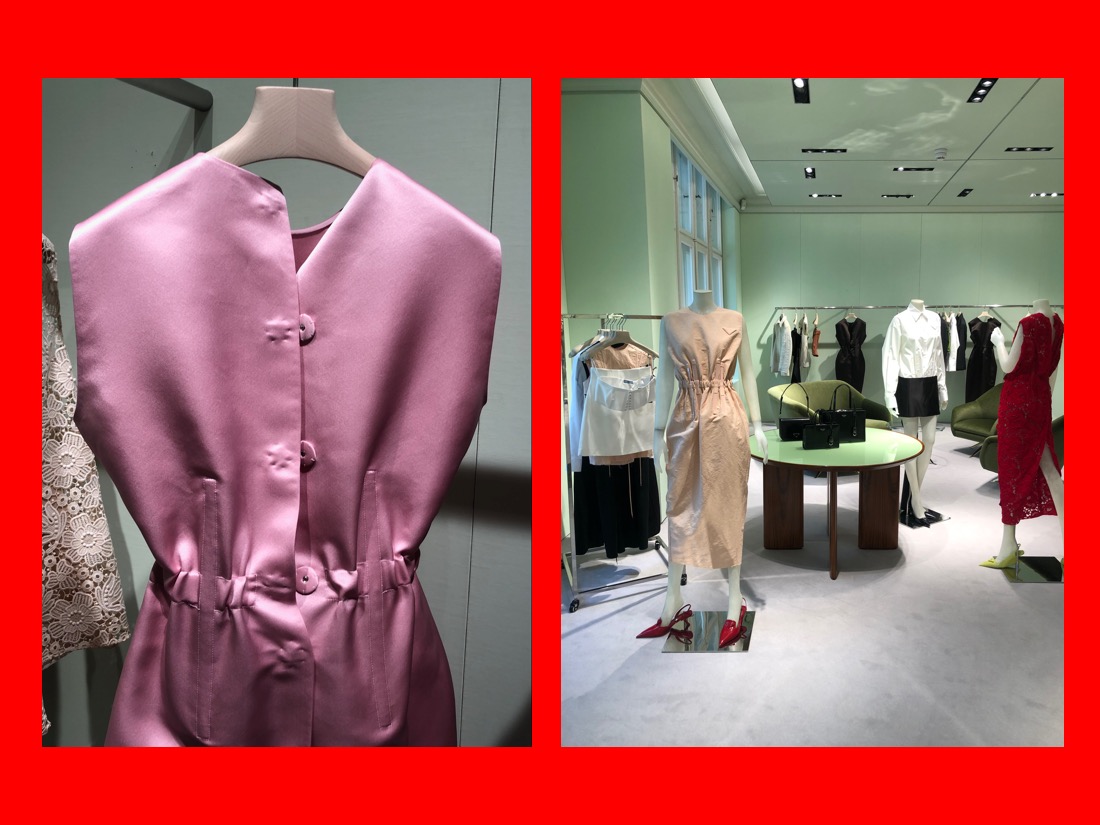
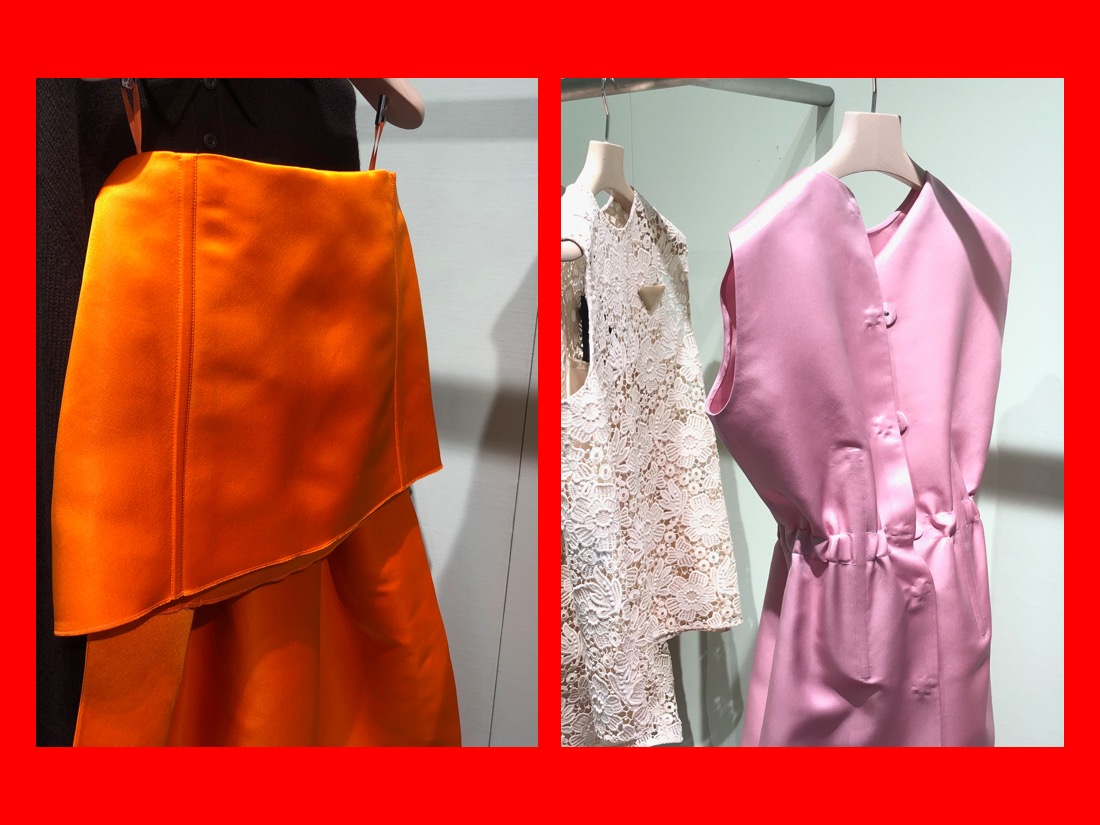
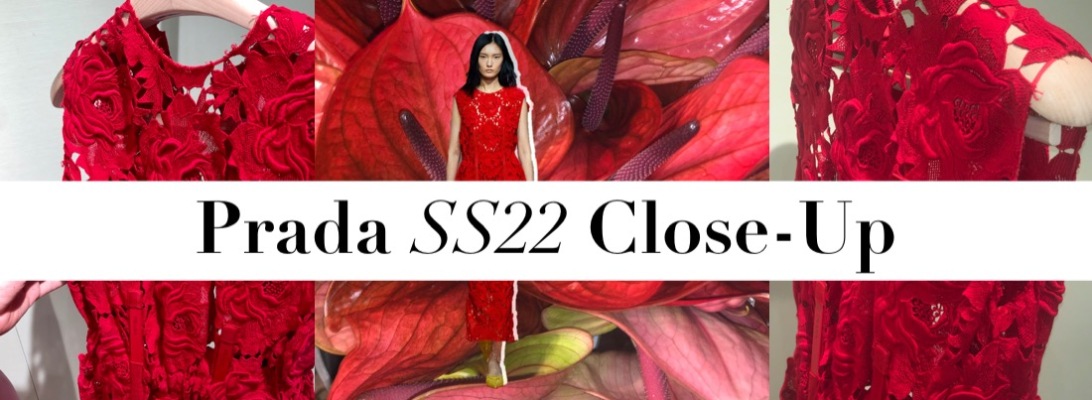
Last week, during my trip to Berlin, I finally had the chance to see Prada‘s spring-summer 2022 collection IRL at the brand’s flagship on Ku’damm. And, oh boy, these garments are so much better when you actually see them up close! The romance of up-scaled lace, the vibrance of neon silks, the beauty of vintage-y leathers. And of course, the masterful construction of each piece – which you truly comprehend once you touch them. “Seduction, Stripped Down” is the name Miuccia Prada and Raf Simons gave to their third, co-designed collection. In her notes, Prada said, “We thought of words like elegant – but this feels so old-fashioned. Really, it’s about a language of seduction that always leads back to the body. Using these ideas, these references to historical pieces, the collection is an investigation of what they mean today.” The historical ideas in question are the familiar tropes of womanhood, like bra cups and corsetry boning, made unconventional by how they were presented: on simple, even plain, sweaters or as details on denim coats. Duchesse satin sheaths read as almost demure until the dresses turn to reveal they are unbuttoned to the lower back, exposing peekaboo flashes of lingerie. The long evening column also got a rethink; it’s sliced above the knee, but a bow in back is extended to the floor. “That feels modern,” Simons stated in the collection’s press-notes. It really is!

Kurfürstendamm 186-187 / Berlin

Photos by Edward Kanarecki.
NET-A-PORTER Limited

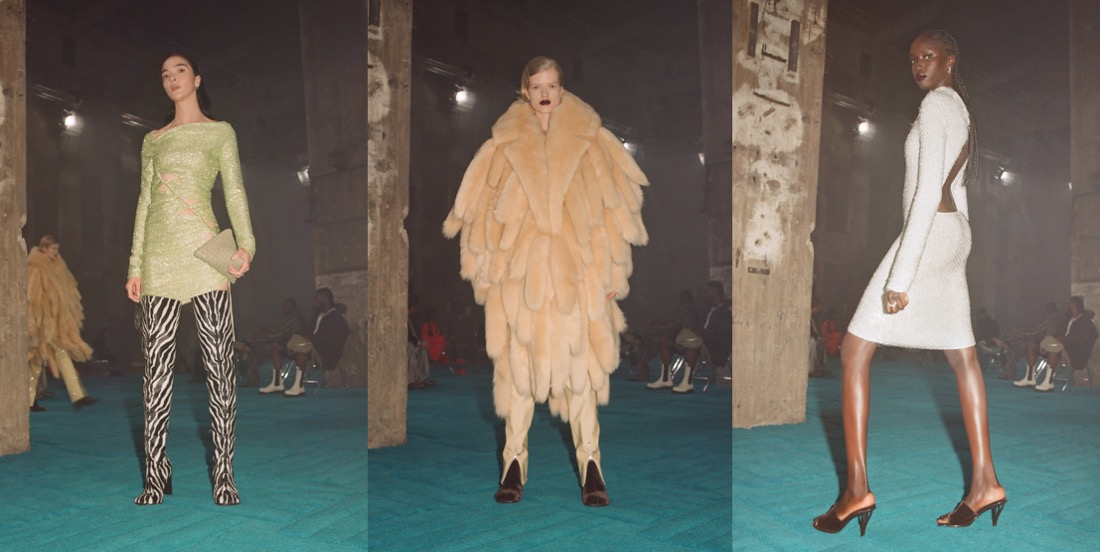
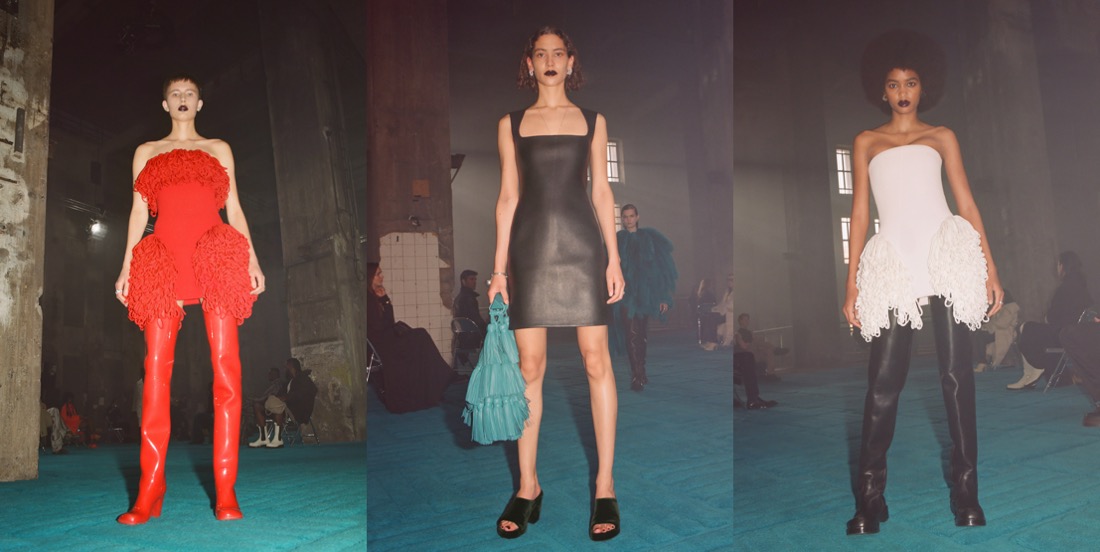
Widly Odd. Bottega Veneta AW21

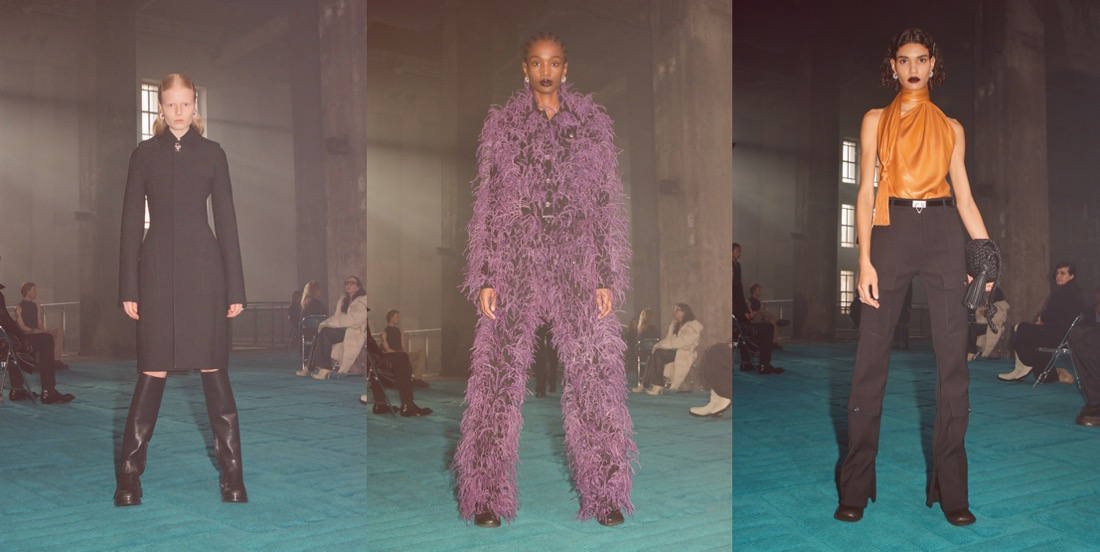
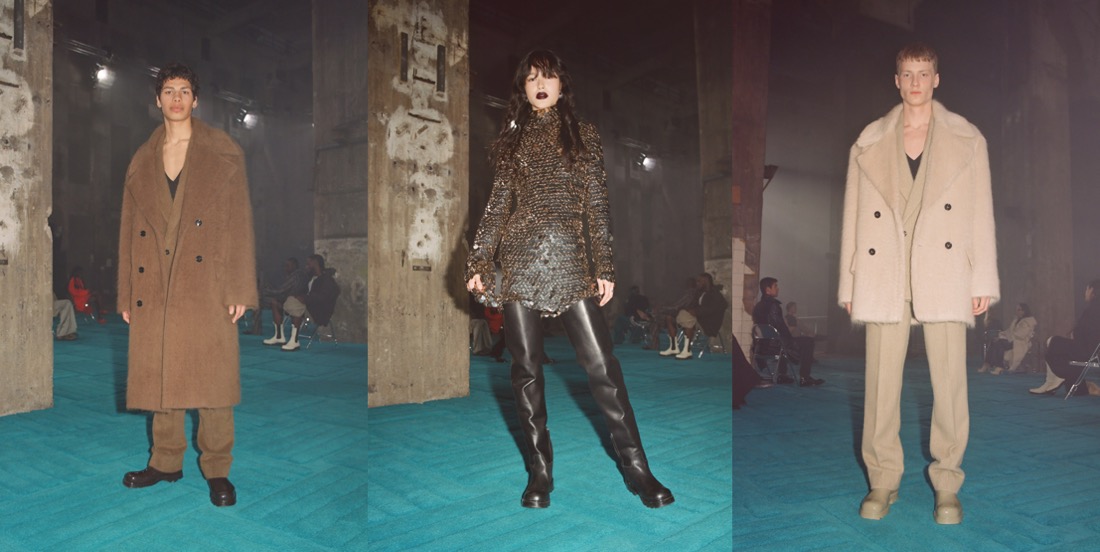
Daniel Lee‘s autumn-winter 2021 collection for Bottega Veneta, which went public just yesterday, makes me wonder if the designer’s vision for the brand starts to get over-worked and somehow distorted. The collection was presented months ago at Berlin’s Berghain to a handful of house-friends, and as the label ambitiously went Instagram-less, the mist of mystery should have done its magic. But nothing works here, and I feel like nobody paid attention to yesterday’s release. Is the flop-era of “new Bottega” on the horizon? Looking at the hectic garments, Daniel Lee’s latest line-up is ripe with diversions which rather create a sense of inconsistency. The fringed shearling coats that are this collection’s showpieces look odd, but not good-odd, rather cumbersome-odd. Reportedly, the line-up emphasizes couture-level craftsmanship. The brand’s press notes revealed that the glass dresses here take between 135 and 250 hours to complete; a black and white zebra stripe coat, meanwhile, features 4.3 million stitches on an embroidery machine; and each of these colourful outfits have over 4,000 feathers, all hand-embroidered. It sounds spectacular, but in reality it just gets lost in all the noise (or maybe the foggy look-book shots are unfortunate…). The merging of the “fabulous” and the “functional” might be one of the smartest and most satisfying pandemic after-effects on fashion, but this season Lee gets it wrong.

Collage by Edward Kanarecki.

Berlin: MDC Cosmetic Goes Next Door

MDC Cosmetic is the local Berliners’ heaven of all things skincare and beauty. And now, the store has expanded in its Prenzlauer Berg location to a “next door” space. Through constant personal contact with its chic clientele, MDC Cosmetic has grown with the times we live in. The key lesson from 2020 is that in the course of the newly discovered domesticity, a growing demand for beautiful objects, small furnishings, precious accessories and unique jewellery has sprung. MDC Next Door is therefore designed and run as a cabinet of curiosities for objects of everyday use. “At MDC, well-being is at the centre. There are other doors to take in beauty: eyes and touch are equally important to me as the sense of smell or the sensitivity of the skin to touch“, Melanie dal Canton says about her concept for MDC Next Door. Oloid II.2.a, a perfume developed by MDC’s owner in collaboration with Geza Schön, has its own sphere at MDC Next Door, just as the matching bar of soap in the shape of the eponymous oloid. New collaborations by Melanie dal Canton with illustrator Kitty Kahane (fabulous, hand-painted porcelain) and Sabrina Dehoff (off-kilter hair accessories) are presented for the first time at MDC Next Door, too. Another novelty the refined coffee space serving great espresso made from coffee beans from a Mexican plantation that is, to a certain extent, family-owned – but in the sense of the extended family concept cultivated at MDC.

Knaackstraße 26 / Berlin

Photos by Edward Kanarecki.
Berlin: The Museum of Natural History

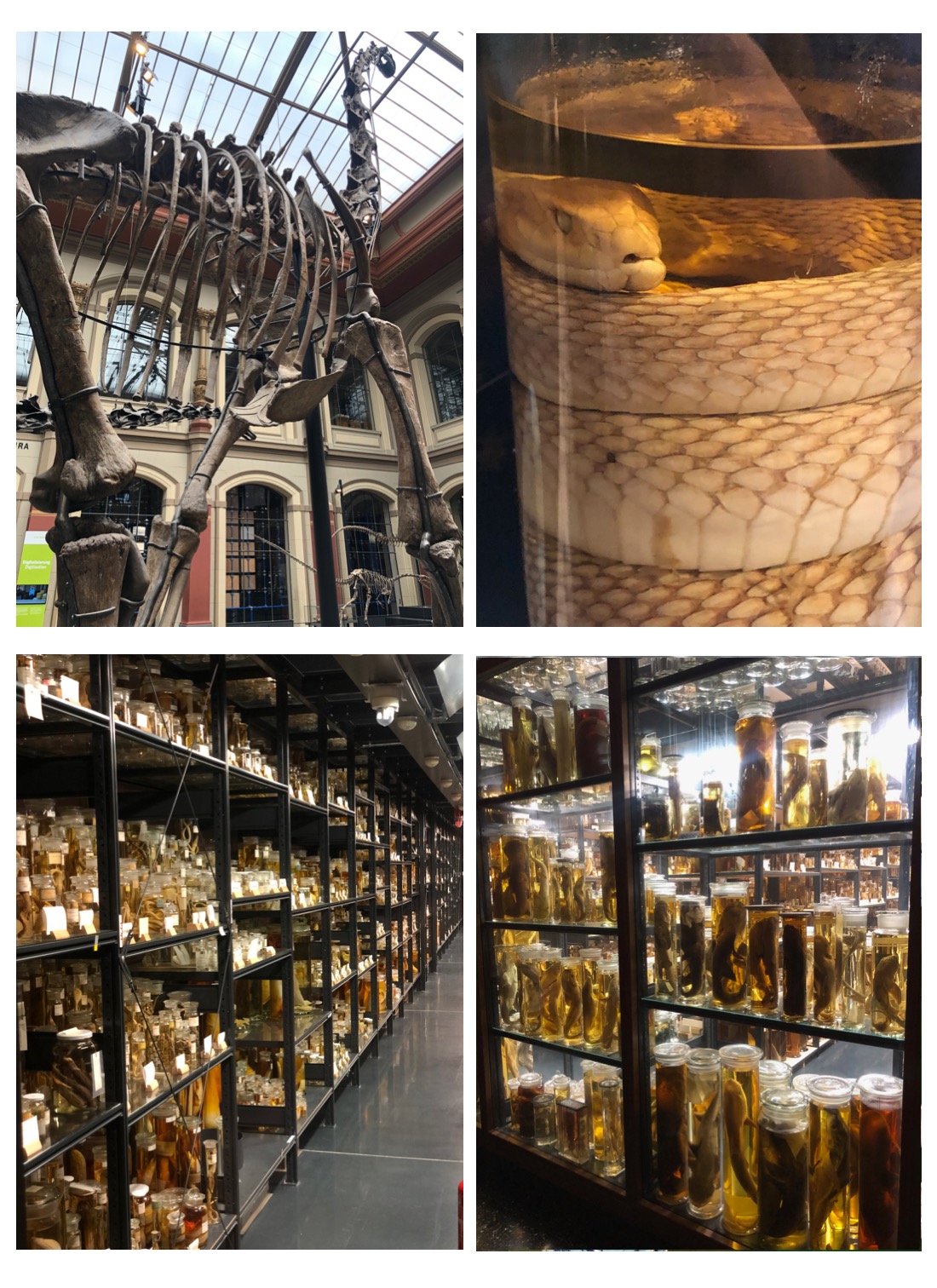
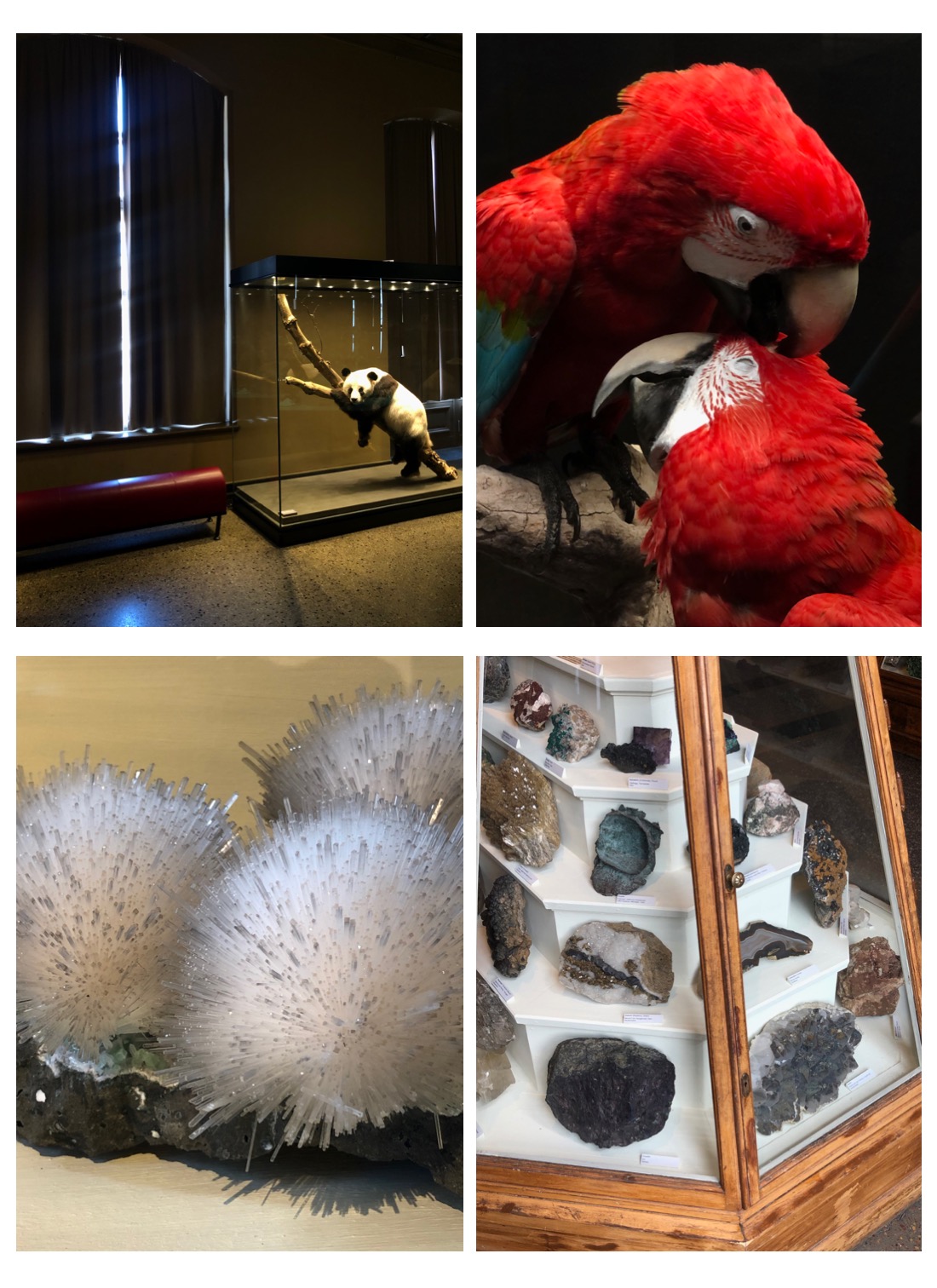
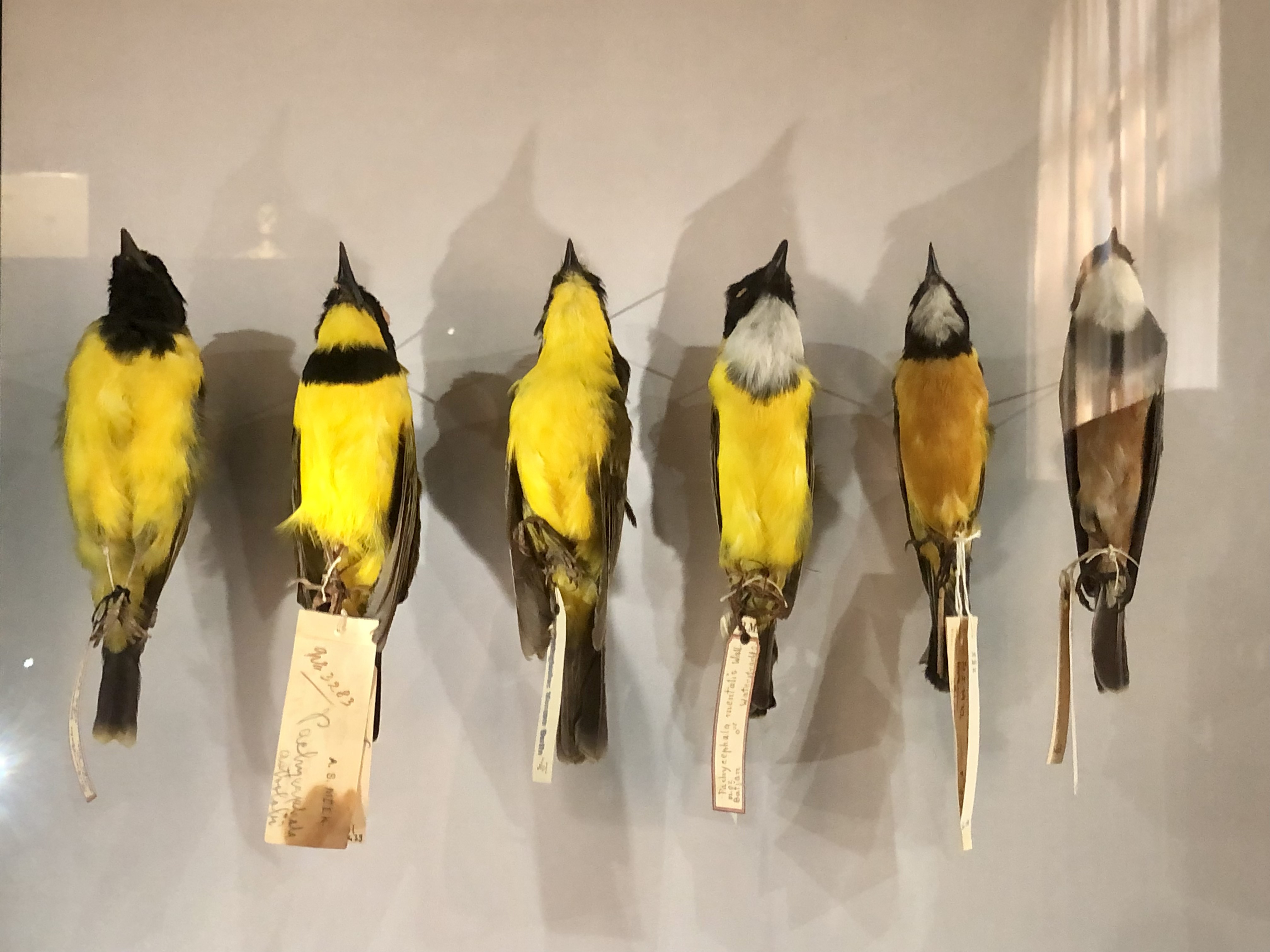
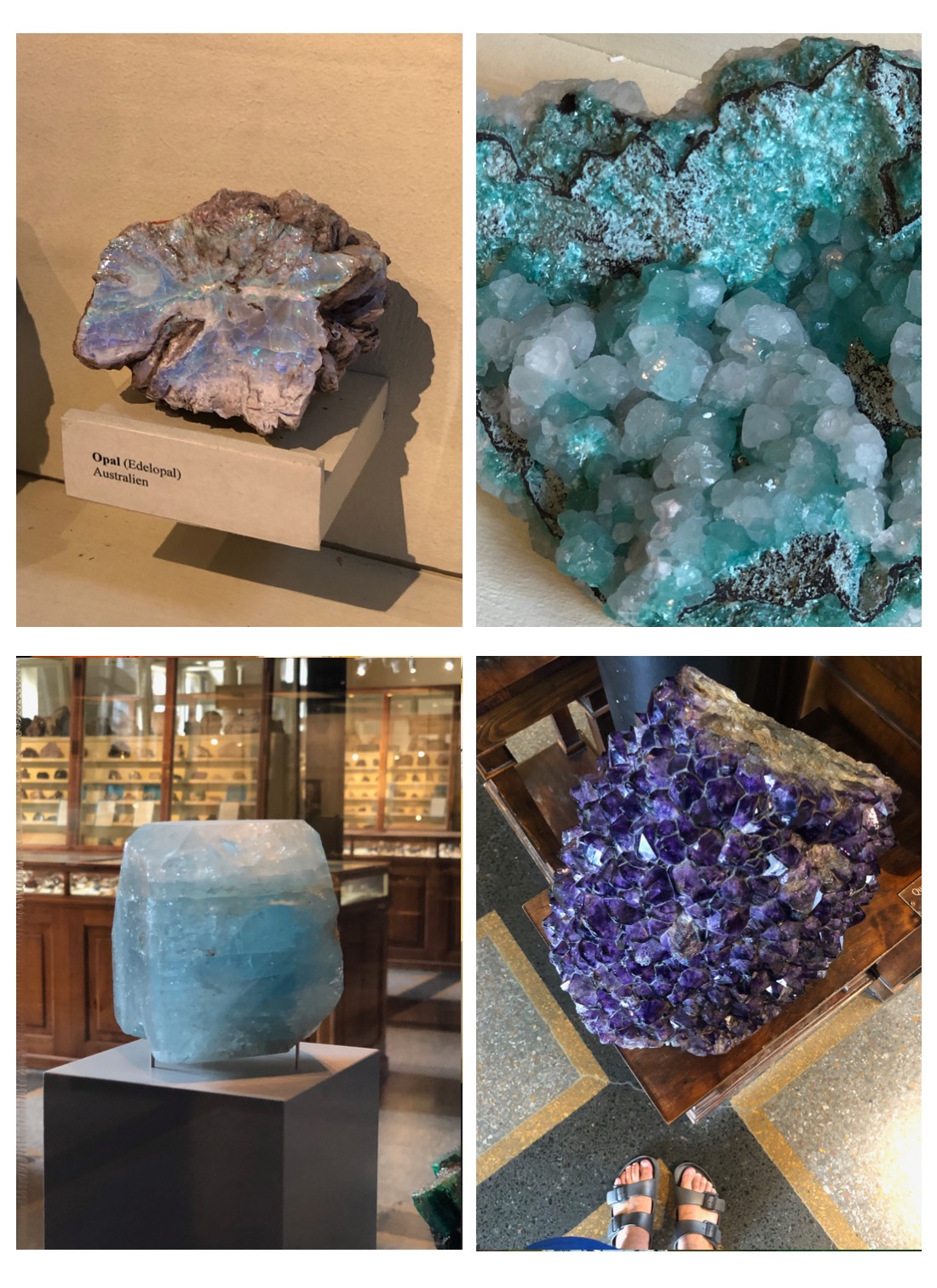
Sometimes, I feel like going to a non-fashion and non-art place! The Museum für Naturkunde – Leibniz Institute for Evolution and Biodiversity Science – is an integrated research museum within the Leibniz Association. It is one of the most important research institutions worldwide in the areas of biological and geological evolution and biodiversity. As an excellent research museum and innovative communication platform,the institution wants to engage with and influence the scientific and societal discourse about the future of our planet, worldwide. Their vision, strategy and structure make the museum an excellent research museum. Alongside knowledge transfer, the museum’s research and vast collection are the main pillars of its work. The collection is a unique natural and cultural asset, inextricably linked to our research and comprises over 30 million items covering zoology, palaeontology, geology and mineralogy and is of highest scientific and historical importance. The permanent exhibitions together with regular special exhibitions give the public insights into current research at the museum and highlight original research objects. Visitors are encouraged and inspired to find their own route into science and experience ‘Evolution in Action’ rather than following a given pathway.

Invalidenstraße 43 / Berlin

All photos by Edward Kanarecki.