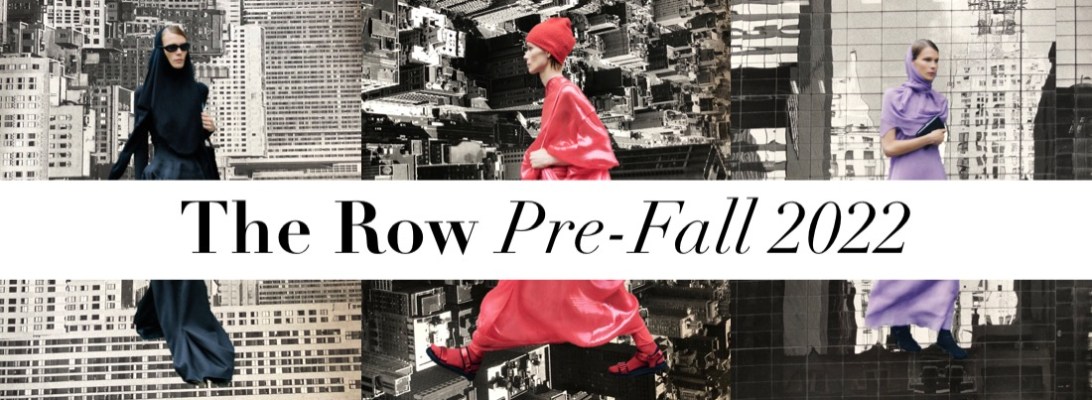
Chic Adaptability. The Row Pre-Fall 2022

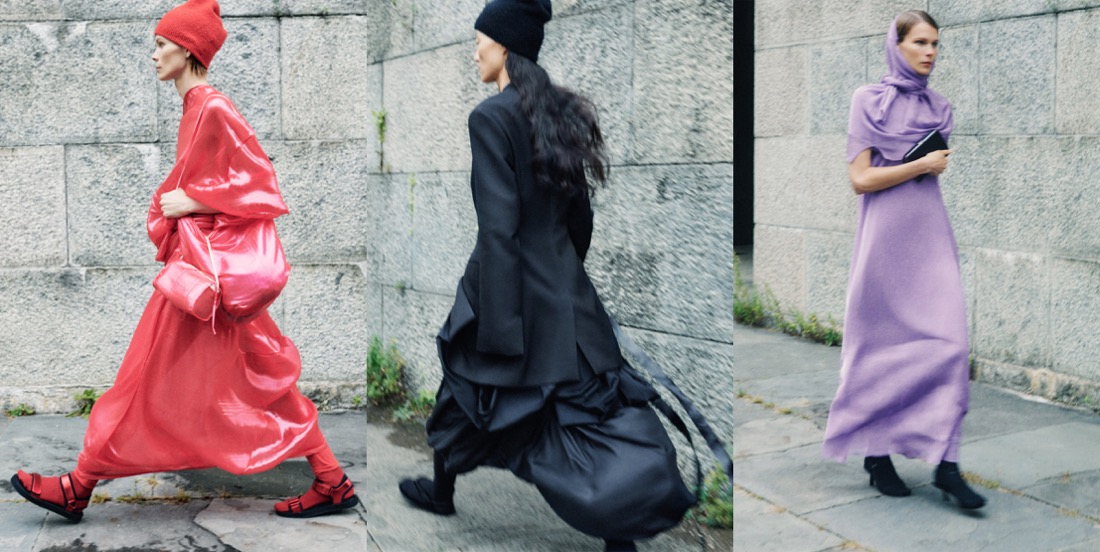
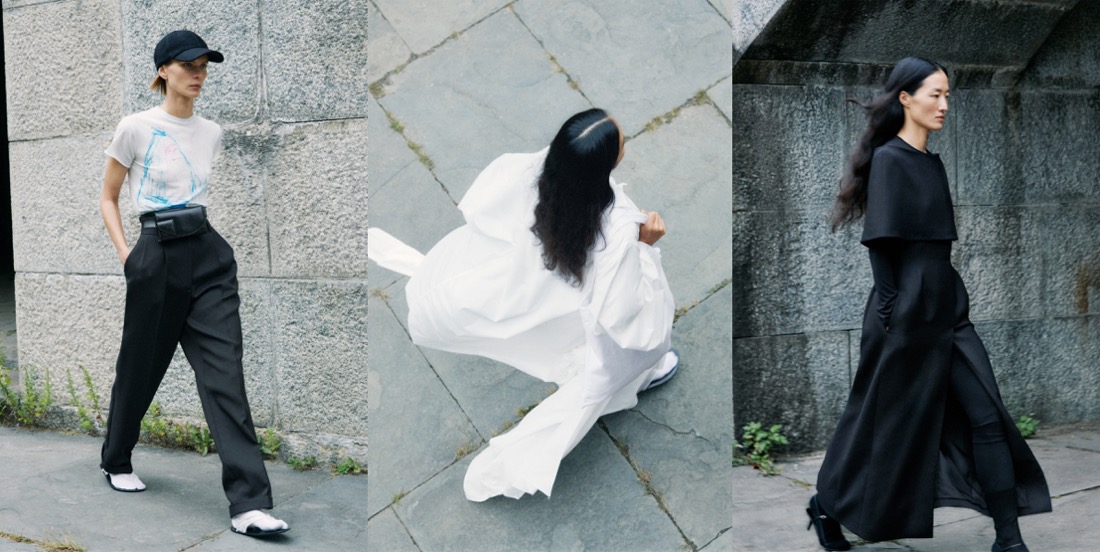
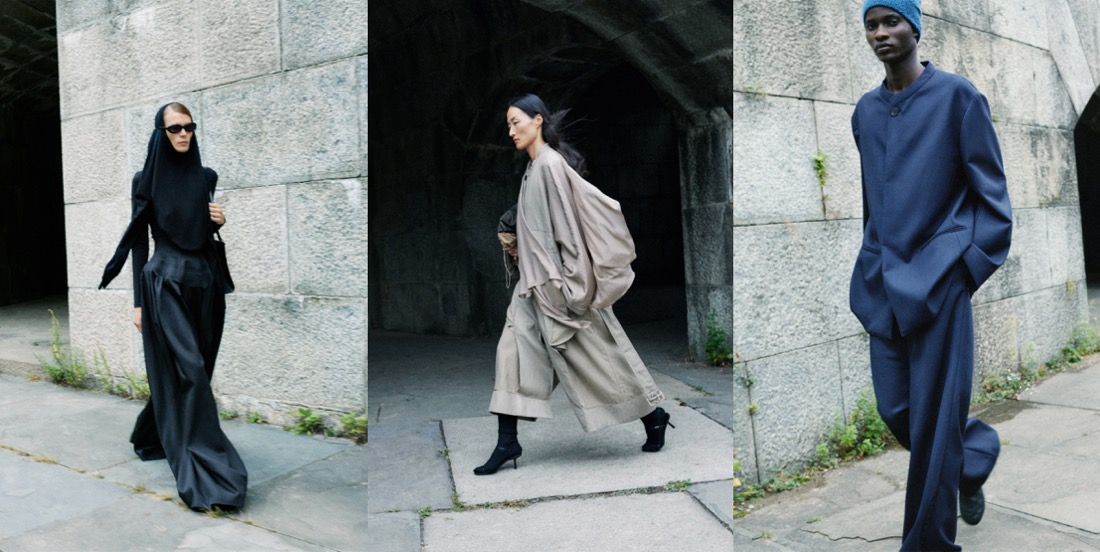
This is one of these The Row collections that are just… perfect. And extremely relevant. Ashley and Mary-Kate Olsen have never been the type to discuss the deeper meaning of their collections, and they’re not about to start now, but the opening look of their pre-fall 2022 offering definitely meets the turbulence of our current moment. It’s a grain de poudre jacket worn backwards, its single button fastened mid-spine and its lapels framing the shoulder blades. “Adaptability” is definitely one of their running themes here. Other tailored jackets can be worn inside-out, and on the accessories front there are reversible tote bags and cotton voile “protectors” for leather styles. After a season of more oversized, relaxed shapes, the waist has come back into focus for the Olsens. Their elongated and slightly nipped jackets cut an elegant line, and many of the looks are accessorized with leather belts featuring useful add-ons for cell phones and ear buds. Elsewhere, there are generous, pillowing volumes, as in the red nylon cellophane top and skirt of look two, which are cut with bubble hems to accentuate their material’s airy lightness. Extending a newfound interest in color, they showed metallic viscose knit separates in bright lilac or red worn layered and even wrapped around the head like scarves, and a trench in a crimped aqua tulle, shown with a matching bag. They also embraced humor. A couple of shrunken T-shirts (paired with excellent boned-waist trousers) are scribbled with children’s drawings; officially they’re part of The Row’s kid’s line, but they’ll be sold in women’s sizes too. The final look is the other side of that reversed jacket. It’s a back-to-front world, but The Row can help you hold it together.

Collage by Edward Kanarecki.

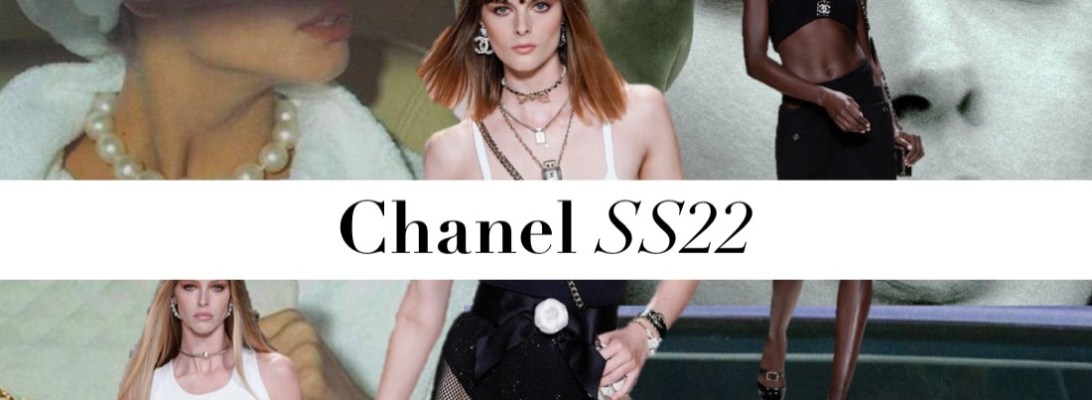
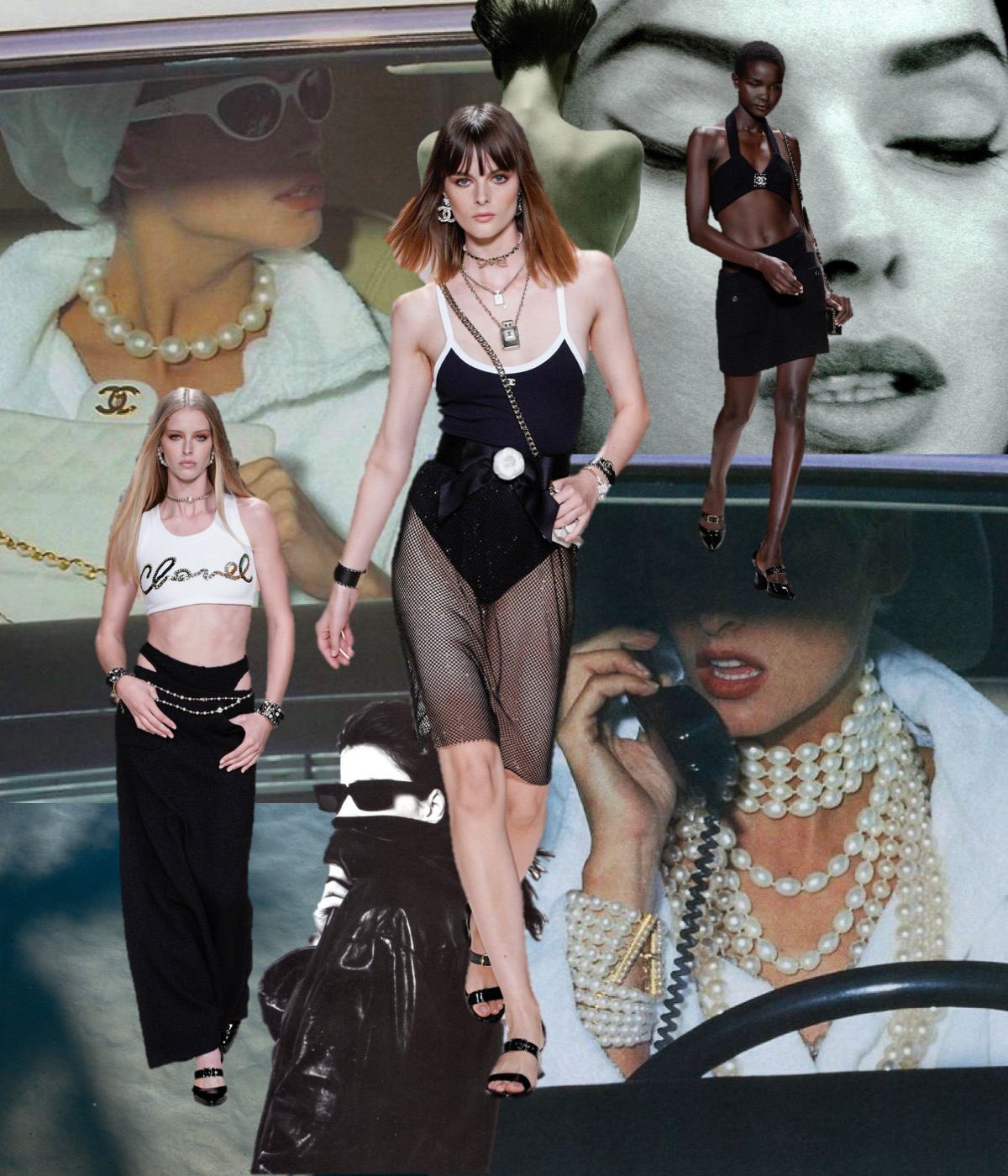
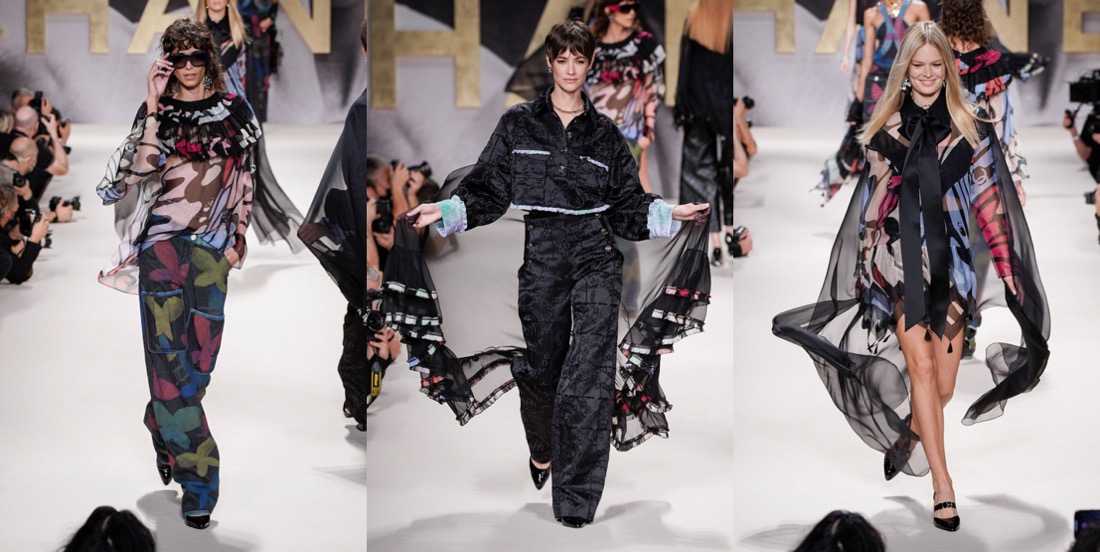
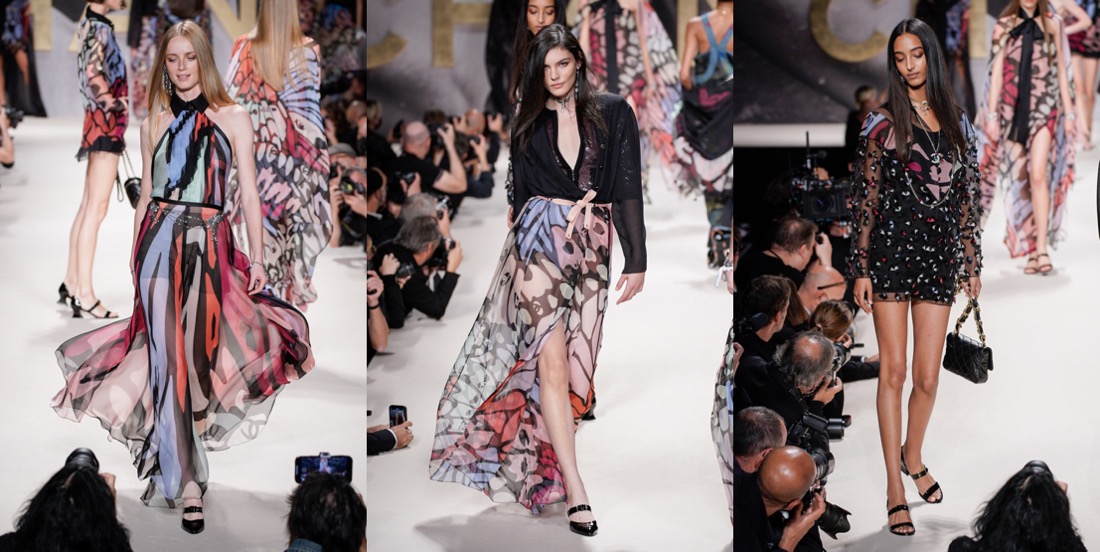
Chanel, Chanel, Chanel. Chanel SS22

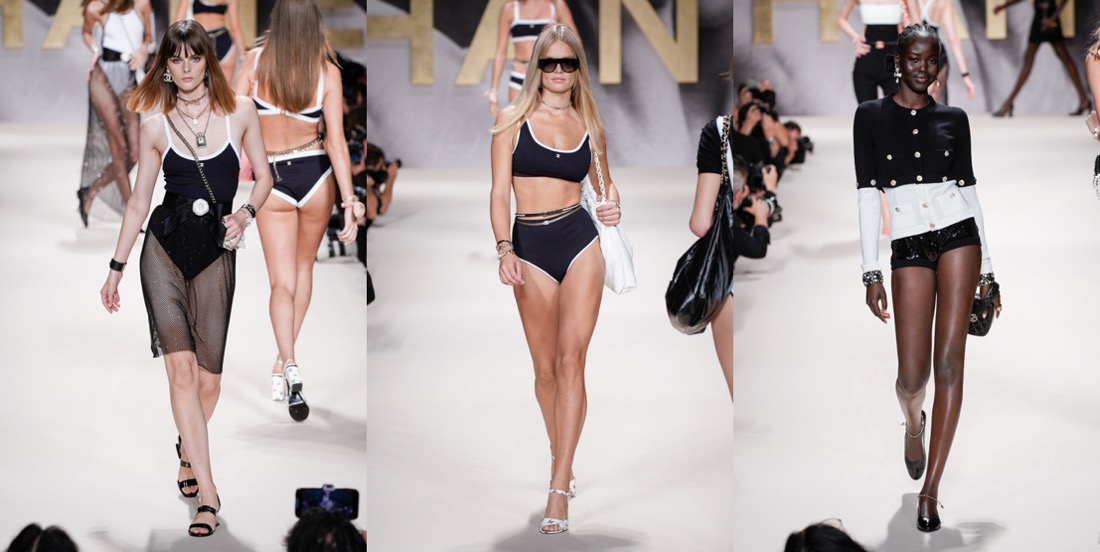
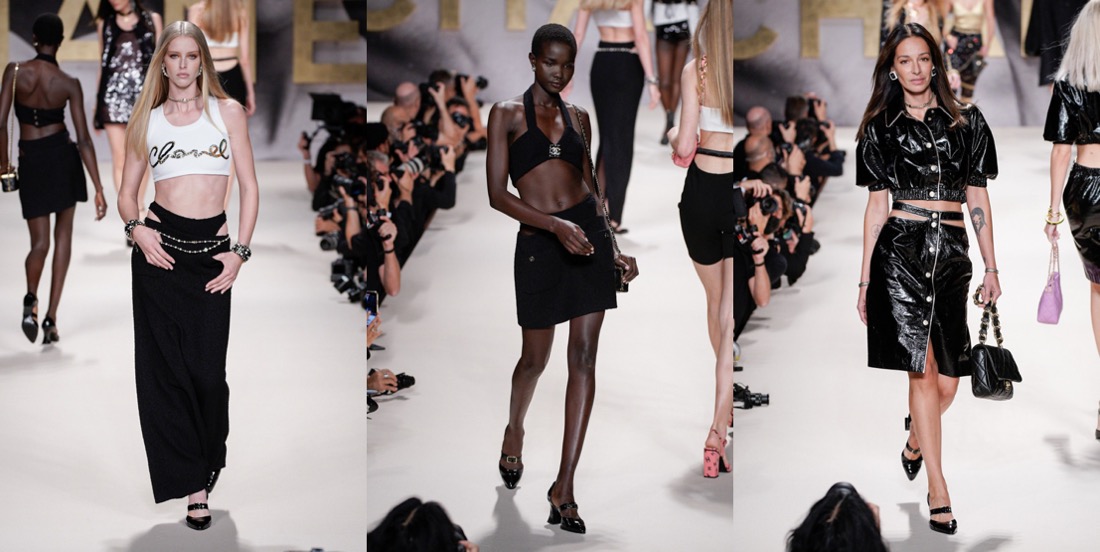
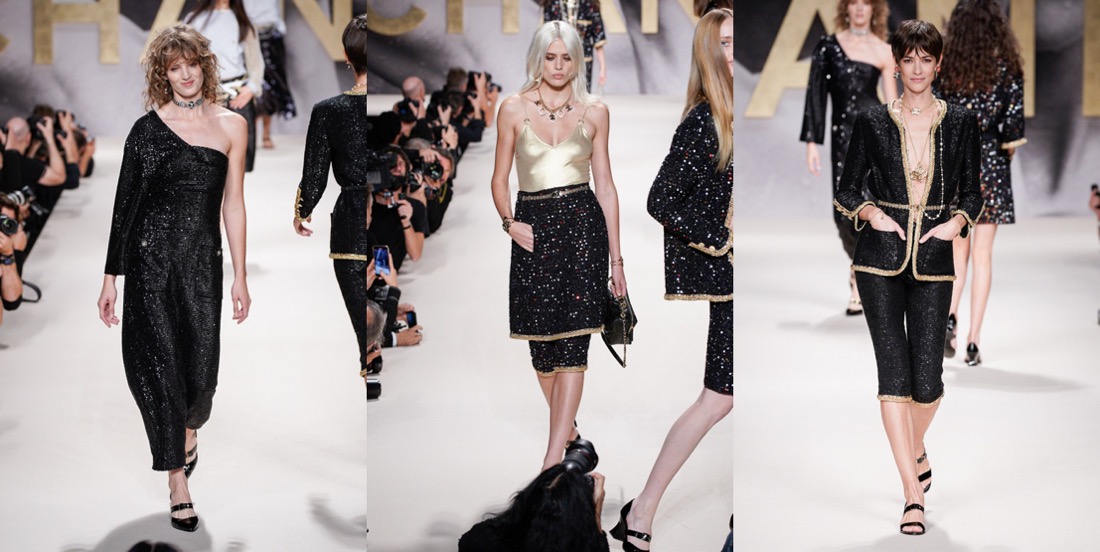
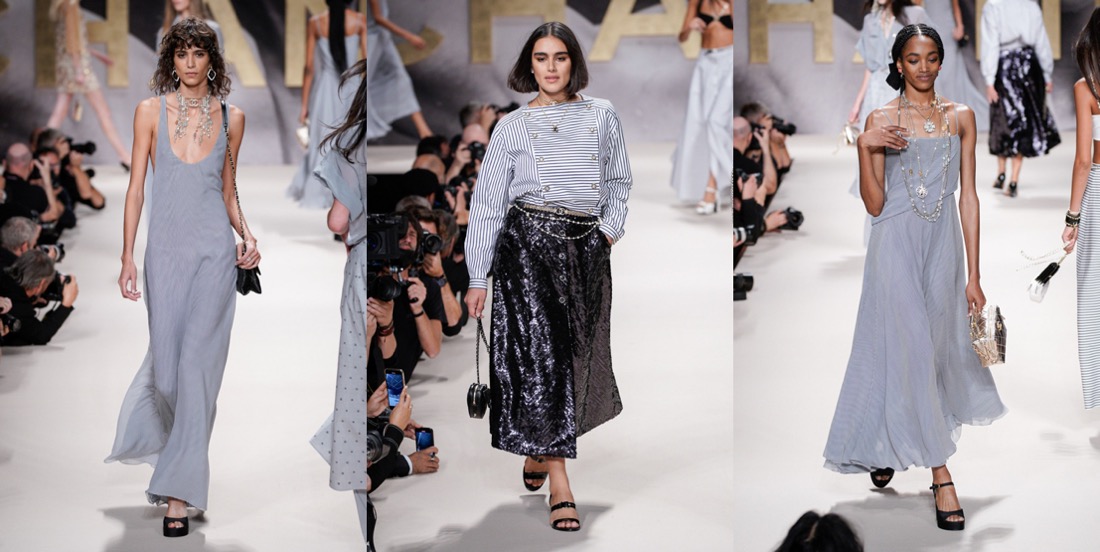
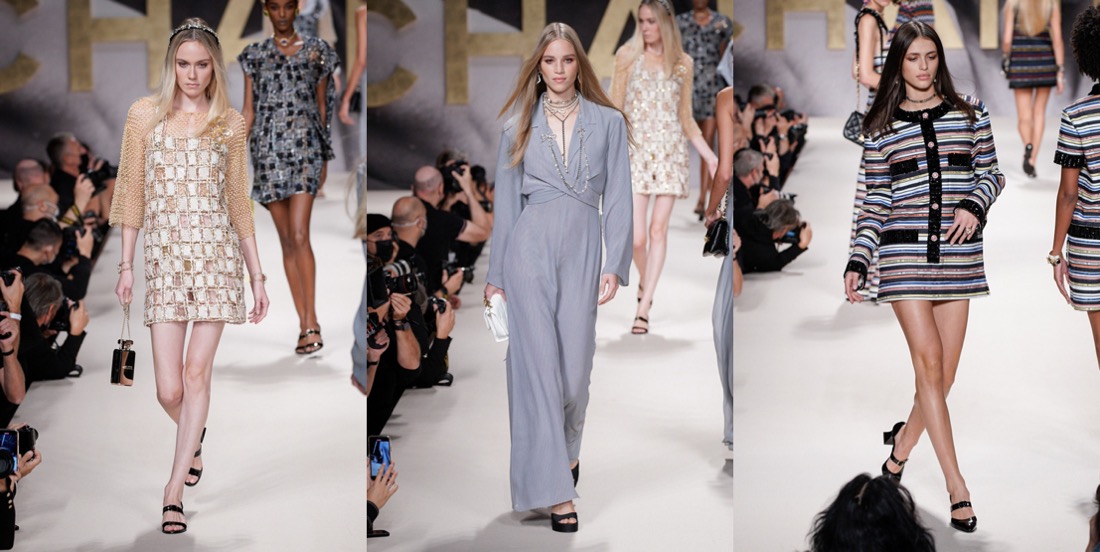
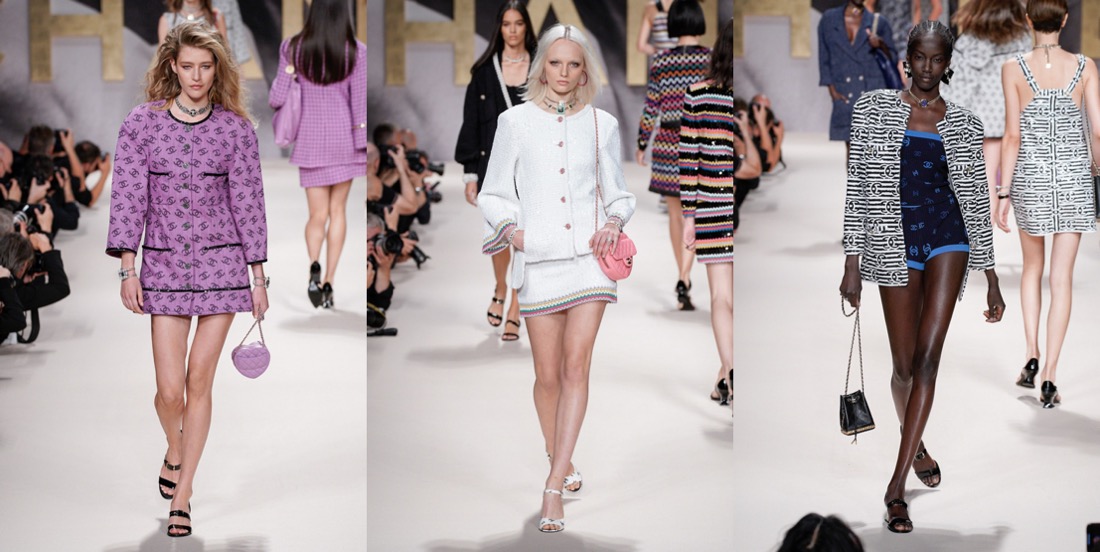
For spring-summer 2022, Virginie Viard delivered us the pure essence of Chanel – especially the 1980s-slash-90s one. If not for the contemporary models, you could mistake this collection with a 1992 line-up. Back in the day, supermodels came bounding down the high, raised runways exuding joie de vivre as they twirled and vamped for the photographers who had jostled for prime position, not only in the mosh pit at the end of the runway, but all along its length. Viard wanted to replicate that ambience, and she succeeded. “I used to love the sound of flashbulbs going off at the shows in the ’80s,” the designer recalled in the press notes. “I wanted to recapture that emotion.” Viard attempted to channel that energy and joy in a collection that not only referenced the era in the clothes, staging, and accessories (purses shaped like N°5 bottles; piratically flared Louis heels), but even the soundtrack: George Michael’s anthemic “Freedom! ’90” – in a contemporary cover version by Christine and the Queens – got the models in the party spirit. At the end of the raised runway, for instance, the photography duo Inez van Lamsweerde and Vinoodh Matadin, now deeply enmeshed in the Chanel world, played old-school show photographers, snapping the models who stopped to pose and preen for them and seemed to be having the time of their lives, flashing smiles and flicking hair rather than assuming the habitual look of sulky disdain. The show also opened à la Karl Lagerfeld – who sent shock waves when he put Chanel-branded underwear as outerwear on the runway for spring 1993 – with a black-and-white sequence of briefs, swimsuits, and sports bras, occasionally veiled in spangled black net pants or shown with above-the-knee skirts. During an accessories fitting a couple of days before the show, Viard pointed out the crocheted effects she had worked on with braid company Bacus, and the spin on the bright spring pastel tweed suits – think of Chanel-clad Naomi, Linda, and Carla, shot by Steven Meisel for Vogue, March 1994 – that she had given the twist of a longer skirt or jacket flap in back, suggesting a traditional tailcoat. “Karl was always doing fake jeans,” recalled Viard, shuddering at the memory. “In the ’90s they always seemed to be with pink tweed – ugh! For me it was horrible then, but now j’adore!” Her own reimagined denim propositions this season included a pretty, summery deck-chair ticking stripe cut into stiff little 1960s-looking dresses with bold bands of black sequins, creating the trompe l’oeil illusion of a classic Chanel cardigan suit, and charcoal denim wafted with a butterfly print. Those butterfly wings were amplified as prints on drifting chiffon pieces that swirled as the girls twirled, providing another charming throwback to a moment that celebrated the happiness the fashion flock is feeling in a season of cautious reemergence and optimism.

Collage by Edward Kanarecki.

Paris, baby. Saint Laurent SS22

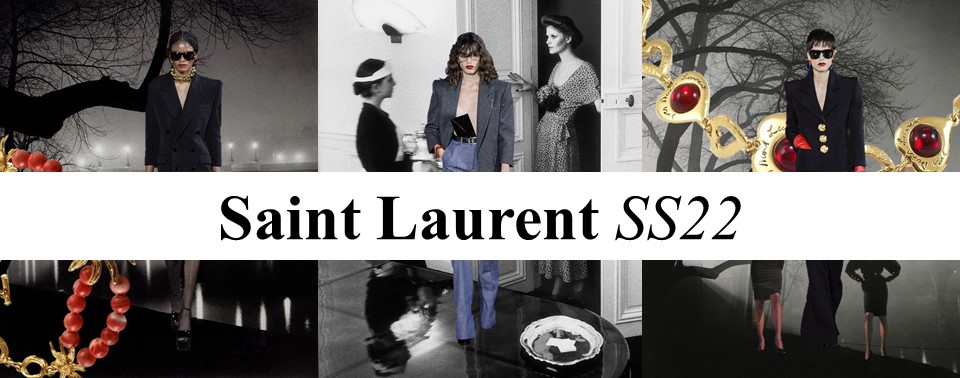
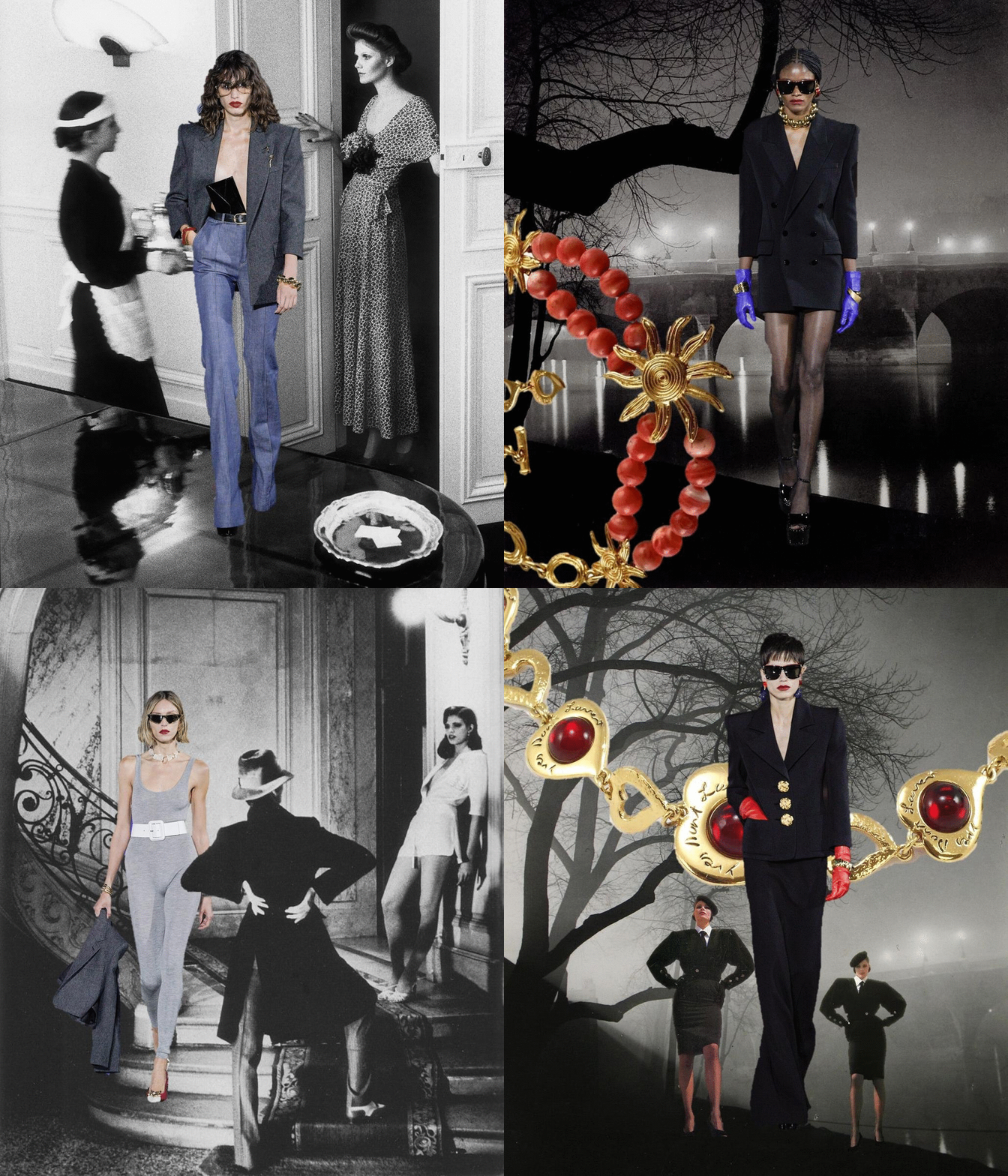
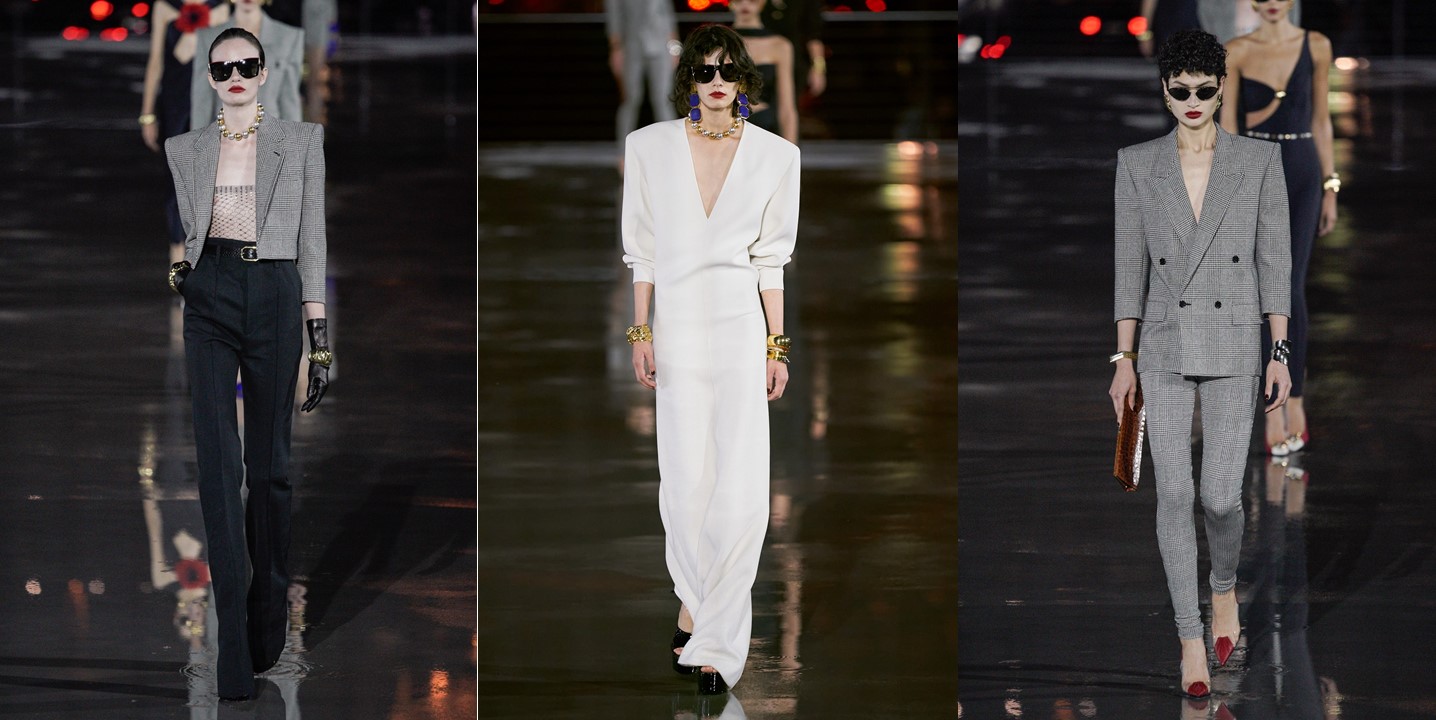
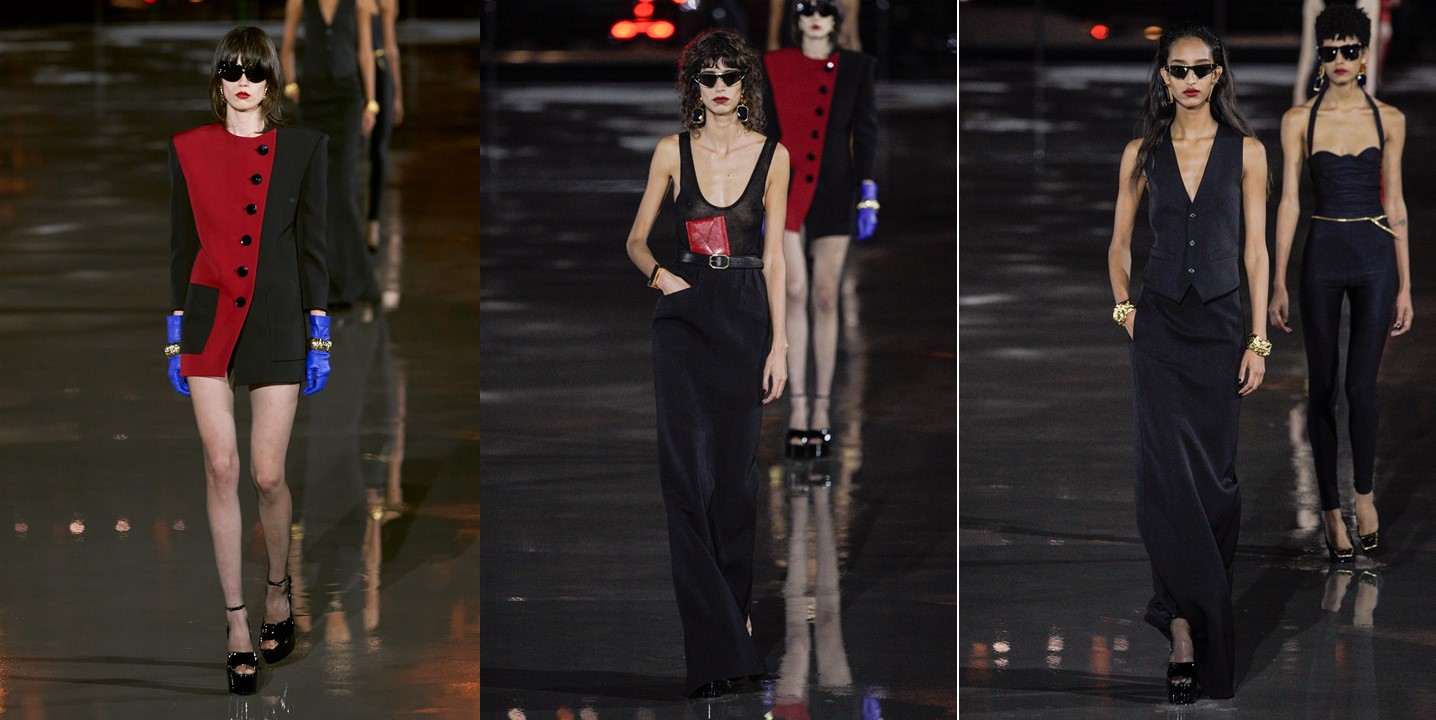
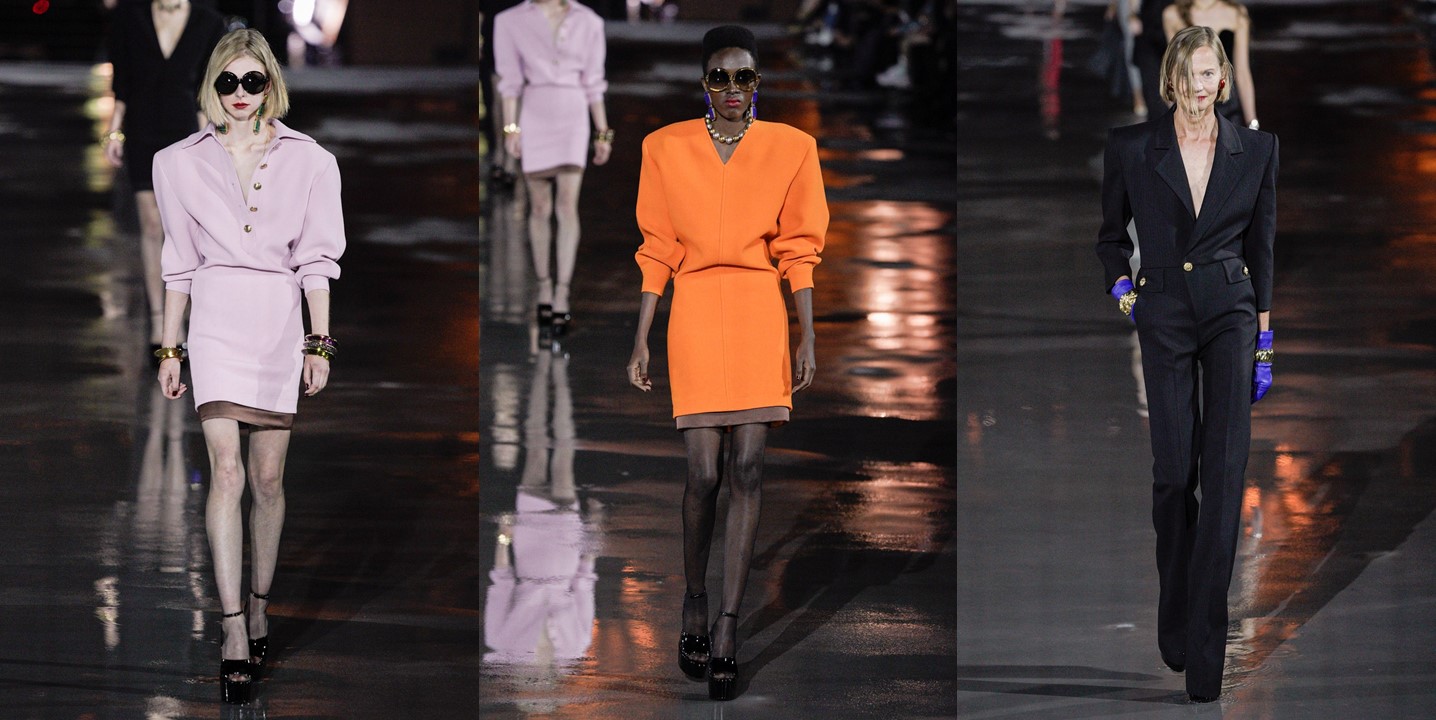
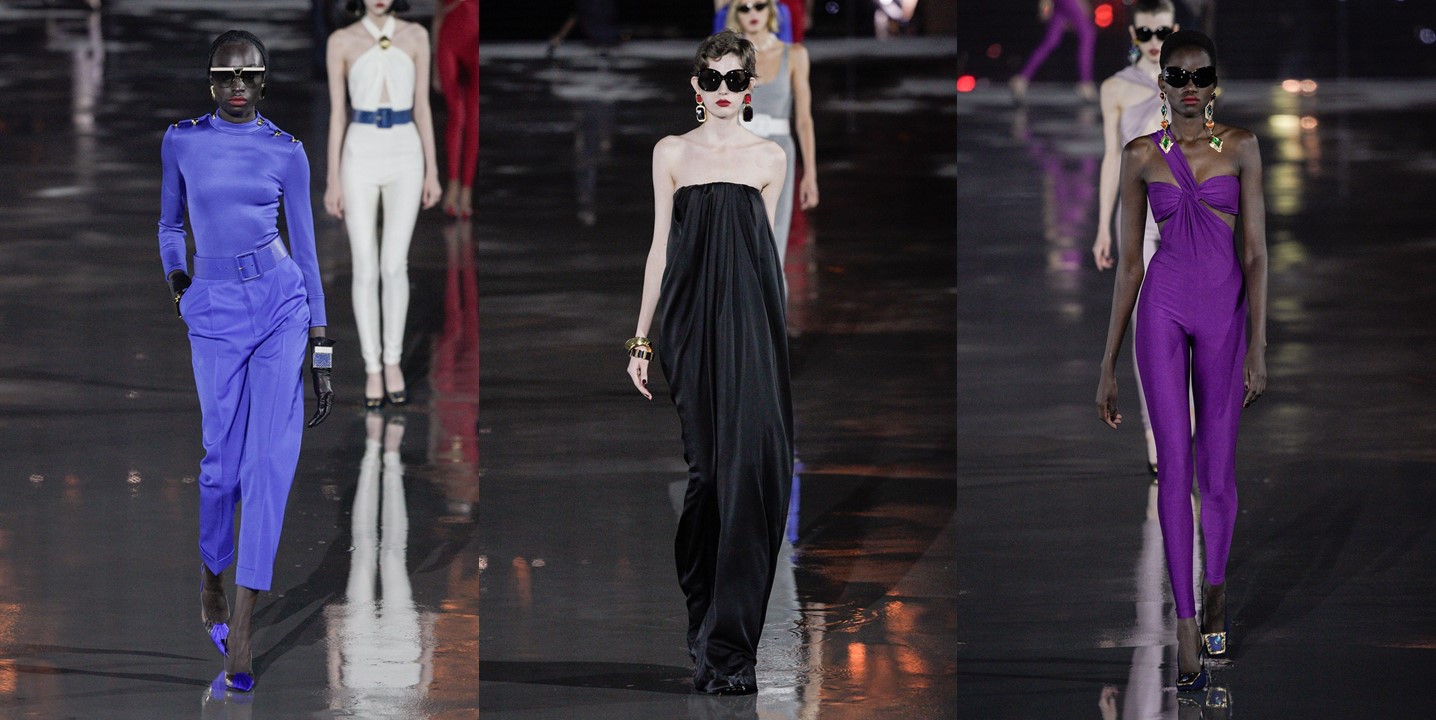
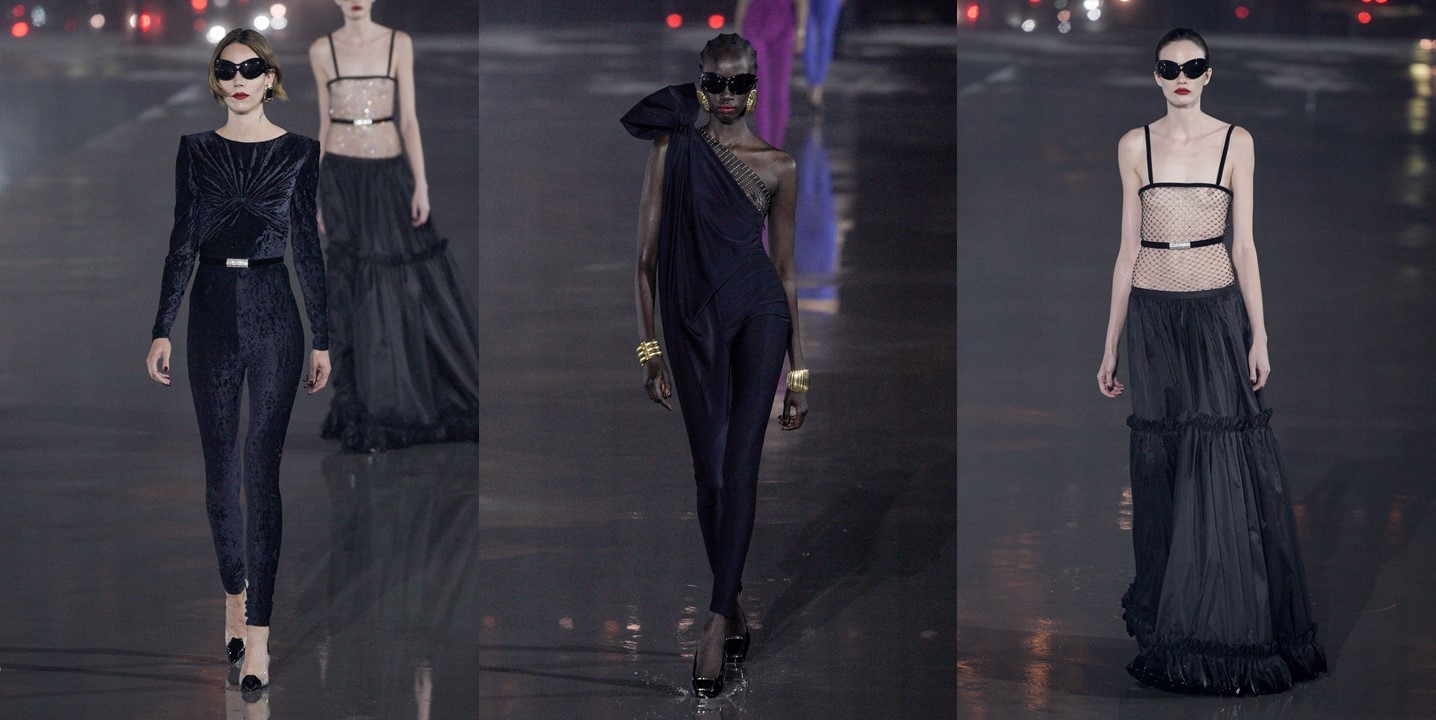
We are in Paris, baby! Paris Fashion Week started with a bang, all thanks to Saint Laurent which returned to the usual schedule. There was a magical moment towards the end of the spring-summer 2022 show when Anthony Vaccarello’s towering waterfall structure rained softly on his guests’ faces as the last models made their way off the runway to Zimmz’s entrancing “Eclipse”, the Eiffel Tower twinkling in the distance. “I was kind of sick of listening to all those people talking about the future of fashion. For me, we just had to switch off. That was it,” Vaccarello said before the show, recalling his early lockdown decision to leave the Paris schedule. “I knew that once the pandemic would become a little bit better, it would be impossible to totally change this way of showing. It’s part of fashion.” Picking up where he left off – the autumn-winter 2020 latex collection that hardly needs a recap – Vaccarello put his softer, more pragmatic collections of the lockdown period behind him, and forged ahead with the look he believes in for a 2020s wardrobe. “For me, this collection is the continuation of the latex collection: it’s a style that I want to establish,” he told Vogue. “The latex collection was a liberating collection for me. I was feeling free. I didn’t have anything to prove to anyone else about what I was able to do for Saint Laurent. I relate that collection to the Scandal collection of Paloma.” The collection in question was Yves Saint Laurent’s 1971 tribute to Paloma Picasso, who wasn’t one of his most famous muses but one of the most influential ones, nonetheless. “Pierre Bergé told me that Paloma Picasso was the only woman who inspired a collection for Yves Saint Laurent,” Vaccarello said. We tend to always talk about Betty Catroux and Catherine Deneuve, but Paloma was the only one who really changed Yves Saint Laurent’s perception of fashion, Vaccarello explained. “Before, he was really into couture – really into this cute, very perfect silhouette – and when he met her, with her huge red lips, dressed in vintage, she was really new for him. It changed his own style. In my mind, I want to have the same change after the pandemic.” His instinct made for a spirited collection that amplified the signatures of Picasso’s look. The shoulders of jackets broadened into rigorous silhouettes, the necklines and slits of dresses grew closer together, and leggings and jumpsuits – some wrapped glamorously around the contours of the body – proposed a new take on eveningwear for the post-pandemic decade. Curiously, in a scantily clad season that’s coined the “new sexy”, Vaccarello’s collection was decidedly covered-up for a Vaccarello collection – something the skin-tightness of it all balanced back into sensual territory. What does a designer known for legs and miniskirts make of this “new sexy”? “I hate the sexy I see. It looks like the sexy I did 10 years ago,” he quipped. “Everyone can do sexy, but for me it’s about assuming what you are, not trying to seduce others. It’s being confident in what you are. Paloma is very sexual but not the kind of woman you want to mess with. You wouldn’t bother her in the street, for example.” Perhaps that was Vaccarello’s 1990s sensibility talking: the mindset of a boy raised on the sophistication of supermodels, immaculate music videos, and an approach to sex that felt a lot more intelligent than that of the 2000s, a decade many designers are referencing this season.

Collage by Edward Kanarecki.

Classics. Alaïa AW21

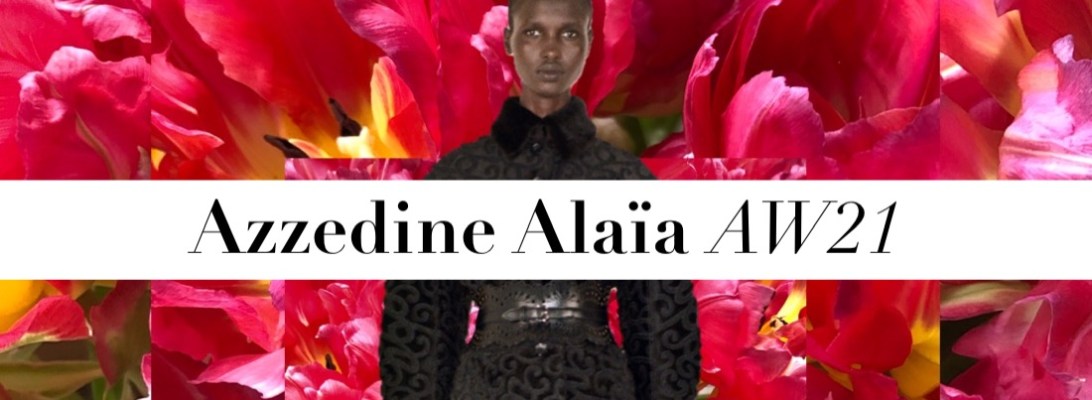
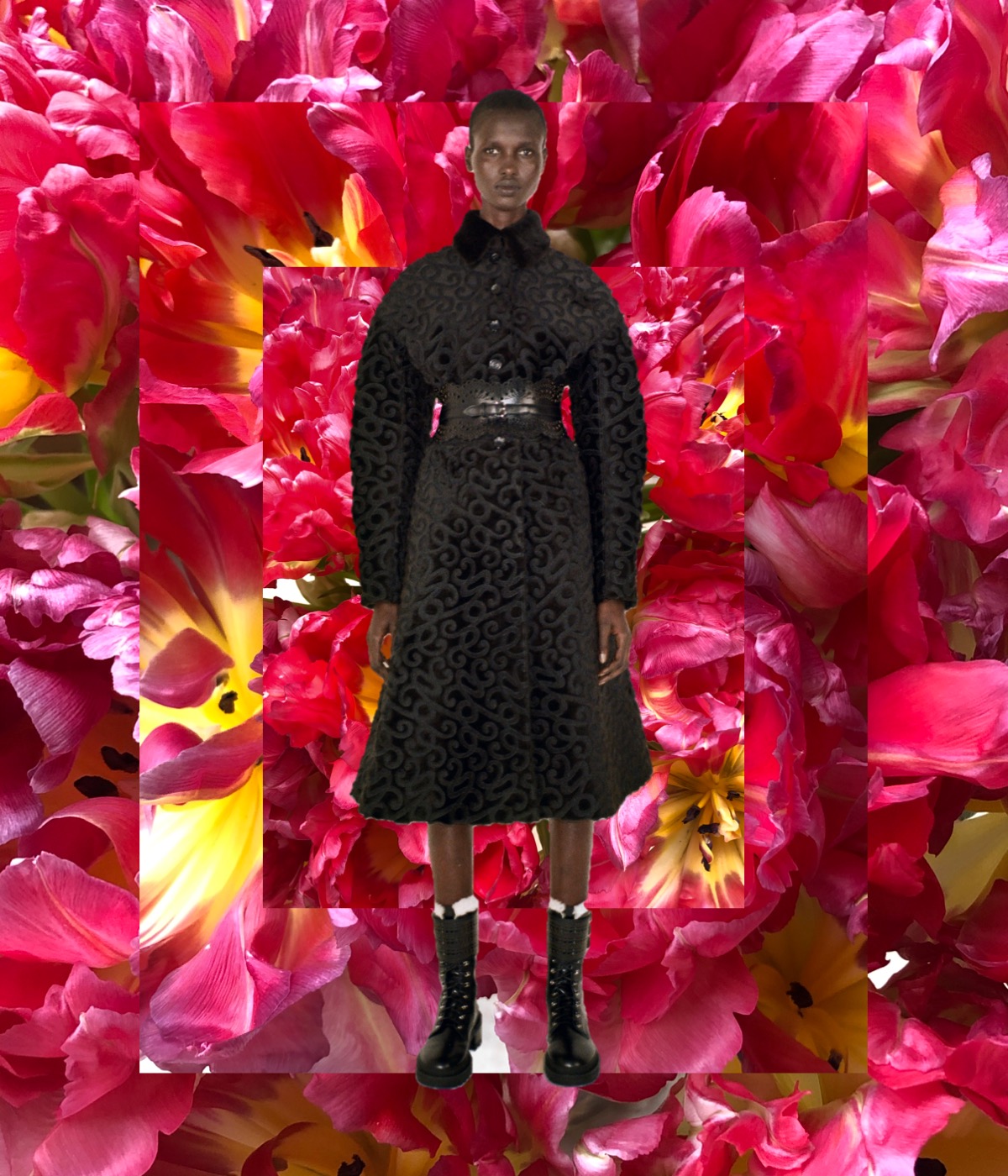
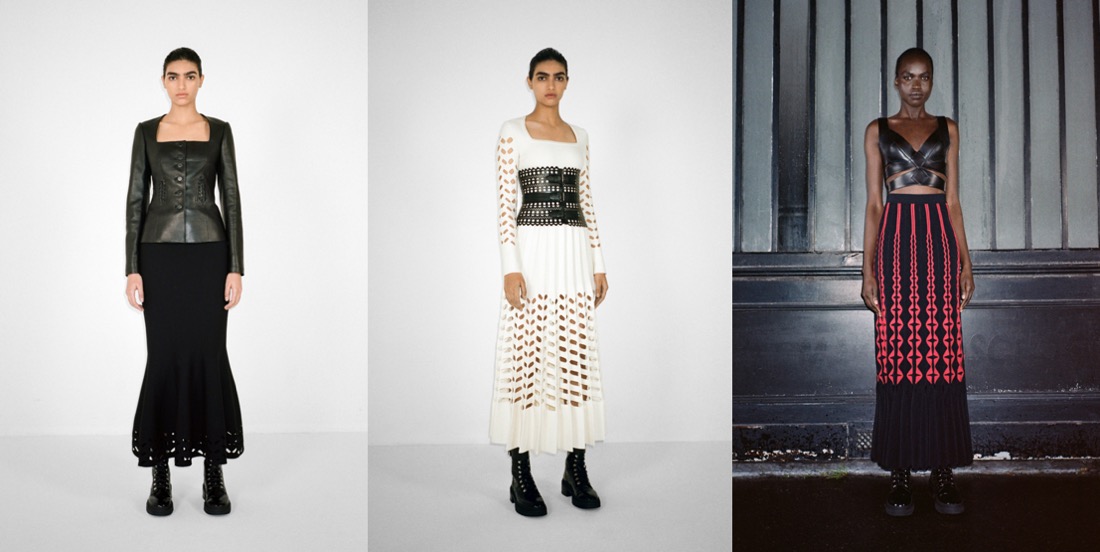
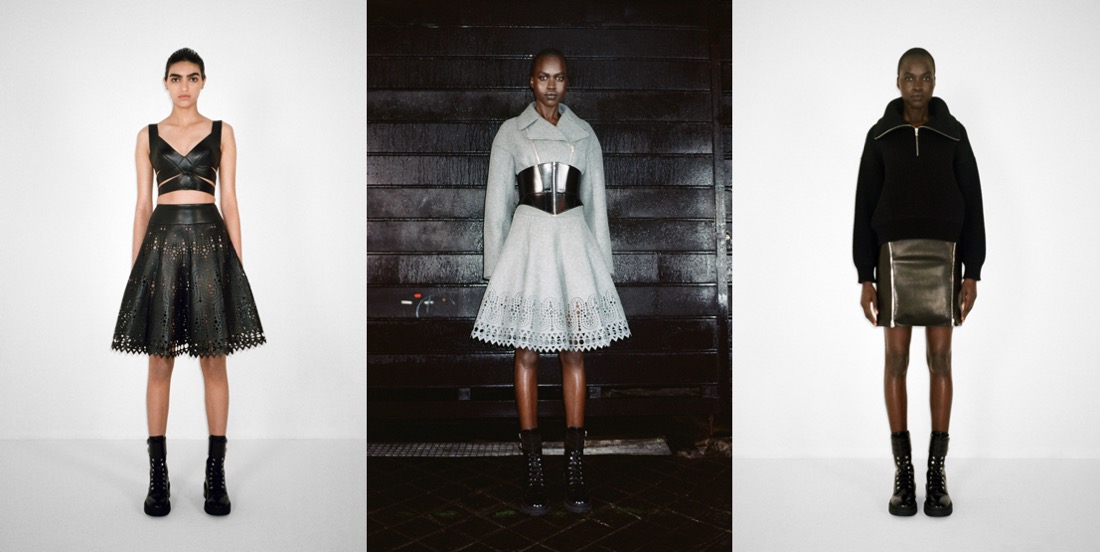
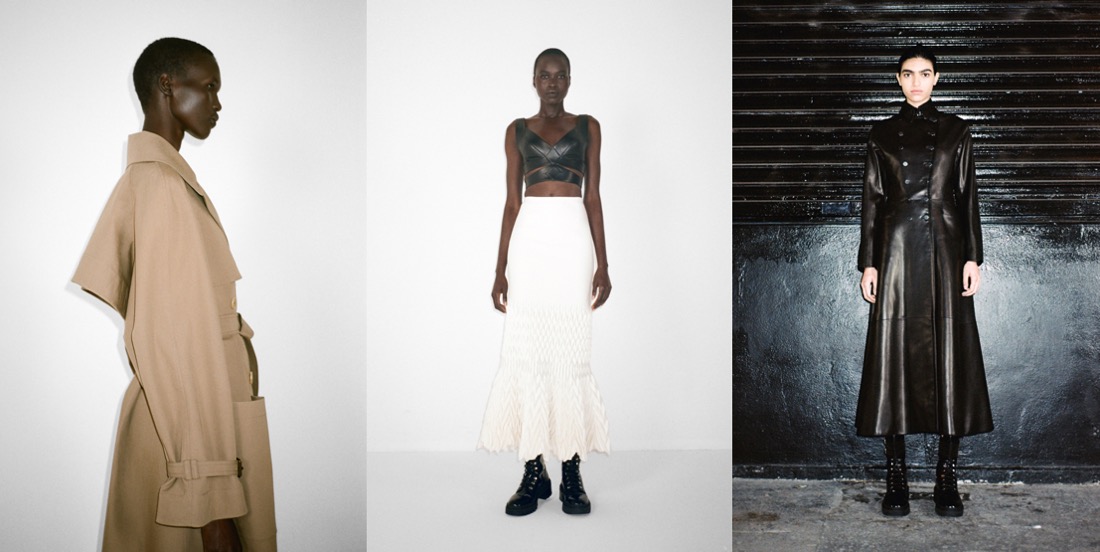
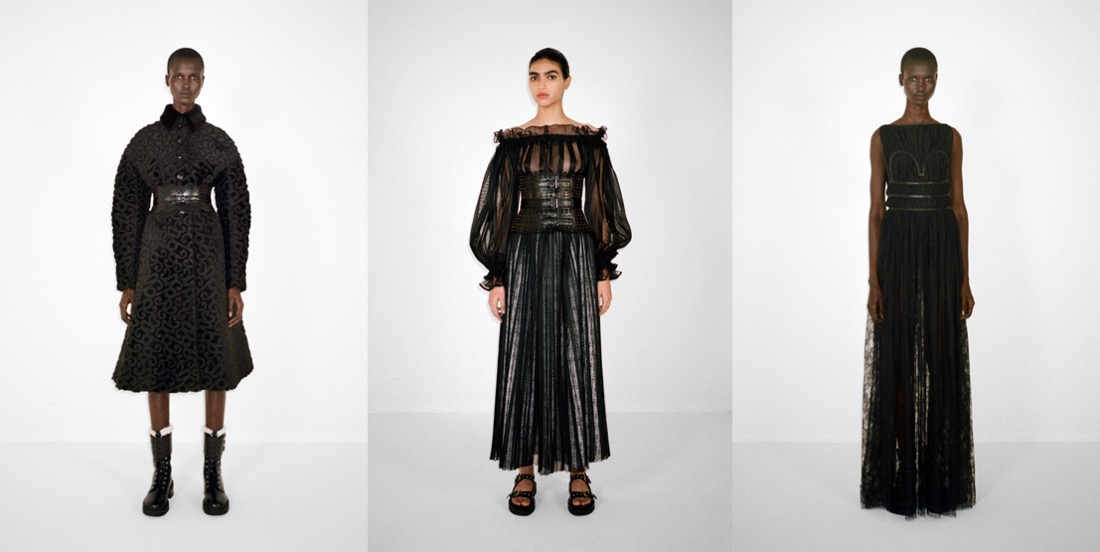
Azzedine Alaïa‘s studio team respects the late monsieur’s aesthetic, techniques and silhouettes, and keeps on working with well-known codes of the maison. The brand consistently evolves, mostly in peace and silence (the rumours of big-name designer appointments are just rumours). Given Alaïa’s decades-old archive of tens of thousands of prototypes, patterns, samples, and unfinished ideas, it’s amazing the house manages to edit down about 40 pieces for the seasonal Editions line. “It’s difficult and horribly frustrating because every time I go through [it, I] see so many pieces I know and love,” explained the house’s Heritage and Editions director Caroline Fabre Bazin. Ultimately, she and Alaïa CEO Myriam Serrano decided to focus on pieces they see as “important for the house, important in the history of fashion, that also speak of technique and timelessness.” Alaïa followers will recognize such iconic designs as the body-con black dress with a wraparound zip, now in long and short versions. They may also recall the intricacy of a coat held together with a technique the designer extrapolated from woodworking and transposed onto leather for a coat from 2006. Called charnière, the French word for hinge, it involves interlacing leather seams by hand in lieu of stitching. A rose-beige knit dress recalls the time a supplier turned up to show Monsieur Alaïa new lacelike techniques; he took them all and used them together for a corset dress. Elsewhere, a wool that was accidentally overboiled became a mesh-like coat, and entered into the house lexicon. Every piece has not just a date, but also a backstory. Autumn-winter 2021 revisits house techniques in new treatments and combinations that sometimes rival couture-level craftsmanship. Fragility and strength meet on a tiered lace dress with a charnière construction on the neckline, waist, and skirt. African inspirations inform the weave of a graceful skirt in russet, beige, and black; the skater skirt is revisited in a sculptural Japanese fabric, and a white skirt picks up on origami techniques. Laser-cut leather features a new style of perforation named for Sidi Bou Said, Alaïa’s Tunisian hometown and final resting place. The snow white sheepskin jacket embroidered with arabesques is a showstopper. Classics that never get boring.

Collage by Edward Kanarecki.

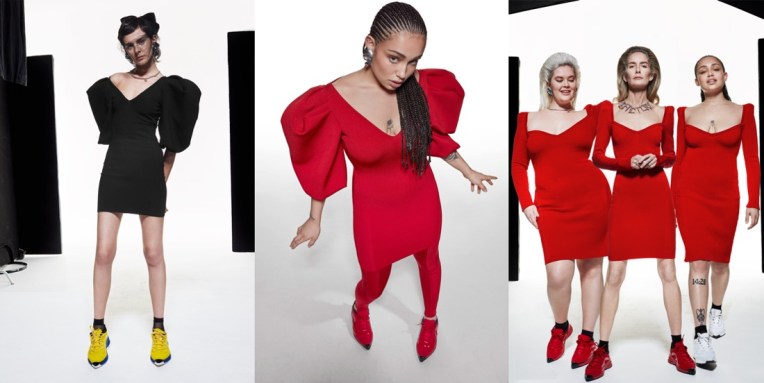
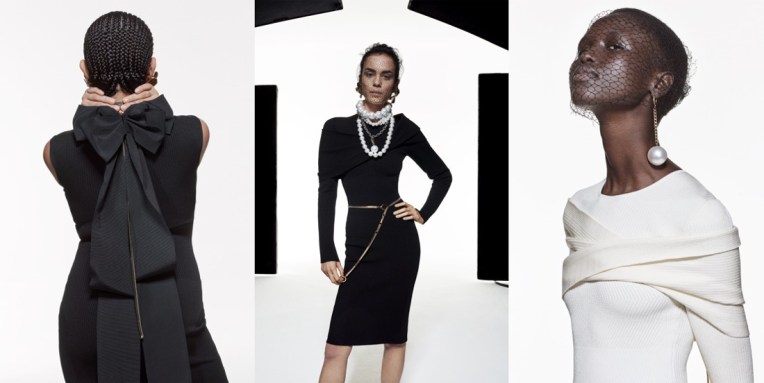
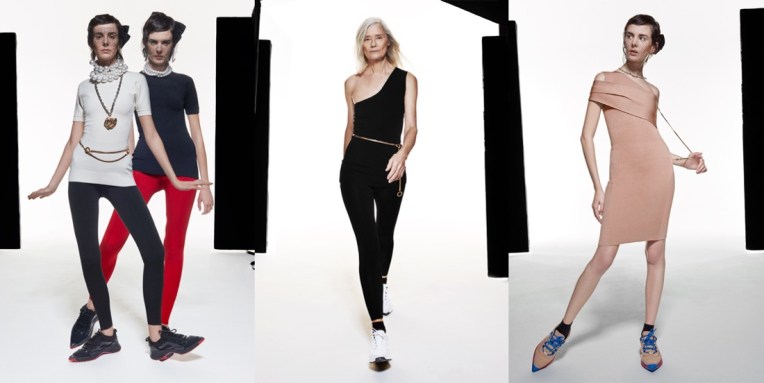
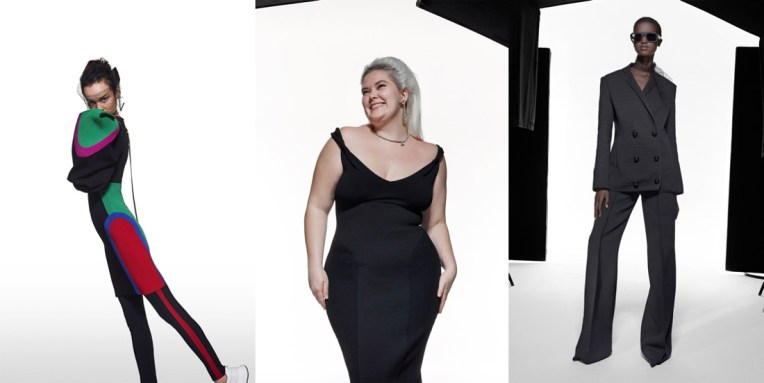
My Body. AZ Factory SS21

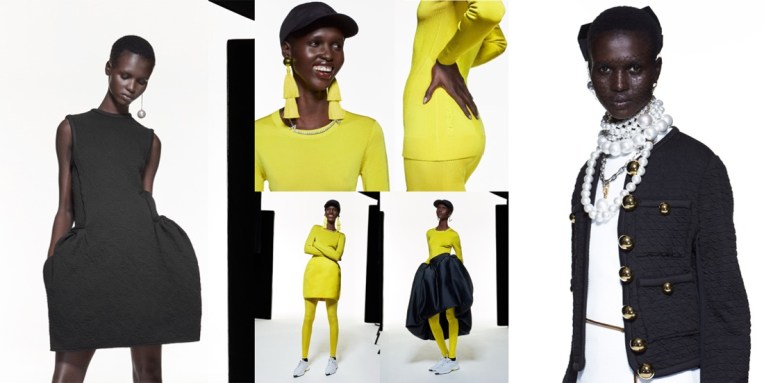
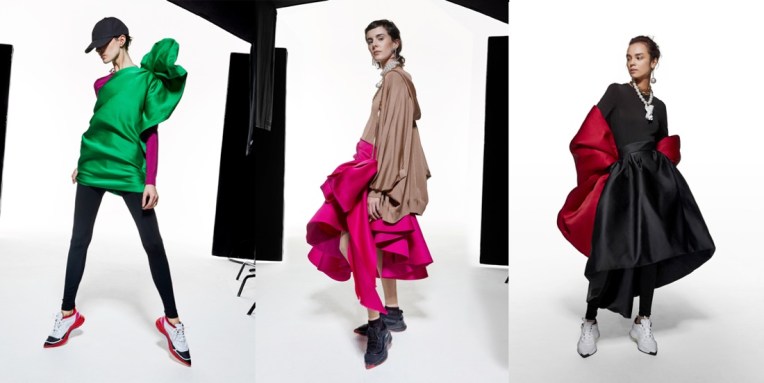
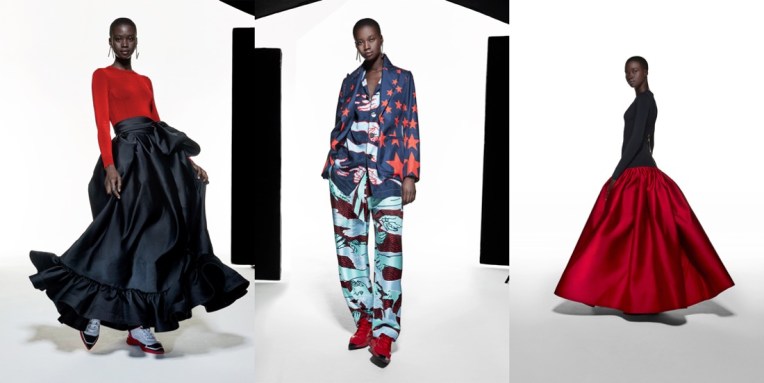
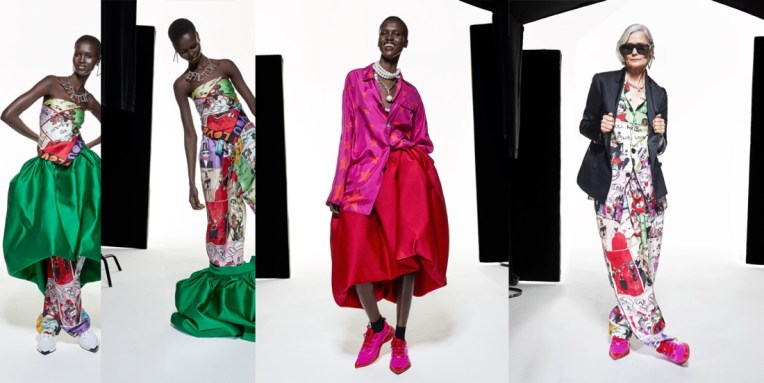
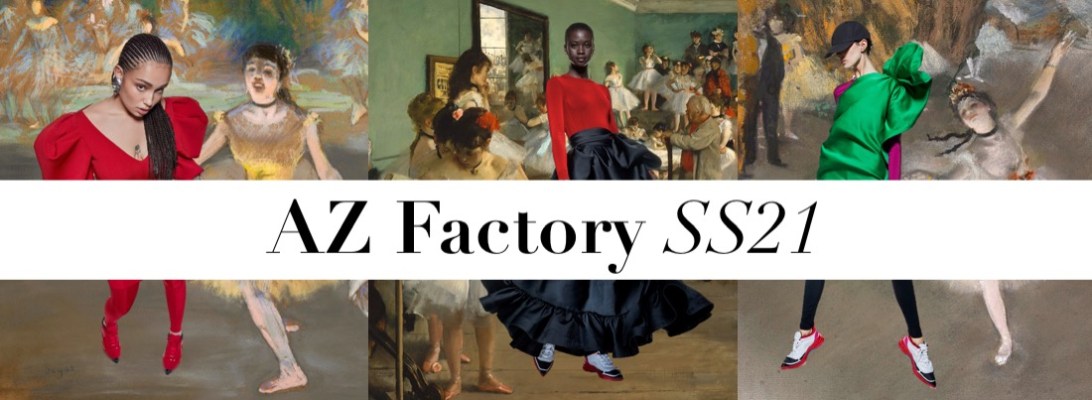
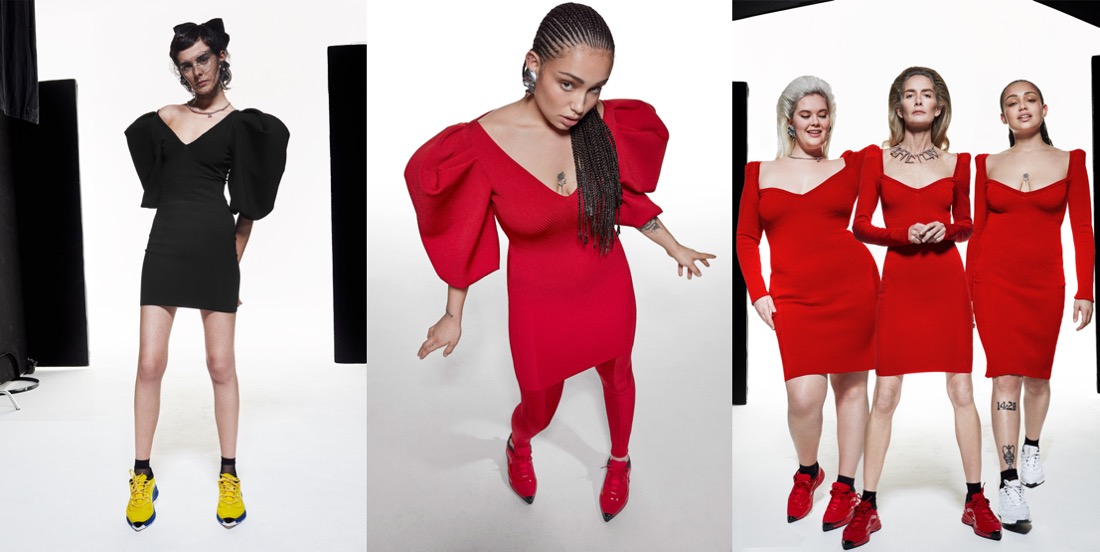
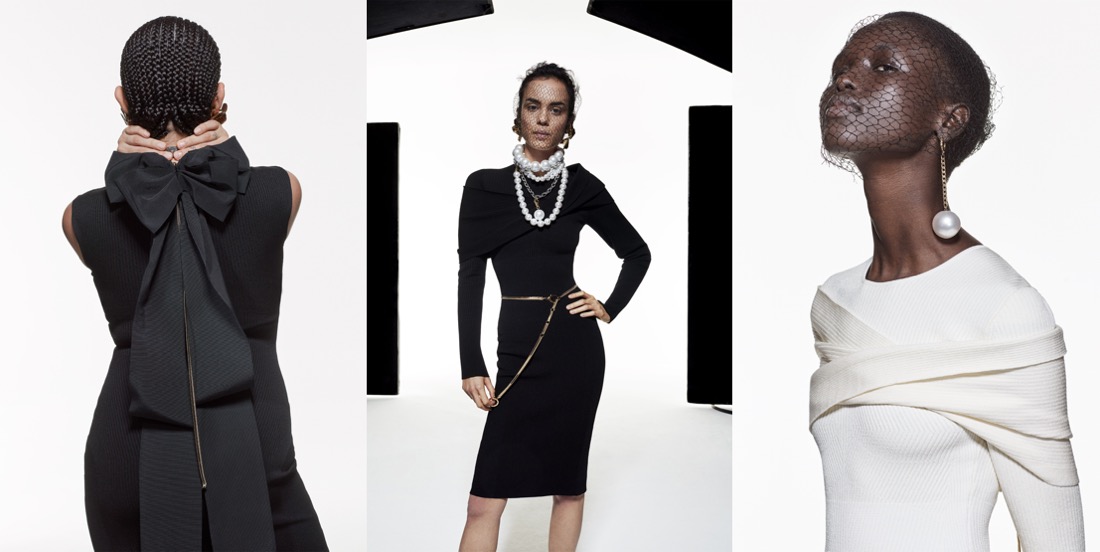
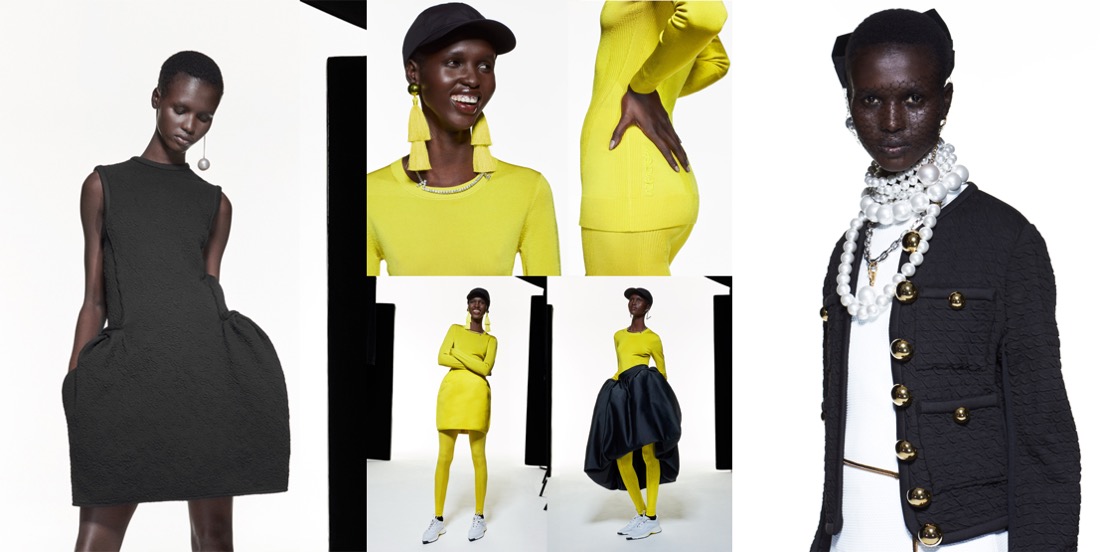
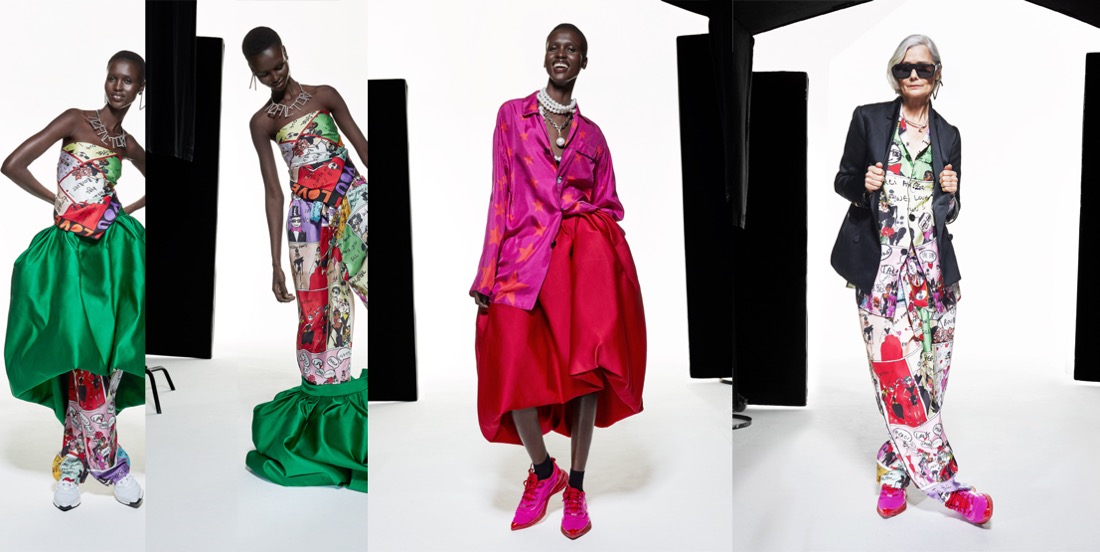
Alber Elbaz is back in fashion! Oh, how I missed his fabulous, perfectly imperfect dresses, joyous colour palettes and chic femininity he delivered at Lanvin. Five years after an abrupt exit from the Parisian maison, he returns with his own brand, which won’t be playing along the industry’s dusty rules. His debut AZ Factory collection, which is part spring-summer 2021 ready-to-wear (available now on Net-A-Porter, Farfetch and the label’s site), part couture, proves Elbaz truly reconsidered many things before starting his new venture. “I was doing a lot of observation,” he told Vogue. “I needed to run away. Somehow, I didn’t want to do any more pre-collections, post-collections. I had to question the present, and the future. I had so many questions: the world, women, technology, needs changed…so how is the industry going to change?” He’s embraced tech; he’s stepped up to environmental-responsibility, he’s taking on body-positivity – all things that seemed like far-off improbabilities in 2016, when he took a break from fashion. After taking a good look around – pending his time teaching, reading, visiting Silicon Valley, listening to women friends, researching new fabric technologies, he concluded there’s a place for a totally modernized approach to fashion. “I was thinking: What is the purpose of design today? Thinking, but not being intellectual. How can I help women? I wanted to work on new technology to develop some smart fabrics with factories [to make] beautiful, purposeful, and solution-driven fashion. That is for everyone.” The first offering from AZ Factory is “My Body,” a set of dresses engineered to consider the ergonomics of all shapes and sizes. Its implications are super-modern, practical, empathetic – and kind. “I saw for five years, women I met for lunch how much women were struggling with their weight, and sometimes that was hard to watch,” Elbaz said. “ Even in the ’50s, [fashion said:] ‘This is right, and this is wrong.’ I think that there is no wrong! I took a subject that is taboo, that you almost don’t want to talk about, but I said: Yes I will. We’re not here to transform women; we’re here to hug them.” His dream, he explained, was “to build a magical dress that was made of knitwear: an anatomical knit. There are areas that are a bit thicker, areas that are finer. I released the tension in the skirt, so you can walk faster, or dance if you wish.” AZ Factory has all the flourishes and colorful quirks his fans will easily recognize from his Lanvin days – the volumes and prints he so fluently dashes off from his pen. But this time, rather than going in the French haute couture party-gown direction, the ideas are sprung from athleticism and servicing real life. Developing his own bespoke fabric has made him break the wasteful old fashion-y habit of splurging on multiple options. “I said: Be strict with yourself!” he laughed. “I’ll do one jogging suit in seven colors and a few duchesse skirts in recycled nylon.” It can all be hand washed, too, thus eliminating dry cleaning impacts (and bills), while cutting down on washing machine water and electricity use. Just one thing I’m not sure of are the pointy-toe sneakers. But in overall, everything works really well. It adds up to a new way of doing things, that’s for sure: a far cry from catwalks and shows, a break with some of the bad old habits of fashion, and a leap to launch purely online. “And everything is 230 to 1,200 euros!” Elbaz concluded. A price point which is much, much lower than the one at Lanvin, for instance. It’s a new space in between, where something with design integrity and modern thinking is finally happening. Welcome back indeed, Alber.

Get your hands on the first AZ Factory must-haves: AZ Factory stretch-knit leggings, AZ Factory stretch-knit top, AZ Factory stretch-knit mini dress & AZ Factory stretch-knit bodysuit.

“Live” collage by Edward Kanarecki.