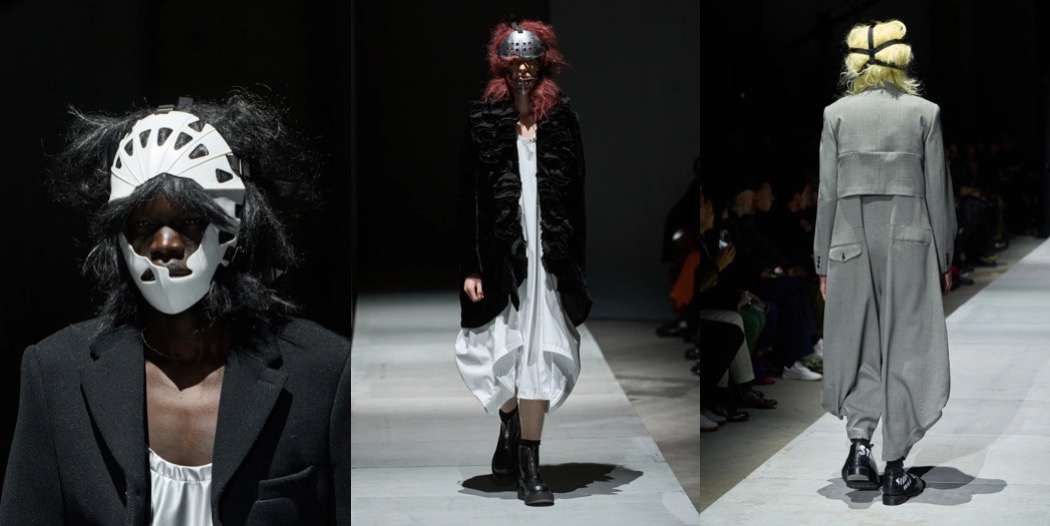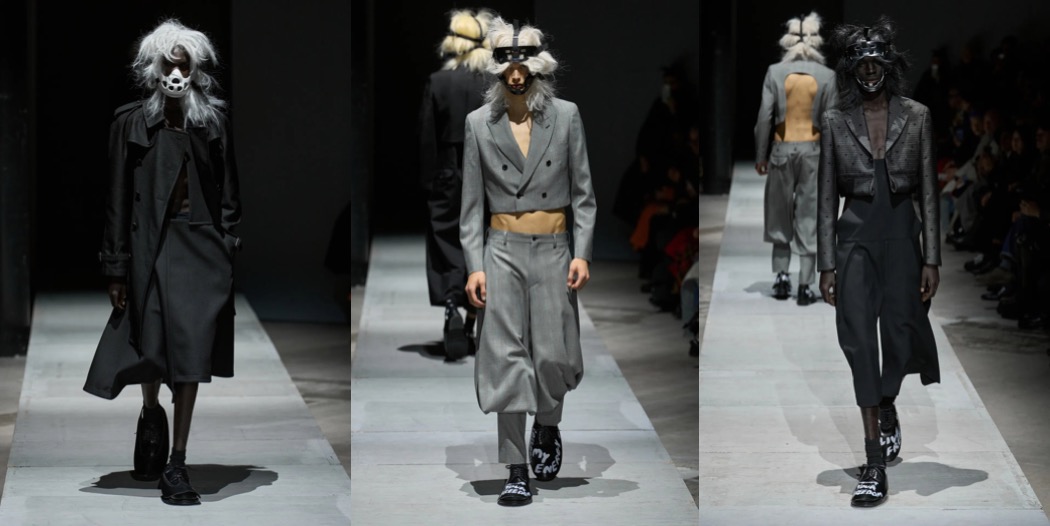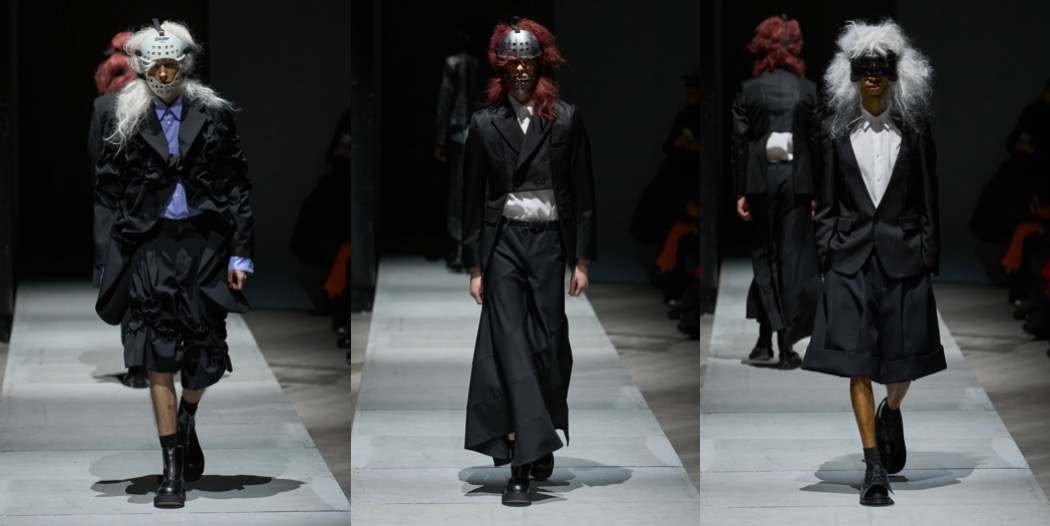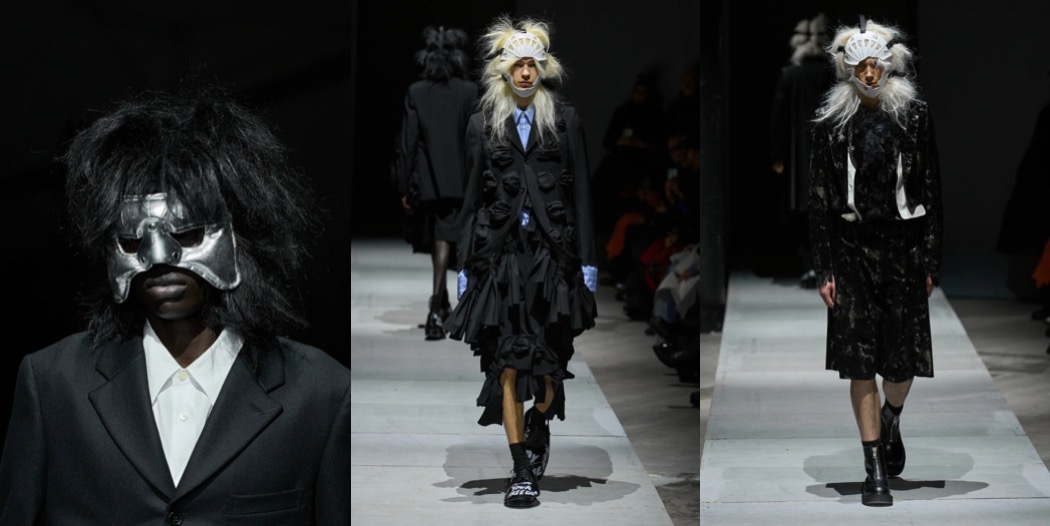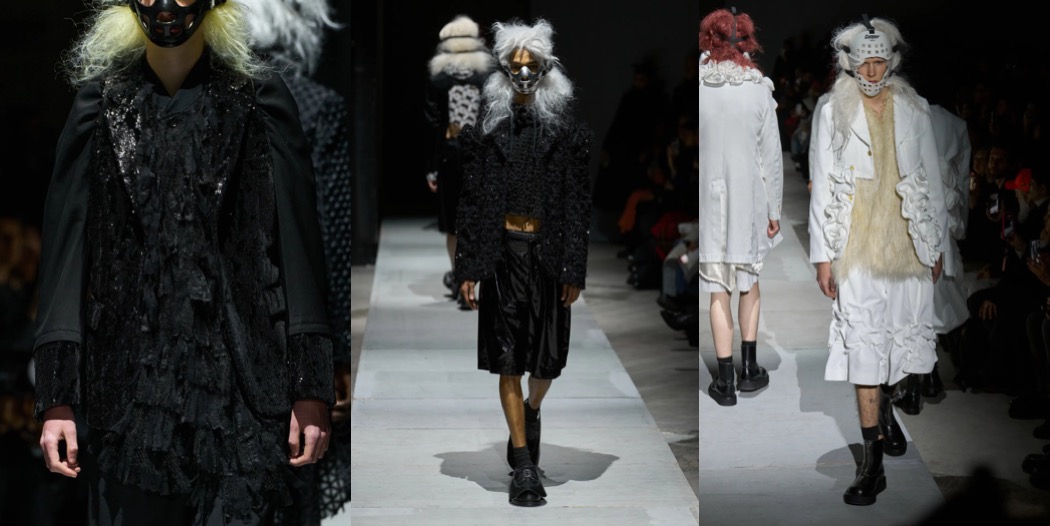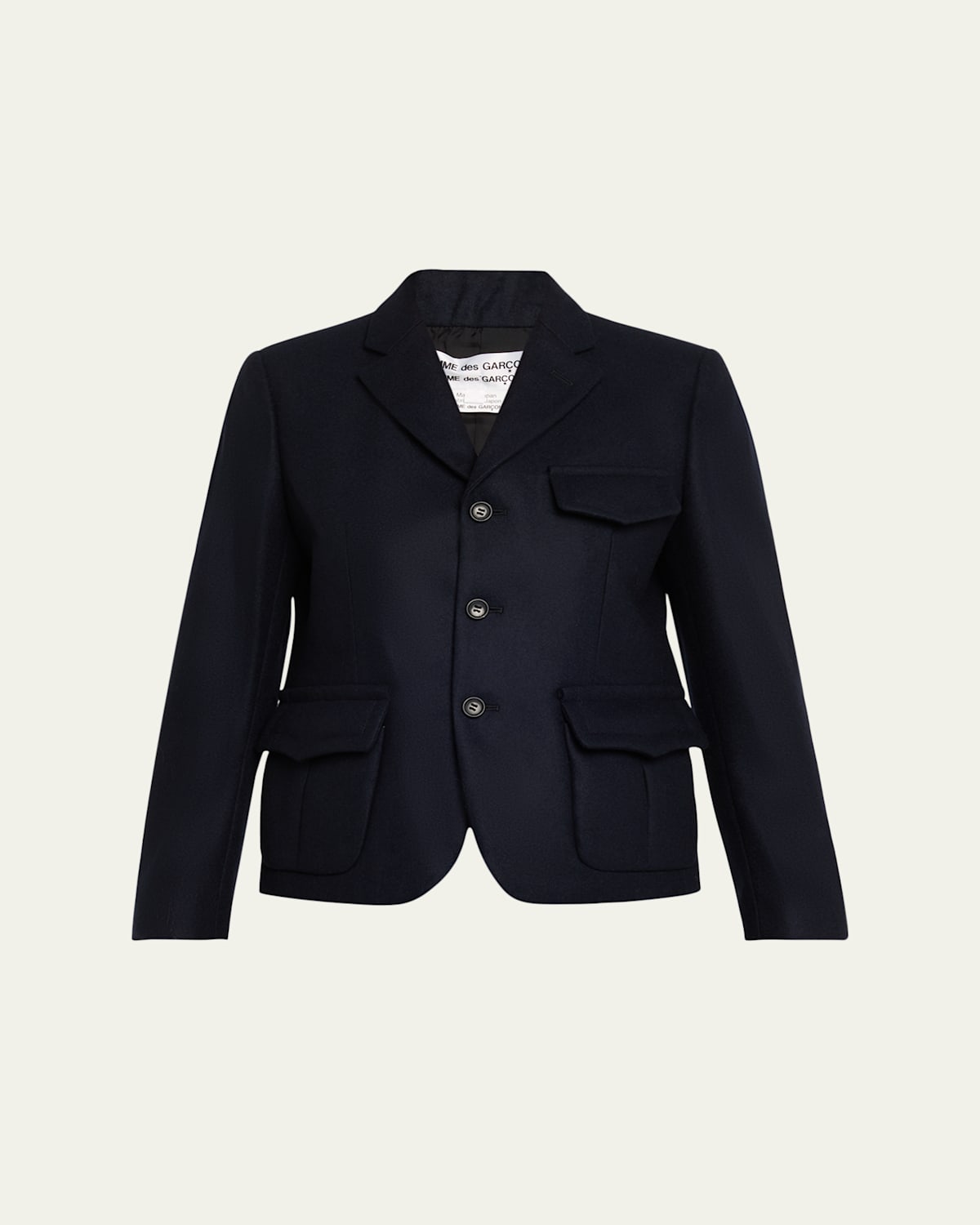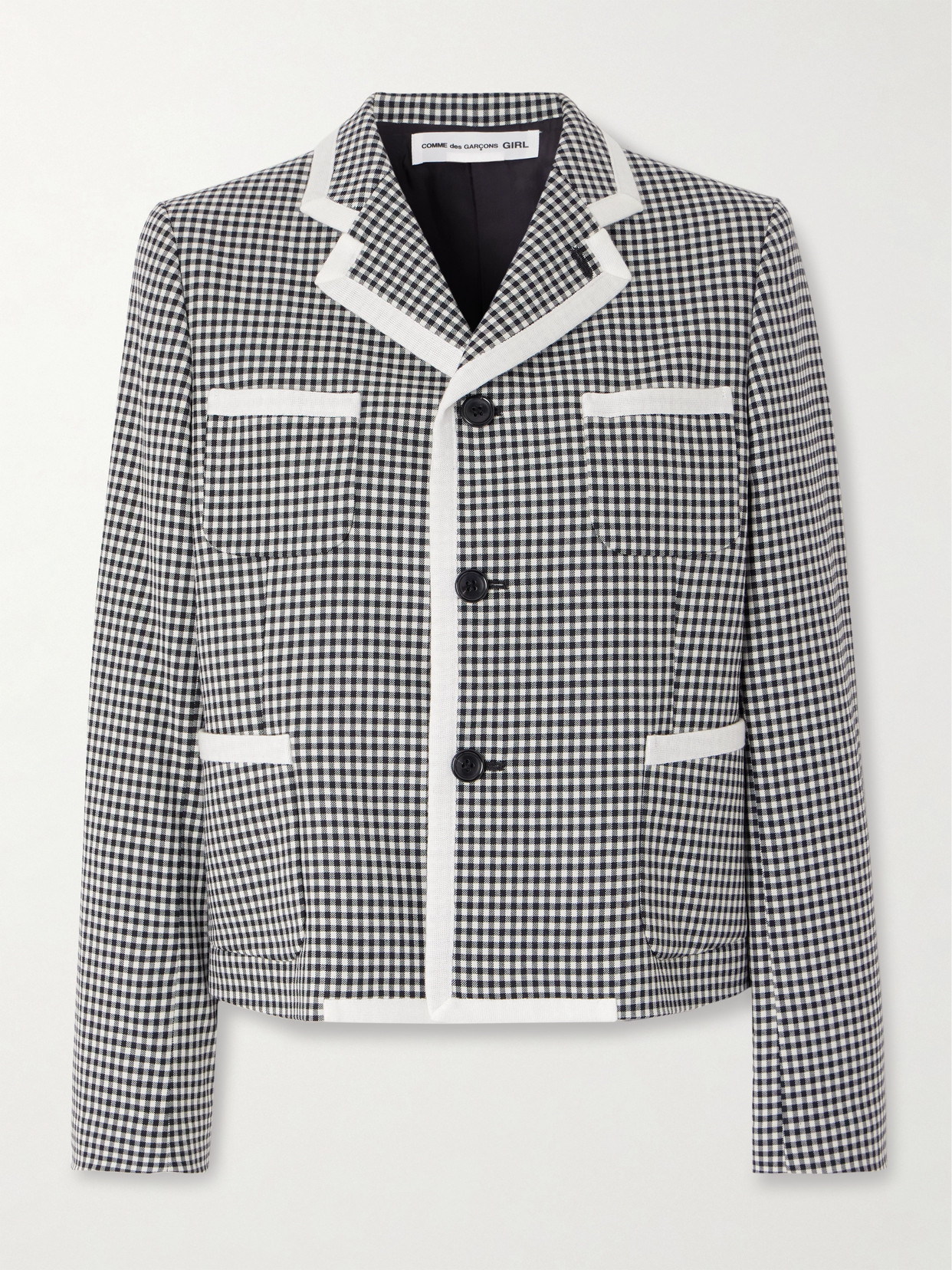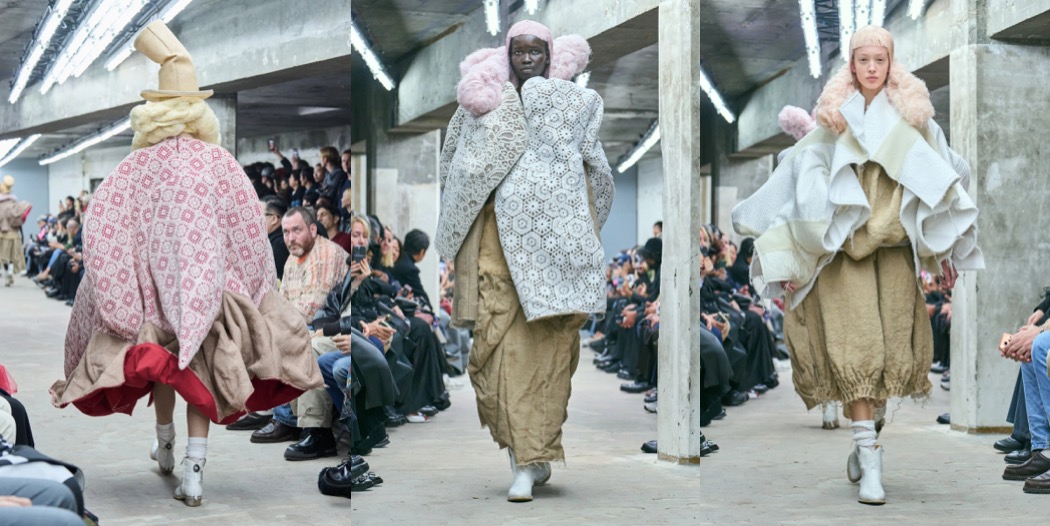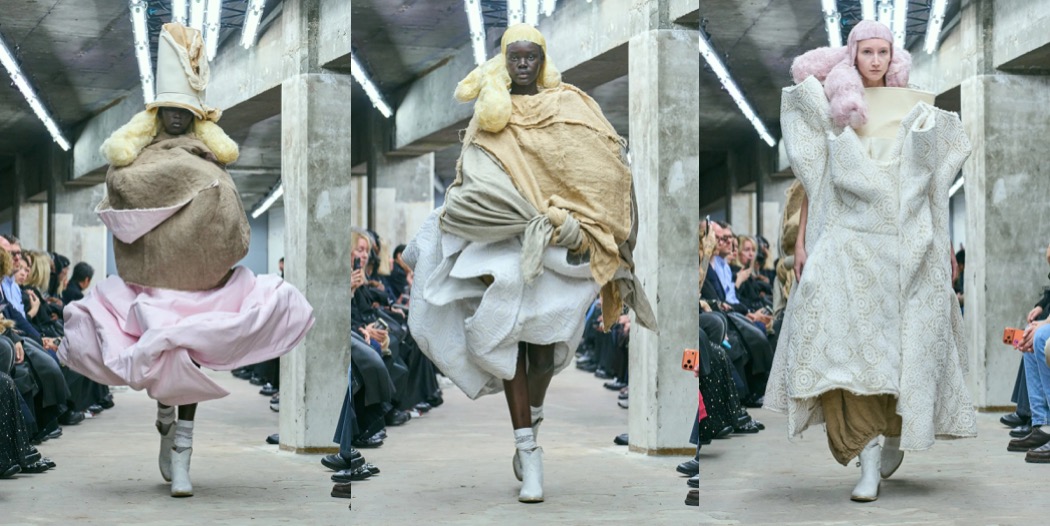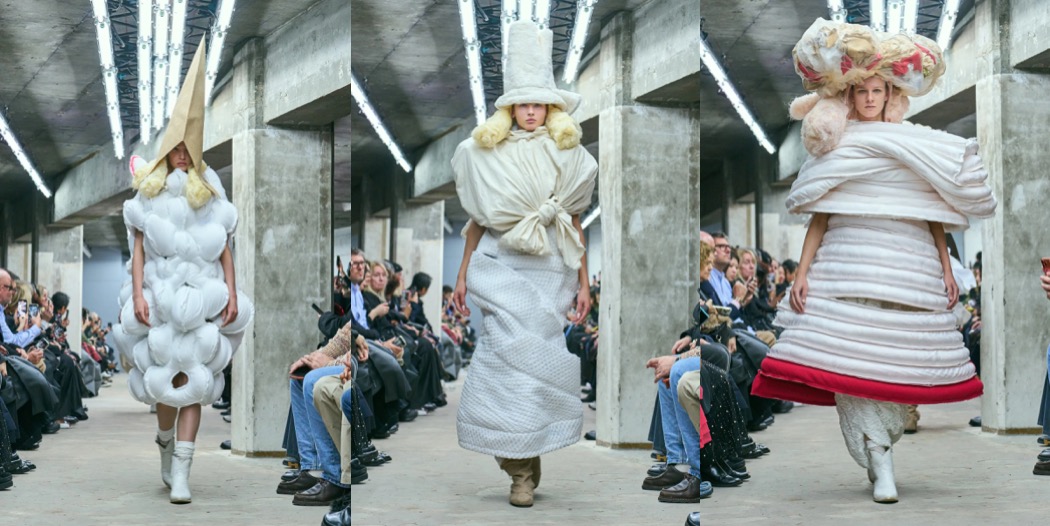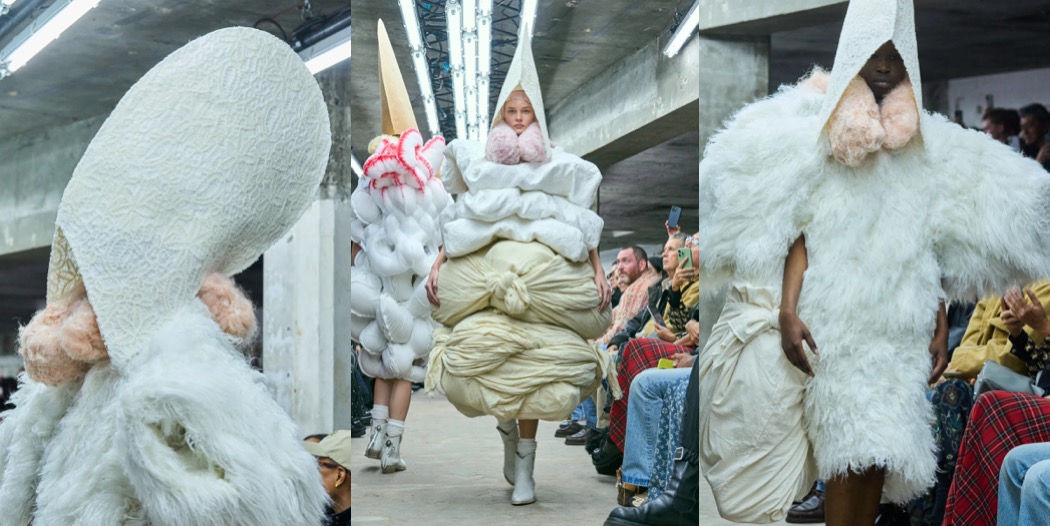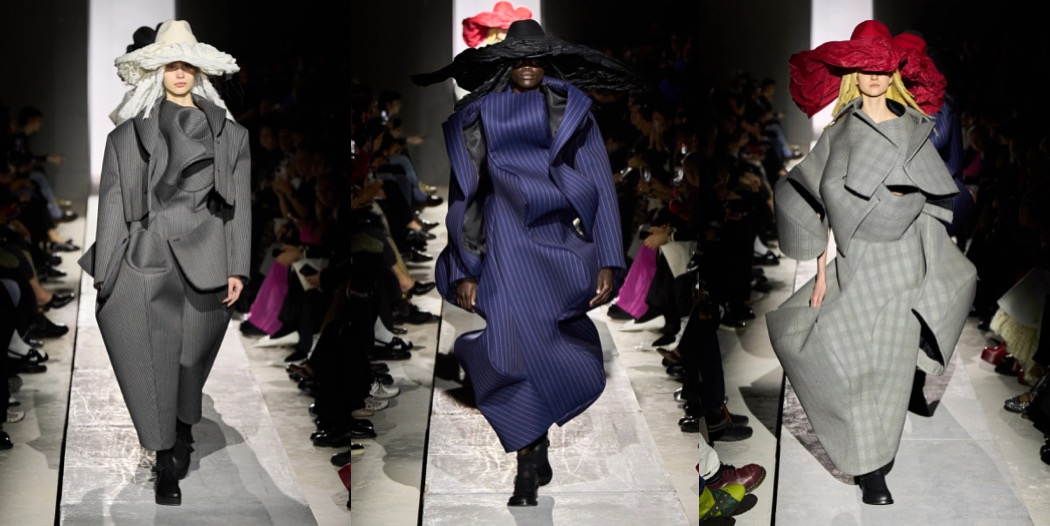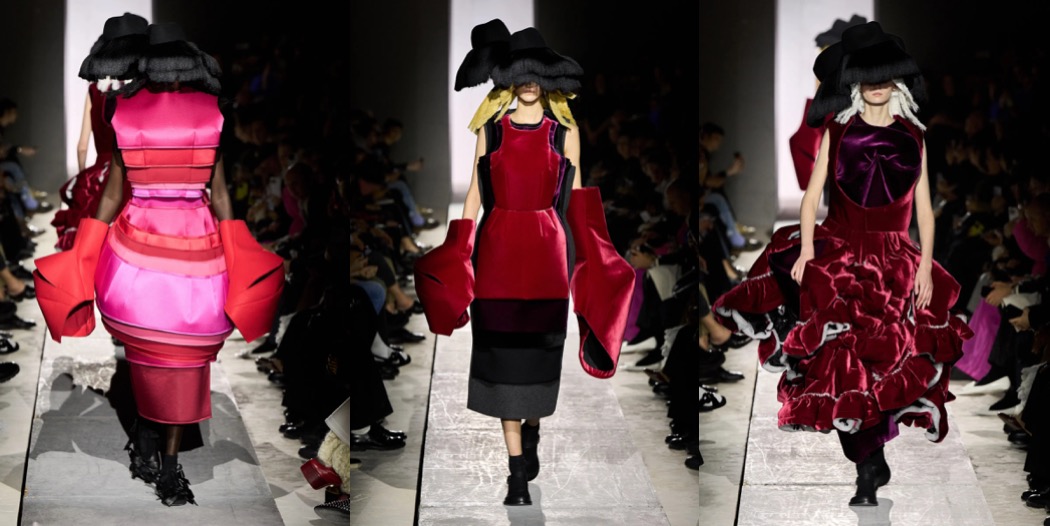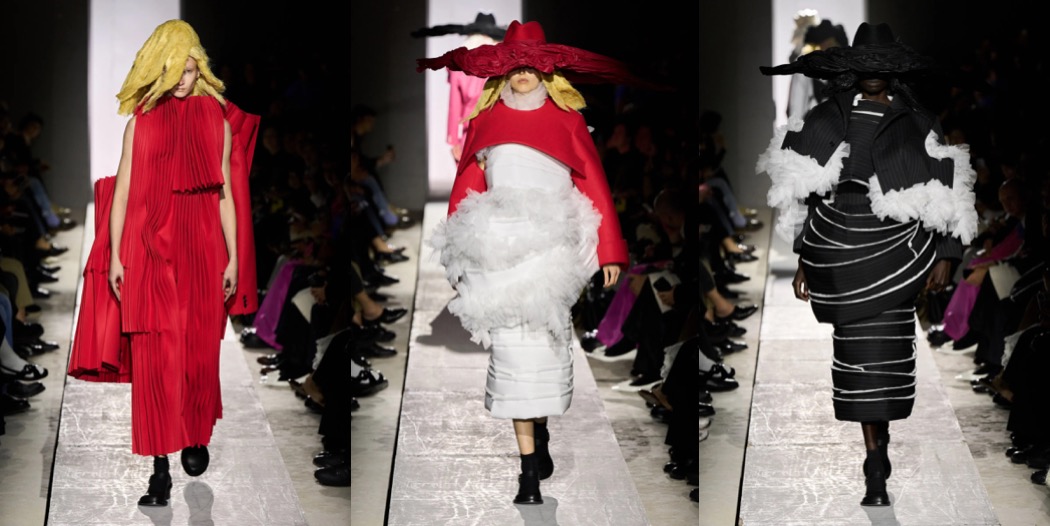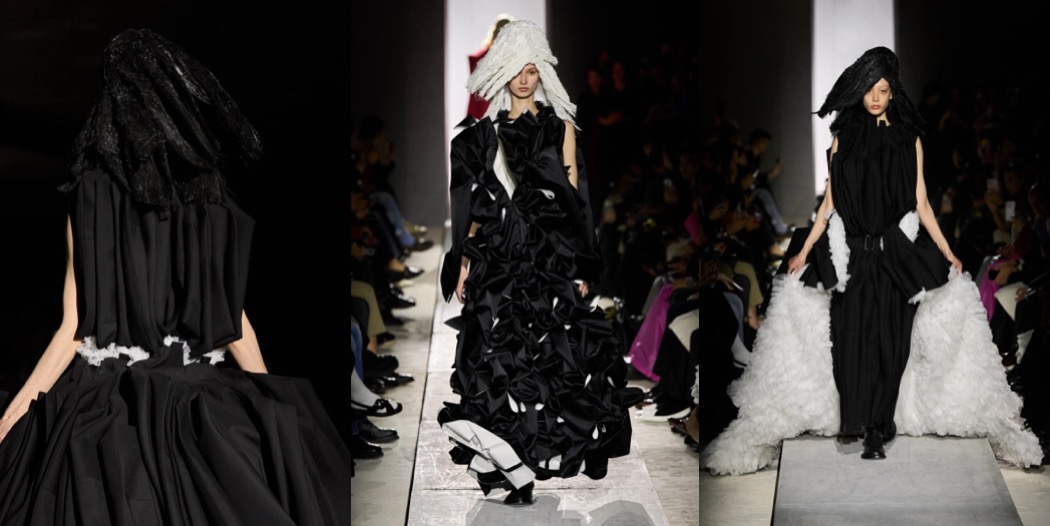
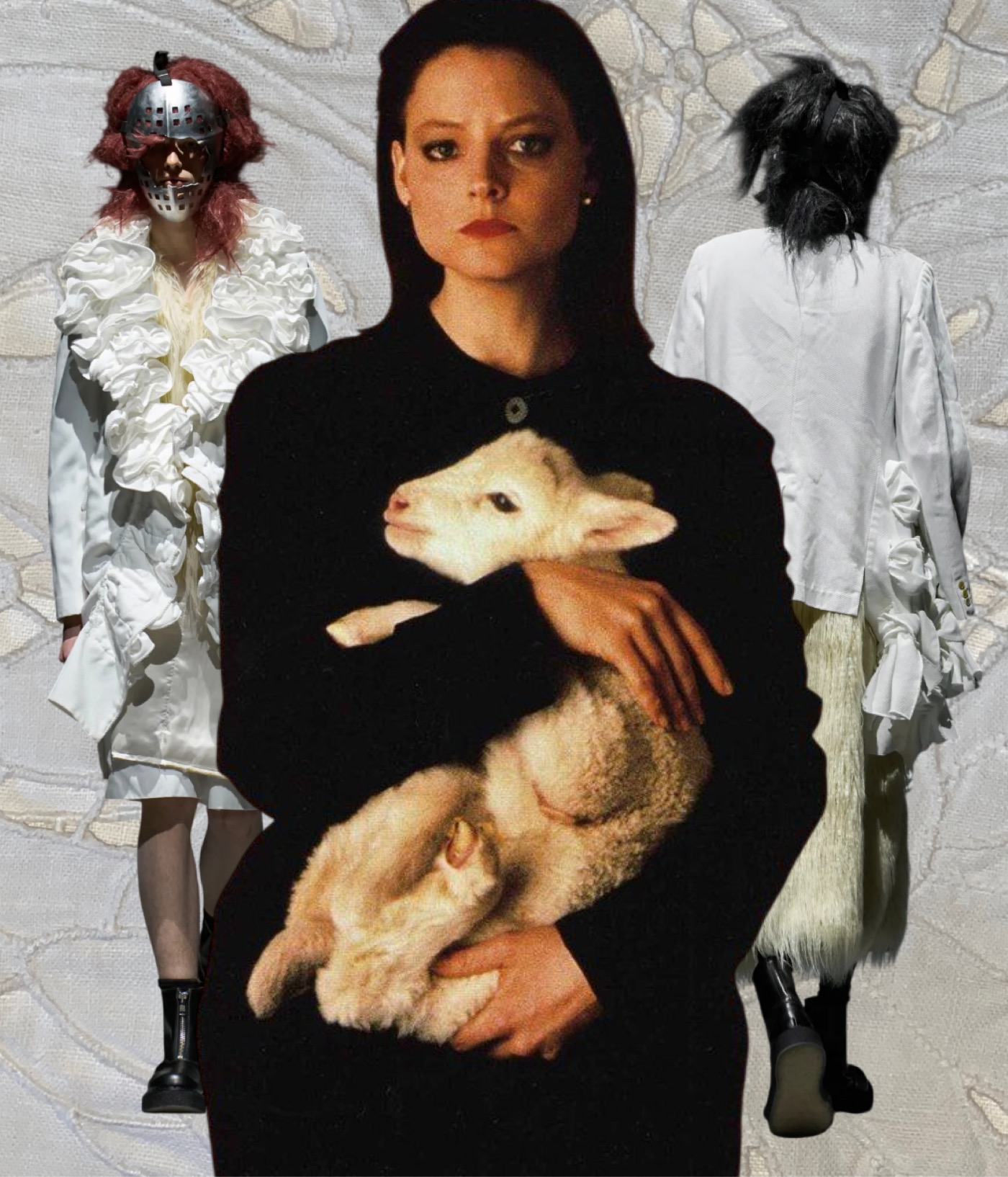
My Paris Fashion Week ritual? Paying a visit to the Comme des Garçons showroom. It’s like Sunday church – or a moment of epiphany.
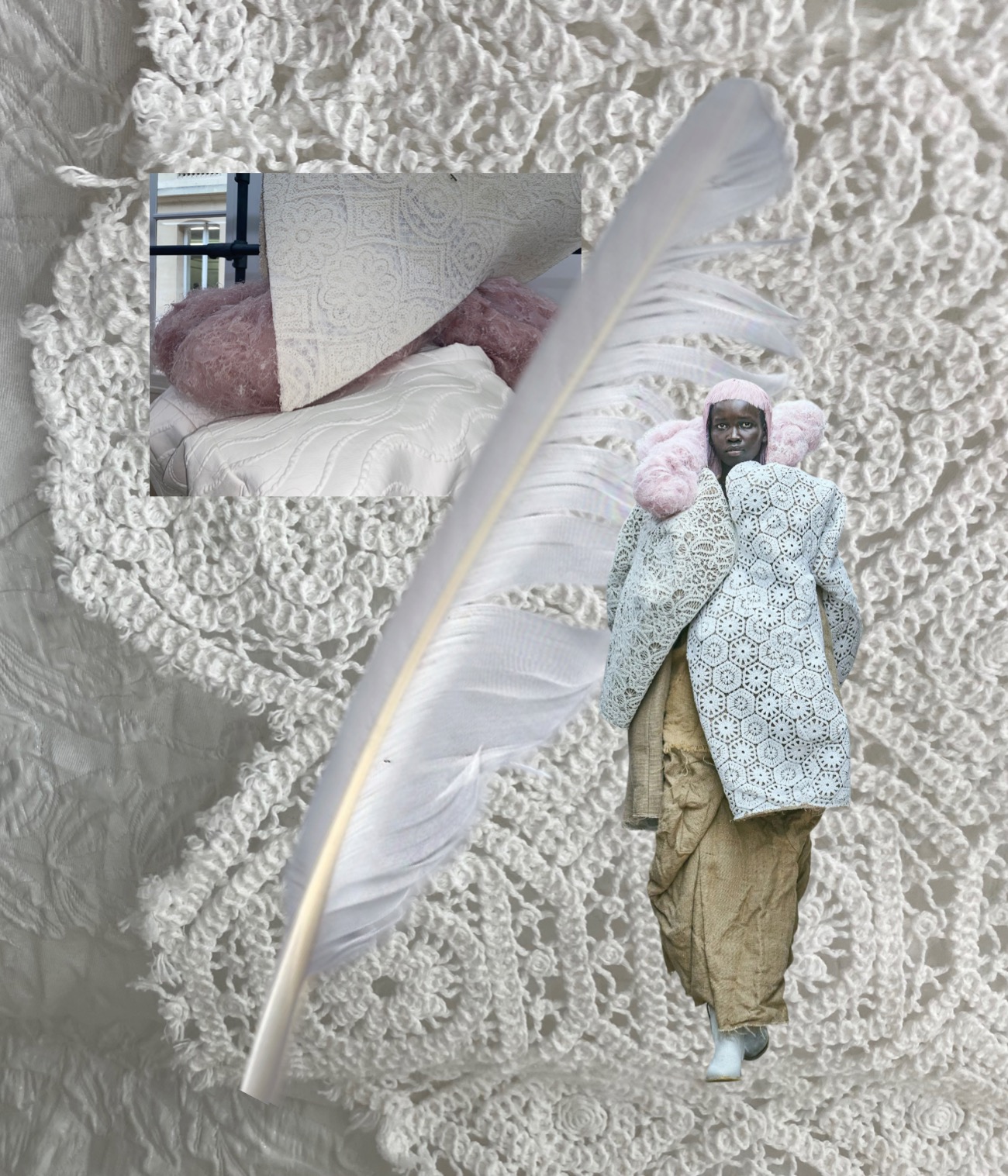
This season, Rei Kawakubo intentionally “damaged” materials to create something raw and radical. Artisan lace was shredded. Jute and brocade received the rough, John Chamberlain treatment. Anything once considered precious was mistreated without mercy. The result: heart-wrenching beauty – a vision that captures the pain of the contemporary world, silences the omnipresent noise, and transforms imperfection into absolute power. READ MY FULL REVIEW HERE.
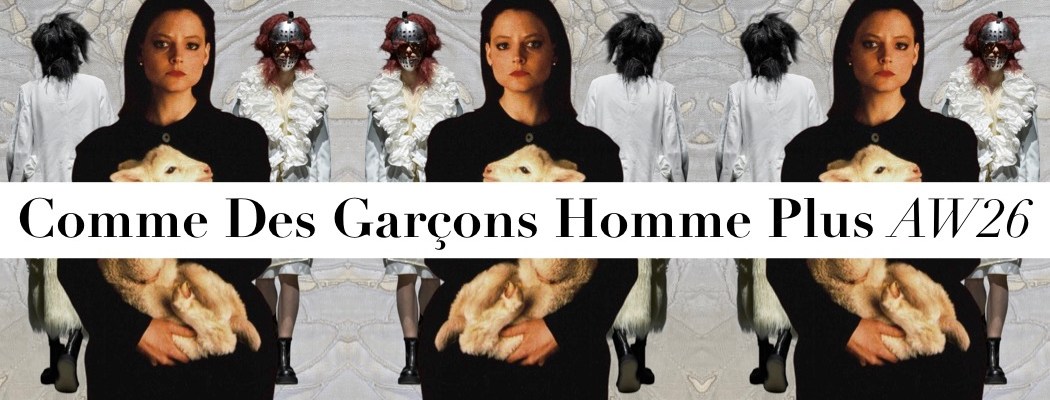
Collage by Edward Kanarecki. Don’t forget to follow Design & Culture by Ed on Instagram!
Hey, did you know about my newsletter – Ed’s Dispatch? Click here to subscribe!
Let me tell you.. fashion month exhausted me to such extent I had to take a teeny-tiny break and I’ve missed a couple of shows in my usual reporting. This also made me realize, why the hurry? Before Instagram, you had to wait at least a month for any (printed) magazine to deliver a proper fashion month coverage. I remember those times, so I officially feel old.
Comme Des Garçons was an important moment. Rei Kawakubo’s wearable shapes and constructions were slightly (just slightly) getting daunting in the past few seasons with their amorphism and assamblage-ness, but for autumn-winter 2025, the designer went back to making clothes – or rather, concepts of clothes. Not that they were in any way normative. But you could see substantial ideas behind multiple cocktail dresses topping a black tutu base, or in the massive velvet crinolines. There were many layers of pink, red, and watermelon duchess satin bodices and skirts, smashed and clashed together, looking like some kind of couture godzilla. Meanwhile, on the soundtrack, the recording of the Bulgarian singers – as Adrian Joffe, Rei’s husband, shared – was of “workers in the fields, harvest, families, getting things done together.” This holds symbolism for Rei Kawakubo and for Joffe about the independence of Comme des Garçons and Dover Street Market – the two rare, assertive, yet thriving enterprises in an increasingly mega-corporation-dominated world.
Small can be mighty.
Collage by Edward Kanarecki. Don’t forget to follow Design & Culture by Ed on Instagram!
Hey, did you know about my newsletter – Ed’s Dispatch? Click here to subscribe!
For the second season in a row, I had the unbelievably beautiful experience of seeing the Comme Des Garçons collection IRL, at the brand’s showroom near Place Vendome in Paris. It’s always quite a striking contrast: first you’ve got to cross all the bling-bling flagships, from Cartier to Van Cleef & Arpels, and then you suddenly immerse into the world of Comme. And if you’re lucky, Rei Kawakubo, the mastermind creative and founder of the brand, stands there, just behind the glass wall of her office, keeping her finger pretty much everything this company stands for. Really, not many 82-year old designers of her status are that present in their brands. Actually, not many designers of any age are THAT present in their brands.
Visiting the Comme Des Garçons showroom lets you truly understand Kawakubo’s clothes. Of course, attending the label’s fashion show is a dream, ranked high up in my wishlist of things to do. But at the showroom, you can see the garments upclose, feel their emotional deepness, and be struck by their extraordinary craftsmanship. Sharing the space with the designer herself adds a TRUE Benjamin-esque aura to it, too.
The autumn-winter 2025 collection from the menswear Homme Plus line had a loud, clear statement: “To hell with war”. Confronting the reality that young boys and men are being called up for army service, being sent to kill or be killed by countries across the world, can easily fall dumb-flat in case of fashion. But not when Kawakubo does it, so poignantly and movingly. And in any case, her position was straightforward: her young Comme soldiers are peaceniks. Their metal hats self-decorated with flowers or wrapped in fancy, vintage fabrics felt naive, but in a heart-warming, hopeful way. In their deconstructed field jackets and brass-buttoned army officer’s uniforms, they were “soldiers of love”, as Sade once sang.
Rebel and resist. For love, beauty and freedom. Rei, you’re a force.