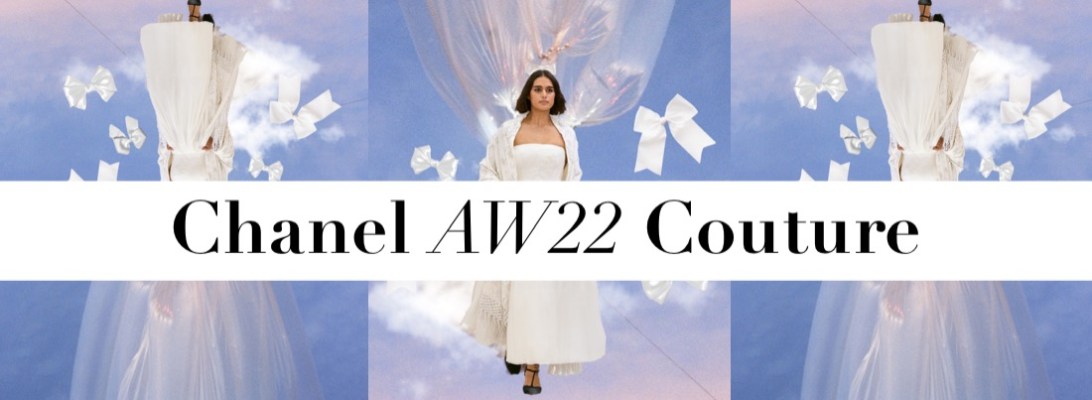
Move Beautifully. Chanel AW22 Couture

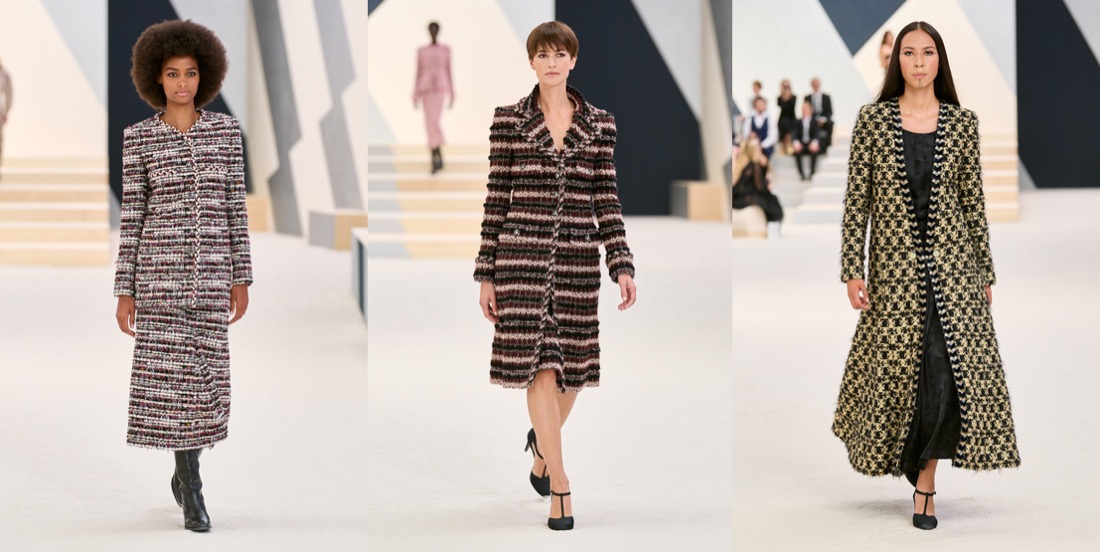
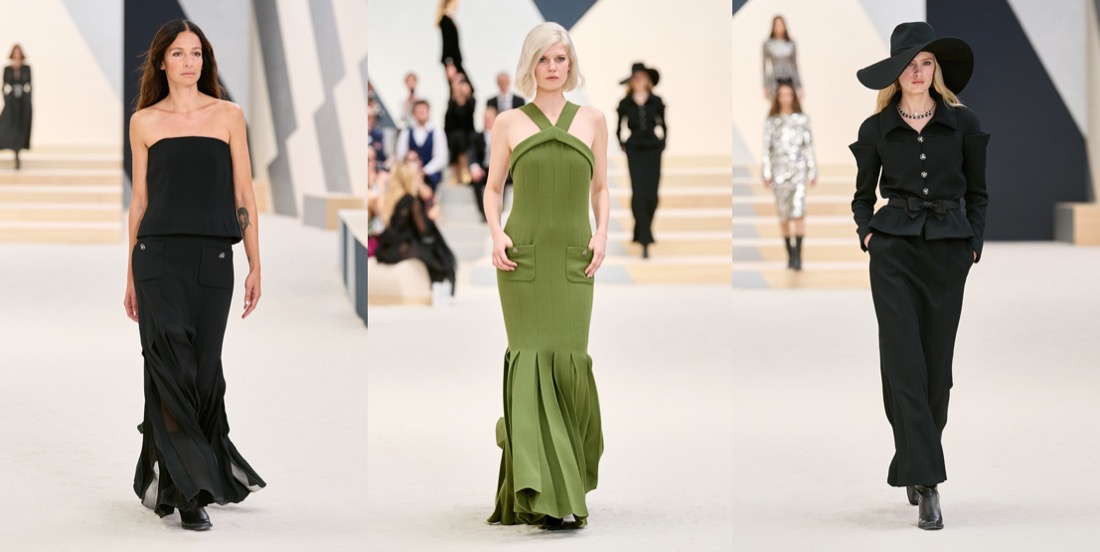
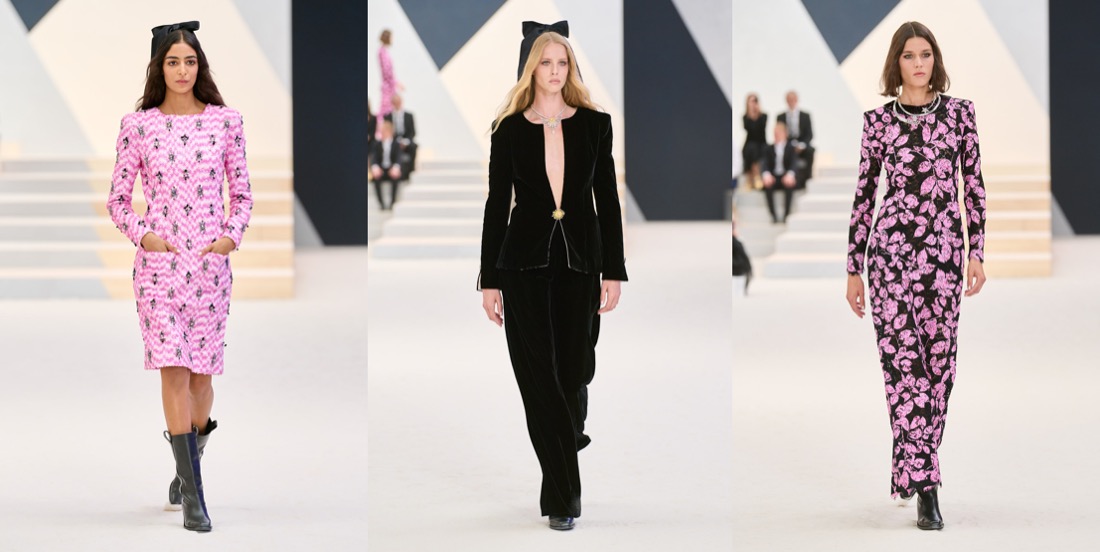
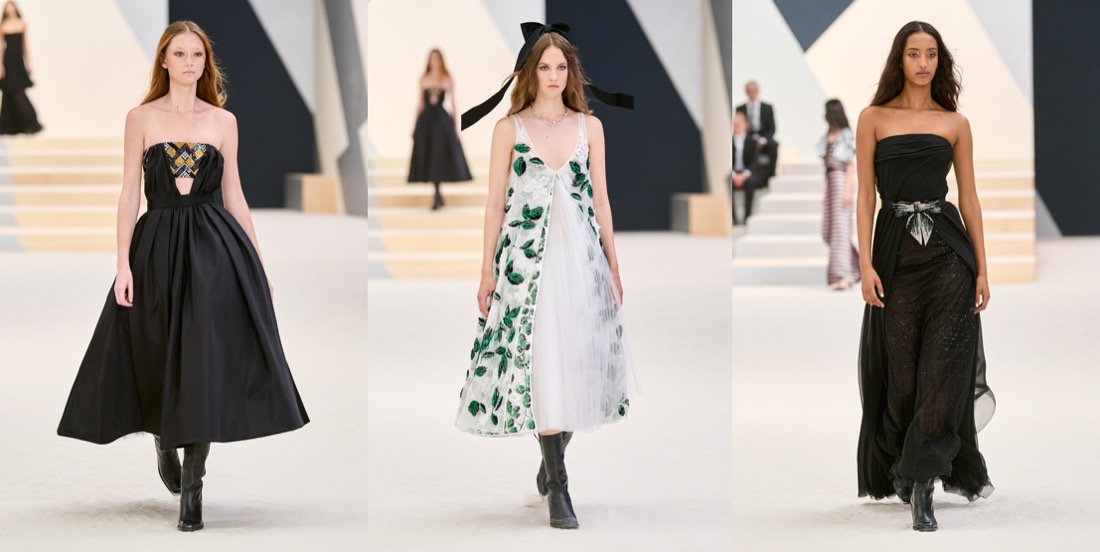
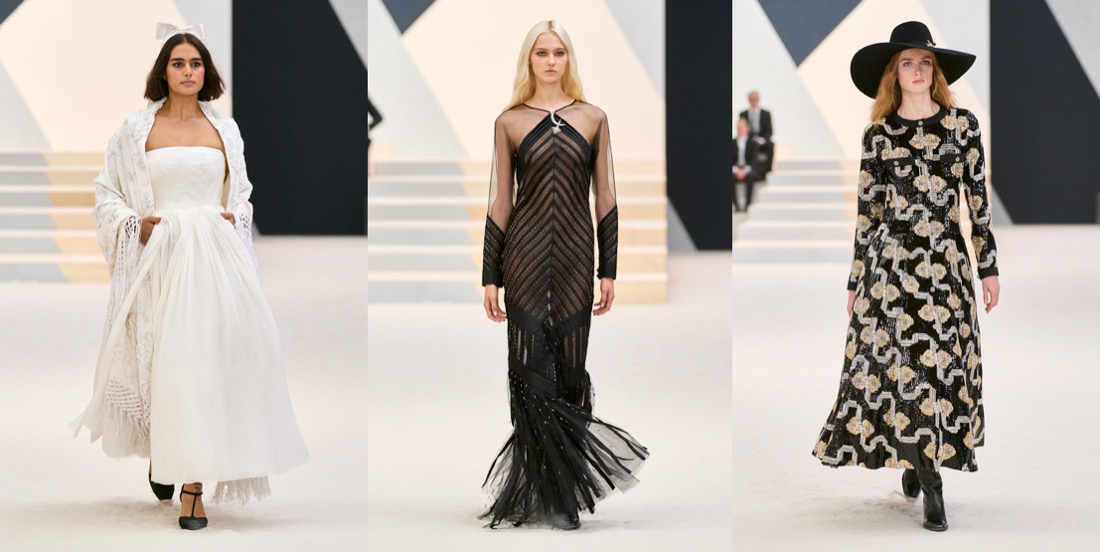
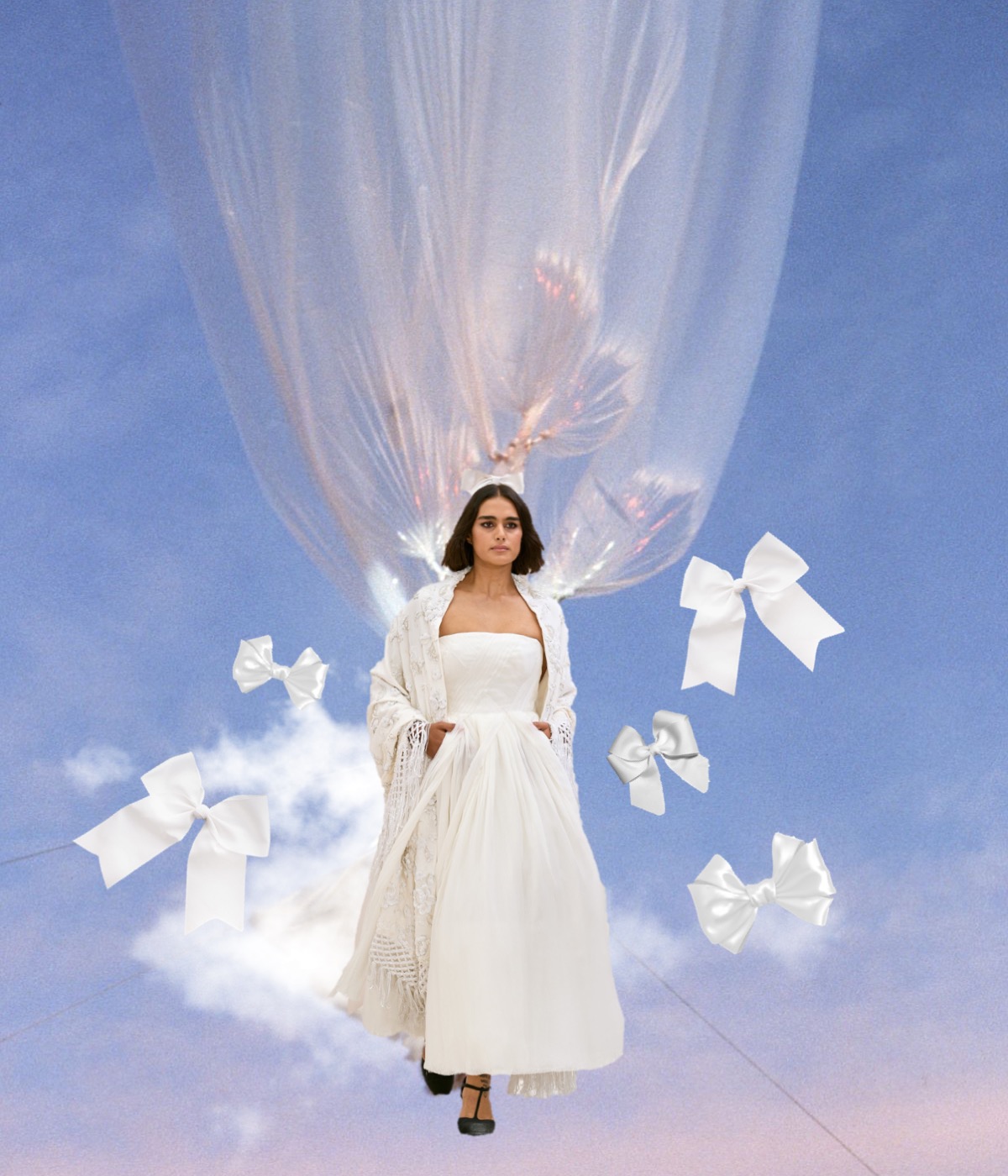
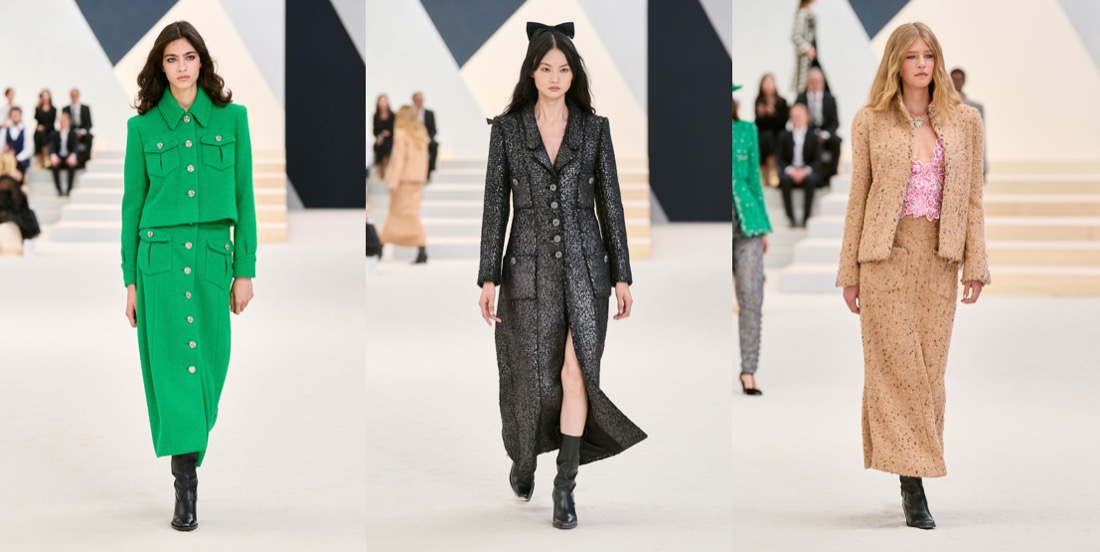
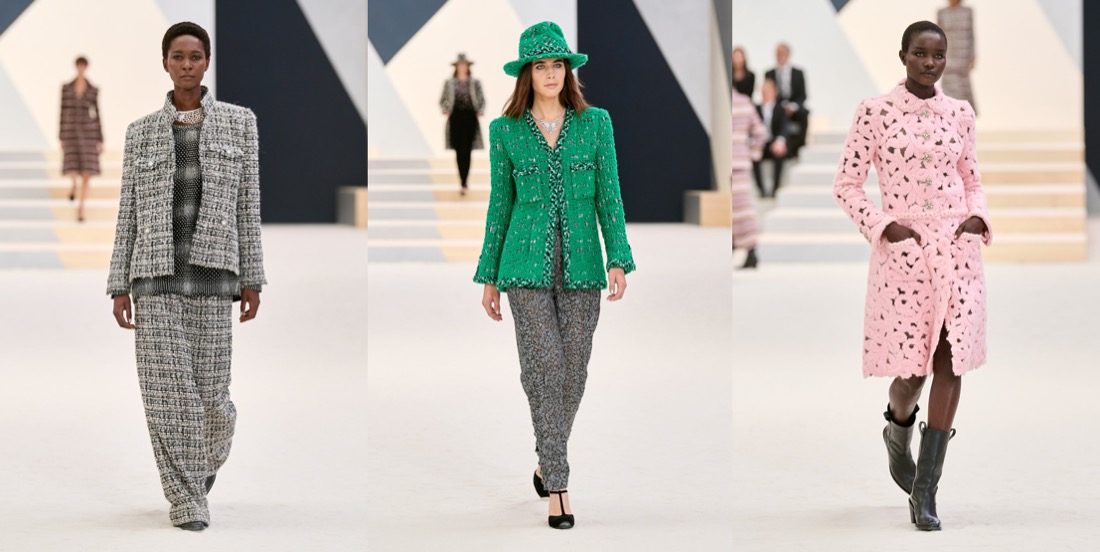
This Chanel haute couture certainly won’t appear in fashion history books, but it did please the eye. For Virginie Viard, her collections reflect the pragmatic needs and desires of the house’s clients and her own eclectic but never fantastical sources of inspiration. Not for Viard the sweeping statements of her mentor Karl Lagerfeld, who might impose a powerful new silhouette on practically every look in a collection, but instead a sense of gentle evolution and a myriad of references and inspiration sparks that might range (as in this collection) from a blinding memory of Inès de Fressange dressed by Lagerfeld in a jacket of bright grass green and shocking pink (for a 1988 Chanel couture show, when Viard first joined the house), to a shot of Fred Astaire in cinematic action, the tails of his white tie evening coat caught flaring out in mid-dance move, to a 19th century shot of a real-life Annie Oakley, to archive Chanel references from slouchy 1920s day suits to slithery 1930s gowns to prim 1960s tailoring, to Lagerfeld’s vividly impressionistic sketches from the 2000s. None of these references, however, are used by Viard literally, but instead serve as starting points for outfits that evolve with the input of the textile designers and makers who weave those extraordinary painterly tweeds, and the dressmakers who understand how to make perfect pleats that “move beautifully,” as guest Sigourney Weaver enthused, “and are just so elegant.” That Astaire flare, for instance, might translate into the kick at the hem of a calf length skirt, the Oakley image into a dirndl skirt with practical pockets that encourage a certain assertive body language, the ’30s house archive references into slinky evening dresses deftly cut to fall straight to the floor when standing still, but that break into swirling movement below the knee when the wearer walks. To set the scene, Viard reached out again to the artist Xavier Veilhan who created a Constructivist set for the spring couture collection. This time, Veilhan built a series of structures that formed a symbolic landscape (arches, bullseye targets, mobiles, cubes of bubblegum pink recycled plastics) in the sandy outdoor stadium of the equestrian L’Étrier de Paris center in the Bois de Boulogne. Guests walked through or around these structures before moving indoors to more sand and a set of kinetic color blocks in black, white, sand yellow, and gray. This gently suggested something of the art deco flavor to the drop-waisted dresses and linear shapes that appeared in some looks in the collection. The symphonic soundtrack, created by Viard’s friend Sébastien Tellier, was set to a video projected on a giant screen as a backdrop to the parade of girls, an impressionistic clip that featured an varied cast including Charlotte Casiraghi and Pharrell Williams. That eclecticism continued with the clothes, showcasing amazing textiles – lace painted in resin; a shower of embroidered leaves on a white tulle trapeze dress, shadowing a print of the same motif underneath; an all-over deco print on a bell-skirted coat dress that on closer inspection turned out have been entirely beaded in sequins by Lesage; or tufts of ostrich plumes painstakingly applied to black chiffon and glimpsed through the openings in a streamlined trench coat of textured black tweed.
Collage by Edward Kanarecki.

NET-A-PORTER Limited

Big Feelings. Schiaparelli AW22 Couture

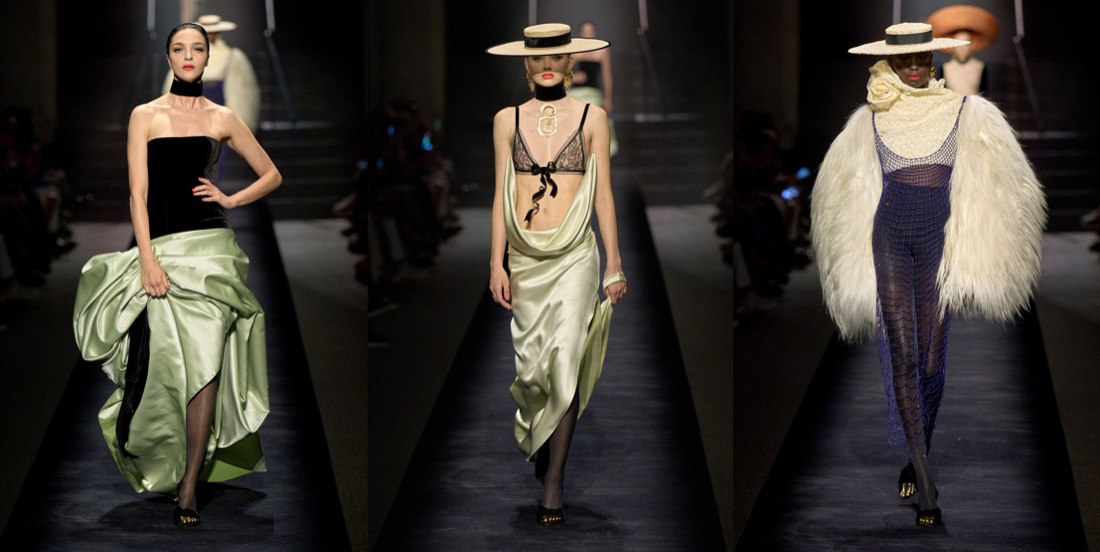
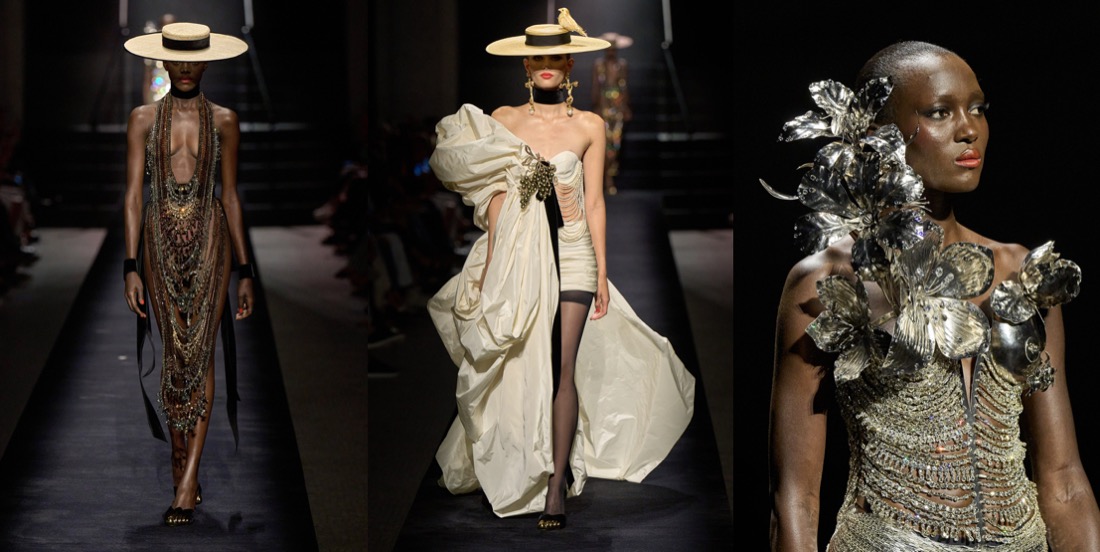
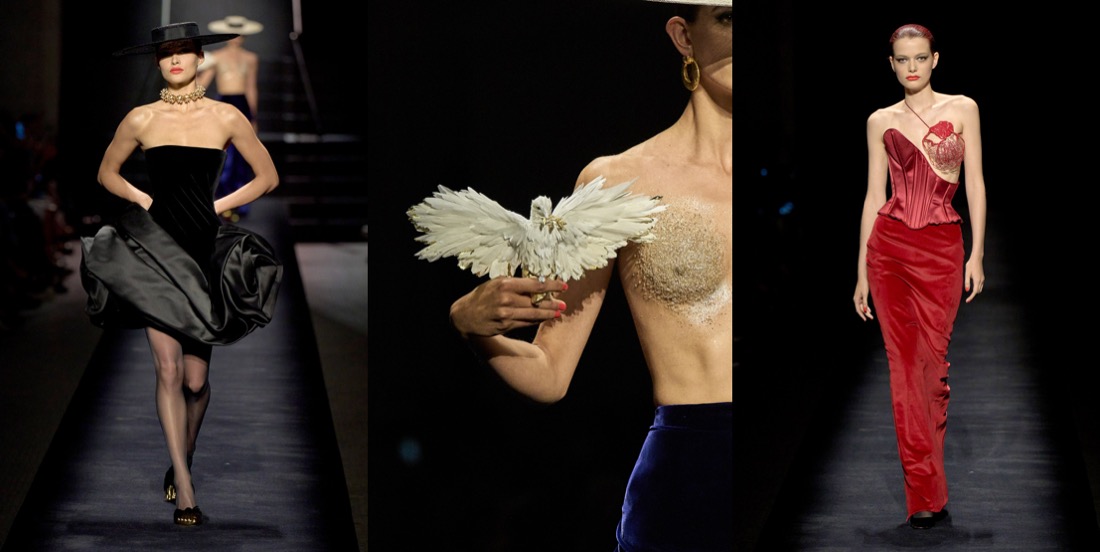
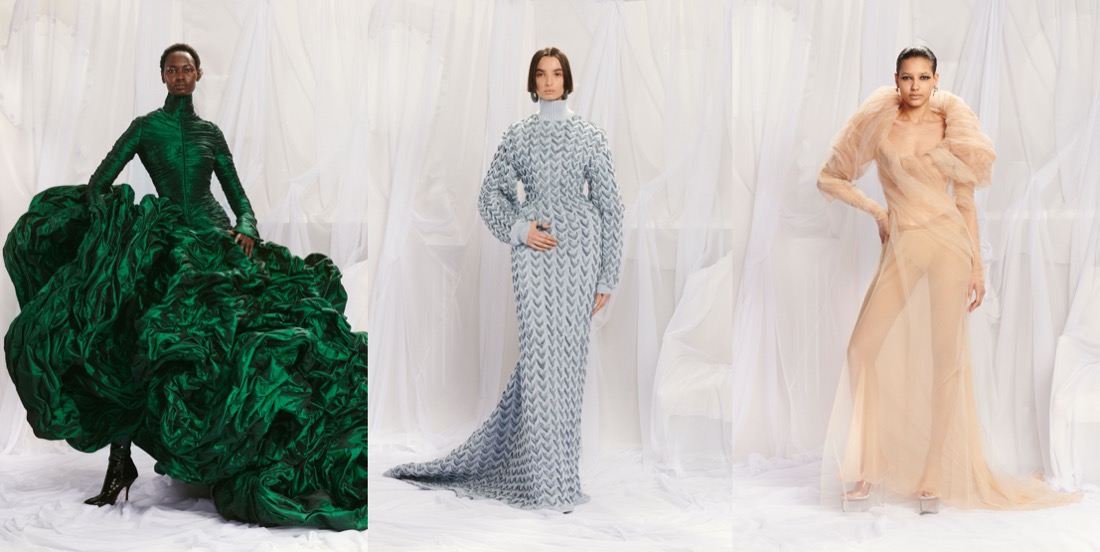
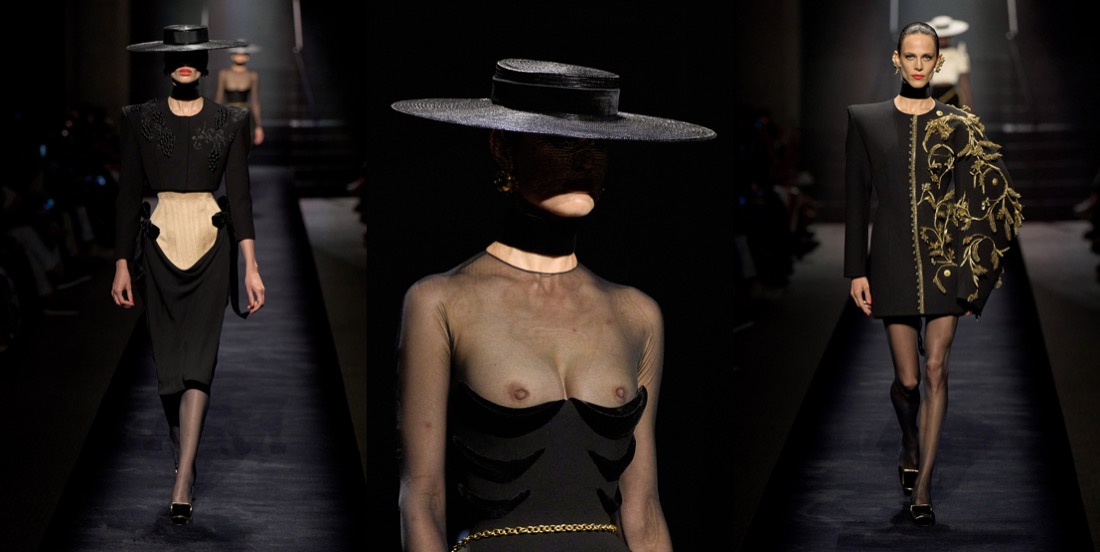
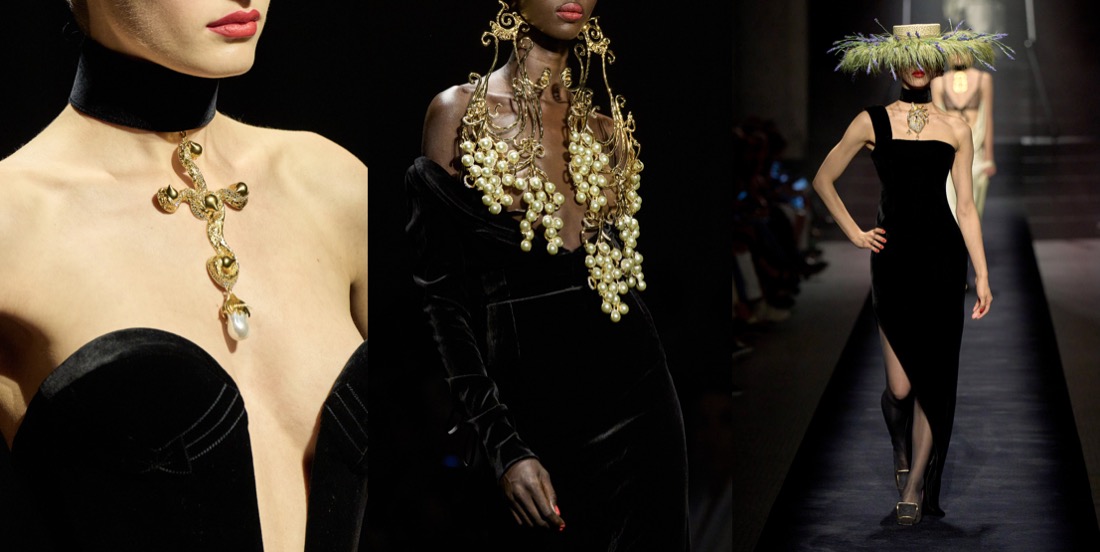
Shocking! The Surreal World of Elsa Schiaparelli,” the high-impact exhibition opening this week at the Musée des Arts Décoratifs, includes pieces that fellow designers – among them Yves Saint Laurent, Jean Paul Gaultier, Azzedine Alaïa, and Christian Lacroix – created in homage to the house’s founding genius. For this season’s Schiaparelli haute couture collection, Daniel Roseberry, the house’s artistic director, took this idea of “being in conversation with the people who had been so inspired by her.” Earlier this year Roseberry had an in-person conversation with Lacroix himself, “which was really inspiring,” as Roseberry noted during final fittings on the eve of his show. “We talked about color, we talked about volume. We talked about Arles, and for him it meant black bulls, white horses, and the gold of the sun, which just kept ringing in my ear. It was probably, for him, a passing conversation, but for me it felt like someone plugged me into the wall a little bit, and I wanted to make a collection that brought me back to the kind of fashion that I fell in love with and that period of fashion that feels, in retrospect, very naive in a way.” And so Roseberry evoked the euphoria of Christian Lacroix’s 1987 debut collection with its giddy pouf silhouette, bustles, gigot sleeves, coruscating toreador embroideries, and severe matador hats. For Roseberry, ’80s nostalgia is in the air. But the collection was also informed, as Roseberry confided, “by the way Elsa dressed herself,” which meant rigorous tailoring. That was exemplified by the coatdress worn by Carolyn Murphy with trompe l’oeil drawers for pockets – a detail that Salvador Dalí himself conceived for Schiap and now a piece that will go directly from the runway to the museum exhibition – and what Roseberry described as “this sort of sensual body-conscious and body-obsessed eveningwear, everything built around the bustier and the corset.” Some sprouted with floral displays inspired by Carolyne Roehm’s book A Passion for Flowers, a copy of which sat on Roseberry’s grandmother’s coffee table when he was an impressionable boy. Seen up close these were remarkable triumphs of embroidery – sunflowers and roses and lavender fronds crafted from hand-painted and sequined silk and even leather molded onto the back of spoons to create the petals. They instantly reminded me of Yves Saint Laurent’s spectacular spring-summer 1988 couture show, where jackets became tableau vivants of sunflowers and irises. A simple black velvet evening dress that looked like one of Roseberry’s dramatic fashion sketches come to life was brought into Schiaparelli’s madcap world thanks to a pair of earrings dripping bunches of golden grapes and so heavy that they had to be secured with a discreet tiara hair band. Meanwhile, Stephen Jones’s magnificent wide-brimmed hats bristled with what looked like fields of wheat that on close inspection turned out to have been simulated with glycerinated ostrich feathers. It was all, as Roseberry himself promised, a “mash-up between something that felt incredibly modern and then also wildly romantic.” Hopeful doves of peace (another YSL reference) brought some much-needed optimism to 2022’s disturbing state of things. All of it certainly left the audience on a high.

Collage by Edward Kanarecki.
NET-A-PORTER Limited

Celestial Rome. Fendi SS22 Couture

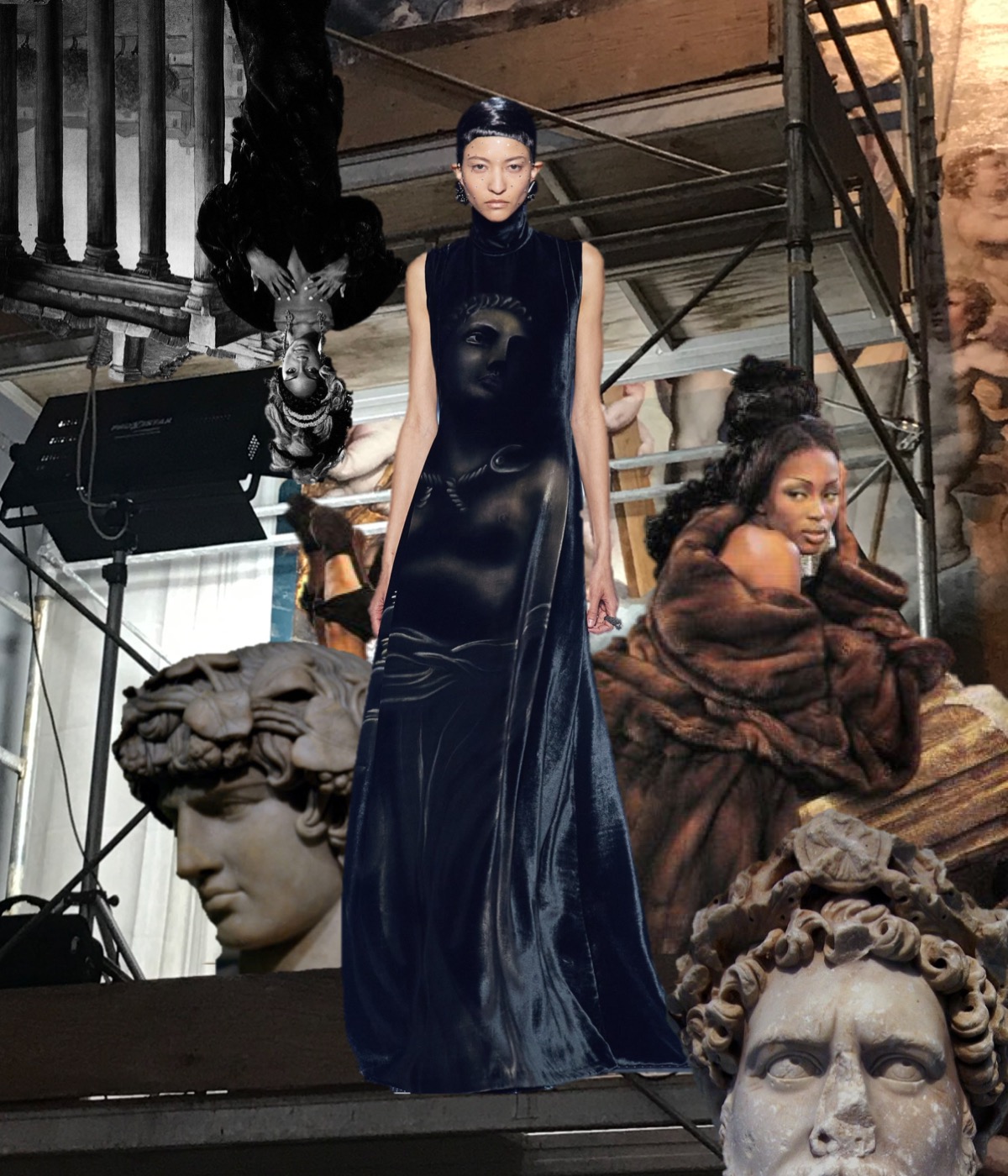
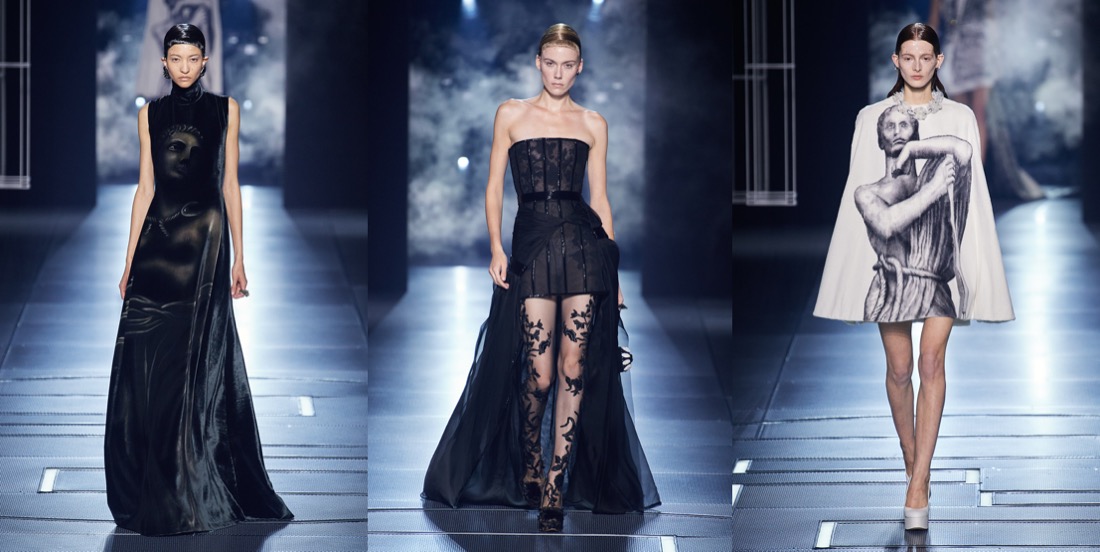
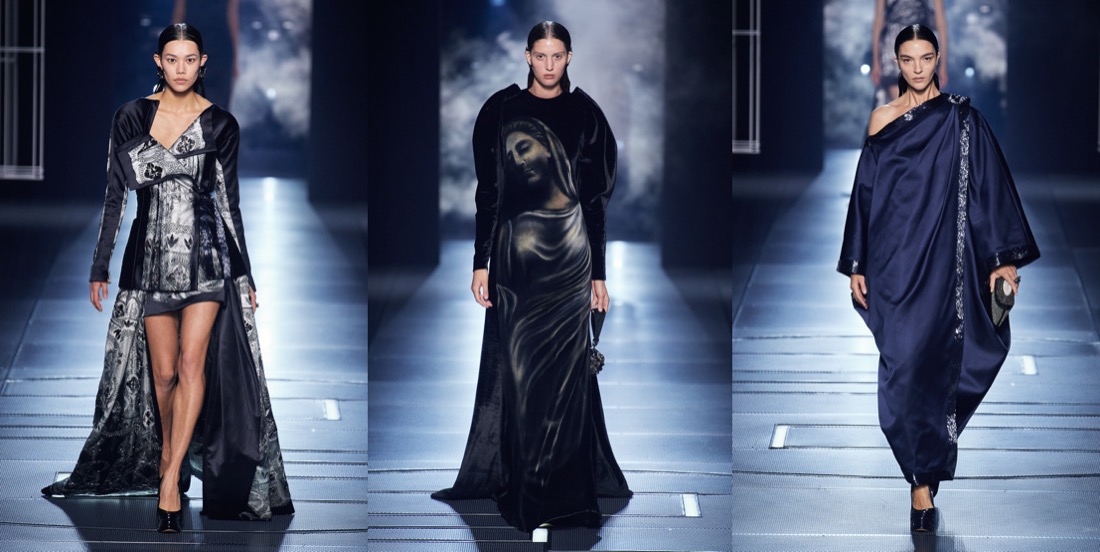
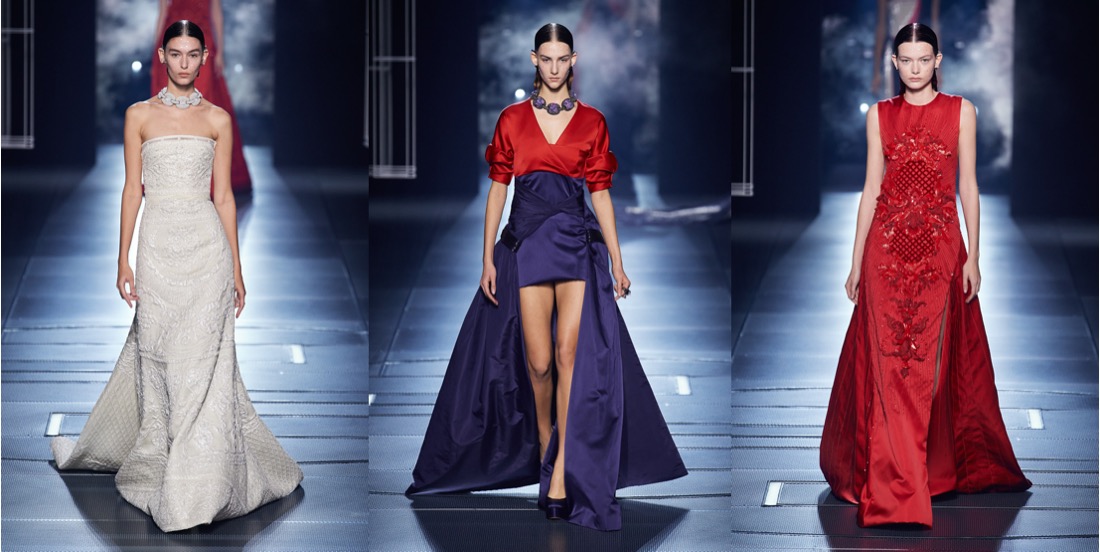
For his third Fendi haute couture collection, Kim Jones clashed the past with the future. This season, Jones continued his evening-centric approach, proposing a series of gowns he said illustrated the craftsmanship and techniques he can’t show in his ready-to-wear for Fendi. Like previous collections, Rome played muse: “It has so many layers to it. It’s such an ancient city,” he said. “We’re always thinking of the past, present, and future of it. The idea of different times and that very spiritual side of Rome, which becomes almost celestial; almost spacey.” Space, astrology, and heaven have been themes in this season’s couture and men’s collections. No doubt mildly inspired by last year’s billionaire space race, they mainly represent the great escape. The pandemic’s part in that scenario is pocket psychology. Jones, who said he had been re-reading Dune and a book on Star Wars by George Lucas, approached the theme with a Hollywood zest that recalled a number of sci-fi films centered around the age-old conversation between the ancient and the futuristic. Mirroring that dialogue in the time-transcendence embodied by Rome, Jones mixed the city’s structures with futuristic imagery and applied it to eveningwear. Renditions of the statues outside Fendi’s monumental Palazzo della Civiltà Italiana headquarters hand-painted on velvet dresses and a sheared mink cape looked like the statues in Prometheus or the landscapes in the scenes in The Planet of the Apes. Elsewhere, he applied the contours of a Roman fountain to a white dress and “filled it with mink,” while the radiant opening and closing dresses seemed to morph the lines of the peplos – the oldest dress in history – with a sci-fi structure. The collection was Jones’s first haute couture show for Fendi with a live audience. As a showcase of the skill of the house’s Roman atelier and a theater of ballroom fashion, it was a proper ending to a marvelous couture season.

Collage by Edward Kanarecki.

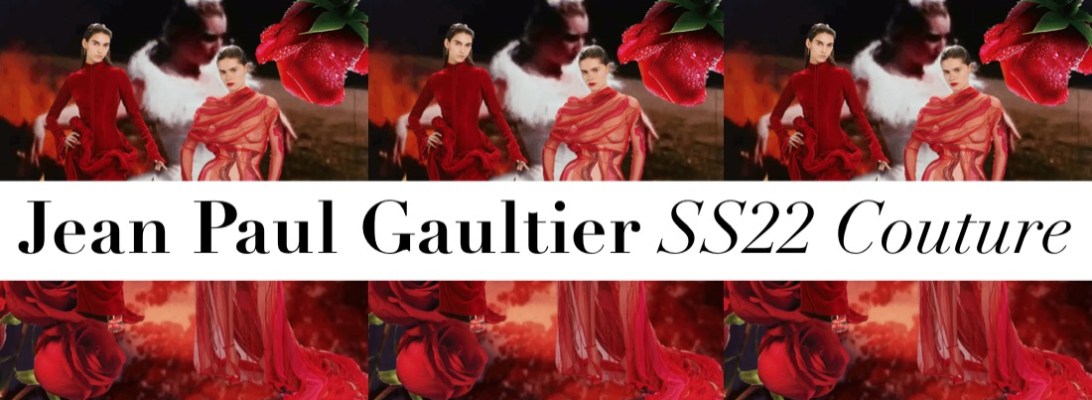
Glenn Enters The Chat. Jean Paul Gaultier SS22 Couture

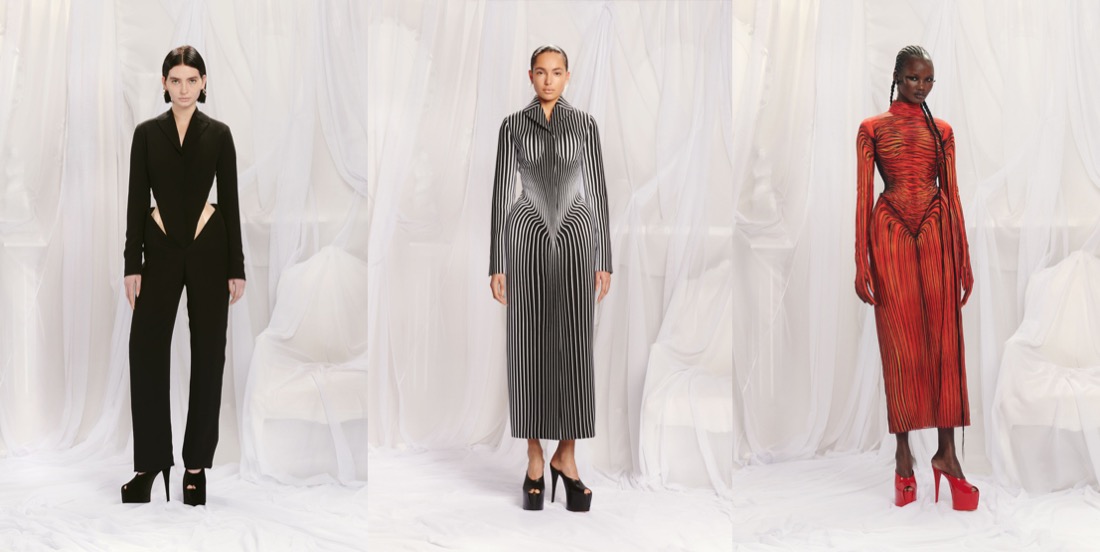
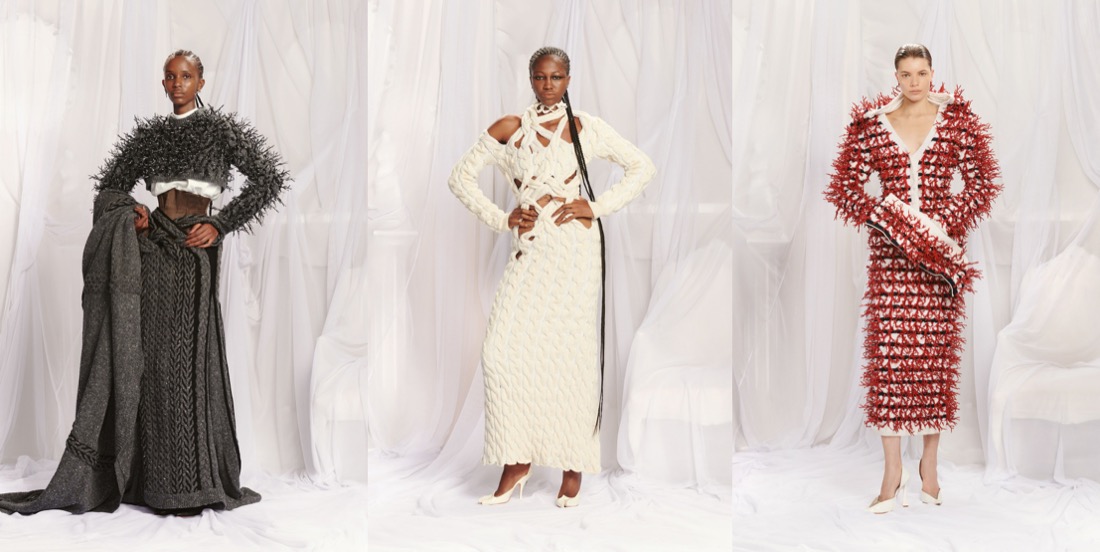
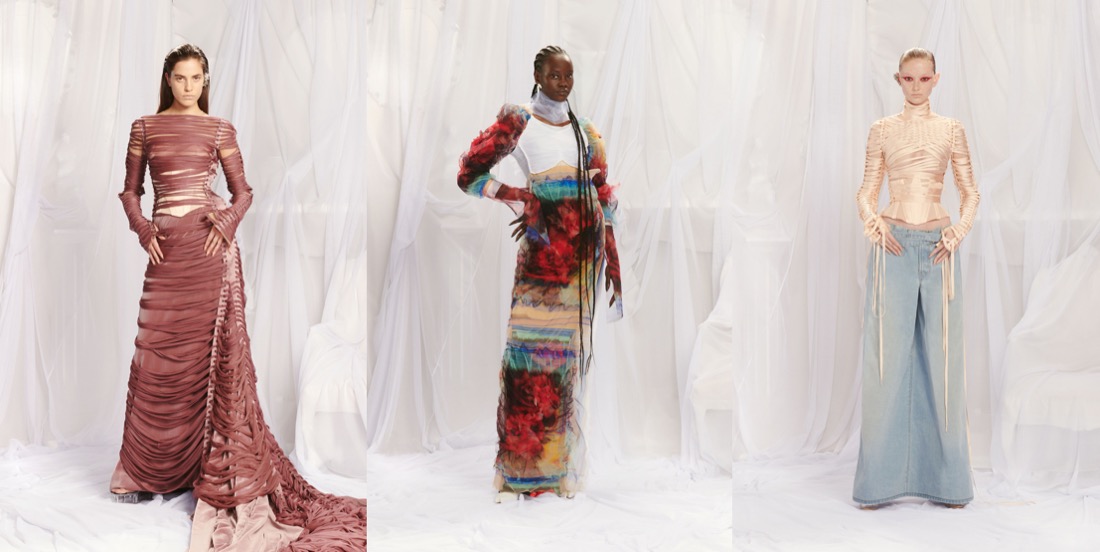
Y/Project’s Glenn Martens unveiled his vision of Jean Paul Gaultier haute couture—the second designer to do so, after Chitose Abe of Sacai last season – and it appeared to be a heavenly match. What makes this collection so magical, so right and so much fun? It’s an escapist exercise in what you can do when you’re let loose in the wunderateliers that are the Gaultier workrooms. Plus, as we all well know, Martens knows how to make a brilliant and inventive silhouette. One of the looks he was furiously working on is a Breton marinière which has been turned into a dress and then hand-embroidered to ripple 3D-style with hundreds of faux coral fronds. The sailor stripes are pure Gaultier, yet the twists to this dress – the folded-over shoulder line, the knit panel which sinuously and unexpectedly juts out from the left hip – are pure Martens at Y/Project. “I am only doing this for one season, so it’s not like I have to envision a whole new future for the house; that’s a very different exercise,” Martens said. “This is a celebration of Gaultier. I’ve stayed close to the woman Jean Paul created in the past—pure diva goddess beauty, hips, whatever, all that drama he loved. I’m building on that through what I think of his iconic Gaultier moments. This marinière…it’s so him, but I completely fucked it up with all the fake coral spikes. I’m reinventing those iconic moments in my own way.” That’s what makes Martens’s version of Gaultier couture fly: the acknowledgement that it can’t be a retread of the past glories of one of fashion’s greatest designers, but instead honor what went before and incorporate the best of yourself. It is not C as in collaboration ( a word which is looking increasingly passé) but C as in conversation, a constant state of respectfully going back and forth between incoming designer and the heritage of the house.

That marinière dress was sandwiched between a series of corseted jacquard knit looks, whose body molding striations recall ’90s Gaultier and plenty of gorgeous, ethereal evening dresses, confections of chiffon selvedge, whose lightness were amplified by the ferocious ingenuity of their barely visible inner constructions. One, in black chiffon across a delicately pale pink corset, was a particular knockout. The interaction between the two visions continued with an evening gown in a boudoir-y, peignoir-y ’30s peach which looked like a deconstructed corset, the lacing asymmetrically blown up across the billowing skirts, while a cream knit sweater dress featured cable panels that intersected, baring a little skin along the way. Elsewhere, those wired experimental volumes Martens loves so much figured prominently, in red velvet or green taffeta, as did a wink-wink to Y/Project with the Y shaping of the hips on some of his silhouettes, his own version of the classic hourglass but reimagined for today. Martens was drafted in to do this collection two years ago, so because of the pandemic, it has been in gestation for a while. Yet, despite that, it feels hardwired to the moment. While it will very likely appeal to Gaultier couture loyalists, it will also speak to today’s fashion-savvy IG generation who applaud every big gesture and historically savvy flourish.

Collage by Edward Kanarecki.
Anatomy Of Couture. Valentino SS22 Couture

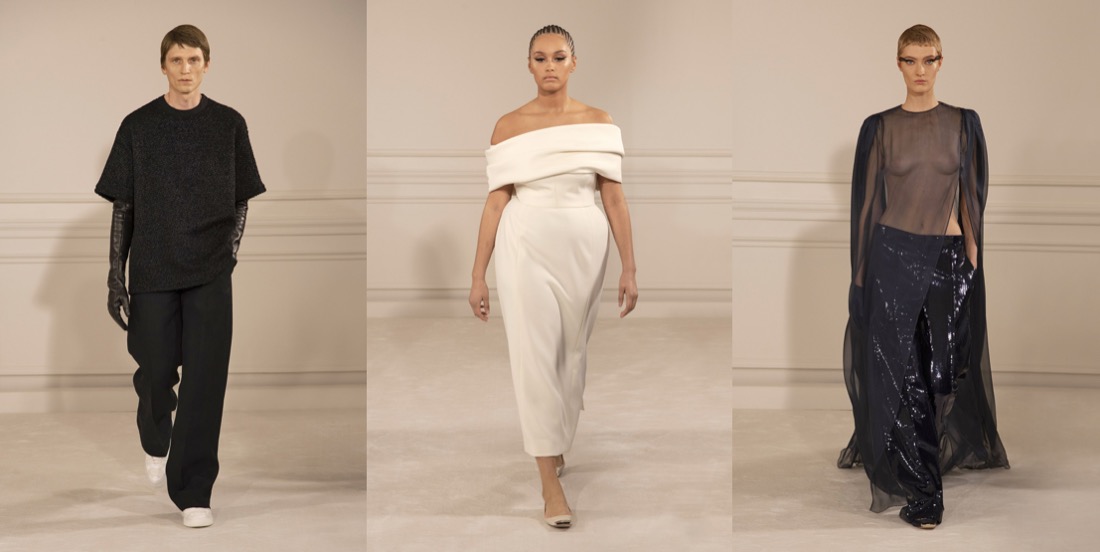
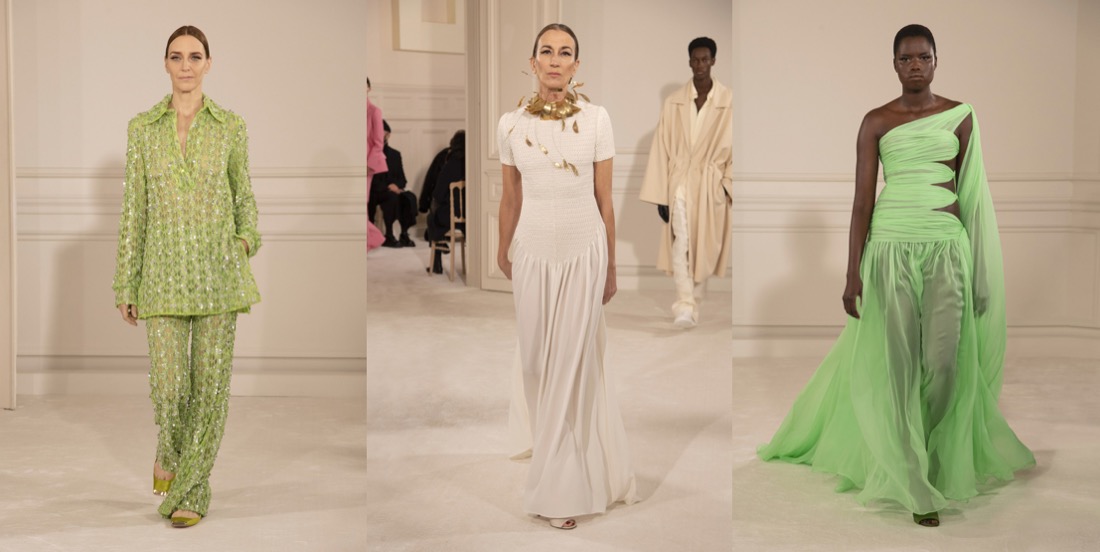
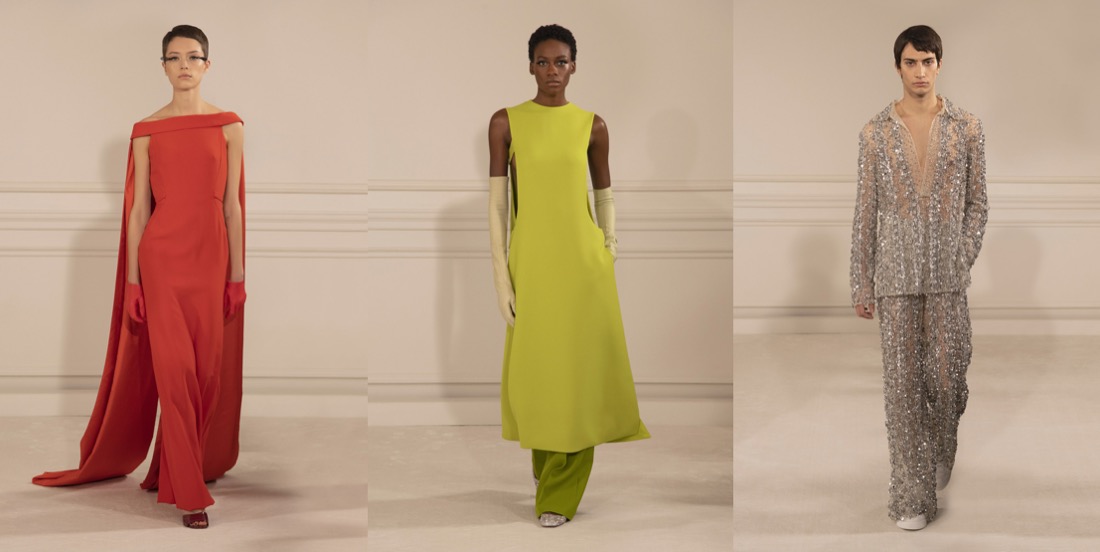
And just like that, Pierpaolo Piccioli is the king of spring-summer 2022 haute couture season. The latest Valentino collection is everything a truly phenomenal couture collection should be, and more. You could see the emotion in the eyes of some of the models as they glided through the maison’s Place Vendôme salons to a specially recorded soundtrack by Anohni. “She was told she’d never walk couture,” Pierpaolo Piccioli said of one of. “In couture you never see these bodies. Never.” It is in large part thanks to Piccioli that haute couture is finding relevance in an age set on breaking the constructs of the past. On his mission to make this elitist corner of fashion matter to the generations dubbed “woke,” he has decided to “keep the codes, but change the values”: to give the broad spectrum of humanity the chance to mirror themselves in haute couture, in place of the waify, white, classical beauty ideal of its past. In front of a distanced audience of just 65, he broke with the skinny stigma of that heritage in a collection titled the Anatomy of Couture. “When you do couture, you have the house model. And you apply the body of the house model to 50 or 60 models on the runway. I wanted to break these rules and embrace the idea of different proportions of body, different sizes, different ages. But it was impossible to do this with just one house model. So, I broke the rules and got 10 house models in with differently proportioned bodies,” he explained. The idea of haute couture was always to adapt silhouettes to the client’s body. But those silhouettes are typically dreamt up, fitted and realized on a tall, slim and young physique. This season, Piccioli changed that model, in more than one way. And in the process, he said, “We got to create new silhouettes.” A partly fuller-figured cast than what you normally see on a couture catwalk did change Piccioli’s silhouette. His signature monastic Roman lines and Hellenistic drapery morphed into shapes that registered more dynamic, more mid-century, more glamorous. Through a Hollywood lens, you might call them sexy. But it wasn’t as if his new cast looked shockingly different in size to the runway norm, which was perhaps testament to his method – and skill. “In runway shows, sometimes there are 50 skinny models and one bigger-sized. I feel like you don’t really relate to that. You don’t believe that. You just tick the box,” Piccioli said.
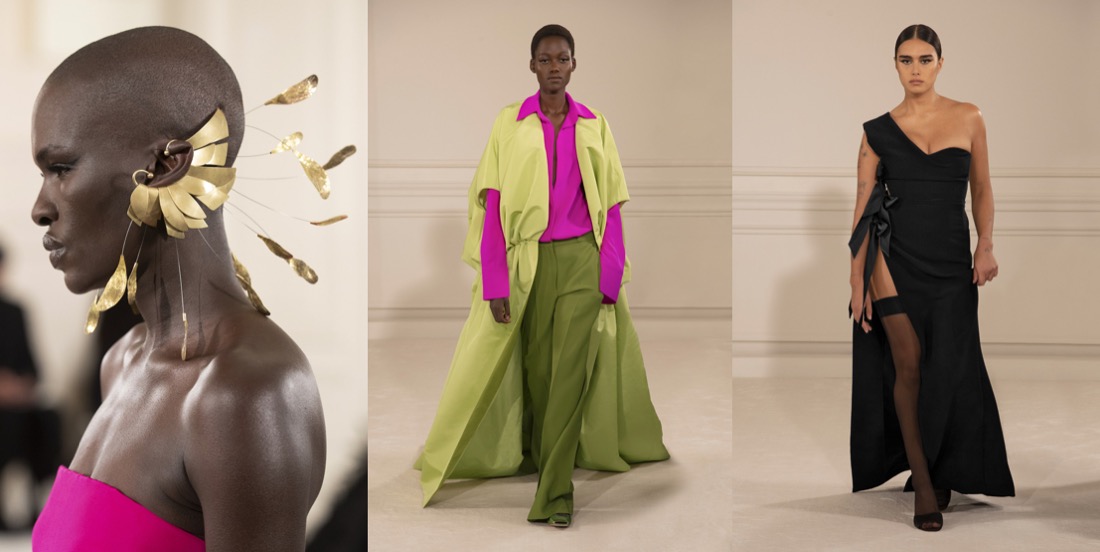
His consistent cast helped to illustrate the power of the craft. The intertwined straps of an ebony velvet gown framed the shoulders of the model and pulled in her waist, the volume of its skirt balancing out the proportions. A chocolate stretch tulle dress covered in two kilos of Venetian glass beads hand-embroidered for three months hugged the body, allowing the beads to shape and support the model’s frame. Piccioli employed his approach to surface decoration, too. A lilac faille gown was adorned with great big bows around the neckline, something that could easily look overwhelming on a fuller figure, but didn’t because of the custom proportions and placements of those bows on that particular neckline. In his couture take on the stretchy body-con favored by the generation who coined slim thicc, Piccioli proposed a neon coral ankle dress, which wasn’t stretch at all, but created through four layers of georgette whose interaction created a natural elasticity that adapted to the body. Throughout, he demonstrated how couture can build a silhouette around the body, and either highlight a person’s shape or manipulate it through dressmaking. It made all the difference, because clothes are construction. One size doesn’t fit all, but one blueprint scaled up or down certainly doesn’t, either. We’ve all seen that in practice on red carpets where people of a different physique to the body that modeled the dress on the runway can end up looking under – or overblown, because the dimensions and adornments of the silhouette don’t take kindly to the scaling process. And then, the confidence goes. “I feel that if you don’t deliver the ideas of power and strength and fierceness with these kinds of shapes, you’re missing the message,” Piccioli said. If body empowerment is something he is sensitive to, it’s also because his own three children are in their teens and twenties: Gen Z-ers raised on social media in an age where body ideals have the added extremity of plastic surgery normalization. “That’s what I share with them,” he said, referring to the connection he felt with his cast through the experiences of being a father to young people today. “This could deliver a strong message for young people who are struggling with something. If she’s beautiful, you can be beautiful,” Piccioli said, gesturing at one of his gorgeous cast members.

For his own generation, the message was the same. “The body modifies with age. They’re still as beautiful but the shape is different. I wanted to capture the beauty of how the body modifies.” Models older than the couture show average – Kristen McMenamy, Marie Sophie Wilson, Lara Stone, Violetta Sanchez, Lynn Koster, Jon Kortajarena – hardly looked out of place. On the contrary, the character that comes with age brought a confidence to their looks. It was never more pronounced than in Piccioli’s most “normal” silhouettes infused with the gestures of haute couture, like Sanchez’s white T-shirt (in silk sablé crêpe) worn with a pearl gray duchesse satin skirt wildly hand-embroidered with silver sequins, or Mariacarla Boscono’s tailored sequinned trousers (silk poplin with hand-embroidery) worn with a dramatic fuchsia stole in faille. Piccioli’s collection was another brick in the legacy he is building for himself as a couturier of change. If used as a laboratory to develop techniques that can inform both the possibilities and values of ready-to-wear, haute couture becomes the most relevant part of a contemporary fashion system. It turns into the think tank of fashion. “Since the Middle Ages, there have always been canons of beauty,” Piccioli said, listing all the body ideals of the times. “Once we’d had enough of all the canons, we discovered that humanity is the only canon that’s valid: freedom; be yourself. That’s the real canon.”

Collages by Edward Kanarecki.