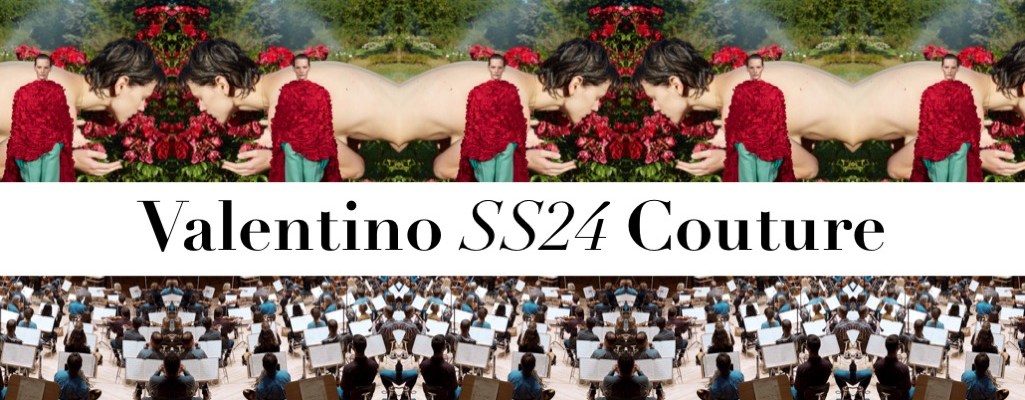
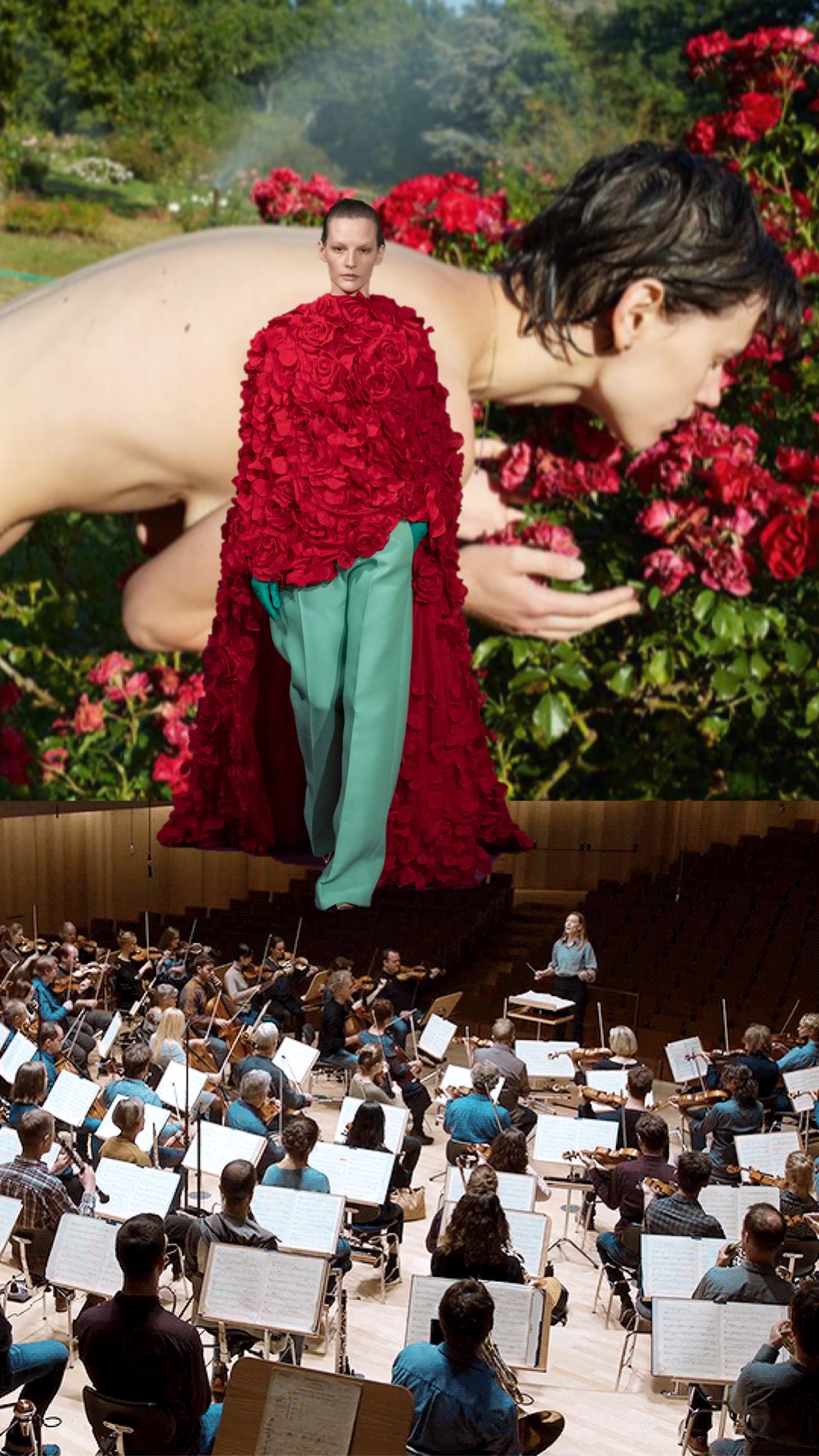
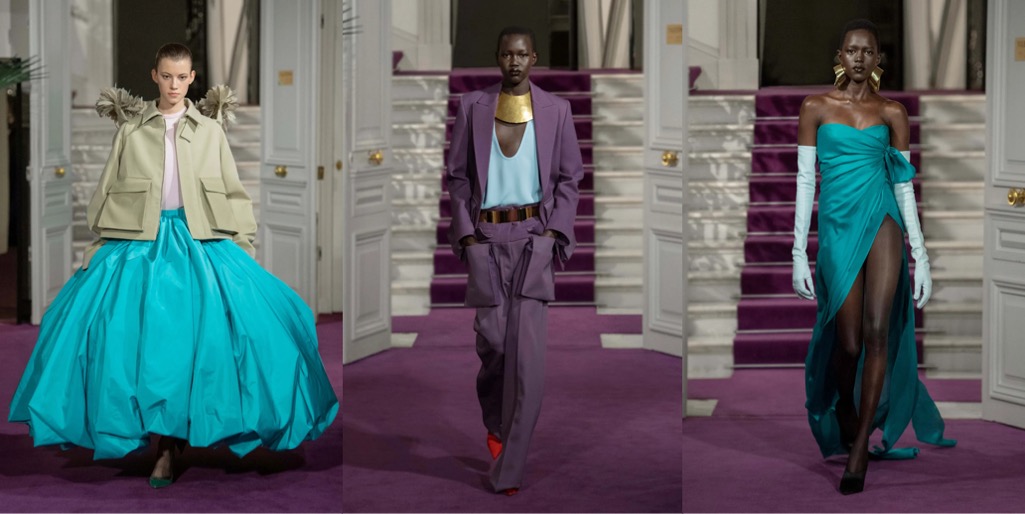
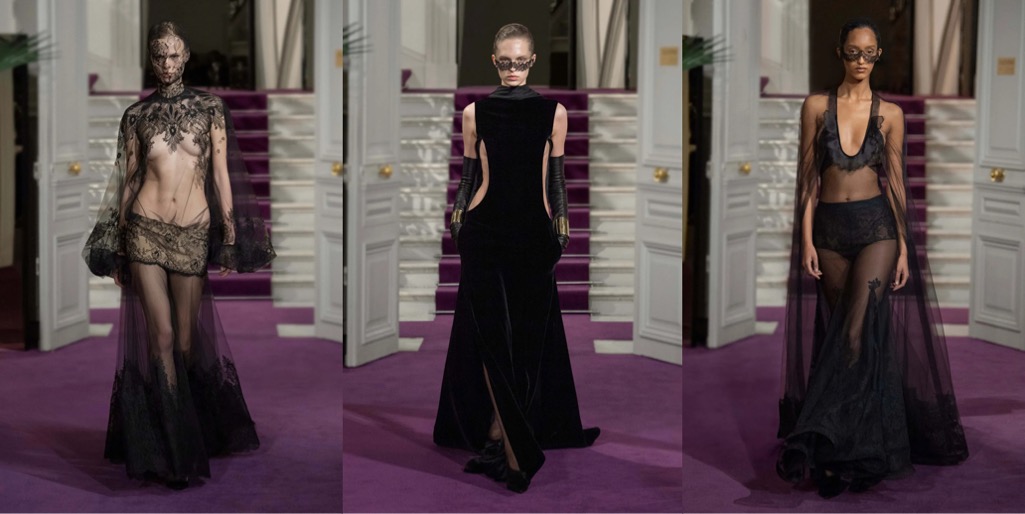
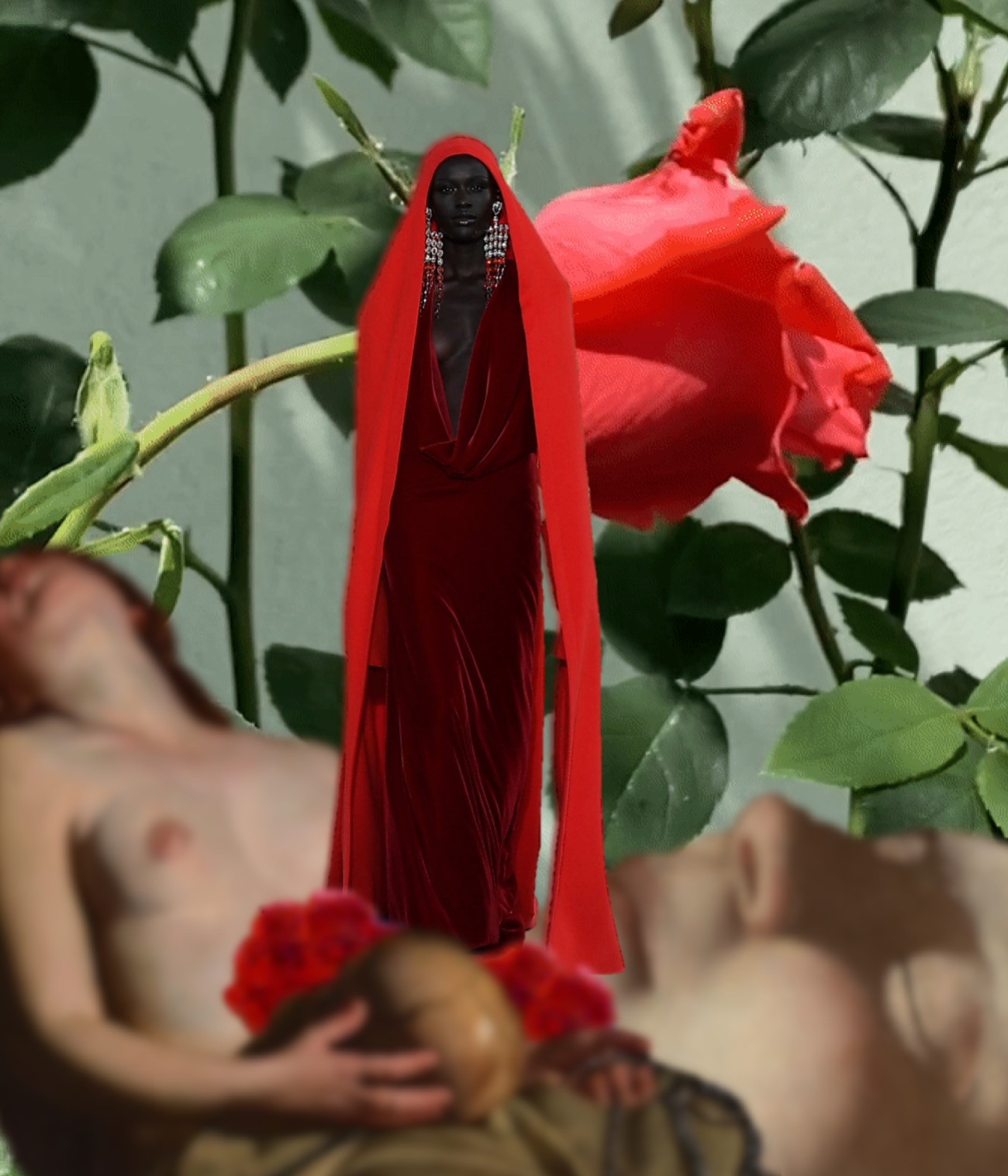
For spring-summer 2024 haute couture, Valentino‘s Pierpaolo Piccioli opted for the hushed intimacy of its salons on Place Vendôme. The designer’s aim was to emphasize the “sacred process” of couture. But there was nothing quiet about the presented haute garments; this was a full-tempoed crescendo from the first look till the finale. Piccioli’s lineup included the requisite red carpet stunners, but also indulged in a quirky day wardrobe in unusual volumes and colors. Oversize jackets, palazzo pants, scooped vests, fishtail skirts and duster coats came in shades like chartreuse, oxblood, lime, putty, mustard and sage. The designer skipped elaborate embroideries, focusing on silhouettes that require the highest skills of tailoring (and artisan) precision. Small oblong discs were bonded with patent leather to resemble crocodile skin on a glossy green men’s coat, while a barely there chiffon top sprouted tiny white feathers that were actually made from cut organza. “The magic comes from the illusion,” Piccioli said. With 64 sublime looks, the collection offered a dizzying array of options for awards season, including a stunning black velvet cutout dress trailing a long silk chiffon stole.
Piccioli noted that each piece that comes out of his workshop is unique, since no two people execute his sketches the same way – and that’s just how he likes it. “If you don’t project your own experience, your own life, your humanity into what you’re doing, you will never feel the soul,” he said.
Collage by Edward Kanarecki. Don’t forget to follow Design & Culture by Ed on Instagram!
Hey, did you know about my newsletter – Ed’s Dispatch? Click here to subscribe!
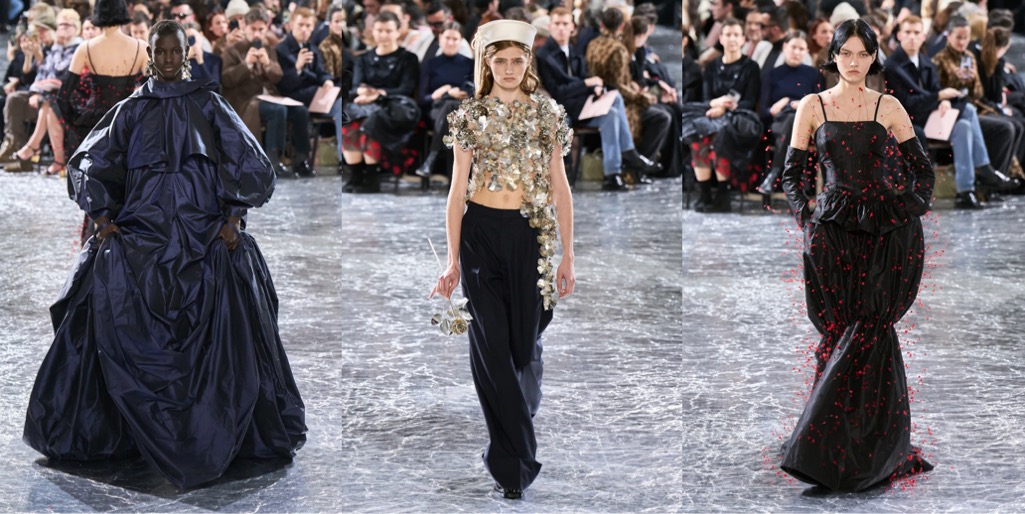
When Jean Paul Gaultier announced Simone Rocha as the guest designer for the spring-summer 2024 haute couture collection, it was clear that this unexpected match would result in an intriguing dialogue between Parisian artisanship and the Irish designer’s idiosyncratic take on femininity. The way Rocha interpreted the iconic JPG cone-bra into thorn-shaped protrusions signaled that she, unlike the previous guest creatives, will take a closer look at the couturier’s interest in the female body. This took her to the idea of playing with contrasts of couture: the tension between restraint and fragility. “His love of the breast and the hip and the female form – exploring that and harnessing it,” the designer said, explaining all the skirts and gowns buffeted with crinoline panniers and bustles. Corseting, another Gaultier landmark signature, seemed to be Rocha’s favorite element to play with. The designer treated the corset “as a security and this kind of second skin on the body.” The tattoo prints earned certain pagan mysticism in her hands, something I always love about her London shows. Meanwhile Breton stripes were represented by navy ribbons tied into bows and tacked loosely to illusion tulle, which also appeared on offbeat padded underpants. This was definitely a noteworthy fashion experiment to unpack.
Collage by Edward Kanarecki. Don’t forget to follow Design & Culture by Ed on Instagram!
Hey, did you know about my newsletter – Ed’s Dispatch? Click here to subscribe!
“He met Margaret on a rooftop, she was wearin’ white,
And he was like, ‘I might be in trouble'”.
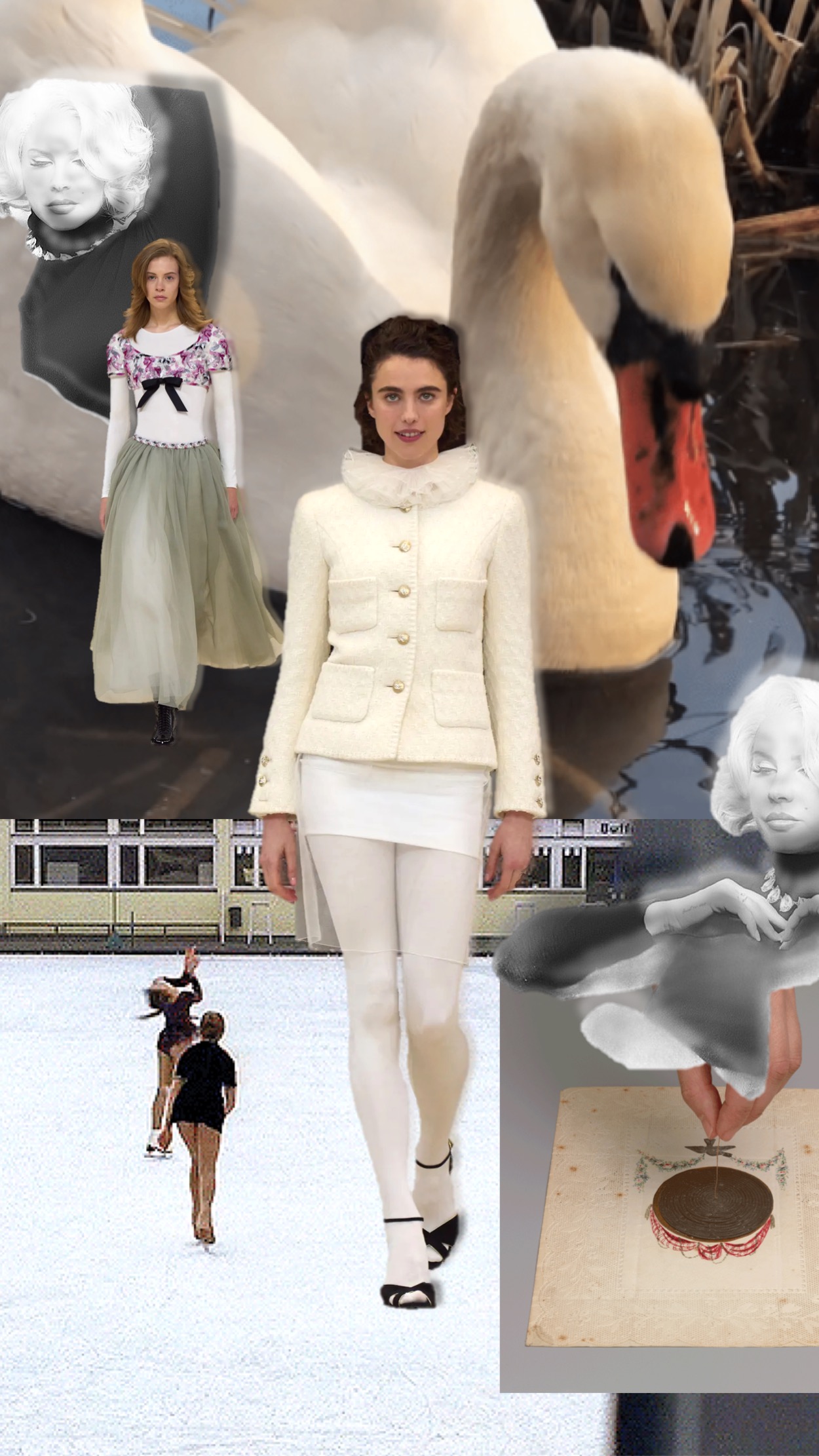
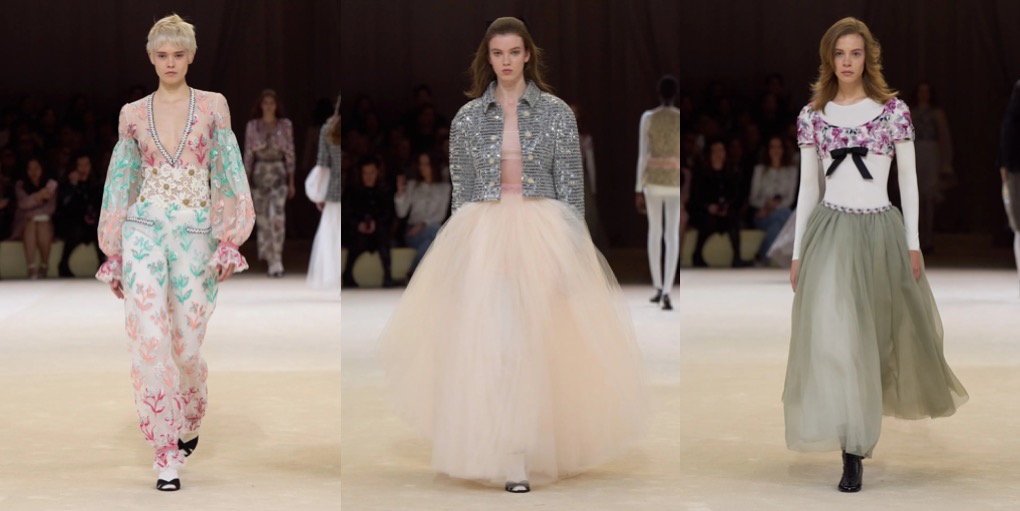
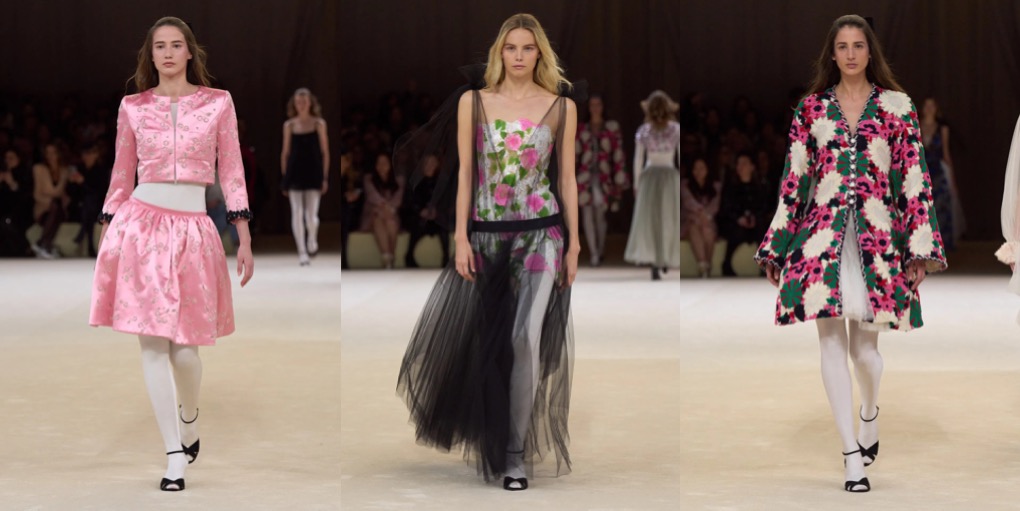
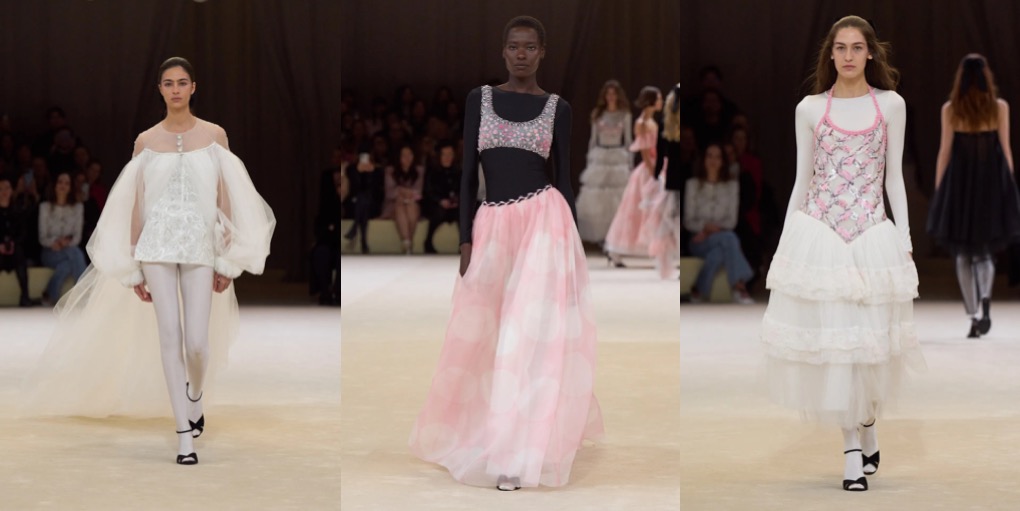
Of course, the moment I saw Margaret Qualley stepping out on the Chanelhaute couture runway dressed in all-white, I had this Lana Del Rey song on my mind. Dedicated to Jack Antonoff, her friend and long-time collaborator, and his wife, Margaret, the song is an ode to hope and love, and finding answers for big questions in the right time. This Virginie Viard couture line-up, very unfairly hated by most of the critics, encapsulated that mood very well, and was yet another endeavor into a sort of unhinged femininity that isn’t exactly what the mass media keep on expecting from her Chanel. Largely inspired by ballet and the zsa zsa zsou feeling of falling in love, the collection ran from white to fondant pastels and back again. The connection to dance was flickering through the silhouette of a tweed twinset of sorts – a cropped jacket whose matching under-piece was shaped like a leotard. Other highlight: a nipped-waist, full-skirted black coat-dress puffed out on a stiff white ballerina tutu. Then, a pink chiffon dress with a shirred bodice and flyaway, textile-arty bows mixed up in its skirts. The Chanel woman is a girl at heart, but not definitely not because of a TikTok trend, but in a Sofia Coppola-kind-of-way. The finale, of course, was the Chanel bride. She had on a tiny silver-white tunic for a dress with poetic balloon chiffon sleeves and was trailing yards of white tulle as a train. Romantic, decorative, but grounded in a kind of contemporary reality. That’s Virginie Viard’s style all over.
Collage by Edward Kanarecki. Don’t forget to follow Design & Culture by Ed on Instagram!
Hey, did you know about my newsletter – Ed’s Dispatch? Click here to subscribe!
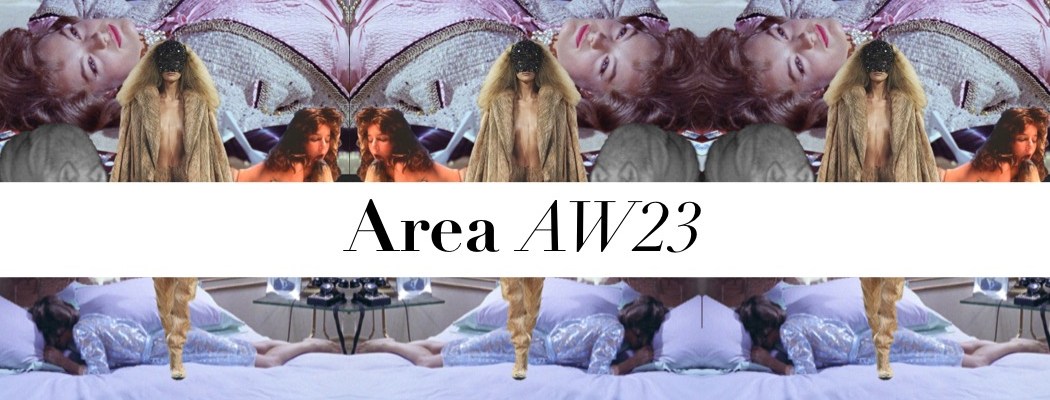
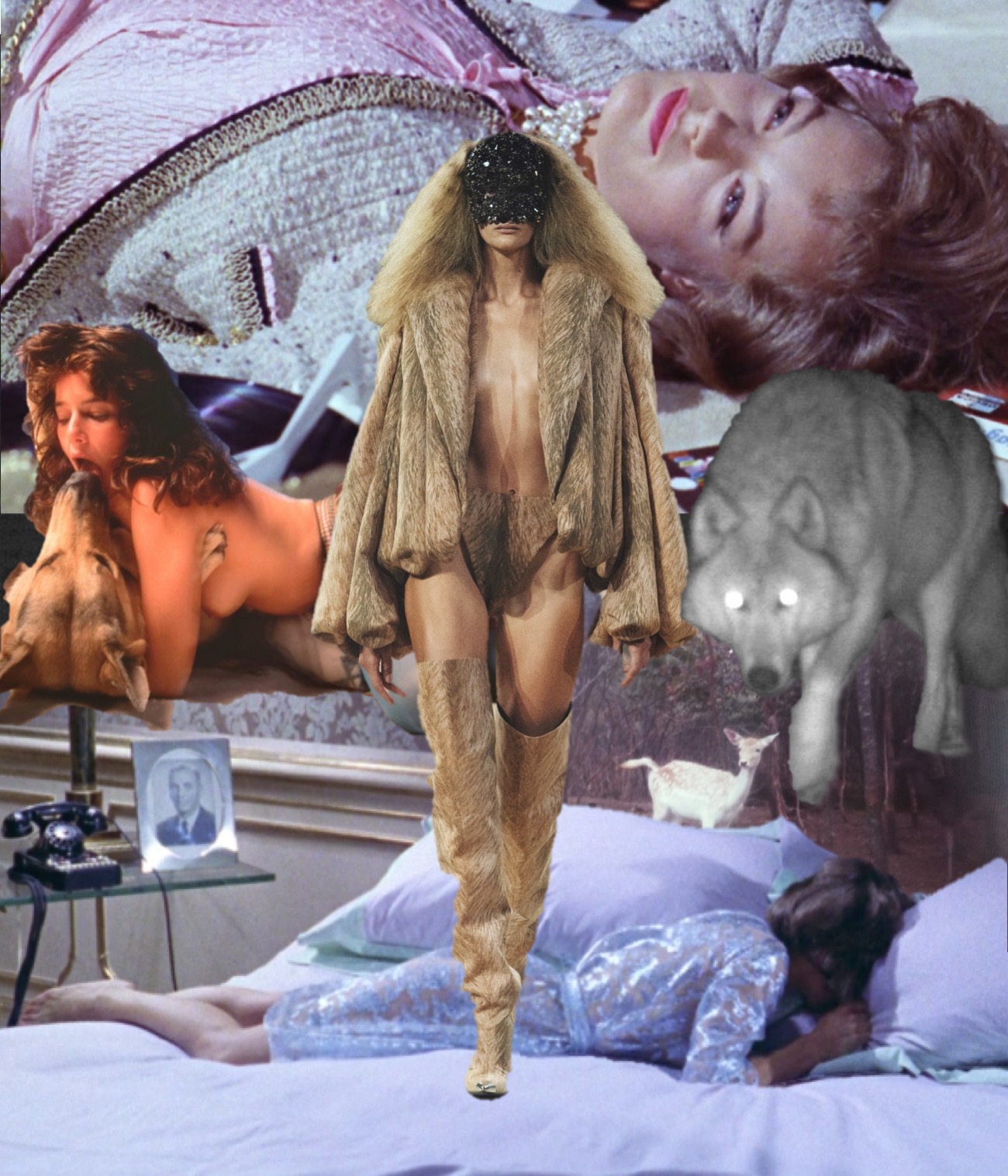
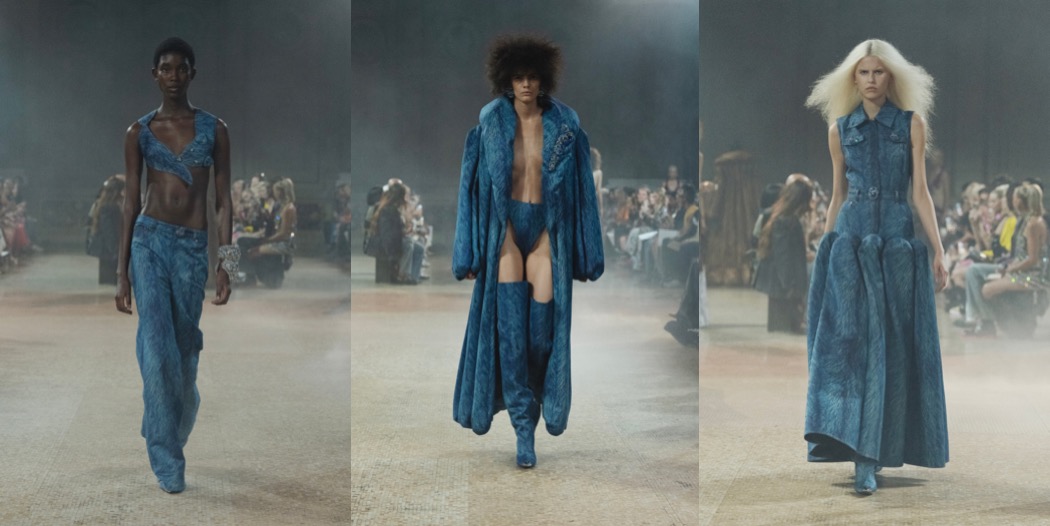
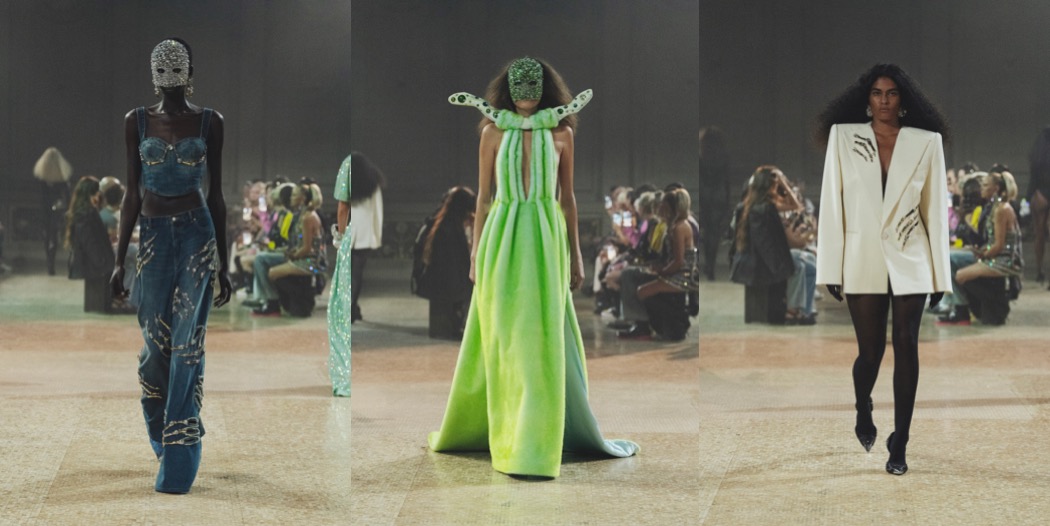
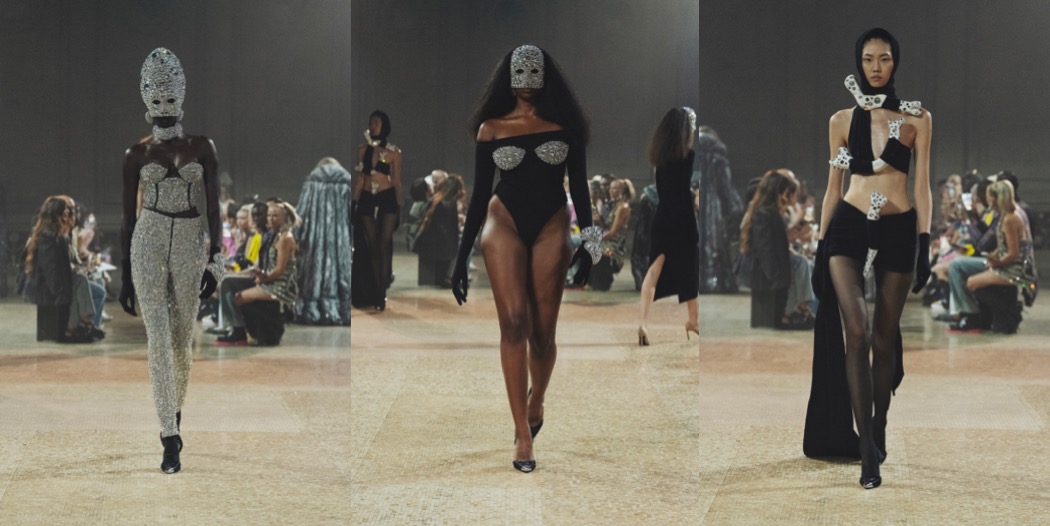
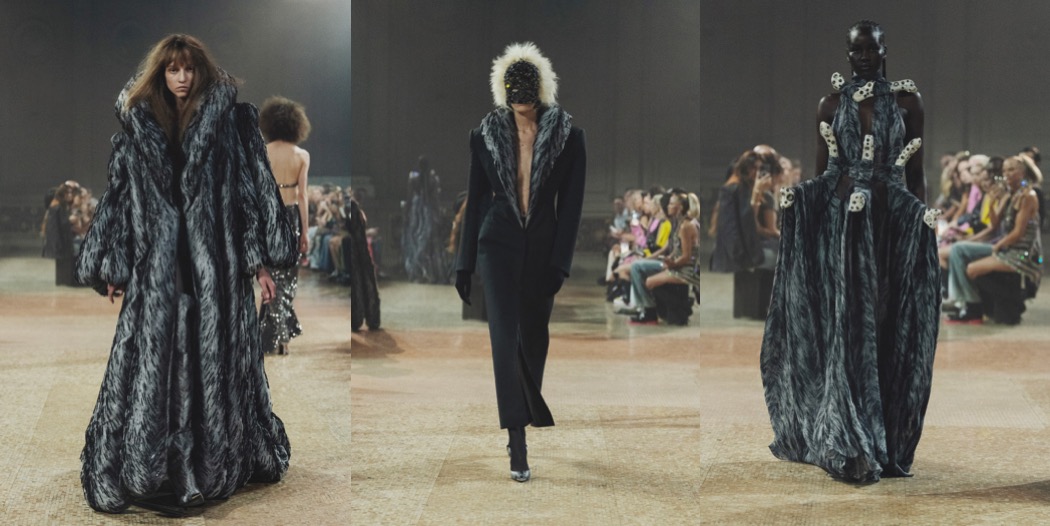
While other designers in New York get nostalgic about the 1990s, 70s, or 20s, Piotrek Panszczyk looked back a couple of thousand years, BC, for his latest Area ready-to-wear and couture collection. He’d been “thinking about prehistoric times and how pelts and bones were kind of the first things humans had to build an identity around. It started with this idea of the primal instinct that through the centuries morphed into desire, and then eventually a kind of excess and the life cycle of luxury.” The unsettling ambience of the fashion show, plus the inventive, at points bizarre “bone-y” silhouettes, eventually delivered one of the strongest and intriguing collections coming from the label in the last seasons. The idea was cleverly developed: there were “fur pelt” coats made from fur-printed denim in a variety of colors that delivered runway drama, fur-print, low-slung jeans, and a mini dress with bulbous little godets that spoke to Panszczyk’s commitment to offering real-world alternatives to fantasy. The collection’s highlight: models in big-shouldered jackets or slinky jersey pieces punctuated by beastly rips, the gold-embellished bones of their attackers still elegantly attached to their clothes.
Collage by Edward Kanarecki. Don’t forget to follow Design & Culture by Ed on Instagram! By the way, did you know that I’ve started a newsletter called Ed’s Dispatch? Click here to subscribe!
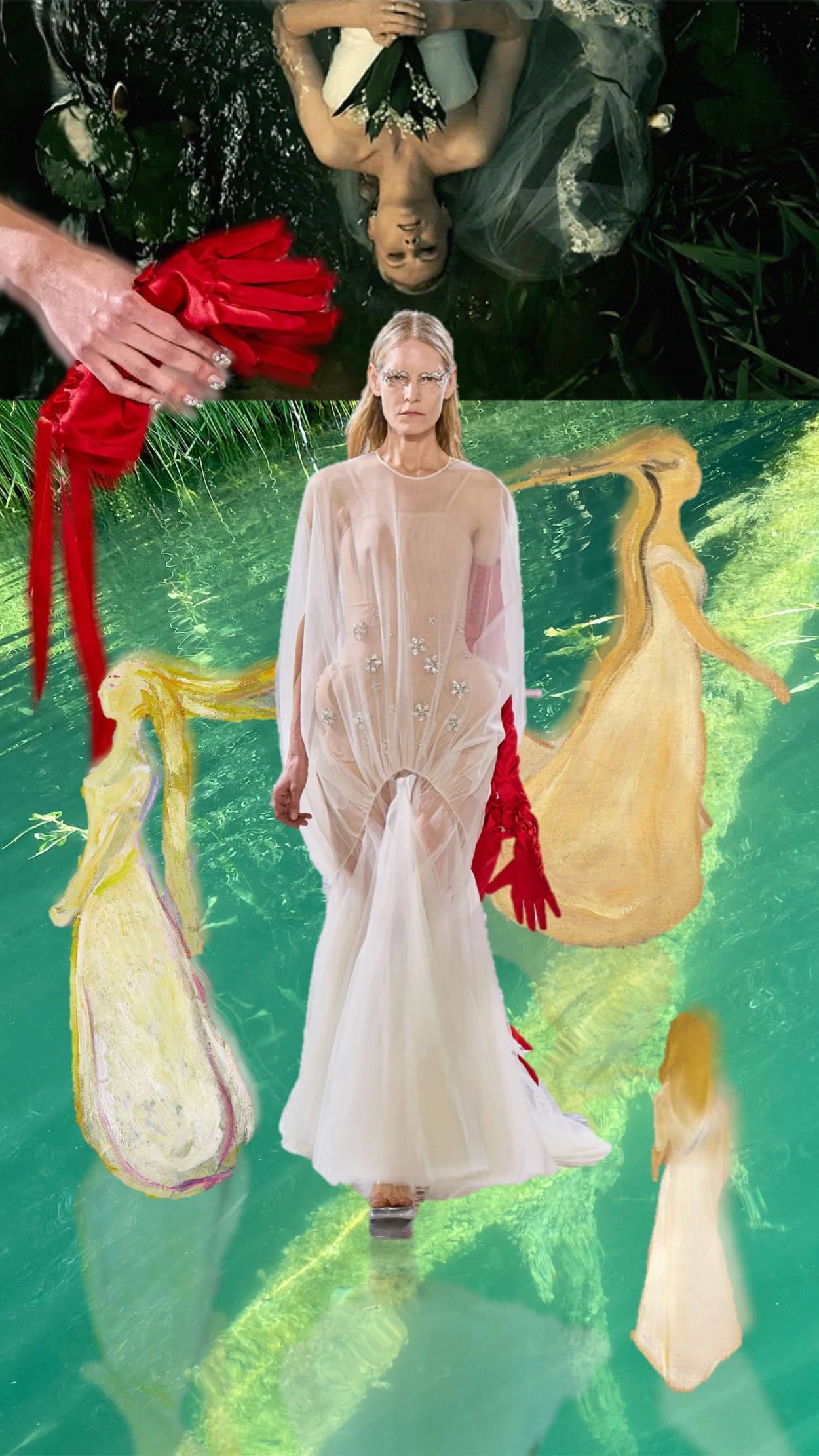
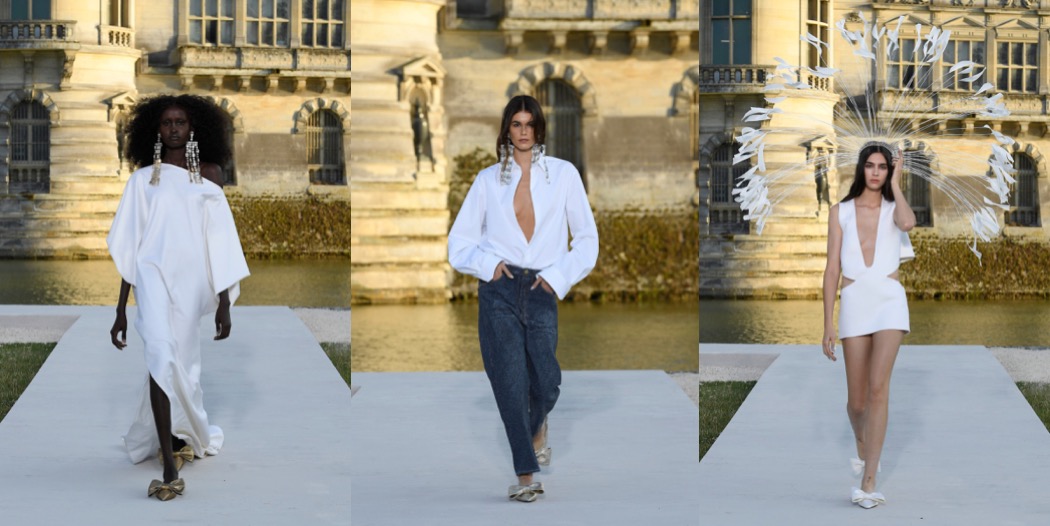
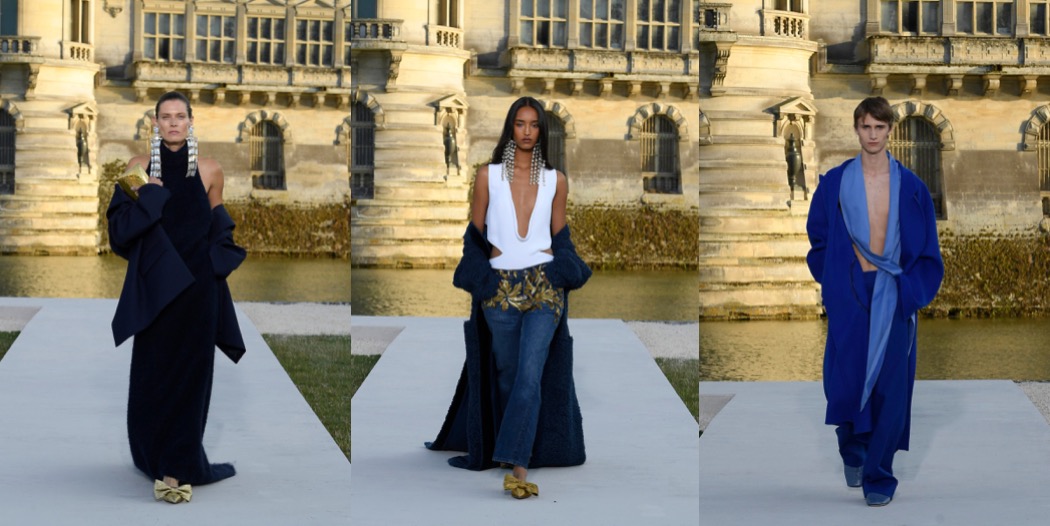
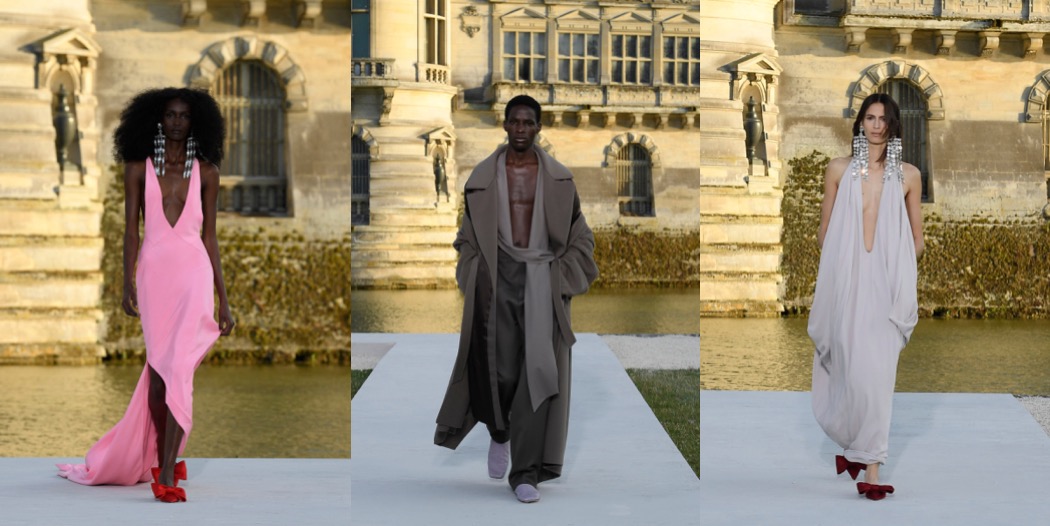
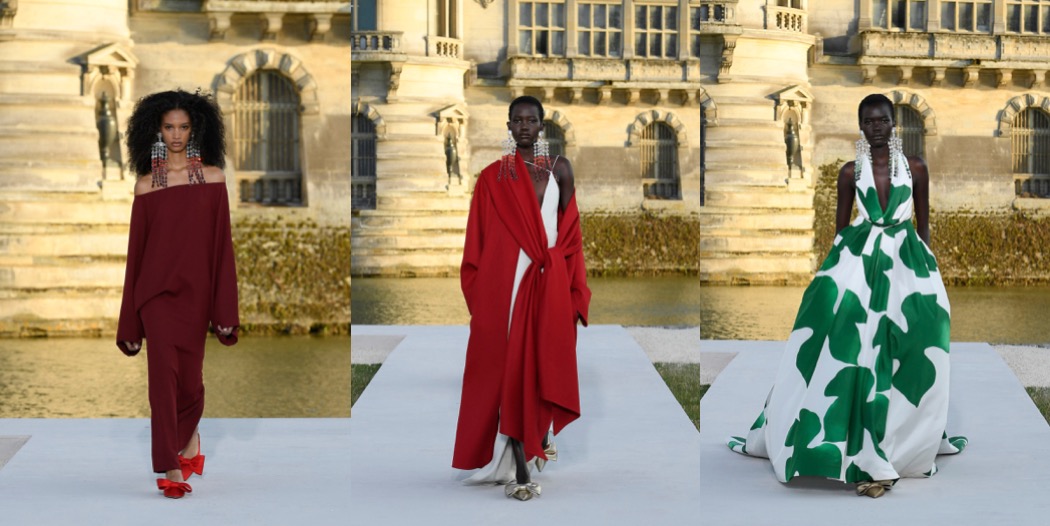
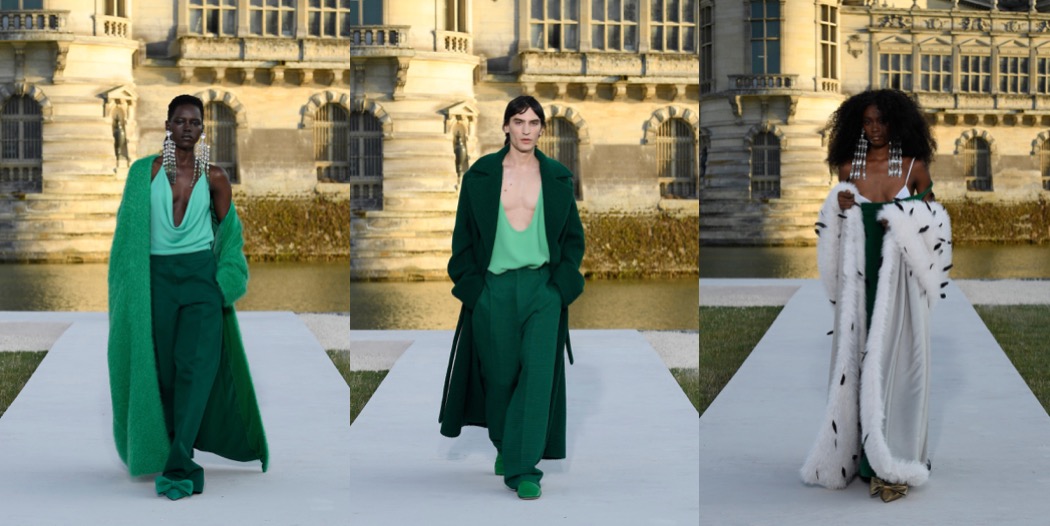
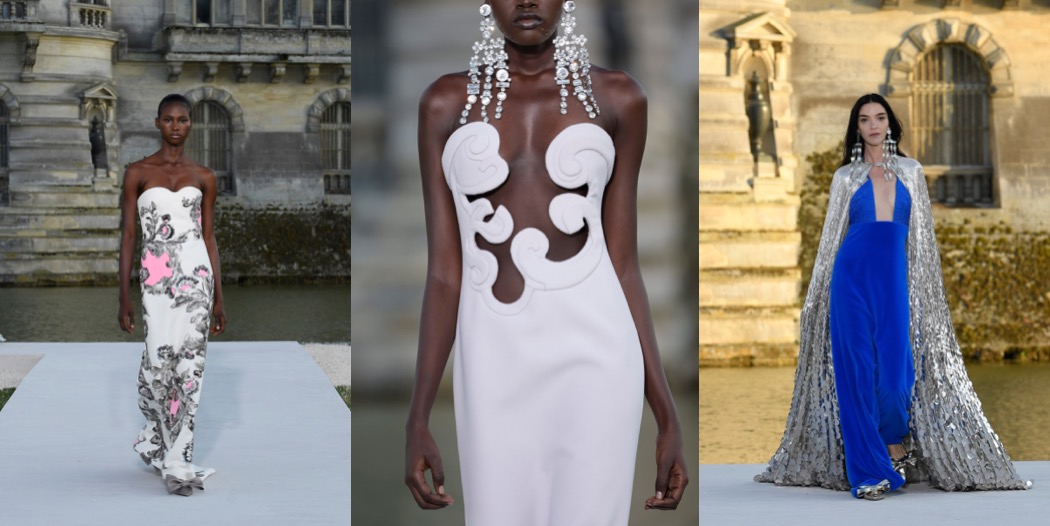
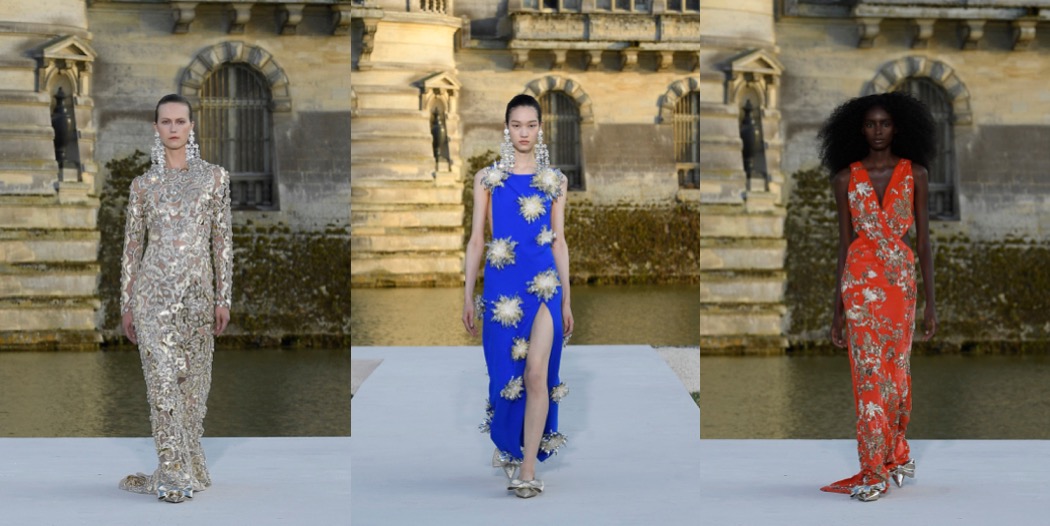
“Simplicity” and “paradox” were the two terms framing Pierpaolo Piccioli’s elevating Valentino haute couture collection, held on the grounds of the majestic Château de Chantilly. “Simplicity is complexity resolved,” the designer said at the press conference, quoting artist Constantin Brancusi, whose sculptures are the modernist epitome of absolute purity. “It’s somehow paradoxical to show in an historical site that I believe is a metaphor for status and power, a symbolism that has to be questioned and re-contextualized,” he said. Staging the défilé en plein air, out of the Château’s regal interiors, was Piccioli’s way of visually performing the metaphor of freeing the constrictions of a walled, elitist life, opening up the seclusion of privilege – Liberté, Egalité, Fraternité. Models – angelic and stoic – walked around one of the castle’s vast parterres à la Francaise; the catwalk sneaked around a circular bassin d’eau, leaving in the background the elegant silhouette of the 17th century manor. This was hands down one of the most spectacular moments of the couture week. One of the paradoxes of couture is that it’s a craft wrongly synonymous with heavy complexity. Piccioli believes on the contrary that the essence of couture is profoundly simple, monastic in its silhouettes. He made the case for this by showing a collection devoid of pyrotechnics, superfluous gimmicks and crowd-pleasing distractions. It was simplicity at its most masterful, a celebration of imaginative, extravagant clarity.
Draping, one of the most challenging haute couture constructions, infused the gesture-defining vertical, pure, essential silhouettes with vitality, modernity, and with the impact of the sophisticated caprice so inherent to Valentino’s aesthetic. Column dresses and tunics were treated to deceptively simple bias-cutting and soft-draping techniques, making them lean sensuously on the body; hooded capes became “mantles of modern Madonnas,” bodices with skin-baring cut-outs extended into twisted knots framing the face. What Piccioli wanted to achieve, he explained, was an effect of almost no gravity. A handsome white dress in featherlight, velvety cashmere with an asymmetrical trailing hem at the back was made on the bias with just one cut. A white tunic in heavenly soft velvet was draped in a way as “to freeze the spontaneous motion of the dress in a sort of still image.” Inventive paradoxes abounded throughout the collection, one of the most striking being the opening look on Kaia Gerber. A pair of slouchy jeans reprised from classic vintage Levi’s were actually made of silk gazar, entirely embroidered with tiny pearlescent beads dyed in 80 hues of indigo to reproduce an actual denim texture (take that, Bottega Veneta’s leather-denim!). Worn with an immaculate oversized masculine white shirt, gold flat slippers and dangling rhinestone chandelier earrings, they were a handsome example of what Piccioli called “a simply paradoxical trompe-l’oeil.” The same approach was echoed in a billowy trapeze-shaped gown, whose circular feathered ruffles were made from 500 feet of white organza. To make the feathers even more featherlight and preternaturally weightless, they were burned one by one to achieve the right quivering cadence. An apparently impossible mission, but not for the formidable Valentino atelier.
Collage by Edward Kanarecki. Don’t forget to follow Design & Culture by Ed on Instagram! By the way, did you know that I’ve started a newsletter called Ed’s Dispatch? Click here to subscribe!



















 Design & Culture by Ed