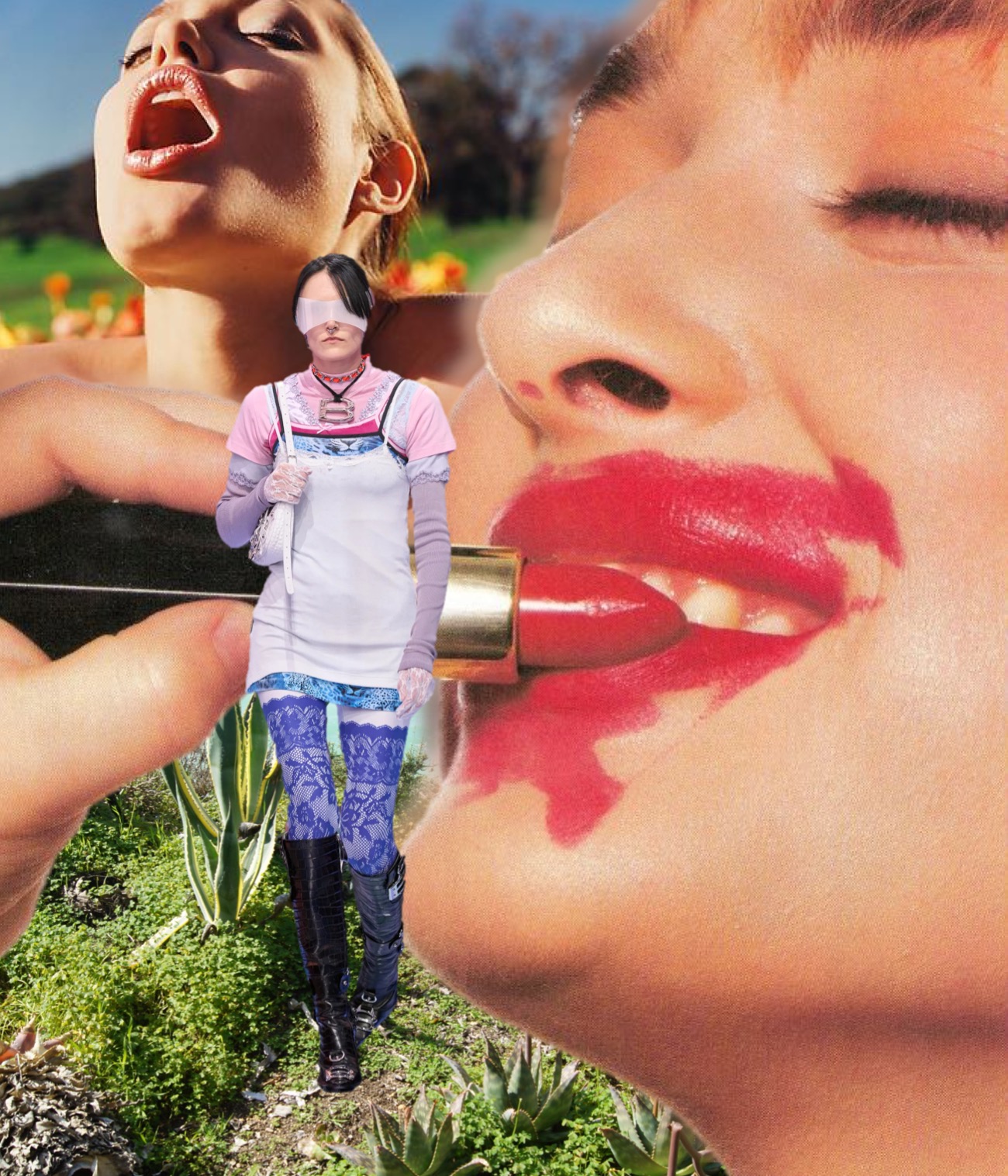
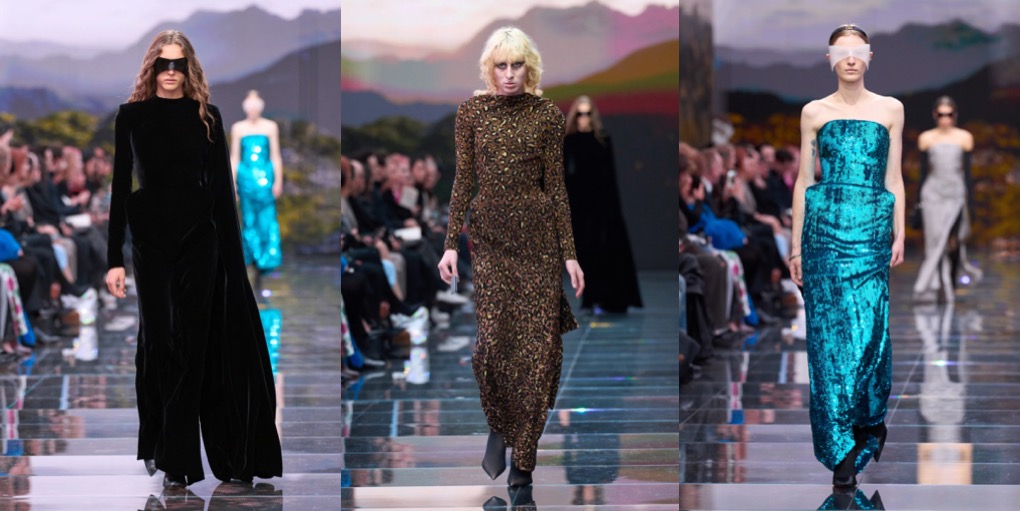
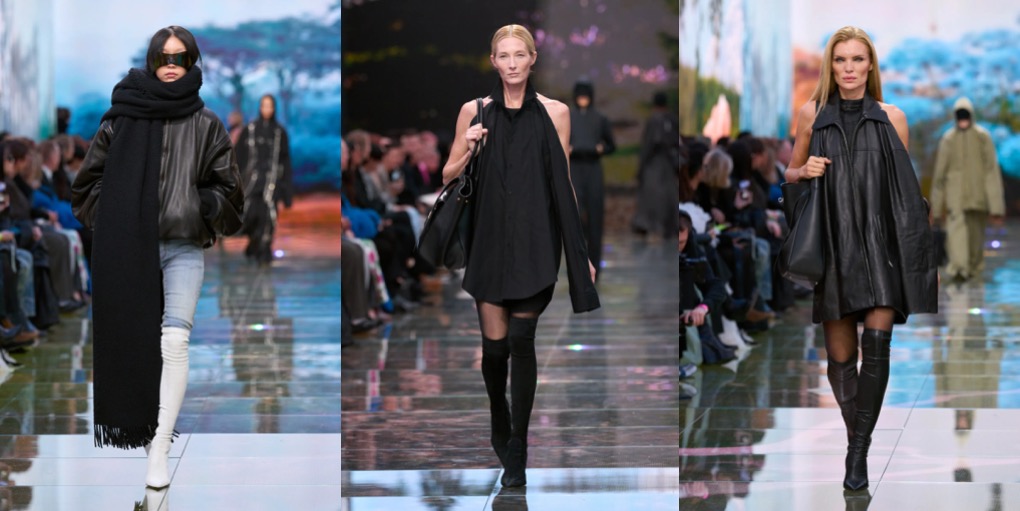
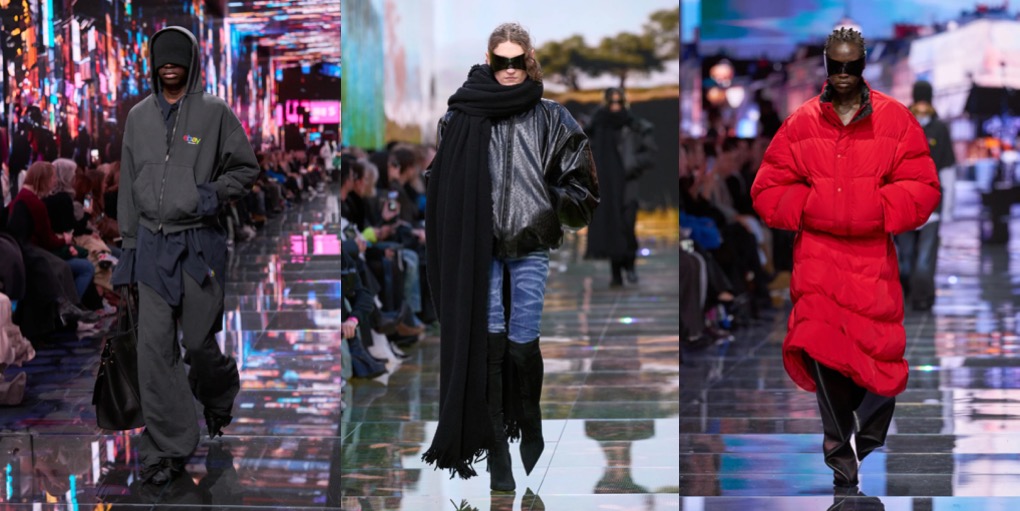
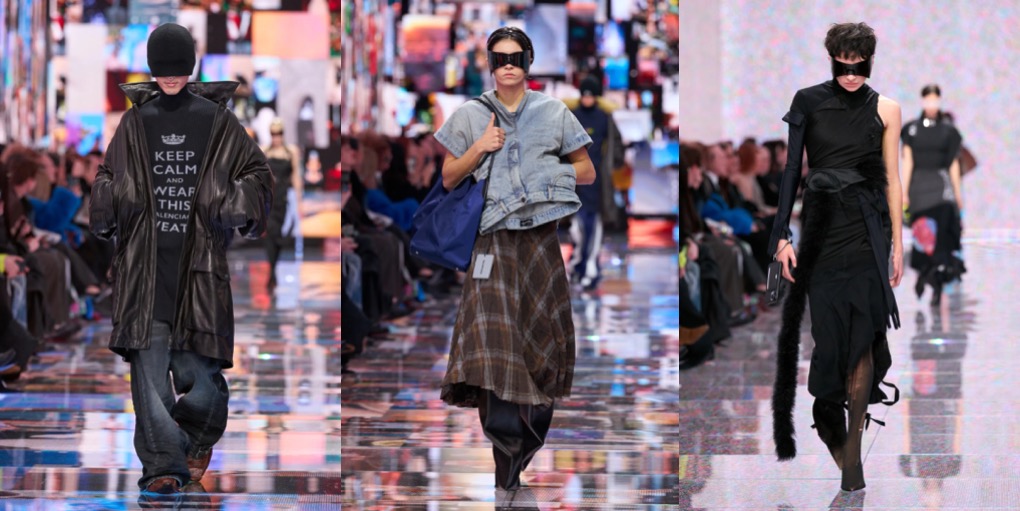
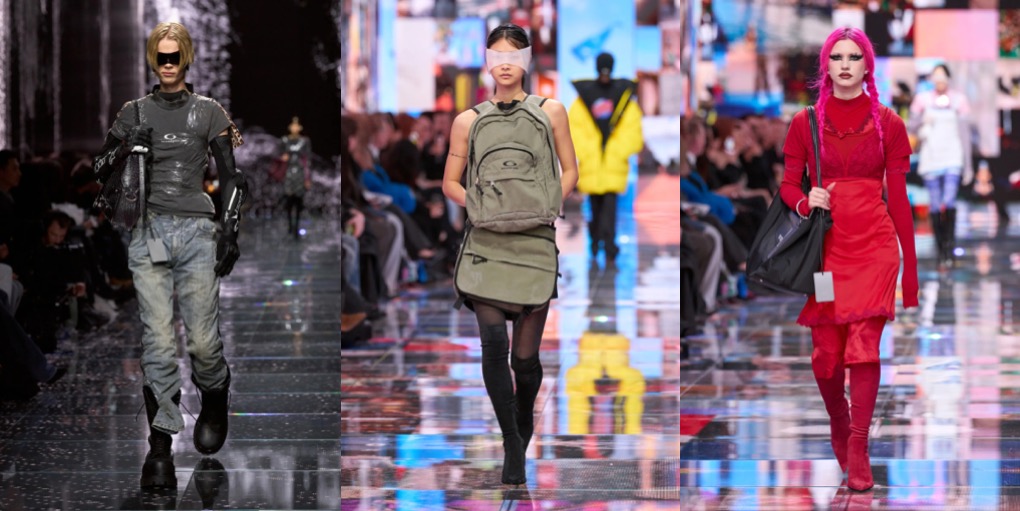
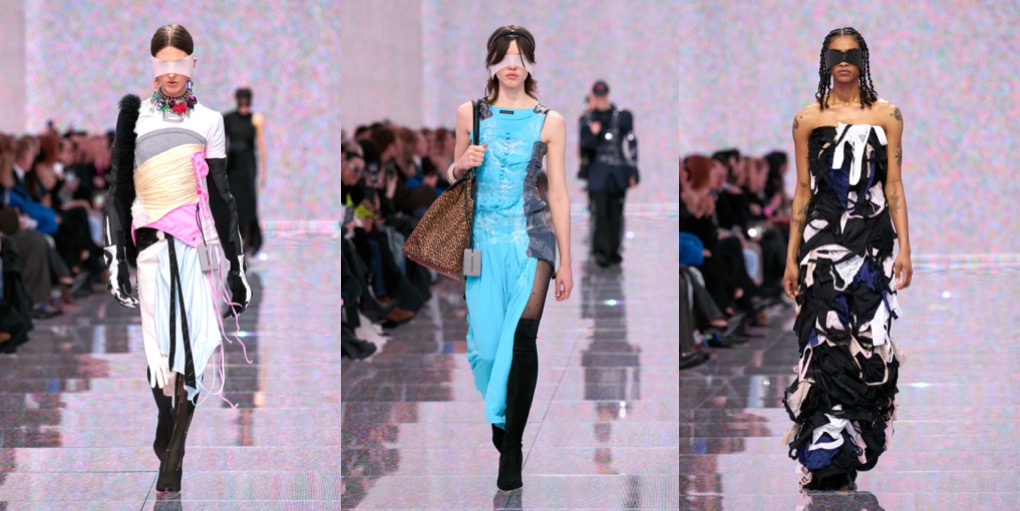
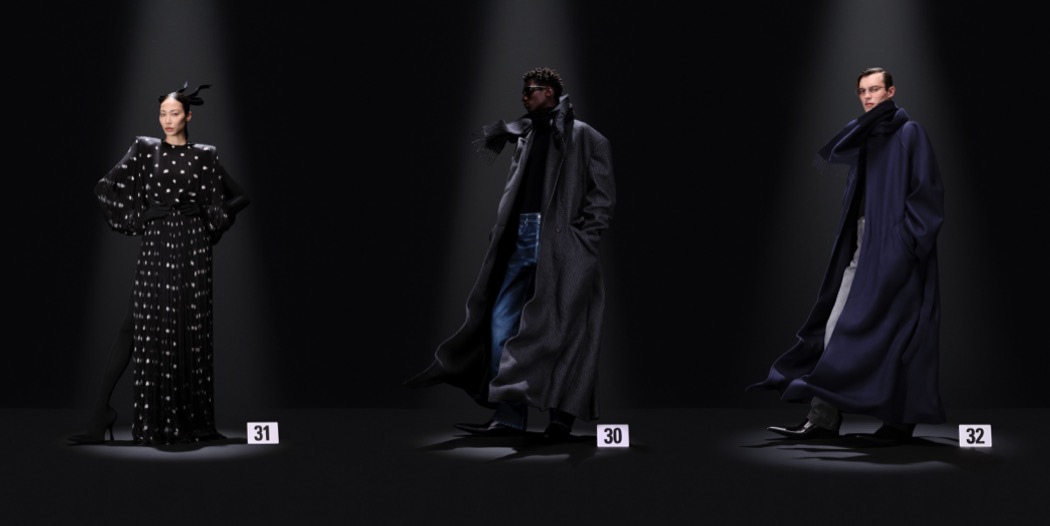
“What seems truly rare and finite right now is actually creativity itself,” Demna said backstage at his autumn-winter 2024 Balenciaga show. “I believe that creativity has secretly become a new form of luxury.” As a big admirer of Demna’s work, however, I must admit I found the creativity part missing this season. The collection felt like AI-generated line-up of the designer’s now-trademark style codes, with plenty, plenty of references to Martin Margiela. Of course, it’s not the first time when Demna goes Margiela, but this time I found it quite redundant. Taped clothes, deconstructed dresses patchworked from other garments, square-legged boots, denim pants worn as tops… the list goes on and on. This season’s Balenciaga tribe – gum-chewing, septum-ringed, eyes wrapped in futuristic silicone masks – marched headlong through a digital AI–aided visual cacophony playing on hundreds of wall and floor screens. “Photoshopped into the fake reality, into basically the overload of content that is killing our society, in a way. You know, like TikTok videos,” the designer said of the immersive experience. It did say a lot for the human brain that there could be any attention spared for the clothes at all. Well. I felt absolutely exhausted somewhere mid-show. But maybe it’s the fashion month that hits hard especially during the last days of Paris Fashion Week.
Collage by Edward Kanarecki. Don’t forget to follow Design & Culture by Ed on Instagram!
Hey, did you know about my newsletter – Ed’s Dispatch? Click here to subscribe!
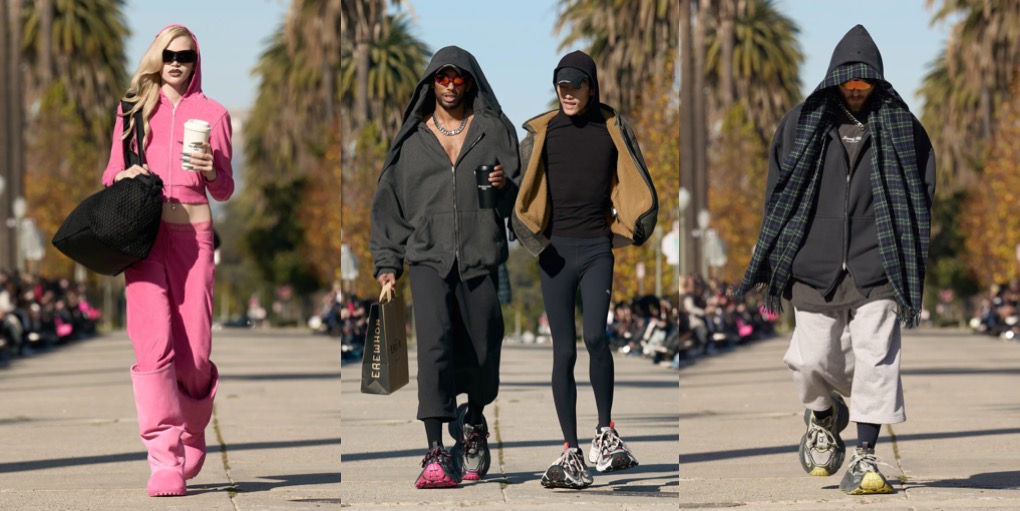
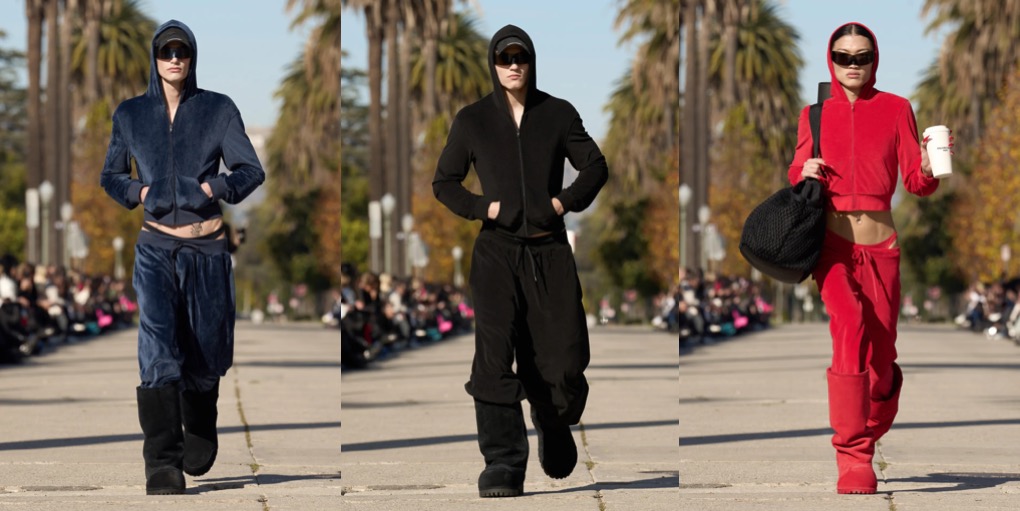
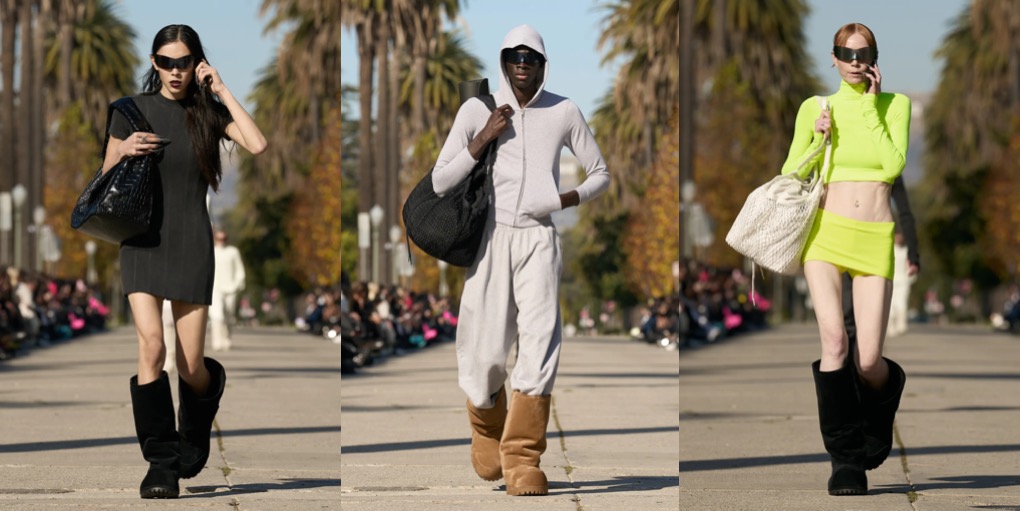
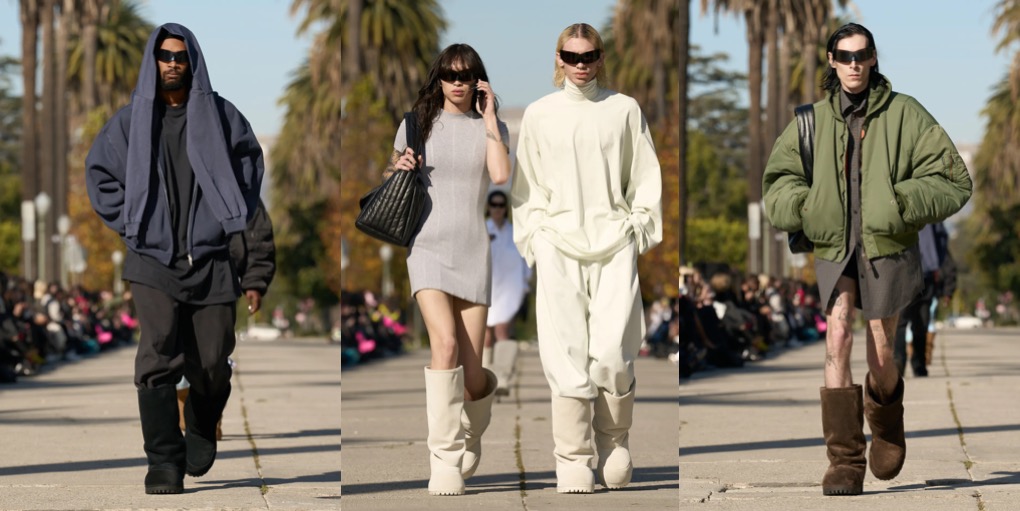
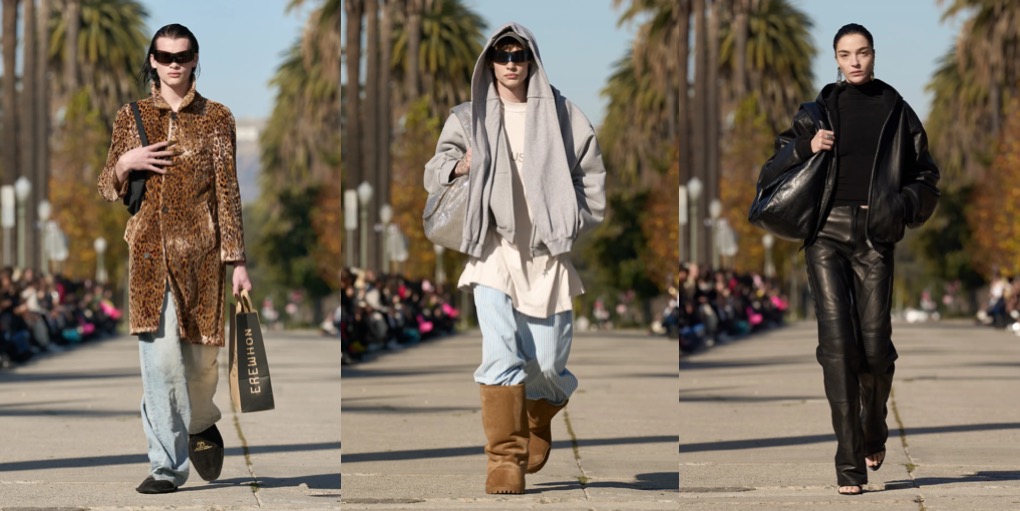
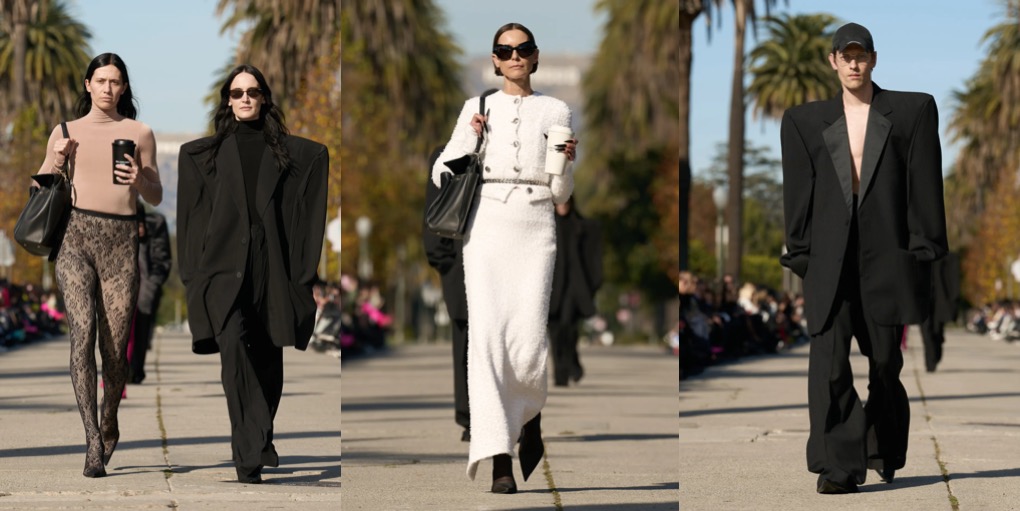
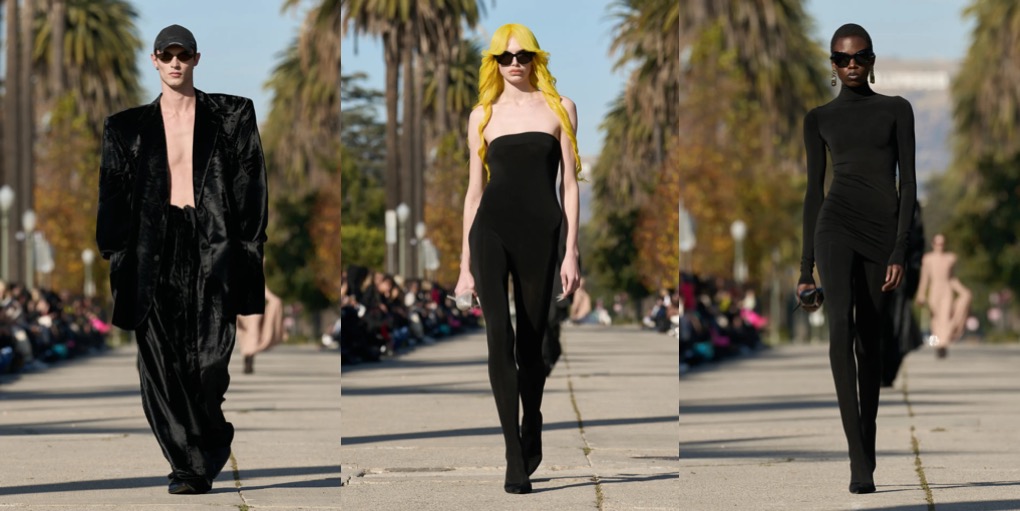
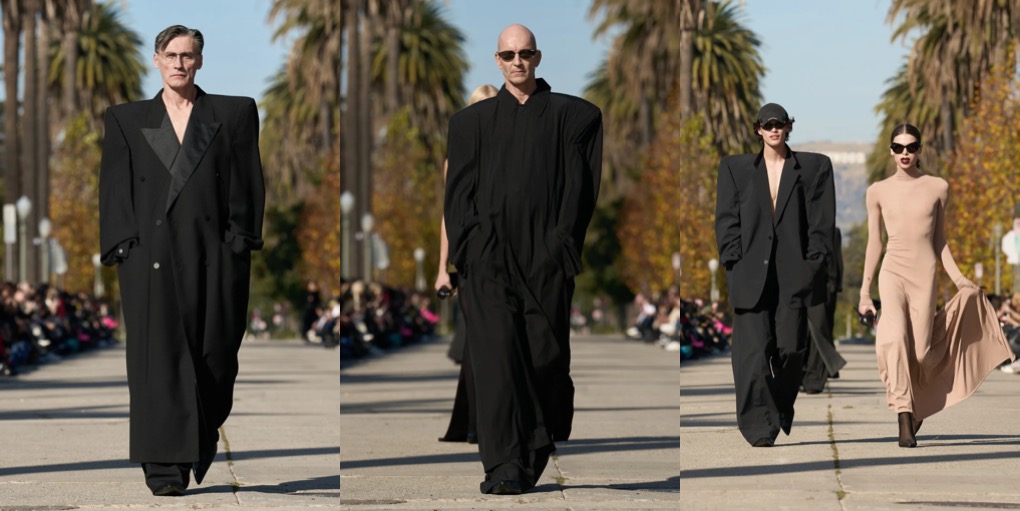
Balenciaga‘s first-ever fashion show in Los Angeles had it all: the Kardashian-Calabasas flagship style, some Hitchcockian drama with a Lynchian twist, the taste of an Erewhon smoothie and even the H of the Hollywood sign as the backdrop. Demna called LA “my favorite city in the world,” saying, “all my cultural evolution, when I was a teenager growing up in this kind of post-Soviet vacuum, it really came from here, through movies, music – I mean, everything that I kind of absorbed, that later on started to kind of become my fashion references.” There was certainly something surreal about Balenciaga’s gothy black clad guests turning up en masse on a well manicured stretch of Windsor Boulevard in Hancock Park. The collection skewed SoCal, starting with the exercise clothes, gym bags, and souped-up sneakers of the first few looks. The circa Y2K velour jumpsuits and giant high-heeled shearling boots that came next will be familiar to readers of US Magazine, which would’ve been another way the young Demna got his celebrity content.
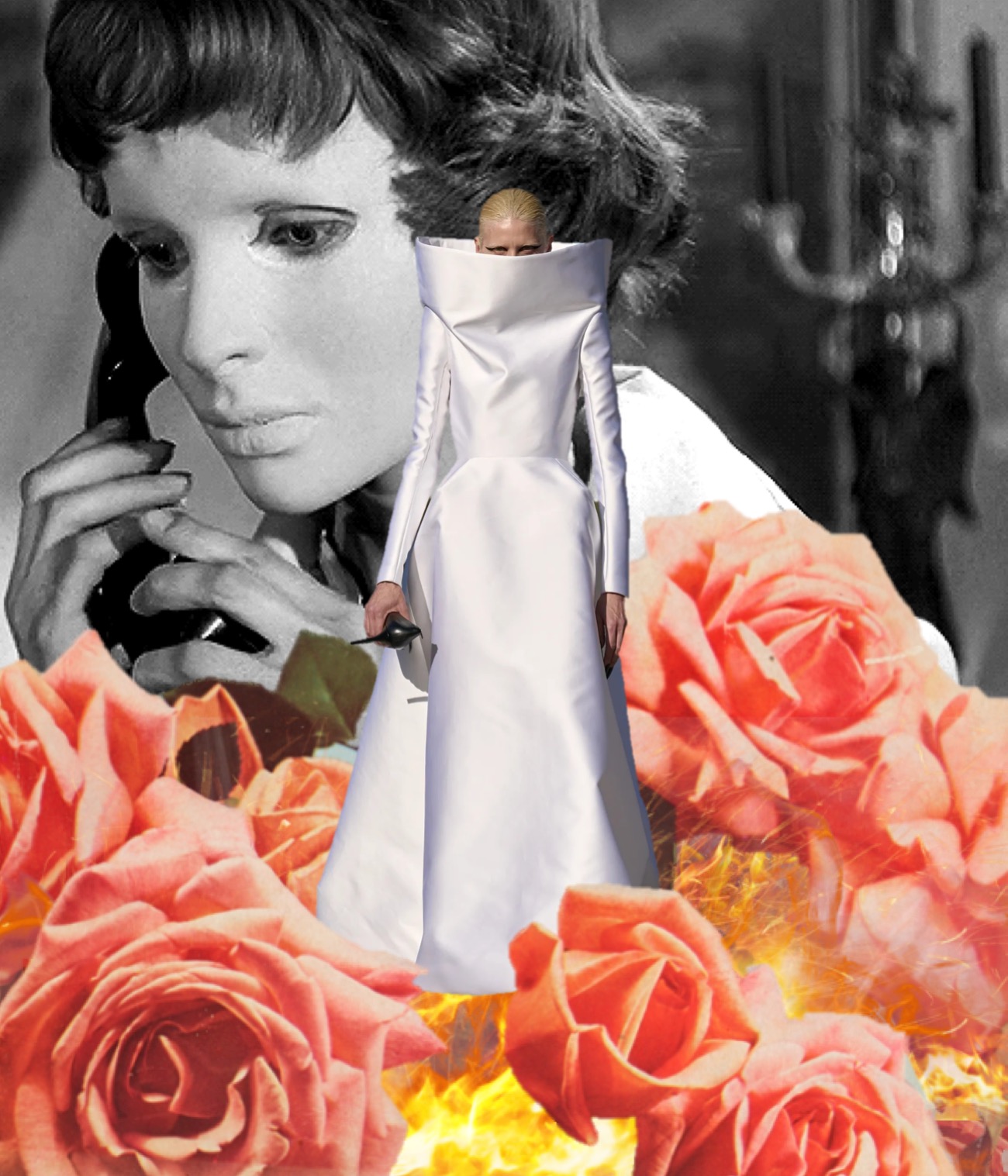
Back in those pre-social media days, the paparazzi lurked outside hipster coffee-shops. Circa 2023, it’s Erewhon smoothies that the stars are clutching. Timed to yesterday’s event, Balenciaga collaborated with the LA grocer on a juice. Made in part with activated charcoal powder, it’s as black as the stretchy turtleneck and tight jeans worn in the show by Brigitte Nielsen. “I don’t know what’s in it,” Demna said. “I just wanted it to be black.” The designer (officially) rejected the idea that he approached the collection – or LA itself – with irony, but there’s something comically perverse about a paper grocery bag made in leather. The sensational evening clothes were as Hollywood as the rest of the show, but it was easier to read earnestness in their elegance and drama. There was a respectful nod to Cristobal Balenciaga in the grand volumes of a white wedding gown whose funnel neck extended to just below the model’s eyes. Two other dresses conjured post-coital bed sheets tied at the bust, if bed sheets came in patent leather. These were pure Demna.
Collage by Edward Kanarecki. Don’t forget to follow Design & Culture by Ed on Instagram!
Hey, did you know about my newsletter – Ed’s Dispatch? Click here to subscribe!
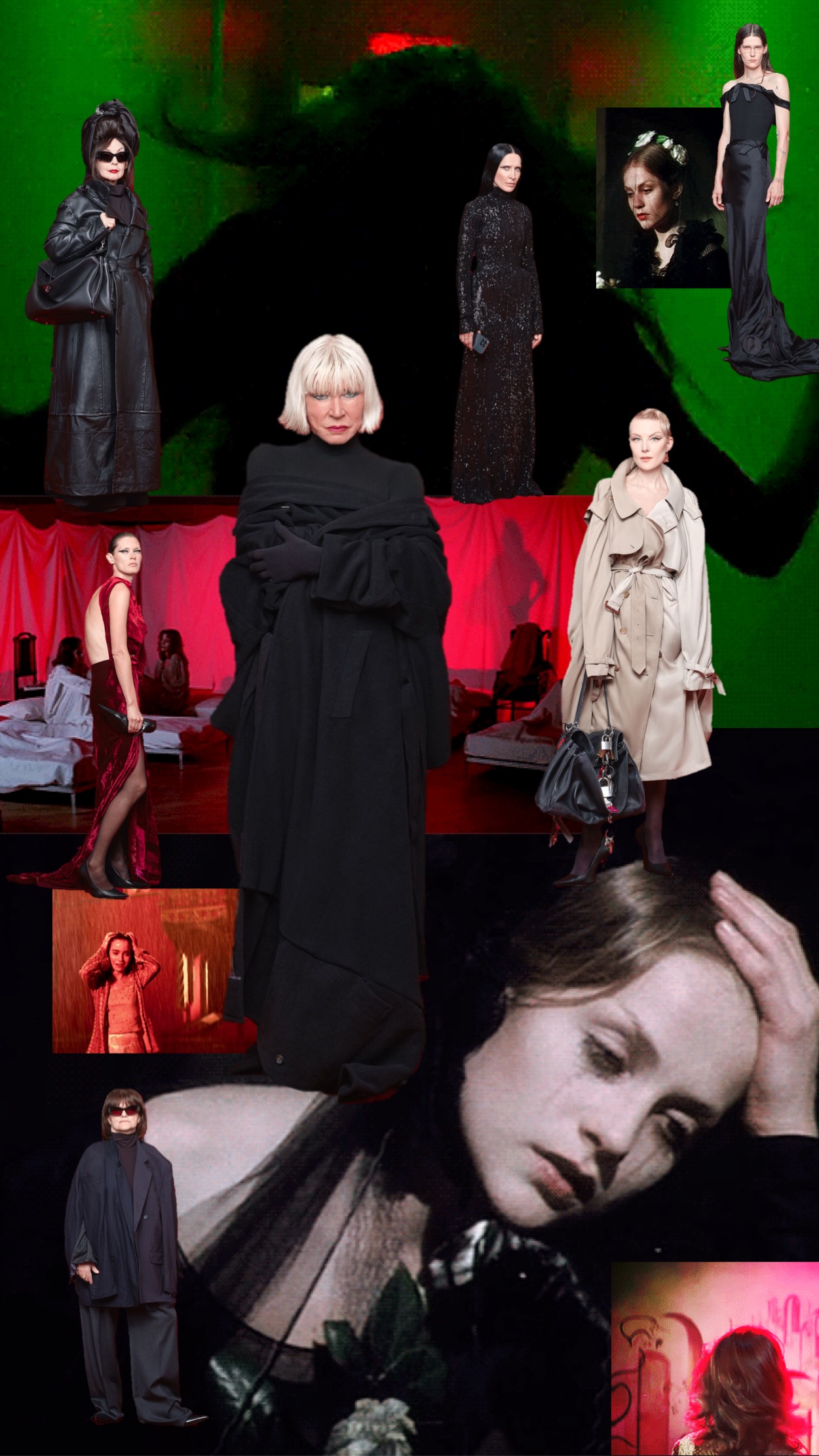
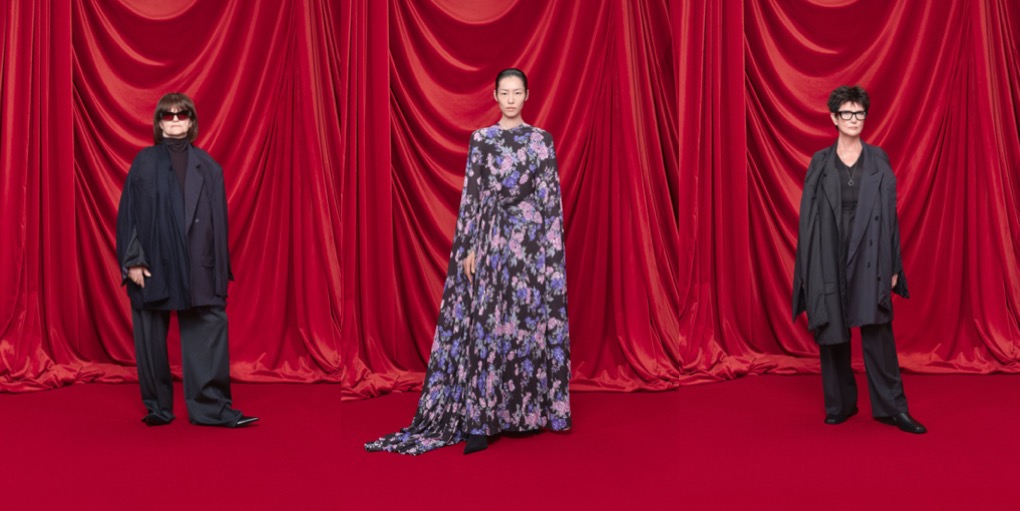
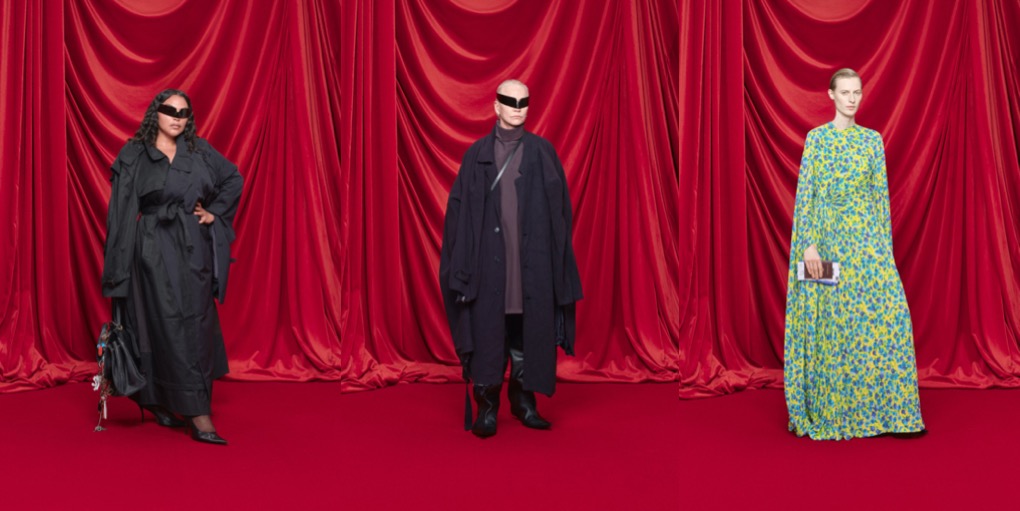
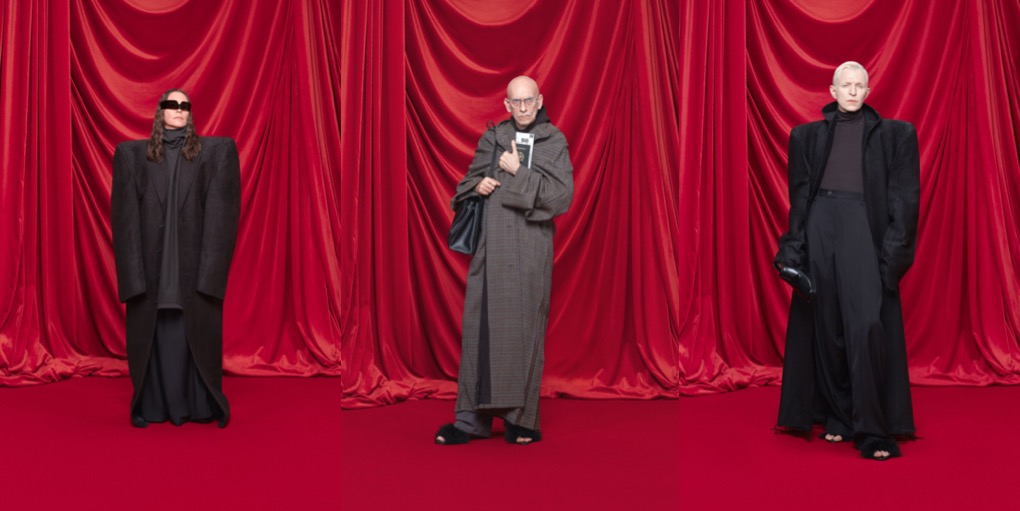
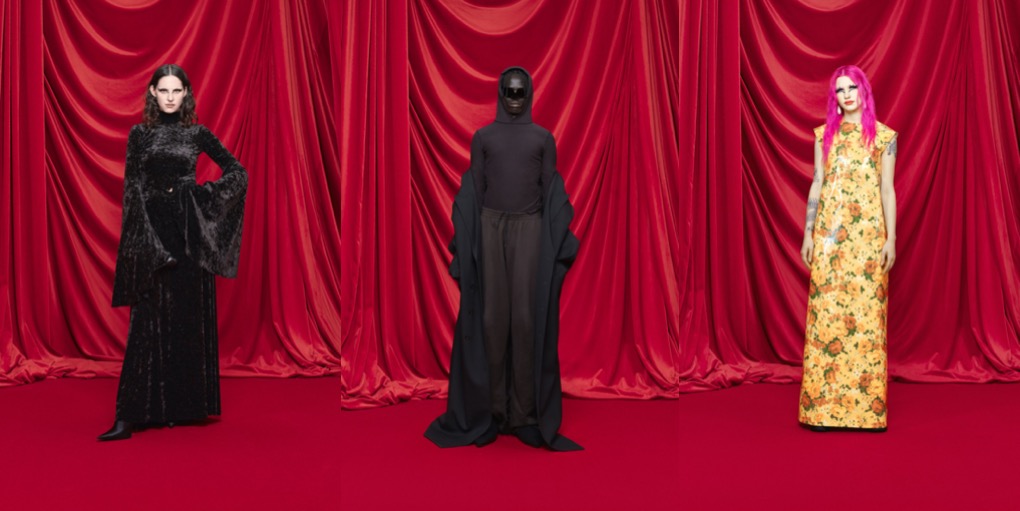
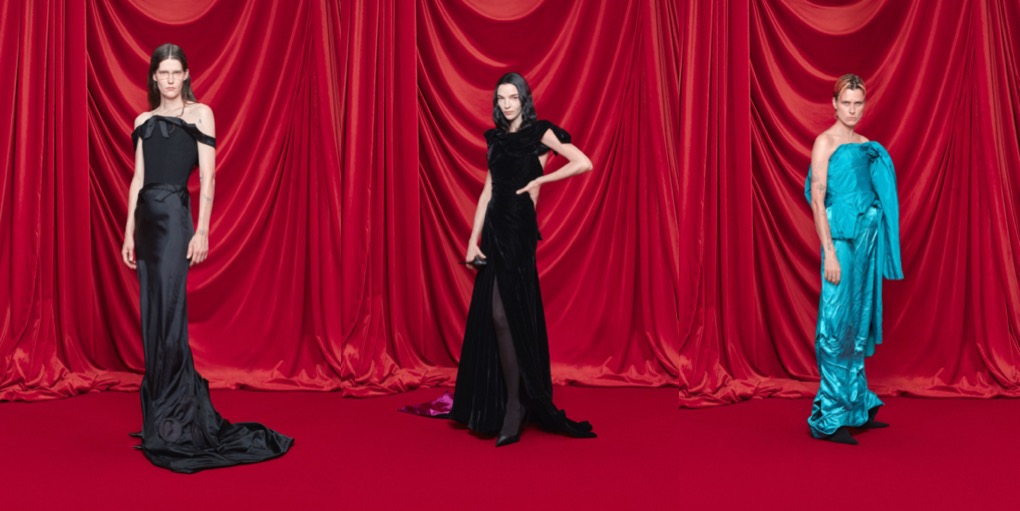
With his spring-summer 2024 Balenciaga fashion show, Demna reminds once again that he’s a contemporary fashion visionary. “I have to be me. I can’t repress my creativity. I can’t castrate my vision. I just can’t do those things. It’s not me. So this collection is a celebration of everything that I love about fashion”, the designer said. Demna was coming off a year during which, he said, “I felt very alone.” In reaction, his latest show was a gathering of “the people who have meant most to me in my personal and professional life,” from his mother, who opened the show, to his husband Loïck Gomez, also known as BFRND, who wore the finale wedding dress, and mixed and scored the soundtrack featuring Isabelle Huppert reading out the instructions for tailoring a jacket. There were a whole lot of hot topics to unpack. When Demna talks of what he loves about fashion, he defines it in opposition to luxury. Some of his people were carrying faux passports with boarding cards to Geneva (where he lives) slotted into them – they were Balenciaga wallets, in fact. “Because it’s more about identity, to me,” he said. “I questioned a lot about that: How is fashion created? For me, I have to be honest: I don’t care much about luxury. I don’t want to give people a proposition to look like they’re rich or successful. Because ‘luxury’ is top down, and what is often seen as quite provocative about me is – I do bottom up.”
As for the clothes, it’s all about the quintessence of Demna’s trademark style: humungous tailoring, oversize hoodies and jeans, sinister leather coats and military camouflage were represented. So were plissé evening gowns, floral prints, bathrobes, motorcycle leathers. Vintage trenches and bombers were cobbled together with four sleeves apiece. Multiple evening gowns were made from multiple old evening gowns—black velvet, fuchsia satin, glittery gold. Demna’s jokey accessories were everywhere: Balenciaga sneakers grown even more absurdly vast than ever; supermarket grocery totes reproduced in leather; marabou-trimmed men’s kitten-heeled boudoir slippers, and hand-carried shoes converted into clutch bags. With all his favourite people on the runway – starting from Cathy Horyn and Renata Litvinova and ending on Elizabeth Douglas and Amanda Lepore – it seemed that Demna was truly proud of the collection. “What I showed today was probably my most personal and my most favorite collection, because it was about me; it was about my story.”
Collage by Edward Kanarecki. Don’t forget to follow Design & Culture by Ed on Instagram! By the way, did you know that I’ve started a newsletter called Ed’s Dispatch? Click here to subscribe!
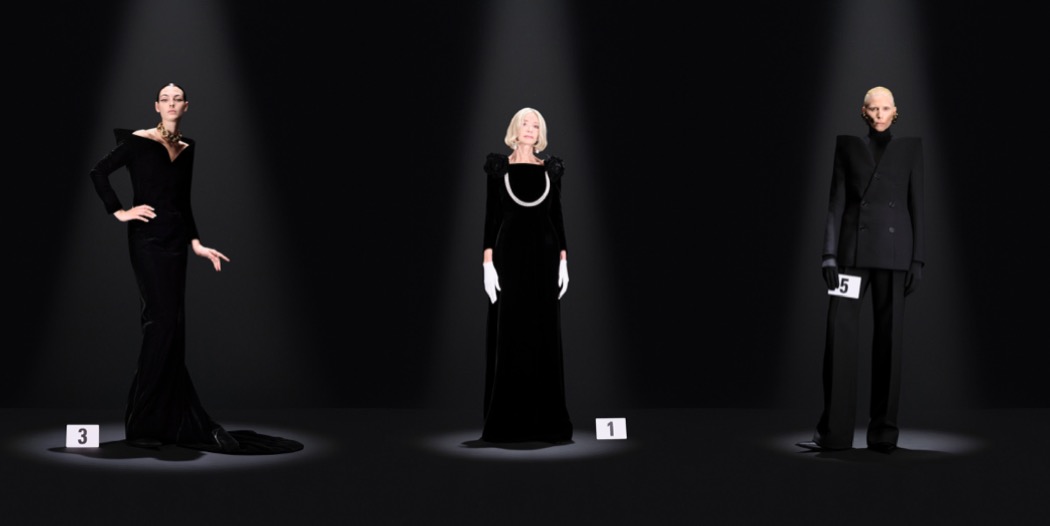
With his third haute couture collection for Balenciaga, Demna reminds the industry that he continues to be a resonating force of fashion power – and gracefully highlights, why couture is still so important. “Making clothes is my armor,” the designer said. At the end of the show, staged at Balenciaga’s historical boutique-slash-atelier on Avenue George V, Eliza Douglas, walking in a shining chrome-laminated 3-D printed bell-skirted suit of armor, reminded Demna of Joan of Arc – and also of himself. “Maybe she wouldn’t have been burned at the stake for wearing men’s clothes if she was wearing that,” he remarked. “Because all my life I suffered because of what I wear.” Whatever inferences to embattlement, self-protection, and resilience might have been fleetingly caught in that conversation, his main point was that being immersed in making clothes is his happiest place. “Couture to me is specifically about clothes. There was a narrative that somehow happened by itself. It was kind of making a bridge between the past and now, which is the reason I wanted to do it from the beginning.” The collection opened with a replica black velvet Cristobal Balenciaga haute couture dress. It was worn by the equisitely elegant Danielle Slavik, who orginally modeled it for Balenciaga himself. Grace Kelly ordered it, with its integral pearl necklace, for her 4Oth birthday. Slavik had told Demna that it was her favorite dress ever. His to and fro between tradition and innovation began with his own fascination with tailoring. For a start, he probed the structure of tailoring for day. He who shot to fashion fame by making jacket shoulders humungous now made them disappear altogether, cutting wide funneled necklines into narrow women’s coats and jackets. That idea, he said, had come from turning jackets upside down. In one way, it read as a couture elevation of the suiting inversions he’d started in ready-to-wear. In another, it was surely a nod to the founder’s signature obsession with sculpting dresses to frame the beauty of his clients’ faces.
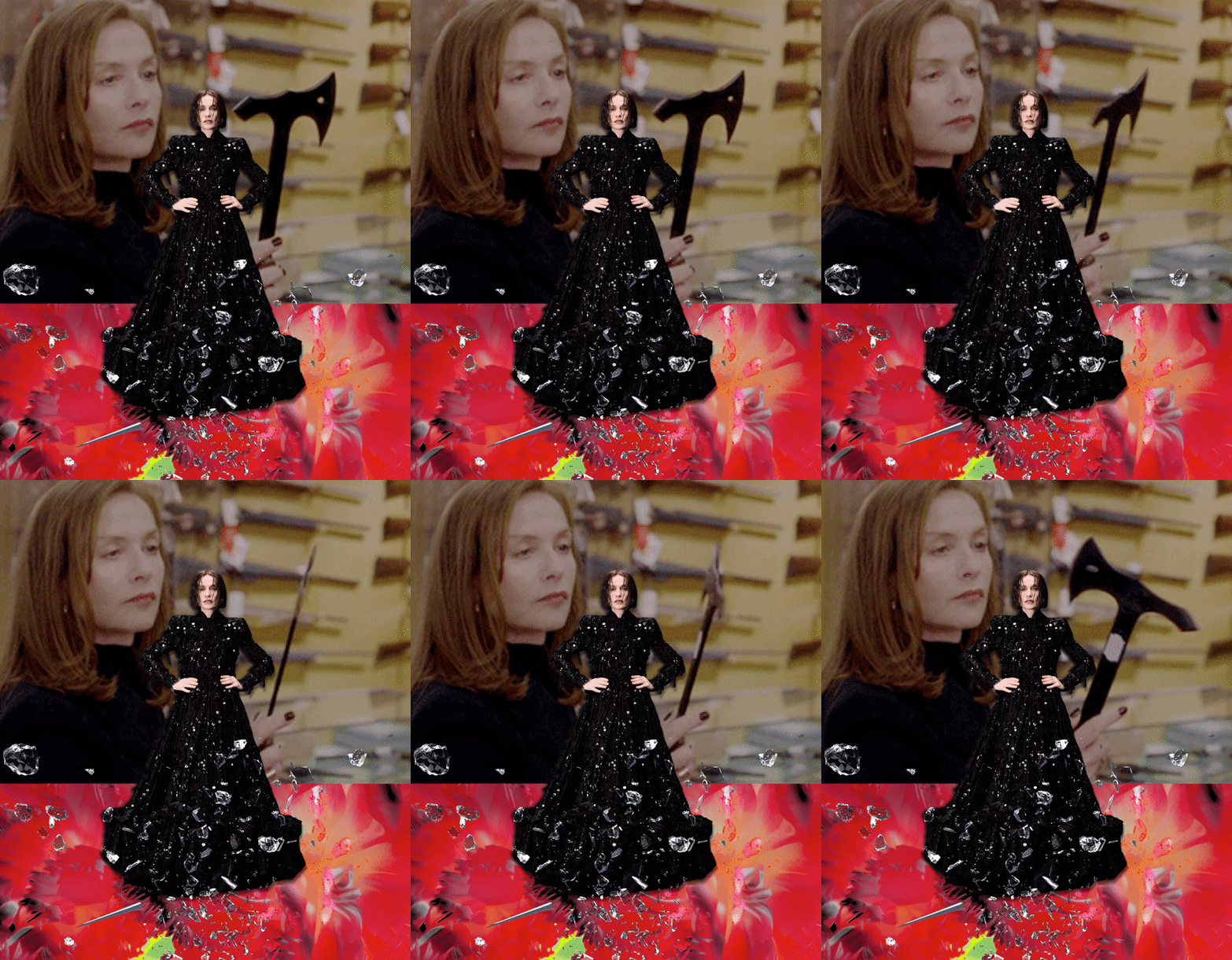
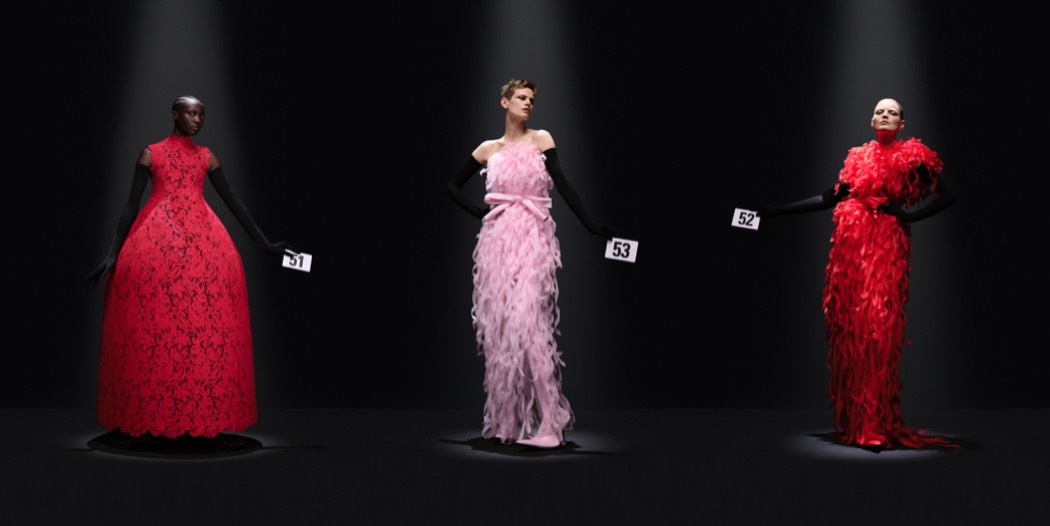
Menswear occupied an extensive section of the collection. It took in ultra rigorous black-tie formality and normal seeming business suits, right through to couture treatments of all the casual generics Demna’s been known for since day one. Menswear traditionally played no part in haute couture, it should be remembered. Silhouette-wise, with his extended-toe shoes poking out from trousers and jeans, it all appeared to be not so different from Demna’s signature ready-to-wear. In fact, he said, a slew of hidden trompe l’oeil hand-crafted techniques had been lavished on garments; there was oil-painting on fabric to imitate fur and printing on Japanese denim to mimic Prince of Wales check, as well as “windswept” raincoats and mufflers sculpted to look as if they were caught in a storm. “Because I like the couture that you see, and I like the couture that you don’t see. What’s really important is the techniques that maybe aren’t so visible. That’s a big part of who I am, and who Cristobal Balenciaga was, too. So I wanted that balance. Couture shouldn’t always be in your face, and like ‘this is a gorgeous dress.’” But there were gorgeous dresses, too. Isabelle Huppert came out in a heavily-pailletted full-skirted black dress like some gothic Infanta. Renata Litvinova’s candy-pink gown was a Balenciaga Barbie moment. There were others which, again, looked as if they’d been caught in movement; a taffeta neckline dramatically blown to one side, a slick black twist of a thing spiraled around the body. Some of it had been made in a complicity between advanced technology and the human hand, like the red lace dress that became a stiff bell-shaped filigree. All this is just as costly as anything traditionally haute couture, while being super-stimulating and truly breathtaking.
Collage by Edward Kanarecki. Don’t forget to follow Design & Culture by Ed on Instagram! By the way, did you know that I’ve started a newsletter called Ed’s Dispatch? Click here to subscribe!



















 Design & Culture by Ed