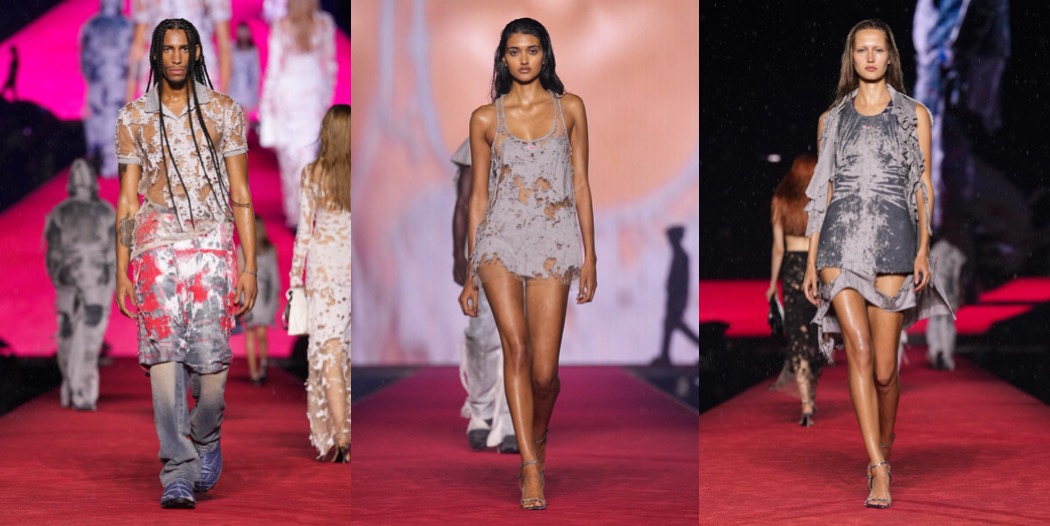
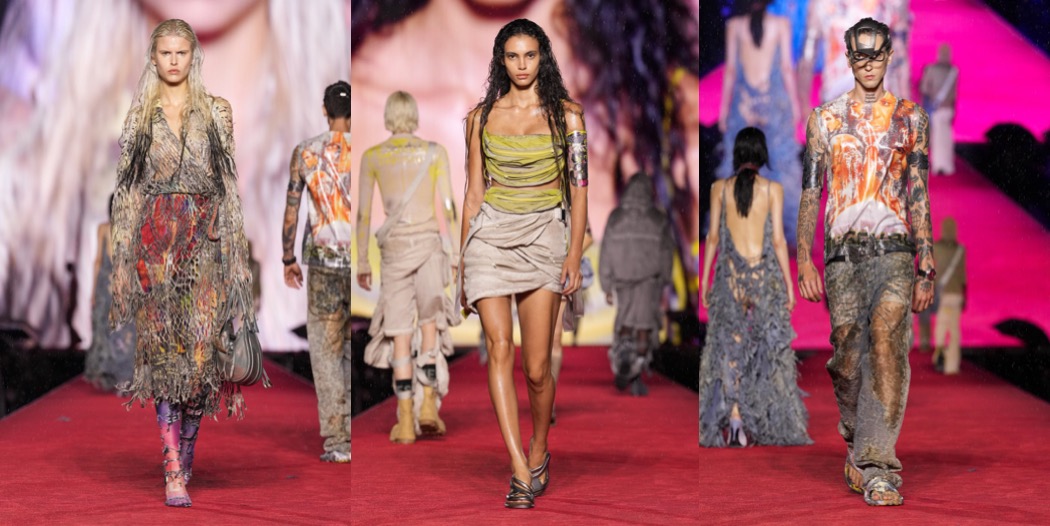
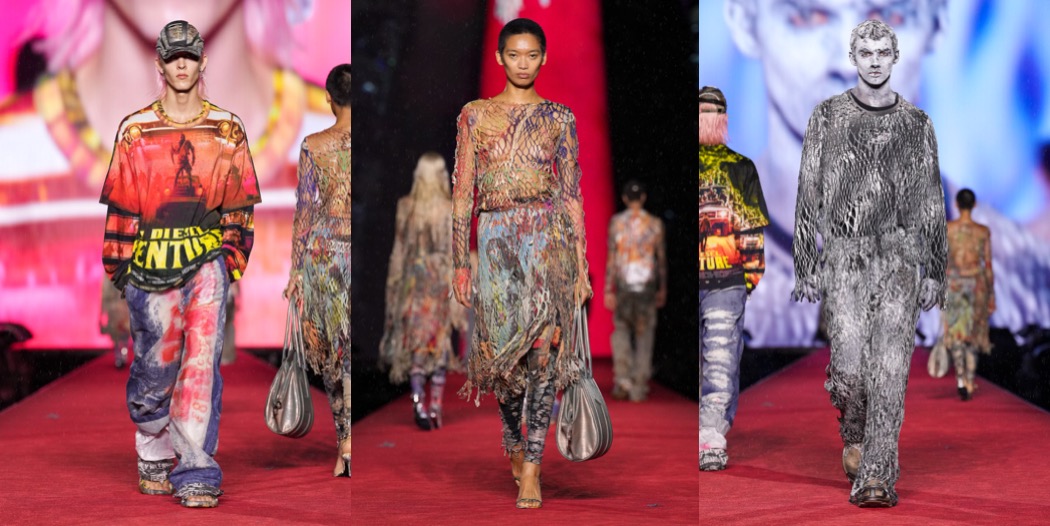
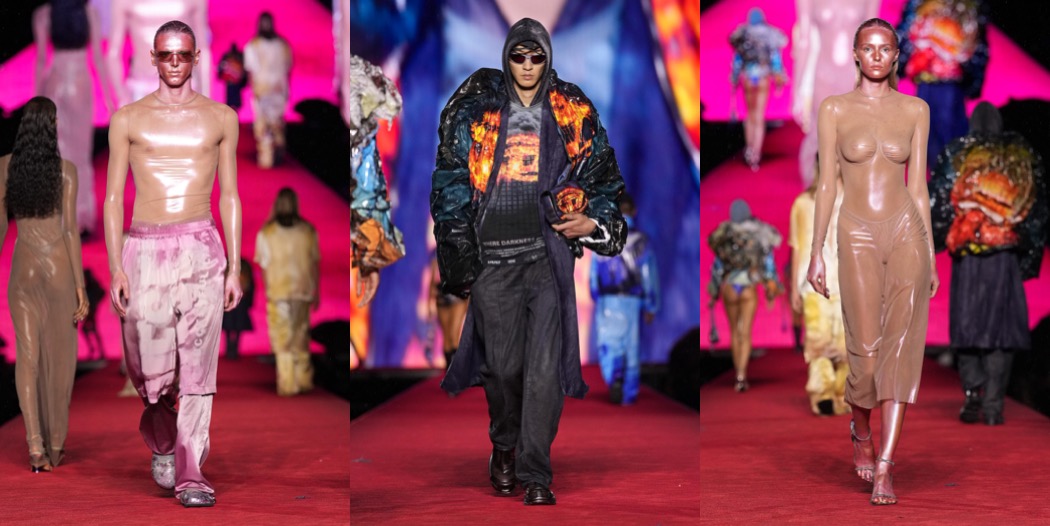
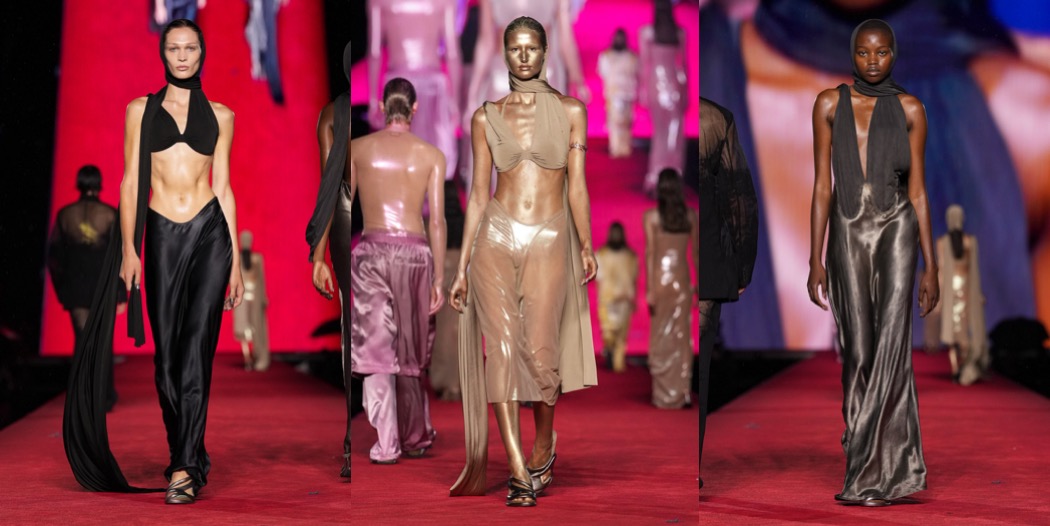
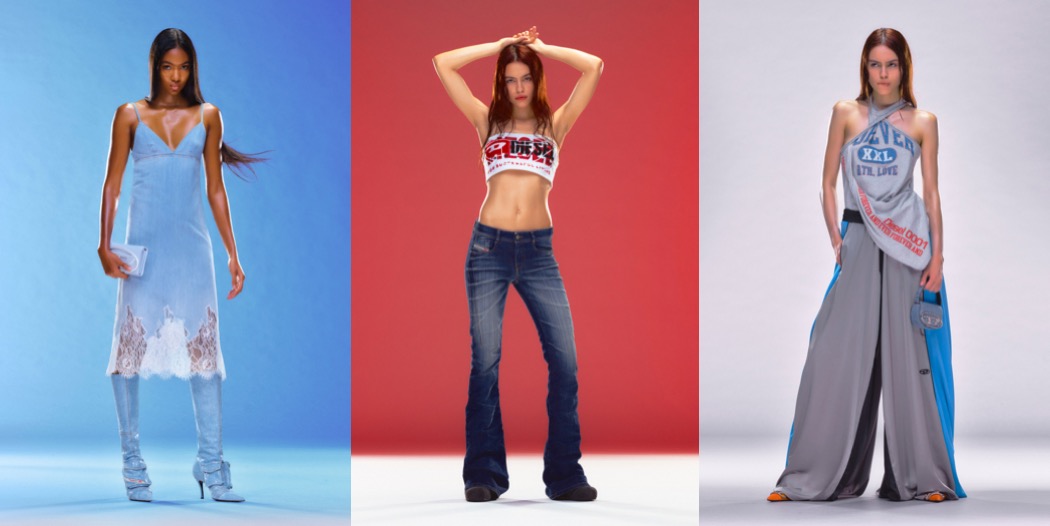
The Diesel show had a lot to say. But in the end, I thought Glenn Martens lost his focus, as the collection went in too many directions and roamed into pure entertainment. But then, Diesel is the go-to brand for hedonism. As the first models came out in his artisanal-industrial shredded and devoré denim outfits, the rain started to slice with gusto through the spotlit area above the huge runway that stretched long into the huge crowd (the free tickets that had been made available online – first to 1,500 students from Milan’s universities, then to all comers – had been snapped up in minutes). Dieselized parodies of old-school movie posters appeared on the garments, which in majority were distressed, acid-washed and double layered. Close fitting ruched jersey or lurex dresses, some of them traced with the external outline of underwear, acted as loose human pastiche of the Oscars statuette. But it also read very Mugler. Destroyed tuxedos, half red carpet and half apocalypse, were the masculine counterpoint. Artisanal pieces included dresses handmade in shredded denim or burned mesh. Several models were caked in grayish ochre mud that matched the tone of their looks. As the last model walked, statuette-esque in a flowing black silk skirt and bralette/scarf combo, the rain suddenly cleared. The finale – and then four more hours of partying – followed.
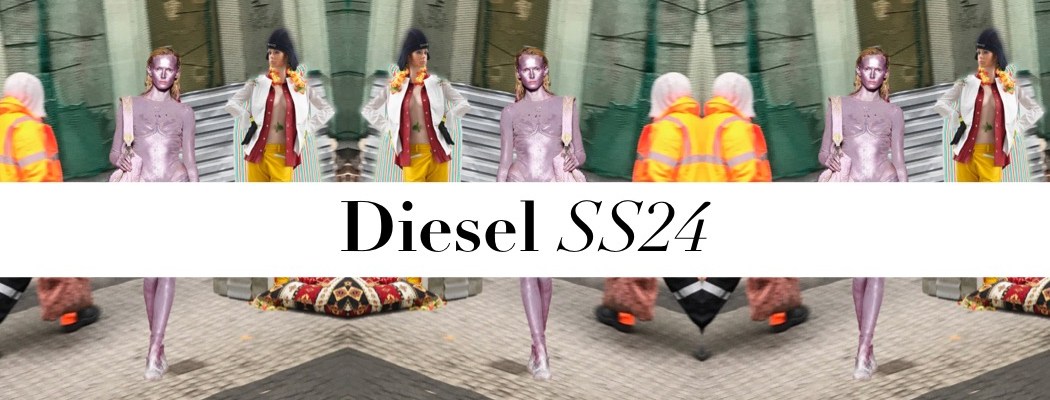
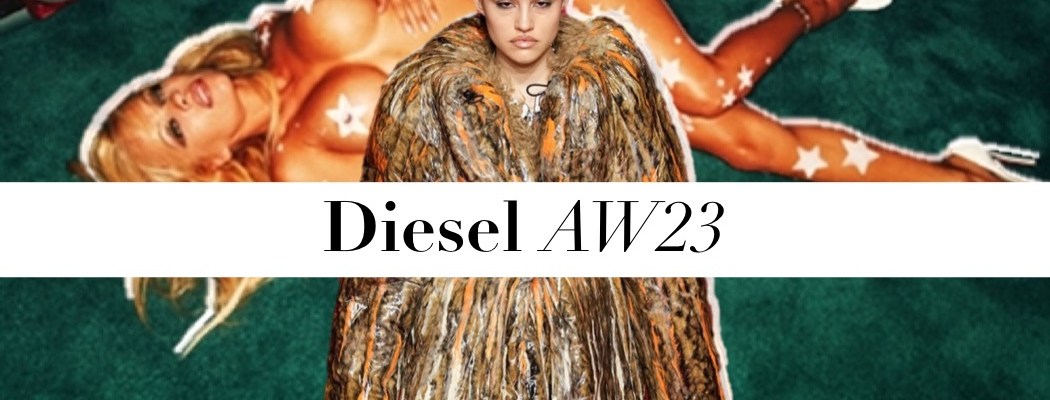
Collage by Edward Kanarecki. Don’t forget to follow Design & Culture by Ed on Instagram! By the way, did you know that I’ve started a newsletter called Ed’s Dispatch? Click here to subscribe!
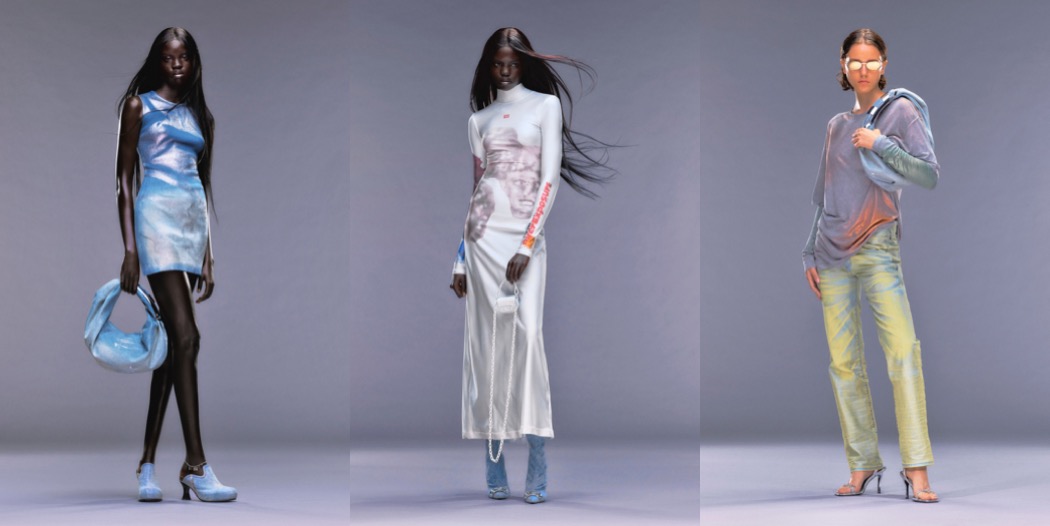
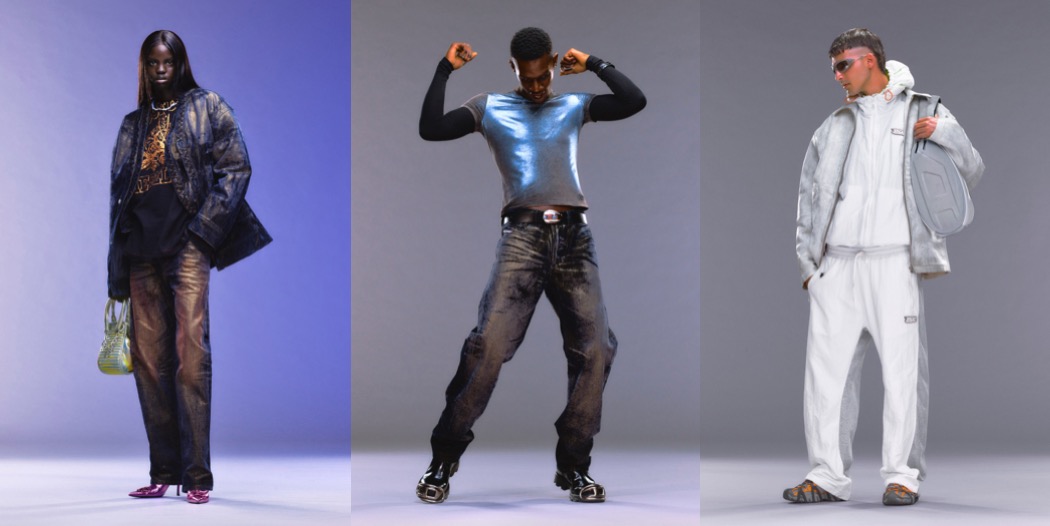
“We are continually evolving, it is about continuity,” said Glenn Martens regarding his process of reviving Diesel, and the democratic aspect of his resort 2024 offering. He added: “Perhaps more than anything I can say that what we did better this time was to take more carryover stories from the runway and industrialize them to create easier access price points for all of our stores and customers.” Another evolution, he said, was that his ambition to present Diesel collections as fluid, every-gender products on the shop floors has begun to manifest in certain flagship outlets – and that this lookbook was shot to reflect that. In other words, if February’s sultry, Durex-strewn Diesel show emphasized sex, then this follow-up collection was concerned with performance. The last-show iterations of Martens’ three Diesel pillars – denim, utility, and pop – were all harmniously diffused. Denim-wise, we saw the core material cut into jersey, leather, or bouclé panels on tough sportswear, trimmed with lace in easy-wearing little dresses, overlaid with oily or stonewashed color treatments, and used as a fabric for shoe uppers. The mainline collection’s intricate indigo dyed denim knits were reformulated in a fabrication designed to be color-fast as well as eye-catching. The designer emphasized that his foundational pivot to sustainability continues: “around 70% of all the denim here is produced through more sustainable processes,” he said. Elsewhere collegiate lettering on jerseys amusingly declared “Lies,” but this designer’s determination to green Diesel is no fib.
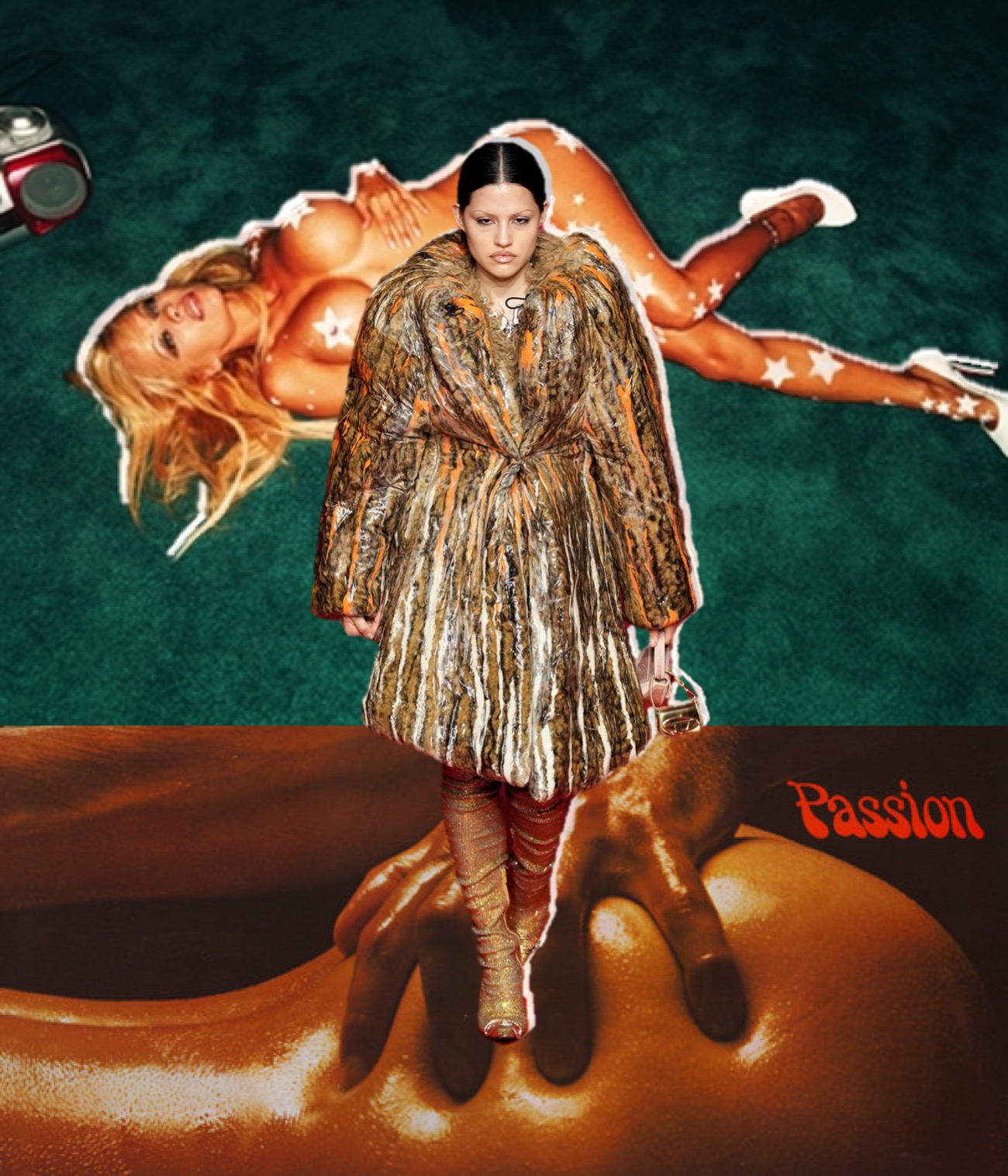
Collage by Edward Kanarecki. Don’t forget to follow Design & Culture by Ed on Instagram! By the way, did you know that I’ve started a newsletter called Ed’s Dispatch? Click here to subscribe!
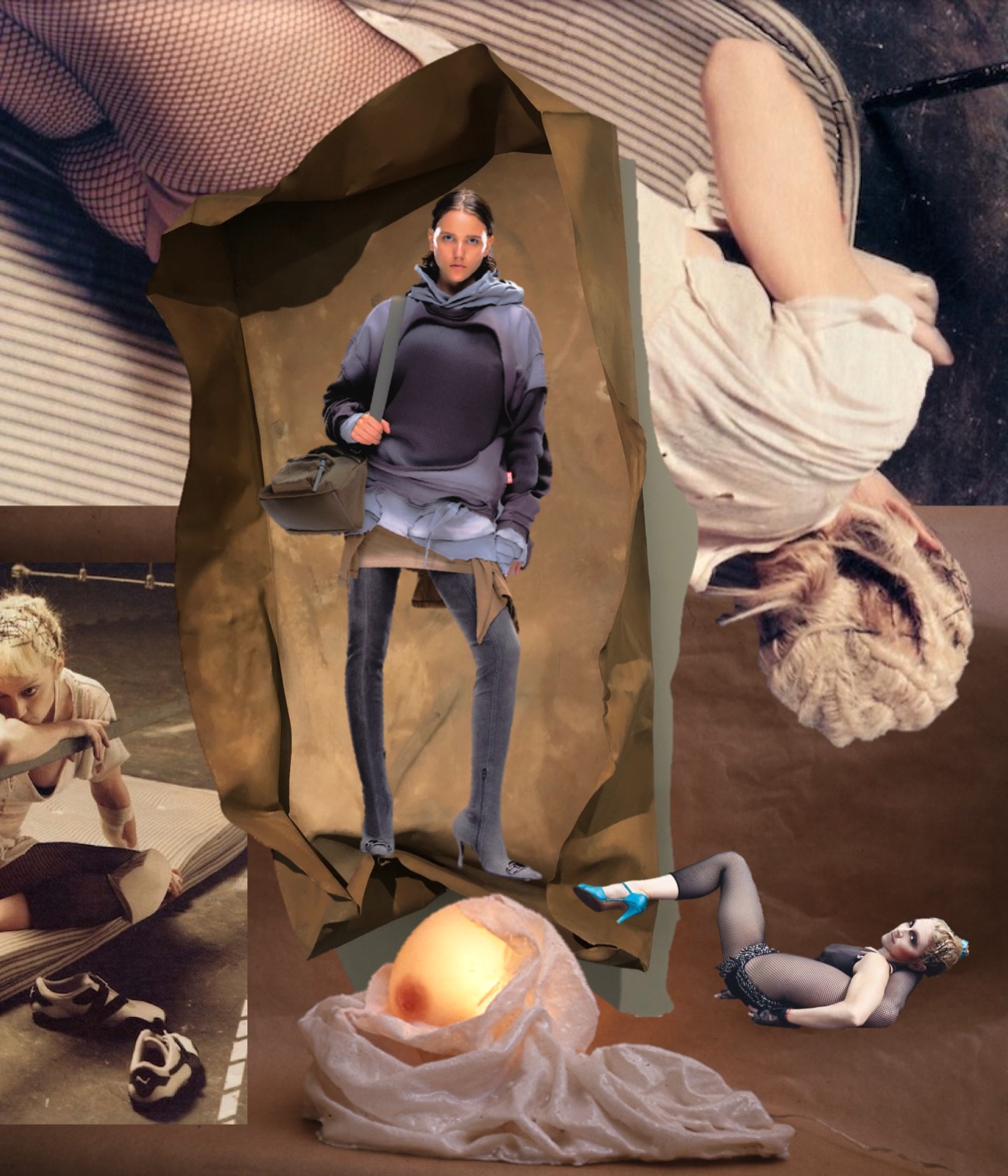
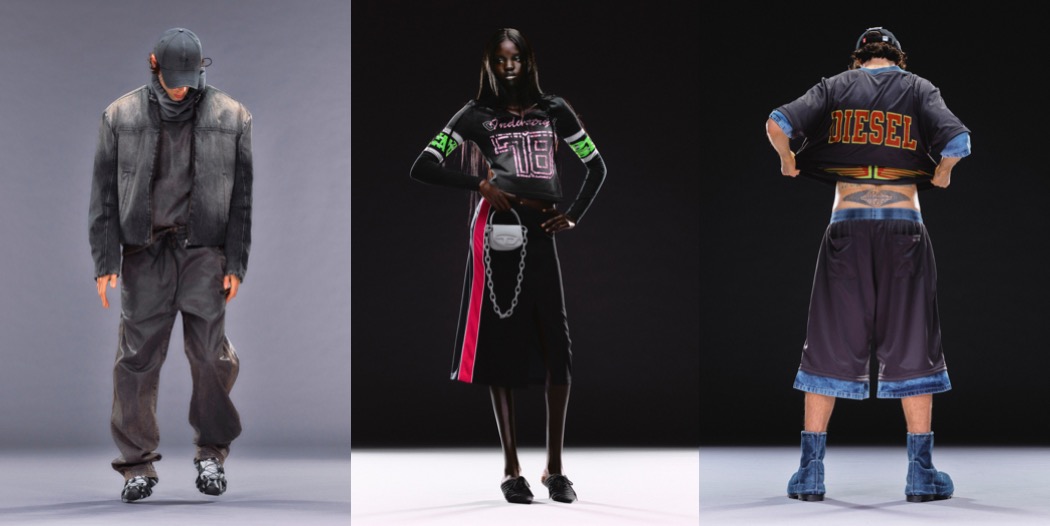
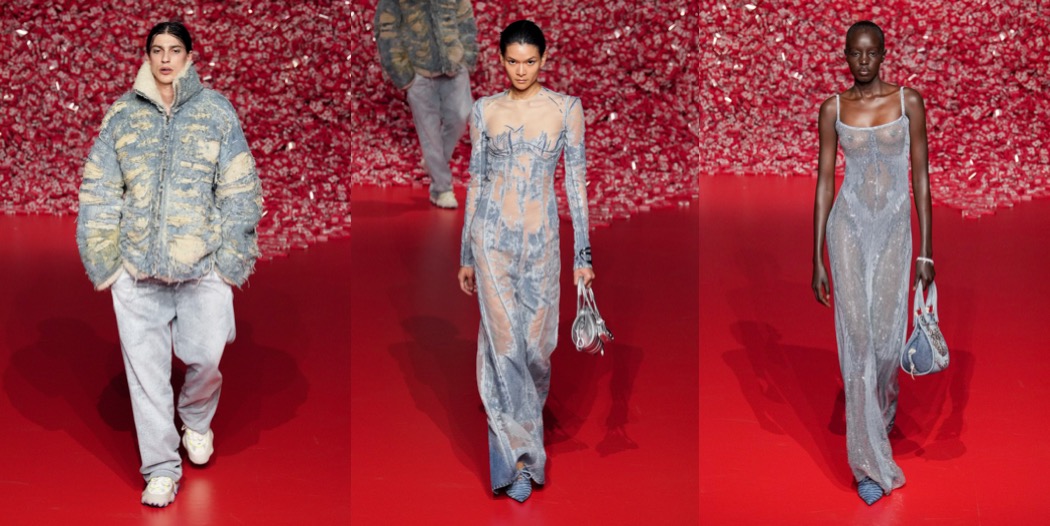
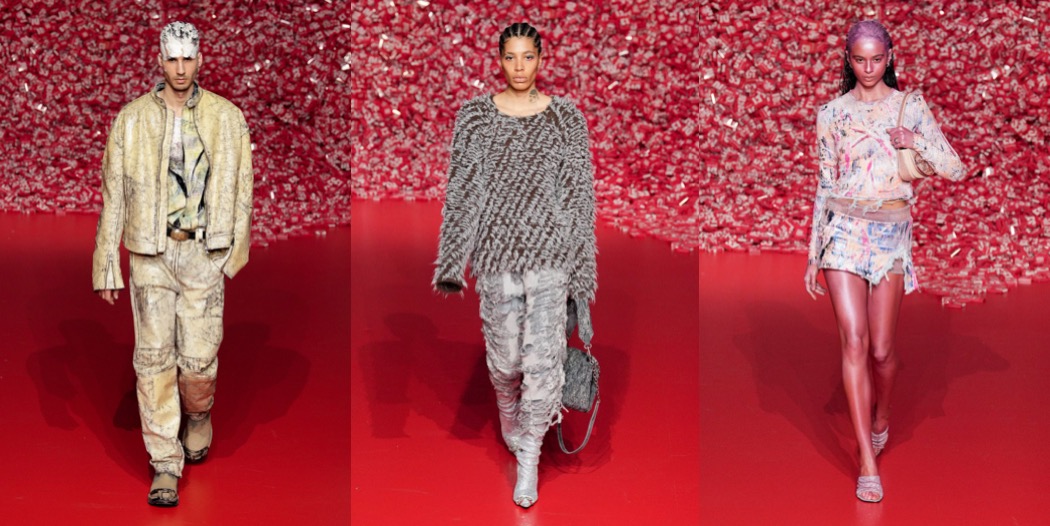
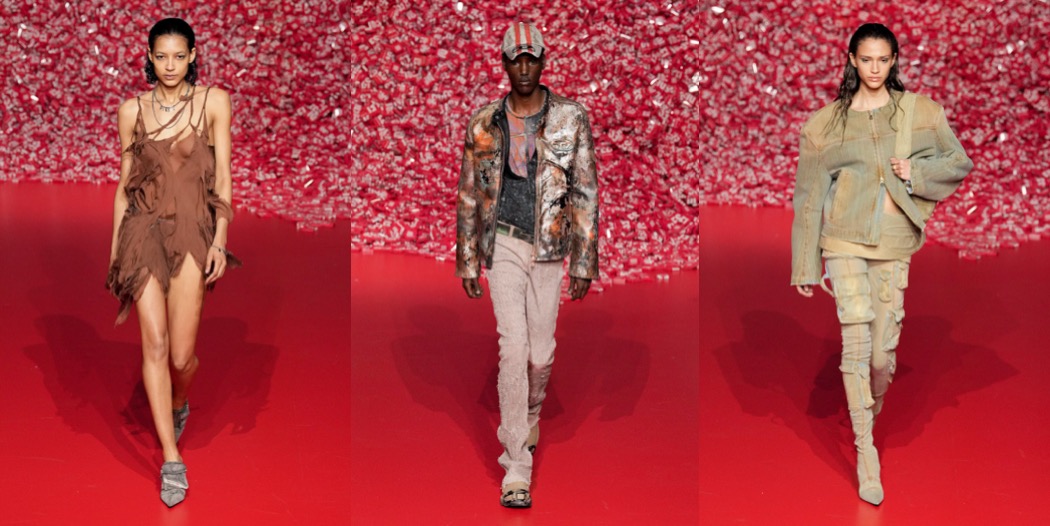
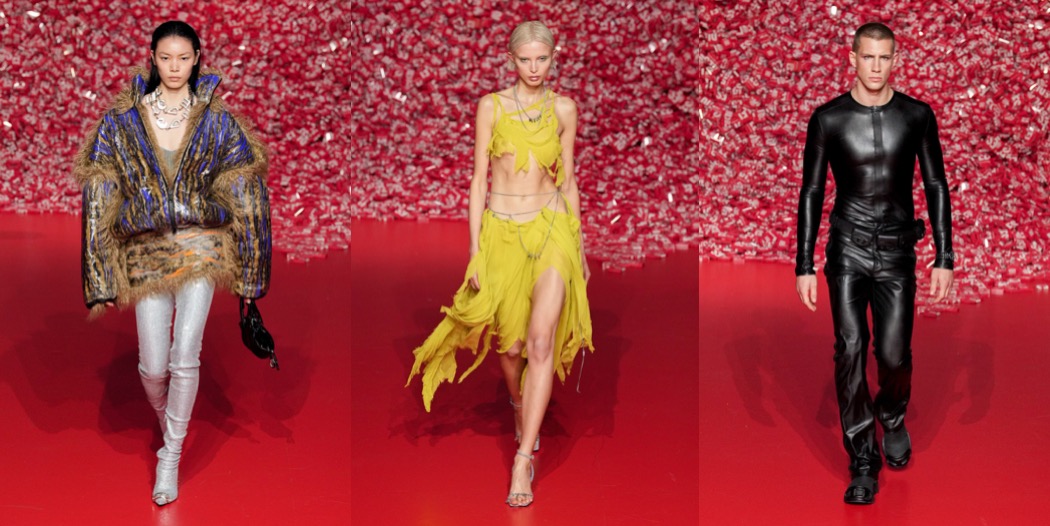
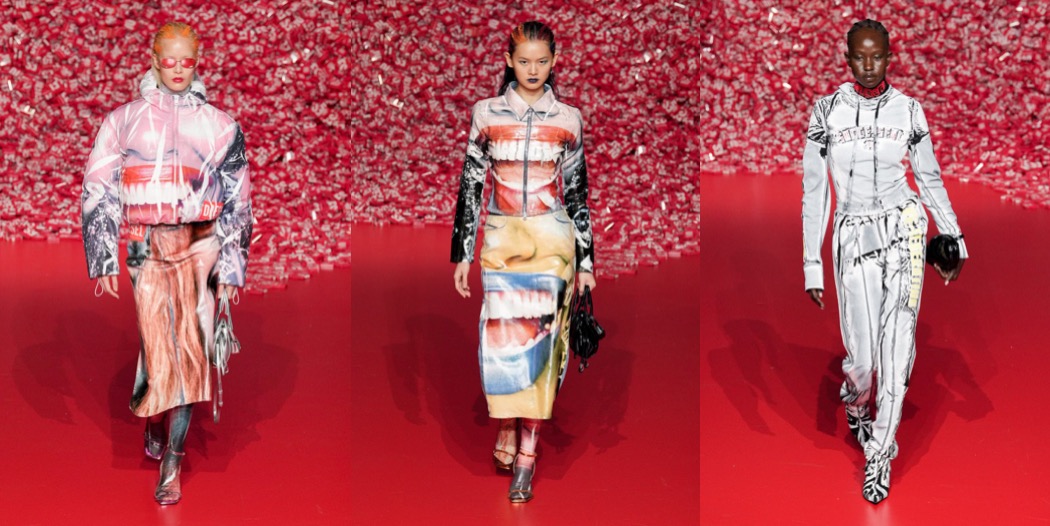
Ecstatic moaning on the soundtrack and 200,000 boxes of Durex condoms on the runway both suggested that Glenn Martens will deliver a sex-positive Diesel collection. Before the autumn-winter 2023 show, the designer stated that in April the brand would be handing out half a million free company-branded Durex prophylactics in its stores around the world, promoting fun and safety. “We are a very cheeky, straightforward brand”, the designer added. Also cheeky were the first look’s Y2k-inspired low-low rise jeans – whose moto styling accelerated us into this collection. As is de rigueur at this house, denim innovation was front and center. But in overall, the line-up had nothing new to offer, as most of the ideas were recycled from Martens’ first offerings for the brand. Nomadically shaped knitwear had been finely plucked by laser into wild, but cool disrepair. Two cleverly tufted knitwear pieces – one pink on black, the other gray on black – were there to reflect Marten’s stylistic penchant for grown-out hair dye. Painted and over-layered utility wear in a subtly wild paint-splash camo contrasted with double layered jersey pieces from which the outer sometimes was peeled back to reveal the inner. Digitally distorted pictures of over-toothed smiles were used as close up prints on the phase of near-climax fits. The most intriguing pieces of all were from the hand-fashioned artisanal section; these included a long jacket of layered lining and a moto jacket that referred back to the opener artistically melted and then layered with another skin – accidentally vaguely condom-like in consistency – of membrane. Martens said rightly that he believes his Diesel design language is becoming ever more distinctly identifiable.
Collage by Edward Kanarecki. Don’t forget to follow Design & Culture by Ed on Instagram!
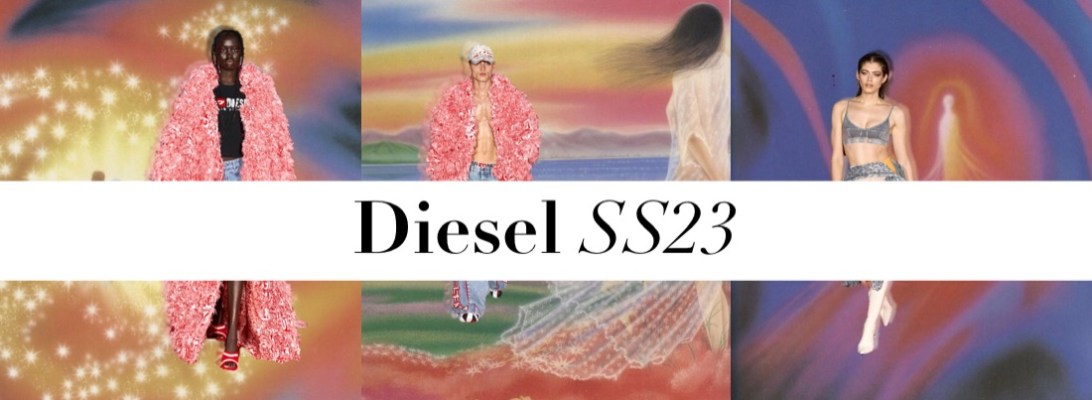
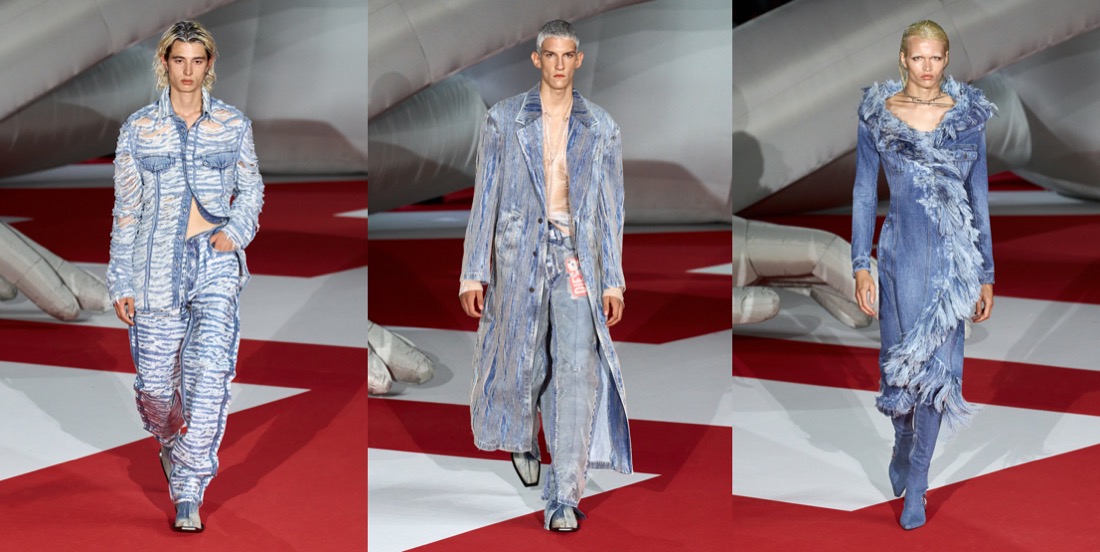
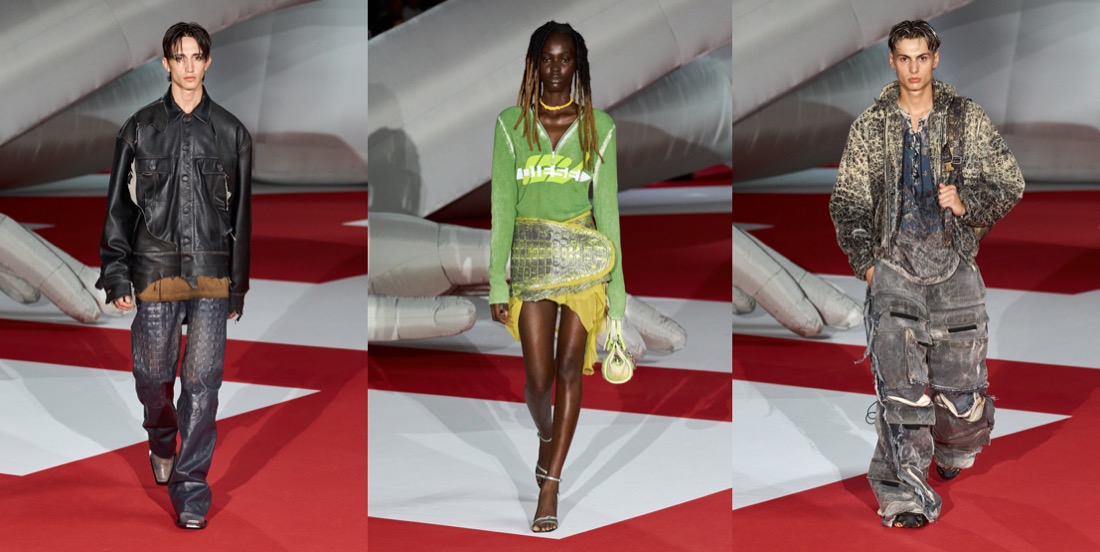
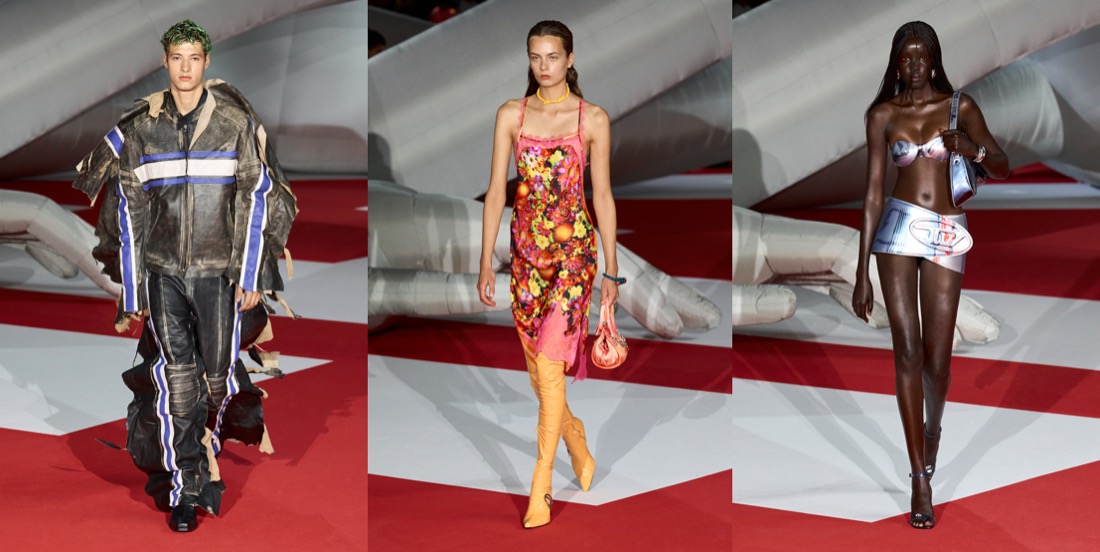
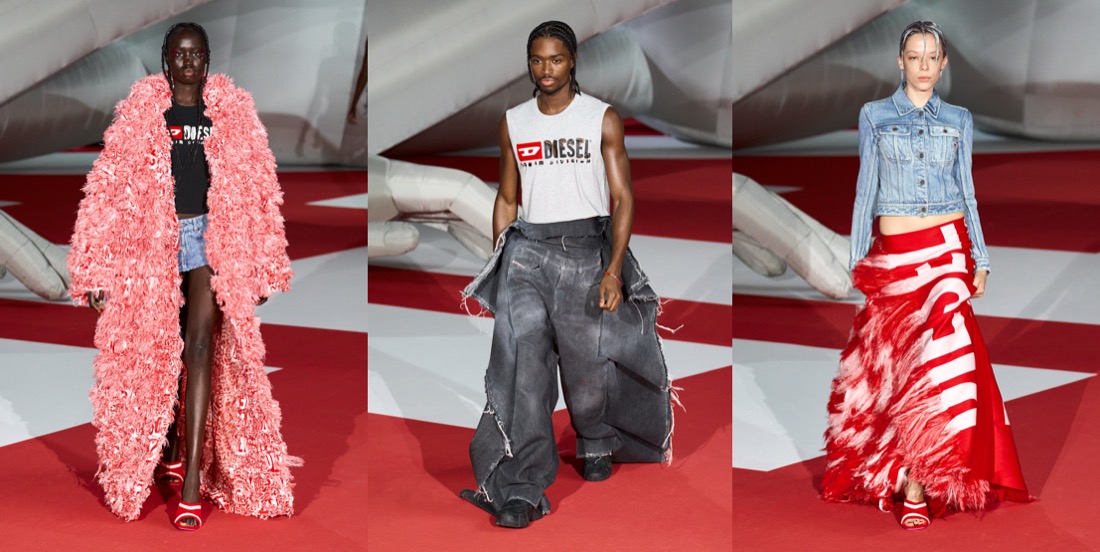
The energy at Diesel‘s spring-summer 2023 fashion show was… big. The brand’s creative director, Glenn Martens, claimed that the four inflatable human figures that straddled both each other and the middle of the monumental runway had been certified by Guinness World Records as the largest ever recorded. It was difficult to get an overview, but from my angle they appeared erotically intertwined. That Martens’s invitation came for the second season in a row accompanied by a sex toy – this time a big glass butt plug – further stimulated suspicion that this was their position. Another big statement was the number of people who could attend the show: about 3,000 people had bagged their free tickets online, while a further 1,600 were reserved for students. Most of the 200-ish remaining were there to work or influence. Since his first season at Diesel, Martens has been charged with revitalizing and democratizing Diesel. Fittingly enough, this is partially driven by Renzo Rosso’s ambition to take his company public. Whatever the motivation, this stadium show was powerful evidence of Diesel’s new audience.
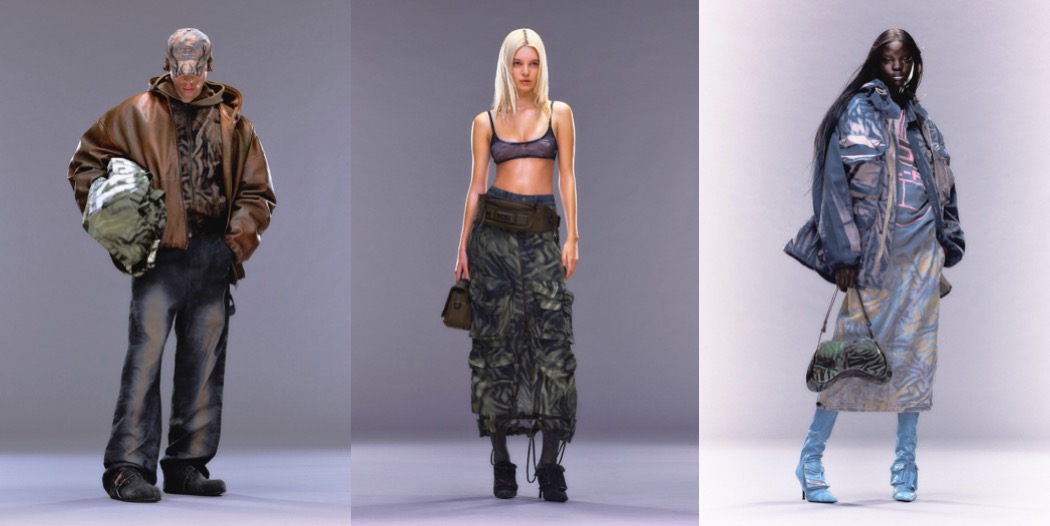
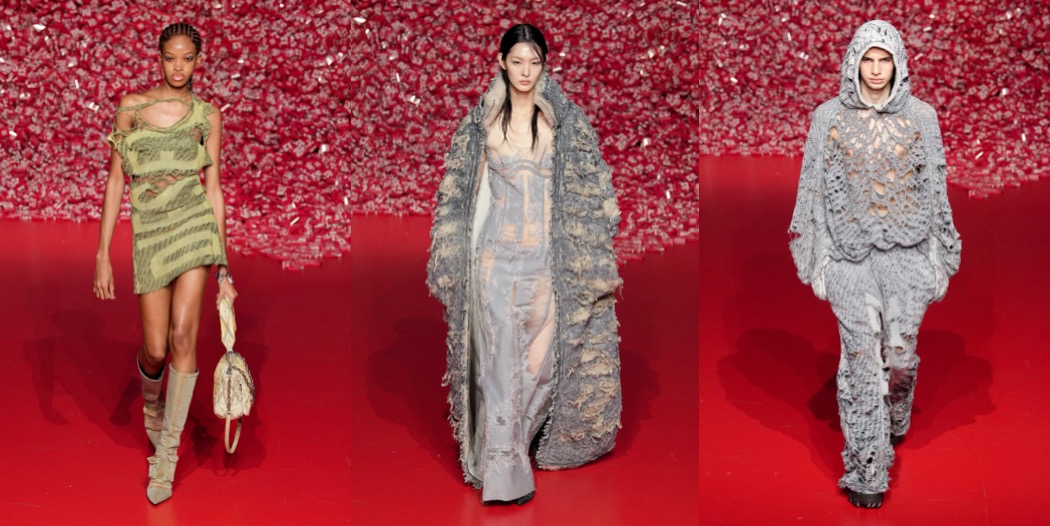
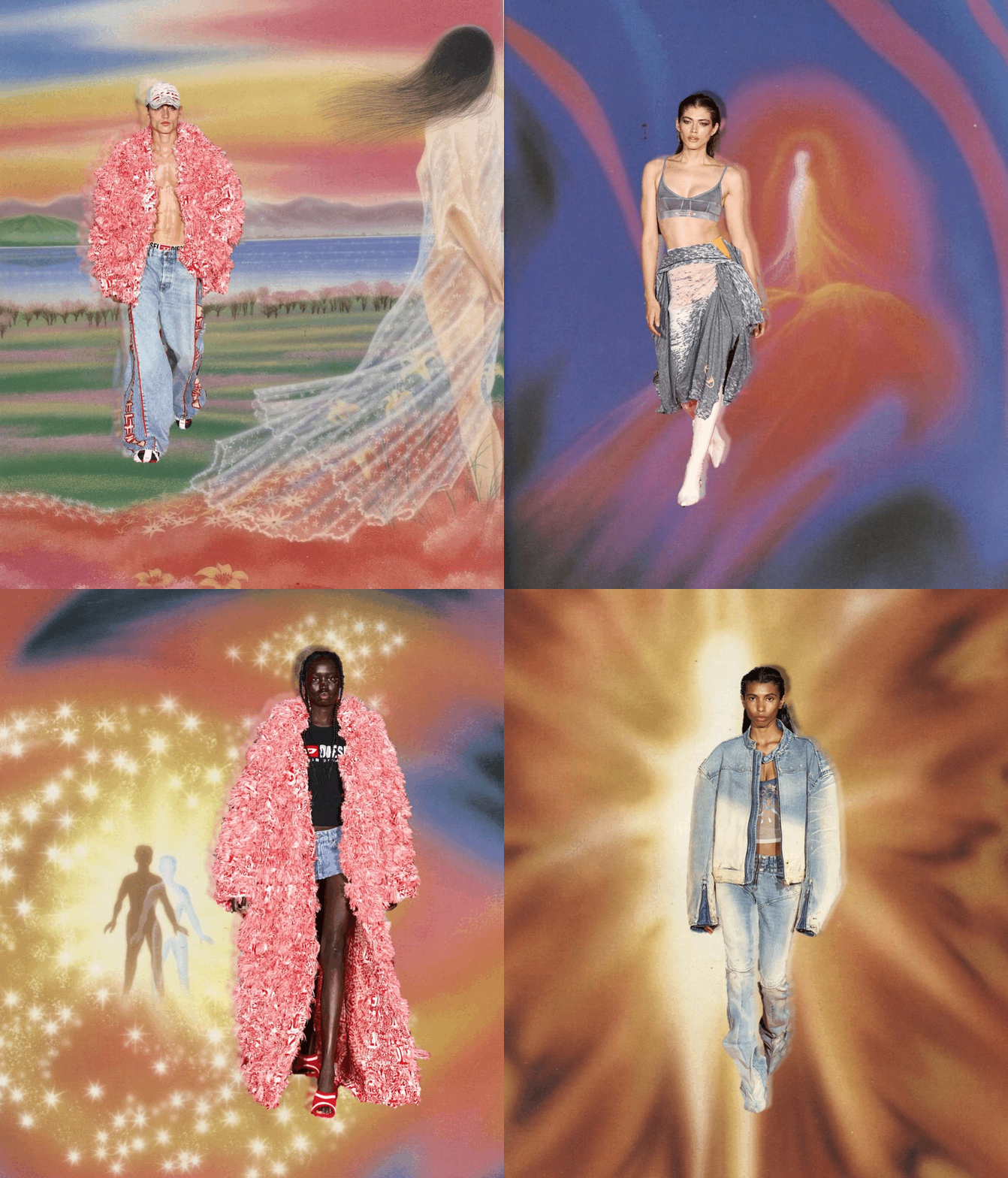
Martens said the collection was divided into four chapters: denim, utilitywear, “pop,” and “extravaganza.” He added: “This is my recipe for Diesel; the four ingredients that I insist upon. Because this is only my second show here, and I think we need to keep showing it.” He said one overlying characteristic of the collection was distress: “All of the pieces are ‘imperfect’ through treatment and design. This is something I like, but it also goes back to that democratic instinct. We know Diesel is a brand for anyone who wants to relate, whoever they are, however they feel; everyone is individual and no two people are the same. Plus the piece is supposed to look ‘broken’ so that you can live with it forever – it is unbreakable.” Diesel’s denim expertise was on full display in this offering. It came layered in tulle, interwoven with lace and organza, or spliced into corsetry. The washes and treatments were manifold: Encrusted with croc-print overlays, reverse-sun-faded, garment-dyed into multiple colors. There was denim jersey and knit denim and flocked denim and fringed denim. Utilitywear included a two-tone olive bomber-and-pants menswear look and a long washed cargo dress, plus a series of nomadically postindustrial ragtag jersey ensembles – streetwear for the postapocalypse. Pop delivered acid-toned racer-back or spaghetti-strap minidresses sometimes garlanded with florals and contrast-colored lace. There was a hilarious black leather moto ensemble that seemed like it had previously been made to fit two wearers at once – back to those conjoined figures – before the second wearer had cut himself free to escape. Martens’s Velcro-fastened strap miniskirt returned in silver, as risky as before. A frayed logo jersey tank top and boob tube – both logo-printed and worn over some trompe l’oeil double-bonded denim pieces in black – signaled the extravaganza. This included two exploded bouclé coats made from torn and tufted Diesel-print fabric and a final, triumphantly tattered house-logo-print skirt south of a trucker.
Collage by Edward Kanarecki. Don’t forget to follow Design & Culture by Ed on Instagram!










 Design & Culture by Ed