
Judy Geib Gold Plated Cushion Cut Colombian Emerald Double Drop Earrings
Simone Rocha Lace-up Crystal-embellished Tulle Bustier Top
Simone Rocha Faux Fur Crisscross Ballerina Flats
Etro Paisley-print Velvet Blazer


In the sea of New York Fashion Week’s collections that deliver mediocrity mixed with business, Elena Velez is an outlier. She is here to disturb the peace. And the system. The spring-summer 2024 fashion show took place at a warehouse in Bushwick. After the finale walk, a handful of the models started a mud fight. Some guests got splattered. Velez enjoys creating such discomfort. The designer gave no interviews after the show. She wanted the spectacle to speak for itself. Instead she let her press notes do the talking. “Where are our antiheroines?” she asked, adding that the collection, titled The Longhouse, was a “ritualistic catharsis to the coddling, histrionic, and moralistic ills of oversocialization.” Maybe the mud fight was a visual representation of our online interactions, which often lack nuance and have little care for context. Velez went on to state that the show was a “creative interpretation of the reorganization of contemporary society around feminine expressions of control and behavioral modeling” and a reaction to a “climate of post-progressivism where resistance to a monolithic cultural paradigm is intensifying.” It’s hard to unpack these ideas. What was clear was Velez’s commentary on contemporary womanhood. “It feels to me like the sanitization and unilateralization of womanhood in popular culture today leaves no room for the nuance and multiplicity we deserve as architects of labyrinthine interior lives,” she wrote. In short, and in plain English, her point is that women can be good and evil, kind and angry, soft and rugged, and passive and aggressive. Velez offers them eveningwear that remains as compelling and striking as ever; a standout was an askew and elongated corset that melted onto the body with a draped skirt covered in silicone latex. But most fascinating were her commercial propositions: waffle-knit tights, zip-up bustiers, canvas jackets and shirting constructed with seams and darts inside out, layered T-shirts, and a terrific cropped bomber jacket with its bust cups slashed in half. You want to meet the woman who wears Velez’s clothes; you might fear her, but you also want to befriend her.


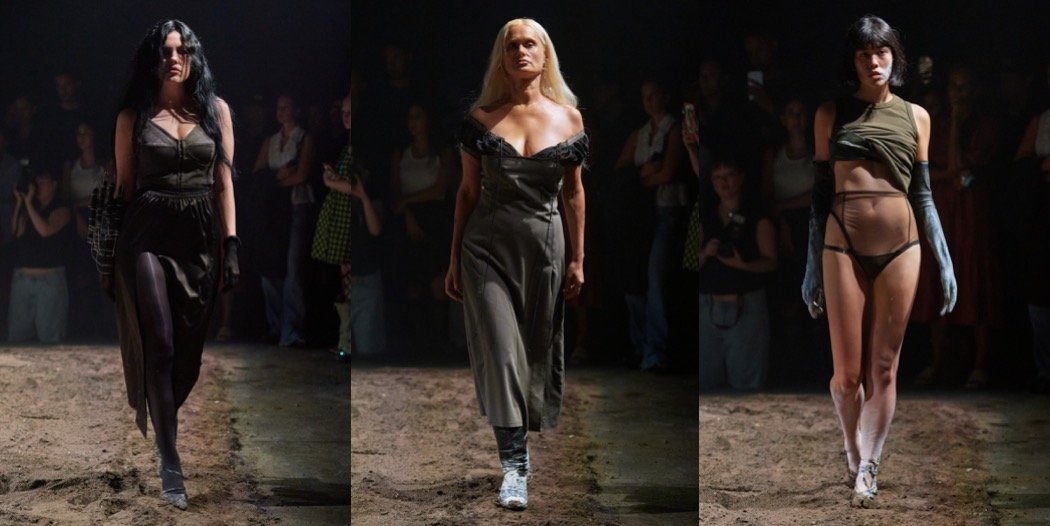

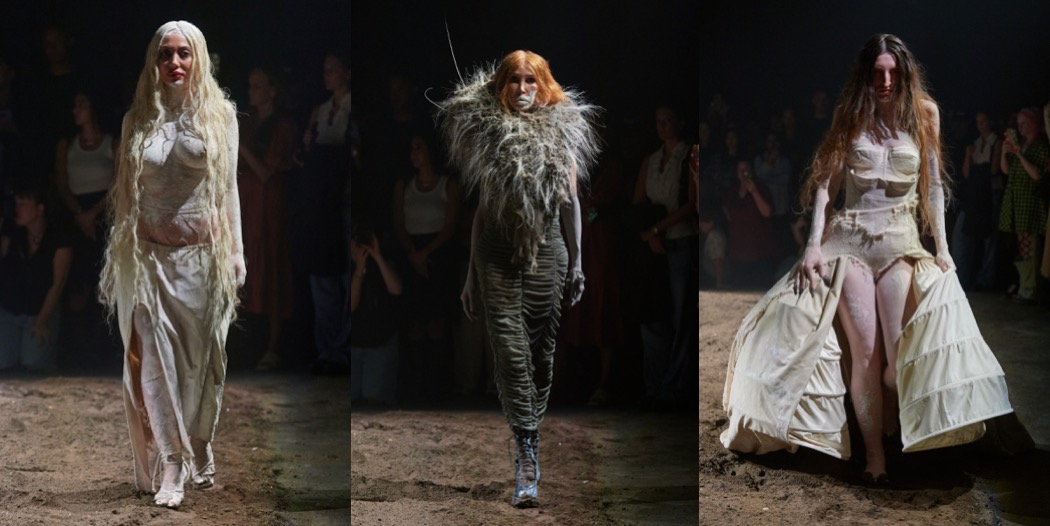
Collage by Edward Kanarecki.
Don’t forget to follow Design & Culture by Ed on Instagram! By the way, did you know that I’ve started a newsletter called Ed’s Dispatch? Click here to subscribe!
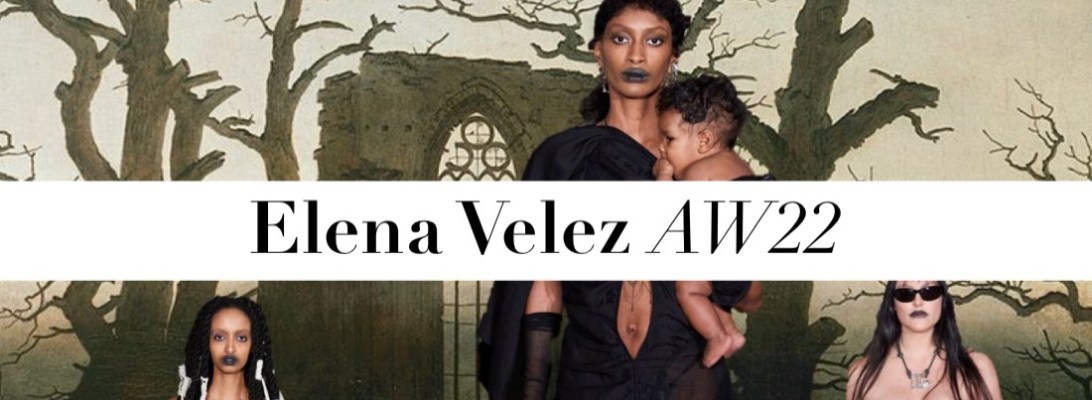
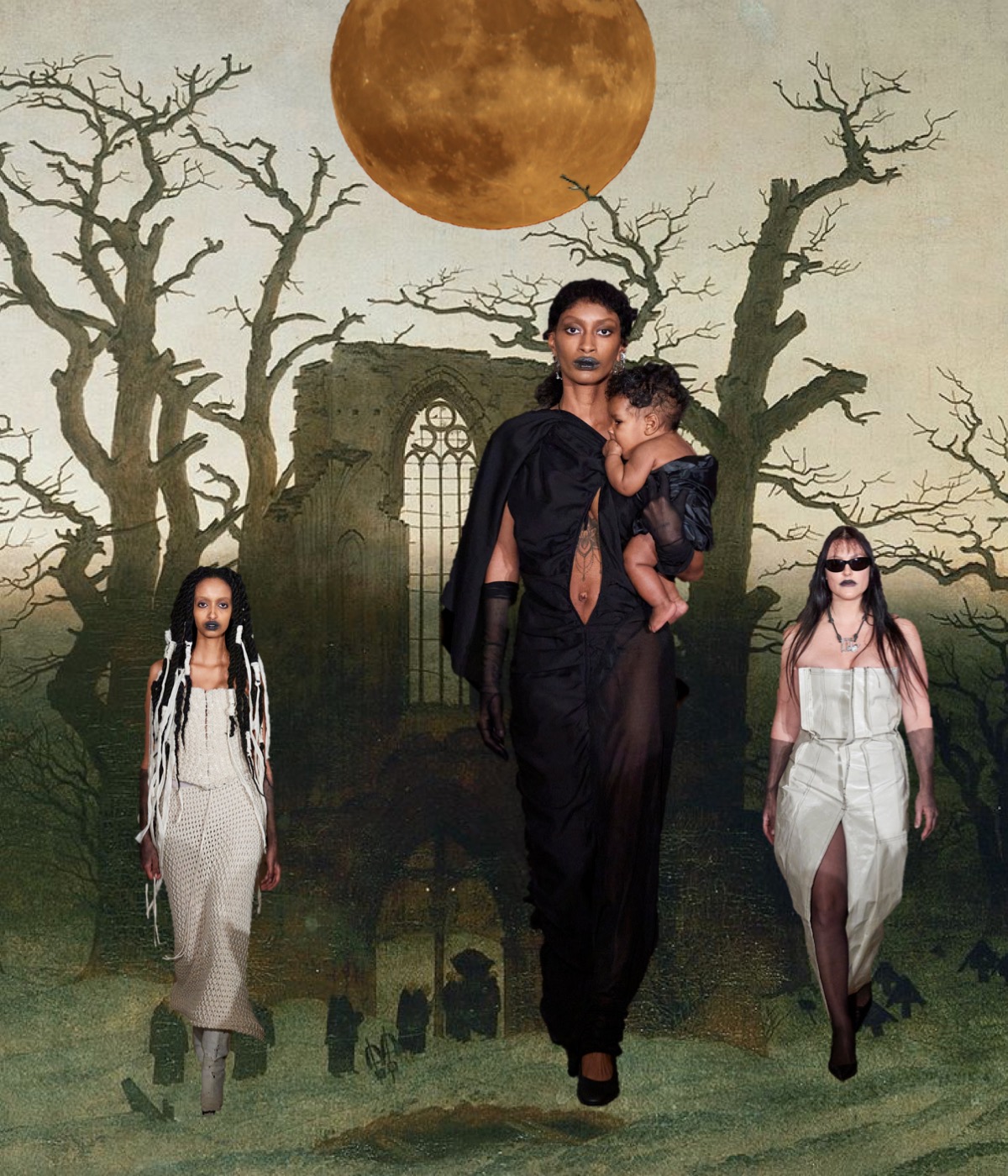
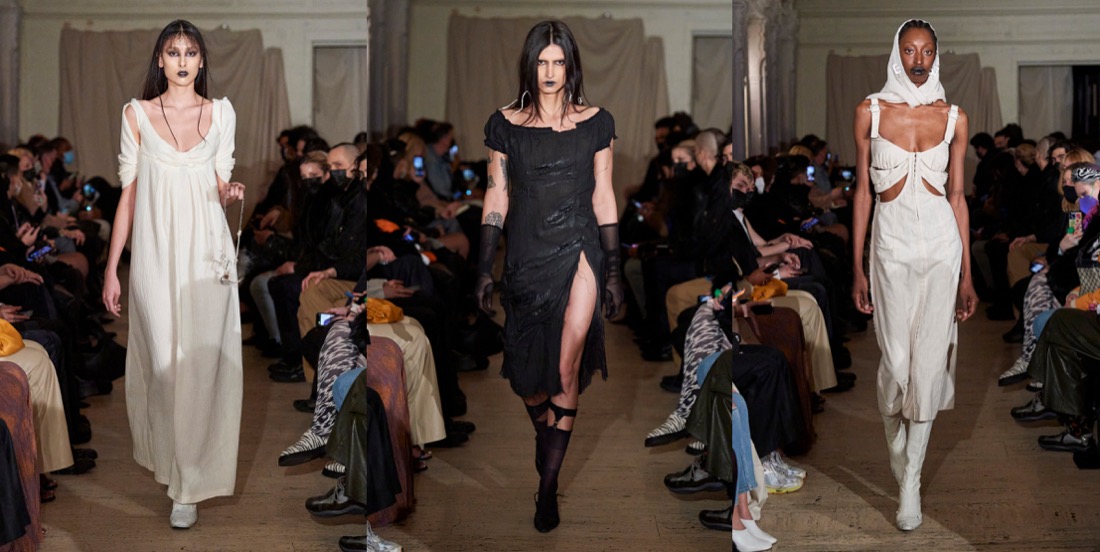
Elena Velez held her show at the Freehand Hotel, transforming its Georgia Room, typically a bar, into a bare-bones space, accompanied by a soundtrack that began with a woman repeating “She was a disgrace to all women.” It was a cheeky way to start off a presentation whose theme celebrated women and their different forms of femininity. As for Velez’s version of femininity, it’s tough and gritty. She’s from Milwaukee, the only child of a single mother who is a ship captain. Velez stresses that she has her own unorthodox perception of womanhood, which, through her creations, has turned out to be wildly confident, a bit aggressive, and very hot. Much of her success can be credited to her great handle on the “tough femininity” dichotomy in her designs. The Parsons graduate uses fabrics that are made to last and have a military-grade toughness. Some of these materials include army canvas, Lake Michigan ship sails (a nod to her mother), and parachutes. More often than not, Velez doesn’t cover the original serial numbers on the fabric but instead keeps them in the final design, another grit-factor addition. According to the designer, the use of these materials is to show tension within womanhood. While Velez stresses toughness in her design ethos, there is no clunk in the pieces. The silhouettes are sensual and curve skimming. Corsets were a theme in the collection, sometimes deconstructed with sliced-off sections. Peasant tops, once romantic and woo-woo, were incredibly alluring, cinched at the waist with a boning motif. Even the long and loose and flowy ivory dresses, which could have been the nightgown of every bedridden Victorian woman, had sex appeal thanks to the artful way a strap hung off the shoulder or how the boning traced the body. The final image of the collection has all the essense of Velez’ vision: a striking model closed the show while carrying a cherubic baby and wearing a black dress with a sharp oval cutout stretching from the sternum to below the navel. Truly a stunning version of femininity.


Collage by Edward Kanarecki.

 Design & Culture by Ed