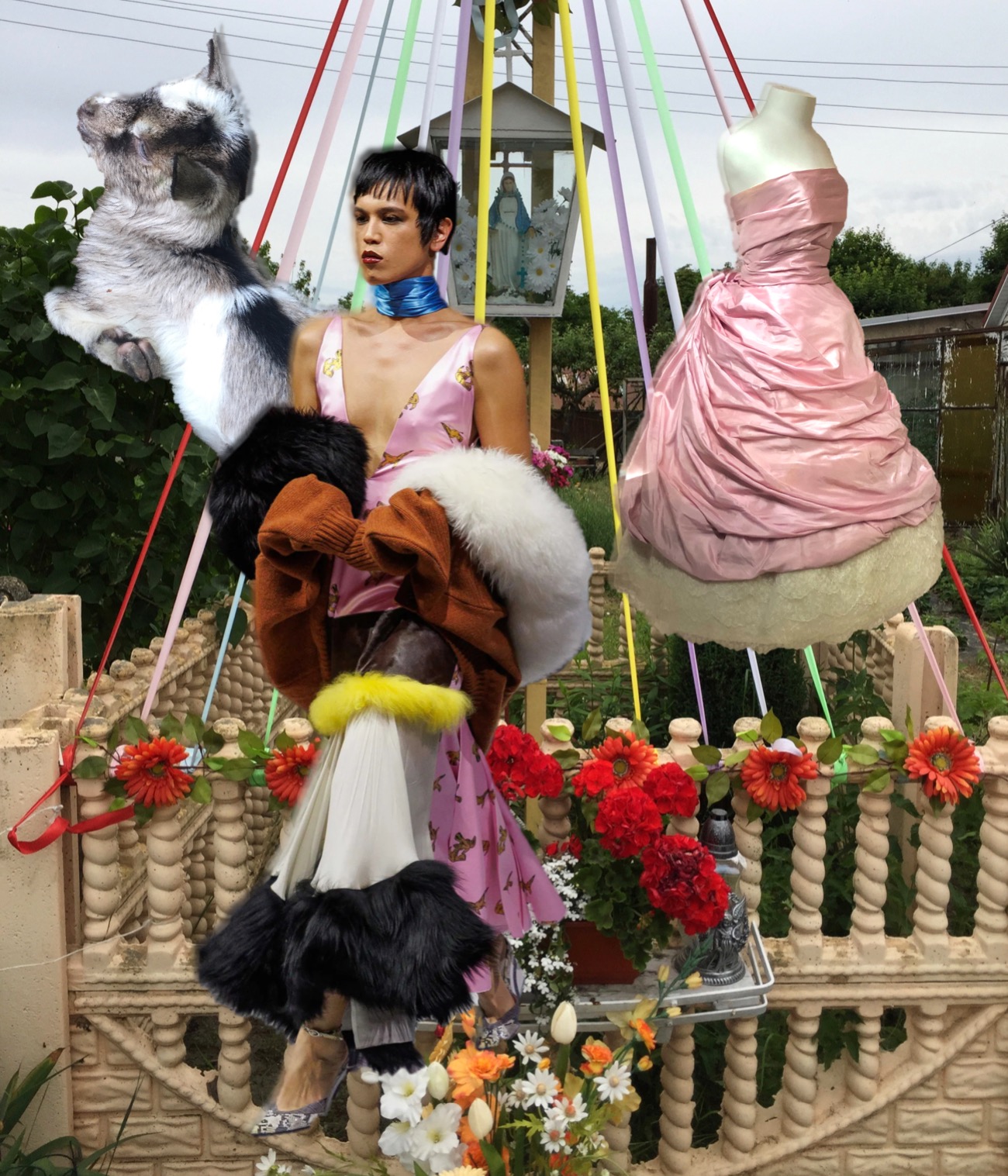
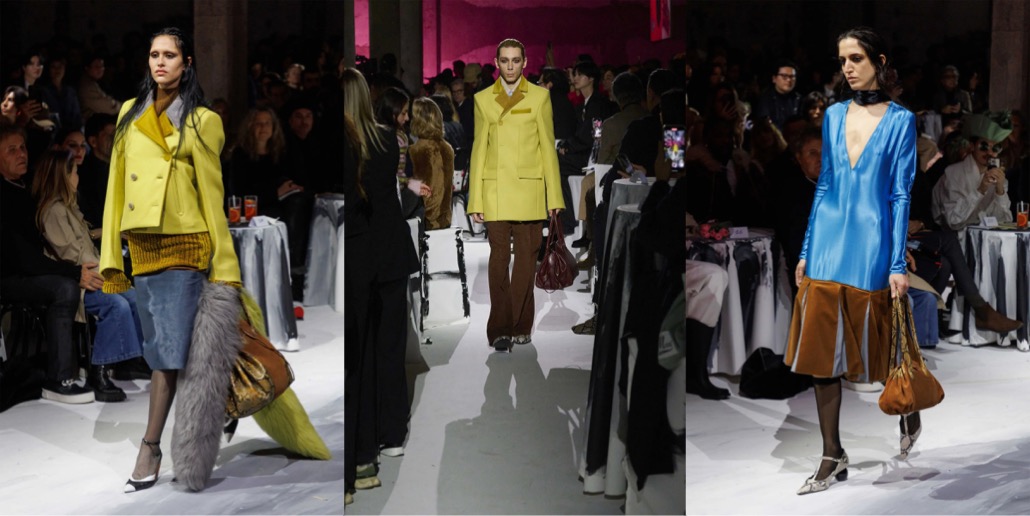
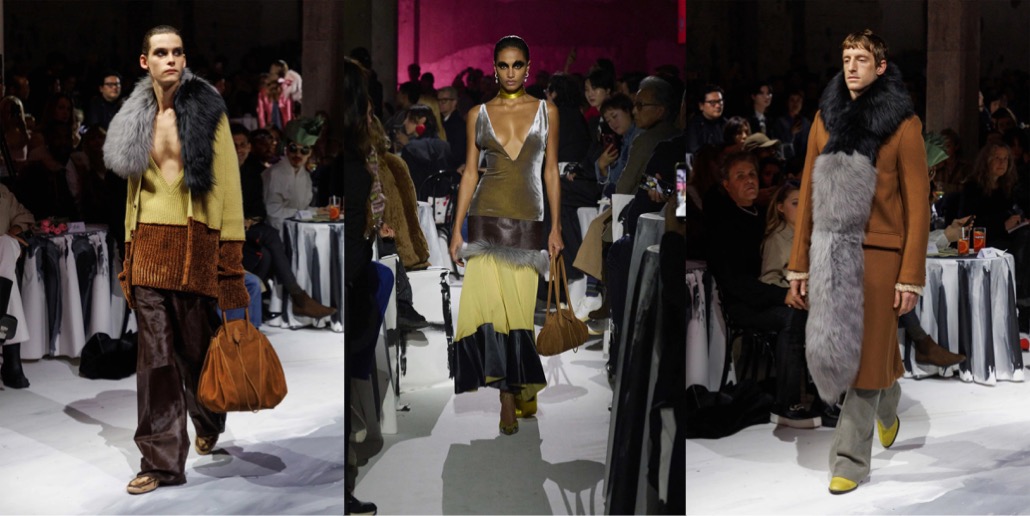
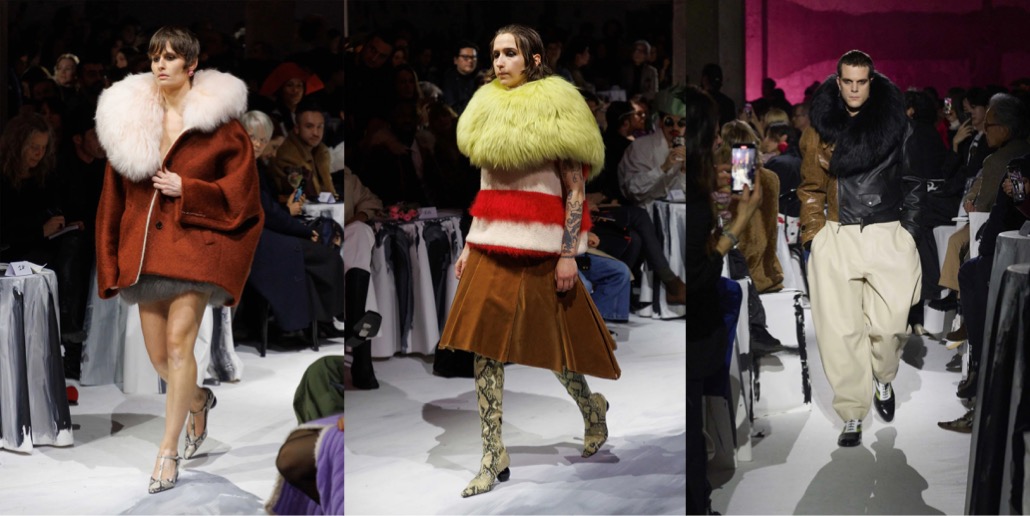
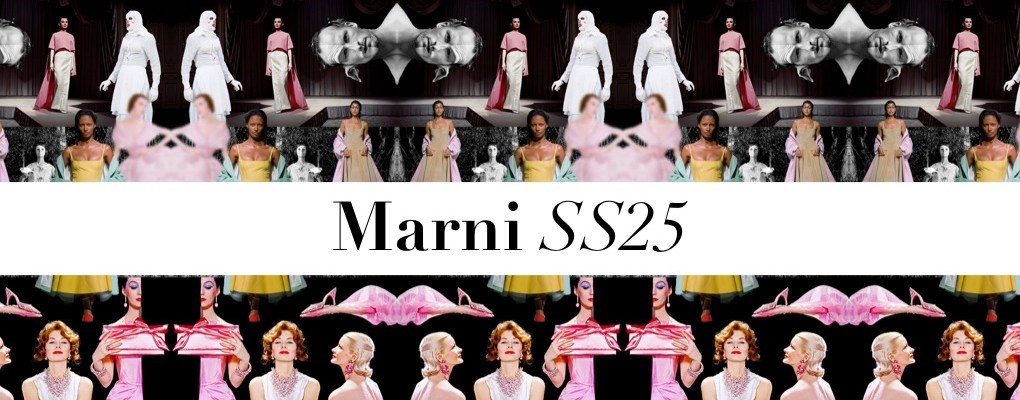
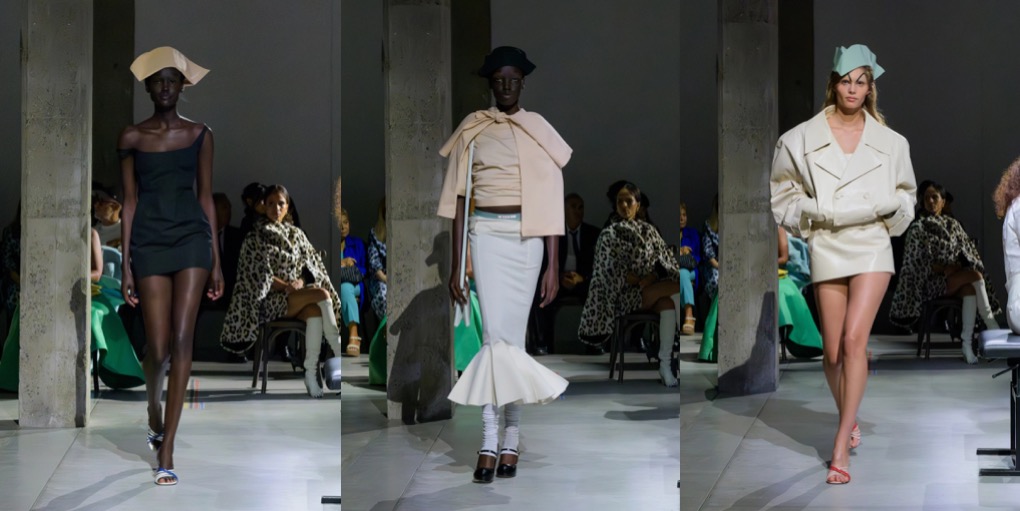
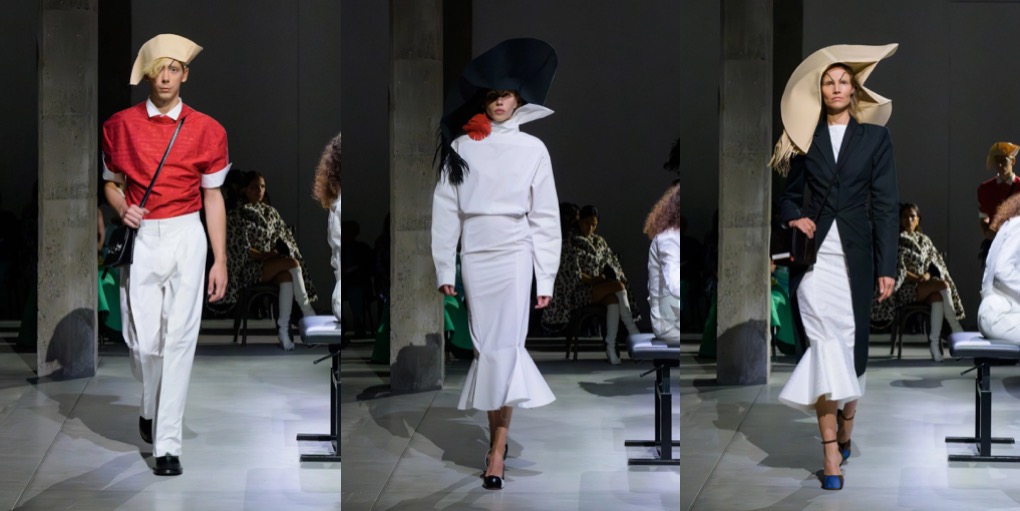
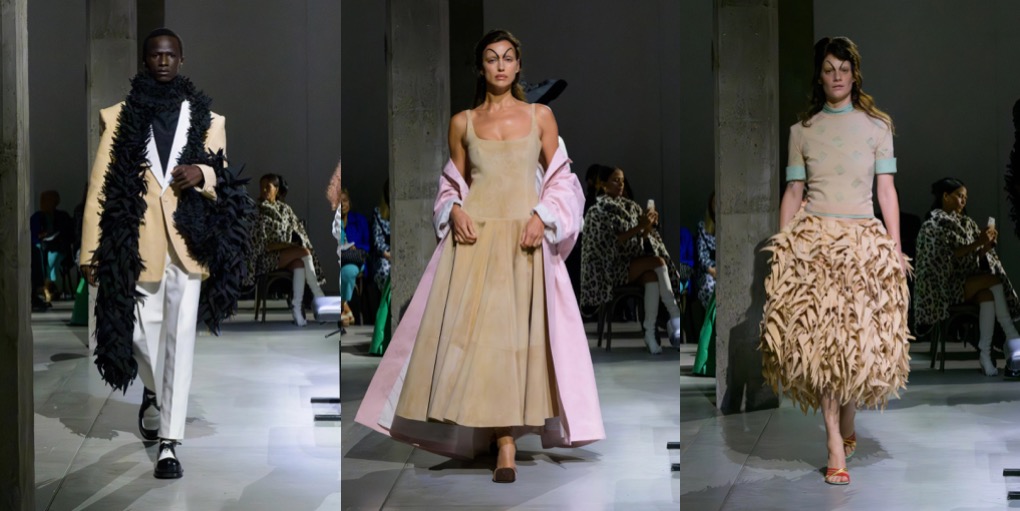
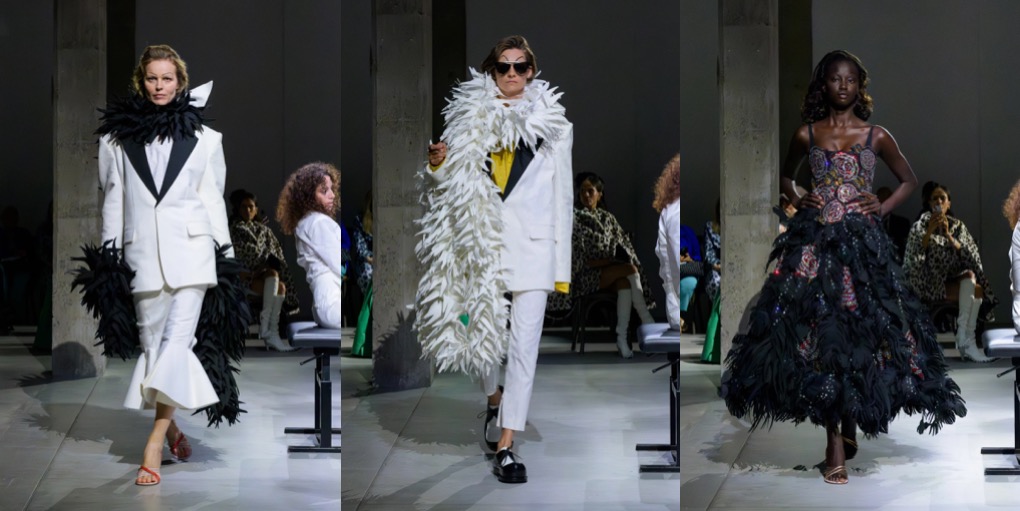
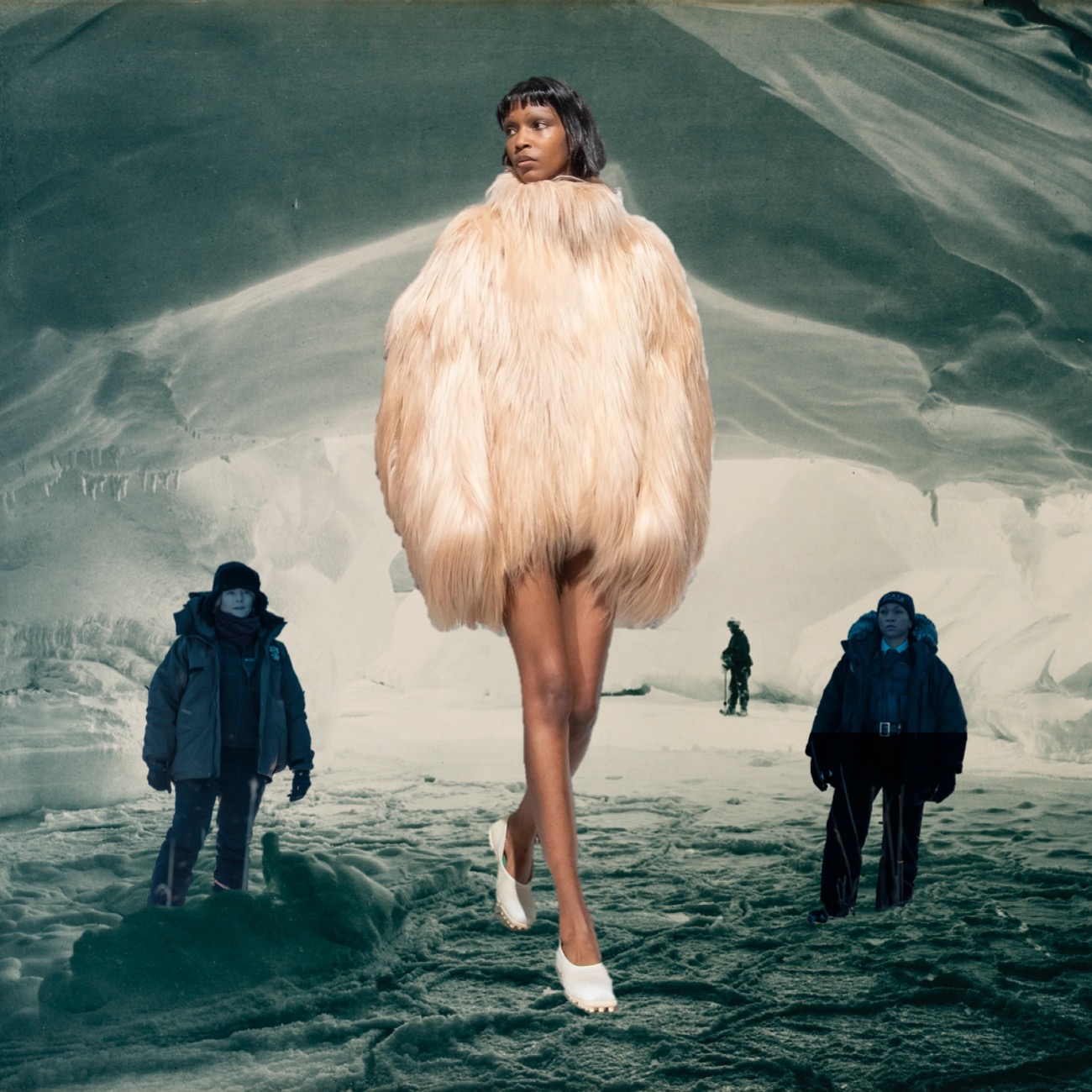
Francesco Risso keeps on being Milan’s enfant terrible. His Marni – especially the one we see on the runway, not necessarily in the shops – channels wild exuberance and pursuits nonchalance that feels utterly out of place in the most industrial fashion capital of them all. His artsy approach is always a moment of escapism amidst all the serious brands showing here, and this season the designer fully indulged in this sort of Little Edie mindset. But there’s a fine line between experimental bravery and looking like an art school project. This season, I didn’t entirely buy into Risso’s fussy, unflattering-looking fantasy.
Collage by Edward Kanarecki. Don’t forget to follow Design & Culture by Ed on Instagram!
Hey, did you know about my newsletter – Ed’s Dispatch? Click here to subscribe!
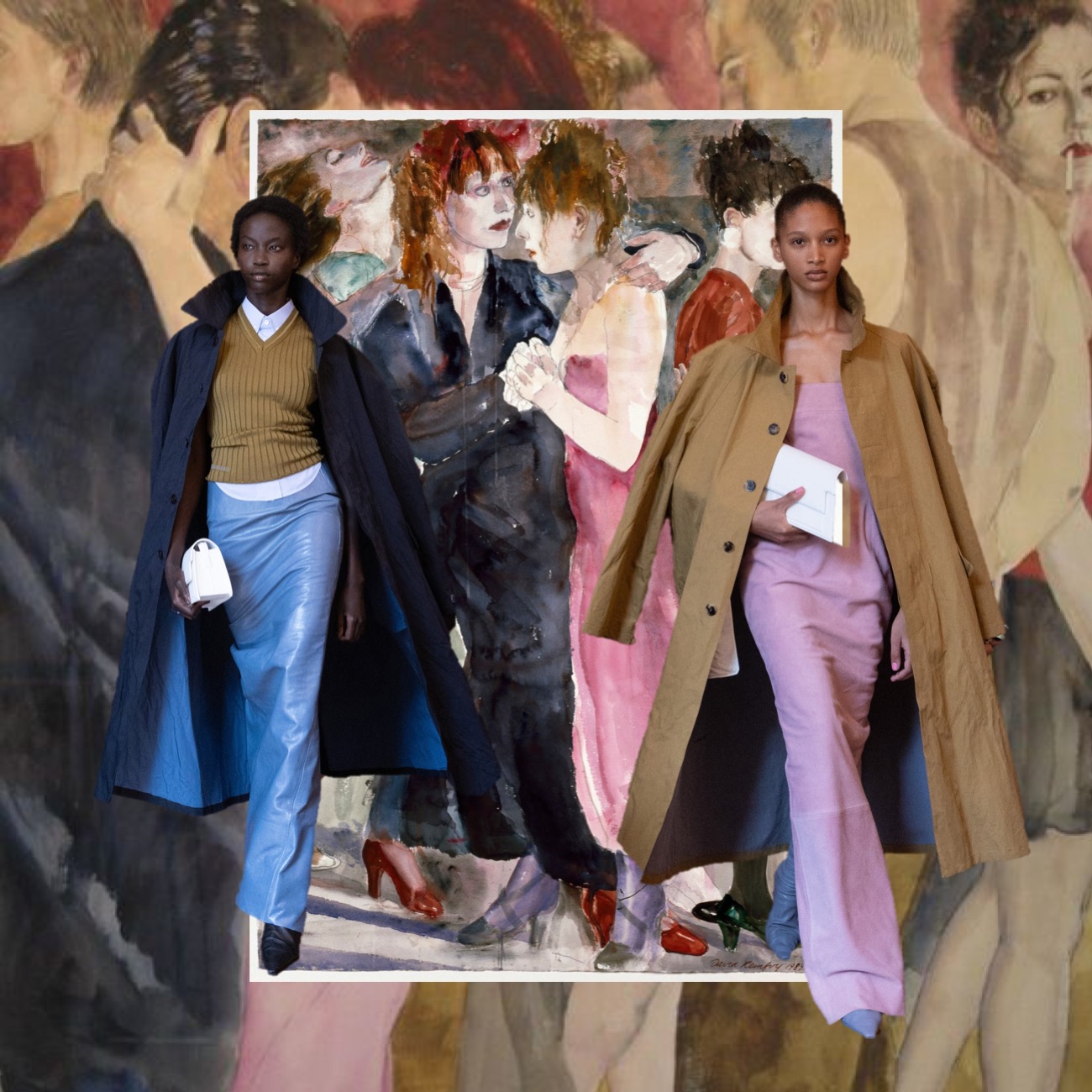
It’s Francesco Risso‘s ninth year at Marni. His work at the brand took different turns, from being avant-garde-sketchy to raw and crude (like last season). Spring-summer 2025 was a pursuit after beauty. “Beauty is a white rabbit,” said Risso backstage. “You chase it, though you fall short in capturing it.” But he actually took grasp of it, especially in closing part of the collection, inspired with bygone era of fashion shows and 1950s haute couture, through a lens of “Funny Face“. Slender silhouettes in soft hues, small hourglass dresses shaped by vertical pleats, tight siren skirts with stiff ruched hems – this is Marni that will certainly attract the clients to the stores. But this wouldn’t be Risso’s Marni if it was all pretty and prim. The collection was made of humble cotton, being a “thread that mends relationships and wounds, guiding us back to the right path after we’ve strayed and leading us toward what I call the essential beauty routine“. The seemingly rough, canvas texture of broad-shouldered jackets, pleated trousers and cut-out skirts gave the collection a sense of “work in progress“. In Risso’s world, beauty isn’t a constant. It’s something you look out for with patience and perseverance.
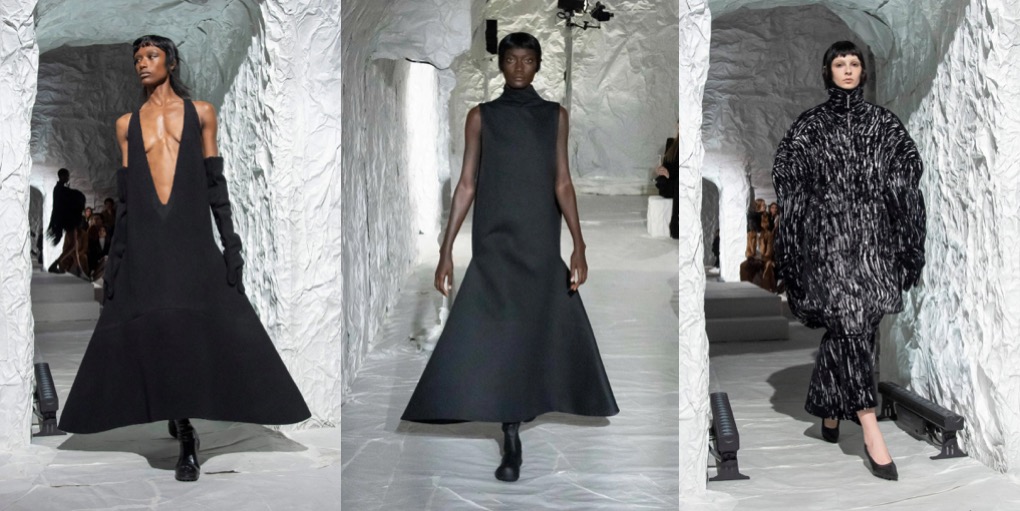
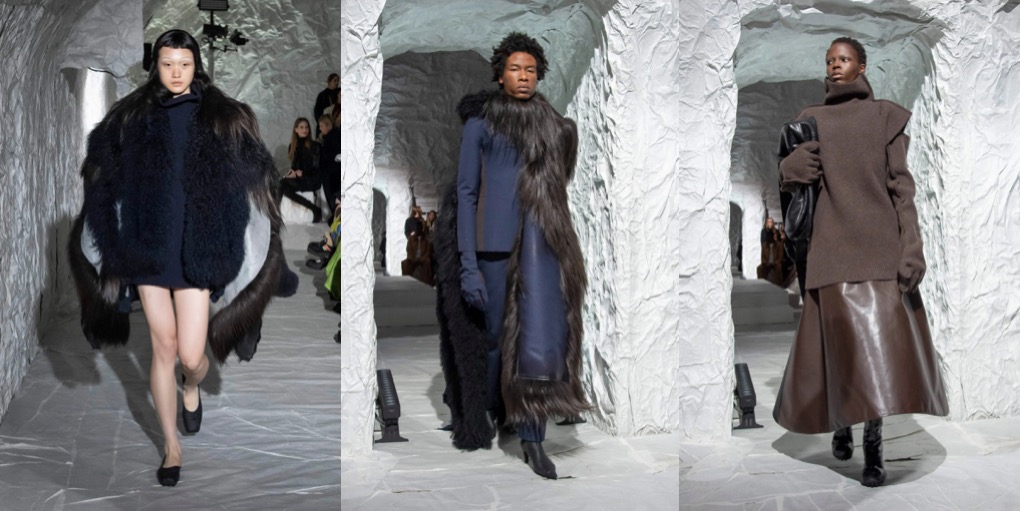
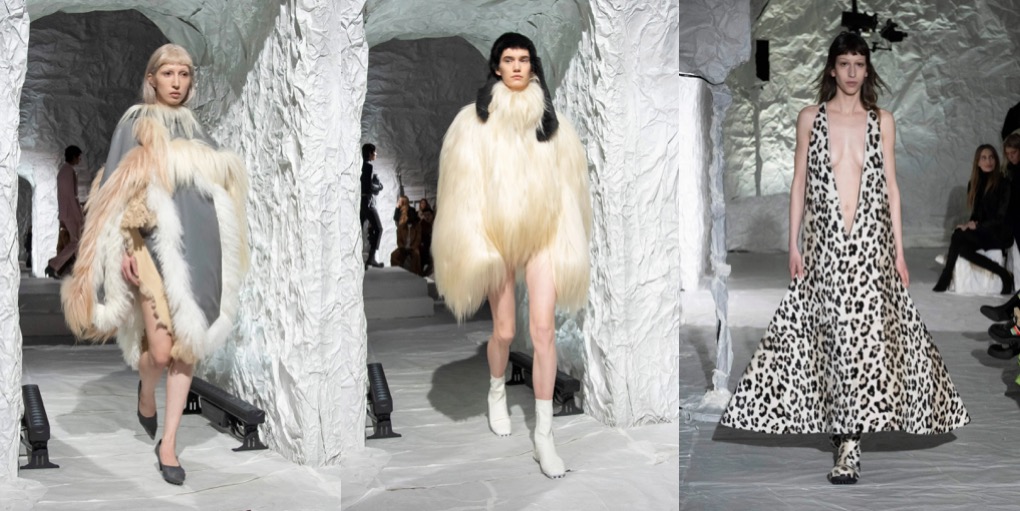
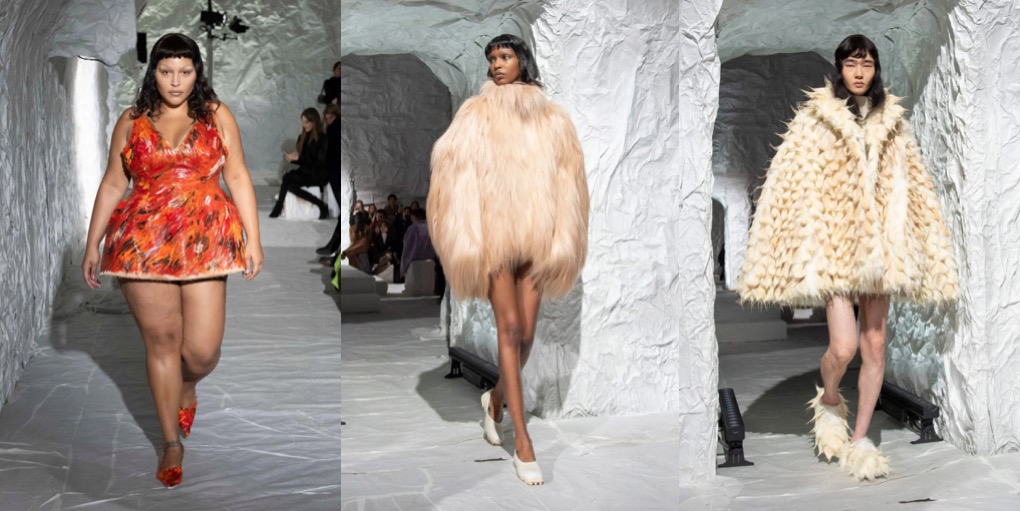
Primal. Animalistic. Rough. Those are just couple of words that seem to describe Francesco Risso‘s latest Marni collection, but not entirely. Crude. Instinctual. Dada. Presented in a cavernous space located in one of the tunnels sneaking under Milan’s Stazione Centrale, entirely plastered in white paper, the collection itself started with the idea of tabula rasa. To prep for this collection, Risso and his team gave the same white-paper treatment to their studio at Marni headquarters, lining every surface as to make them disappear, in a radical attempt to keep out visual distractions, banning images, moodboards, or any excess of conceptual stimuli. Working without visual references brought to the surface an equally radical design practice. Shapes and volumes were stripped of everything superfluous, and returned to a state of purity, taking away all unneeded information, noise. Pockets, buttons, darts, and any detail that wasn’t necessary to glorify “the soul of the shape” were hidden or “reduced to shadows.” In an extreme attempt to dematerialize the shape itself, surfaces of capes, bell-shaped dresses and ball-coats were almost concealed under thick glazed layers of curly gestural paint. The textures of furry blousons were gelled and then hand painted to achieve a spiky, feathery finish; the surface of an egg-shaped parka in black flocked velvet was covered in printed scribbles as if to erase it with frantic urge, “Erased De Kooning Drawing” by Robert Rauschenberg kind of way. This collection was one of the most intense moments of Milan Fashion Week. But one question prevails: why was Ye (formerly known as Kanye West) in the audience? An unnecessary stimulus that made you question the provocative undertone of this Marni show.
Collage by Edward Kanarecki. Don’t forget to follow Design & Culture by Ed on Instagram!
Hey, did you know about my newsletter – Ed’s Dispatch? Click here to subscribe!
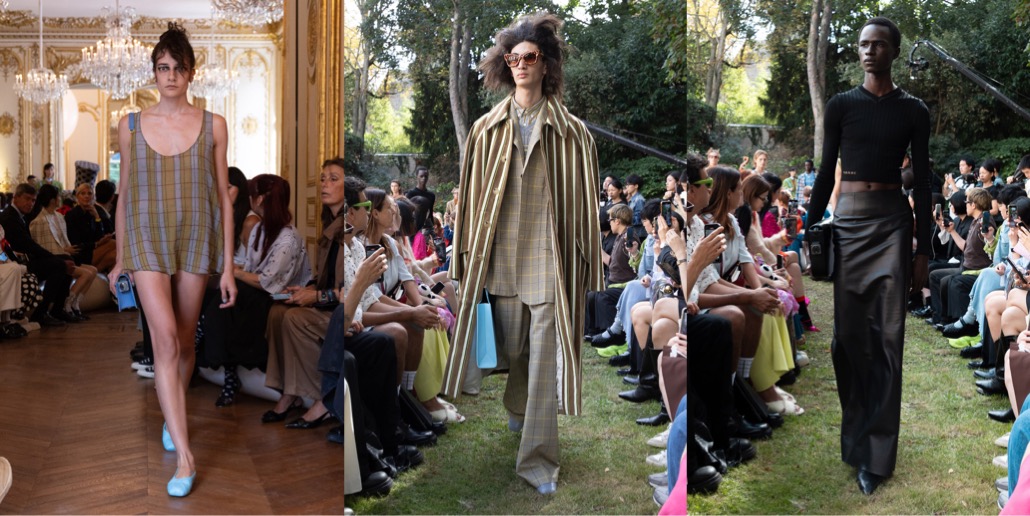
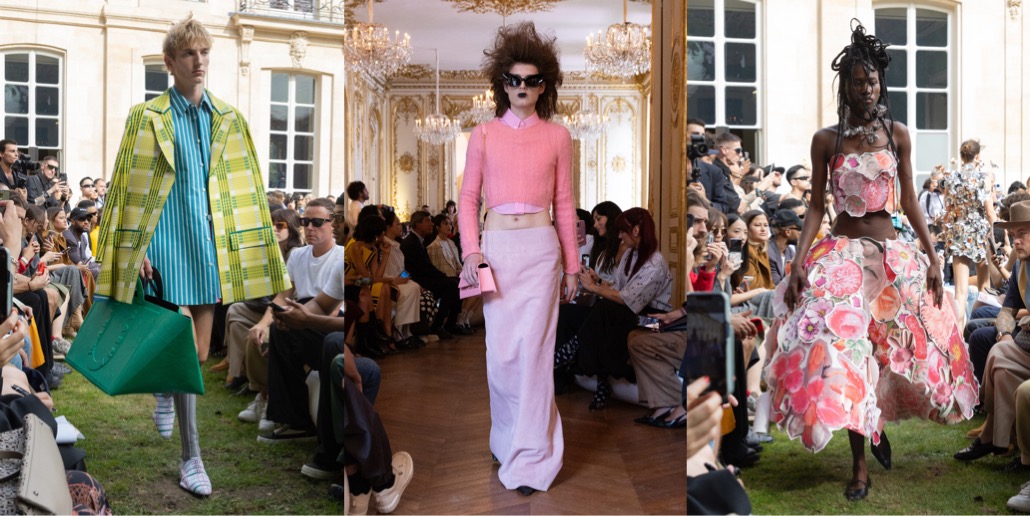
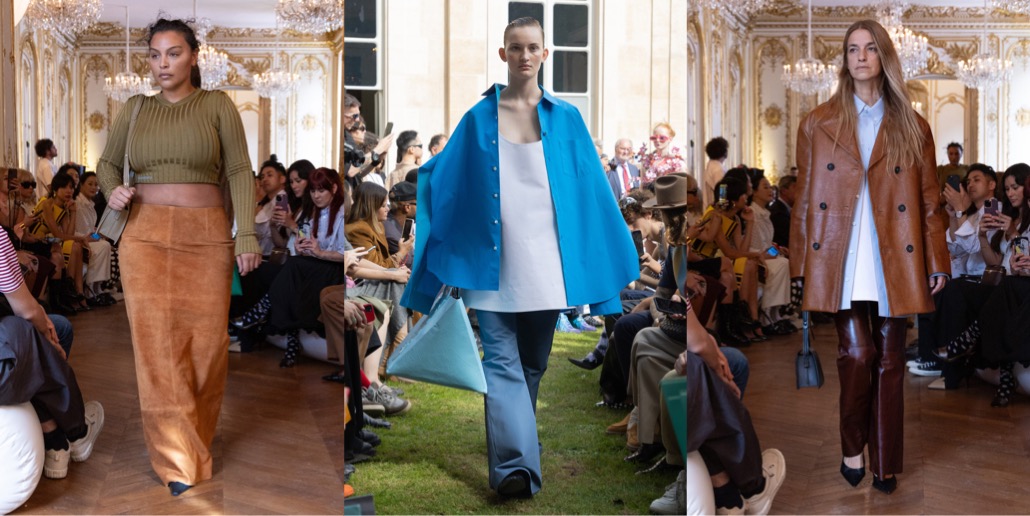
Marni is on a world tour. After New York and Tokyo, Francesco Risso brought his spring-summer 2024 collection to Paris “to continue amplifying connections among our global community. I’m in a flâneur state of mind.” The first time the Italian designer visited the city of lights was when he was 14, and at a party he met by chance “a beautiful creature, who suddenly disappeared, leaving behind only a faint whiff of perfume,” he explained. That subtle French flutter haunted him for years, making him travel to Paris only in the hope of smelling it somewhere again. He never found it, but the magic of Paris was forever imprinted in his memory and olfactory functions. Then, as a teenager, Risso used to visit his friend Serena in Paris at her parents’ house in the chic 7th arrondissement; their neighbor was the late Karl Lagerfeld, whom they spied on obsessively, waiting for him to appear all-black clad in Rue de l’Université “as if he were Michael Jackson.” Recently, scouting for this show’s location, Risso was presented with the possibility of using Lagerfeld’s little Versailles. Et voilà – dots were connected. The private apartments and the formal gardens of the fabulous hôtel particulier where Lagerfeld spent many years were colonized by Marni and its audience. A series of small orchestras, dressed in surgical white vinyl lab coats, performed music by Dev Hynes, a frequent Risso collaborator. The co-ed collection’s flow had a sort of interrupted progression. It started with lean, light, tight-fitting ribbed tube tops in various lengths, to underline the body celebration that’s inherent to Risso’s discourse. Then the show segued into a series of sartorial specimens variously combined: oversize trapeze or boxy-cut tops worn under sharp-tailored trench coats and dusters, paired with straight-cut pants or undulating miniskirts. Most of the pieces were made in soft-bonded techno knitwear to keep their angular shape, rendered into the rainbow-colored combinations of textural checks and stripes that’s a Marni trademark. A few undone crinolines in saturated pastels with apron tops left open at the back and voluminous bell-shaped ankle skirts brushed past the front row, hinting at the obvious reference to the frivolous queen of “let them eat brioches” fame. The crinolines then sort of exploded into the show’s pièces de résistance: a series of exceptional concoctions of fleurs en découpage – visually enchanting, painstakingly handmade creations that Risso called “the ecstasy of the hand.” Hundreds of bright-colored images of flowers, sourced from antique botanical almanacs, were printed on cotton, individually cut out, and then patiently stitched onto bustier dresses with round-shaped crinolines, poufy miniskirts, and a skirt suit with round, jutting shoulders. Adding further wonderment, discarded tin cans were molded into flowers that stemmed, protruded, or sprouted from body-skimming minidresses. “This is the virtuosity of the hand that goes against pervasive virtuality,” said Risso. “We’ve got to undress our mind, and dress up our senses.”
Collage by Edward Kanarecki. Don’t forget to follow Design & Culture by Ed on Instagram! By the way, did you know that I’ve started a newsletter called Ed’s Dispatch? Click here to subscribe!
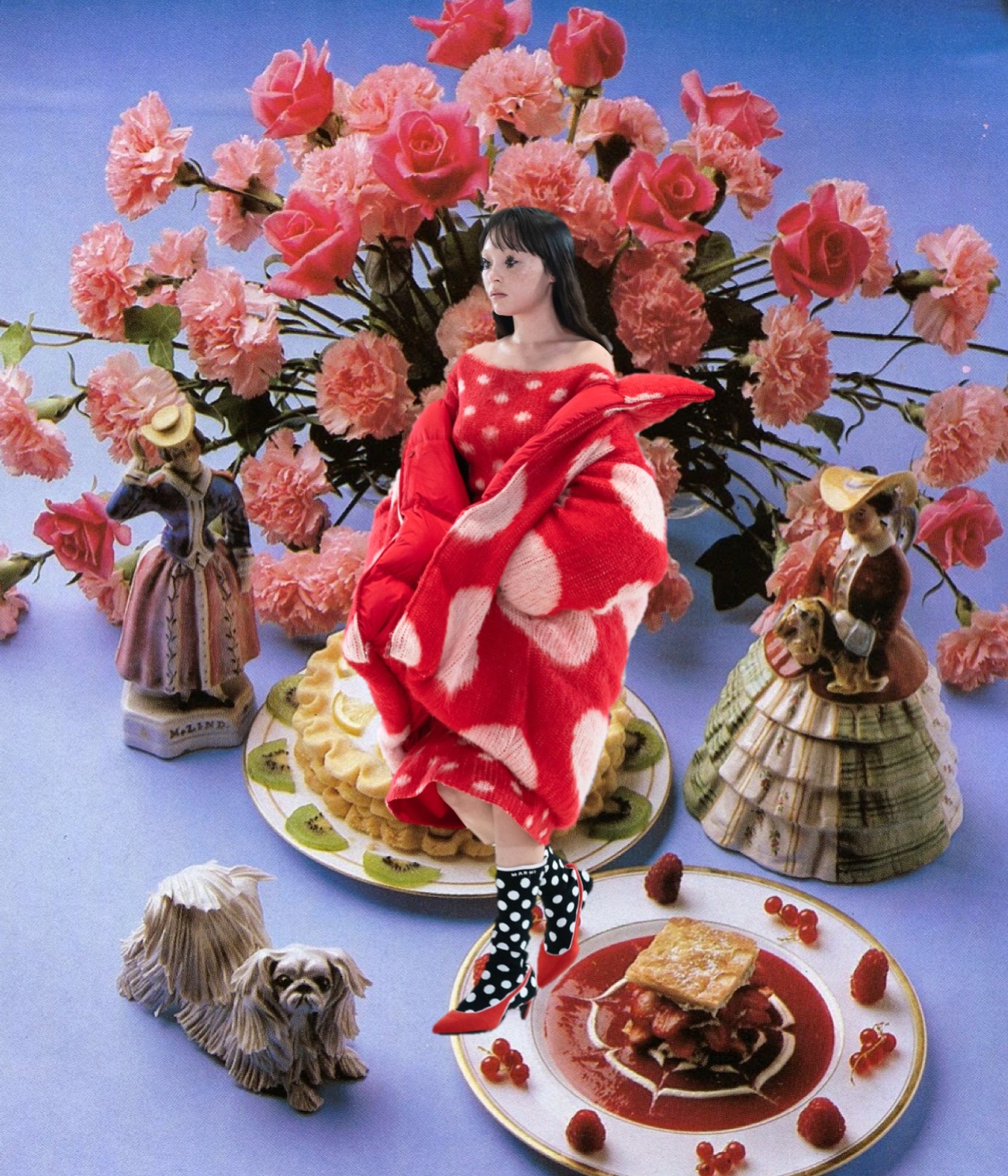
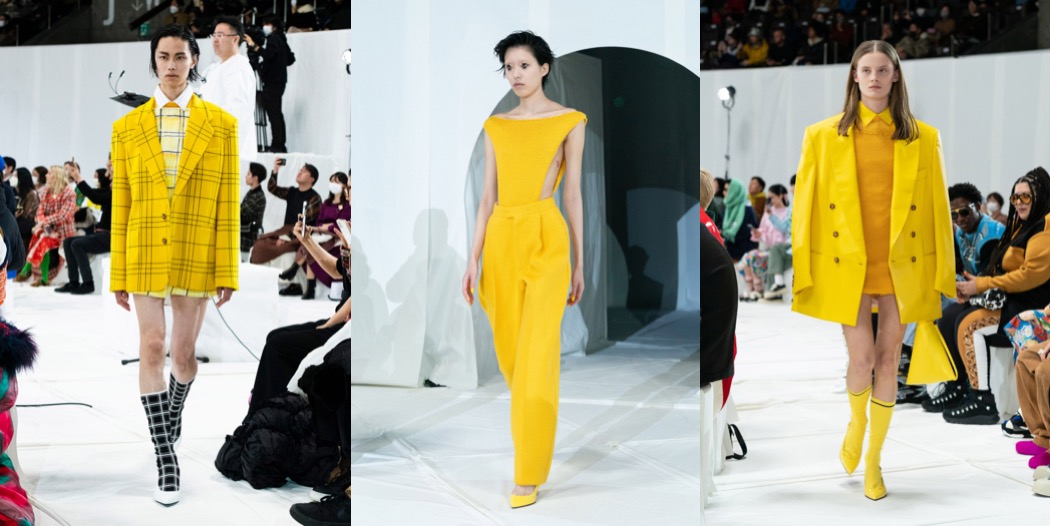
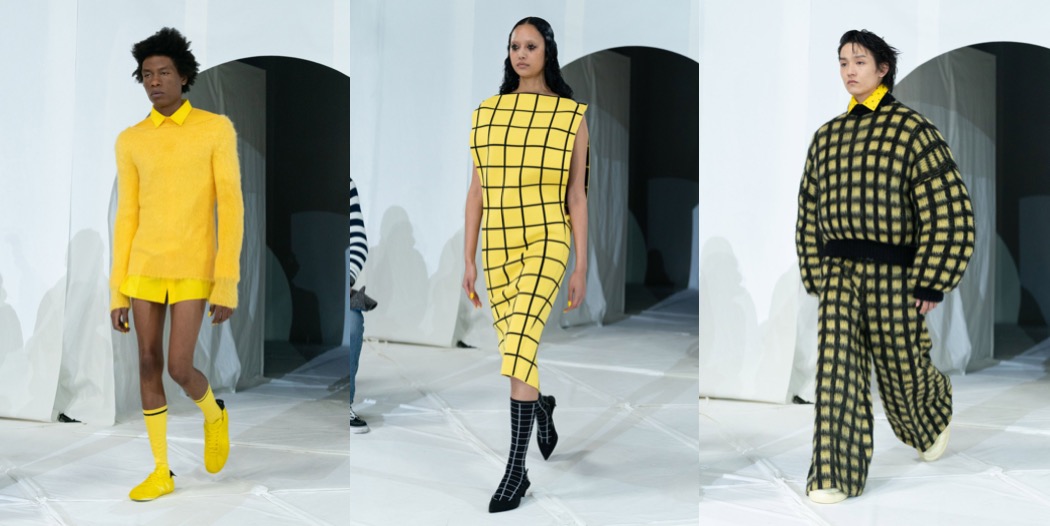
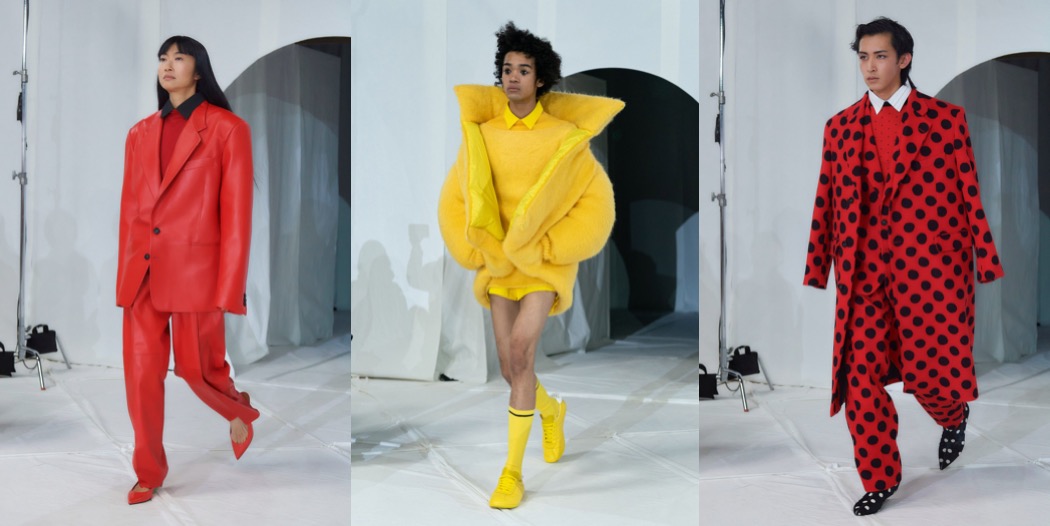
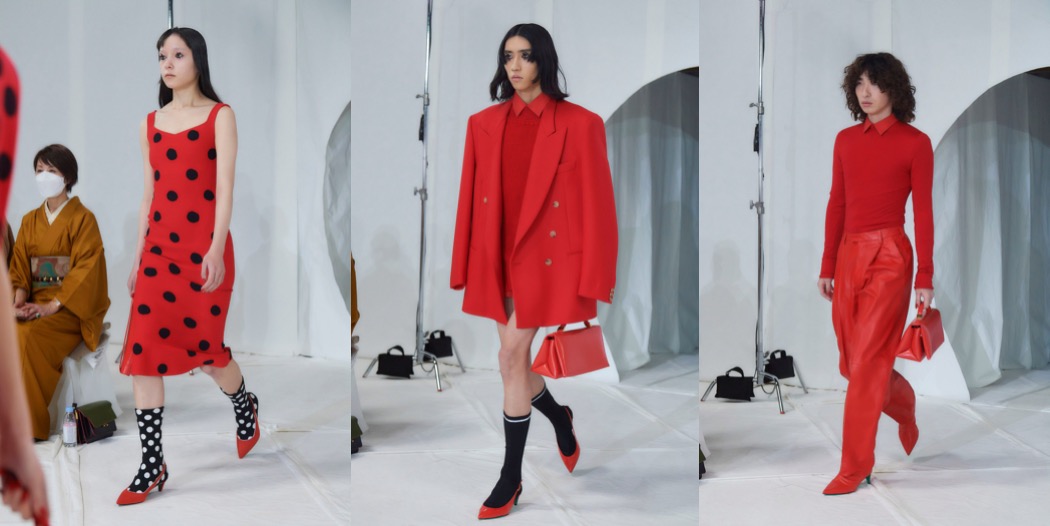
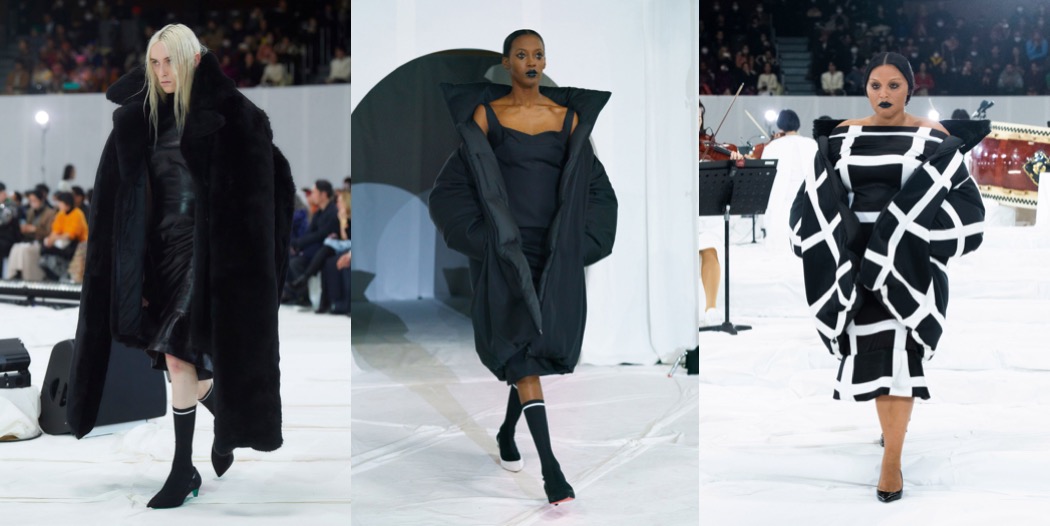
Marni‘s autumn-winter 2023 collection by Francesco Risso felt like a big shift. Not only because it was presented in Tokyo (Marni travels the world – last season, the brand opened New York Fashion Week), although that certainly became a new context for comprehending what this Italian label stands for today. The Yoyogi National Gymnasium, the fashion show’s spectacular venue, was built by the architect Kenzo Tange for the 1964 Summer Olympics. It’s a structure, as Risso pointed out, “both rigorous and intimate – it looks to the future while keeping a feel of enveloping protection, like if you were in a womb.” This way of balancing discipline and humanity, cutting-edge design and domesticity, connects with the soul-searching Risso has been doing on the meaning of making clothes. “Here in Japan I’ve found a profound sense of patience, of stillness, of respect, something that in the West I believe we’re losing.” He continued: “We’re surrounded by futility. After three years of pandemic, where we all have been vocal about the changes we wanted in the system, to slow down, etc., we’re back to square one. We are again devoured by the brutality of the algorithm.”Going back to the love he feels for his metier keeps him grounded. At the show, on each of the paper-covered seats, he left a handwritten letter whose opening line asked: “why do I make clothes?” For the Marni creative director, clothes are living creatures, they touch, breath, move; it’s a love dance, a sentimental relationship: “Because they’re our companions, and there’s more to them than just air kisses. I don’t know if I make clothes that people need, or if I make clothes that need people, or if I make clothes for the people that I urgently need to need the clothes that need them… What I do know is that today we need less and less clothes that are needless.”
White is a non-color that speaks of absence, but also of clarity. It is a carte blanche on which new words are ready to be written. Wrapping the arena in white paper spoke of a desire for simplicity, for reducing noise and distractions. But Risso is no minimalist, and even if he preached rigor and linearity, the collection had presence, density, and punch. He traded his usual slightly bonkers decorations for starker, elemental graphics, and reduced the palette to a few saturated primary colors: yellow and red playing against white and black. Every look was an all-over proposition, and for both men and women in the mostly local cast (plus Marni favorites like Paloma Elsesser and Angel Prost), silhouettes alternated between slender and form-fitting and bulky and bulbous. Tailoring was offered in oversized versions, and knitwear, a Marni forte, had fuzzy mohair surfaces, as in the jumbo round-cut piuminos that were among the collection’s standouts. The swirling, magical motifs of sirens and unicorns of previous outings were nowhere to be seen, replaced instead by kinetic grids and optical checks, and by slightly Yayoi-Kusama-esque bouncing dots of various sizes. Rectangular tunics and angular apron dresses contrasted with form-fitting, heart-shaped bustier dresses that were kept neat rather than sensual. Cocoons in padded leather or wool conveyed enveloping, comforting warmth. “It’s a collection with one foot in tradition and the other in a not-impossible future,” he said backstage. “It’s a sort of rhythmic alternation of proud normality and proud creativity.”
Collage by Edward Kanarecki. Don’t forget to follow Design & Culture by Ed on Instagram!





















 Design & Culture by Ed