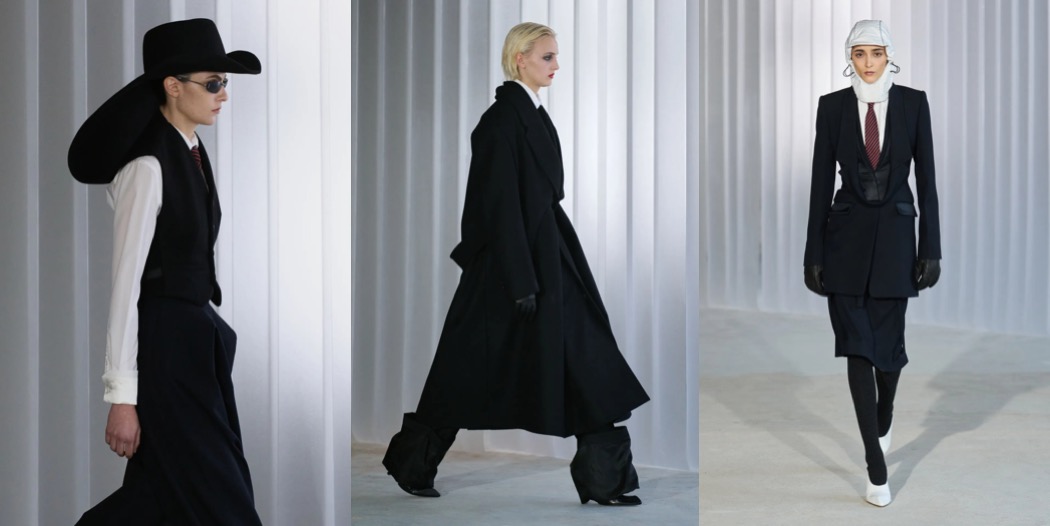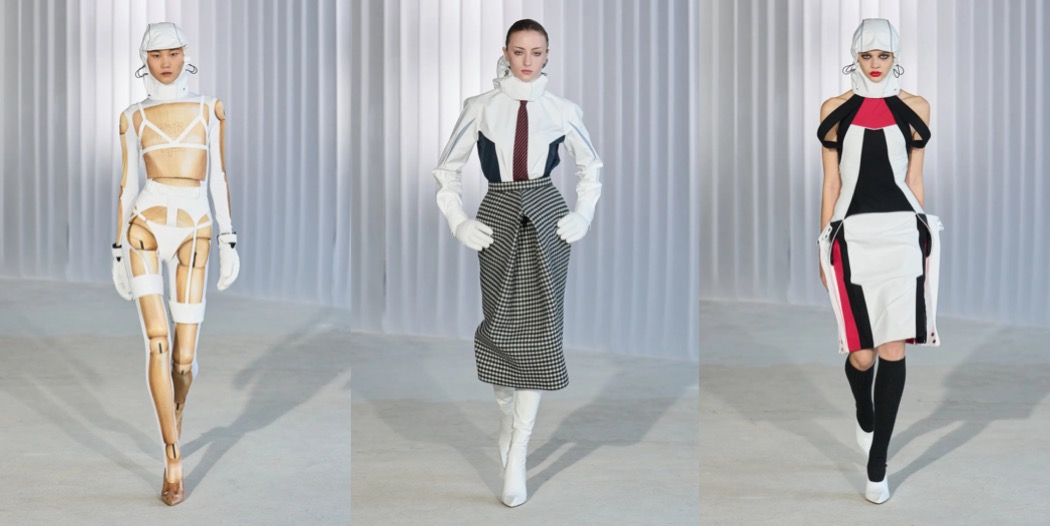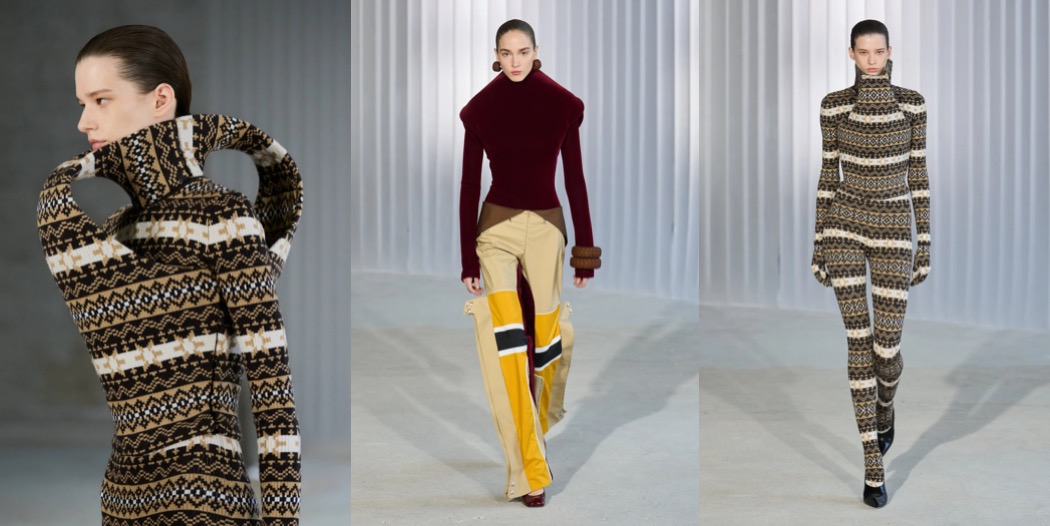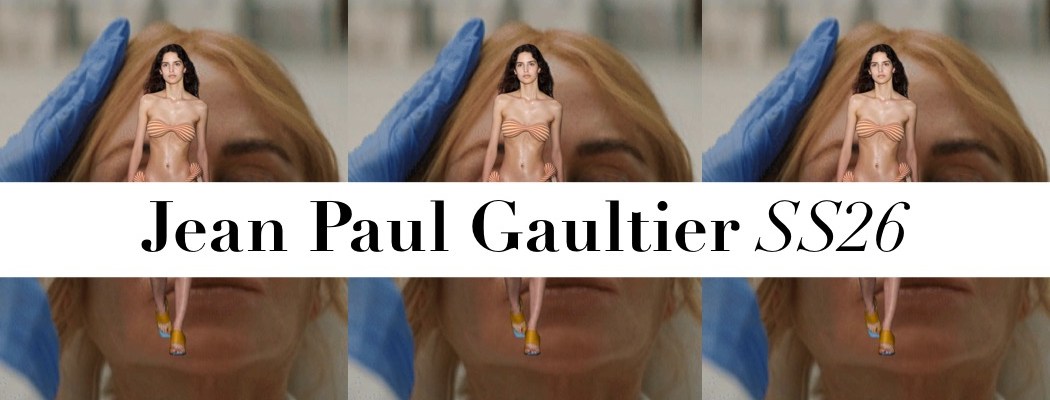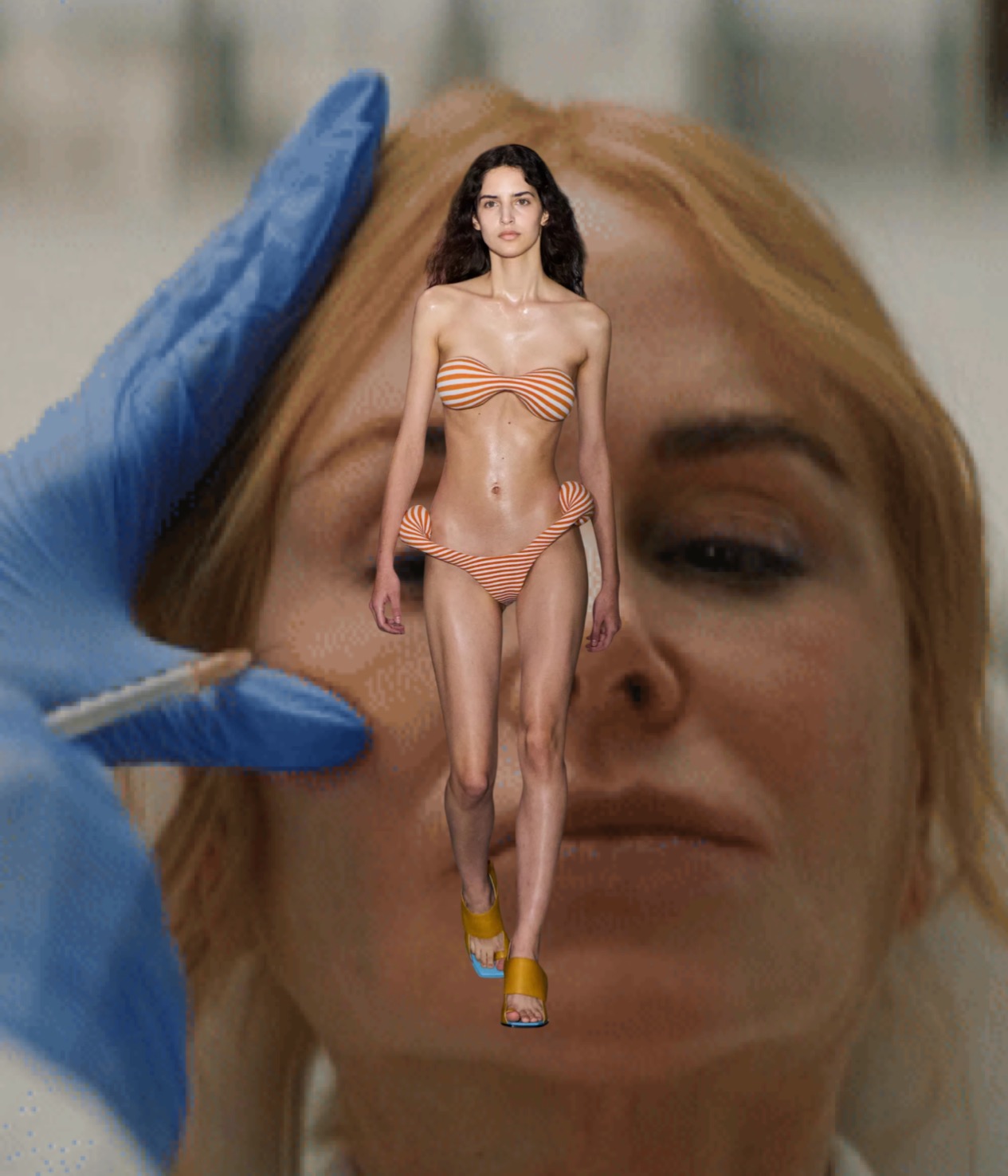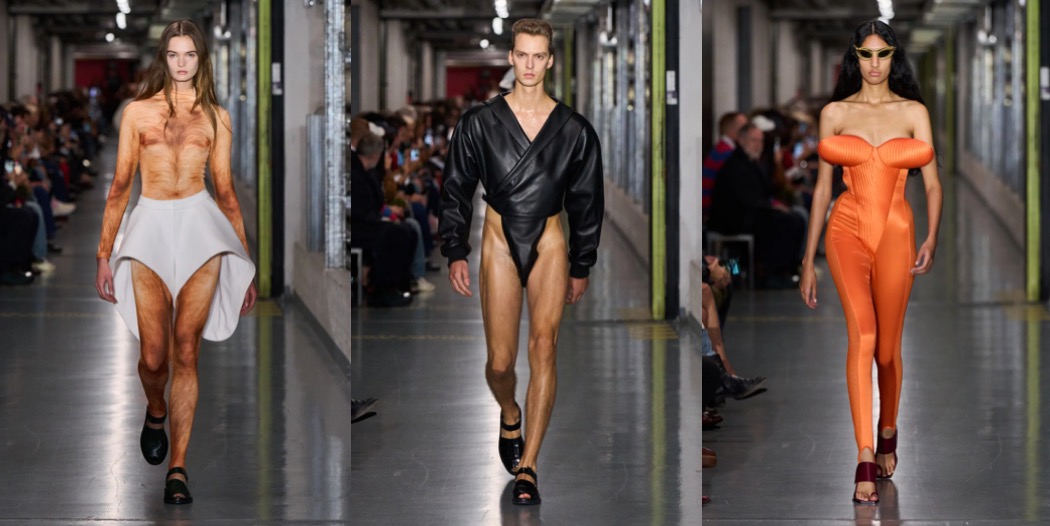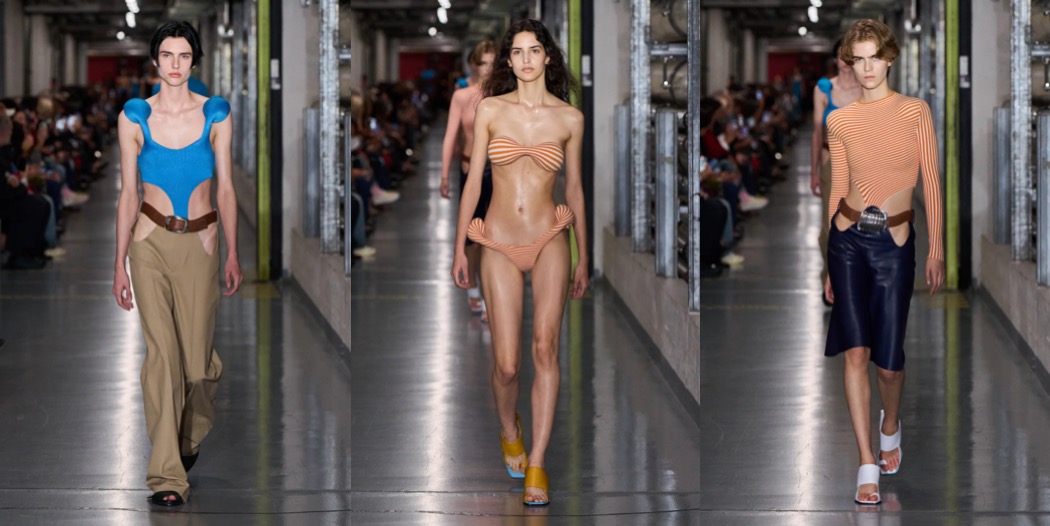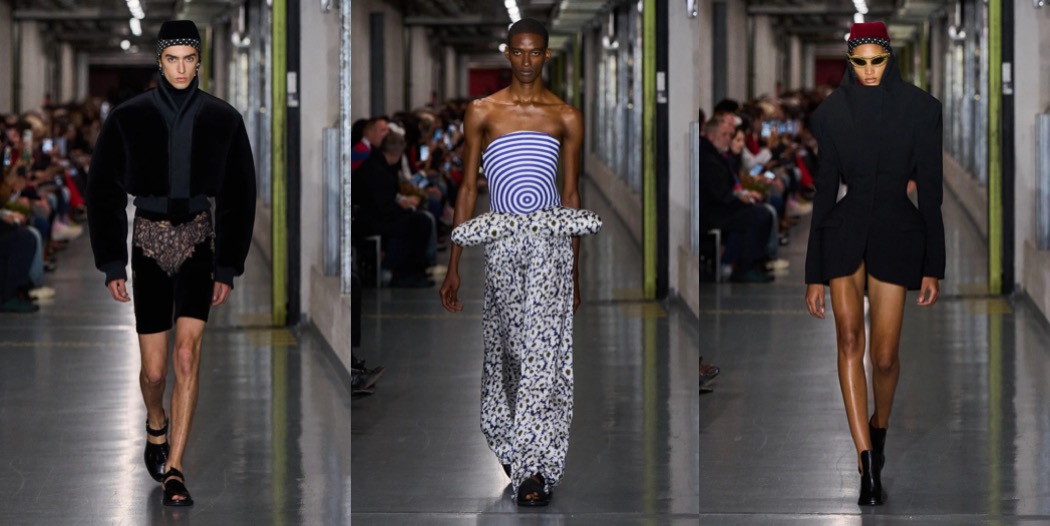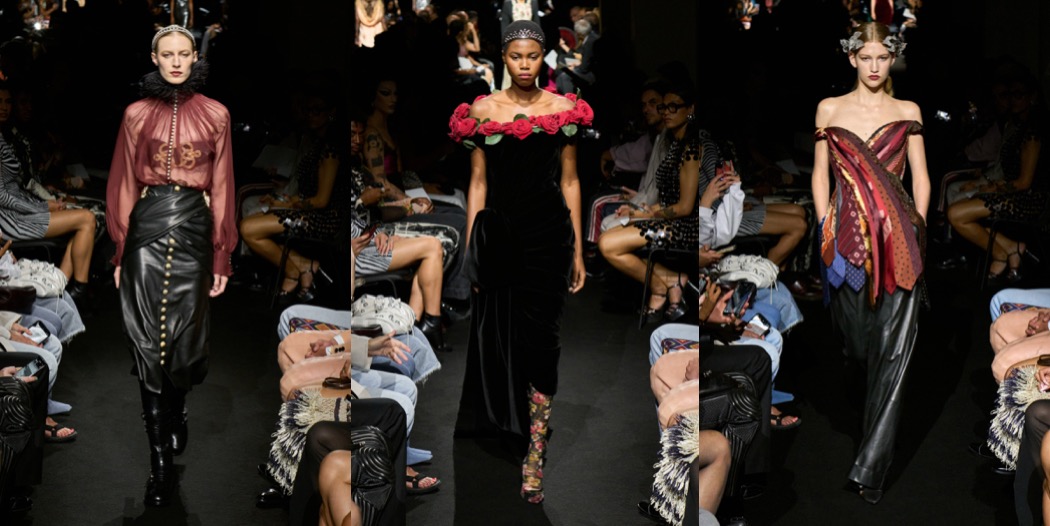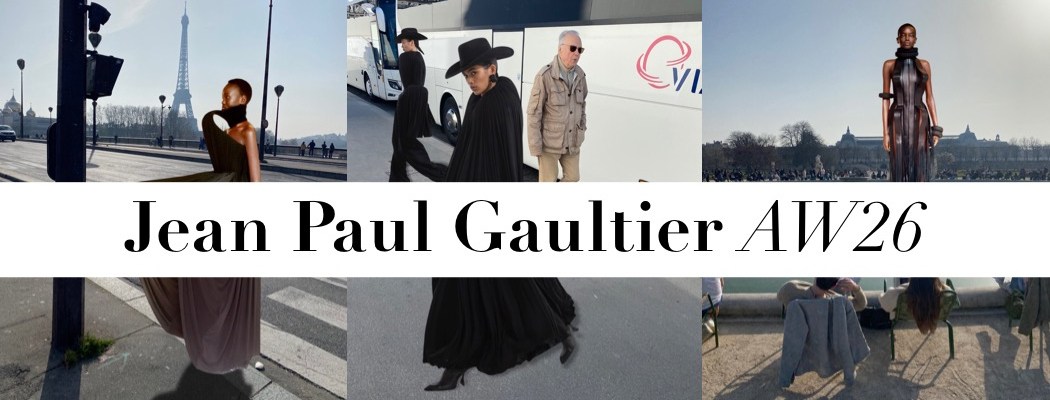
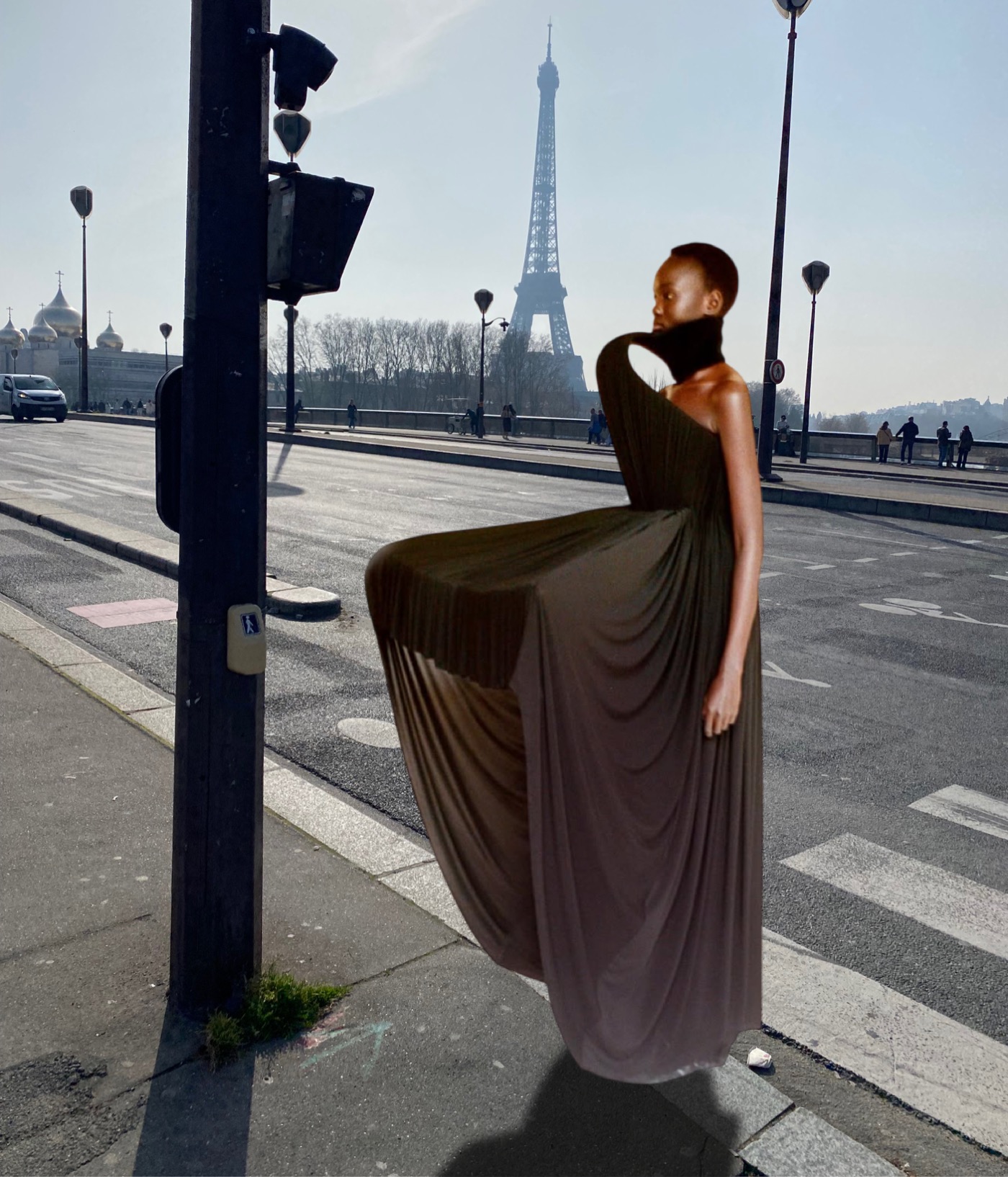
Duran Lantink’s debut for Jean Paul Gaultier is a collection I’m still making up my mind about. For me, the core of the Gaultier brand has been utterly diffused by the revolving door of guest designers, each coming in for a single couture collection every six months. At this point, the brand could be almost anything.
On one hand, I think it was a wise choice for Duran not to revive Jean Paul’s archives too literally. On the other, this collection revealed that his own repertoire still feels somewhat limited. It could just as easily have been a Duran Lantink show – and honestly, it might have made more sense that way. The razor-sharp cut-outs, the “Lumps and Bumps”-inspired silhouette manipulations, the op-art stripes, the bodysuits printed with a haired male corpse – it’s all Duran through and through, like it or not. But we’ve already seen most of these ideas play out, in slightly different variations, within his own brand. READ MY FULL REVIEW HERE.
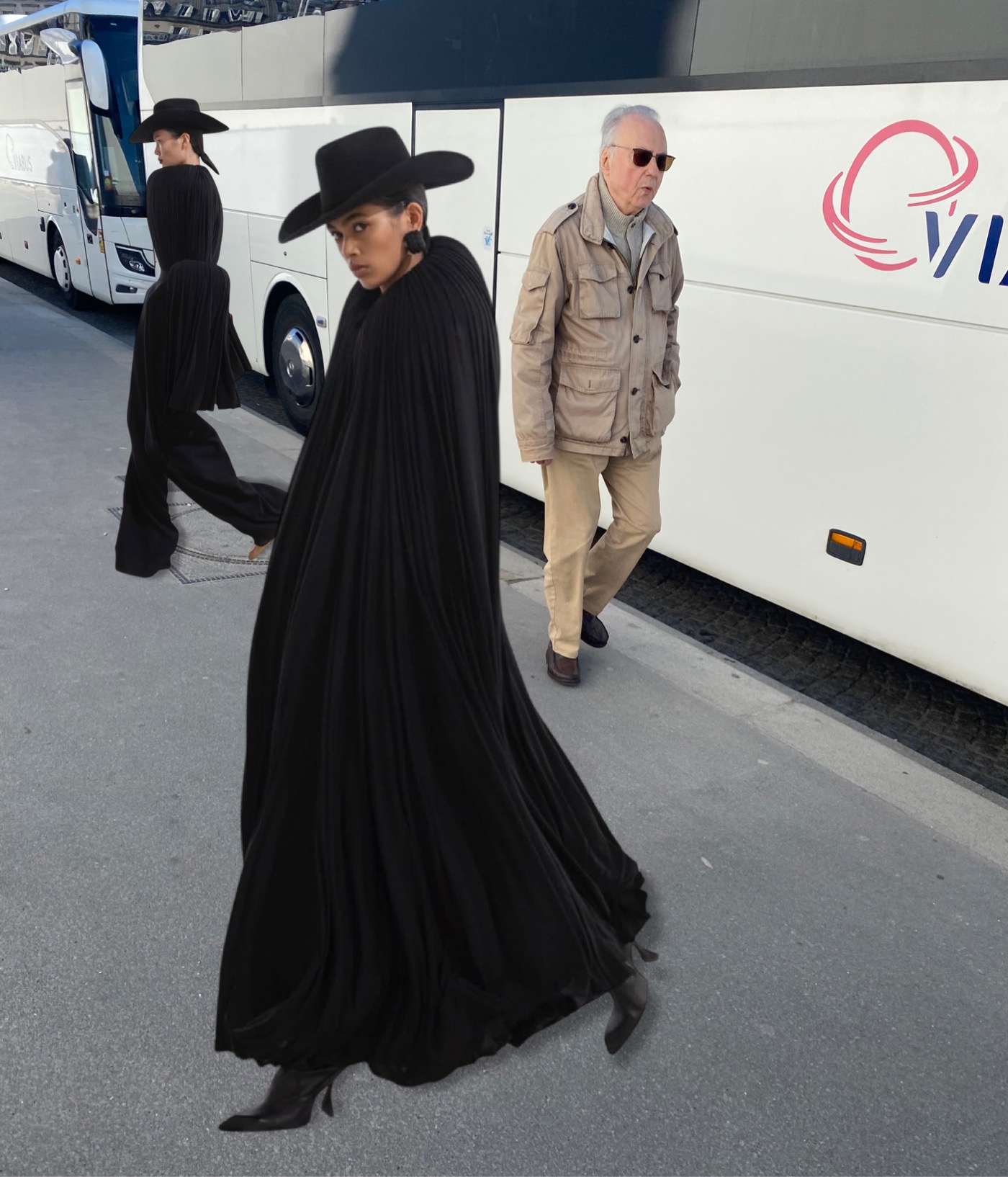
Collage by Edward Kanarecki. Don’t forget to follow Design & Culture by Ed on Instagram!
Hey, did you know about my newsletter – Ed’s Dispatch? Click here to subscribe!
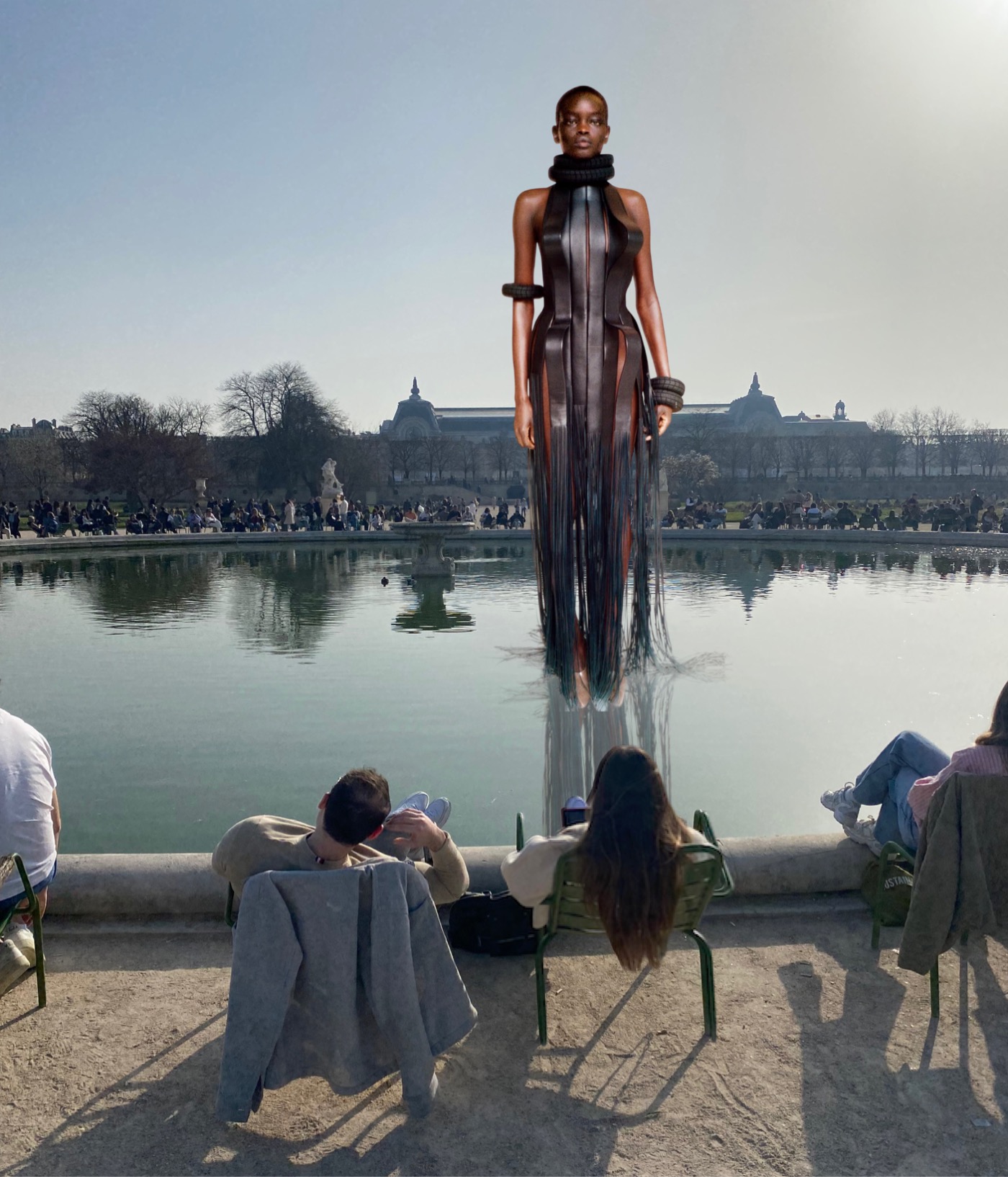
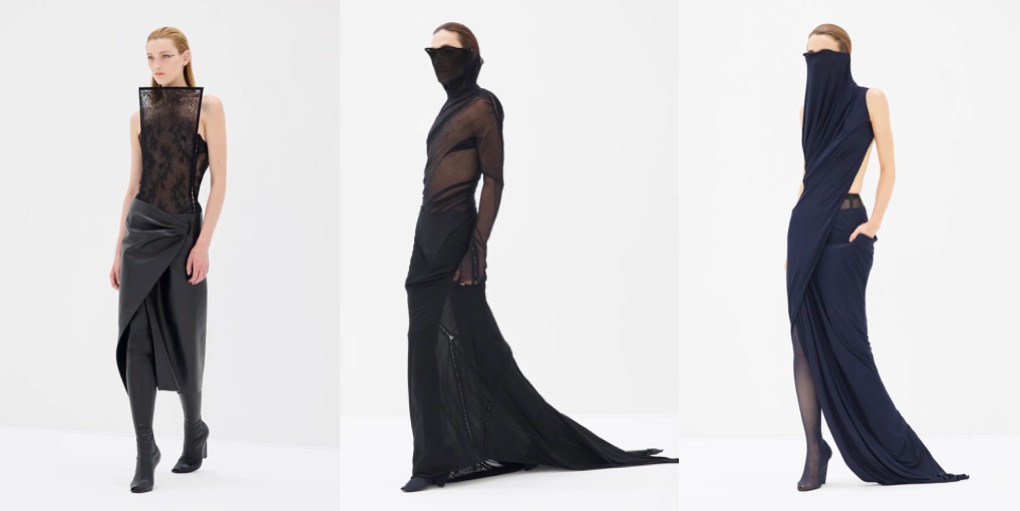
The rather mild haute couture week in Paris suddenly heated up near its end, all thanks to Nicolas Di Felice‘s guest collection for Jean Paul Gaultier. It was absolutely refreshing to see the designer outside the context of Courrèges, and with the tools of couture in his hands. The French enfant terrible of fashion made a strong impression on the Belgian designer when he was a teen: “for me and for so many queer, different people from the countryside – from everywhere in the world – he represented Paris, a city where everything is possible. He was really the first one to celebrate different people. Everybody remembers this about him and it’s a good thing, because he actually did it.” The collection told a story about a Paris arriviste, who wears covered up clothes: jackets and dresses with long sleeves, long skirts, and necklines that climb up the face. Slowly, as the show progressed, the head emerged, then the shoulders, and by the end, dresses were peeling off the hips and hands were tucked into the gaps in the fabric in an erotic gesture. The motif of adaptability-to-the-body returned throughout the collection, and it was masterfully applied in a gorgeous slip dress that was worn undone to the waist, exposing a sleeveless shell underneath on which hooks-and-eyes were applied like studs. Di Felice chose to reference Gaultier’s subtler moments, especially his precise technique of cut and sharp, yet feminine tailoring. Everything synced so well. Now imagine Di Felice do haute couture at Courrèges!
Collage by Edward Kanarecki. Don’t forget to follow Design & Culture by Ed on Instagram!
Hey, did you know about my newsletter – Ed’s Dispatch? Click here to subscribe!
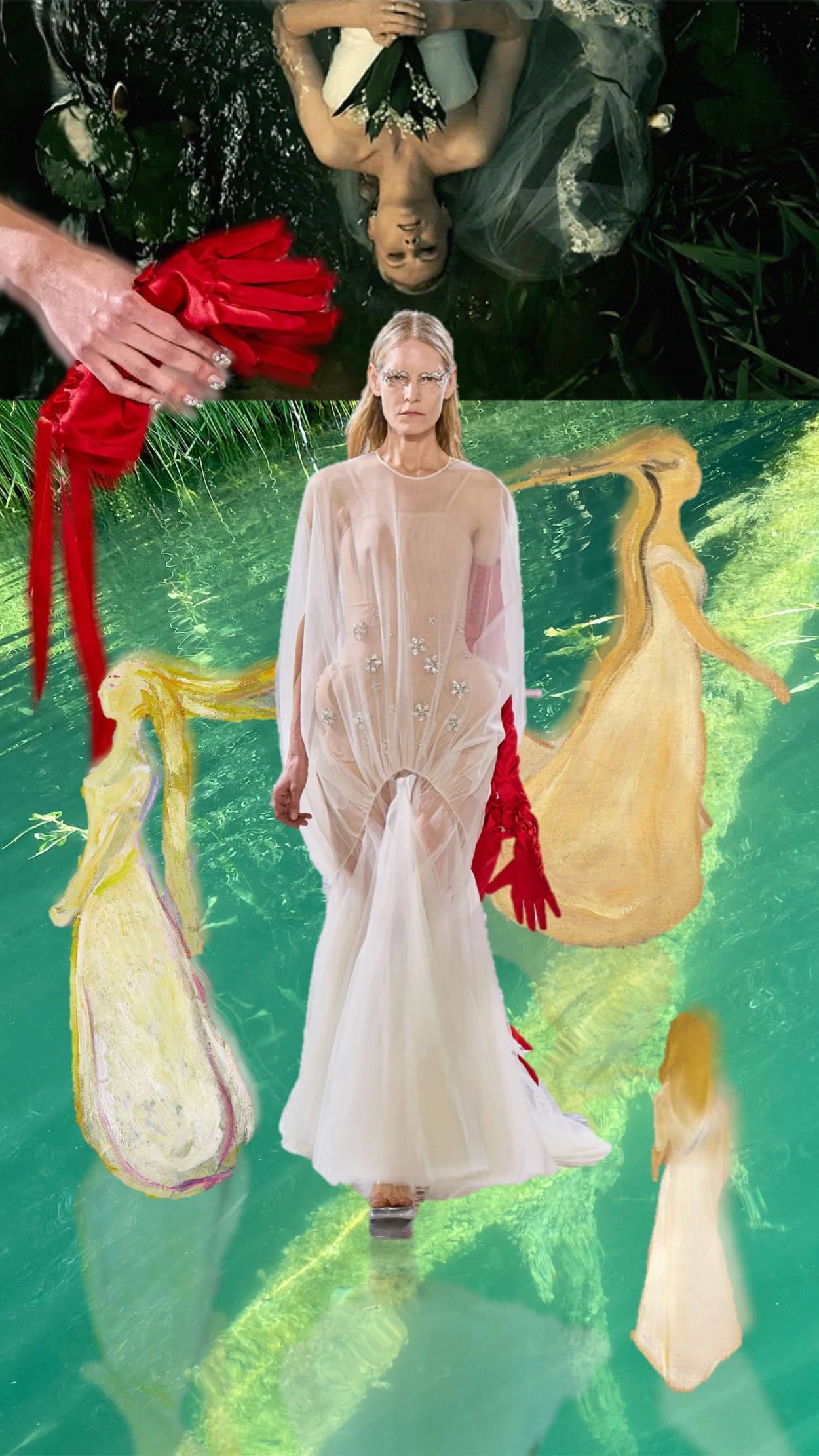
When Jean Paul Gaultier announced Simone Rocha as the guest designer for the spring-summer 2024 haute couture collection, it was clear that this unexpected match would result in an intriguing dialogue between Parisian artisanship and the Irish designer’s idiosyncratic take on femininity. The way Rocha interpreted the iconic JPG cone-bra into thorn-shaped protrusions signaled that she, unlike the previous guest creatives, will take a closer look at the couturier’s interest in the female body. This took her to the idea of playing with contrasts of couture: the tension between restraint and fragility. “His love of the breast and the hip and the female form – exploring that and harnessing it,” the designer said, explaining all the skirts and gowns buffeted with crinoline panniers and bustles. Corseting, another Gaultier landmark signature, seemed to be Rocha’s favorite element to play with. The designer treated the corset “as a security and this kind of second skin on the body.” The tattoo prints earned certain pagan mysticism in her hands, something I always love about her London shows. Meanwhile Breton stripes were represented by navy ribbons tied into bows and tacked loosely to illusion tulle, which also appeared on offbeat padded underpants. This was definitely a noteworthy fashion experiment to unpack.
Collage by Edward Kanarecki. Don’t forget to follow Design & Culture by Ed on Instagram!
Hey, did you know about my newsletter – Ed’s Dispatch? Click here to subscribe!
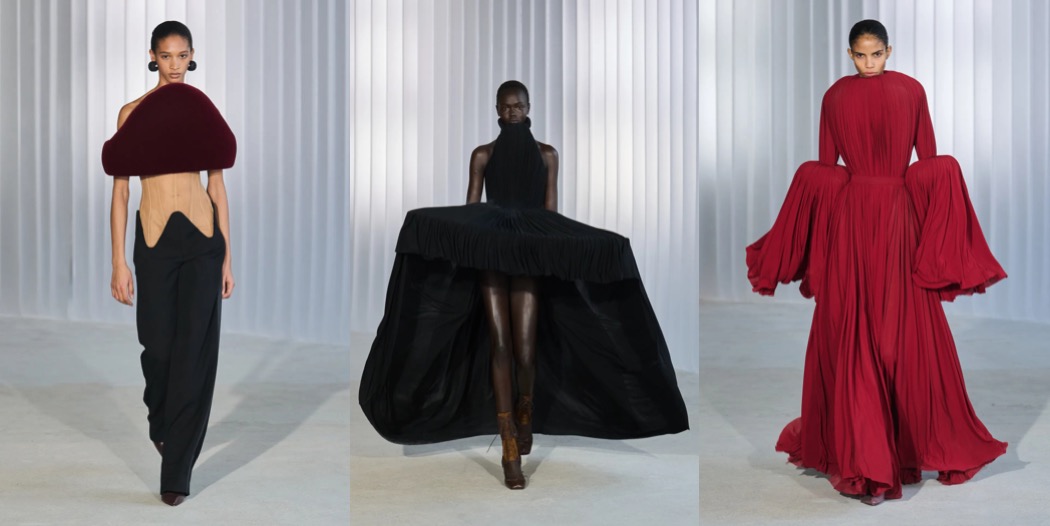
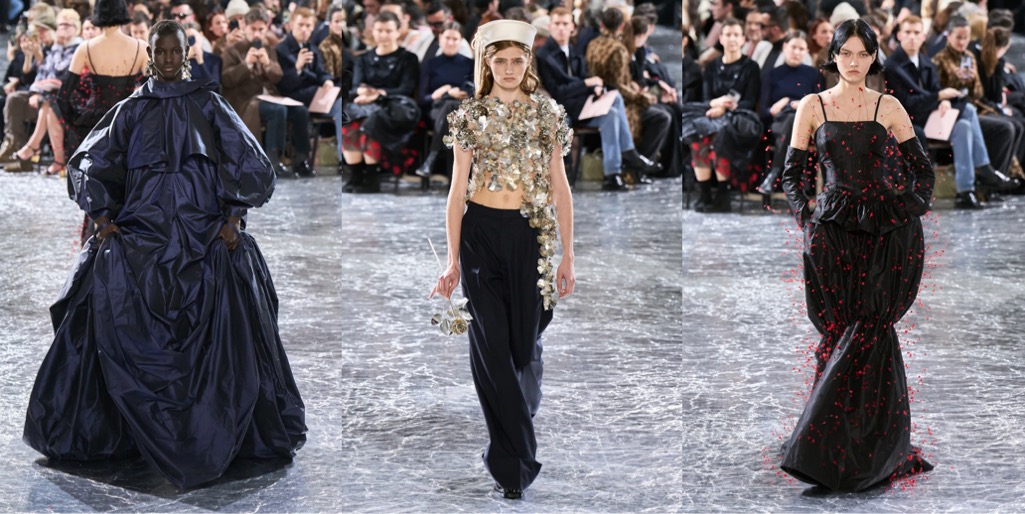
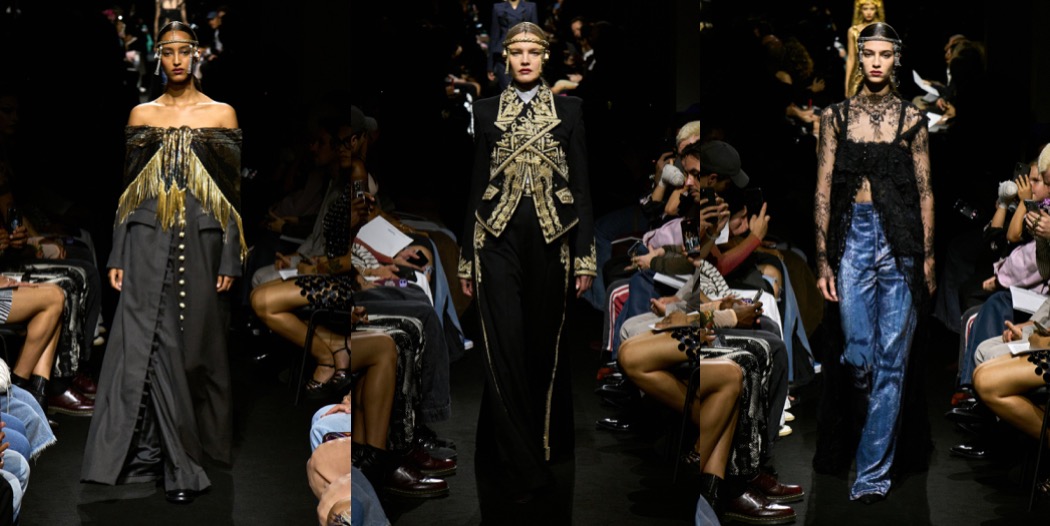
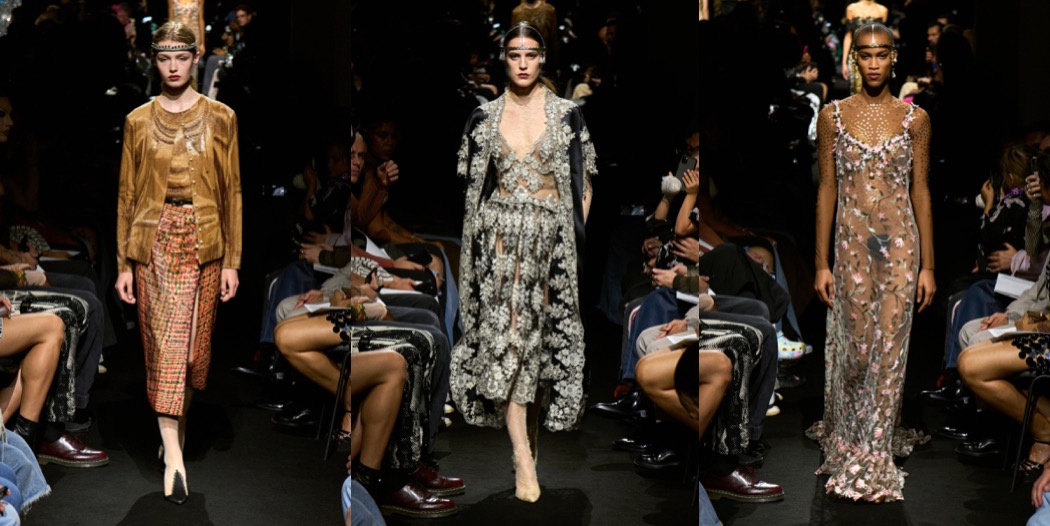
The guest designer gigs at Jean Paul Gaultier have become one of the best moments of haute couture fashion weeks. Julien Dossena‘s take on the couturier’s legacy was definitely a triumph. (Paco) Rabanne’s creative director wanted to achieve “a feeling of characters you pass in the street in Paris,” he said. “I wanted to make all of them queens, each with a different crown.” The honor of being able to bring his interpretation to the work of a national treasure of French couture couldn’t have been more sincerely felt. “Jean Paul was the first designer I ever saw on TV when I was very young. Watching him, I understood for the first time: oh, fashion can be a job! What he did (became) infused into my cultural background in general.” Over lunch with his idol, Dossena discovered that Gaultier had known Paco Rabanne, who had recently passed away. “He asked me to make something to honor him. But I had from him this complete sense of freedom. There’s this feeling in the couture ateliers that anything can be done.”
At Rabanne, Dossena’s ability to modernize chainmail and turn it into new techniques in zillions of ways has been one of the hallmarks of his talent – that, and the slant on bohemian glamour that frequently comes through his collections. His unmistakable double-salute to Gaultier and Rabanne was to whip up a replica of the famous pointy-bra dress from Gaultier’s first collection in 1984 in silver chainmail. But the dimension of Gaultier’s work which sparked Dossena’s imagination the most was his street-observation and inclusiveness – decades before it became fashionable. “Jean Paul was really the first to treat fashion as almost sociology, watching what people wear in the street, expressing communities in his shows. Joyously mixing people together.” Dossena’s presentation of chic-ified looks included a pinstriped trouser suit and a lace dress over a pair of trompe l’oeil beaded jeans with sweeping trains. Mid-way, in a stunning moment that spoke dramatically to the beauty of human togetherness, he draped shining gold and silver swathes of chainmail to connect pairs of models – a man apparently carrying a woman’s train, and two individualistic goddess warriors, each symbolizing a different culture. There were references to Gaultier’s giant trapper hat, to the sweeping floor length coats in his “Rabbi Chic” collection, and to off-the shoulder lace he used in his “La Concierge est Dans l’Escalier” show. Dossena said he’d deeply related to Gaultier’s habit of trawling flea-markets for vintage finds – a route into developing rich techniques. Part-way, there was a dress made of Irish-crochet lace, embroidered with gold paillettes meticulously made to look vintage. There was a peach satin lingerie dress layered over black lace, a floral lace apron worn over tailoring. And just as you thought Dossena might have missed a little something of the subversive wit that got Gaultier permanently labeled the Enfant Terrible of French fashion, sure enough, there it was. Clearly glimpsed through a couple of sheer dresses, a pair of trompe l’oeil embroideries of pubic hair. Sitting in the front row, Jean Paul Gaultier raised his eyebrows and chuckled as they passed by.
Collage by Edward Kanarecki. Don’t forget to follow Design & Culture by Ed on Instagram! By the way, did you know that I’ve started a newsletter called Ed’s Dispatch? Click here to subscribe!
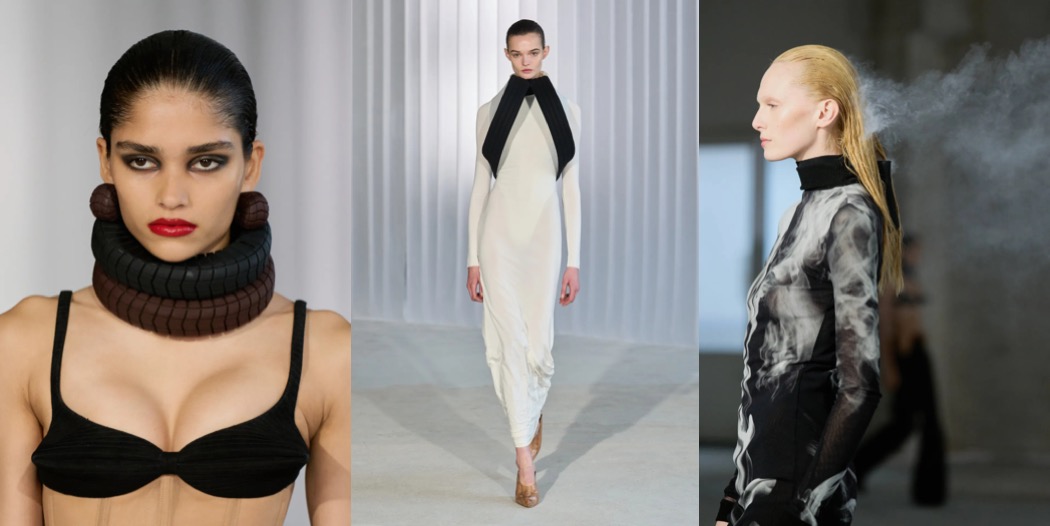
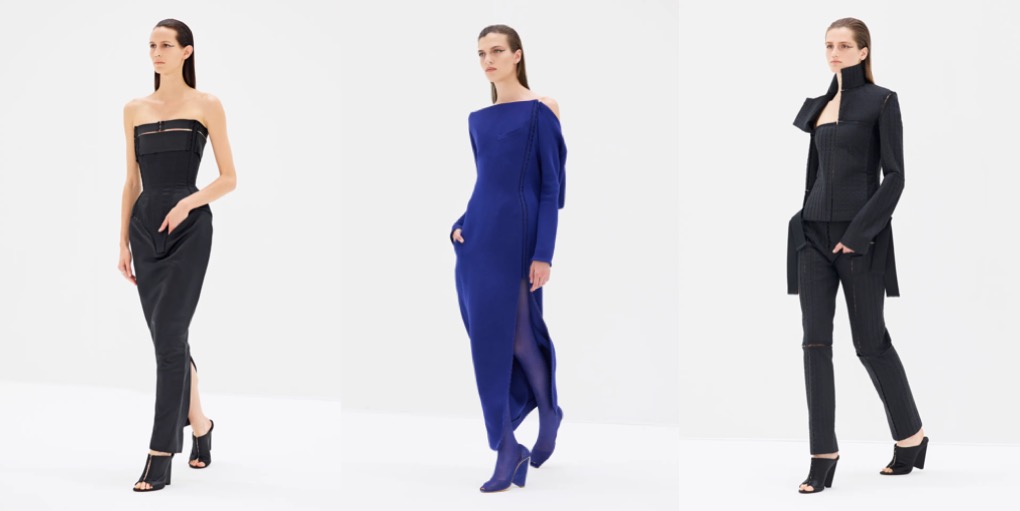
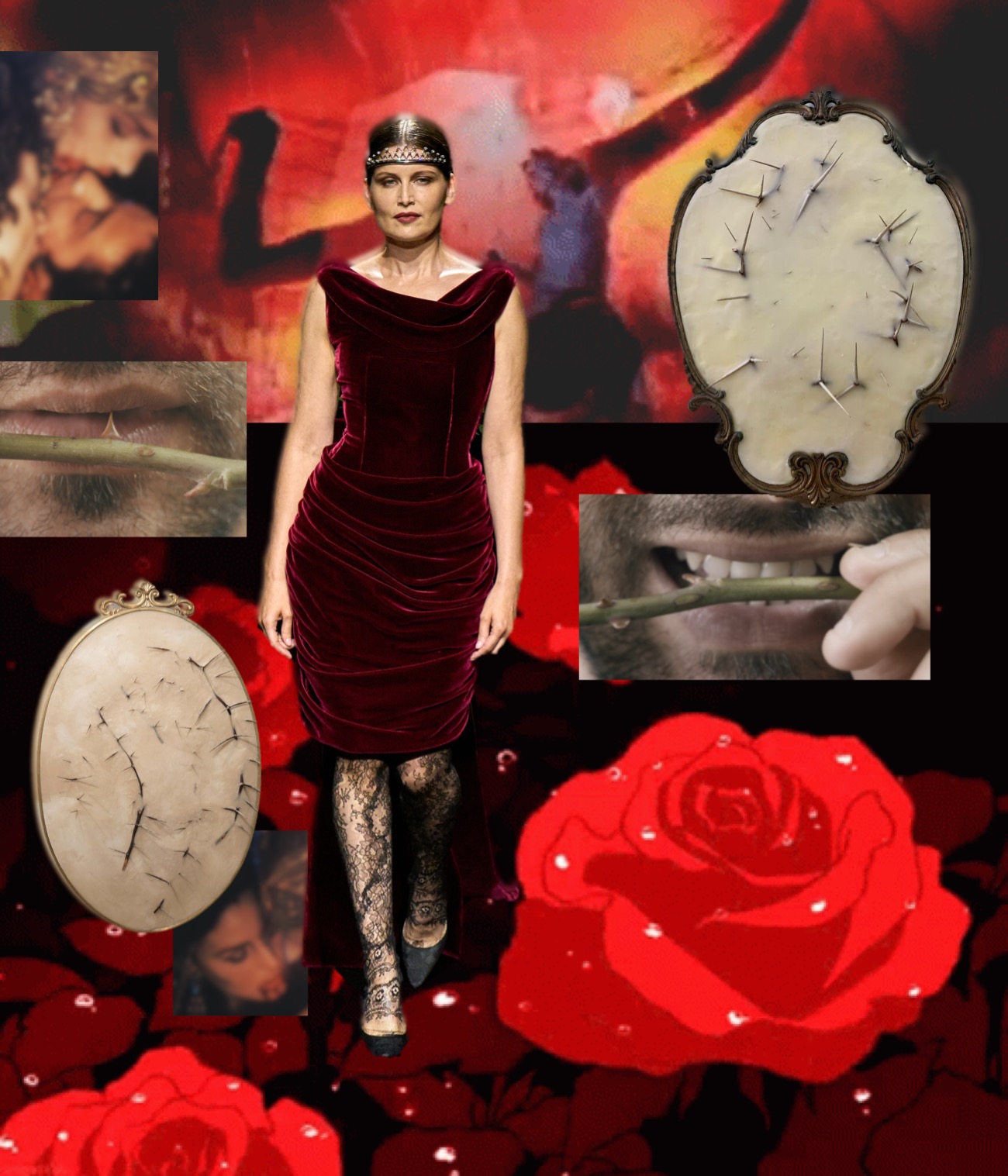
Oh Haider, we’ve missed you. The news of Haider Ackermann being the next guest designer for Jean Paul Gaultier‘s haute couture dialogue felt unreal. Until the first model appeared on the ice-blue carpet under the roof of Gaultier’s house. Everything came together: the sense of the haute values of design being the point of it. The models who really delivered a show and poses. Gaultier’s haute couture house ateliers who expressed it in body-sharp tailoring, and crisply-scissored drape. And of course Haider Ackermann, the designer who with his signature style and incredible artistry could lead a couple of snoozy Parisian houses (Givenchy, for instance). Ackermann is the fourth of the designers to have been tapped on the shoulder for a one-season collaboration, since Gaultier retired. He follows Olivier Rousteing of Balmain, Glenn Martens of Y/Project, and Chitose Abe of Sacai. Ackermann, the most grown-up guest thus far, was perhaps aesthetically the least likely yet to have been invited to respond to Gaultier’s storied metier. As he admitted just before the show, “I don’t have a sense of humor at all! I have my gravity, and he has his generosity and joy – we are two worlds apart. But at the same time, we have many things in common. Because we both love women, we adore women, respect women.” The convergence he found began with Gaultier’s tailoring. “To go back to the essence of his work, which was perfect. People forget how immaculate his tailoring was. His work was magical. So I tried to go back to the pure lines, to find a calmness and moment of grace. Because I believe his work was magical.” When the women began to walk out, they slowly and with a deliberate collectivity embodied the spirit of old-world couture stances, pausing to strike poses in front of photographers as if they were in an Irving Penn shoot. The pace and the intimacy of the staging meant that every single lingering silhouette and detail could be taken in close-up. The whiteness of the cuffs on immaculate black trouser suits, cut sometimes with tailcoats and conceptual plackets of frogging, sometimes reduced to pure minimal outline. One skinny-trousered two-piece came with a diagonal slash across the jacket and a hip-level obi-cummerbund – a stunning aesthetic fusion of Ackermann and Gaultier in one look. On top of that, Ackermann proved himself as a colorist and a dressmaker, draping extraordinary serpentine gowns and varieties of chic coat dresses with contrasting linings. It made it sink in how rare it is these days that outstanding drama and chic minimalism go together. Somehow, high fashion now has a need for being loud and gimmick-y. This, without turning backwards or being in the least camp, made a progressive case for the sensational powers of haute couture in the modern world. That was Ackermann’s intention: to bring the subject of haute couture back to the clothes. He did that superbly. “I knew Jean Paul liked my work, but I never thought this would come my way. I’m already a long time in business. It’s usually like, okay, give it to the younger ones,” he said. “And so, to design is one of the most wonderful feelings. I really love my job, and this made me love it even more. It’s been like a love affair between me, and the ladies in the atelier.” The arrangement with the house is for one season only. “It makes me sad to leave all this behind. But if I’ve created 10 minutes of grace when everyone can forget about their problems, and I’ve honored Monsieur, and something that’s also necessary for fashion in 2023, then I’ll be happy.”
Collage by Edward Kanarecki. Don’t forget to follow Design & Culture by Ed on Instagram!