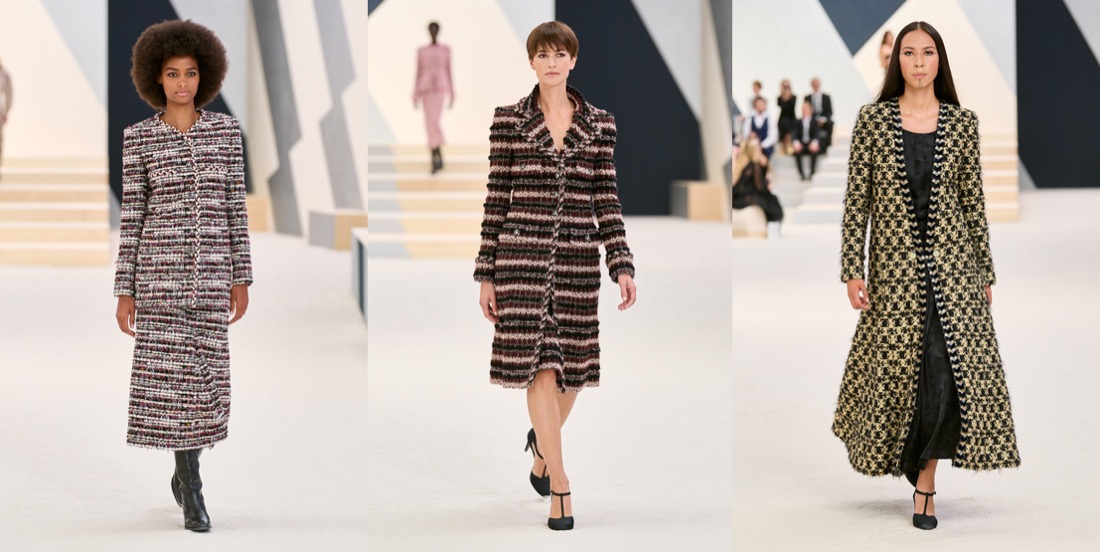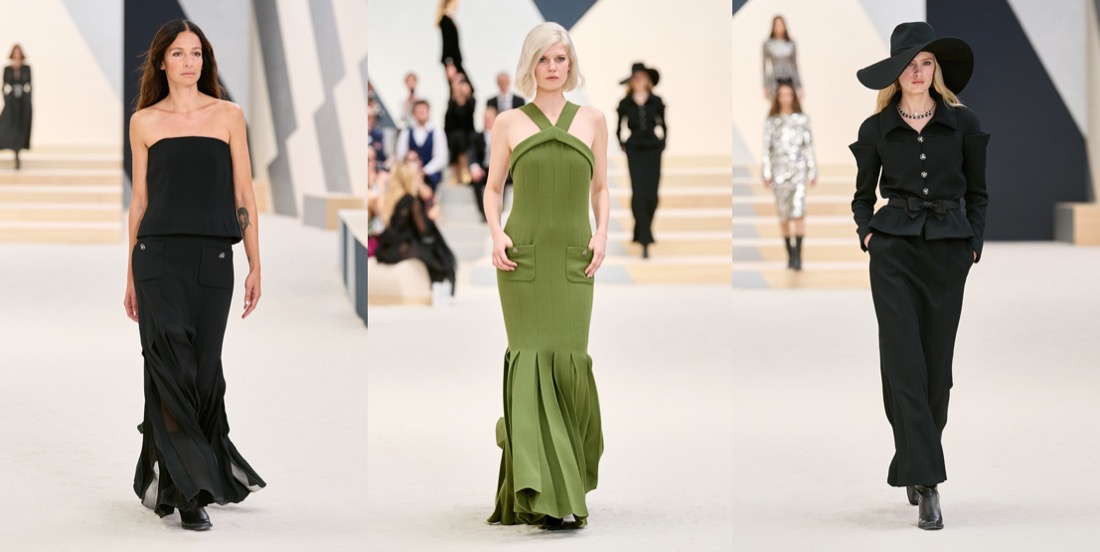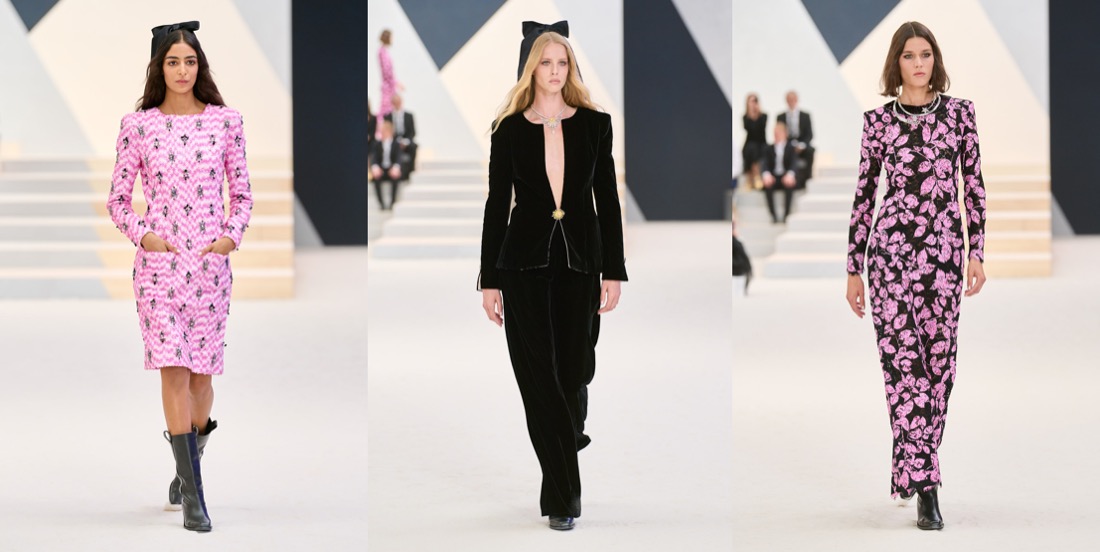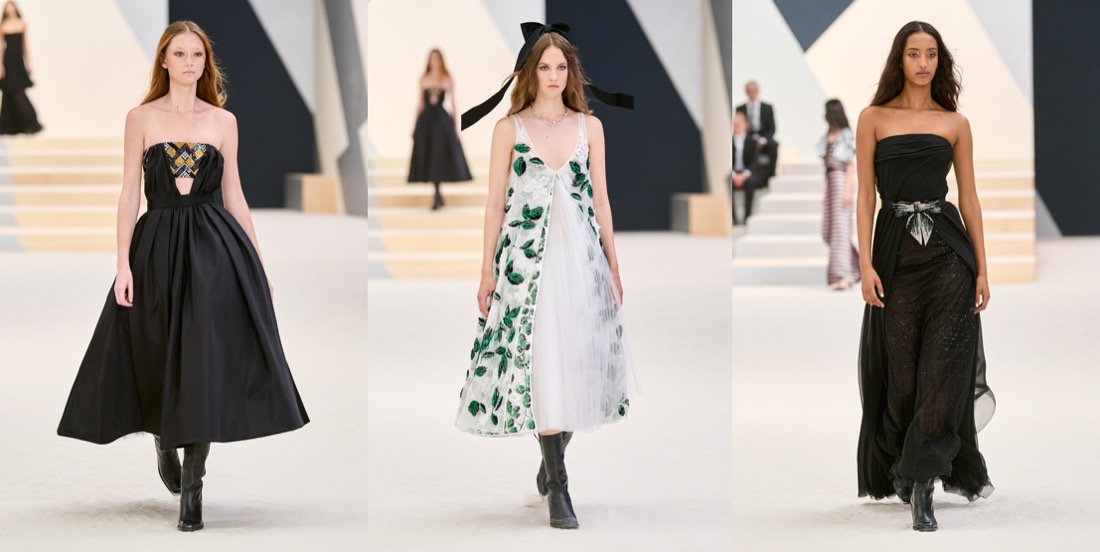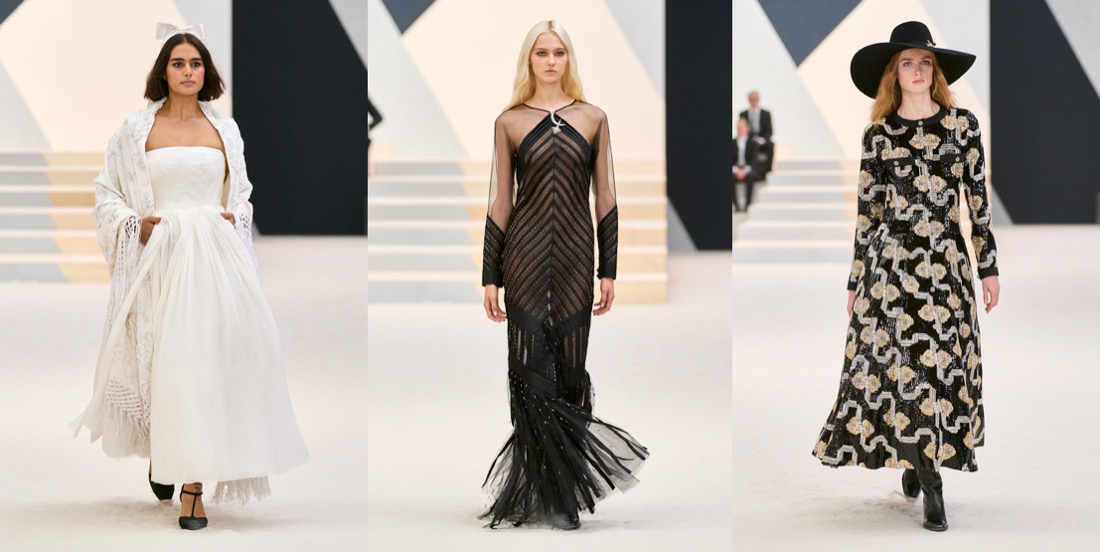
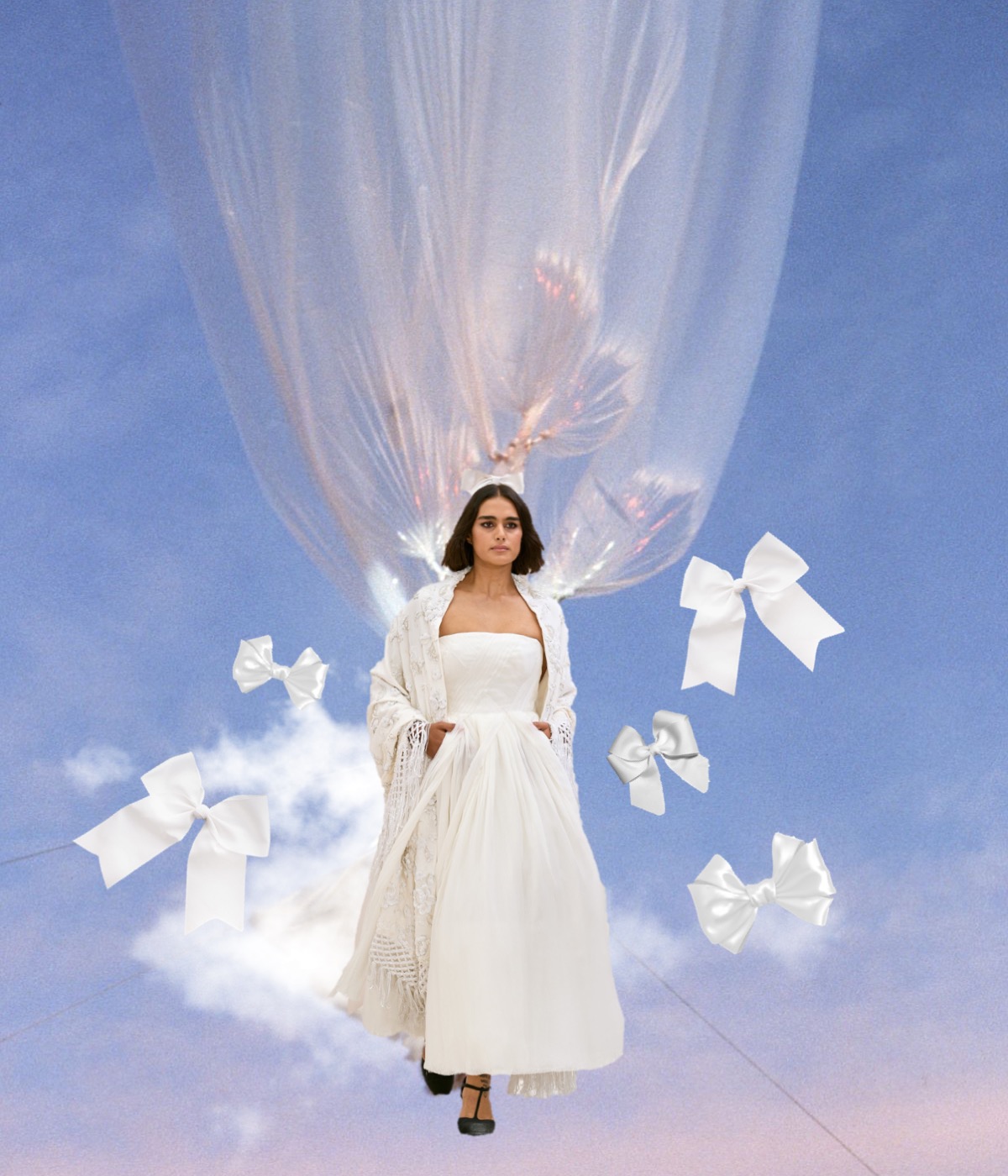
Move Beautifully. Chanel AW22 Couture

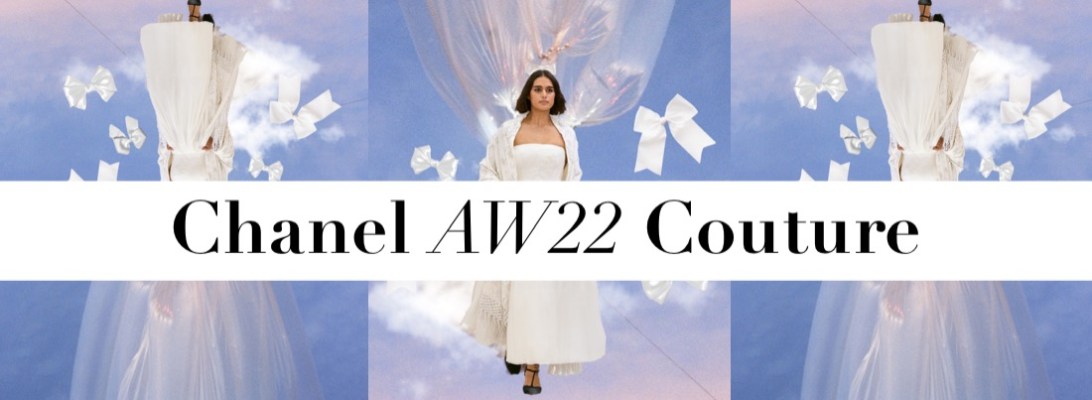
This Chanel haute couture certainly won’t appear in fashion history books, but it did please the eye. For Virginie Viard, her collections reflect the pragmatic needs and desires of the house’s clients and her own eclectic but never fantastical sources of inspiration. Not for Viard the sweeping statements of her mentor Karl Lagerfeld, who might impose a powerful new silhouette on practically every look in a collection, but instead a sense of gentle evolution and a myriad of references and inspiration sparks that might range (as in this collection) from a blinding memory of Inès de Fressange dressed by Lagerfeld in a jacket of bright grass green and shocking pink (for a 1988 Chanel couture show, when Viard first joined the house), to a shot of Fred Astaire in cinematic action, the tails of his white tie evening coat caught flaring out in mid-dance move, to a 19th century shot of a real-life Annie Oakley, to archive Chanel references from slouchy 1920s day suits to slithery 1930s gowns to prim 1960s tailoring, to Lagerfeld’s vividly impressionistic sketches from the 2000s. None of these references, however, are used by Viard literally, but instead serve as starting points for outfits that evolve with the input of the textile designers and makers who weave those extraordinary painterly tweeds, and the dressmakers who understand how to make perfect pleats that “move beautifully,” as guest Sigourney Weaver enthused, “and are just so elegant.” That Astaire flare, for instance, might translate into the kick at the hem of a calf length skirt, the Oakley image into a dirndl skirt with practical pockets that encourage a certain assertive body language, the ’30s house archive references into slinky evening dresses deftly cut to fall straight to the floor when standing still, but that break into swirling movement below the knee when the wearer walks. To set the scene, Viard reached out again to the artist Xavier Veilhan who created a Constructivist set for the spring couture collection. This time, Veilhan built a series of structures that formed a symbolic landscape (arches, bullseye targets, mobiles, cubes of bubblegum pink recycled plastics) in the sandy outdoor stadium of the equestrian L’Étrier de Paris center in the Bois de Boulogne. Guests walked through or around these structures before moving indoors to more sand and a set of kinetic color blocks in black, white, sand yellow, and gray. This gently suggested something of the art deco flavor to the drop-waisted dresses and linear shapes that appeared in some looks in the collection. The symphonic soundtrack, created by Viard’s friend Sébastien Tellier, was set to a video projected on a giant screen as a backdrop to the parade of girls, an impressionistic clip that featured an varied cast including Charlotte Casiraghi and Pharrell Williams. That eclecticism continued with the clothes, showcasing amazing textiles – lace painted in resin; a shower of embroidered leaves on a white tulle trapeze dress, shadowing a print of the same motif underneath; an all-over deco print on a bell-skirted coat dress that on closer inspection turned out have been entirely beaded in sequins by Lesage; or tufts of ostrich plumes painstakingly applied to black chiffon and glimpsed through the openings in a streamlined trench coat of textured black tweed.
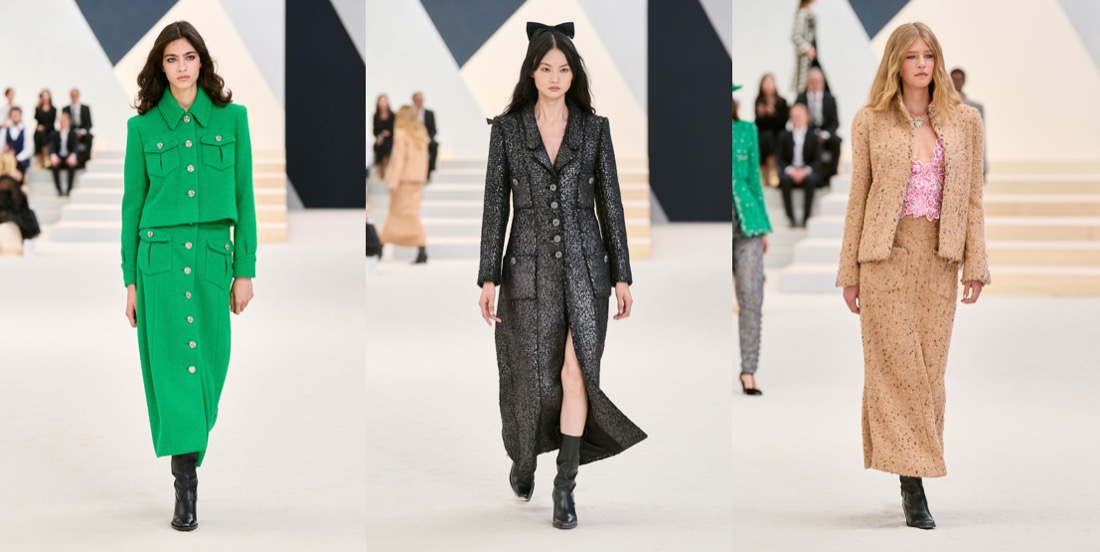
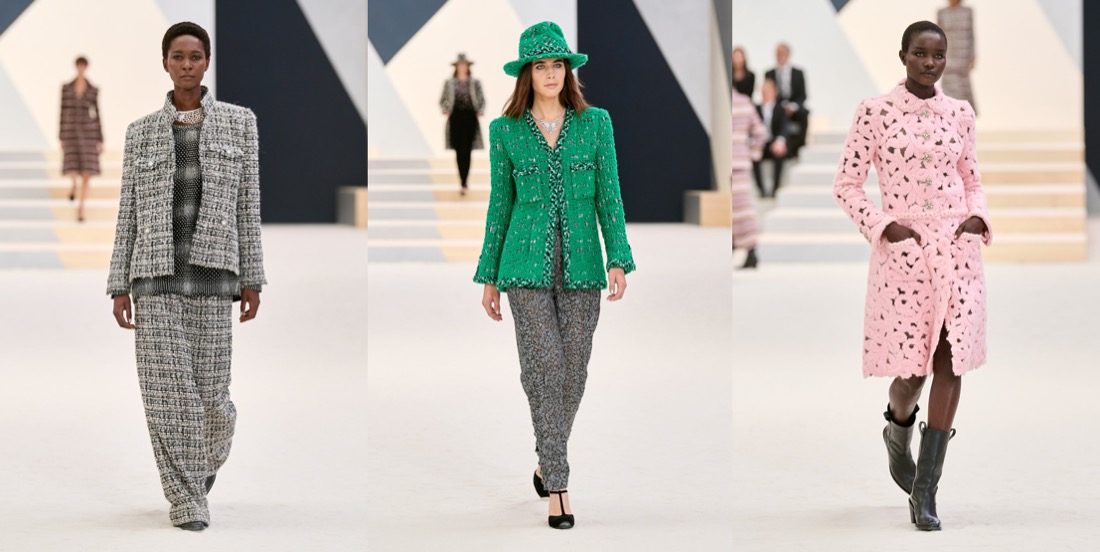
Collage by Edward Kanarecki.
NET-A-PORTER Limited

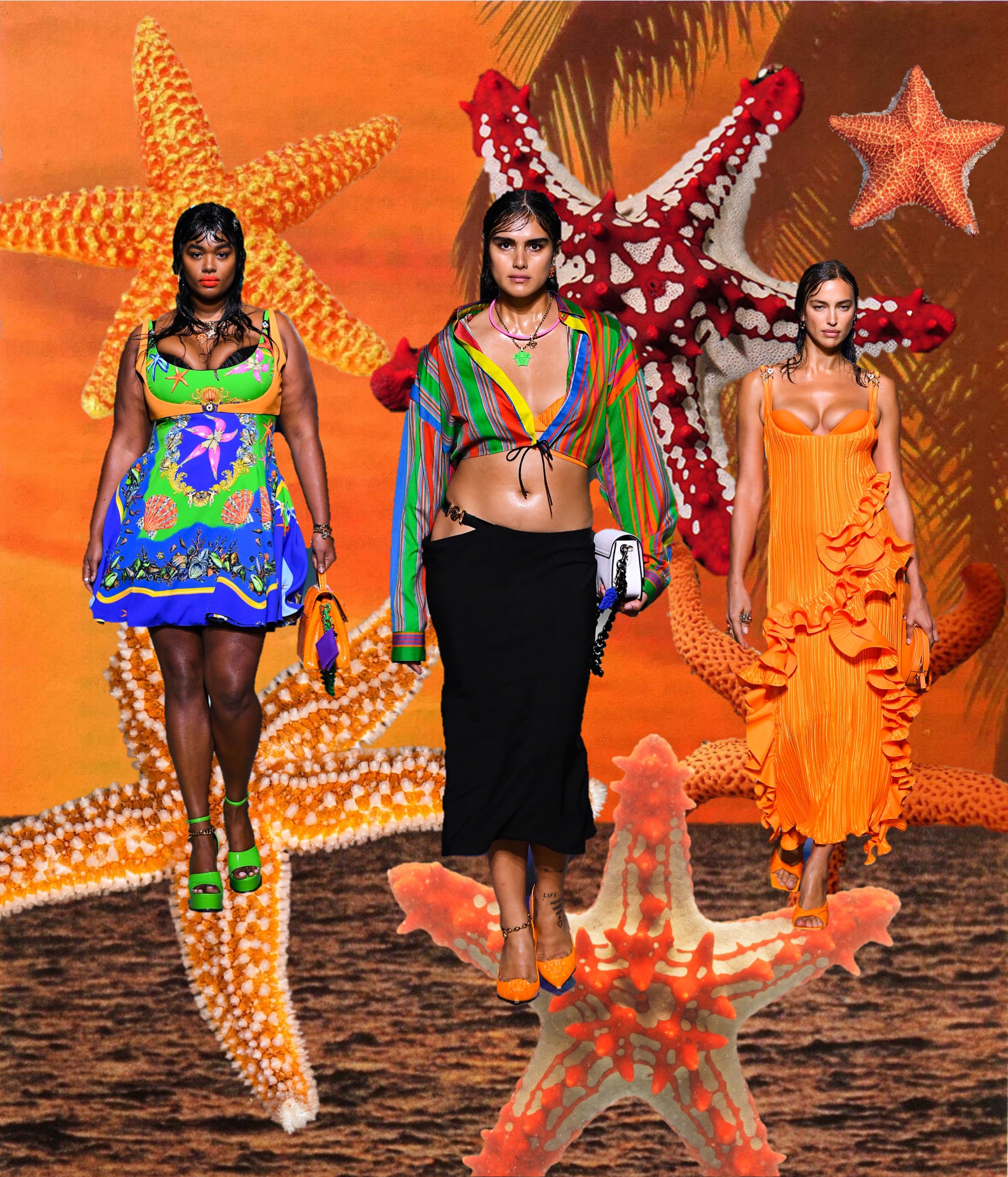
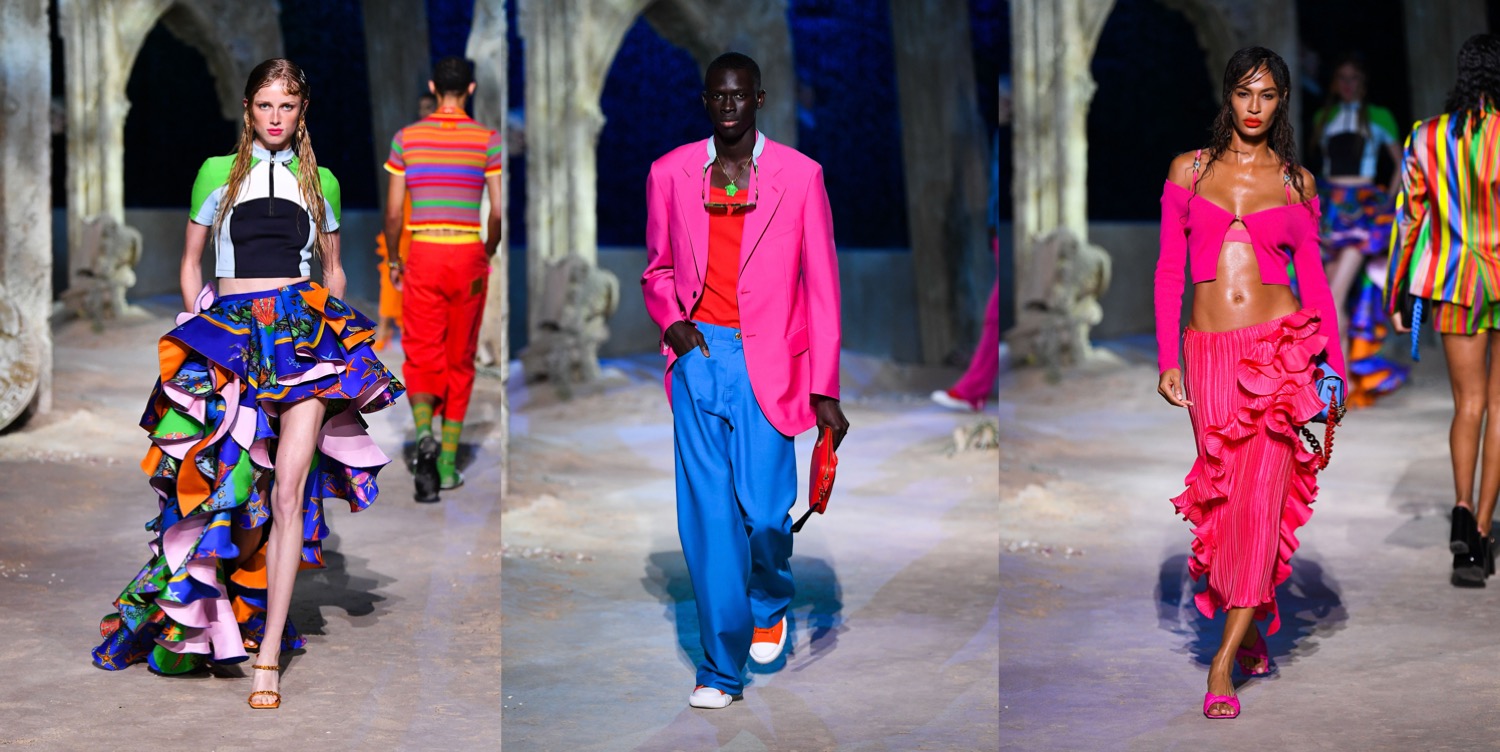
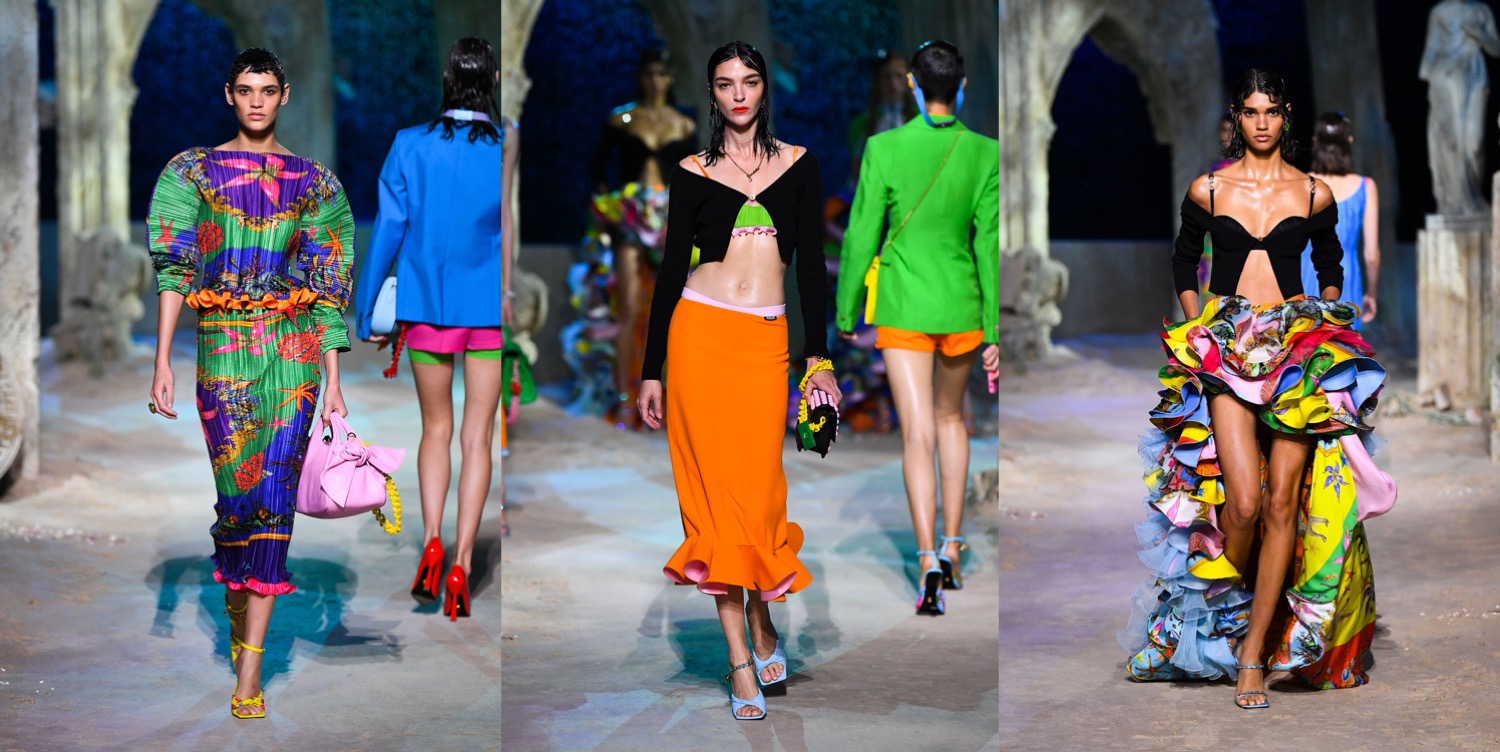
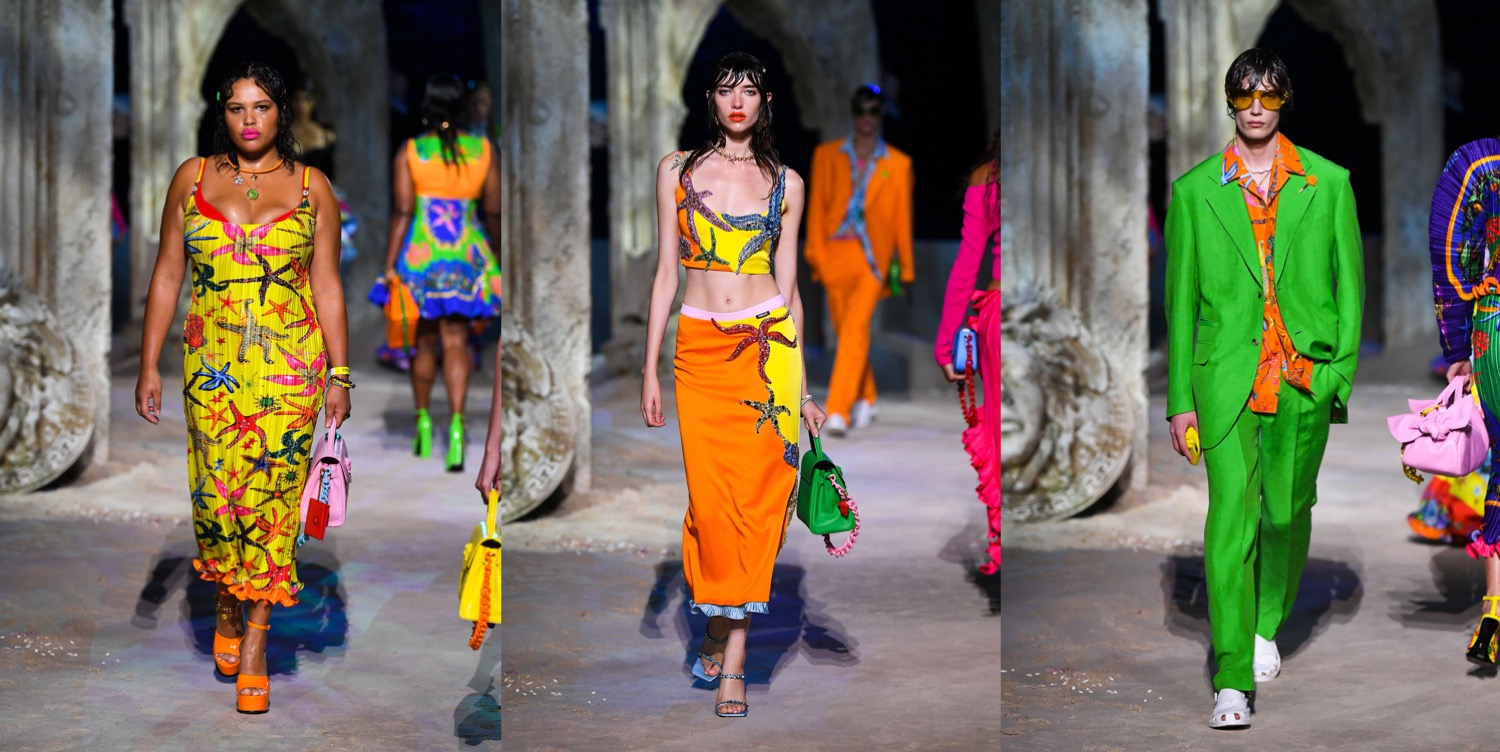
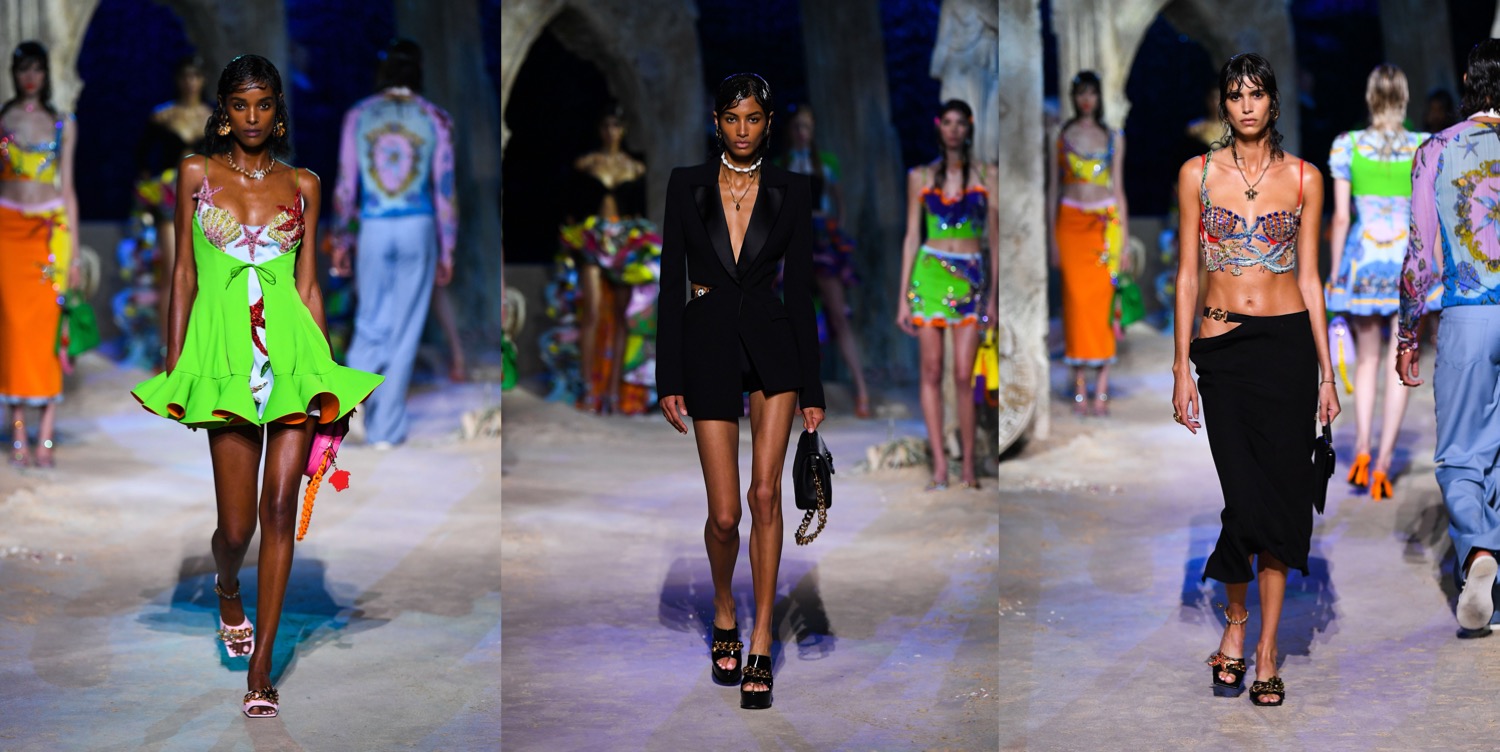
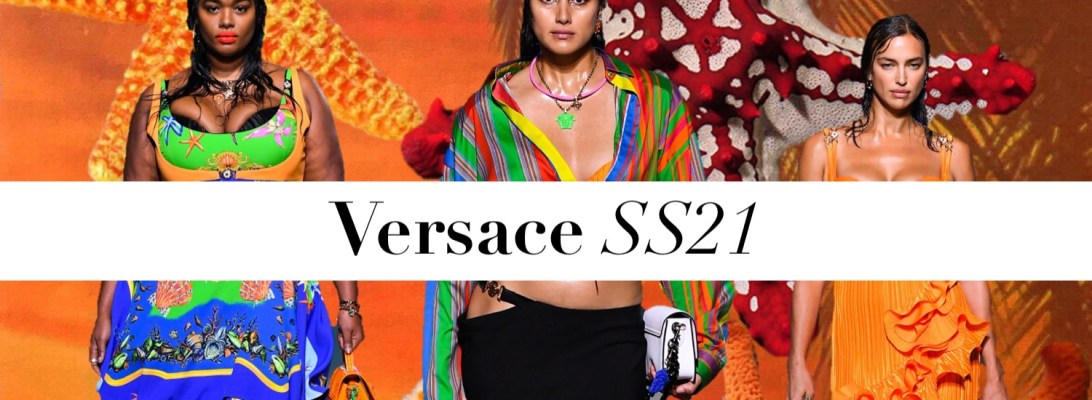
Aquatic Wonderland. Versace SS21

As we are somewhere in the middle of the fashion month, two camps of designers can be noticed: the ones that take the realistic, pragmatic approach, and the ones that prefer escapism in midst of a crisis. Donatella Versace is in the latter group, as she takes us to her aquatic wonderland for spring-summer 2021. The Versace line-up was really good this season (and you know I’m not the biggest fan of the brand), but it was the model casting that truly stole the spotlight. Seeing the gorgeous, body-positive models – Jill Kortleve, Precious Lee and Alva Clair – in the Versace fantasy-land was a inclusivity moment that sadly isn’t a usual sight in Milan (except for Fendi and Marni, which invite different models to their fashion shows for a couple of seasons now). Hopefully, Donatella will keep it up. What about the clothes? In the imagined ruins of Atlantis and water currents streaming down its projected walls. Versace goddesses and gods wore starfish, coral, and seashell motifs from Gianni Versace’s ‘trésors de la mer’ collection for spring-summer 1992. They were ready to take on a new reality like the Rebirth of Venus herself (starring Adut Akech in the title role, of course). Versace, who described the collection as having “an upbeat soul,” said her challenge was to give fashion meaning in a historical moment like this. “I wanted to do something disruptive and to break the rules because I think that, what worked a few months ago, does not make any sense today. Creatively, that meant finding a way to bring the DNA of Versace to a new reality and to people who have undergone a deep change.” Clothes-wise, it’s a fun, high summer venture: it was, on the women’s as well as the men’s side, high-octane sporty cocktail-wear for an optimistic future. In all its sea-centric detailing, it also had its moments of ingenuity: micro-pleated dresses trimmed with twirly ruffles, which bounced like jellyfish in the waves walking down the runway; crazy cascading skirts layered like the lips of shells; and a bag constructed like a big fortune cookie.

Collage by Edward Kanarecki.

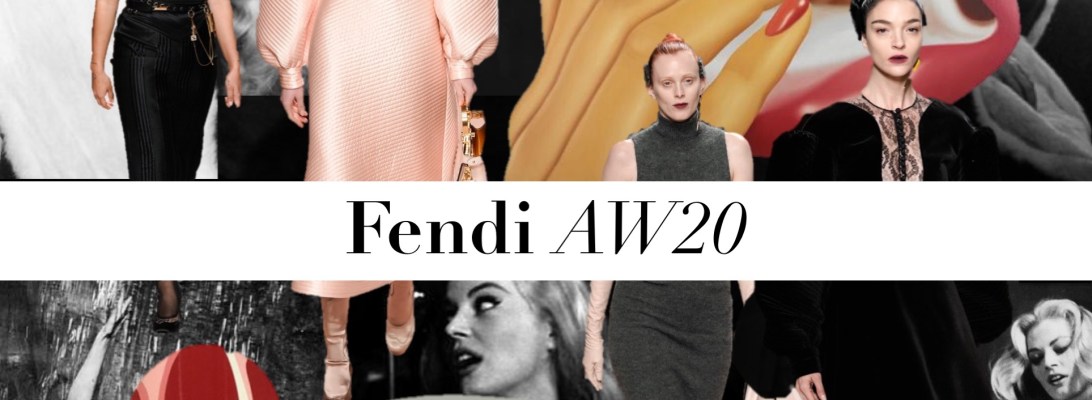
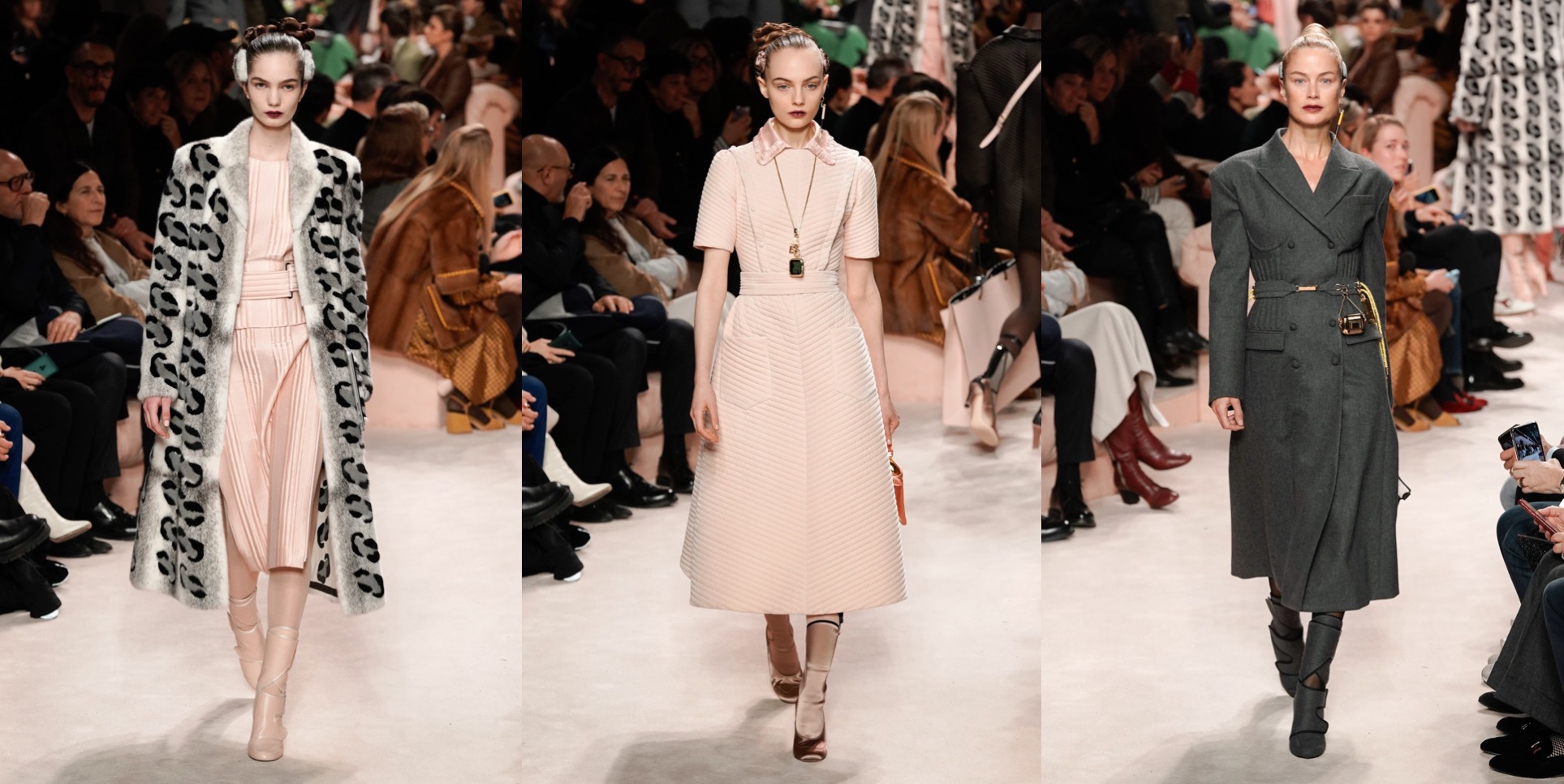
From The Boudoir To The Boardroom. Fendi AW20

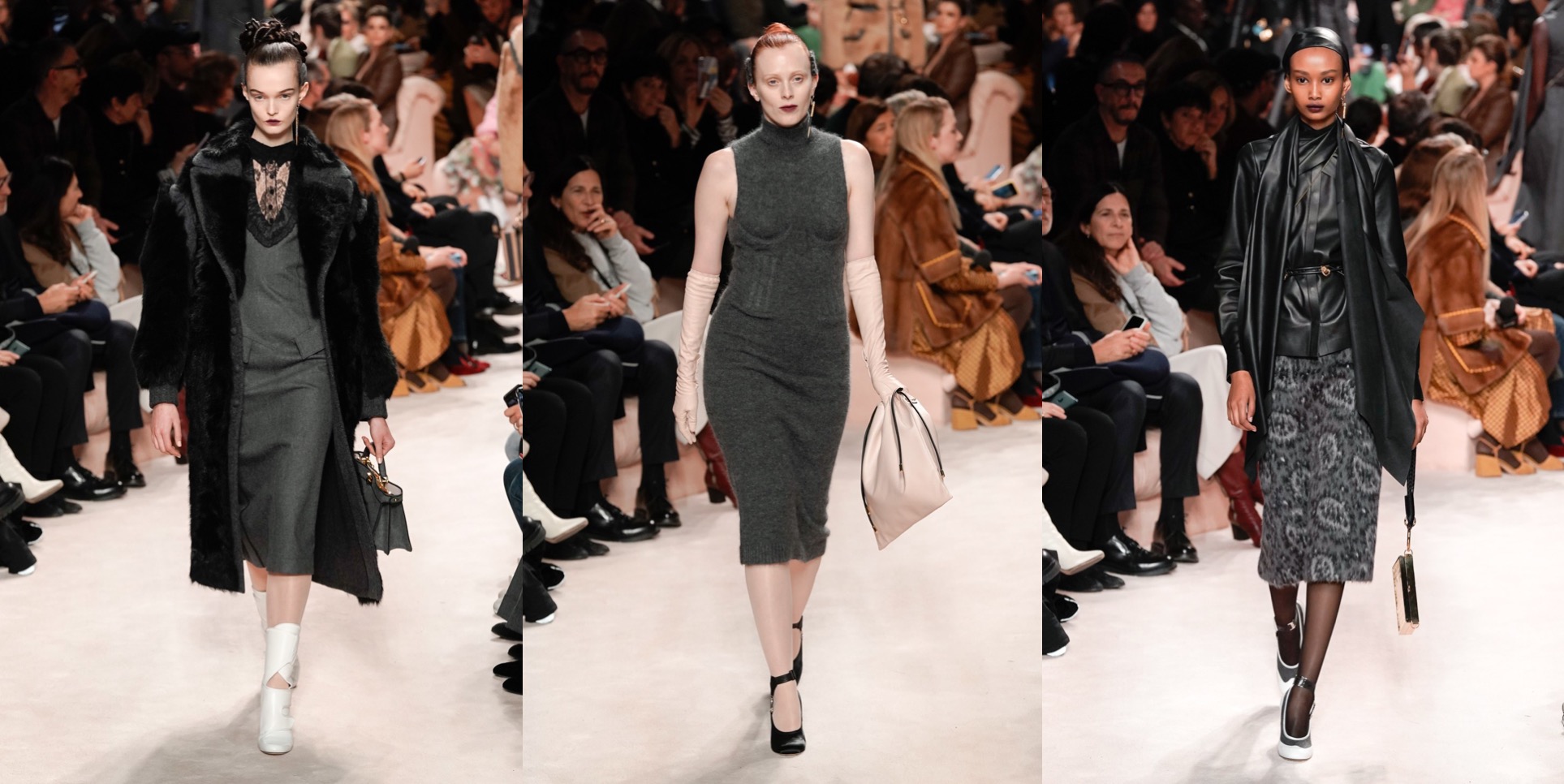
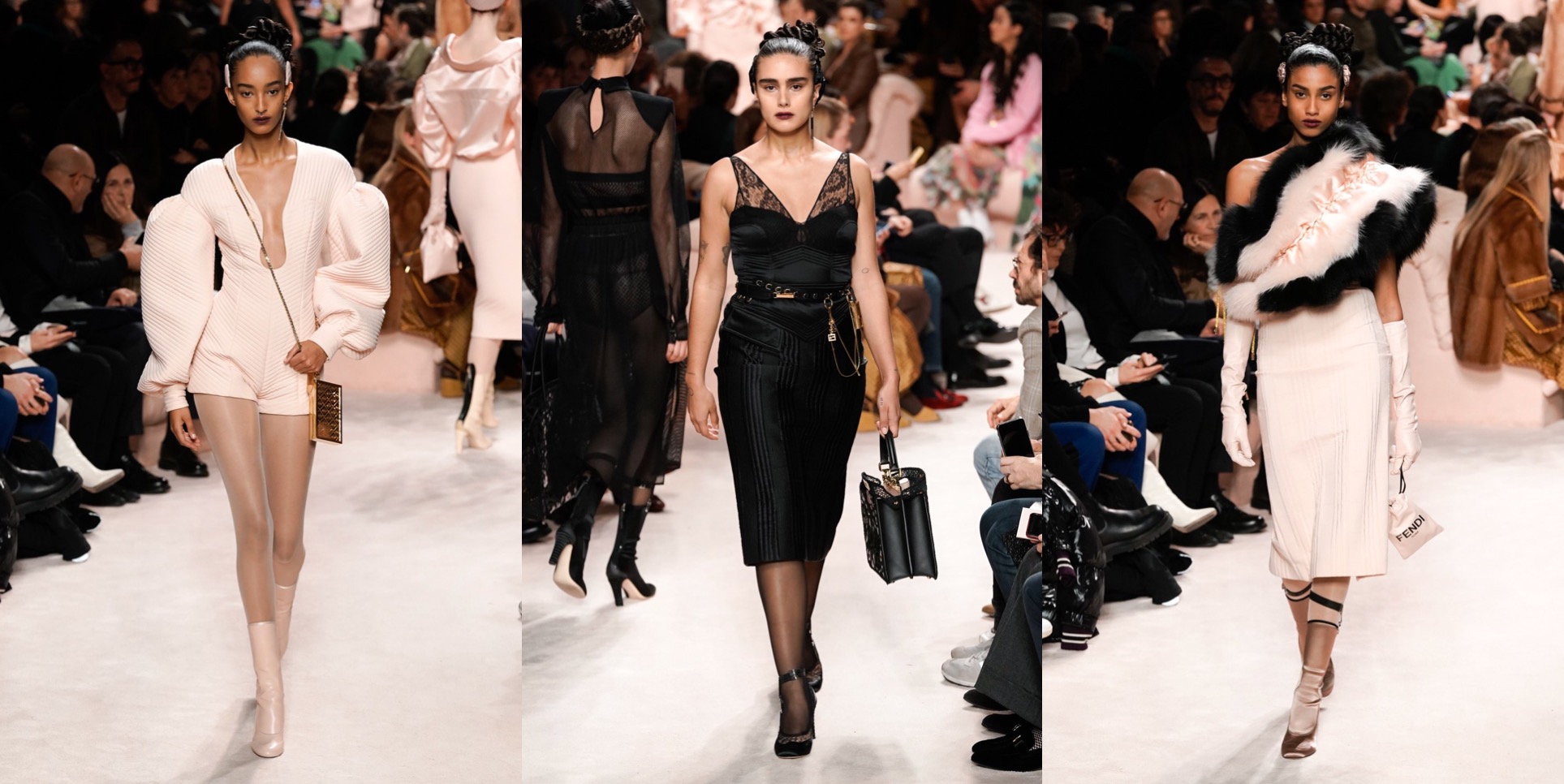
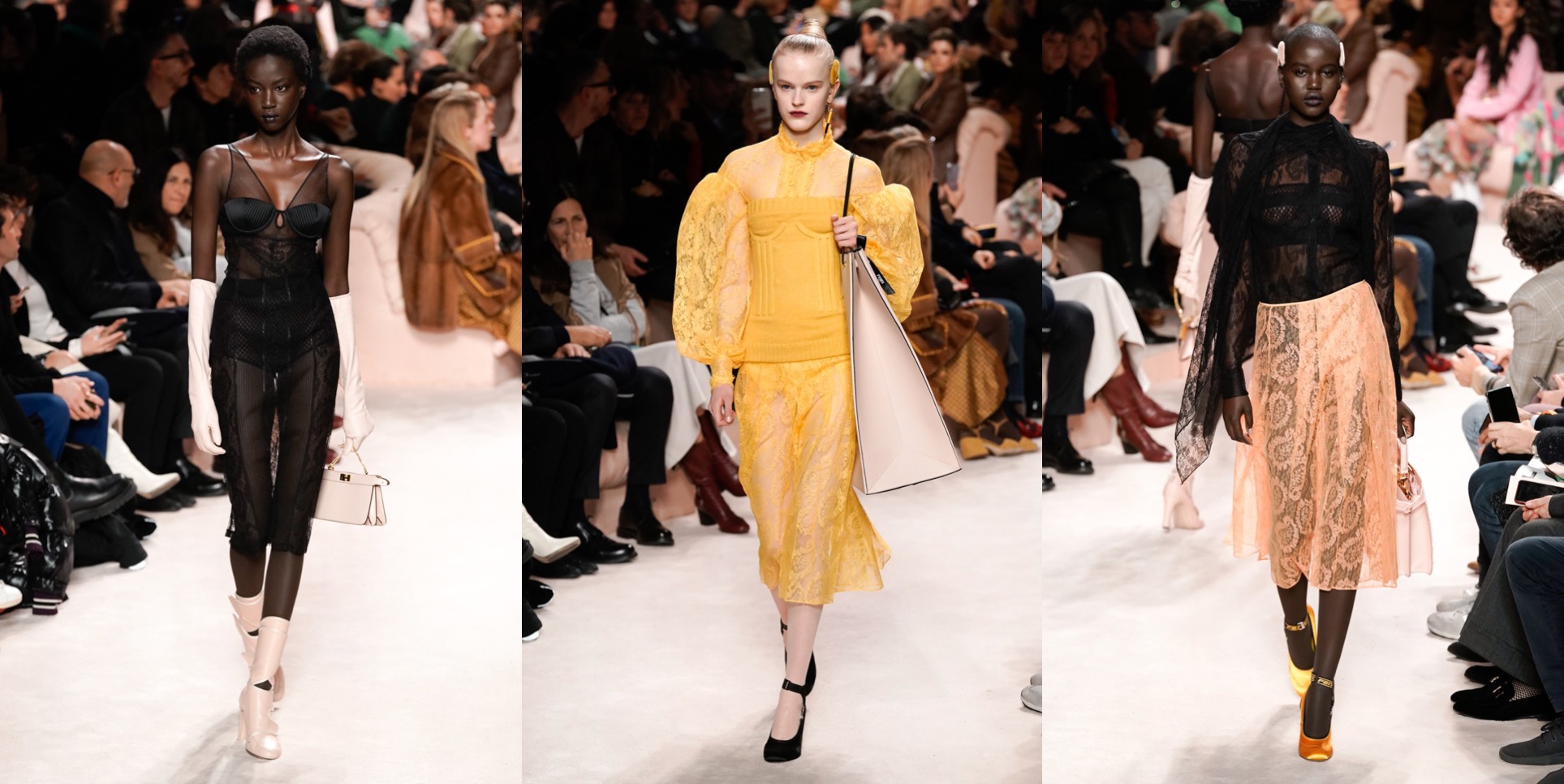
I really loved Fendi’s autumn-winter 2020 collection. First, no sight of F logos all over the place. Second, Silvia Venturini Fendi nailed the femme fatale look making it simultaneously powerful and confident. Third, the collection’s model casting is a revolutionary moment for Milan, which is considered the most „conservative” of all four fashion capitals. Jill Kortleve and Paloma Elsesser became the first ever so-called “plus size” models to walk a Fendi runway. They looked incredible. And there were also the „veteran” models: Karen Elson (she had completely elevated her grey knit look), Liya Kebede, Carolyn Murphy and Jacquetta Wheeler. Silvia found it frustrating to always present shows whose casts were defined by the sample size.  “Especially because you talk to me and I am not really a prototype of that shape. So it’s liberating for me to portray these clothes in a different way, on different sizes.” Yes, two models in a cast of 50 girls seems not much, but still. Big hopes that this isn’t just a one-season thing. Back to the clothes for a moment. Fendi mentioned liberation, and that was the spirit of a show presented on a curvy, pink upholstered runway. The spectrum of that freedom ran from the liberatedly libidinous to the glass-ceiling smashing, or “from the boudoir to the boardroom” as the show-notes put it. The pieces combined executive chic with a sexual tweak. This was a collection that embraced the double standards of male-eye categorization and short-circuited them via disassembly and disguise: dressing up for self-gratification rather than that of others. Silvia Fendi and Miuccia Prada are the only two pre-eminent female designers in Milan. This season, both of them make significant statements on women and femininity.

Collage by Edward Kanarecki.