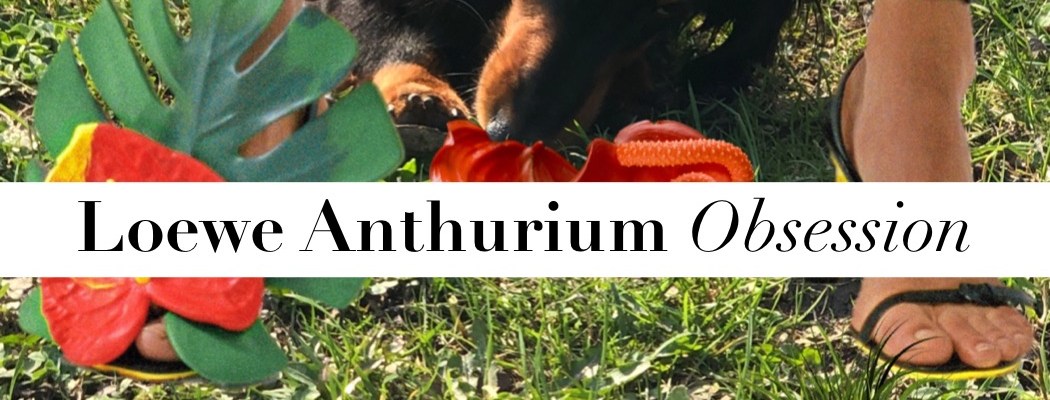
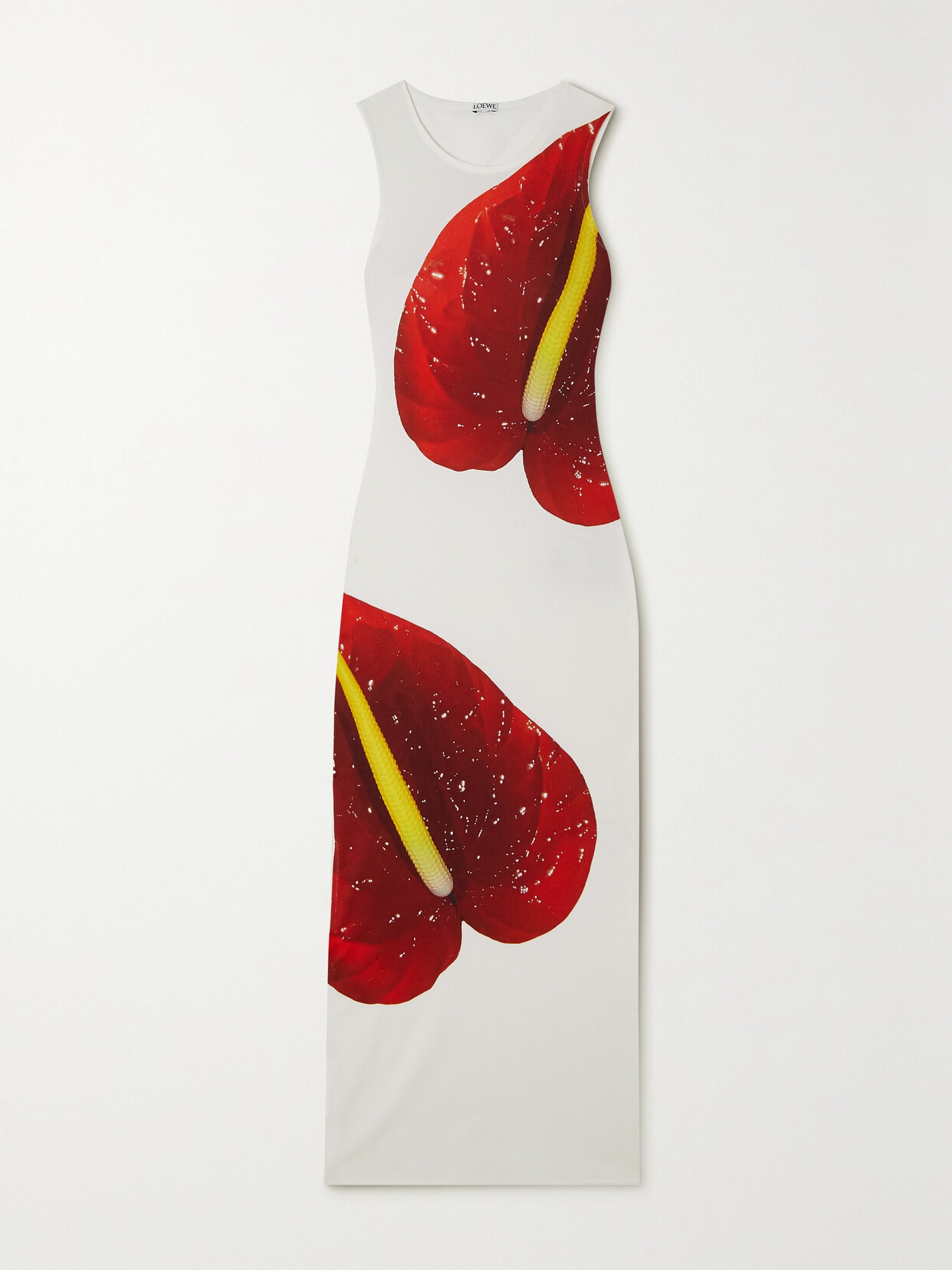
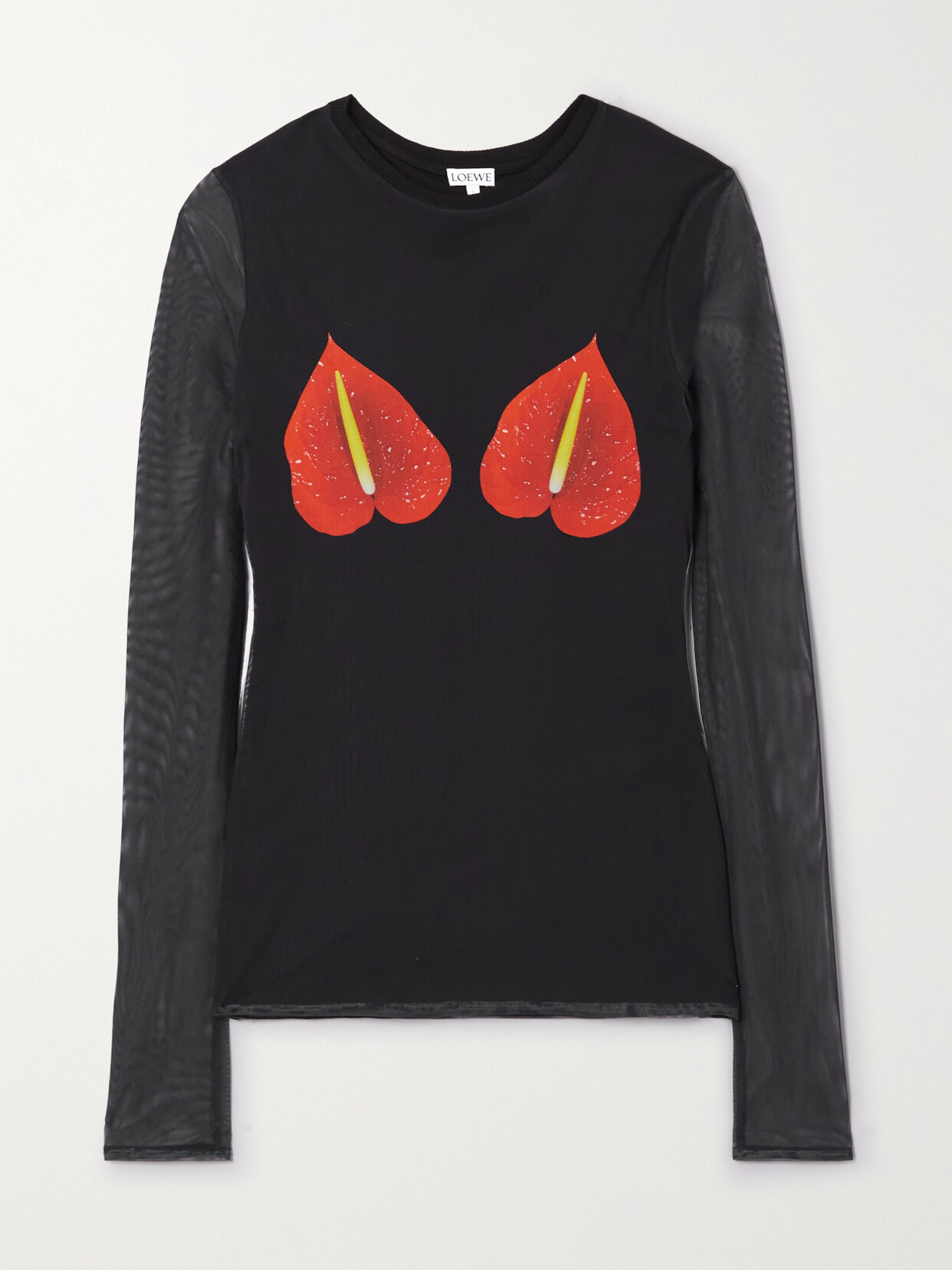
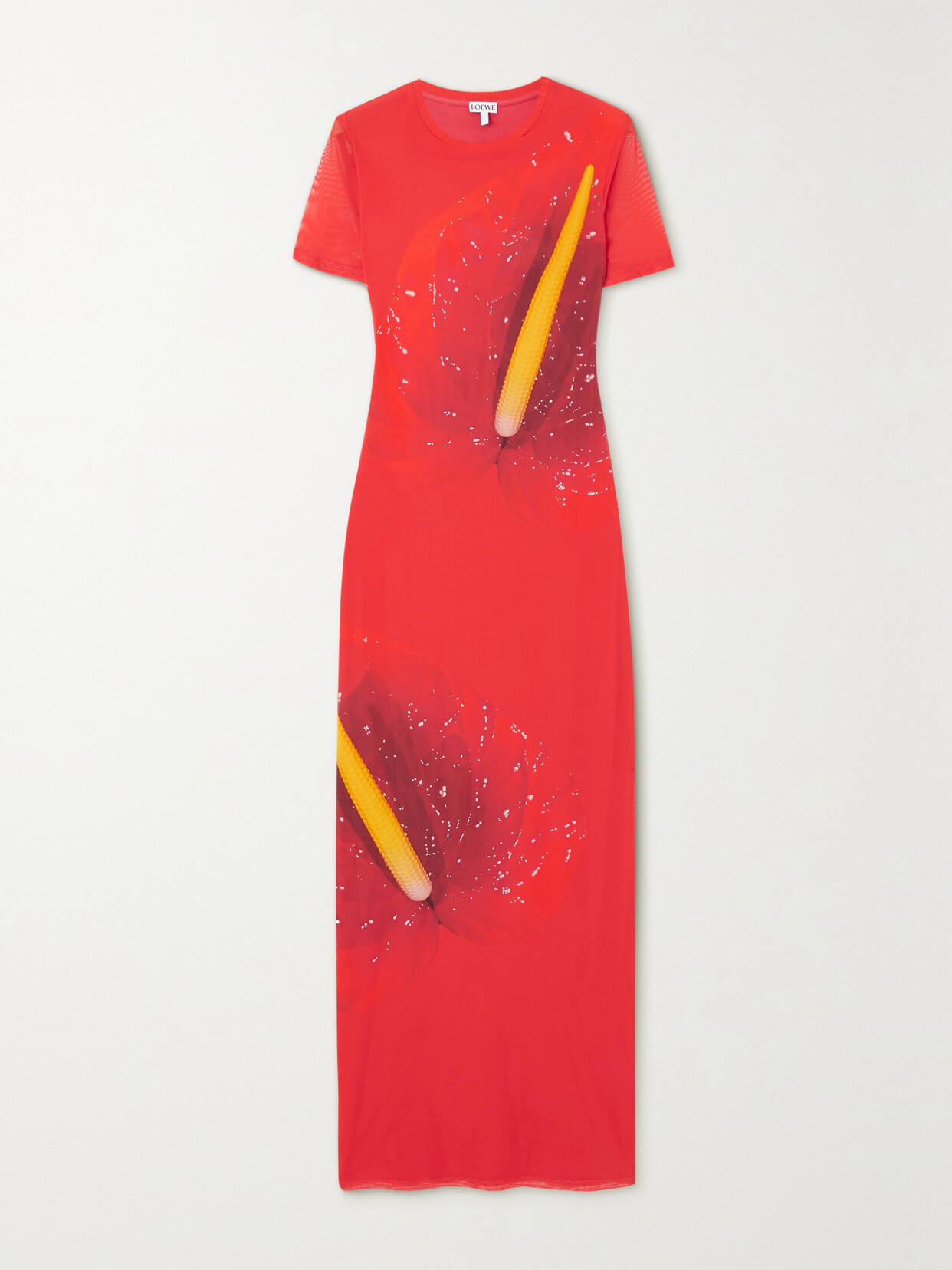
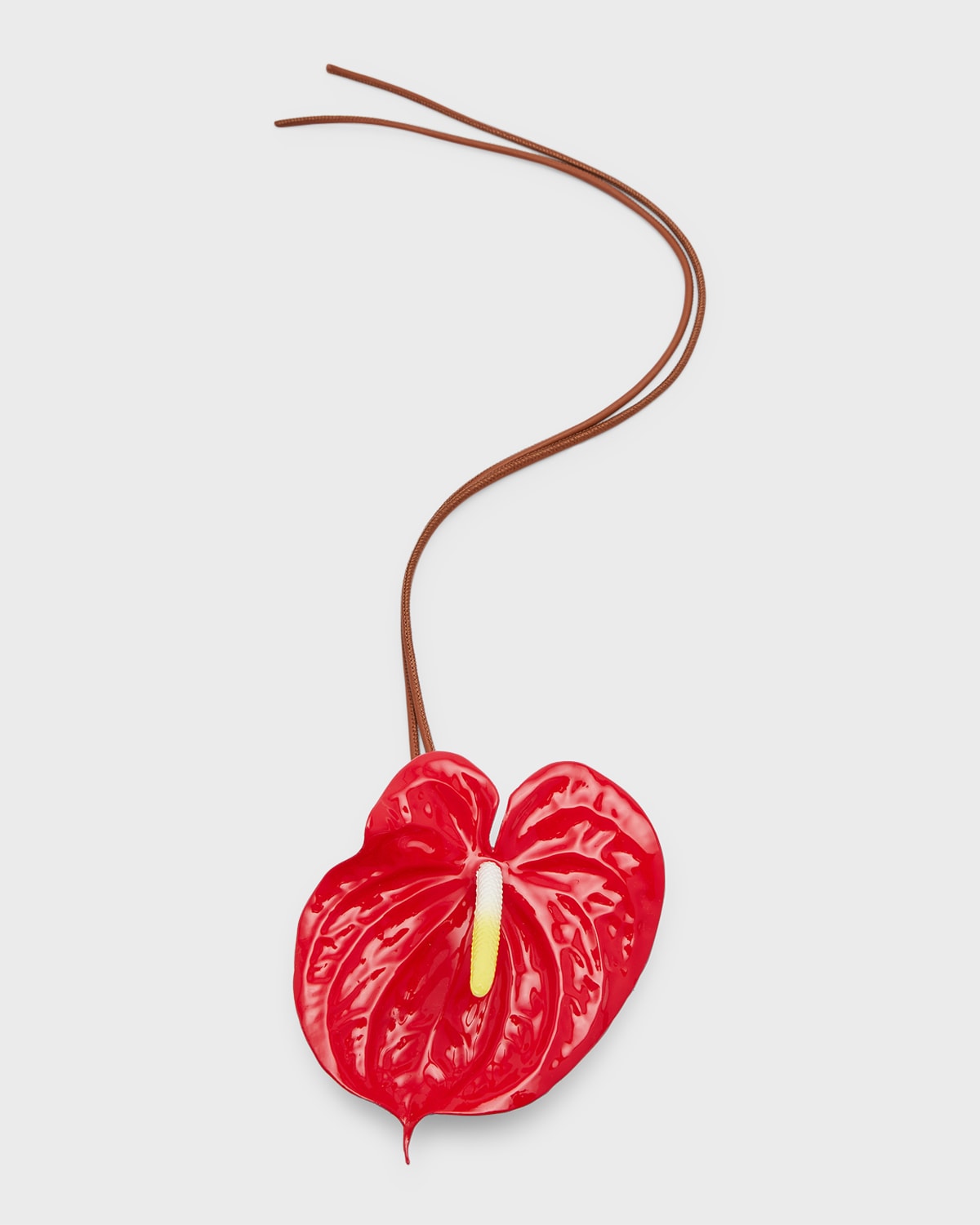
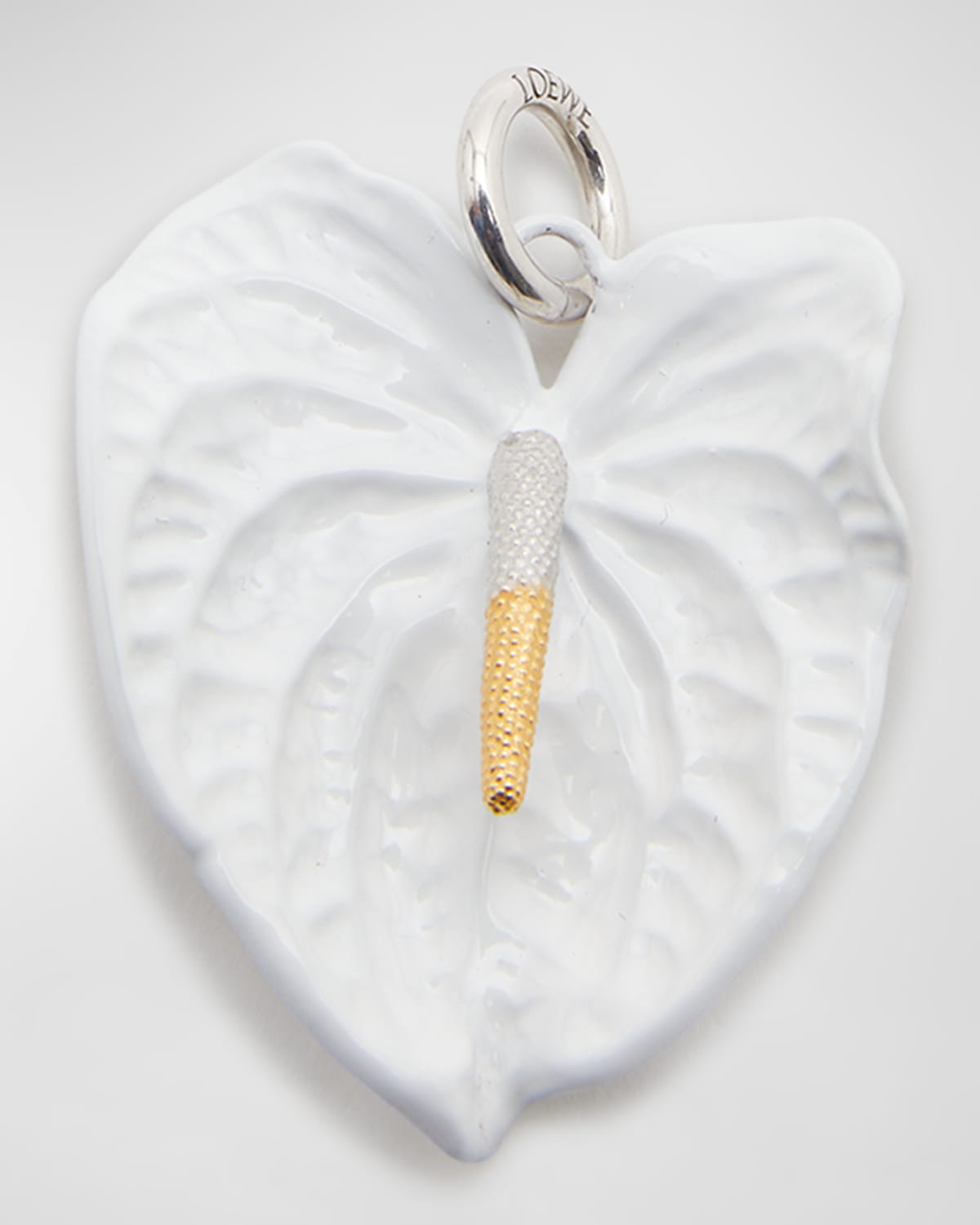
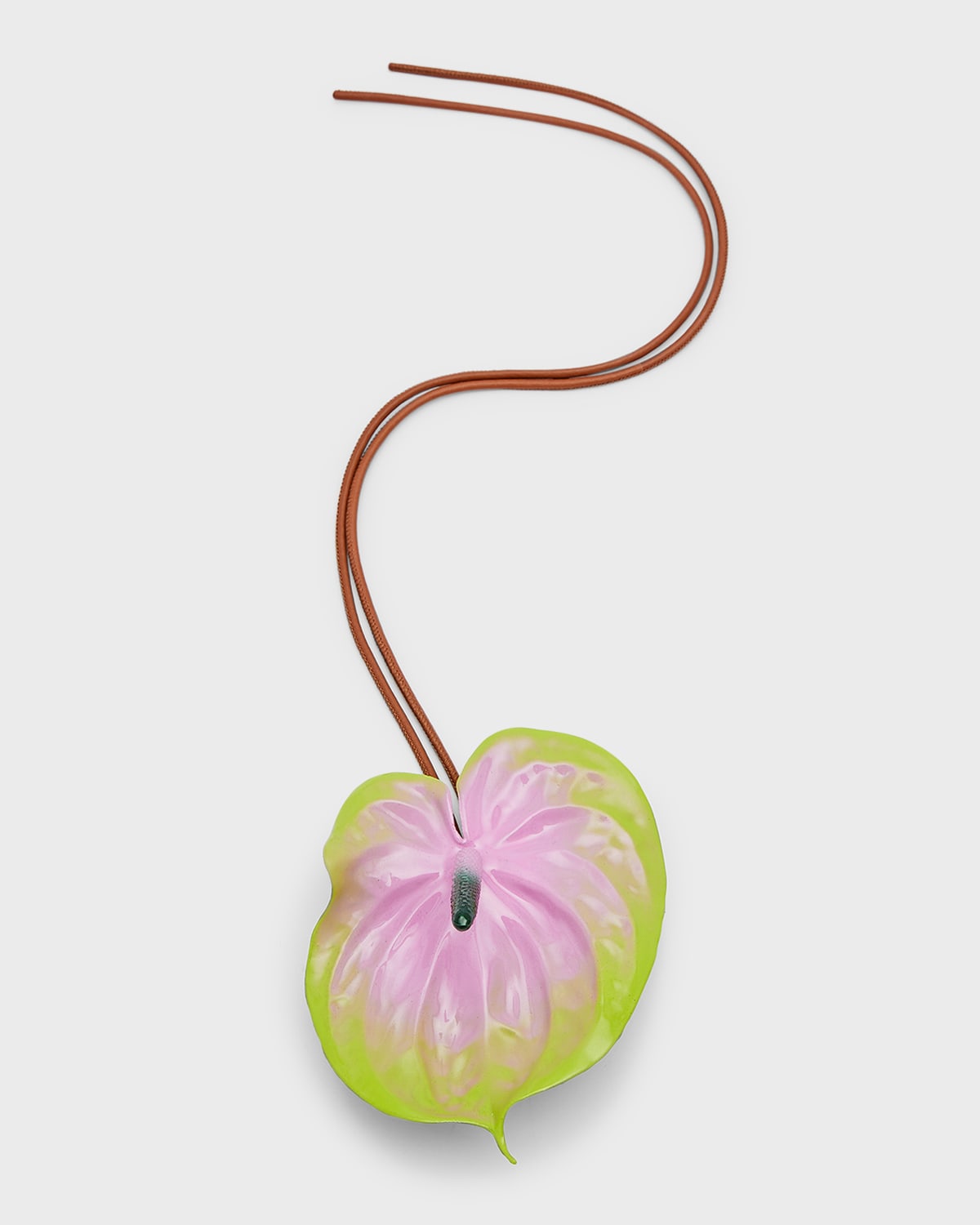
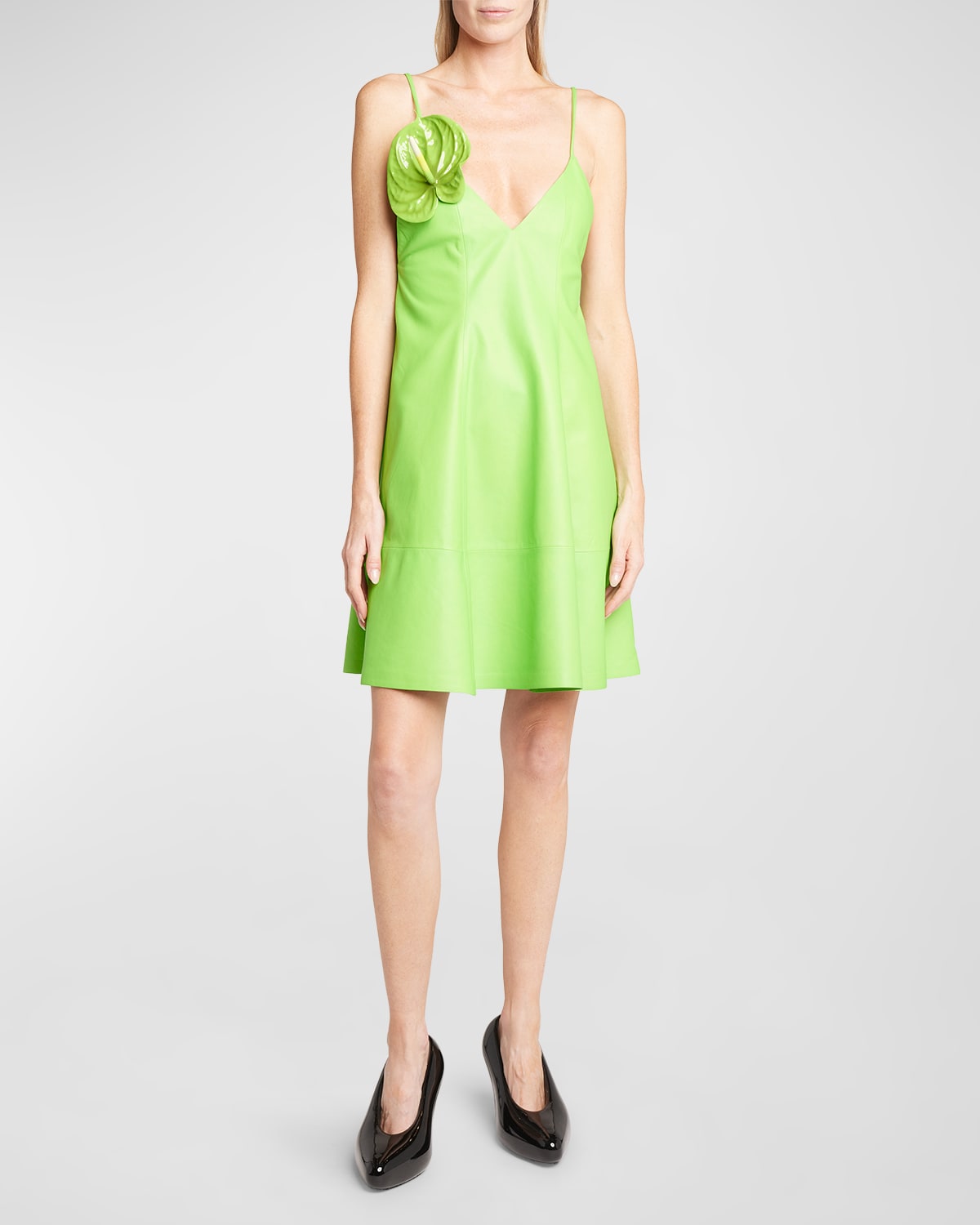
Ok, spring is in full bloom, summer is around the corner, and I’m obsessed with the Loewe anthurium. It all began with Jonathan Anderson‘s very brilliant spring-summer 2023 fashion show, and now these crazy, sexy flowers are popping in the stores like wild. I love them, Noto (my dachshund puppy!) loves them, you love them. Thanks Loewe for introducing the fashion world to anthurium, the most stylish flower ever.
Here’s a selection of the finest anthurium pieces you can shop right now:
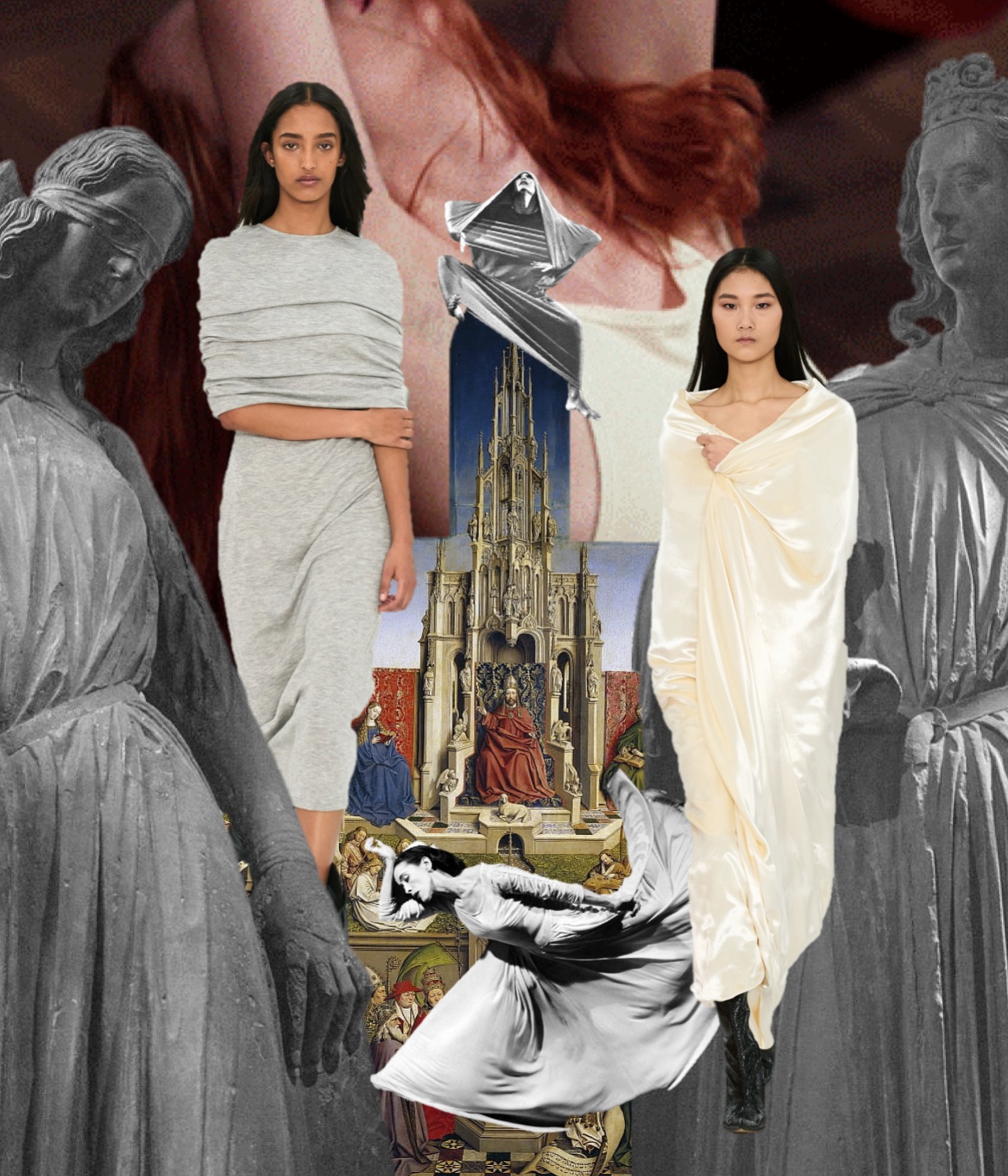
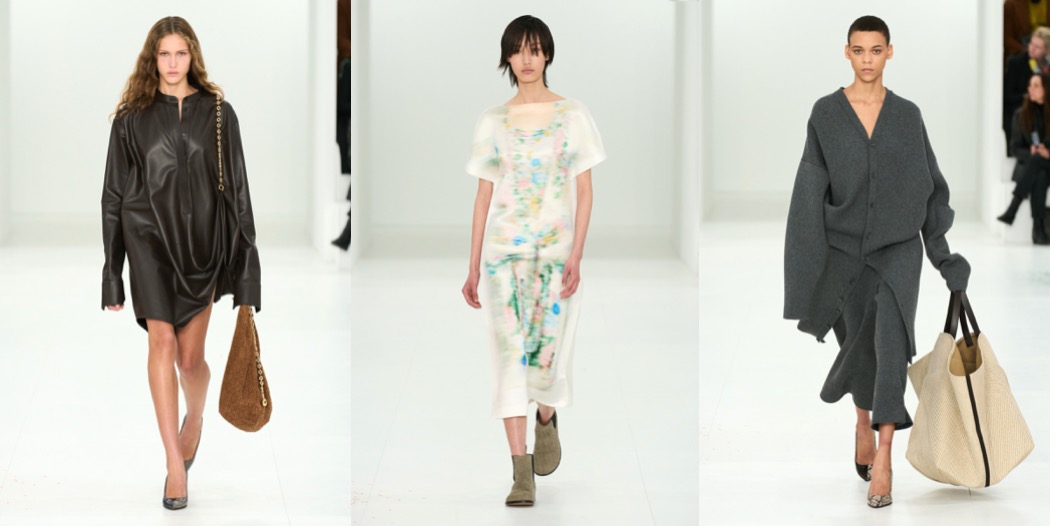
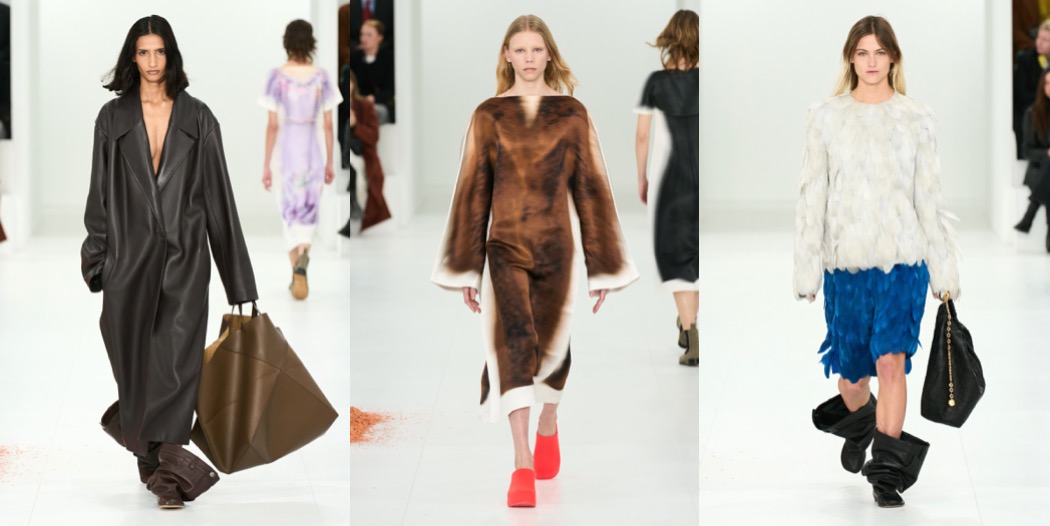
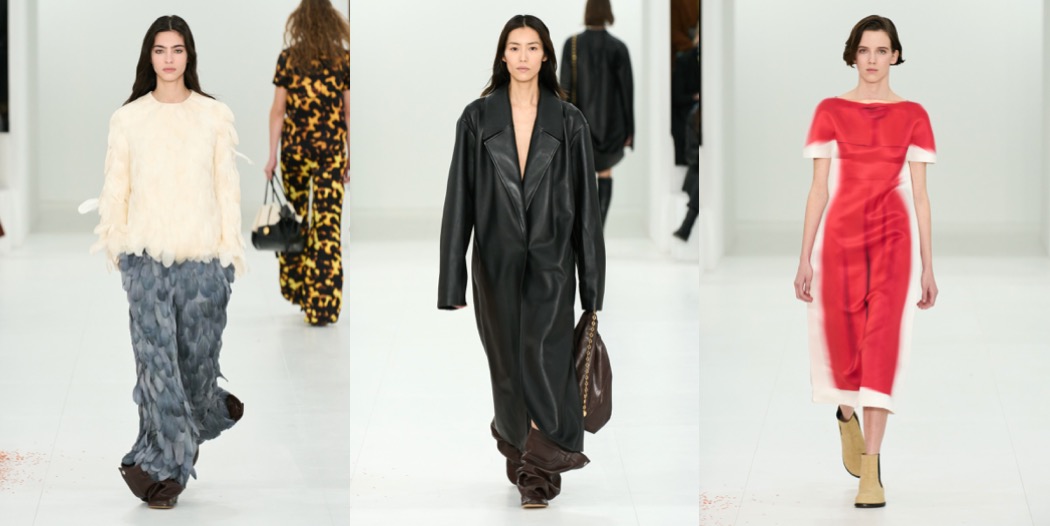
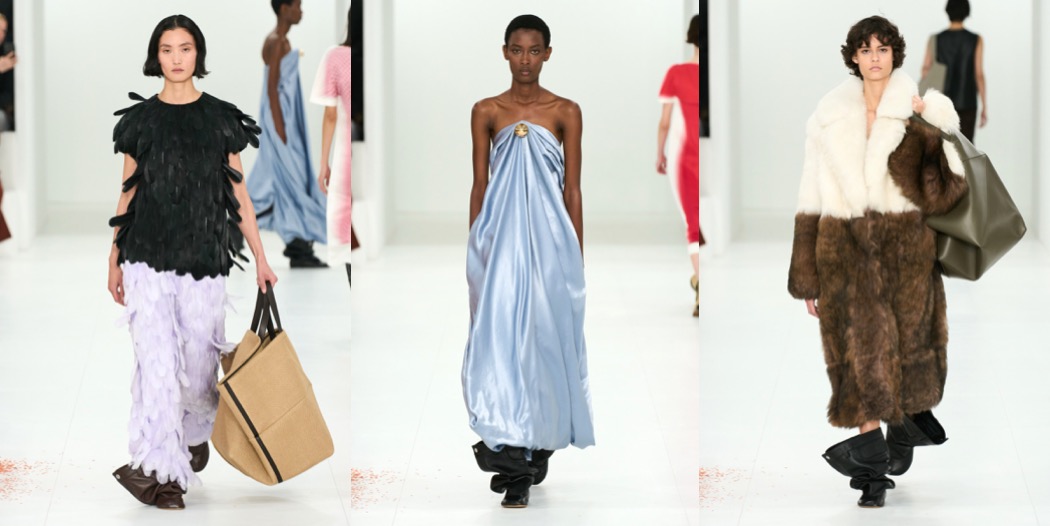
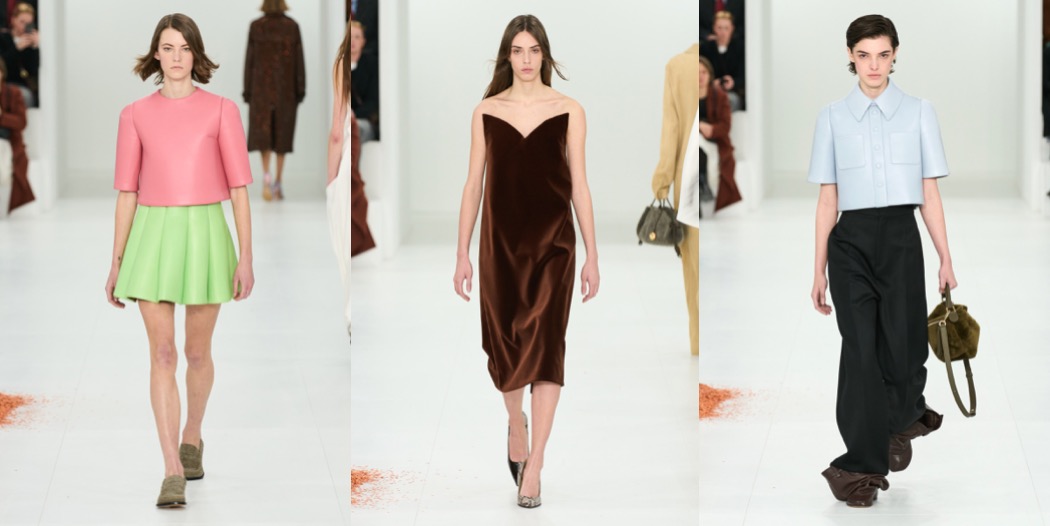
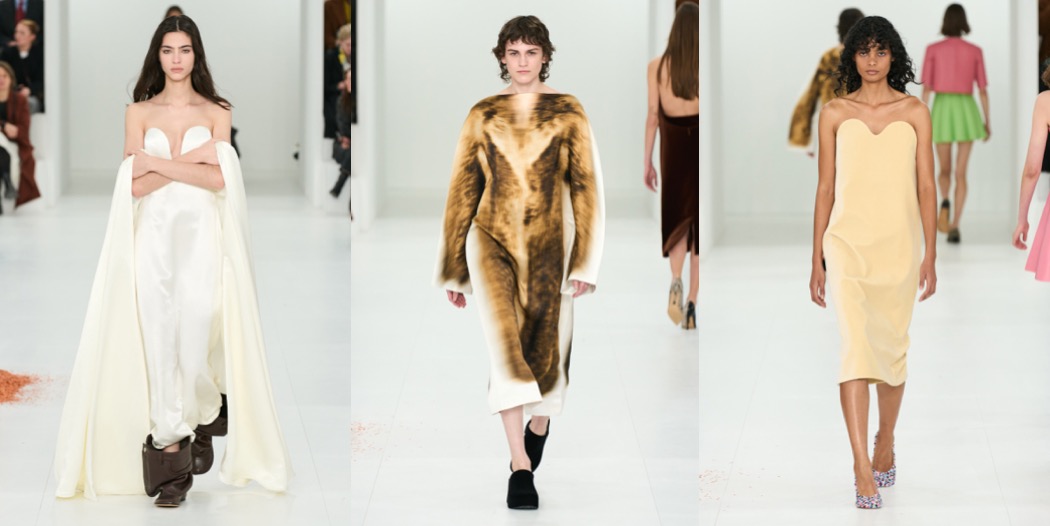
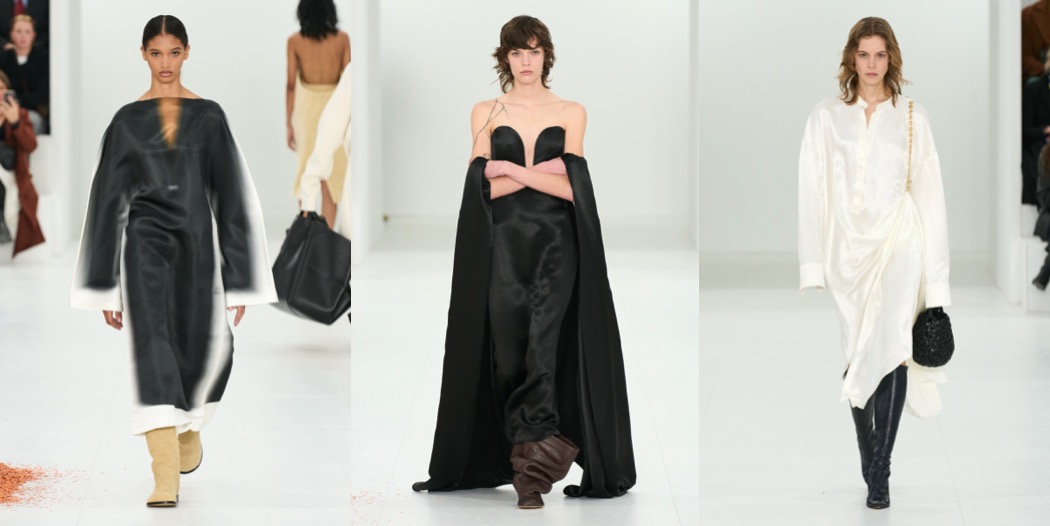
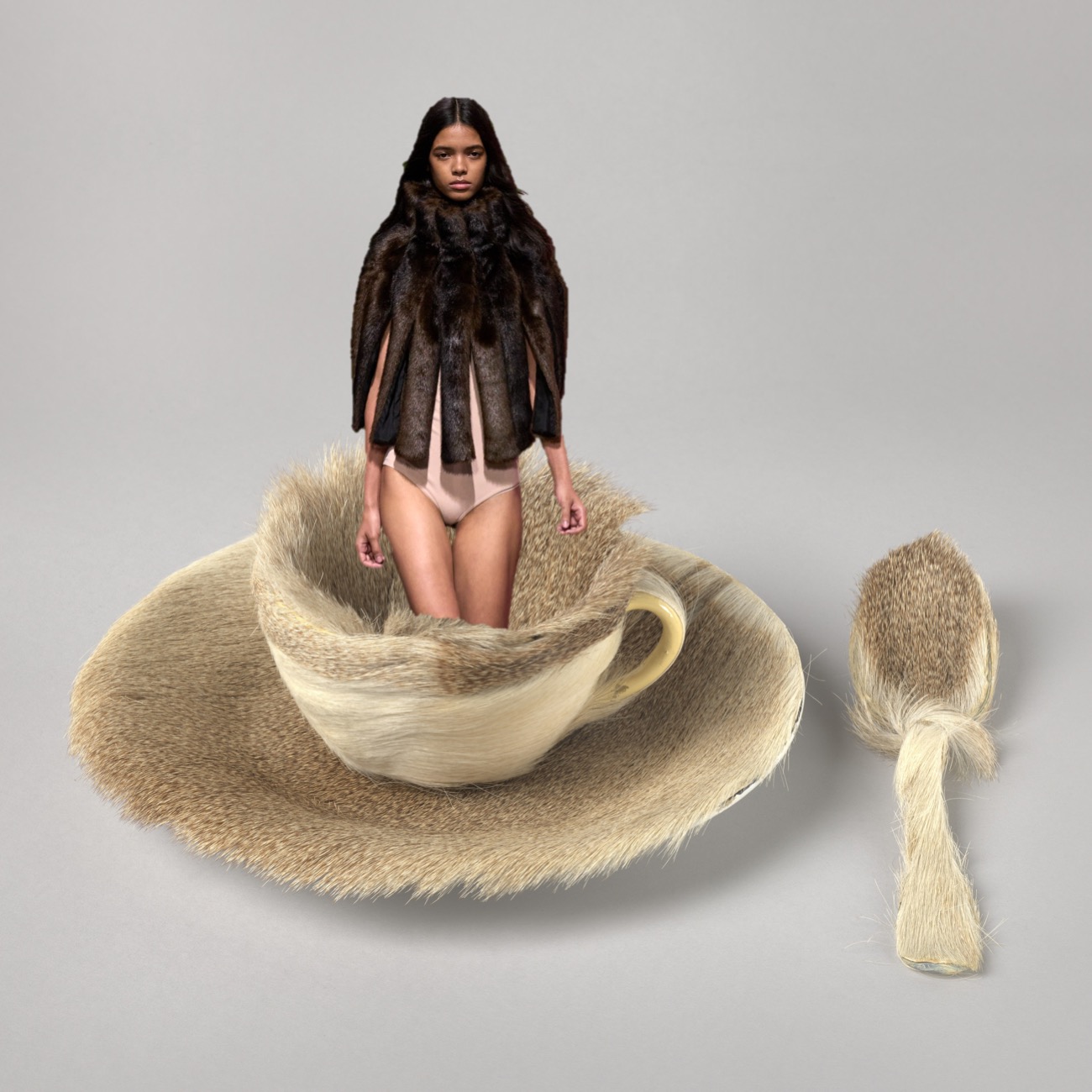
Thankfully, we’ve got Jonathan Anderson, one of the most exciting innovators in contemporary fashion, gracing us with his brilliant Loewe collections. His recent, absolutely out-of-this-world menswear collection filled me with hope that in fashion, it’s still possible to do something completely new. The autumn-winter 2023 womenswear collection is a beautiful, multi-faceted, and disturbing-in-a-good-way continuation of Anderson’s vision he proposed back January. “It’s a bit like the ghost of fashion,” said the designer. “This idea of the past and where we are now. Couture classicism meeting something which is new.” Anderson was out to trick the eye of the internet with his Loewe “ghosts”—simple white duchess satin shifts over-printed with blurry images of 1940s, maybe ’50s cotton frocks, a mackintosh, a fur coat. Each had blank margins. “Printing a garment on a garment is not a new thing. But I was fascinated about the psychology of how we ultimately see things online. The blurry aspect in motion looks like a glitch,” he said. “It’s out of focus. Is it staged, or not staged? Is it the right color, is it photoshopped?” What’s real, and what’s fake? That’s the question Anderson reflects on for the last couple of seasons (remember the super-fake-slash-natural anthuriums?). The designer had fun with that, warping anachronistic haute couture techniques and generic dress types to make ‘T-shirts’ and ‘jeans’ entirely of angelic goose-feathers, and three strapless velvet cocktail dresses calculated to look flat and normal on screen, but which had a stiff, tubular stand-away volume in reality. There was more eye-trickery when a couple of ‘ordinary’ cardigans – one pink, one turquoise – turned up: in fact, they’d been printed out on adhesive paper, and literally stuck on the models’ skin. Then there were tiny, seamlessly molded jackets, which Anderson described as “like Playmobil.” Unless you touched them, you’d hardly realize they’d actually been made from super-fine leather, vacuum-formed the same way as luxury car upholstery. Pushing techniques until they aren’t what they seem, through a combination of traditional skills, new technologies and a searching imagination is something that only a top-notch modern luxury house can do, of course. Still, for Anderson, the point of showing all of that facility was to drive beyond surreal effects. “How do you go out of a surrealist aspect to something which is more about how we see clothing now? I think it’s kind of like a type of reduction,” he said. “Wanting to refine, and refine.”
“I’ve been 10 years here at Loewe. You kind of you start to be like, ‘Well, ‘what is that next chapter like?’” His answer this season was to go fully into the fine leather and suede which are the brand’s heritage. “I feel like in the beginning that was something that I kind of went away from,” he said. “Whereas now, it’s about implementing it back in.” He had some fun with that, too: a brown leather shirt was hybridized with a bag, with a hitched-up shoulder strap attached to its tail. Funny. It didn’t distract, though, from all the rest: the perfect leather tank, the long camel suede coat, the giant geometric leather totes, the renewed, retooled long, shallow ‘Paseo’ bag and the deep cylindrical suede shoulder bag that Anderson had found in the archive. Perhaps that’s what he meant when he made that remark at the beginning: the excitement of “classicism meeting something which is new.”
Collage by Edward Kanarecki. Don’t forget to follow Design & Culture by Ed on Instagram!
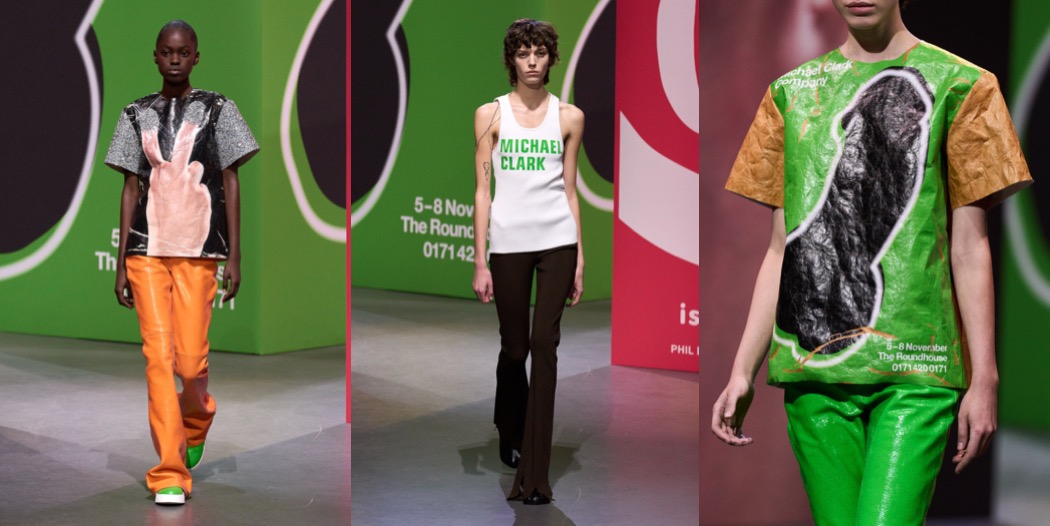
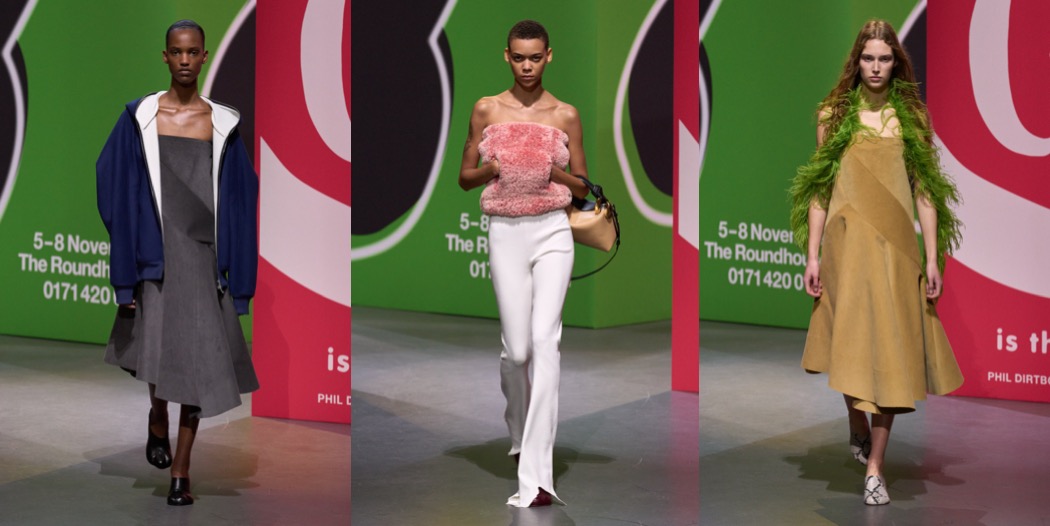
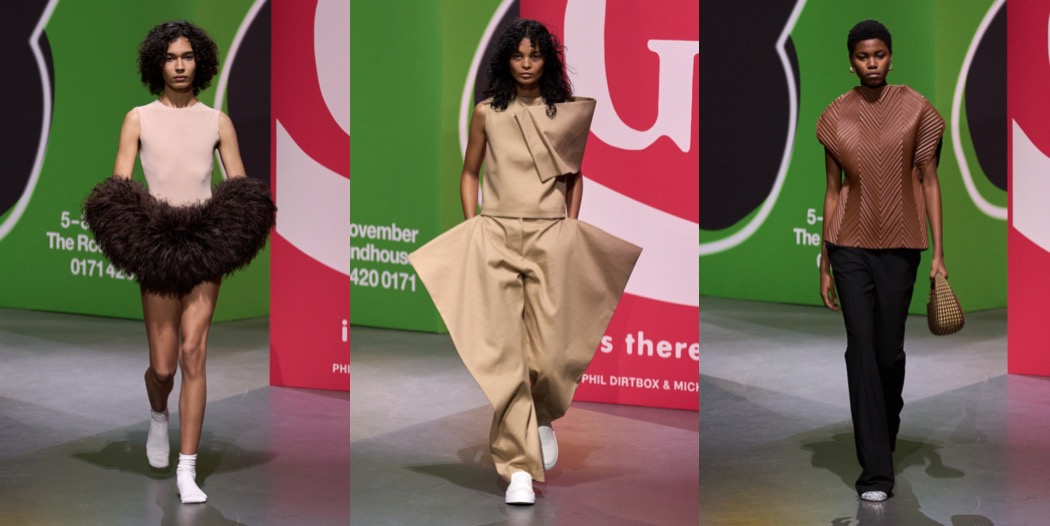
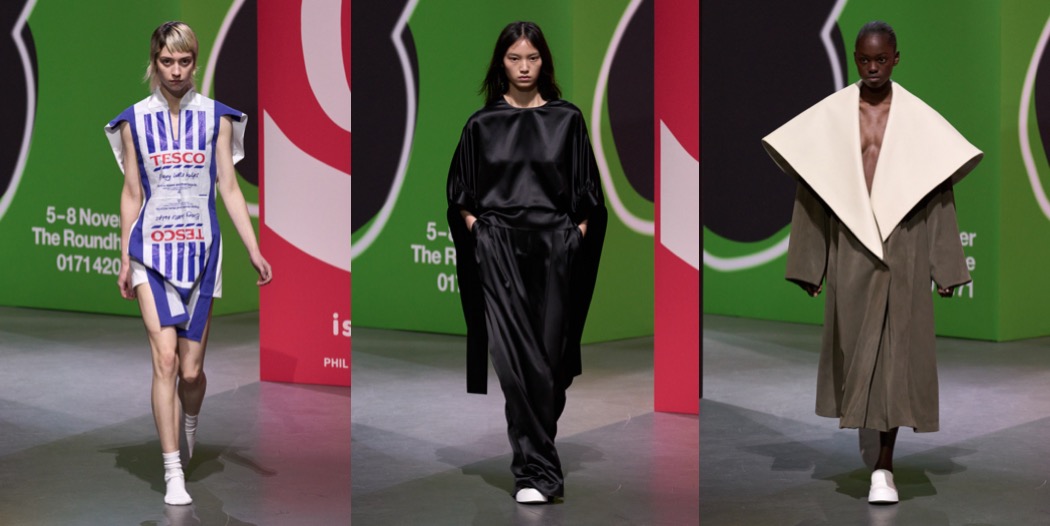
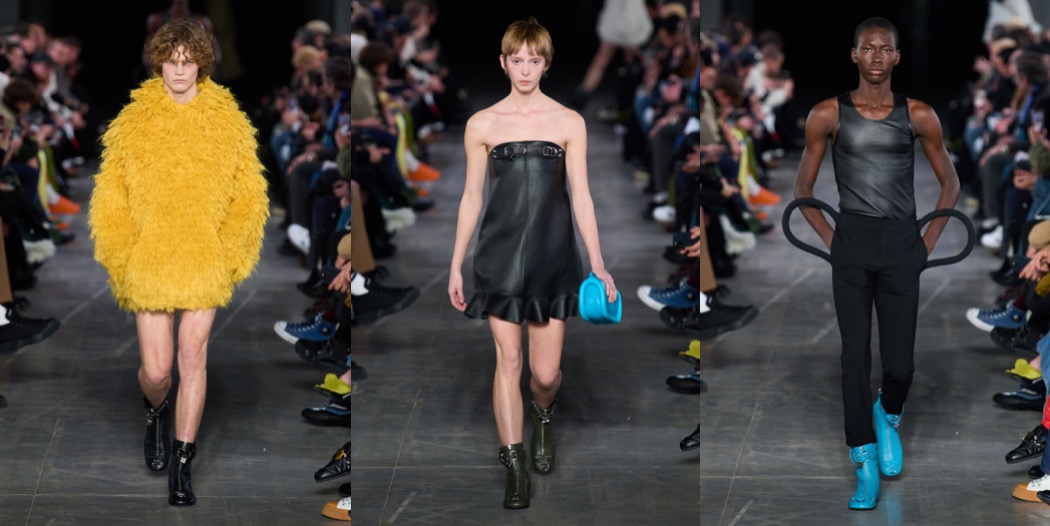
Jonathan Anderson isn’t really a designer who takes a look back at his previous work, but for JW Anderson‘s autumn-winter 2023 collection, he had a moment of retrospection. He came about it through a collaboration, or rather a creative dialogue, with the Scottish choreographer Michael Clark, whose famed subversive performances blurred the lines between ballet, gay nightlife, and fashion performance in the early 1980s. The giant billboard graphic of a penis as the show’s venue was part of that conversation. “In September of last year, we had a conversation with Michael, we’ve been trying to do something for while – and while looking through his archive, I was like, ‘Well, I can’t look through someone else’s archive without looking through my own. And I decided to take one element from every single collection of the last 15 years and try to work out a way in which you would merge two archives.” Clark, he added, isn’t crazy about looking back, and nor is he – but he forced himself. “I wanted something which was about how do you kind of reconcile the past, and how do you deal with what you have done, because ultimately the job of a designer is going through a series of rejections of things. And it was really nice to kind of work out ways in which you could break everything. And maybe improve on them.” Fans of Anderson will now get a chance to get their hands on revisited reissues of his greatest hits, like the kangaroo-pocketed bustiers that now come in fake furry chenille. His big experimental voluminous shapes, coats in subverted country checks, and bound-arm knits came out, interspersed with tributes to his hero. At one point, a best-seller JWA anchor-logo sailor stripe t-shirt was simply over-printed with the name Michael Clark in luminous green lettering. The ability to create great merchandise while often doing things that will fire the internet at the same time has always been central to Anderson’s talent, and has sent him right to the top in Paris with his role at Loewe as one of the most significant designers of our times. It had been fun to look back, before moving on, he remarked.
Collage by Edward Kanarecki. Don’t forget to follow Design & Culture by Ed on Instagram!
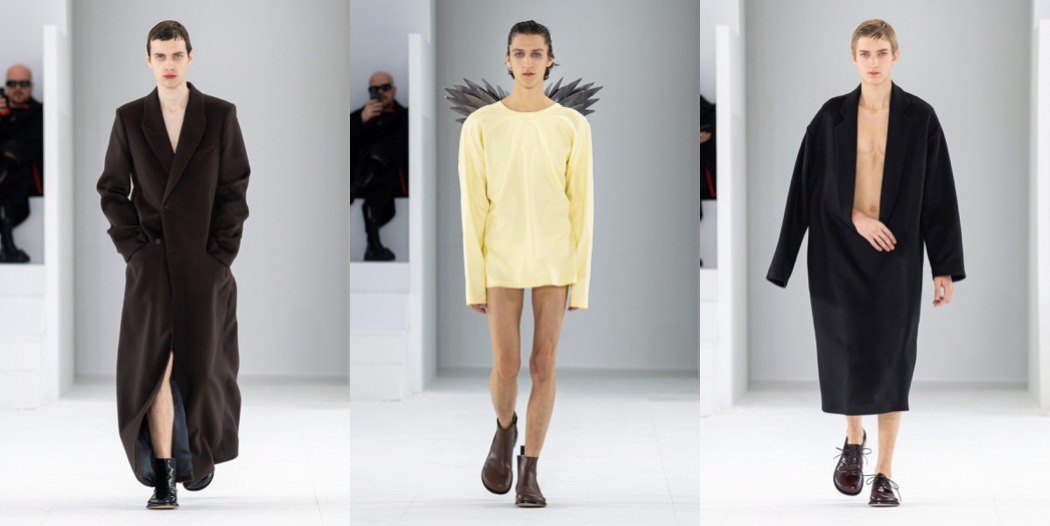
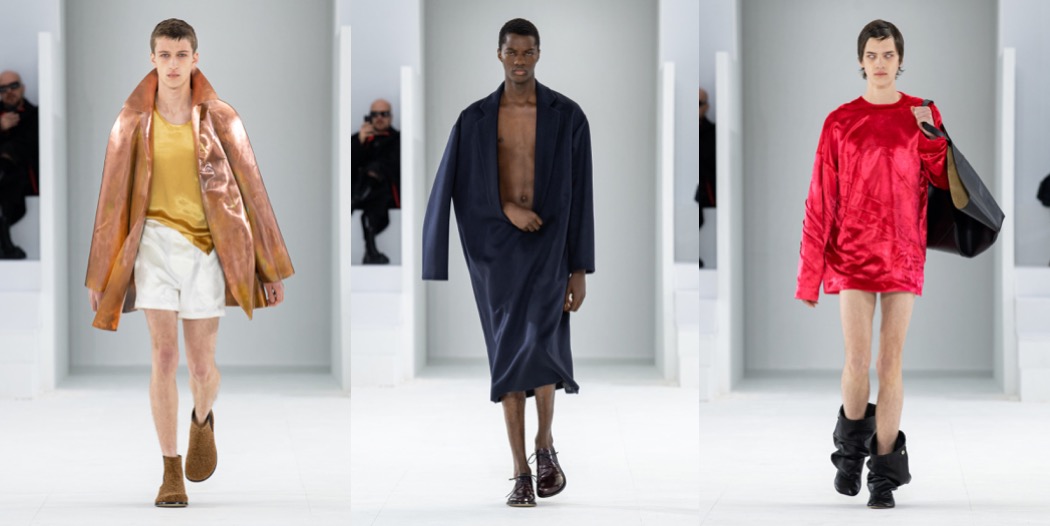
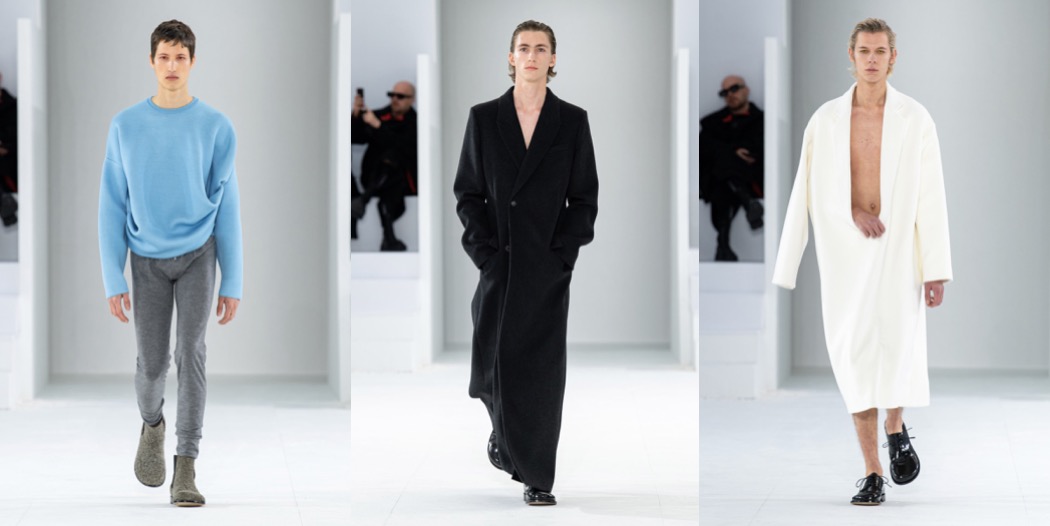
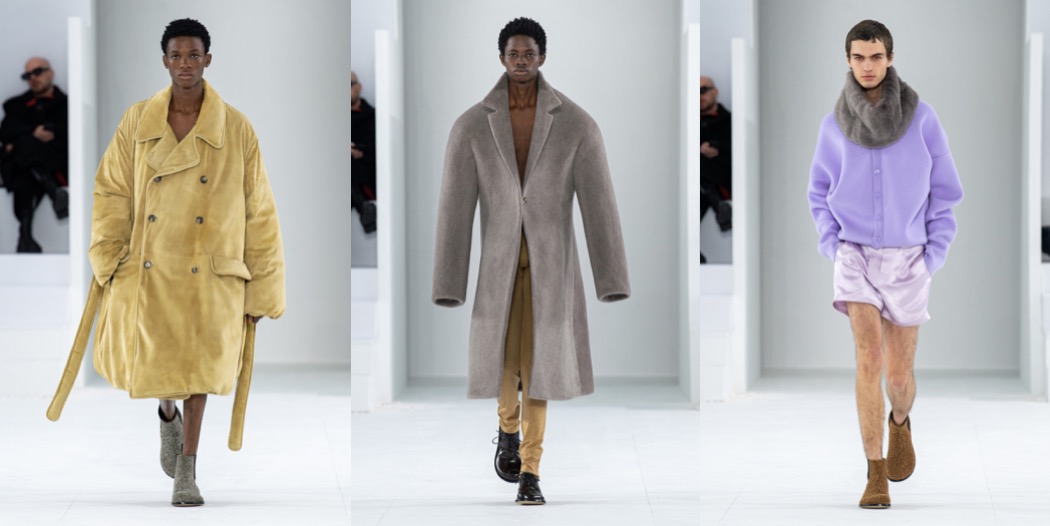
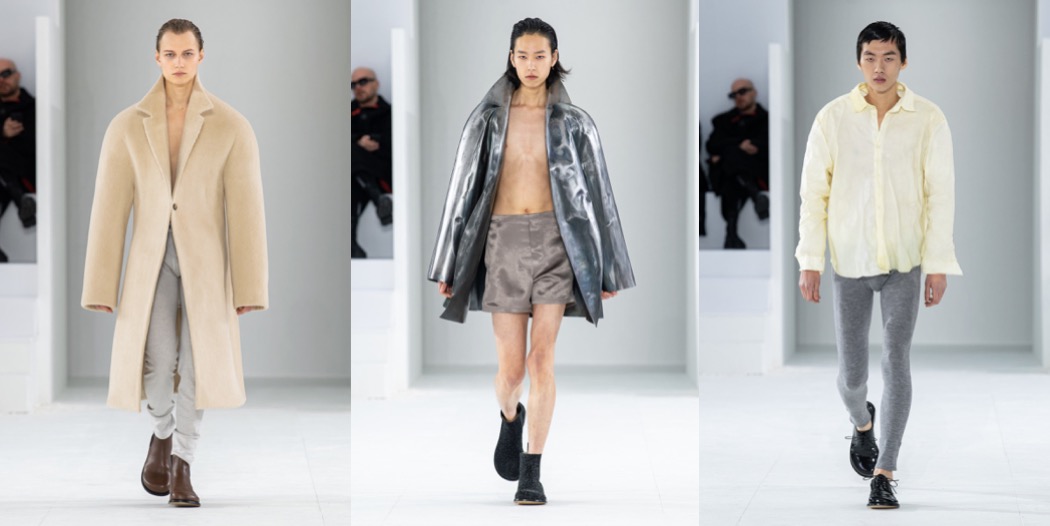
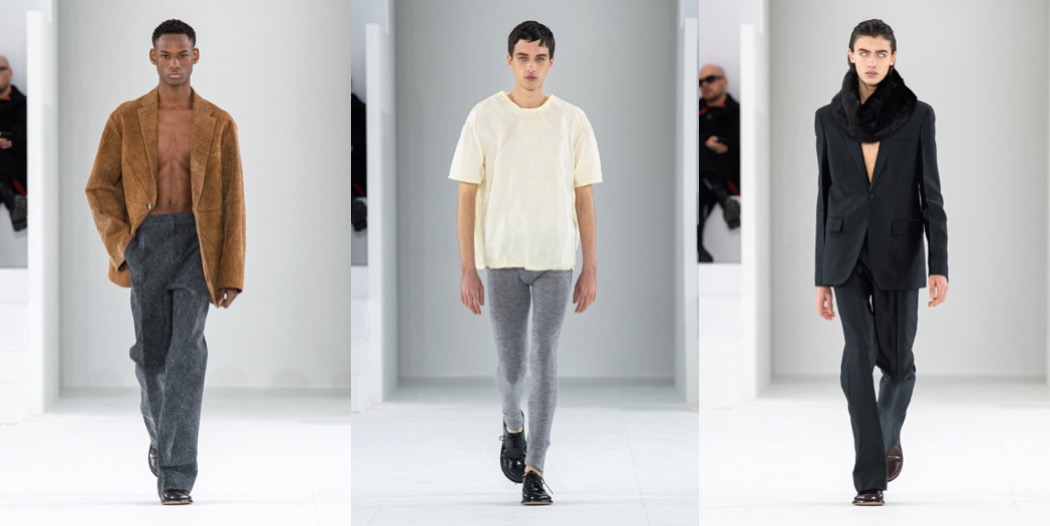
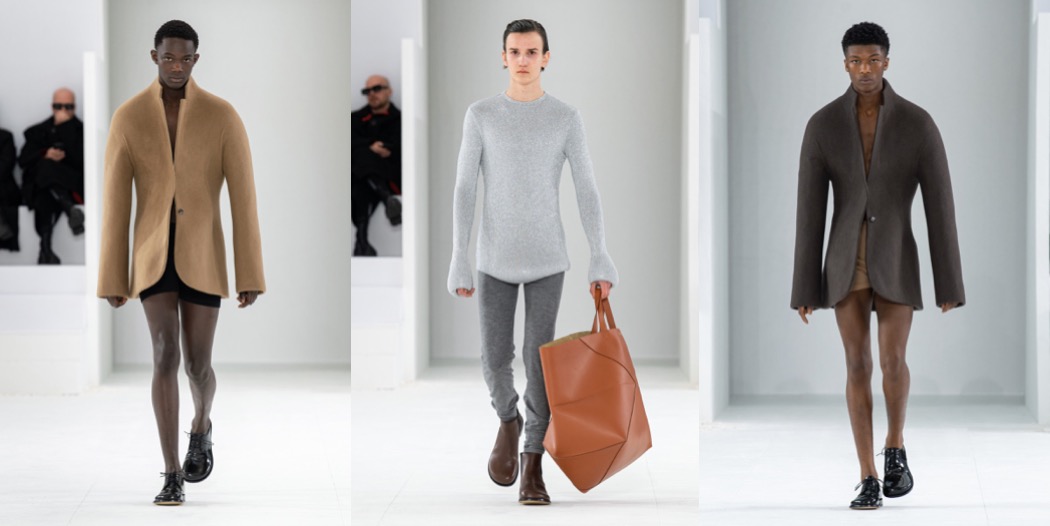
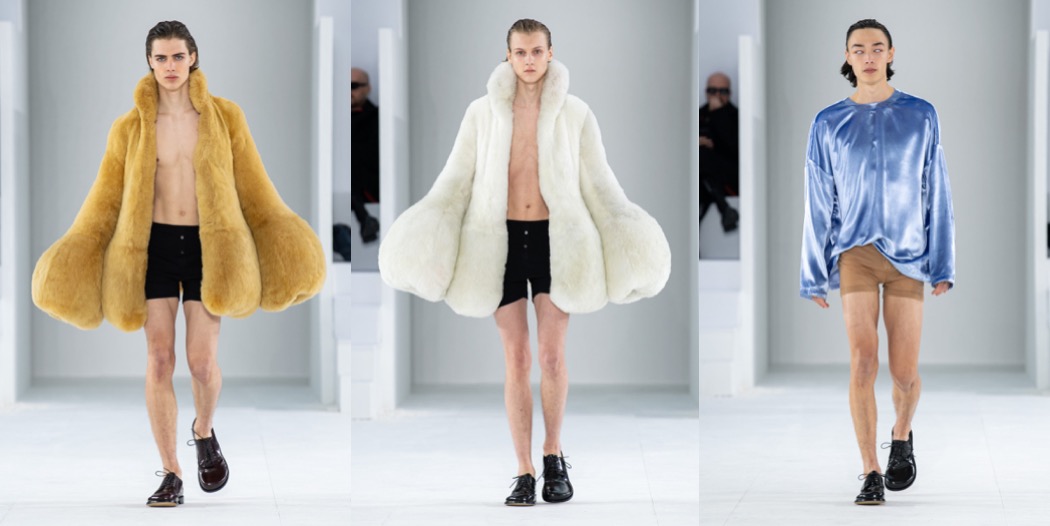
Season after season, Jonathan Anderson keeps on delivering the most innovative, technically mind-blowing, disturbing – in a way great art feels! – and unexpected collections for Loewe. His autumn-winter 2023 line-up for the brand is the most brilliant and thrilling outing we’ve seen this entire menswear season. “I do feel like less is more. But in a new way,” said the designer. “I don’t think we’re heading into modernity like it was. It’s not like ’90s modernity; there’s something more peculiar happening.” For Anderson, clothes are the main objects of consideration – not the runway venue (a white cube showcasing artworks by contemporary artist Julien Nguyen became the perfect, harmonious backdrop), not celebrity appearances (it’s not easy to make the collection itself more attention-seizing than Timothee Chalamet and Taylor Russel sitting in the f-row). This designer is one of the vanishingly few in the luxurysphere who believes that it’s enough to put clothes, and deep-thinking about them, first. It’s reached the point where it feels radical, avant-garde. “I think – I hope – that we’re going into a period where it is about being uncomfortable in design,” he added. “That we are trying to find something new.” This conversation was in his debrief, after a menswear show that proved, par excellence, that there’s nothing more absorbing and mentally exciting than simply being able to react to the meanings of what’s before you. And to witness configurations of stuff you’ve never quite seen before.
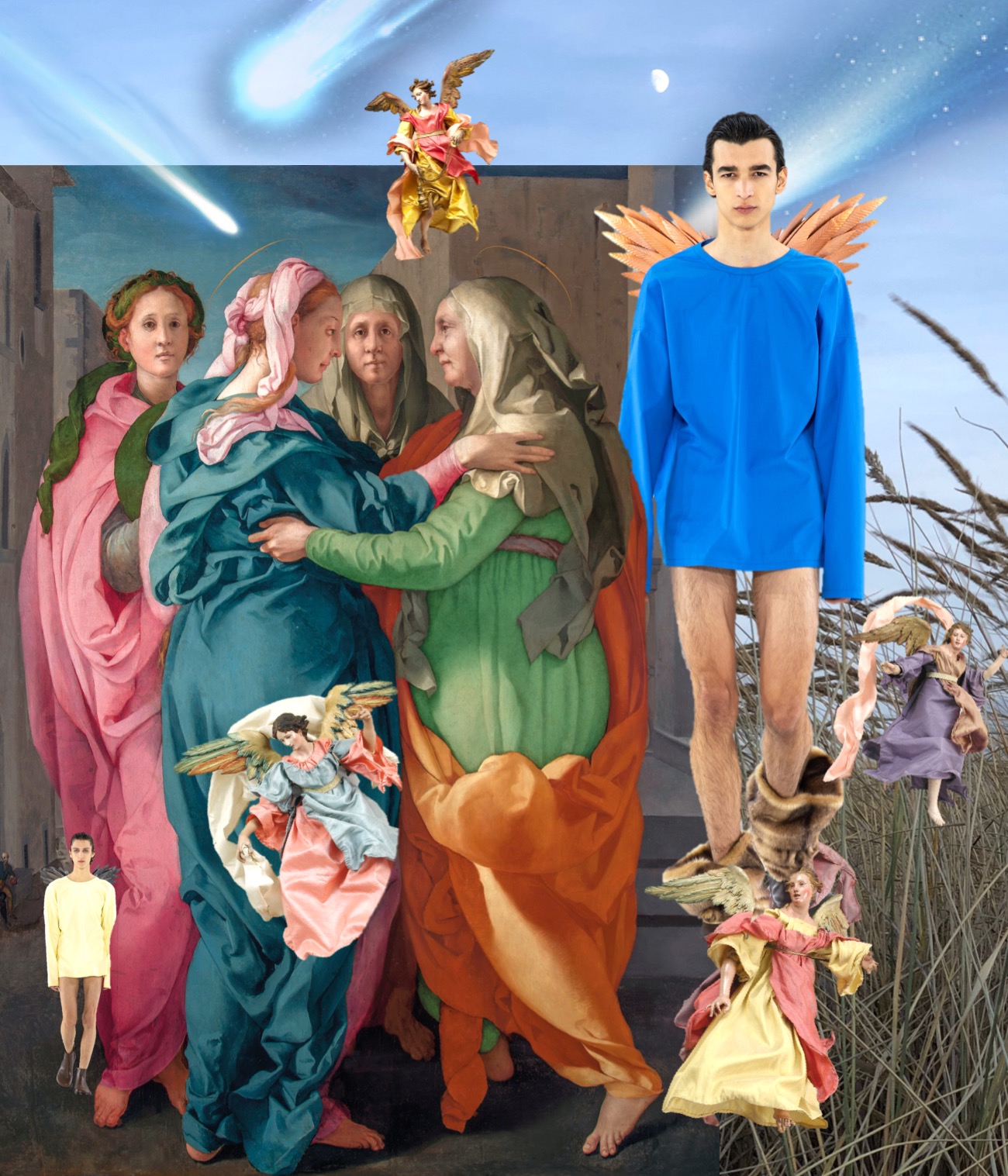
In Anderson’s world, the subject of clothes is multi-layered but startlingly focused on clarity; what be called “a reductionist act.” His collection was about exaggerating the materiality of fashion fabrication into the realms of pure-lined 3D sculpture – full metal jackets beaten by artisans from copper and pewter; stand away structured coats molded by hat-makers. What he’d done with the short, back-fastened shirts is quite a riddle. Some of them were rigid, wrinkled vellum – the work of traditional book-binders. Others were delicately made in hammered silk, a match for the boxer shorts, worn with nothing but leather ankle-boots. “I wanted the idea of something which is quite sensual underneath, with something quite hard,” said Anderson. Some of the boys wore angel wings. That’s where the reference spun sideways into the multiple art-historical/homoerotic sensibilities that focus Anderson’s vision. Partly, it was about resurrecting to modernity the iconography of old masters painters, specifically, the work of the French romantic allegories of Prud’hon and the link Anderson has made with Nguyen. His digital artworks – referencing traditional painting techniques – of Nikos, a Loewe model, were blown up in the center of the stage. What might end up sounding complicated was as distilled and to-the-point as could be. Anderson glorified Loewe’s craft skills in leather goods in textures of suede and shearling, shaved into sensuously tactile bulbous silhouettes in this show. But equally as head-turning were his pared-back, brilliantly on-the-money Loewe desirables: long, slimline coats in leather, and the reiterated wool shapes with deeply plunging cowl necklines. They were worn with a gesture—one arm out, crooked in a way which played on the mind like a memory of classical portraiture. Simple, but way out of the ordinary. Anderson felt that arriving at that coat had hit the quintessential mark. “Sometimes, by getting that one look, it helps you to create a narrative throughout the show,” he said. “There’s something in that it says everything and nothing at the same time“.
Collage by Edward Kanarecki. Don’t forget to follow Design & Culture by Ed on Instagram!
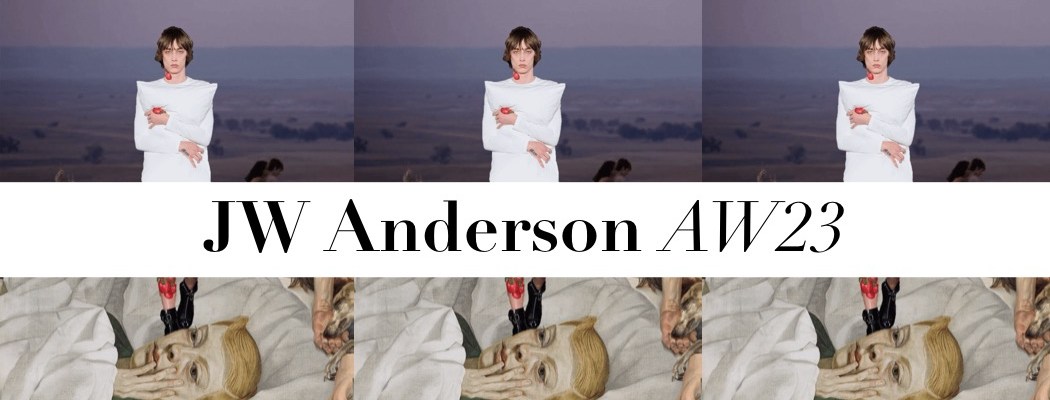
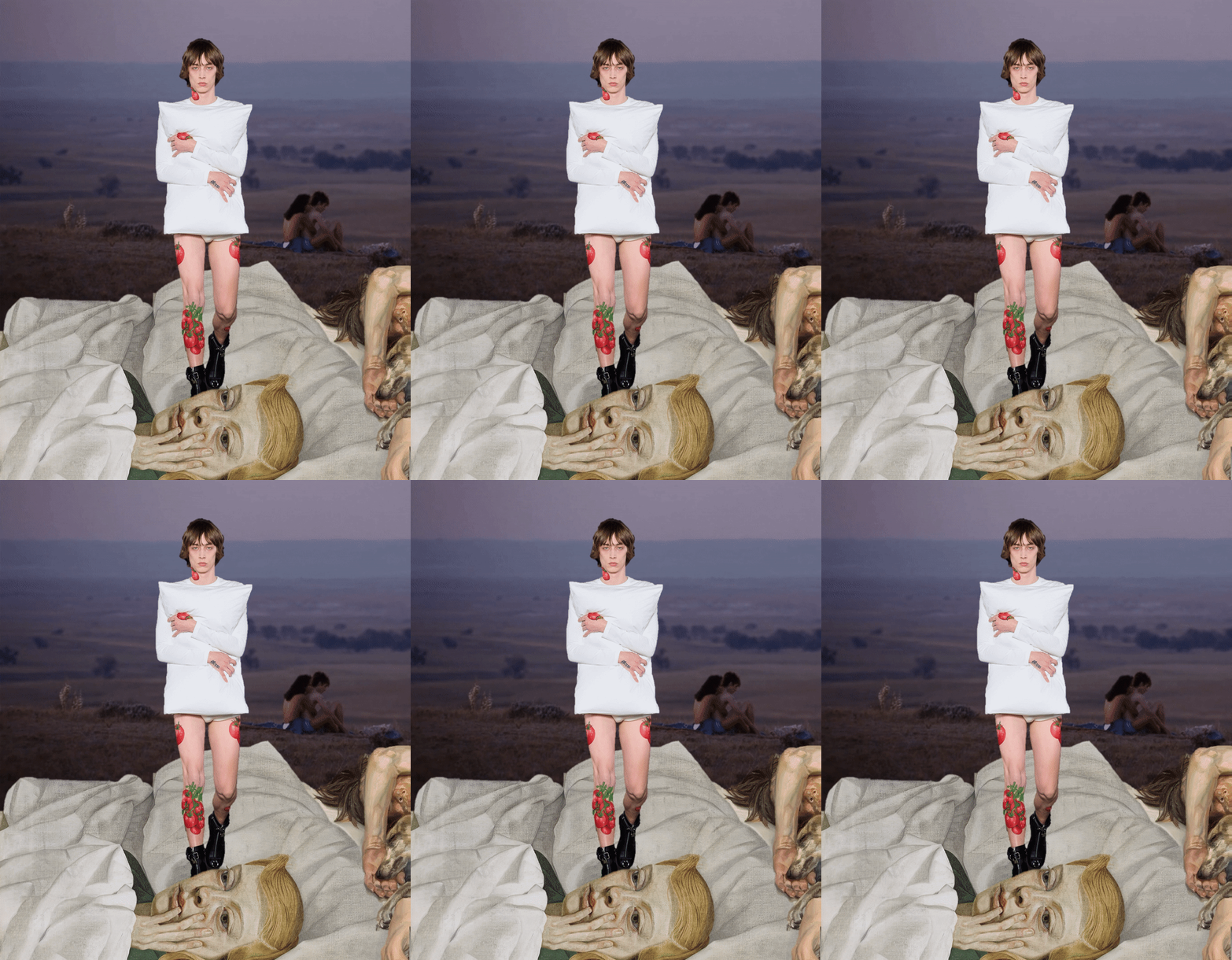
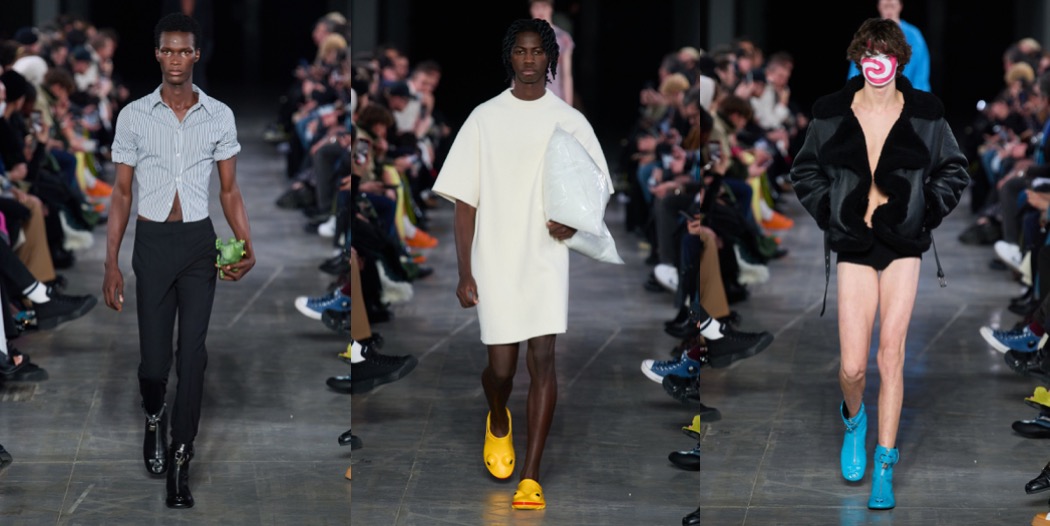
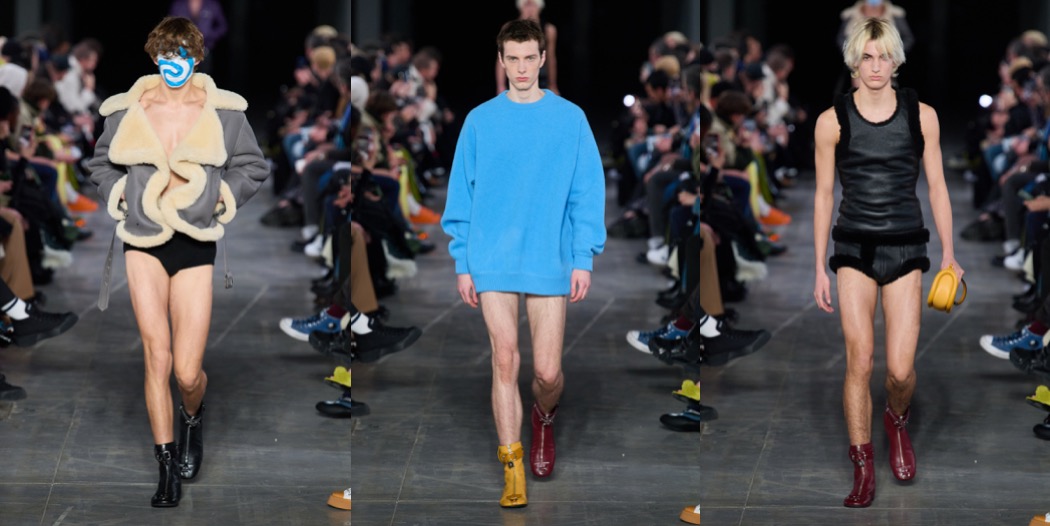
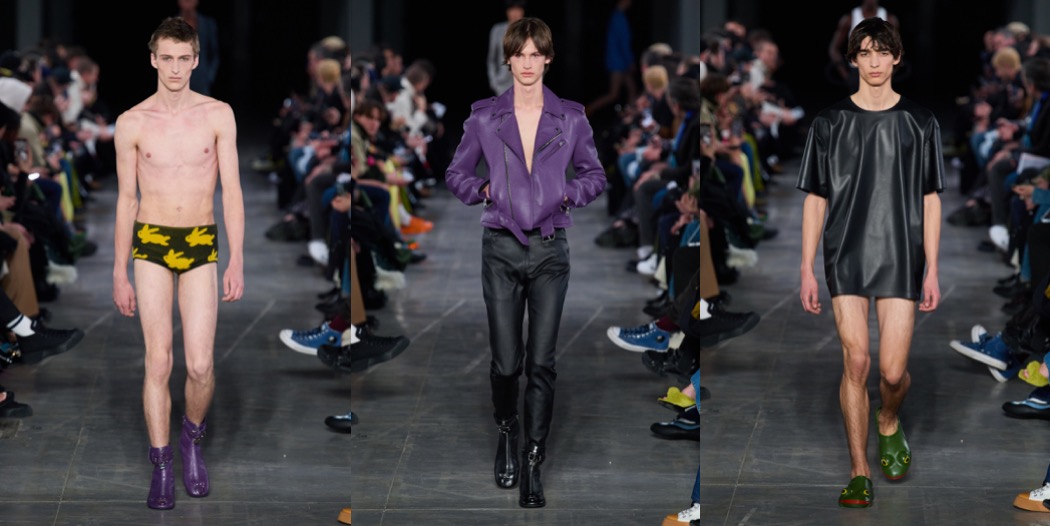
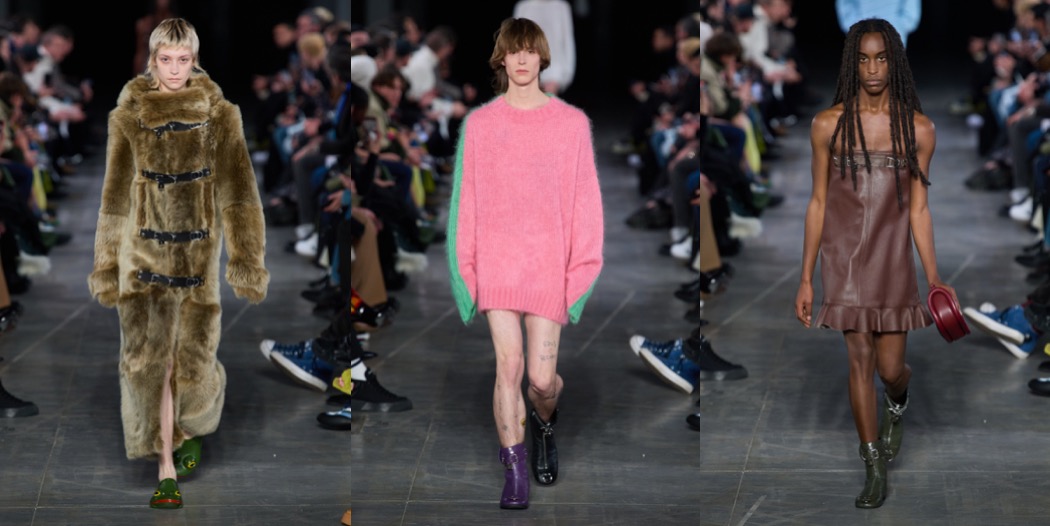
JW Anderson‘s menswear events have become the most exciting moments of Milan Fashion Week. And there’s a lot to unpack in the autumn-winter 2023 collection. Jonathan Anderson reflected on all his past work by returning to one of his most transgressive statements. Ten years ago, his ruffled shorts, skirts, and minidresses – all modeled by men – drove the London fashion scene crazy. Recalling the moment pre-show, Anderson said: “I found it very strange… that collection was about a shared wardrobe.” Even if, he added, he knew he was being something of a “brat” at the time, the force of the reaction revealed the depth of the subversion. He returned to it tonight to interrogate the notion that recent history’s radical rephrasing – even if still polarizing – discourse around gender would soften its impact. He said: “this feels like an old fashioned thing for myself to say now, but it is still something as a society we have yet to work out. How do we package people? Do we need to package people or not?” The Milan show opened with two boys in underwear holding bolts of cloth: the undressed waiting to be dressed, the unpackaged waiting to be packaged. Then came two models clutching pillows inserted into their garments, whose limbs were painted with tomato images. And then came the ruffled short. The difference between this and the original was that version 2.0 came in leather, but otherwise it was effectively a fresh edition of the garment this designer could barely sell the first time round, and which he still works to buy back at auction when they re-enter the market. The following looks teased your notions of facade and identity. The fully grown non-binary cast wore anthropomorphic frog-faced slides and boots by Wellipets, a recently relaunched but until now kids-only brand that was once worn by the British royal family’s heir and the spare back in the 1990s. As any basic biologist knows, certain healthy frogs can change gender according to circumstance. Torsos, some butch and some slender, were printed on terry vests worn over slouchy pants. There were some infantile animal print briefs and a series of uniform-aping duffle coats, fastened with lock and key instead of horn and eye, in leather and faux fur. The ruffle returned on occasion. Certain garments came inserted at the top of the spine with the decorative leather and plastic SIM cards that also acted as show invitations. One model had his placed over his heart. “Everyone’s attached to one,” said Anderson of this detail. “The idea is that you are taking it and turning it into something completely useless. Also all technology becomes useless in the end.” In the whole this was a radical wardrobe ready to come out and be inhabited, now that the times have caught up with the spirit of its inception.
Collage by Edward Kanarecki. Don’t forget to follow Design & Culture by Ed on Instagram!











 Design & Culture by Ed