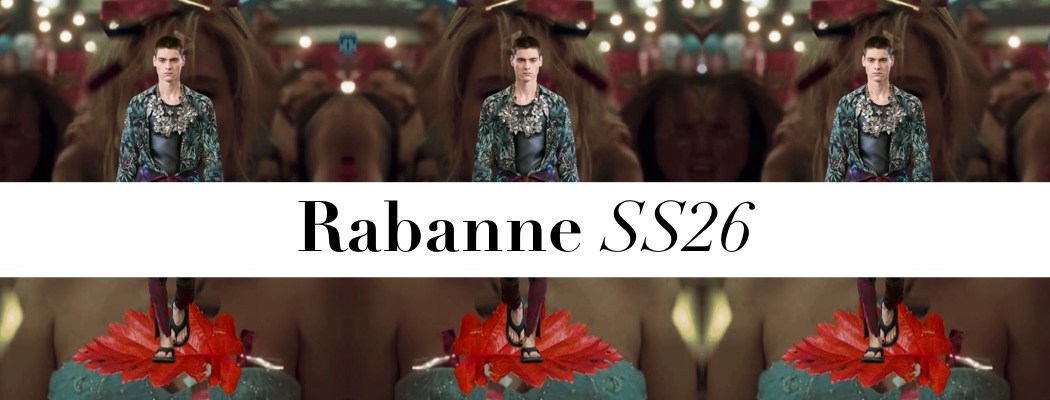
Similarly to Dries Van Noten‘s Julian Klausner and the Proenza boys at Loewe, Rabanne’s Julien Dossena was mentally by the beach this season, surrounded by surfers in spirit. His collection, however, felt among the most intriguing – especially in its brilliant menswear. There weren’t many looks, but each one, styled with scuba-diving pants, oversized flip-flops, and vintage Hawaiian-print shirts, exuded an undeniably cool attitude. The metallic flower necklaces – a nod to Paco Rabanne’s conceptual use of metal – added an especially striking touch. The interest in scuba style recalled Nicolas Ghesquière’s now-cult-classic Balenciaga collection from 2003. Dossena, who worked with Ghesquière for years, had the Louis Vuitton creative director cheering him on from the front row. As for womenswear, Julien played with 1950s pin-up references, making skirts fuller, florals bolder, and colors flashier. His use of exaggerated belt buckles gave the collection a tongue-in-cheek energy.
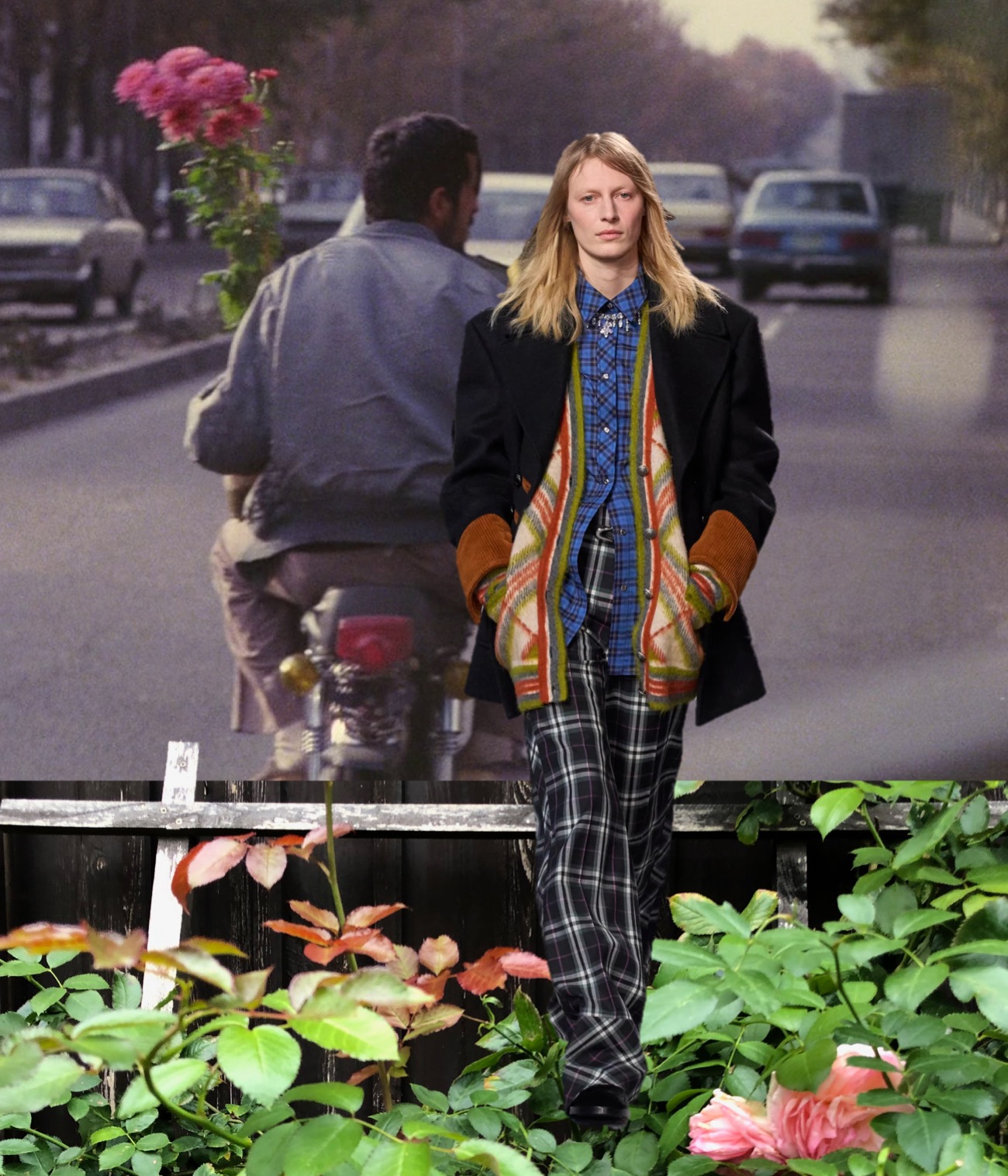
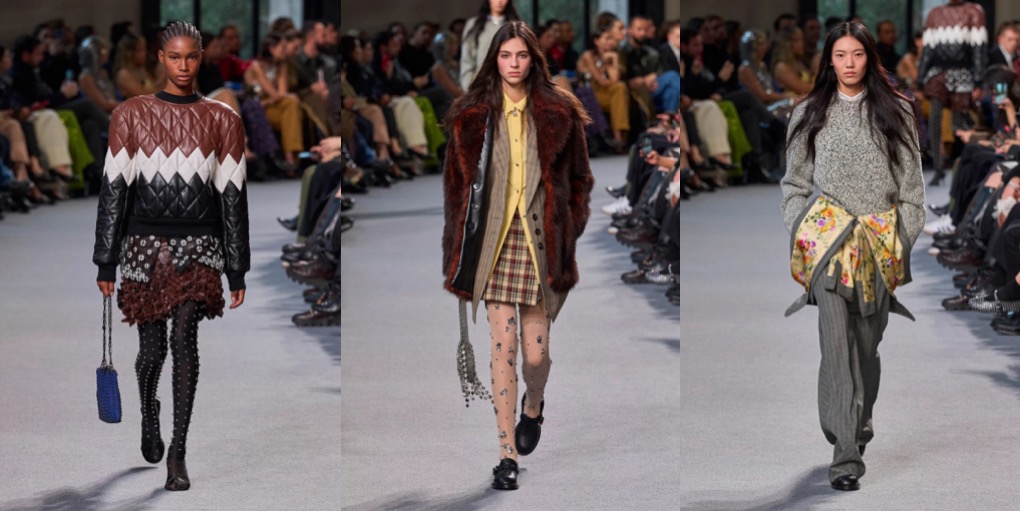
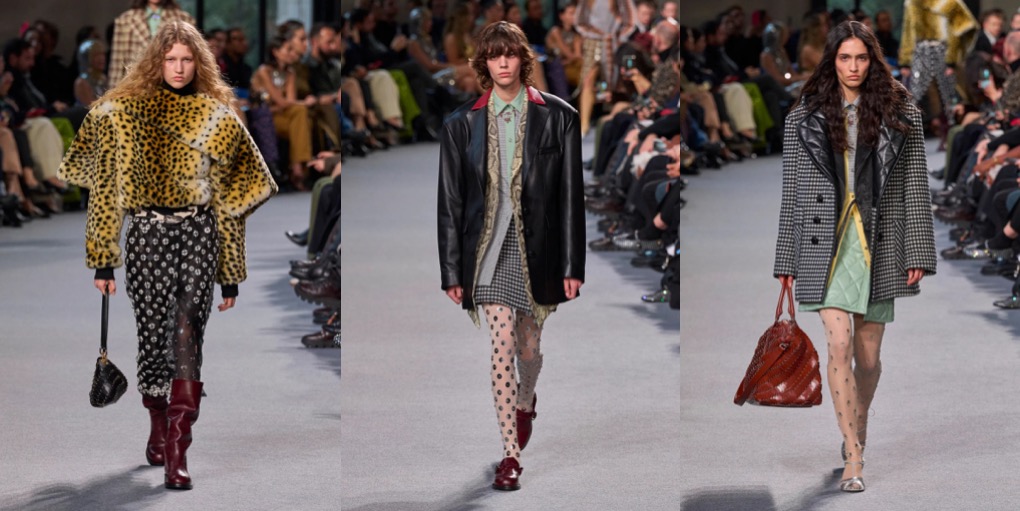
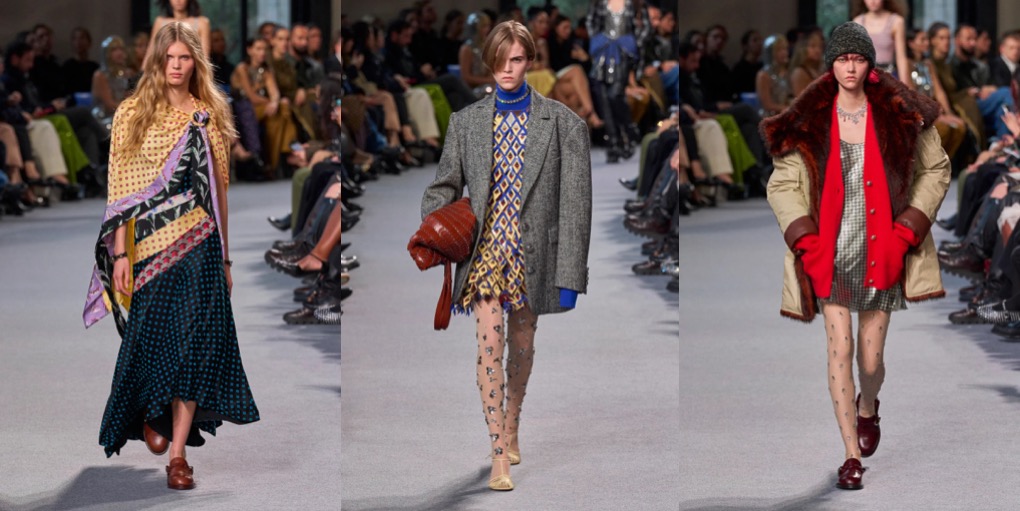
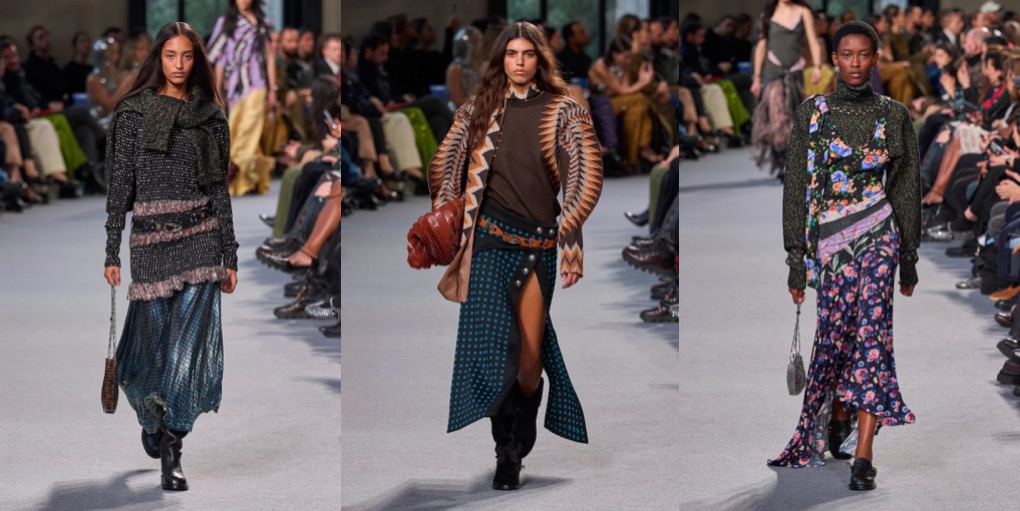
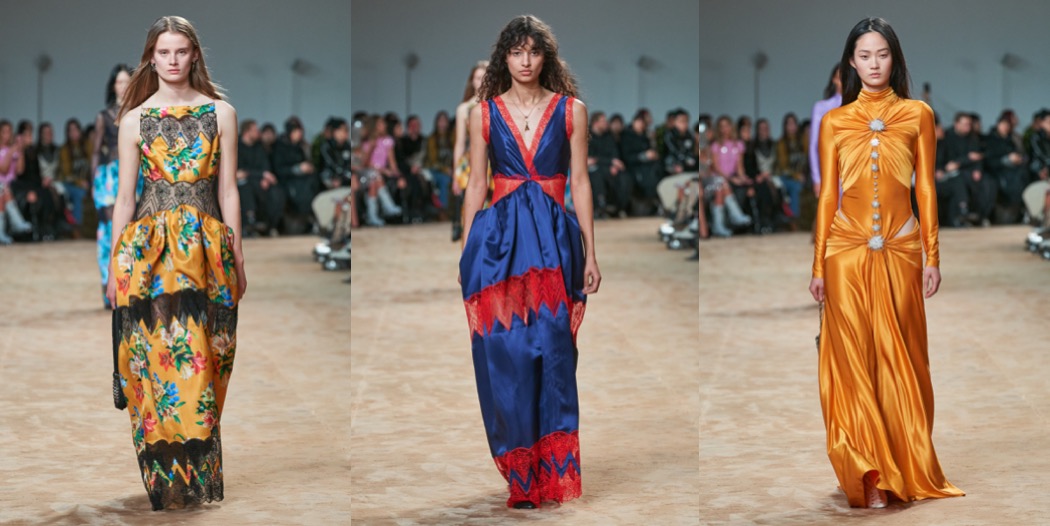
At Rabanne (I still can’t get used to the cropping of Paco), a palpably different current coming from Julien Dossena. “I was craving just to do clothes. Maybe because of the climate of the world,” he said. Instead of sending down the runway another chainmail splendor, this season he’d been inspired by looking “at how girls are dressed when I see them walking around Paris, and on the metro coming to work every day,” he said. “I was really interested in just observing people. It’s a sort of collage of stuff, mixing everything together; a personal kind of intimacy with what makes people most individual.” The pick-and-mix of it, layers upon layers of cardigans, Argyle sweaters, miniskirts, shirts, jackets, trousers, and biker overalls, was a masterclass in how to make a zillion clashing patterns work together as if you haven’t tried too hard. Très parisien.
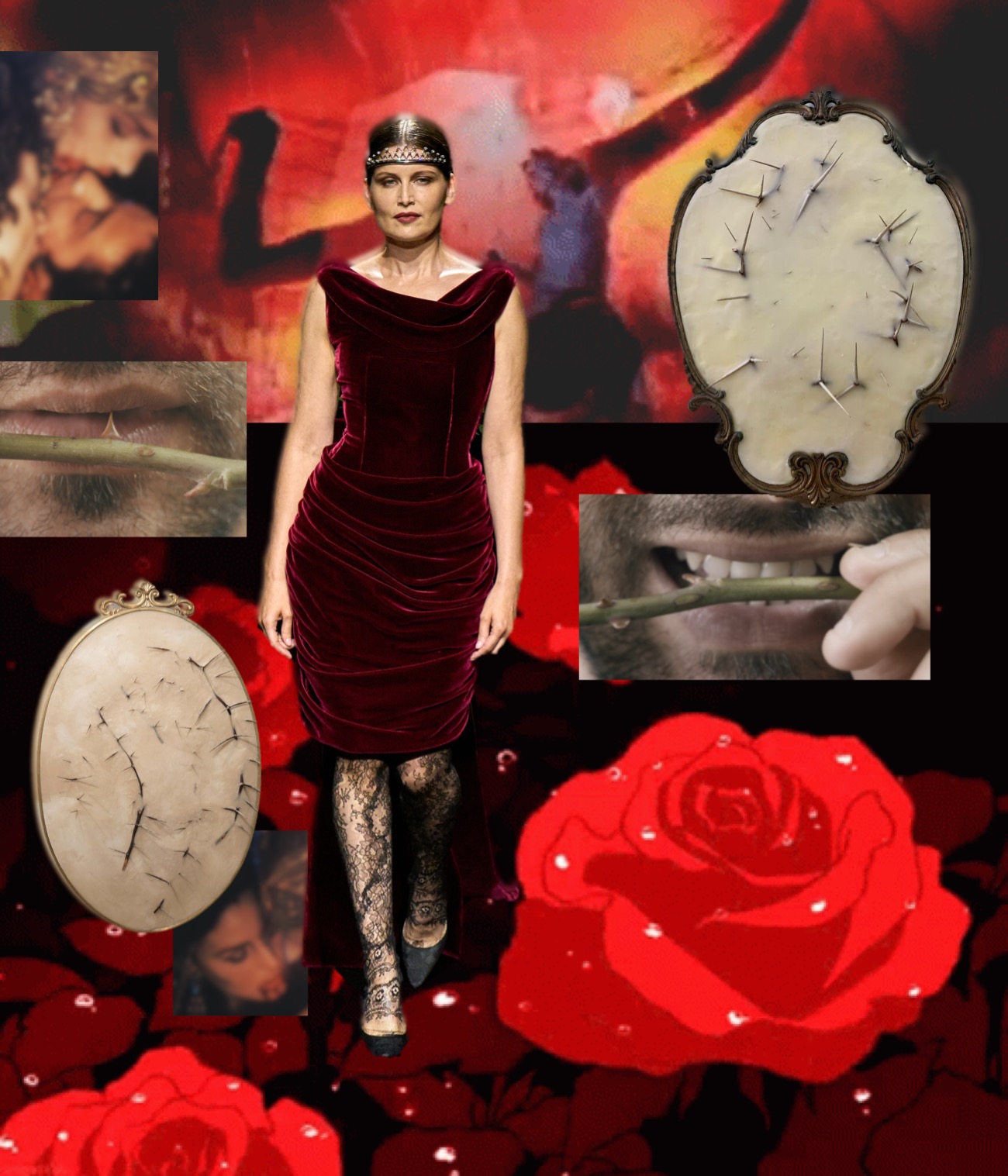
Collage by Edward Kanarecki. Don’t forget to follow Design & Culture by Ed on Instagram!
Hey, did you know about my newsletter – Ed’s Dispatch? Click here to subscribe!
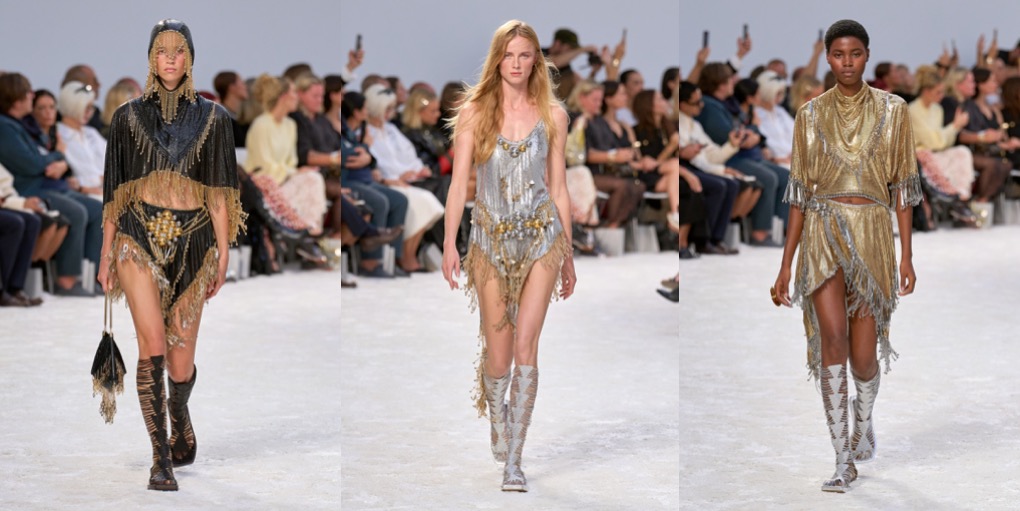
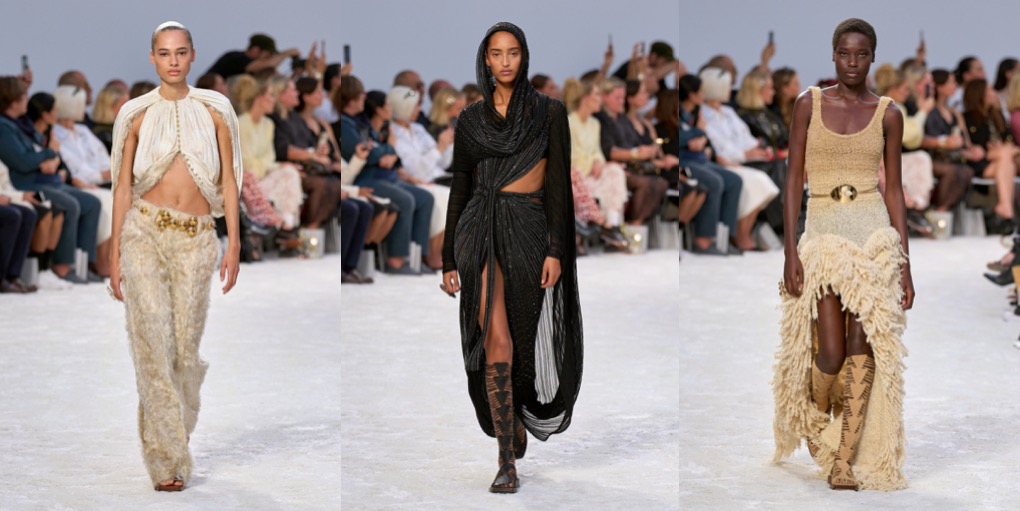
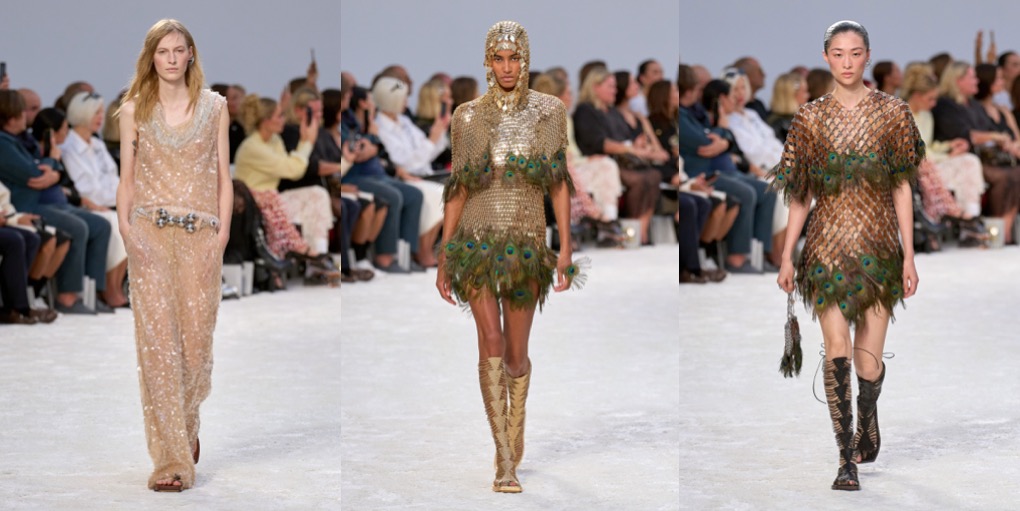
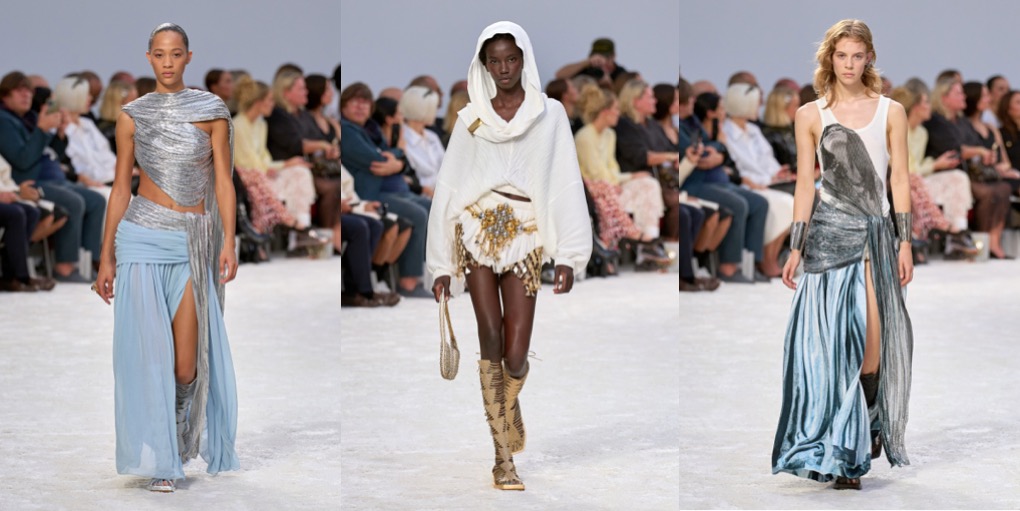
At Rabanne (no longer Paco), Julien Dossena had a mesmerizing collection featuring nomadic warrior women in chainmail armours (occasionally weaved with peacock feathers) and gilded textures. “I’ve never been that interested in the bourgeoisie,” the designer quipped backstage. “I can play on the codes but it’s about exploration for me.” Going by the pictures Jean Clemmer shot for Paco Rabanne in the 1970s, Dossena imagined a kind of warrior beach woman whose wardrobe was founded in ancient constructions. “It’s a woman by the sea, black and white, in the sun with a little loincloth and a jewel. It’s an exalting sensuality. It was a strength I wanted to work on,” he explained. As a meta inspiration element, he printed the pictures on tank tops. The look materialised in hooded mini chainmail dresses, sarouel trousers – “the original first clothes we ever wore: a square with two tubes” – and rustic, organic textures Dossena attributed to the work of the artist Sheila Hicks. “Like a carpet you’ve made a dress [out] of,” as he put it. “I wanted everything to be handcrafted: the feeling that someone touches it; sensual; destroying the fabric; threads.” It made for an ancient sensibility that felt kind of sci-fi. Dossena’s time-travelling looks gave off everything from Athena to Amazon to gladiator to Joan of Arc. “Tender and strong,” he said. “It’s a kind of community: a tribe, a gang of women who express their own sensibility and sensuality.”
Collage by Edward Kanarecki. Don’t forget to follow Design & Culture by Ed on Instagram! By the way, did you know that I’ve started a newsletter called Ed’s Dispatch? Click here to subscribe!
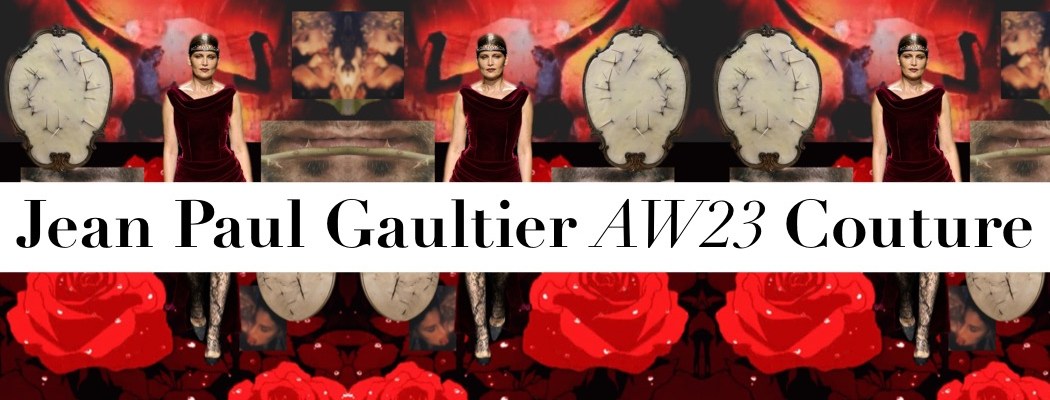
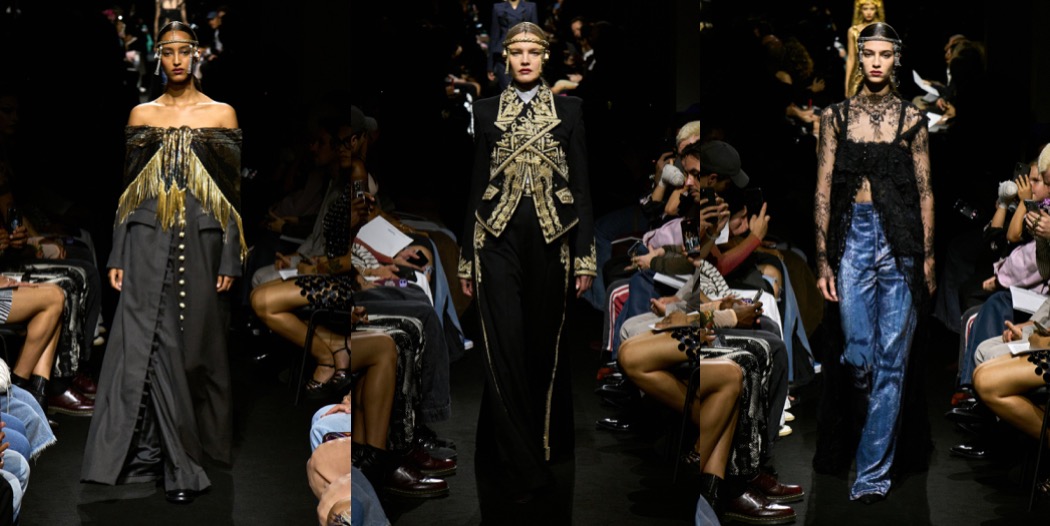
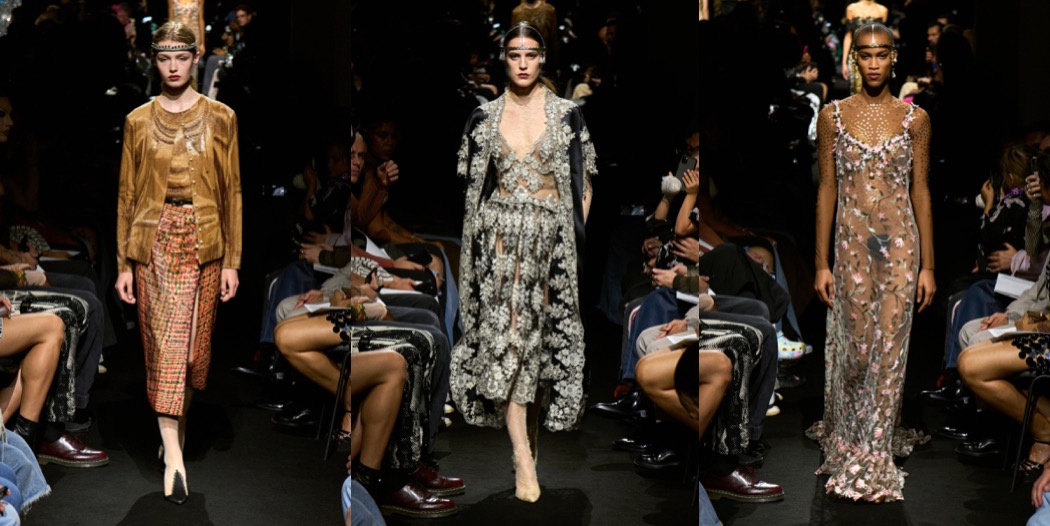
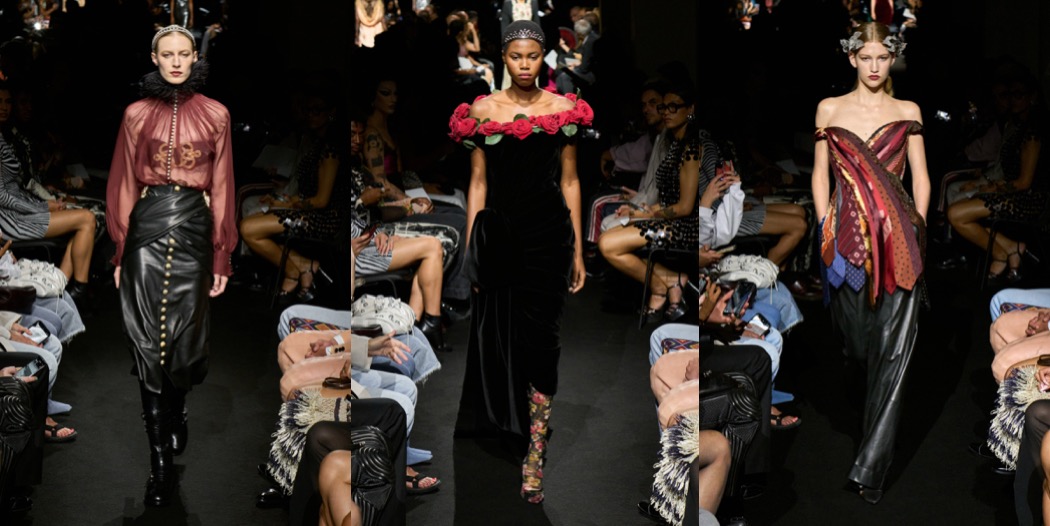
The guest designer gigs at Jean Paul Gaultier have become one of the best moments of haute couture fashion weeks. Julien Dossena‘s take on the couturier’s legacy was definitely a triumph. (Paco) Rabanne’s creative director wanted to achieve “a feeling of characters you pass in the street in Paris,” he said. “I wanted to make all of them queens, each with a different crown.” The honor of being able to bring his interpretation to the work of a national treasure of French couture couldn’t have been more sincerely felt. “Jean Paul was the first designer I ever saw on TV when I was very young. Watching him, I understood for the first time: oh, fashion can be a job! What he did (became) infused into my cultural background in general.” Over lunch with his idol, Dossena discovered that Gaultier had known Paco Rabanne, who had recently passed away. “He asked me to make something to honor him. But I had from him this complete sense of freedom. There’s this feeling in the couture ateliers that anything can be done.”
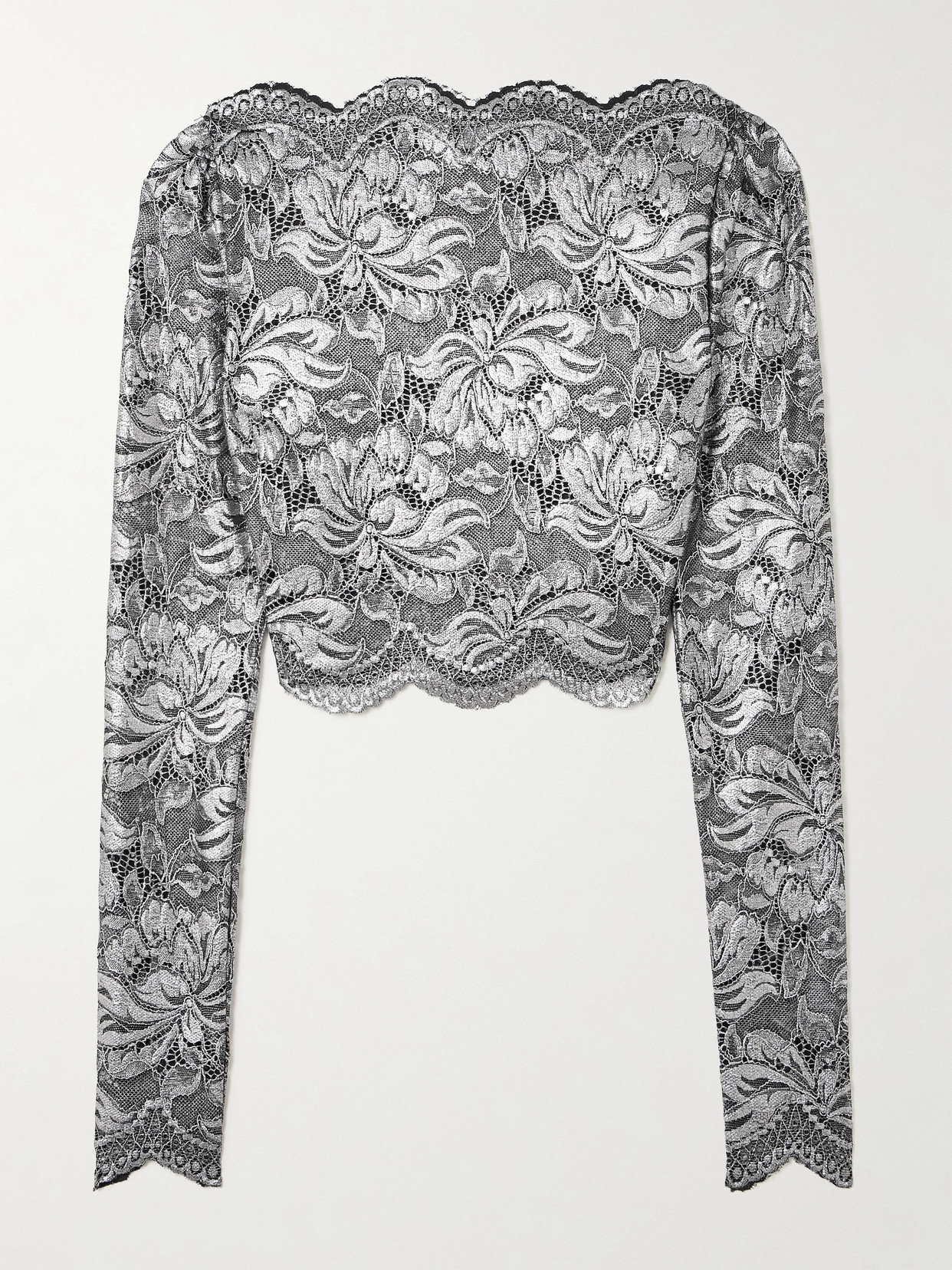
At Rabanne, Dossena’s ability to modernize chainmail and turn it into new techniques in zillions of ways has been one of the hallmarks of his talent – that, and the slant on bohemian glamour that frequently comes through his collections. His unmistakable double-salute to Gaultier and Rabanne was to whip up a replica of the famous pointy-bra dress from Gaultier’s first collection in 1984 in silver chainmail. But the dimension of Gaultier’s work which sparked Dossena’s imagination the most was his street-observation and inclusiveness – decades before it became fashionable. “Jean Paul was really the first to treat fashion as almost sociology, watching what people wear in the street, expressing communities in his shows. Joyously mixing people together.” Dossena’s presentation of chic-ified looks included a pinstriped trouser suit and a lace dress over a pair of trompe l’oeil beaded jeans with sweeping trains. Mid-way, in a stunning moment that spoke dramatically to the beauty of human togetherness, he draped shining gold and silver swathes of chainmail to connect pairs of models – a man apparently carrying a woman’s train, and two individualistic goddess warriors, each symbolizing a different culture. There were references to Gaultier’s giant trapper hat, to the sweeping floor length coats in his “Rabbi Chic” collection, and to off-the shoulder lace he used in his “La Concierge est Dans l’Escalier” show. Dossena said he’d deeply related to Gaultier’s habit of trawling flea-markets for vintage finds – a route into developing rich techniques. Part-way, there was a dress made of Irish-crochet lace, embroidered with gold paillettes meticulously made to look vintage. There was a peach satin lingerie dress layered over black lace, a floral lace apron worn over tailoring. And just as you thought Dossena might have missed a little something of the subversive wit that got Gaultier permanently labeled the Enfant Terrible of French fashion, sure enough, there it was. Clearly glimpsed through a couple of sheer dresses, a pair of trompe l’oeil embroideries of pubic hair. Sitting in the front row, Jean Paul Gaultier raised his eyebrows and chuckled as they passed by.
Collage by Edward Kanarecki. Don’t forget to follow Design & Culture by Ed on Instagram! By the way, did you know that I’ve started a newsletter called Ed’s Dispatch? Click here to subscribe!
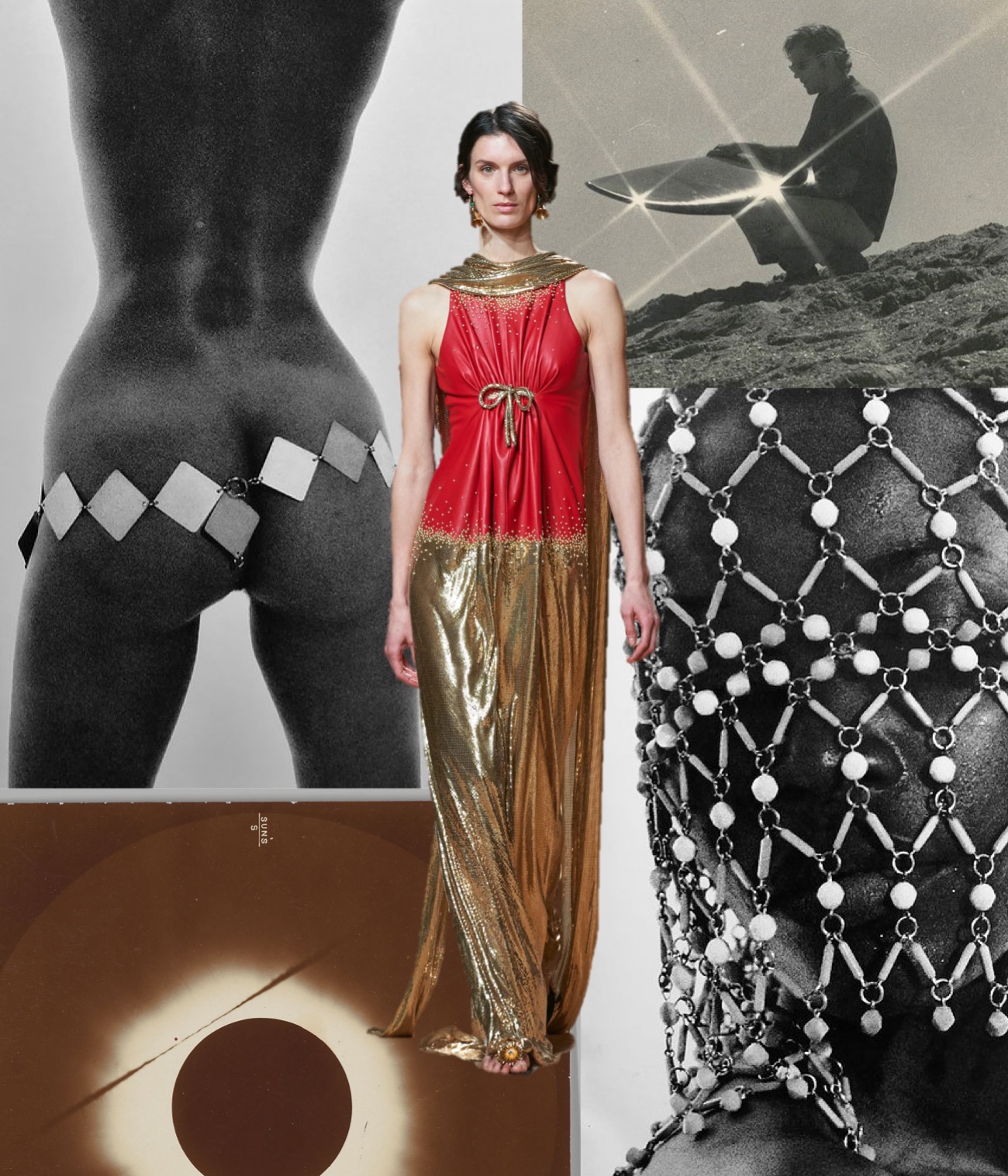
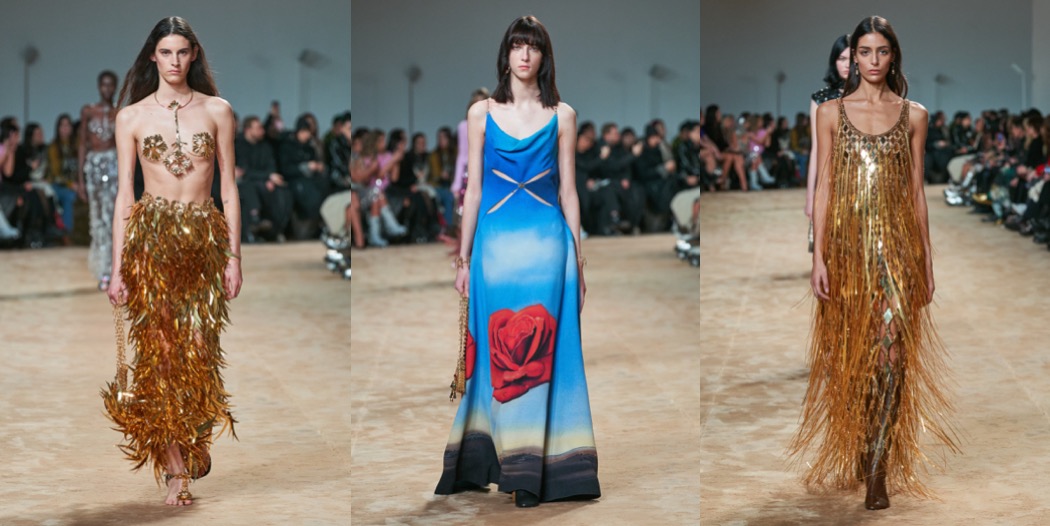
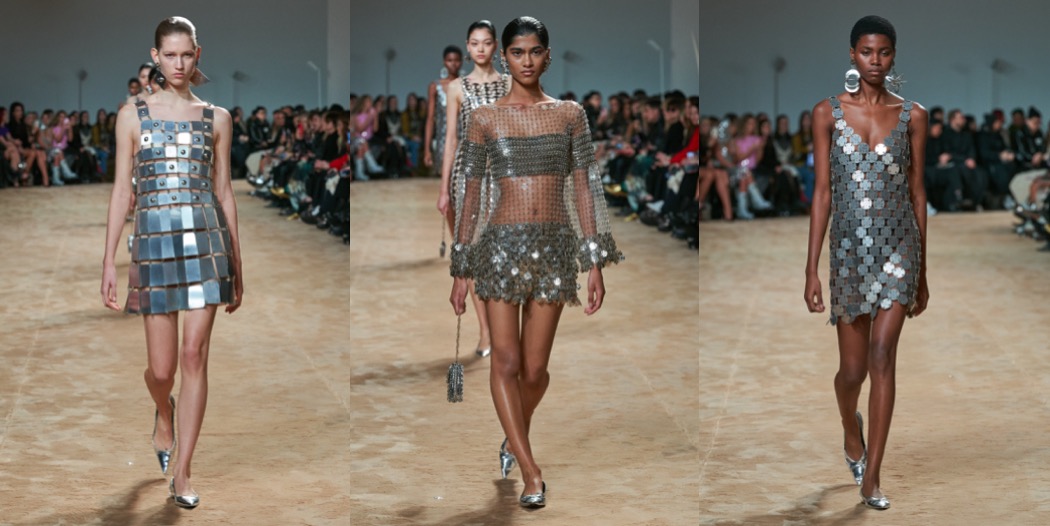
Julien Dossena‘s autumn-winter 2023 collection for Paco Rabanne was an homage to the late founder of the brand, who passed away this February. In his most convincing offerings for the house, Dossena revisited Rabanne’s design heritage through a contemporary, not overly literal lens. This collection, however, felt more like a straightforward tribute which ranged from Paco Rabanne’s famous space-age era to less-known surreal phase (echoed in Salvador Dali paintings used as prints for the eveningwear; the surrealist was Paco’s friend). There was of course plenty of chain-mail, used in mini-dresses that looked exactly like the ones the brand’s founder did in the 1960s. According to videos from the show that flood social media, all the metallic looks gave comforting, ASMR-sound effect. Indeed, Dossena’s voice felt exceptionally silent in this collection due to its nature. Let’s treat it more like a run-through Rabanne’s legacy, fit for the label’s client in 2023.
Collage by Edward Kanarecki. Don’t forget to follow Design & Culture by Ed on Instagram!












 Design & Culture by Ed