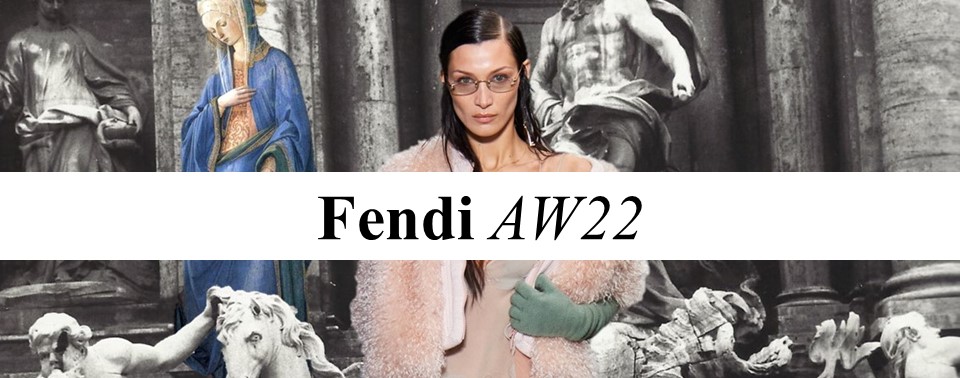
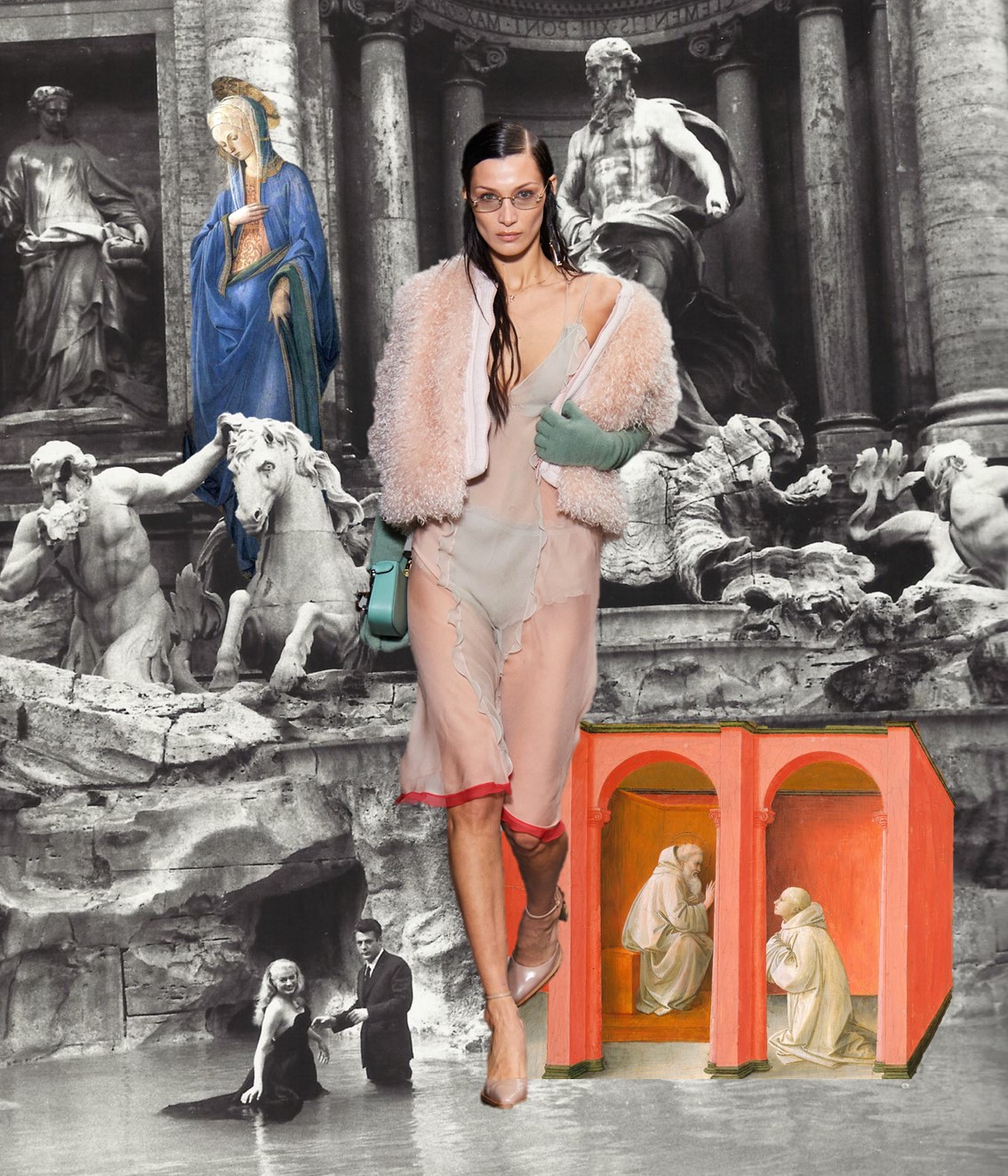
Finesse. Fendi AW22

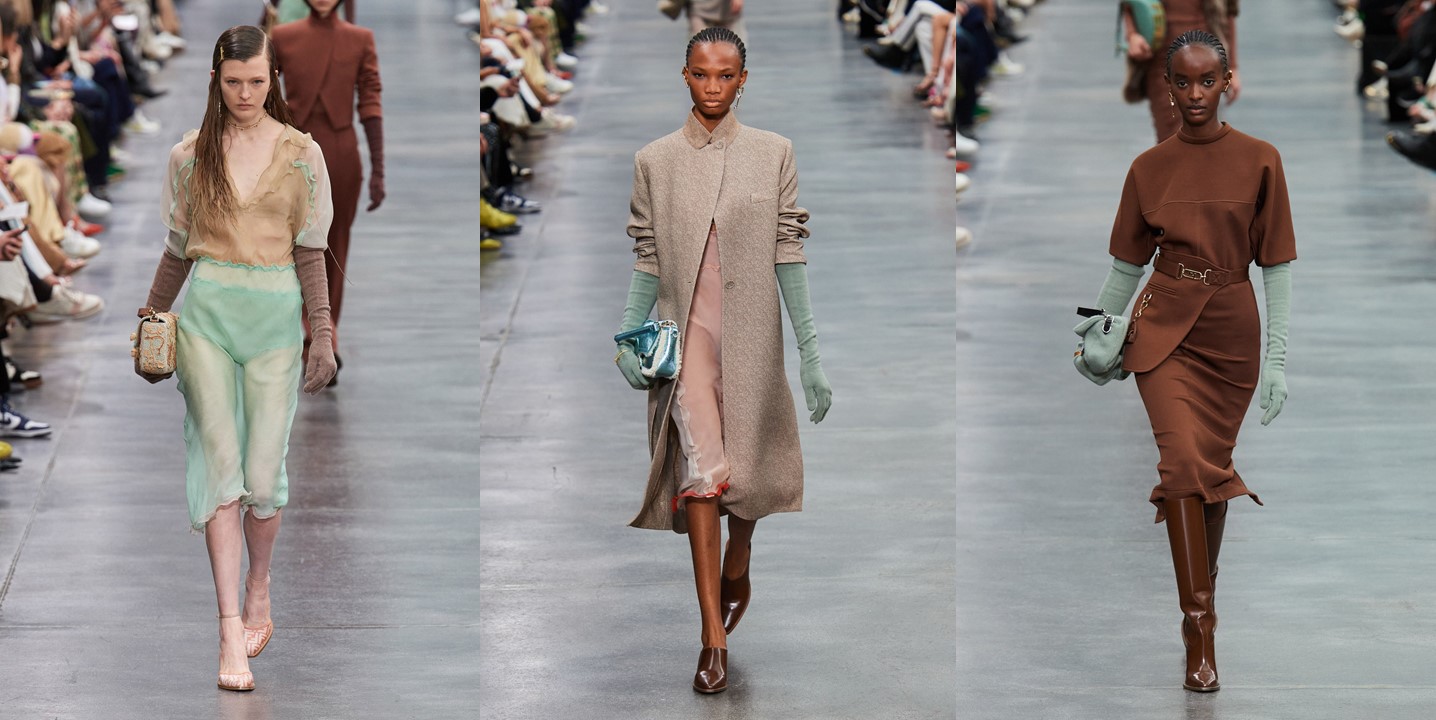
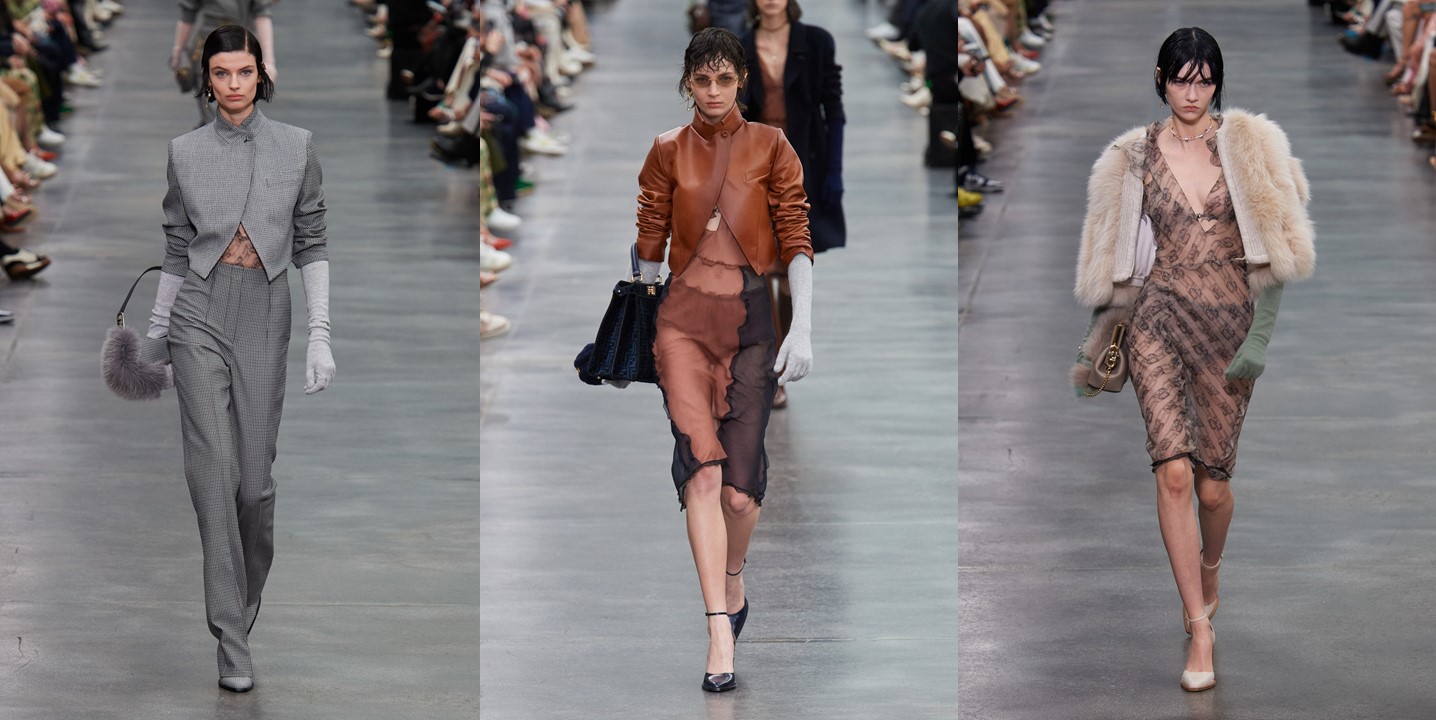
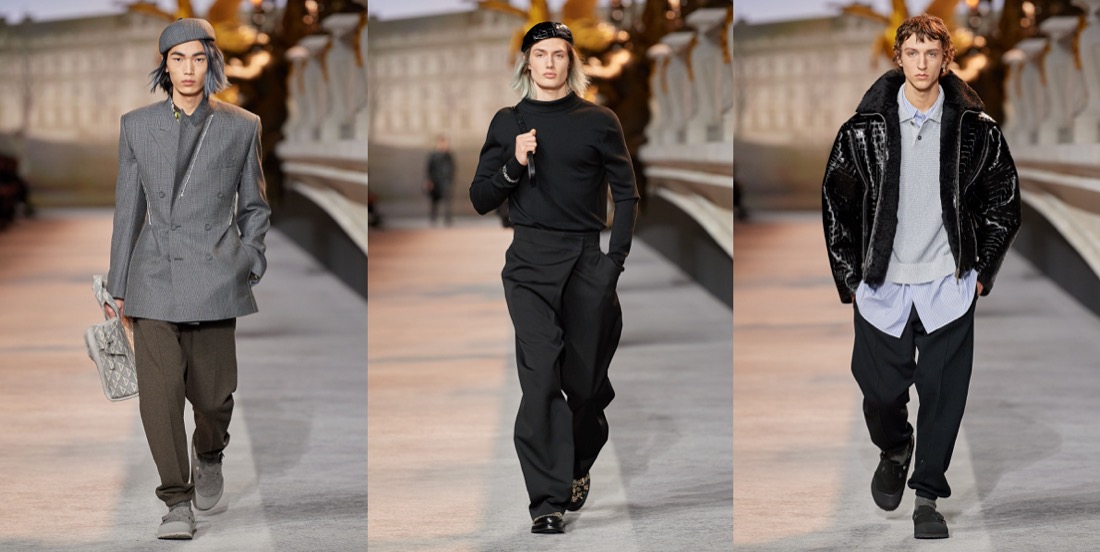
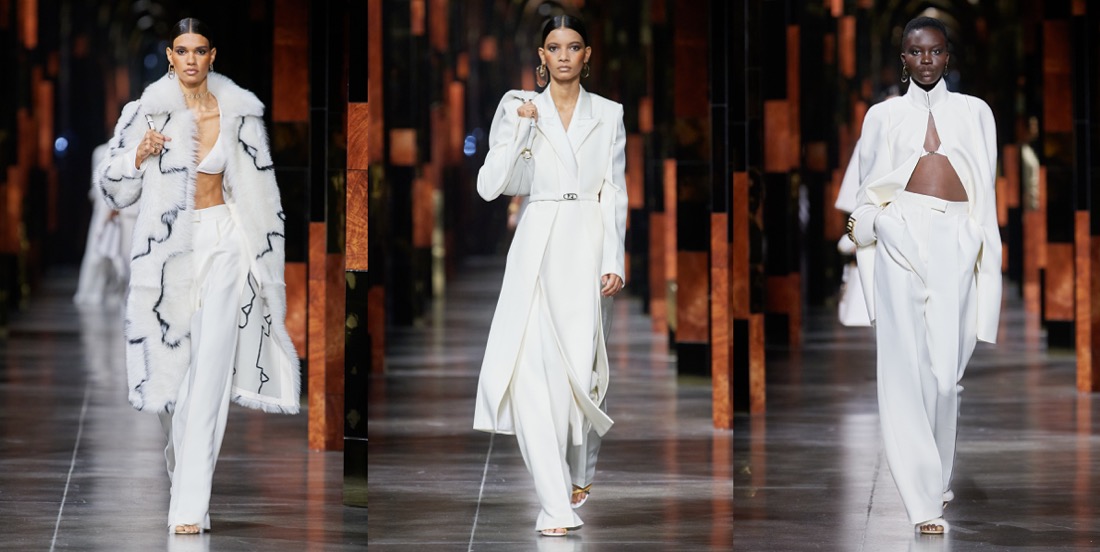
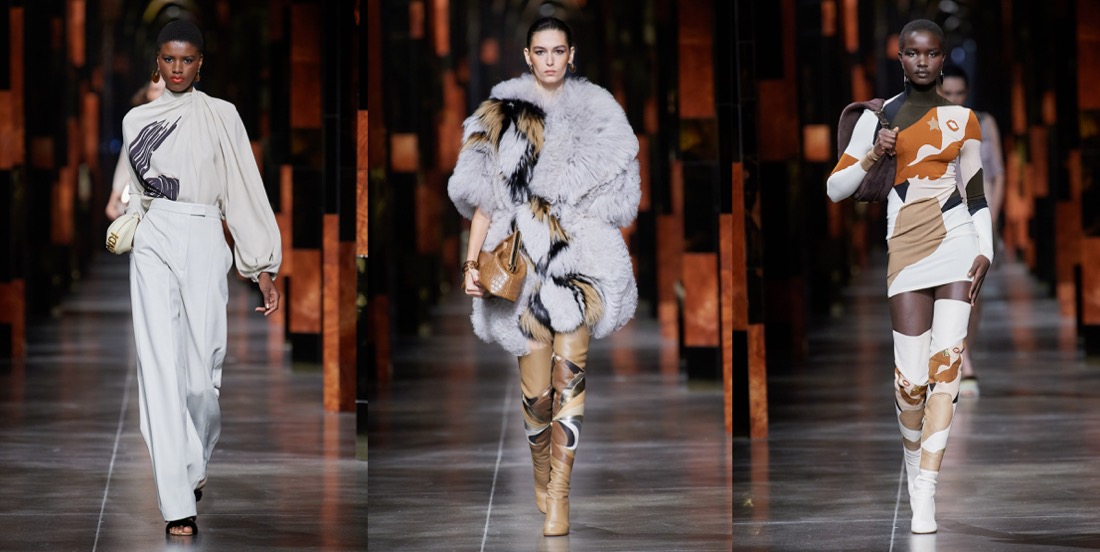
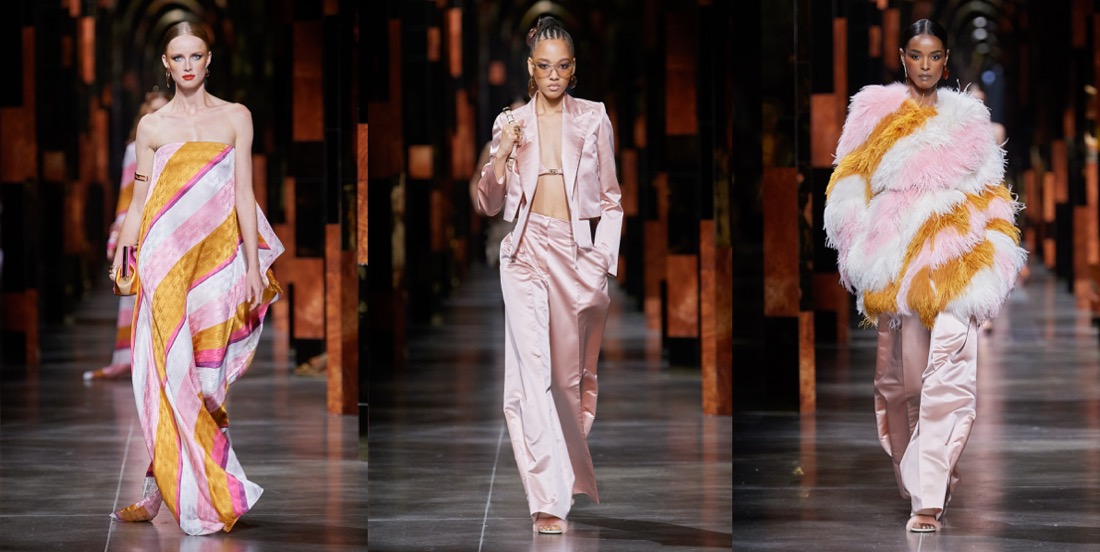
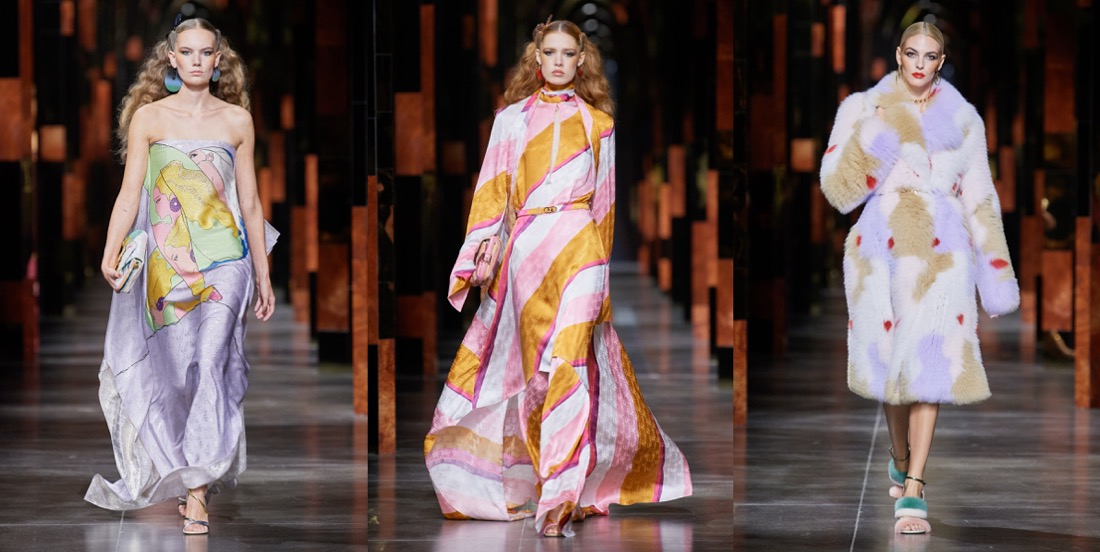
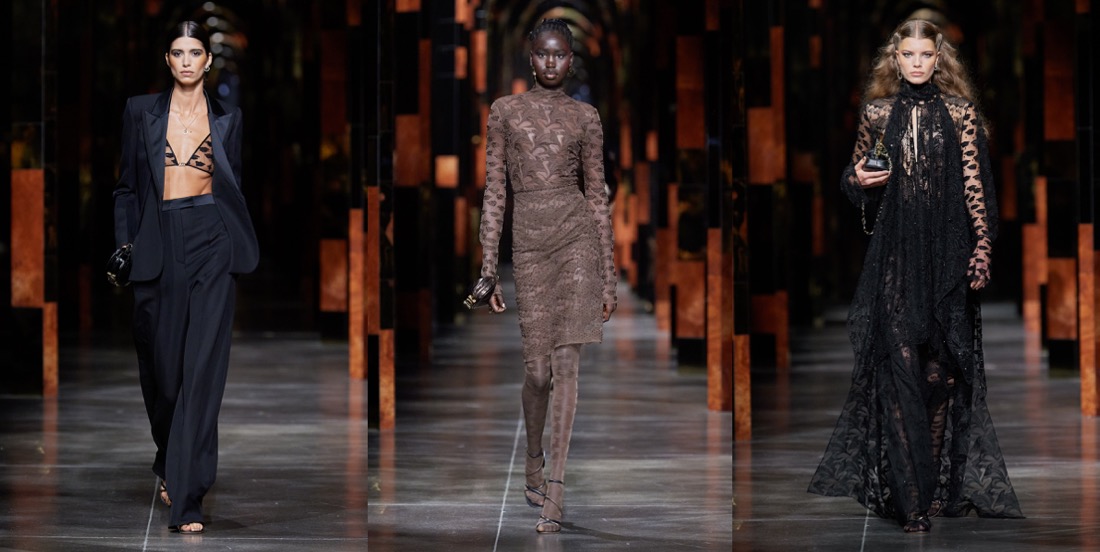
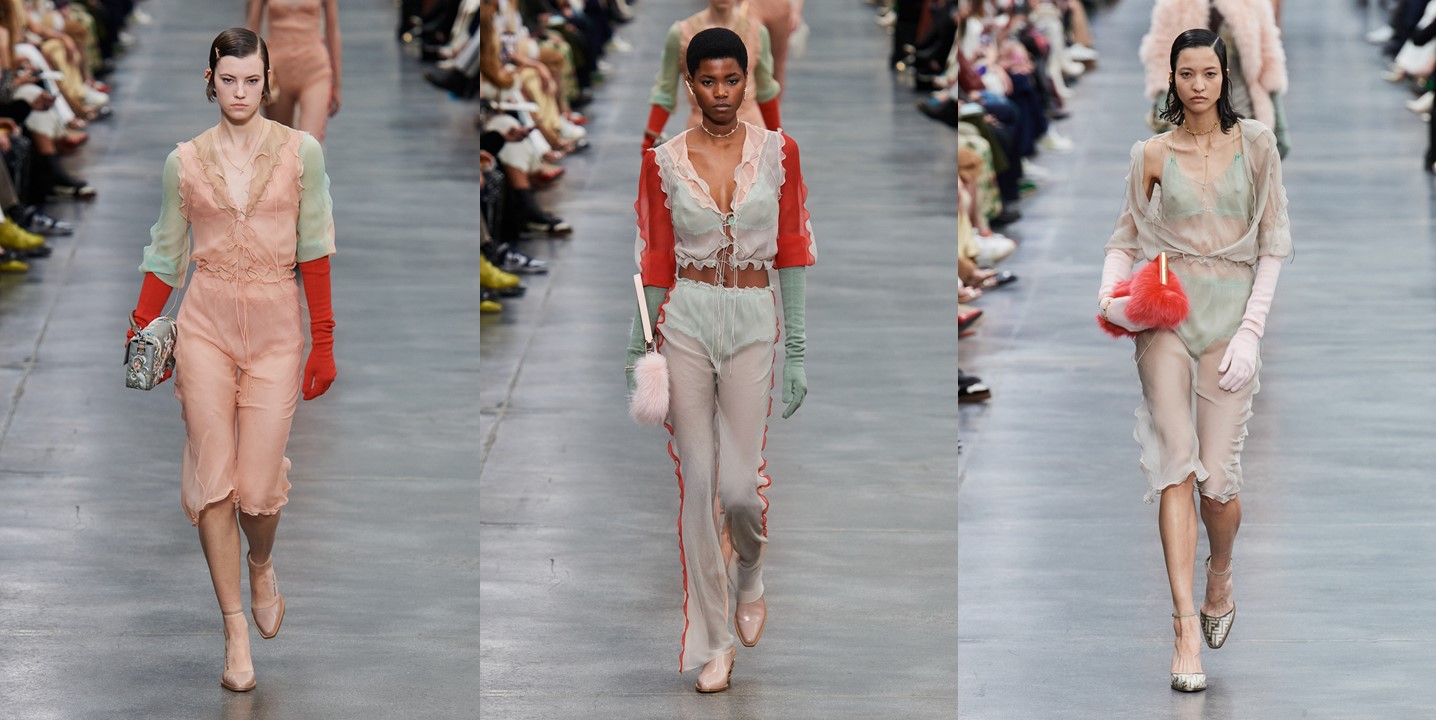
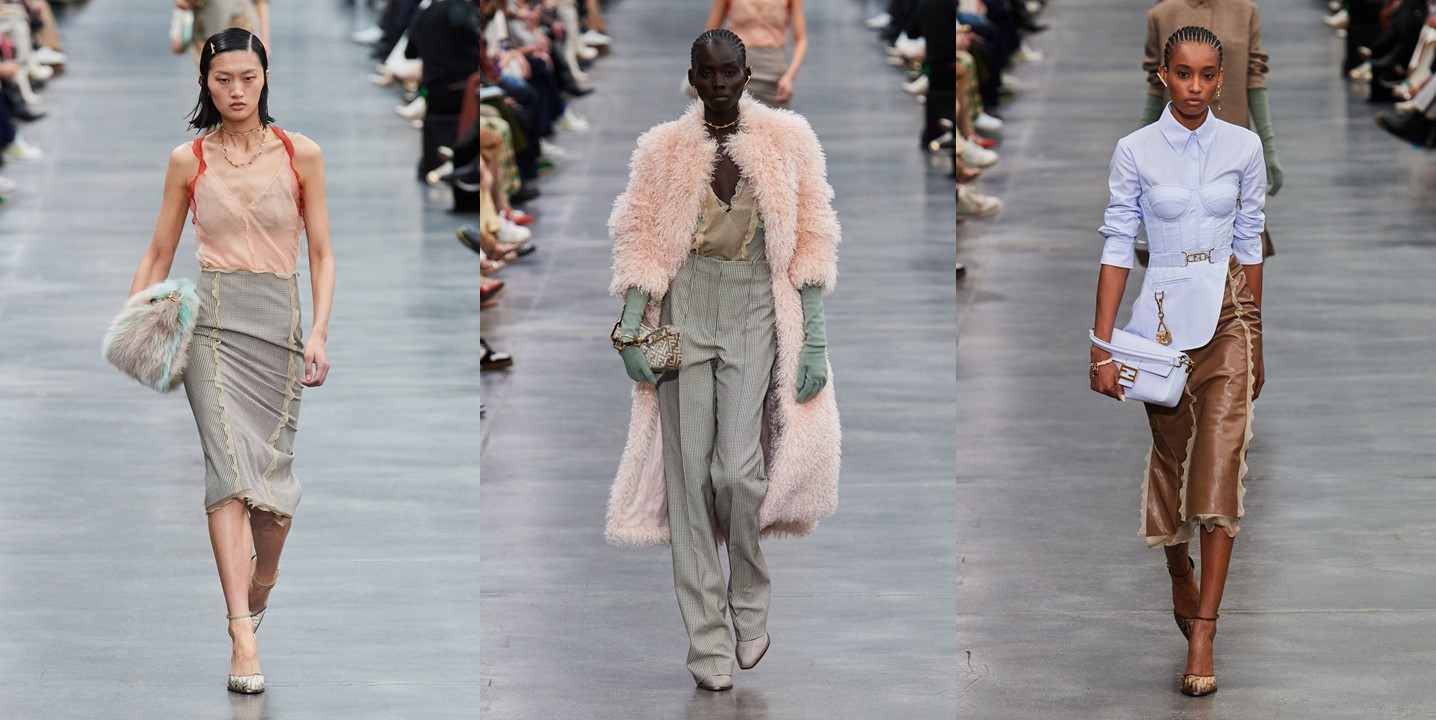
Finally, a Fendi collection by Kim Jones I genuinely love. Fendi’s best asset, as Jones knows, is the Fendi women themselves, mother and daughter Silvia Venturini and Delfina Delettrez. In Delfina and her younger sister Leonetta, Jones has ideal muses. “What they wear is what Silvia wore when she was younger, and she’s very cool and they’re very cool; seeing how it’s generational is very inspiring. They’re obsessed by clothes and details, having those women around you when you’re working is a real joy.” Backstage of the autumn-winter 2022 fashion show, Jones explained that the genesis of his new offering was seeing Delfina in the Rome office wearing a blouse of Silvia’s from a 1986 Fendi collection by Karl Lagerfeld, when he was in his Memphis phase. “I took it off her back and put it on the research rail,” he said. Jones recolored the print and collapsed the more obviously 1980s proportions of that show’s tailoring into separates, some in menswear fabrics, others in denim. Then, because he was after lightness, he combined those references with a callback to another Lagerfeld-designed Fendi collection for spring 2000, one with a delicacy in direct opposition to the blousy proportions of the 1986 show. Naturally, Jones updated these looks too, starting by layering them over matching flutter-edged underpinnings. Jones is in many ways like Lagerfeld, an enthusiastic collector with a capacious mind for references, and he’s bringing all that to bear on Fendi. The job before him is at least in part to woo a new generation to the label; Lagerfeld, though he never lost touch with the young, was in his position for 54 years. Nominating that spring 2000 collection for a re-see couldn’t be a coincidence, what with that era being newly relevant to people who didn’t experience it the first time. But Jones has done it with finesse, avoiding any of the retro allusions seen on so many other runways.
Collage by Edward Kanarecki.

Celestial Rome. Fendi SS22 Couture

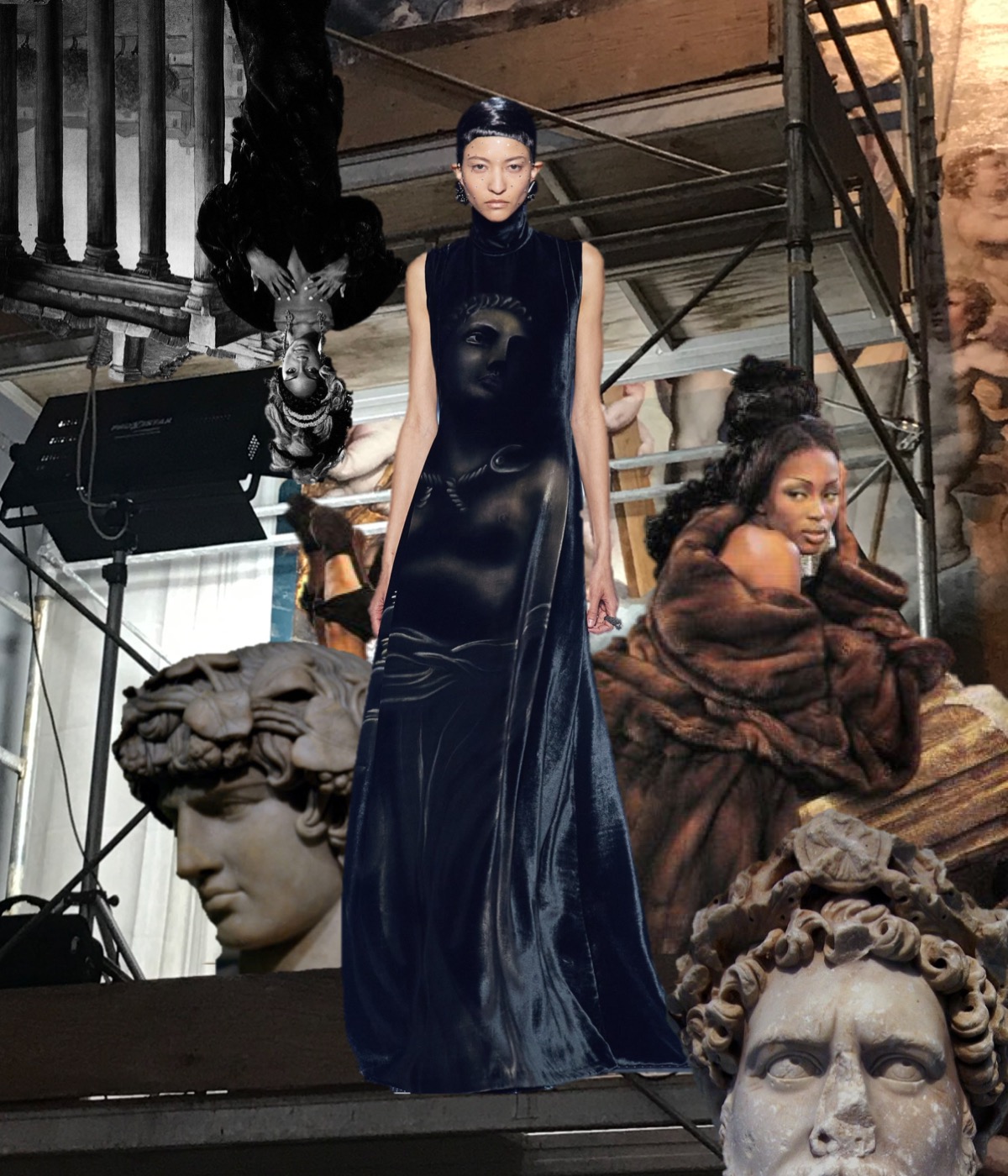
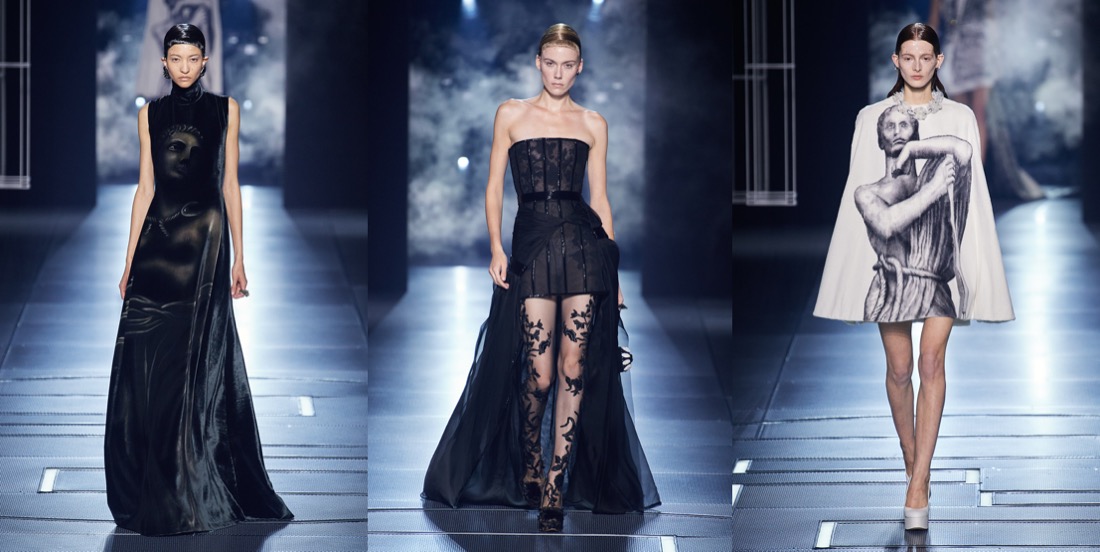
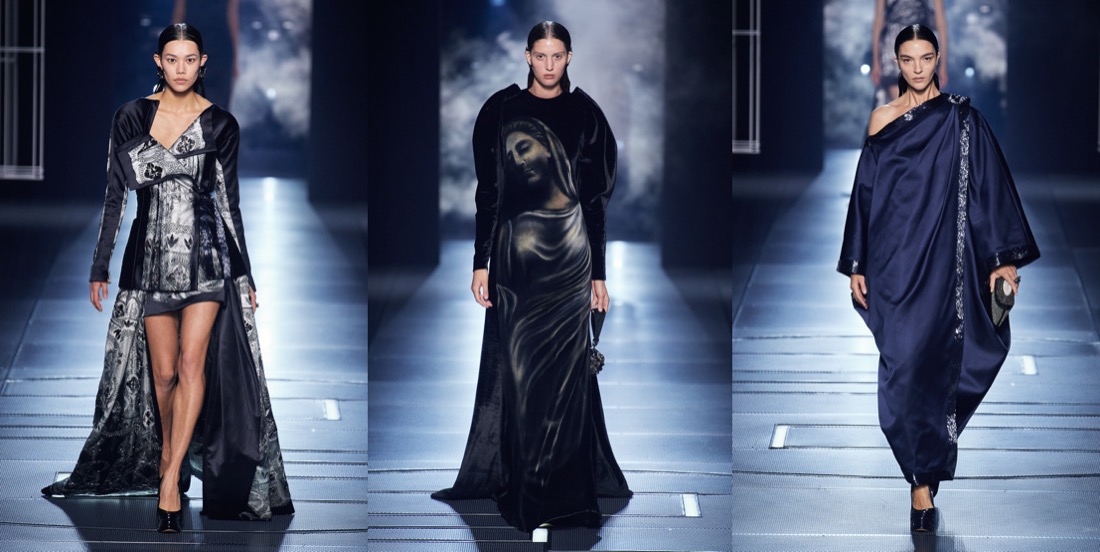
For his third Fendi haute couture collection, Kim Jones clashed the past with the future. This season, Jones continued his evening-centric approach, proposing a series of gowns he said illustrated the craftsmanship and techniques he can’t show in his ready-to-wear for Fendi. Like previous collections, Rome played muse: “It has so many layers to it. It’s such an ancient city,” he said. “We’re always thinking of the past, present, and future of it. The idea of different times and that very spiritual side of Rome, which becomes almost celestial; almost spacey.” Space, astrology, and heaven have been themes in this season’s couture and men’s collections. No doubt mildly inspired by last year’s billionaire space race, they mainly represent the great escape. The pandemic’s part in that scenario is pocket psychology. Jones, who said he had been re-reading Dune and a book on Star Wars by George Lucas, approached the theme with a Hollywood zest that recalled a number of sci-fi films centered around the age-old conversation between the ancient and the futuristic. Mirroring that dialogue in the time-transcendence embodied by Rome, Jones mixed the city’s structures with futuristic imagery and applied it to eveningwear. Renditions of the statues outside Fendi’s monumental Palazzo della Civiltà Italiana headquarters hand-painted on velvet dresses and a sheared mink cape looked like the statues in Prometheus or the landscapes in the scenes in The Planet of the Apes. Elsewhere, he applied the contours of a Roman fountain to a white dress and “filled it with mink,” while the radiant opening and closing dresses seemed to morph the lines of the peplos – the oldest dress in history – with a sci-fi structure. The collection was Jones’s first haute couture show for Fendi with a live audience. As a showcase of the skill of the house’s Roman atelier and a theater of ballroom fashion, it was a proper ending to a marvelous couture season.

Collage by Edward Kanarecki.

Men’s – Sublime Gardener. Dior AW22

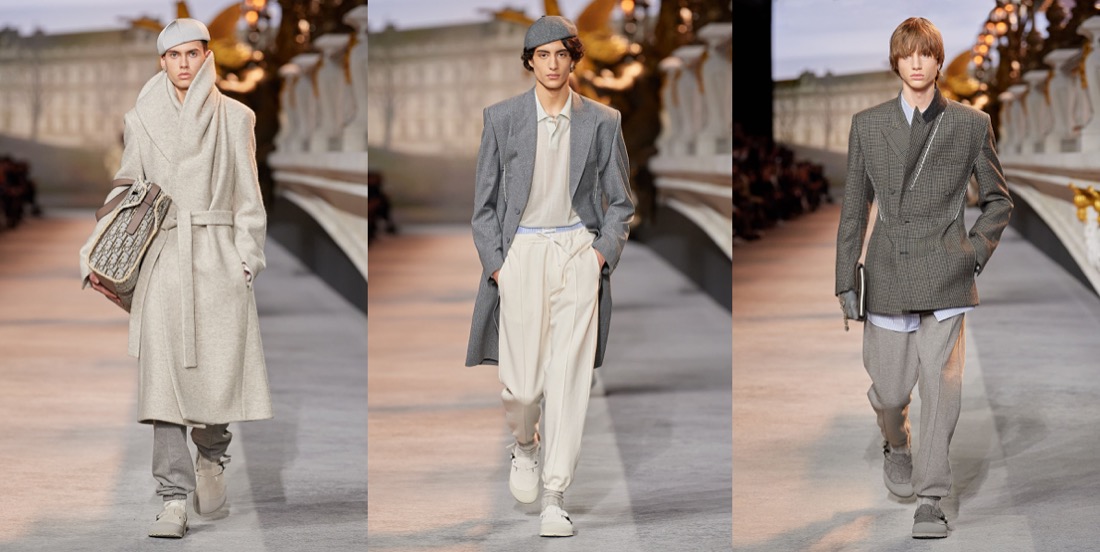
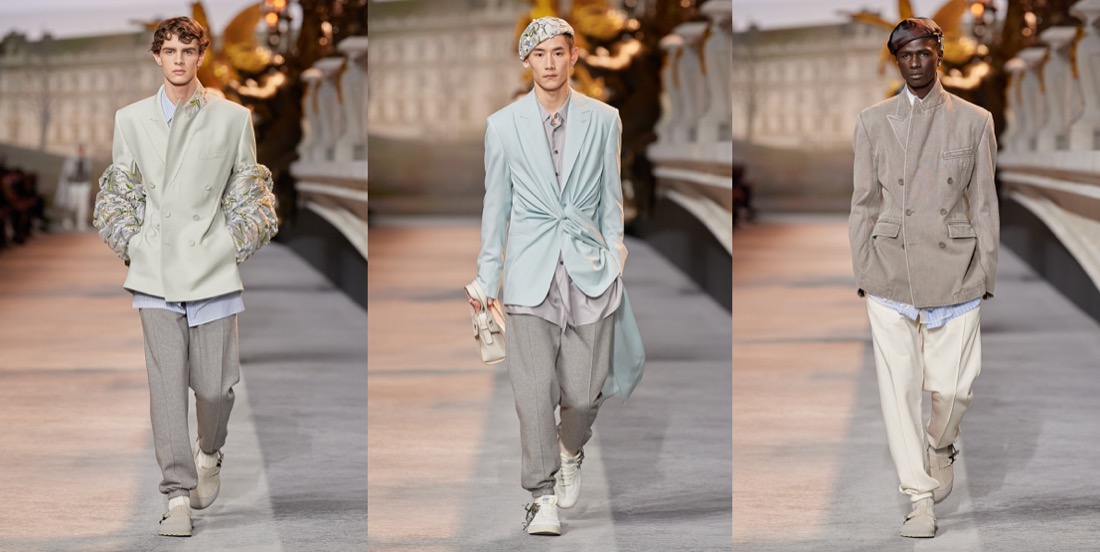
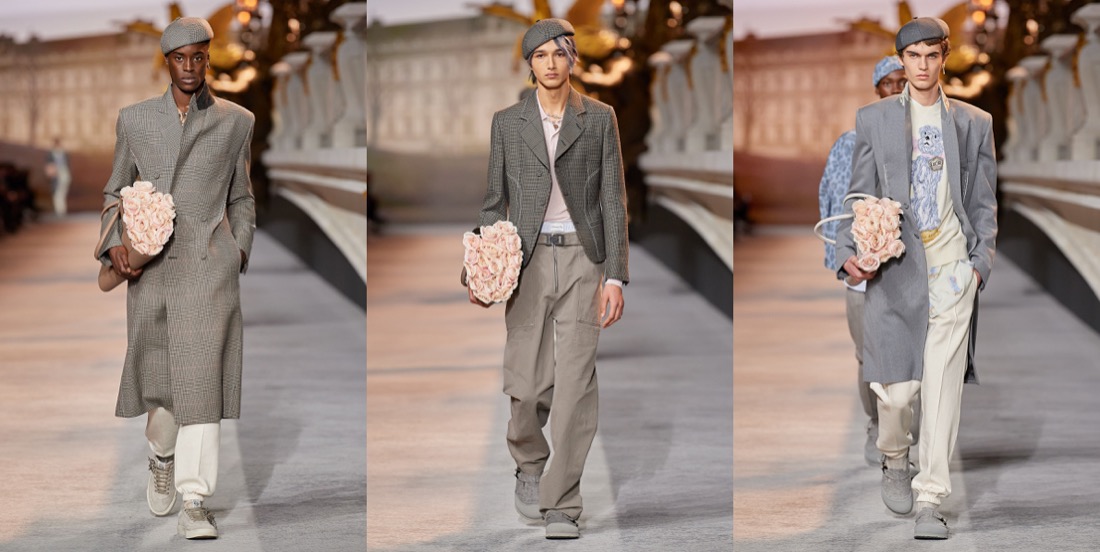
I really loved Kim Jones‘ autumn-winter 2022 menswear collection for Dior. It might come as a surprise that Jones, who has devoted most of his Dior collections to collaborations (which sometimes feels to predictable) with artists and writers, approached his 75th anniversary homage to the house as a one-man show. “We’ve done a Birkenstock, but only because we didn’t want to do a Christian Dior gardening shoe and copy it,” the designer told Vogue. In true grande maison style, Jones erected a life-size copy of Pont Alexandre III in a tent on Place de la Concorde, just a stone’s throw from the real one (not a very sustainable approach…). The nasal might of Christian Dior spoke on the soundtrack with godlike authority as Jones’s interpretations of the couturier’s signature silhouettes bathed in his favorite “Dior gray” strolled along the bridge’s banister. It was a straight-forward exercise: from the Bar jacket to the wrap coat and the cannage, Jones worked each of the Dior icons into something that would resonate with a contemporary male customer. “It’s really complicated pattern-cutting but it looks so simple. That’s the beauty of it,” he said, pointing at one of the jackets on his board of looks. A series of Bar jackets and coats constructed like men’s blazers with white stitching that looked almost frayed had a deconstructed character to them we don’t often see at his Dior. It suited him. But mainly, it was nice to see a Dior collection that was purely Jones, somewhat similar to his debut from a couple of years ago. A collection like this may not receive the hype of last season’s Travis Scott collaboration (the release of which has been indefinitely postponed due to controversy surrounding the rapper), but in its Dior-core it will serve to enlighten new audiences in what the house historically represents. “I think young people want to learn about things,” Jones said. “The thing about Dior is it still looks modern when you see pieces from the archive. That’s probably why it’s still here, and so big.” He took his bow with milliner Stephen Jones, who is celebrating 25 years at Dior, and reworked the founder’s beret for the heads of Jones’s models.

Collage by Edward Kanarecki.
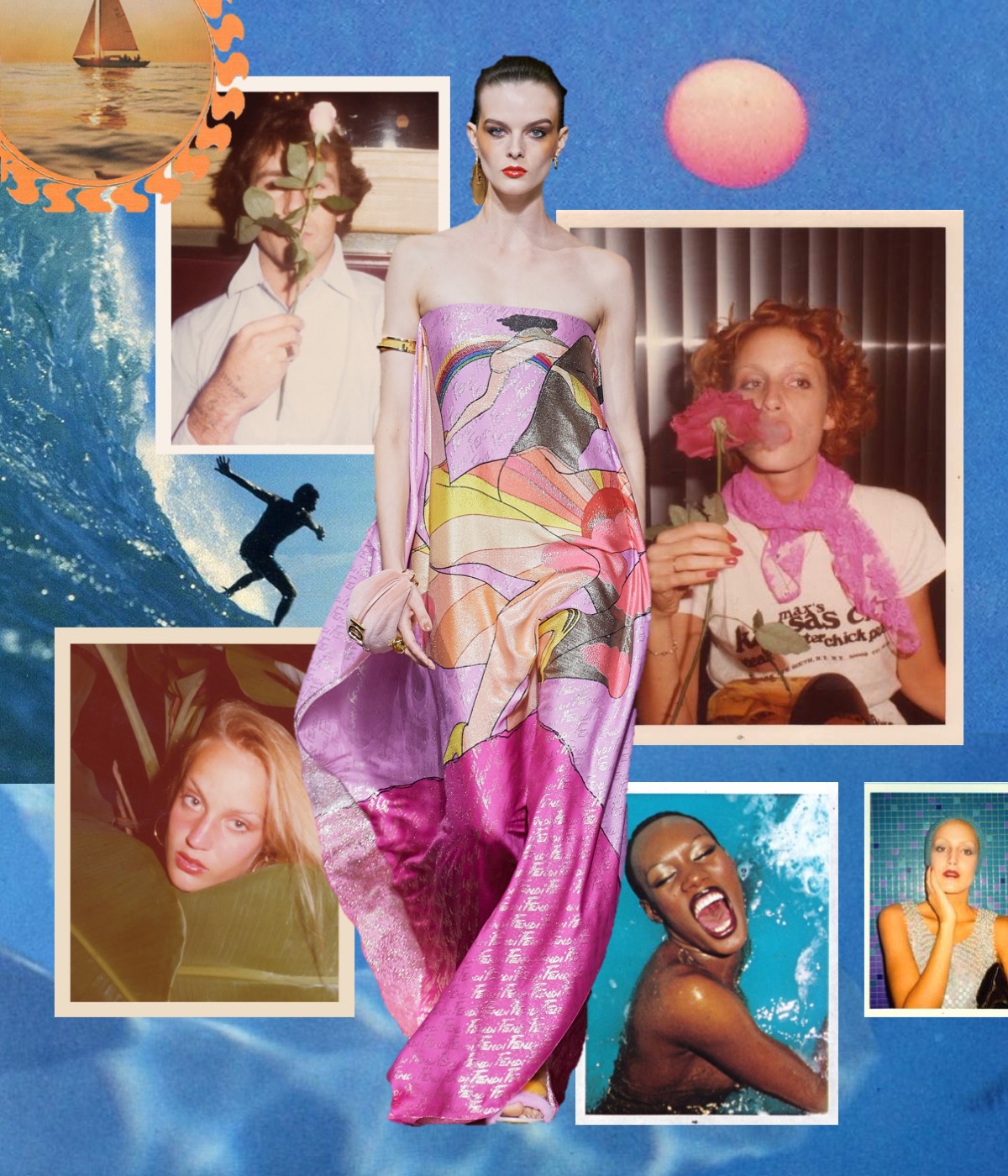
That Girl. Fendi SS22

Kim Jones’s spring-summer 2022 collection for Fendi was a line-up of classically-flavored silhouettes and color progressions played against an irresistible decorative sample of archive Antonio López illustrations. The models glided out from backstage down a runway whose arches echoed the house’s Roman home, the Palazzo della Civiltà. The big reveal of this collection, the decoration, rotated around the vintage Fendi logo drafted by López during his period of collaboration with Karl Lagerfeld. Said Jones of López: “He was a big, big fashion influencer for a lot of people, but is not so talked about. He had this relationship with Karl and with Fendi, and he helped shape so many strong visions of women, because he loved them: that feels very authentic and topical.”The illustrations drawn from the López estate’s archive originated, Jones said, as the 1960s transitioned into the 1970s. Here his work was introduced via oversized brushstrokes, then zeroed-in upon via one particular drawing, a rouge-lipped profile of Jane Forth that was abstracted into the pattern that contoured four vivid intarsia and jacquard looks. Color became more impactfully calorific as further illustrations of wavy-haired and cherry-lipped rainbow-framed women were worked into kaftans, a fringed tapestry-woven Baguette, intarsia leather thigh-highs and silks. Plexiglass jewelry by DelfinaDelletrez was shaped in gold-edged transparent lily leaves, another López signature. Many looks remained illustration free, yet even without the figurative signposting, these outfits echoed the aesthetic of the period in which López was working. Just like Jones’ debut collection last March, this was… a proper-looking collection. Quite dangerously, Kim leads Fendi to that type of predictably classy, beige-y, luxury Italian brand category, which Lagerfeld avoided at all costs.

Collage by Edward Kanarecki.
Here Comes The Light. Fendi AW21 Couture

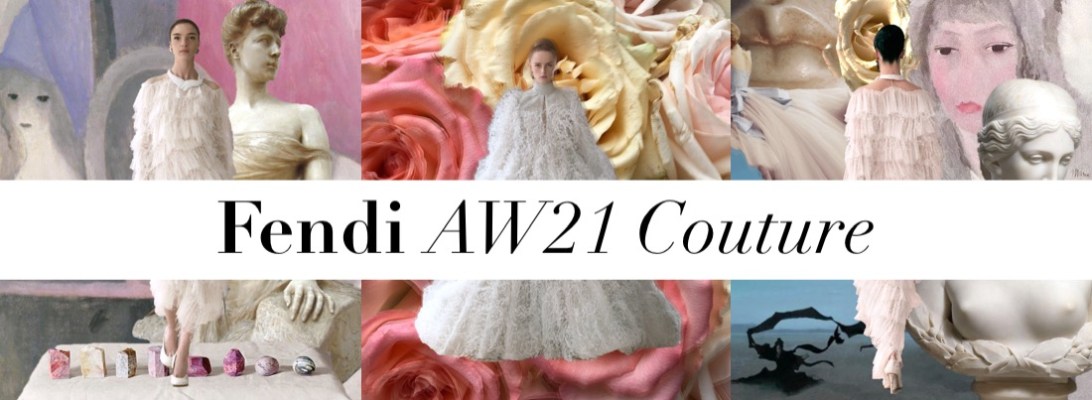
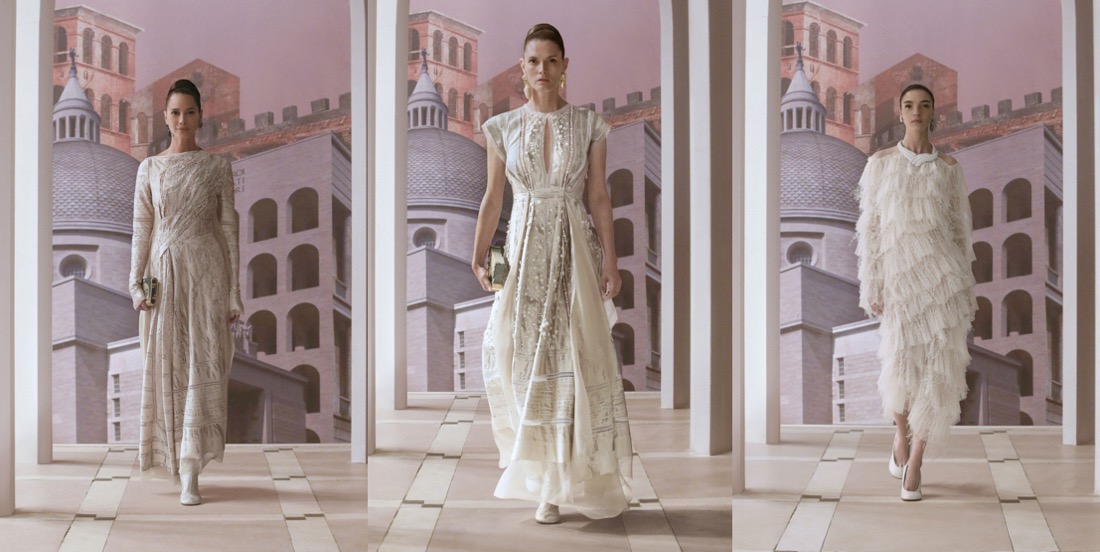
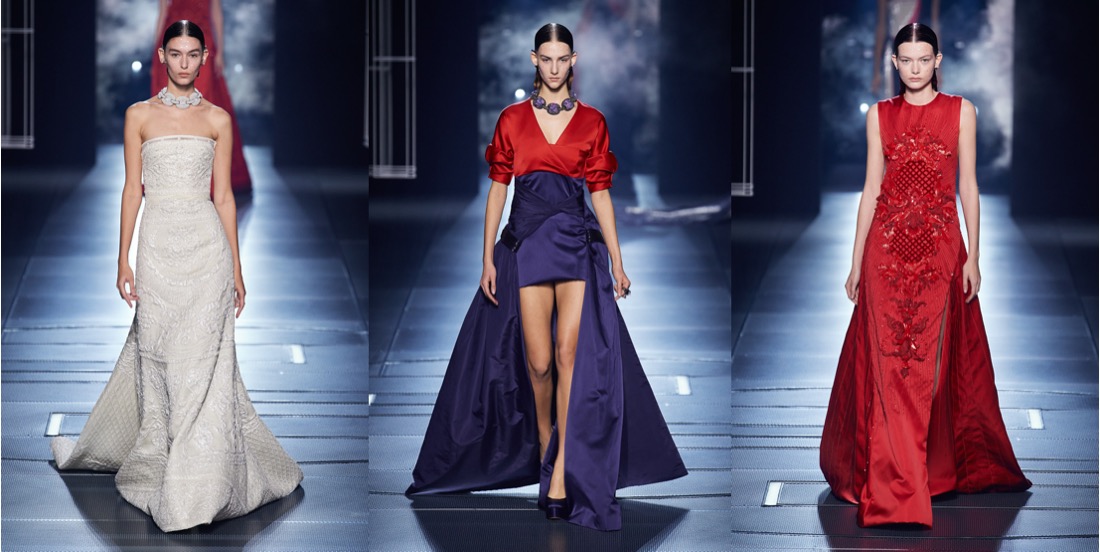
Kim Jones‘ second haute couture collection for Fendi was captured in an emotive film, which saw the likes of Kate Moss, Christy Turlington, Malgosia Bela and Amber Valletta gaze enigmatically into the camera as they wafted around a Roman theater set in dresses evocative of the stone and statues of the Eternal City. It was shot by Luca Guadagnino and scored by Max Richter. In the age of social media when big, beautiful dresses go viral, the direction Jones is setting for Fendi epitomizes a popular understanding of haute couture as something the eye can easily identify: bold ballroom silhouettes, sumptuous surface decoration and (very) famous faces. “It’s being optimistic about being able to socialize properly. I thought it was a nice moment to say that,” he said. Couture clients, Jones pointed out, “go to Fendi for something extravagant.” Two seasons into his tenure, his couture expression is manifesting itself in decoration and fabrication above all. His glamorous evening dresses serve as canvases for this finery, like the mother-of-pearl embellishment and recycled fur mosaic work that graced this collection. Watching it unfold, it feels like a formative process, as if all that intarsia and all those embroideries have been locked inside him for so long, waiting for the day when they could burst out into bona fide couture. Comparing to his heavy, over-worked January show, this one radiates with lightness and elegance that isn’t forced. To me, it felt like the mesmerising ambience of Rome. The film was inspired by Pasolini’s neorealistic Roman cinema, every architectural era of the city visible on its mock horizon. The fabrics and textures were informed by the buildings and pavements of Rome, some employed in statuesque lines that underscored the theme. Jones’s evolving exercise in the decorative aspects of haute couture made for eye-catching effects like the allover petal work of Moss’s oversized dress, or the marbling of Valletta’s swathing gown. Most compelling were the silhouettes that really took form, like the hypnotizing construction of a mosaic bolero jacket that resculpted the body through the volume-specific grammar of haute couture, or the dress worn by Mica Argañaraz, which demonstrated a similar idea in flou. “We had a lot more time to work on this one. We’ve actually had a full season. So, it’s a lot more worked into, and I think people will see a lot of difference in it. The people here, when they see what we’ve been doing, they can’t believe it’s the second one I’ve done. They say it’s a lifetime’s worth of understanding,” Jones concluded.

Collage by Edward Kanarecki.