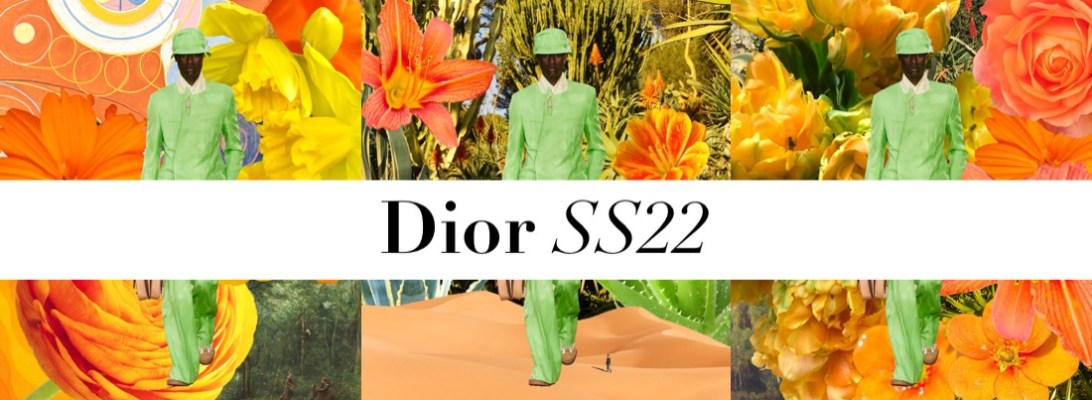
Men’s – Kim Meets Travis. Dior SS22

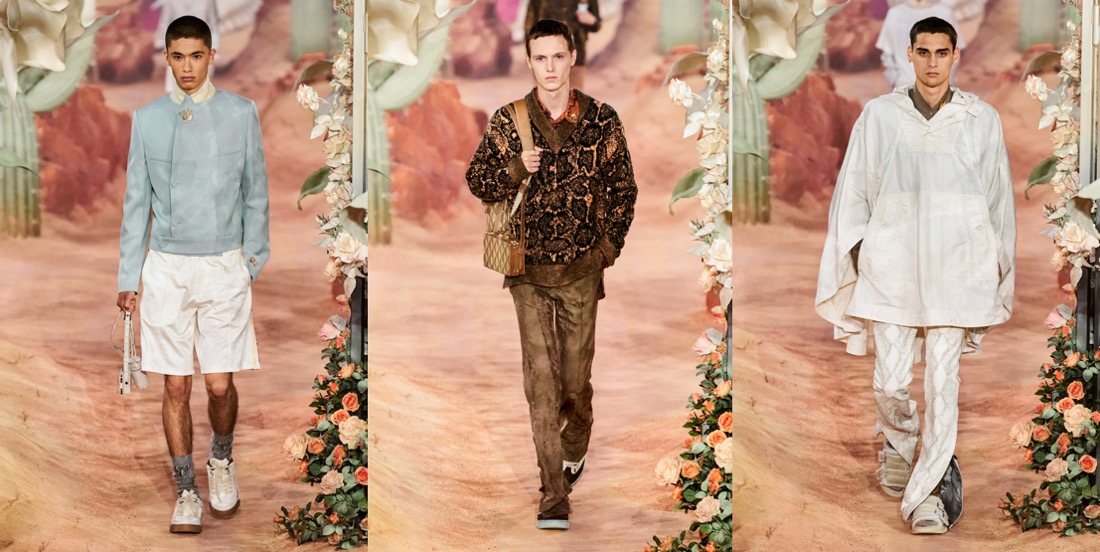
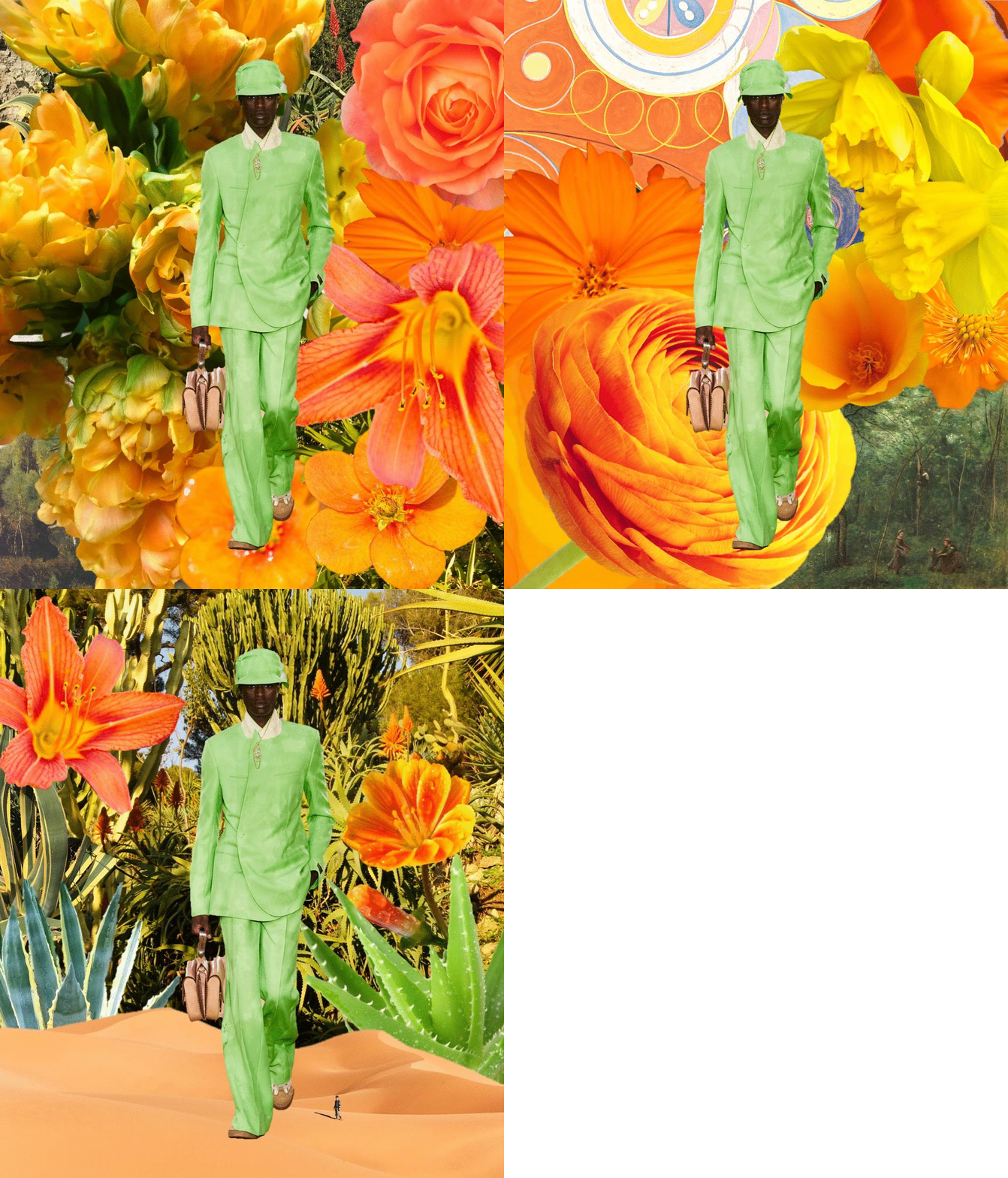
At Dior, Kim Jones has collaborated with some of the finest visual artists out there, from Peter Doig to Raymond Pettibon and Daniel Arsham. But somehow this season’s joint effort with a 29-year-old rapper from Houston made the most sense. Travis Scott is one of the most remarkable musicians in the world right now, a Gen Z idol who embodies the esoteric fashion attitude of social-media culture and who has a child with Kylie Jenner. He is the type of celebrity who sits front row at Jones’s shows. But today the hip-hop community is no longer being dictated to by fashion. They’ve shifted that paradigm, claimed their rightful influence on the industry, and got behind the wheel. Scott’s collaboration with Dior was a manifestation of that evolution: a meeting between a creator and his muse, who hadn’t quite decided who had been cast in which role. “From the stage to the music, it was never just about the clothes but about the experience,” Scott said during fittings in Jones’s Paris ateliers. “It’s how you see and hear it, how you see the music.” He was talking about the live show production—which spliced memories of Christian Dior’s childhood gardens with the cactus-heavy Texan landscape Scott grew up around—but he might as well have been painting a picture of his own fashion understanding. Gifted with an instinct for styling, Scott has a personal wardrobe as distinctive as his sound. “It’s about taste, isn’t it?” Jones told Scott. “Some people have it, some don’t. Luckily you do!” The internet will give you endless get-the-look guides on Scott and his designers of choice, from Jones to Virgil Abloh, Phoebe Philo, and the cult Japanese brands that underline said esoteric fashion culture. Going forward, style tips can all defer to this season’s Dior collection, which was a medley of those influences. Jones explained it was inspired by the artist’s own look as well as his various creative outputs. “We had some hard design sessions for a couple of months,” Scott said. “I would draw graphics and send them to him. We sat down with mad refs, breaking down where we felt like we wanted to take it.” The palette painted a picture of Houston, its pink skies, green cacti, and the browns of the earth that have become trademark colors in Scott’s wardrobe. The silhouette felt rooted in the rapper’s penchant for a slightly oversized top paired with a flared pant, skinny but not tight. Iterations on tracksuit bottoms were particularly strong, tailored to precision and studded with cowboy-like metal buttons down the side. In a nod to that same cultural heritage, Scott had interpreted John Galliano’s saddle bag for Dior as a double bag that felt more rodeo than ever. Another of the artist’s signatures: patterns that evoked the rattlesnakes and desert flowers of the Texan plains. He had cacti-fied the maison’s toile de Jouy, while the ghostly motifs that appeared on tops were his own. “They’re imaginary things that kind of pop up in my head, and I draw them by hand,” Scott said, pointing to the same motifs woven in knits. “These are knitted by hand, which is so fucking nuts. It’s crazy.
Talking about the trips he and Jones had taken to the Dior archives, Scott was clearly in heaven. “Me coming in and being able to have those in my hands…,” he paused, a smile on his face. Later, he effused about the wish-to-reality aspect of an atelier like Dior, which can literally make anything happen. “Making some of your imagination come to life, it’s kind of crazy.” His enthusiasm was visible in the collection, and that’s why it felt like such a shrewd match for Jones. Rather than applying an artist’s work to his own garments like he’s done in the past, this was the designer inviting his perhaps most influential Dior client to take an active part in the creation, from silhouette to motif and surface decoration. It was organic.
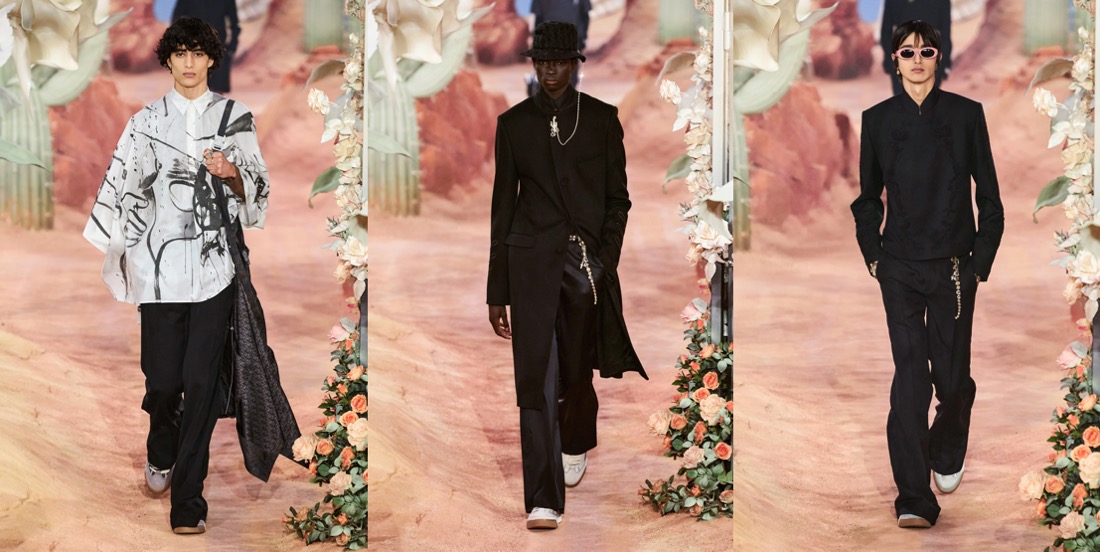
“Live” collage by Edward Kanarecki.

Proper Classics. Fendi AW21

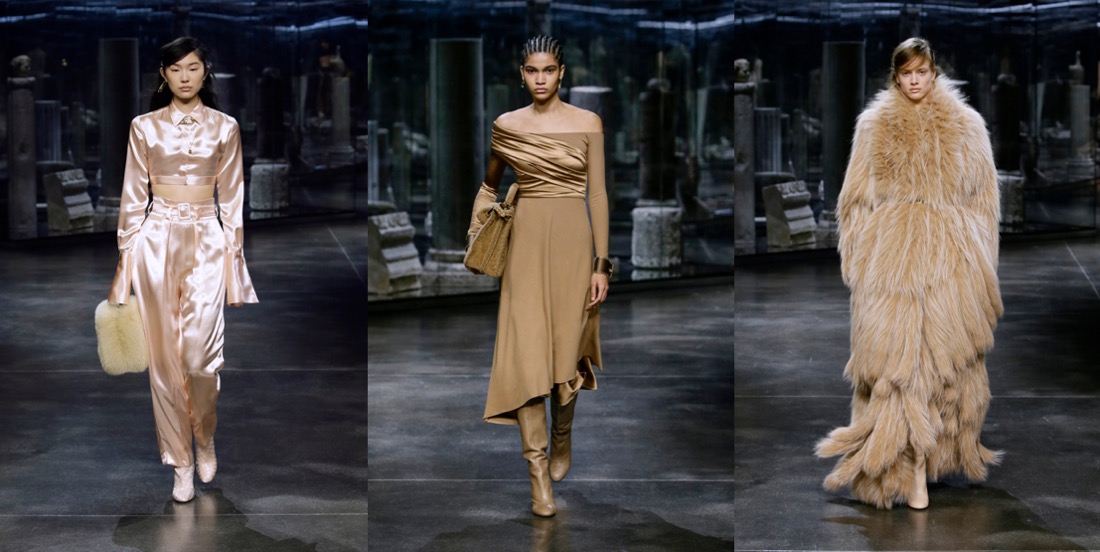
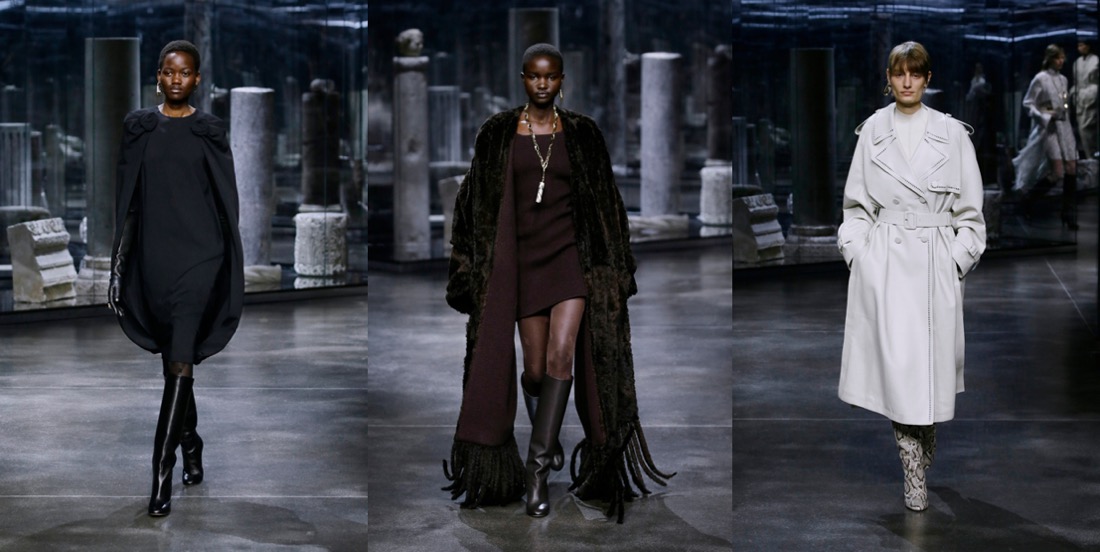
Kim Jones‘ first collection for Fendi, which was a haute couture line-up starring the designer’s friends like Demi Moore, Kate Moss and Naomi Campbell, polarised the audience. Surprisingly, his ready-to-wear debut wasn’t such noteworthy event – no big names among the models, and instead of some sort of Insta-extravaganza, we’ve seen a very classic, proper Fendi collection. Wisely, Jones neither committed himself to reflecting every aspect of the Fendi story, nor contained himself to narrowly defined elements of it. Instead he allowed the collection to unfold for the watcher as the city unfolds for the visitor, a multitude that coalesces towards the impression of a whole. The looks were all in neutral shades, both to reflect the mineral colors of the city and the organic shades that have dominated in Fendi’s history. Spaghetti-fringed furs in contrasting herringbone, striped silk shirting, and the opening loose-sleeved suede bonded mink evoked the period of Fendi’s first great flowering under the stewardship of the founders’ five daughters Paola, Anna, Franca, Carla, and Alda. It was they who recruited Karl Lagerfeld in 1965, and his great influence was stamped most clearly in a soft tote whose F-framed handle evoked his famous ‘Fun Fur’ of that period. Significantly, many pieces were punctuated with the 1981 ‘Karligraphy’ monogram. The biggest innovation here was the way the topic of fur was handled. The grandest fur on show was a long-haired fox whose raw material had been upcycled from previous pieces. Jones said of upcycled fur “that it is probably more challenging to work with for the artisans, but they enjoy being challenged.” He also pointed to the abundance of by-product shearling and added that his approach in this regard is to balance two questions: “What does the customer want and what can we do ethically?” Maybe this collection wasn’t overly charismatic or loud, but I bet it will do well in the stores next autumn.

Collage by Edward Kanarecki.

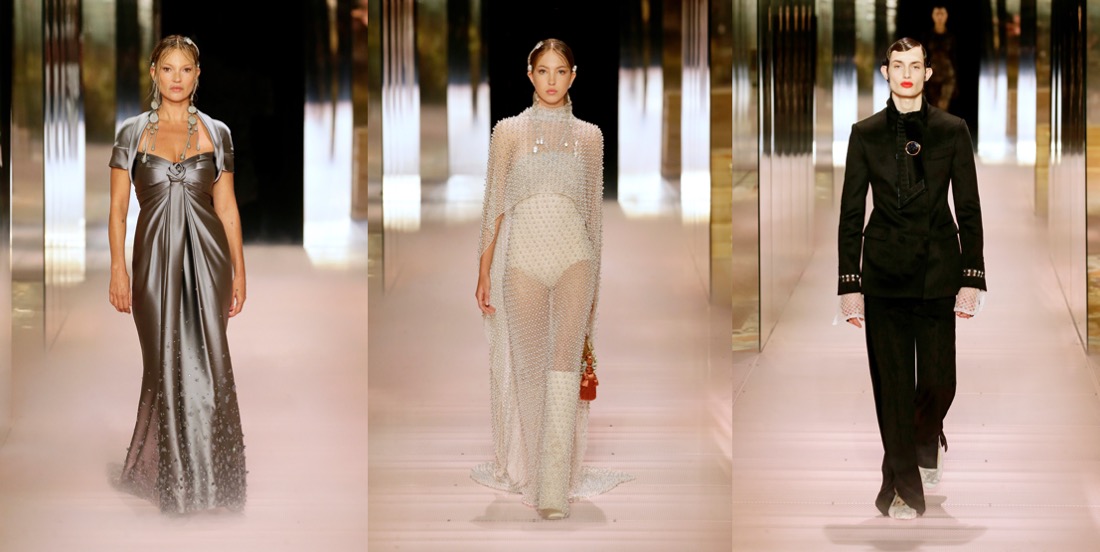
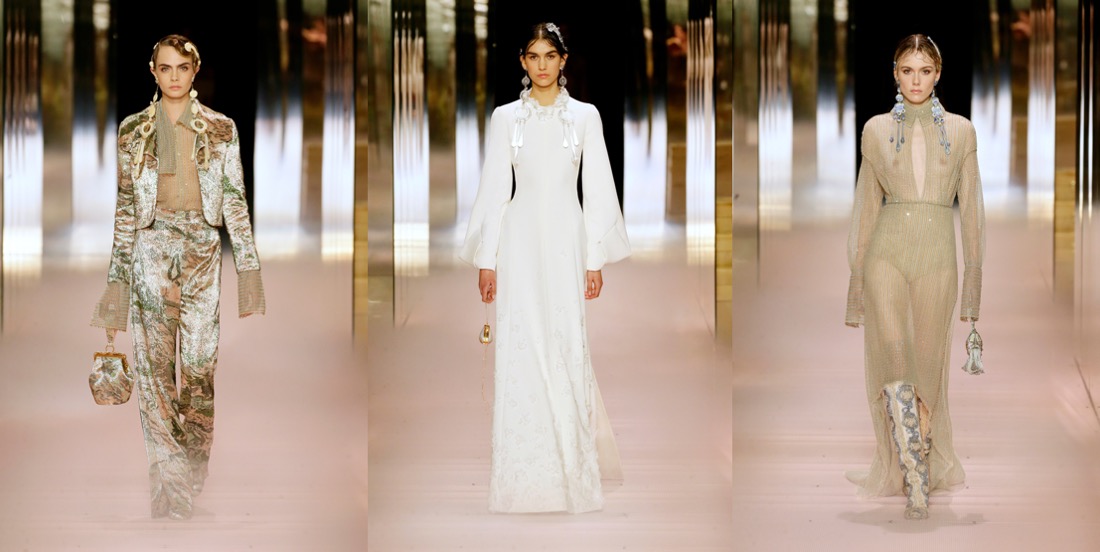
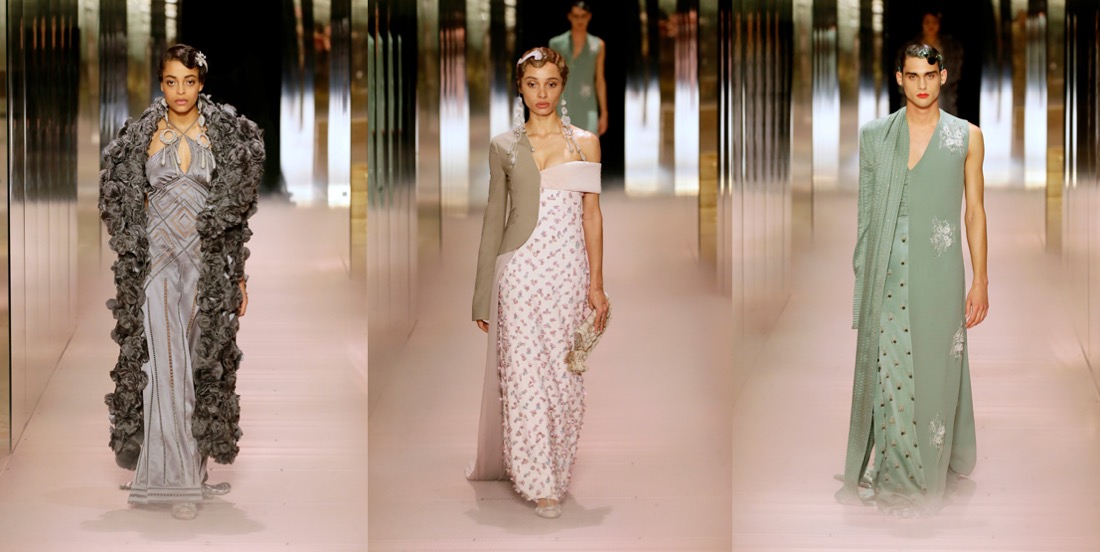
Romantic Melancholy. Fendi Couture SS21

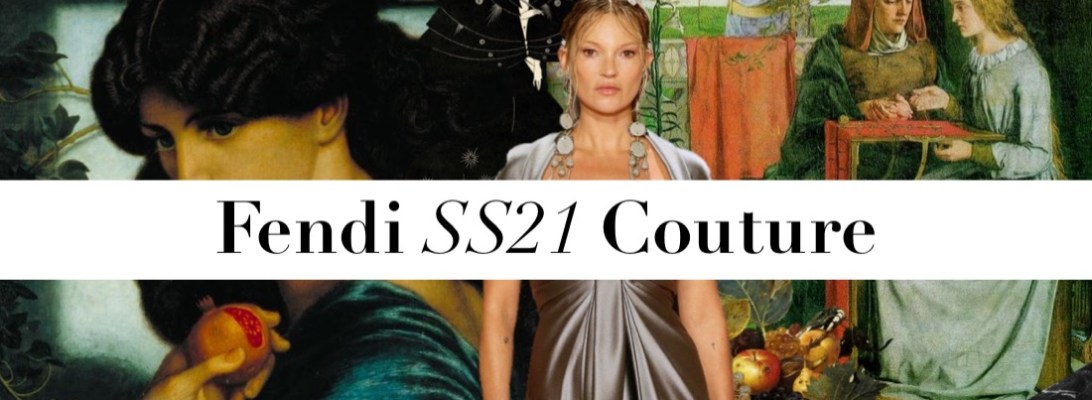
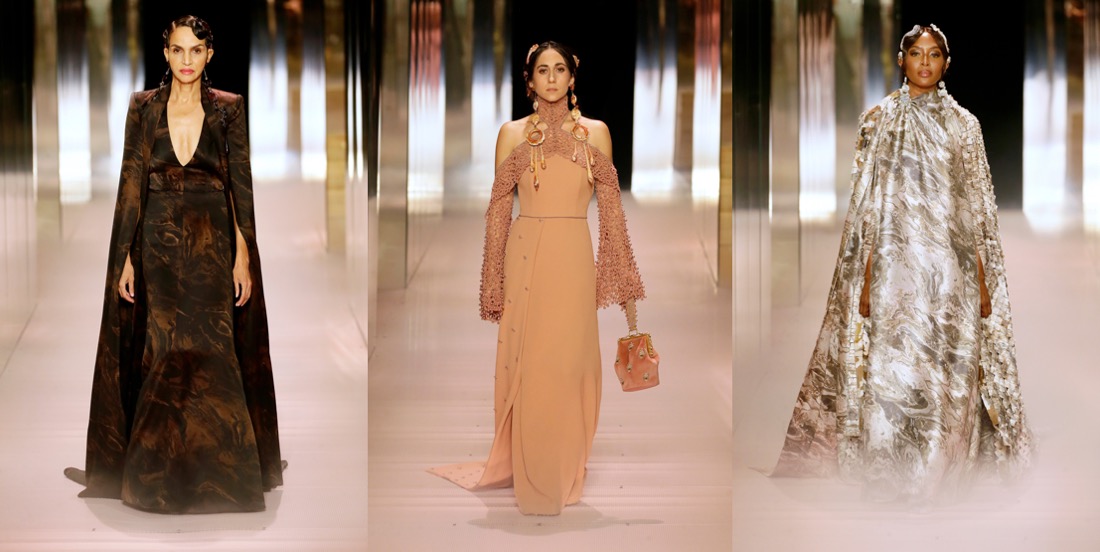
Kim Jones‘ big debut at Fendi‘s womenswear hit off with a haute couture show. You might know that I wasn’t his fan at men’s Louis Vuitton, and I’m not overly obsessed with his current Dior menswear venture. So I didn’t expect much from his arrival at Fendi. The spring-summer 2021 couture show is an example of a fashion spectacle, where everything wows the viewer except the actual clothes. First, the literary and artistic sources that shaped Kim’s Fendi line-up started in Charleston Farmhouse, the 16th-century Sussex retreat of the Bloomsbury set located not far from the village of Rodmell, where the designer was partly raised and owns a house. Young Jones would spend school trips exploring the house and learning about Bloomsbury’s bohemian members. Those dreamy stories stayed with him. Second, his Fendi collection showed a demonstration of how Jones expresses himself in form and decoration in womenswear.  Of carving out that silhouette, Jones said he observed “the reality of what women around me are wearing. I have friends that just buy couture clothes, and they don’t buy big ball gowns. They buy real clothes, things that fit their bodies.” Above all, he wants to create work “reactive to the time we’re living in.” And three, enter ‘Orlando’, Virginia Woolf’s time-traveling tale of androgyny and fashion’s favorite lexicon for the study of genderlessness. “’Orlando’ was published in 1928, and Fendi was founded in 1925,” he pointed out. The “journey from Bloomsbury to Borghese” interpreted Vanessa Bell and Duncan Grant’s frescoes of Charleston in hand-beaded prints and the marbles of the Galleria Borghese in painted tailoring, meanwhile dresses evoked the wet drapery of its Bernini sculptures. It all sounds delightful and thorougly considered, but the effect was overcharged, heavy and most of the time, simply unflattering. In the prerecorded show, Jones echoed ‘Orlando’’s themes in a coed cast featuring many of his high-profile friendships: Demi Moore, Kate and Lila Moss, Christy and James Turlington, Adwoa and Kesewa Aboah. The family constellations celebrated Fendi’s values as a matriarchal fashion dynasty, whose class-act custodian, Silvia Venturini Fendi, still serves as artistic director of accessories and menswear. Joining the cast were her daughters, Leonetta Fendi and jewelry designer Delfina Delettrez, whom Jones has now named as creative director of the brand’s jewelry. Delettrez’s supersized murano glass chandelier earrings accompanied each look, and must have been heavily inspired by Romeo Gigli (if this name doesn’t ring a bell, you better Google him!). Tailoring felt more rigidly structured for male anatomy, framed by floor-sweeping capes. At times, forms grew shapeless, like a pink look of highly textured layers topped off with a lace coat webbed from roses or a mound of marbled garments draped over Naomi Campbell (I love Naomi. But this look didn’t serve her at all – she drowned in it!). Jones’s juxtapositions culminated in split-personality dresses hybridized from half an evening gown and half a blazer or shirt. The inspiration was found in the sketches of his predecessor, Karl Lagerfeld, who left 54 years’ worth of archives behind him when he died two years ago. Lagerfeld’s Fendi was epitomized by Roman modernism, a handsome glamour that often found time for quirk. Jones’s approach was romantic (and suffocating) melancholy in contrast. Of course, most ‘major’ debuts go wrong. It’s the beginning of a new chapter at Fendi, and I’m looking forward to see what Jones will bring next to the table.

Collage by Edward Kanarecki.
Men’s – Peter Doig. Dior AW21

While everybody is obsessed with Kim Jones‘ menswear at Dior… I’m still on fence with it. In overall, I love how he implements couture traditions of the maison and, at least, makes his part amusing, comparing to Maria Grazia Chiuri’s womenswear. But his autumn-winter 2021 collection just feels regular. Maybe it’s the side-effect of working on the Fendi debut? Again, Jones invited an artist to collaborate. This time, it’s the Scottish-born painter Peter Doig, whose roving background – an upbringing in Trinidad, study in London in the 1980s, success in the ’90s, a move to Canada – is exactly the stuff that brings out the fanboy in Jones: “Peter was at Central Saint Martins with Stephen Jones, and knew all the people I’m obsessed by – Leigh Bowery, Trojan, the London club kids at that time. Stephen introduced us. He really became part of the studio for the collection, and started making things, painting hats, and designing the set, which is based on the speaker stacks he’s collected.” Stephen Jones, Dior’s resident milliner confirms: “Yes, Peter was always hanging out with us fashion-y types at school. Then all of a sudden, unlike us, he went off and became a major international artist.” The line-up is full of Doig references: yellow anoraks, orange coats, and lions; paint-dabby patterns on sweaters – that’s all material replicated from Doig’s oeuvre. “His work is autobiographical. We looked at his paintings of men, of skiers, ice hockey players, and the night sky,” said Jones. “I think he was fascinated by how closely we could replicate his brushwork in textiles and knitwear.” The cheerful shots of citrus color – translated into some of Jones’s subtle merges of casual and luxurious street-wearable outerwear – are the making of the collection. Other than that (fashion-meets-art dialogues are always compelling), I wasn’t really convinced by the whole picture.

Collage by Edward Kanarecki.

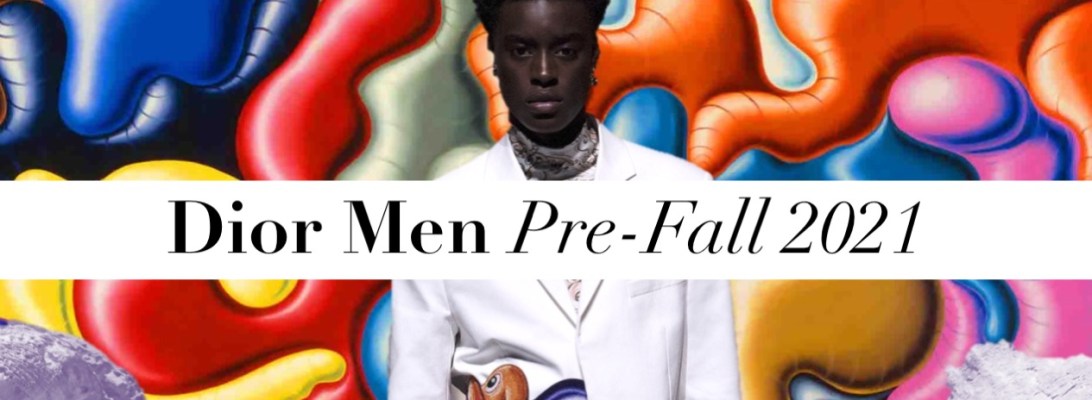
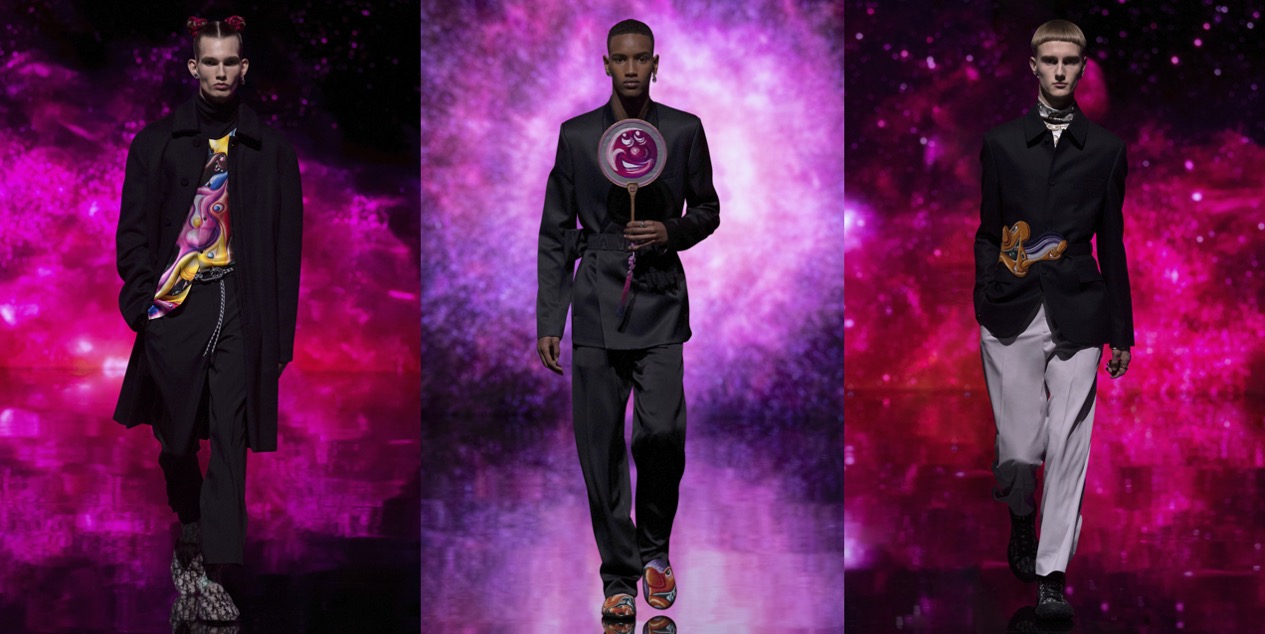
Trippy Elegance. Dior Men Pre-Fall 2021

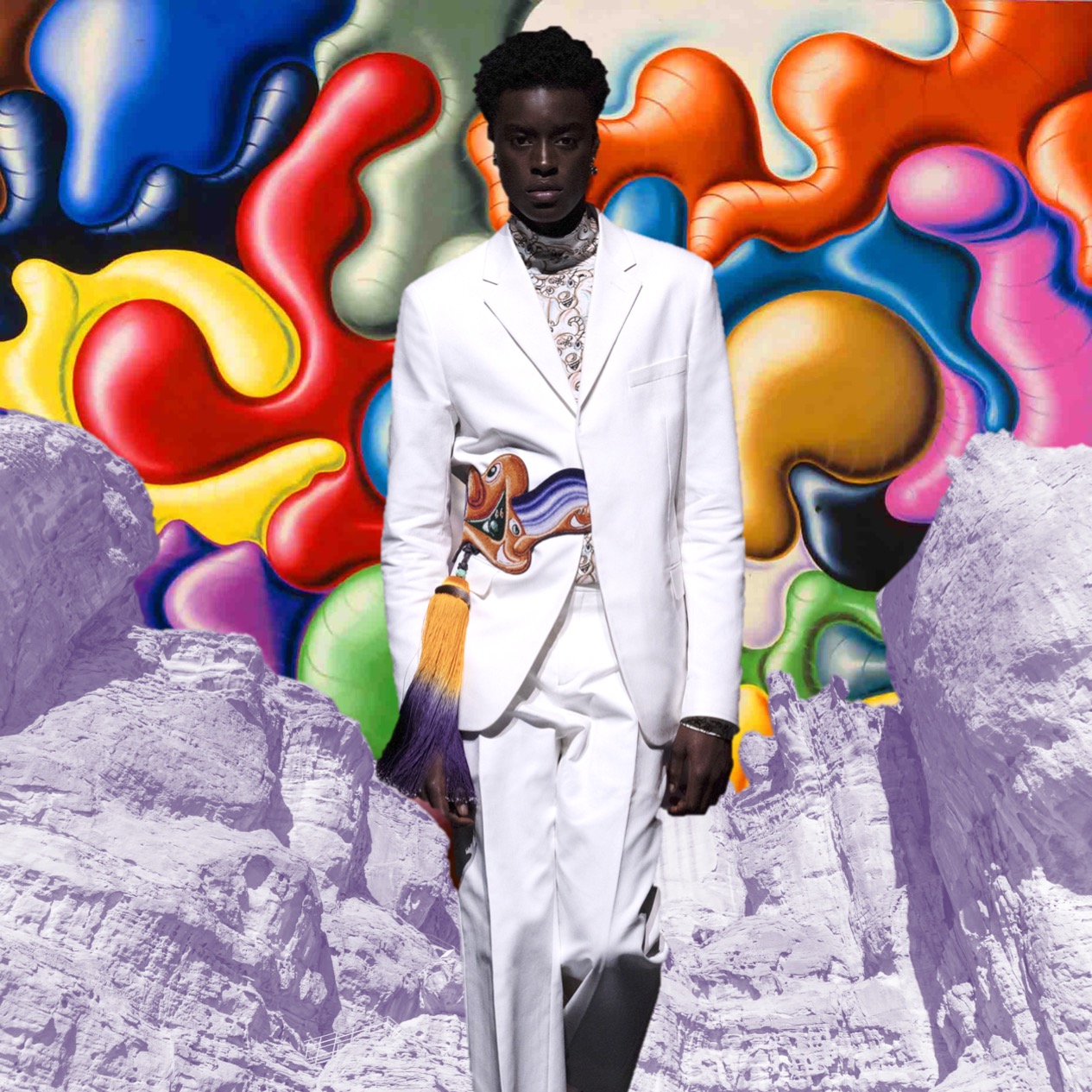
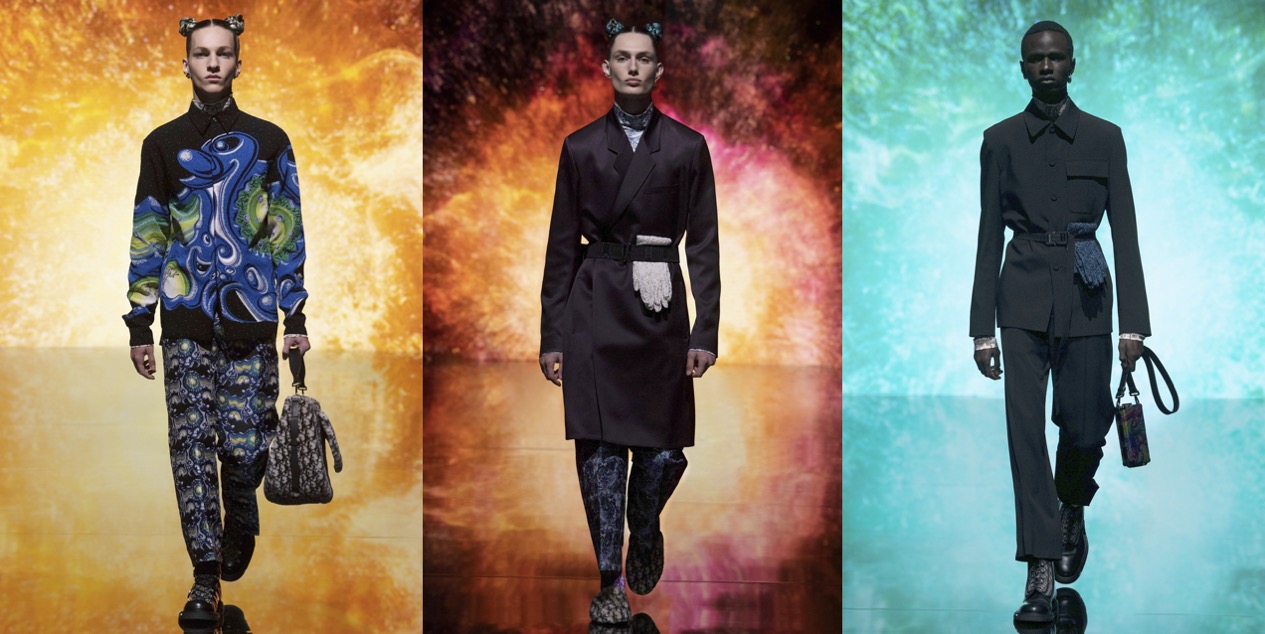
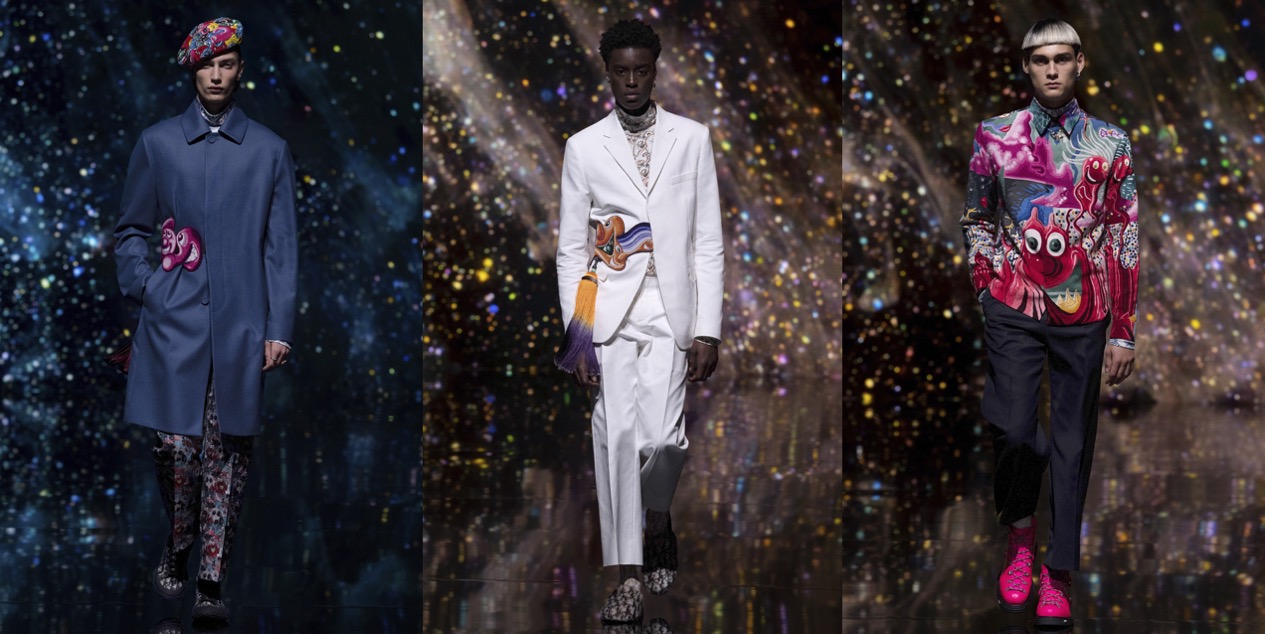
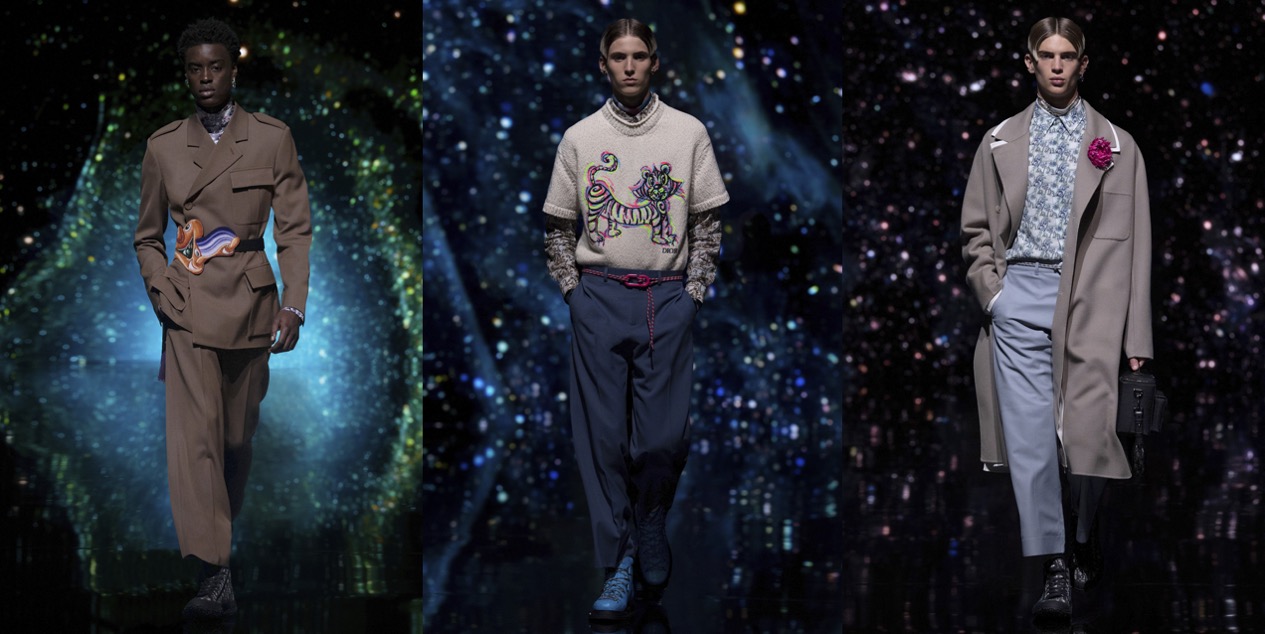
This time last year, Kim Jones’ many fans across the fashion and art worlds were gathered in Miami Beach. His Dior Men show was a Basel-adjacent affair, complete with a walk-through of the new Rubell Museum. Last moments of old reality. The pandemic scuttled plans to stage a show in Beijing for Jones’s latest outing, and this way sole focus was directed at the clothes. Last year, Jones revealed a colorful collaboration with Shawn Stussy, the streetwear OG. This season, he tapped Kenny Scharf, an American artist who emerged from the 1980s East Village scene, making street art alongside his friends Keith Haring and Jean-Michel Basquiat. “The fun and the energy of that time – you see young kids being excited by Kenny Scharf’s work. It’s speaking across generations,” Jones told Vogue via Zoom. Scharf’s canvases can now fetch up to six figures, but he still has street cred: via “Karbombz,” a public art project, he’s tagged upwards of 300 cars with his imaginary creatures – all for free. Scharf, whose first show was at New York’s Fiorucci boutique in 1979 and earliest fashion hookup was with Stephen Sprouse, is the perfect Jones collaborator. His work gleefully obliterates boundaries too. “I’m one of the inventors of all that,” Scharf said on a call from his L.A. studio. He raved about Jones: “He’s a listener, he’s a learner, and that shows. He went really deep into what I’m doing.” Together, the designer and the artist selected contemporary pieces and older ones to reproduce, including When the Worlds Collide, a 1984 canvas in the Whitney’s permanent collection. Scharf also designed 12 Chinese zodiac signs for the show’s knits and underpinnings, and, of course, he had free rein to reinterpret the Dior logo. “I just wanted it to be a very full-on version, using specific techniques to recreate his work in really beautiful ways, to make it even more Pop,” Jones said. In some cases, the Dior ateliers were joined by Chinese artisans who rendered Scharf paintings in delicate seed embroideries. Silhouette-wise, Jones’s instinct was to soften his distinctive tailoring and give it a more lounge-y attitude. Jackets are belted like robes and pants are easy; some of the models wear Oblique-patterned slippers. We are still locked in, after all – lets keep it stylish.

Collage by Edward Kanarecki.