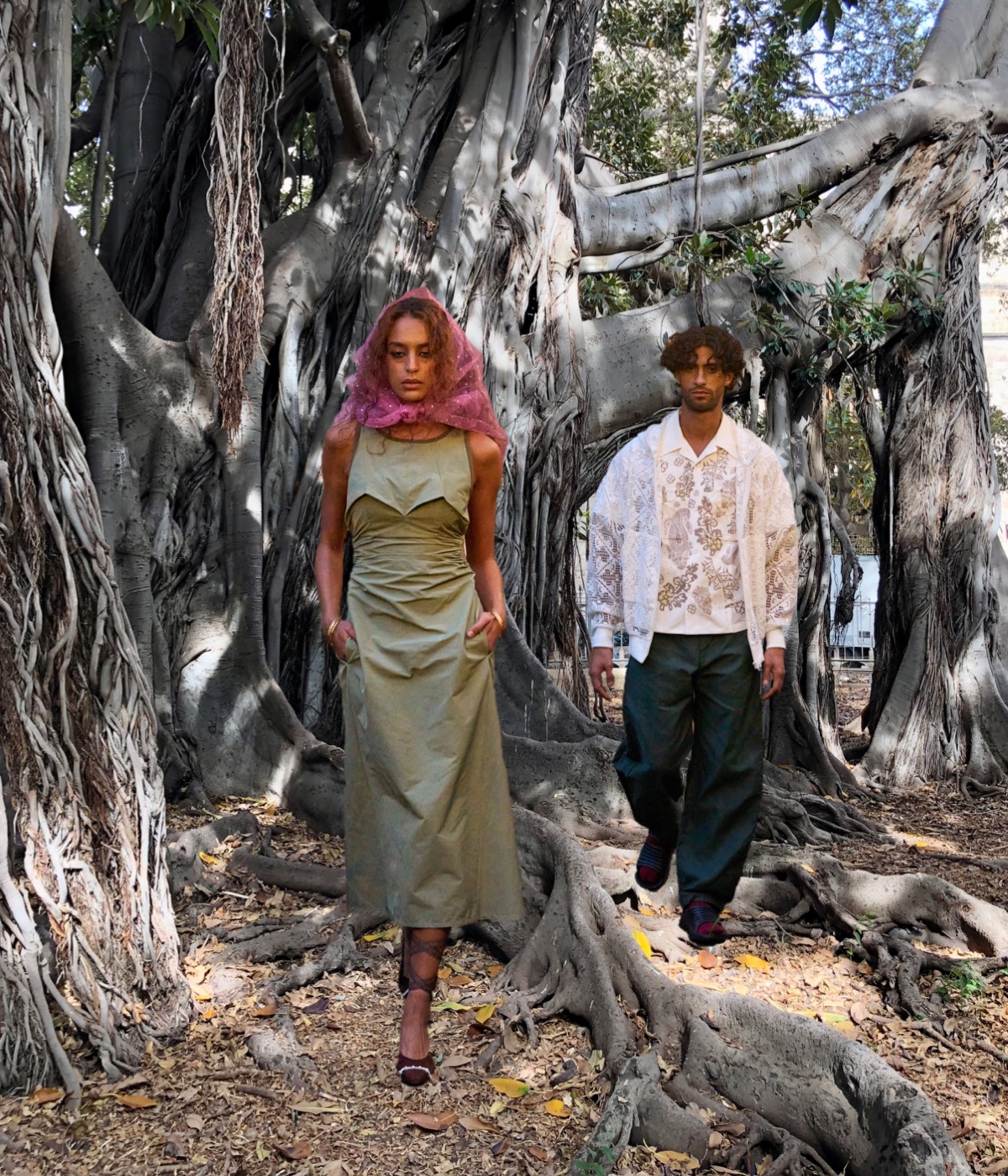
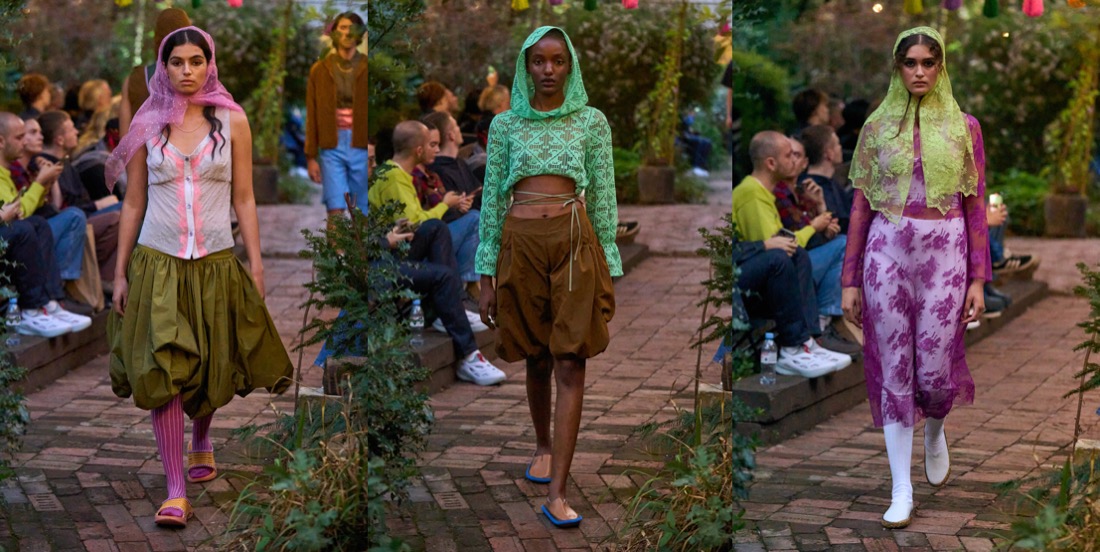
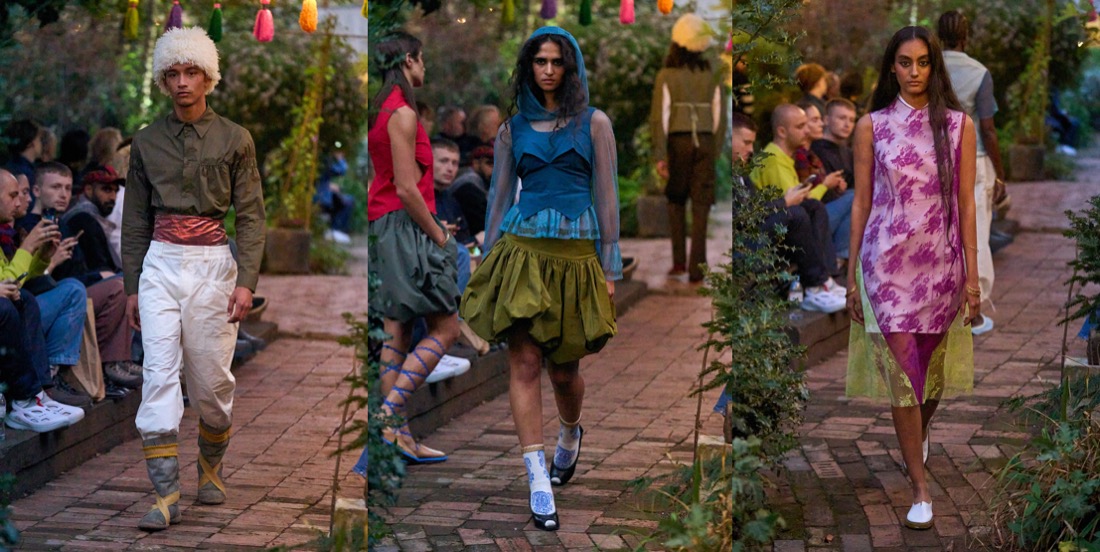
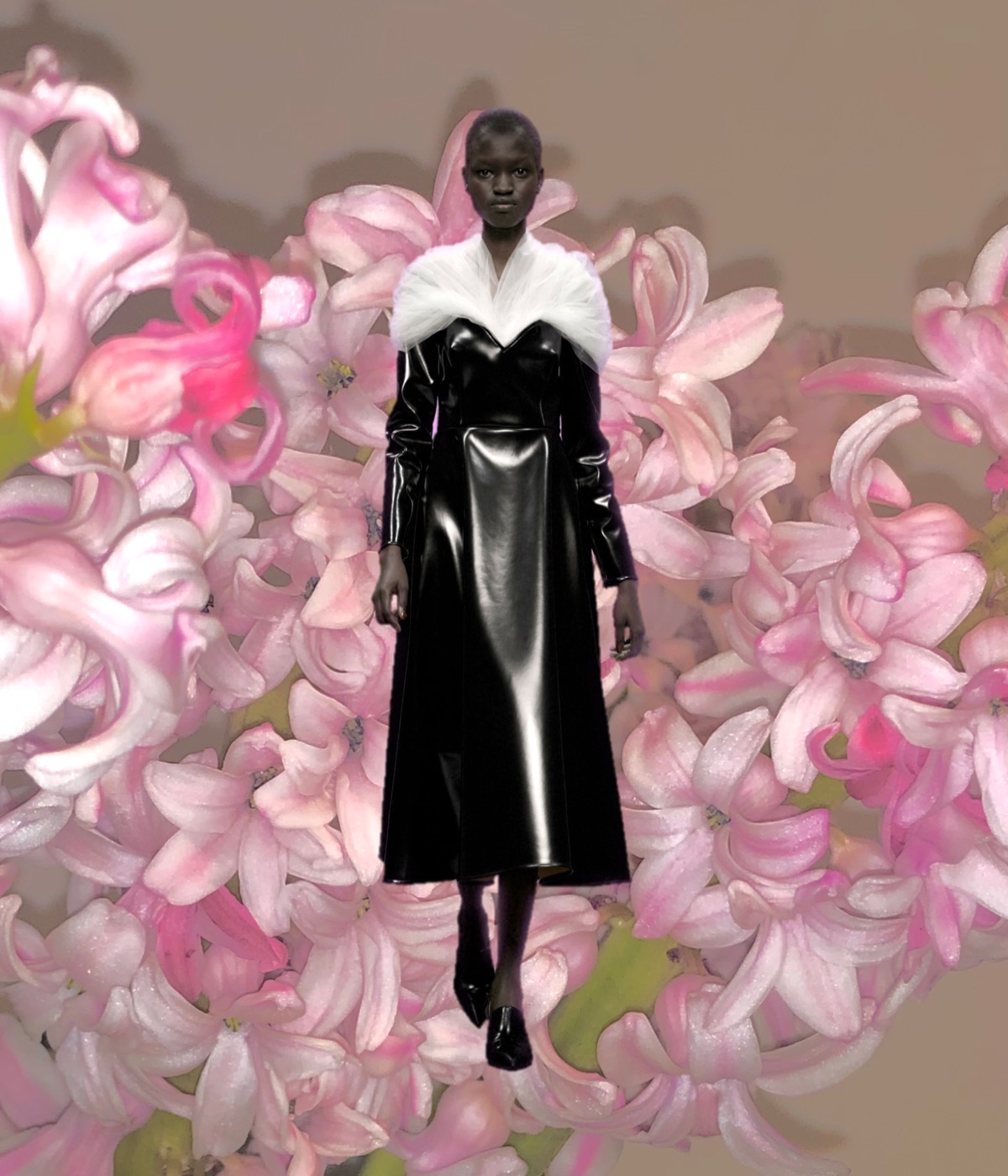
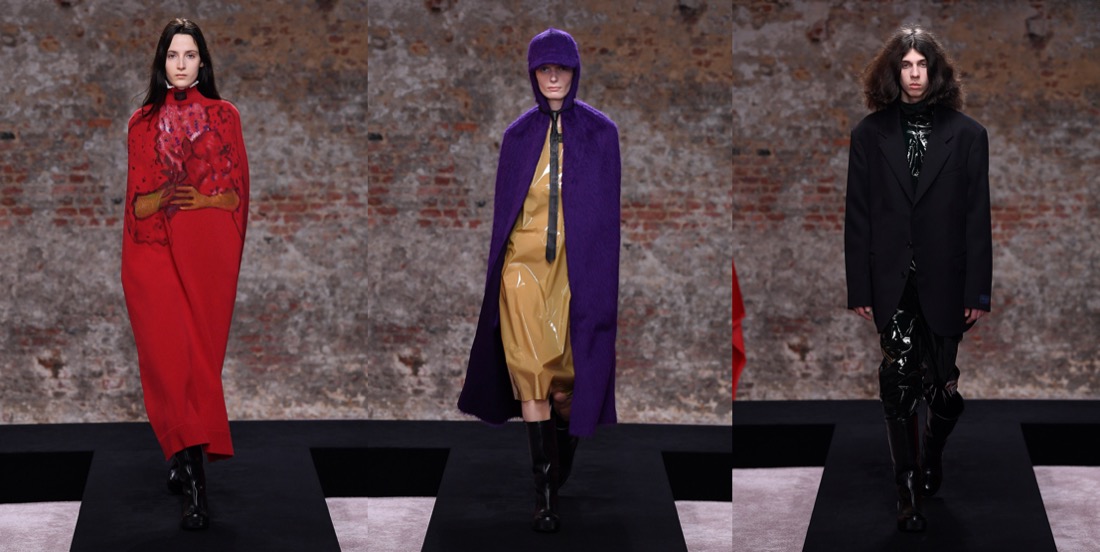
Paria Farzaneh has built her platform London-based through a fiercely independent exploration of her Iranian heritage. The designer has used her brand as a means to challenge the western perception of Middle Eastern culture and aesthetic, by boldly blurring the lines between the two distinctly different worlds that have informed her experience. For her spring-summer 2023 fashion show, she invited her guests to Phoenix Garden, a charitably established community space. In a pre-show spiel there was talk of this collection reflecting Iran’s apparently 1.68 percent of citizens who are nomadic. Farzaneh mixes blatant ethnographic touches, almost costume, with highly sophisticated pieces that float above cultural codes; pants and shorts cut with a side-leg pleat, for instance, were fresh and new. The shroudy, geometrically cut lacy pieces were based on curtains Farzaneh remembered in her grandma’s bathroom. “I think in the fashion industry, utmost honesty is very lacking,” said the designer. So how to walk away from the table with a win in this dishonest business? The nomads of any culture who share Farzaneh’s roving curiosity, wherever they hail from, should understand her codes.
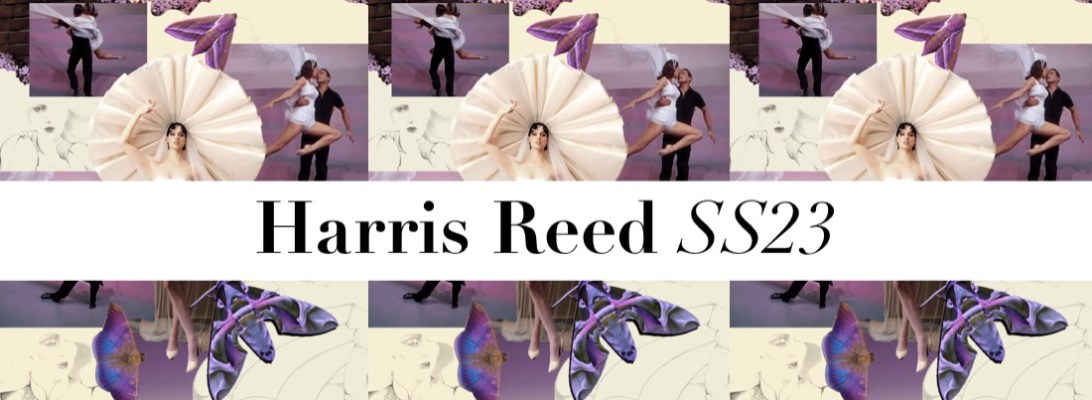
Collage by Edward Kanarecki. Don’t forget to follow Design & Culture by Ed on Instagram!
There’s no need to explain why this London Fashion Week won’t feel like a usual affair. The somber events of fate – the death of Queen Elizabeth – couldn’t help but have overtaken Harris Reed’s chosen position as one of the first designers to show in London. The plan was to stage his joyfully glam, celebratory queer show as a move-on, literally, from the high-drama static tableaux he’s worked on for a couple of seasons. It was a performance which was to have acted as a kind of ta-da curtain-raiser for all the fizzy anticipation people had been feeling about the first full comeback of shows since the end of the pandemic. Conscious of the very different load of responsibility that his massively sculptural looks were now going to carry on their scaffolded shoulders, Reed spoke up. During the days when there were heart-searching discussions about whether the week should be canceled altogether, he posted a respectfully-toned text pleading for the survival of the fragile ecosystem of young brands – his friends – for whom canceling could’ve spelled financial ruin, with no hope of recouping insurance on money already spent. “It has been a challenging two years… in these two years I have been absolutely blown away by how incredibly supportive the fashion community is in London. When put through massive challenges, designers, models, movement directors, casting directors, nail artists, [and] writers have supported one another, lifting one another up,” he wrote. “London is a place where community, creativity, and cultivation should always be in the forefront of what we support and nurture.” And he tagged all the names of the designers and friends he is “honored to be showing alongside.”
It was a generous, much-shared gesture, illustrating something of how Reed’s popularity as an optimistic personality-about-fashion has been a contributory factor in the massive amounts of attention, celebrity-wears, and magazine covers he’s managed to magnetize at an almost absurdly early stage of his career. So: it was on with the Debutante Ball-themed show, the hysteria generated by the appearance of Adam Lambert singing “Nessun Dorma” only slightly dialed back, given the circumstances. Earlier, in his studio, Reed related how his inspiration was a cross between Victorian crinolines and the great glittering days of drag clubs in New York. He has a bold sense of unputdownable optimism, which he attributes to his American upbringing. It shows in the scale of his ambition to make clothes which aspire to haute couture, or at least, the look of it. Fitting clothes to the body to be inspected in movement and in the round presented a technical hurdle, not quite a leap, if one was being Paris-picky. But then again, Reed’s can-do, let’s-pull-together American cheerleading has been a great asset to have around London in a time of crisis.
Collage by Edward Kanarecki. Don’t forget to follow Design & Culture by Ed on Instagram!
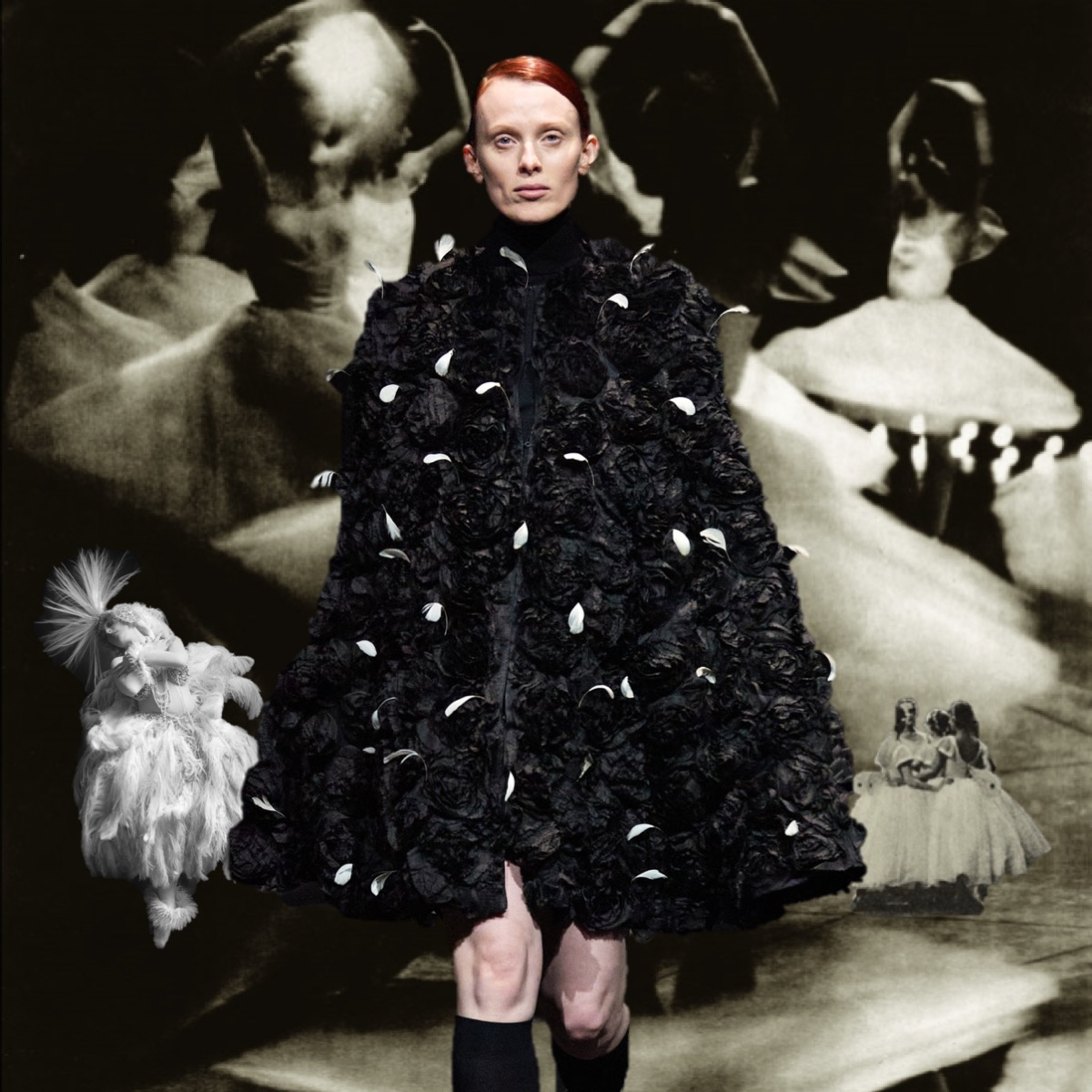
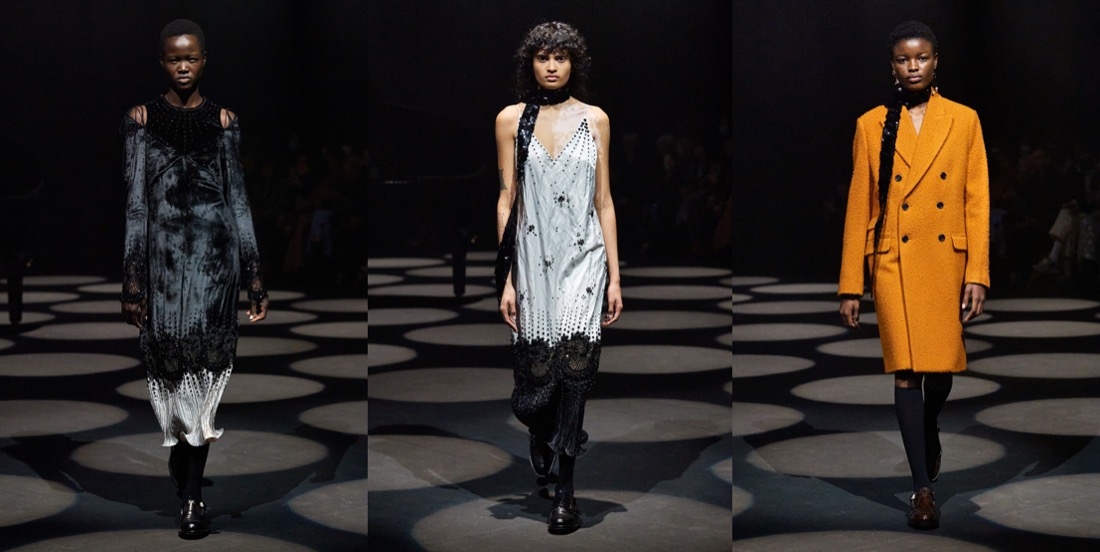
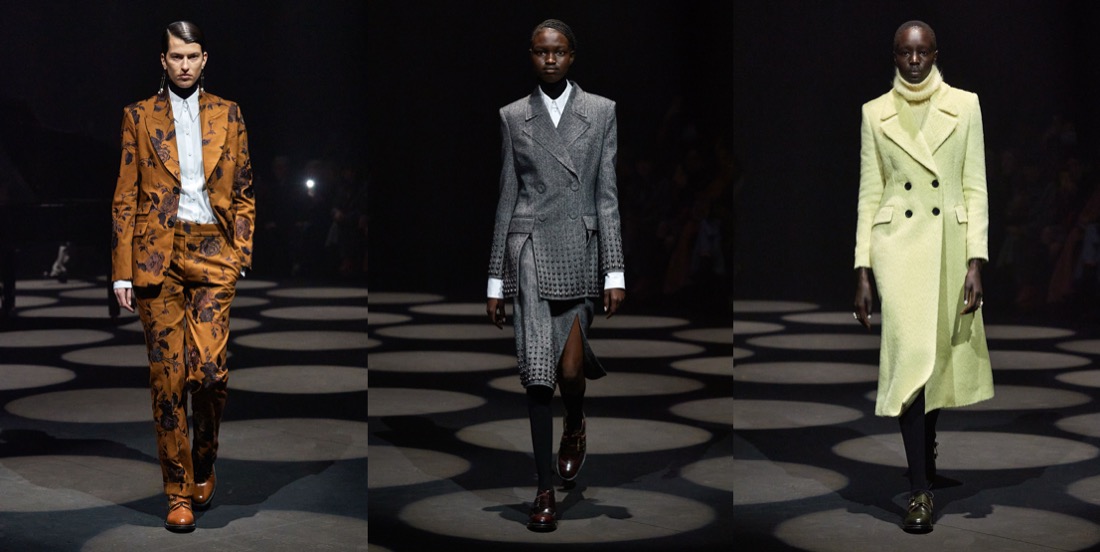
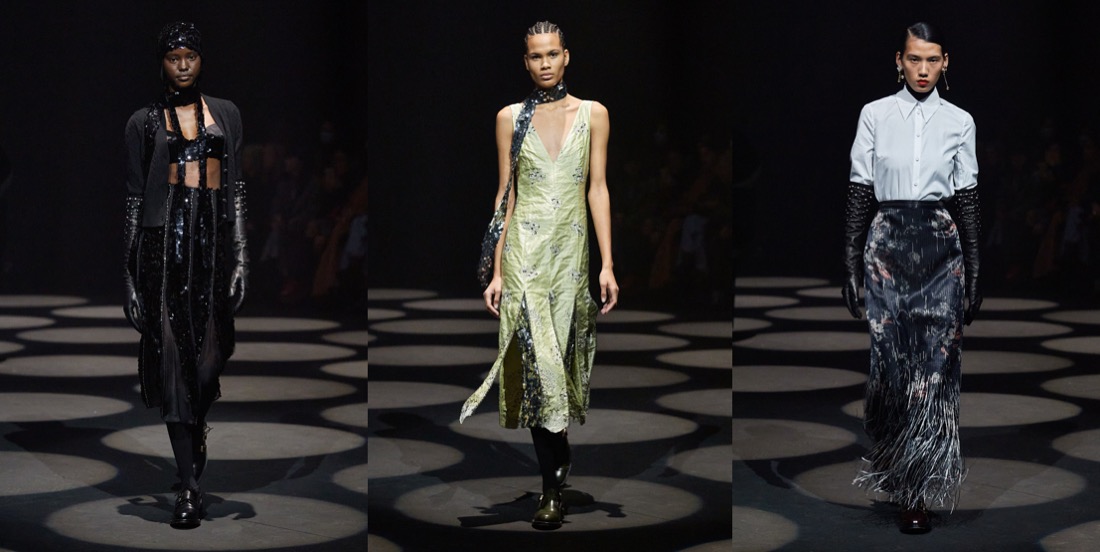
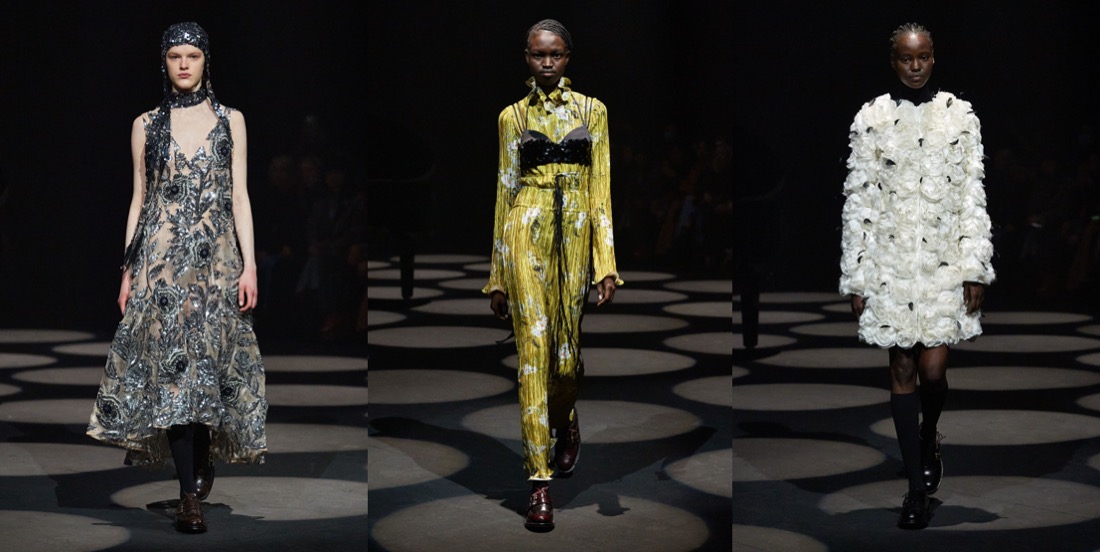
For autumn-winter 2022, Erdem Moralioglu imagined the night lives of four extraordinary women from Berlin’s 1930s arts scene. As silence fell upon a black box inside the Sadler’s Wells, a pianist took to a grand piano and began to play a dramatic solo. From the ceiling, pillars of dusty spotlights shot through the blackened-out room as Erdem’s austere, androgynous, unsettling – and totally beautiful – collection meandered around the arena. “I liked the idea that it was a club, and maybe they were on their way out, like ghosts. It’s the end of the night and they’re trailing away…” he said backstage, before detailing the historical influence that inspired the collection. Following the launch of his second men’s collection in January, Moralioglu wasn’t done exploring its muse, the photographer Madame d’Ora, who embodied the free and alternative spirit of 1930s’ Berlin in a time of political unrest. Imagining how her nightlife might have been, he found another four muses to join her: the painters Jeanne Mammen and Elfriede Lohse-Wächtler, and the dancers Anita Berber and Valeska Gert, who were all contemporaries of d’Ora and personified the cross-dressing, sexually ambiguity, and liberated identities of the time. “There was something about the effect of doing menswear, and the exercise of adding that masculinity into the collection, and maybe thinking of the extremes of femininity and masculinity mixed together,” Moralioglu explained, using Karen Elson’s opening look of a floral-embroidered black men’s coat with a black sequined evening scarf and big leather boots as an illustration of his intentions. It set a muted and reduced mood for the collection, which was mesmerising through an Erdem lens.
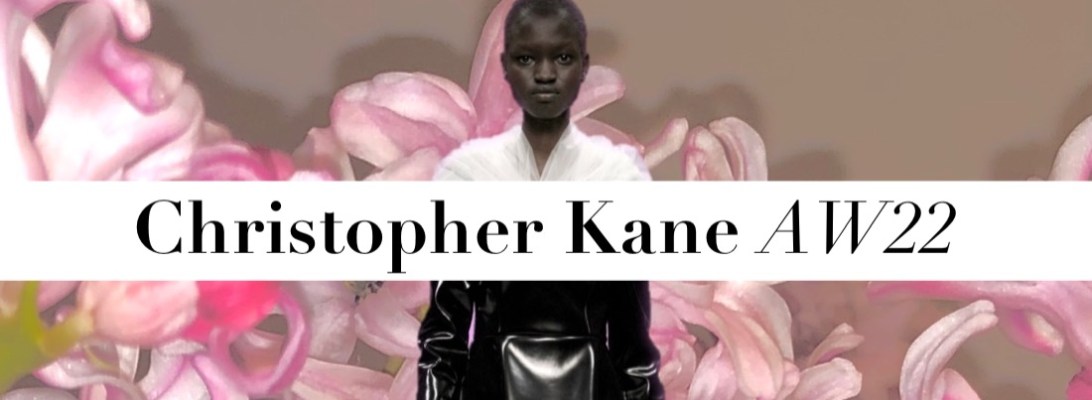
“Sexual Selection” is what Christopher Kane called his intriguing autumn-winter 2022 collection. All things sensual, erotic and kinky are Kane’s aesthetic vocabulary, and the latest offering is a sharp range of the designer’s favourites, as well as some new experiments. Coded references to mating behavior in nature – plants, animals, humans – have always been embedded in his work. This time, he drew a comparison between bird of paradise plumage and the blue-red-yellow of the tulle strips he draped into semi-sheer dresses – one of them had a black harness – with bodices laid over the breasts in the same material. That’s just for starters on Kane’s menu of fetish-y fashion play. He did it with outright skill in slick, black, wipe-clean cutaway dresses – pointy bras and gathered skirts suspended on matrixes of gold snake chains. There’s a fine line between sophisticated hinting at something and blatantly putting it out there. Wearers of Christopher Kane have appreciated his skills in that direction for ages. In these 34 looks, he’s done his thing – using double-take materials like wool faux fur, slinky gold chain mail, and white net drapes in all kinds of wicked ways.
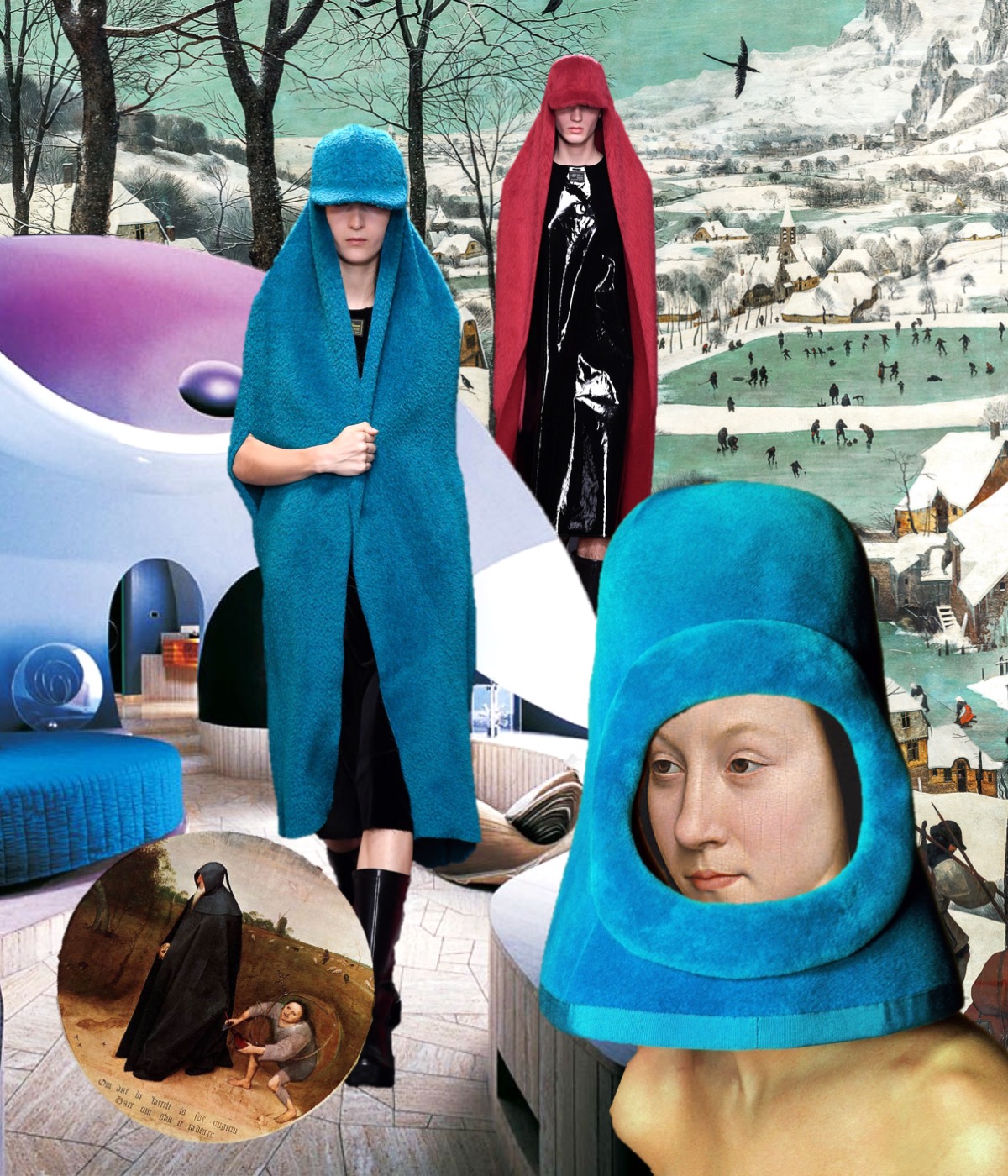
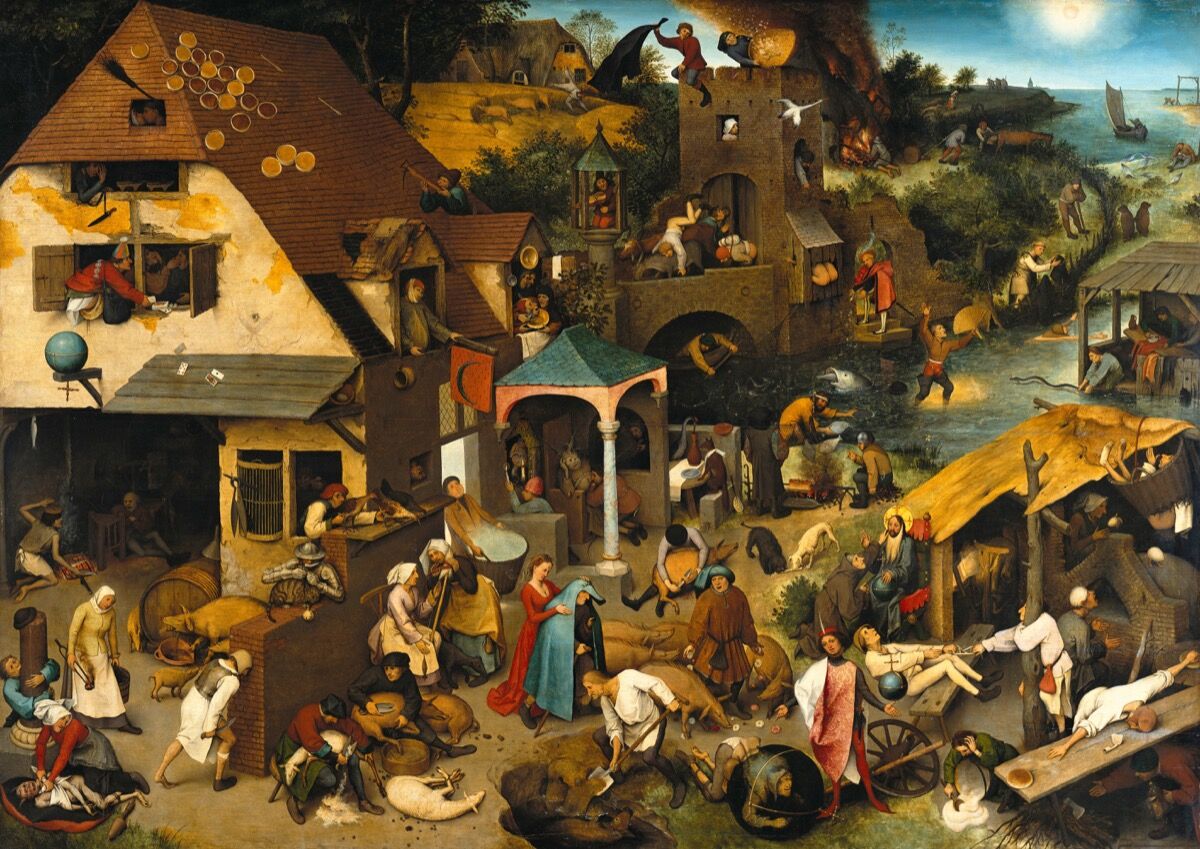
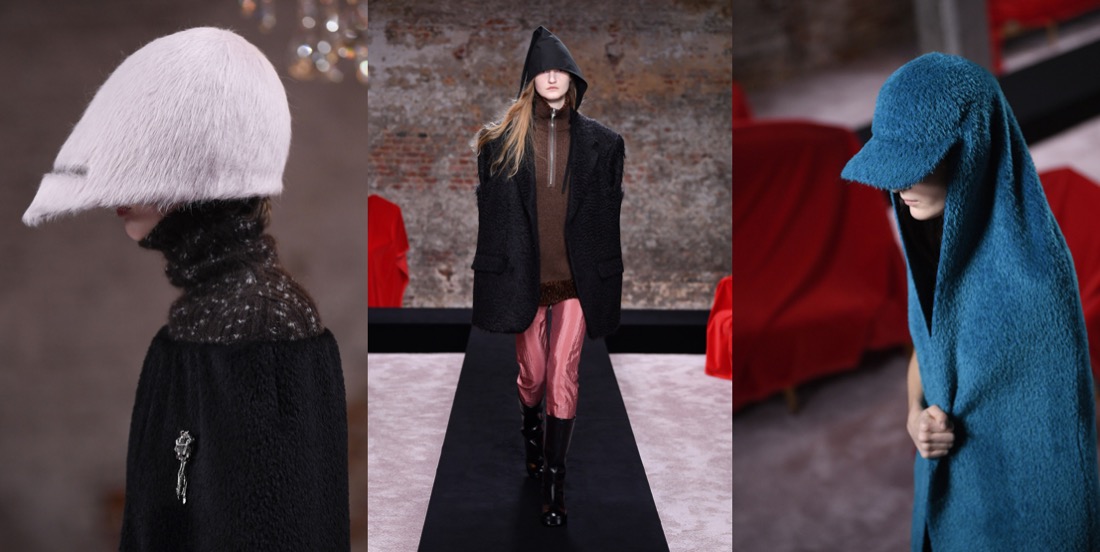
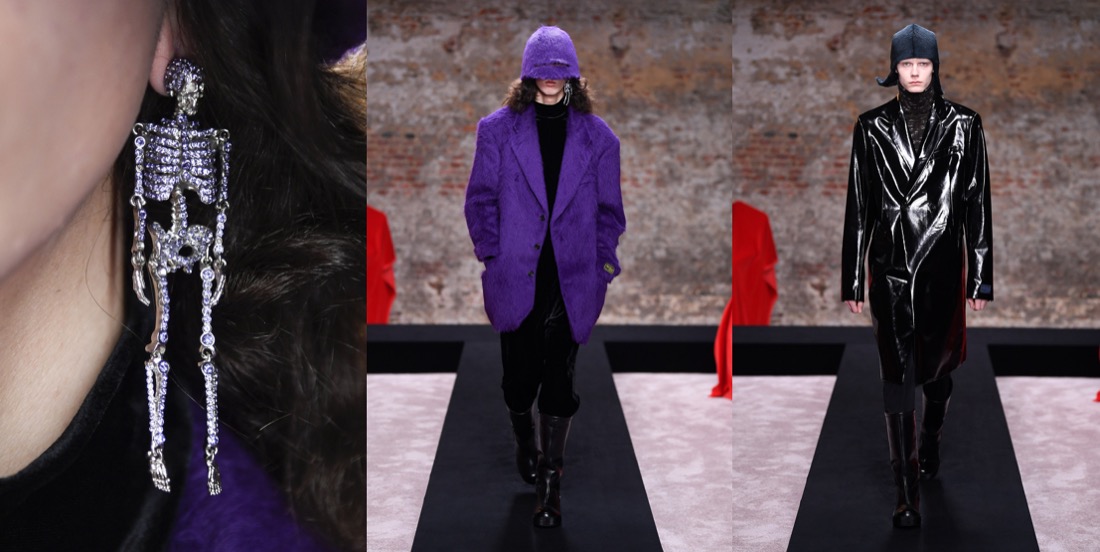
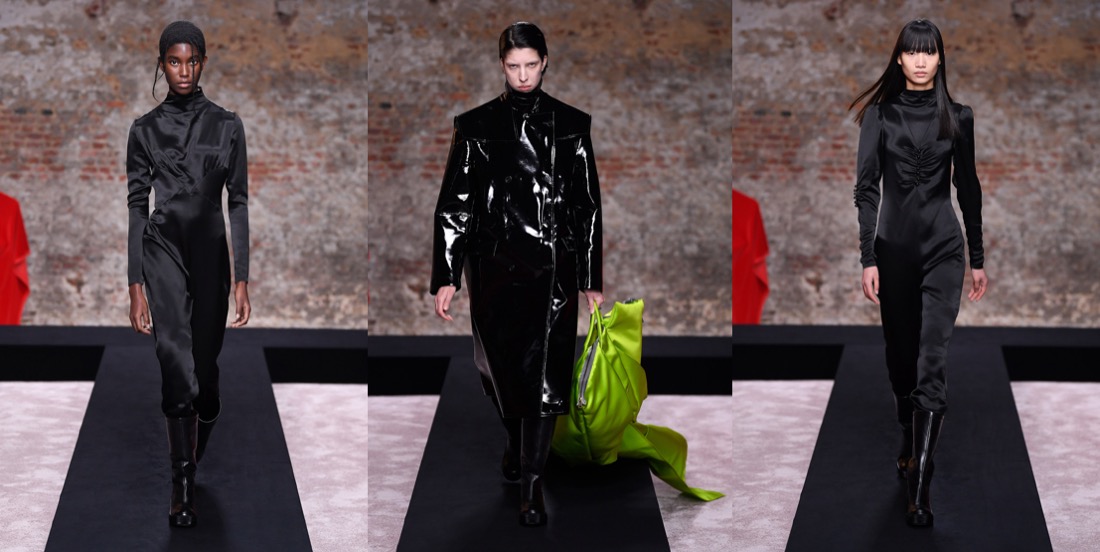
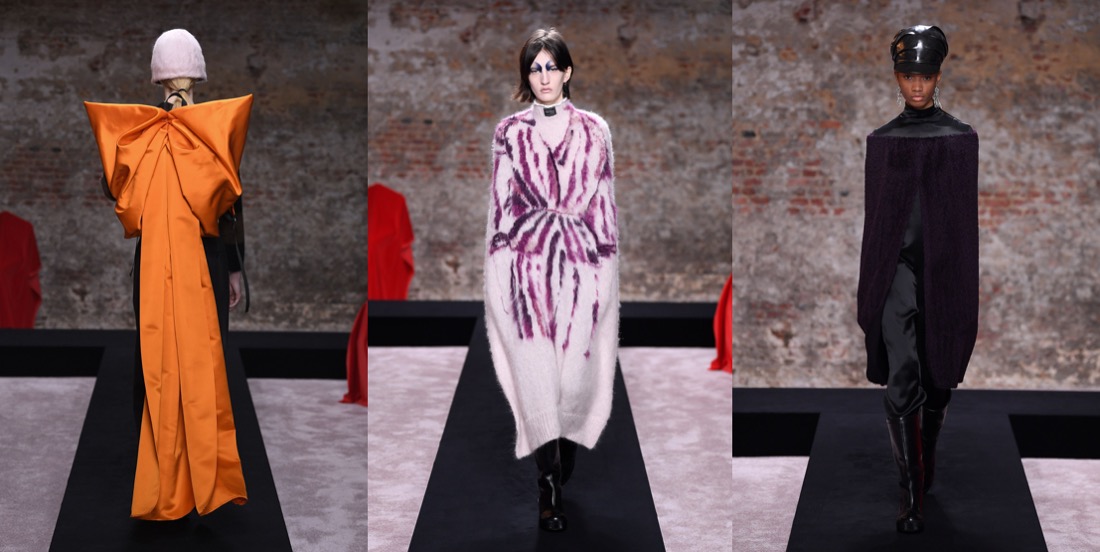
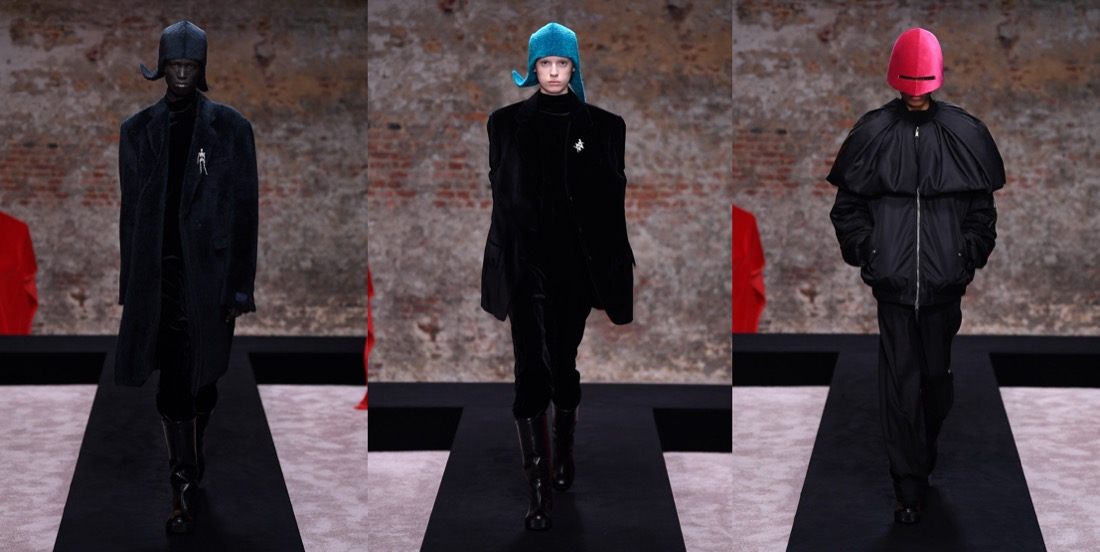
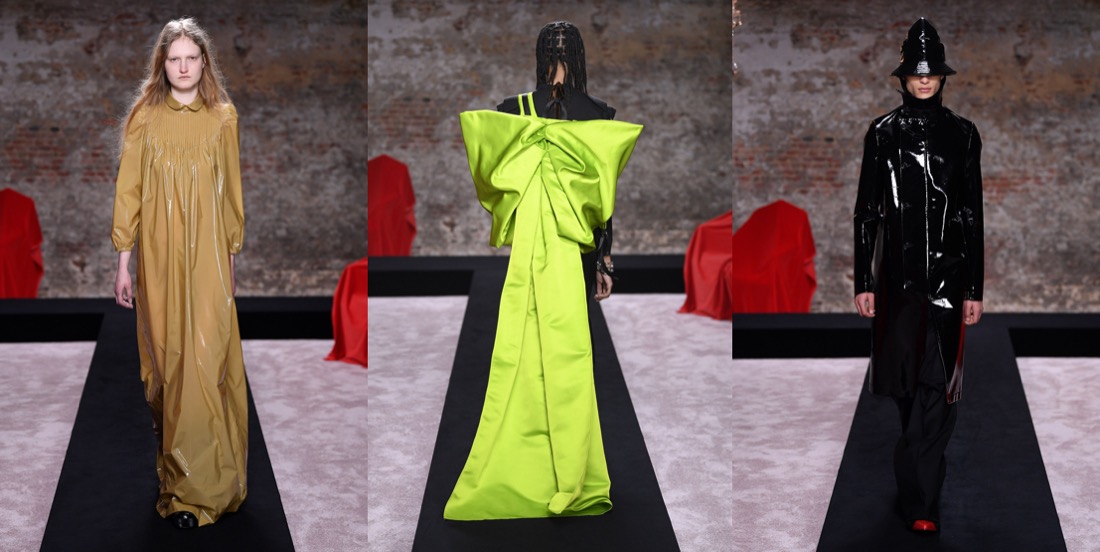
Picture this: Pieter Bruegel the Elder, Pierre Cardin and “Matrix“, all on one spooky, audience-less runway. Only Raf Simons could pull that off. After pandemic collections that furthered his explorations of youth and distress (and sometimes youth in distress), for autumn-winter 2022, the tense, urgent shapes of his rioters and revolutionaries has dissipated into a silhouette that is abjectly elegant, with draped pleated trousers, slender cloak wraps, black blouson bomber jackets, and backpacks with silken trains. Set in a stately interior, with glass chandeliers and furniture draped in red fabric, the collection’s video looks like a scene from a brooding horror movie that would would chill you to the bone. That’s how Simons works: say nothing and project it all through the clothing and the environment. This season he gave but one hint about his collection: Pieter Bruegel the Elder’s 1559 painting “Netherlandish Proverbs“. The opening look, a blue cloak suspended from a hat designed in partnership with Stephen Jones, is almost a one-to-one remake of the garb worn by the painting’s central figure. From here, the hood-hats continue in luxurious colors, emphasizing the thinness of Simons’s silhouette. Surprisingly, the headwear, seen through a contemporary lense, makes you think of Cardin’s futurist ideas dating back to the 1960s. And now, here’s where things get even more eerie: prairie dresses made from what appears to be latex, worn with cloaks and long leather neckties (very Trinity). There is something undeniably kinky about the combination; fabrics and ideas taken from the bondage shop and stripped of their obvious hotness. Simons is best when he is in a clash, taking the obvious and making it strange, turning the serene into something suspicious, or electrifying peaceful shapes with a rebellious edge. These combinations are the oddest and most enticing facet of this collection.
Maybe the purpose of being a silent designer is to leave the questions unanswered. To provoke, not explain. Back to the painting. Art historical interpretations of the work cast the people in the town’s square as fools, acting out proverbs of the era like “banging one’s head against a brick wall,” or “the world is turned upside down.” What does that central figure in the blue cloak depict, the one whose very cloak opens this collection? A man who has been cheated on by his wife. What can we extrapolate from that? How could Simons relate? For a designer who rarely speaks publicly, he manages, always, to say a lot about himself, his life, his obsession in his work.