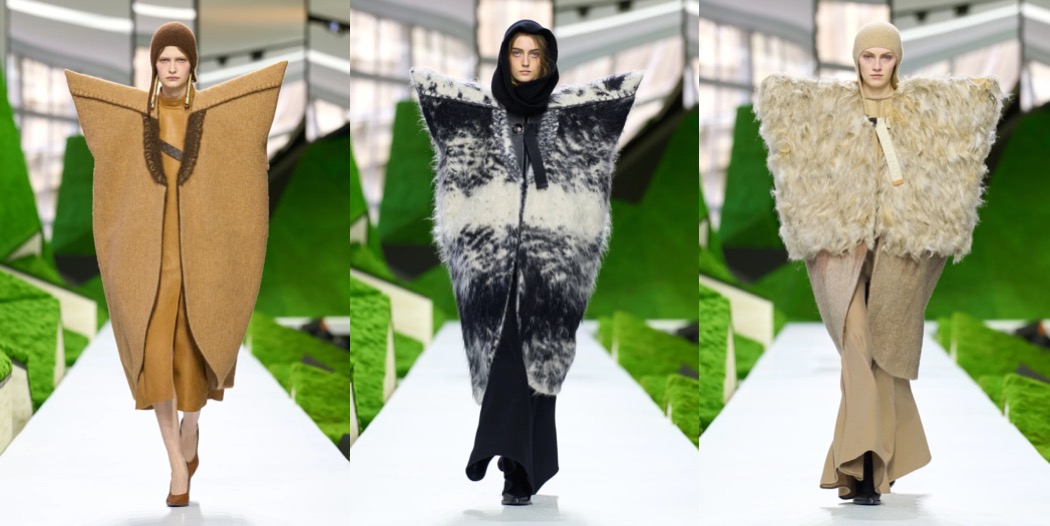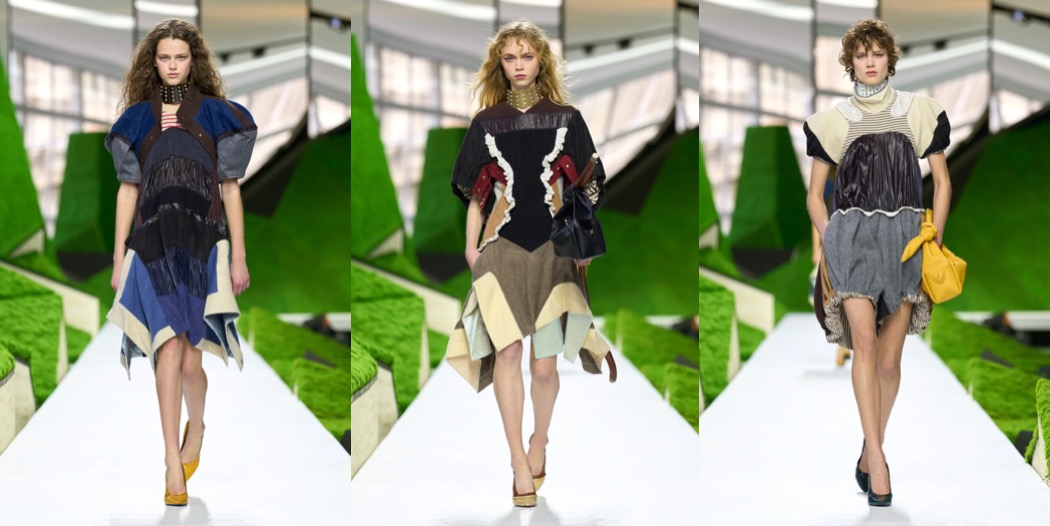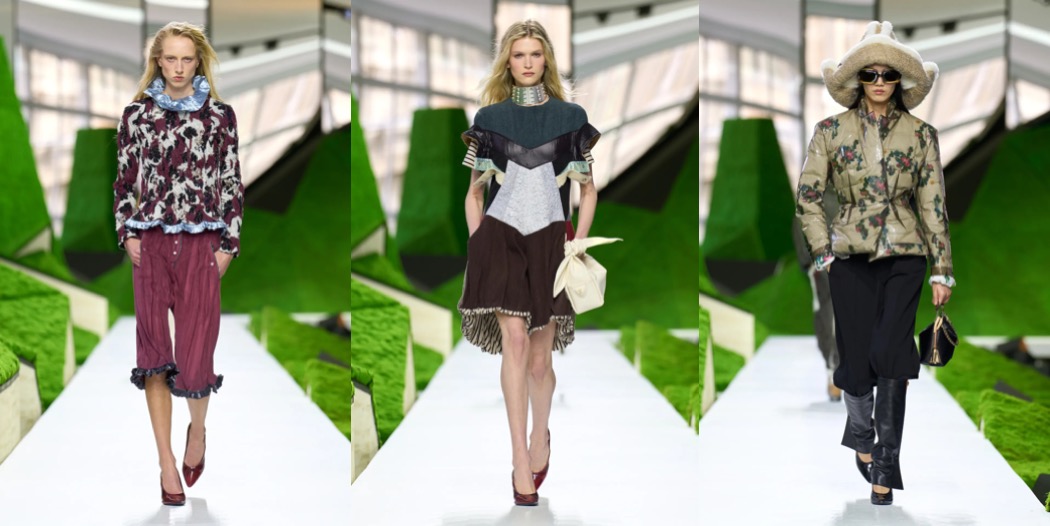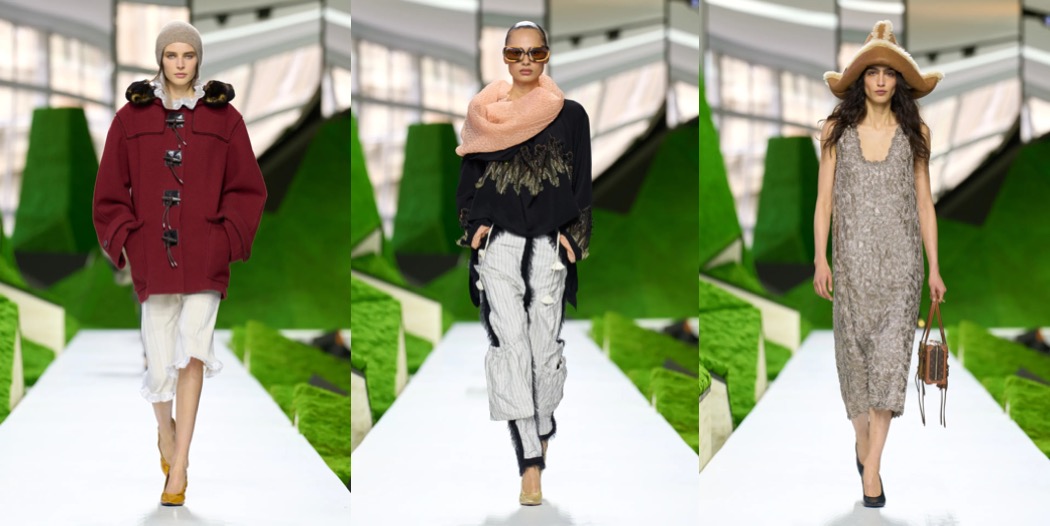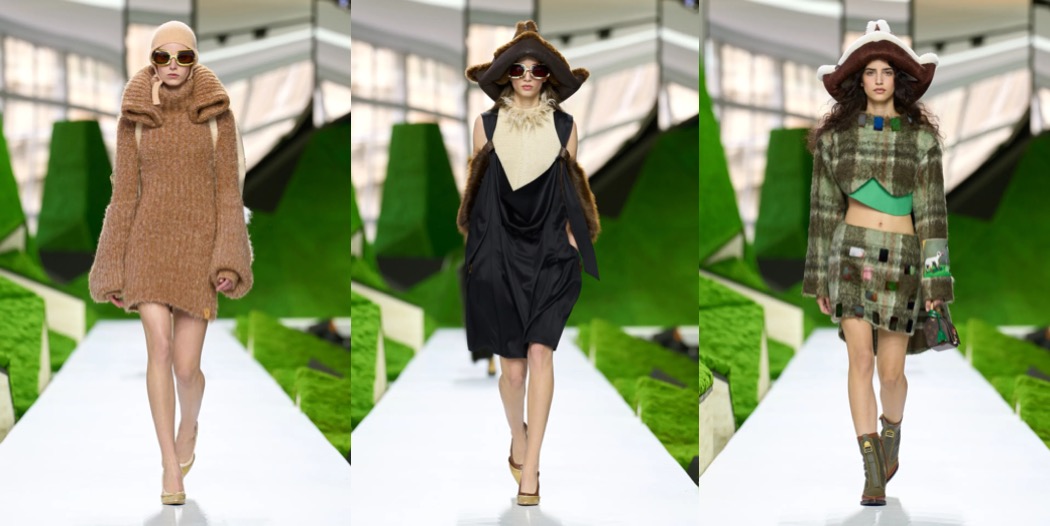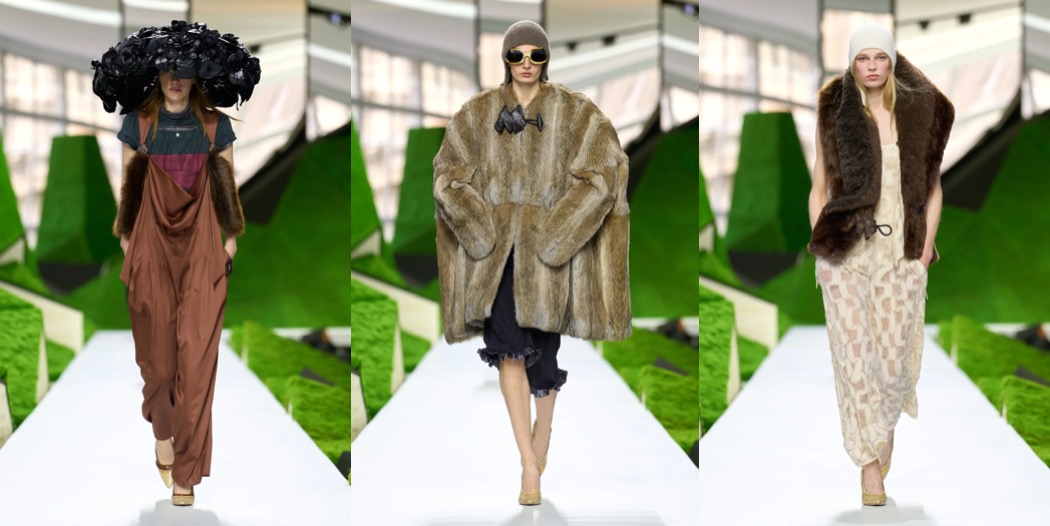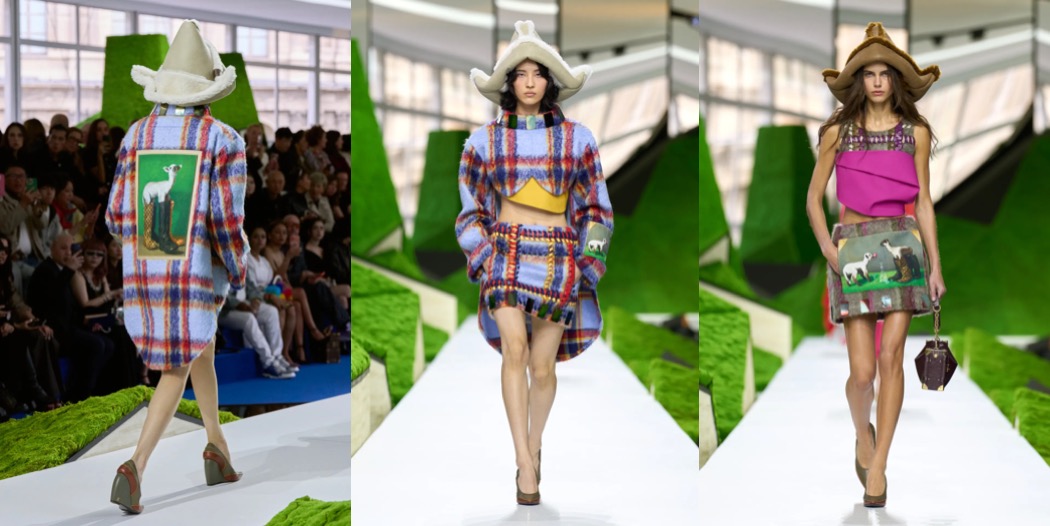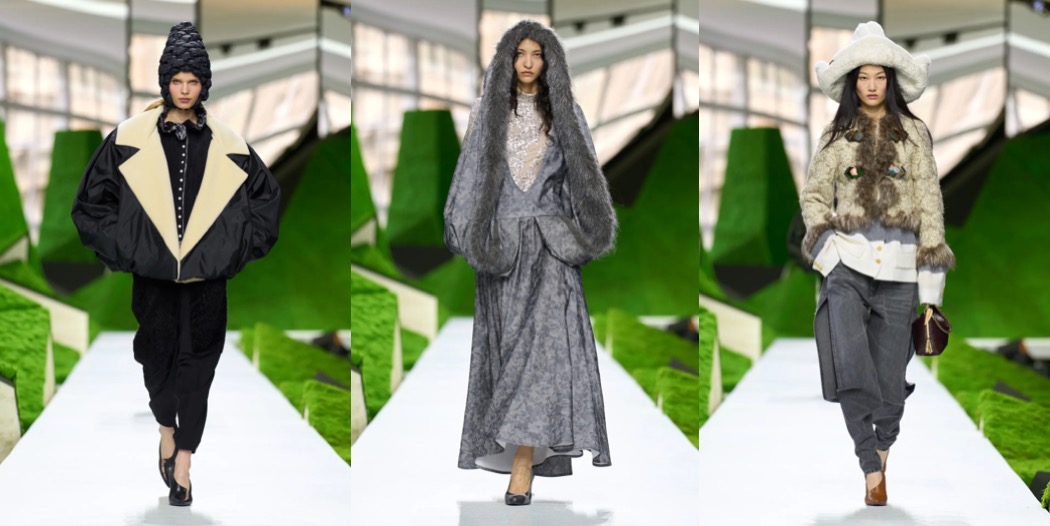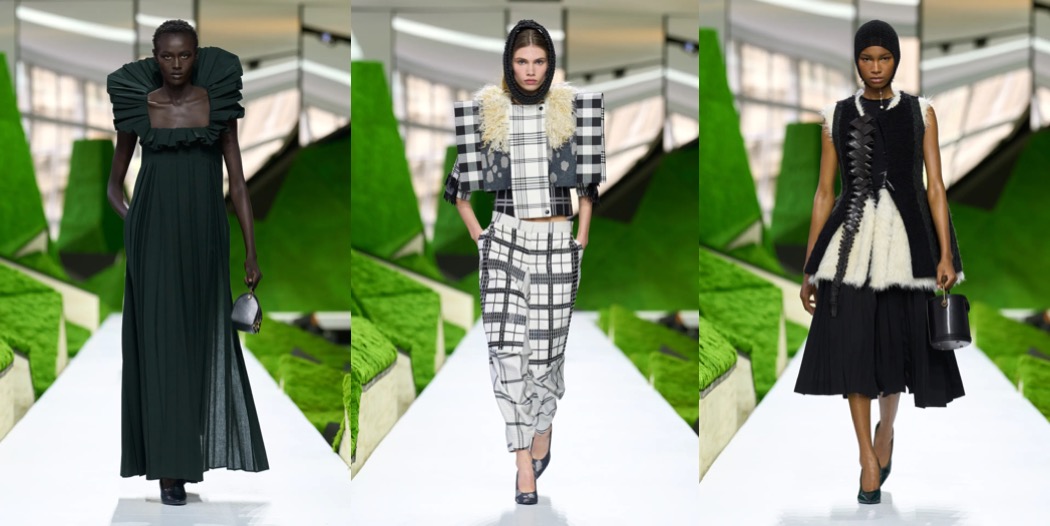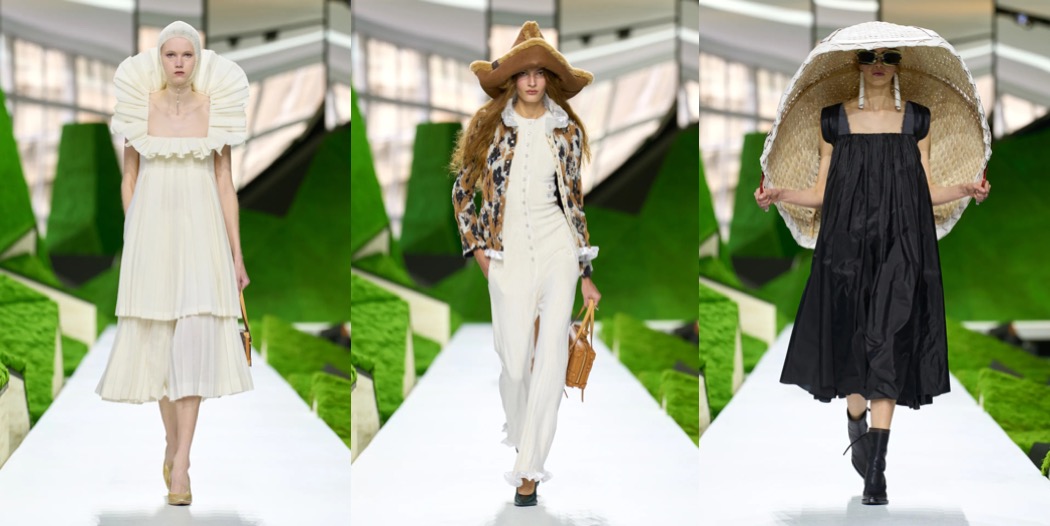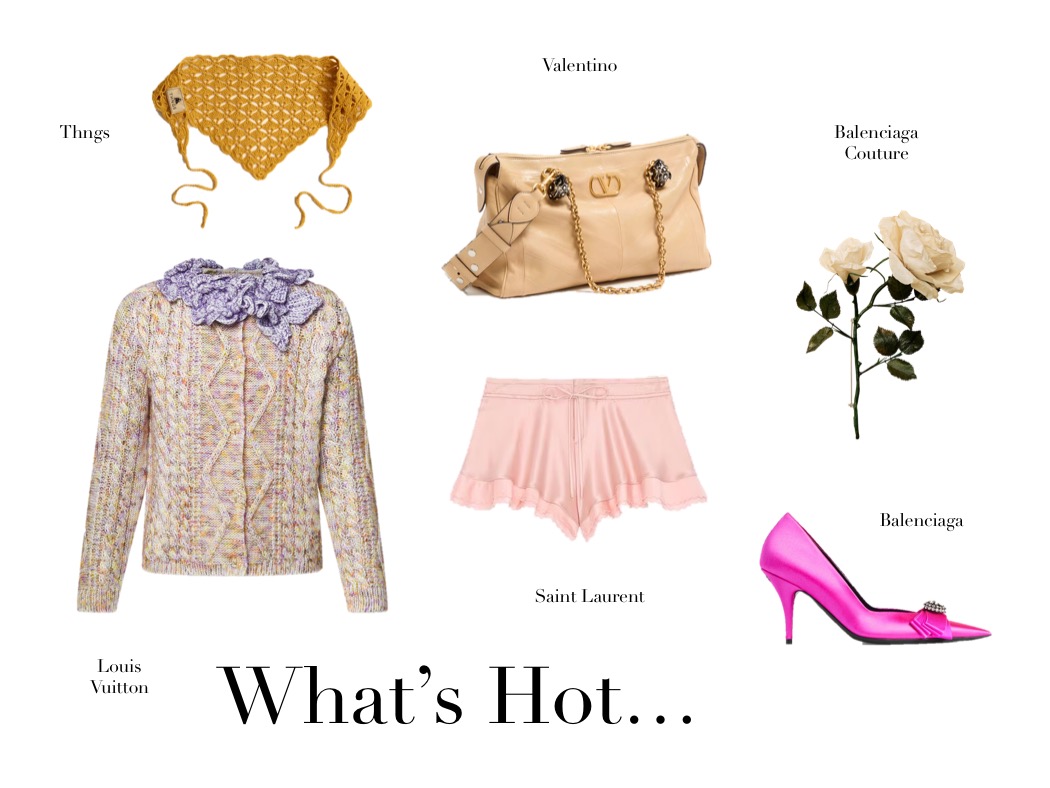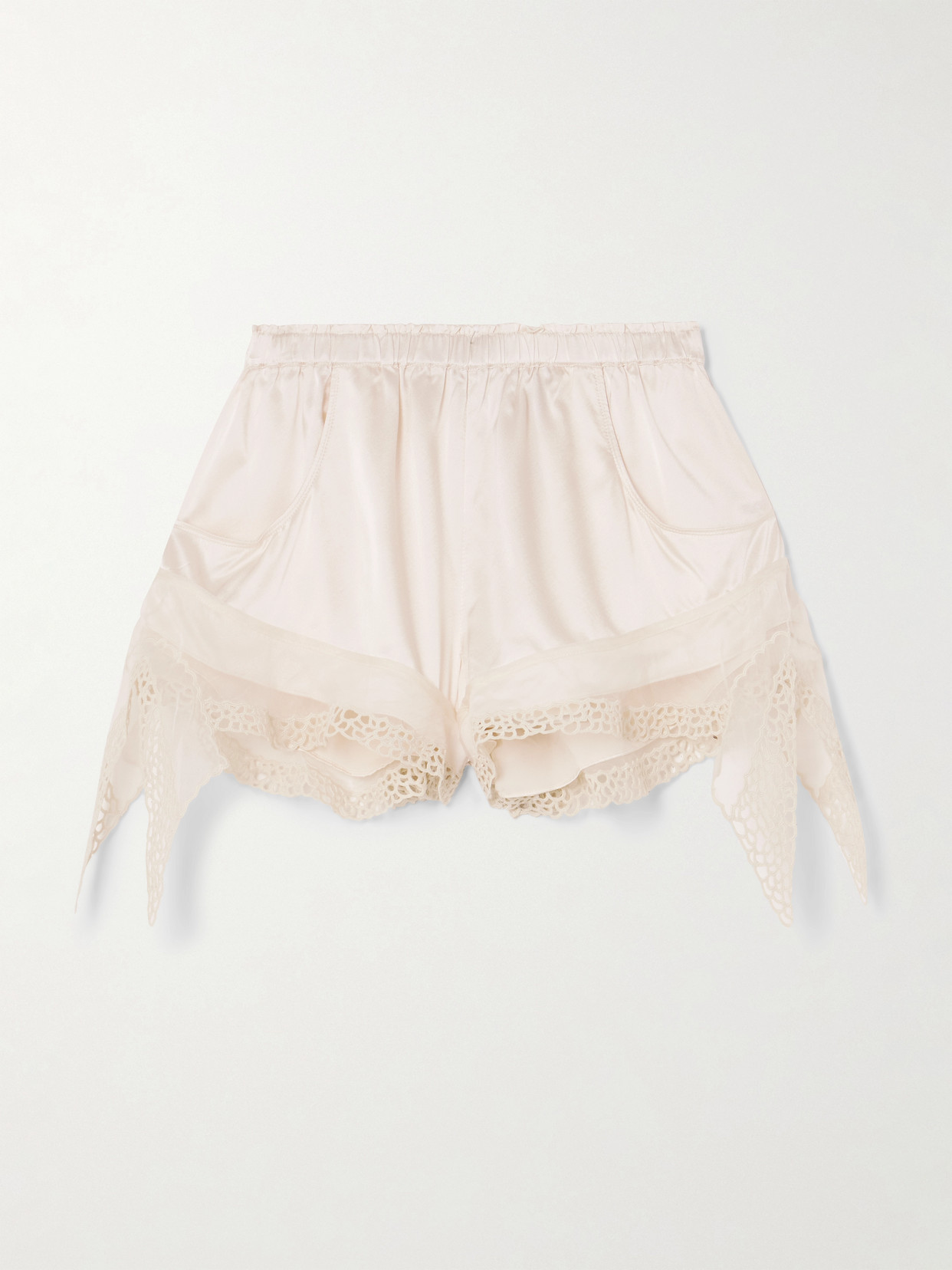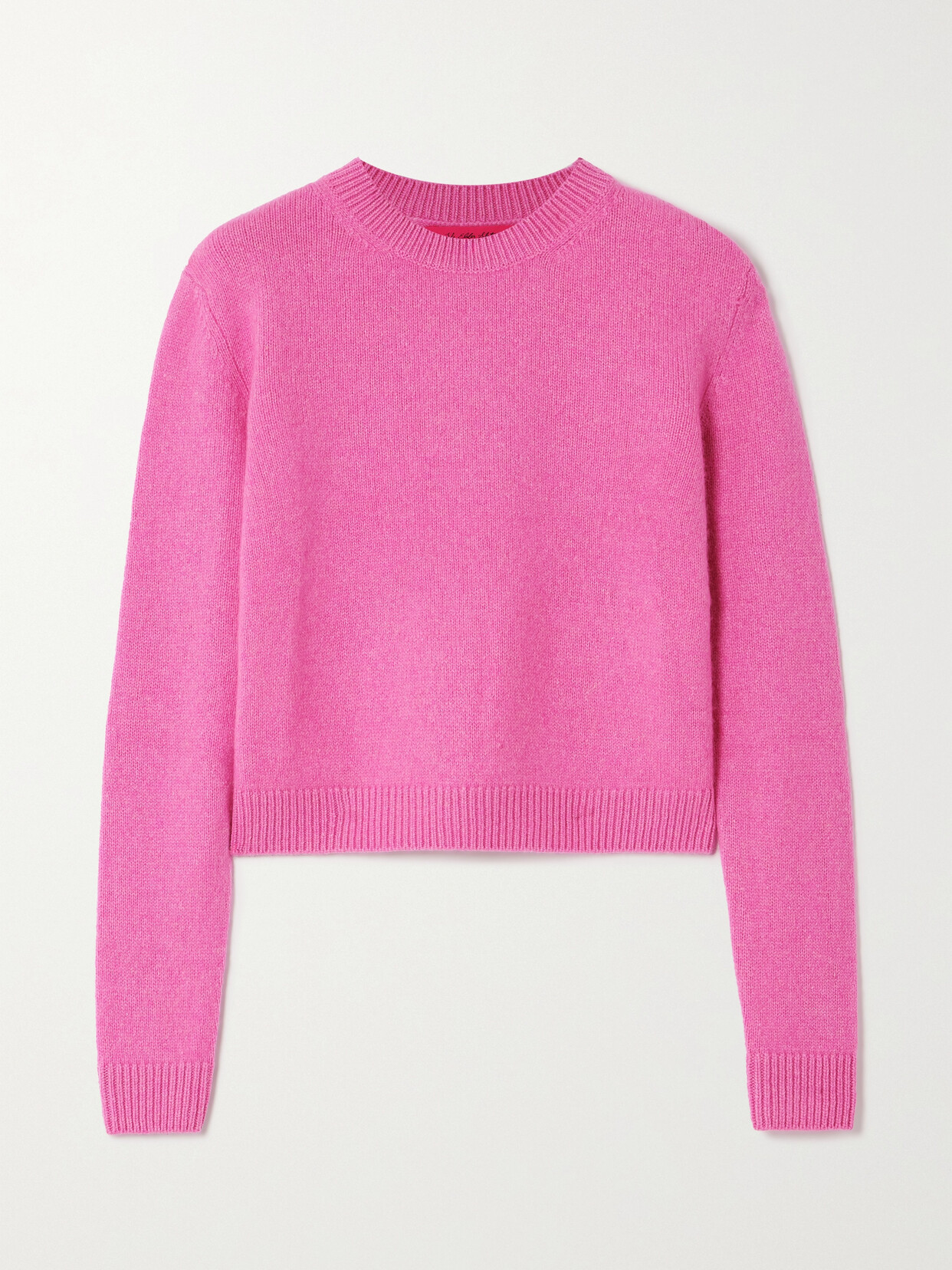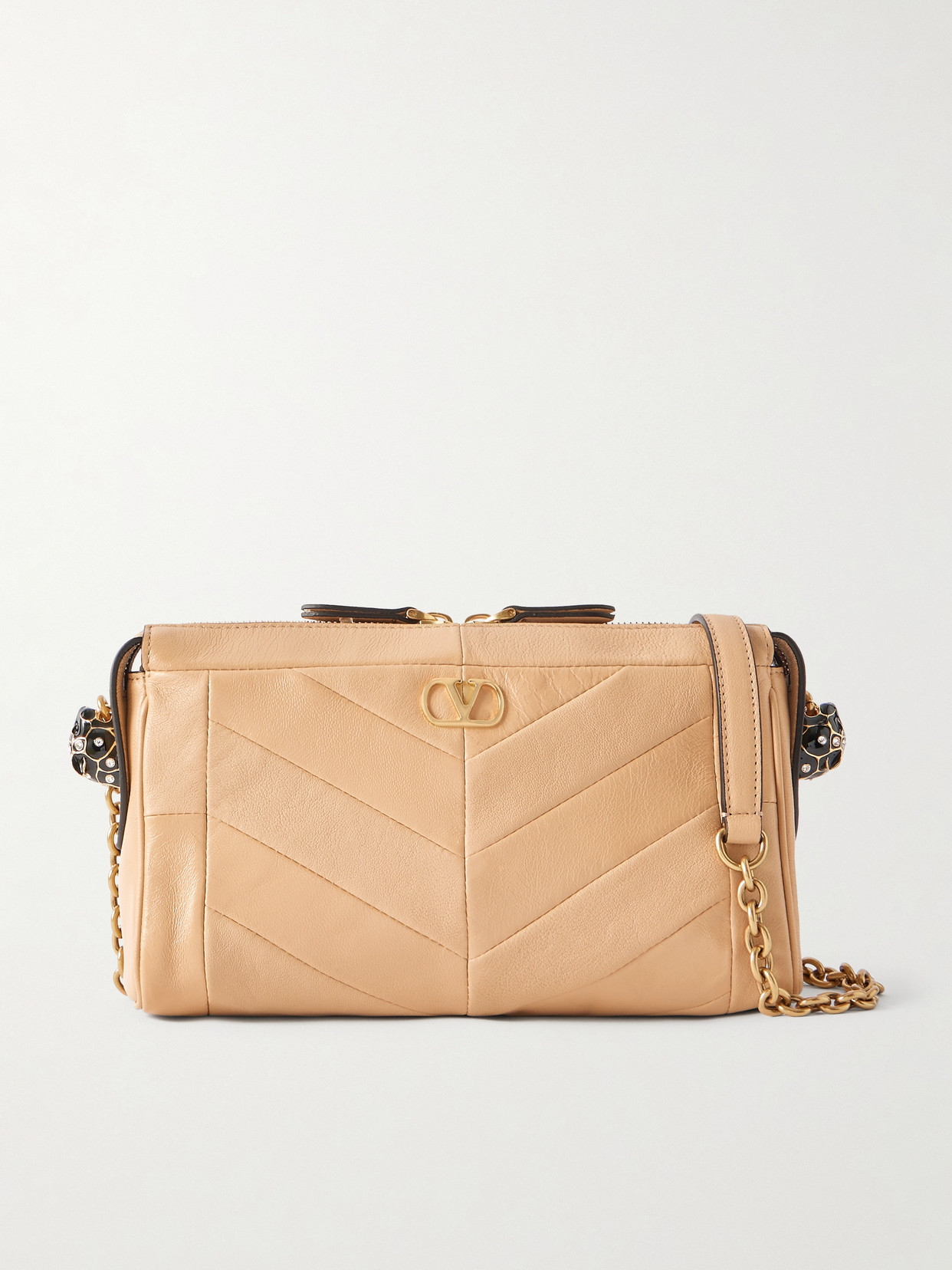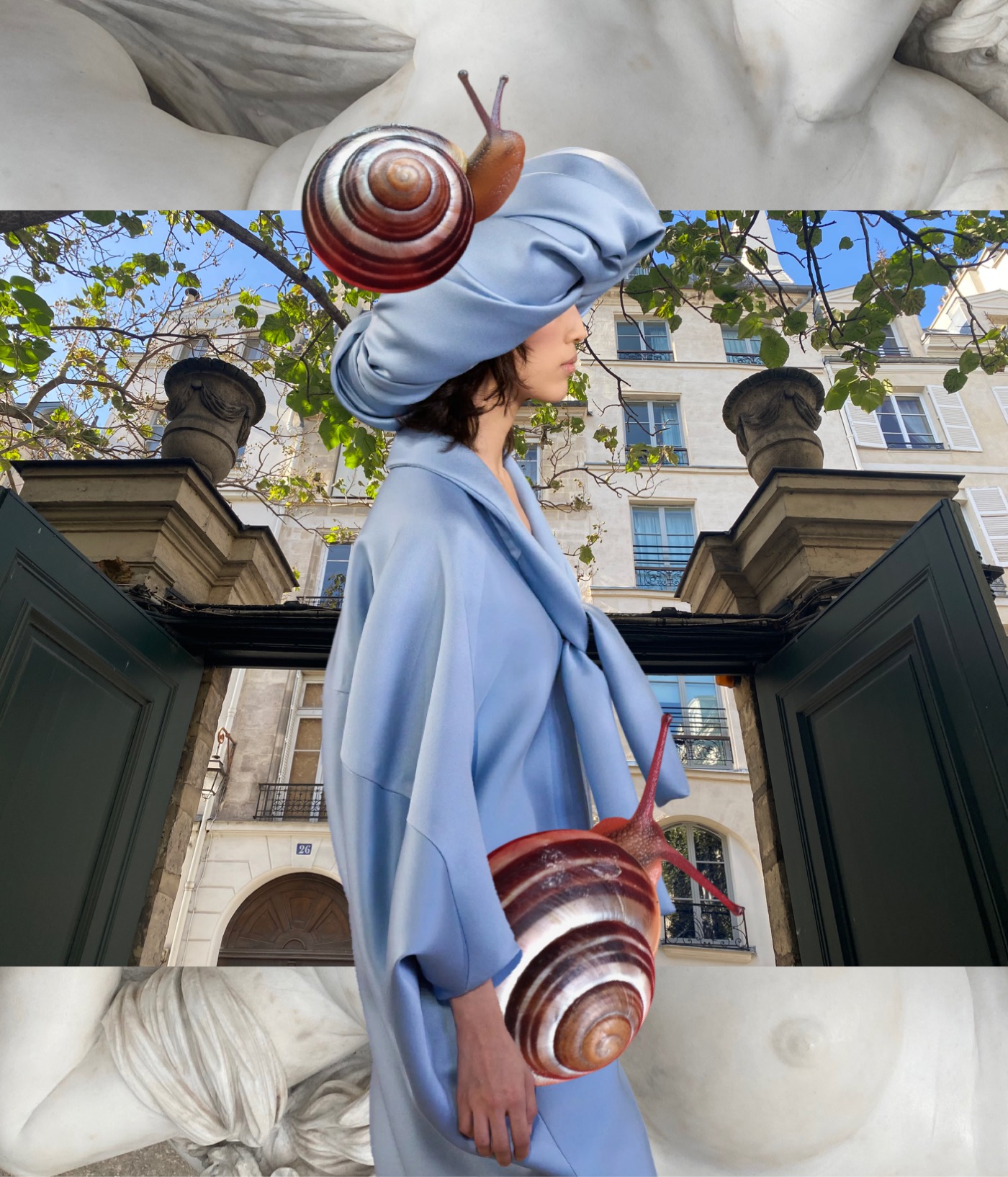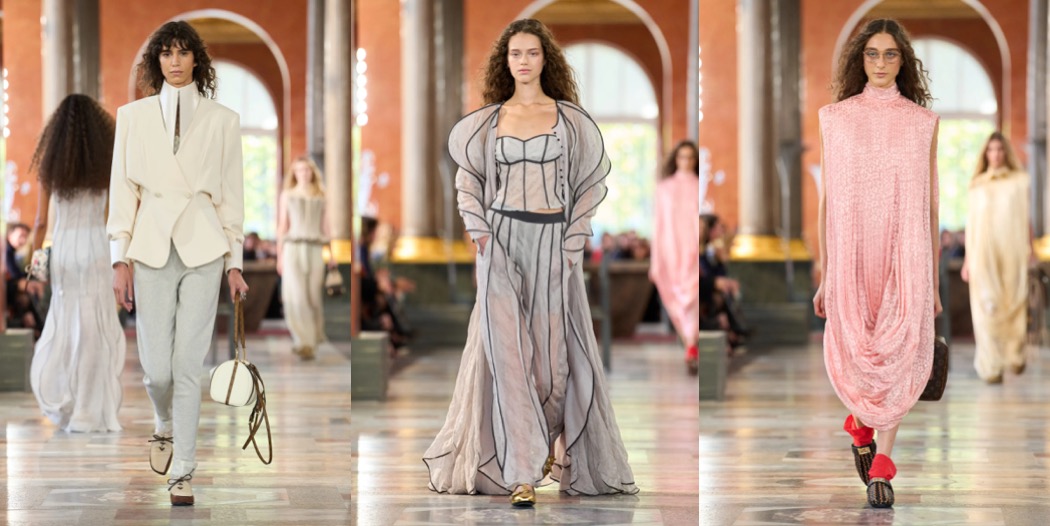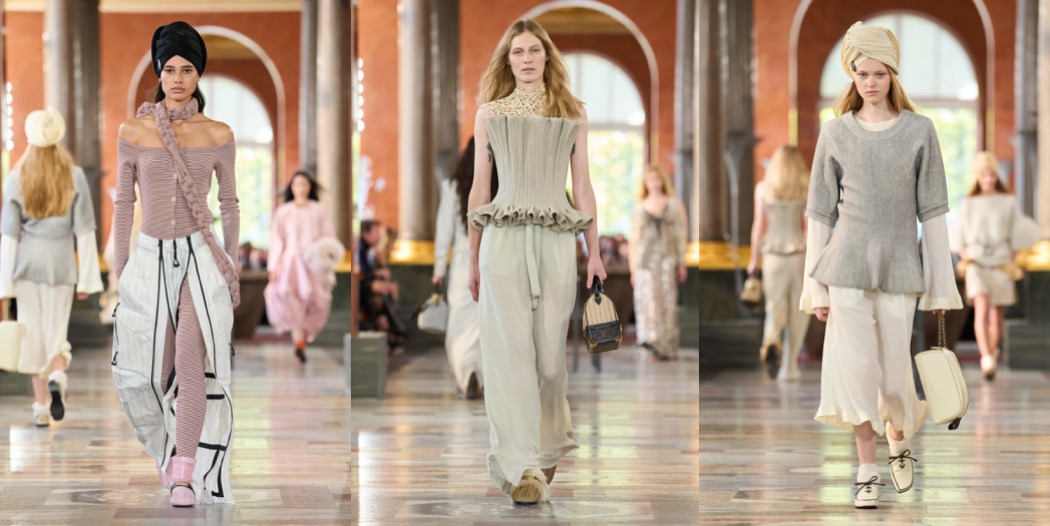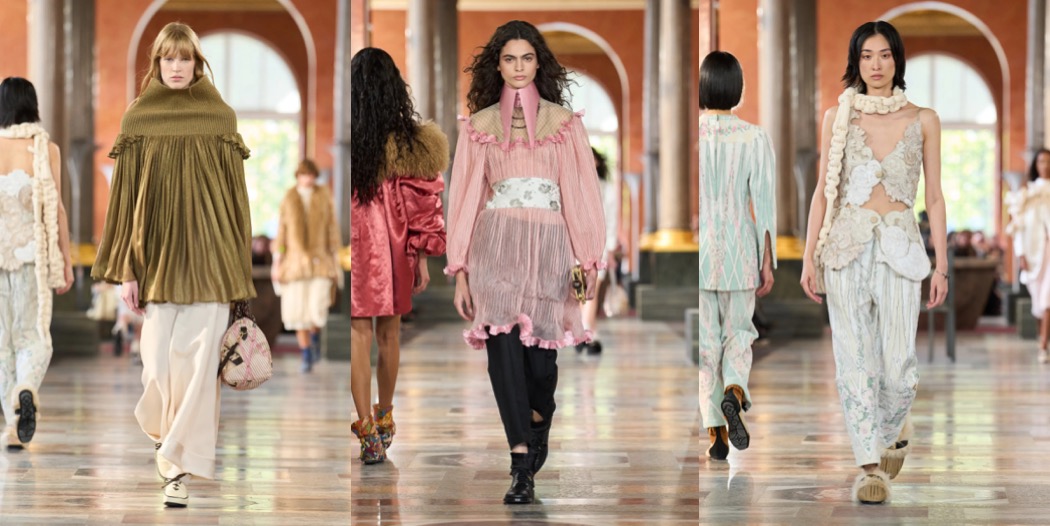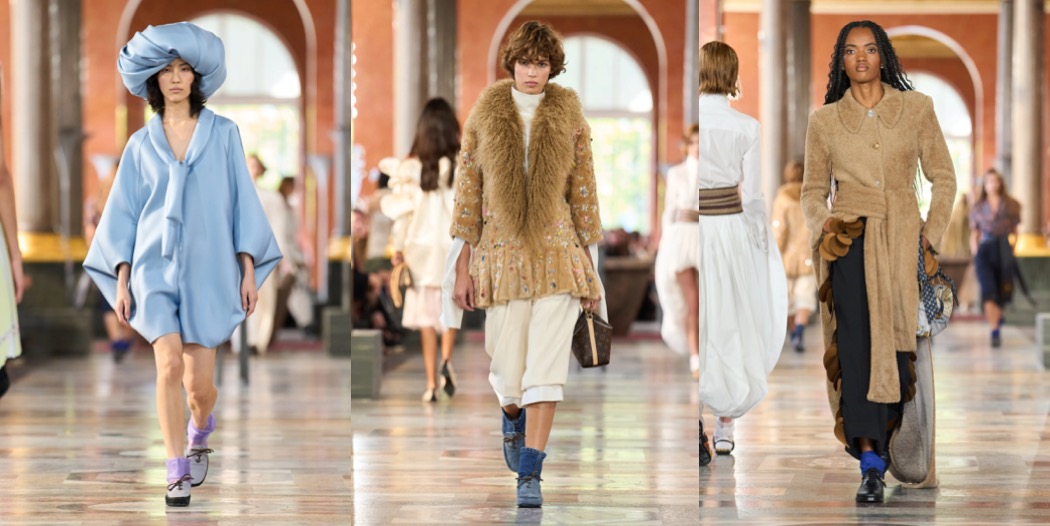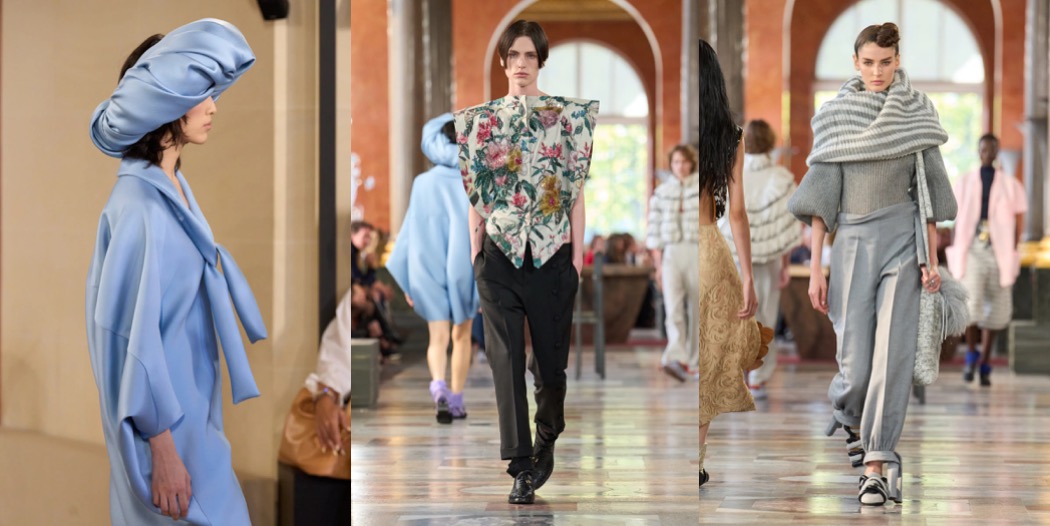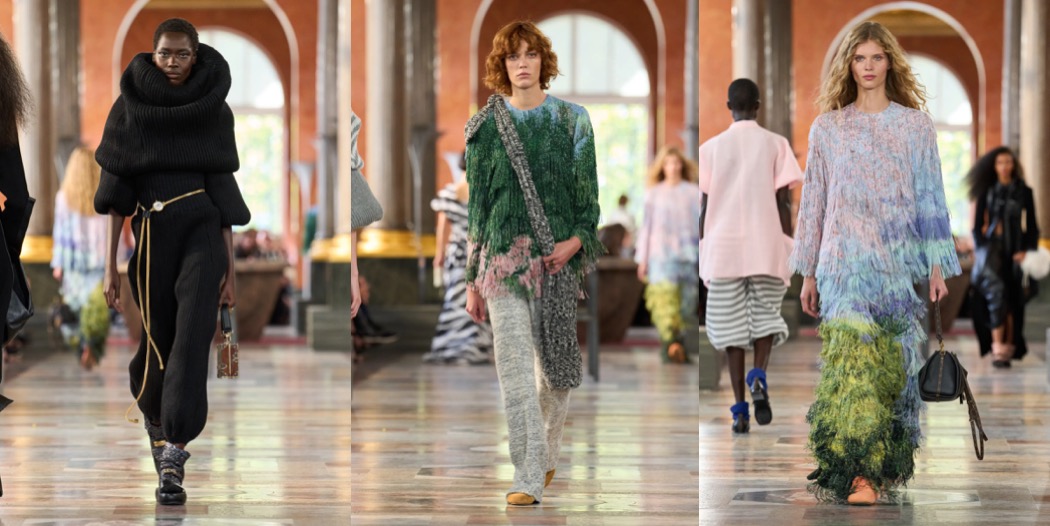
The eccentric madame envisioned by Nicolas Ghesquière for Louis Vuitton never ceases to confuse – and to intrigue. In the summer apartments of Anne d’Autriche at the Louvre, a parade of crystal-embellished silk vests, beaded fringe top-and-pants sets that evoked Impressionist landscapes, and historic-looking robes and capes made their royal entrance. One look – a pastel-blue cloak paired with a matching turban-like hat – gave big dumpling energy and made me smile. Then there were the genuinely lovely, extra-fluffy knitted pieces with tubular necks and balloon sleeves. At times, it’s hard to keep up with the cascade of ideas Ghesquière sends down his Louis Vuitton runway. But perhaps that’s precisely the charm.
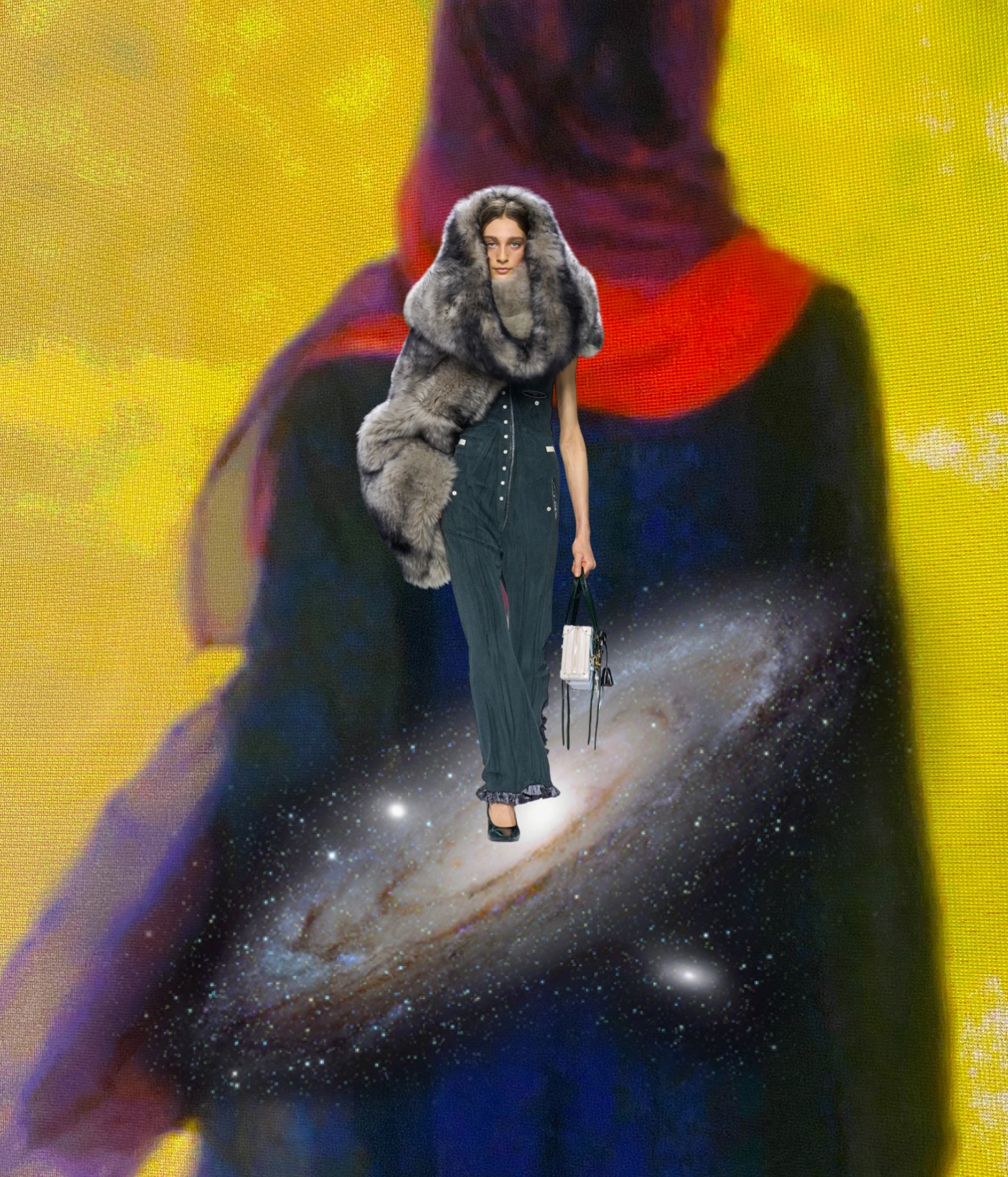
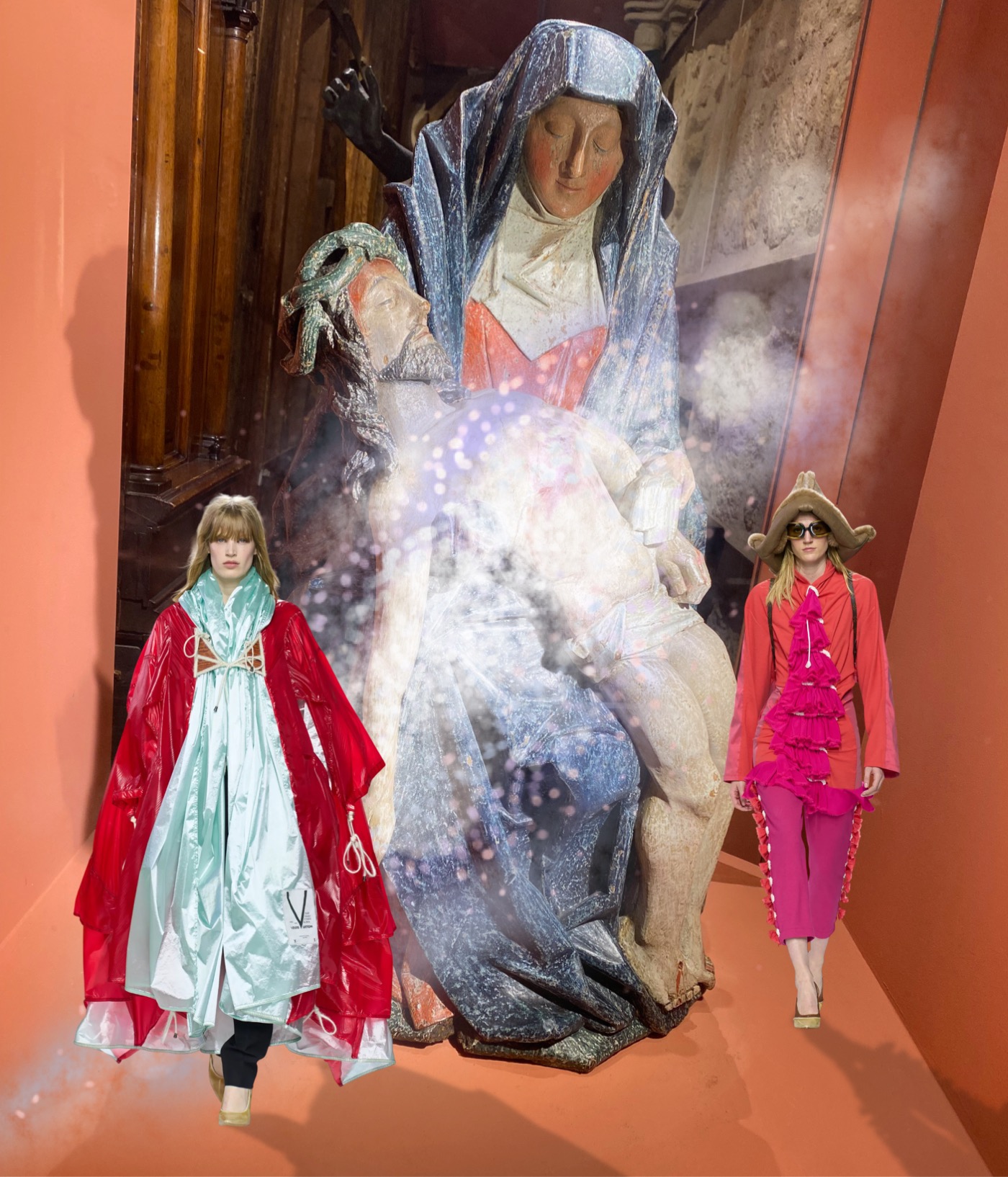
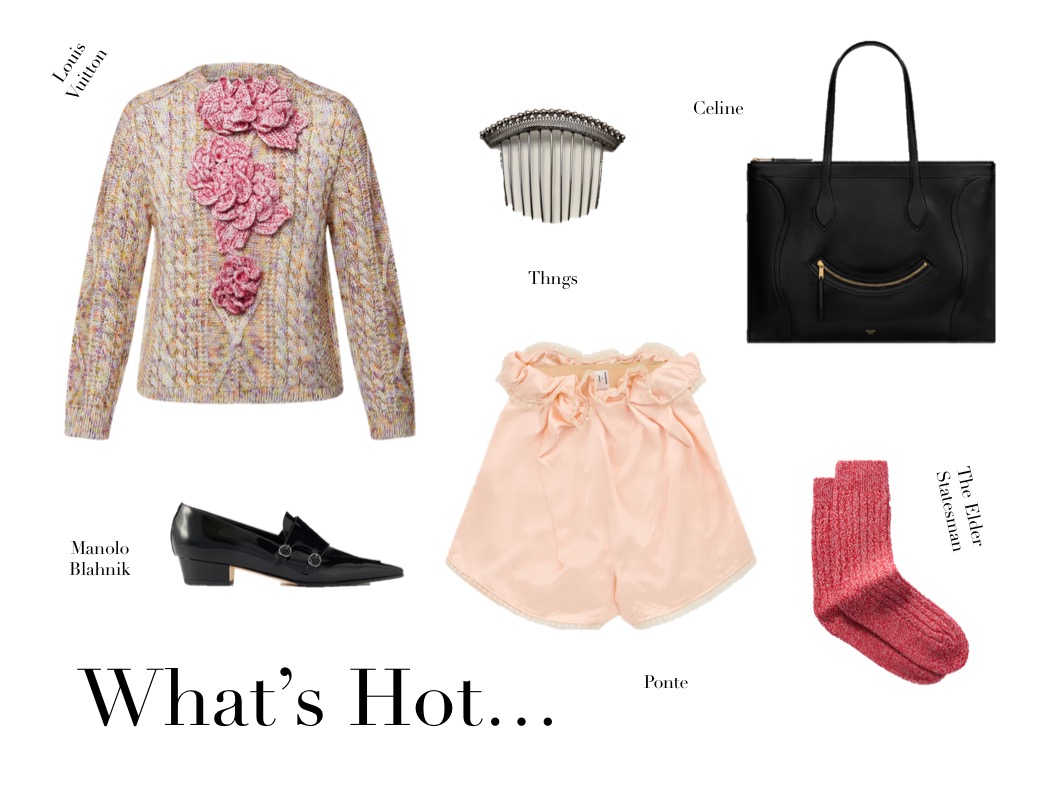
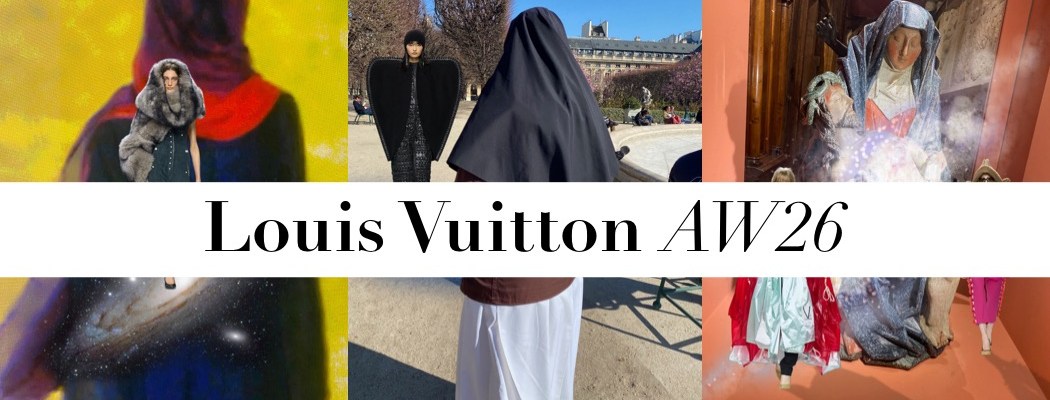
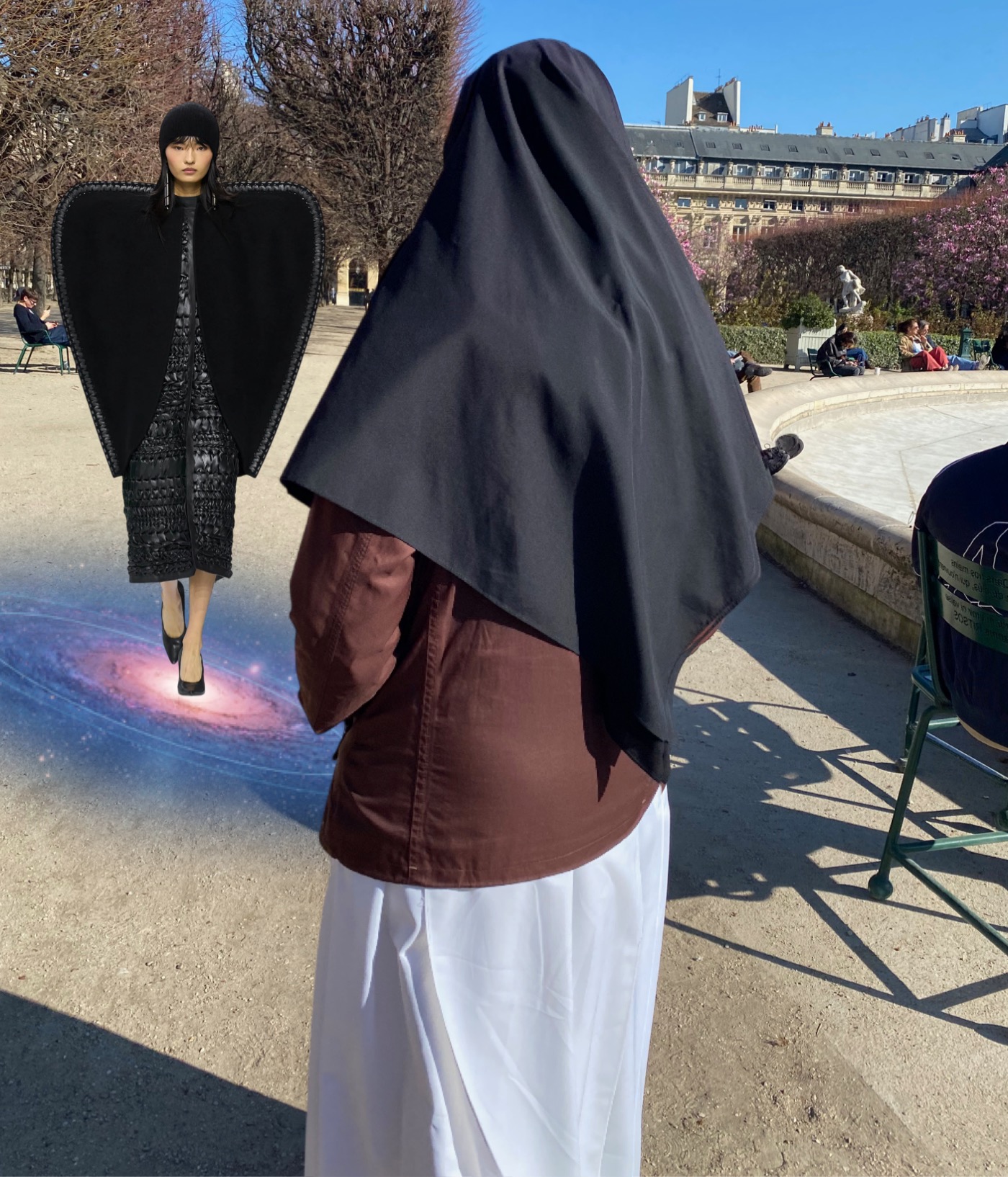
Collage by Edward Kanarecki. Don’t forget to follow Design & Culture by Ed on Instagram!
Hey, did you know about my newsletter – Ed’s Dispatch? Click here to subscribe!
You know I’m pretty much always on fence with Nicolas Ghesquière’s Louis Vuitton. But the collection he presented yesterday at the 14th century Palais des Papes in Avignon? It was brilliant. The Ghesquière-for-Balenciaga kind of brilliant.
The designer’s far-flung destination shows have consistently outshone his Paris ready-to-wear collections. Remember that time he whisked his guests away to Palm Springs? When Rianne Van Rompaey (who retired from modeling this year) wore a billowy, 1930s-inspired maxi dress and dramatically cranked up the high-end loudspeaker as the show began? Not only was that défilé spectacular, but the clothes were equally impressive – both inventive and cool. The Avignon collection had that signature edgy NG flair, the one that we all so sorely missed in the past few seasons or so.
For resort 2026, Nicolas embraced Medieval dress and transformed it into a surprisingly modern proposition. We live in an era where wearing an armor would come handy. Women’s rights and bodily autonomy continue to face threats, from Trump’s administration in the U.S. to rising conservative movements across Europe, including in France. Whether through a literal interpretation of chainmail in the form of a tasseled, metallic top, or via rounded, architectural capes – and in some cases, curtain-like mini-capelets worn over mini-dresses – this show offered plenty of armor. These pieces didn’t just look protective and built-up; they were, in their own way, chic. Ghesquière even seemed to pay homage to his spiritual predecessor, his alma papa, Cristóbal Balenciaga, sending down the runway several intricately embellished, t-shirt-like mini-dresses that felt like modern descendants of the Basque designer’s iconic sack dress.
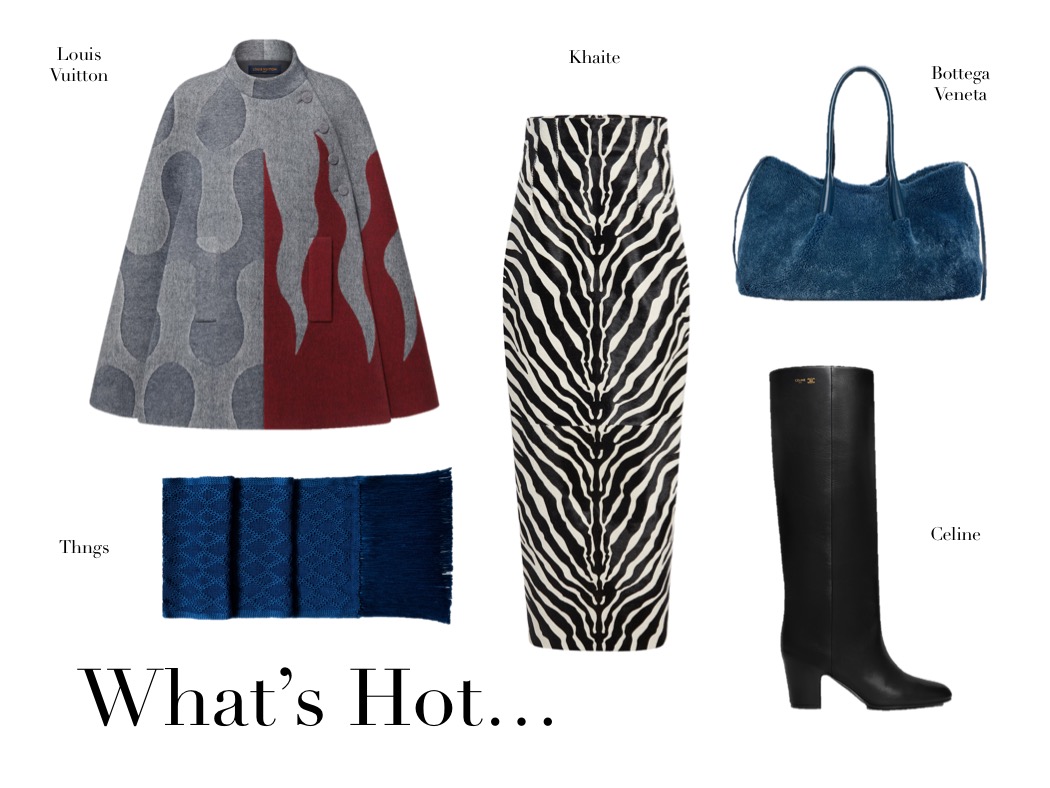
I also sensed a hint of time travel back to the 1968 Paris protests. The Sorbonne students’ anti-bourgeois style – ironically lifted from their parents’ wardrobes – surfaced in elements like newsboy caps, fur-collared jackets, and a layered skirt made from plaid blanket fabric. The collection’s hero motif – paisley – looked like something salvaged from a thrift store and revitalized with edge. Meanwhile, a wool cape adorned with cartoon-strip flames seemed to leap from Pierre Cardin’s studio, where the designer once dreamed up a bright, space-age future.
Louis Vuitton is a brand that sells bags. Ready-to-wear – especially the one presented on the runway – isn’t it’s bread-and-butter. Nicolas Ghesquière occupies a uniquely rare position of creative freedom – and commands a vast platform – to make fashion that doesn’t need to sell, but rather to spark conversation. This collection was certainly his brightest, envelope-pushing moment in the past couple of years.
Collage by Edward Kanarecki. Don’t forget to follow Design & Culture by Ed on Instagram!
Hey, did you know about my newsletter – Ed’s Dispatch? Click here to subscribe!
Nicholas Ghesquière has been experimenting with the codes of the 1980s for the last few seasons. In his Louis Vuitton case, nostalgia is lethal (especially to ready-to-wear). Once, this designer captured the zeitgeist like no else. Today, he’s stuck in a bizarre, sentimental limbo. His runway ideas are scattered and dispersed, often left unresolved. The dresses look cumbersome and unflattering. The accessories – old-fashioned. Unlike at Saint Laurent, the colors (and prints) are just eye-scratching. I truly doubt anyone wants to dress like this. And we’re talking about Louis Vuitton, for god’s sake!
What strikes me is if an emerging designer – or a female designer – ever presented a collection like this, they would be roasted by everyone, from the critics to the leading voices of social media. Well, I guess the LV invitation has its power – and is worth staying silent for.
Collage by Edward Kanarecki. Don’t forget to follow Design & Culture by Ed on Instagram!
Hey, did you know about my newsletter – Ed’s Dispatch? Click here to subscribe!
Once upon a time, Paris had the big three: Chanel, Dior and Louis Vuitton. Each season, these brands – under Karl Lagerfeld, John Galliano (and later Raf Simons) and Marc Jacobs, retrospectively – dictated the tempo and rhythm of fashion. Actual dreams were made here. You wanted to be in one of these universes – or in all at the same time. Today, these three brands are even bigger, but they’ve turned into amorphous behemoths that lost the plot and zeitgeist (which doesn’t make the bags sales stumble, mind you).
Nicolas Ghesquière, once a true fashion innovator, joins the ranks of bad designers leading ridiculously big brands. His collections are puzzling not because of their conceptual effort, but because they look absolutely clumsy, dusty and hideous. Spring-summer 2025 feels like a pile of stuff that somebody tried really hard to style in a “contemporary” way. Lengthy togas, unflattering sacks, silly-looking pants with one leg shorter than the other one, bizarre cut-outs… sorry, I don’t get it. I think you must be a well-paid Louis Vuitton ambassador to actually “get it”.
Collage by Edward Kanarecki. Don’t forget to follow Design & Culture by Ed on Instagram!
Hey, did you know about my newsletter – Ed’s Dispatch? Click here to subscribe!