ERLification. Dior Men Resort 2023

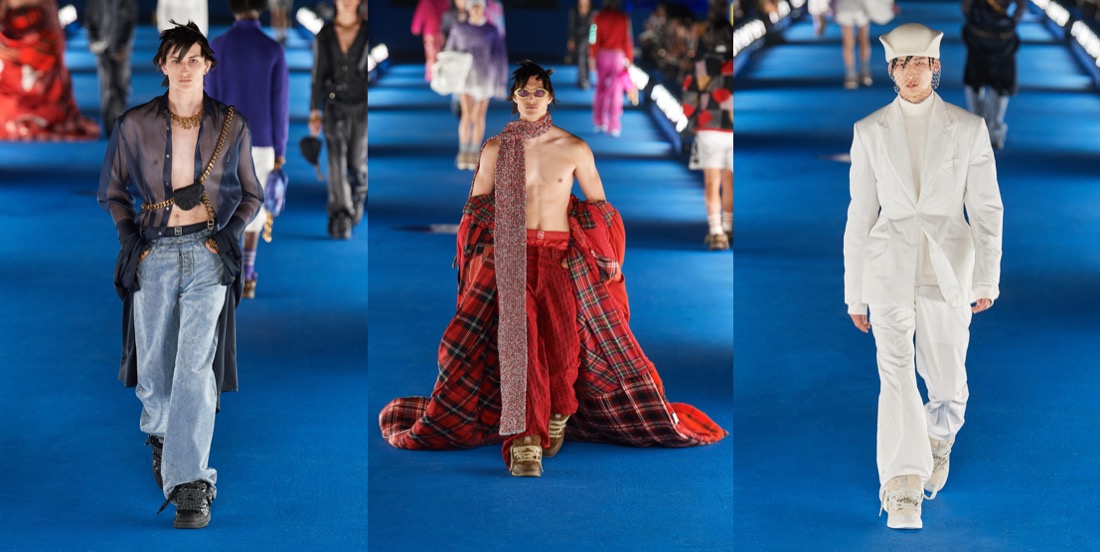
You could see the crest of a 30-foot blue nylon wave from several blocks away on Pacific Avenue in Venice Beach, part of the impressive ocean-themed runway set design that was constructed for Dior Men’s show last night. With Californian designer Eli Russell Linnetz of ERL signed on as the house’s latest guest designer, it made sense that creative director Kim Jones would choose to show the capsule collection against the backdrop of this well known Los Angeles beachfront. “I grew up in Venice Beach, I came to this street all the time,” said Linnetz speaking at a preview before the show. “This was basically my backyard.” Linnetz’s story is straight out of Hollywood. A film student turned designer, he cut his teeth in Kanye West’s artistic studio, directing videos for the likes of Teyana Taylor. Since launching his ERL brand in 2018, his fanbase has swelled year on year and includes the likes of A$AP Rocky and Hailey Bieber. He’s also one of several bright young finalists up for this year’s LVMH Prize. “We have lots of people in common,” said Jones, explaining that the pair were introduced by mutual friends and started the conversation over DM about a year ago. When Jones arrived at ERL HQ in Venice Beach to work on the capsule, their creative chemistry was almost instant. “I was 99% excited at the idea, 1% scared that I would lose myself, just because Kim has such a strong vision of the world and his collections are so refined and striking. My world is so much more chaotic,” said Linnetz. “But the second Kim came to the studio, it felt easy, seamless.” 

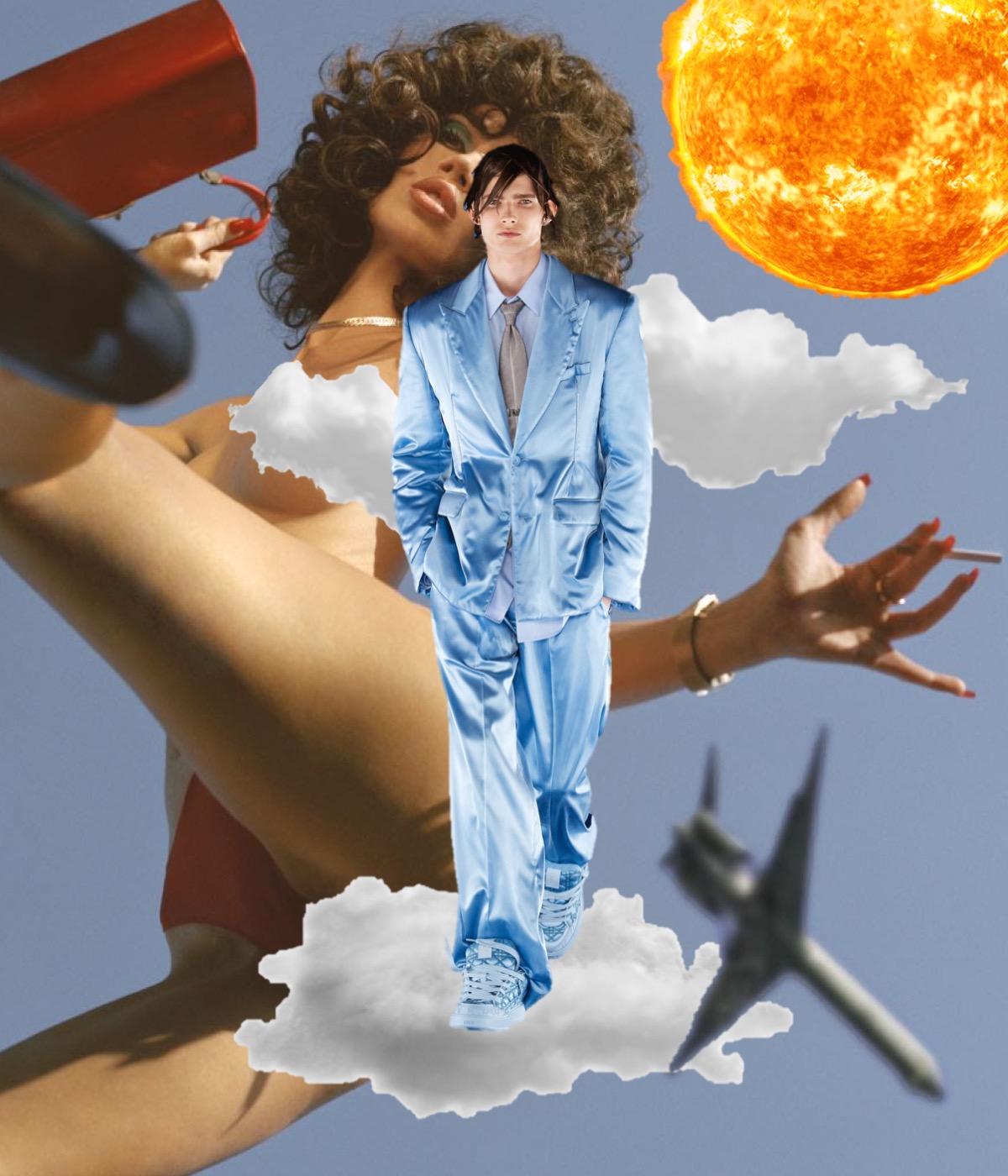
The pair used Linnetz’s date of birth, 1991, as a jumping off point for the collection, mining the Dior archives for clothes created that year. “I think people would assume that I would be more into the Galliano archive because it’s so theatrical, but actually through my research I become more interested in diving into something that hadn’t been touched before,” said Linnetz. They landed on the maximalist elegance of Gianfranco Ferré’s designs for the French House, the kind of opulent tailoring you might have seen sauntering down Rodeo Drive at the time. Cue the opening look, a gently padded silk satin suit in Dior’s signature dove gray created with the lining twisted inside out and worn with wide-legged pants puddling over chunky skater sneakers. It was a sweet marriage of Parisian executive realness and SoCal cool, or what you might call “California Couture,” a slogan that appeared on at least a few cozy turtleneck sweaters.  Several of ERL’s quirky design flourishes were filtered through a sophisticated lens. There were baggy skater boy shorts galore, only done for evening with an eye-catching beaded trim. Clearly Linnetz and Jones had a lot of fun dreaming up the accessories. According to Linnetz, the pillbox hats worn backwards with beaded veils were a cheeky nod to Jackie O. Strung on a heavy duty gold chain and worn across the body, the tiny tinsel saddle bags were a very elevated take on the classic skater keychain wallet that are bound to be a hit with Dior Men’s streetwise fashion guys alongside those ingenious sneakers. The yin-yang motif Linnetz is known for got a look in too and was rendered in an intricate embellished wave on a gray marl hoodie. “It’s interesting to see how Kim works because he really approaches everything like a film director,” said Linnetz. “And that’s very familiar to me.” In a sense the bigger picture here felt decidedly fresh, an example of what can happen when two creative minds from seemingly different ends of the fashion spectrum – and different sides of the world – come together to exchange ideas and find common ground. In the new fashion landscape, playing it safe hardly feels modern. Exchanging ideas in a freewheeling way is the new wave. 

Collage by Edward Kanarecki.

NET-A-PORTER Limited

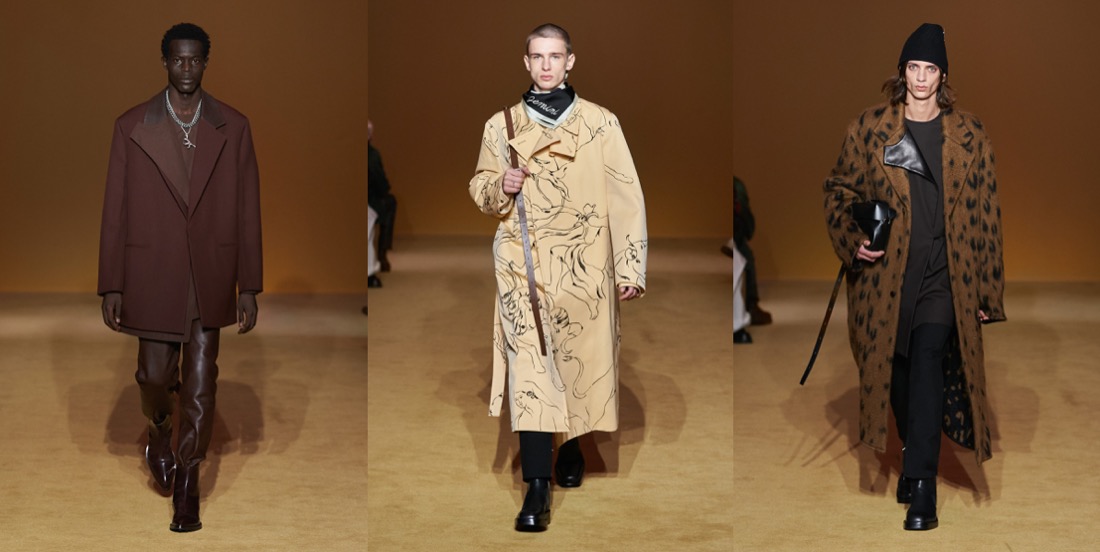
Men’s – New Surrealism. Loewe AW22

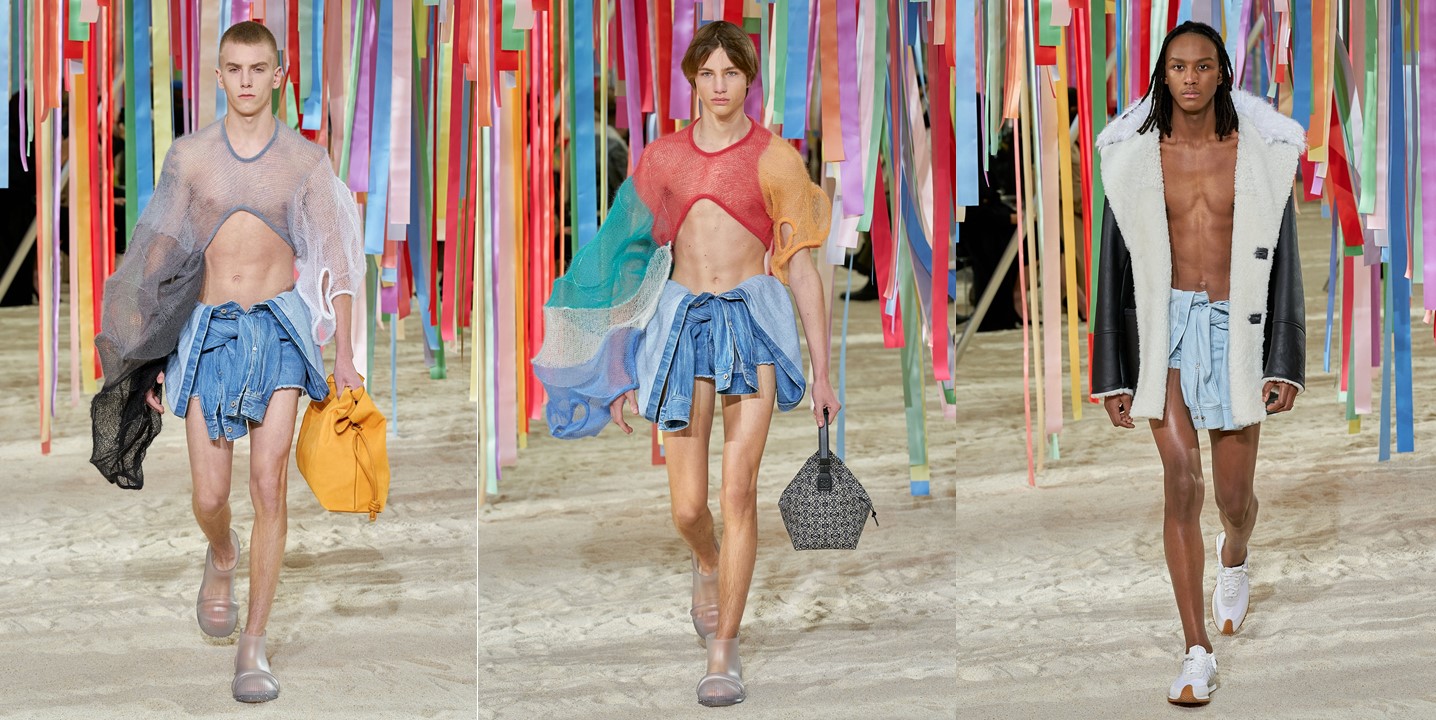
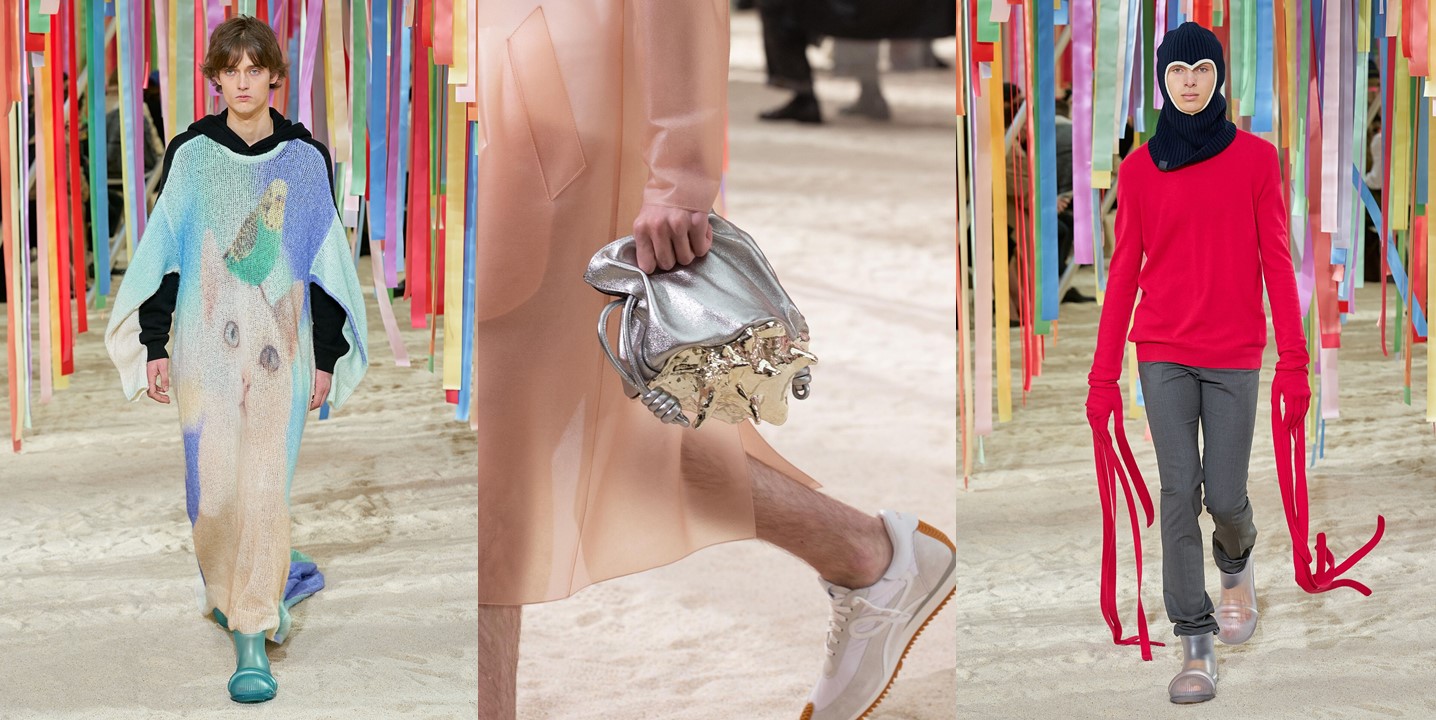
When Jonathan Anderson referenced “metaverse” in his J.W. Anderson collection last week, he said, “I was using it more in an ironic way. The idea that it doesn’t really do anything.” For all its brilliant and hilarious techy surrealism, his Loewe collection was not a wardrobe for the metaverse. In fact, it felt a lot like it was trolling the very idea of our digital lives lived on phones, and the hoopla whipped up around trendy concepts like the metaverse. If our attraction to VR and AR and whatnot is founded in the idea of possibility, Anderson’s collection was a twisted take on how these imaginings translate into real life. He illustrated it in decidedly normal things made abnormal. Shorts were embellished with sparkles that looked like raindrops, as if it had rained crystals. A wool coat had a gilded stain on its lower back “as if you sat on a park bench and it was gold.” Coats and tops were punched with big bathroom eyelets like you’d digitally dragged your most mundane morning surroundings into your wardrobe. Shoes looked like bags, and transparent coats were actually made of leather. Meanwhile, a series of garments satirized our relationship with technology. The sleeves and lapels of a furry coat had fiber optic lights inside them creating the illusion of wetness, the illuminated waistband of trousers made them seem like they were floating, and the entire frame of a coat was lit up. “It’s the idea that you become backlit because everything on a phone is backlit,” Anderson said, referring to the way we see things on our phones and the way our screens light up our faces. Balaclavas with heart-shaped peepholes played on the idea of digital frames. Similarly, the orbital hem of a shirt and the waistband of shorts were bent in separate directions so it looked like you’d skewed them in FaceTune. It evoked the DIY editing accidents you sometimes spot in people’s selfies where the person looks like a supermodel while the retouching process has turned the background into an abstract painting. We all follow someone like that. And those t-shirts and jumpsuits with faces and bodies printed on them like optical illusions? They were worn by the models who posed for them, distorting and reshaping their physiques the way we do it on those beautifying apps.

Anderson’s collection was an exercise in the surreal, but a post-digital era take on the genre, which he said was more “psychotic” in an existential way. “Who are we? Where are we going? Is it real, is it not real? Are we in that moment? Do we believe what we say?” In a world where we’re more fascinated with creating a metaverse than improving the real one, those were good questions.

Collage by Edward Kanarecki.

Men’s – Sensual Masculinity. Jil Sander AW22

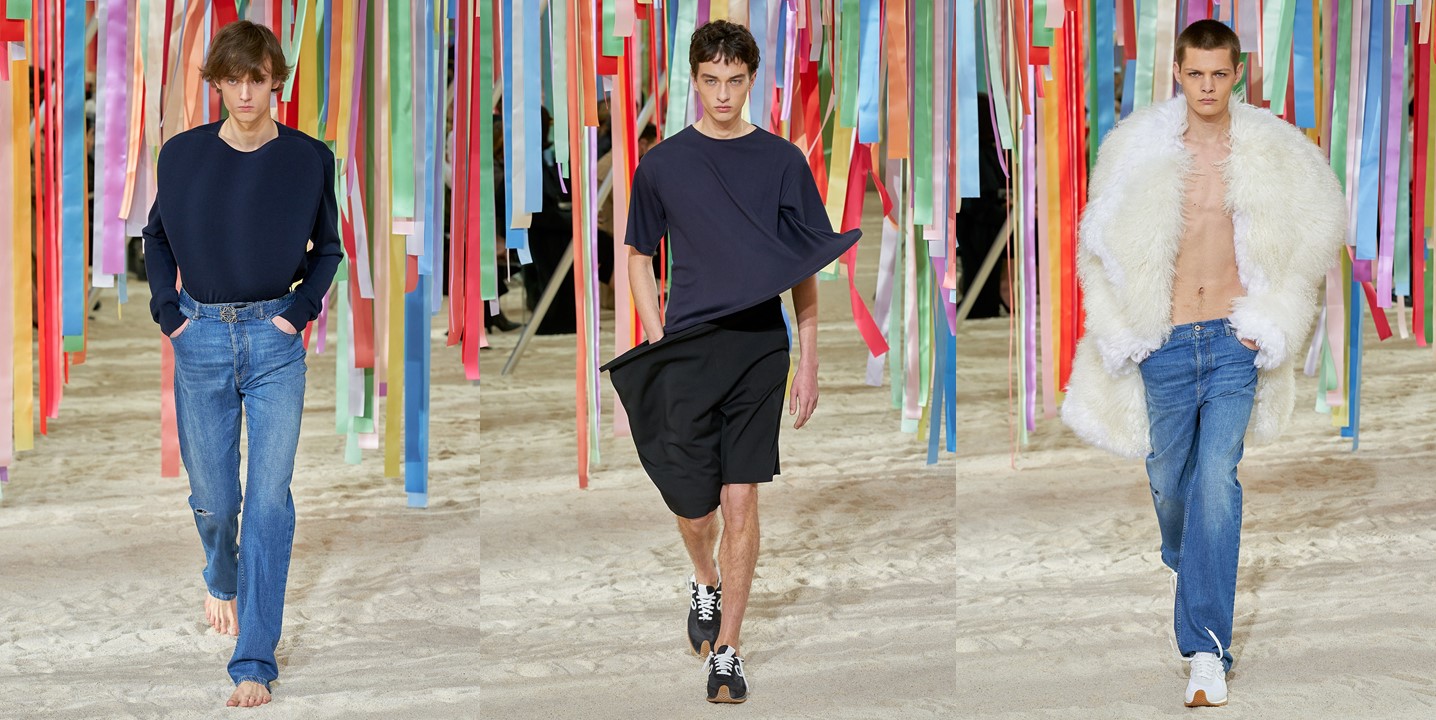
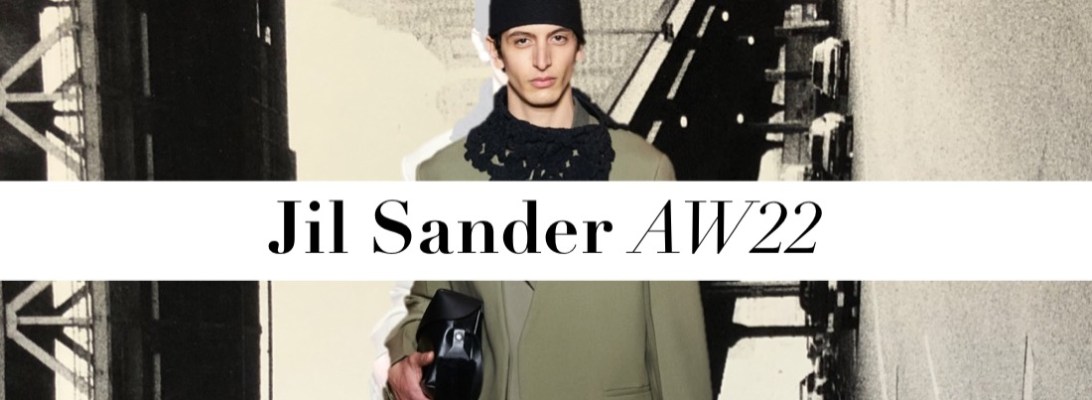
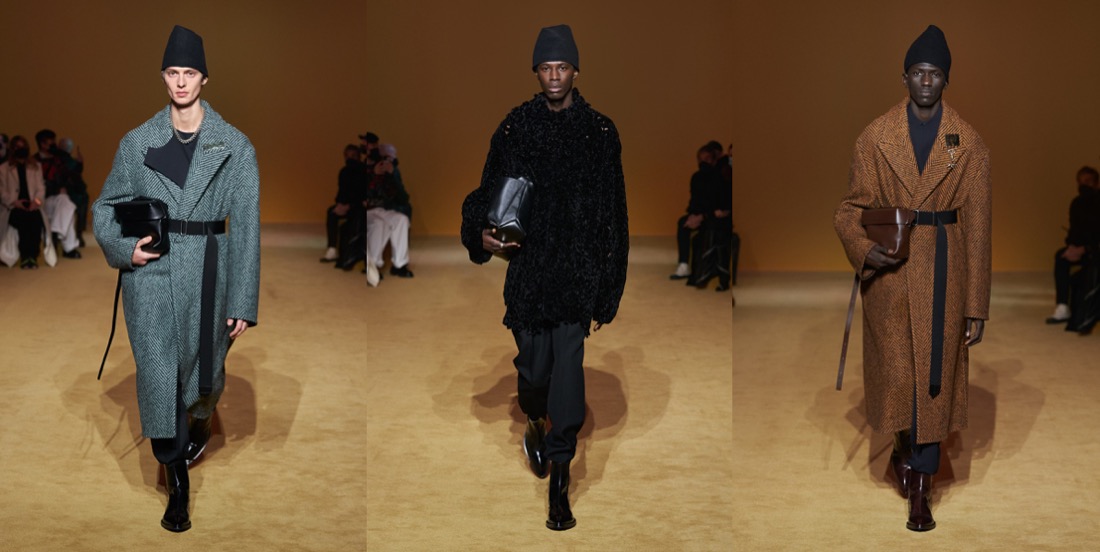
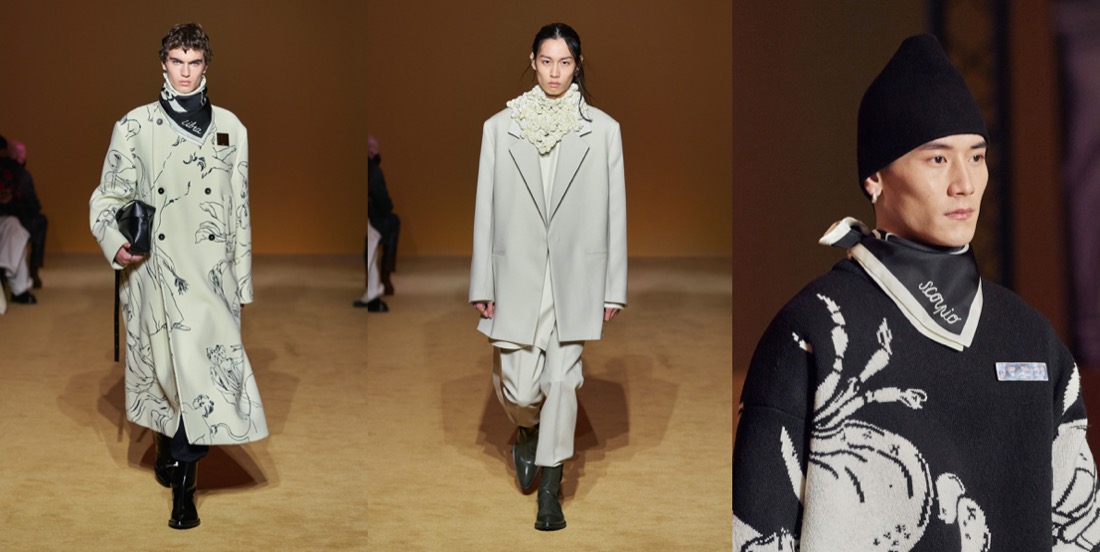
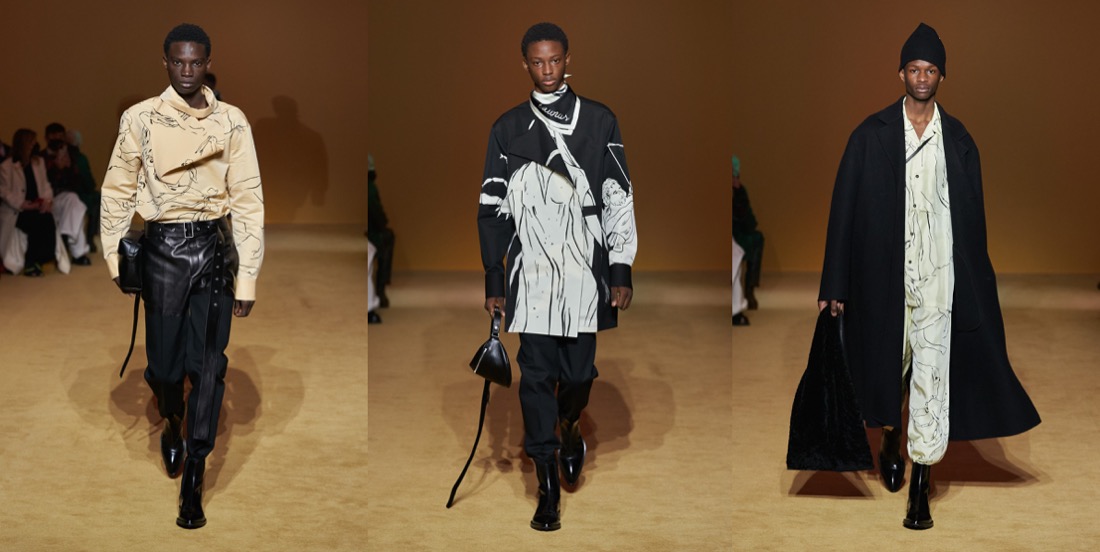
There’s always been a puritanical quality to the work of Lucie and Luke Meier, but in this Jil Sander collection, it transitioned into a more articulated kumbaya. That sensibility was carried by crochet wrapped around necks and heads and spliced with oversized blazers and tuxedo jackets that couldn’t have made for a bigger contrast. “We liked this really elegant, masculine silhouette, but with a sensual side to it, as well,” Lucie Meier said after the show. “We start a lot with tailoring, just to see what we really want to do and say and what we care about. But this time, we worked it into typically feminine techniques as well,” Luke Meier added. The meeting between crochet and strong tailoring made for expressions that were more focused on trend and statement pieces than previous proposals from the Meiers, whose collections usually feel more centered around the idea of a wardrobe. Backstage, Lucie pointed as to why: “You kind of miss people who really dress up and have a kind of eccentricity,” she said, referring to the way the pandemic has cramped our collective style, or at least our opportunity to show off said style. As a symbol of “personality and individuality,” Luke said, the designers scattered astrology prints and zodiac embroideries around the collection, intensifying the hippie energy of it all, only to contrast it with the rigidity of sharp lapels poking out from layers under jackets, and suit trousers tucked into hard, pointy Santiago boots with metal heel caps. It was a bold proposition for post-pandemic self-expression, but one the aspiring street style stars of fashion week will no doubt embrace.

Collage by Edward Kanarecki.

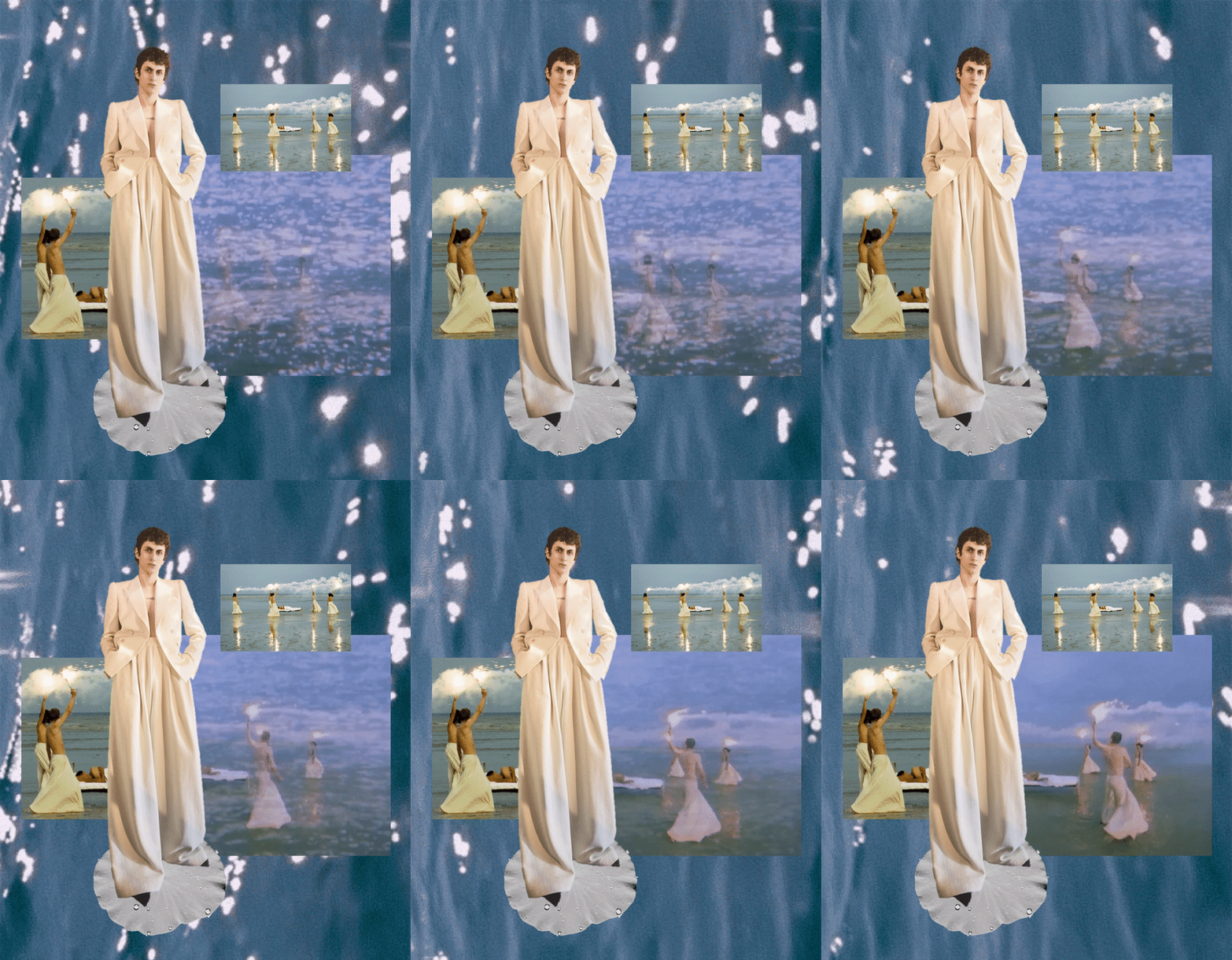
Men’s – Strange Beauty. Dries Van Noten AW22

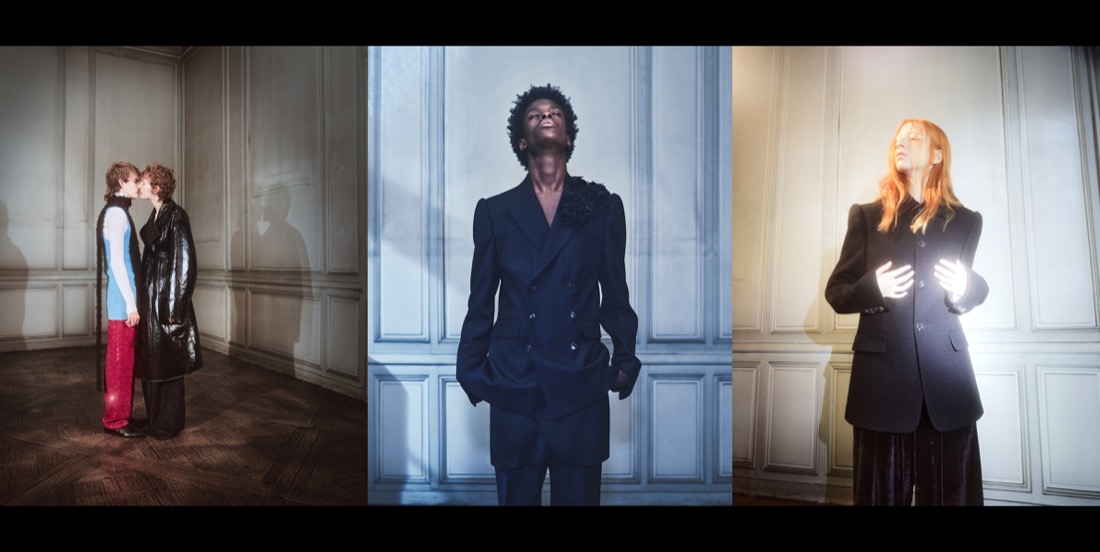
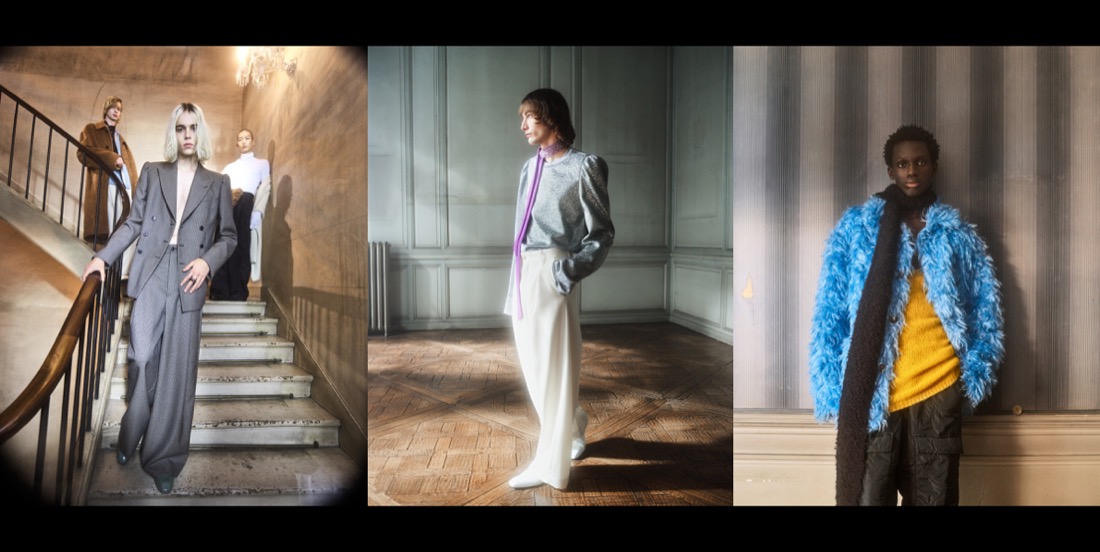
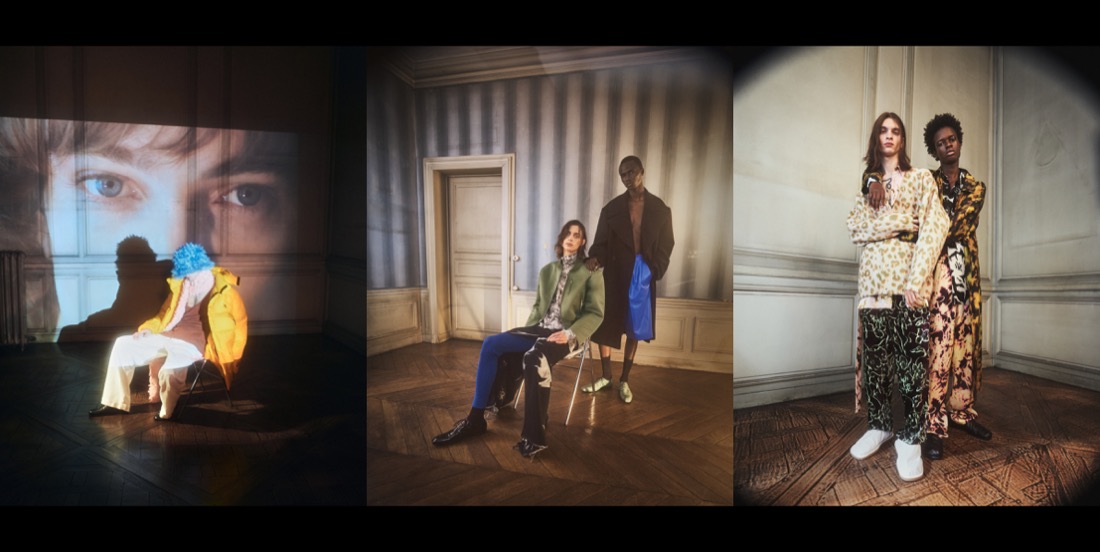
While many designers have now returned to live shows, Dries Van Noten doesn’t want to do a show until the pandemic ends (or at least, it’s finally under control). He spent the season thinking about how the restrictive conditions are affecting his team. “A lot of young people don’t go out anymore, they don’t see a lot of people. Touching each other, making love to each other… it’s changed. I think it’s a collection where you really feel what state we’re in, and what we’re longing for. That is the desire we wanted to explain: the frustration,” he said on a video call from Antwerp. Shot by Casper Sejersen, Van Noten’s autumn-winter 2022 film featured a bunch of models getting tactile in a big mansion in Paris. There were close-ups of three real-life couples kissing: two men, two women, and a man and a woman, who all embodied the designer’s genderless objective. “I wanted to make it even more than gender-fluid, so you don’t even think about what’s menswear and what’s womenswear. In this collection, there are as many women’s elements as men’s elements,” he said of the wardrobe, an unrestricted mix of sequins, glitter, embroidery, and transparency with traditional wools and sportswear elements. “There’s a little bit of sex, maybe, in the whole thing. It’s a surreal beauty, a raucous beauty – not a normal beauty. A very strange beauty. Just beauty-beauty is pretty, and I don’t like pretty. I think that’s boring,” Van Noten stressed, explaining the gender-bending quality of the collection had a lot to do with his investigations into truly genderless cutting. The raucous beauty Van Noten wanted to convey was there in the sort of tattered glamour he’s been practicing for a while now: wardrobe constellations that look a little bit like something you’d find in a thrift shop in a clubbing district in the 1970s; a helter-skelter of patterns, textures and partywear that feels somewhat psychedelic. “It’s not like, oh, let’s surprise people, let’s put a feminine thing on a guy. No, we don’t think like that anymore. There’s a freedom, which I’m happy with,” he reflected. “We combine everything in a very spontaneous way.”

Collage by Edward Kanarecki.

Men’s – Strobe. Rick Owens AW22

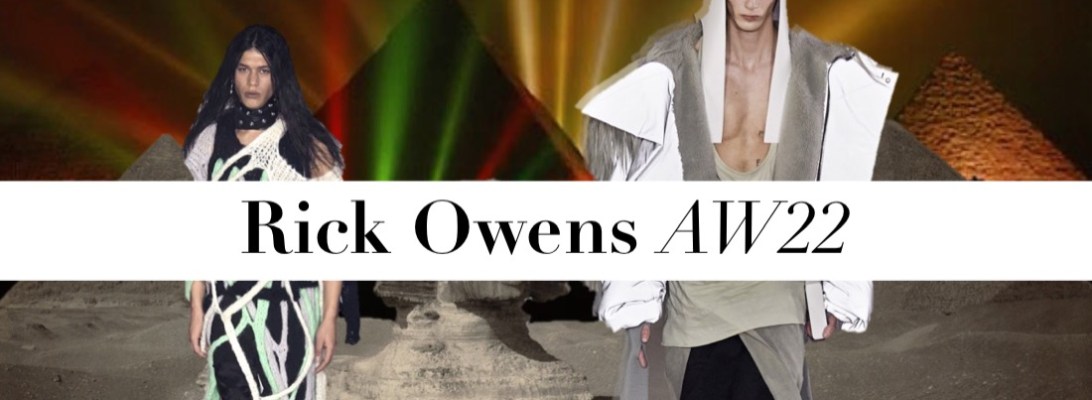
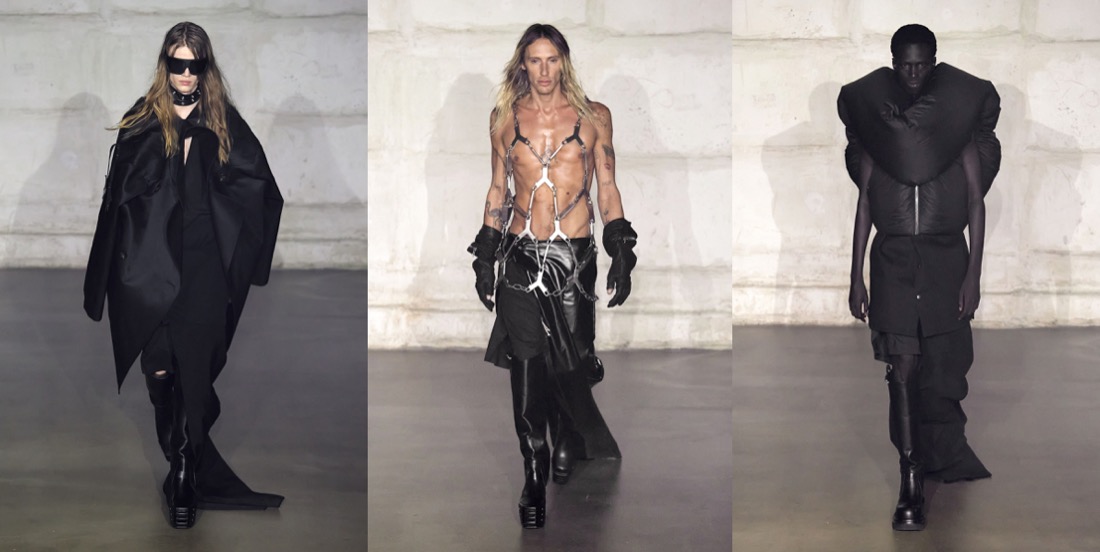
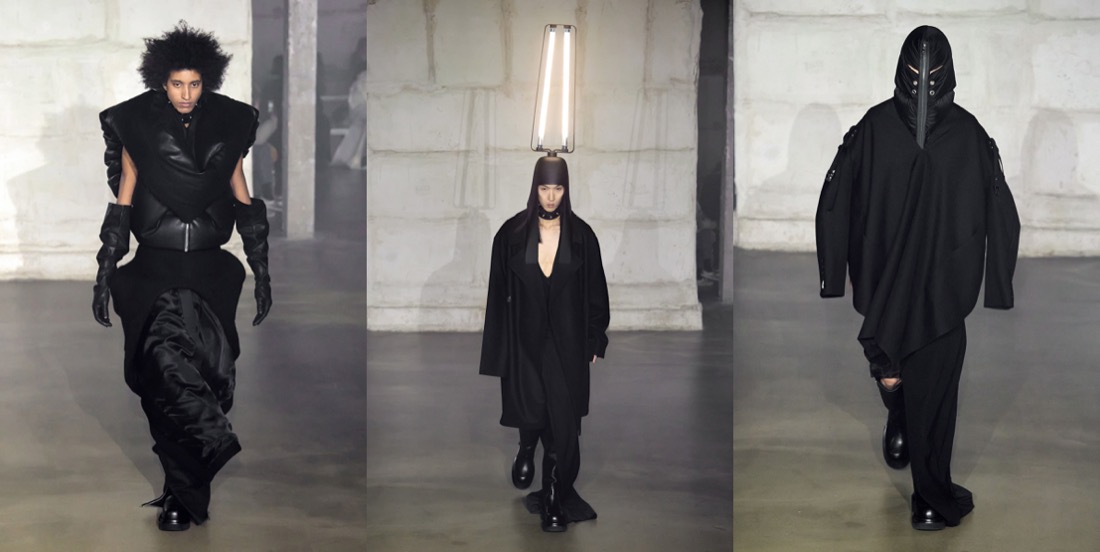
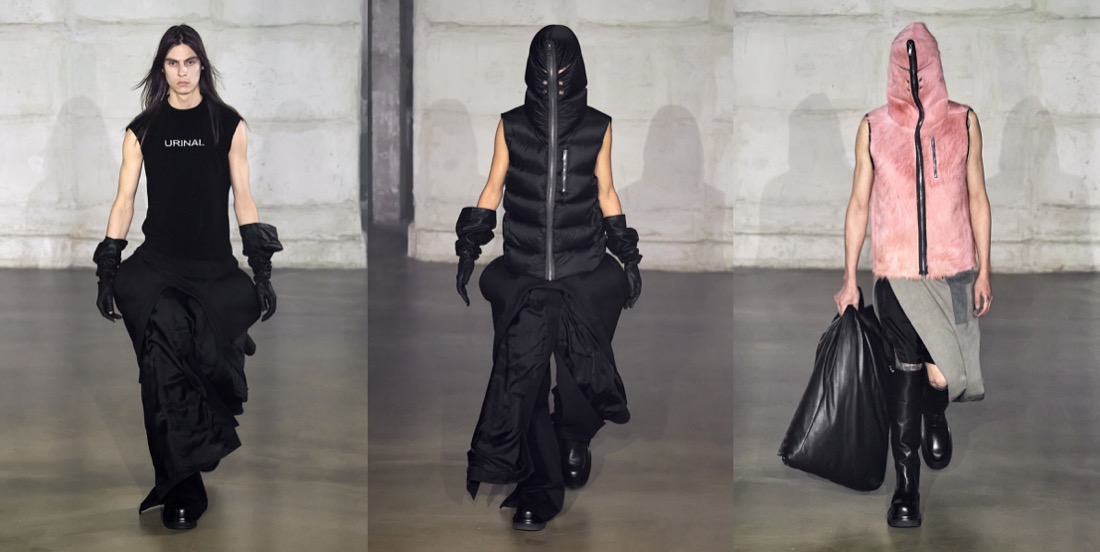
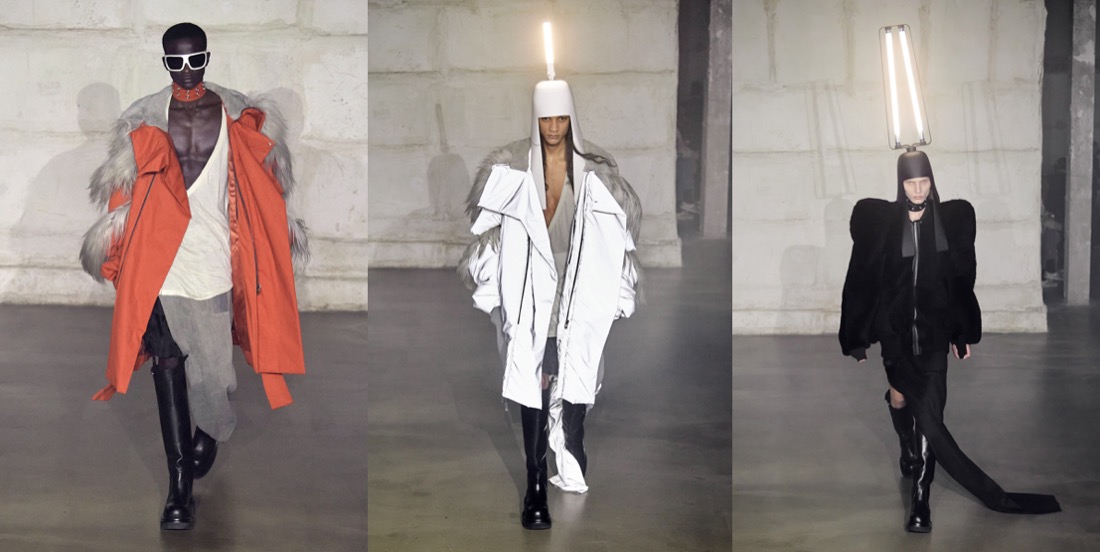
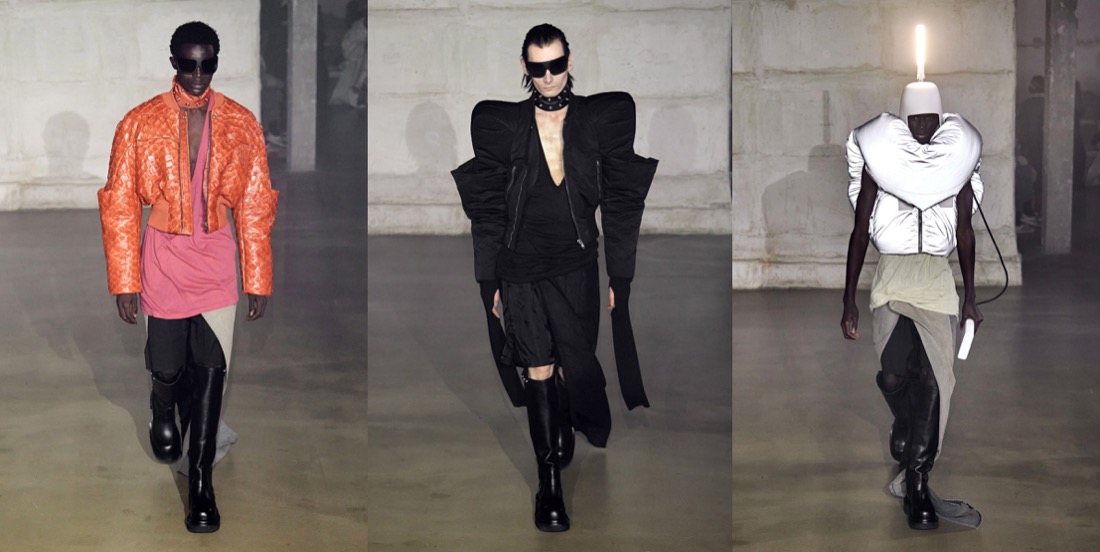
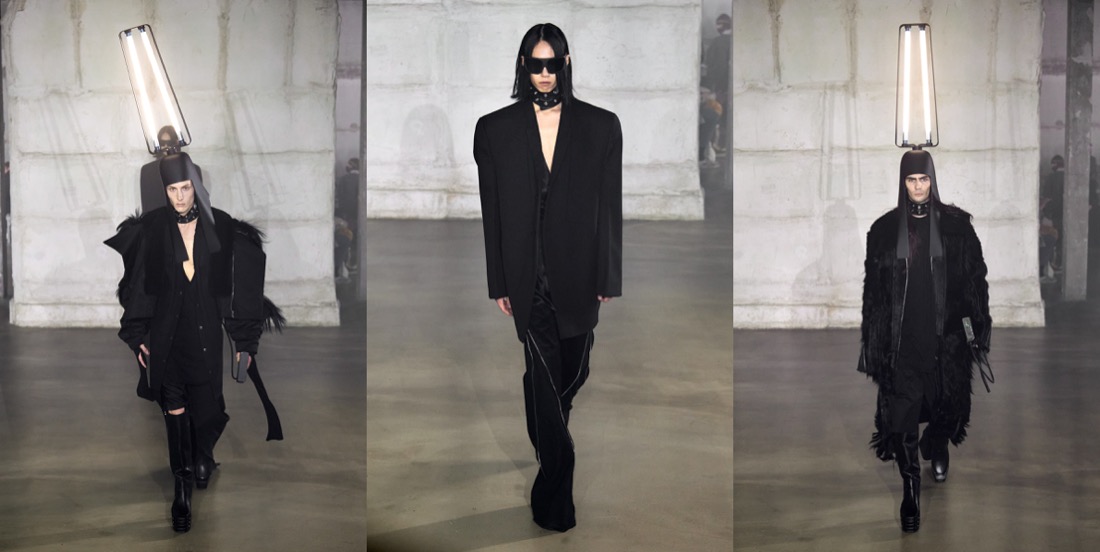
I’m not the kind of designer that says, ‘I just went to China and this is my inspiration‘. But I just went to Egypt, and they have those shapes, those beautiful shapes, and I thought if I did that as a Dan Flavin helmet, that would be so cool.” This is how Rick Owens summed up his out-of-this-world, ethereal autumn-winter 2022 menswear collection. By combining the headwear profiles of Ancient Egypt with some adroitly applied Philips light bulbs, Owens created headpieces that doubled as lamps – “they’re all free-standing.” The on-and-off-again lighting meant that much of the detail was suppressed from the eye: what was left were silhouettes. These were masculine, wonderfully unconventional and diverse, and ranged from Owen’s originally parodic mega shoulder to whorled arthropod curlings rendered in piumino. He compared the Land Art of the 1970s to the emerging meta-stuff, but remained refreshingly detached. Much more passionately he dug deep into the Made In Italy provenance of his pieces, dishing detail on the family companies that fashion his progressive fashion with artisanal techniques. The great upside of this, he hinted, is that it advertises traceability. “That’s information that’s important. And I like being in a company that is talking about that, but which is also saying ‘We’re not that good at it, but we’re trying.’”

Collage by Edward Kanarecki.