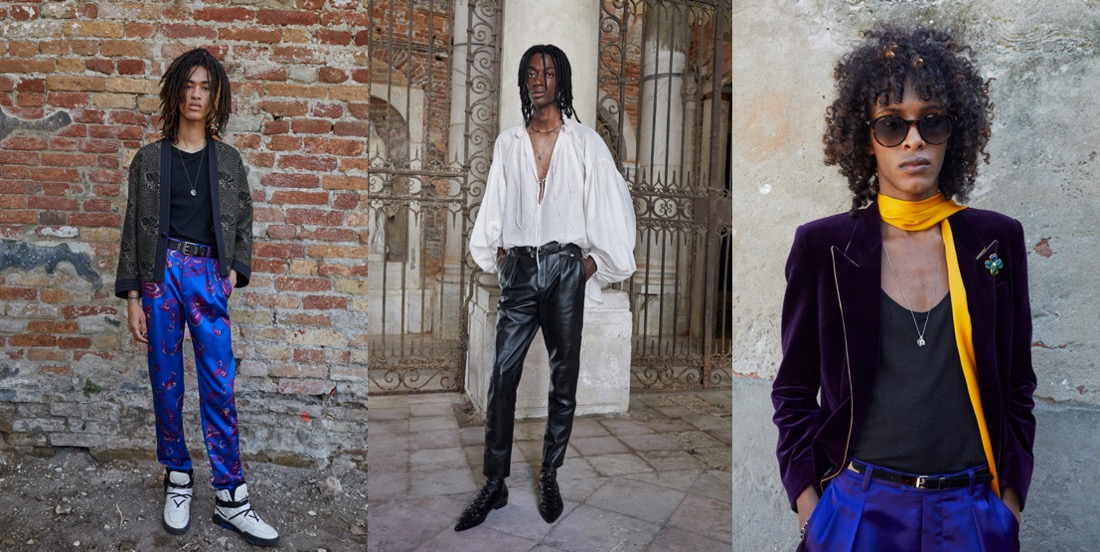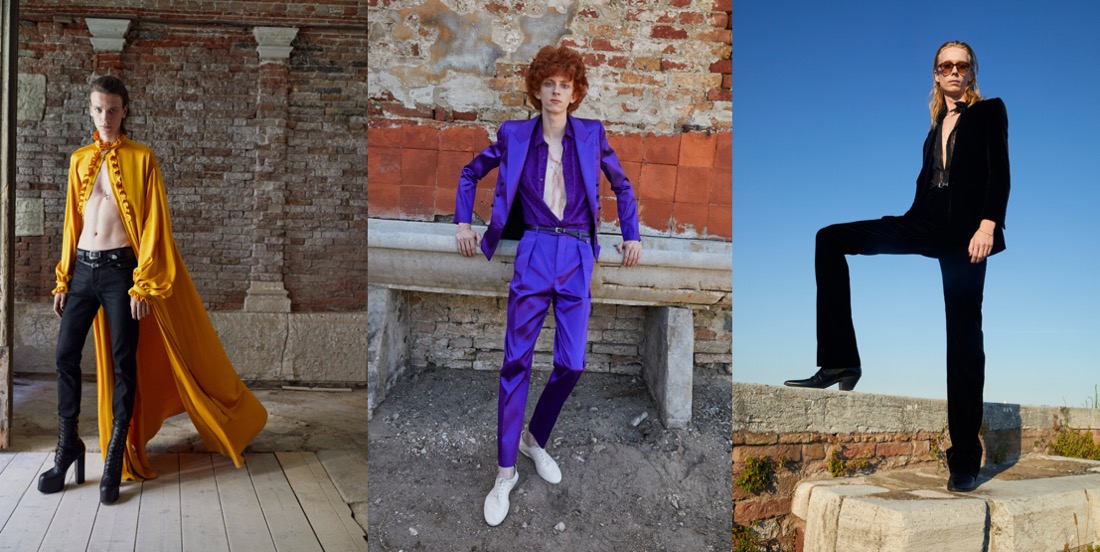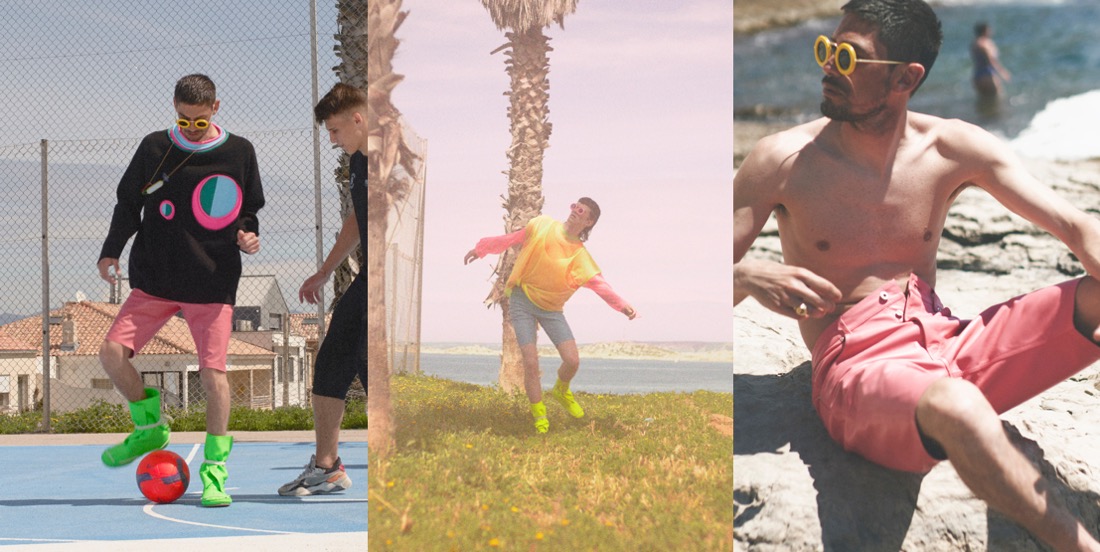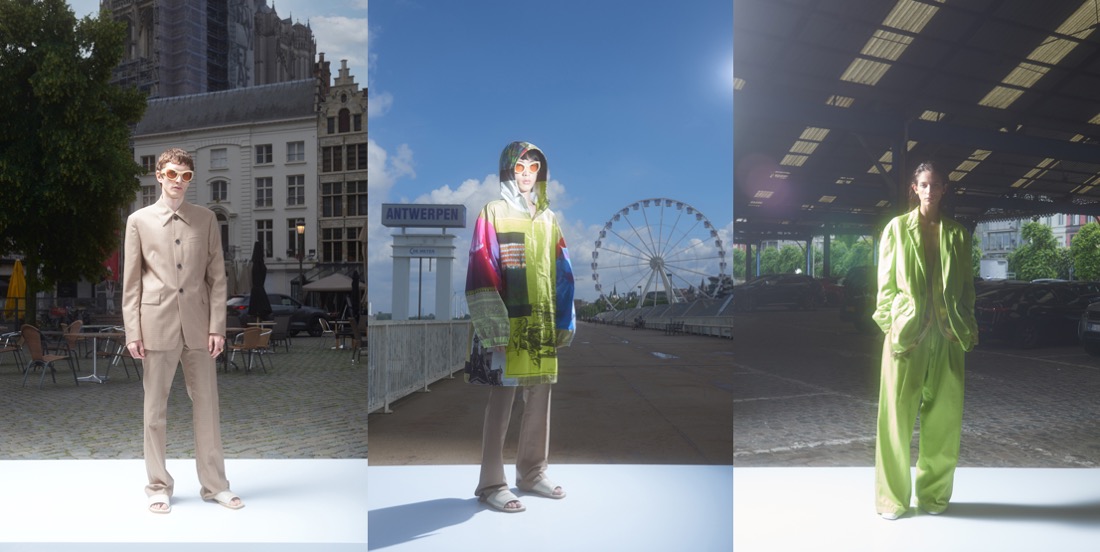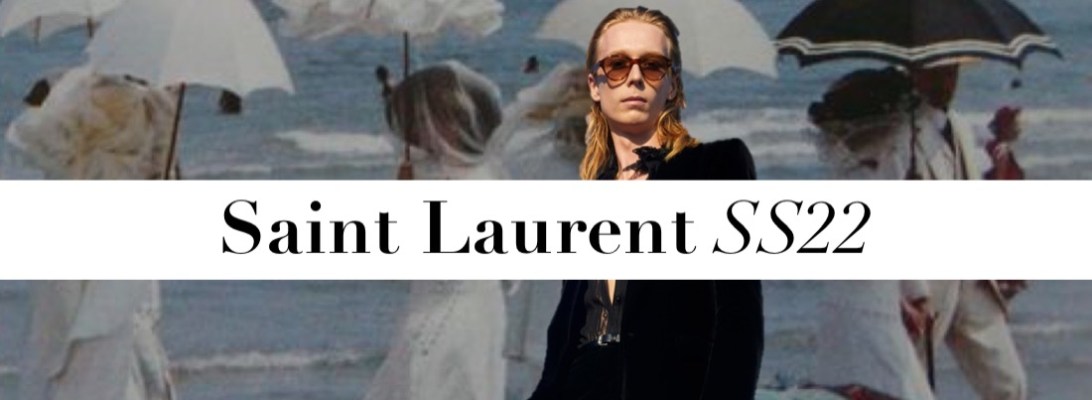
Men’s – Venice Boy. Saint Laurent SS22

With Venice’s winding lanes and piazzas relatively empty, not exactly overwhelmed with visitors, an army of very slender wraiths, confettied with tattoos, bristling with attitude, and wafting around the city’s fabled landscape, seemed even more conspicuous. These proved to be the (extra, extra skinny) models and brand icons of Anthony Vaccarello’s Saint Laurent, in town to walk the runway in the designer’s collection. In keeping with the city’s current focus on the possibilities of architecture, Vaccarello collaborated with the genre defying artist and filmmaker Doug Aitken (who won the International Prize at the 1999 Venice Biennale) on an environment to showcase his collection. Aitken created Green Lens, an amazing mirror-faceted structure that was assembled in a month on the Isola della Certosa, and planted with hot house jungle greenery. It serves as a response to the question posed by the Biennale, harmoniously blending futurism with the natural landscape. “All the sets of Saint Laurent I’ve always done myself in a way,” Vaccarello explained, at the magical post-show dinner set in the roofless ruin of an old brick structure on the island, “so it was nice to share a concept for the first time with an artist who I truly admire, and it was fun. That concept was supposed to be for the women’s show last year,” Vaccarello added, “and because of the pandemic we pushed it to now. In the end it made more sense to have it in Venice than in Paris, especially with the Architecture Biennale – and with that collection, which is a mix of a lot of influence of Saint Laurent and a lot of Venetian ‘New Romanticism.’ Not putting them into the historical, classical Venetian way, but in a futuristic environment. I think after COVID you want to look more into the future than the past – and I like that mix of the past in the references in the clothes, and the future in the setting.” During the fast-paced show the structure reflected the blue skies, dusk light, and dappled lagoon waters while Aitken’s lighting transformed the mood from moment to moment, suggesting by turns a flaming sunset or a glacial blue Scandinavian dawn. Refracted in those mirrors, Vaccarello’s tribe strode forth in lean jackets or billowing piratical blouses, and cigarette-leg pants with winkle picker ankle boots extending the slender silhouette further still. In a timely reversal of the endless womenswear borrowings from the traditional men’s wardrobe, Vaccarello also had fun exploring the unparalleled Saint Laurent archives for women’s wear pieces that could be appropriated by the guys, including jacquard crepe de chine blouses and shirts from the early ’70s, cropped toreador jackets and spencers from Picasso line-up, and a padded brocade bolero from the China collection reimagined as a bomber and worn with black jeans, as well as a number of variations on Le Smoking. In homage to the host city there was Venetian carnival drama too in the dramatic billowing capes, including one in brilliant yellow silk that evoked a faille example shown in Saint Laurent’s autumn-winter 1983 haute couture show. “I think it was fun to see how a young guy could assume it,” said Vaccarello of his gender fluid propositions, “And I have to say they assumed it very naturally, [whether] a lace shirt, or platform shoes.” With this most convincing menswear line-up to date coming from the designer, hope to see more of such moments coming from Vacarrello in the future.
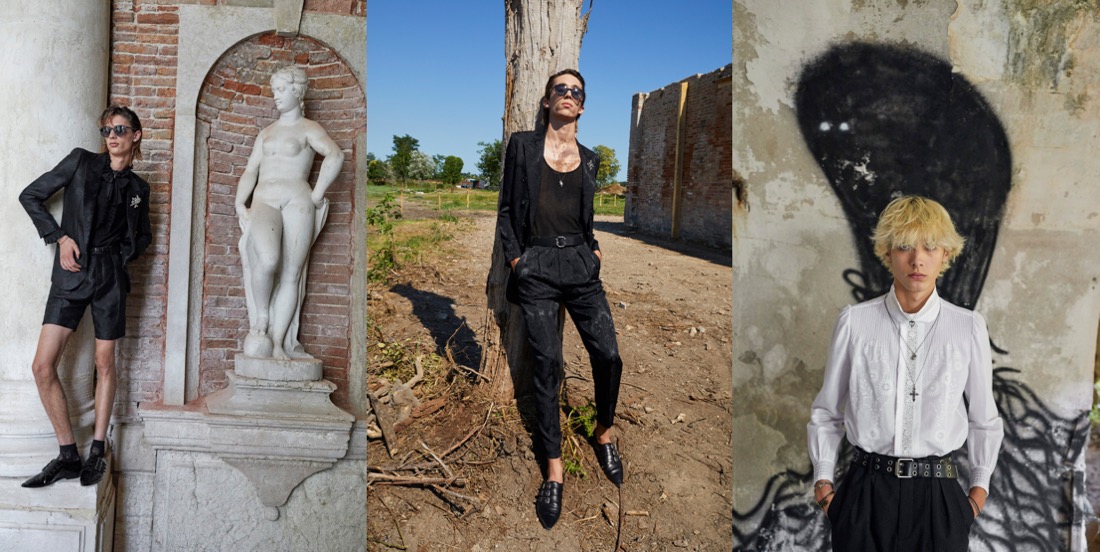
Collage by Edward Kanarecki.
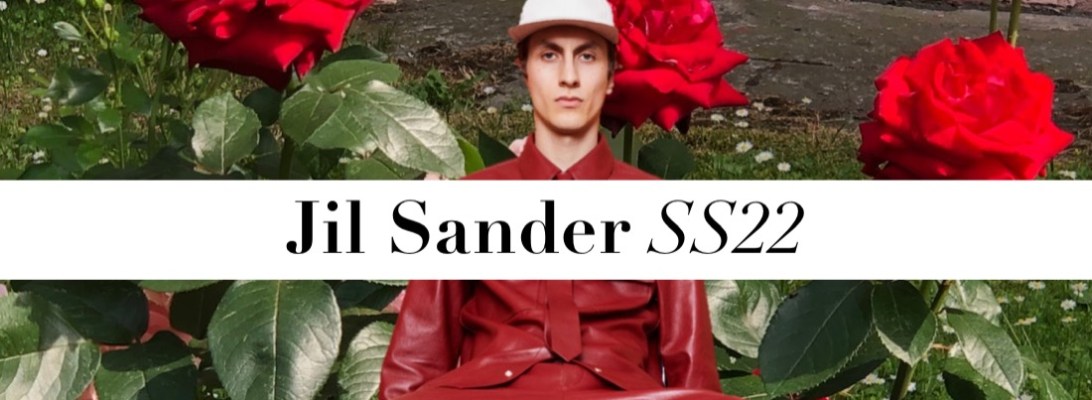
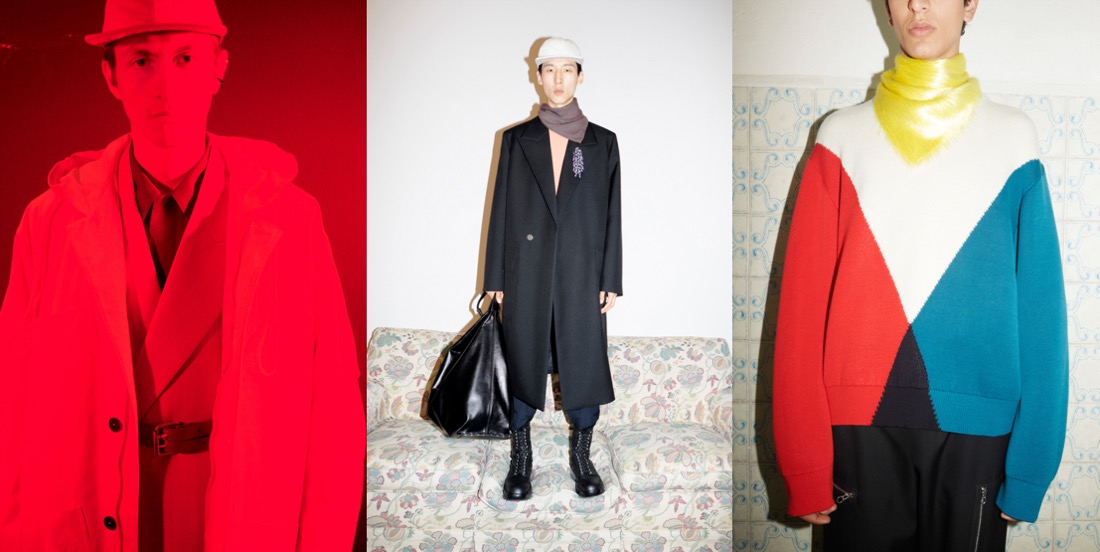
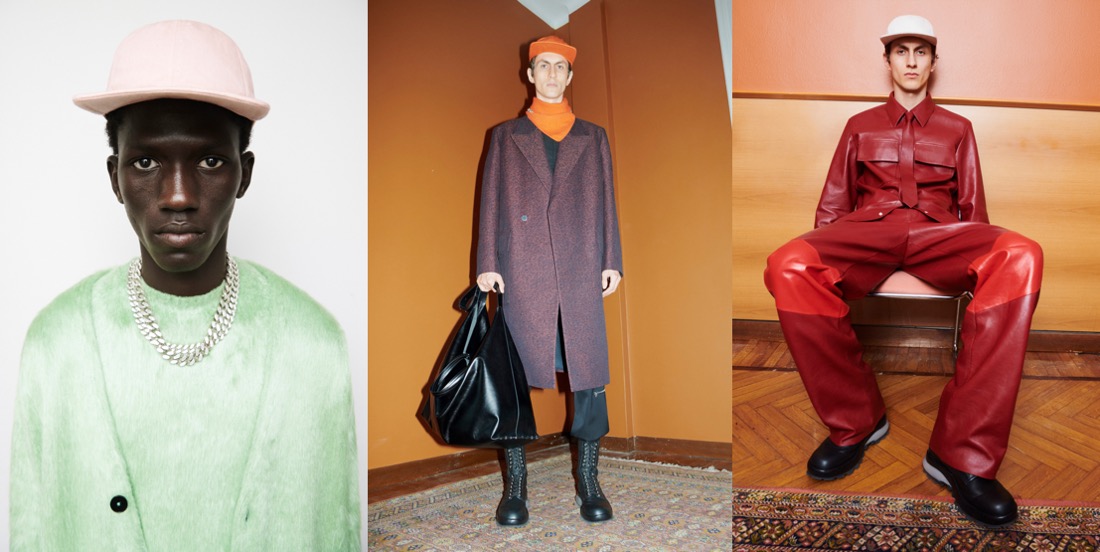
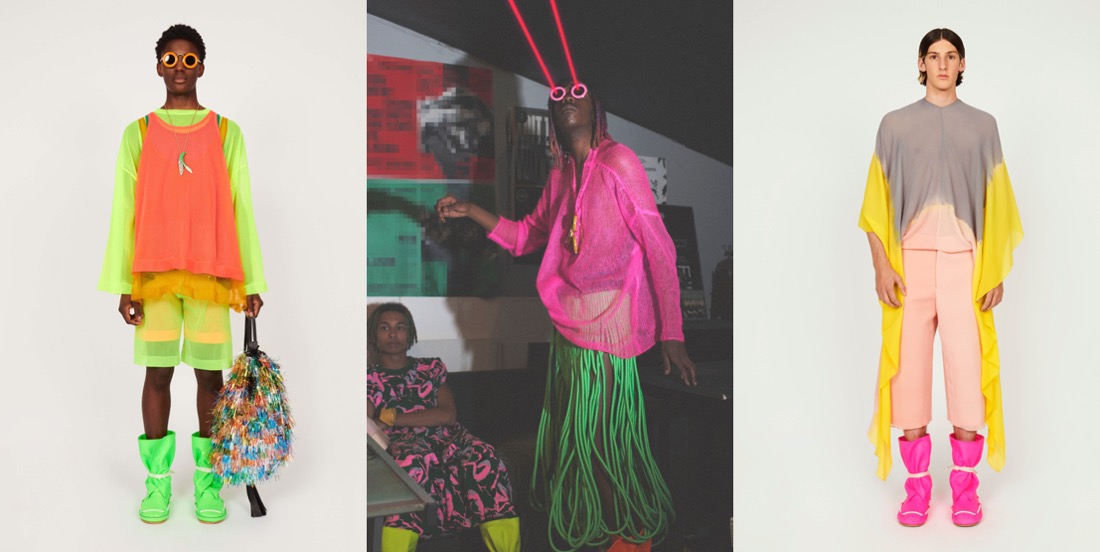
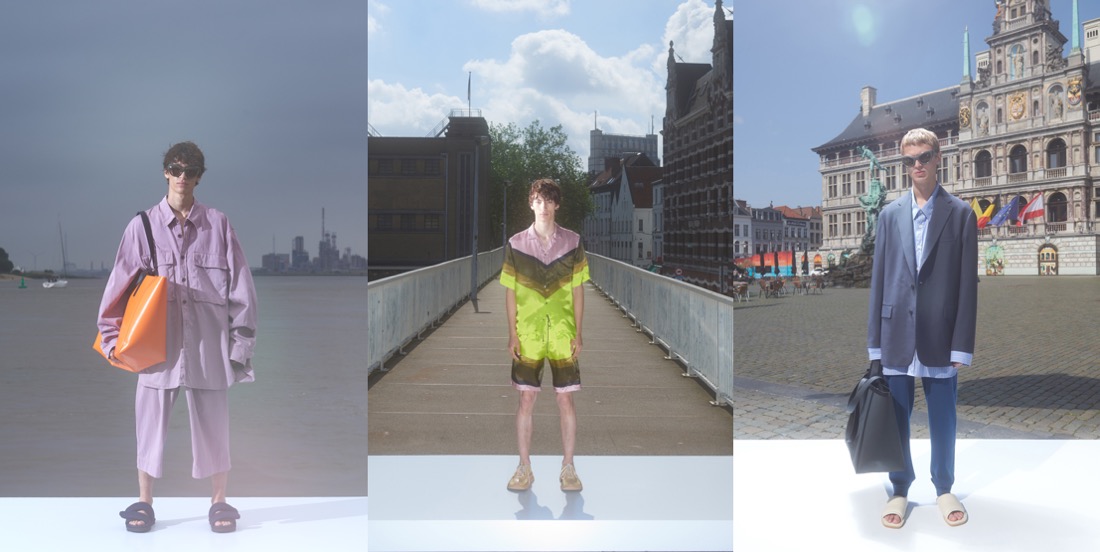
Men’s – For The Individuals. Jil Sander SS22

It’s an important time for the duo behind Jil Sander. Two-and-a-half weeks ago, Lucie Meier gave birth to a daughter. “It’s three of us now,” said her husband and co-creative director Luke Meier. Lucie hadn’t tried to hide her pregnancy, but since everyone outside her studio had only seen her neck-up on a Zoom call for the last nine months, no one realized. “I worked until a week before, but it’s good to be two,” she said. “Luke could take over.” They had begun working on their men’s collection some three months into the pregnancy, so, as Luke pointed out, “I don’t know if it’s conscious and present in the work yet.” The designers were, however, more reflective about the fashion world than normal. On a video call from Milan, Luke lamented fashion’s commercialization of parts of the sports – and streetwear that shaped him (he spent eight years at Supreme), and fondly remembered the eclecticism and individuality of New York street style in the early 1990s. “You’d see people on the street who’d be able to mix things like tailoring with an interesting piece of jewelry and something more functional like a parka. We were thinking about Jean-Michel Basquiat or Glenn O’Brien, these seminal New York characters,” he said. “Now, things are a bit uniform: there’s ‘this kind of person’ and ‘that kind of person.’ It’s nice to see people going for something that’s not considered the coolest thing of the moment.” While their collection was a reaction to uniformity, uniforms were undeniably present. Between utility suits, flight suits, strictly-belted tailored suits, and slender leather shirts with matching leather ties, there was an air of tonal, monumental dressing, which did go hand-in-hand with the industrial influences of the post-modern New Yorker artist wardrobe, but also evoked more symbolic uniforms of the post-war era. That wasn’t on the mood board, but the designers explained that the look they had in mind was about interrupting familiar or generic lines with pieces that express a certain individuality. That’s why colorful silken and fluffy foulards were tied around necks, why suits were bejeweled with jingly grape brooches, or why trousers were wildly magnified. It’s why a pink granny cardigan suddenly popped up, then a sexy cheetah print gilet, then a jumper motif that seemed to have zoomed in on a fragment of a multi-colored argyle pattern. Those graphic, color-block elements were nods to Donald Judd, whose SoHo building Luke would pass every day, admiring its Dan Flavin installation, when he lived in New York. After being stuck in the same places for so long, with the selfies of social media as our only real window to people-watching, this re-emergent period could trigger the individuality the Jil Sander designers are hoping to experience in the street once again. “I miss those characters and that world,” Luke said. “I don’t if it’s because we’ve been stuck inside so much, but I just want to see some interesting people.”

Collage by Edward Kanarecki.
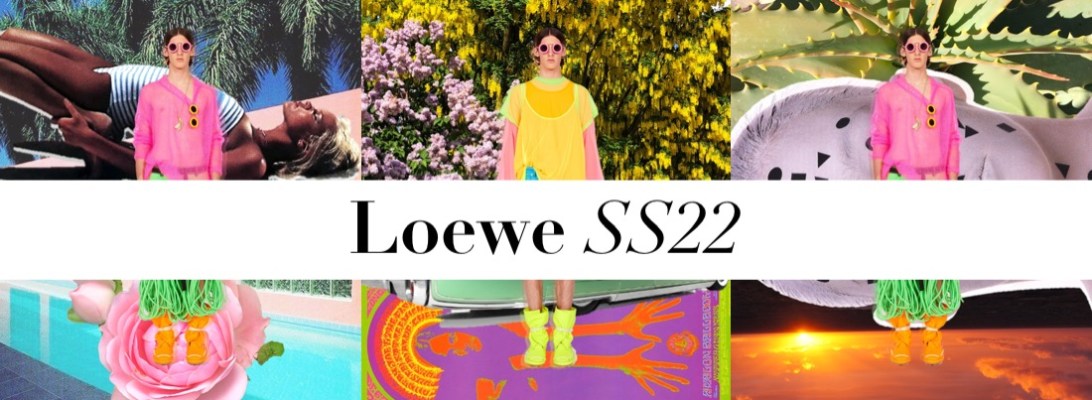
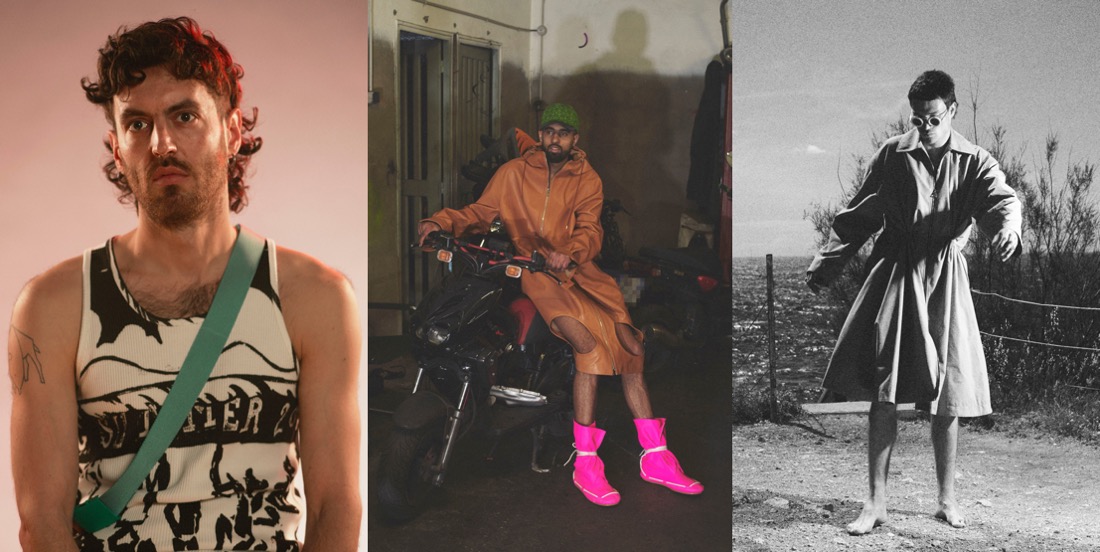
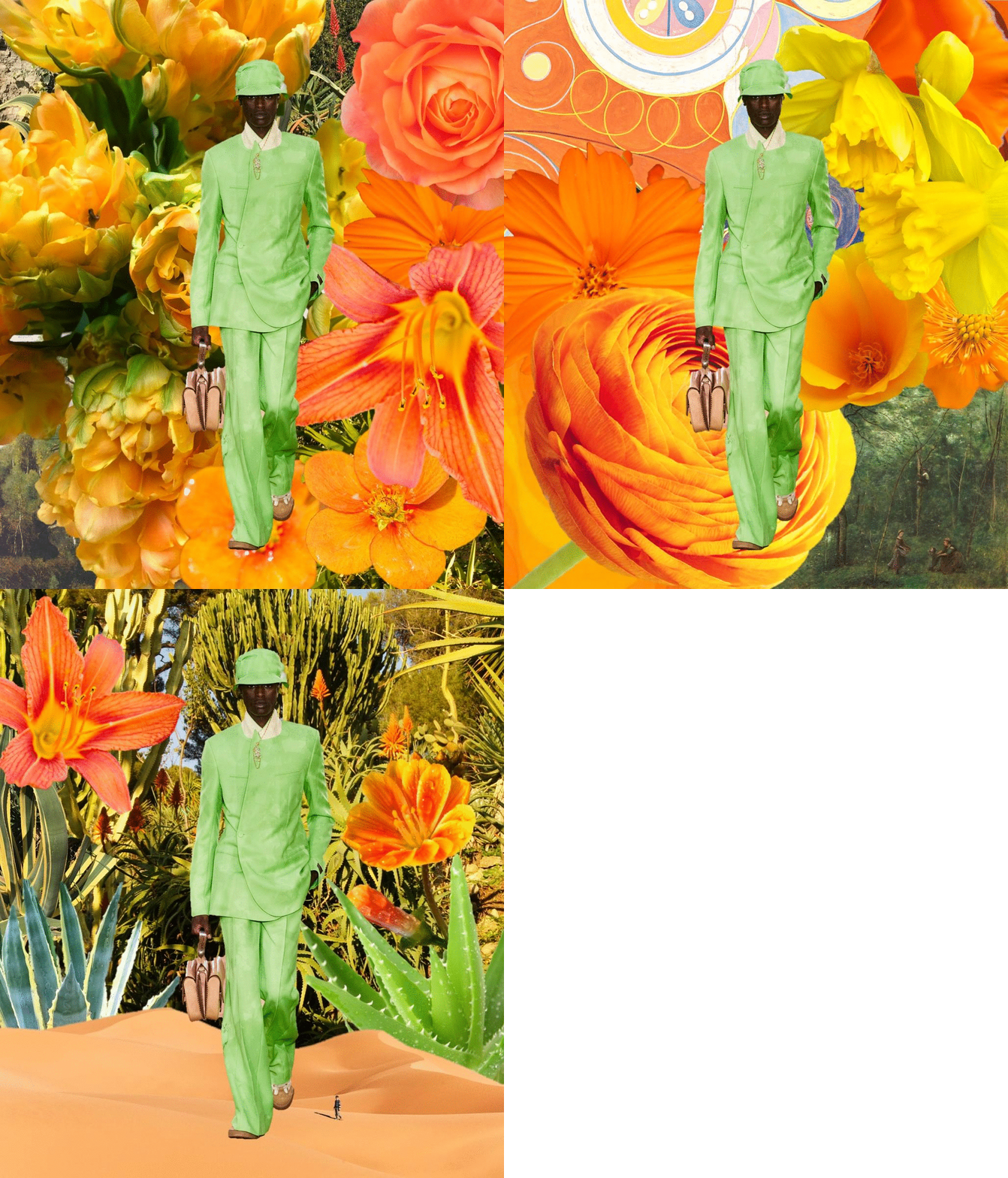
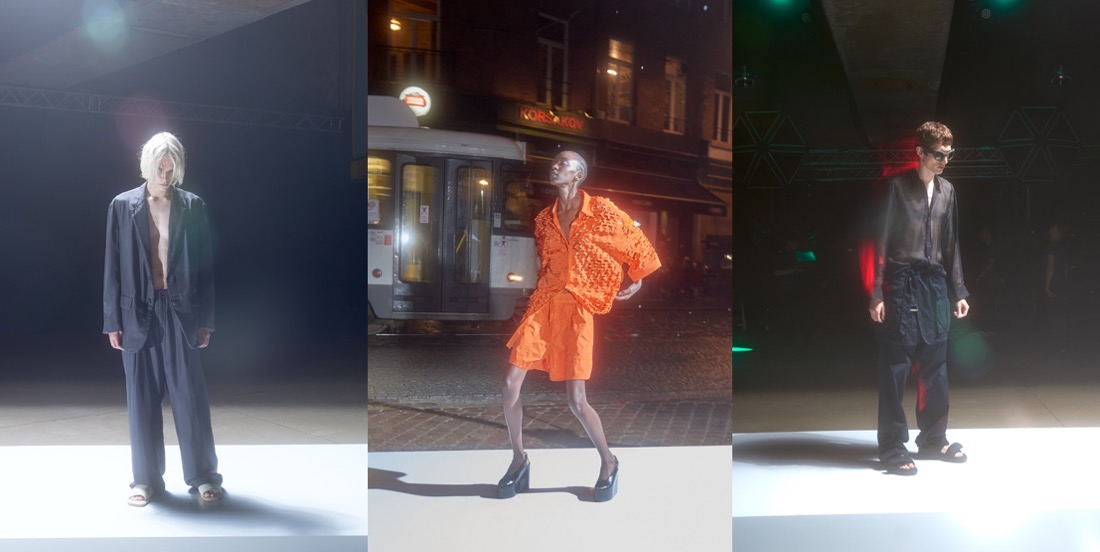
Men’s – Rave, Club, Have Fun. Loewe SS22

Jonathan Anderson‘s message for spring-summer 2022 is the following: go out, go clubbing, go raving, dance, have fun! And we listen. Inspired by the joy of nightlife and the freedom of club culture, his ecstatic new collection for Loewe is shot by David Sims and presented in book alongside a sister publication featuring the work of artist Florian Krewer. This season, shapes are both abstract and straightforward, meanwhile colours explode in a riot of saturated hues, high octane neons and acrylic shades. Sports-inspired pragmatism meets fluid forms, setting a party-ready, swinging tone. It’s clear it’s the menswear season of delightful hedonism (just take a look at the cosmic hippies by Rick Owens) – a sort of post-lockdown revenge, with a spiritual, even esoteric twist.

“Live” collage by Edward Kanarecki.

Men’s – Kim Meets Travis. Dior SS22

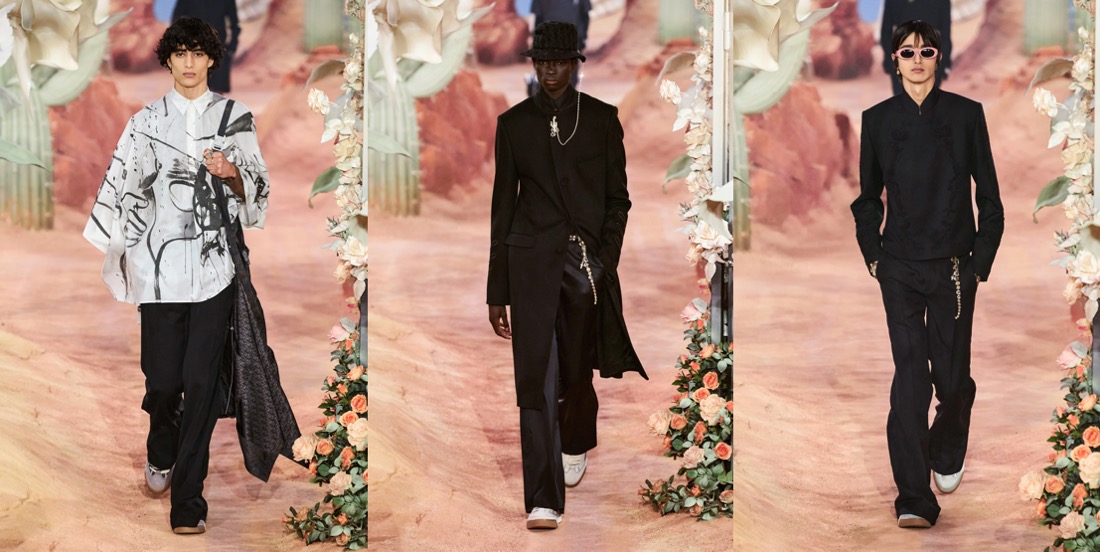
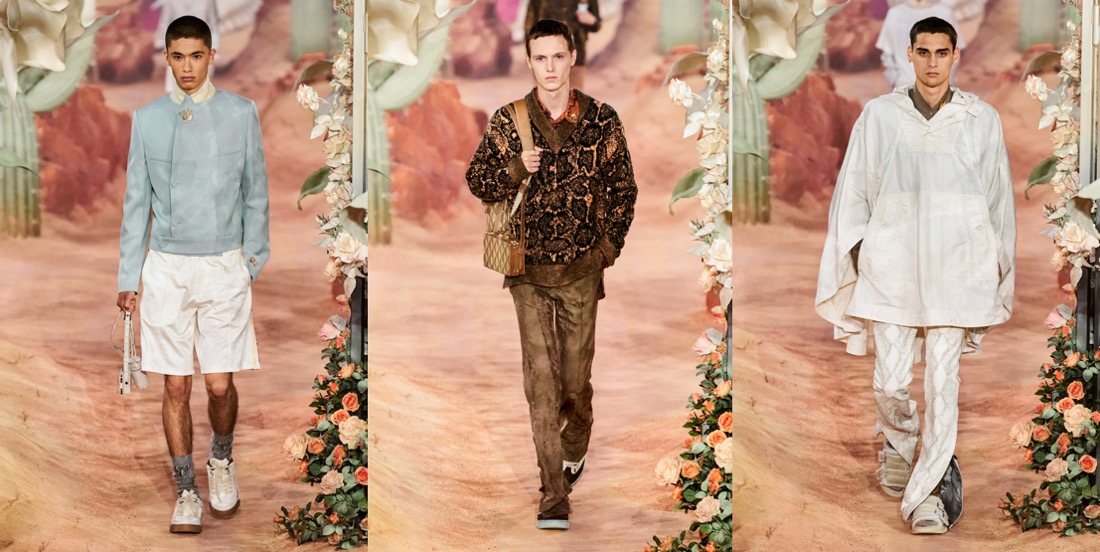
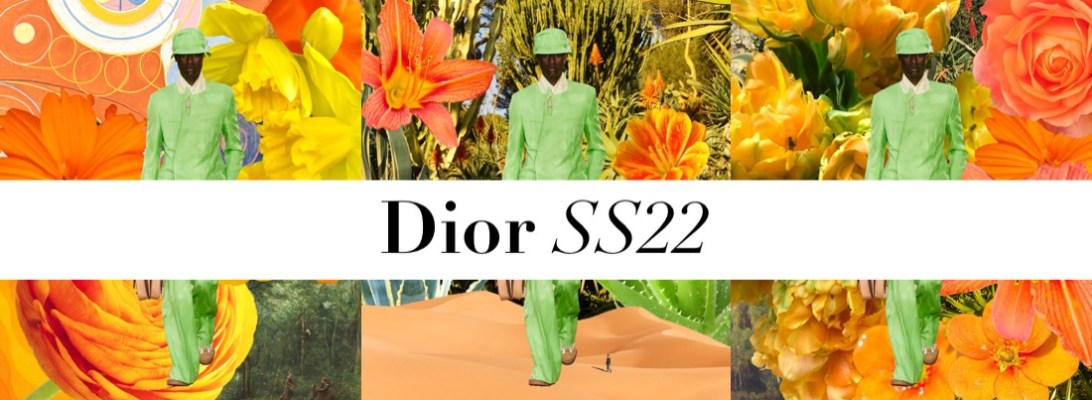
At Dior, Kim Jones has collaborated with some of the finest visual artists out there, from Peter Doig to Raymond Pettibon and Daniel Arsham. But somehow this season’s joint effort with a 29-year-old rapper from Houston made the most sense. Travis Scott is one of the most remarkable musicians in the world right now, a Gen Z idol who embodies the esoteric fashion attitude of social-media culture and who has a child with Kylie Jenner. He is the type of celebrity who sits front row at Jones’s shows. But today the hip-hop community is no longer being dictated to by fashion. They’ve shifted that paradigm, claimed their rightful influence on the industry, and got behind the wheel. Scott’s collaboration with Dior was a manifestation of that evolution: a meeting between a creator and his muse, who hadn’t quite decided who had been cast in which role. “From the stage to the music, it was never just about the clothes but about the experience,” Scott said during fittings in Jones’s Paris ateliers. “It’s how you see and hear it, how you see the music.” He was talking about the live show production—which spliced memories of Christian Dior’s childhood gardens with the cactus-heavy Texan landscape Scott grew up around—but he might as well have been painting a picture of his own fashion understanding. Gifted with an instinct for styling, Scott has a personal wardrobe as distinctive as his sound. “It’s about taste, isn’t it?” Jones told Scott. “Some people have it, some don’t. Luckily you do!” The internet will give you endless get-the-look guides on Scott and his designers of choice, from Jones to Virgil Abloh, Phoebe Philo, and the cult Japanese brands that underline said esoteric fashion culture. Going forward, style tips can all defer to this season’s Dior collection, which was a medley of those influences. Jones explained it was inspired by the artist’s own look as well as his various creative outputs. “We had some hard design sessions for a couple of months,” Scott said. “I would draw graphics and send them to him. We sat down with mad refs, breaking down where we felt like we wanted to take it.” The palette painted a picture of Houston, its pink skies, green cacti, and the browns of the earth that have become trademark colors in Scott’s wardrobe. The silhouette felt rooted in the rapper’s penchant for a slightly oversized top paired with a flared pant, skinny but not tight. Iterations on tracksuit bottoms were particularly strong, tailored to precision and studded with cowboy-like metal buttons down the side. In a nod to that same cultural heritage, Scott had interpreted John Galliano’s saddle bag for Dior as a double bag that felt more rodeo than ever. Another of the artist’s signatures: patterns that evoked the rattlesnakes and desert flowers of the Texan plains. He had cacti-fied the maison’s toile de Jouy, while the ghostly motifs that appeared on tops were his own. “They’re imaginary things that kind of pop up in my head, and I draw them by hand,” Scott said, pointing to the same motifs woven in knits. “These are knitted by hand, which is so fucking nuts. It’s crazy.
Talking about the trips he and Jones had taken to the Dior archives, Scott was clearly in heaven. “Me coming in and being able to have those in my hands…,” he paused, a smile on his face. Later, he effused about the wish-to-reality aspect of an atelier like Dior, which can literally make anything happen. “Making some of your imagination come to life, it’s kind of crazy.” His enthusiasm was visible in the collection, and that’s why it felt like such a shrewd match for Jones. Rather than applying an artist’s work to his own garments like he’s done in the past, this was the designer inviting his perhaps most influential Dior client to take an active part in the creation, from silhouette to motif and surface decoration. It was organic.

“Live” collage by Edward Kanarecki.
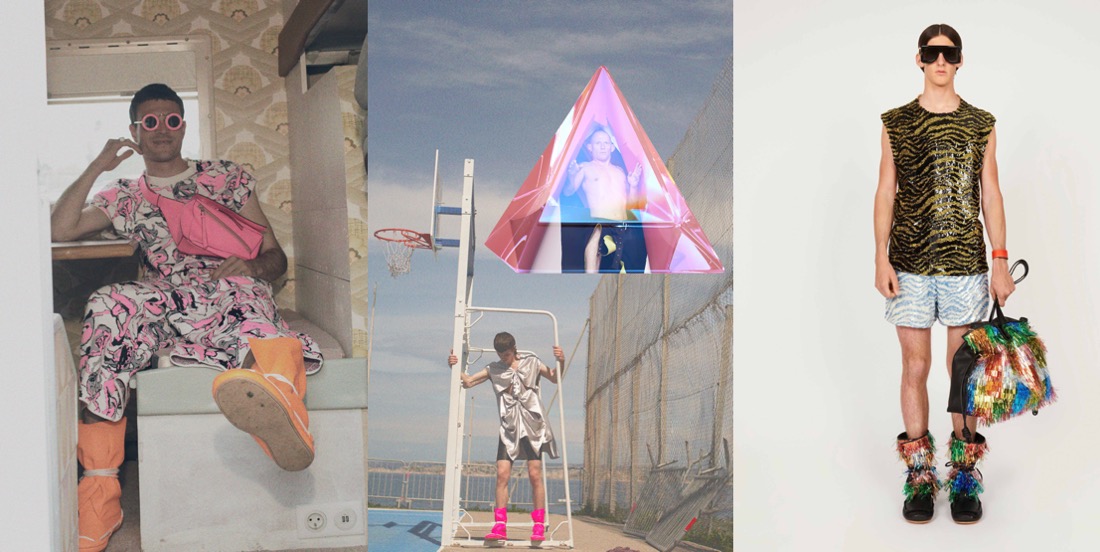
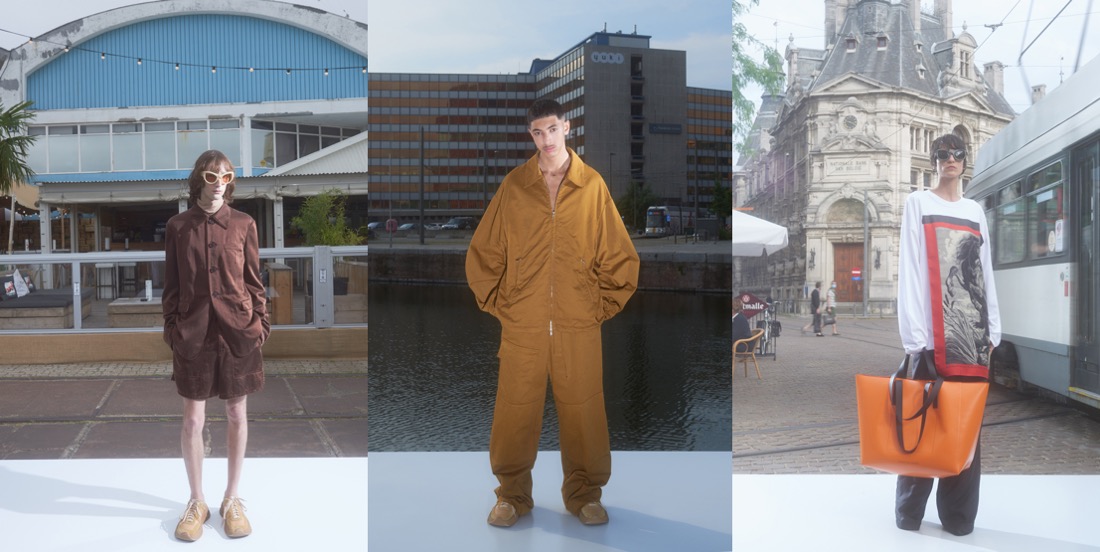
Men’s – At Home. Dries Van Noten SS22

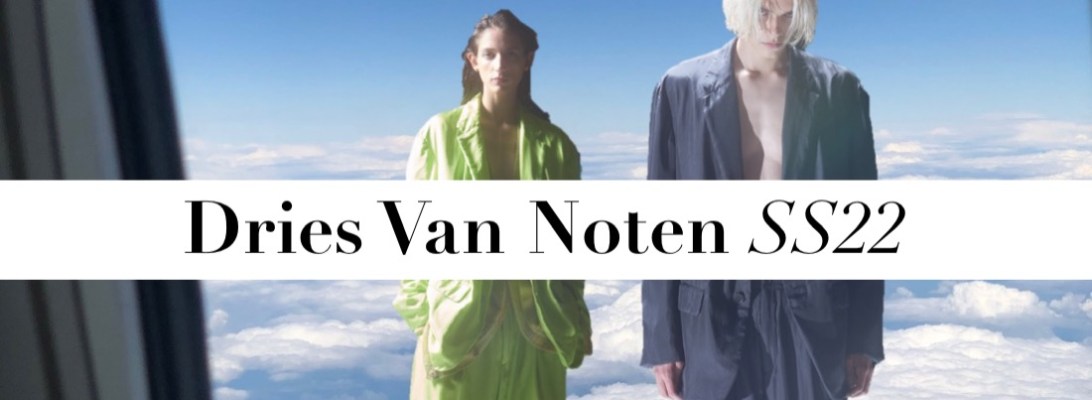
We were in, I think, the fifth lockdown here in Antwerp when we started on this collection. And when I talked with my team to discuss what it would be about, it was really about outbursts: We’ve had it, and now we want to have fun, we want to party, we want to enjoy things, we want to go into the city and we want to see people.” So said Dries Van Noten, laying out his manifesto for a sensually hedonistic season while simultaneously echoing the Peter Fonda–sampled intro to Primal Scream’s “Loaded”, the soundtrack to the line-up’s excellent collection video: “We want to be free to do what we want to do!… And we want to get loaded! And we want to have a good time! And that’s what we’re gonna do!” Without inquiring as to whether Van Noten and his team got loaded, they clearly had a blast putting together this lovingly local, energy rush of a collection. That team made a shared folder of smartphone photos taken around the city, from industrially scenic crane landscapes to strobe-lit club shots via moody pool hall milieus, which were integrated as prints on paneled parkas and silky shirts. These images were then accented against a ’70s vintage Antwerp municipal logo and etchings taken (with permission) from two of Flanders’s most famous sons, Breughel and Rubens. The collaged images on the garments were shot against a backdrop of more city locales, to 56 of which Dries and his team dragged a white podium to make the look book. Of them all, the pink-tabarded school trip in look six proved ultimate evidence that these were not scenes just lazily projected in post. Van Noten said his attitude to this collection was: “What is menswear? What is womenswear? Just throw it all together and take what you like.” Conventional dichotomies were rendered attractively void in “womenswear” looks featuring tailored, overlong, and overdyed pants in English mohair over slides, and an awesome “menswear” camo parka and suit in 35 gram silk plongée lined in cotton voile. Geographically specific to Antwerp, but tolerantly nonspecific in terms of the geography of received gender norms, this was a collection that did indeed look great to get loaded in.

Collage by Edward Kanarecki.