Land Girls. Max Mara SS24

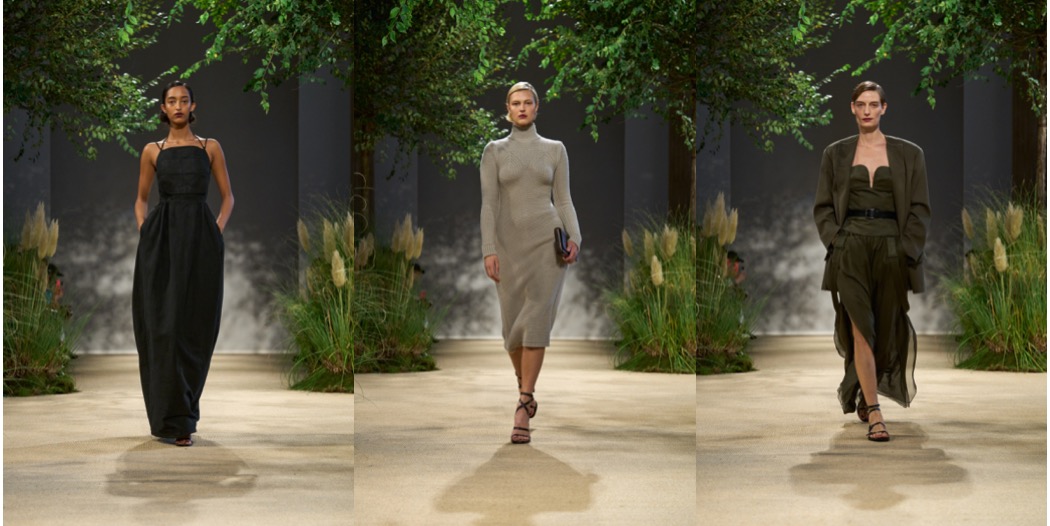
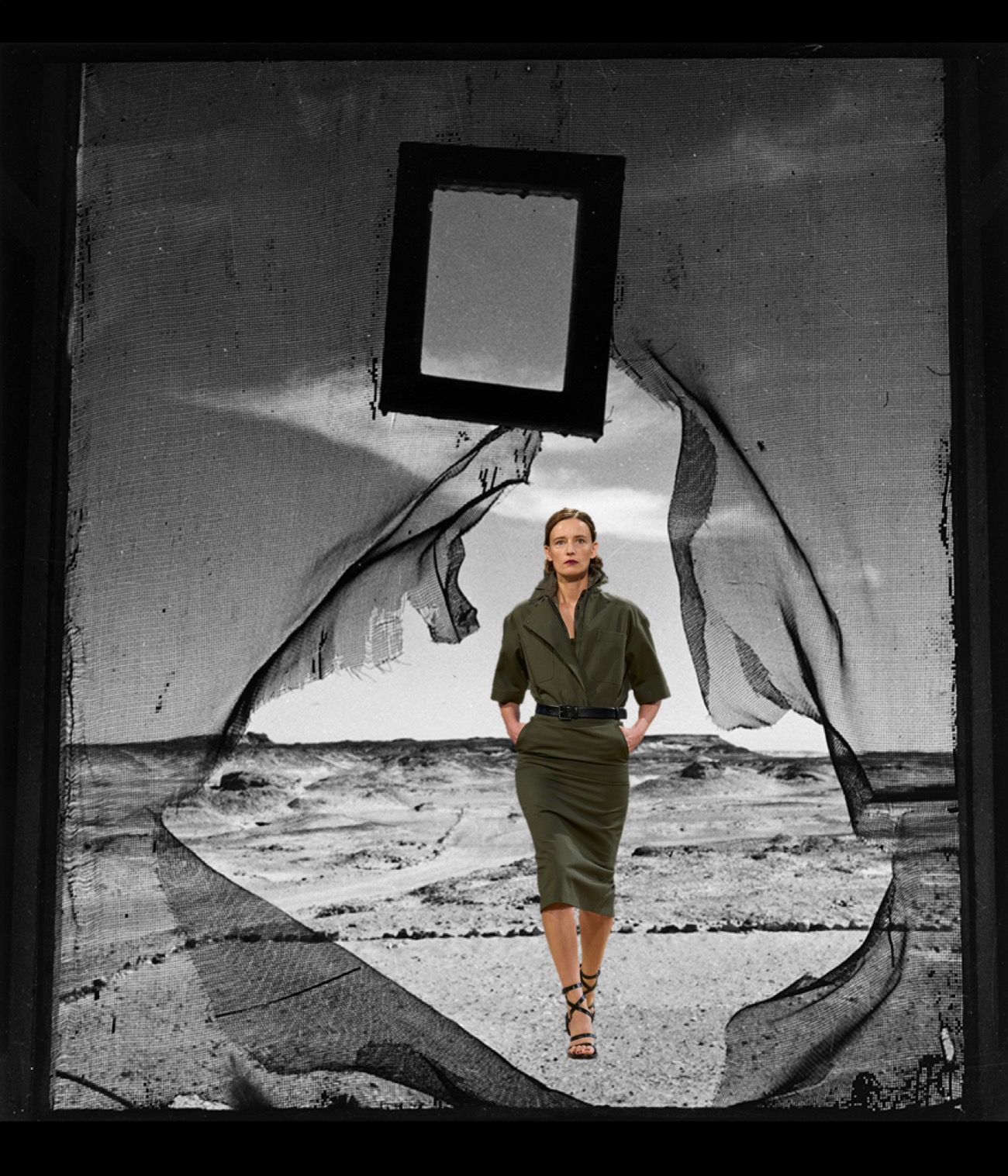
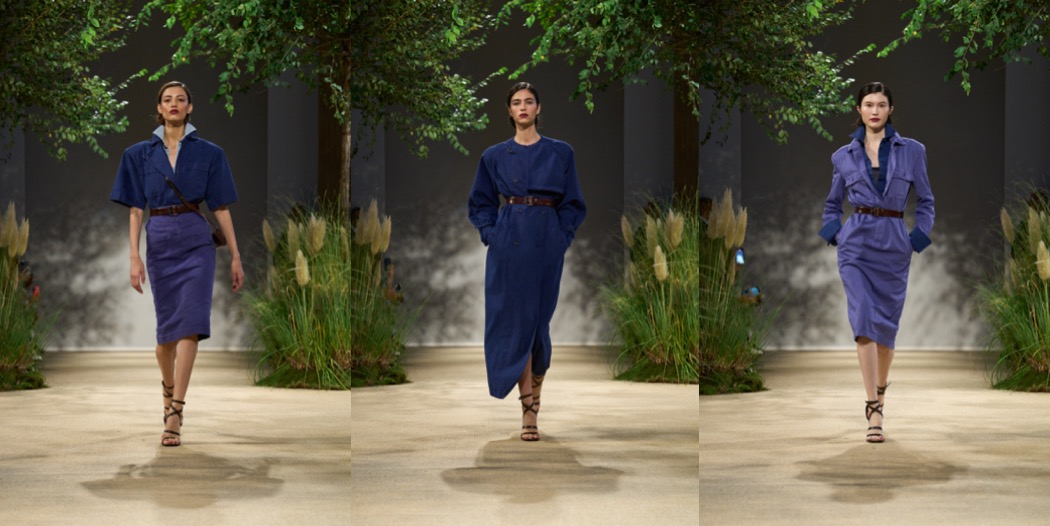
This season, we see designers reflecting on global socio-economic unrest by looking back at the war-time moments of early 20th century. That certainly happened too at Ian Griffiths‘ Max Mara. Formed during World War I and mobilized anew for World War II, the Women’s Land Army recruited up to 80,000 females to farm while Britain’s men took up arms. Along with the women working in munitions factories, as nurses, in auxiliary military service, as air raid wardens, and in many other vital non-combatant roles besides, the so-called Land Girls were a vital part of the war effort. By fortunate necessity they also in part catalyzed the emancipatory precedent for women to take their place in the workforce. The Women’s Land Army proved a fertile source of inspiration for Griffiths. The spring-summer 2024 collection that flourished from it was cultivated rather than rustic, but it contained many authentically researched touches while also working wonderfully as a luxuriously utilitarian woman’s wardrobe for now. Bill Cunningham bleu de travail in various garment-dyed shades of cotton was applied to long Monty Don-style work jackets, backless narrow-cut apron-front pencil dresses, double-kneed narrow-cut work pants, and bellows-pocketed and epauletted shirt-skirts and overalls. The palette pivoted to rosy pinks as Griffths pruned his hemlines high with patch-pocketed hot pants under a tunic and a romper. Gorgeous leather-edged canvas gardening bags and bridle-leather binocular cases were tucked under the arms of high-waisted green blousons and washed cotton wide-lapel varieties of Max Mara’s heritage-specialism coat. A wide-gauge knit jersey in green featured irregular cotton patches on one shoulder and the opposite arm in tribute to the source-era’s make-do-and-mend ethos.
Collage by Edward Kanarecki.
Don’t forget to follow Design & Culture by Ed on Instagram! By the way, did you know that I’ve started a newsletter called Ed’s Dispatch? Click here to subscribe!

NET-A-PORTER Limited

Enlightenment. Max Mara AW23

Who would have thought that in 2023, Max Mara would feel so relevant and desirable. It’s ironic especially since Ian Griffiths looked back a couple of centuries in search for this season’s inspiration. “What’s the relevance of the 18th century to today?” To find the answer, Griffiths engaged his tried and tested creative protocol of fixing upon one historically sidelined but contemporaneously central female creative from the period he was scrutinizing to act as a personification of his thesis. In this case it was Émilie du Châtelet, a burningly intelligent French marquess mathematician who translated Isaac Newton into French – correcting a few of Newton’s errors on the way – and was for years passionately beloved by Voltaire. Griffiths seized upon du Châtelet as emblematic of a period of enlightenment in which female intelligence was increasingly acknowledged by the patriarchy, even as the female wardrobe remained constricting, apotropaic, and controlled. He said: “the fashion at the time was completely not enlightened. So I was imagining how she might have dressed if she had freedom to and how that would translate into today.” That meticulous scene-setting translated into a Max Mara collection that was newly romantic. It either adapted 18th century menswear pieces, like the opening teddy banyan coat, or modernized 18th century womenswear – like look six’s miniaturized pannier skirt in camel brocade with a fishtail detail at the back hem. A long rib knit dress coat and a trio of teddy coats were worn slung over the right shoulder courtesy of an inbuilt strap, which Griffiths said was a contemporary military styling trick, but for men only. Pannier pockets were also used to bolster a double-fronted gray cashmere tunic dress and a black brocade skirt worn over a patent corset belt and a sheer top. Evening pieces came with detachable Watteau backs. Griffifths offered Max Mara versions of contemporary paradigm garments that included a dreamy camel parka, a full length liner coat, and a velvet bomber with frogging. Some models teamed their lug-soled boots with shorts. This was not a wardrobe Émilie du Châtelet would have recognized, but she would, you suspect, have been into it.

Collage by Edward Kanarecki.
Don’t forget to follow Design & Culture by Ed on Instagram!

NET-A-PORTER Limited