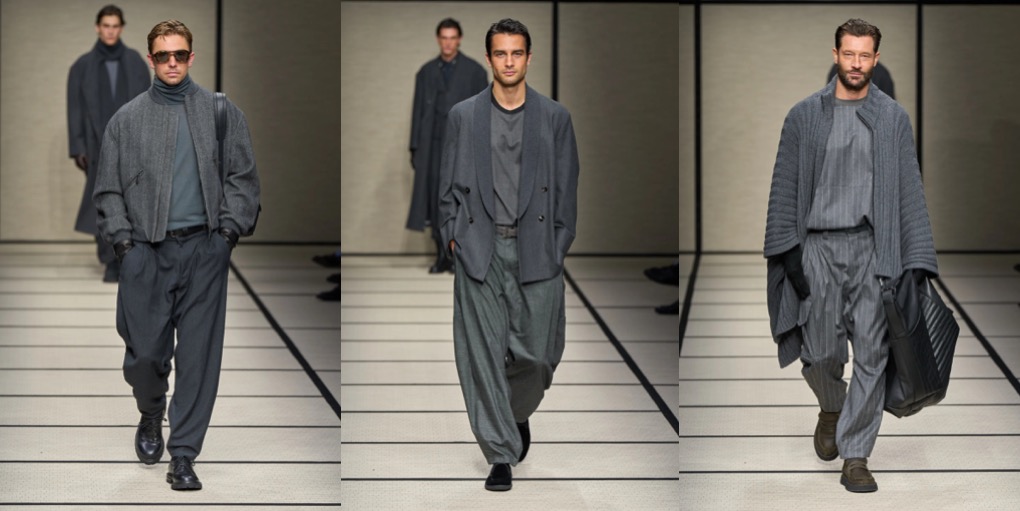
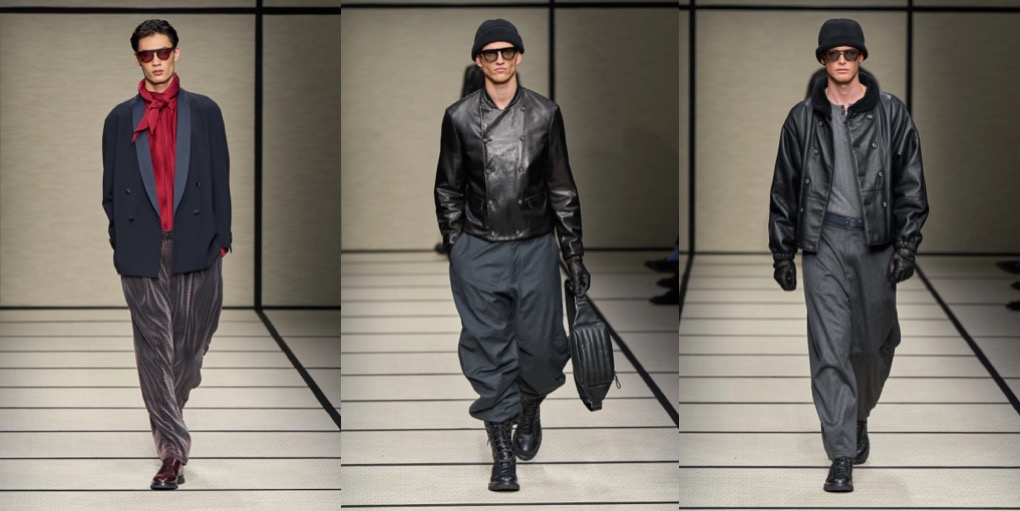
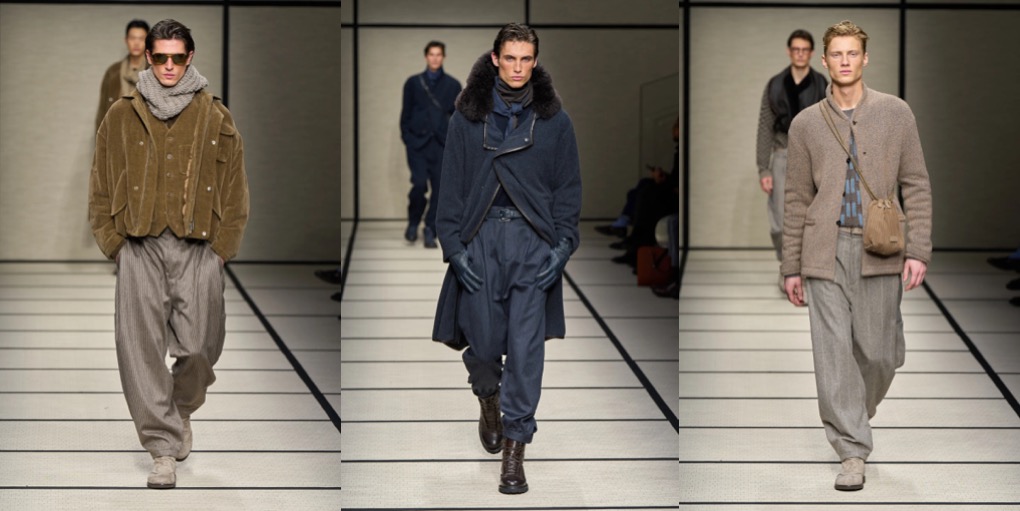
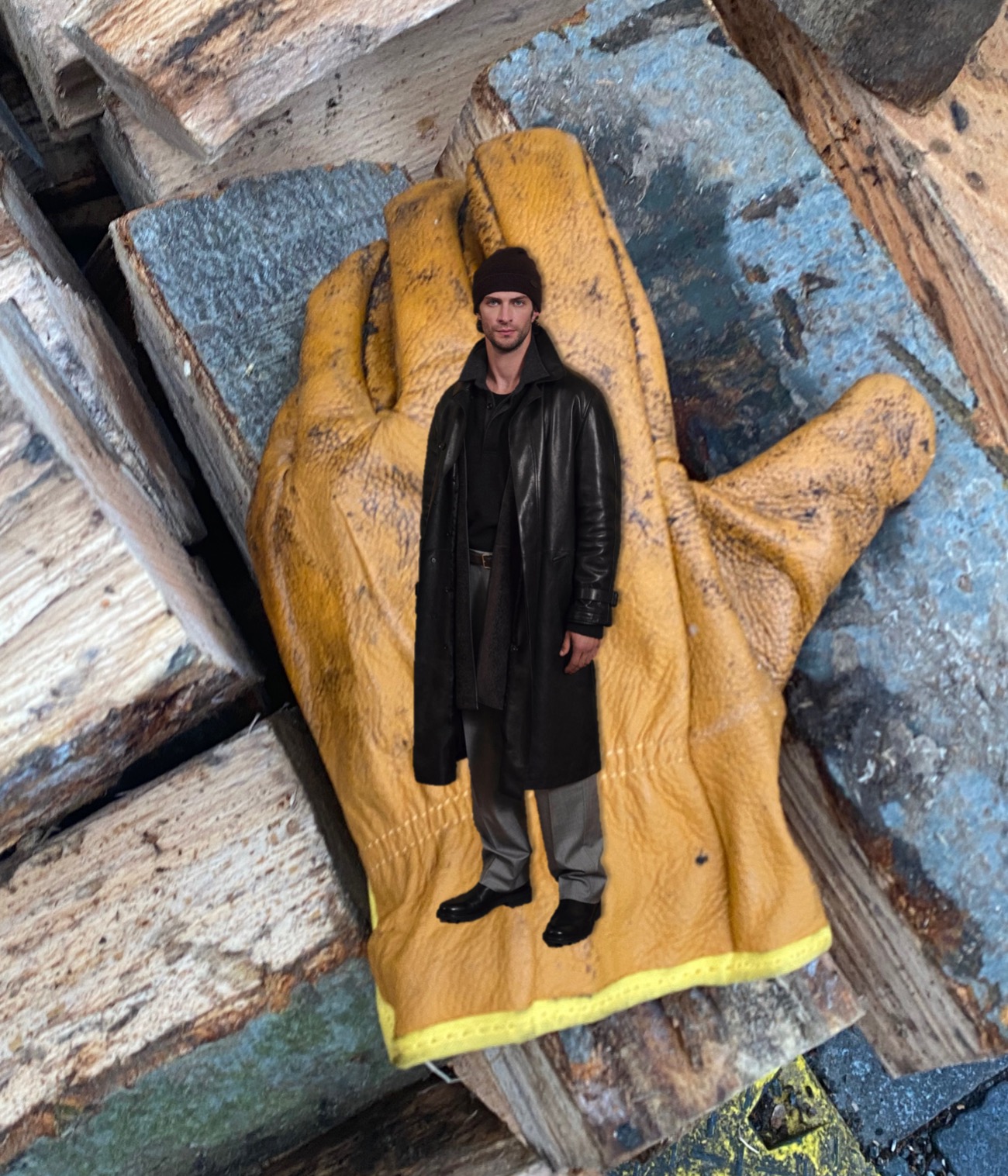
Let’s be honest: 99.9% of menswear designers in Milan this season look up to the Italian maestro: Giorgio Armani. As they should. He’s one of the last living legends. And he just doesn’t stop.
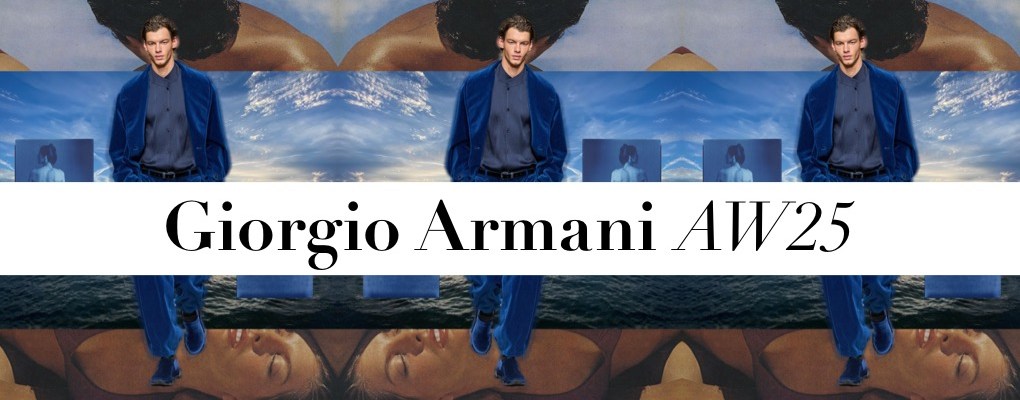
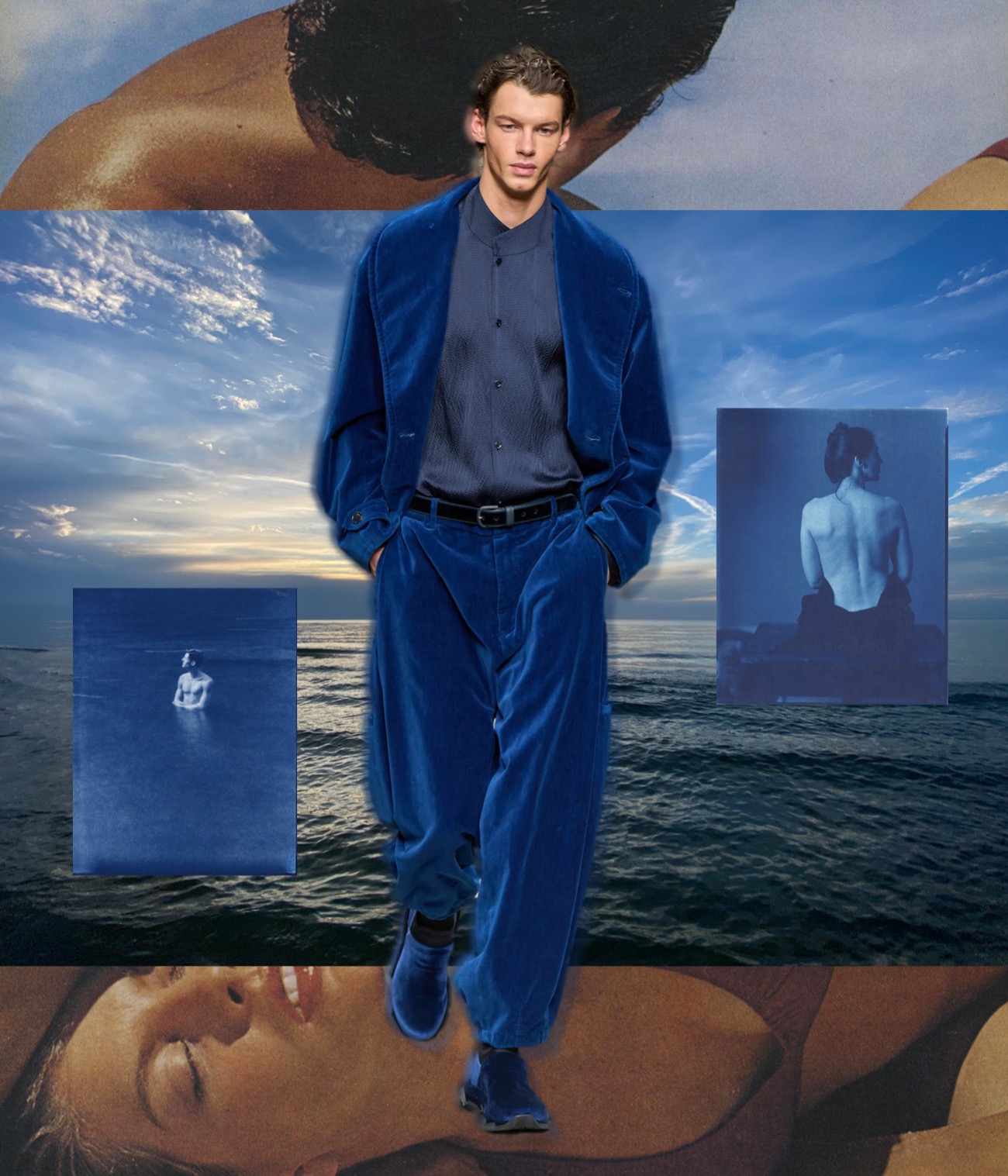
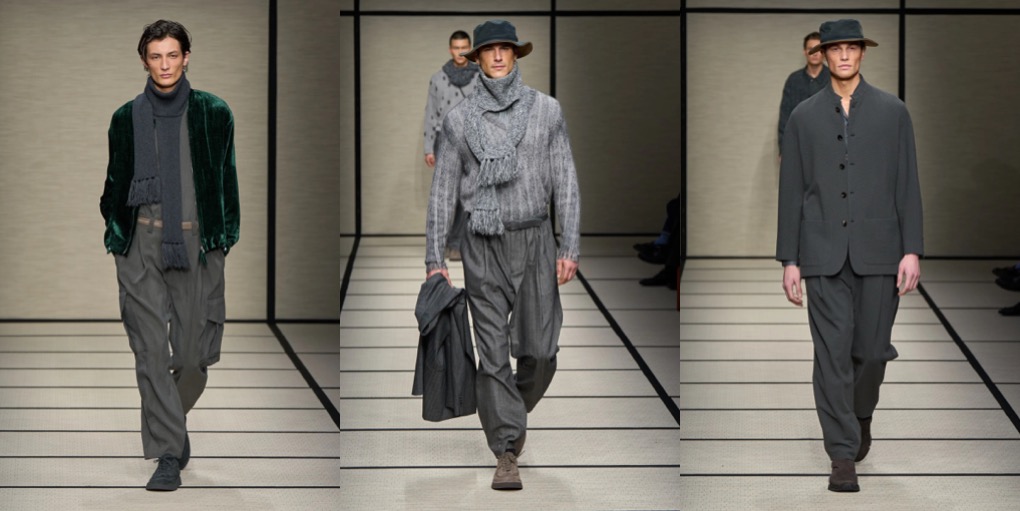
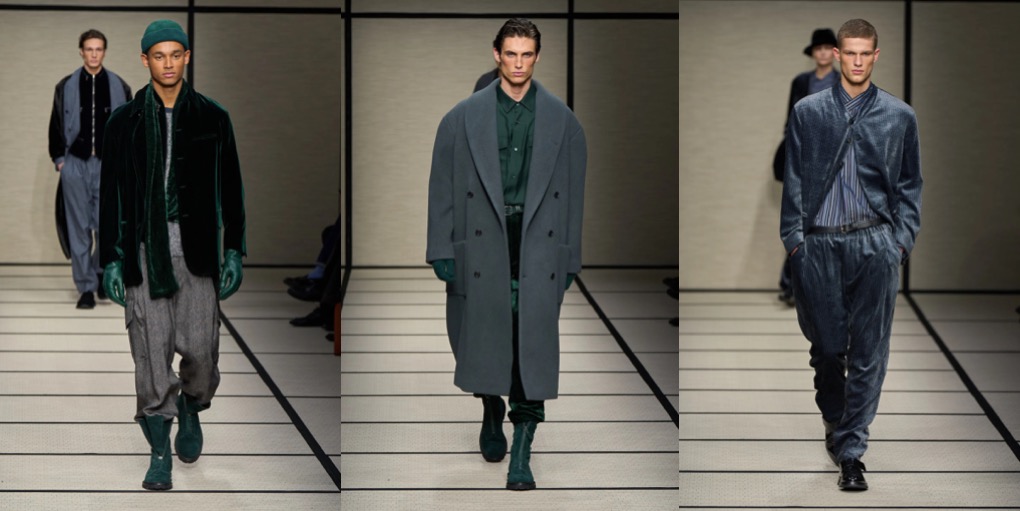
The designer’s autumn-winter 2025 collection was just sublime. Gorgeously weathered leather jackets looked as if they could have been adapted straight from Armani’s archive on display in his Silos space in Milan, worn this season against ruby velvet shirting and roomy gray trousers in loden-thick wool. Oh, the velvet! The best kind of: meaty, but cascading. Just sumptuous, whether in electric ocean-blue or deep, deep burgundy.
Armani’s clothes look credibly contemporary and quintessentially Milan. Forever.
Collage by Edward Kanarecki. Don’t forget to follow Design & Culture by Ed on Instagram!
Hey, did you know about my newsletter – Ed’s Dispatch? Click here to subscribe!
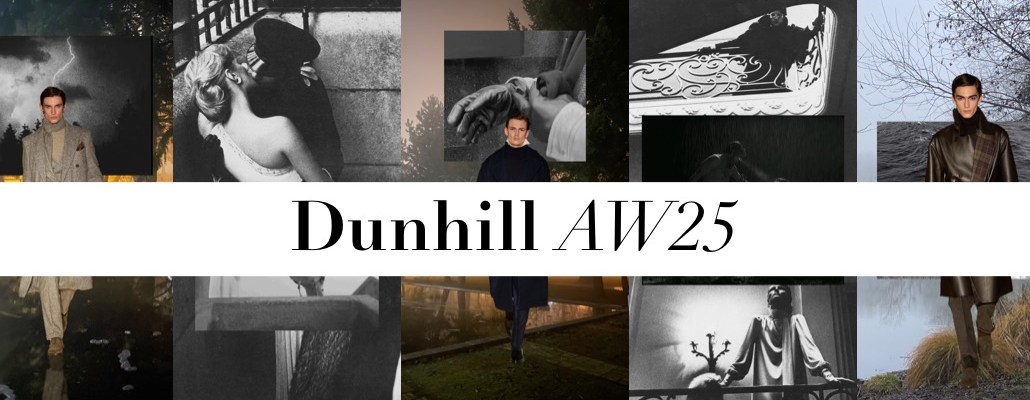
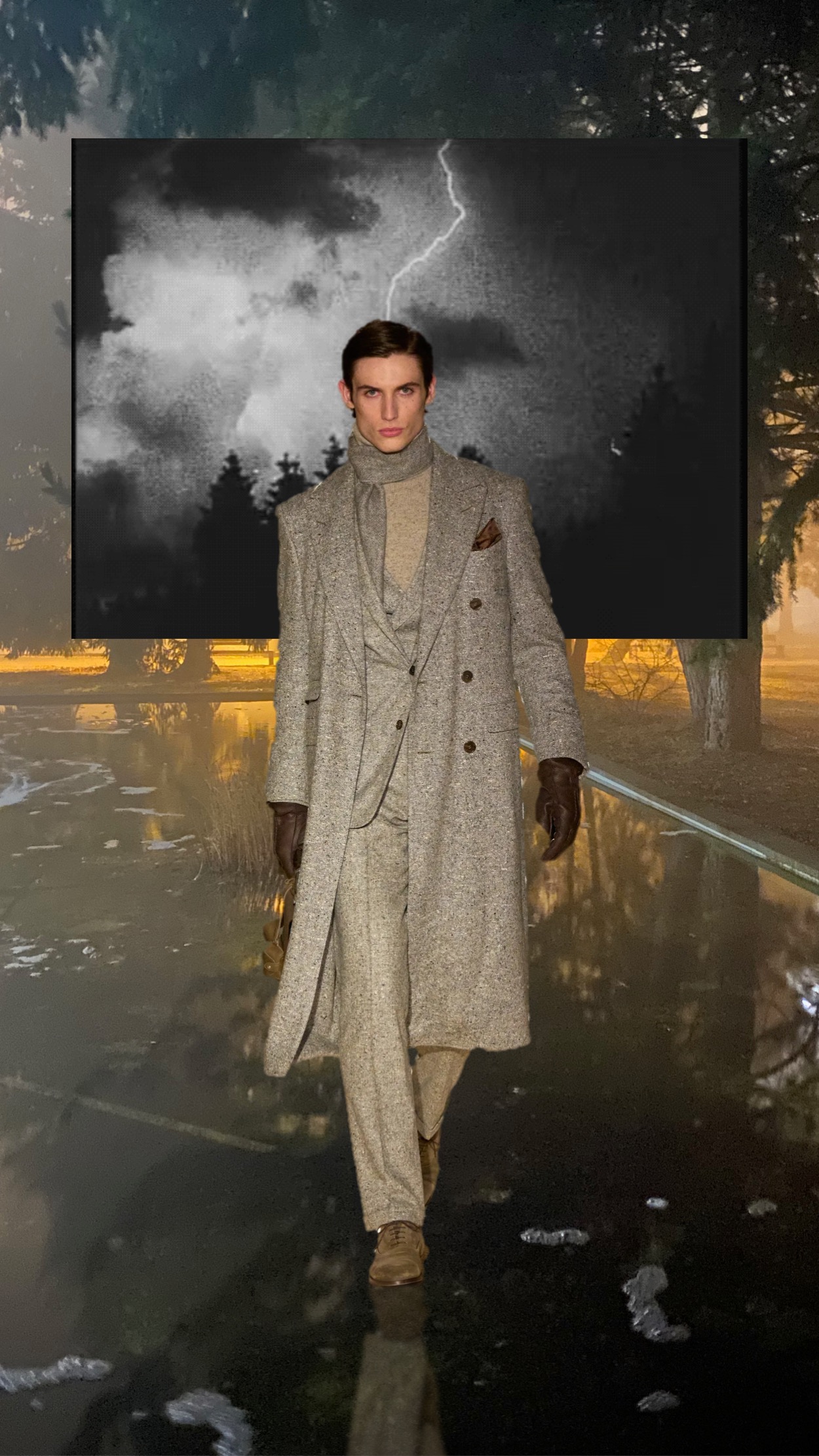
Simon Holloway’s revolution at Dunhill makes one want a bespoke suit. The designer’s knack for radical elegance in menswear is both: seductive and aspirational.
Especially when we’ve got this ultra-fine collection formal car-coats and blazers, crafted from high-end British traditional fabrics (think Melton, Donegal tweed, wool whipcord, cashmere tartan) into lighter versions – and tailored with a softer, more supple construction. Holloway is also an accessory guy: leather driving gloves are his signature, just like a proper velvet bow-tie.
Doing traditional, occasion-driven menswear without veering into archaic territory isn’t easy, but Holloway has a knack for striking that balance. The autumn-winter 2025 collection felt fresh and cohesive, and its rigor – absolutely handsome.
Collage by Edward Kanarecki. Don’t forget to follow Design & Culture by Ed on Instagram!
Hey, did you know about my newsletter – Ed’s Dispatch? Click here to subscribe!
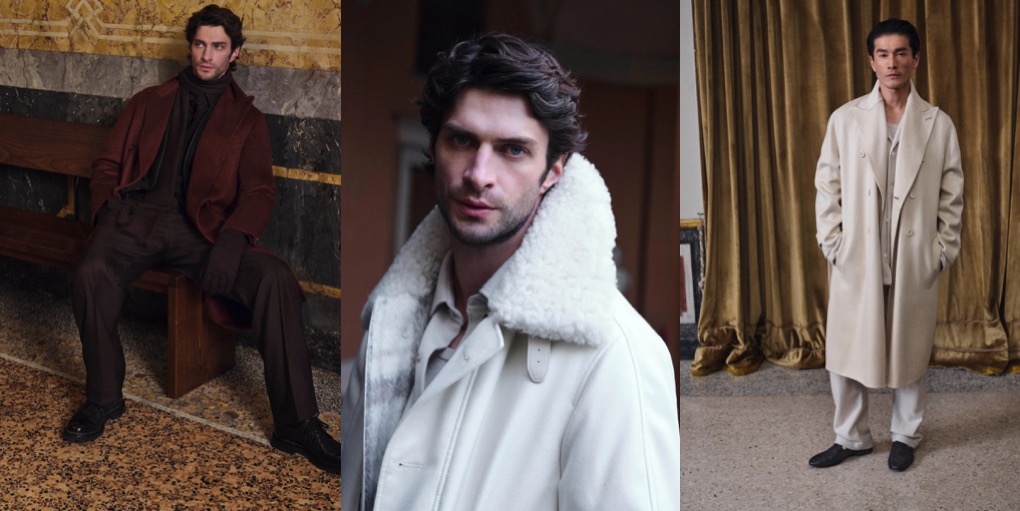
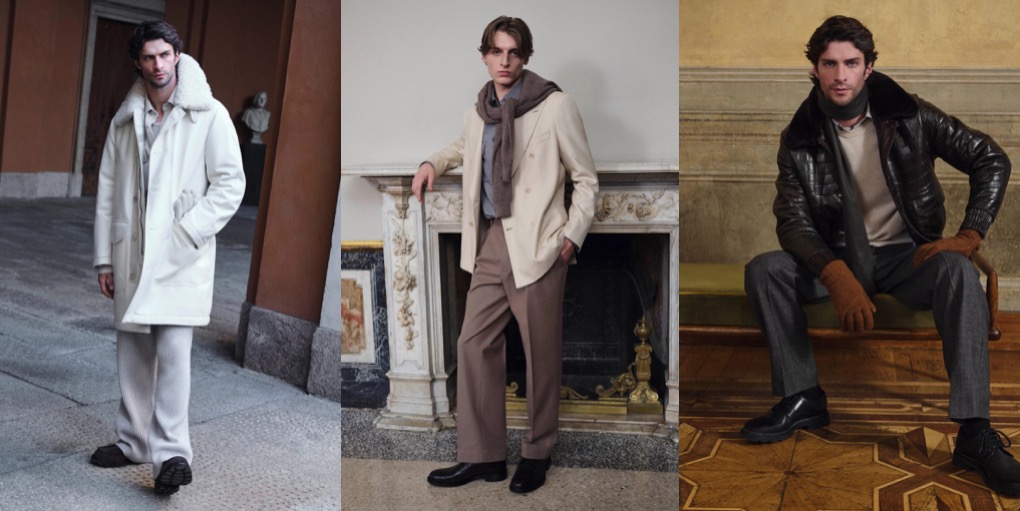
It seems to me that no one embodies the art of sprezzatura in Milan’s menswear quite like Norbert Stumpfl at Brioni. Poignant, laid-back, seductive, and undeniably luxurious, the Austrian-born designer’s vision for the Roman house ticks all the right boxes for me. The men featured in the autumn-winter 2025 lookbook are draped in sumptuous shades of ochre and burgundy, exuding irresistible chic in their cashmere coats and loosely tailored, pyjama-like suits. The thin, fringed scarves, tied nonchalantly around their necks, lend the collection an air of refined cool. Brioni is for the man who brunches at Giacomo Bistrot and dines at Il Solferino, yet never takes himself too seriously.
Collage by Edward Kanarecki. Don’t forget to follow Design & Culture by Ed on Instagram!
Hey, did you know about my newsletter – Ed’s Dispatch? Click here to subscribe!
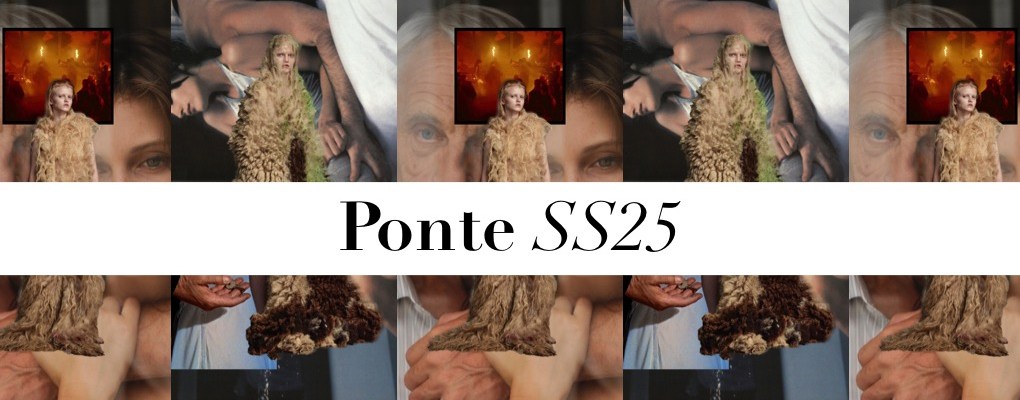
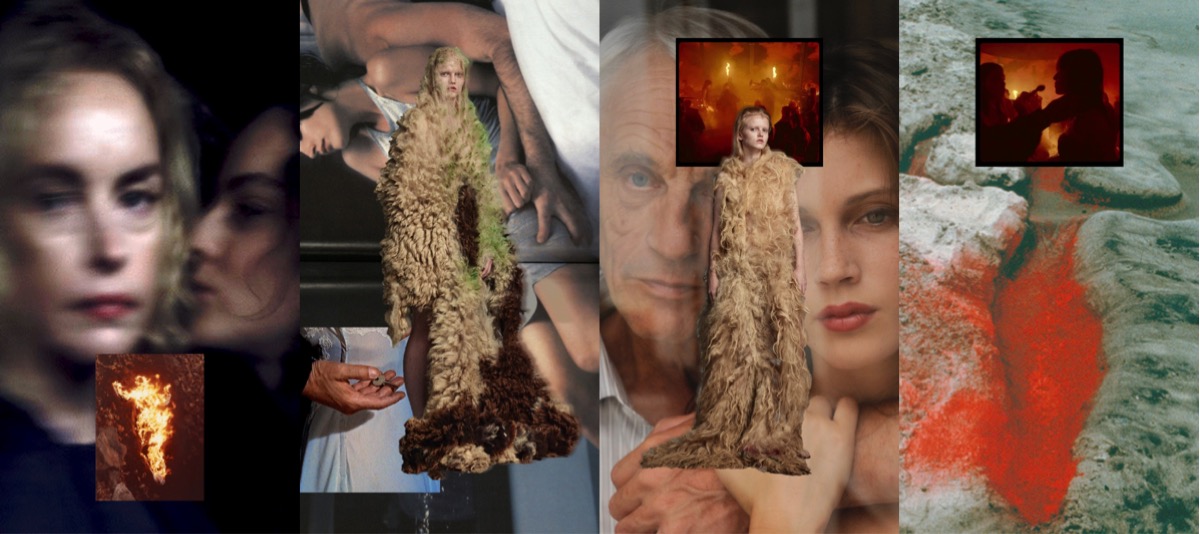
Ponte is so much more than a fashion brand. Although it focuses on clothes, these garments have more to do with a Meret Oppenheim-kind of surreal approach to applied arts than, say, haute couture (although some of the techniques conceptualized and materialized by the founder of the brand are just unthinkable). But I’m not sure Harry Pontefract, the London-based creative who views this project as “ongoing body of work” that dates back to his days at Central Saint Martins, would want to call it an art project. Ponte is… Ponte.
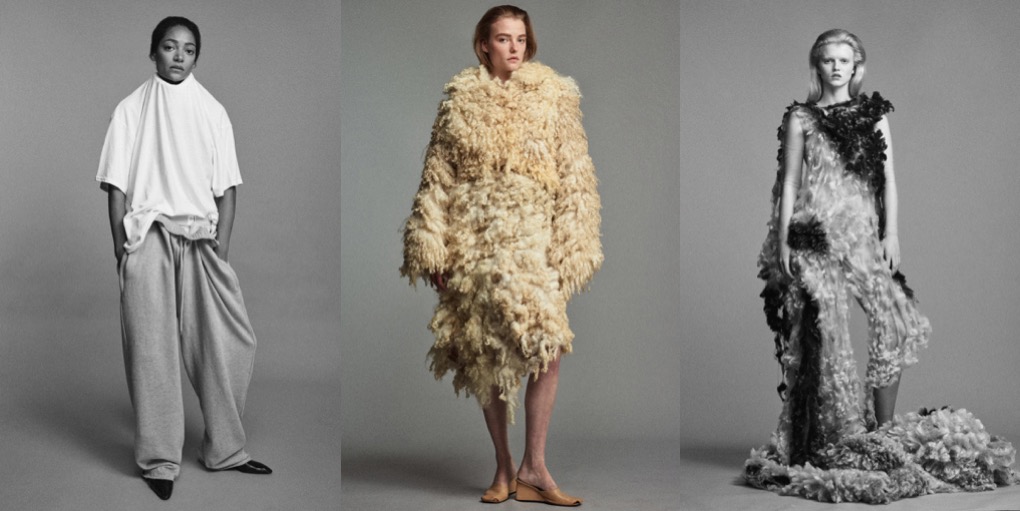
“Contradictory” seems to be a fitting term that classifies Pontefract’s practice. He might describe a look a “sort of a Chanel Catherine Deneuve suit” or “the most wrong cocktail dress in the world,” but at the same time he values the power of interpretation and believes that how people “read” his designs reveal much about themselves. The spring-summer 2025 collection can definitely be read in various ways, especially in terms of biography the object – in this case, the provenance of used materials in these striking, body-transforming coats, shawls and dresses. Look one was made with raw fleeces delivered from known sources. All the shearling came from a business down the street from the designer. The textile used for the pink shirt and pants is the lining of military sleeping bags. Vintage M65 army jackets were repurposed into not-so-basic suits. “Once you start to take them apart and they have the memories of whoever’s been wearing them in all the seams and everything, they’re such loaded garments. Even just doing something in that color, never mind out of old jackets, is going to be loaded”, Pontefract says. In the end, clothes are about codes and signals. I think not many contemporary designers have that in mind anymore. Another thing that stuns about the creative’s approach to fashion is his deep interest in the ephemeral. A dress painstakingly covered in 24 karat gold leaf and hand-felted shearlings (which were sewn to sheer tulle… mind-blowing!), will change and deteriorate in not such a long time, making one think of Ana Mendieta’s “Silueta” series. There’s something animalistic about this collection. Even brutal: like the sheepskin body covering the entire body in a intriguingly fetishistic way. “It’s human nature and it’s primal, that’s what I’d say about the collection“, summed up mastermind behind this absolutely transfixing brand.
Collage by Edward Kanarecki. Don’t forget to follow Design & Culture by Ed on Instagram!
Hey, did you know about my newsletter – Ed’s Dispatch? Click here to subscribe!
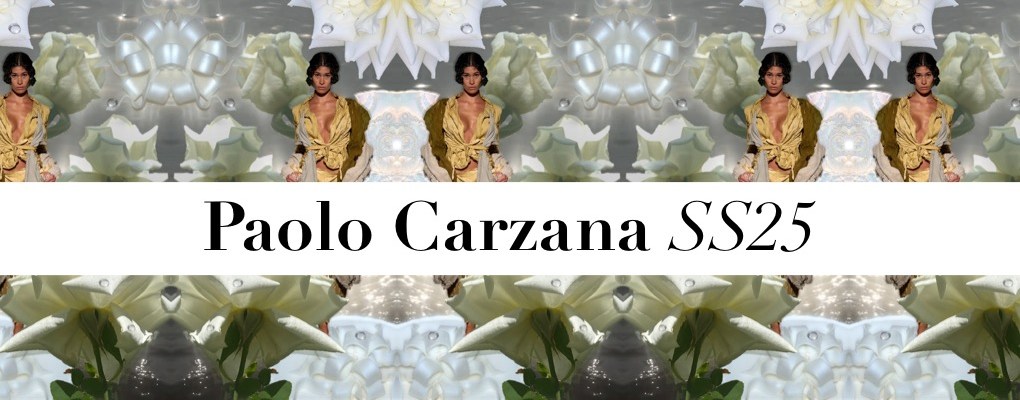
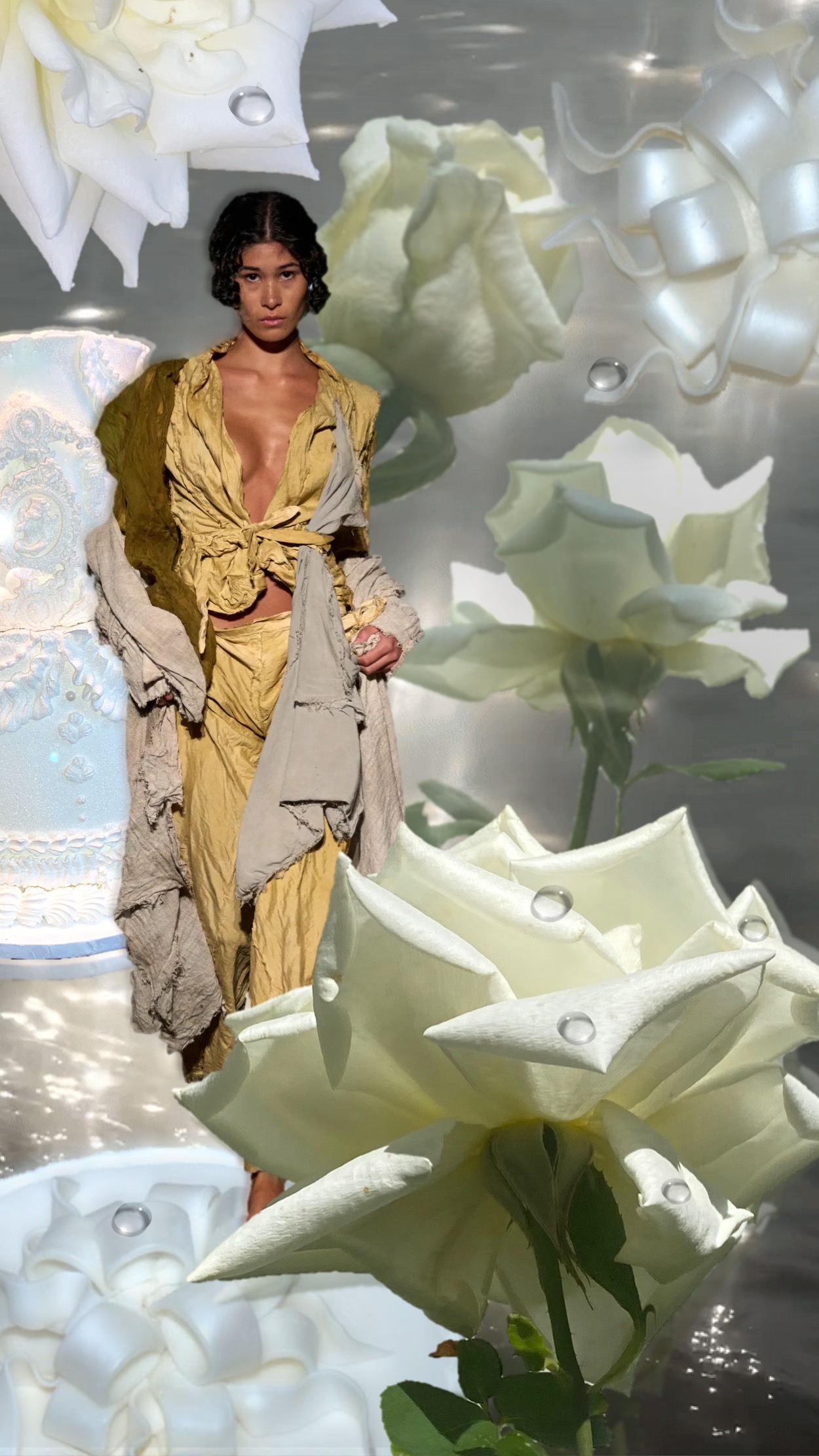
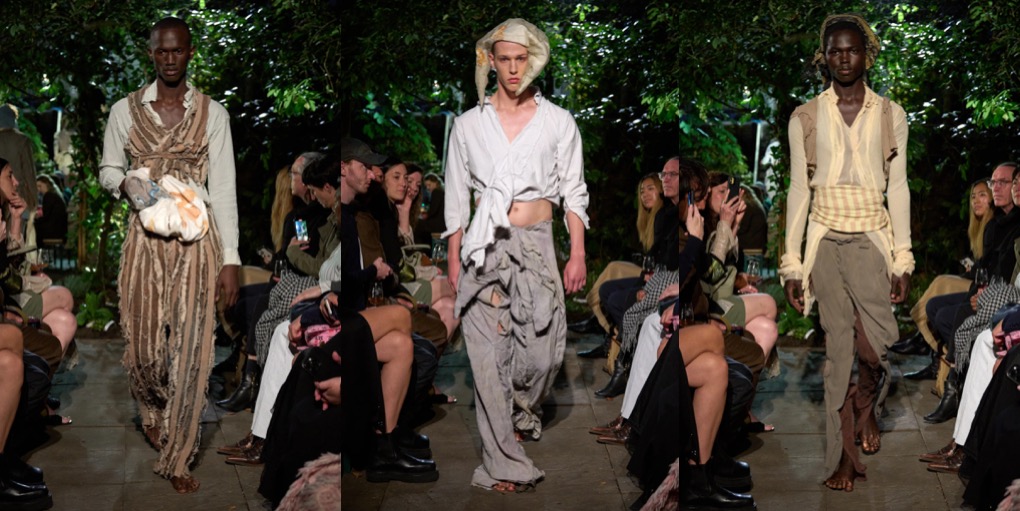
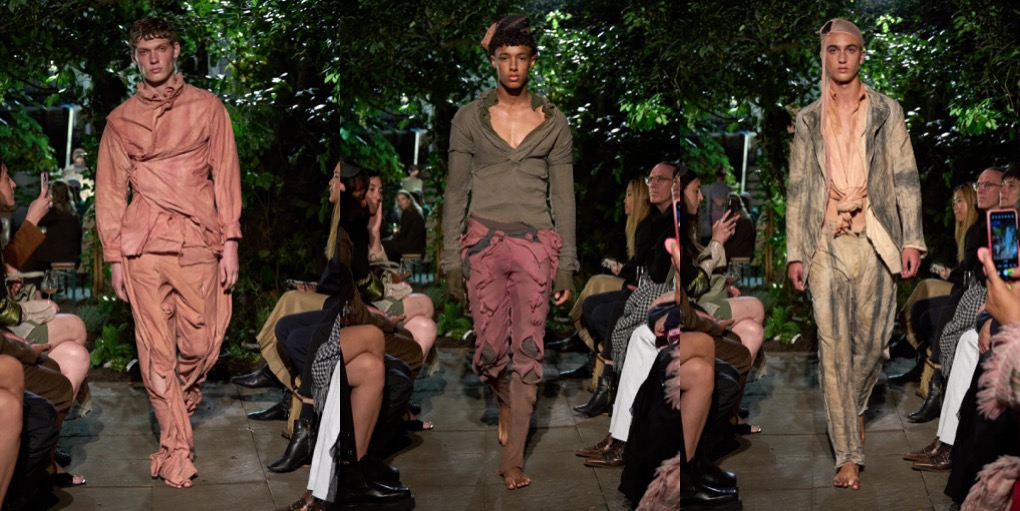
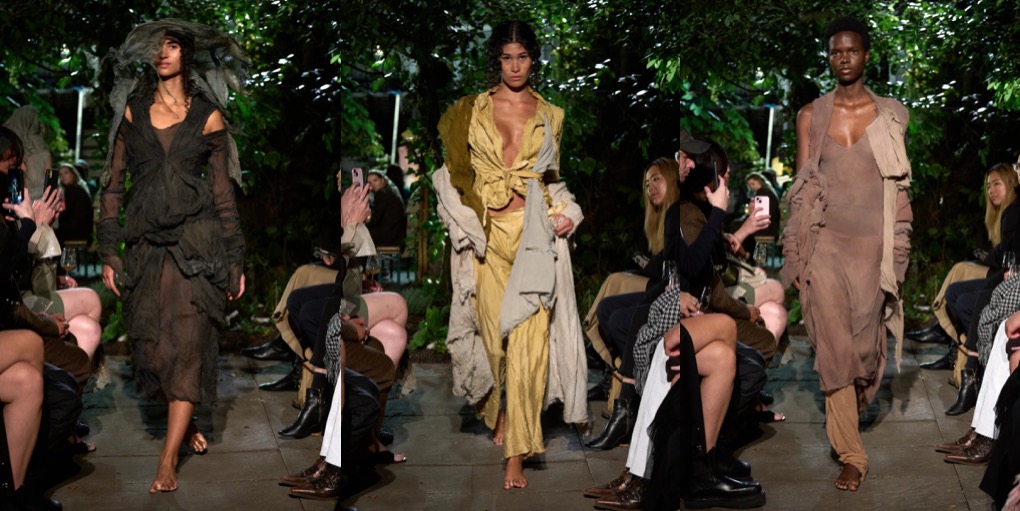
As we’re approaching 2025, everybody seems to look backwards at the last quarter of the century in fashion. But let’s also take a look at the future. Paolo Carzana, the London-based designer, makes one feel very hopeful about. The über-talented designer, a finalist for this year’s LVMH Prize, uses plants and natural pigments like burnt umber to dye his crafty, gender-fluid garments. Carzana’s signature is the raggedy, lived-in look of his garments that makes men and women look as if teleported from another century. There’s also that hazy, misty, as if seen through a broken lens, lyrical silhouette of his clothes: the pinstripes on a pair of men’s trousers look blurred, the Caravaggio-esque drapes of the dresses seem to be shaped by gushes of unexpected wind. The gauzy layering and the buttonless, zip-free poetry of Carzana’s work makes him a truly, truly unique creative who doesn’t obey the industry norms of production scaling or aggressive marketing. No other contemporary designer sees beauty and strength the way he does.
Collage by Edward Kanarecki. Don’t forget to follow Design & Culture by Ed on Instagram!
Hey, did you know about my newsletter – Ed’s Dispatch? Click here to subscribe!














 Design & Culture by Ed