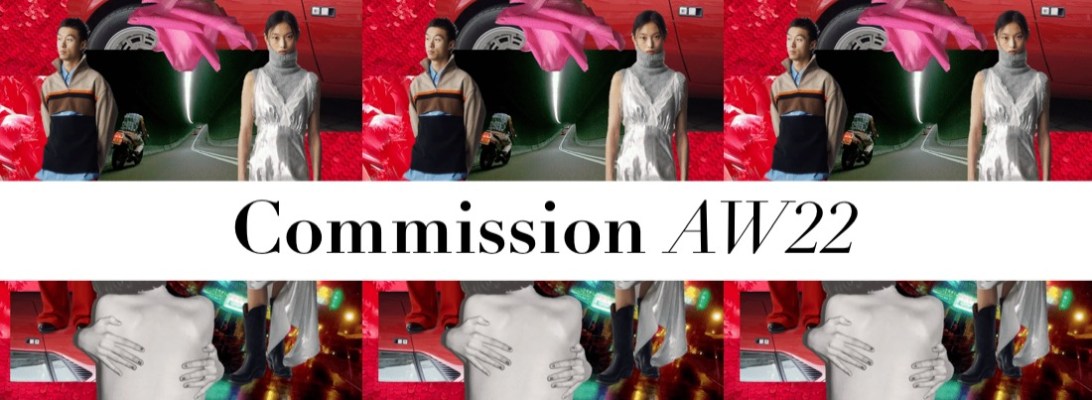
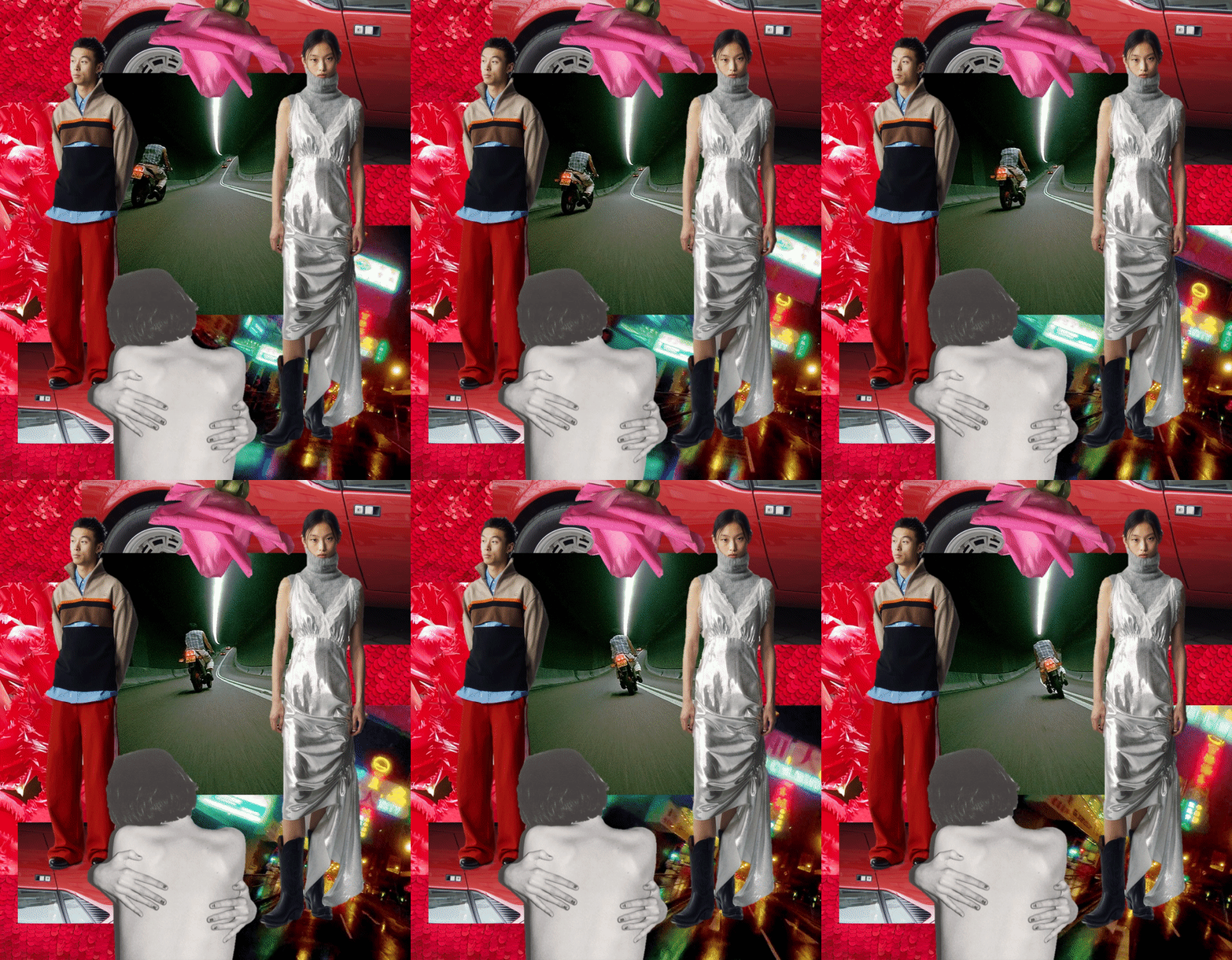
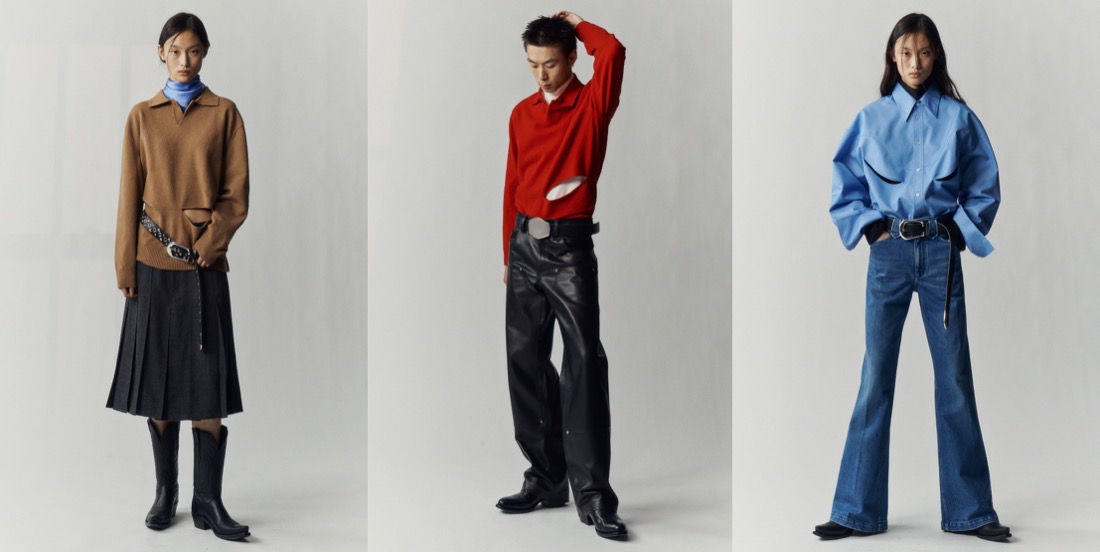
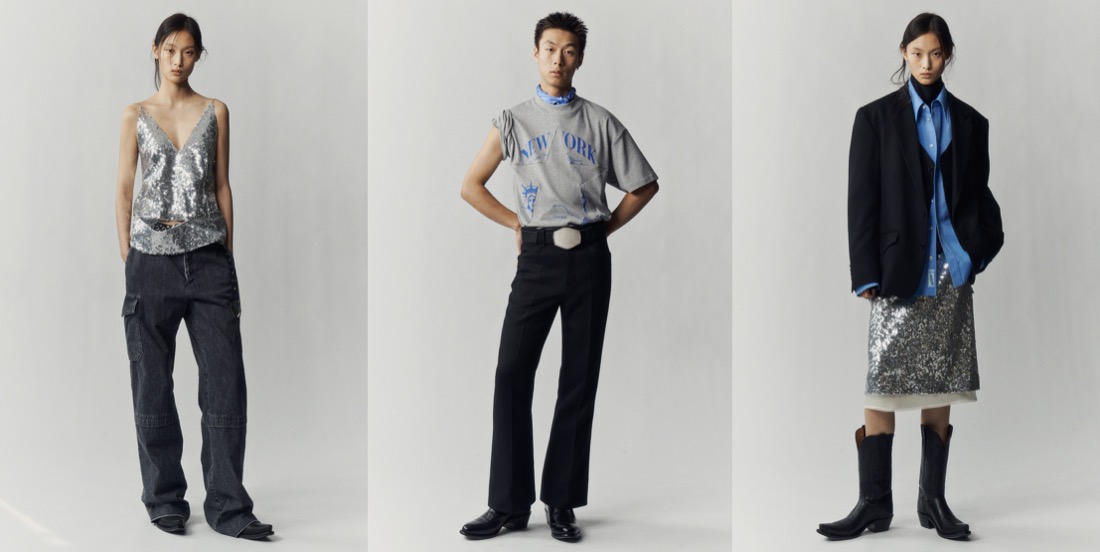
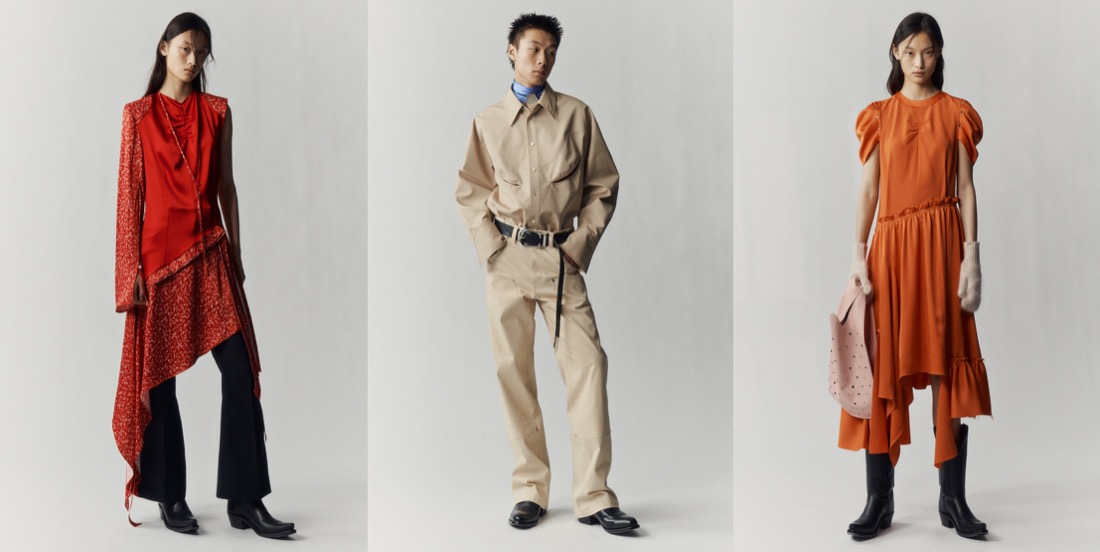
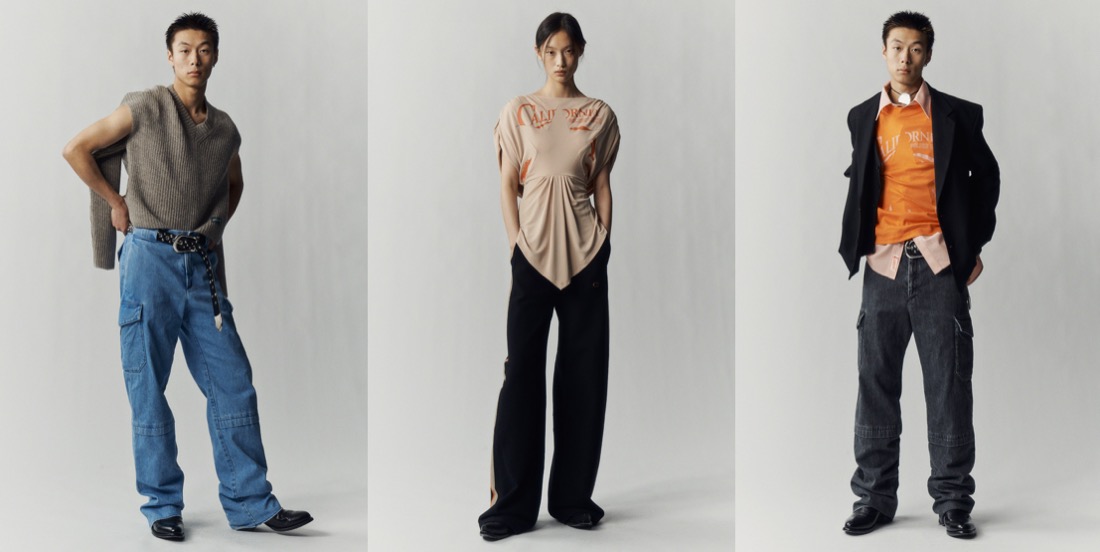
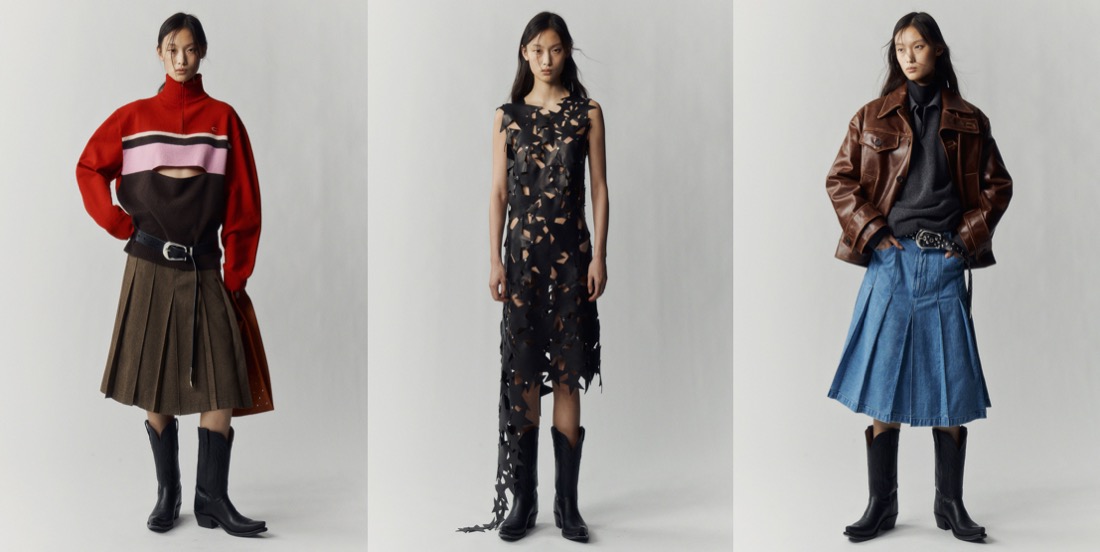
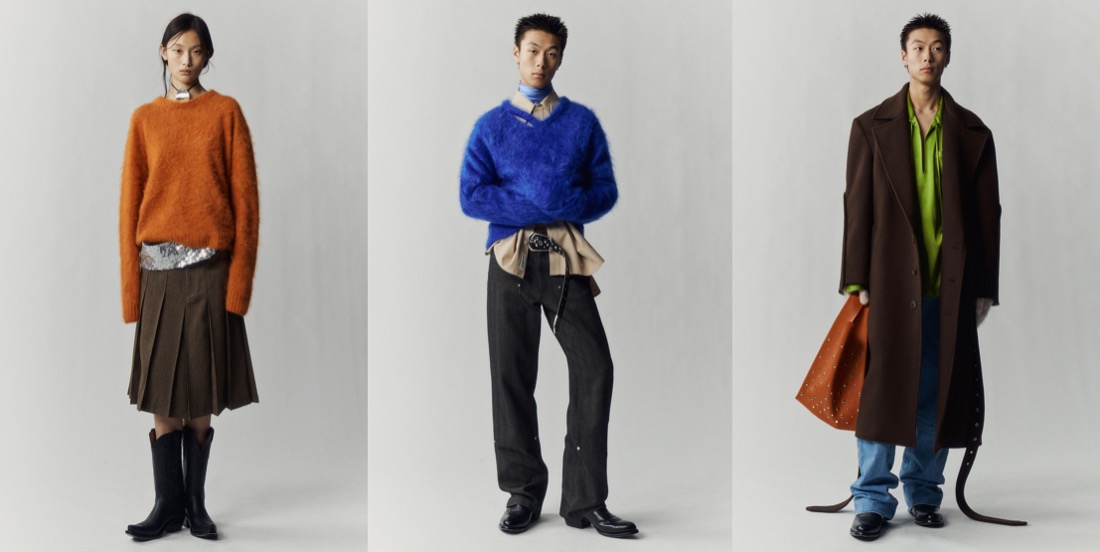
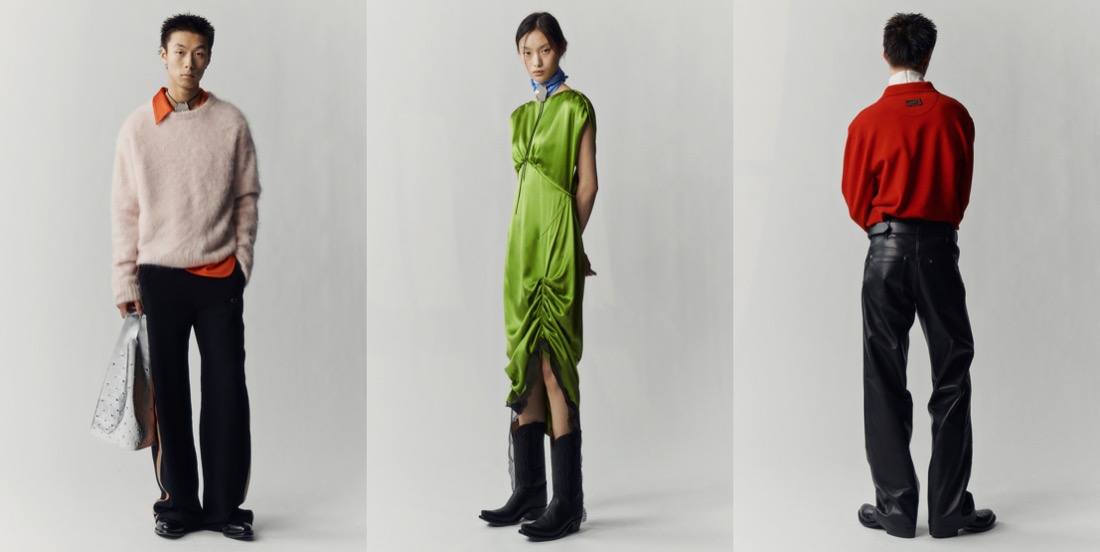
Commission, the New York-based label, is about garments, not gimmicks. For autumn-winter 2022 season, Dylan Cao, Jin Kay, and Huy Luong were thinking about non-American perspectives on America (all three designers were born and raised in Asia) and classic American fashion. Jeans, leather pants, Western belt buckles, and star-patched tees are the most obvious elements of Americana here. Look deeper than the hand-distressed unisex leather jacket, and you’ll find lush “cloud knits,” sporty tracksuits with blouson tops, trad office shirting with underbreast cut-outs, and a brown wool skirt suit with a schoolgirl vest inset into the blazer. A slash motif, which could read as a little try-hard, worked mostly well, exposing an ab, a clavicle, or a sliver of forearm. “It’s about an eclectic combo,” summed up Cao. Evocative layering made the brand’s separates look even more viable – especially in an asymmetric dress over pants look. The moment the designers posted a lookbook image it was swiftly consumed by social media, followers chiming in with “Aaaaaaaah!” and cascades of flame emojis. Sometimes, simple and straightforward clothes do the ultimate work.
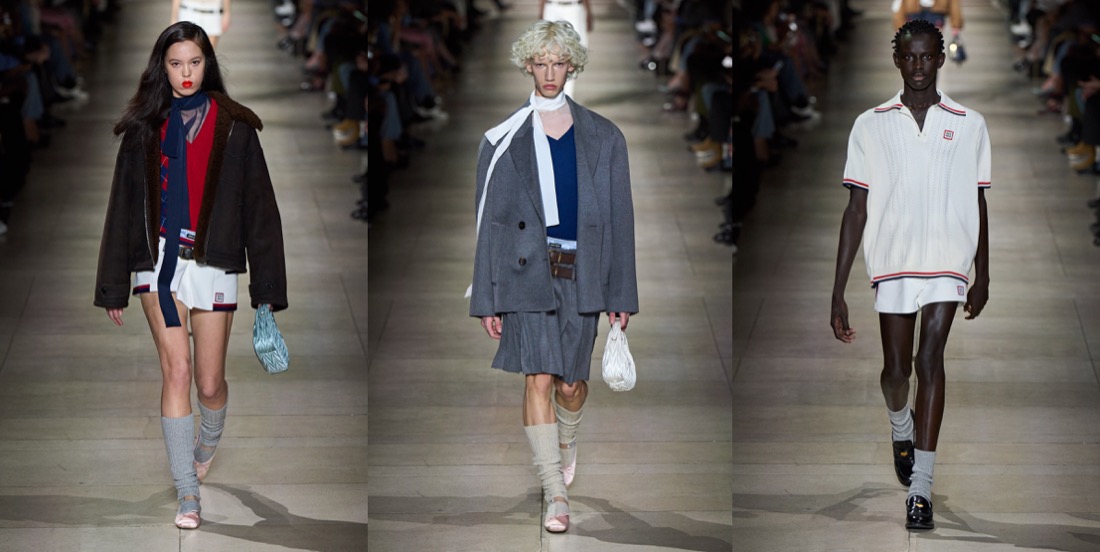
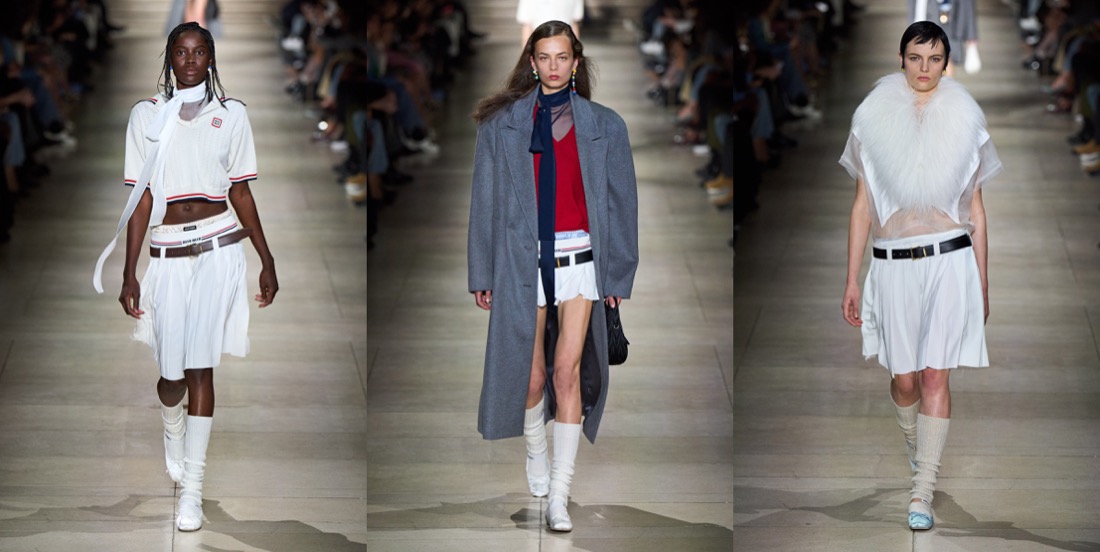
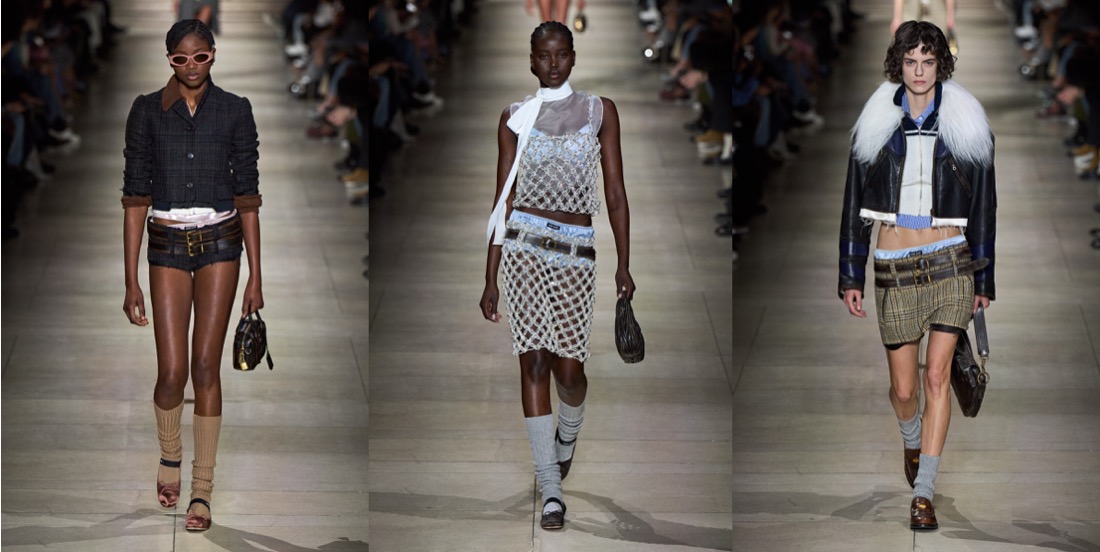
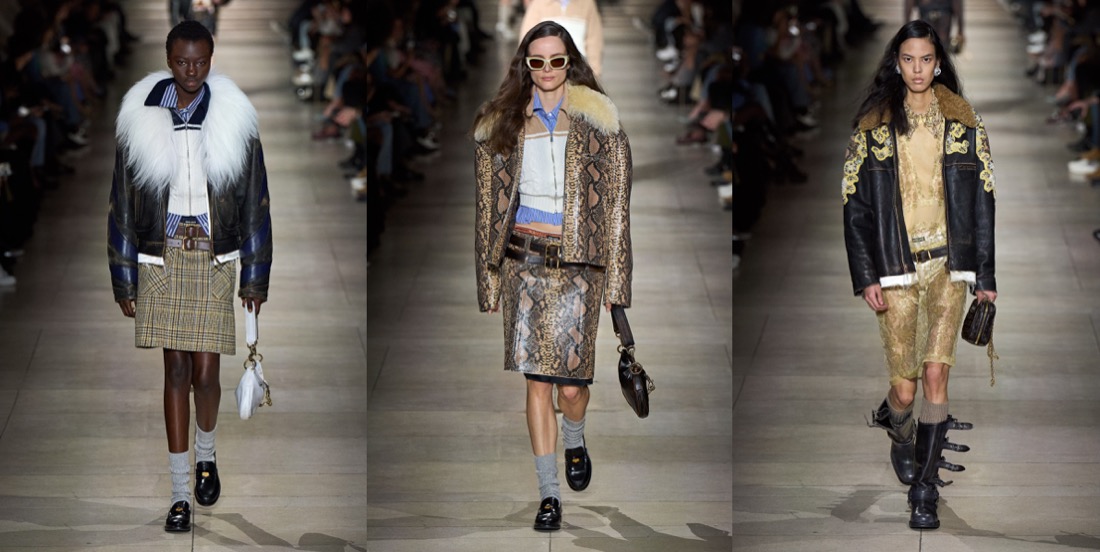
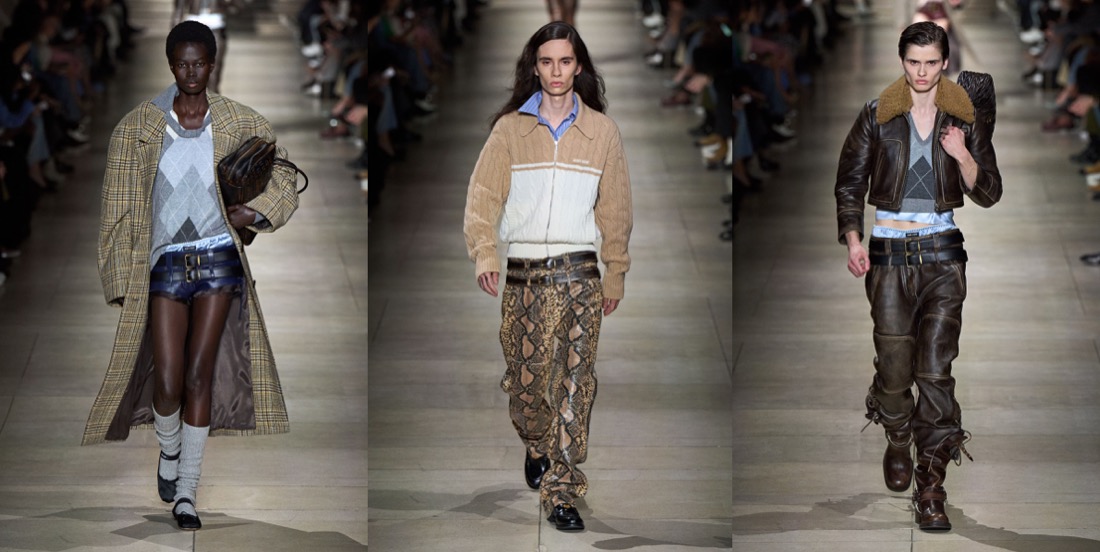
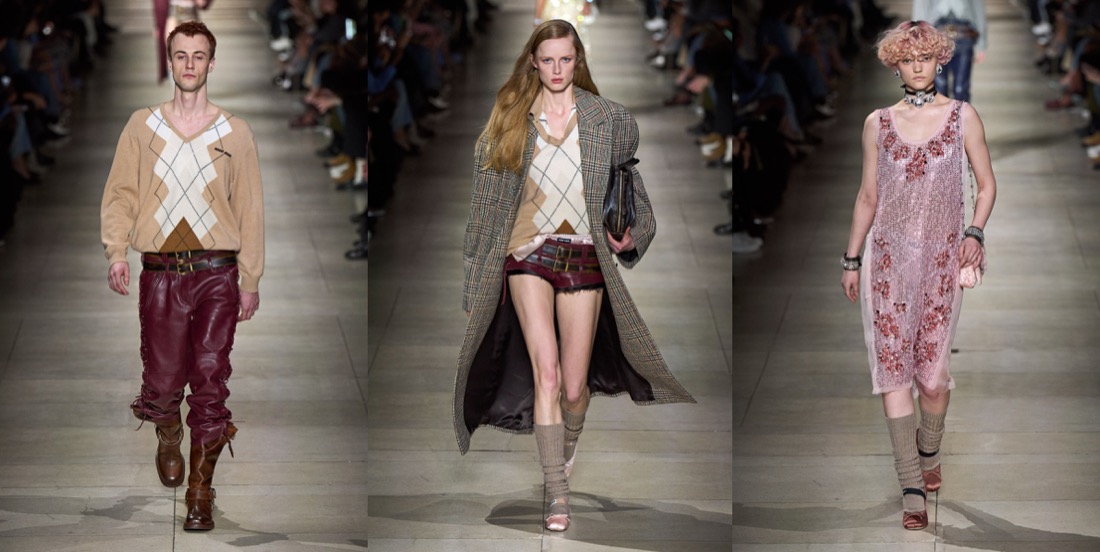
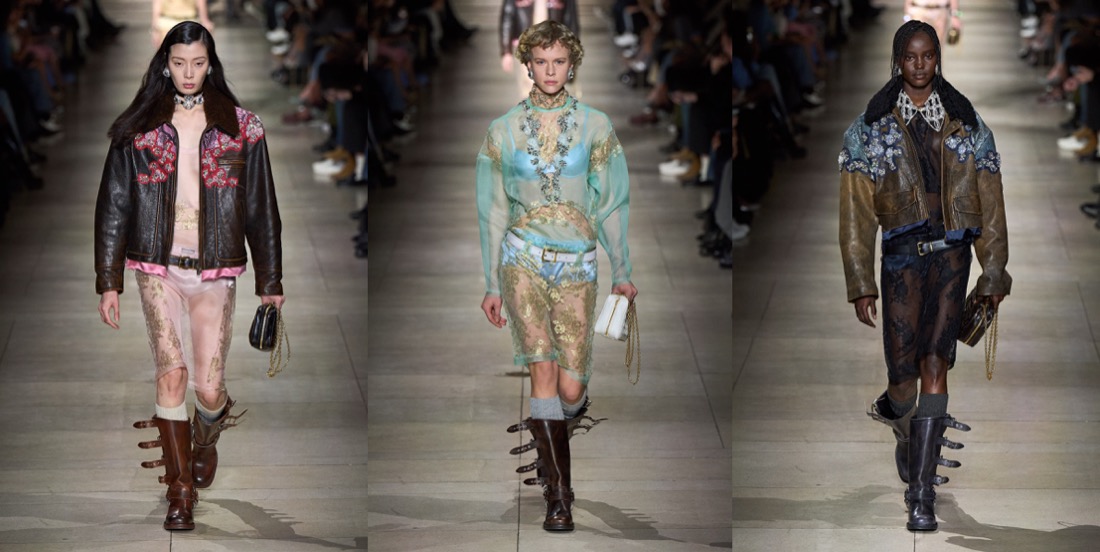
The Miu Miu girls (and boys) are on fire! It was only fitting that Miu Miu would have the final say this season – thanks to a change in the traditional schedule, the show rang out a month of collections, for which its last proposal set the tone in a big way. Other than Balenciaga, no brand has been as impactful as Miu Miu on the silhouette we’ve encountered on daily runways over the last four weeks: an oversized blazer or coat worn over a lingerie element and a mini- or evening skirt. This season, Miuccia Prada reiterated that influence in a collection that continued where the last one left off, reminding the industry who got the idea in the first place. The winter embodiment of the Miu Miu muse was less of a workaholic and more of a sports freak. After disrupting archaic office dress codes last season, she set her sights on the tennis court, giving Wimbledon officials more than they bargained for in super-short, low-riding Y2K skirts and tops with cheekily placed see-through lace panels. She didn’t care if it was winter because she’s too hot to get cold. Memories from her junior ballet phase (she outgrew it) manifested in ballerinas and knitted socks before her inner rebel really took over and things went hell for leather. As the same theme appeared in new variations – shearling, snakeskin-printed or stained leather, with faux-fur lapels – a more gender-diverse expression of the Miu Miu person took shape, demonstrating how the skimpy silhouette also works on nonbinary and traditionally masculine physiques. Along with every fashion girl and their mother this month, men have been wearing last season’s cropped Miu Miu cable knits and little jackets to the shows. This time, there was new material for them to obsess over: lace-up leather trousers, big buckle boots, and some prettily encrusted sheer crystal dresses, if there’s time for a drink after tennis. Miu Miu closed its menswear line in early 2000s, and 2022 feels like the year to revive it.
Kenzo might be finally be back on the right track with a new creative director. For his sharp debut, Nigo (the legend behind A Bathing Ape) invited the fashion crowd and some big names – Pharrell Williams, Shygirl, Tyler, The Cretor, and of course the couple of the moment, Kanye West and Julia Fox – to Galerie Vivienne in Paris. It was here in 1970 that a small gallery unit with cheap rent was snapped up by 31-year-old Kenzo Takada, who had arrived circuitously from Tokyo five years previously with the dream to emulate Yves Saint Laurent and become a fashion designer. The brand’s founder’s collection was cut and sewn fabrics brought from a Montmartre market. As Kenzo later recalled: “I was looking for some kind of identity as an outsider, so I wanted to bring something very Japanese into it, and that meant textiles with a lot of color and pattern.” By 1993, when he sold his company for $80 million to what would become LVMH, Kenzo had developed that formula to become one of the most beloved and distinct designers operating in Paris. He sadly passed away in late 2020 after being laid low by Covid, but had continued to work on new projects until shortly before. But the brand without its creator has struggled to stay relevant for years. Yes, there was that period, starting a full decade ago, when the Kenzo-coded tiger sweatshirts produced under the Carol Lim and Humberto Leon went from cool to hot to way overcooked. After they left in 2019, Felipe Oliveira Baptiste delivered some interesting and criminally underrated collections, but sadly they just didn’t resonate with the customers. Nigo’s creativity and clout – and of course his personal passion for and parallels with Kenzo – make him a serendipitously synchronized recruit for LVMH. His autumn-winter 2022 line-up celebrates Takada, redefines what Kenzo’s true aesthetic is, and has some really, really good clothes to offer. The key poppy print was redrawn and applied in silhouette on washed denim workwear, by velcro patch to hats, plus on waistcoats, midi-skirts, camp collar shirts and more. The cutely kawaii stuffed animal scarves, knit and fleece, were another revival. The conversation between cultural clichés was highly enjoyable: for every souvenir jacket with a map of France on the back there was a beret (always best in burgundy) stitched with the year of Kenzo’s founding. Not at all ironic, however, were the beautiful high kimono jackets in navy, gray and olive. The bibbed gingham aprons worn over suiting were apparently adaptations of a specific Japanese garment worn during the tea ceremony. This intriguing cross-section of cultures is exactly what Takada used to in his collections, always with grace and consideration.
Nigo is of the generation raised during Japan’s obsessive absorption and reinterpretation – often more beautiful than the inspiration – of the Ivy League original into American Casual and Yankee variants. During the preview he’d commented fascinatingly on the difference between building a collection with European factories (which he said created garments more “clean” than he’d wish for) compared to Japanese (who can make it “dirty”). For this reason he’d insisted all the denim in this collection hail from his homeland, even if the top-stitching on his undyed indigo was a little too “clean” to be exactly perfect. Tightly observed post-Ivy, post-Yankee, come-to-Paris pieces here included the varsity jackets and unwashed dungarees. Shortly before the show, Williams said: “The coming together of Nigo and Kenz – it’s symbolism, right? None of us would miss it. Nigo is the father of so many things that we’ve all looked up to, and that have meant so much to all of us.” Of the collection he added: “So it’s like 1950s and ’60s clothing remade in the ’80s, you know, but through the lens of the 2020s.” Which was a pretty perfect summation of this first page of a fresh chapter in the story of the house of Kenzo.
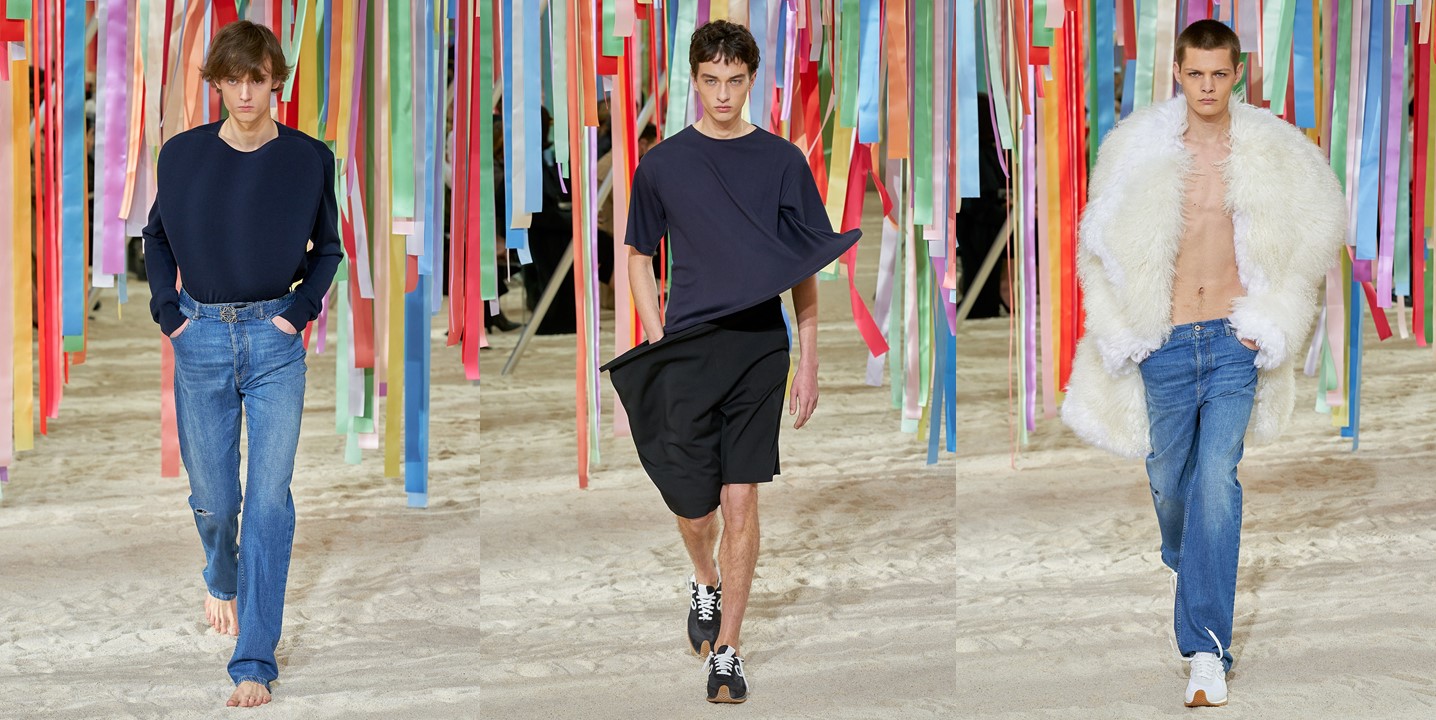
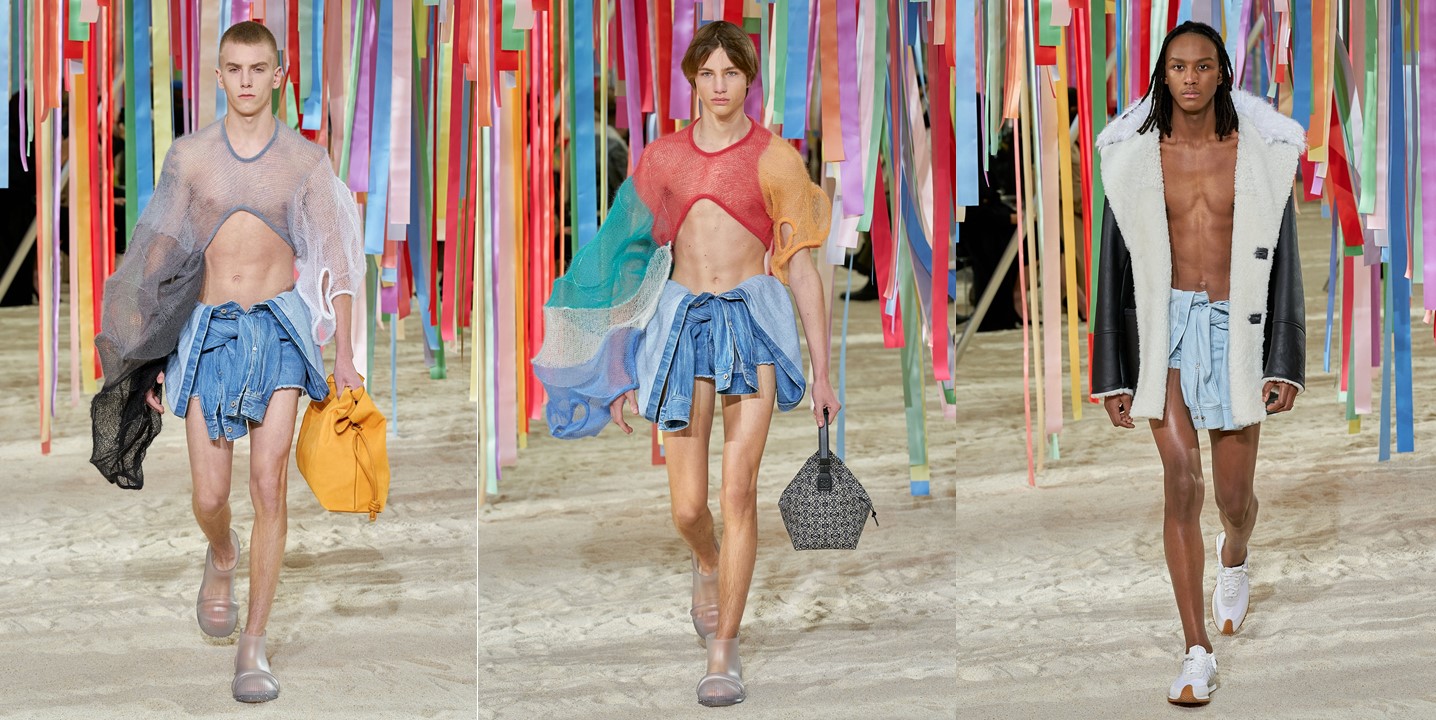
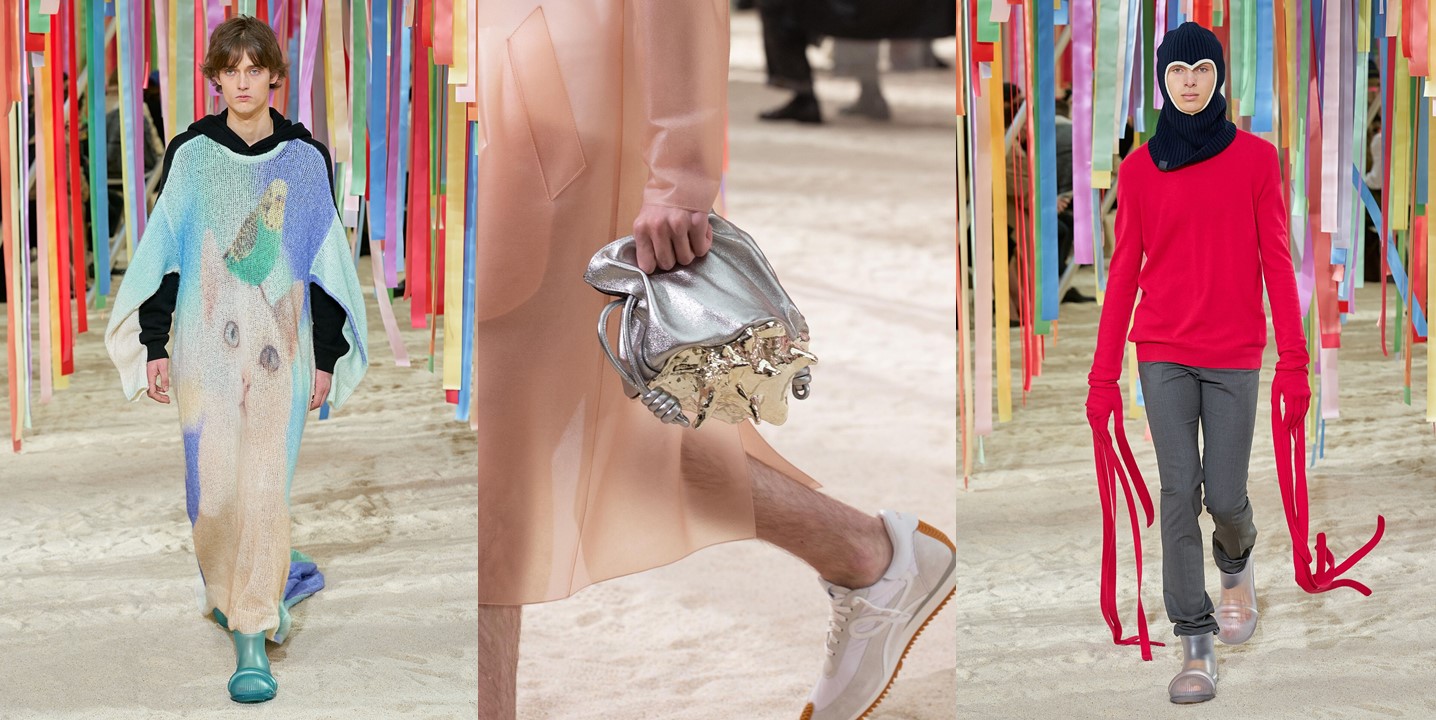
When Jonathan Anderson referenced “metaverse” in his J.W. Anderson collection last week, he said, “I was using it more in an ironic way. The idea that it doesn’t really do anything.” For all its brilliant and hilarious techy surrealism, his Loewe collection was not a wardrobe for the metaverse. In fact, it felt a lot like it was trolling the very idea of our digital lives lived on phones, and the hoopla whipped up around trendy concepts like the metaverse. If our attraction to VR and AR and whatnot is founded in the idea of possibility, Anderson’s collection was a twisted take on how these imaginings translate into real life. He illustrated it in decidedly normal things made abnormal. Shorts were embellished with sparkles that looked like raindrops, as if it had rained crystals. A wool coat had a gilded stain on its lower back “as if you sat on a park bench and it was gold.” Coats and tops were punched with big bathroom eyelets like you’d digitally dragged your most mundane morning surroundings into your wardrobe. Shoes looked like bags, and transparent coats were actually made of leather. Meanwhile, a series of garments satirized our relationship with technology. The sleeves and lapels of a furry coat had fiber optic lights inside them creating the illusion of wetness, the illuminated waistband of trousers made them seem like they were floating, and the entire frame of a coat was lit up. “It’s the idea that you become backlit because everything on a phone is backlit,” Anderson said, referring to the way we see things on our phones and the way our screens light up our faces. Balaclavas with heart-shaped peepholes played on the idea of digital frames. Similarly, the orbital hem of a shirt and the waistband of shorts were bent in separate directions so it looked like you’d skewed them in FaceTune. It evoked the DIY editing accidents you sometimes spot in people’s selfies where the person looks like a supermodel while the retouching process has turned the background into an abstract painting. We all follow someone like that. And those t-shirts and jumpsuits with faces and bodies printed on them like optical illusions? They were worn by the models who posed for them, distorting and reshaping their physiques the way we do it on those beautifying apps.
Anderson’s collection was an exercise in the surreal, but a post-digital era take on the genre, which he said was more “psychotic” in an existential way. “Who are we? Where are we going? Is it real, is it not real? Are we in that moment? Do we believe what we say?” In a world where we’re more fascinated with creating a metaverse than improving the real one, those were good questions.
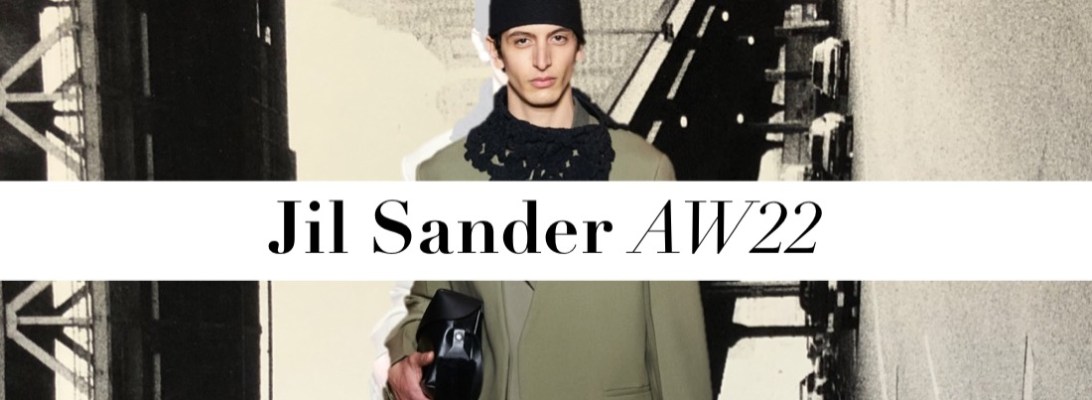
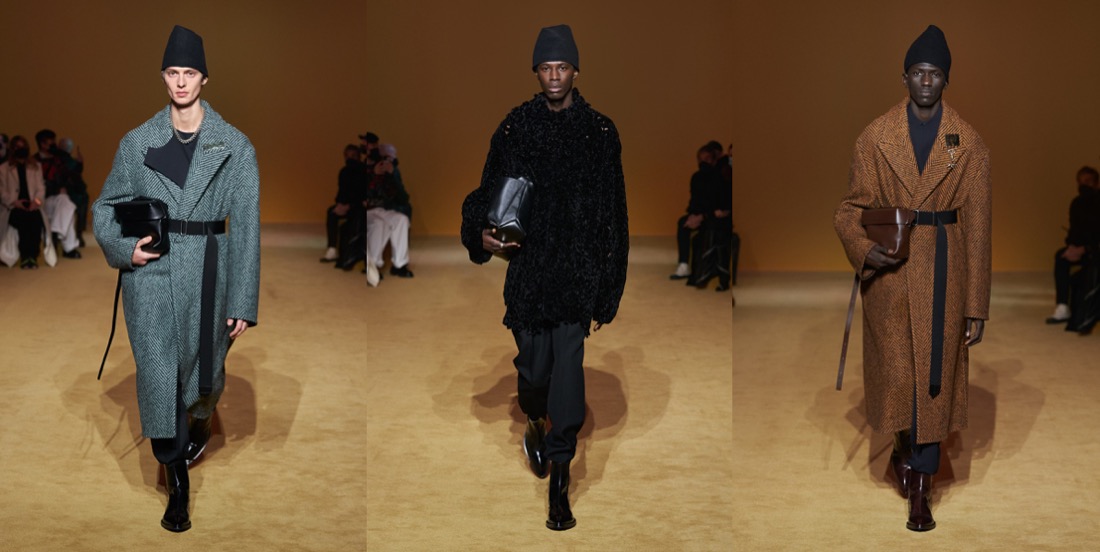
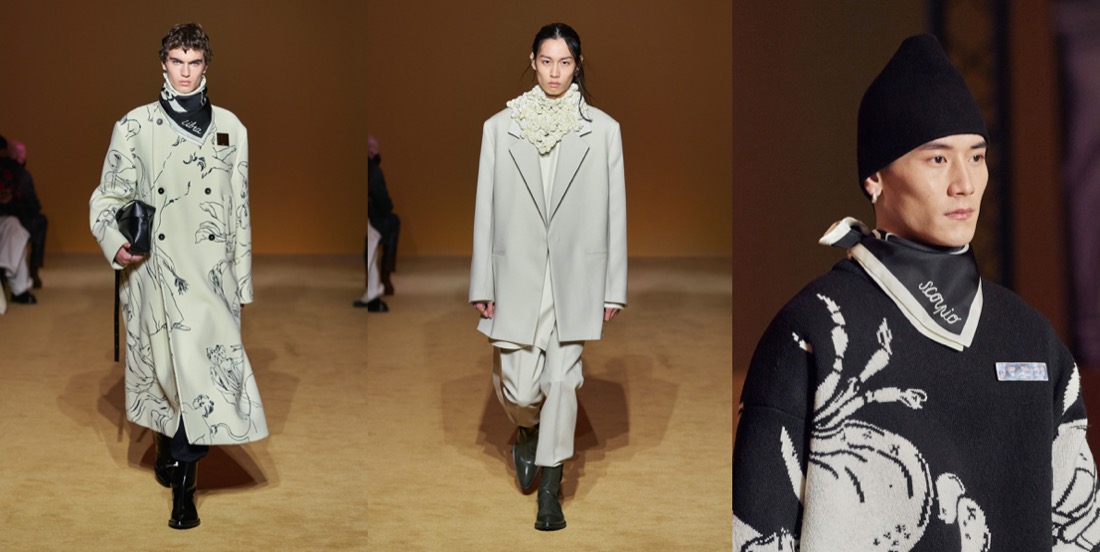
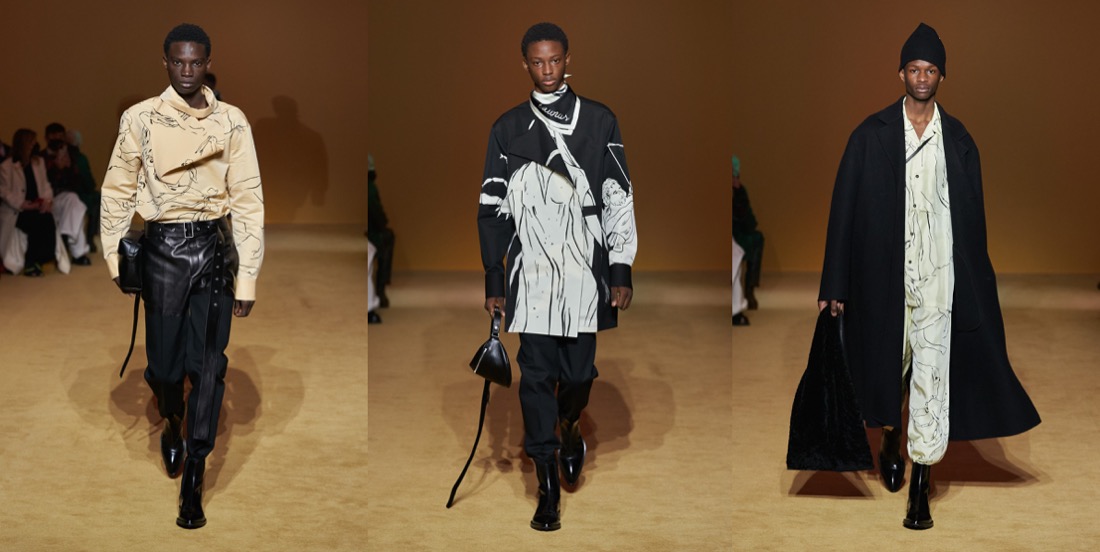
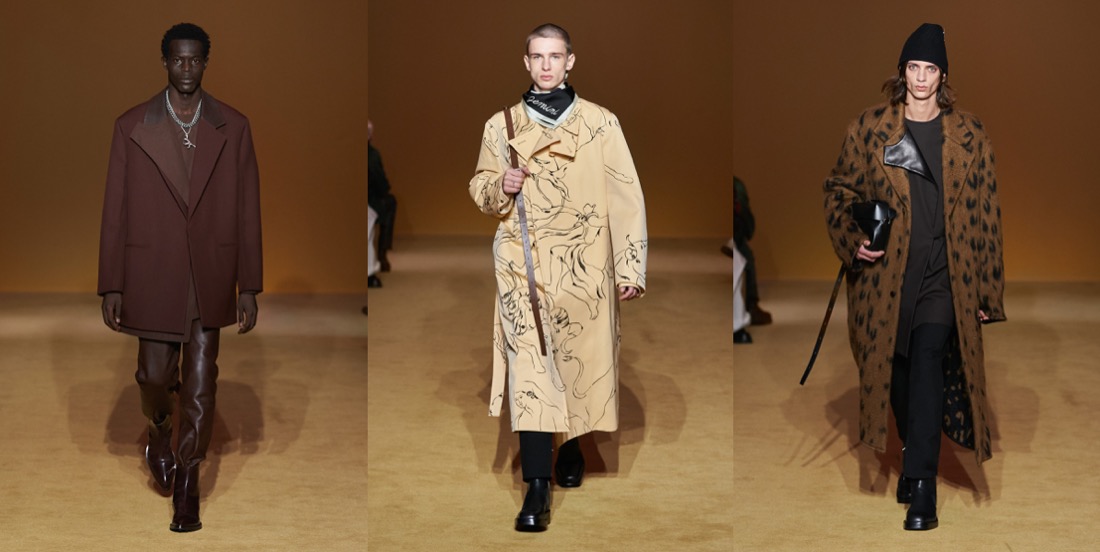
There’s always been a puritanical quality to the work of Lucie and Luke Meier, but in this Jil Sander collection, it transitioned into a more articulated kumbaya. That sensibility was carried by crochet wrapped around necks and heads and spliced with oversized blazers and tuxedo jackets that couldn’t have made for a bigger contrast. “We liked this really elegant, masculine silhouette, but with a sensual side to it, as well,” Lucie Meier said after the show. “We start a lot with tailoring, just to see what we really want to do and say and what we care about. But this time, we worked it into typically feminine techniques as well,” Luke Meier added. The meeting between crochet and strong tailoring made for expressions that were more focused on trend and statement pieces than previous proposals from the Meiers, whose collections usually feel more centered around the idea of a wardrobe. Backstage, Lucie pointed as to why: “You kind of miss people who really dress up and have a kind of eccentricity,” she said, referring to the way the pandemic has cramped our collective style, or at least our opportunity to show off said style. As a symbol of “personality and individuality,” Luke said, the designers scattered astrology prints and zodiac embroideries around the collection, intensifying the hippie energy of it all, only to contrast it with the rigidity of sharp lapels poking out from layers under jackets, and suit trousers tucked into hard, pointy Santiago boots with metal heel caps. It was a bold proposition for post-pandemic self-expression, but one the aspiring street style stars of fashion week will no doubt embrace.










 Design & Culture by Ed