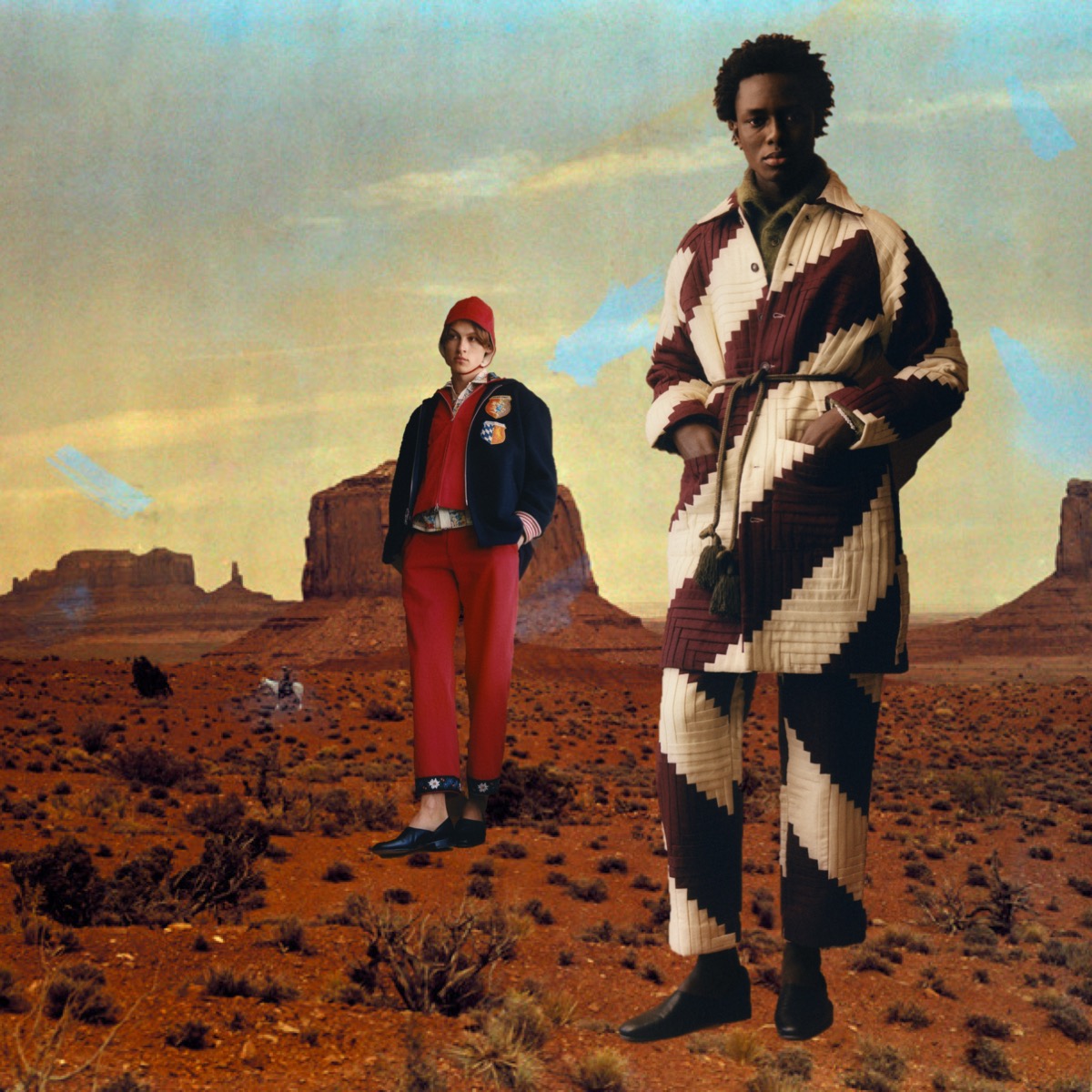
Men’s – Forever Timeless. Bode AW21

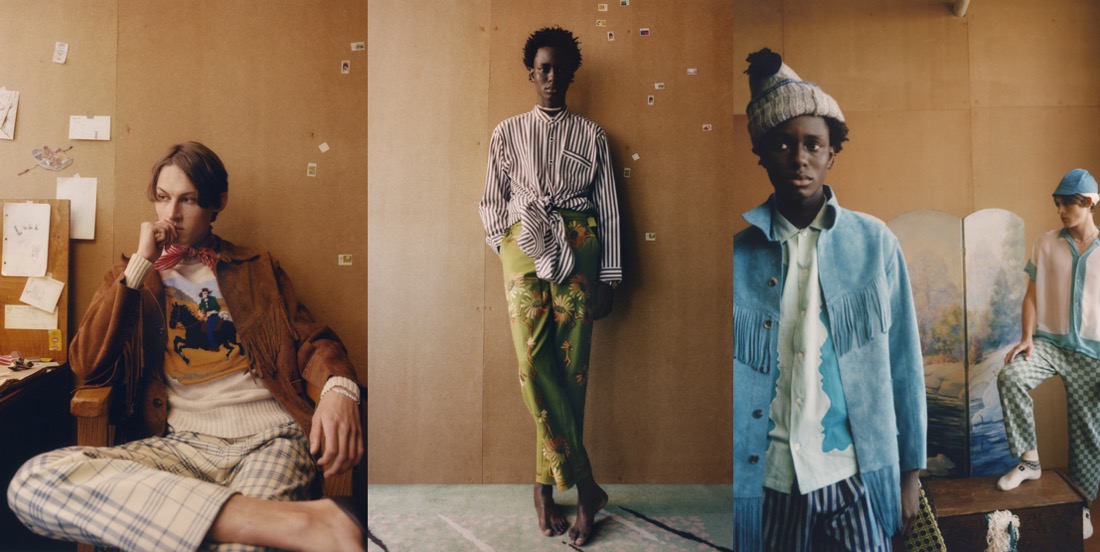
Autumn-winter 2021 marks the first collection Bode has shown since lockdown, though it’s technically spring (arriving in stores this month) and autumn rolled together. For the occasion, Emily Bode invited New York-based editors into what appeared to be a teenage boy’s 1960s bedroom, preserved in all its clutter. Newspapers and LIFE magazines were scattered on the tables; a vintage Monopoly set was splayed on the floor; desks were pinned with comic strips and old photos; and, of course, there were clothes everywhere: spilling out of a hamper, piled on the floor, dangling from coat hooks, draped over the bed. Each item was painstakingly arranged by Bode and her team, but it was a convincing replica of her uncle Bill’s college dorm room at the University of Vermont (or at least Bode’s impression of it, based on his recollection). In 1969, he tricked his parents into thinking he was back at school when in fact he was taking a year off to explore the East Coast, race cars, and play games. Bode explained it was also the last year before Bill’s wife, Mahri, came into the picture; they met in 1970, married, and were together up until 2019, when Mahri passed away. Suddenly, 2020 was Bill’s first “year off” from the life he knew, and he found himself reminiscing about 1969 again. Bode related his story of love, loss, and reflection to our own “year off” during the pandemic. Sifting through the piles, you could find all the familiar Bode-isms: silk button-downs with prints lifted from vintage postcards and handkerchiefs; embroidered camp shirts that are the expert work of Indian artisans; patchworked merino suits, an evolution of her quilted jackets; and her most refined knits yet, from a space-dyed pullover to a stunning hand-crocheted cardigan. A few pieces nodded to Bill and Mahri, like a souvenir jacket with a pug embroidered on the back, while others seemed happily arbitrary: an intarsia’d camel sweater, a pair of shorts chain-stitched with line drawings and funny phrases, a sweater crocheted with 3-D grapes. A small group of tailored pieces trimmed with rows of real pearl buttons spoke to Bode’s particular passion for preserving crafts and techniques. She bought them in bulk from a closed-down button factory in the Midwest, and pointed out how each was individually hand-carved, hand-sanded, and one-of-a-kind. They may have been thrown away or relegated to some dusty warehouse if Bode hadn’t purchased them; the same could be said of the quilts, table cloths, and scraps of fabric piling up in her Brooklyn studio.

If it’s tempting to lump Bode in with other “sustainable” or “upcycled” brands, it’s actually more of a coincidence that some of her materials – not all – were already made. Bode cares about sustaining traditions and stories, not just reducing her carbon footprint, and she understands her role as an employer. She couldn’t have scaled her business to its current size if she hadn’t found a pragmatic, sustainable way to mass-produce certain garments with new materials, like her camp shirts and chore jackets, nor would she have been able to hire her teams of craftspeople in India, Peru, and New York (many designers canceled their orders in Garment District factories during the pandemic, but Bode made it a point to support them.) Bode’s brand-new tailoring shop, located next to her flagship in the formerly-turquoise Classic Coffee Shop, is a more apt reflection of her sustainability ethos. Her tailors will alter your brand-new Bode suit or mend an old quilted jacket. Even if you just picked up your first Bode shirt next door, there’s a comfort in knowing you don’t have to be precious about wearing it; when the time comes, someone will be there to fix it up. On the long list of things that separate Bode from her peers (and her many imitators) is that she absolutely intends for her clothes to be worn – and would rather fix the hole in your shirt than sell you a new one.
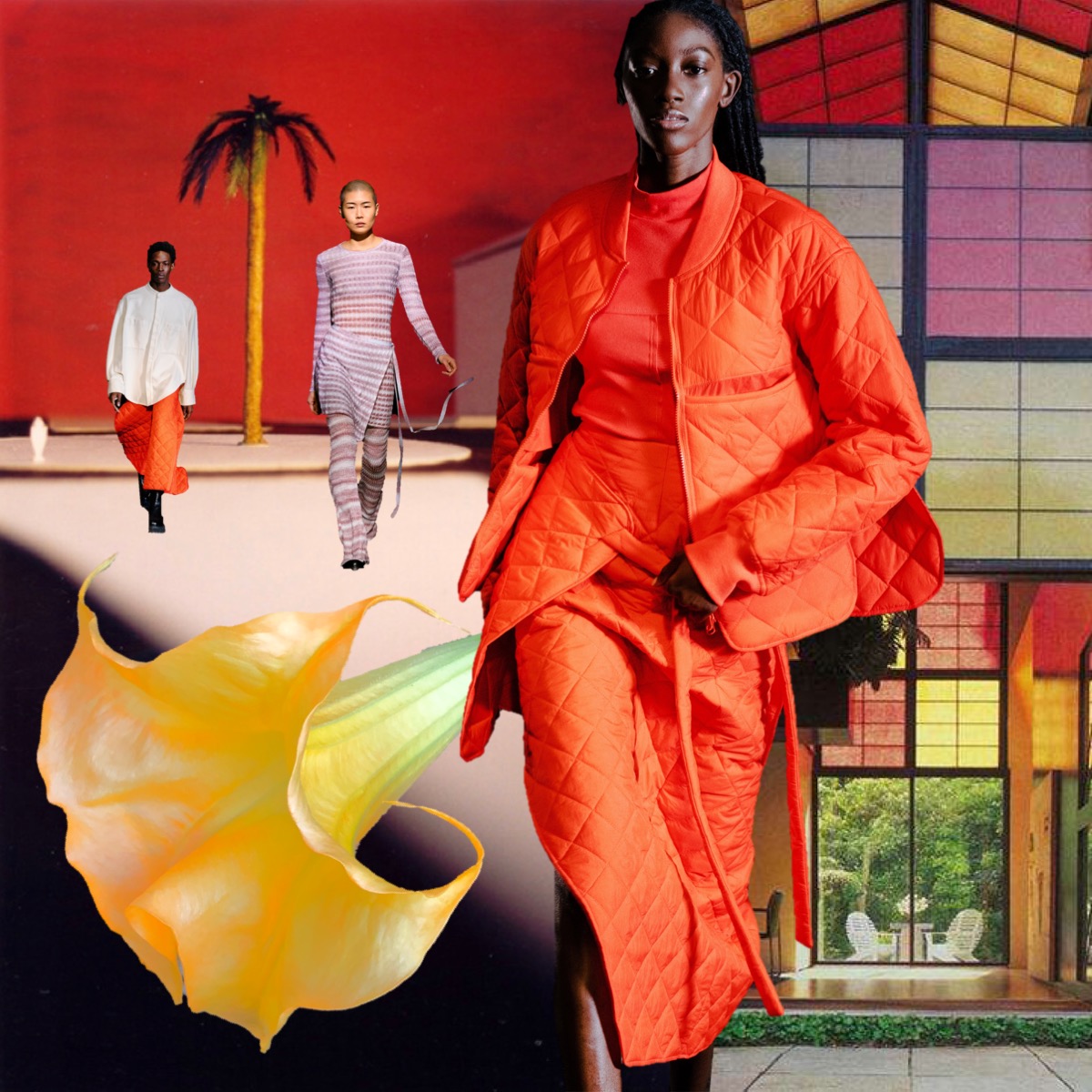
Collage by Edward Kanarecki.
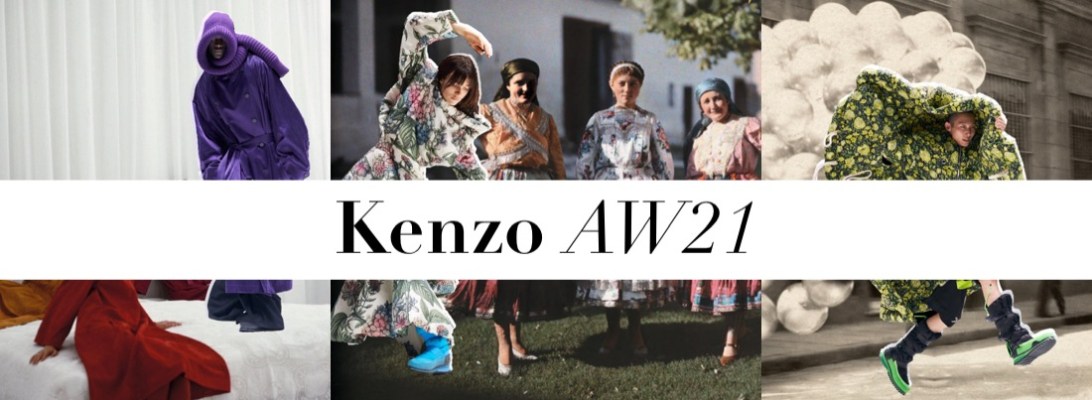
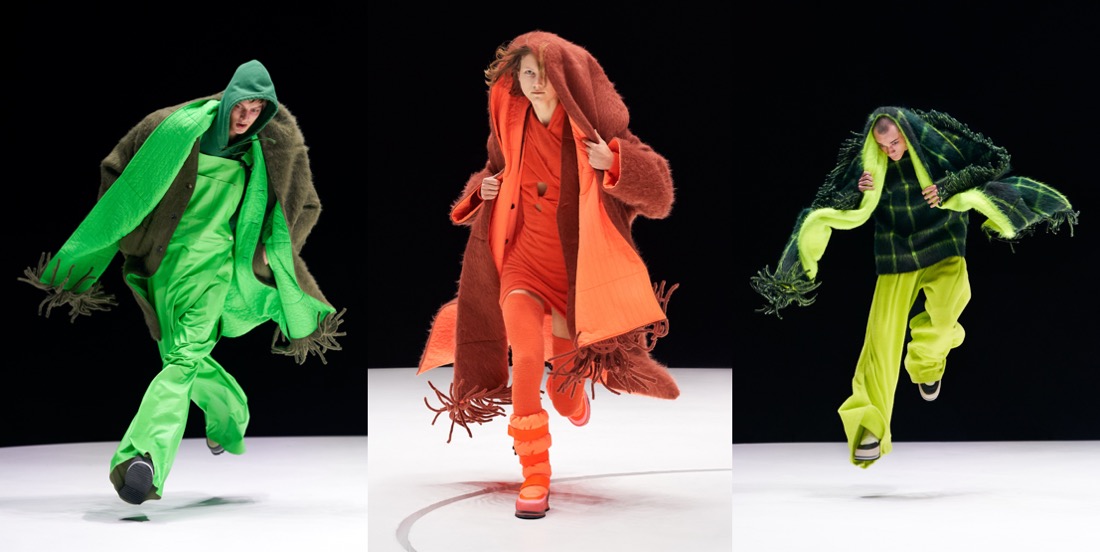
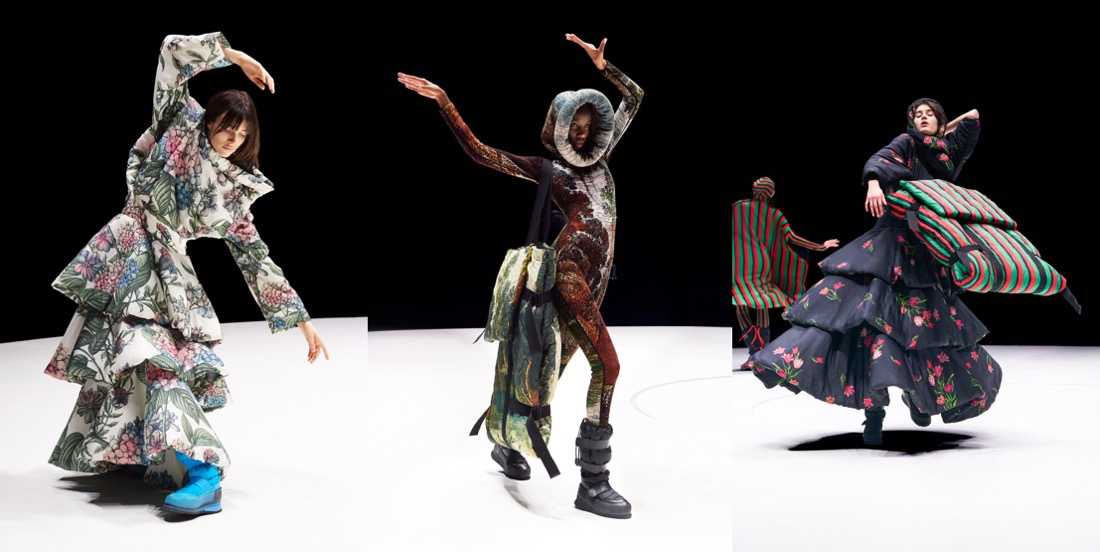
Joyful Motion. Kenzo AW21

With Felipe Oliveira Baptista, Kenzo is finally back on track. Forget ‘Tiger’ sweatshirts and endless logos – Oliveira Baptista wants to position the brand among the serious ready-to-wear brands, like in the Kenzo Takada days. “Intuition is a banned word at fashion houses these days. It’s as if there’s no space for it. But there was a lot of that in him,” Oliveira Baptista told Vogue, reflecting on the legacy of Takada, who died in October last year aged 81. Sticking to those values, the autumn-winter 2021 collection is dedicated to Takada, yet at the same time, Felipe didn’t reissue a single garment or print from the master’s greatest hits of the 1970s and ’80s. Instead, the designer paid tribute by evoking the founder’s presence through intuitive ideas. Silhouettes riffed on Takada’s most memorable moments through the spherical and orbital, the folkloric, and the cross-cultural. Balancing, as he does, the artisanal with the durable and sporty, Oliveira Baptista simplified and contemporized materials, turning Takada’s geometric lines into a kind of streetwear for a 21st-century Kenzo. Throughout, he painted the garments in the things the founder loved most: pansies, tulips, hydrangeas, and stripes. Honestly, it could have been one of Takada’s shows, shot in the Cirque d’Hiver, where he often presented his collections, with an original soundtrack by Planningtorock (listening it on repeat!) and models dancing in a harmony of shapes, colors, and patterns. Close-up, it was bursting with new life in a performance-y, vivid way. Refreshingly, Oliveira Baptista’s work for Kenzo doesn’t show many signs of pandering to a social media-driven shopping culture as his predecessors.  Before he started working on the collection, Oliveira Baptista was given access to footage of all the old Kenzo shows, which had been undergoing restoration at the time of his arrival. “In the first two seasons, I had only seen the photos and the clothes themselves, so I was struck by the magic of the shows: the intuition, the freedom, how the clothes were always moving. It made me want to portray the movement, the comfort, and the freedom these clothes give you. That’s very much what Kenzo stood for,” he explained. All those things felt like good timing for a post-lockdown proposal. Felipe is looking forward to digging into ‘true’ Kenzo even deeper in the next months. “He was quite revolutionary. When he first arrived in Paris, the way he was cutting clothes and playing with color was so different from the European way of constructing garments. That immediately gave women and men a new freedom of movement,” the designer said, reflecting on Takada’s fashion. “It’s not that he doesn’t have the place he deserves, but sometimes what he’s done is overlooked. The idea of extreme comfort in a very strong look feels very now. He did that first. It’s a very rich legacy.

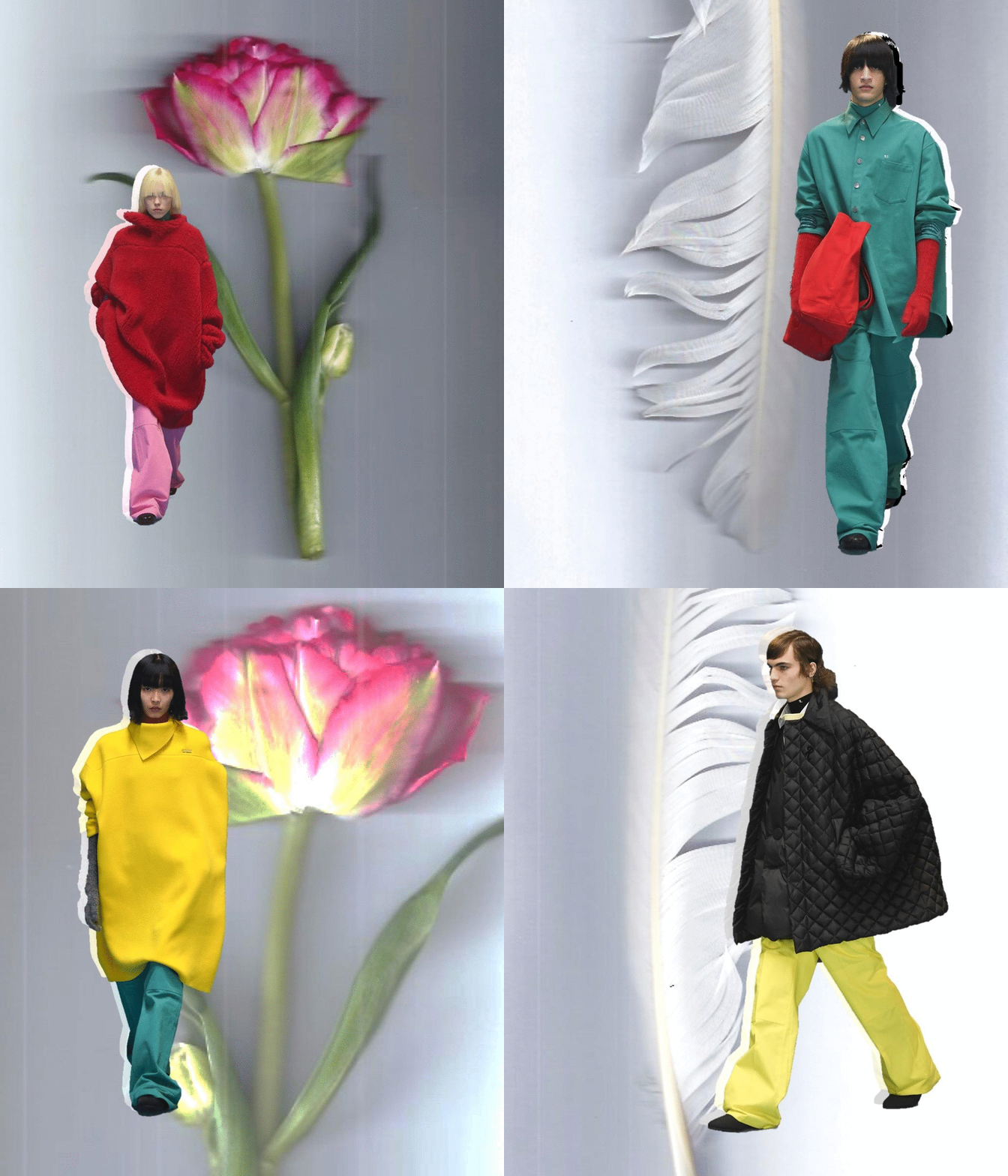
“Live” collage by Edward Kanarecki.

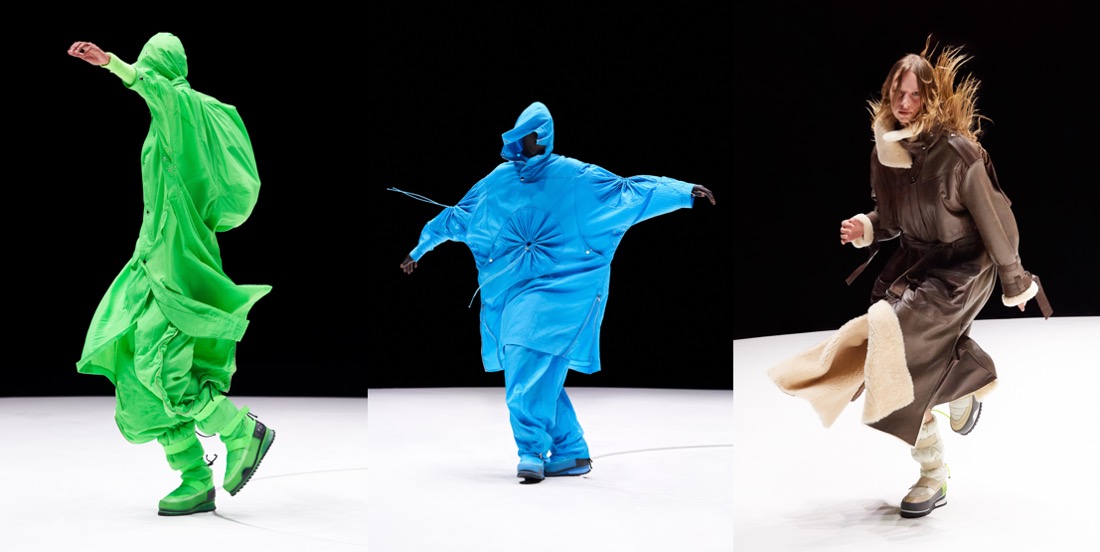
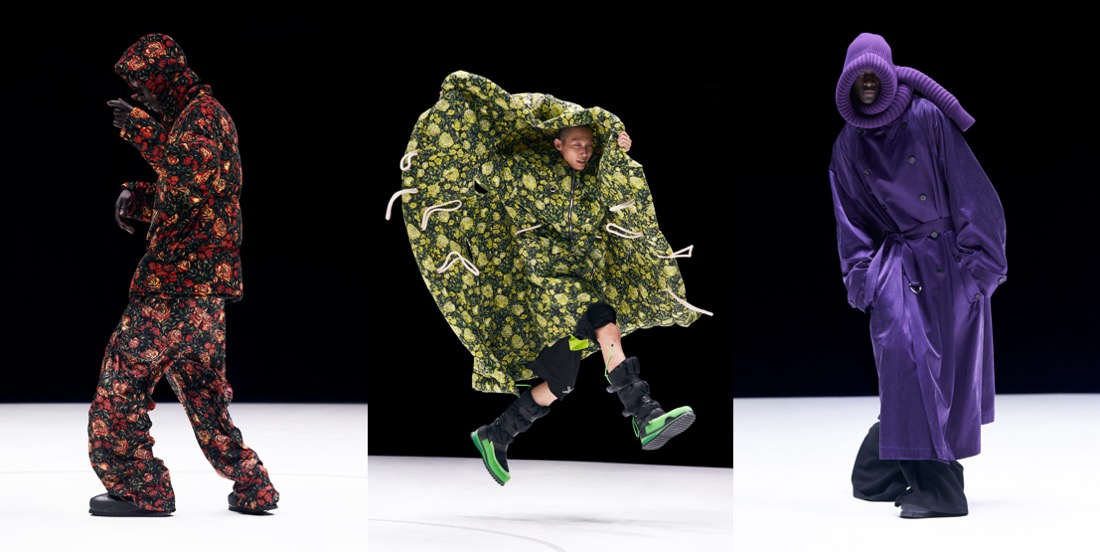
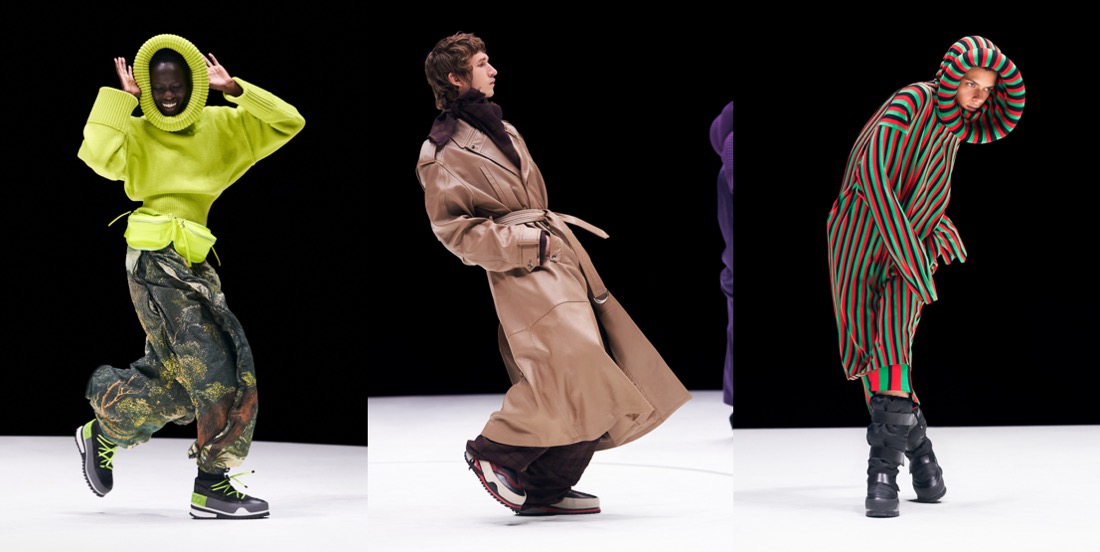
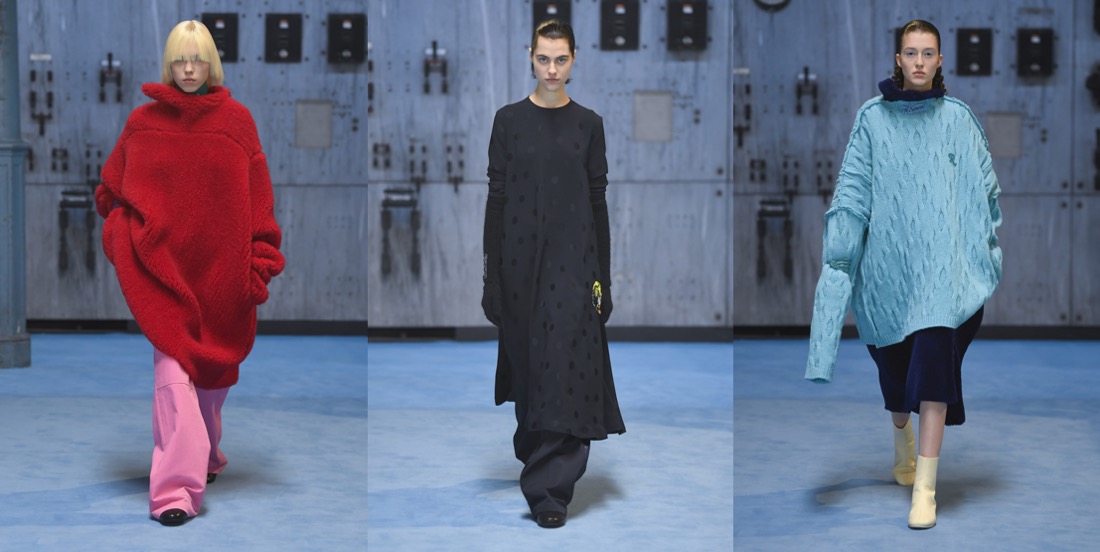
Silhouettes. Raf Simons AW21

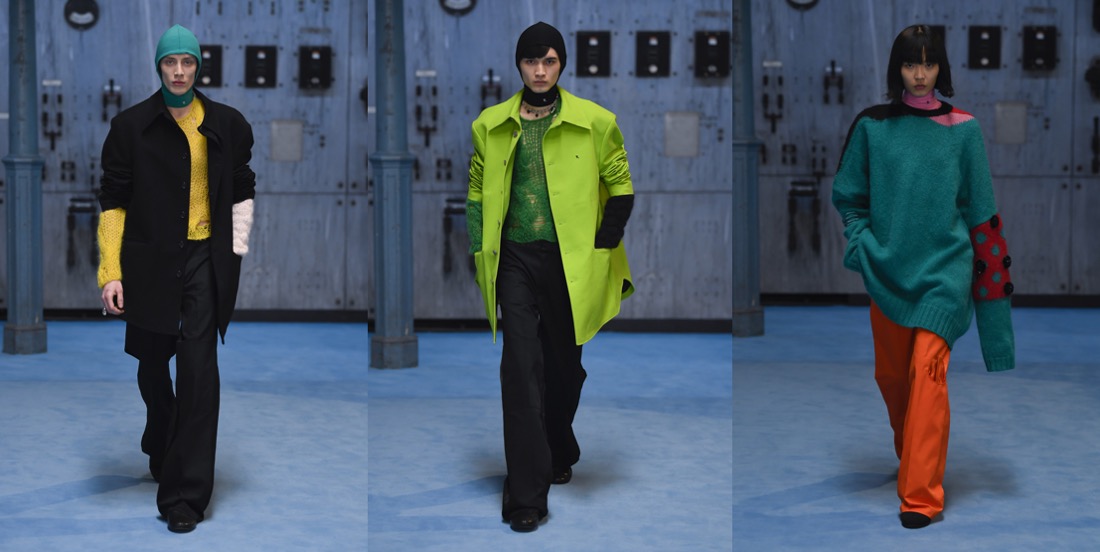
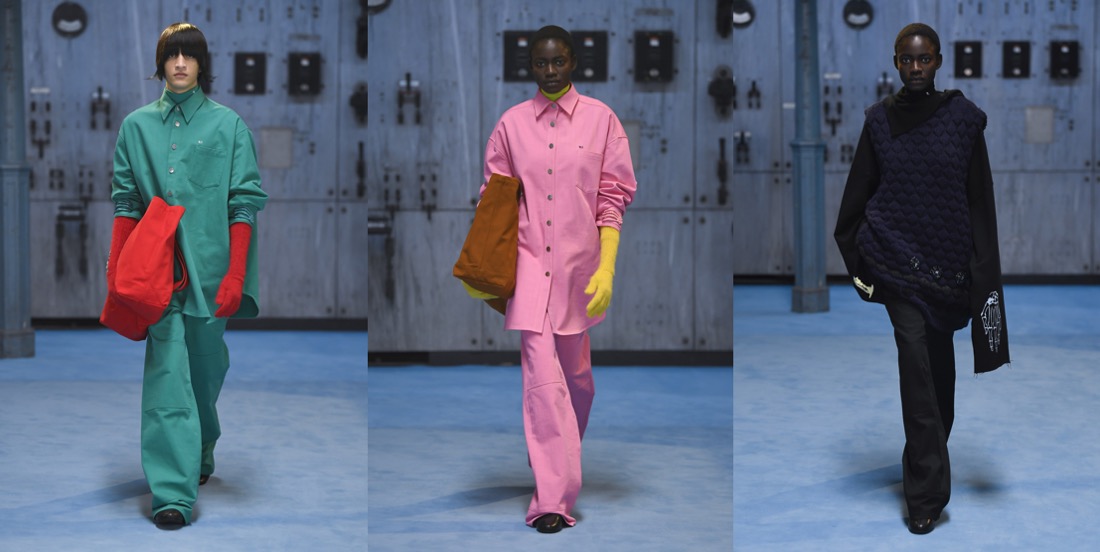
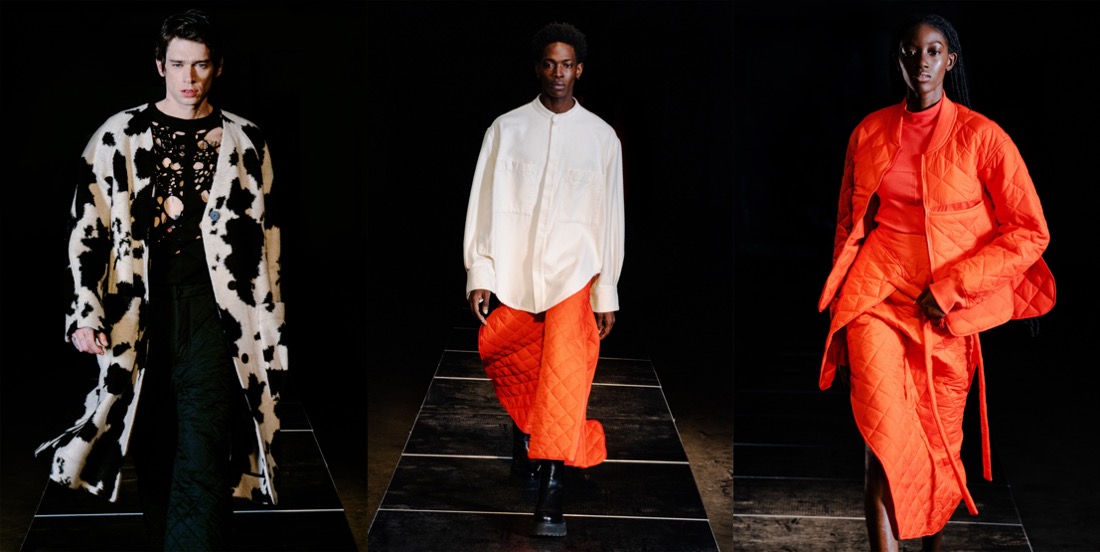
Raf Simons‘ latest collections are more straightforward and easier in approach – yet they have that elusive spark that makes the designer’s work so attractive. For autumn-winter 2021, Simons stated his simple mission: “The collection is about things I love – things I have always loved, that are always there in every collection, in the processes behind it, and the clothes.” This season, silhouettes loosen and expand, almost magnetically propelling away from the body rather than clinging to it. The quilted A-line coats, some layered with puffy vests, and gigantic mushroom cap knits with strass brooches and dot patterns must be the largest garments he has ever offered. Wearing them with relaxed, gently flared trousers, the models look like atomic clouds, their clothing the electrons circling their forms but never touching them. The best part of big, baggy, enveloping clothing is that it really does look good on everyone.  In addition to the over-sized silhouette, Simons has also vastly expanded the collection of small, wantable things that hover around his garments. Ivory runner boots with a pastel gum heel are back, while a vast range of teenage-looking jewelry – hearts, logos, and dangly rib cage earrings – accompanies the clothing. The funniest baubles must be the skeleton hand bangles, fixed high on models’ arms. What I loved most is the dynamic colour palette – bubble-gum pink, pea-green, plastic-yellow, baby-blue… delightful! Simons chose six words to title this collection: ataraxia, equanimity, dichotomy, synchronicity, allegiance, devotion. Peacefulness is the big story, even amidst the techno-medical disasters of our world. Keeping the balance is always a good idea.

“Live” collage by Edward Kanarecki.

Soothing Grooviness. The Elder Statesman AW21

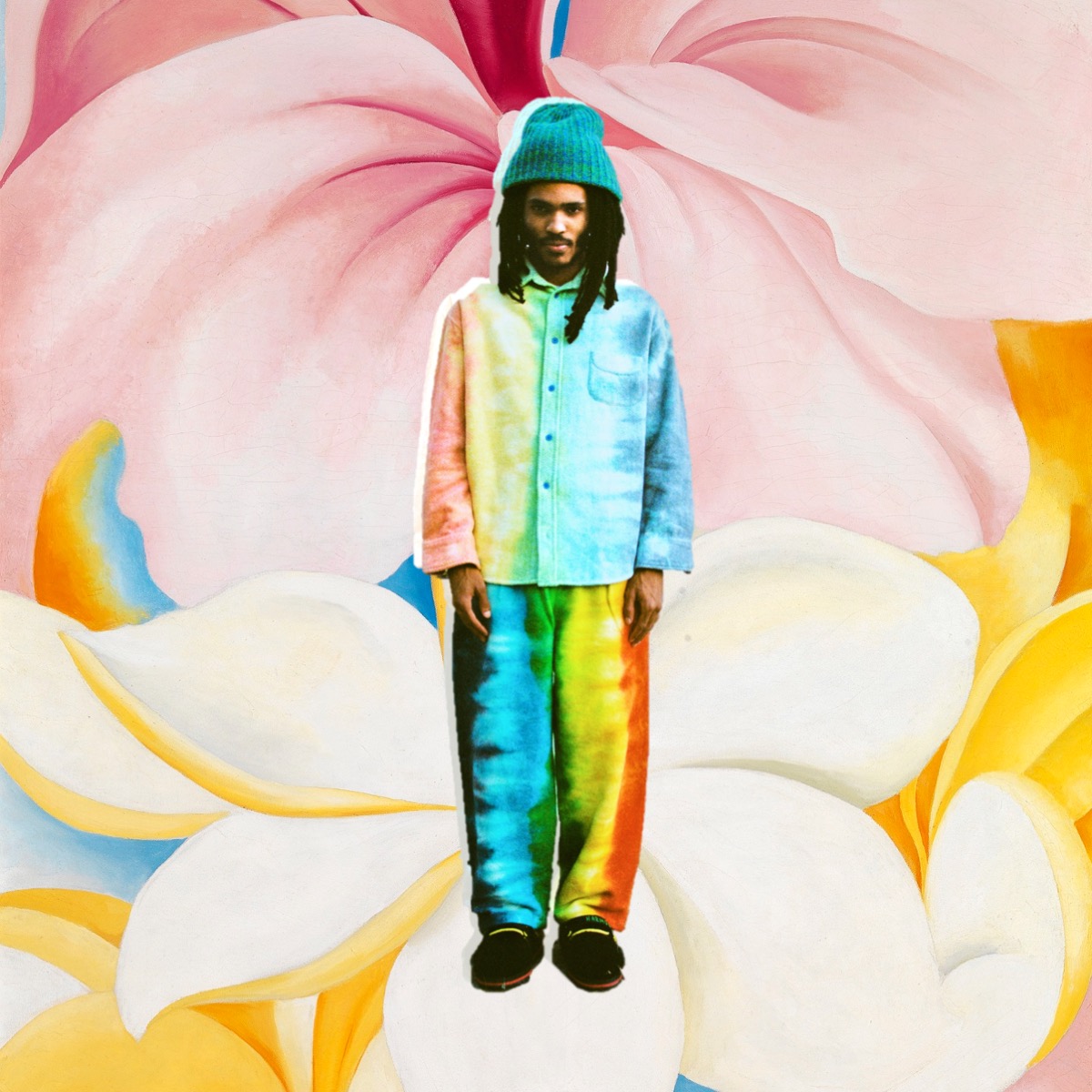
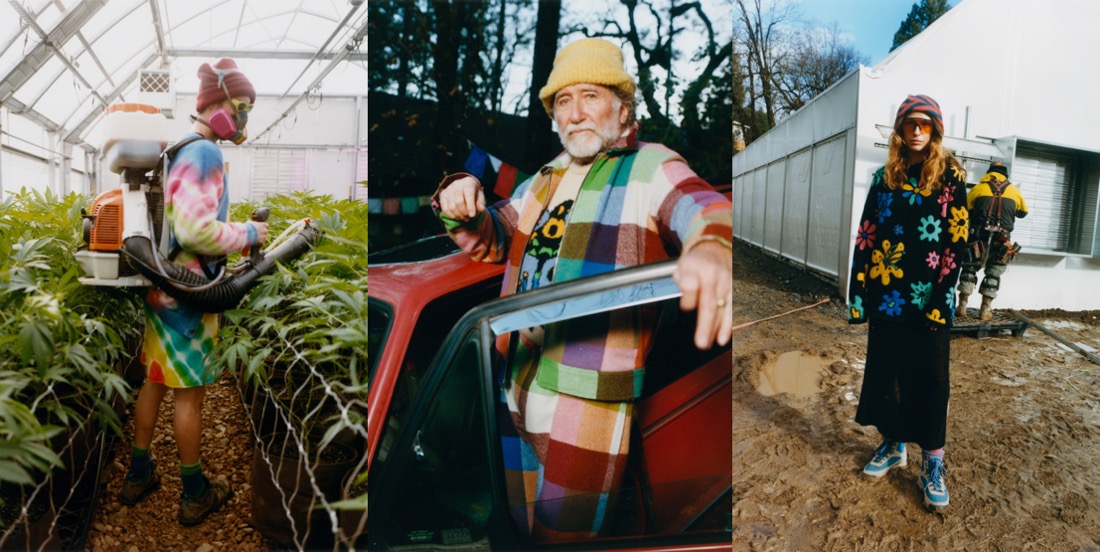
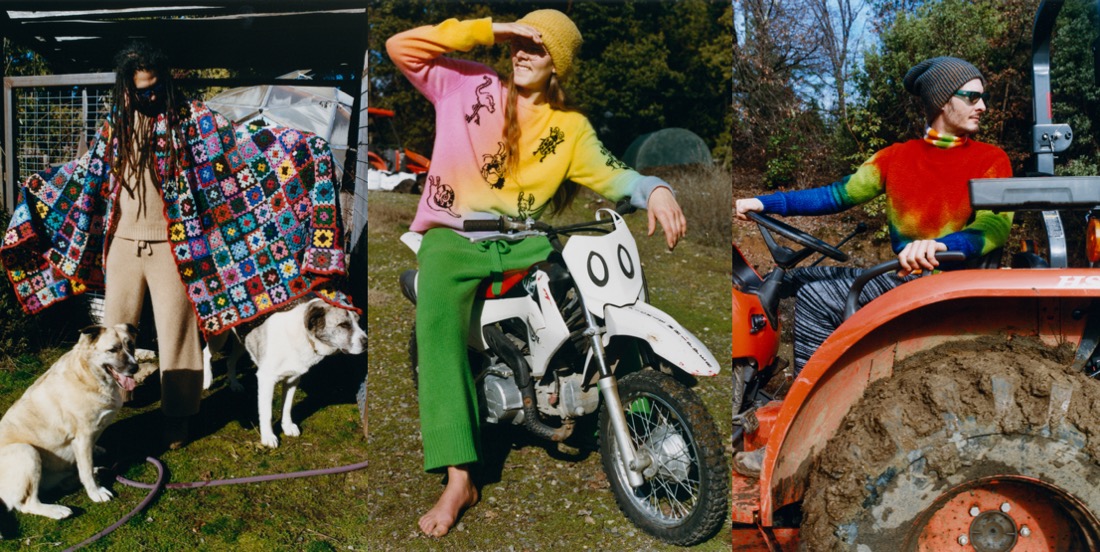
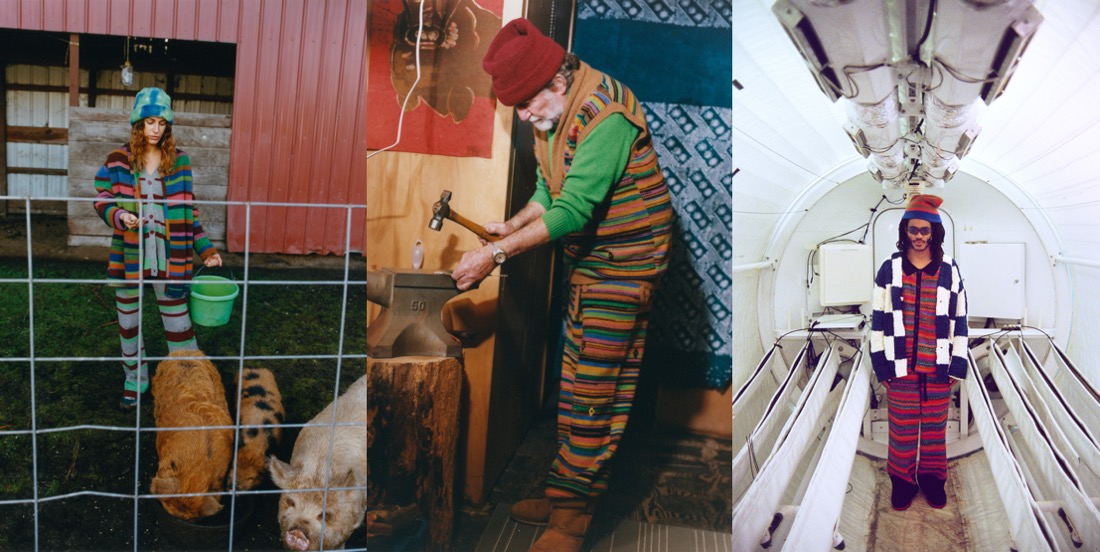
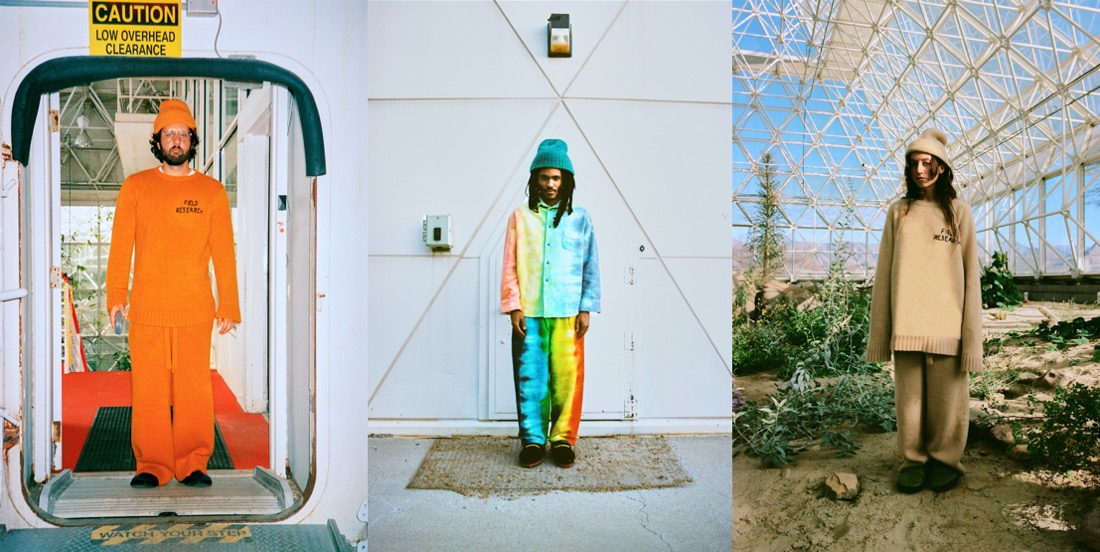
If The Elder Statesman was a music album, to me, it would be Lana Del Rey’s latest Chemtrails Over The Country Club. It’s laid-back, it’s care-free, it’s soothing. Greg Chait‘s California-based company makes the trippiest luxurious knitwear out there, and with every season, he manages to expand his world in a natural, considered way. The pre-fall 2021 collection was photographed on a troupe of homesteaders and pot farmers in Northern California, and the autumn-winter 2021 line-up at Biosphere 2 – an environmental simulation in Arizona. In both contexts, Chait’s sun-drenched, signature style is key: clothing engineered for durability, warmth, and optimum vibes. For the latter collection, Mordechai Rubinstein, the photographer and hippie dandy, offered his eye for a swirling tie-dye collaboration. There is a new crochet program in which studio scraps are knotted into trousers and hoodies, each one unique and groovy. The brand’s new fabric, a cotton-cashmere herringbone, was cut into button-downs and casual pants, which were hand-dyed in a lot behind the studio. The inside of the herringbone is electric with color and the exterior faded, a result of the fabric blend. Chait describes it as sort of a happy accident; cashmere takes dye well, cotton doesn’t. Going through the entire collection you get the sense that Chait and company are having a great time, trying to stay smart, small, and sustainable. And it pays off!

Collage by Edward Kanarecki.

Grounded Approach. Eckhaus Latta AW21

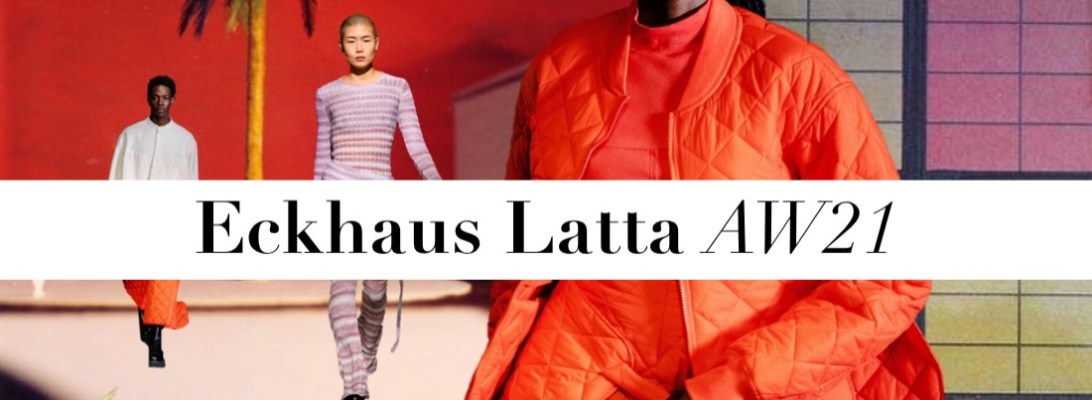
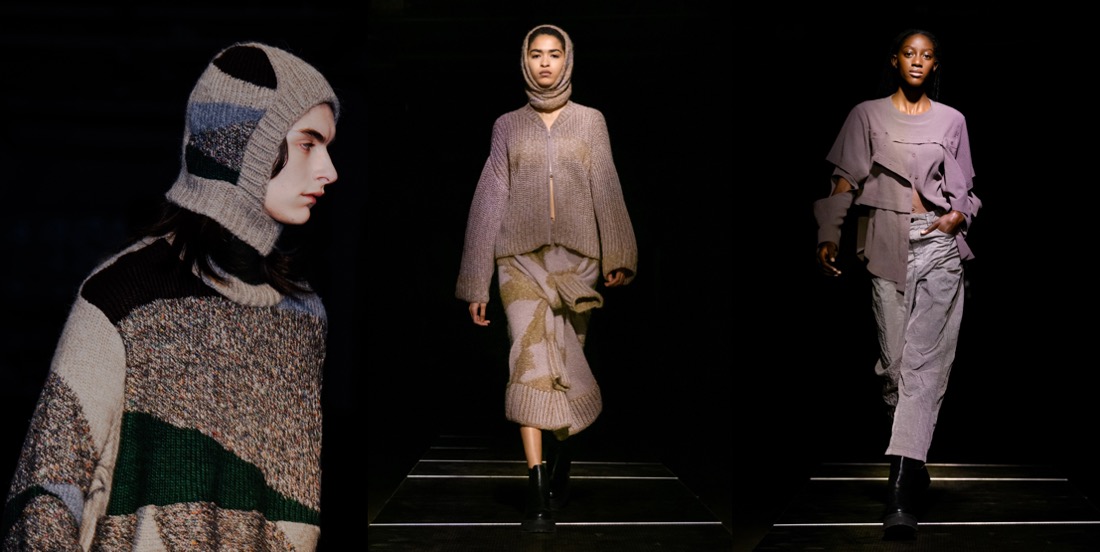
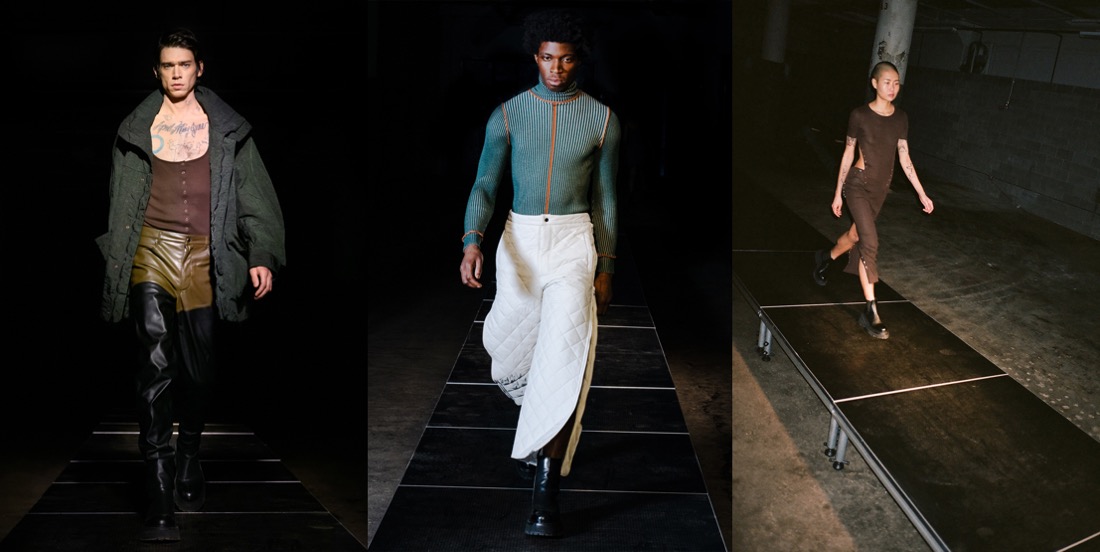
Like many people during this period, Zoe Latta and Mike Eckhaus had a mood rollercoaster. As the duo explained on a Zoom call with Vogue that bummed-out vibe provided a creative spark, suggesting that their focus ought to be on comforting shapes and textures and a somber palette. The Eckhaus Latta duo went on to report that, thankfully, they are feeling more optimistic now – and that they are eager to get back to fashion business as usual, with live events and people around, but in the meantime, like the rest of us, they’re making do. Perhaps accidentally, it’s that sentiment that served as the red thread through their autumn-winter 2021 outing. The most arresting idea the designers explored this time out was the deconstruction of familiar silhouettes in ways that created artful voids in the clothes or that made them adaptable into different forms. It was a poetic expression of our current state, a year into the pandemic. Eckhaus and Latta also played with optical patterns, like trippy rib knits and a black-and-white jacquard, and with ways of giving a sense of hand to synthetic fabrics. The collection was small, but thorough; every look was wholly considered, from form to detail. Perhaps the collection’s most admirable quality, though, was its grit – though we often look to fashion for fantasies of the future, that kind of grounded approach is necessary. This Eckhaus Latta line-up not only captured the general mood, but somehow it made it look… cool.

Collage by Edward Kanarecki.