


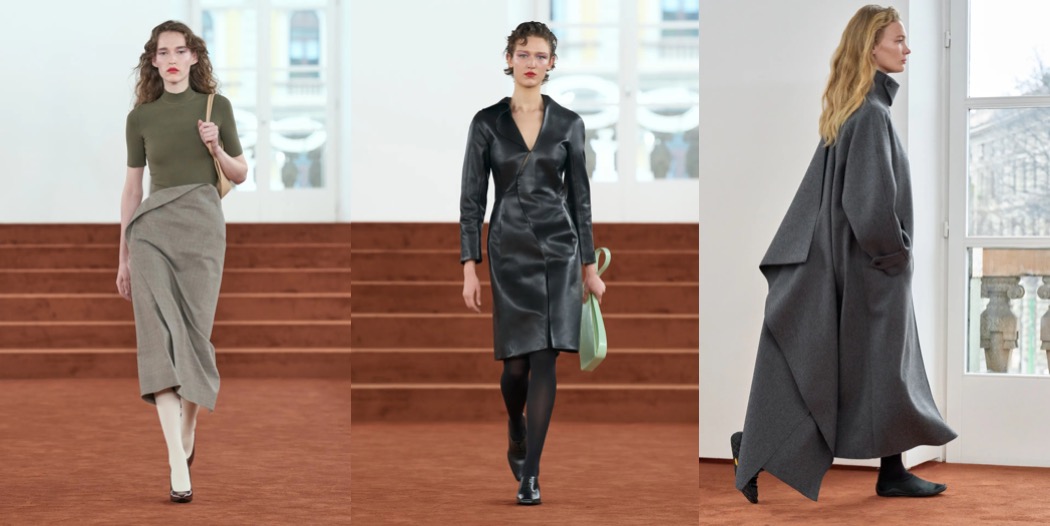
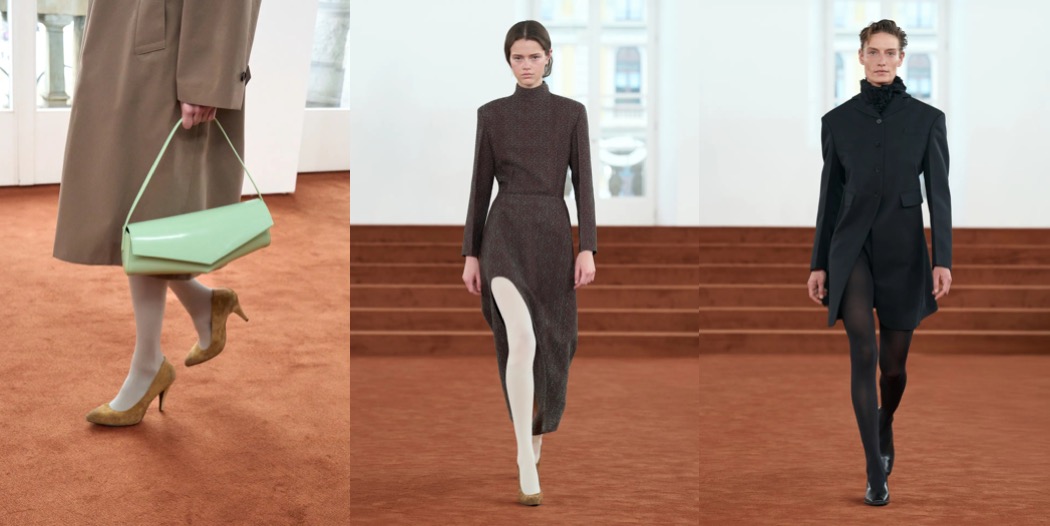
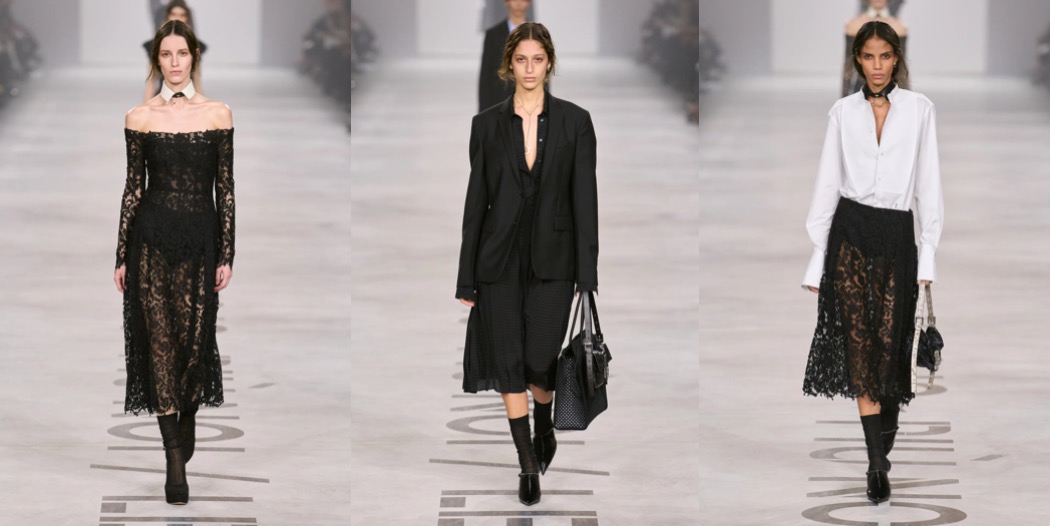
Simone Bellotti‘s sophomore collection for Jil Sander is simply sublime. I love how he compared it to an olive dropped into a martini: that seemingly unnecessary touch that makes all the difference, transforming the drink into a perfect cocktail. Although his approach to the brand is radically minimalist – focused on the precision of line and the study of proportion – within that monkish asceticism lies a powerful erotic tension.
A decorative ruffle running down the side of trousers, a high slit cut into the back of a coat, skirts provocatively spliced at the seams to reveal flashes of white-stockinged thigh beneath – these blink-and-you-miss-it gestures make a smoldering difference. Notably, much of the action happens at the back of the garments, which feels especially gratifying in an age when we so often see clothes only from the front, flattened onto our screens.
Next to Bellotti, other contemporary “minimalist” brands – such as Fforme or Veronica Leoni’s Calvin Klein Collection – appear pale and insubstantial.




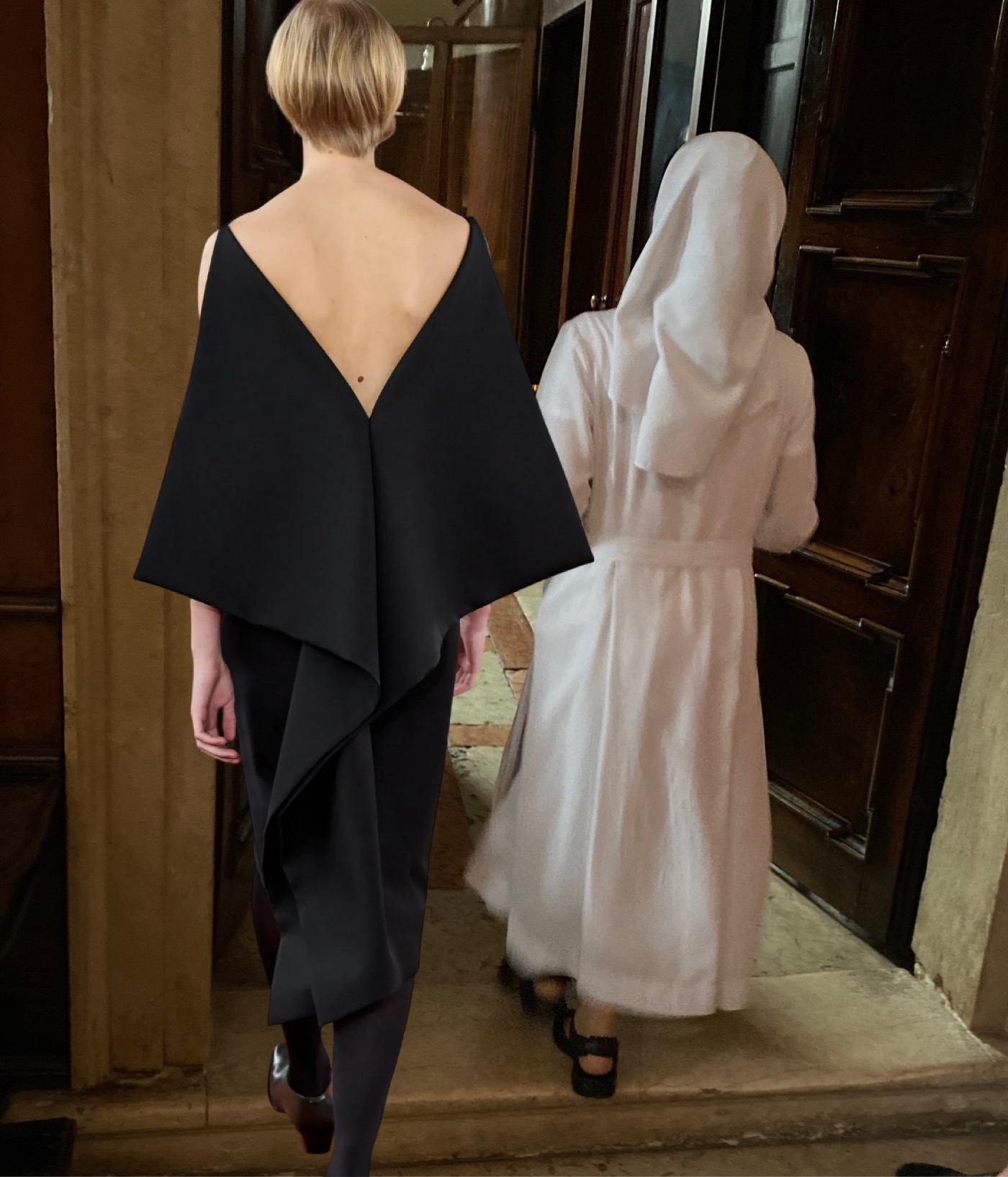
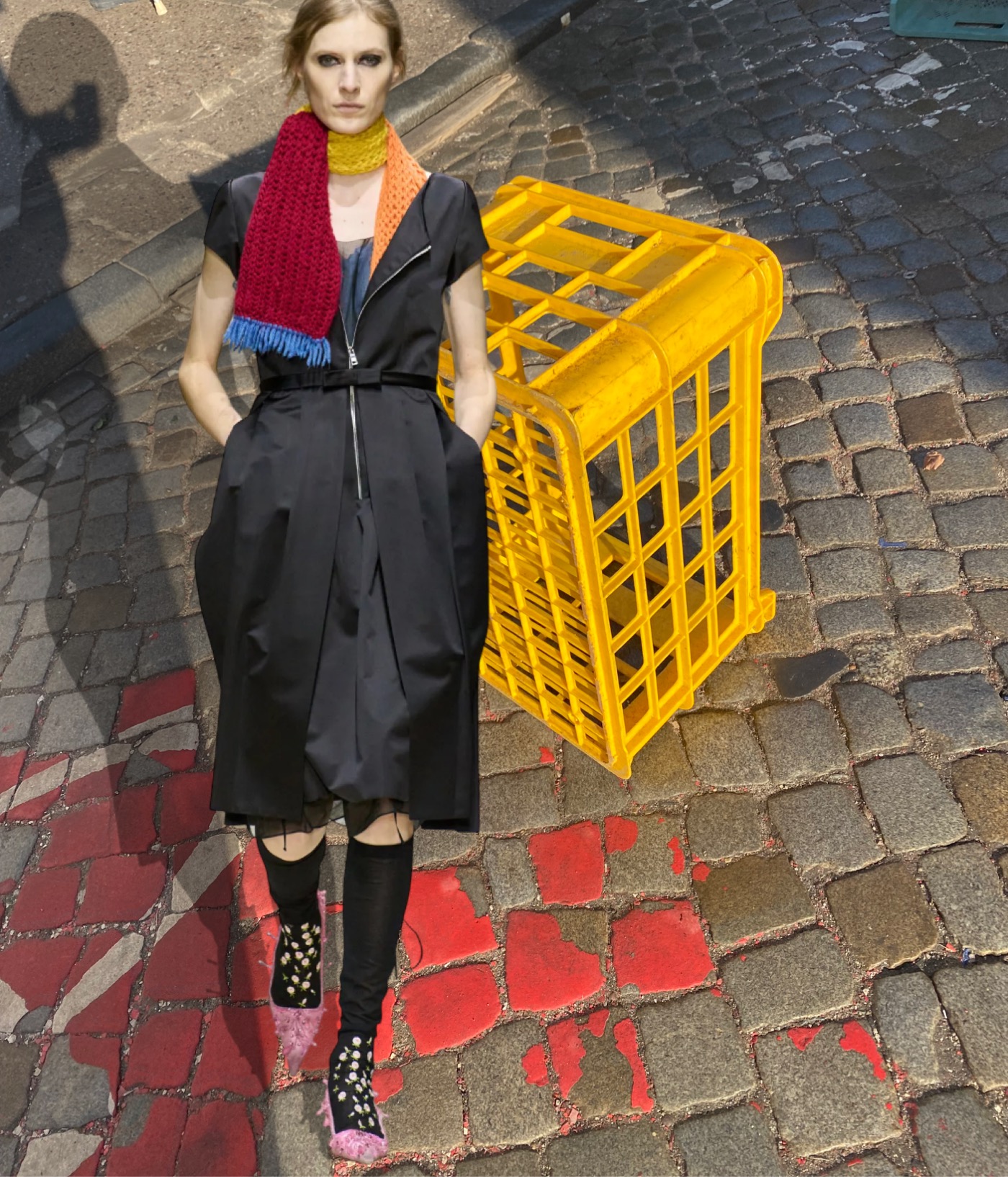
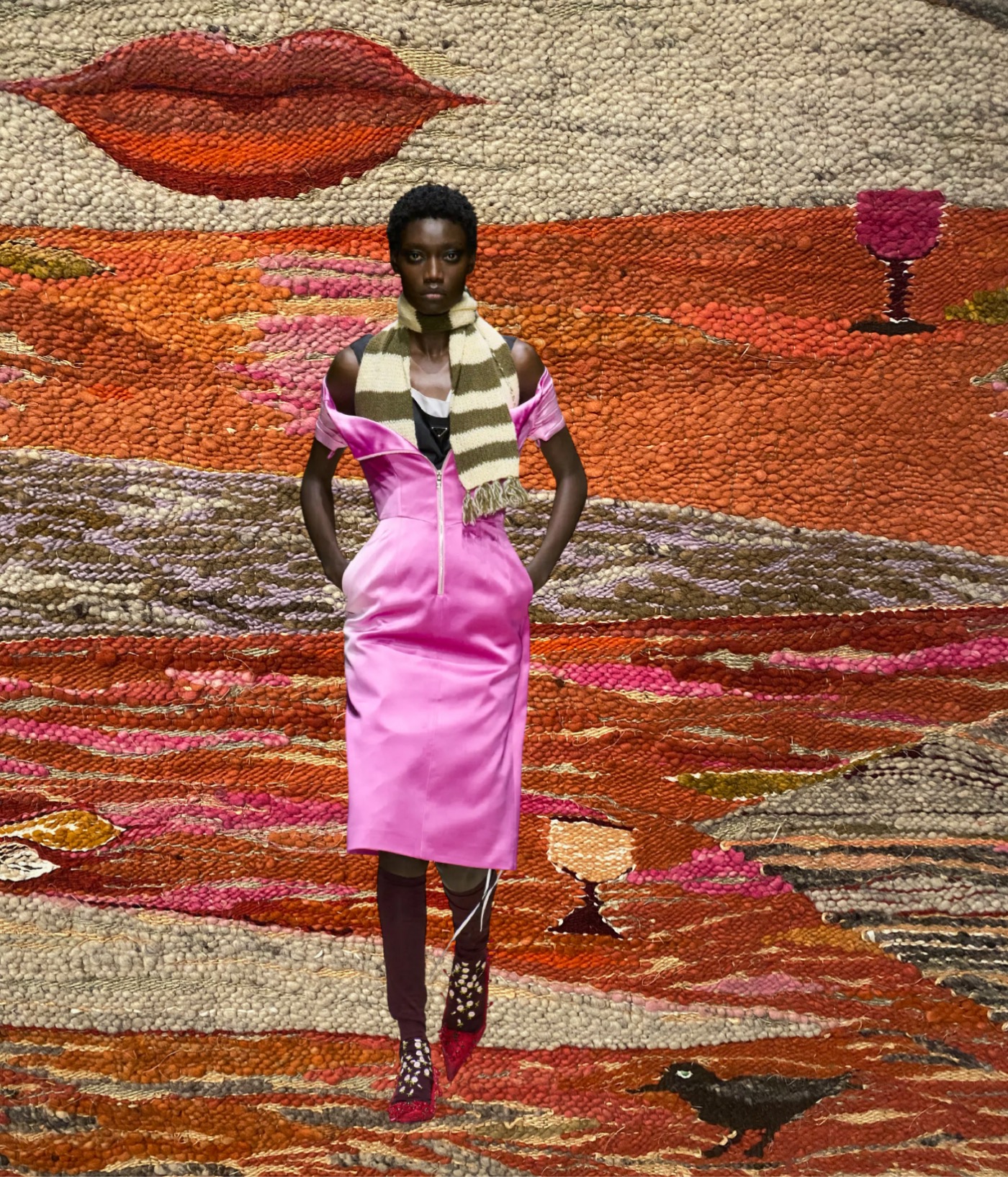
Collage by Edward Kanarecki.
Don’t forget to follow Design & Culture by Ed on Instagram.
Hey, did you know about my newsletter – Ed’s Dispatch? Click here to subscribe.









































 Design & Culture by Ed