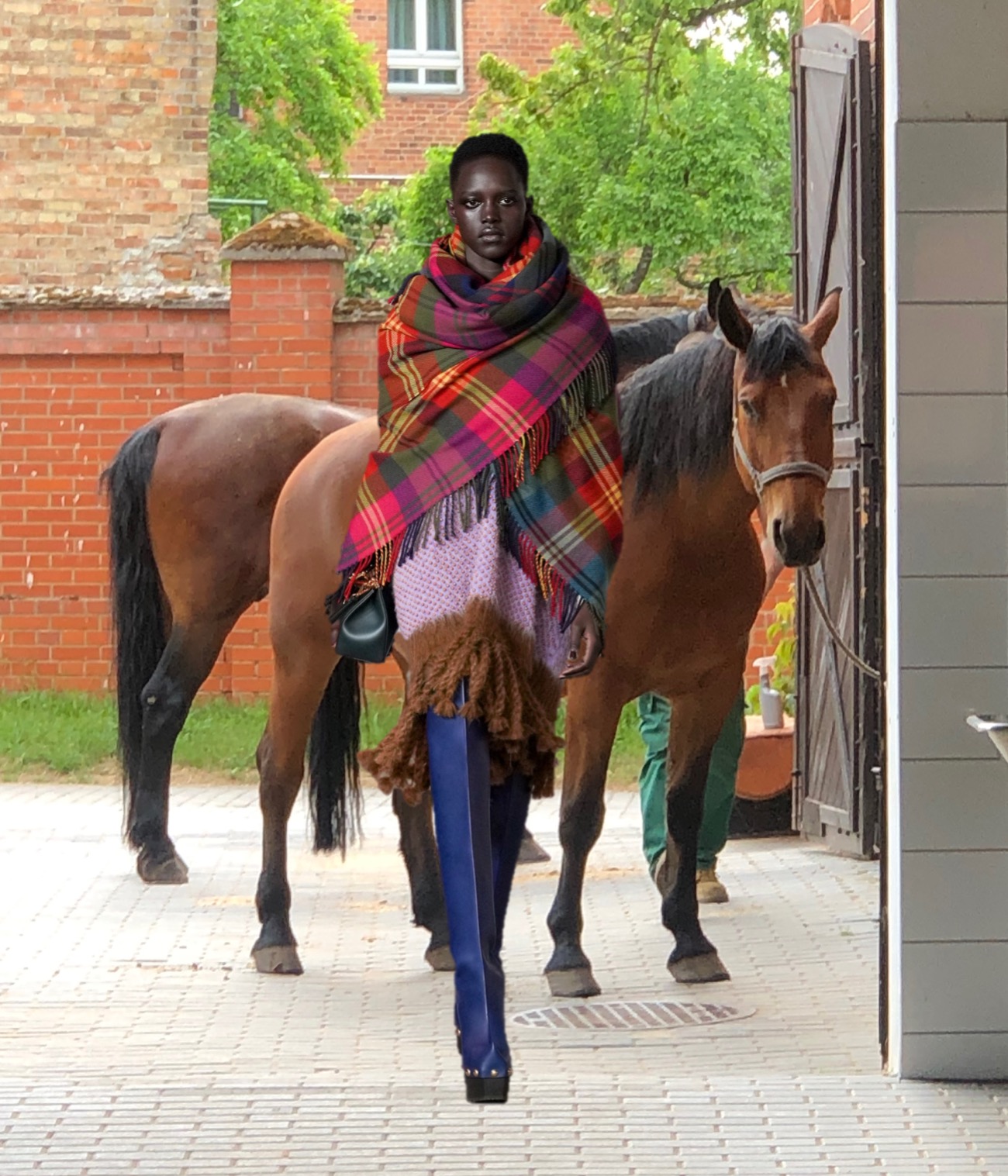
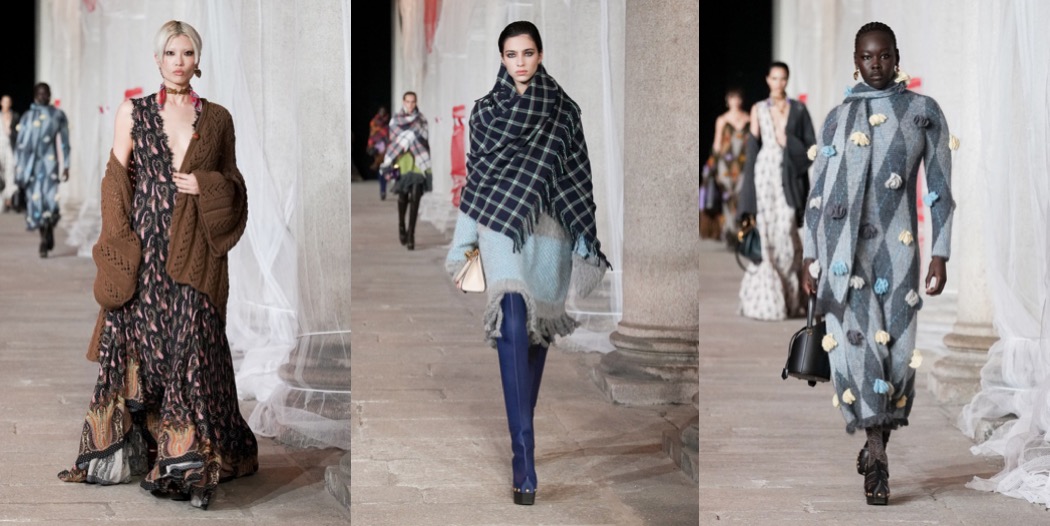
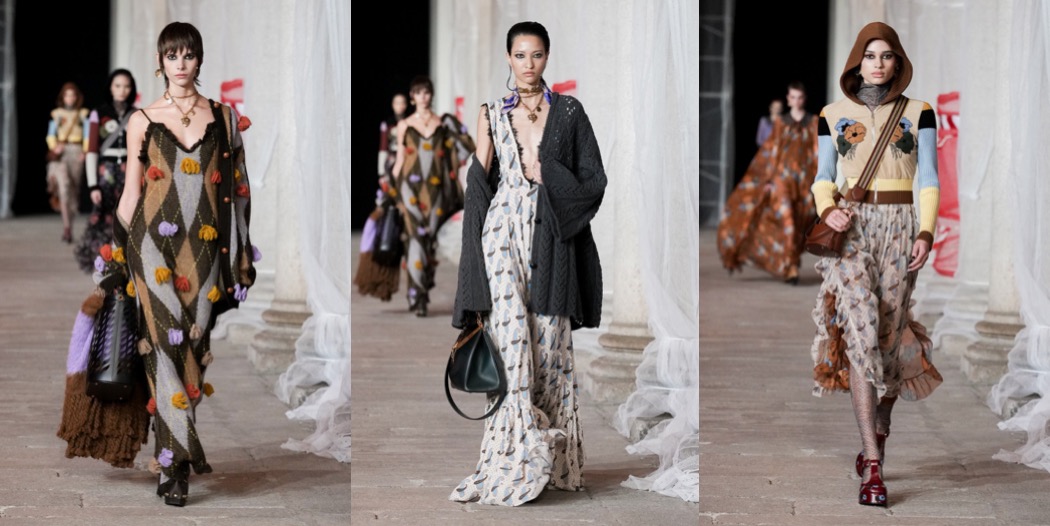
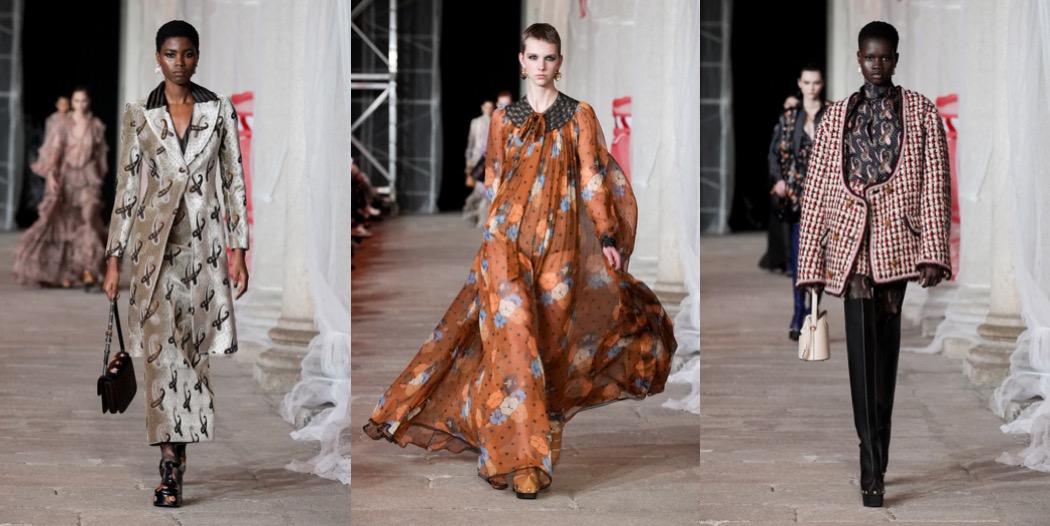
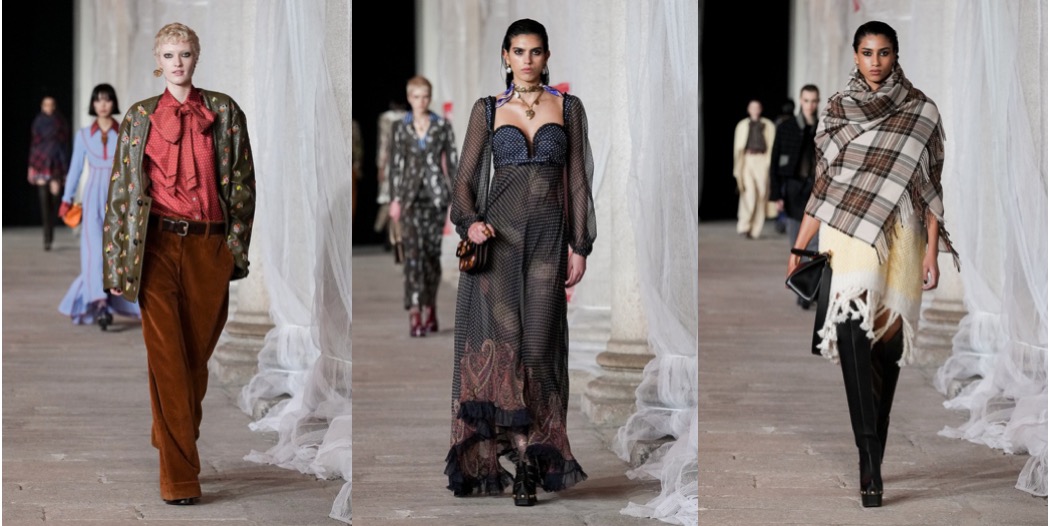
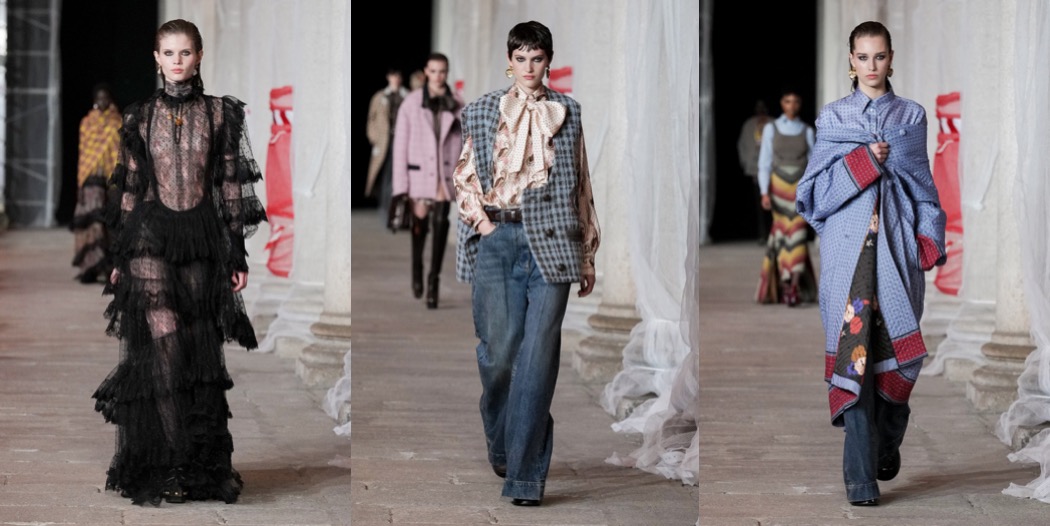
Marco De Vincenzo made some progress at Etro, but it’s still a long way to go. His menswear collection from January felt like the right direction. The designer, however, chose a different and very questionable approach for his autumn womenswear. He’s mining the archives, and “trying,” he said, “to get to the roots of my research.” That means coming to terms with the label’s heritage of pattern-mixing and boho-dressing, an aesthetic that looks to 1970s bohemia rather than the structured, geometrical precision and the rhythmic repetition of quirky patterns he favors. That’s clear he has a hard time with connecting these two worlds. The designer attempted his luck with lightness of the flou – which he never worked with – letting in some breezy construction of flounced, ruffled dresses, the imaginative clashing of patterns so inherent to Etro’s house-codes. The bohemian flair is, after all, the synonym of the brand. In the new collection, it felt overworked. Especially when styled with the thick plaid shawls. Some of these outfits looked simply… wrong. And not in an ironic way. For De Vincenzo, enhancing the cultivated textile expertise of Etro “is a duty.” To that end, he interspersed airy chiffon numbers with slim-fitted pantsuits featuring elongated tailcoats, cut in rich 18th century brocades, or with slightly oversized boxy jackets or coatdresses made in malleable multicolored knitted textures and featuring lapel-less round-shaped, double-breasted fronts. “I haven’t changed,” he said. “I’m still the one who takes risks and doesn’t compromise.” Hopefully after all the errors, he finds a method to his vision of Etro.
Collage by Edward Kanarecki. Don’t forget to follow Design & Culture by Ed on Instagram!
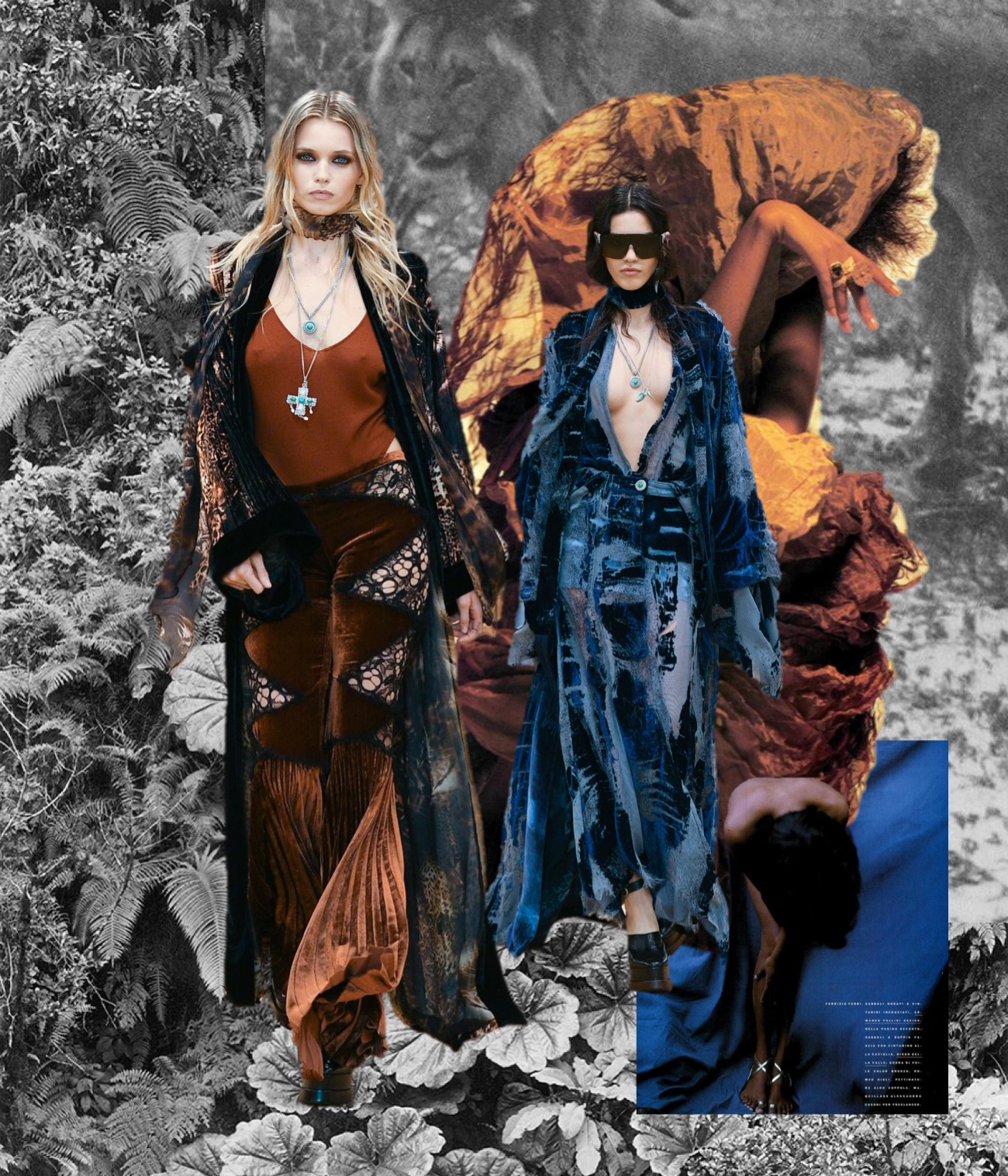
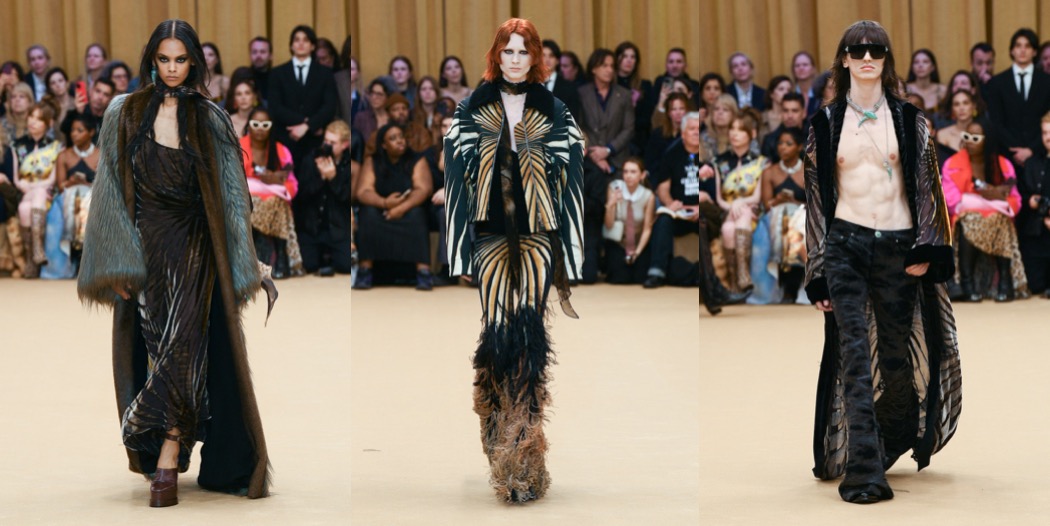
Fashion in Milan doesn’t look forward, but resorts to the past in search for inspiration. It’s either about going Y2k-heavy, which gradually becomes quite nauseous, or channeling something more retro. Fausto Puglisi is in the latter camp with his autumn-winter 2023 collection for Roberto Cavalli – and it’s surprisingly good. I can’t remember a decent Cavalli collection since the founder of the brand exited the creative role. Puglisi’s first offerings for the brand were hard to digest, and thankfully he toned it down. The new season vibe is hedonistic, with patchwork leather trimmed in crystals, animalia motifs of many kinds, and piles and piles of faux fur. Denim was another focal point. Jeans are how Cavalli got his start; backstage Puglisi talked about the house founder’s early days, when he tooled around Italy scrounging for denim scraps that he collaged into hippie treasures. They were the inspiration for some of the most hands-on, highly embellished pieces Puglisi has made yet at the label. A pair of bell bottoms were so shredded and shaggy they almost looked like fur, too. A 2022 trip through the American Southwest is still reverberating with Puglisi, and he conjured the aesthetic with tooled leather, silver studding, and turquoise beads. This collection lived up to Roberto Cavalli’s reputation for excess, but in a pleasing way.
Collage by Edward Kanarecki. Don’t forget to follow Design & Culture by Ed on Instagram!
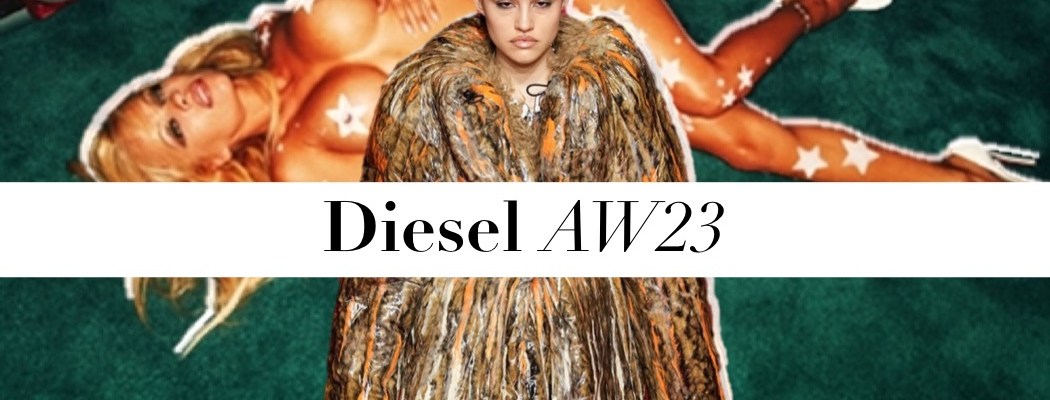
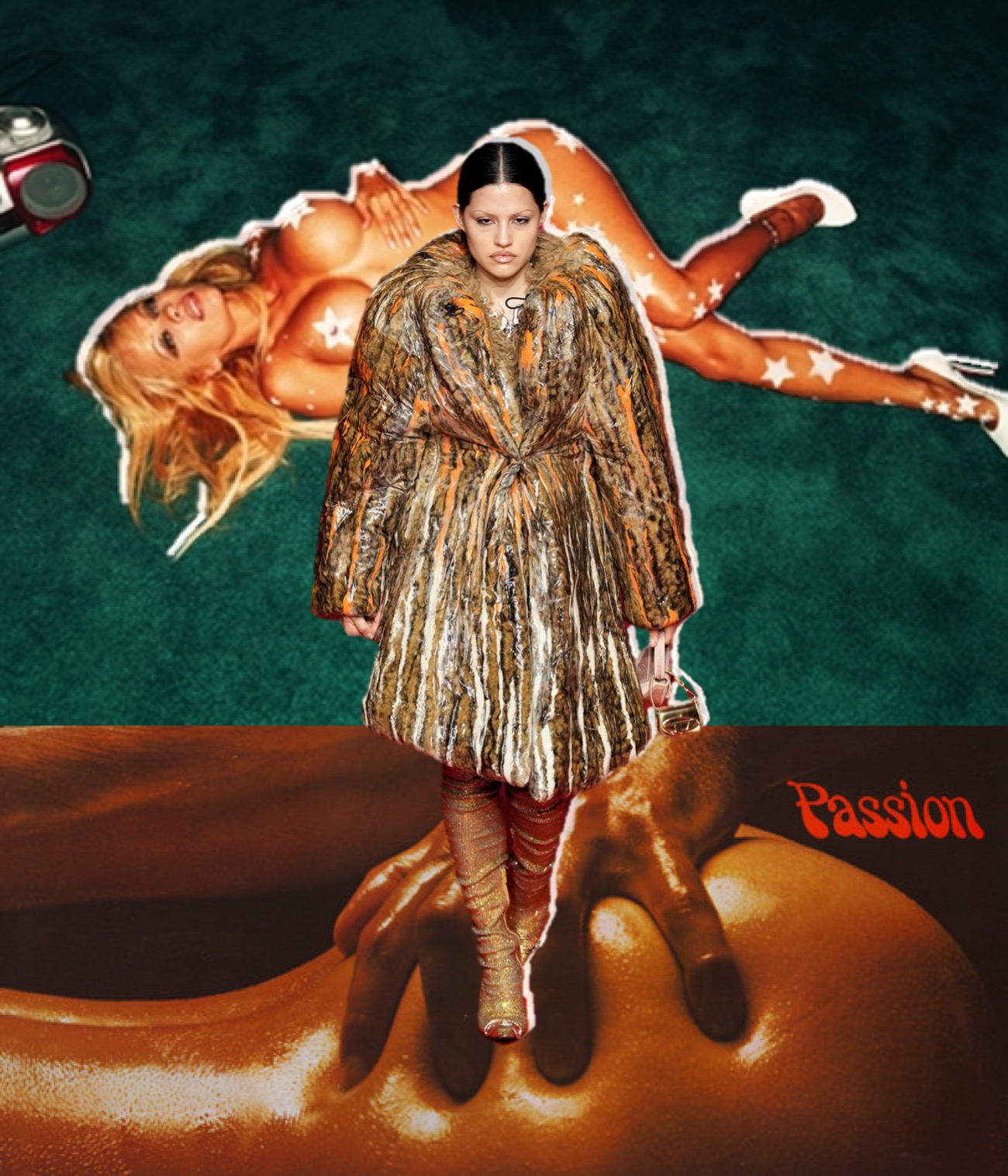
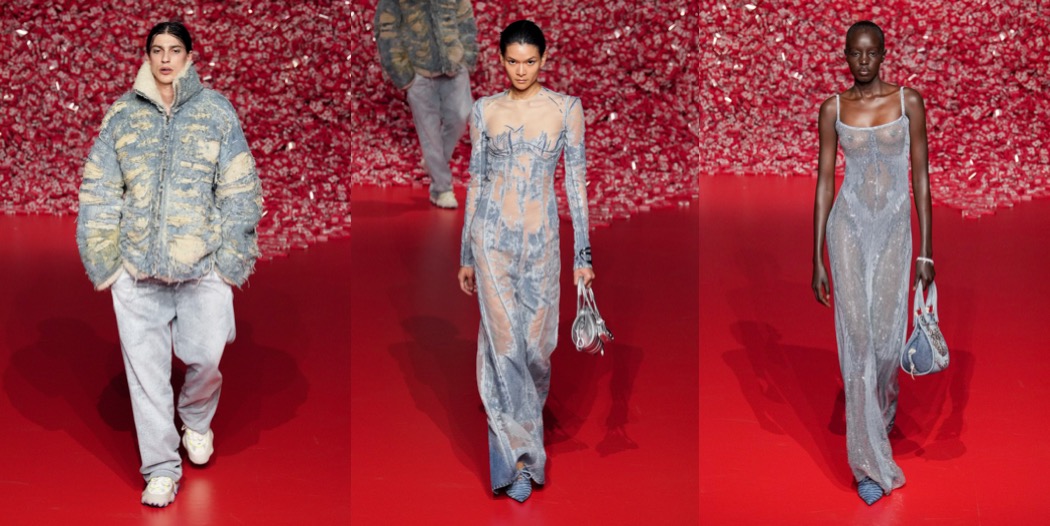
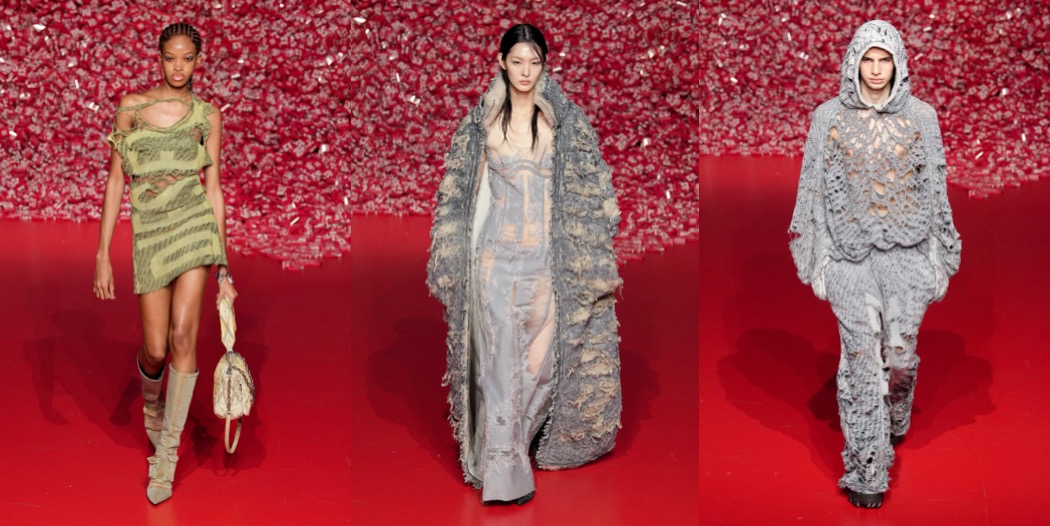
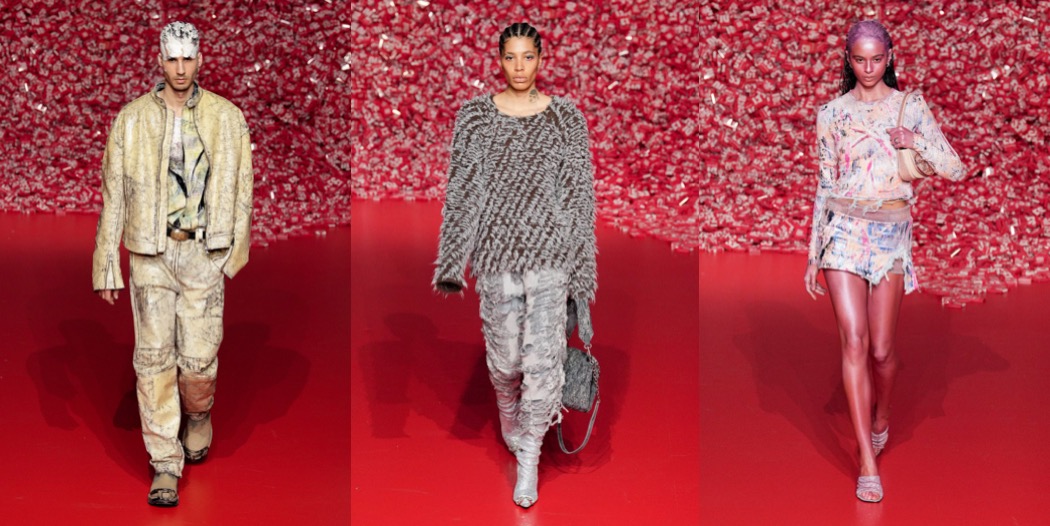
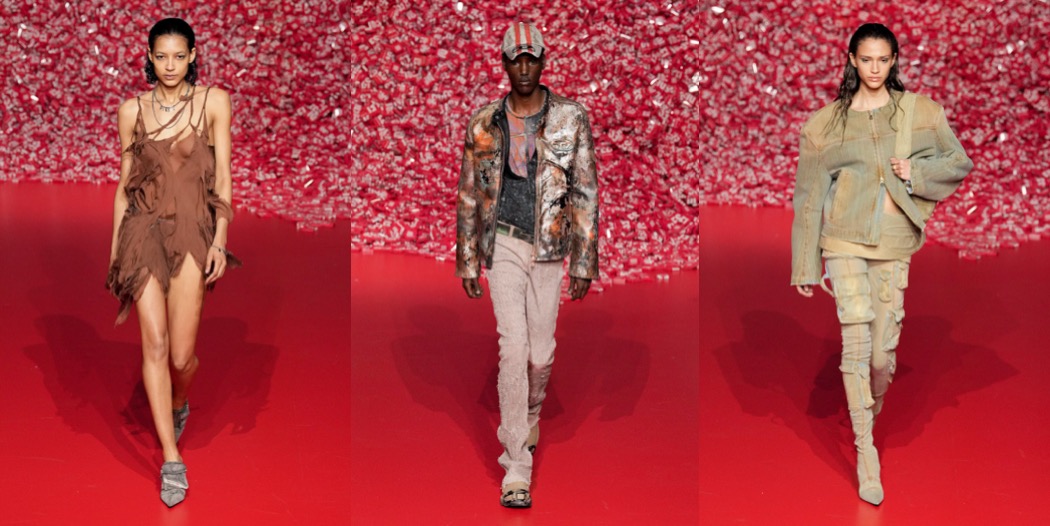
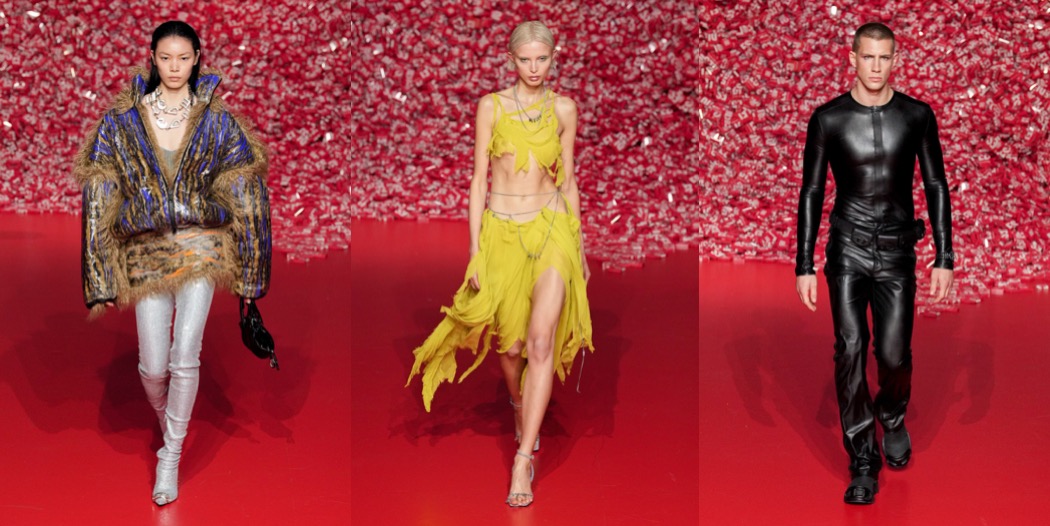
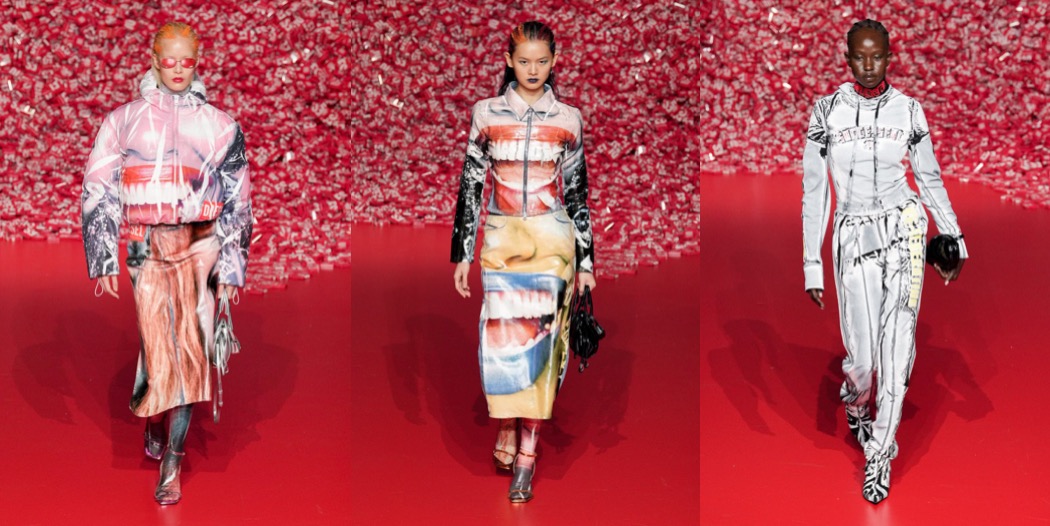
Ecstatic moaning on the soundtrack and 200,000 boxes of Durex condoms on the runway both suggested that Glenn Martens will deliver a sex-positive Diesel collection. Before the autumn-winter 2023 show, the designer stated that in April the brand would be handing out half a million free company-branded Durex prophylactics in its stores around the world, promoting fun and safety. “We are a very cheeky, straightforward brand”, the designer added. Also cheeky were the first look’s Y2k-inspired low-low rise jeans – whose moto styling accelerated us into this collection. As is de rigueur at this house, denim innovation was front and center. But in overall, the line-up had nothing new to offer, as most of the ideas were recycled from Martens’ first offerings for the brand. Nomadically shaped knitwear had been finely plucked by laser into wild, but cool disrepair. Two cleverly tufted knitwear pieces – one pink on black, the other gray on black – were there to reflect Marten’s stylistic penchant for grown-out hair dye. Painted and over-layered utility wear in a subtly wild paint-splash camo contrasted with double layered jersey pieces from which the outer sometimes was peeled back to reveal the inner. Digitally distorted pictures of over-toothed smiles were used as close up prints on the phase of near-climax fits. The most intriguing pieces of all were from the hand-fashioned artisanal section; these included a long jacket of layered lining and a moto jacket that referred back to the opener artistically melted and then layered with another skin – accidentally vaguely condom-like in consistency – of membrane. Martens said rightly that he believes his Diesel design language is becoming ever more distinctly identifiable.
Collage by Edward Kanarecki. Don’t forget to follow Design & Culture by Ed on Instagram!
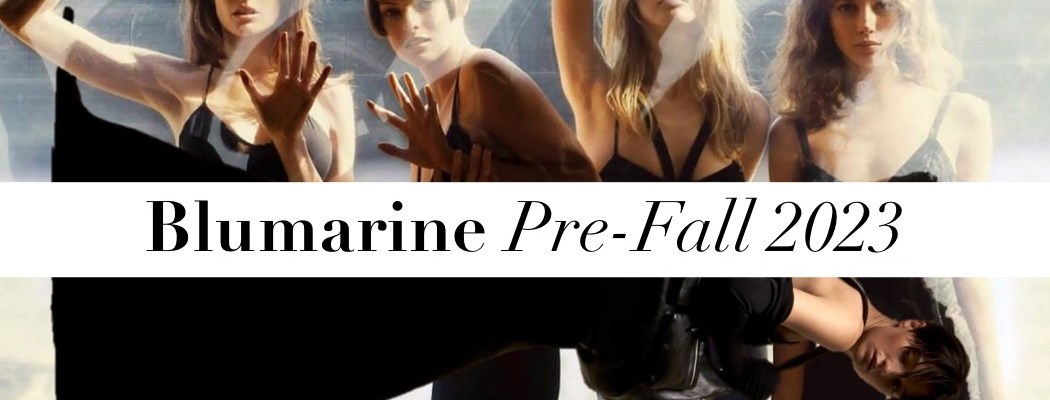
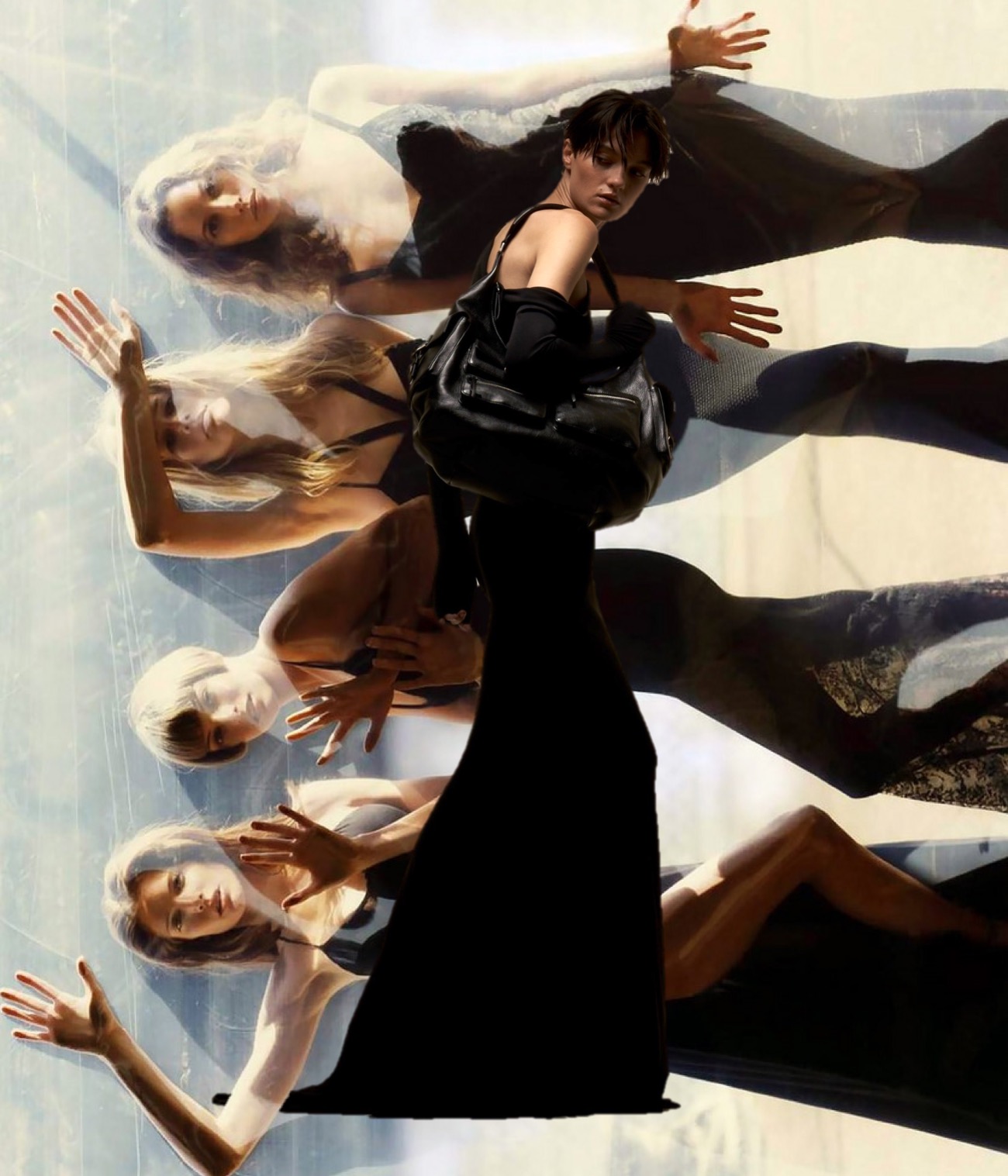
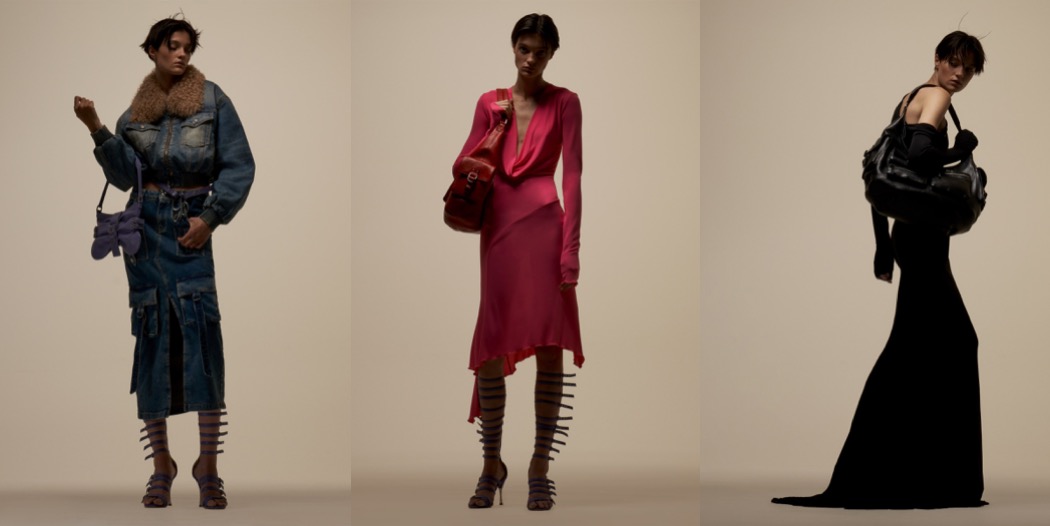
“For this season I was thinking about punk rock, something strong and sexy, something provocative,” Nicola Brognano said regarding his pre-fall 2023 line-up for Blumarine. So far, Brognano’s instincts haven’t failed him. He has put Blumarine on the map, creating a certain hype and some commercial blockbusters. He wants to keep the momentum going. The new item he’s resurrected from the Y2K-era that he was one of the first to champion are cargos cropped below the knee, the infamous knickerbockers that we all have happily pushed to the back of our wardrobes. But no, they’re back, and Brognano is responsible for saving them from oblivion. Proposed in délavé denim washed “with a dirty effect,” as Brognano pointed out. As an alternative to the sure-to-be-a-hit proposition, humongous flares made a reappearance, as did liquid mermaid dresses in viscose, this time worn under ultra-cropped, round-shaped piuminos, or with enveloping knitted coats mimicking a furry effect. Ruching replaced embellishments as a decoration, inserted in seams on denim fitted shirts or on denim trousers worn inside-out, and extended into sort of trailing ribbons dangling from hems or from voluminous knitted draped jumpers. Colors were kept moody, a far cry from the macaron coyness of candy pinks and nursery blues of the label’s beginnings. “She’s sexier, dirtier, her look is almost wrong,” said the designer. “A bit grungier, more grown up, more real.”
Collage by Edward Kanarecki. Don’t forget to follow Design & Culture by Ed on Instagram!
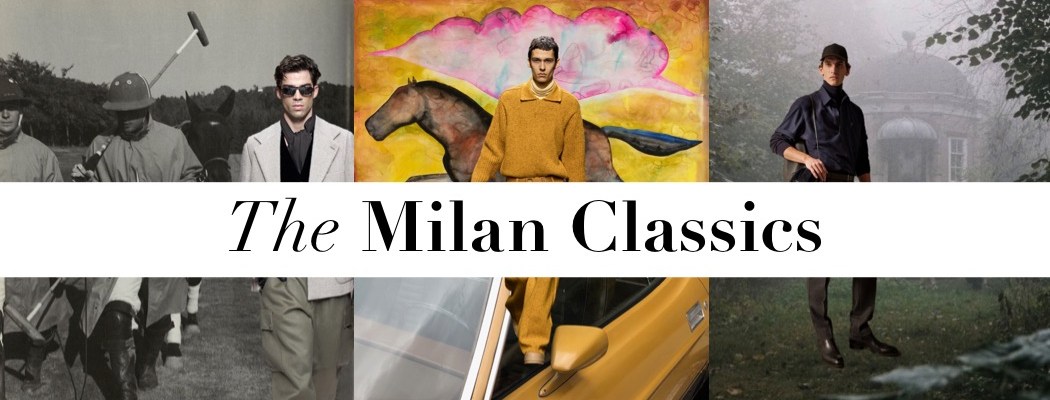
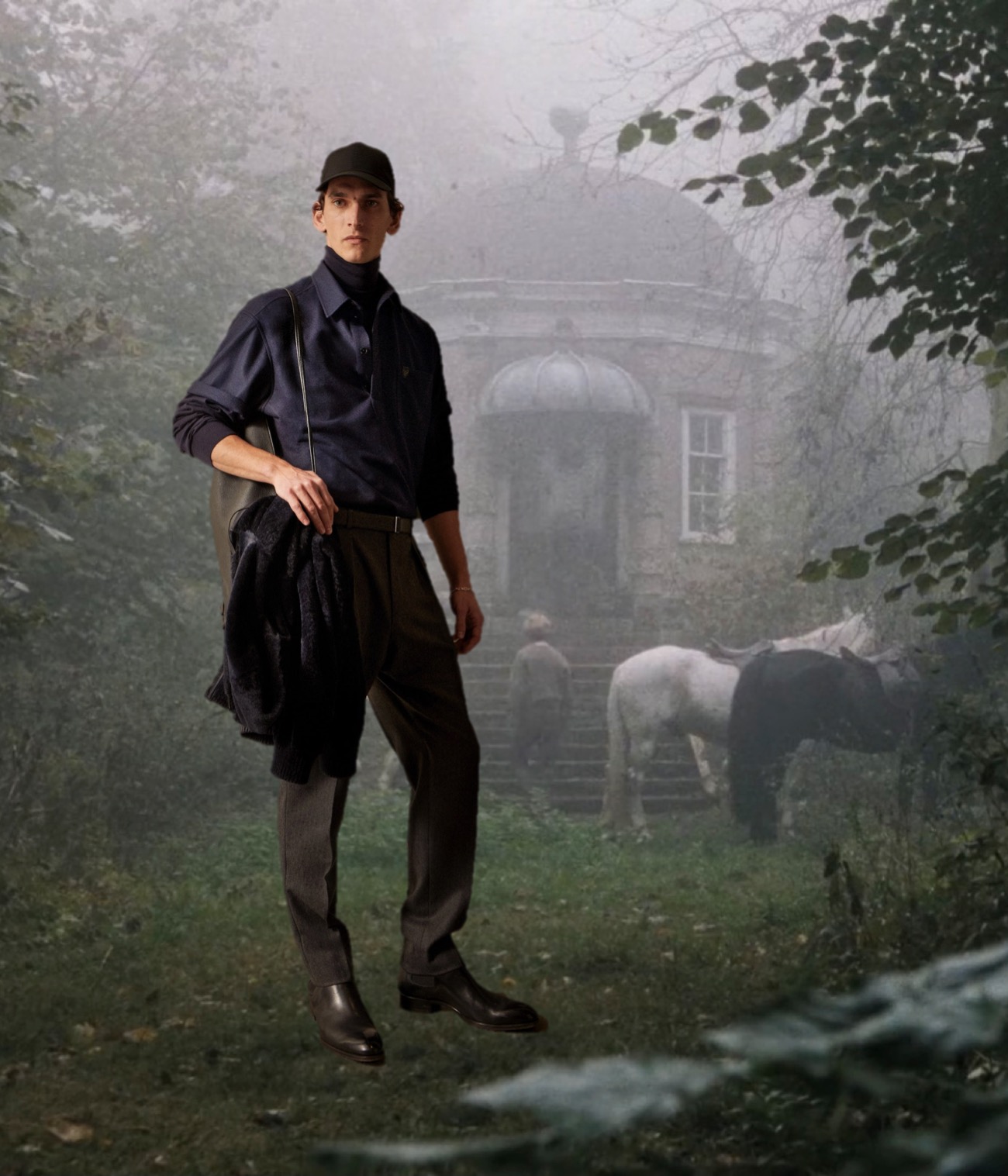
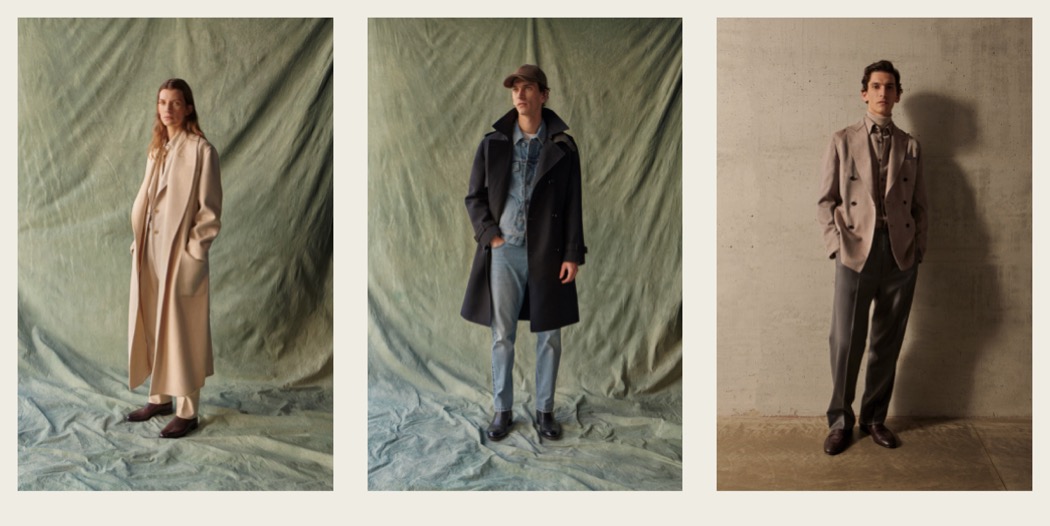
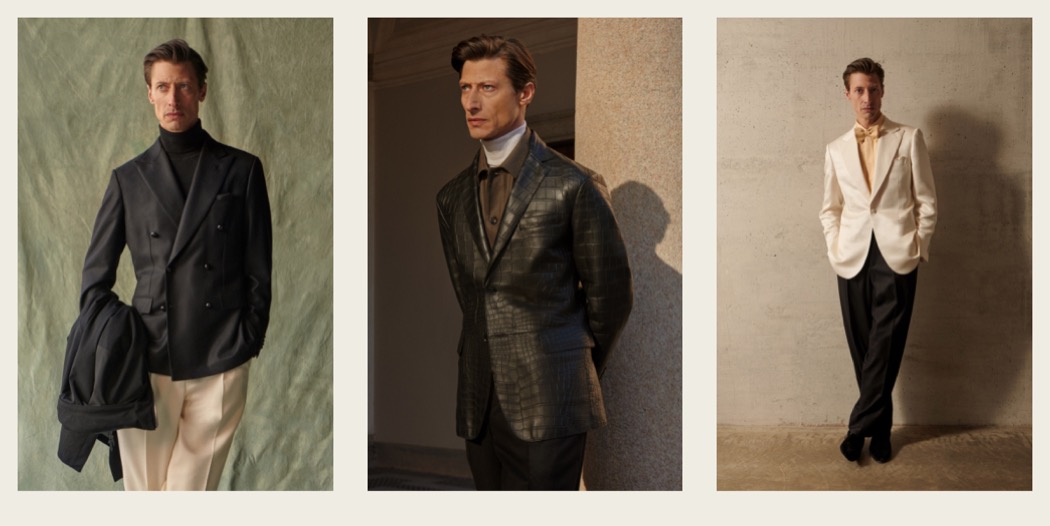
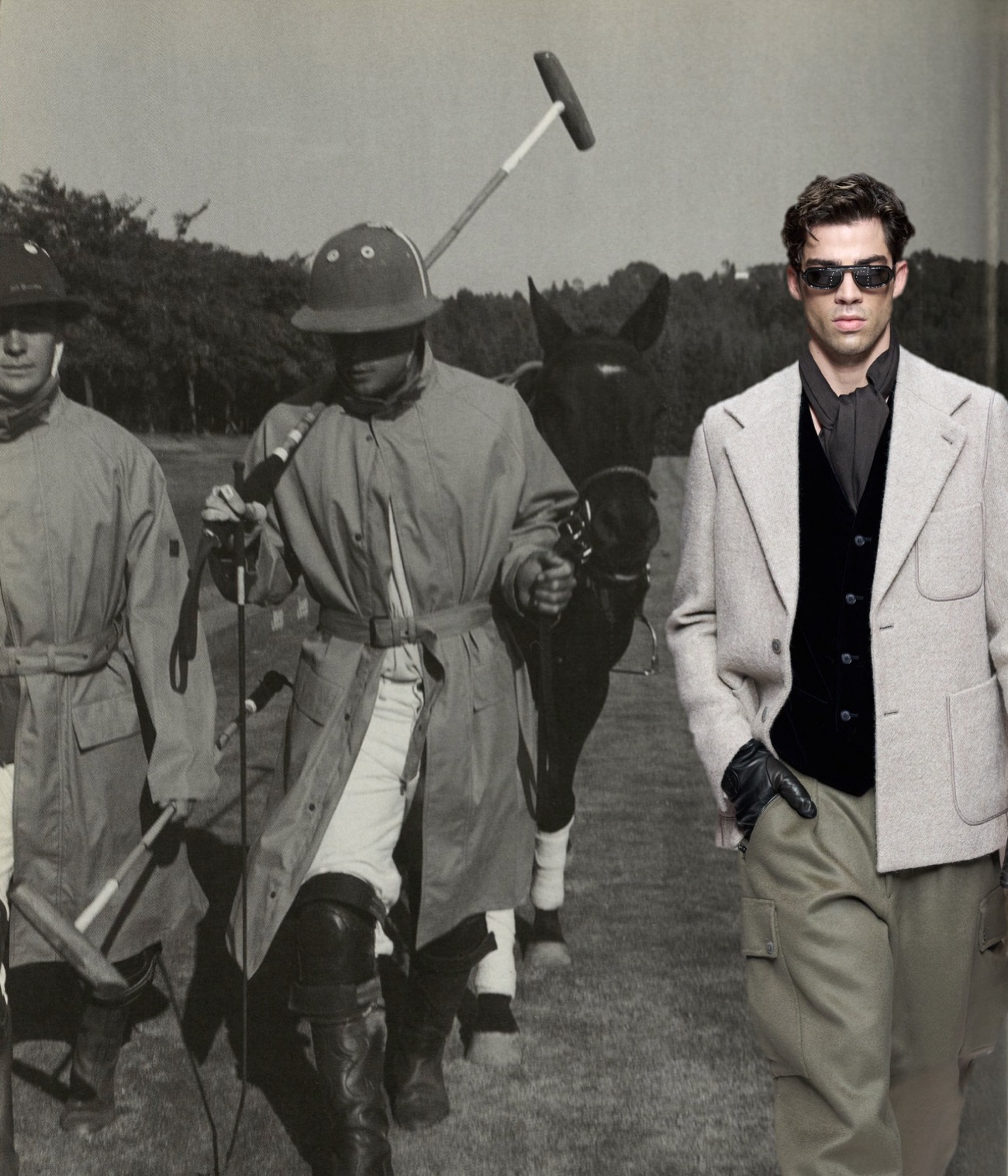
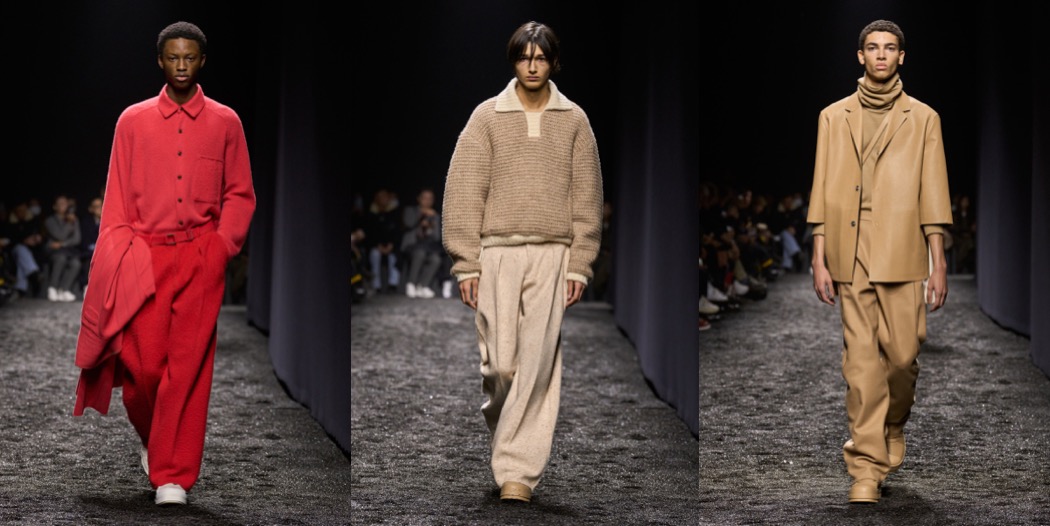
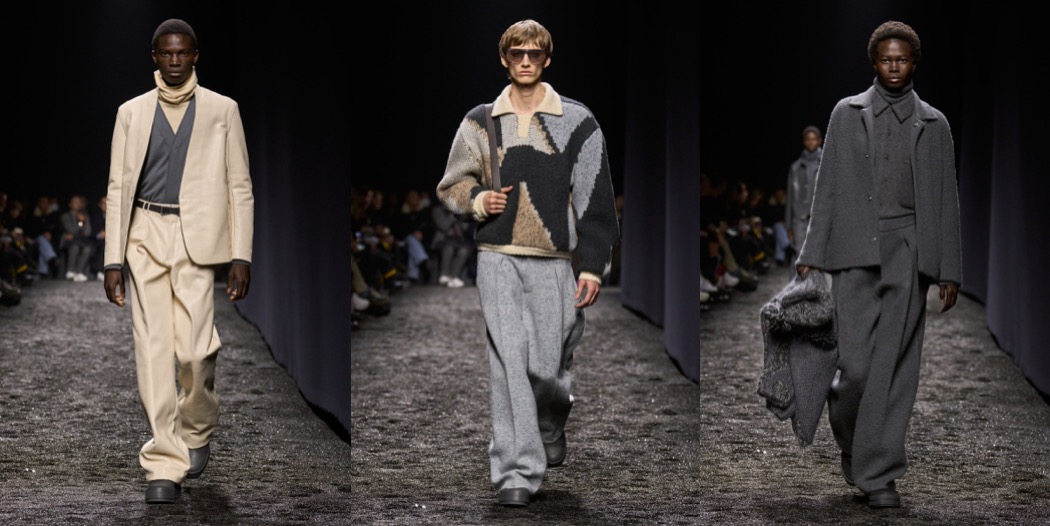
This Milan Fashion Week, the three Italian brands known for exquisite tailoring and eternal elegance – Brioni, Giorgio Armani and Zegna – have really nailed it with absolutely gorgeous collections filled with investment pieces and simply beautiful garments. You can’t go wrong with the classics!
Brioni’s Norbert Stumpfl declared this season: “I have the most excellent team of artisans behind me, and what they are able to achieve is a dream come true for me”. He has every reason to feel so elated, as what Brioni stands for is an idea of luxury which is as refined as it is private and understated. “As a designer, I don’t need to scream,” he said. Every season, the unbelievable quality of fabrications and execution seems to reach new heights, a sort of limitless research whose results never cease to amaze. For autumn-winter 2023, cashmeres were proposed in varieties so weightless, a whisper probably would be heavier. Vicuñas and alpacas were more ethereal than a passing cloud; deerskin, suede and nappa were as soft to the touch as the skin of a newborn. Going through a Brioni collection makes for an almost preternatural sensorial experience. The same sense of rarity and sophistication was expressed in the subtlest of color sensibilities, with tones so suave they brought to mind Caravaggio’s chiaroscuro. No wonder Brioni is a Roman house: if there’s a place where the light is glorious, resplendent of every possible hue from gold to amber to topaz, that’s Rome. Stumpfl captured it in the sensuous fall palette, which emphasized the ease and fluidity of the soft tailoring that Brioni masters. This season, the play on proportion was subtle as usual, with a tad more room for enhanced comfort in longer jackets, fuller trousers, lighter and rounder shoulders. “Brioni’s style is almost invisible, not overpowering,” said Stumpfl. “It gives you comfort and confidence at the same time. We definitely enjoy spoiling our customers.”
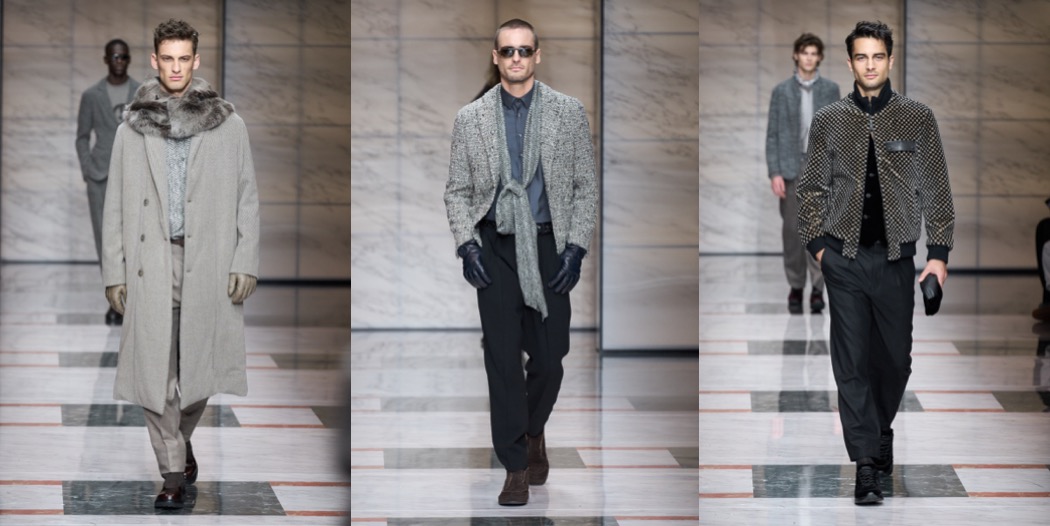
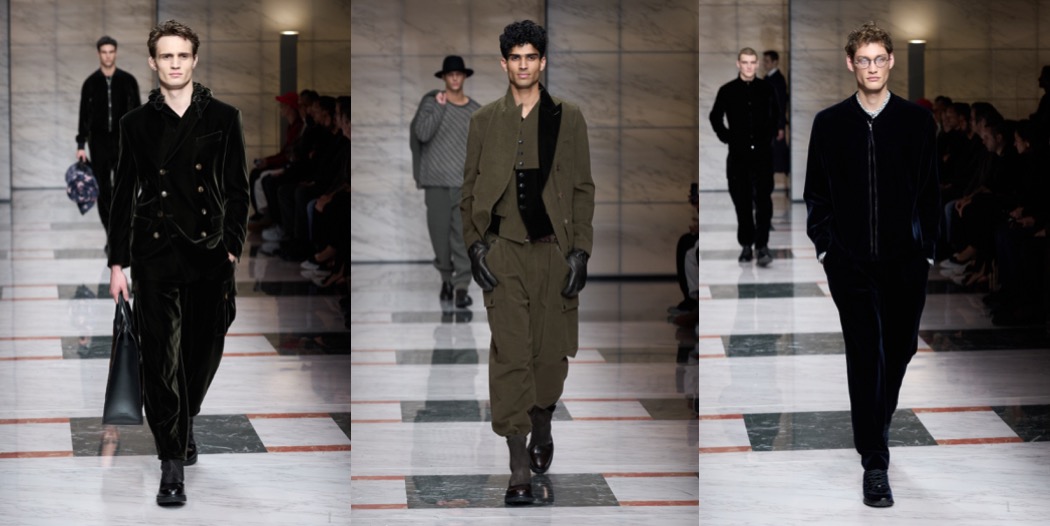
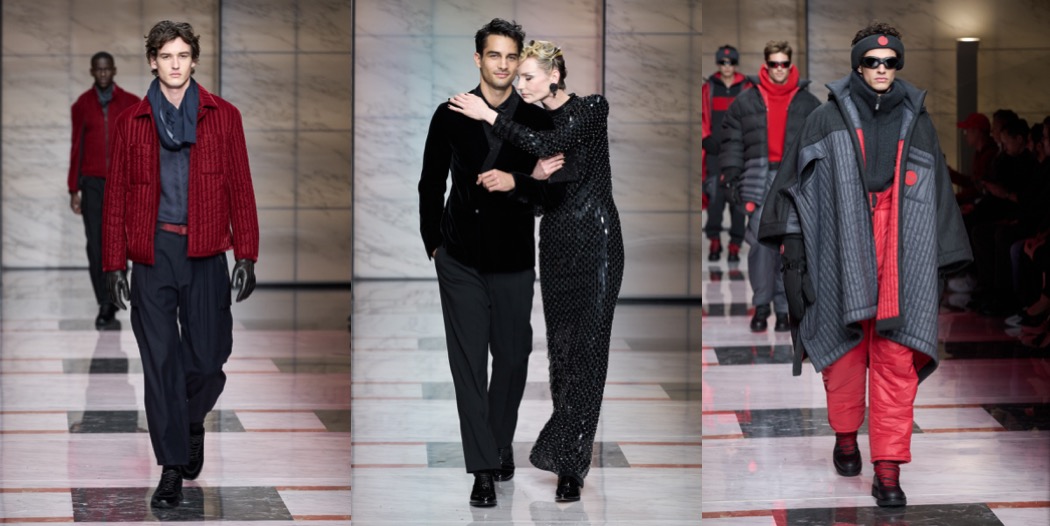
Shortly before Giorgio Armani’s now traditional runway show sports-diffusion interlude, Milan’s 88-year-old master menswear architect discreetly showed his hand. Out came two three-piece suits, one blue and the other black, in a silky looking material whose movement suggested they were almost certainly shot through with technical ingredients. Each was delicately to (the point of imperceptibly) crinkled with raised rivulets of irregular lines. As later confirmed in the notes, this was a Giorgio collection that took subtle inspiration from the architecture of Milan. The narrow paneling in leather bags, lightly padded jackets, a mixed-material sweatshirt, and even some of the ski pieces reflected the ground-floor rustication you will see in many of the city’s pre-war buildings. The geometric gridding and zigzags worked into jacquard knits mirrored the many beautifully marble-inlaid communal spaces in buildings across the city. And the richly textured gray wools, velvets, and cashmeres used in the opening sequence were this collection’s equivalents of the finely carved gray stone doorways through which you must pass to see them. This was the conceit, but it was not overplayed. You gradually suspected that the audience was positioned as his portieri, or doormen, in order to observe a steady procession pass the runway threshold dressed in a manner characteristic of Armani’s this-season conception of Milan-born menswear. That contemporary version naturally related back to his mid-’70s conception of it, but the refurbishment was full of fresh pleasures and unusual touches. Business or casual, evening or day, and post-ski weekend too, almost every inhabitant- arguably except for the pair in full length faux-fur animalia coats and wraparound sunglasses – were patently inhabiting Armani’s architecture of style.
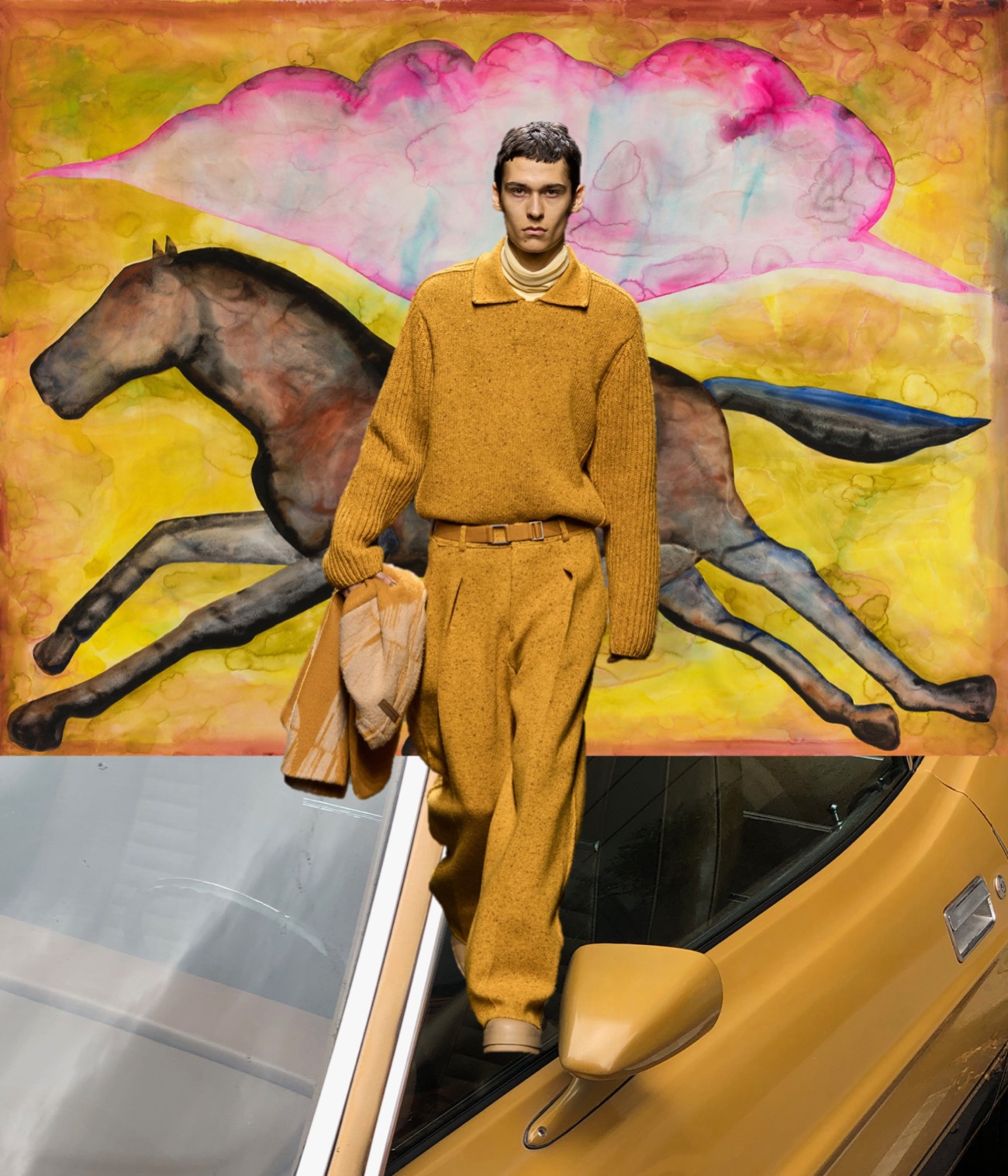
Alessandro Sartori’s lifelong study of fabric development and tailoring means that he is possibly uniquely qualified in his depth of technical knowledge as a fashion house creative director. And as the captain of Zegna, which has long been committed to vertical integration and material innovation, he is also uniquely placed to push forward the hardware of fabrication while developing his own fashion software. These attributes synced in a Zegna show that displayed the complementary relationship between both. Starting with the technical – without getting too technical – Sartori named the collection the Oasi of Cashmere as a nod to the house’s century old nature reserve as well as his ambition to broaden the fiber’s traditional application as yarn in knitwear in order to apply it in multiple fabrications. Those successfully achieved by Zegna and its owned-affiliates today included bobbled casentino, fluffy pile, sturdy bouclé, hardily rain-resistant wool-like melton, light flannel, and so many more that the house asserted that a full 70% of the runway garments here were cashmere. The remaining material was mostly recycled Zegna ‘Use The Existing’ wool, which was the chief protagonist especially in an opening gray section that employed chore coat, “tailored” (but construction free) jacket, and short-sleeved jacket as template shapers of top-half silhouettes. There was also a strong raw-hemmed collarless jacket in more recycled wool, this time undyed. Another early highlight included a hand-folded and painted leather jacket padded with down worn over a cashmere casentino shacket. The designer’s thriving template is currently based on a strong and consistent silhouette combining a wide leg-shape and a more form-fitting top half (at least when not layered with outerwear). Now the house is broadening its offer – without diluting quality – to give Zegna-heads infinite opportunity to add new elements to their wardrobe that will work in tandem with the old. Another upcoming opportunity – teased in look 21’s shirt and carried overcoat – will come when he reveals the fruits of a two-years-in-development collaboration with Greg Chait, of The Elder Statesman, in Paris next month.
All collages by Edward Kanarecki. Don’t forget to follow Design & Culture by Ed on Instagram!

















 Design & Culture by Ed