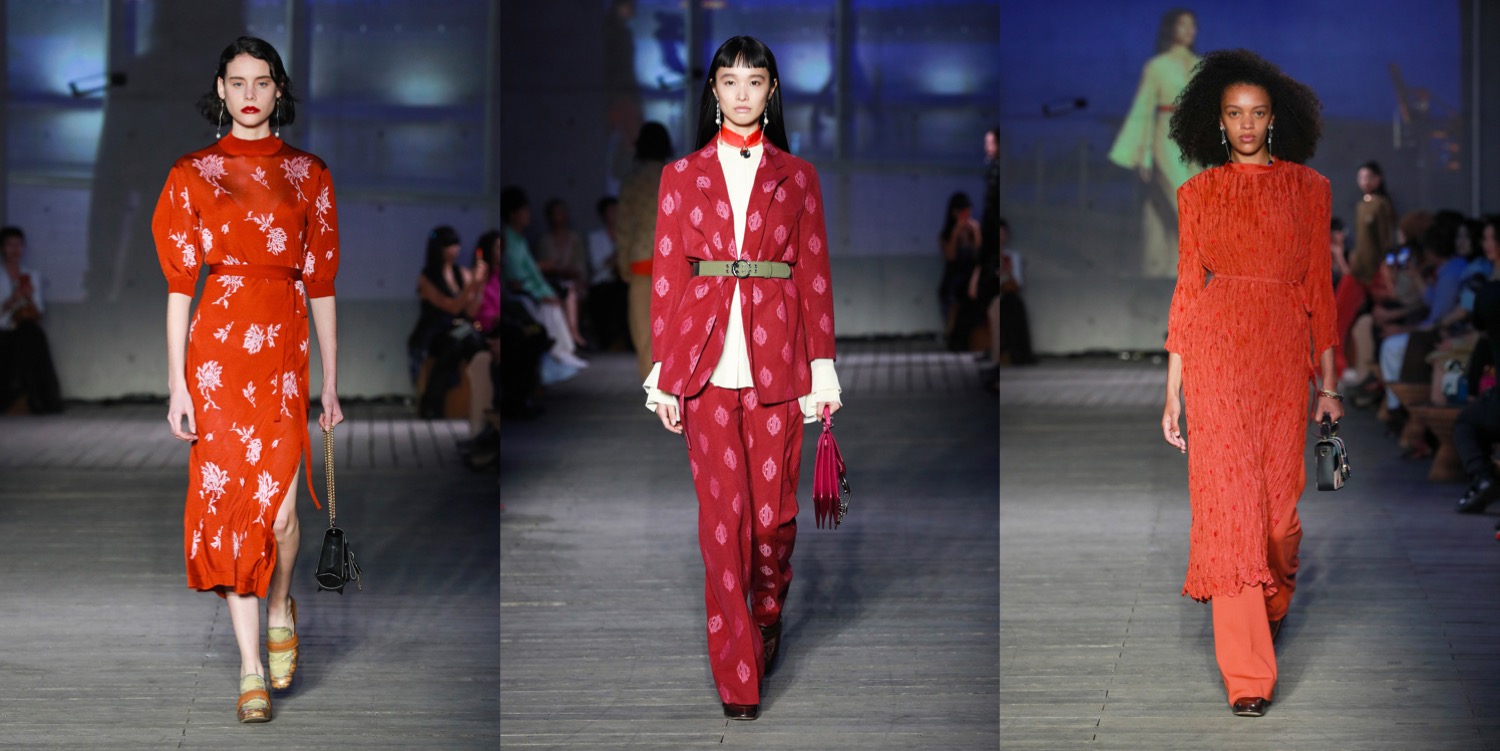
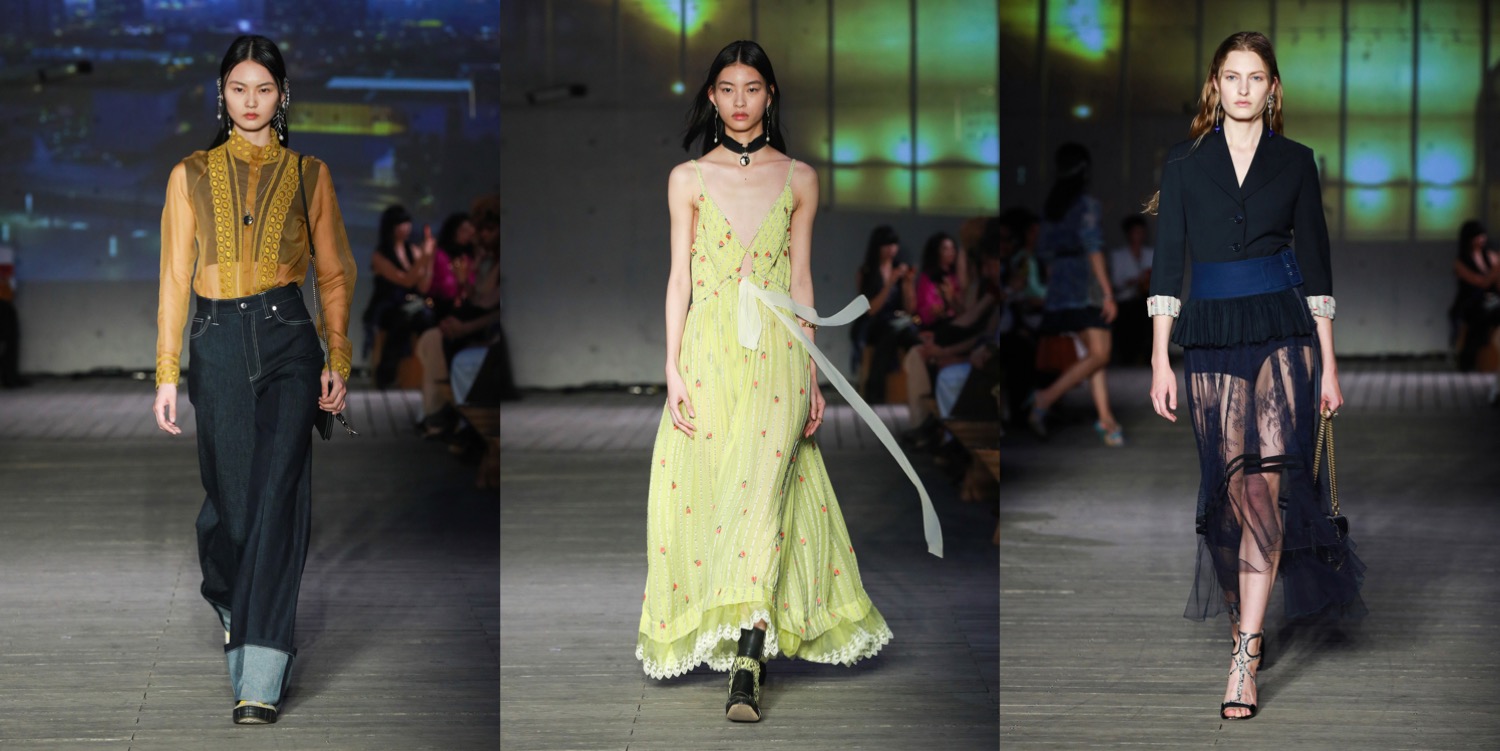
Chic Interaction. A.P.C. x Natacha Ramsay-Levi

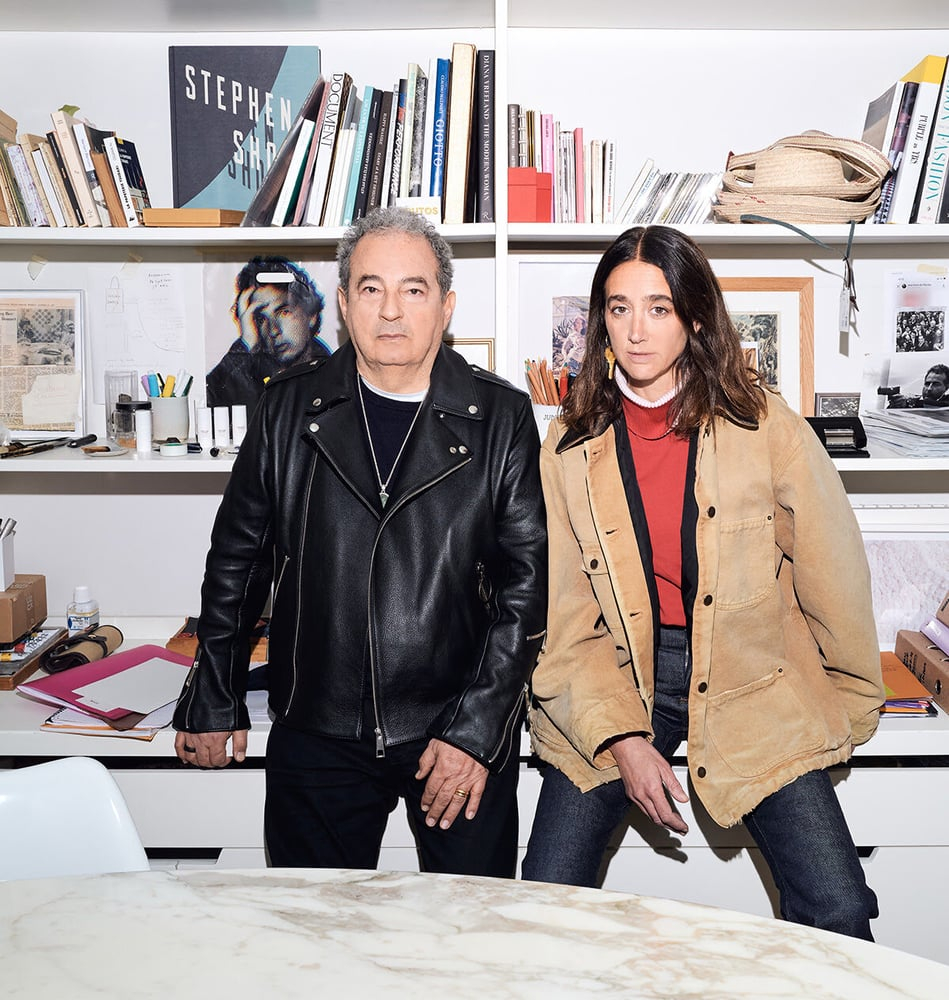
For its 22nd Interaction, Jean Touitou invited designer Natacha Ramsay-Levi to revisit the great A.P.C. classics. Known for imagining clothes that reveal the personality of their wearers, Natacha Ramsay-Levi, former Louis Vuitton and Chloé designer, also likes to push the boundaries of masculine/feminine binarity.

It is with this state of mind that Natacha Ramsay-Levi has taken on the materials and emblematic pieces of the A.P.C. wardrobe: denim, poplin, cotton gabardine, which she twists in her own way, rethinking proportions.

Here are my favorite pieces from the capsule collection, which has dropped today!

ED’s SELECTION:


Lemaitre top

Cartel belt – this belt will age SO well in your wardrobe.

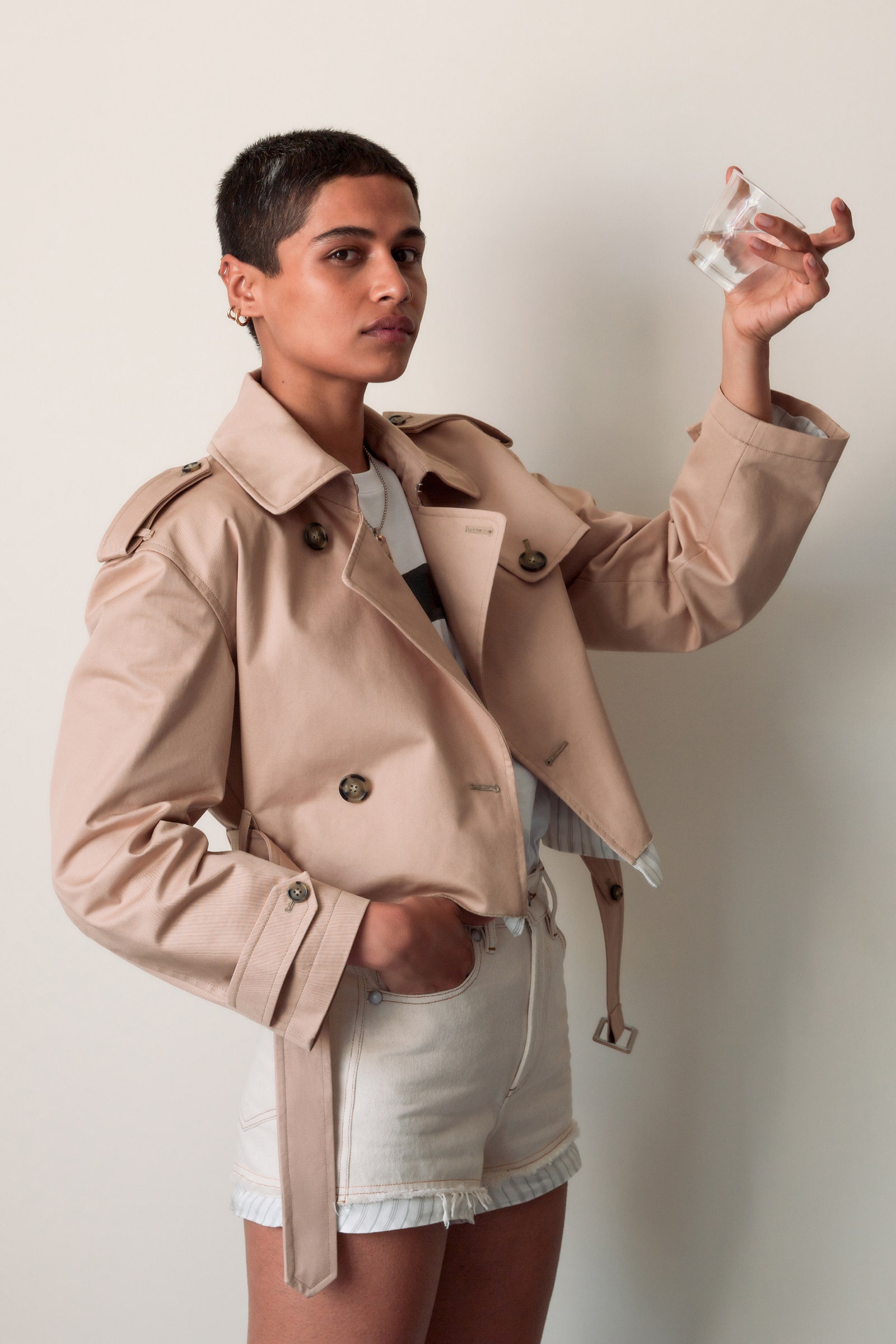
Horace trench coat – cropped trenches are a thing now!

Versailles shorts

Concarneau sandals – Natacha did similar sandals at Louis Vuitton under Nicholas Ghesquière’s direction, a very distinct chunky sole.


Rosario Small bag

Madame De Rivoli dress – a super chic over-sized shirt that can be worn as a breezy mini-dress. Soooo Parisian.

Madame Recamier trench coat

New Haven T-shirt

Clinteau jeans – are these the new perfect jeans?

Sainters denim jacket

A.P.C. US

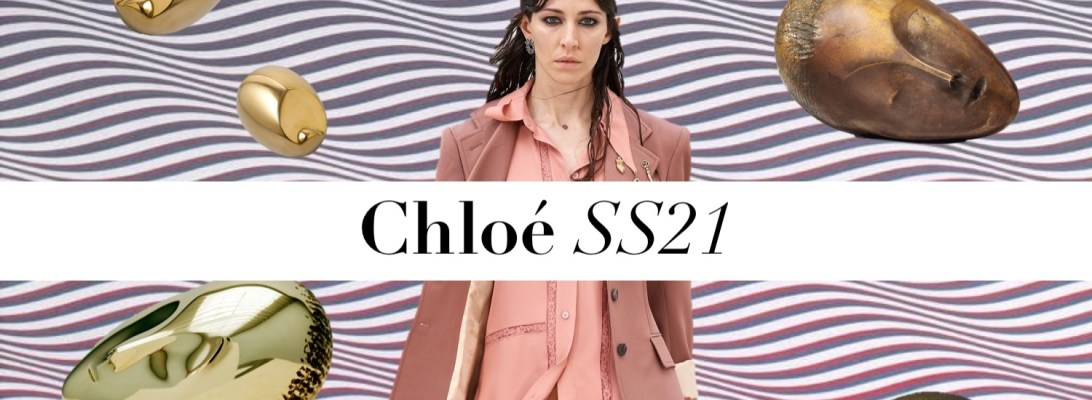
Smart Femininity. Chloé SS21

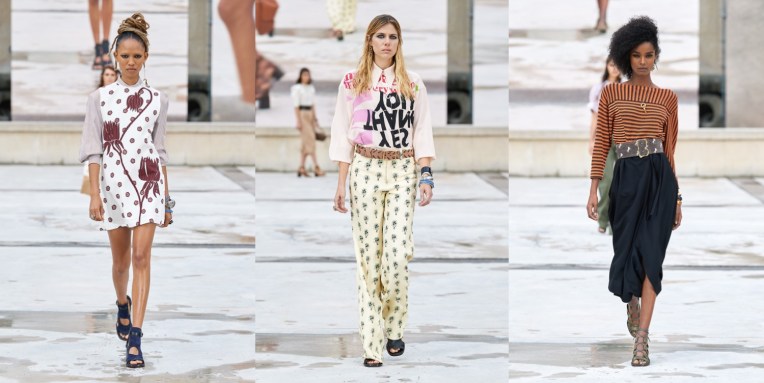
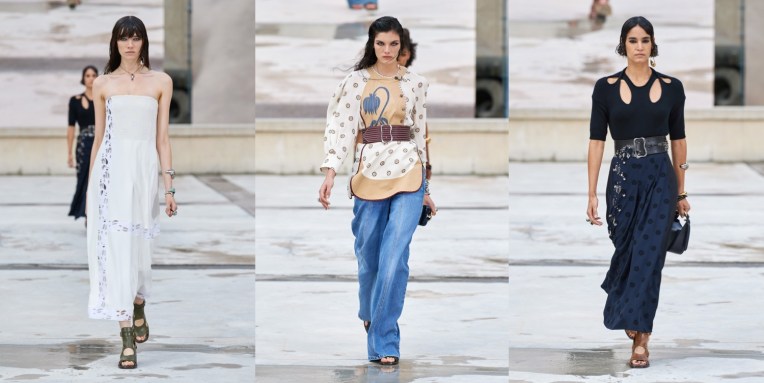
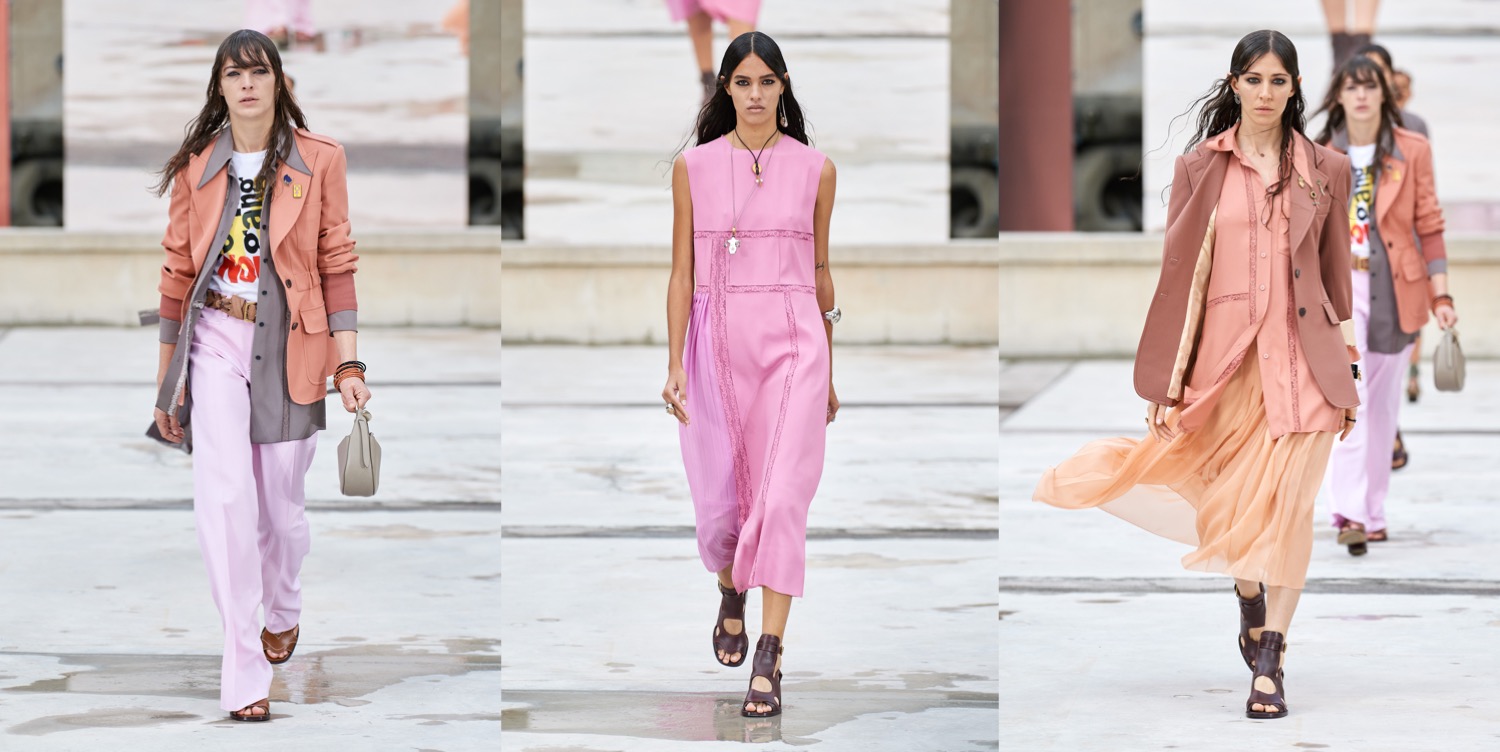
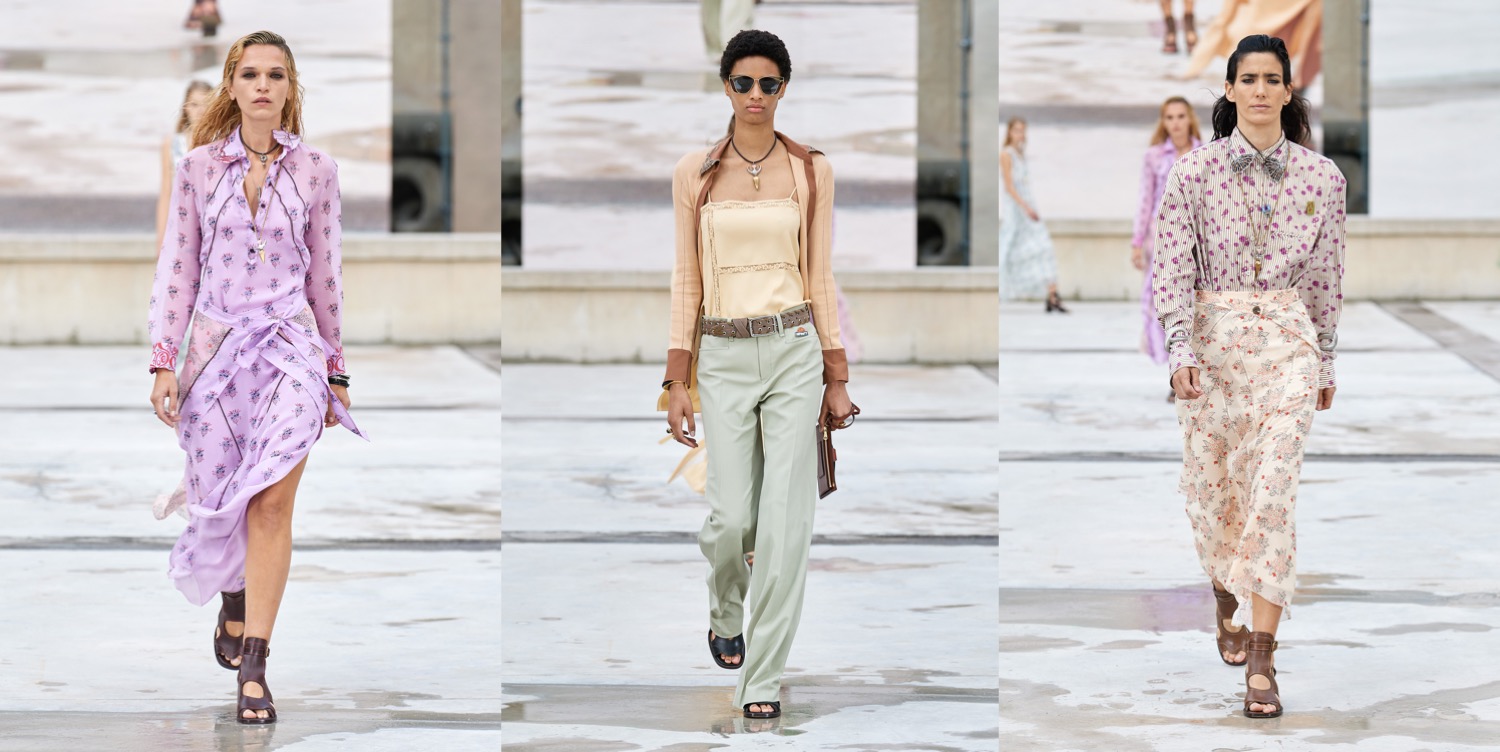
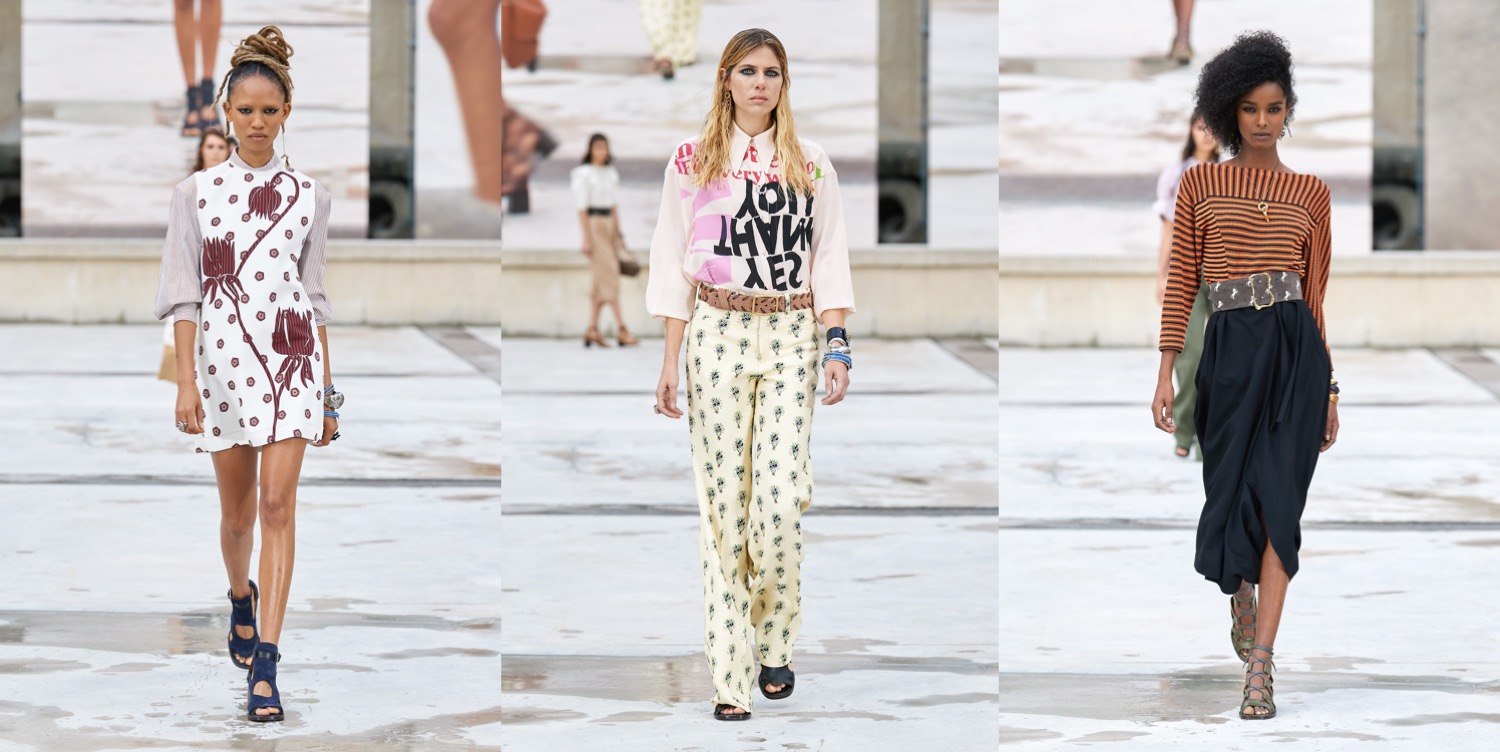
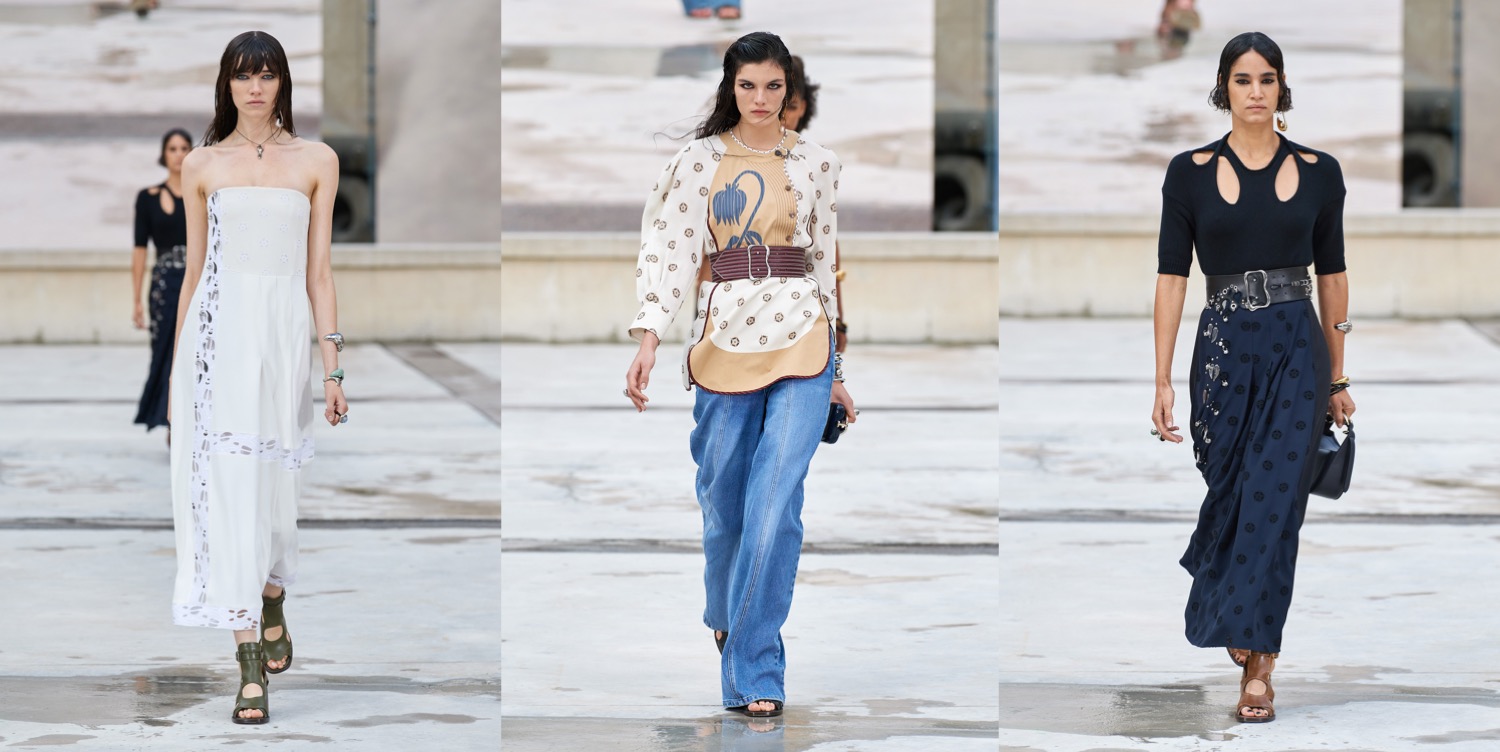
This was a classic Natacha Ramsay-Levi collection for Chloé, meaning smart femininity that works everytime. Which doesn’t mean that there was no novelty about her spring-summer 2021 collection. There is a number of cliché topis and questions that pop up every moment during the post-lock-down fashion month: what will we want to wear after a year spent in confinement, should face masks be a fashion item, are socially distanced spaces a necessity? For Ramsay-Levi, those questions triggered some far bigger ones: How does our wardrobe affect the way we move and behave in the public space? How does it impact our body language? She staged her Chloé show within the monumental courtyard of the Palais de Tokyo. On three massive screens, live footage captured her models making their way to the runway – which was really, really good. Wearing the collection, the Chloé women were scattered around the streets of the area engaging in normal situations. Some were strolling down the bank of the  Seine, others were seen crossing a street or chatting on the steps of a building. Eventually, they stepped into the imposing courtyard with a different purpose to their step, visibly adapting to new surroundings. “The idea was to pick them up within their own intimacy of real life,” Ramsay-Levi said, referring to the cameras’ zoom lenses. “It’s about showing something that’s more attentive, more spontaneous, and more intimate, and taking time to look at a woman and the way she moves and acts in a much more natural way. Rather than just say, ‘Okay, you should walk like this.’” Her point was to study, evaluate and define the values of the everyday wardrobe Chloé provides for its customer. Since Ramsay-Levi joined the house in 2017, she has gradually been doing just that, editing and refining her expression to determine an idea of the essential. The answer to her questions this season clarified that approach to a further extent. “Things take time. We need to repeat things before we understand them. When I look at fashion, sometimes I only start to understand the point of view of a designer in the second or third season. I think it’s important to be committed to what you do,” she said. Her philosophy was reflected in a collection that largely built on elements introduced in previous seasons, and reduced them – in cut and decoration – to a sense of the universally desirable, and the more affordable, too. She loosened her Chloé silhouette, touching on the post-quarantine theme of comfort dressing, and toned down her embellishment in favor of a focus on colors. “A question that was very strong in confinement was: How long does a product last?” Ramsay-Levi said. “And it’s not enough. Basically, until we can change that rhythm, it’s important for me to be able to say ‘for a while,’ and not change my mind all the time. As far as being business-driven, it’s about being truthful and consistent. Some products only last three months maximum in a boutique. If you keep arriving with something new that makes that outdated, I think that’s not valuable as a position.” Food for thought for many, many in the industry.

Collage by Edward Kanarecki.

Women. Chloé AW20

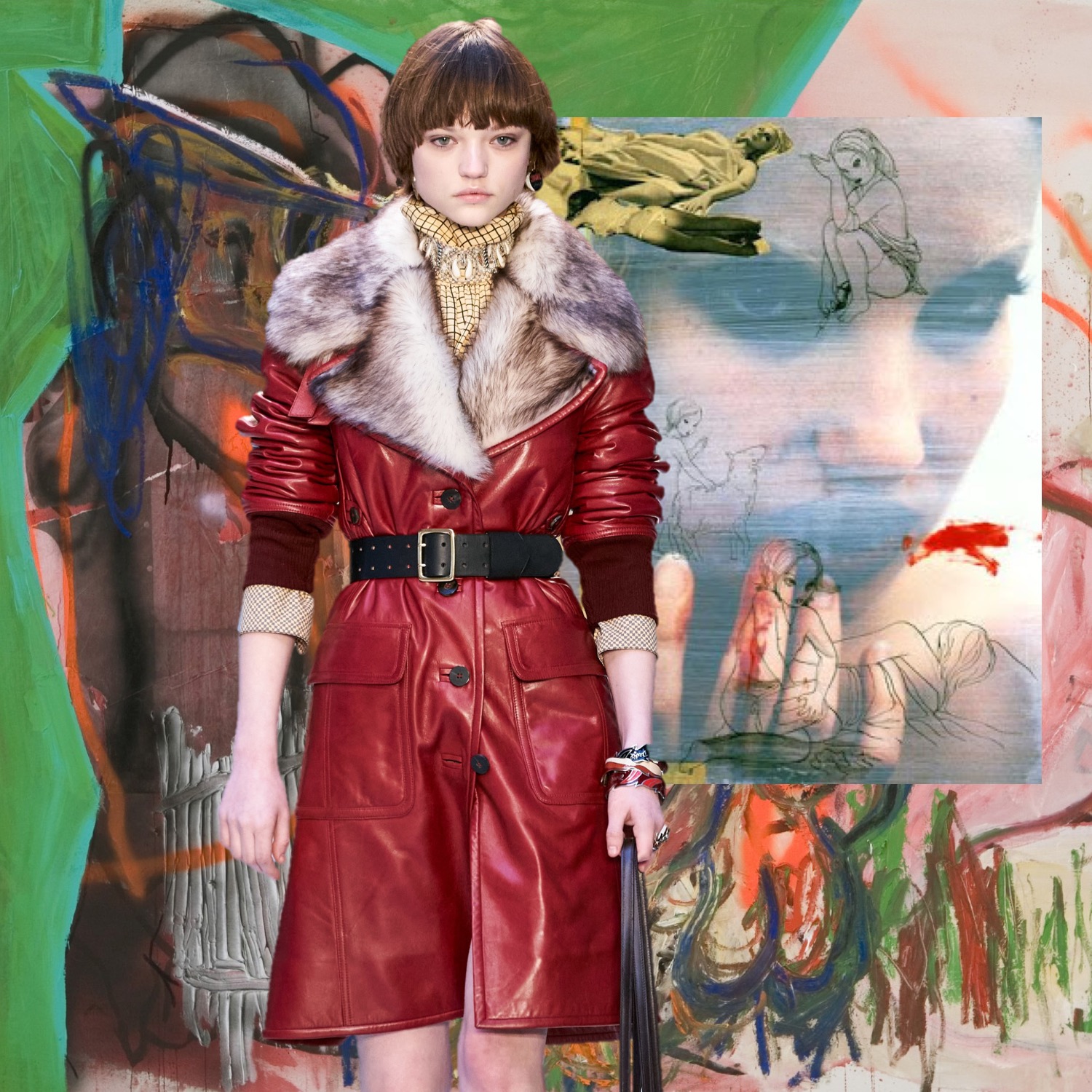
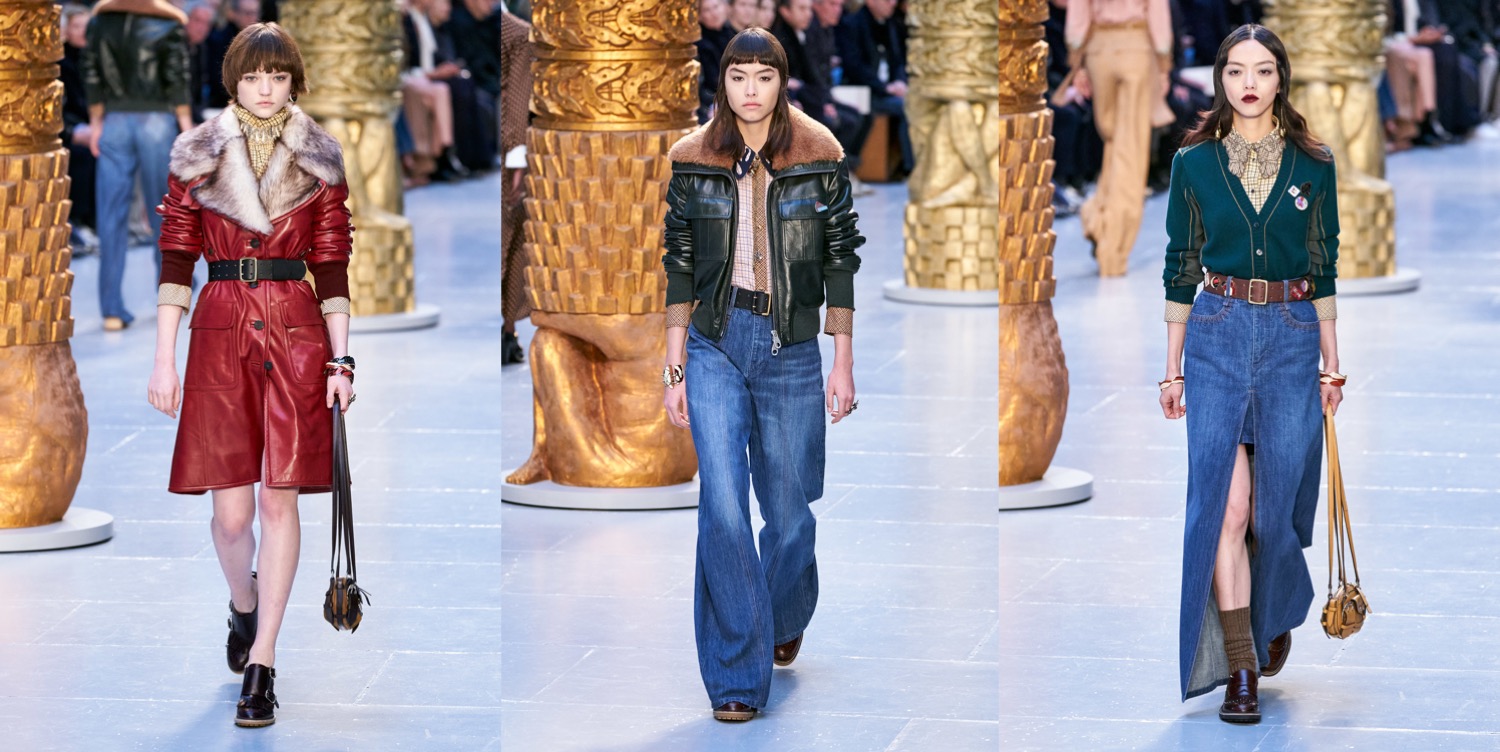
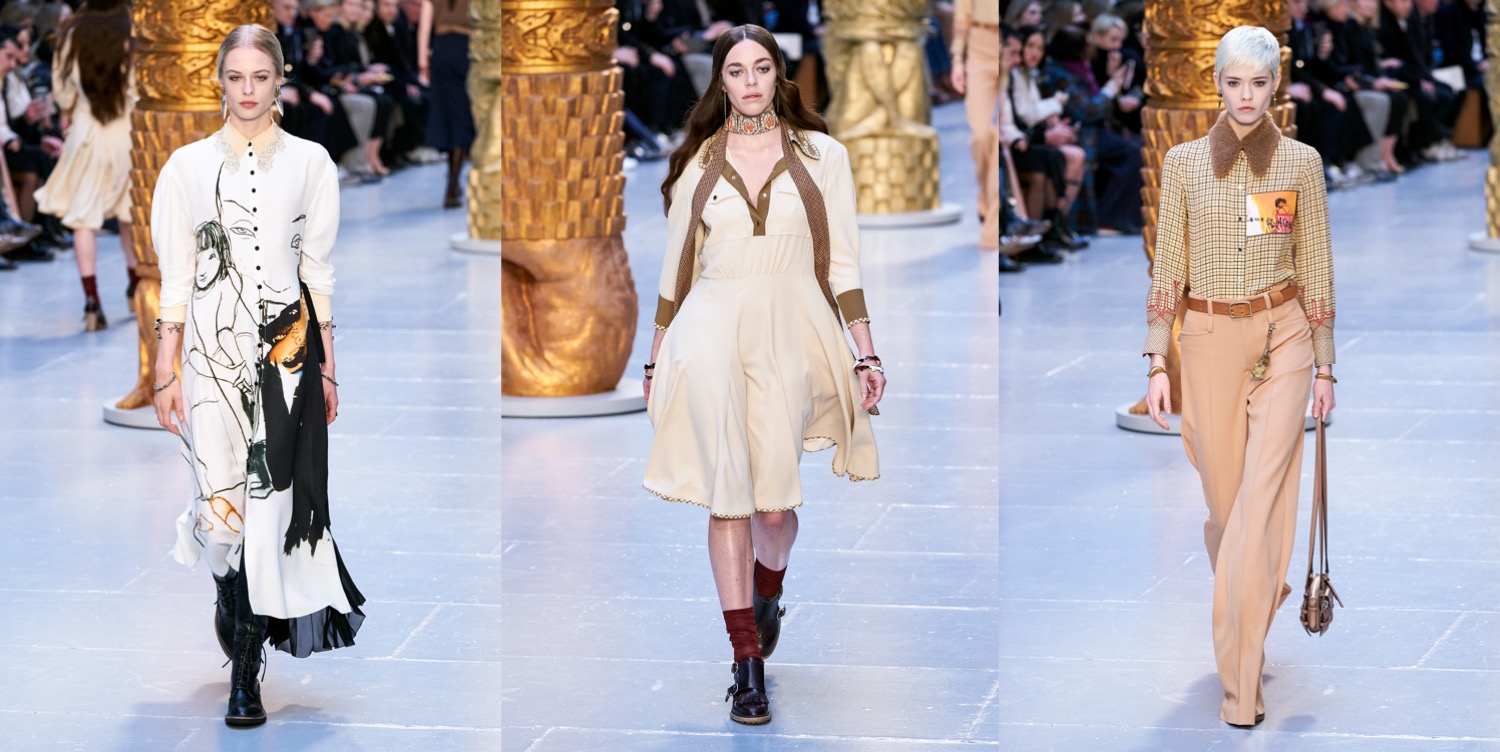
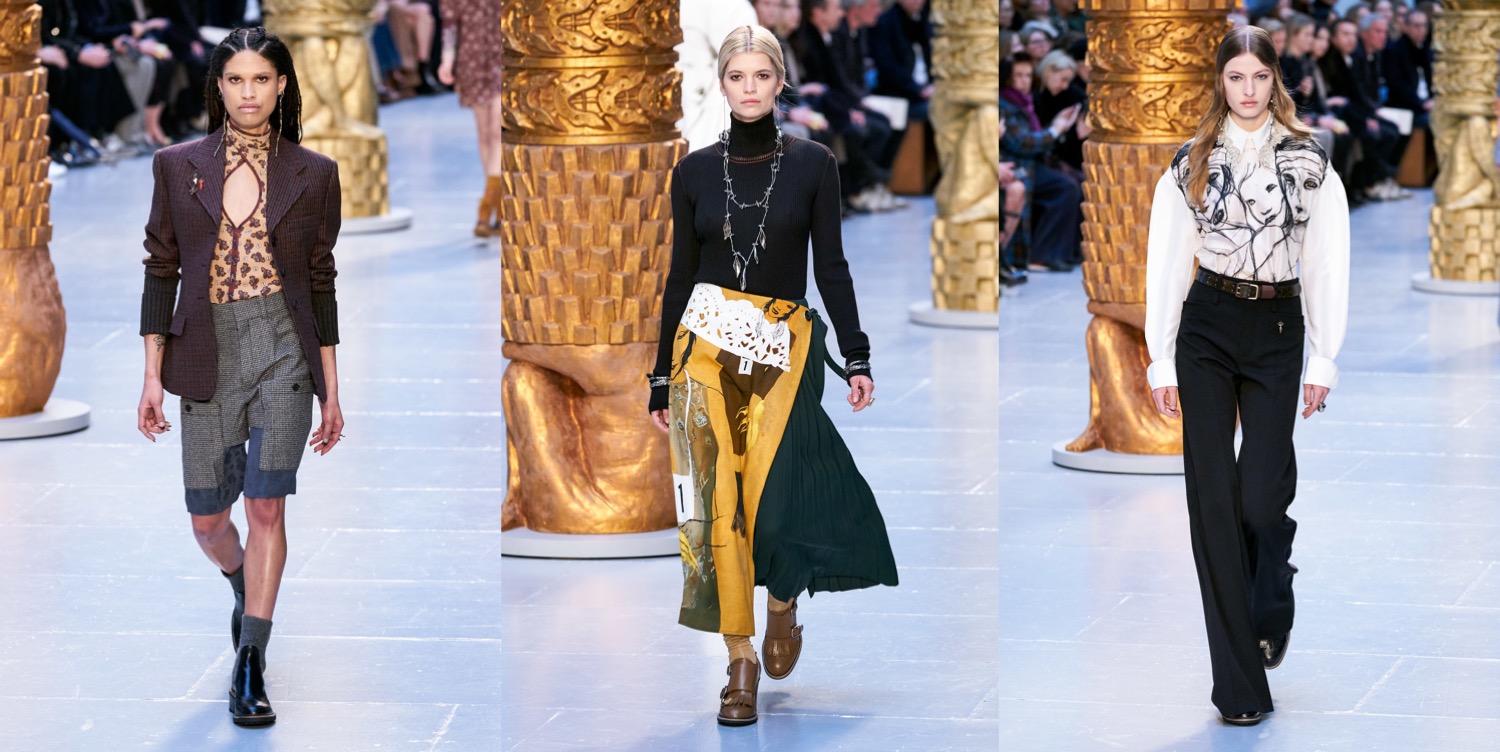
The Chloé invitation came with a mini poster of a Rita Ackermann painting. The artist provided access to five additional pieces from the ’90s and ’00s at Natacha Ramsay-Levi’s request, and the designer used them as patches on the front and back of a button-down shirt, as a design on a blanket shawl (Leave Me Alone, 1995), and as an actual-size print for a flowing shirtdress. Golden totem sculptures by Marion Verboom decorated the runway, and Marianne Faithfull smokily read Byron’s “She Walks in Beauty” and other poems on the soundtrack. Still more women creatives joined the models on the catwalk. “It’s about a community of creative spirits,” Ramsay-Levi stated. “Yes, clothes are great, but I love creative women.” After three years at the helm of the brand, Natacha accumulated her biggest Chloé signatures for autumn-winter 2020: the tailoring, the soft blouses, the romantic dresses. She infused them with personal touches that made them even more special. Suits leaned ’70s, with easy flaring pants and rolled-sleeve jackets. Her blouses had delicately jeweled buttons and cuff links, and her romantic dresses were alternately inset with bands of crochet at the hem or decorated with enamel embroidery at their peekaboo necklines. The Rita Ackermann prints worked their charm too. Natacha Ramsay-Levi is one of those “woman for women” designers, and since Phoebe Philo still hasn’t come back yet, she leads the pack.

Collage by Edward Kanarecki.

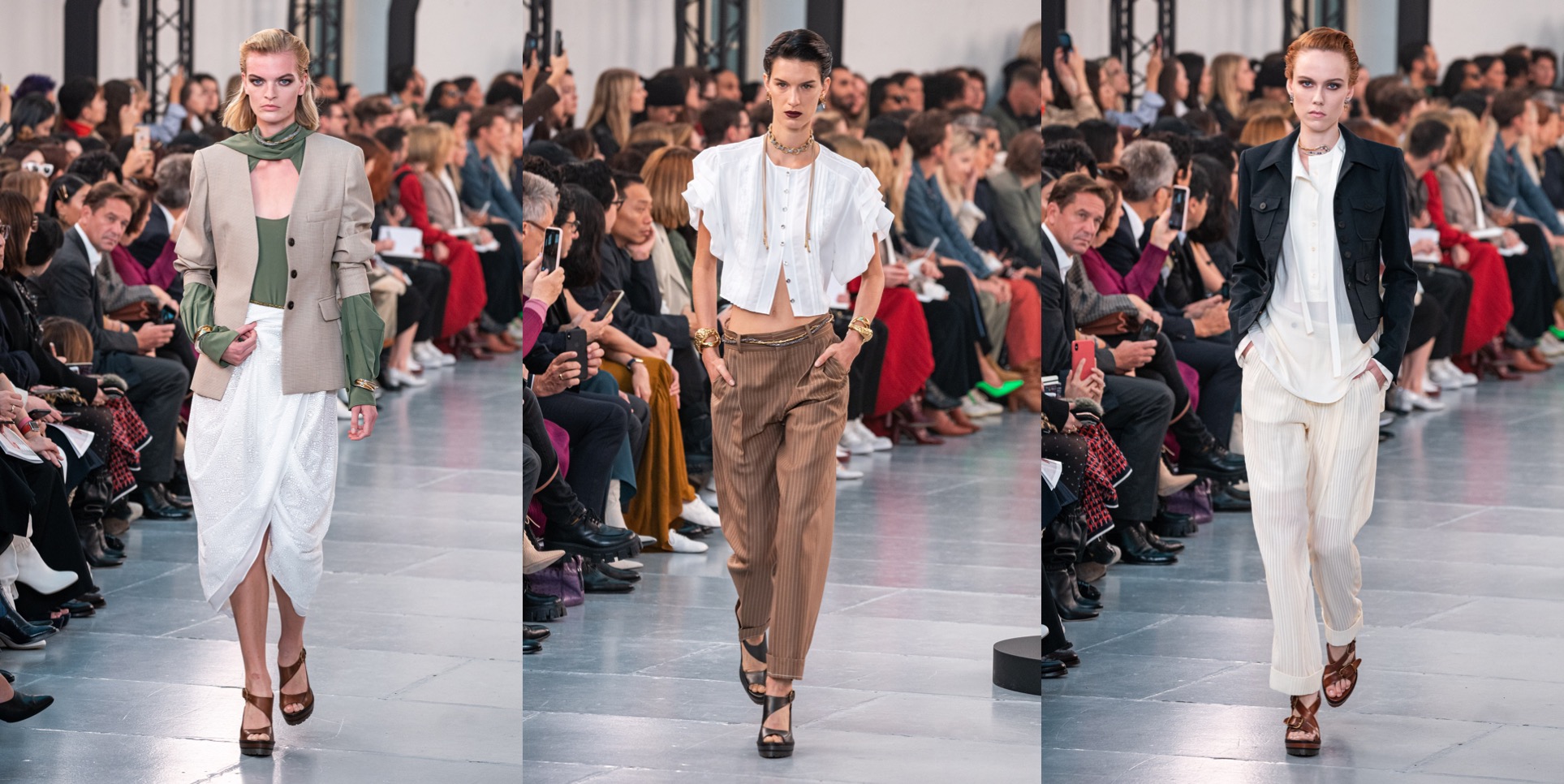
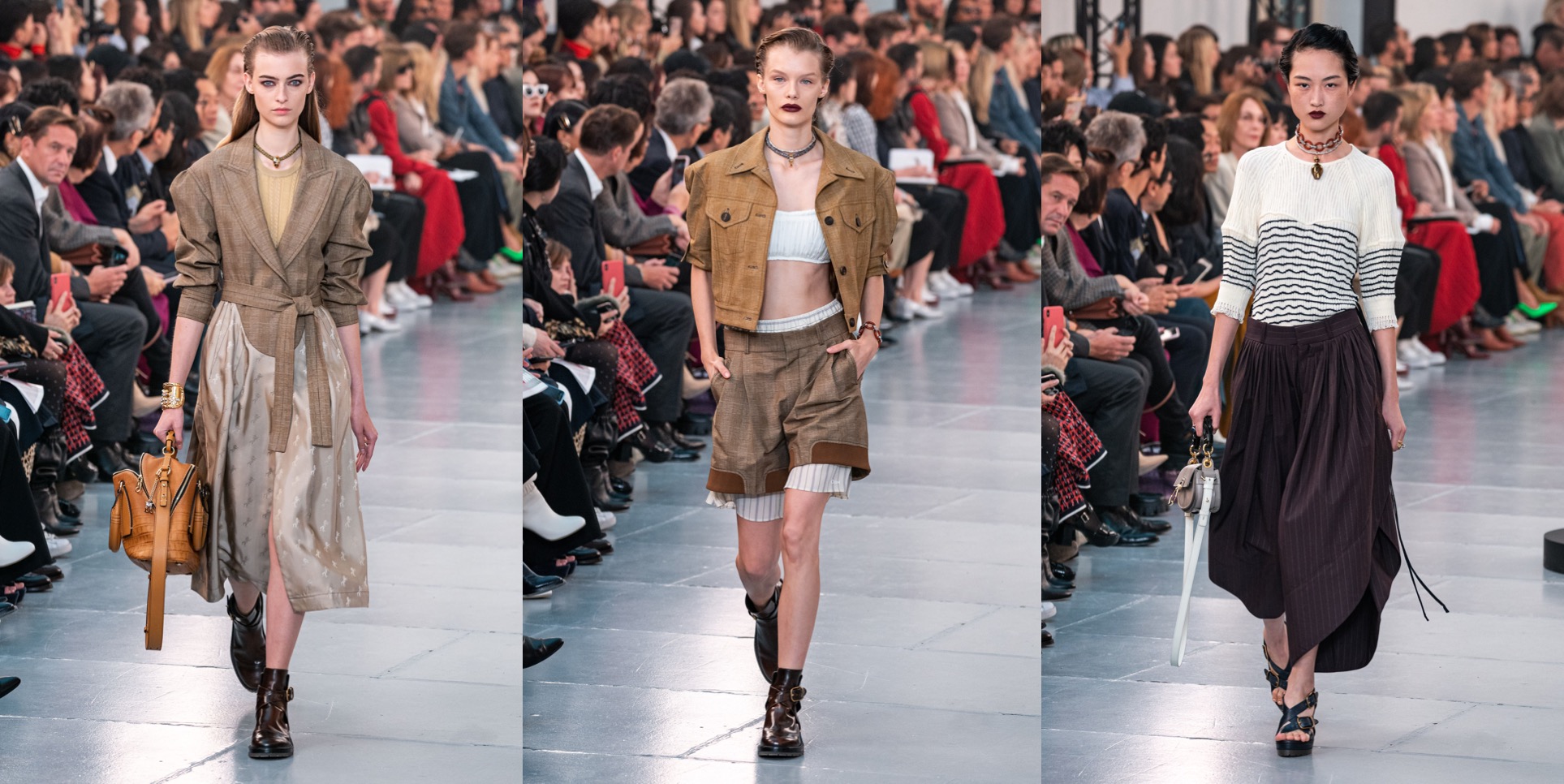
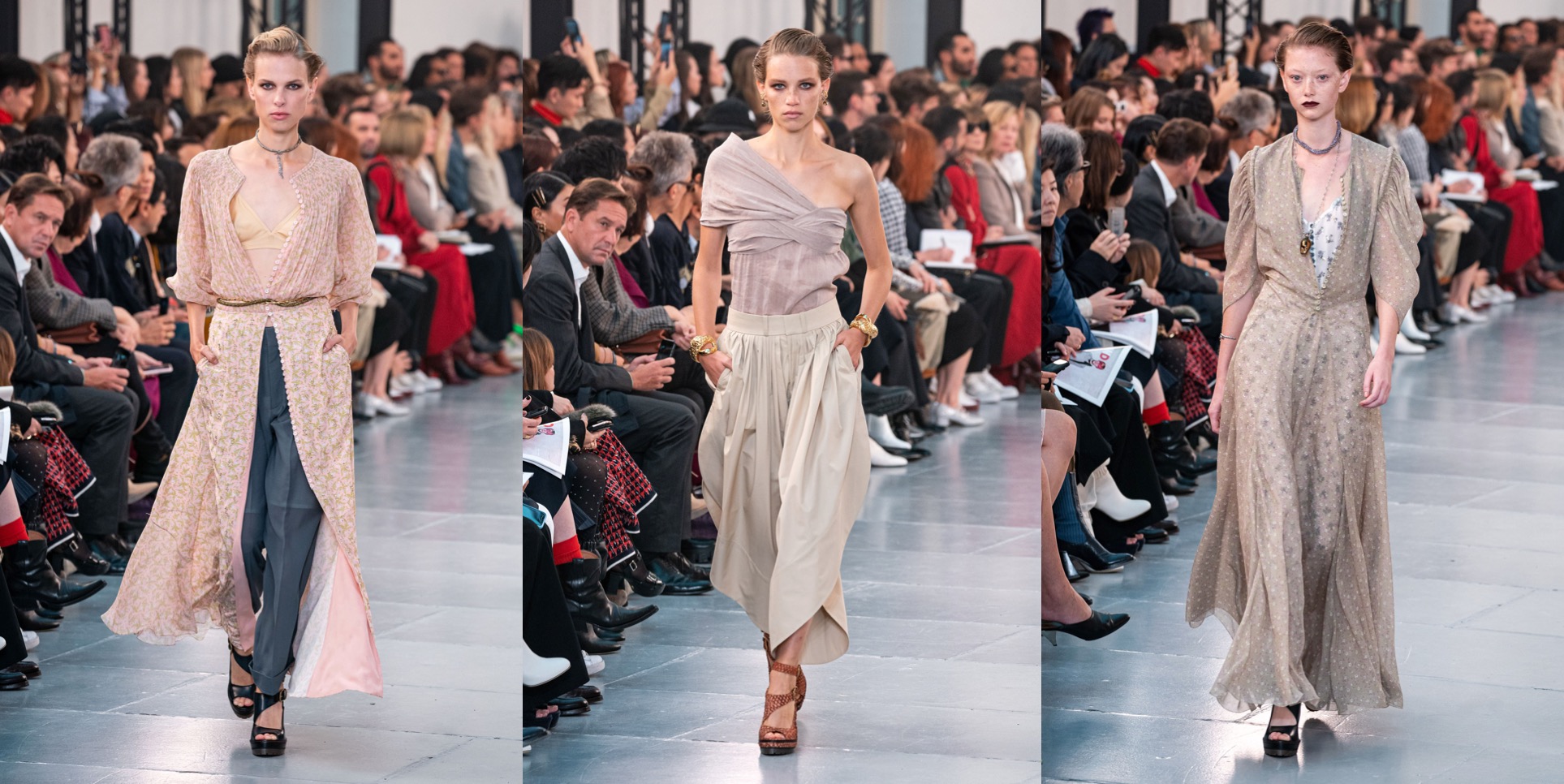
Simpler. Chloé SS20

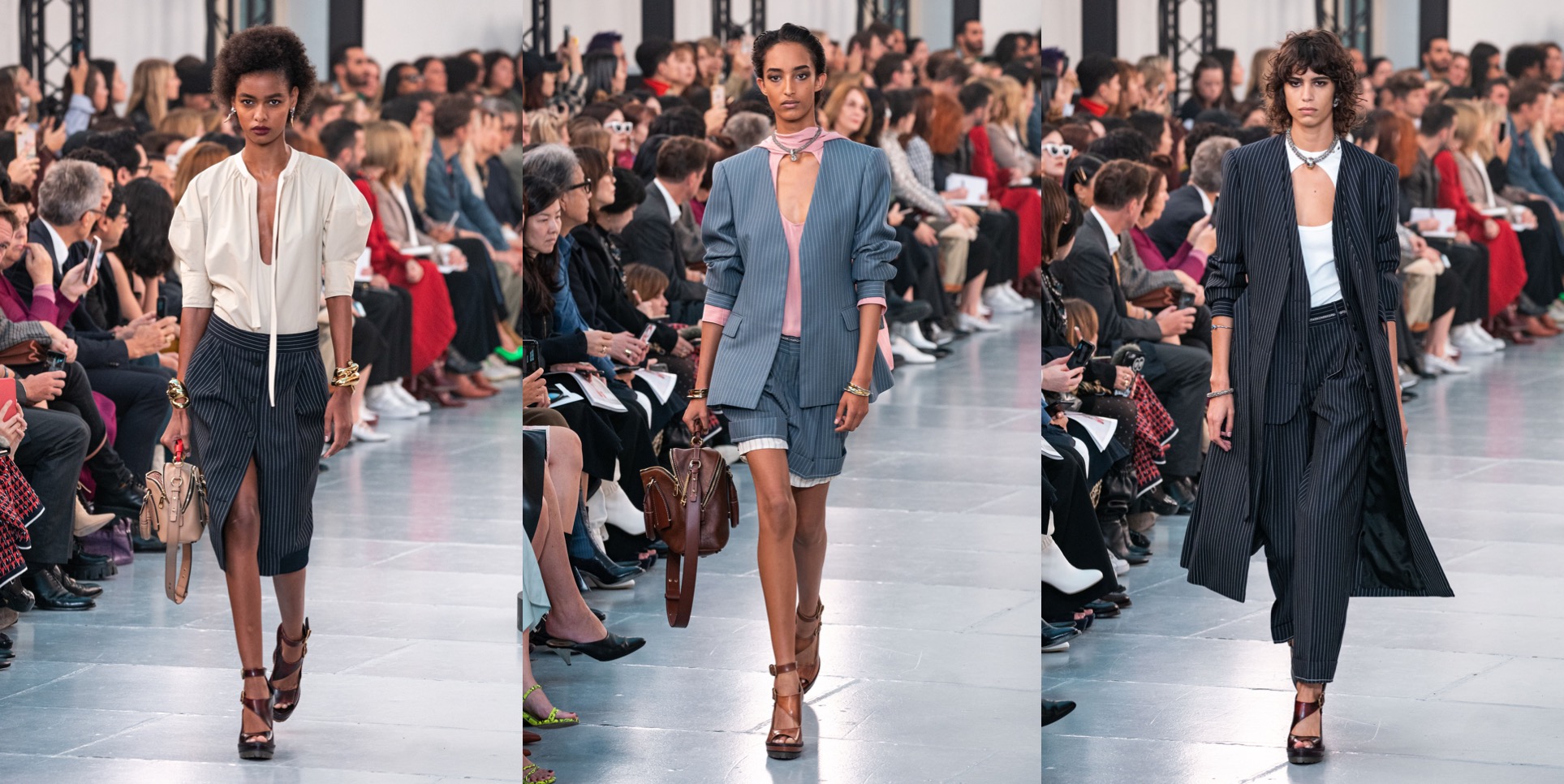
It’s Natacha Ramsay-Levi’s fifth season at Chloé, and she decided on some changes. Less over-sophisticated details, boho prints and messy accessorising for spring-summer 2020. “I’m thinking of it as chapter two for myself. I’ve tried a lot of different things; I thought, let’s simplify – be honest and true.” While such approach results in less ‘show-stoppers’ for magazine editorials (and stuff that always ends up on heavy discount), this collection proved to be one of her strongest in a while. Where earlier Ramsay-Levi might have avoided familiar Chloé-isms, like the particular shade of creamy peach associated with the brand since Karl Lagerfeld’s days, here she used them a lot: the show ended with a pair of long, graceful pleated dresses in the color. Micro-floral-print frocks were styled unbuttoned and worn over a silk bra and trousers – the look had a romantic, vintage feel. Making things simpler really works from time to time.

Collage by Edward Kanarecki.

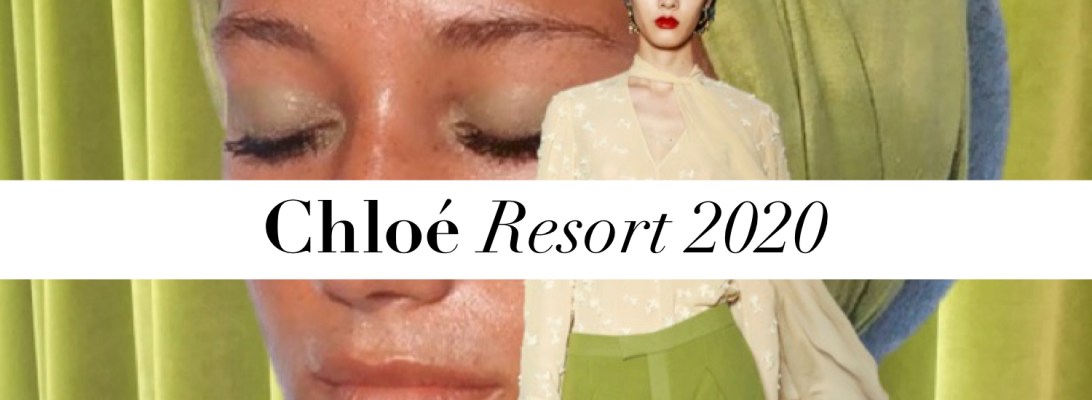
Shanghai. Chloé Resort 2020
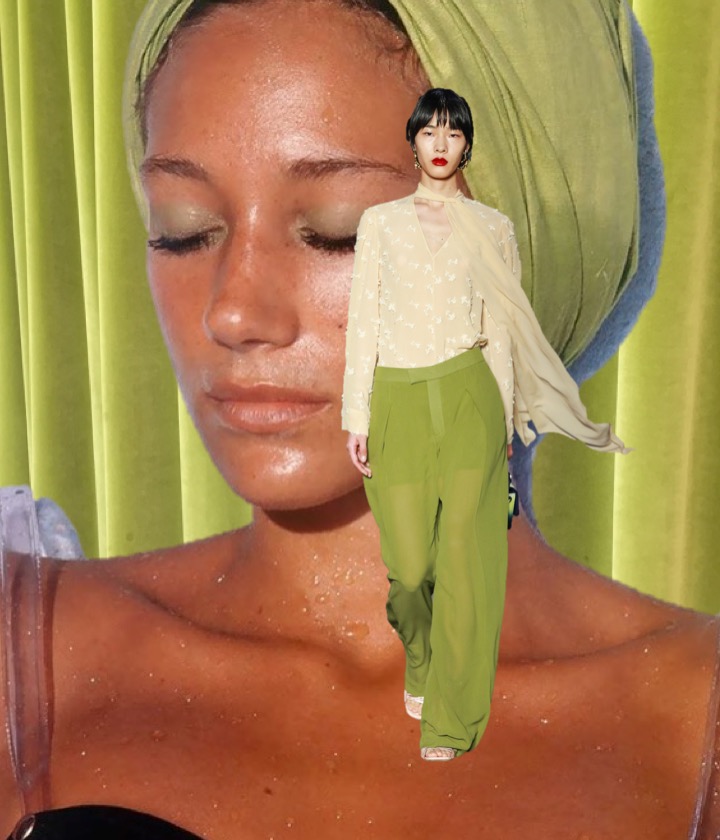
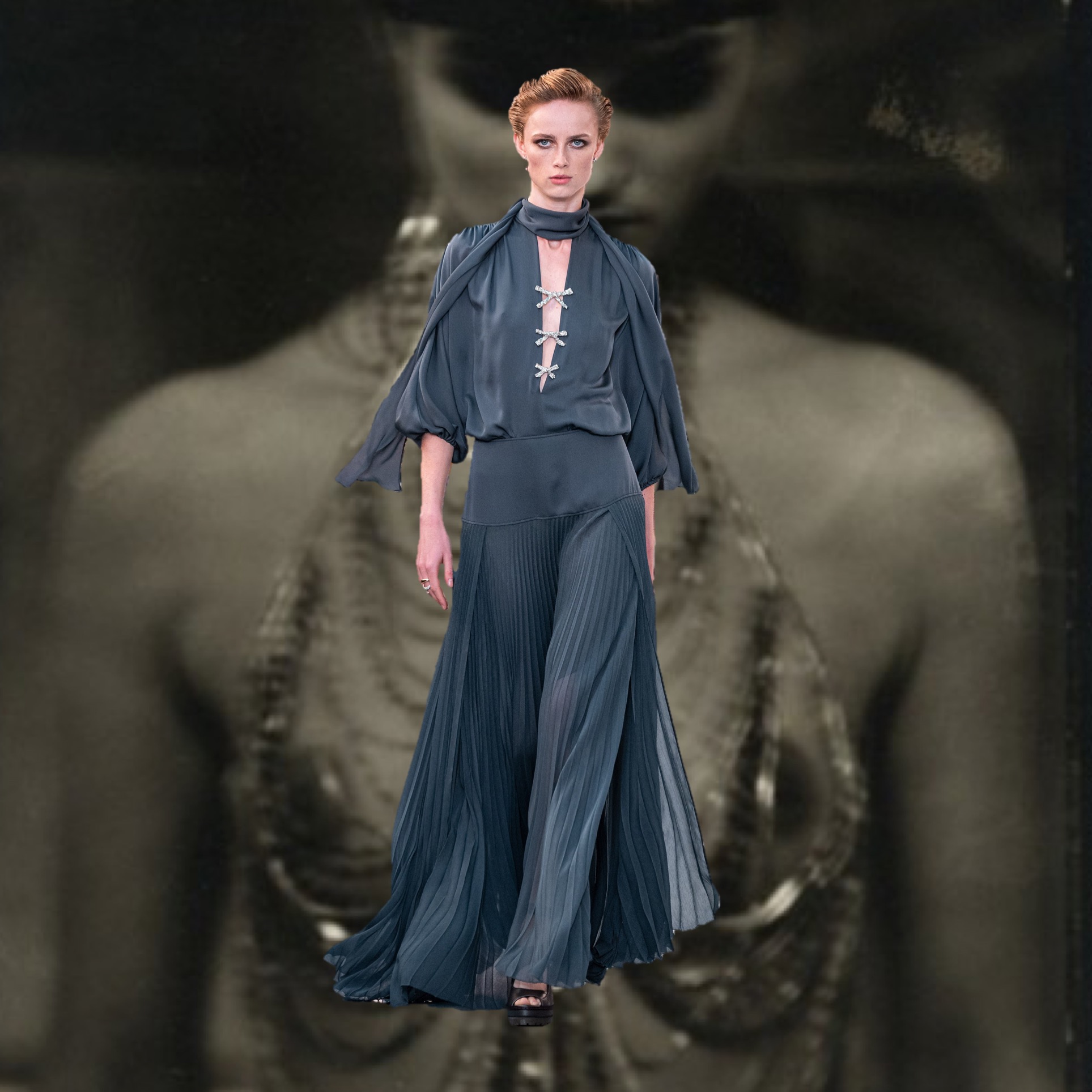
The problem with resort collections presented in far-fetched destinations apply to nearly all, from Louis Vuitton’s presentation in New York to Saint Laurent’s menswear show in Malibu. The venue is spectacular; the audience is wowed; the clothes are, well, boring and far from amusing. Angelo Flaccavento, Italian fashion critic, grasps this perfectly: “these days, fashion is more about brand experience and storytelling than clothes, which most of the time are not as exciting as their packaging. The past month of traveling shows was a study in showmanship over clothes-making.” Natacha Ramsay-Levi‘s resort 2020 collection for Chloé was presented in Shanghai, specifically at Long Museum (at sunset). It’s clear the Chloé’s management has ambitions to make the brand stand in row with Dior and Prada. But does this match Chloé’s intimacy, so beloved by its clients? The entire event had to be quite an experience, that’s fur sure. However, the idea of a Chloé show in Shanghai, other than marketing, makes no much sense. Of course, the designer had some subtle references to the location. A lover of Chinese cinema, she had compiled backstage dozens of stills from her favorite movies by Jia Zhangke, Hou Hsiao-Hsien, Zhang Yimou, Bi Gan and Lou Yi. Another film, Three Times by Hsiao-Hsien, informed Natacha’s decision to explore China’s rich history, drawing on its empirical eras, the Art Deco period, and its contemporary buzz. The designer’s nods to Chinese culture were conveyed in details: the side buttons on a floral dress that evoked a qipao for instance. Tiny embroideries were inspired by traditional Chinese handwork. Yet still, in general, this was one of the weakest collections coming from the designer, which is quite disturbing. It lacked a ‘look’. The clothes, put separately, with no styling, don’t spark much attention. For pre-collections, Chloé is really, really fine with look-books.
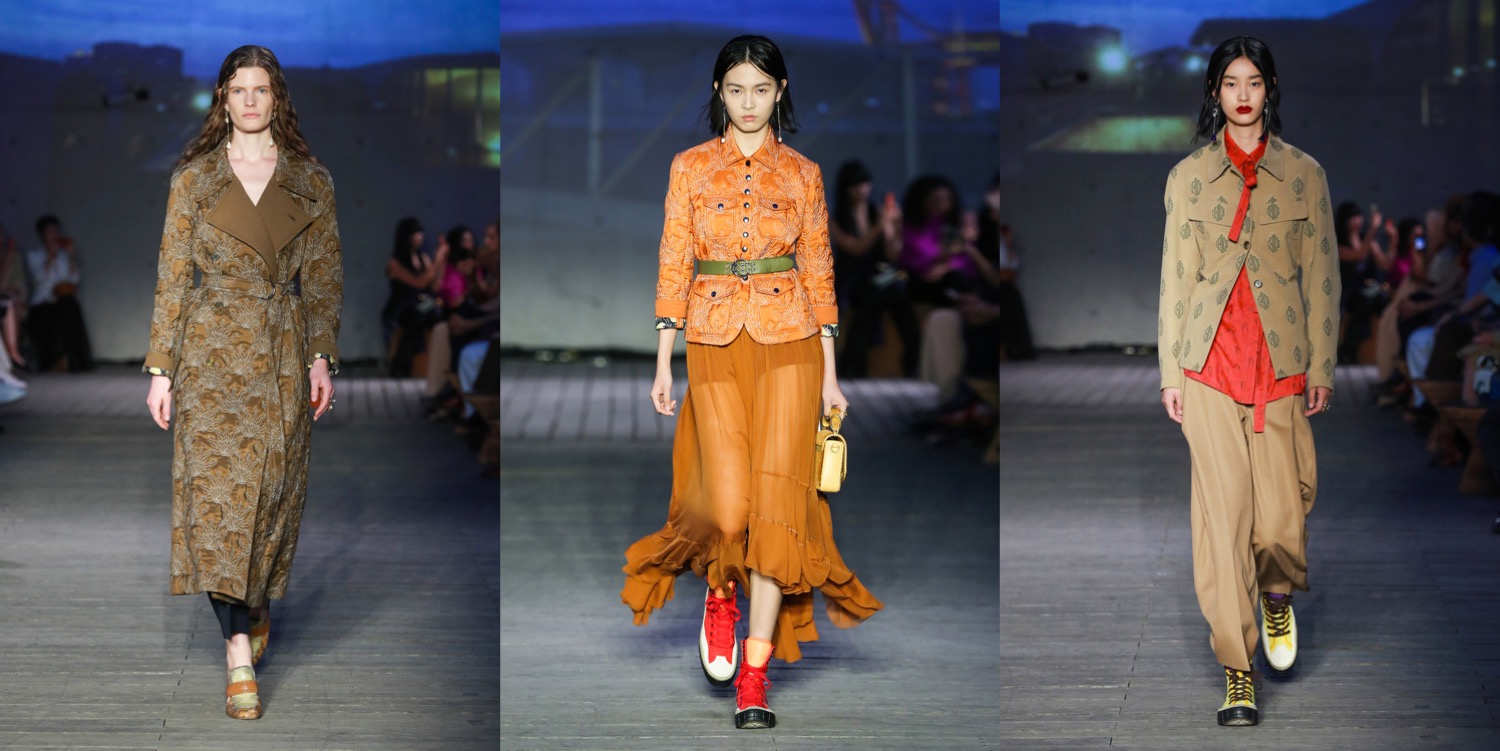
Collage by Edward Kanarecki