Dress Code. Eckhaus Latta SS24

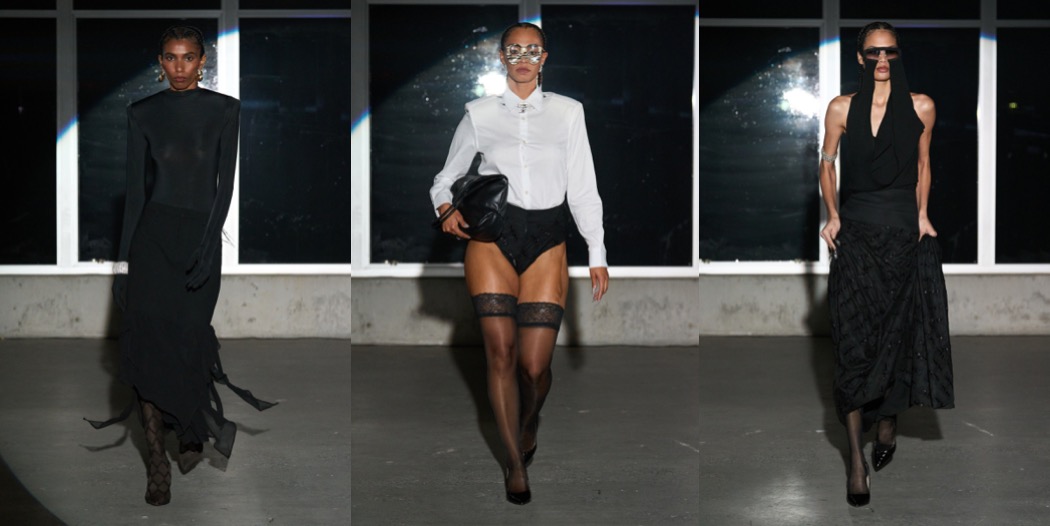
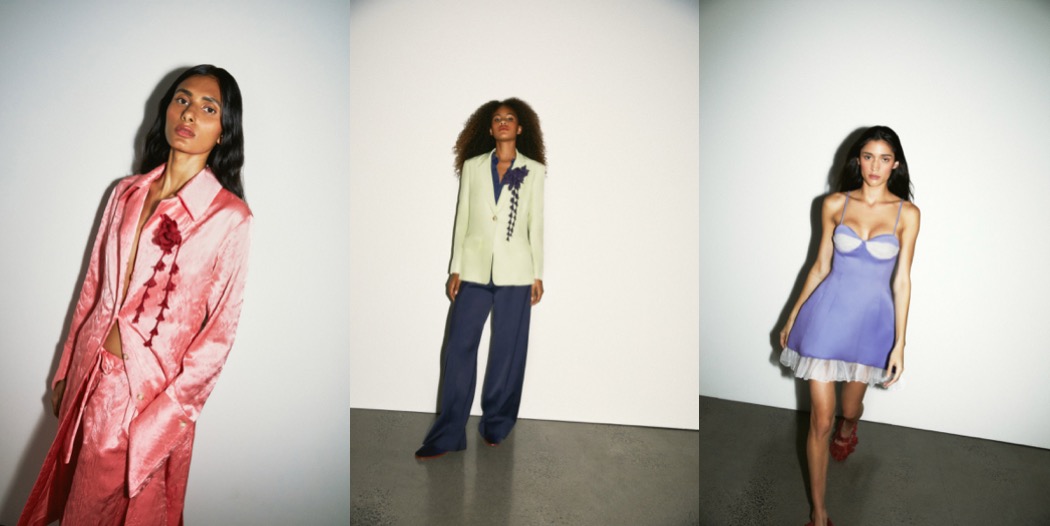
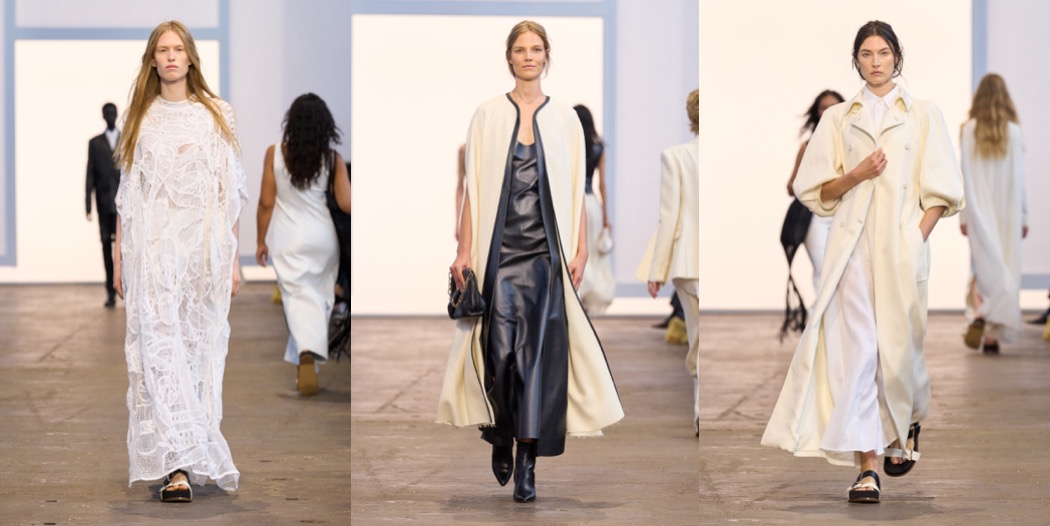
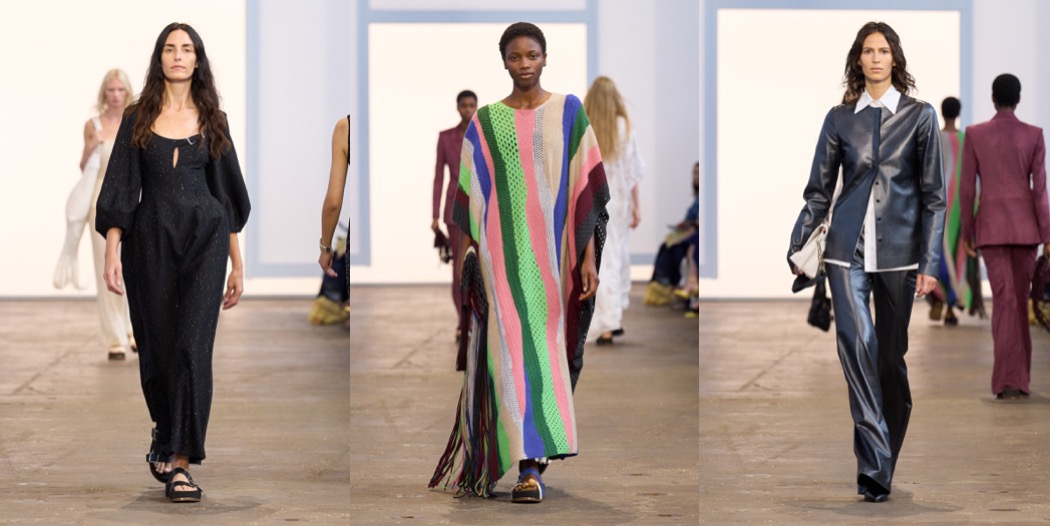
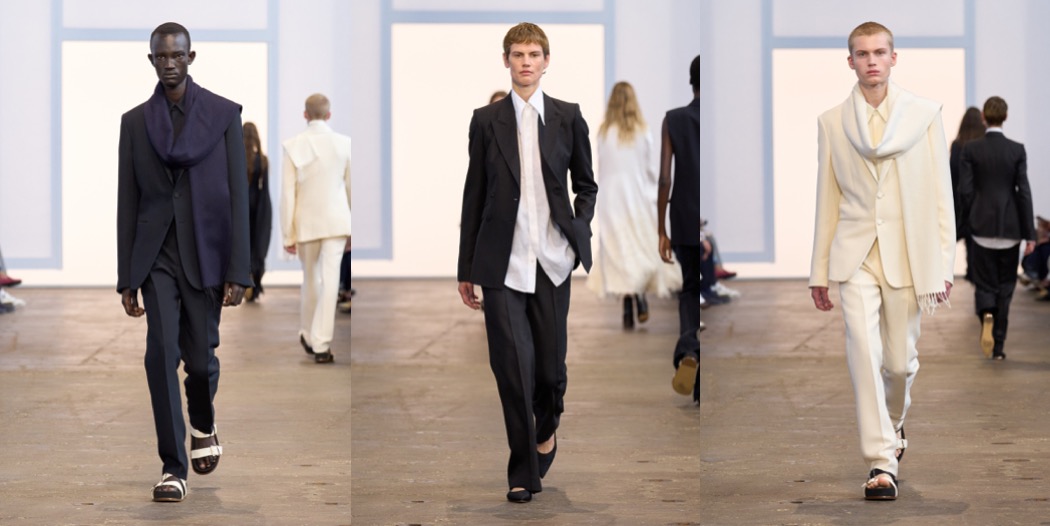
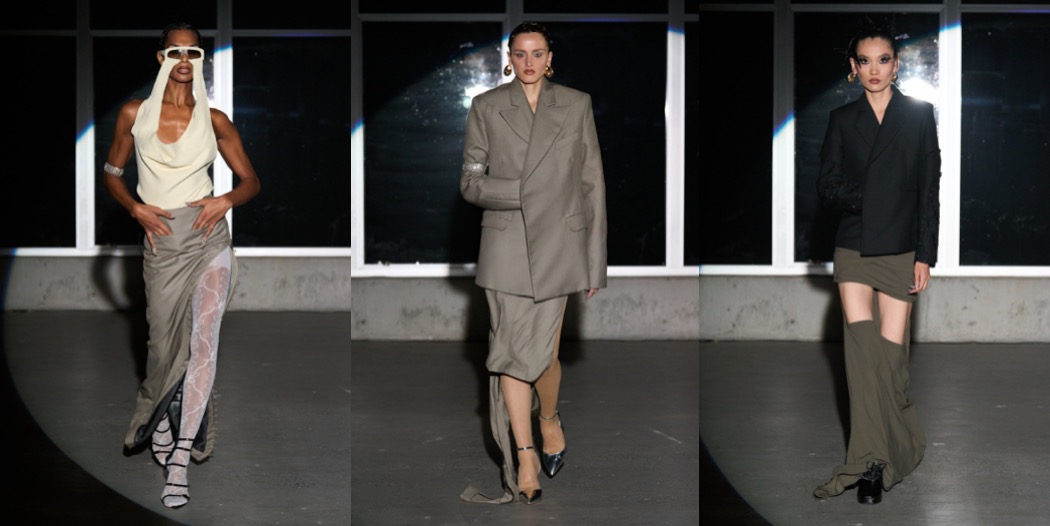
There was an intriguing shift going on at Eckhaus Latta‘s spring-summer 2024 fashion show. Their venue this season was the International Building in Rockefeller Center, which harks back to the great business centers of yesteryear, with dramatic escalators and a 45-foot statue of Atlas. The clothes reflected that corporate feel, messing around with the “formal” dress-code. Zoe Latta and Mike Echkaus introduced new materials to their brand, like lace and leather, and in general the offering felt very mature, solid – of course with a distinct, gritty twist. Could this be Eckhaus Latta’s answer to the prevailing “power dressing” trend? Through an ironic lens. “There’s something deeply sad about working all day and night on a garment that’s going to be seen for four minutes max, and then maybe get pulled [for a photo shoot], and then lost by a stylist. Or FedEx,” Latta said. “So we want to figure out where our language exists in an exciting way, but also in a way that is reproducible and wearable. Finding the things that can be a more ‘luxury’ offering and the ones where we can have more accessible price points that are still cool and exciting.” On the luxury end, they worked with leather for the first time – all deadstock, from Portugal – to make fantastic jackets, slim dresses, and baggy jeans that will be produced in limited runs. As always, the excitement came from the materials. The designers worked with Unspun to develop custom fabrics for denim. “It was so much fun to work with a new technology and develop fabrics,” Latta said. A pair of extra-wide, coarse-woven jeans was made out of twine they sourced at a hardware store. They curved elegantly around the legs like a small ball skirt, but also gave the impression of a cowboy in chaps (there were hints of the American West throughout). A group of knitted separates made from a soft yet sturdy Italian fabric in sheer beige were all “discreetly” embroidered with the EL logo in contrasting red thread. “We’re doing a monogram for the first time, but kind of ironically putting it on these ‘naked clothes,’ so it’s almost like a tattoo,” Latta explained. Hari Nef wore a tank and matching pencil skirt, very ladylike in its silhouette, with pointy-toe mules. “We always have these kind of sheer, kinky pieces – but they’re not kinky in the sense that when people wear them they feel objectified; we just want them to feel more sexual in themselves,” Latta added. The captivating thing about Eckhaus Latta is the way the designers play with contrasting desires. There’s an undeniable sex appeal and sensuality to what they do—because their clothes beg to be touched, while at the same time they’re thinking about the Patagonia brand and using tech fabrics and materials. Latta calls it “the tension between what’s really durable and hard and wearable and what’s delicate and fragile.”

Collage by Edward Kanarecki.
Don’t forget to follow Design & Culture by Ed on Instagram! By the way, did you know that I’ve started a newsletter called Ed’s Dispatch? Click here to subscribe!
NET-A-PORTER Limited

Understated. Proenza Schouler SS24

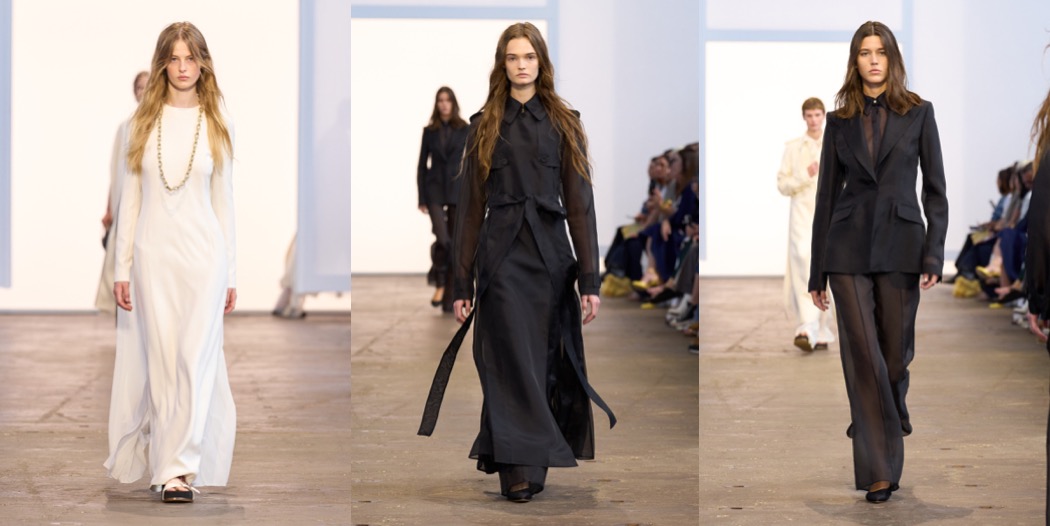
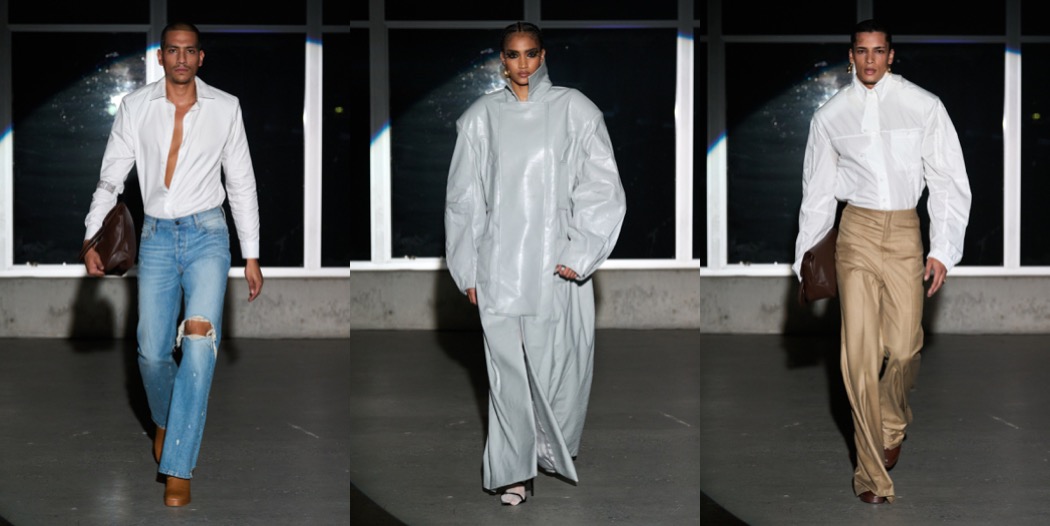
So far this New York Fashion Week, Proenza Schouler delivered the most convincing answer to the big question: how do we want – or aspire – to dress in 2023. Actually, this collection could be the contemporary equivalent of Helmut Lang (instead of what Peter Do delivered in his debut). “We finished the fall show and we knew right away that we really wanted to continue its spirit, Jack McCollough and Lazaro Hernandez said. “To have that board of women we pulled together last season be the starting point and just kind of riff off a lot of the same ideas in a spring context.” The two collections were very much in dialogue with each other. It started with the celebrity casting. Chloë Sevigny, who opened last season, was replaced by Natalie Laura Mering, who is known professionally as Weyes Blood and who wrote an original composition for the soundtrack. Her white single-breasted, three-button jacket and black trousers struck an understated, minimal note, save for her glossy red toe polish and sheer black stockings worn with strappy kitten heels. Other jackets were worn tucked into pants waistbands, a utility belt strung through the belt loops. The designers liked the ordinariness of showing bleached straight-leg jeans and a black leather coat with straps hanging below the hem (an equestrian reference) and a papery windbreaker-type jacket with a mesh tee. They answered those plainer looks with special pieces that showed off their interest in craft, like mesh dresses made from hand-tacked ribbon and gossamer separates with “broken glass” embroidery. The label’s newly designed initials appeared on the Proenza’s first handbag, the PS1 – back in squishy leather and leather-covered hardware. Its low-key cool jibed with the rest of the collection.

Collage by Edward Kanarecki.
Don’t forget to follow Design & Culture by Ed on Instagram! By the way, did you know that I’ve started a newsletter called Ed’s Dispatch? Click here to subscribe!
NET-A-PORTER Limited

Future Vintage. Ralph Lauren SS24

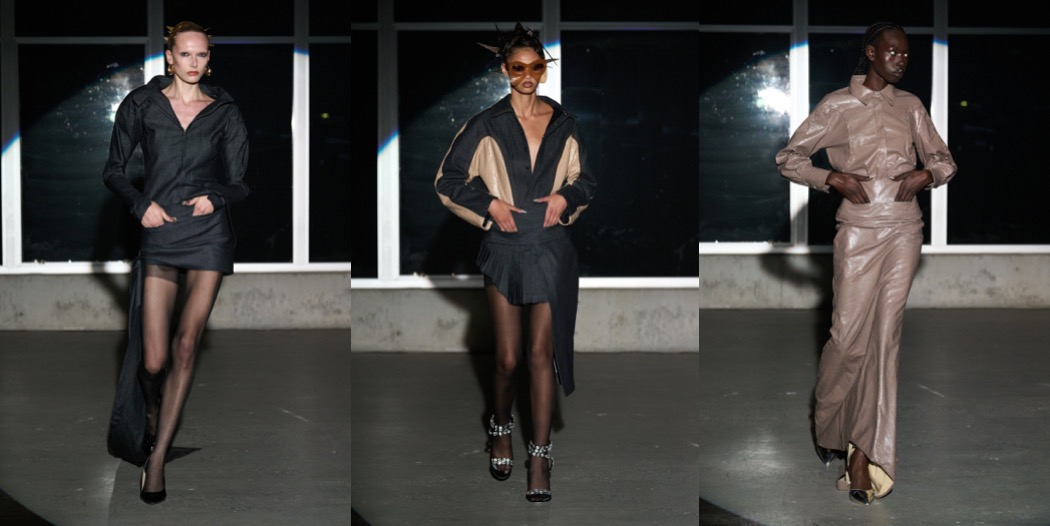
There’s something so reassuring about a Ralph Lauren collection. It’s really good to see the designer back on the New York Fashion Week schedule, as he brings much-needed substance to the table. For spring-summer 2024, the all-time American designer looks back at his 2000s aesthetic (especially the gorgeous spring-summer 2003 collection which resonates so well with fashion in 2023) and delivers a line-up of what I call future vintage, clothes that will become heirlooms. The offering started with that most American of fabrics, denim, only Lauren treated it in the most elevated of ways; lined with chiffon and tulle and burnt out into devorés, it was then over-embroidered with sequins and beads. It doesn’t feel like an exaggeration to liken these pieces to couture, even if the silhouettes he was working with were straightforward jackets and cargo pants. From there, the show moved onto a series of black and gold looks and a chance to play with house codes like the RL logo, which was picked out on the torso of a clingy beaded black dress, and the military jacket, which got belted over silky pants and strappy heels. Christy Turlington’s show-closing gold lamé one-shoulder gown was a knockout. A glamorous, NYFW moment.

Collage by Edward Kanarecki.
Don’t forget to follow Design & Culture by Ed on Instagram! By the way, did you know that I’ve started a newsletter called Ed’s Dispatch? Click here to subscribe!
NET-A-PORTER Limited

Remixing The Codes. Helmut Lang SS24

Peter Do always had a Helmut Lang-like sensibility; I even hinted he could be a great choice for the brand exactly one year ago. Just like Lang did in the 1990s and early 2000s, Do creates at his eponymous label everyday uniforms for a hectic, urban life. He also has a similar take on minimalism, which he polished up under Phoebe Philo at Céline (who, by the way, often referenced Lang’s style-codes). Unexpectedly however, Do’s debut collection for the Fast Retailing-owned brand didn’t deliver. It was yet another remix of Helmut’s signatures, grit-free, nicely packed and smoothed up for a contemporary customer (who, if truly loves Helmut Lang, will simply buy the real deal on a resale platform). In Peter’s painfully straightforward spring-summer 2024, there were many references to the Austrian designer’s milestone moves. The yellow taxi cab print that appeared in many fabrications was a callback to Lang’s then-agenda setting move of advertising on the top of taxi cabs, a format once considered too pedestrian for high fashion by his designer peers. It eventually gave Do’s collaborator, the author Ocean Vuong, a theme for the poem that was printed on the concrete floor of the venue, calling back to the Jenny Holzer installation that was the centerpiece in the original Helmut Lang store at 80 Greene Street. There was also a take on Lang’s tailoring: the flat-front trousers, the androgynous, almost but not quite plain jackets, the crombie coats. The seat belt straps that criss cross the torso and pass through belt loops are straight out of the archive, a reference to the underground world of bondage clubs, but remove them and the suits will pass in the straight world. Helmut Lang’s style captured the essence of a specific time, it was an antidote for over-the-topness, a comfort-place for artists and people who were far-too-cool-for-fashion. Reviving the classics to death just makes no sense.

Collage by Edward Kanarecki.
Don’t forget to follow Design & Culture by Ed on Instagram! By the way, did you know that I’ve started a newsletter called Ed’s Dispatch? Click here to subscribe!

NET-A-PORTER Limited

People Are Flowers. Rodarte SS24

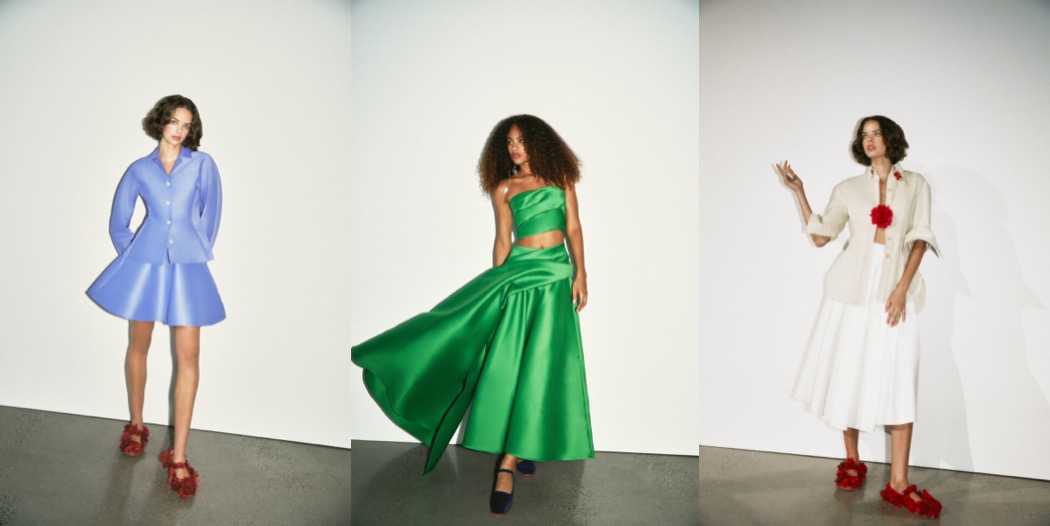
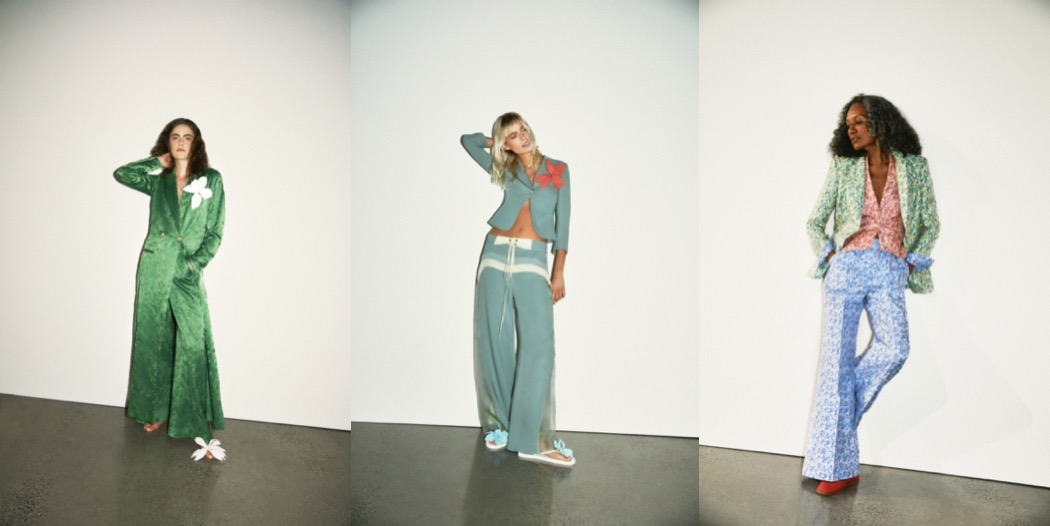
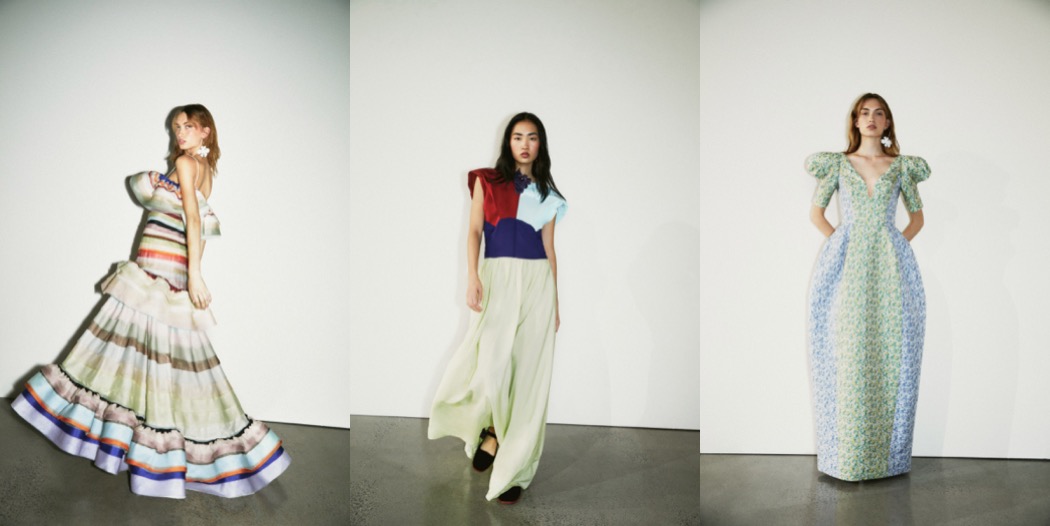
This New York Fashion Week needs some time to warm up. A swarm of publicity events that could have been an e-mail and a sea of uninspiring presentations feel like a false start. Kate and Laura Mulleavy‘s Rodarte collection – no runway this time – is an emphasis of all things this brand stands for. “We were thinking about clothing as gardens and flowers. The idea of people blooming, in a way, but also, how do we use the history of textures and color from Rodarte and celebrate that in a collection about gardens?” Flowers for spring aren’t ground-breaking, but the Mulleavy’s served a captivating take on the theme. The opening gown, with its bodice made from layers of purple and black lace and beaded embroidery at the bust, a sweeping voluminous skirt made from strips of organza in gradient shades of purple, and a matching capelet in the same organza ruffles, set the tone. The pack of the designers’ favourite actresses – from Milla Jovovich and her daughter Ever to The Bear‘s Ayo Edebiri – elevated all that flower craze into something more sophisticated. The big standouts were the ruffle dresses that harked back to Rodarte’s first collection in 2006. The vertical ruffles were pieced together from different colors of silk organza, silk chiffon, silk charmeuse, and silk georgette and were decorated with fabric rosettes. Silk bias-cut slip dresses, sometimes with little sleeves, had a 1930s feel; but it was their color palette – bright iris, peony yellow, emerald green – that made them more readily identifiable as dresses of our current era. “Even if we’re referencing an era, I don’t think that the overall coming-together of a collection ever feels vintage,” Kate explained. “So even if it’s a vibe or a cut that you could align with a time period somehow by the color or the construction, it feels fresh.

Collage by Edward Kanarecki.
Don’t forget to follow Design & Culture by Ed on Instagram! By the way, did you know that I’ve started a newsletter called Ed’s Dispatch? Click here to subscribe!
NET-A-PORTER Limited