Imbued With Meaning. Bode Pre-Fall 2022

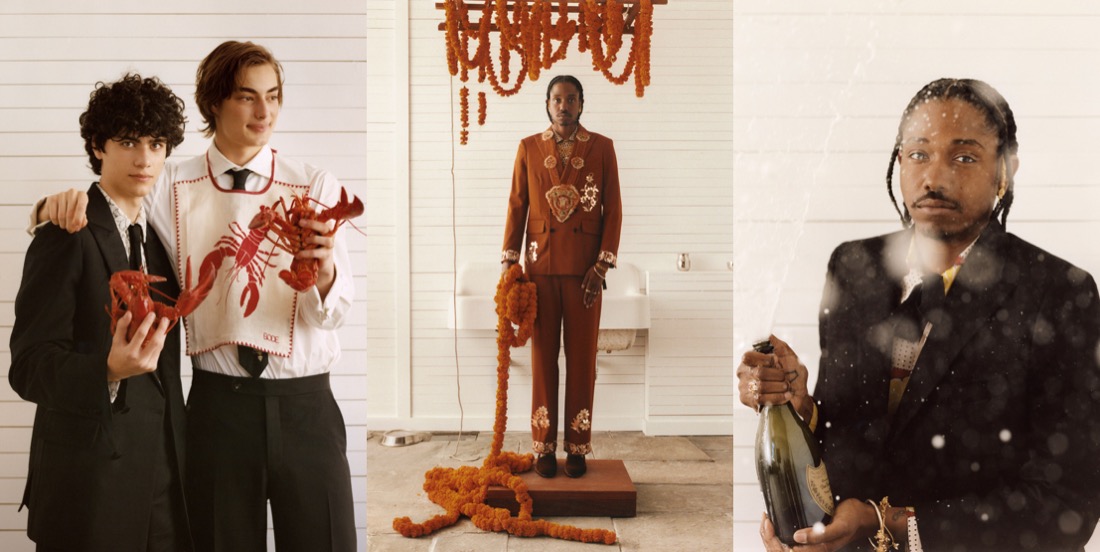
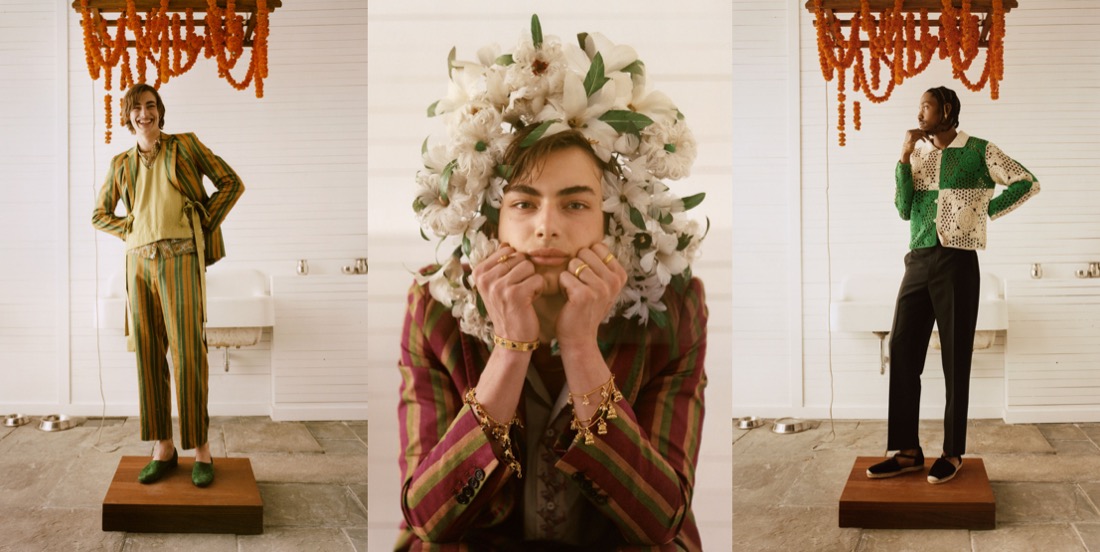
At the New York-based brand Bode, Emily Adams Bode Aujla’s collections have always been rooted in the persona. The lived histories of friends, family members, and even places all hold keys that unlock the fantastical trove of embroideries, embellishments, prints, and colors that have established Bode as one of the most exciting new American labels on the scene. For pre-fall 2022, now hitting the stores, however, Adams Bode Aujla turned inward, looking for inspiration to her own wedding to her longtime partner and collaborator Aaron Aujla, which took place in their newly purchased home upstate and brought together Punjabi traditions from his upbringing as well as ones from her mixed Southern/East Coast heritage. “The foundation of Bode is personal narrative and our emotional relationships to materials and material culture, so the wedding is very much an epitome of that relationship,” Adams Bode Aujla explains. “From a more pragmatic side, I love dressing people for weddings. A lot of the fabrics that we sell lend themselves really well to weddings: lace, eyelets, details like pearl buttons, working with people’s family histories and their initials and embroideries, so it kind of made perfect sense to make this a holistic idea.” She estimates she made over 250 pieces for their friends and family to wear to their nuptials, including matching tuxes for the groomsmen and dresses crafted from piano shawls for the bridesmaids, along with the various outfits she and Aaron wore throughout the four-day festivities.

The most obvious way the wedding influenced this collection is in the emphasis on formal wear, something that she has dabbled in since opening the Bode Tailor Shop next door to her Manhattan flagship. There are classic shapes like tuxedo jackets and tails done in traditional black and white that will find wide an audience, but it was the Bode-fied versions that had the most appeal: a dark brown three-piece suit embellished with gems in the shape of flowers, a linen marigold single-breasted suit with tonal fringe appliqués and vintage marbles decorating the sleeve vent. The colors she used – “depression-era” green, tobacco brown, and purple, and marigold – all held personal meaning for the designer and her husband. It’s her exploration of what formalwear silhouettes can be that is really exciting. A lightweight tropical wool wrap jacket with a gathered waist may resemble a traditional women’s blouse on a hanger, but when worn over a crisp button-down shirt and matching trousers, it transforms into a smart alternative to the structured suit, lending an air of ease and comfort. A similar feeling was evoked by matching sets of shirts and trousers, inspired by Aujla’s penchant for pajamas. “He wears pajamas even with a tux,” Adams Bode Aujla explained. “It was really important to him that he had [them], especially for morning prayer.” Here they run the gamut of materials and fabrications, from simple versions done in white cotton voile to intricately embroidered styles. The concept of “home” was also present in the collection through the use of crochet fabrics and embellishments, as in a white shirt covered with brown popcorn chenille, which is typically found in bedspreads, and a matching shirt and trouser set appliquéd with animal shapes in various prints, which was a reproduction of a baby quilt originally made from feed sack scraps. “During the Great Depression, companies were noticing that women were making clothing from feed sacks and grain sacks, so they started printing on the fabrics to encourage people to do it.” Adams Bode Aujla is keen on the importance of research and preserving history through the things that she makes, tracking down names and provenance. “When we do historical reproductions, we can tell that narrative in a much broader scale, and it got me thinking about how you can encourage people to preserve something, not just by mending o repairing things like that, but preserving it in the idea that they’re preserving culture and the techniques,” she said. It’s easy to see how Bode has found success; her customer understands that when they buy one of her designs, they are buying a little piece of history for themselves, a shirt (or pants, or a jacket) imbued with meaning and ready to be passed on to the next generation.
Collage by Edward Kanarecki.

NET-A-PORTER Limited

Money Is The Reason We Exist. Balenciaga Resort 2023

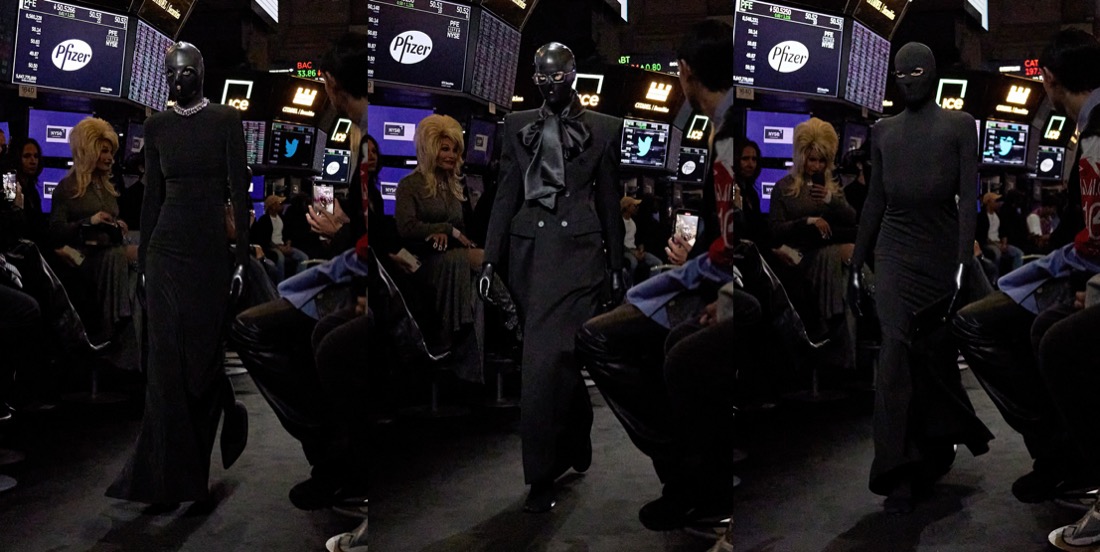
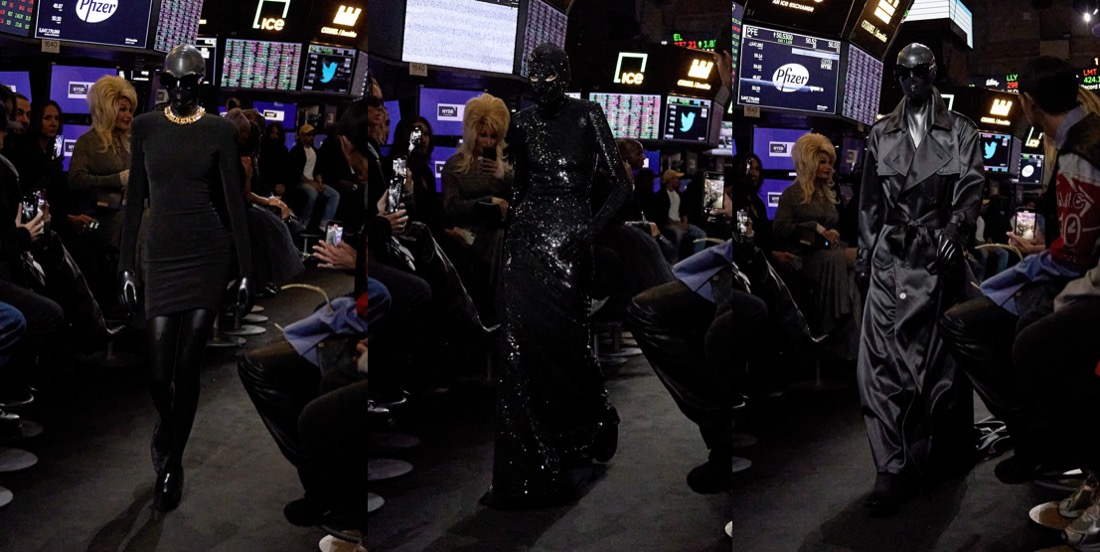
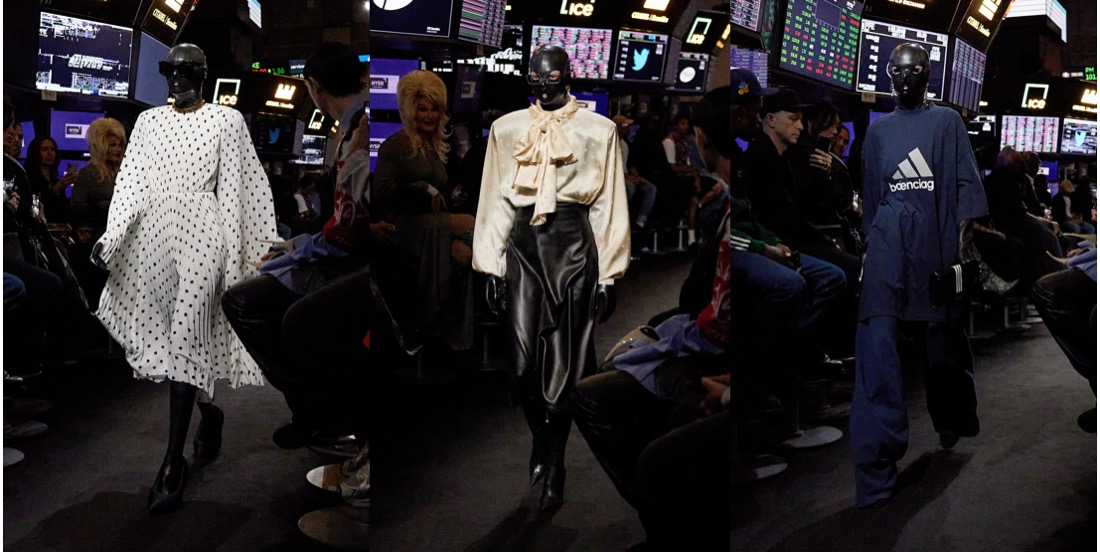
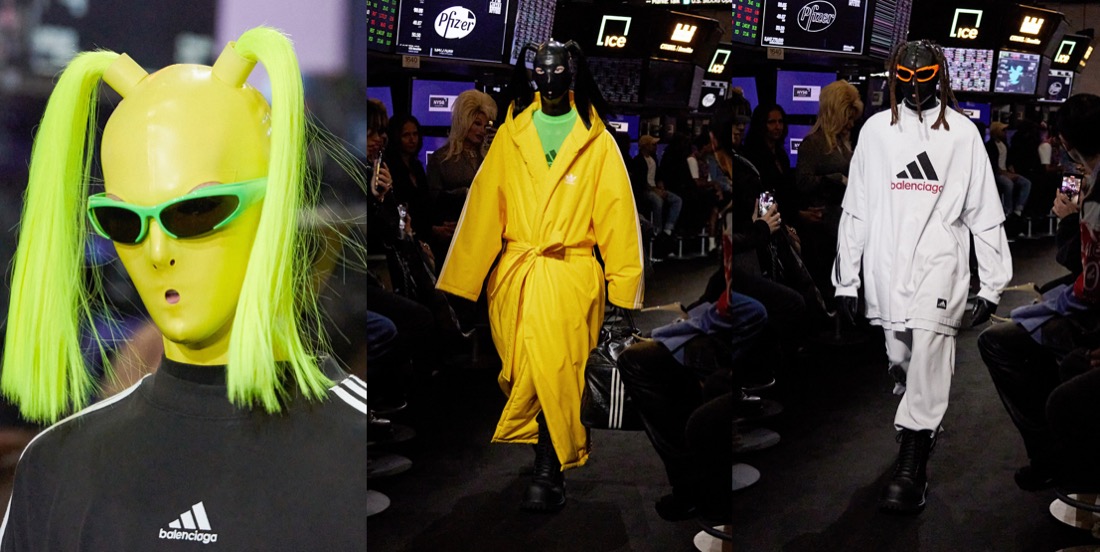
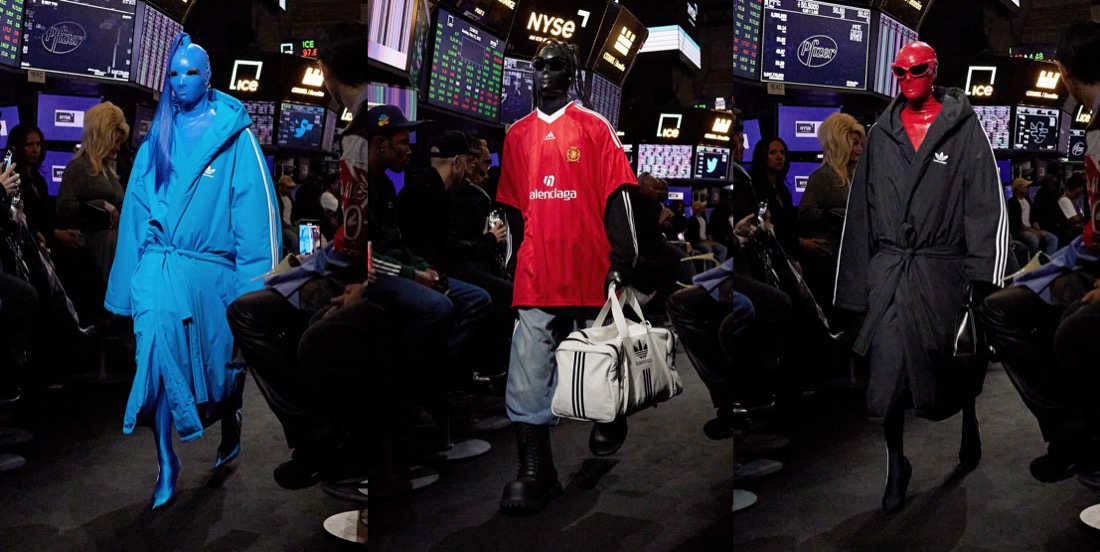
As the Lana Del Rey song goes, “Money is the reason we exist, Everybody knows it, it’s a fact (kiss, kiss)“. With a heavily ironic sense, that’s what Demna meant with his resort 2023 Balenciaga show, which was presented last week in New York. Not just anywhere – the show began with the ringing of the opening bell at the kingdom of capitalism, the New York Stock Exchange. The floor traders had been replaced by Pharrell Williams, Kanye West, Chloe Sevigny (and her husband Siniša Mačković), Megan Thee Stallion, Frank Ocean, and the city’s Mayor Eric Adams. The loaction couldn’t be more unsettling: Wall Street has taken quite a hit these past few weeks; headlines about a looming recession abound. But that suits the Balenciaga creative director just fine. Demna has never shied away from darkness or menace, and this show was no exception. Latex bodysuits fully obscured his models’ faces; they were corporate raiders of a different kind. “We have to trigger emotion,” he said backstage, wearing a face-obscuring mask of his own. “We live in a terrifying world, and I think fashion is a reflection of that… I think it was quite urgent, a quite urgent show.” The invitation was a fat stack of fake 100s. It’s a mistake, though, to consider the collection or its presentation as a critique of capitalism. “The most important kind of challenge for any kind of creative is to make a product that is desirable, to create desire. That’s what fashion should do,” Demna said.

To keep desire thrumming for its diverse audience, which is the point of these mid-season collections, the show was divided into three parts. It started with the introduction of a new “Garde-Robe,” or wardrobe, of what Demna described as “upscale classic garments.” The offering, he said, was inspired by the relaunch of the house’s couture collection last year, which was built on a foundation of tailoring. “I realized we were missing this segment of the classic wardrobe,” he explained. Classic here meant suits and overcoats, cut in the oversized, drop-shoulder shape Demna favors, and which have become hugely influential at all levels of fashion in the wake of that couture debut. Voluptuous silk jacquard pussybow blouses à la Melanie Griffith in Working Girl acted as accompaniments. The second element of the collection was eveningwear in the form of second-skin sequined gowns and silk trench dresses with trains whose supreme elegance wasn’t undercut by the pneumatic padded pumps they were worn with. In contrast, the super-sized lace-up boots that were paired with many of the show’s other looks and modeled by Ye in the front row were memeably outlandish in their proportions. Part three showcased Demna’s collaboration with Adidas. If he was trying to shake off the image of Balenciaga as a maker of high-class hoodies with Garde-Robe this section drove home the continued dominance of the sportswear category. There were tracksuits, scaled up t-shirts, boxer’s robes, and track dresses, all bearing adidas’s iconic stripes, a modified trefoil logo, or the Balenciaga name spelled in its partner’s lowercase typeface. Much of it was available to buy or pre-order on Balenciaga.com directly after the show. Set against the background of a glitchy stock market and an imminent system crash, this Balenciaga show was confident, versatile, and dangerous. But also how simple, yet so genius. That’s Demna all over.

Collage by Edward Kanarecki.
NET-A-PORTER Limited

Island Of Misfits. Thom Browne AW22

Thom Browne‘s jaw-dropping autumn-winter 2022 show added up to the pre-Met-Gala, statement-fashion buzz that’s going on all over New York right now. But Browne’s collection had little to do with Gilded Glamour (the theme of today’s gala), and more with another Metropolitan Museum Of Art’s fashion subject from a couple of years ago: Comme Des Garçons’ Rei Kawakubo. Of course, Thom’s collections are always extraordinary, but this season, the signature gray wool suits went Comme – meaning conceptual, statuesque, big. And this is a major compliment for any contemporary designer. Giant yarns made up knits, some looks were pleated to resemble a slinky, and one preppy sweater was molded into a literal ball. It was all densely layered and piled up on precarious heels composed of schoolhouse blocks spelling out T-H-O-M-B-R-O-W-N-E. Then came the toys, where you could only giggle at the ballooning proportions of a lobster look and at the mania of Browne’s craft. The loveliest dolls in the dollhouse were a teal diagonally striped prom dress and a similar gown-ish green column layered atop an oversize white button down. It wasn’t messy – Browne’s patterns always meet, his hems are always tailored to immaculate precision – but it looked like it had lived a little. According to the designer, this collection is about New York as “an island of misfit toys” and the way people come to the city “to find themselves and to create themselves,” he said. The line-up was presented as a Ted Talk – cue the pun – led by model Rocky Harwell dressed as a Thom Browne teddy bear to an audience of stuffed teddies in little Thom Browne suits. Well, this is definitely one of my favourite TB collections in a while!

Collage by Edward Kanarecki.

NET-A-PORTER Limited

Witchy & Whimsy. Anna Sui AW98

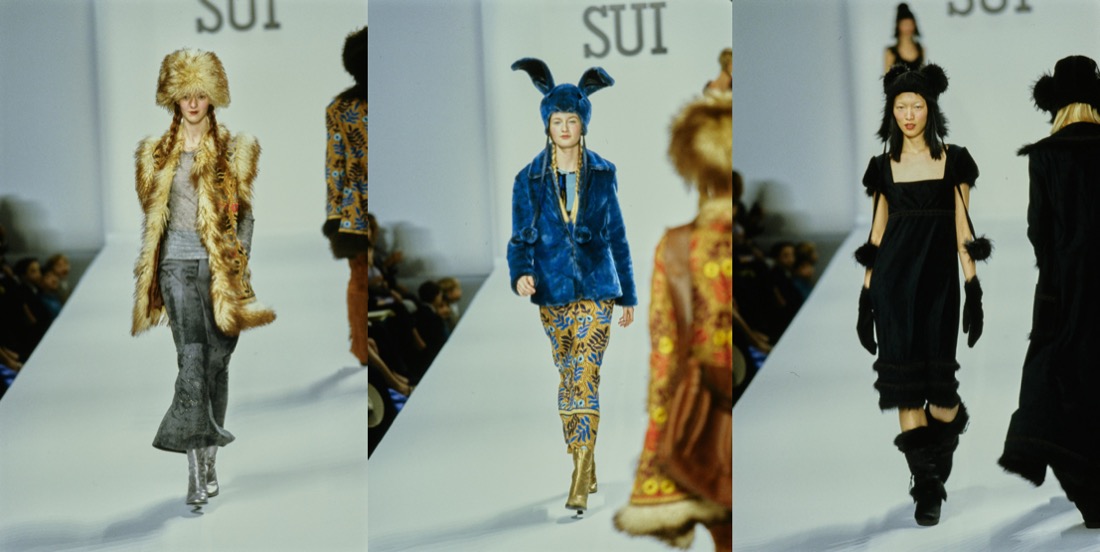
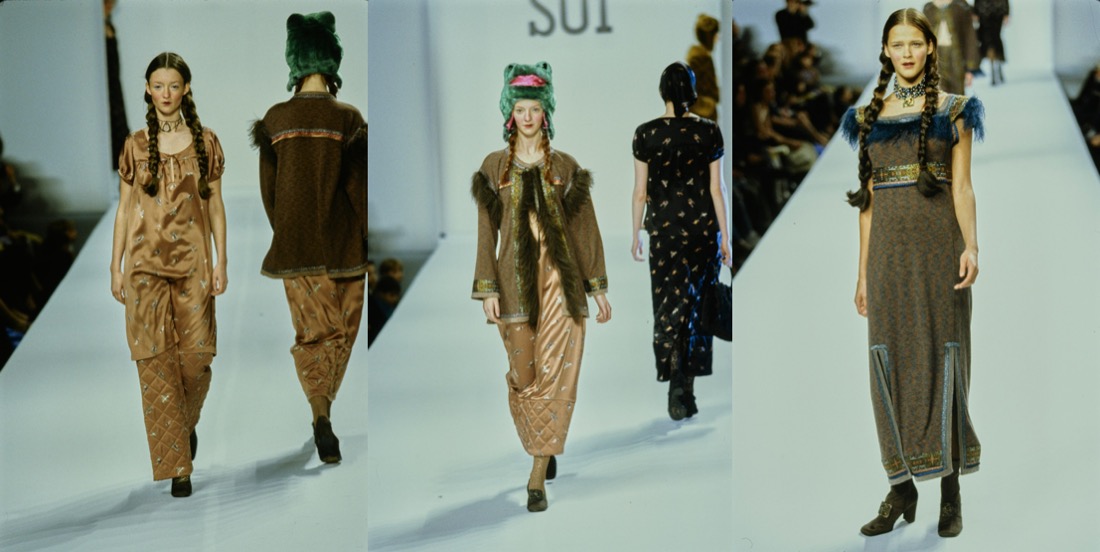
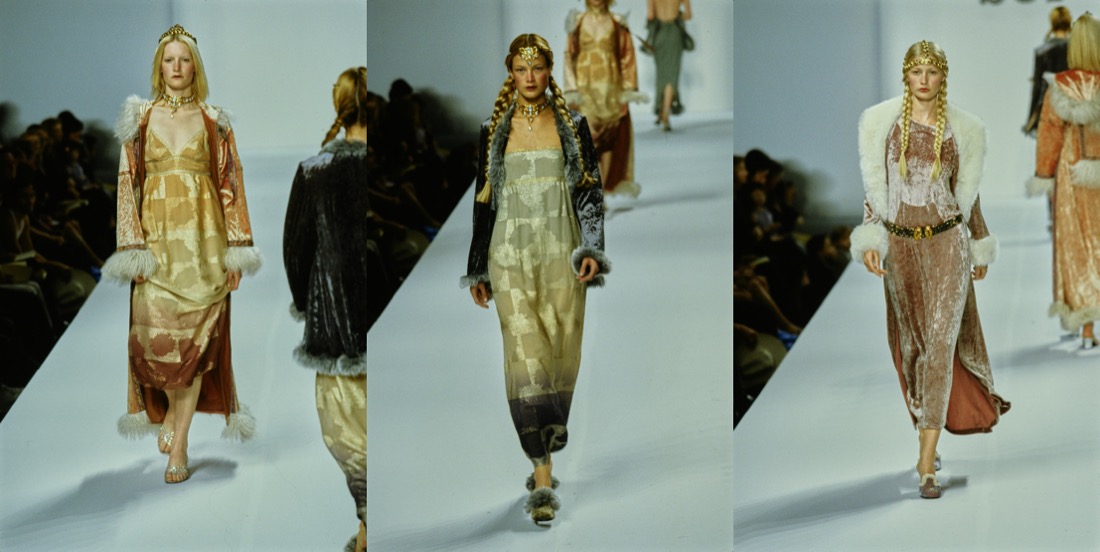
Anna Sui‘s charming 1990s and early 2000s collections made the kids who these days love and embrace the arty-crafty, slightly goofy, very witchy, highly whimsical aesthetic – which got additionally intensified by such it-girls like Ella Emhoff and, of course, the power of TikTok. The autumn-winter 1998 line-up by Sui seems to capture all things which are suddenly (re)loved in 2022. The collection was inspired by fairy tales, but also nodded to all the great illustrators of the 1900s. At the time, the designer had seen an exhibition in London about the Victorian fairy tale illustrators that included Arthur Rackham and Kay Nielsen. “It was the most incredible and really moving exhibition that I had seen in a long time, and I just kept looking at those pictures, so then I thought, OK, I’ll do a collection like that“, she recalls to Vogue. The runway looks were all like a kid’s version of dress-up – “with the cowboy with the big badge, and oversized hat, and chaps that were all studded” – as if you were taking stuff out of the trunk and putting it on. All the animal hats and everything came from looking at Walter Crane drawings of frogs and bears. “I just thought it’d be really fun to do it almost from a kid’s perspective and make those into faux fur hats, so I called the milliner James Coviello and said, ‘We have to make these teddy bear hats.’ And I showed him a picture of one of the girl bands at the time that had knocked the stuffing out of a stuffed bear and made a hat out of it. I said, ‘Let’s do a fairy-tale version of this.’” And then, with Erickson Beamon, Anna came up with the crowns, which became instant hits. In the collection, there was also a whole series of the fairy-tale princess looks. “I just loved the frosted velvet that we made all those dresses out of. It was a stretch velvet in these frosted colors and then we trimmed everything with faux fur. There was a lot of it throughout the collection. The show opened with those black and ginger folkloric dresses trimmed with faux fur fringes. And then we did inside out faux fur, like there’s that jacket that Amber Valletta’s wearing, which we trimmed like Lapland clothes.” Looking at the collection today, it just feels so amazingly dreamy and so, so desirable. Every single look is relevant – especially in contemporary times where all aesthetics and subcultures become one big, eclectic melting pot.

Collage by Edward Kanarecki.
NET-A-PORTER Limited

Arcadia. Ralph Lauren SS03

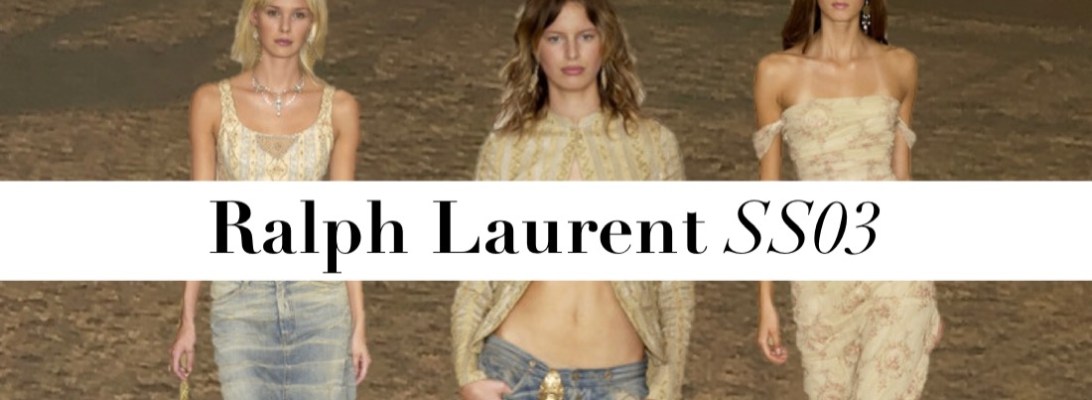
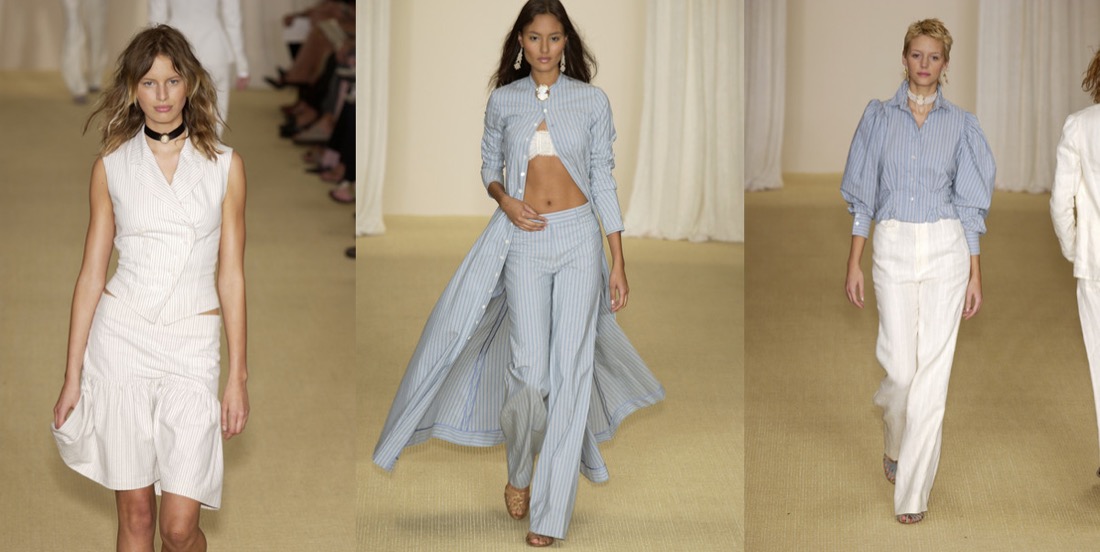
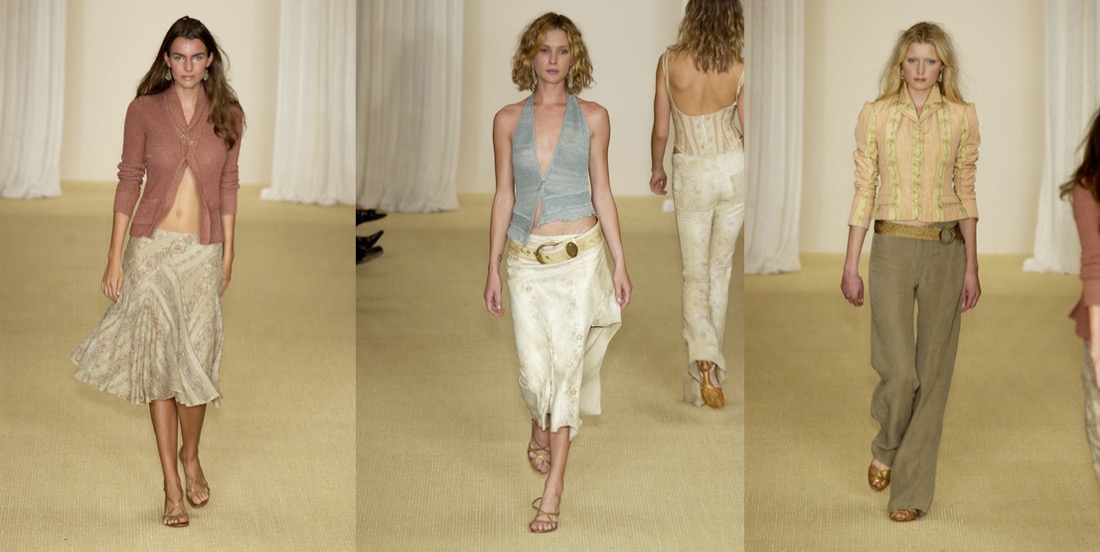
As spring is approaching, I’ve got one collection on my mind: Ralph Lauren‘s spring-summer 2003 line-up. This one is like wine – it gets better with time. On the 20th of September in 2002, in the middle of New York Fashion Week, Lauren pitched an enormous muslin-draped tent, filled with white cushions, huge candles and twinkling crystal chandeliers – in the lush walled gardens of the Cooper-Hewitt Museum. Entering the building, the audience was met with trays of champagne, while the smell of tuberose and the strains of Erik Satie wafted through the evening air. If that wasn’t enough to induce a romantic swoon, the clothes would have done the trick. Lauren loves the womanly silhouette of the fin-de-siècle, with its nipped waist and curving hips. For spring he chose to highlight that silhouette with regal fabrics like damask, jacquard and silk moire, made into curvy jackets, bustiers and vests, and shown with creamy linen or silk trousers or light, pretty skirts. There were great leather pieces, gilded or printed with a wallpaper floral, and beautiful, skin-baring silk chiffon dresses. While Lauren makes no secret of his love for the past, that season he was resolutely modern: for evening, he showed a beaded top with a floor-length bustle skirt made from very distressed blue denim. This feels so good in 2022!

Collage by Edward Kanarecki.
NET-A-PORTER Limited