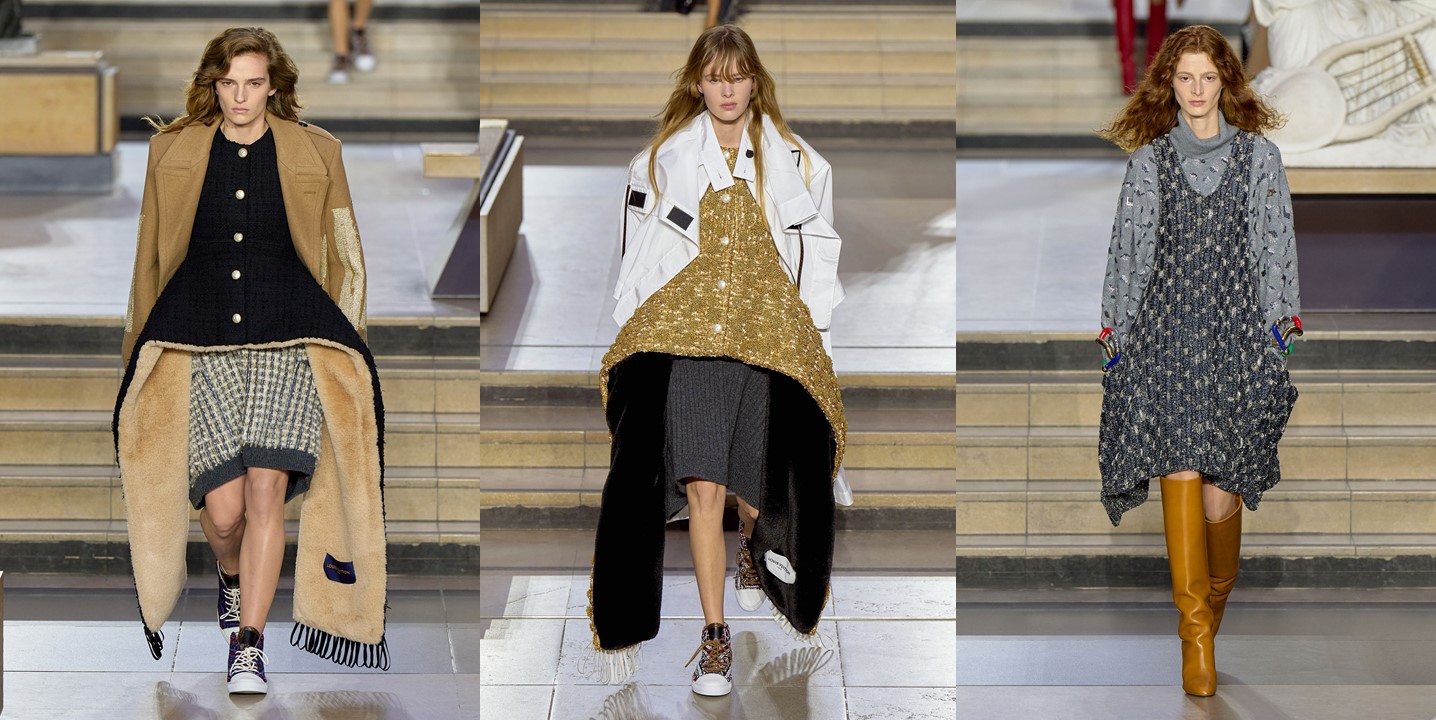
Make It Make Sense. Louis Vuitton AW22

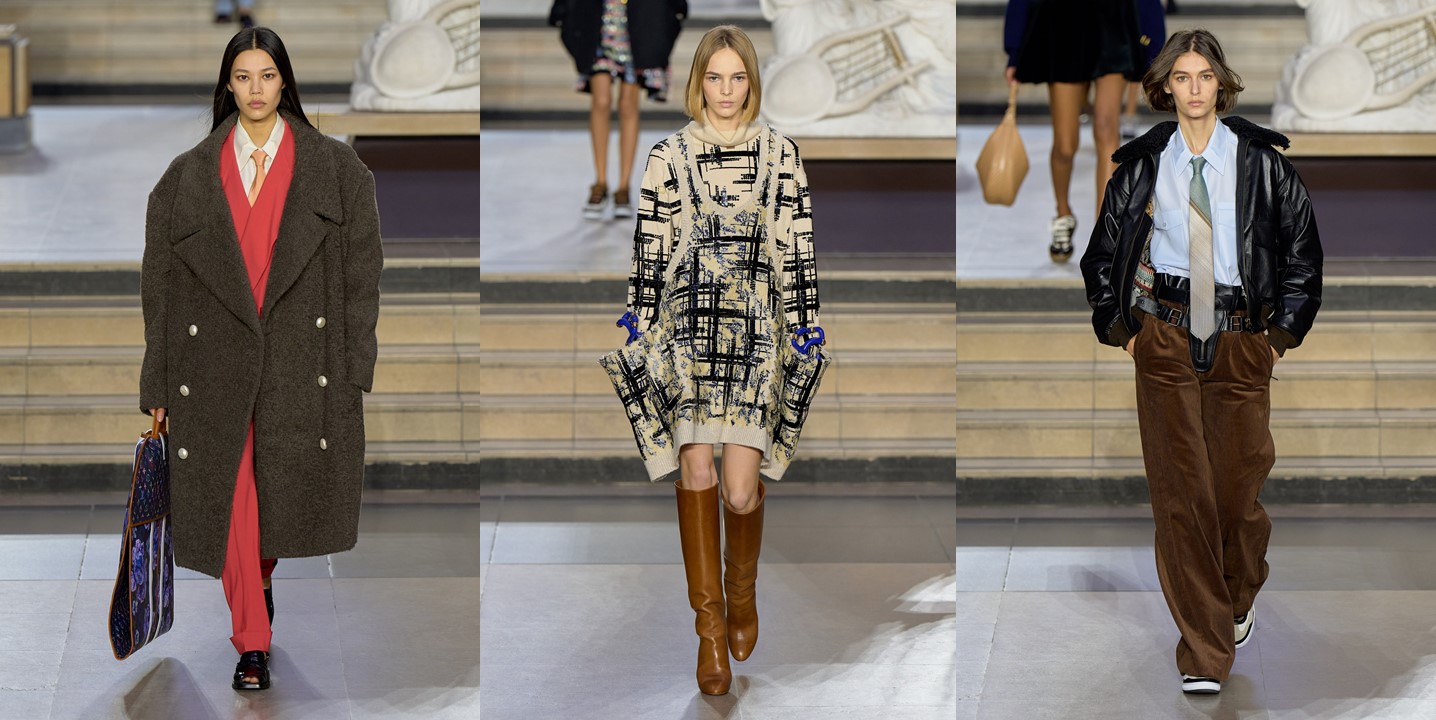
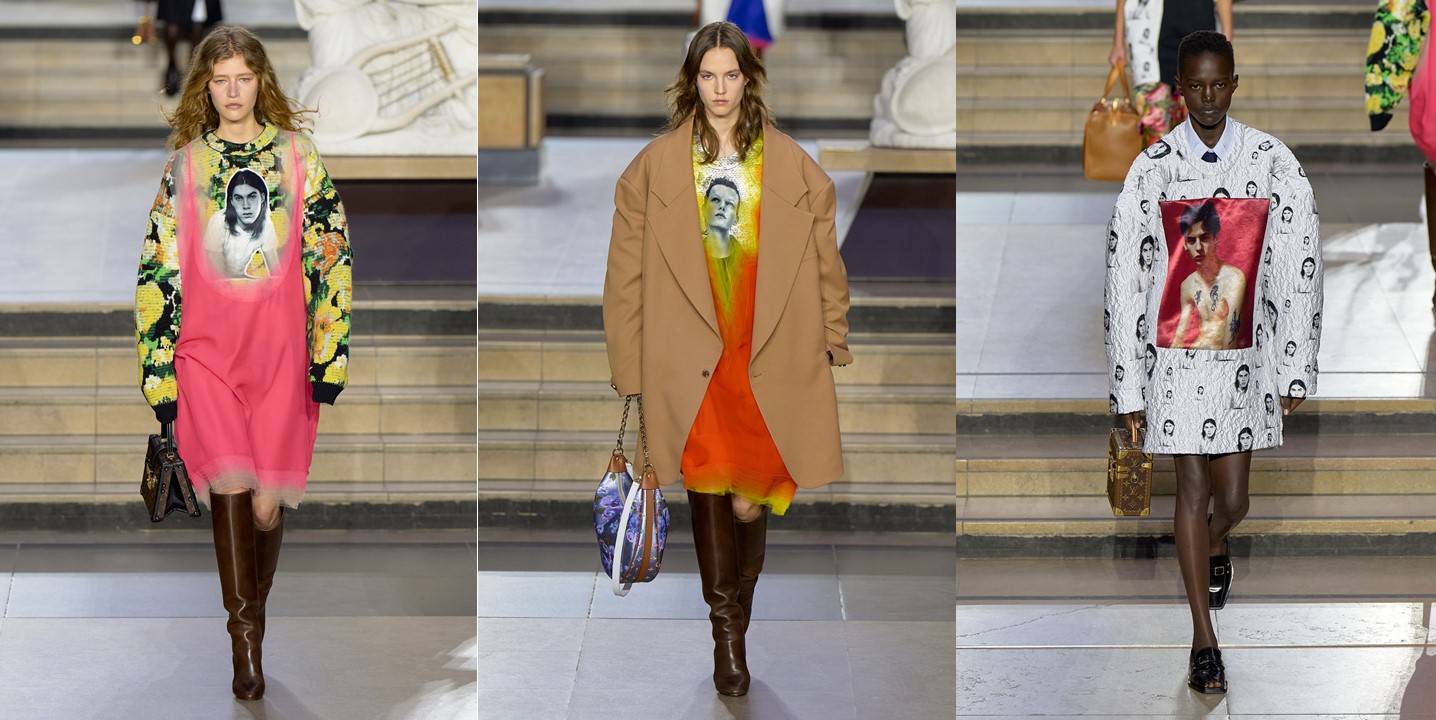
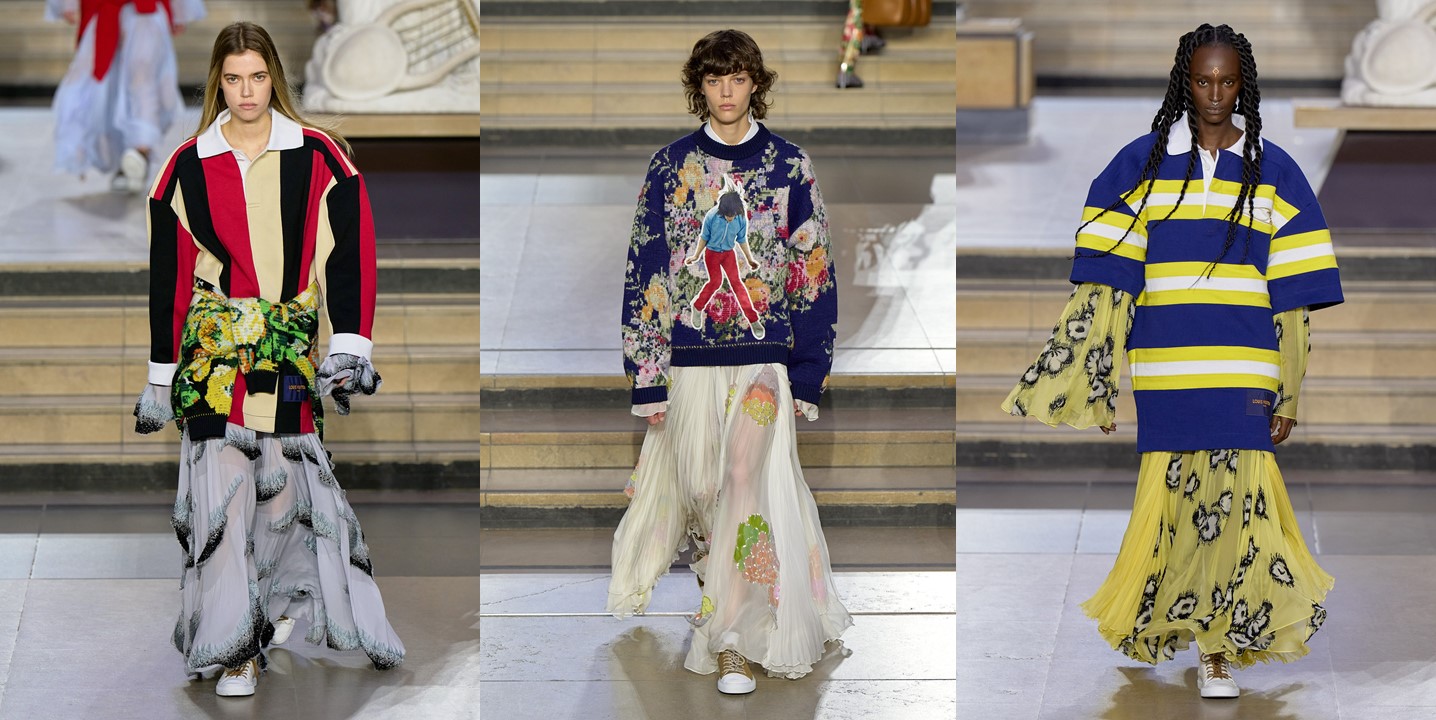
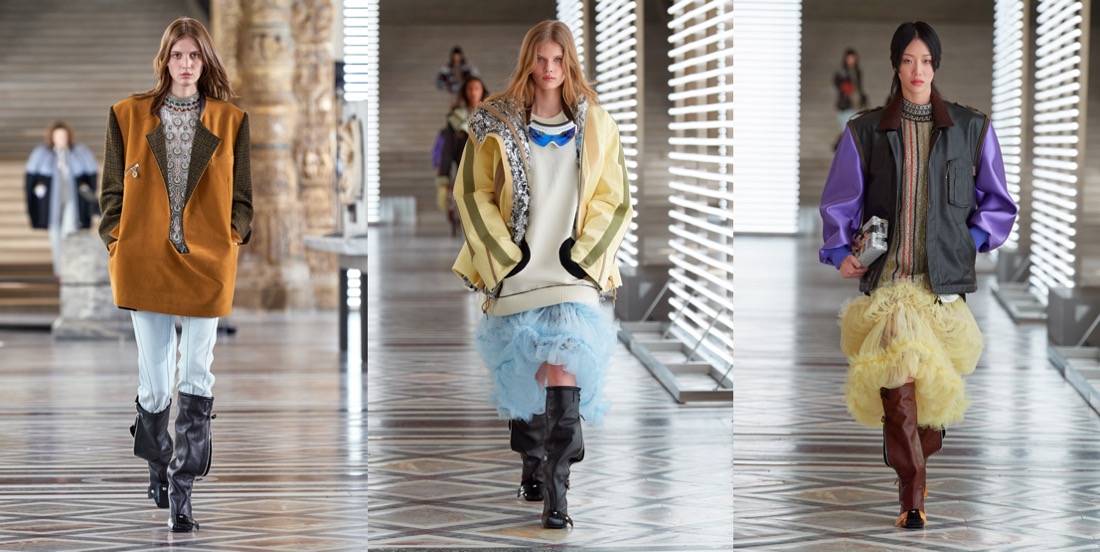
The latest Louis Vuitton collection makes no sense. But not in a surreal way like at Jonathan Anderson’s Loewe, where the absurd was both hilarious and intriguing, and conveyed through jaw-dropping craftsmanship. In general, Nicolas Ghesquière‘s recent runway offerings look peculiar and overworked, but his autumn-winter 2022 collection wins with its randomness and chaos. Of course, there’s a reason behind that madness. Time has been a subtext for Ghesquière since the beginning of his tenure at Louis Vuitton. He’s made a practice of mashing up references and collapsing centuries in the process, most famously when he combined Louis XVI frock coats with running shorts and sneakers on a sub-floor of the Louvre that was once a medieval moat. This show wasn’t hooked to a particular era as much as it was to a time frame: young adulthood. In prepared notes, Ghesquière called the collection “an excursion into a perceptible, fleeting, and decisive moment when everything comes to the fore, in all its innocence and insight. The impermanence and beautiful volatility of adolescence.” He conjured that state of being most straightforwardly with a trove of photographs by David Sims. The photographer came of age in the 1990s – like Ghesquière himself – and shook up the status quo the generation before him established by shooting his peers and other young people with a vérité grit that eventually became the look of that period. By applying and embroidering Sims’ images onto floral jacquard polos, some of that edgy spirit seeped in here. Channeling the sense of youthful experimentation he remembers, Ghesquière topped evening dresses with sporty rugby shirts or chunky sweaters wrapped around waists. He also played with androgynous tailoring, often in oversized shapes, styled with tacky-looking men’s ties. Other silhouettes looked delineated from Ghesquière’s more extravagant collection for spring, only here the pannier and bustle shapes were remixed in softer embroidered knit and tweed, which made them look more everyday. The location – Musée D’Orsay’s main hall – had nothing to do with the collection’s forced spontainety. “Freedom is all,” the designer, “without directive or impediment.” But why should that freedom look so haphazard? I miss the times when Ghesquière’s work was more streamlined and focused – both at Balenciaga, and in his first seasons for Louis Vuitton.

Collage by Edward Kanarecki.

NET-A-PORTER Limited

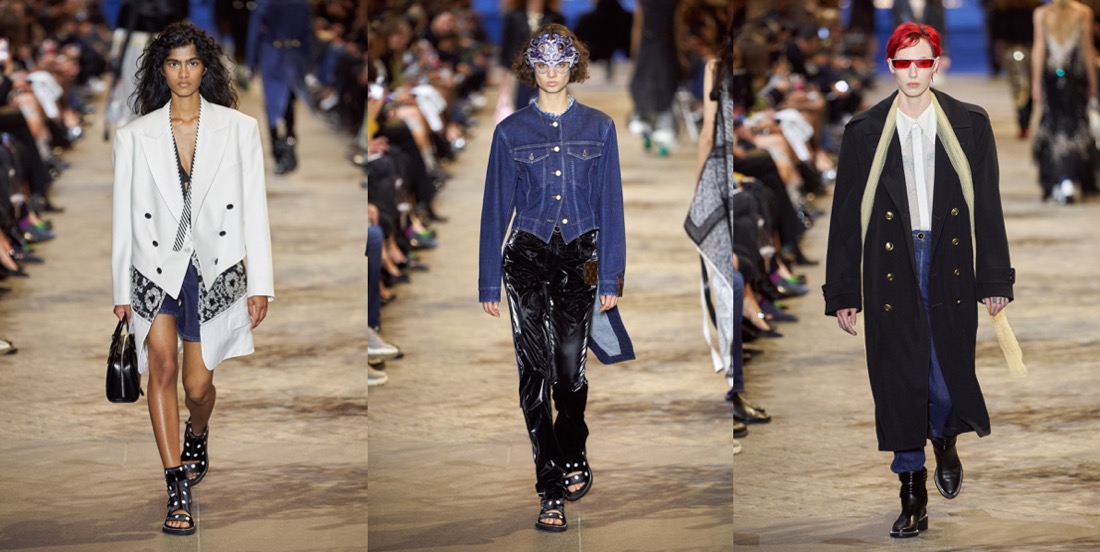
Notes On Decadence. Louis Vuitton SS22

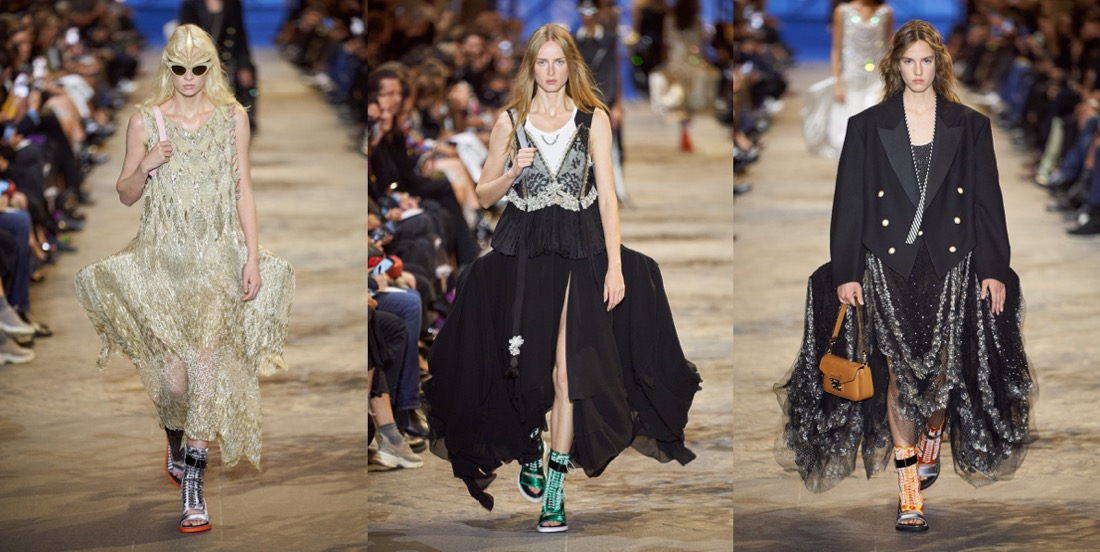
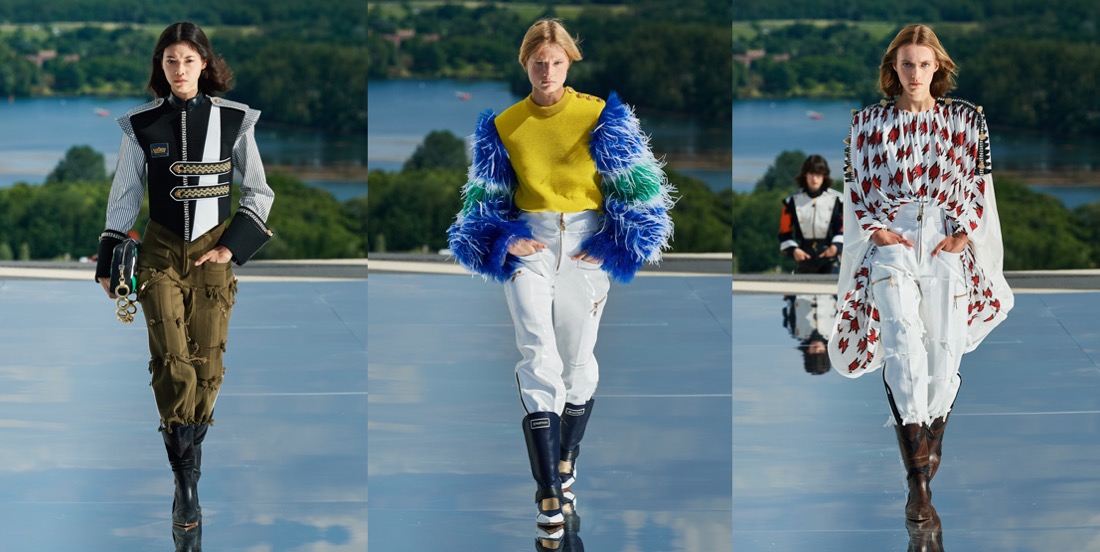
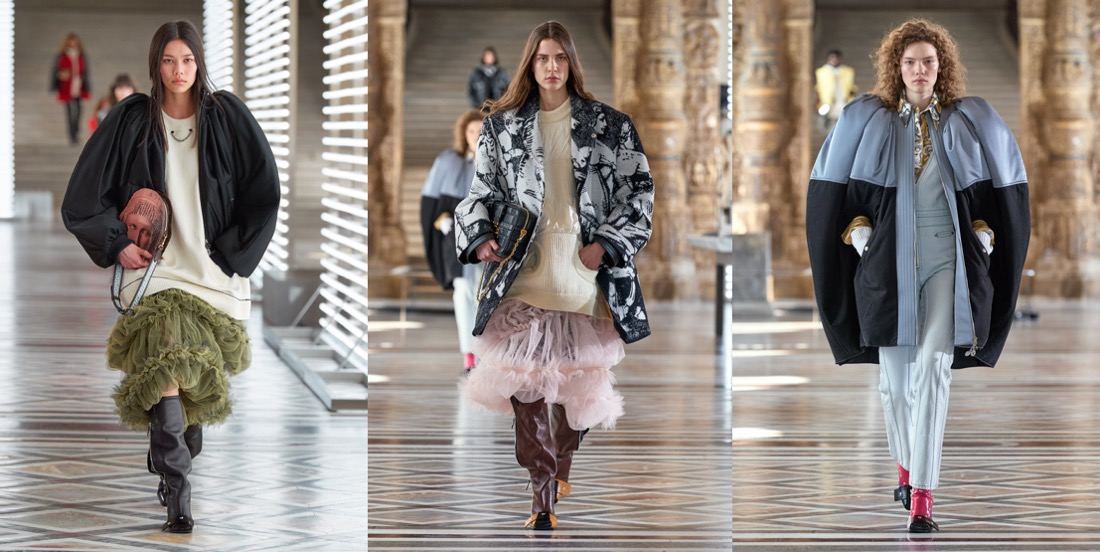
This was one of the best Louis Vuitton collections in a while. In a long while. The Louvre’s Passage Richelieu was decked out in dozens of antique chandeliers – collected over many months, they set the stage for what Nicolas Ghesquière described in his press notes as a “grand bal of time.” At Louis Vuitton, Ghesquière has been fascinated by the notion of time and the way fashion intersects with it and doubles back. He’s a master at colliding references and juxtaposing surprising elements to create anew. With the company celebrating the 200th birthday of the house’s founder, Ghesquière had another reason to take up the subject. As company lore goes, the Passage Richelieu was used by Louis Vuitton for his meetings with Empress Eugénie, for whom he was the exclusive trunk maker. Eugénie might have recognized the panniered silhouettes of this show’s first few looks. The sumptuous, elaborately embellished dresses were girded at the hips in the 19th-century style, but where her gowns would’ve been weighed down with underskirts, Ghesquière’s dresses fairly bounced as the models made their way down the runway in open-toe satin wrestling boots. There were shades of Paul Poiret and Erté in these looks, with their finely beaded headpieces and art nouveau sunglasses. Only neither Poiret nor Erté would likely have encountered denim, and if they had, they never would’ve paired a beaded bias-cut slip dress with jeans, or cut a jean jacket with a tailcoat’s proportions. That’s Ghesquière’s time-traveling touch, which this time focused on opulent, untamed, nearly forgotten decadence. The preponderance of capes stemmed from another strand of Ghesquière’s story this season: he’s designed Alicia Vikander’s costumes for the upcoming HBO Max series from Olivier Assayas, Irma Vep. The show, according to HBO, “reveals the uncertain ground that lies at the border of fiction and reality, artifice and authenticity, art and life.” Ghesquière, for his part, is interested in the uncertain ground between the past, present, and future. “I like the figure of a vampire who travels through the ages, adapting to dress codes of the era,” his press release read. One cape came in polka dots with a jaunty jabot; two others cut diagonally across the body looked like going-out tops for the club, not a ball; and a couple more, at “the threshold of couture,” were made from what appeared to be feathery frayed chiffon. A protester carrying a sign that read “Overconsumption = Extinction” made it to the end of the runway. The magic of the ball was momentarily broken; reality was bumping up against the fairy tale. Still, this was peak Ghesquière, merging distant and recent fashion history with the relaxed codes of today.

Collage by Edward Kanarecki.
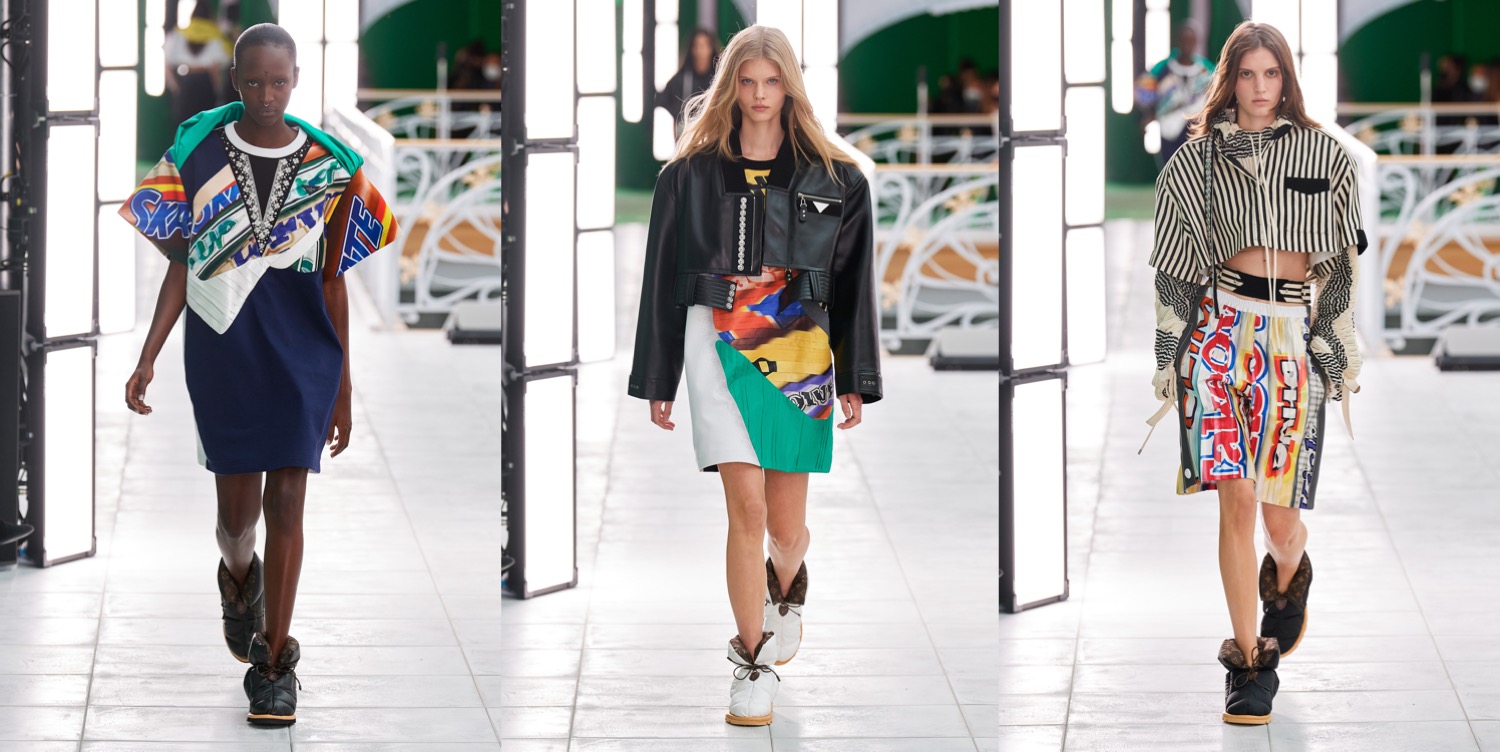
Jubilance. Louis Vuitton Resort 2022

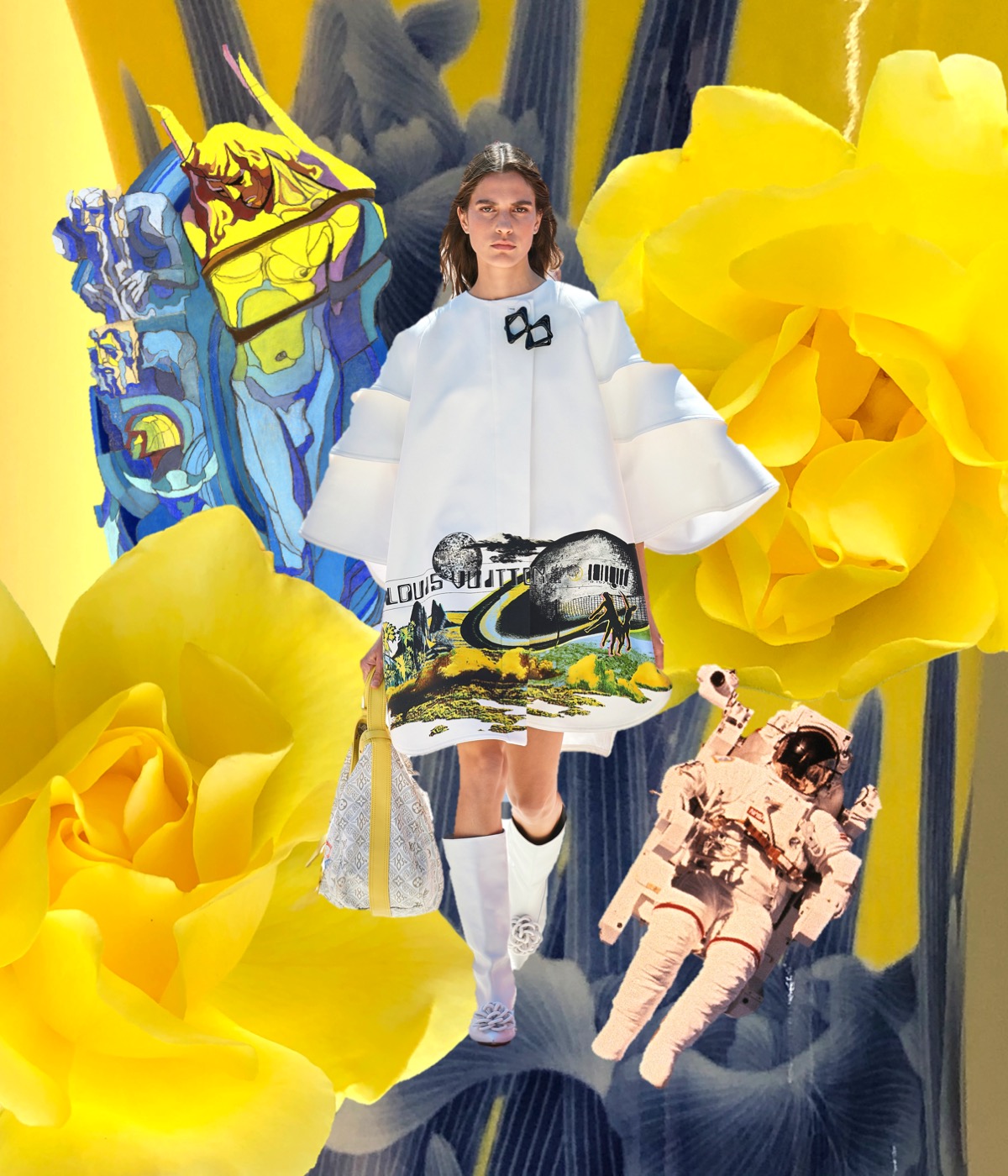
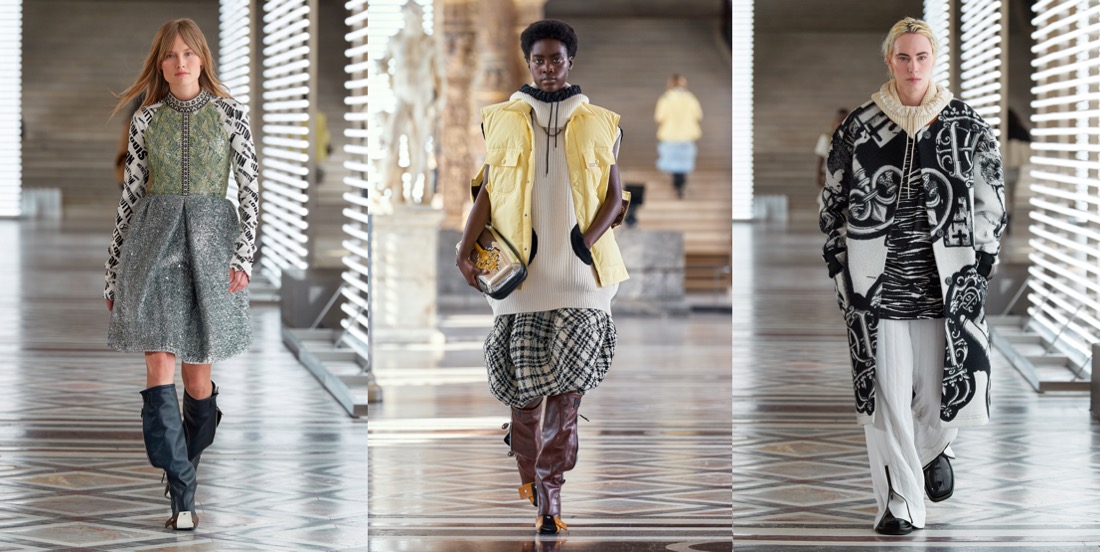
This is Nicolas Ghesquière’s second resort collection for Louis Vuitton without a destination show. A year ago in the early months of the pandemic he staged a studio shoot, but this time around he filmed a short movie at Axe Majeur, a sculpture park outside of Paris conceived by the late Israeli environmental artist Dani Karavan. An in-the-know local says of the place, “You feel like you’re outside time. You could be in some indeterminate future or some past utopia vision of the future.” Anyone familiar with Ghesquière knows that that description jibes with his career-long interests in sci-fi and outer space and with the time-collapsing fashion he’s made his métier at Vuitton. The monumental setting definitely befits a collection that was partly inspired by the nascent possibility of space tourism. In fact, Ghesquière said the prospect of public space travel inspired the collection’s anachronistic prints, which set an escalator, a basketball court, and a roadside motel, among other things, amidst alien landscapes. There were also parachute pleats on minidresses, pants with the padded quilting of spacesuits, and nods to the iconic vinyl of André Courrèges, the French designer whose streamlined Space Age creations of the 1960s still read as futuristic half a century later. “It’s a very optimistic, joyful collection,” he said. “There’s a jubilance to it.” This was reflected in the heraldic tailoring, a top and skirt aflutter with feathers, and a cocktail dress that glittered like a disco ball. A group of silk blouses with cape-like backs that added softness to the structure of their accompanying pencil skirts and high-waisted trousers achieved a more everyday kind of chic lift-off. However, personally, the collection doesn’t click for me – just like most of Ghesquière’s recent offerings for the brand.

Collage by Edward Kanarecki.
Past, Present, Future. Louis Vuitton AW21

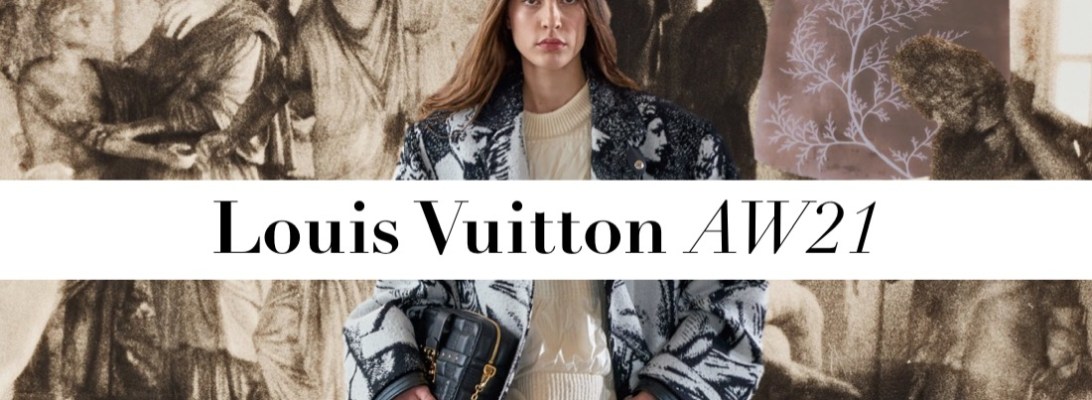
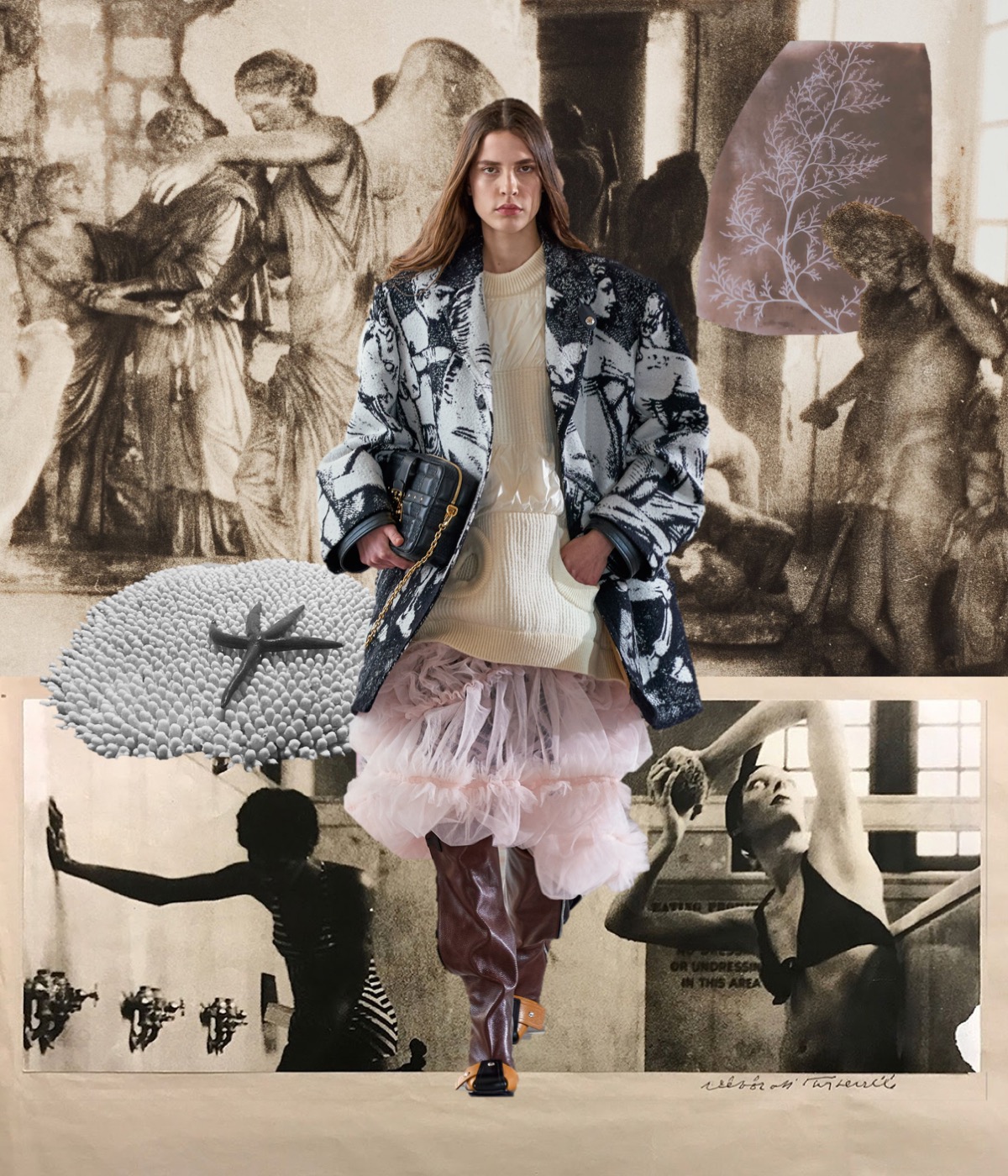
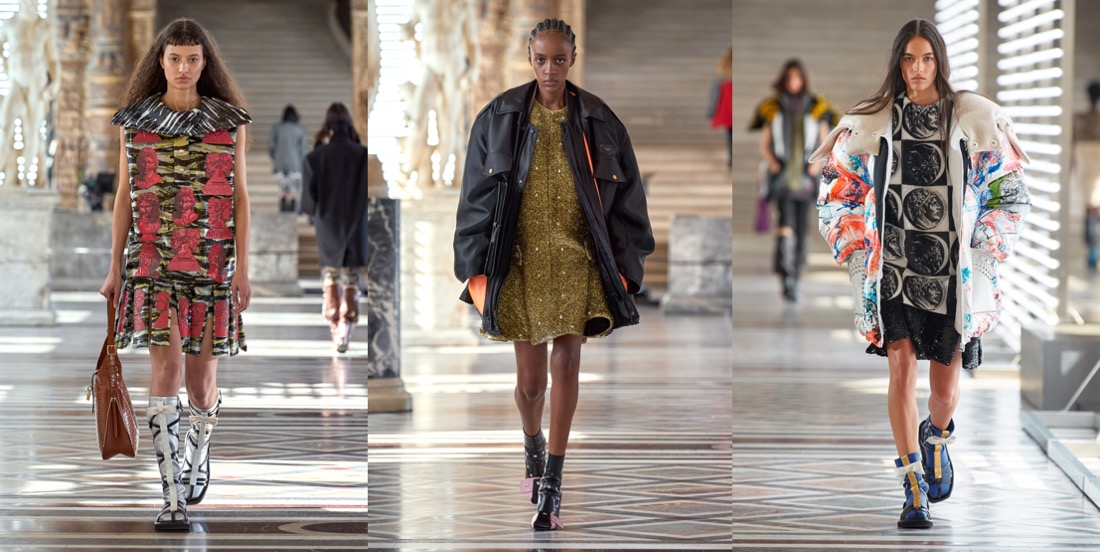
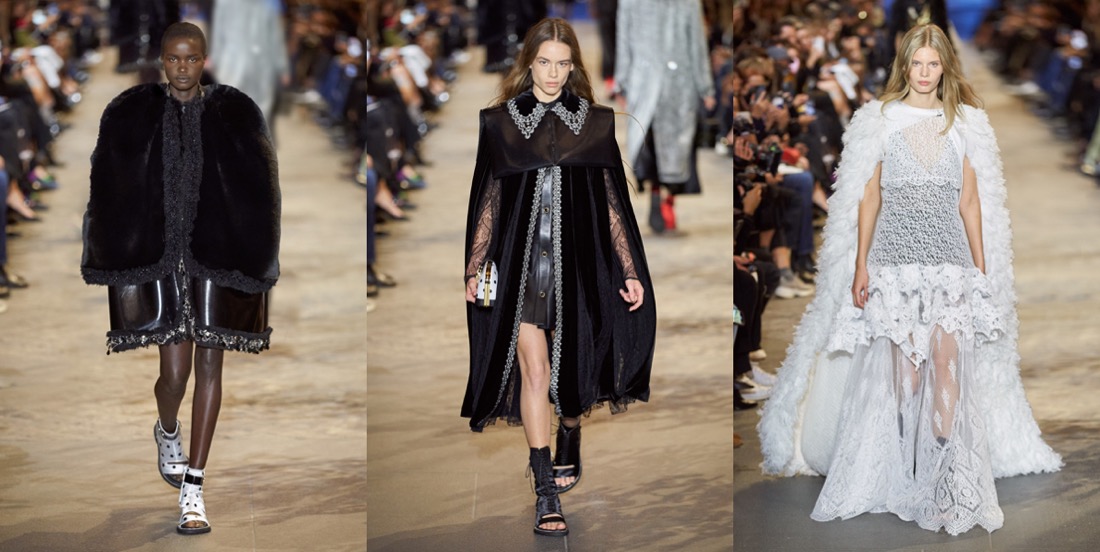
Nicolas Ghesquière continues to induldge in his favourite theme: a journey through time. Past, present, future. He made Louis Vuitton‘s autumn-winter 2021 runway of the Louvre’s Denon wing, his models mingling with ancient Roman, Greek, and Etruscan sculptures to the tunes of Daft Punk’s mega-hit “Around the World.” The notoriously hard-to-get duo agreed to lend the song for the show weeks ago, he said, pre-breakup. He also divined a collaboration with the Italian design atelier Fornasetti, and its famous hand-drawn faces of women from antiquity peered out from all manner of clothes and leather goods. “Since we are all in a motionless situation, we have to double our imagination of inventing an extraordinary journey,” Ghesquière told Vogue. That goes for the collection as much as the production values surrounding it. Propelled by the concept of movement, he alternated between blouson jackets and cocooning capes on the one hand and elongated torsos punctuated with skirts that bubbled around the knees on the other. Nearly all the looks were accompanied by wedge-heel boots with a slouchy, swaggering disposition. In general, I found most of the looks too clumsy, even though this collection was a showcase for the LV atelier’s savoir faire: jewel-encrusted tunics peeked from under color-blocked parkas and bombers, and otherwise simple ’60s-ish dresses in A-line or sack shapes were minutely embroidered in graphic patterns and motifs. The closing pair of gladiator dresses were canvases for Fornasetti drawings of ancient statuary. “I wanted something impactful, something that conveys hope and joy for what’s coming next, and for people to have a good time watching,” Ghesquière said. “A moment of fashion.” Well, there were better Ghesquière fashion moments in history, but this will do as the official end of digital fashion month.

Collage by Edward Kanarecki.
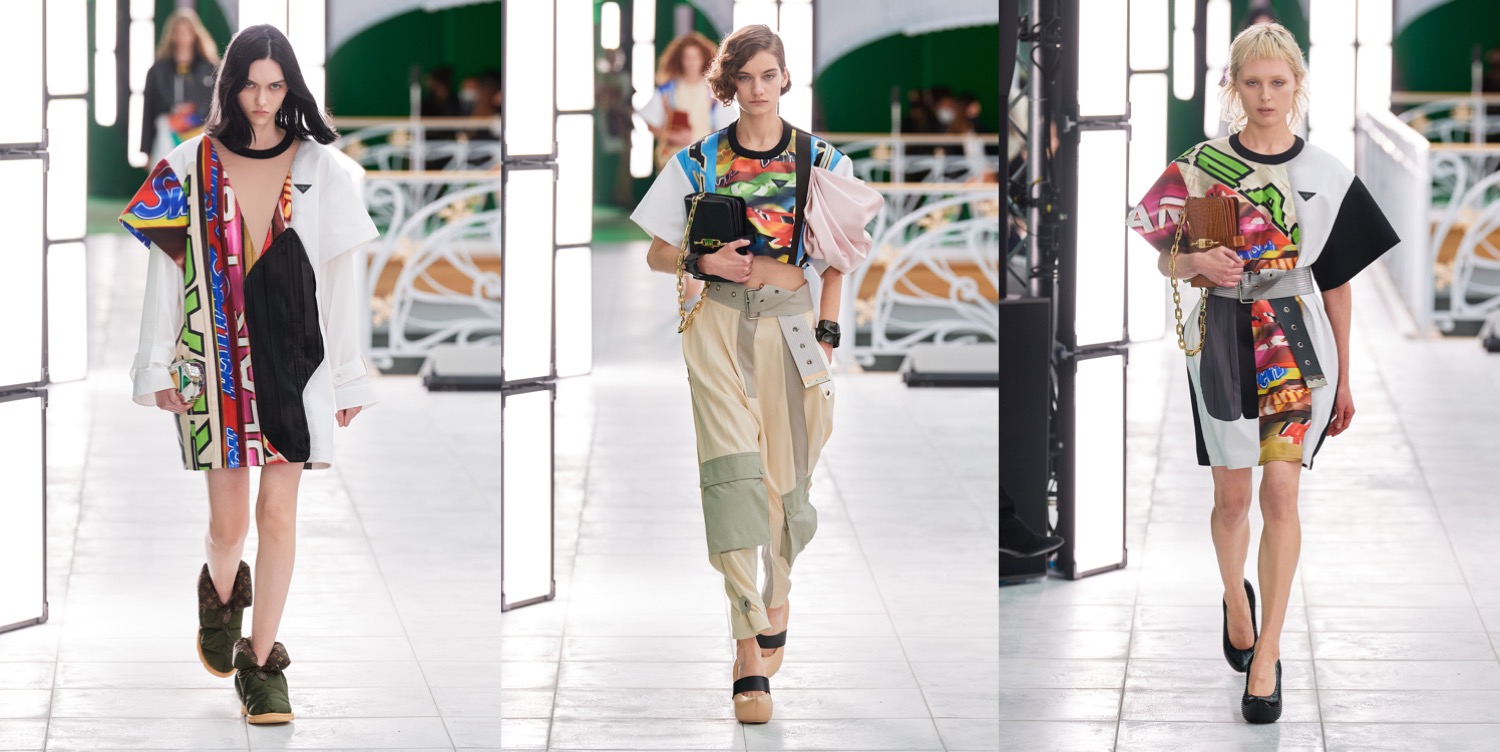
In Between. Louis Vuitton SS21

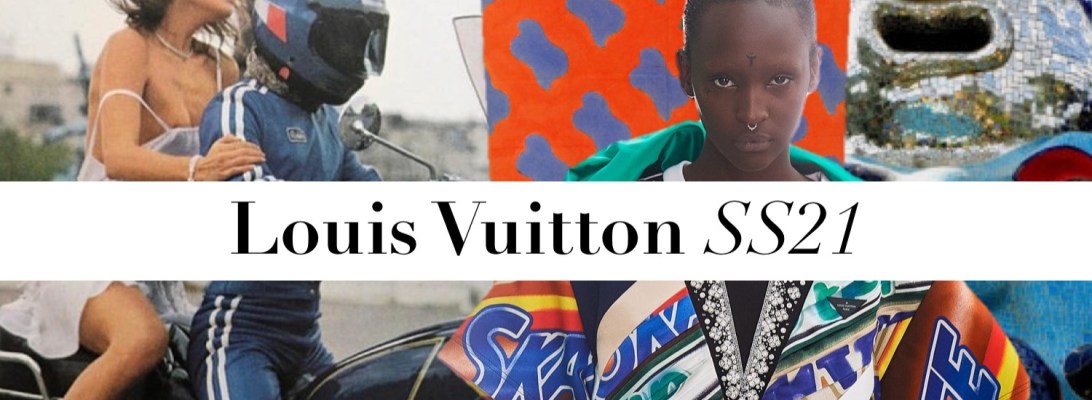
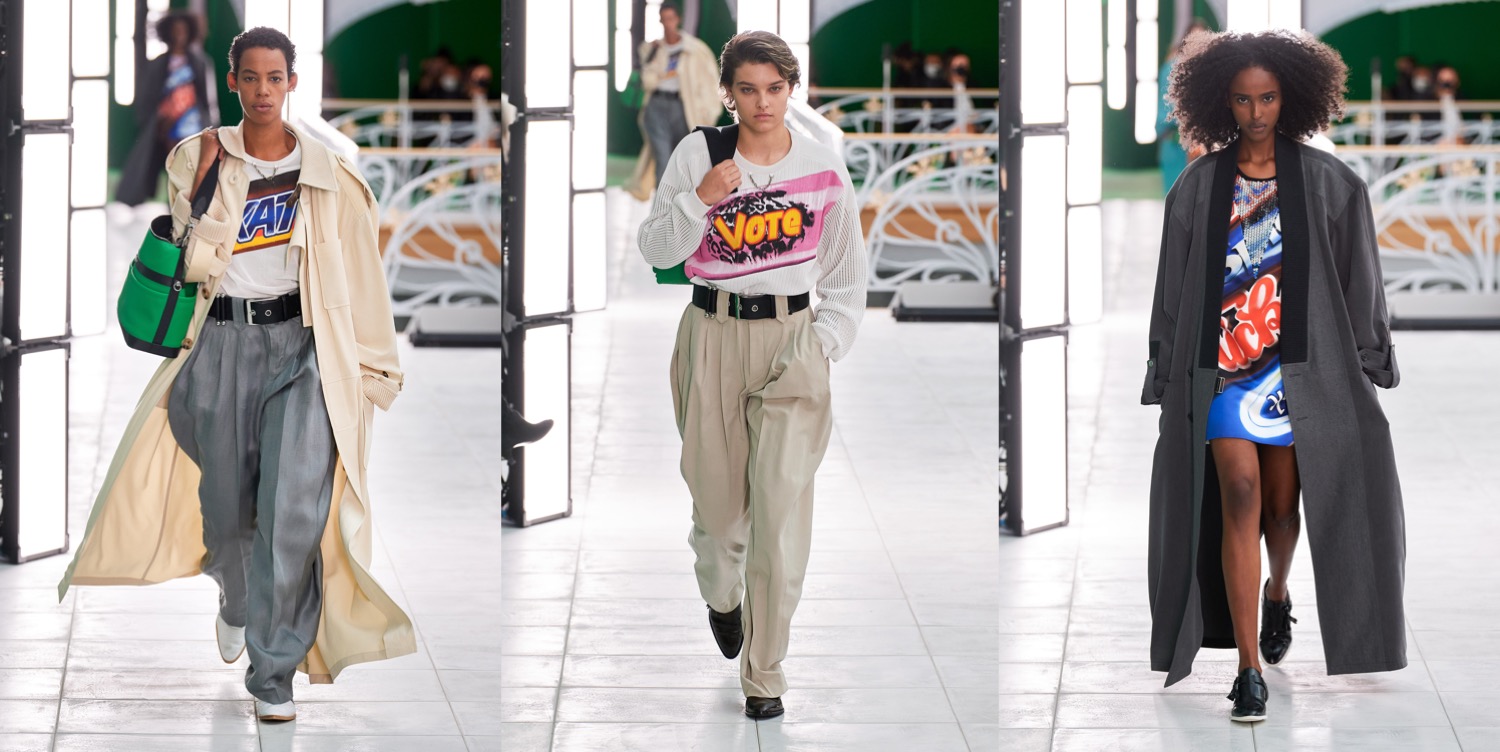
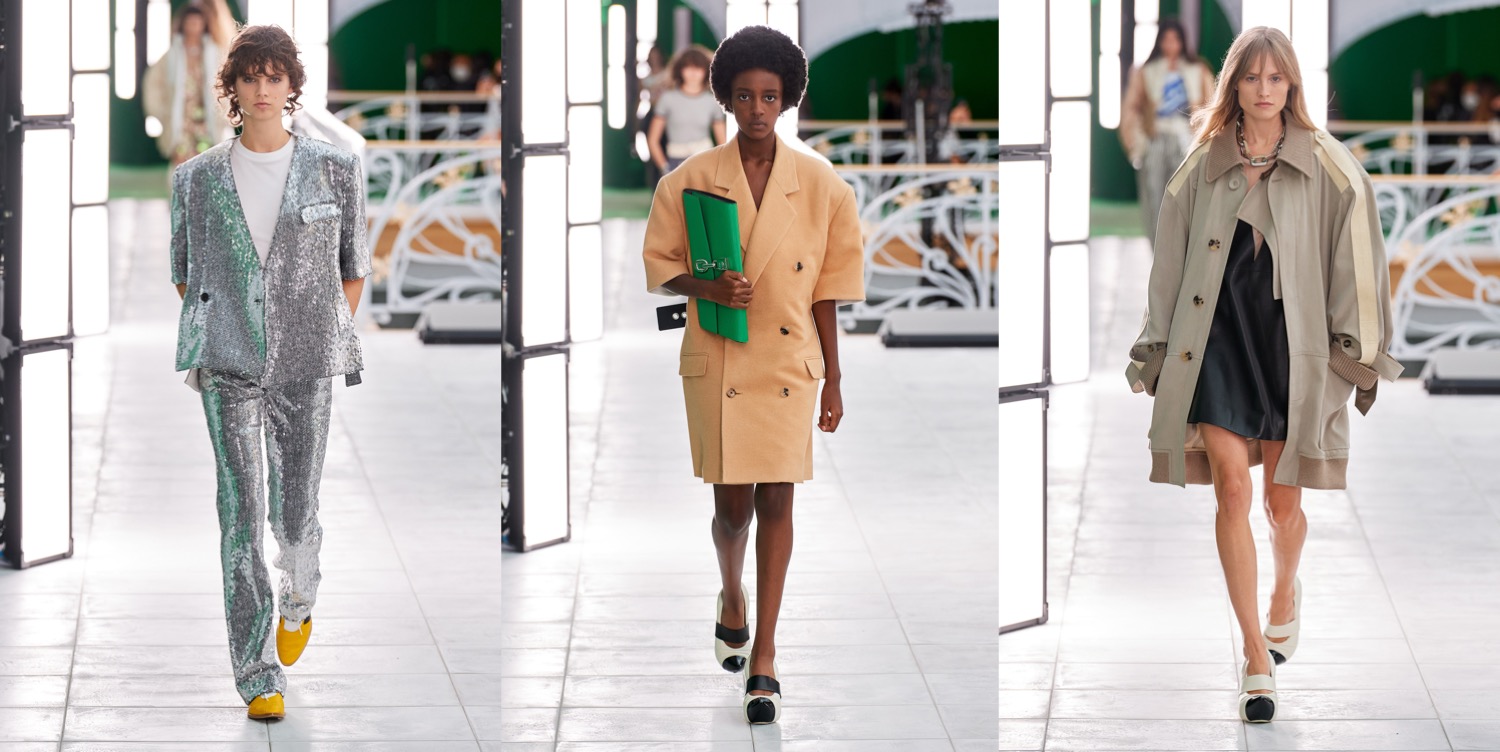
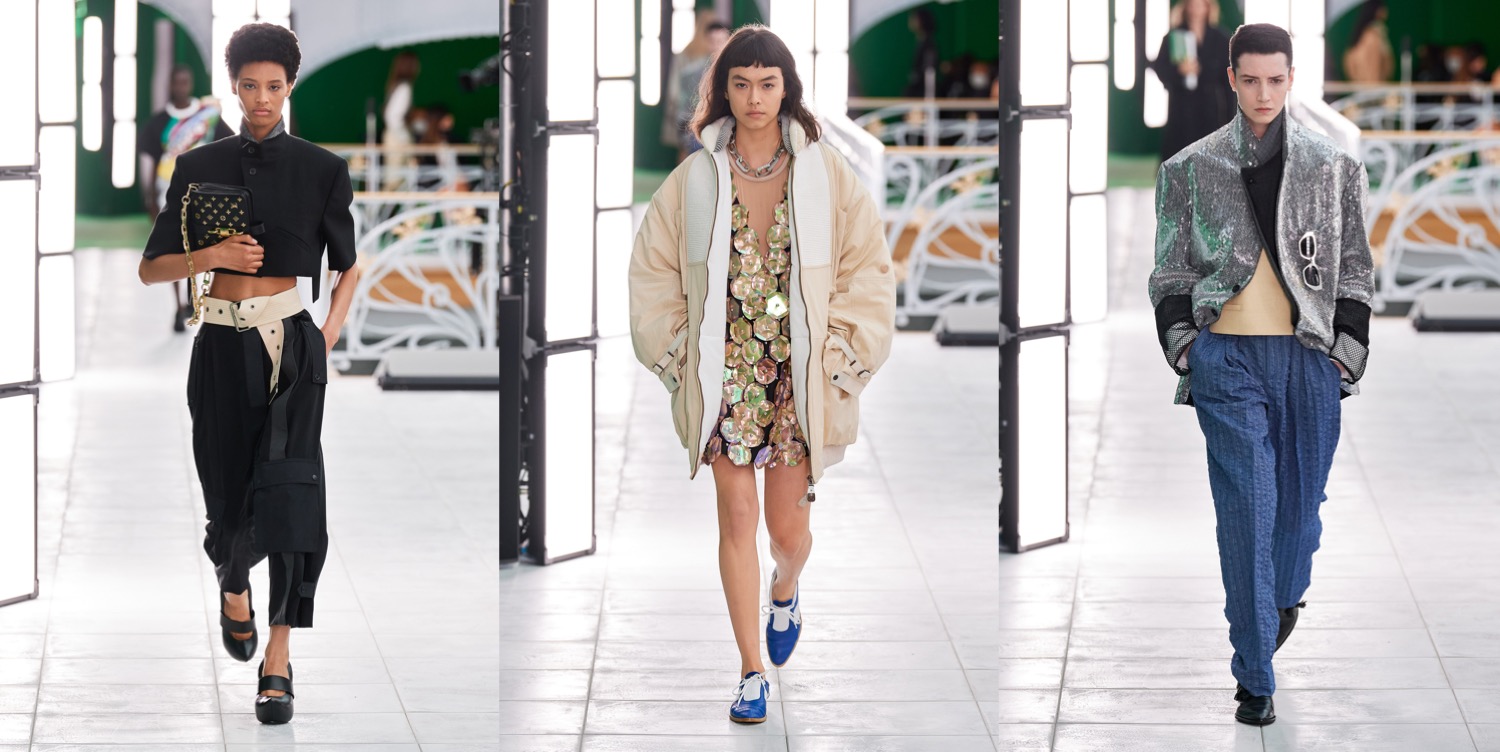
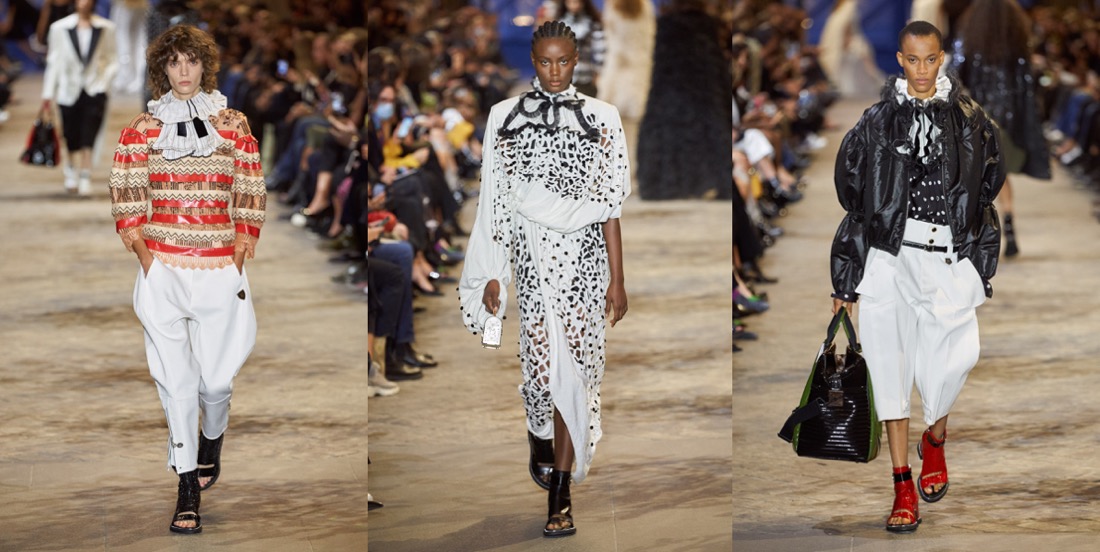
I’m really unconvinced by this Louis Vuitton collection delivered by Nicolas Ghesquière. It just felt so clumsy and messy. Which can’t be said of the show’s venue, which nearly each season looks better than the actual clothes on Vuitton’s runway (sorry…). Interspersed among the live audience in the freshly remodeled-by-LVMH La Samaritaine department store were 360-degree cameras that allowed viewers at home to swivel in their chairs, watch models coming and going, and see who did and didn’t score a better seat. It was almost like being there. “This season is very new in every way. The conditions that we’re facing are making us think differently. We came up with the idea of different degrees of presence.” In addition to the 360-degree cameras, green screens lined the walls and, in some places, the floors of La Samaritaine. Viewers of the livestream – the third way to watch and hear the show (there were live mics) – saw footage from Wim Wenders’s film Wings of Desire. Beyond the ’80s-ish silhouettes that have long been a touchpoint for the designer (and I think that’s the problem!), the connection between the Wenders movie and Ghesquière’s collection, was angels, which have two wings, but no gender. “My question this season was less about one theme; it was about this zone between femininity and masculinity,” he explained. “This zone is highlighted by nonbinary people, people that are taking a lot of freedom dressing themselves as they want, and, in turn, giving a lot of freedom to all of us. I found it inspiring to explore what the items are that represent this wardrobe that is not feminine, not masculine. I wanted to zoom in on that section in between.” The show began with a look that combined a timely Vote t-shirt (his absent American friends appreciated that) and baggy pleated chino pants cinched with a thick belt. It was emblematic of a collection that felt more spontaneous and street-ready than some of Ghesquière’s more glamorous outings. Basically, the entire line-up was kept in this sporty style. I’m intrigued by Nicolas’ take on the genderless fashion hitting such bourgeois brand as Louis Vuitton, but the clothes just don’t express that to me.

Collage by Edward Kanarecki.