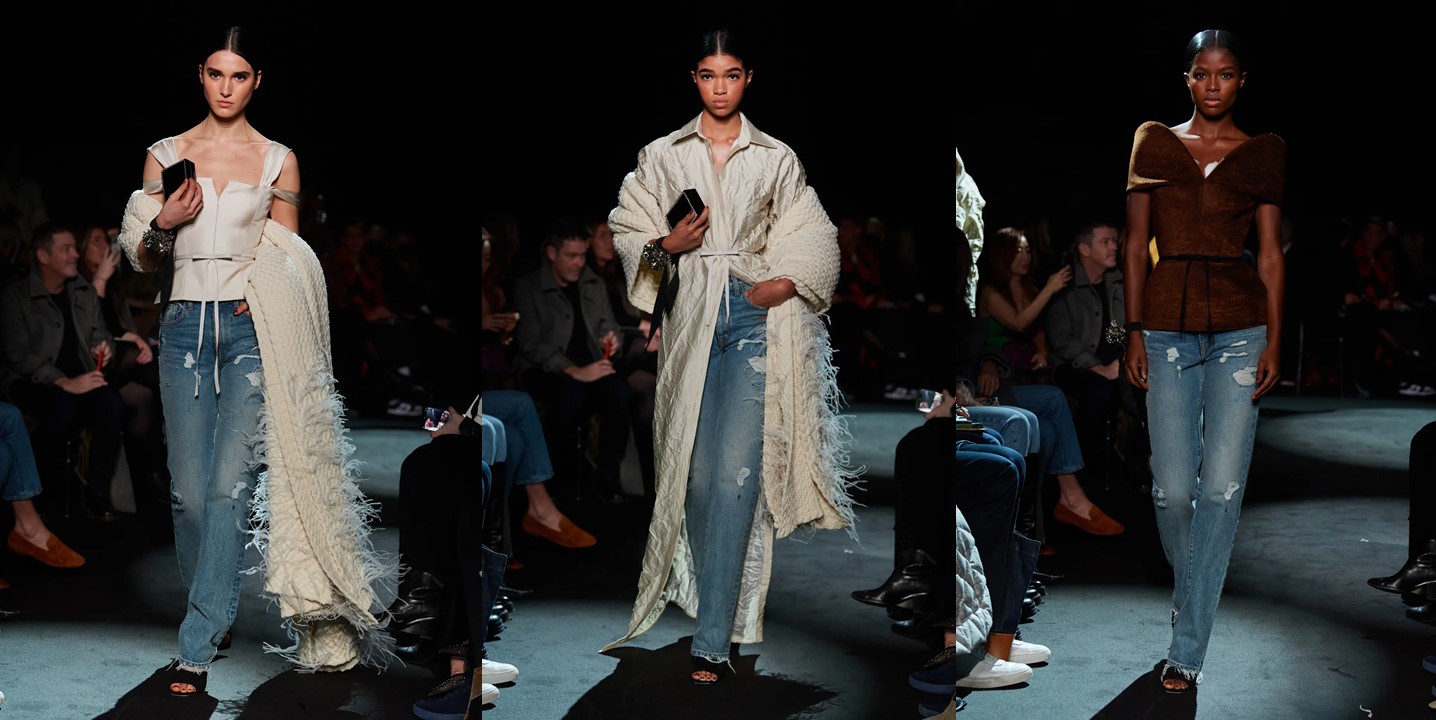
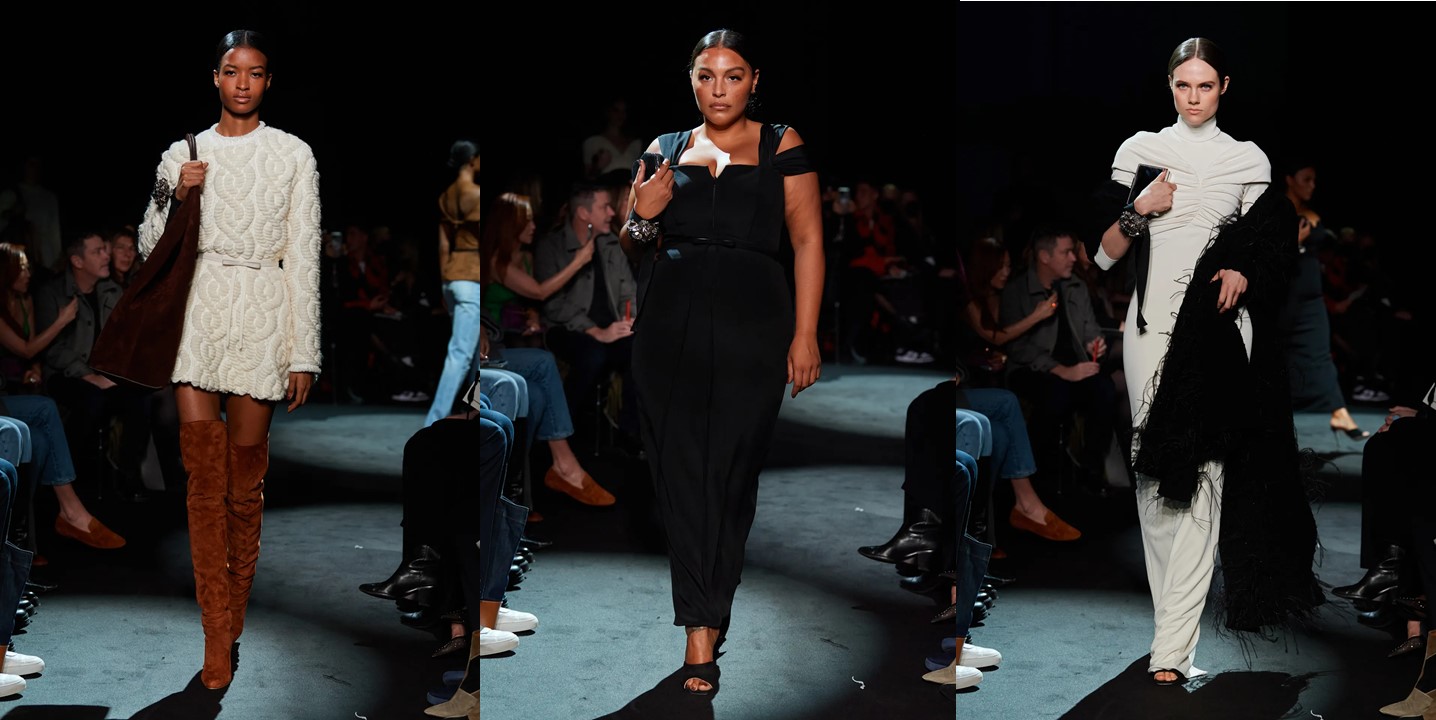
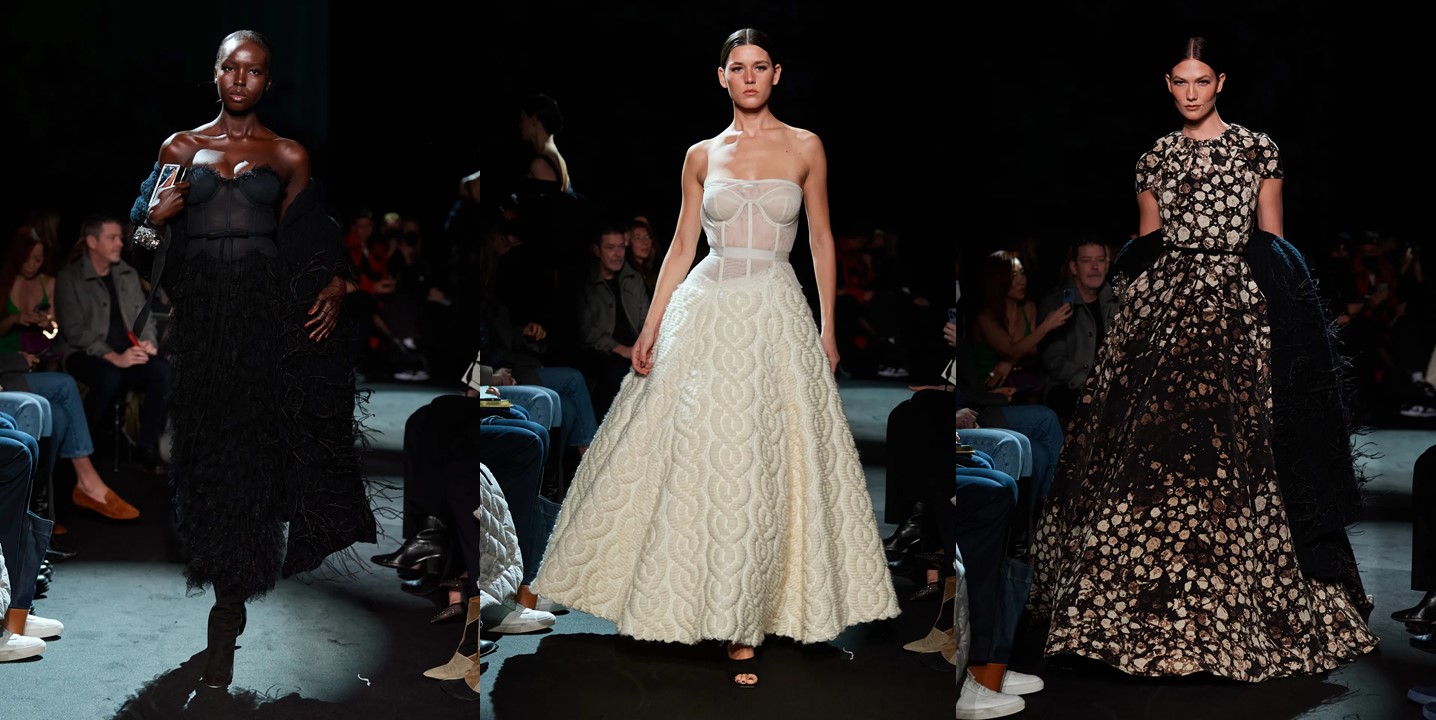
Poignant. Brandon Maxwell AW22

I’ve never really followed Brandon Maxwell‘s work, but his autumn-winter 2022 collection seized my attention. This was Maxwell’s most personal show yet – it opened with Siri reading his Wikipedia page before cutting to a short film of spliced together family photos and video clips, many of Maxwell through the years with his grandmother, who is now suffering from Alzheimer’s. The Wikipedia page reminded us that Maxwell spent much of his youth in her Longview, Texas clothing boutique. He credits his grandmother with his passion for design. “She’s a big part of my life,” he said. “I was going back to when I was a kid: While she was cooking I’d be in the back room taking blankets and wrapping them around my sister, emptying out her jewelry box, and making my sister carry one of her bags. When we decided to do a show, I wanted to make something that if it was my last one it would be a bookend that I was proud of.” The blanket shawls, antique jewelry, and clutch bags Maxwell remembers were recurring motifs here, talismans from his youth. Fabrics felt chosen to conjure a feeling of home, too, from the crushed satin of a double lapel coat, to the oversize chenille stitch of a short belted sweater dress, to the rich brown interior textiles Maxwell used for tailoring. The flowers on Karlie Kloss’s finale dress were taken from a painting he asked his grandfather to make in his grandmother’s honor. The last couple of times Maxwell was on the runway, the mood he channeled was slicker, more glamorous. The softer, more romantic tenor of these clothes was “a way to dial into a shared frequency” between himself and his grandmother, he said. This was a poignant show, a thoughtful and heartfelt goodbye to the woman who set him on his path.

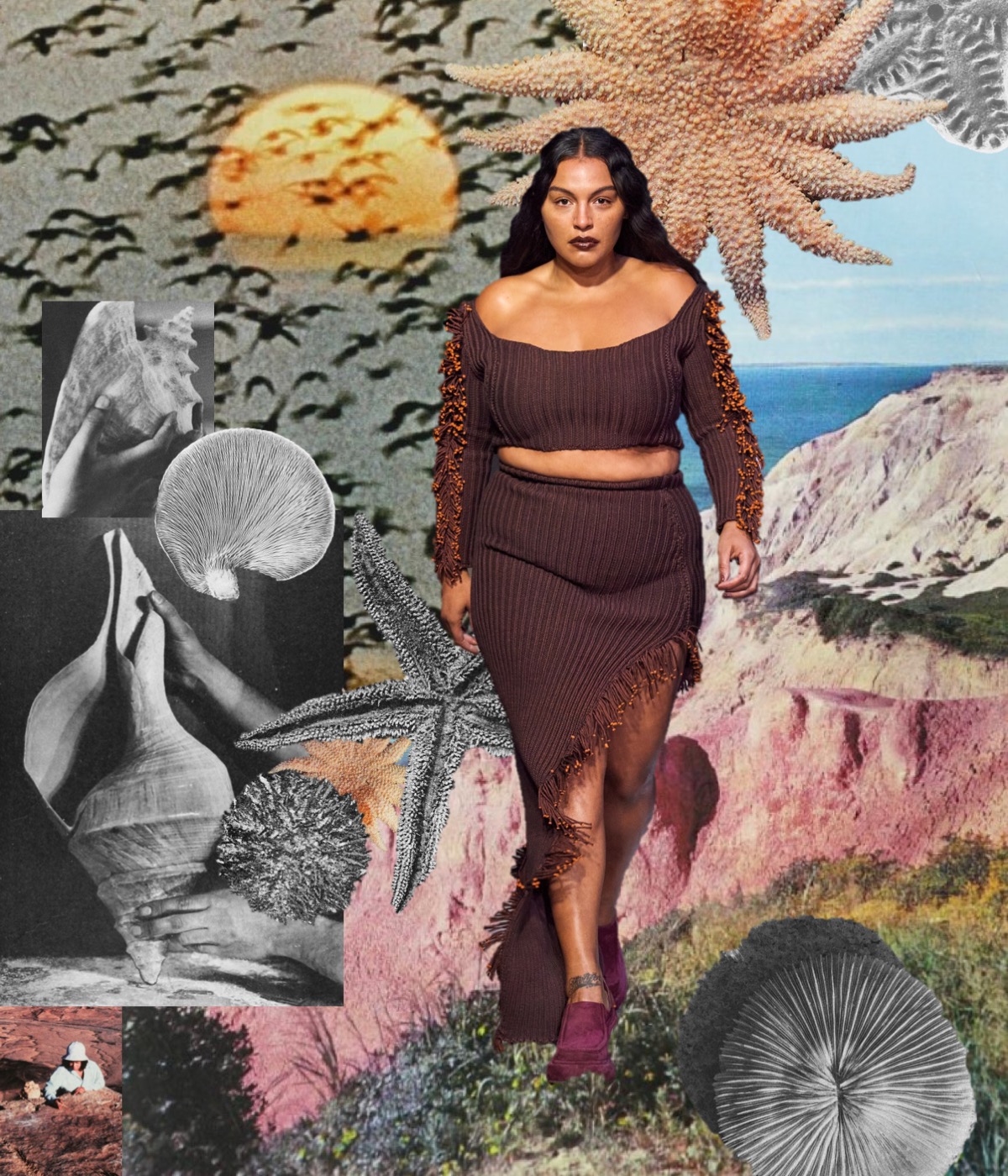
Collage by Edward Kanarecki.
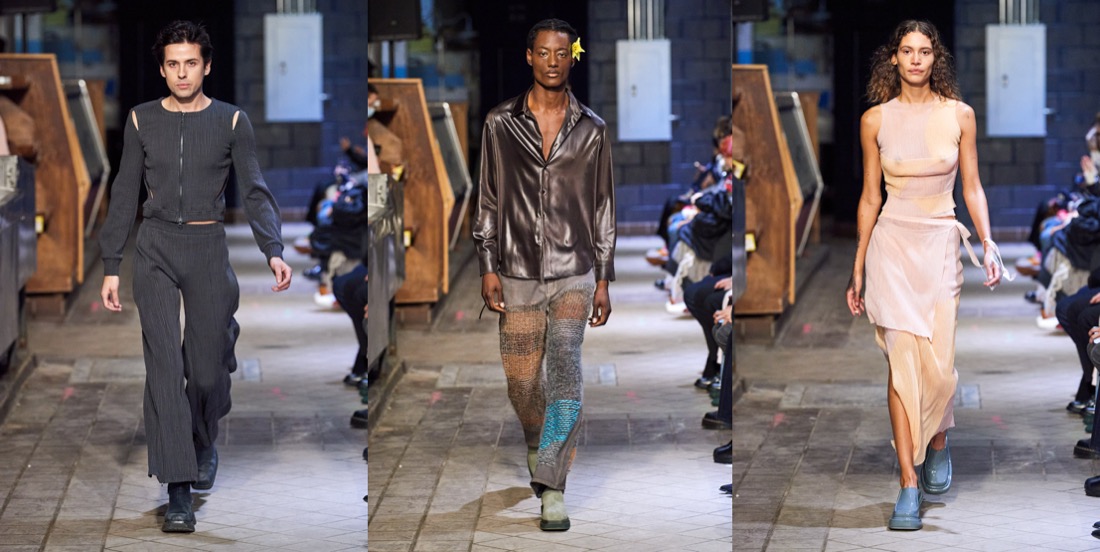
Independence. Eckhaus Latta AW22

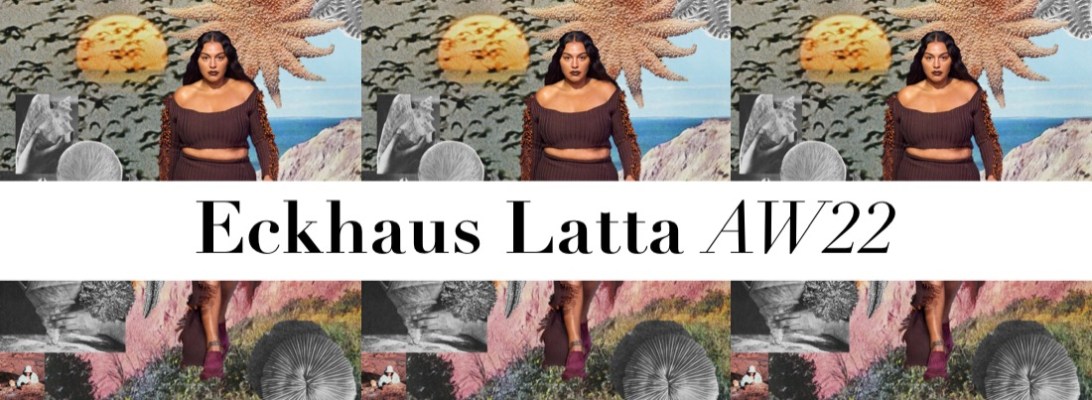
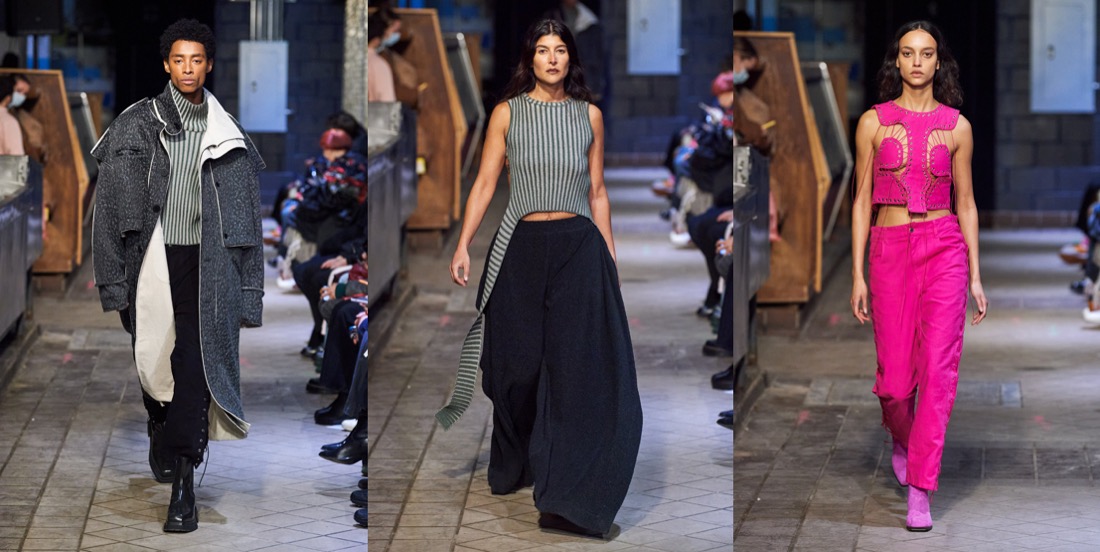
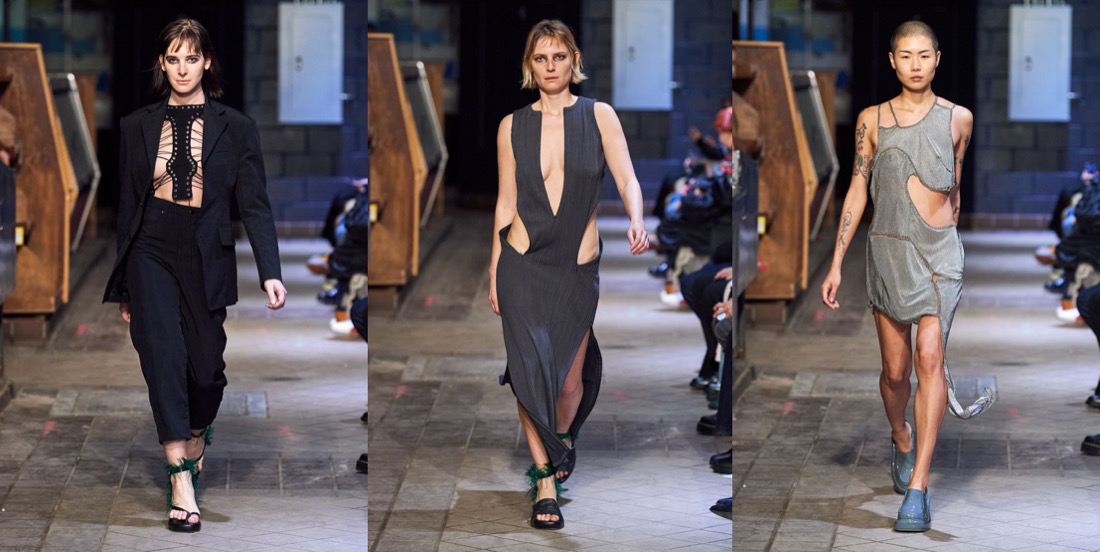
It’s another anniversary this New York Fashion Week: Eckhaus Latta celebrates its first 10 years. It’s not that easy to define this brand in one word – it’s raw and elusive, sexy and gender-fluid, over-sized, and then all of the sudden super clingy and sensual, spontaneous, kind of minimal, but not really noting all the arty handwork the brand loves to add to their collections. When Mike Eckhaus and Zoe Latta arrived in New York in 2012, their label was immediately deemed “crafty” and “indie”. After a decade in business (the irony: many people still consider the brand as “emerging”), Eckhaus Latta is one of New York’s strongest standing independent labels, with two brick-and-mortar stores, an e-commerce business, and admirers from all over the world. Its anniversary show at the former Essex Market affirmed that after a decade of independence, Mike Eckhaus and Zoe Latta are still charting their own course in fashion. The autumn-winter 2022 show was filled with Eckhaus Latta signatures. Sheer, glittery knits were slashed open at the back; minidresses were cut on a square edge; and tailoring was slit to reveal a spine, a thigh, or a breast. Worn by the brand’s friends and collaborators, including David Moses, Hari Nef, Maryam Nassir Zadeh, Thistle Brown, and Paloma Elsesser, the collection was a summation of everything Eckhaus Latta has built. It was cool, unfussy ready-to-wear with undertones of kink, craft, and community. It still is all these things, without ever labeling itself. “We didn’t want to be nostalgic or retrospective,” said Eckhaus postshow. “But we did want to bring back the things that we loved from our early collections, the handwork especially,” added Latta. The chain-mail pieces that closed the show, graphically sliced up to be equal parts erotic and acerbic, were handmade in the brand’s atelier. It was well balanced with the label’s more affordable garments. May Eckhaus Latta’s next 10 years be about furthering the bond between its tender handwork and commercial hits.

Collage by Edward Kanarecki.
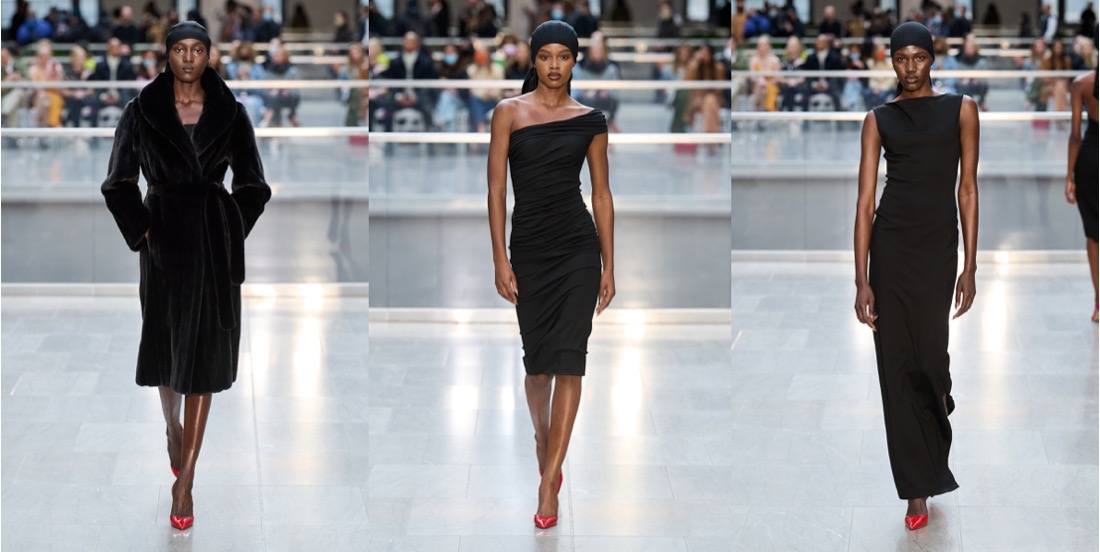
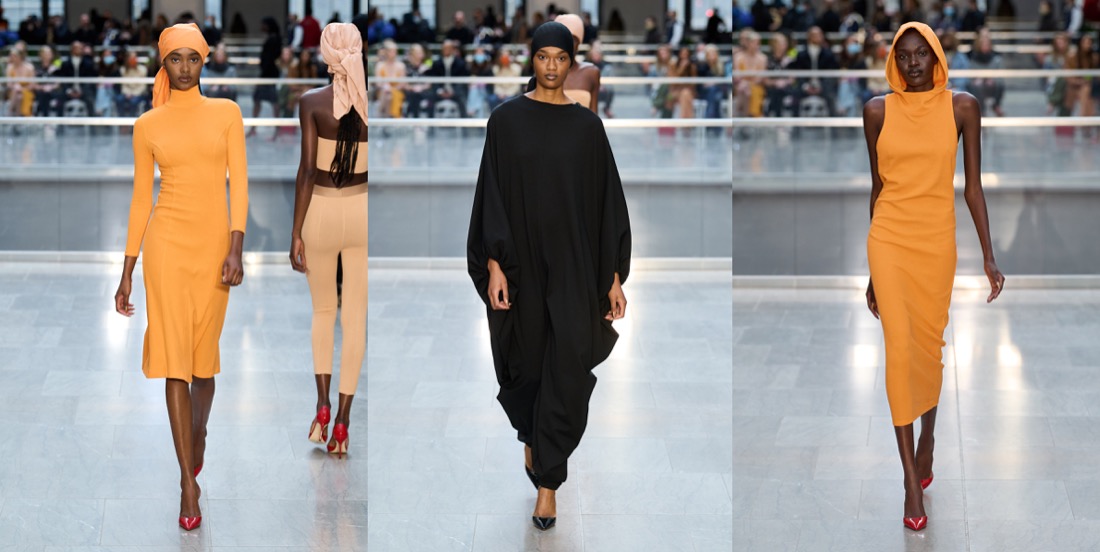
Confident & Refined. Victor Glemaud AW22

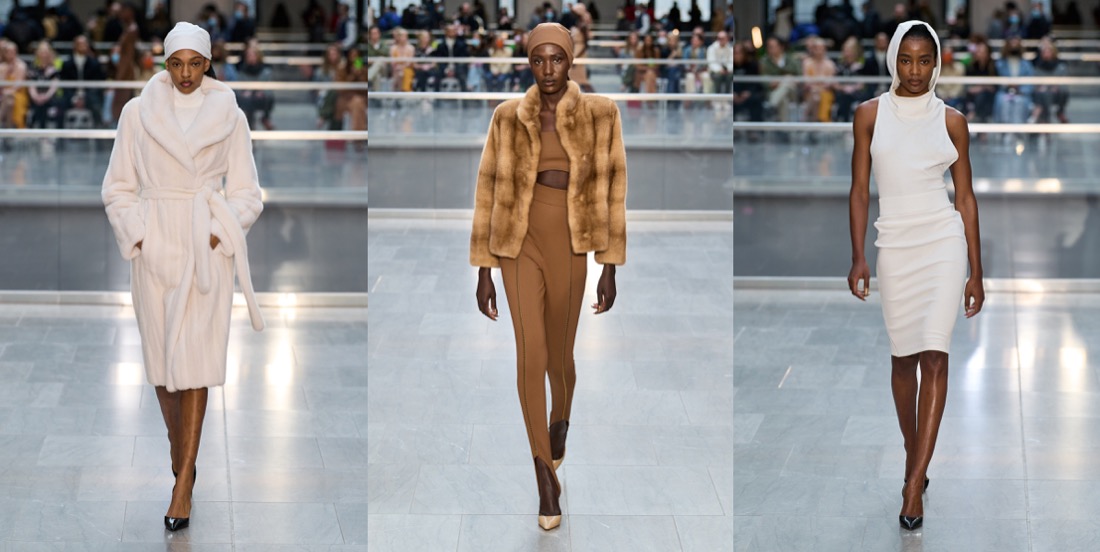
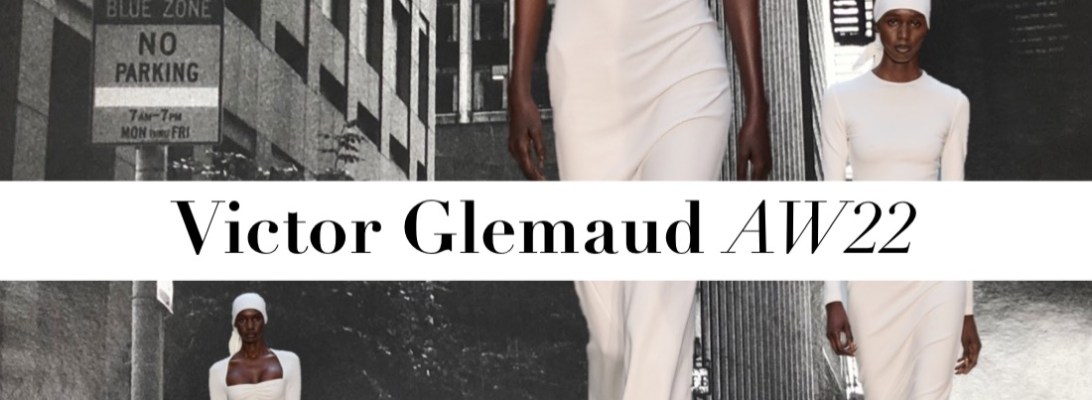
Victor Glemaud‘s brilliant autumn-winter 2022 outing oozed with the energetic New York chic of the Halston days – and the graceful confidence of the Halstonettes. Lately, Glemaud has been working a more minimalist groove, and this season the designer ramped up that aesthetic, stripping down and paring back his signature vibrant knits. Models sauntered into the marble paved atrium in classic stilettos, their hair tied back with chic headscarves. The collection has its key reference – Ousmane Sembène’s Black Girl, a masterpiece of 1960s cinema that earned the pioneering Senegalese filmmaker international renown. Mbissine Thérèse Diop plays the young Senegalese woman who moves to France to work for a wealthy white family. Her stirring performance is amplified by a wardrobe of impeccable black and white shift dresses. Punctuated with touches of tangerine and soft beige, the collection’s mostly monochromatic palette nodded to Diop’s scene-stealing performance. Glemaud introduced a new, more pliant yarn to his brand this season, and the resulting cut and sew jersey dresses were attention grabbing and flattering on a variety of body types. The most compelling examples were cut with athletic attitude, including clingy hooded racerback maxi dresses, ruched asymmetric LBDs, and stirrup leggings. As a partner to those bodycon looks, Glemaud showed a series of fur coats, perhaps the most unexpected aspect of the collection. With so many brands going fur-free, these days it’s rare to see so much as a fur trim on the runway. Still, for Glemaud the choice made sense. “Fur has a rich history in Black culture and it’s something I don’t think we should be ashamed about,” he said backstage. “I also don’t believe we should live in fear of being canceled.” It was a lovely surprise to discover in the show notes that he had dedicated the collection to “the countless women who left their homelands for the American Dream,” including his elegantly dressed mother and her twin sister, originally from Haiti, who sat in the front row. “I wanted this collection to be a celebration of body and shape, but most of all a celebration of Black women,” said Glemaud. Easily the most powerful statement of the show was the casting of all Black dark-skinned beauties.

Collage by Edward Kanarecki.
Tough Femininity. Elena Velez AW22

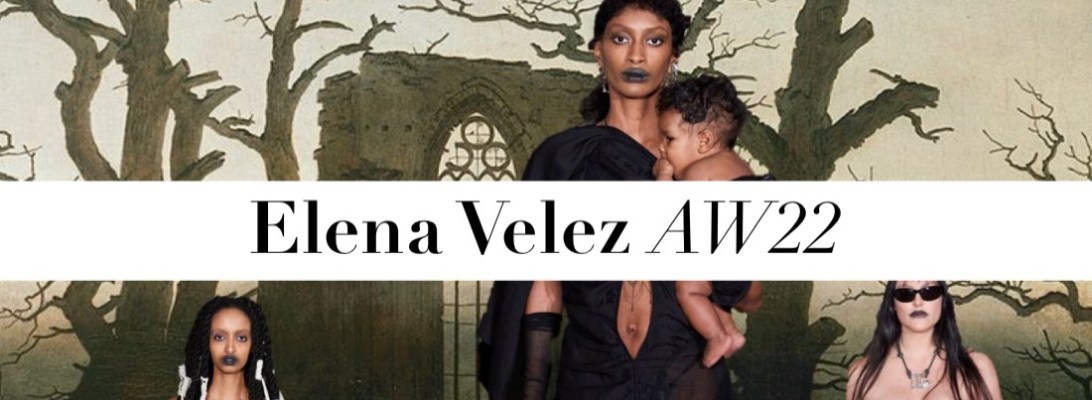
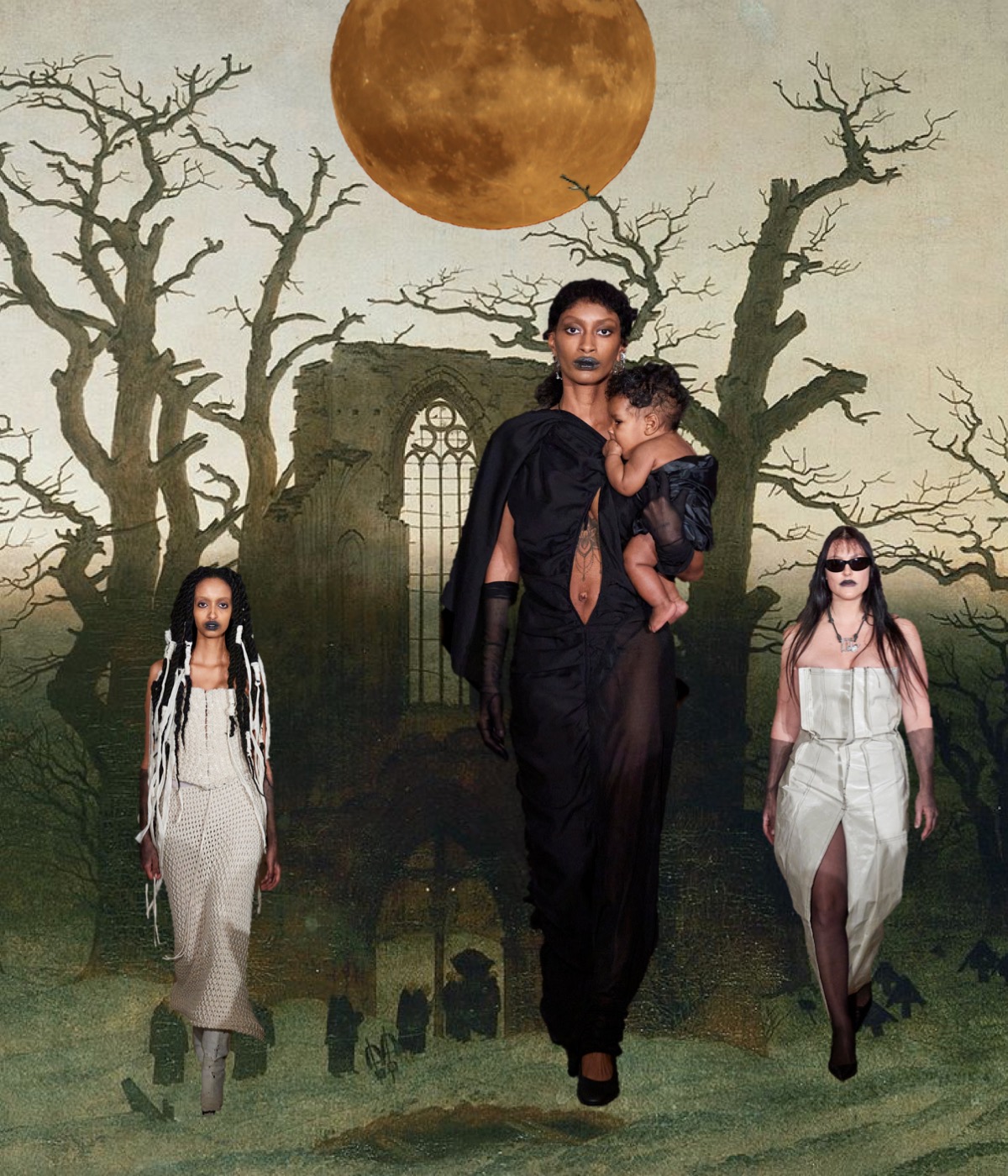
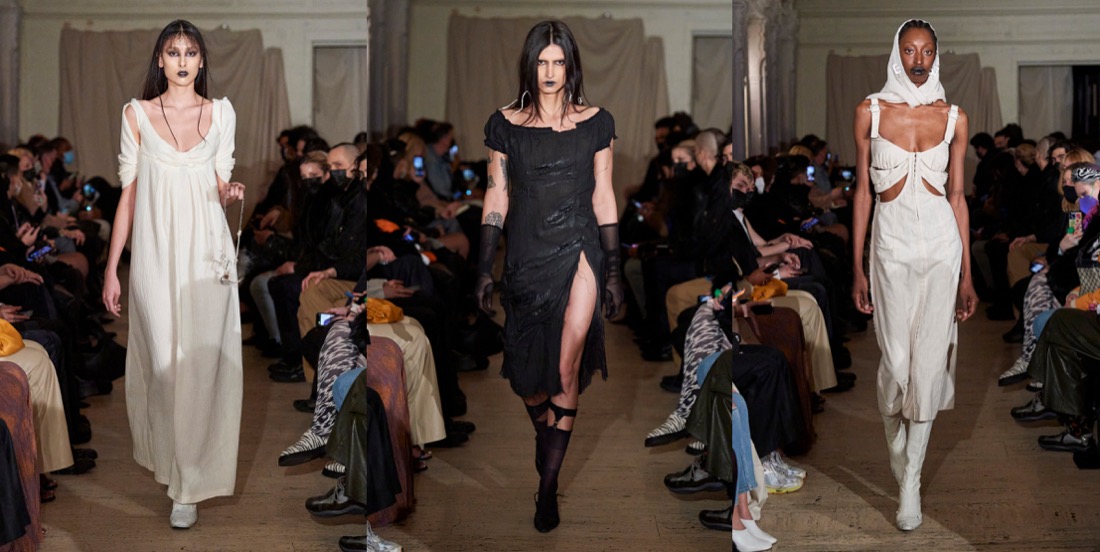
Elena Velez held her show at the Freehand Hotel, transforming its Georgia Room, typically a bar, into a bare-bones space, accompanied by a soundtrack that began with a woman repeating “She was a disgrace to all women.” It was a cheeky way to start off a presentation whose theme celebrated women and their different forms of femininity. As for Velez’s version of femininity, it’s tough and gritty. She’s from Milwaukee, the only child of a single mother who is a ship captain. Velez stresses that she has her own unorthodox perception of womanhood, which, through her creations, has turned out to be wildly confident, a bit aggressive, and very hot. Much of her success can be credited to her great handle on the “tough femininity” dichotomy in her designs. The Parsons graduate uses fabrics that are made to last and have a military-grade toughness. Some of these materials include army canvas, Lake Michigan ship sails (a nod to her mother), and parachutes. More often than not, Velez doesn’t cover the original serial numbers on the fabric but instead keeps them in the final design, another grit-factor addition. According to the designer, the use of these materials is to show tension within womanhood. While Velez stresses toughness in her design ethos, there is no clunk in the pieces. The silhouettes are sensual and curve skimming. Corsets were a theme in the collection, sometimes deconstructed with sliced-off sections. Peasant tops, once romantic and woo-woo, were incredibly alluring, cinched at the waist with a boning motif. Even the long and loose and flowy ivory dresses, which could have been the nightgown of every bedridden Victorian woman, had sex appeal thanks to the artful way a strap hung off the shoulder or how the boning traced the body. The final image of the collection has all the essense of Velez’ vision: a striking model closed the show while carrying a cherubic baby and wearing a black dress with a sharp oval cutout stretching from the sternum to below the navel. Truly a stunning version of femininity.

Collage by Edward Kanarecki.
Easy Formality. Proenza Schouler AW22

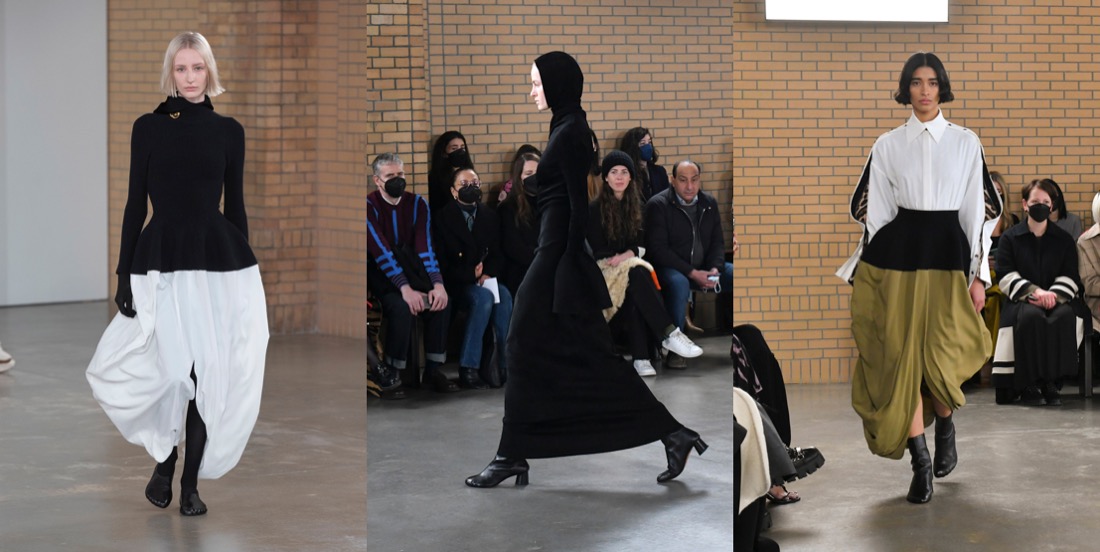
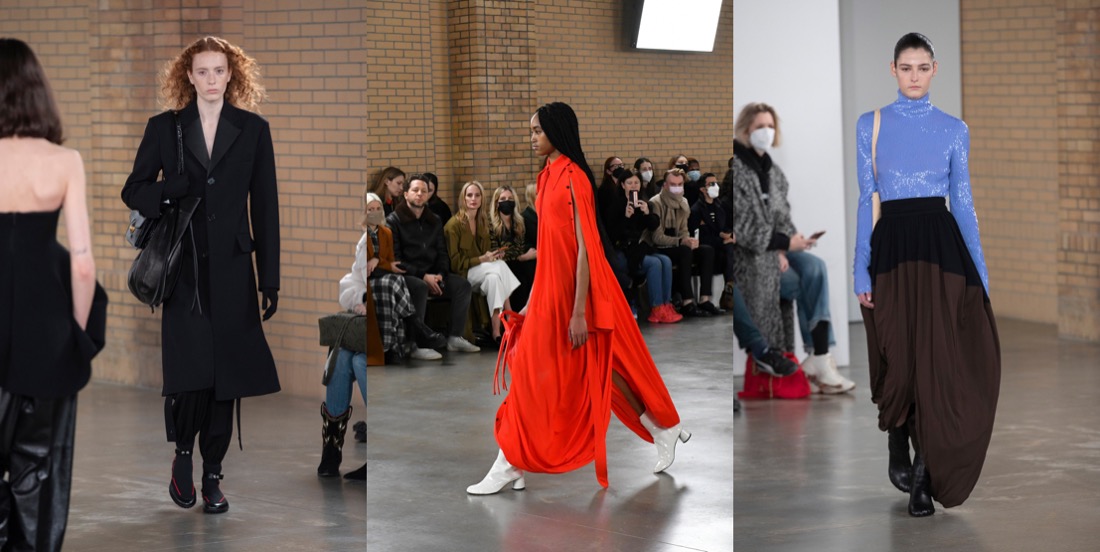
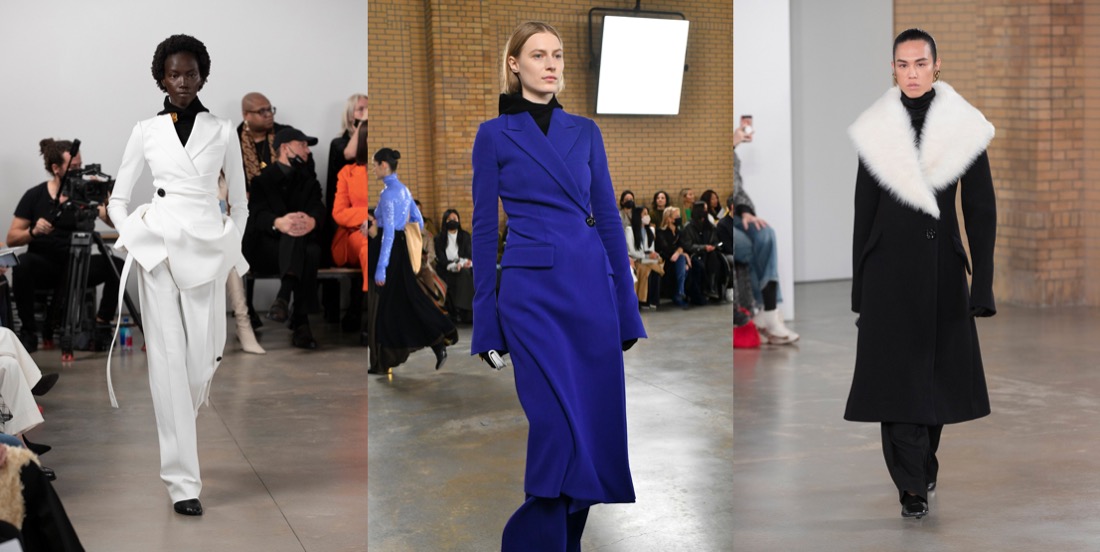
Here we go – it’s New York Fashion Week, the most IRL one since the start of pandemic. This season it’s opened by a very New York collection, coming from Proenza Schouler. And this isn’t just another line-up, but a collection that celebrates Lazaro Hernandez and Jack McCollough‘s 20th year in business. Take a look back at the Parsons graduation collection that started it all for them in 2003, and you will notice that much has changed in the intervening decades. The brand had its ups and downs throughout the years, and for a couple of seasons now it consequently heads towards a sort of sophisticated, yet aesthetically minimalist formality. “Comfort” and “ease” are fashion’s buzzwords of the moment, relics of a lockdown that remain even as the emergence we’ve been hoping for starts to take shape. The corseted silhouettes that were the first Proenza Schouler signature, however, have been completely rethought for today, constructed from machines that knit in circles, allowing for a seamless, molded look. Can a strapless dress with volume evocative of 18th-century panniers really feel effortless? Yes, if it’s in sculpted knitwear with a circular bias-cut skirt. Hernandez and McCollough gave their tailoring the same waisted look by accessorizing suits with torso-spanning body shapers, or by cutting jackets and coats to wrap across the midriff and button off to the side, the cloth equivalent of a firm hug. If this outing was a reappraisal of their past, it wasn’t reliant on it. A loose-fitting shirtdress with a fluid looped hem stood out for its color, a vibrant purple that they’ve avoided before. The animal print is another new indulgence – here it was deliberately glitched, as if the color didn’t take in the folds and creases of the fabric as it went through the machine.

It’s a strong collection coming from the Proenza boys, yet I just can’t get rid of the impression I constantly have with them since a couple of seasons. The brand had its Phoebe Philo’s Céline phase, then a New Bottega obsession, and now… The Row era? That’s the thing – in the beginning of Proenza Schouler, the brand was so distinct you just couldn’t mistake it with any other brand. Now, it echoes those brands-of-the-moment that emphasize the less is more rule in the most refined and luxurious ways. Is it really what the brand stands for? Does it have to fill that (heavily oversaturated) niche? If there’s one thing to reflect on while celebrating the anniversary, then it’s retrieving the label’s real, authentic voice.

Collage by Edward Kanarecki.