Into The Groove. CDLM SS22

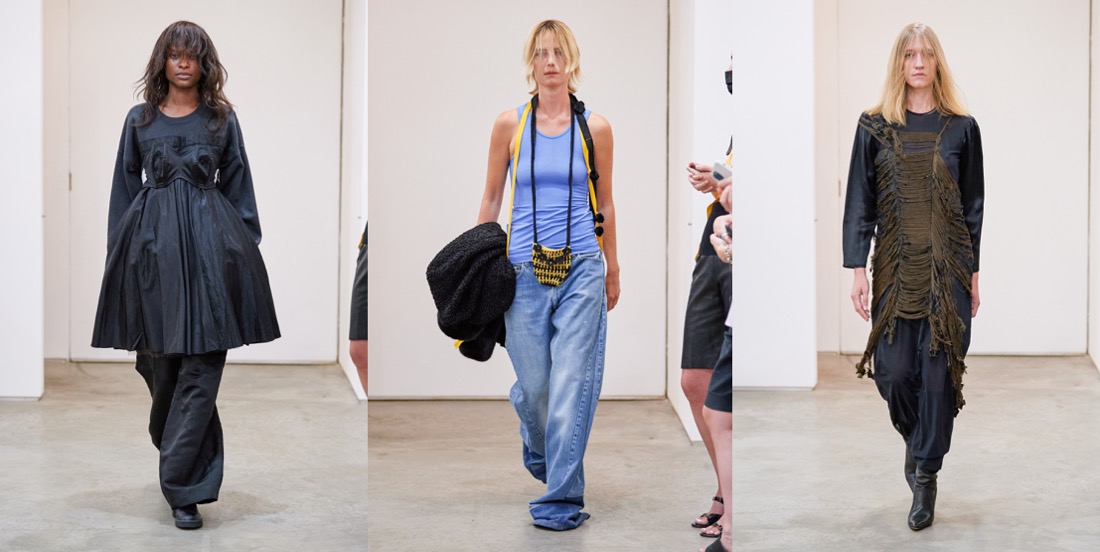
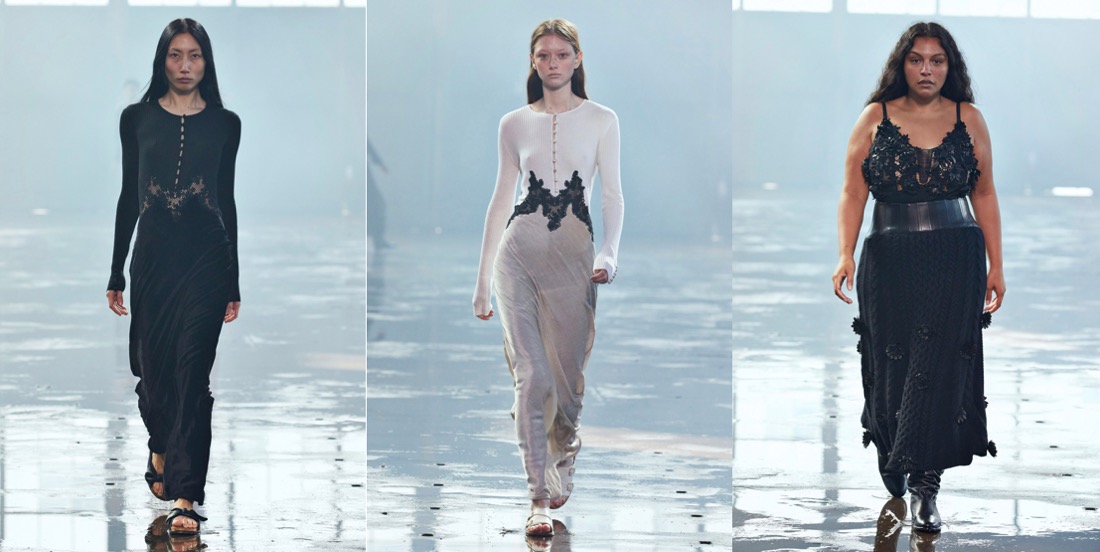
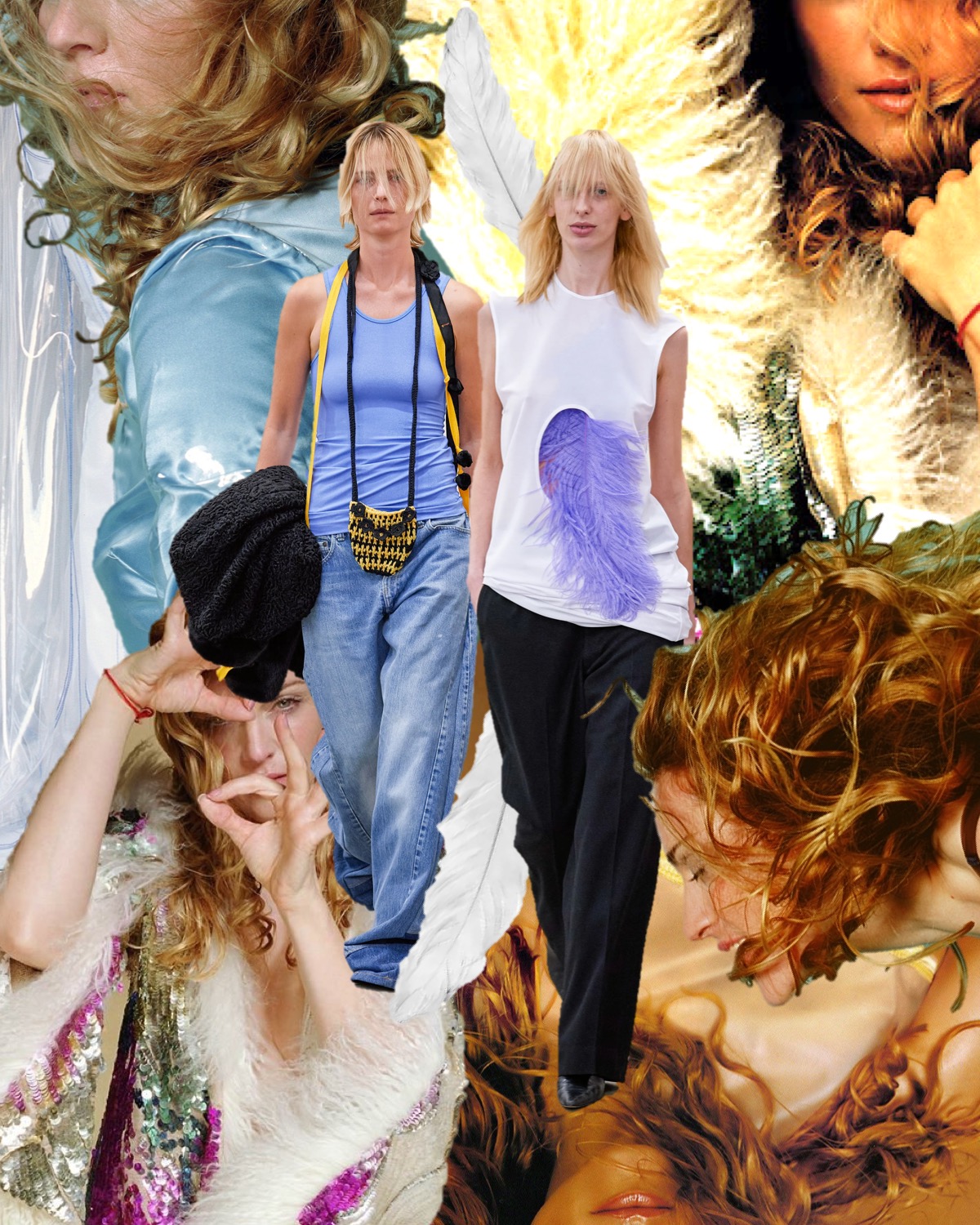
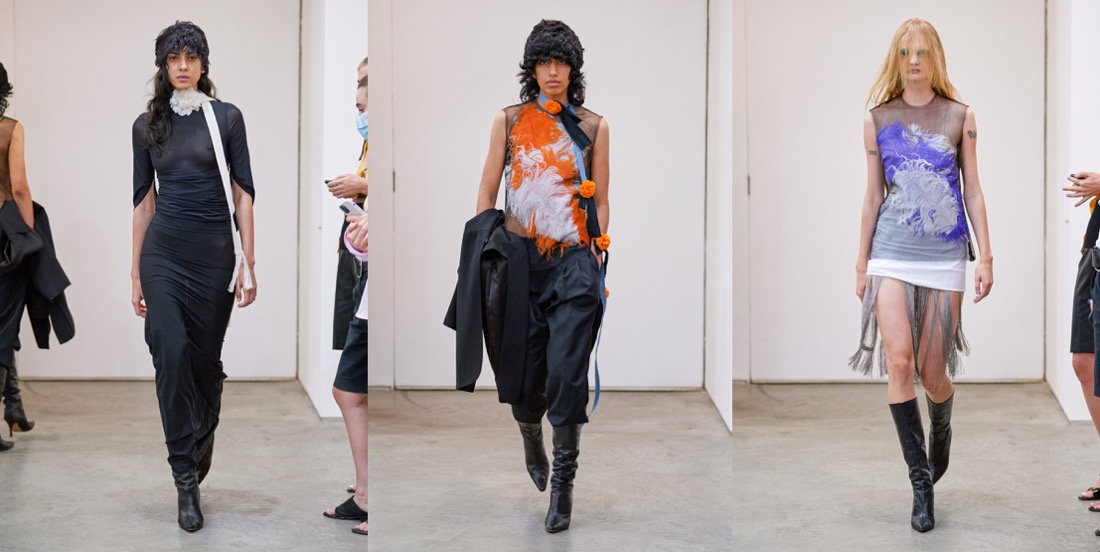
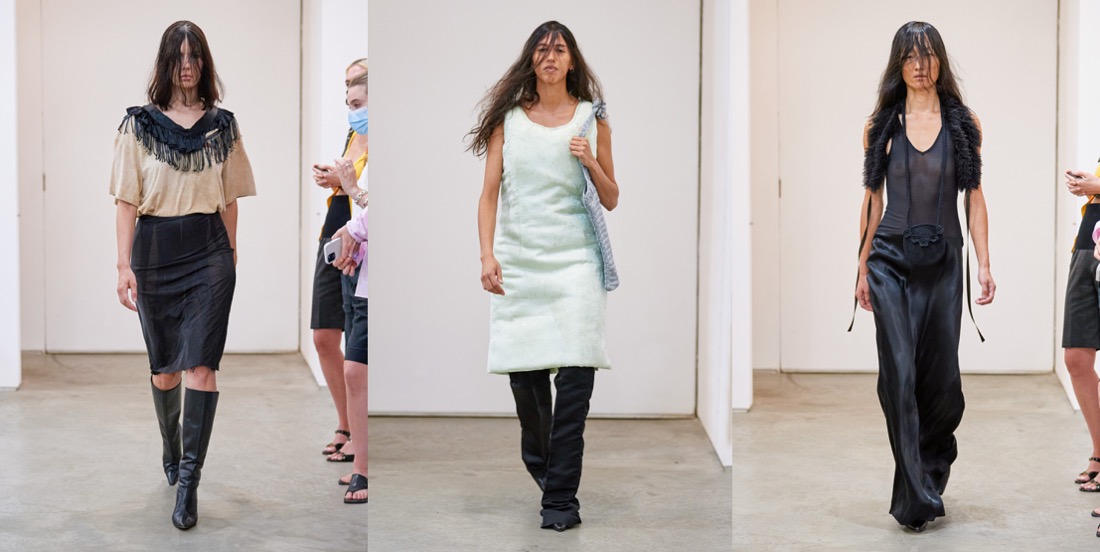
New York Fashion Week is on! And it’s real. What a joy to see the young designers back on the runway. CDLM‘s spring-summer 2022 line-up is a good start. Held at the James Fuentes Gallery on the Lower East Side, the label’s designer, Chris Peters, delivered a post-lockdown vision of a night-out wardrobe. Romantic, frayed, messy, and intoxicating vision of what can go right and, what the hell, what sometimes goes a bit wrong, but in the end, what makes something a beautiful reminder of all the possibilities of life between dusk and dawn. And the emphasis here is on hands: Peters made most of these clothes himself, using whatever was around, or out of pieces of things he has lovingly collected, then given a second life. Take, for instance, the poetically dulled gleam from a top made up of patching together pieces of a 19th century Indian tapestry, worn with black satin evening trousers whose perfection of cut pursued an idea of anti-fit; a little off, a lot cool. “A trouser which feels quite sexy, which has attitude,” is how he put it. Another case in point: The deadstock floral fabric radically transformed when used for a pair of low slung jeans. Elsewhere, that adorned top and minimal-glam trouser combo came in the form of a draped tank made from unused tulle from the ’50s, its athletic shape blown apart by the swoosh of an ostrich feather, a recurring motif, partnered with straight-cut anyone-can-wear-’em pants. Other times, the shirt was the focus: a white cotton tux version over a second-skin tubular dress, or a deconstructed style in a washed, faded black, wrapped and draped and twisted around the body. But sometimes the eye would be wrested away from the clothes, and look at the adornments: the crochet garland scarfs, or the entanglement of delicate chain necklaces. For Peters, the question, he said, was where does the clothing stop and the ornamentation start? As he remarked, “You can wear one of the garlands with your t-shirt. That’s your gown.” What he is doing is opening up the conversation to create things that don’t just exist in a vacuum, but can be in conversation with what you already own, and wear, and love to death. Pieces which can, in other words, do the thing we’re learning to do again: socialize.
Collage by Edward Kanarecki.

Cravings. Khaite AW21

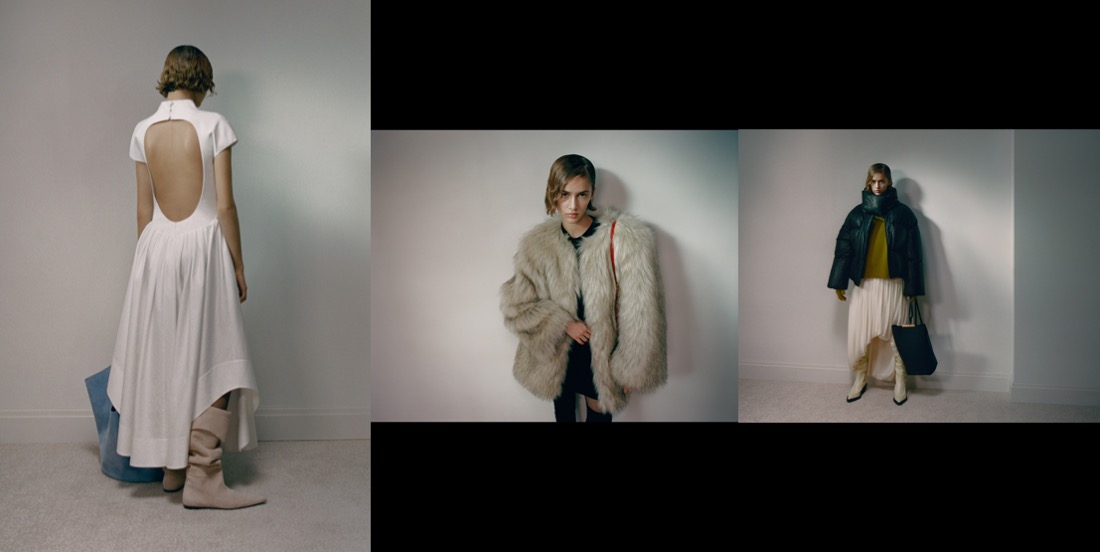
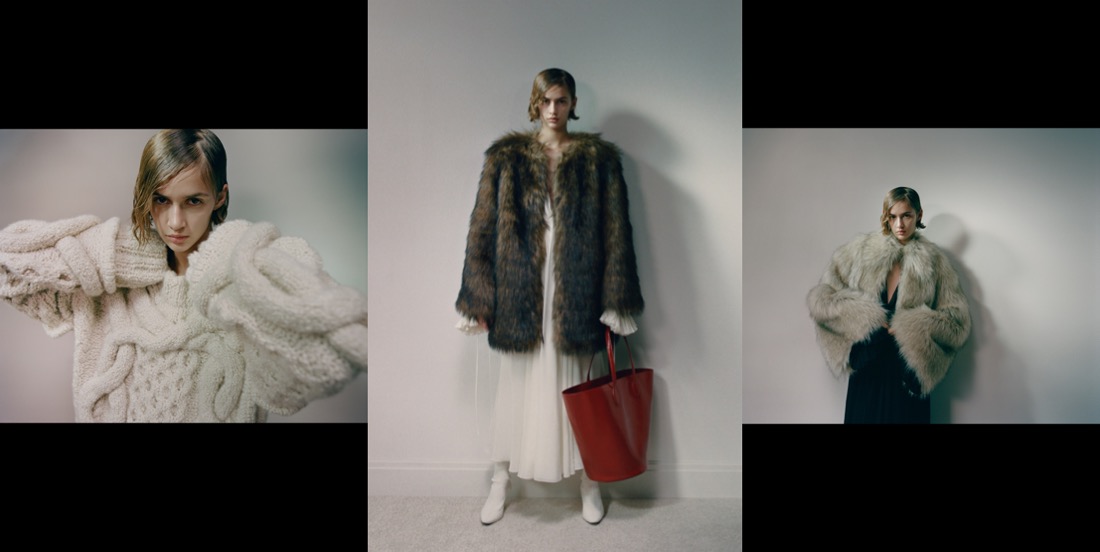
Although it’s officially London Fashion Week, some brands from New York are showing just now. Cate Holstein‘s Khaite for autumn-winter 2021 was meant to be a love letter to long-gone, gritty New York of the 1970s – think Taxi Driver and Klute as a visual reference. The open-back dresses were clear nods to Jane Fonda’s character’s wardrobe in the latter. The collection was unveiled “phygitally”: last night, with the Manhattan skyline in the background, Holstein brought a small group of editors, buyers, and friends to Skyline Drive-In for what was likely their only “real” event of the season. Seated in intage cars, the projector rolled cheeky ’80s “advertisements” for Khaite products, a faux black-and-white movie trailer, and finally, the main event: a short film starring Paloma Elsesser, Soo Joo Park, Akon Adichol, Lulu Tenney, Tess McMillan, and several other models. The production might have stumbled on an actual plot (some of the most memorable scenes: Elsesser opening a Khaite tote full of graffiti bottles; others are stuffing cash into their thigh-high boots; a few girls smoke outside a bodega), and although it was visually satisfying, I just couldn’t find the balance between the film part and the clothes part (the hard-to-achieve golden ratio for any  ‘fashion-film’). The clothes hardly related to the mood of the film, while the uncharismatic look-book made them go even more plain. According to Holstein, the clothes borrowed less from the ’70s and ’80s and more from the 1920s: lace negligees, narrow jersey columns, giant faux fur chubbies. “I’ve always loved that Café Society moment in New York, but I was thinking more about how the ’20s were a response to the 1918 flu,” Holstein told Vogue. Holstein isn’t the only designer predicting a similar shift this year. “It wasn’t just about being comfortable, but about feeling comforted,” she added. “I think we will still want to be treated gently.” This was not a literal ‘roaring ’20s collection’ – it was rather reverential to Khaite itself. Holstein doesn’t do mood boards or themes; she insists every collection is simply a reflection of what she’s craving. Maybe keeping it that way, image-wise, would work better for the collection in overall? The “cravings list” includes plush cashmere knits, boxy leather jackets, sharp tailoring, and romantic cotton dresses. Newness comes in the items she’s personally missing, like the down puffers, which were the collection’s big surprise. She bought her first puffer last year and likely saw an opportunity for a better, ultra-luxe version. Her glossy red and black coats were extra-stuffed and coated in lacquered leather; a cropped camel version came in 100% cashmere. In other words: definitely not coats for graffitiing or smashing windows, but for chic, socially-distanced walks.

Collage by Edward Kanarecki.
Green Power. Gabriela Hearst AW21

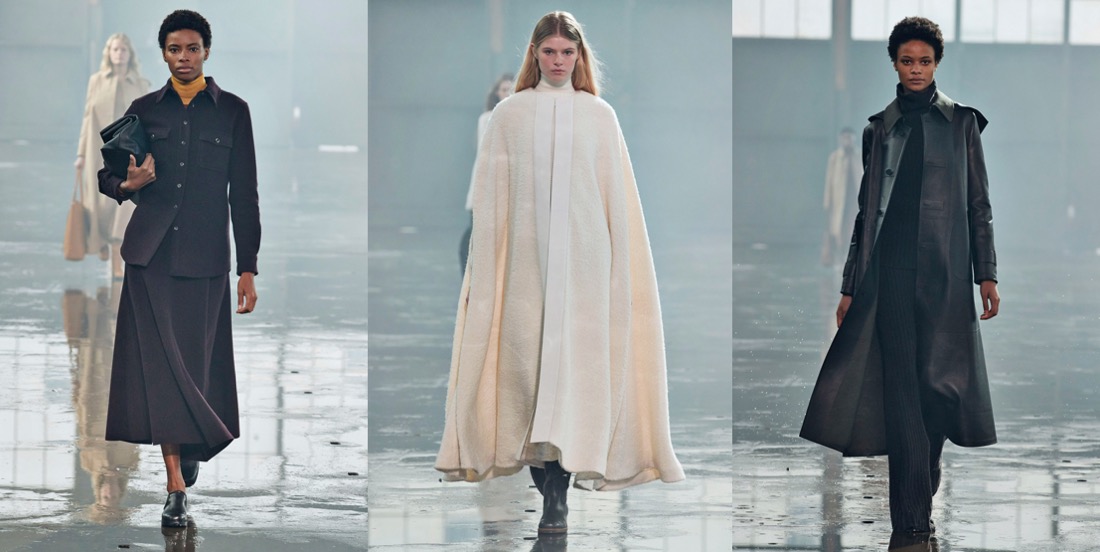
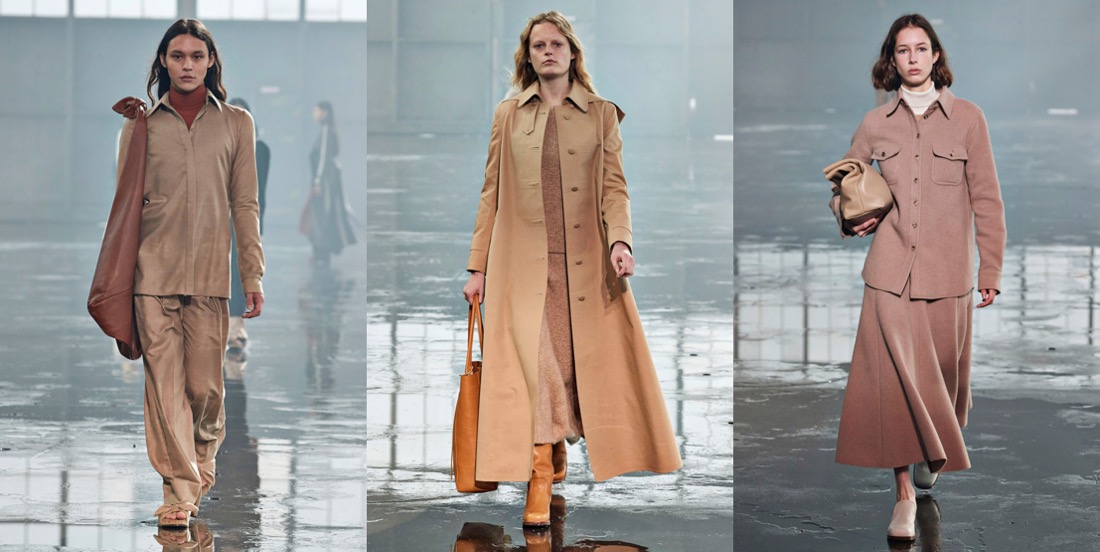
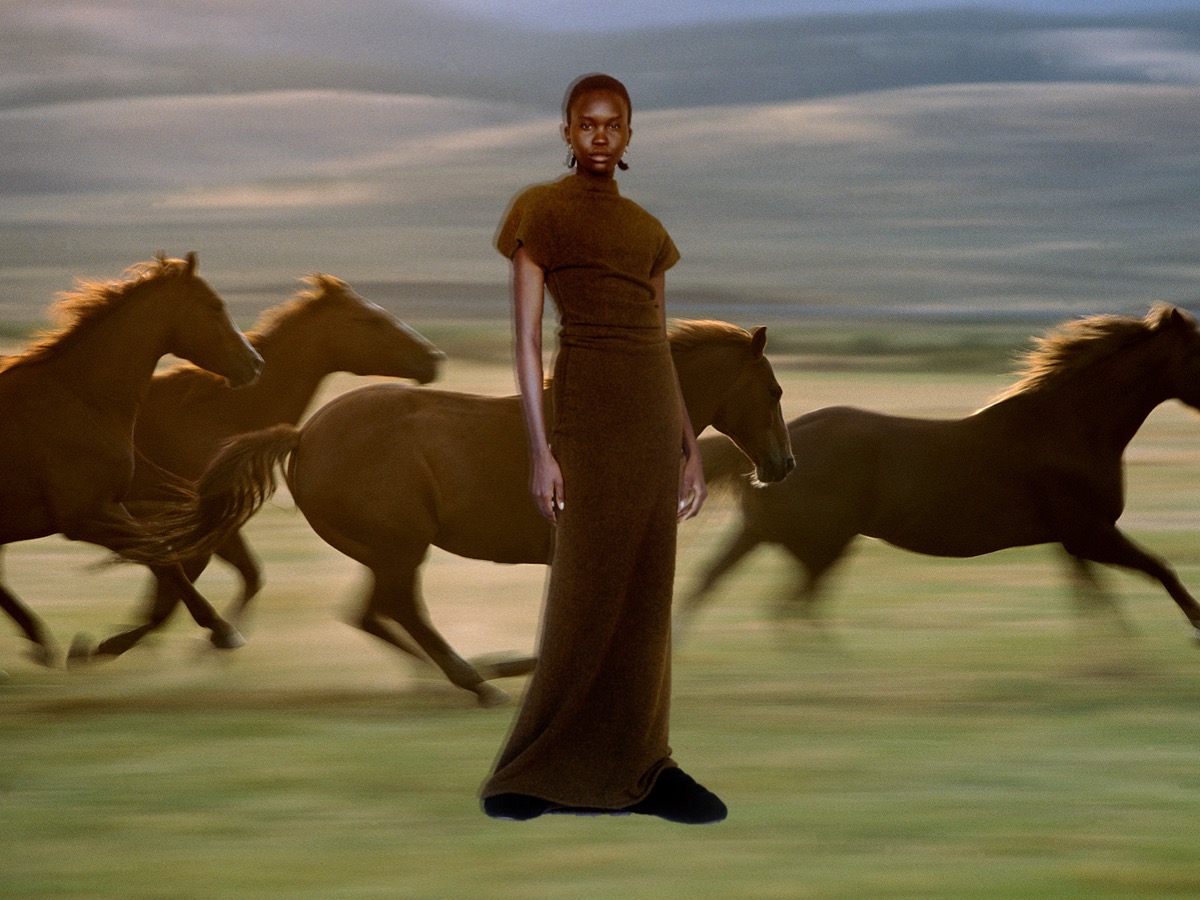
There’s an unofficial trend circulating this season: finding inspiration in powerful women from the past, often with a religiously-charged background. First, Bevza‘s designer mentioned Olga of Kiev as a reference for her knitted hoods and elongated silhouettes; yesterday, Gabriela Hearst talked about Hildegard of Bingen. A writer, composer, philosopher, mystic, and Benedictine abbess, Hildegard was a regular Renaissance woman, except that she predated the Renaissance by about two centuries. “I’m convinced,” Hearst said, “that if she had been a man we’d know her name like we do Leonardo da Vinci’s.” In fact, Hildegard sketched a Universal Man, not unlike Da Vinci’s Vitruvian Man, only hers was completed 300 years earlier. Hildegard resonates with Hearst because among her other polymath pursuits, she was an herbalist, a woman really at one with nature. “She believed in ‘green power,’” said the designer. The environment is a passion of Hearst’s too. Fashion isn’t the greenest of industries, but her company is making strides. She reported that last year 40% of the materials used in the production of her collections were repurposed and deadstock. Her 2021 goal is 50%. Hearst’s efforts around responsible design are at least partly why she was hired as Chloé’s new creative director in December (looking forward to her debut this Paris Fashion Week!). Hearst’s autumn-winter 2021 line-up is all about timeless, beautifully-crafted design that actually needs no further explanantions or mood-boards behind. Still, those behind-the-scenes details are intriguing. Hearst’s 12-year-old daughter Mia’s interpretations of Hildegard’s painted flowers appear as a print on a silk shirtdress and as crocheted appliqués on knit sweater and skirt sets. They also inspired a pair of extraordinary ruanas, hand-knit by the Manos del Uruguay women’s collective in Hearst’s native country. Hearst’s own renditions of Hildegard’s flowers were transformed into hand-painted belt buckles at the center of which she placed mano figas, talismans signifying fertility and, by extension, female power. As usual, the designer offers a well-edited wardrobe of soft, yet empowering tailoring, gorgeous dresses that can be both for the day and night and remarkable outerwear (knotting details at the shoulders softened the lines of a trench and the hem of another coat was finished with a deep band of macramé lace).

“Live” collage by Edward Kanarecki.

The Balance. Proenza Schouler AW21

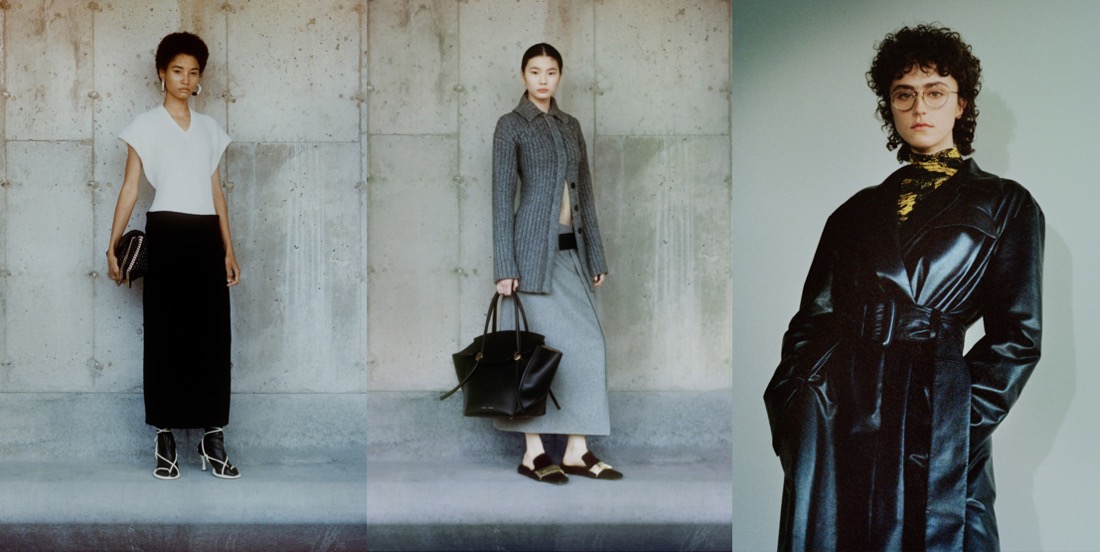
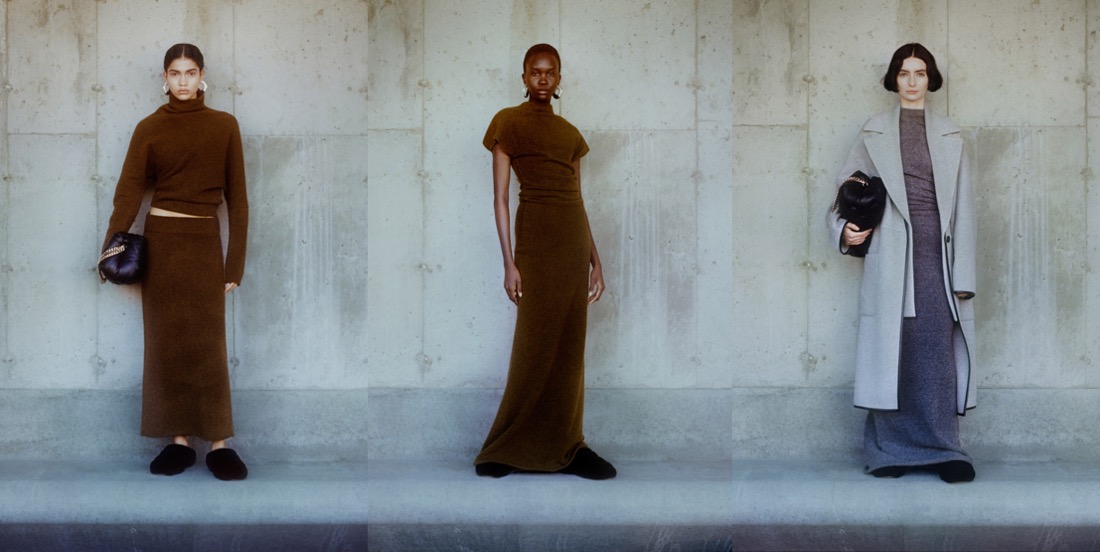
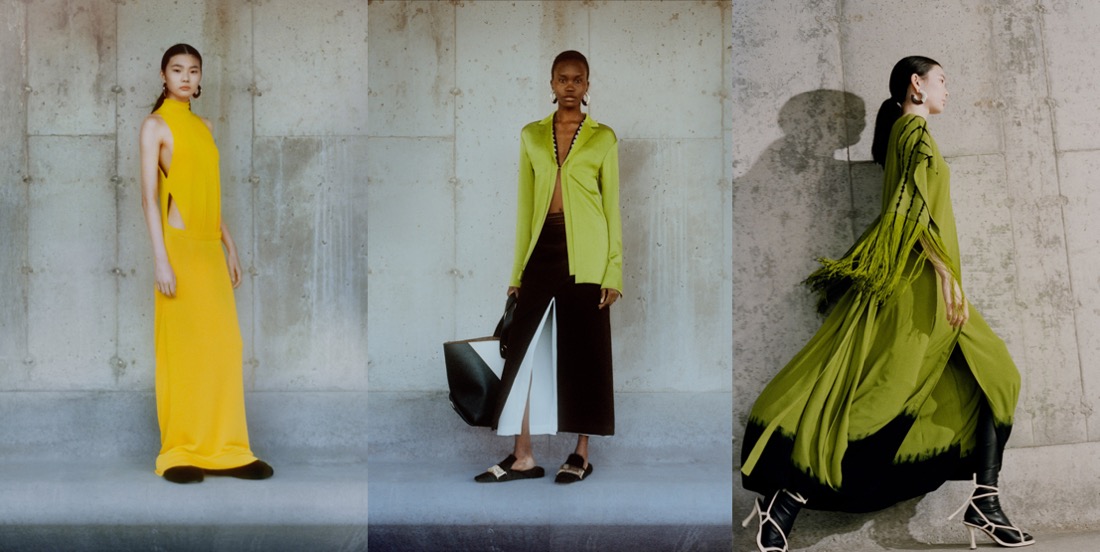
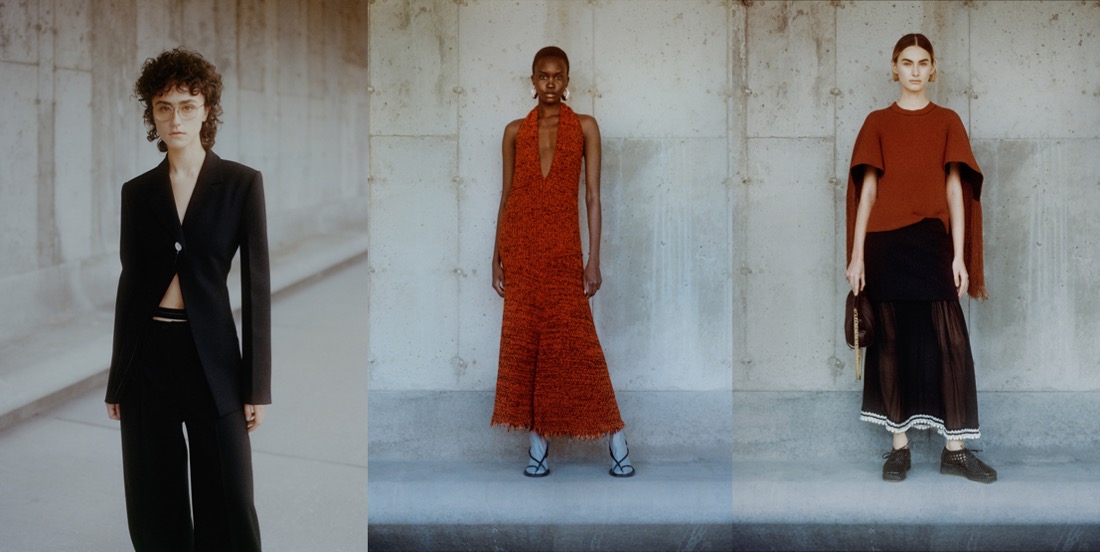
Ella Emhoff’s (Vice President Kamala Harris’s step daughter) modelling debut (she was signed by IMG Models not long after her stylish presence at the Inauguration) was probably the biggest, clickbait moment of this very plain New York Fashion Week. She had her cameo appearance in Proenza Schoulder‘s autumn-winter 2021 look-book and video, and definitely delivered some spotlight to those level-headed, a bit monotonous garments. Lazaro Hernandez and Jack McCollough are the old hands (the brand is celebrating its 20th anniversary… yes, time flies!) on the local fashion week calendar, with many establishment brands showing later (or not all) this season. Maybe not coincidentally, they mentioned the word “balance” to Vogue: balancing the work-from-home moment we’re currently in with the optimism they feel sure is coming; balancing softness with structure, and minimalism with a more crafted aesthetic. The result is a collection that feels of a piece with their recent, consistenly minimalist work. They still favor an earthy palette and they continue to work their repertoire of lean, confident pant suits and fluid midi-dresses, a particularly striking one in chartreuse and brown tie-dye. But where a year ago, jackets and dresses were tugged off shoulders, this season that “attitude,” as they called it, was built into their patterns, be it a spongy knit dress with an askew head hole or a top with a swooping asymmetrical hem. The former snaked around the body, while the latter had a buoyant sculptural volume. Clothes that work harder while also being easier to wear – the new investment pieces, which make sense in COVID times.

Collage by Edward Kanarecki.
The Power of Heritage. Bevza AW21

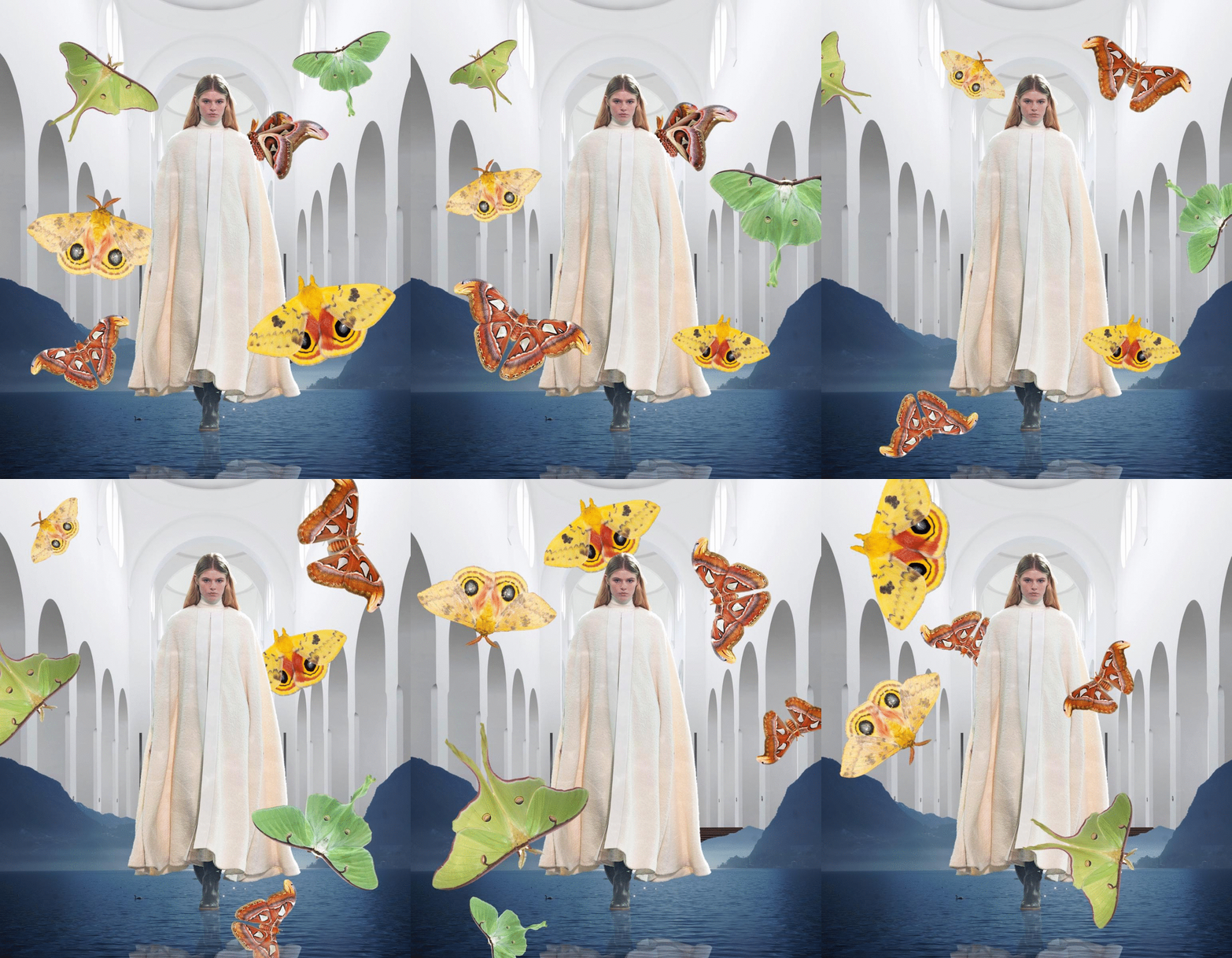
The clash of 90s minimalism with her Ukrainian heritage is Svitlana Bevza‘s signature style at her New York-based brand. “Due to the separation of the pandemic, it’s important for us to show something very Ukranian historically,” the designer told Vogue. Her main inspiration was Olga of Kyiv, who ruled in the 10th century and is known for her revenge on the people who killed her husband. The knit balaclavas, one of which opened the show, were inspired by Olga’s iconography, but for the 21st century they were paired with matching blazers and knee-high leather boots. Bevza also incorporated the image of the spikelet, a symbol of good harvest and an optimistic year. Last season the label introduced spikelet earrings; this time, subtle, grain-like shapes appeared in the boots, caped dresses, denim skirts, and in the chunky fringe adorning some of the knits. With mustard and slate blue livening up the typical Bevza color palette, the sophisticated and soft silhouettes spoke to life at home. As Bevza said, “It will last for a while that people are at home with no parties, but we have to feel and see ourselves beautiful in the mirror.” That’s the smart take-away coming from most designers we’ve seen so far this season.

Collage by Edward Kanarecki.