Dracula. Rodarte AW20

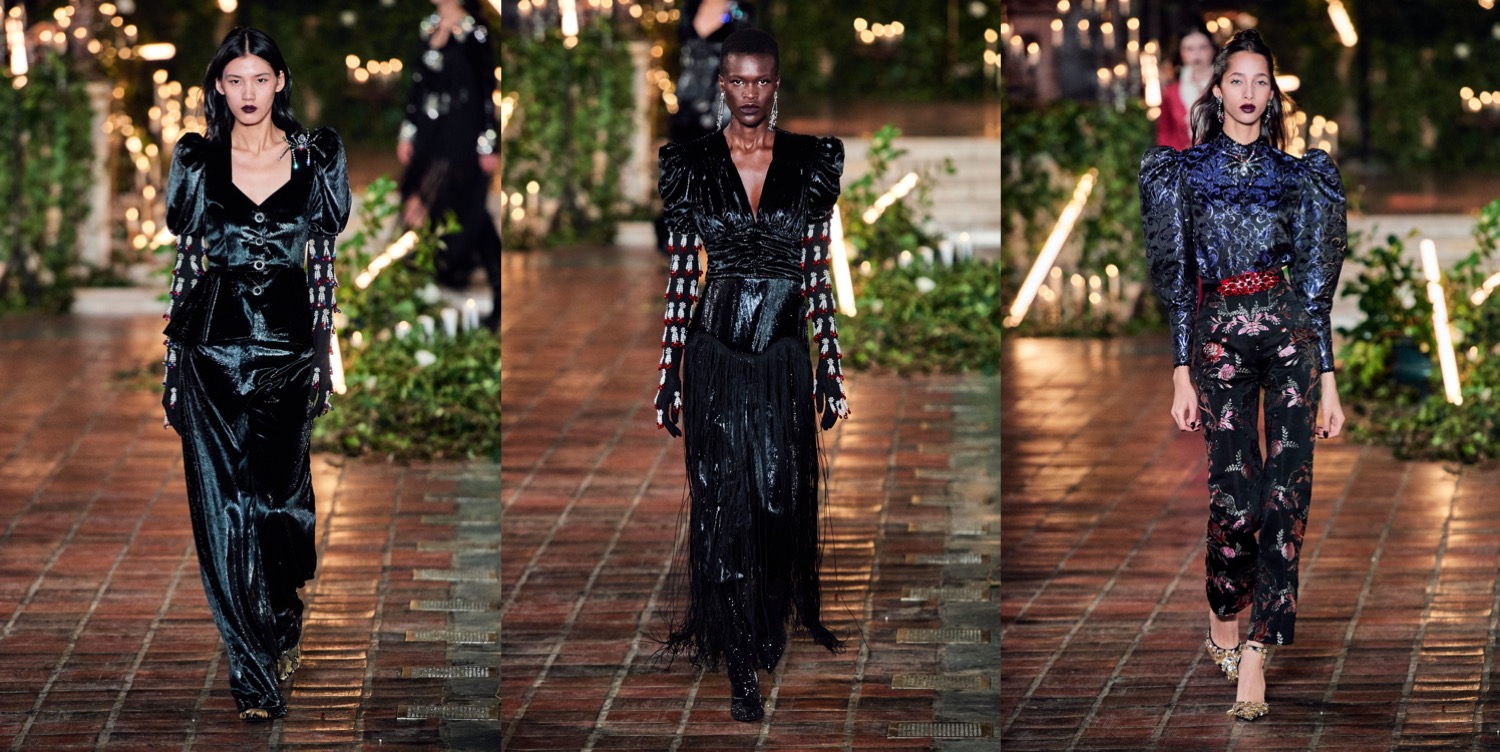
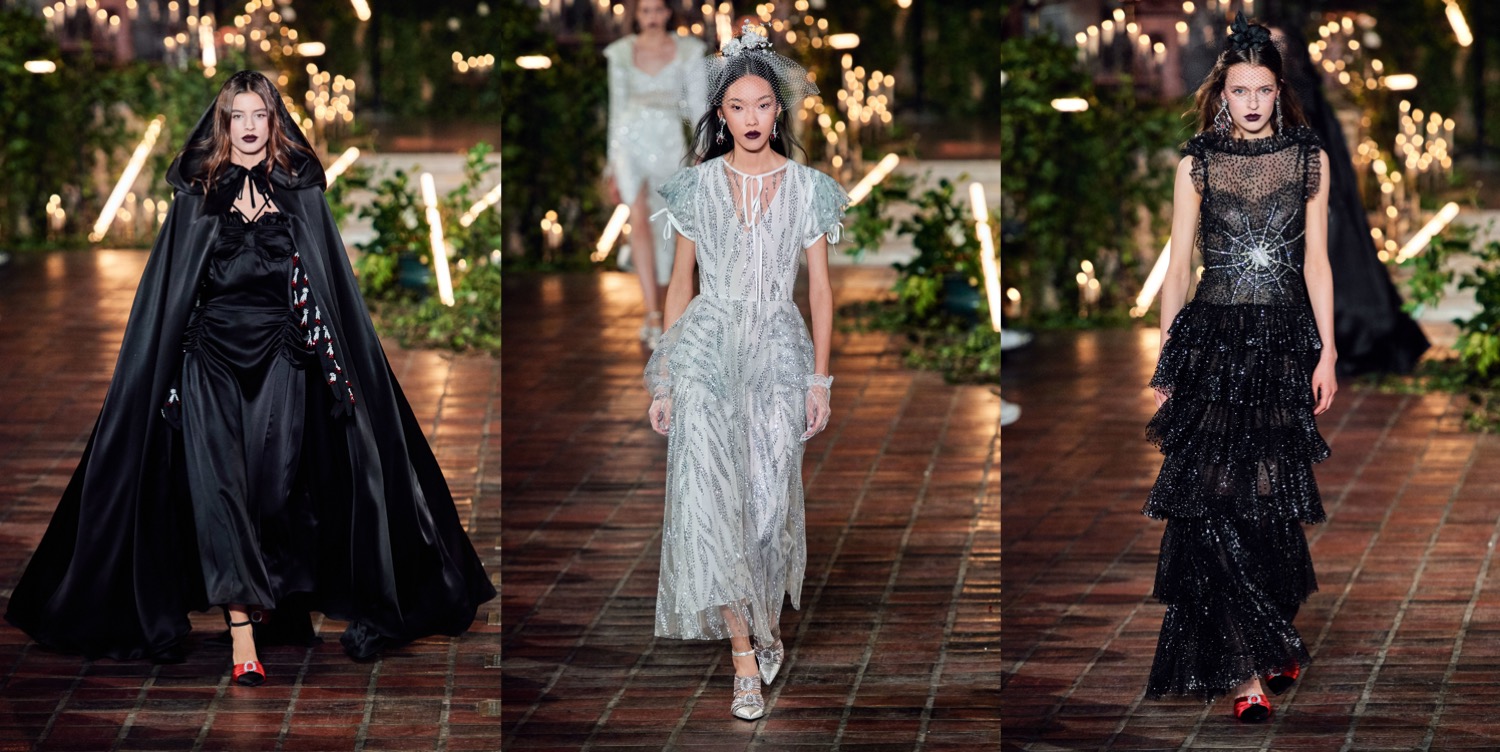
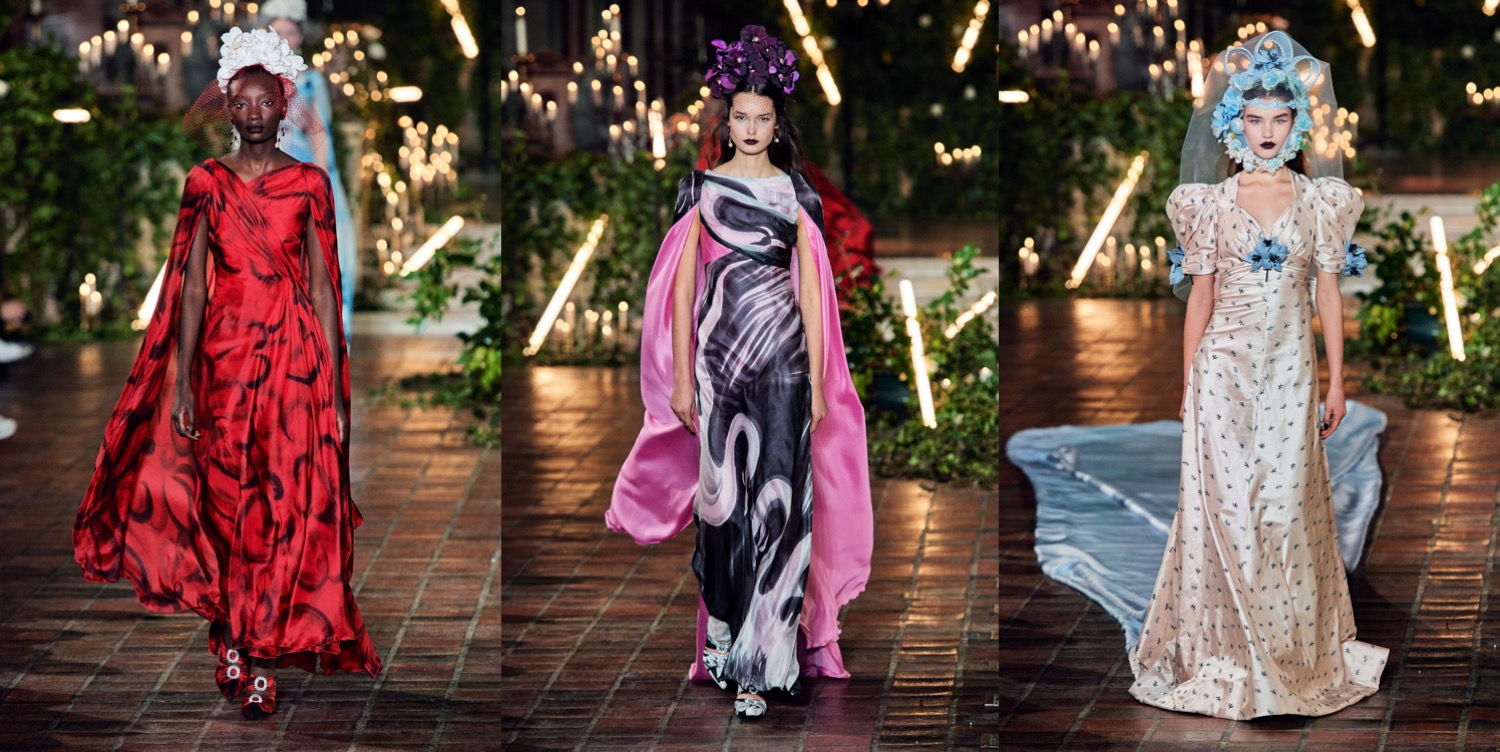
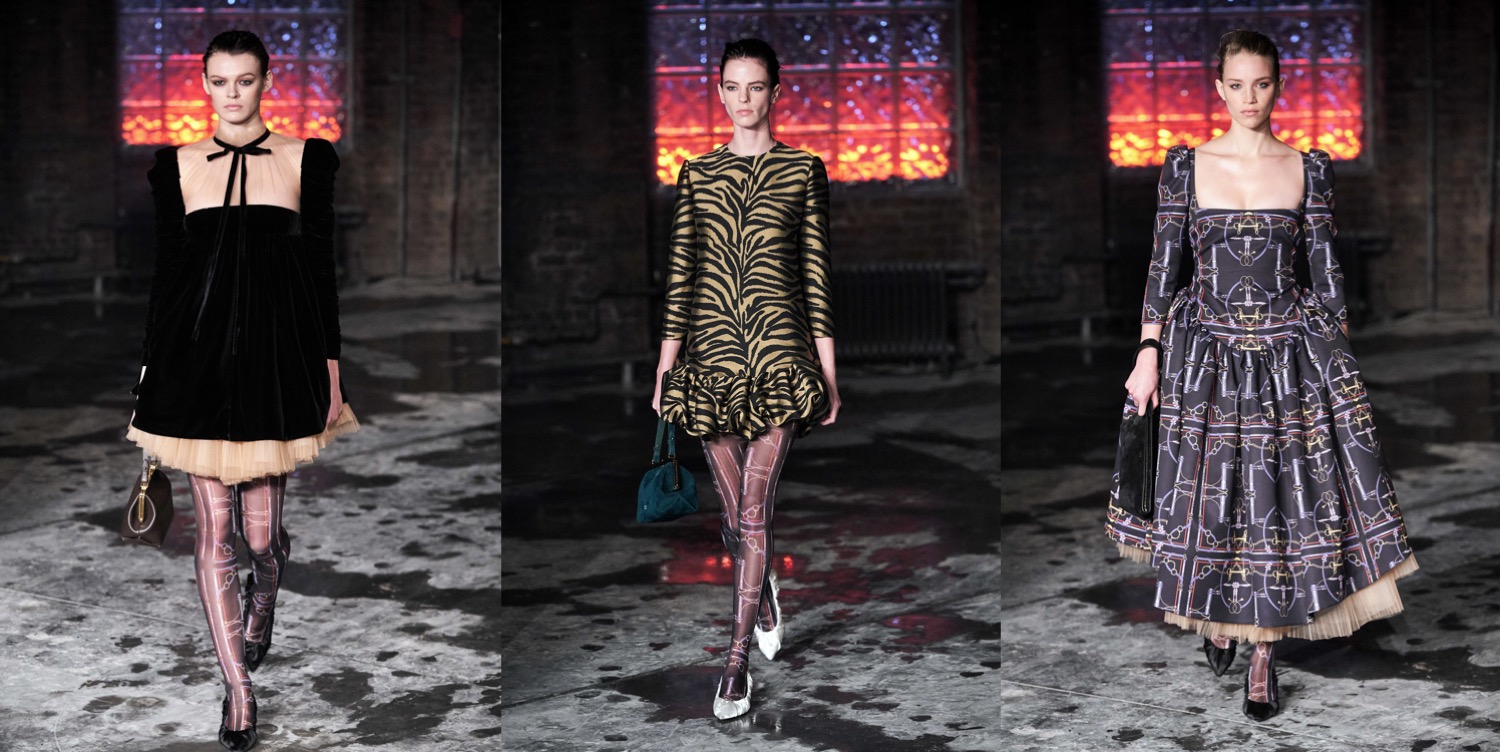
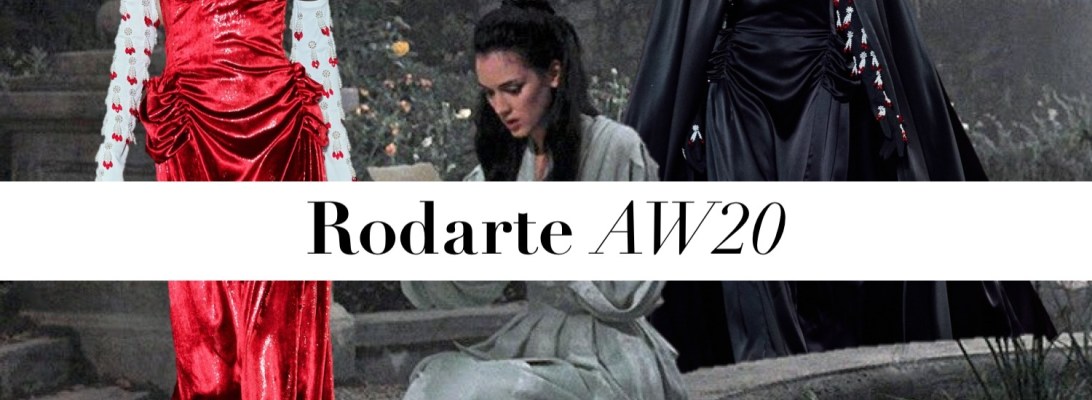
Bram Stoker’s 1897 novel „Dracula” inspired Francis Ford Coppola’s cult 1992 adaptation of the book, starring Winona Ryderand Keanu Reeves and featuring costumes by the legendary Eiko Ishioka. Kate and Laura Mulleavy’s autumn-winter 2020 Rodarte collection riffed on Coppola’s movie (and Ishioka’s costumes), but the result wasn’t a literal, gothic line-up. The location of the show – the dimly lit St. Bartholomew’s church in New York’s Midtown – provided a mysterious stage as the Mulleavys sent their army of ethereally chic undead out. The first part of the collection was about the pretty prey of Dracula: think cheerful polka dot day dresses, all over-sequined looks, draped blouses and pouf sleeves which all elaborated on 1940s-inspired silhouettes. Suddenly, the collection doubled down on the sweetness. Things got seriously dark – a sparkly midnight blue hooded cape, black fringes that looked like the tendrils of witches’ hair, cobweb embellishments, blood red. It was about witnessing the transformation of prey into predator, which was exactly the point. The show’s closer: a dreamy gown with big shoulders, blue flowers and a floor-sweeping, liquid-like veil. The vampire’s bride? Or the queen of the immortals? Designers seem to avoid scenarios for their collections – the fear of falling into the cliché trap – but at Rodarte, story-telling always works well.
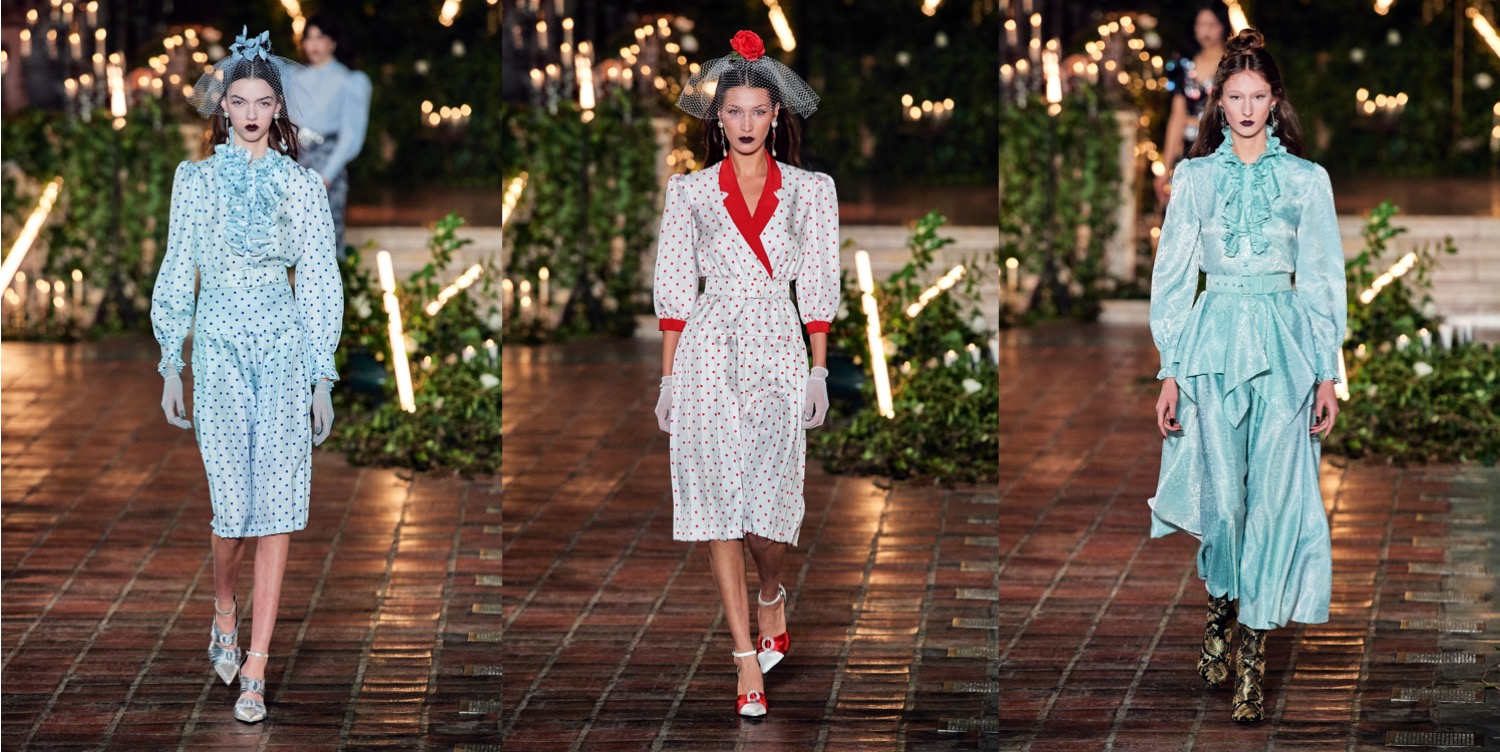
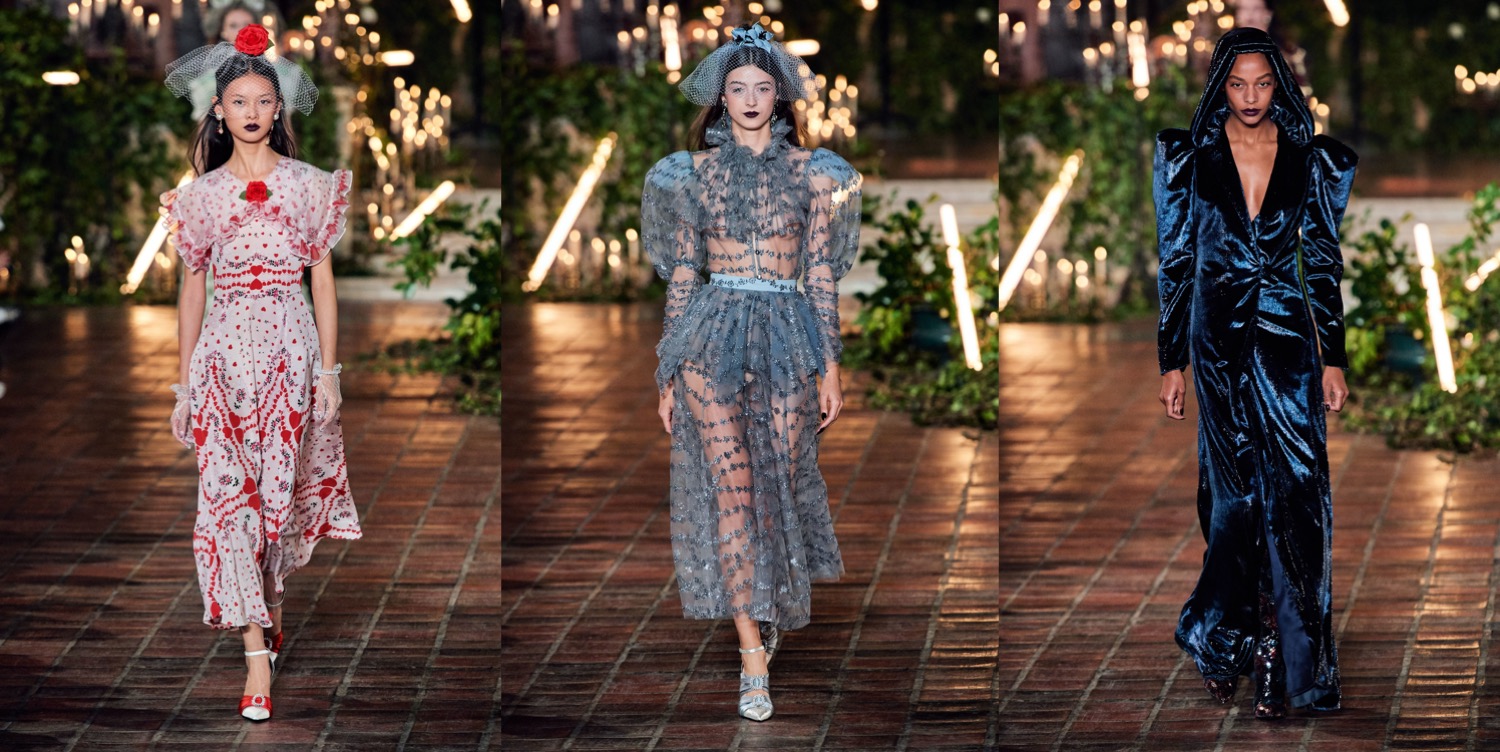
Collage by Edward Kanarecki.
Sustainability (For Real). Gabriela Hearst AW20

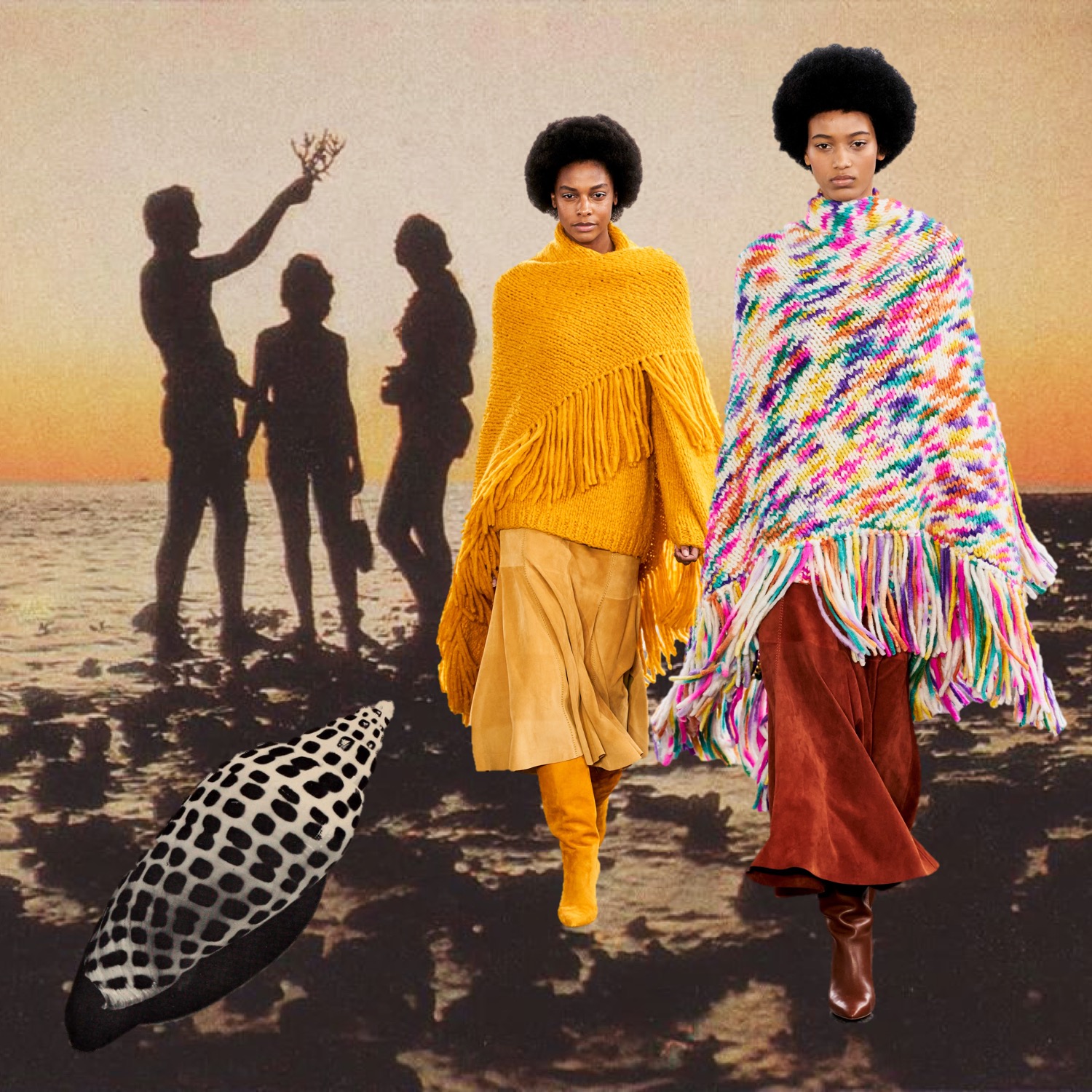
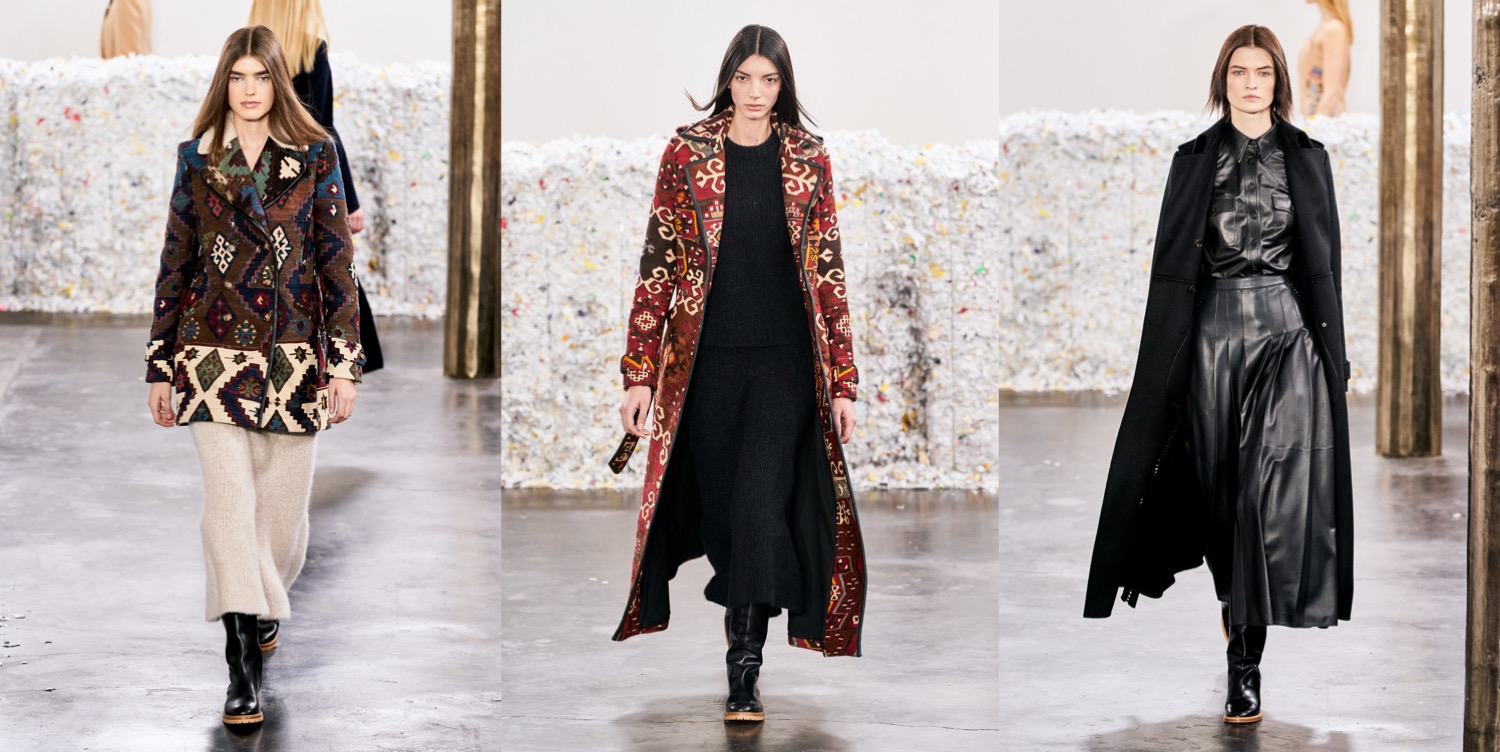
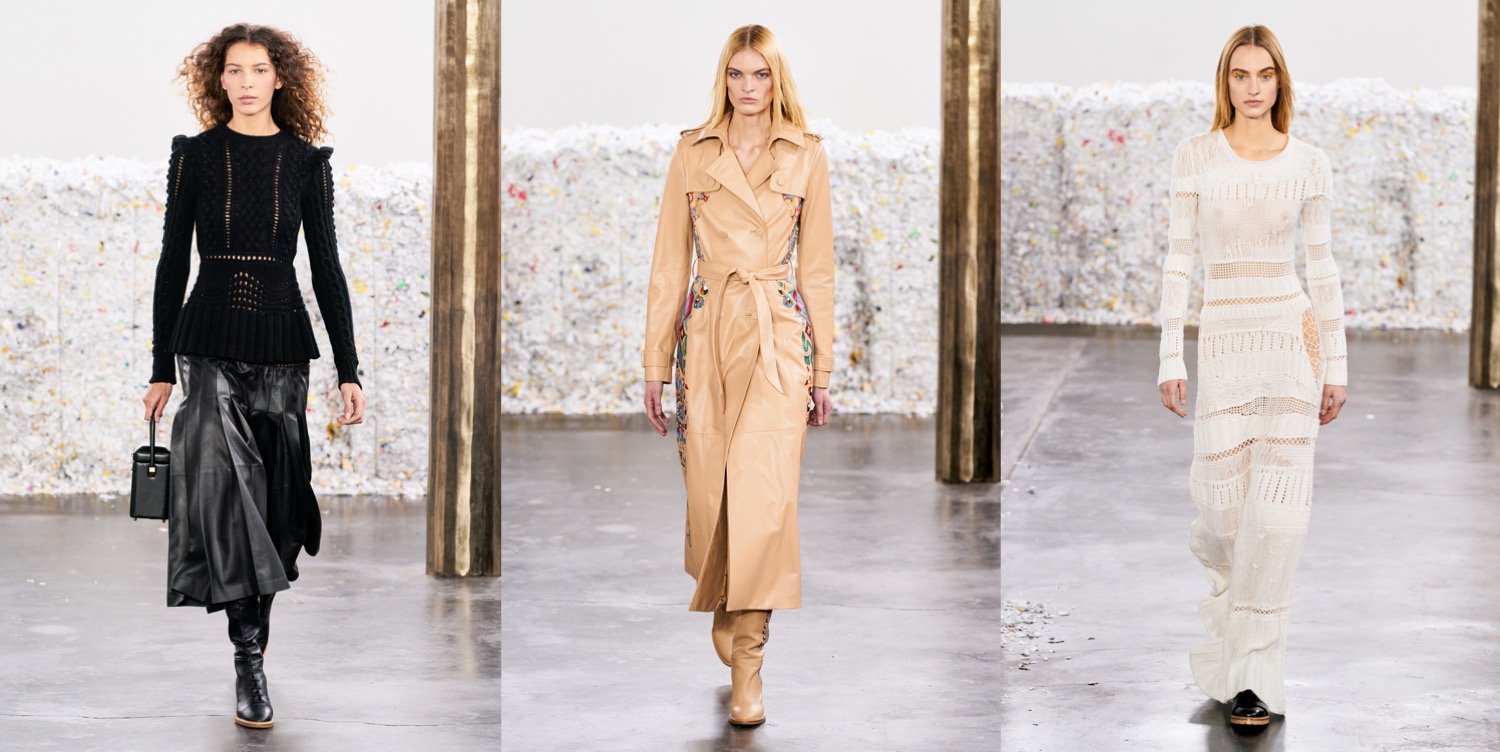
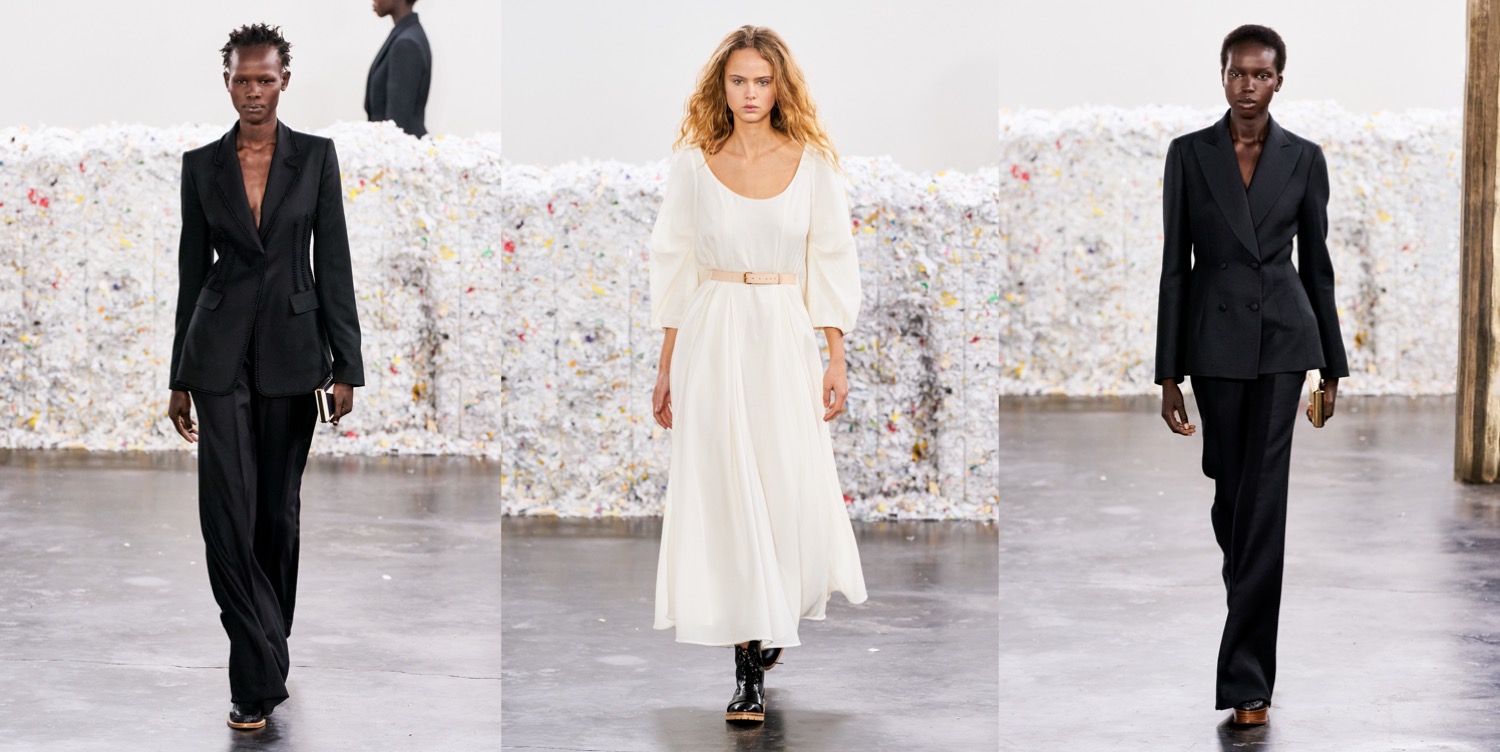
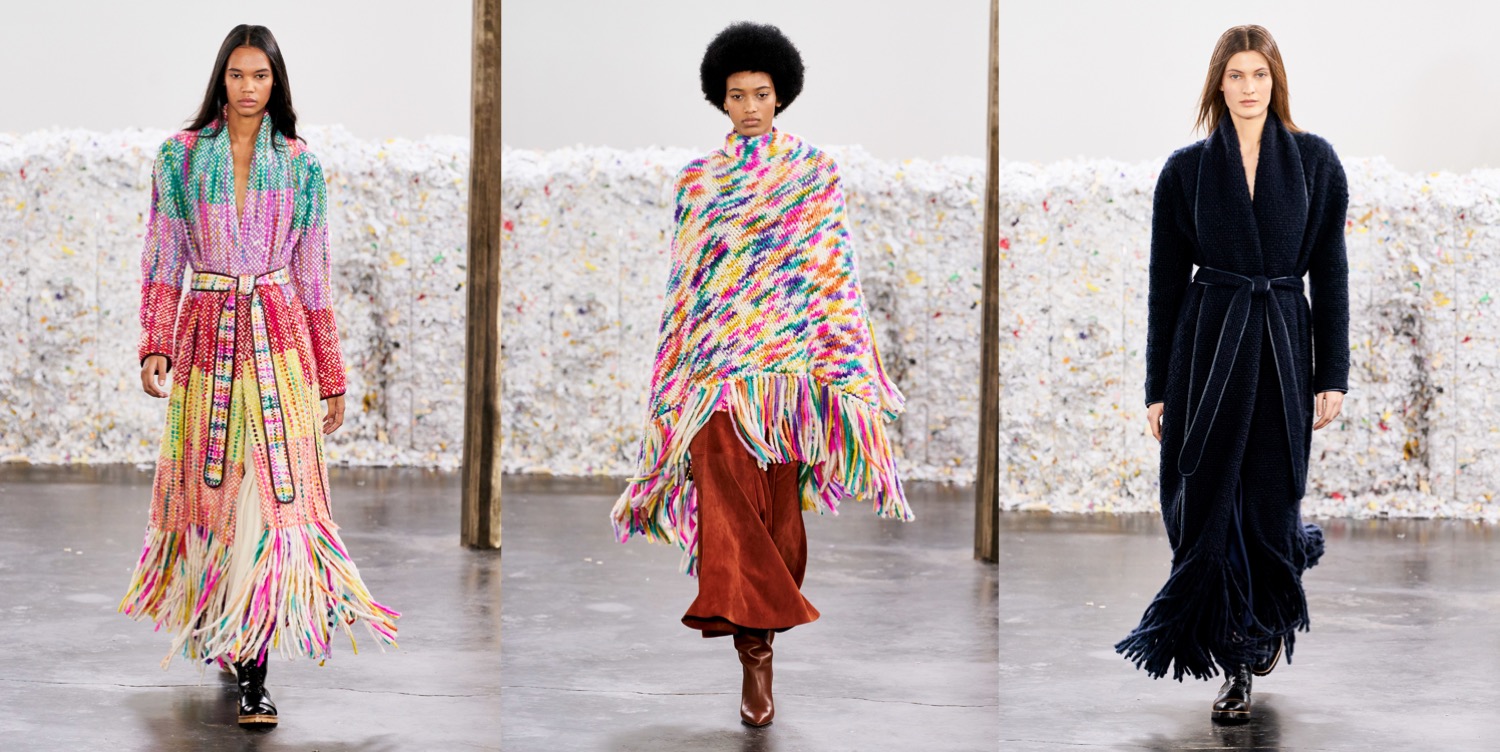
Gabriela Hearst’s autumn-winter 2020 line-up was beautiful. And it managed to be really sustainably made, without making a fuss about it. For Hearst, enviroinment is a priority. And she can translate that passion into luxurious, softly minimal, super high quality clothes. Antique remnants of Turkish rugs were puzzled together in outerwear pieces lined with cashmere. The hand-made knitwear was done by Manos Del Uruguay, the non-profit cooperative female artisans, and Magdalena Koluch, a New York-based knitter – the multi-colored, fringed poncho is one of the many gorgeous results that came from this collaboration. Existing pieces of cashmere outerwear were deconstructed and re-assembled with blanket stitch creating a fantastic colour block pattern. Most of the used wools in this collection were re-printed and reused to create new pieces. Gabriela and her team really pushed the envelope this season in terms of sustainable fashion and creating out of waste products, and simultaneously made it look refined. Just see the biscuity, cashmere corduroy tailoring or the flowing eveningwear. Delightful!

Collage by Edward Kanarecki.

Daring and Sexy. Khaite AW20

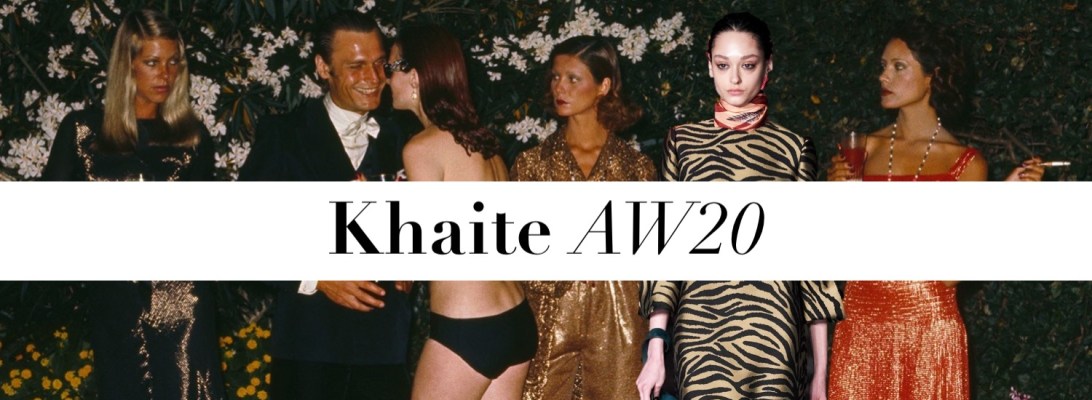
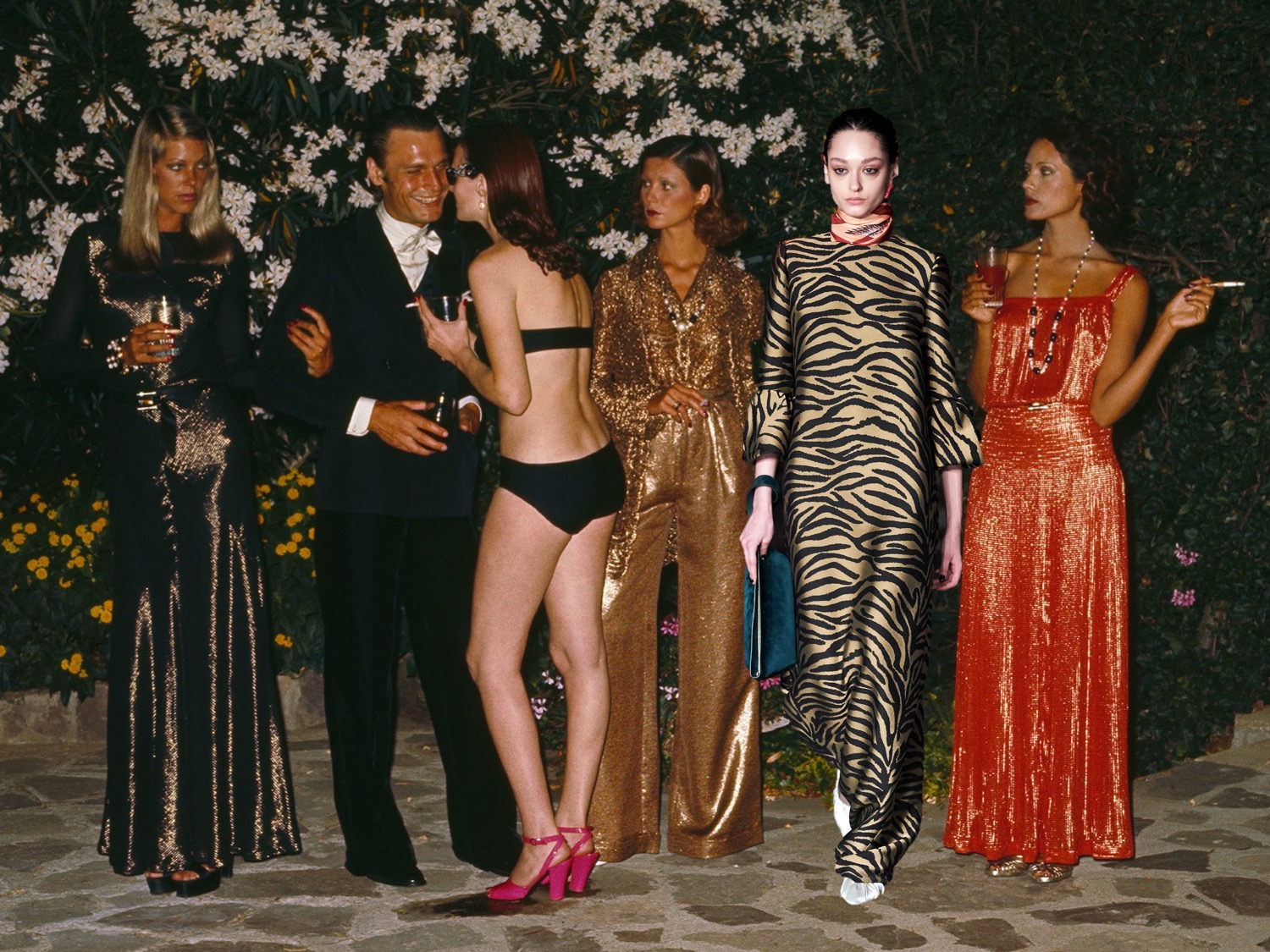
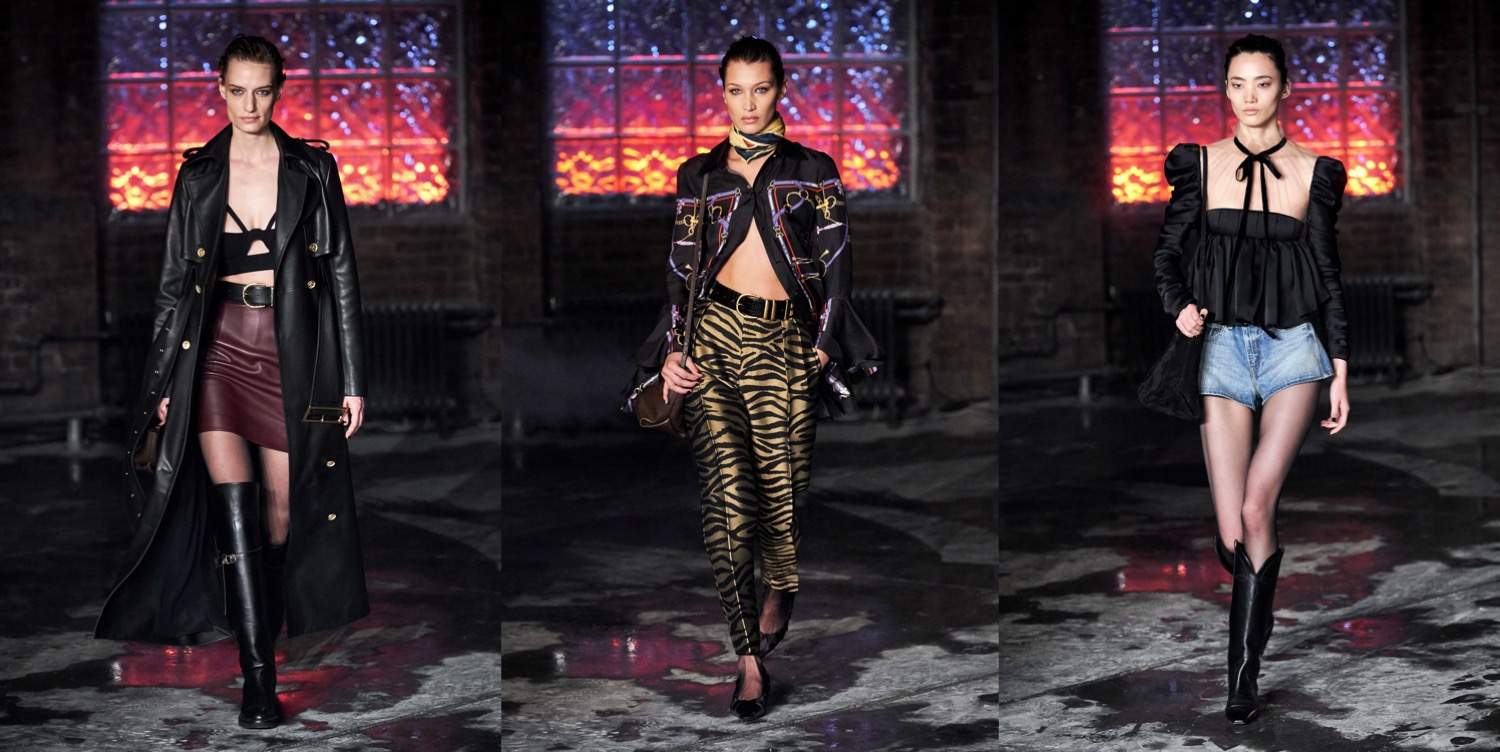
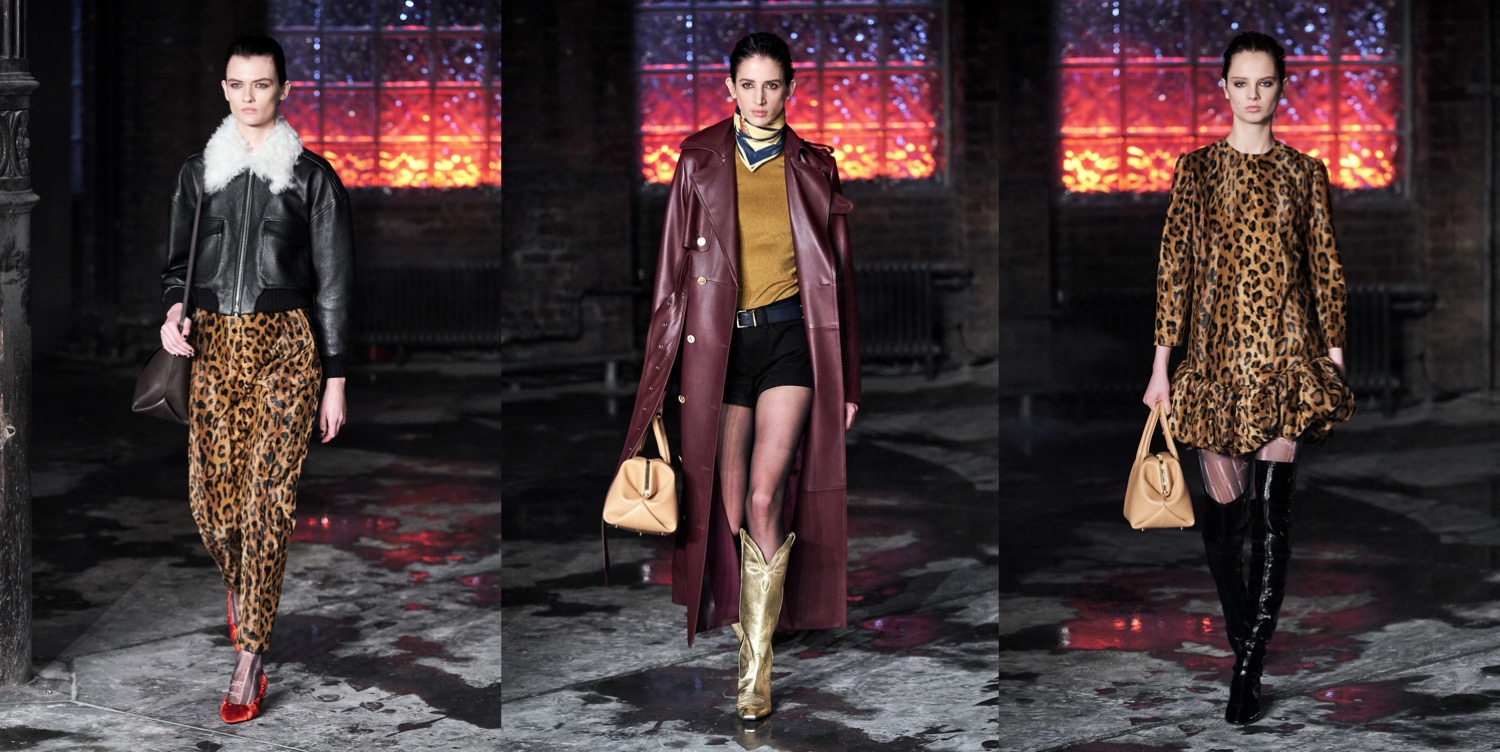
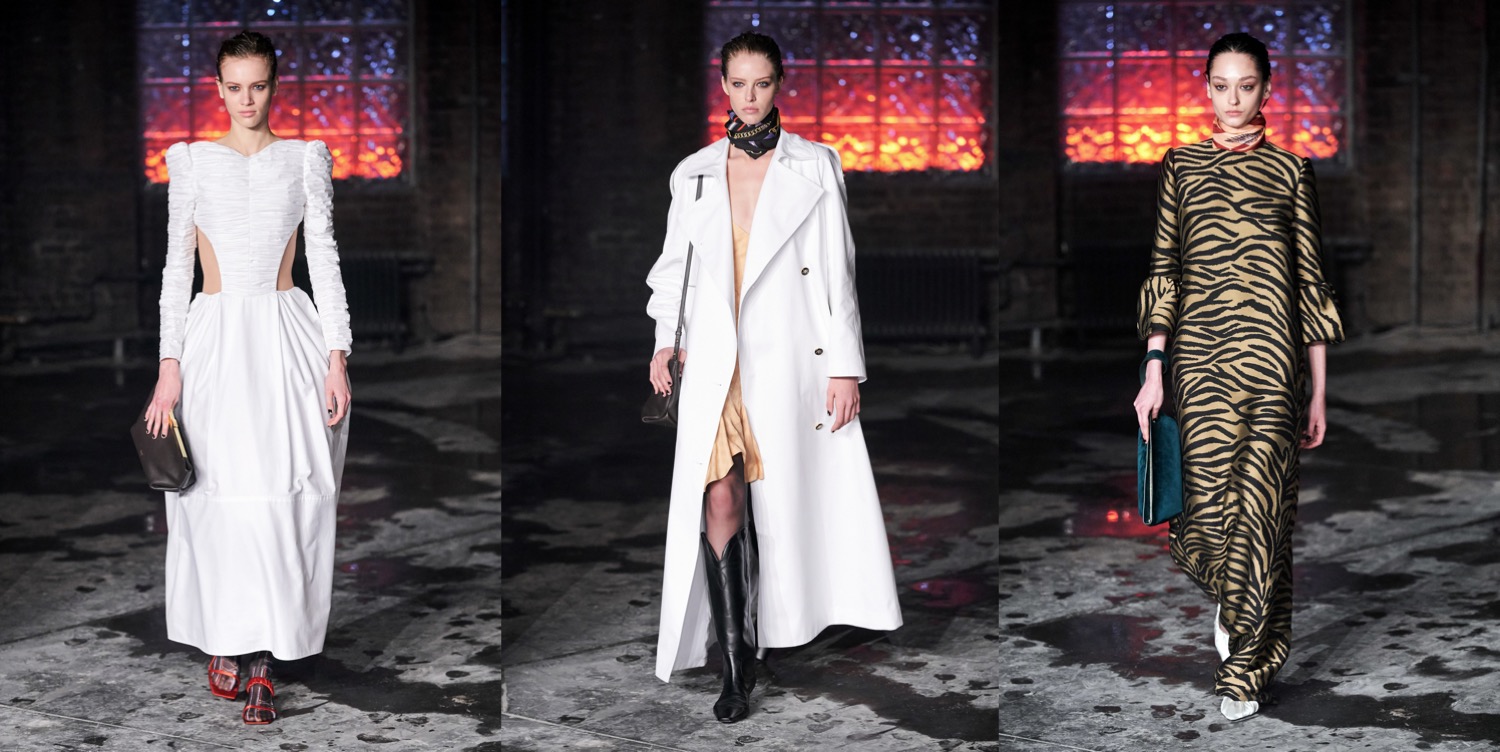
Cate Holstein’s Khaite had a similar turn as the boys at Proenza Schouler. Her woman is much more daring than usual this season. While many know and love the label for its soft minimalism, occasionally beautified by tulle and pearls and toughened by suede cowboy details, this time Holstein let some danger in. The effects? Some of it is convicing, some got lost in the messy styling. The designer wanted to embrace the word „sexy”: dramatic cut-out backs of the evening dresses, leather and cheeth prints went with signature tulle, vintage-looking horse-rider motif came across the silks. Models wore chunky knitted scarves or bandanas. Girls just wanna have fun.

Collage by Edward Kanarecki.

A Good Shift. Proenza Schouler AW20

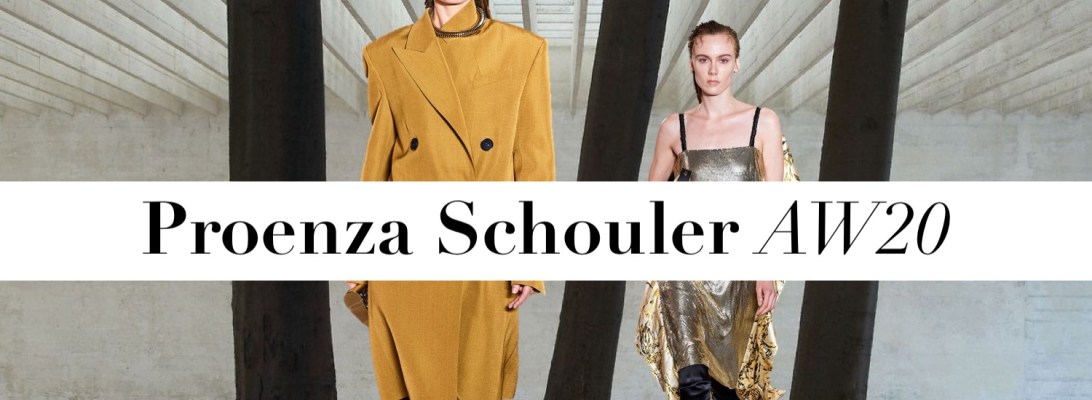
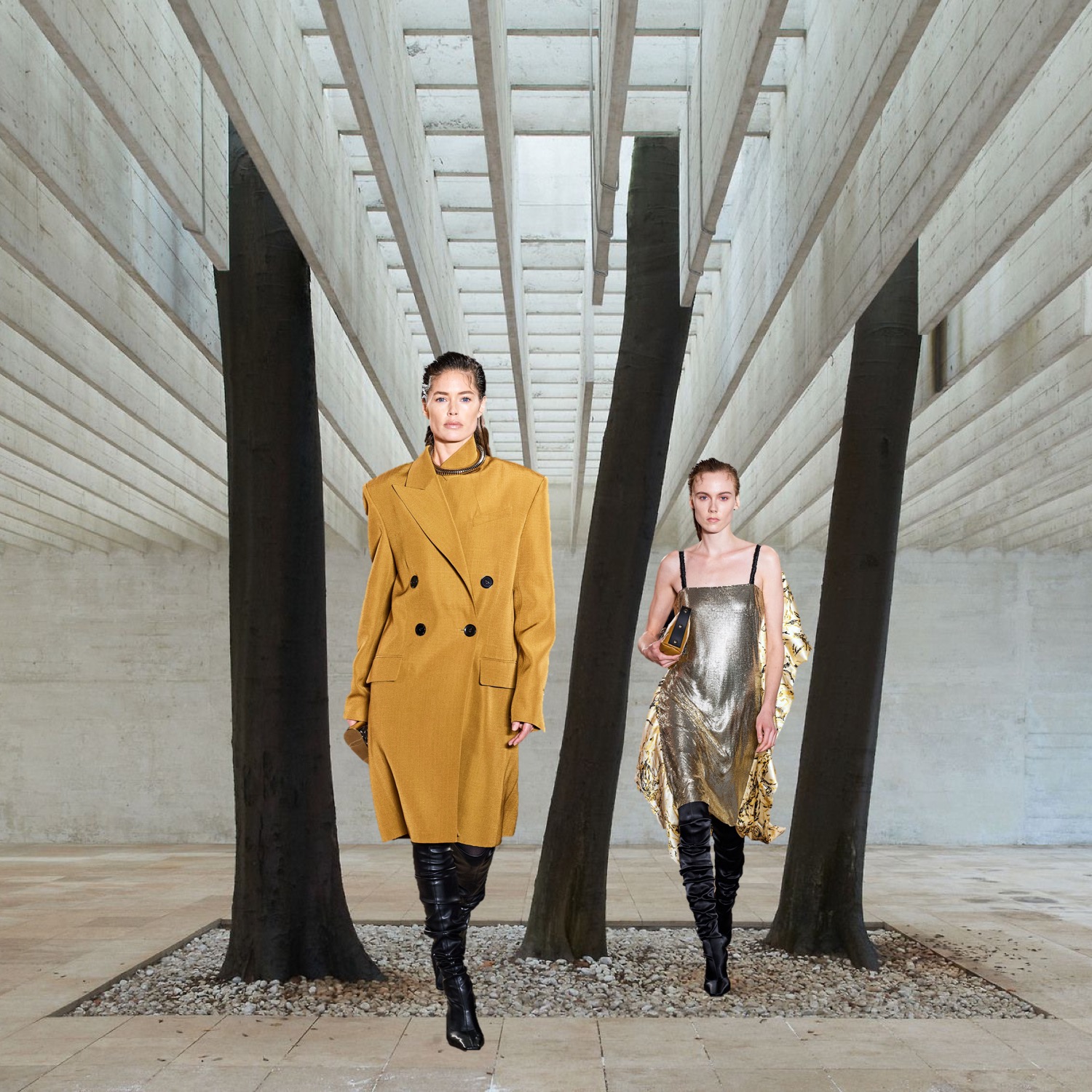
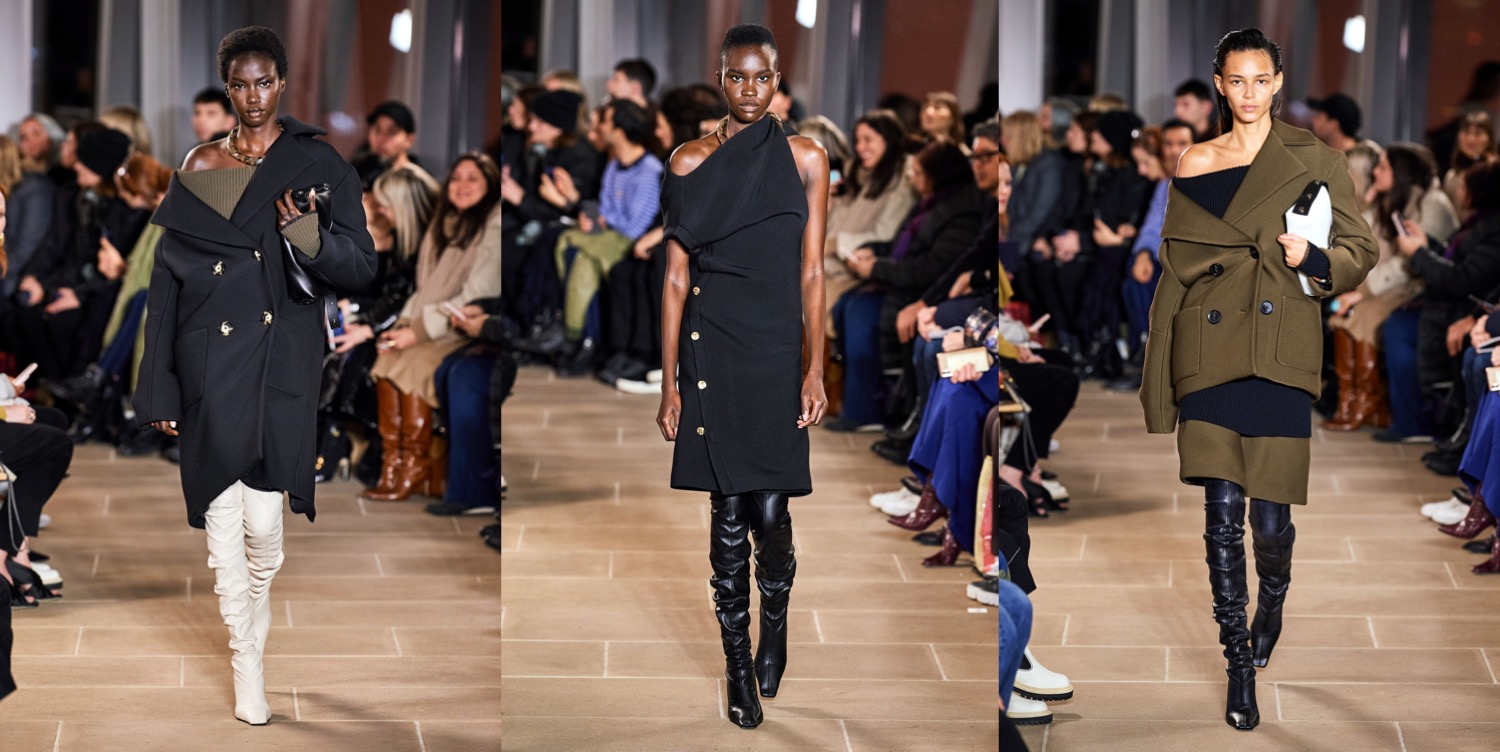
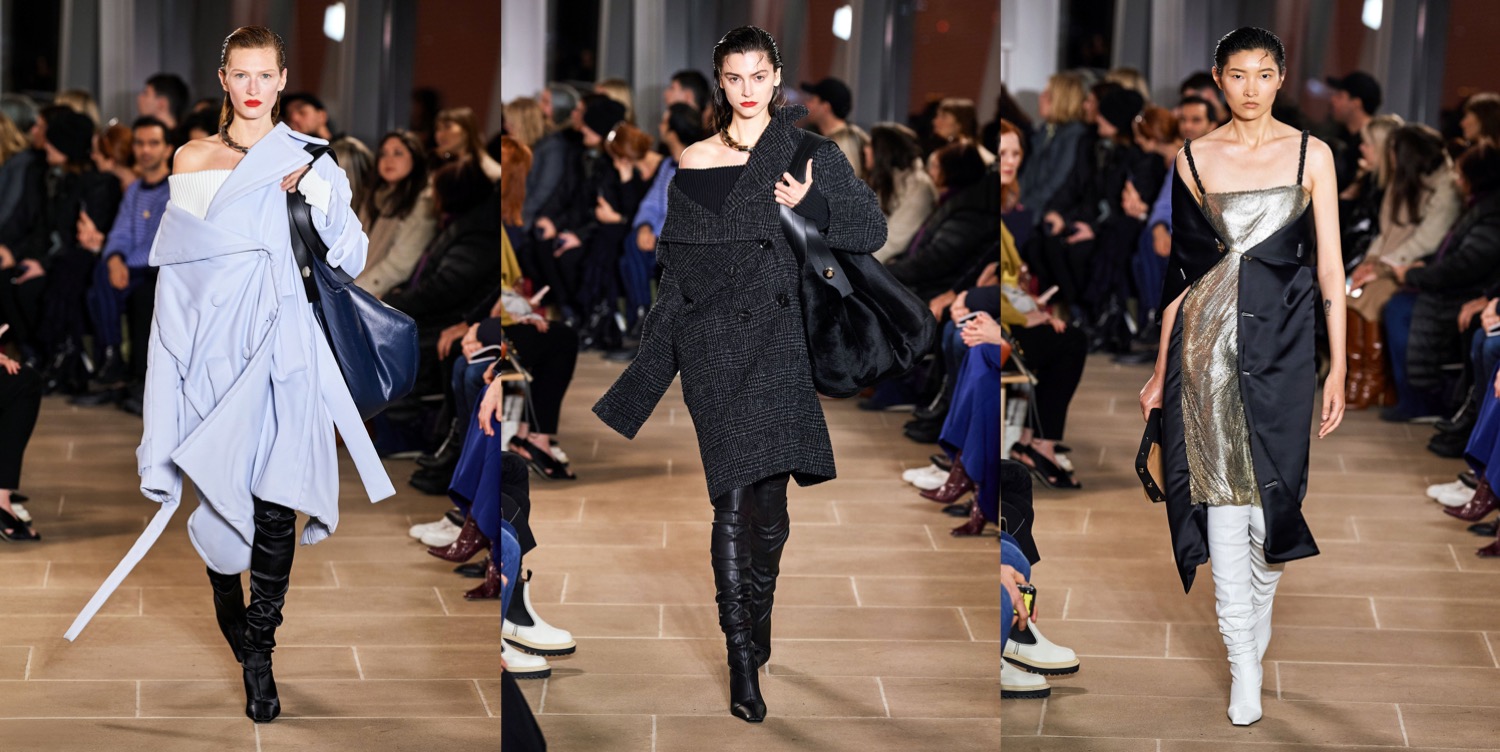
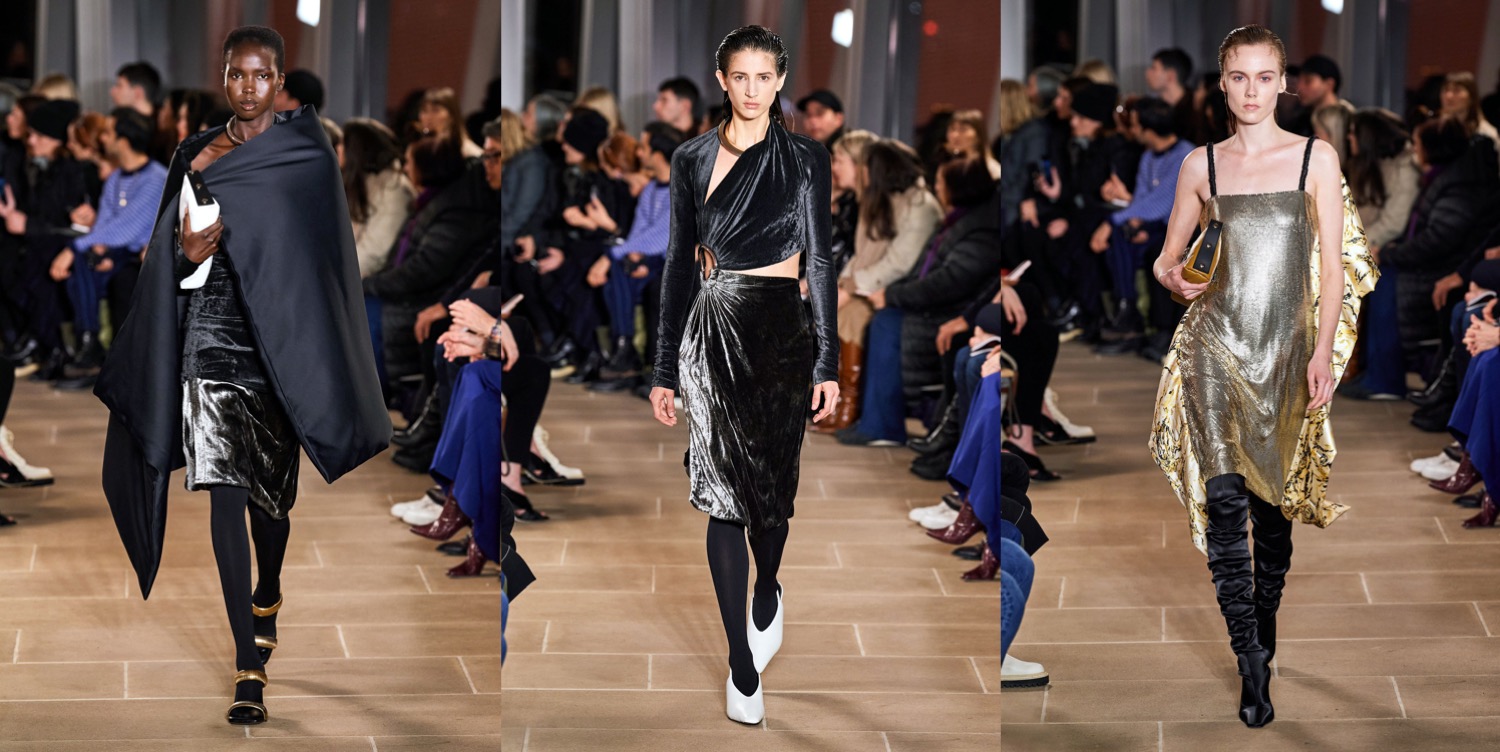
Something has shifted at Proenza Schouler. The last few seasons from Lazaro Hernandez and Jack McCollough weren’t their best, lets be honest – they were plain and mild, and seemed to drown in the New York fashion week crowd. But their autumn-winter 2020 collection feels different. Delicate silhouettes got replaced by sharper cuts, and instead of draped forms we’ve got something much more geometric and bold. Also, the lenghts are shorter, the mood isn’t slouchy. The first look was a little black dress slipping off the shoulder, worn with ruched leather boots. Later looks followed the same pattern of „undone” style: jackets and knits peeled off of one shoulder, stretch leather dresses were cut with asymmetrical necklines, and a cold shoulder sweater exposed both clavicles. The closing looks were all about comforting volume. The designers’ starting point was a blanket. The duo gave their stylist Camilla Nickerson one for Christmas which she started wearing as a scarf, and inspiration was born. “She’s blanketed in a protective layer of strength and confidence,” Hernandez said backstage. McCollough put it another way: “It’s about finding beauty in a world that’s unraveling.”

Collage by Edward Kanarecki.
Monumental Lightness. The Row AW20

Slajd1

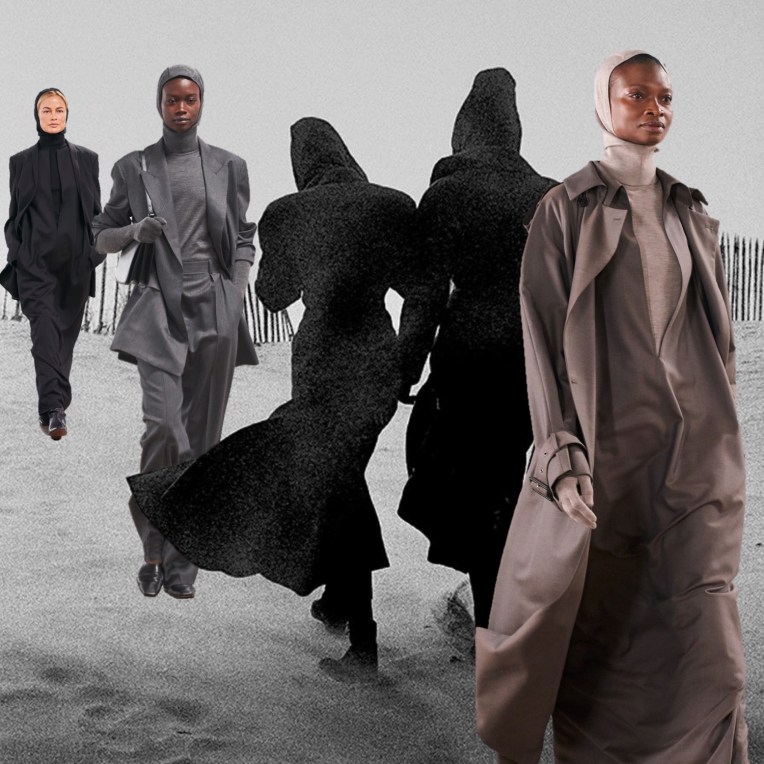
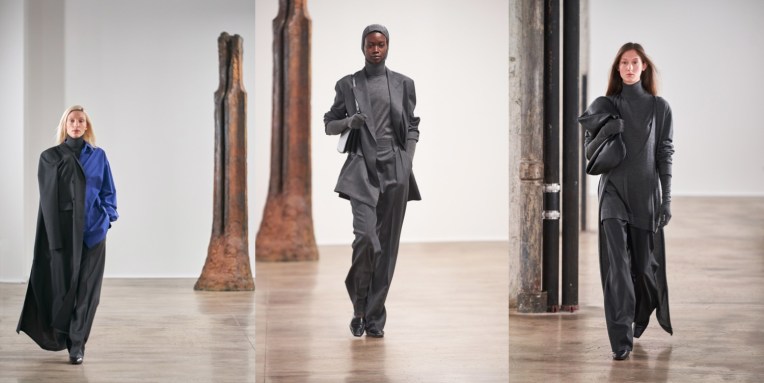
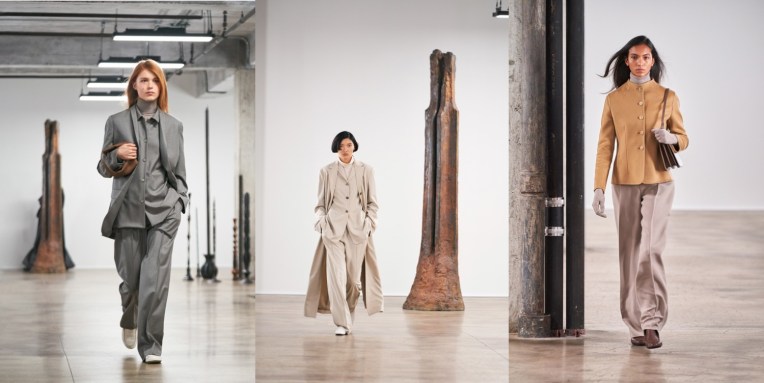
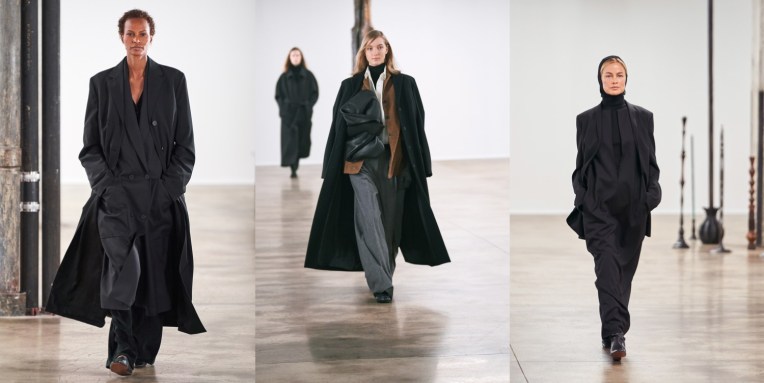
In the sea of meaningless or overly sophisticated (which, in the end, means the same as meaningless…) collections in New York this season, The Row stuns with confidence and actual sense of real desire put upon us, the viewers. As the models skimmed quickly by in flat slippers and boots, the thrill behind Ashley and Mary-Kate Olsen’s line-up was in the finesse of the cuts, precise but relaxed, especially with the addition of turtlenecks layered under silk button-downs or worn solo under jackets. The tailoring is refined and subtle in shilhouette, and the outerwear is a sure winner of the season. It’s quite clear that the designers looked at Martin Margiela’s Hermès for inspiration – especially the layered knits and long, grey gloves that seemed to blur with the clothes. But I’m fine with that. An installation of sculptures by Beverly Pepper, an American artist who worked in stone, corten steel, and iron until she was 97, was the centerpiece at The Row’s show. Pepper died just last week, and the New York Times’s obituary described her as a “sculptor of monumental lightness.” The Olsens’ work definitely identifies with that description.

asdfgh

Collage by Edward Kanarecki.