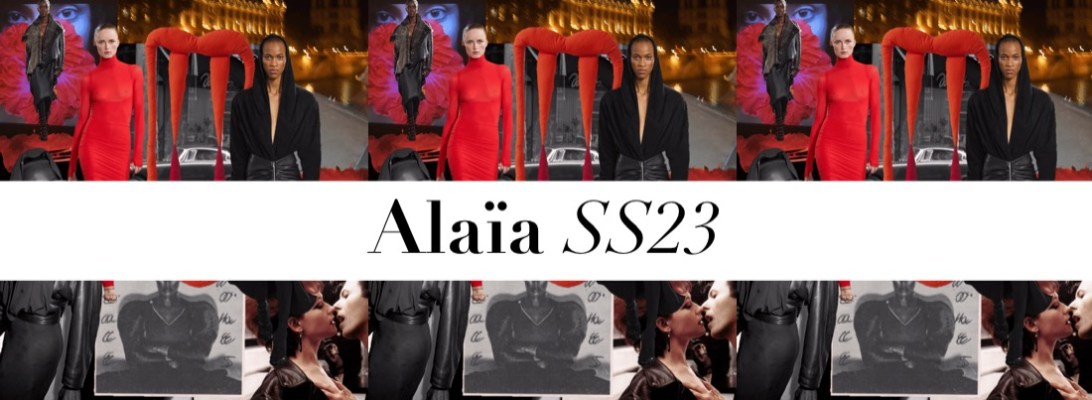
Rough And Elegant. Alaïa SS23

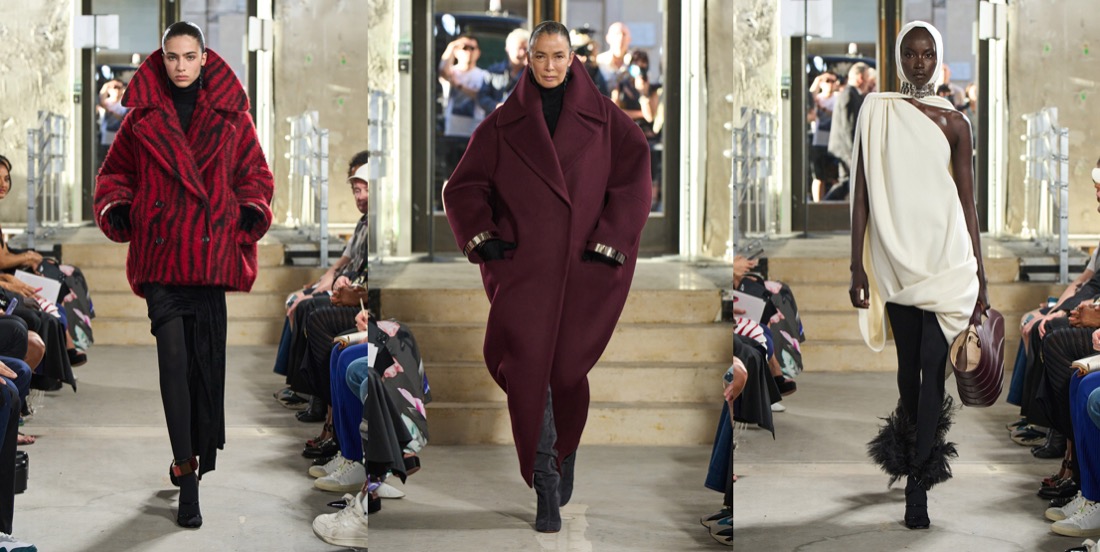
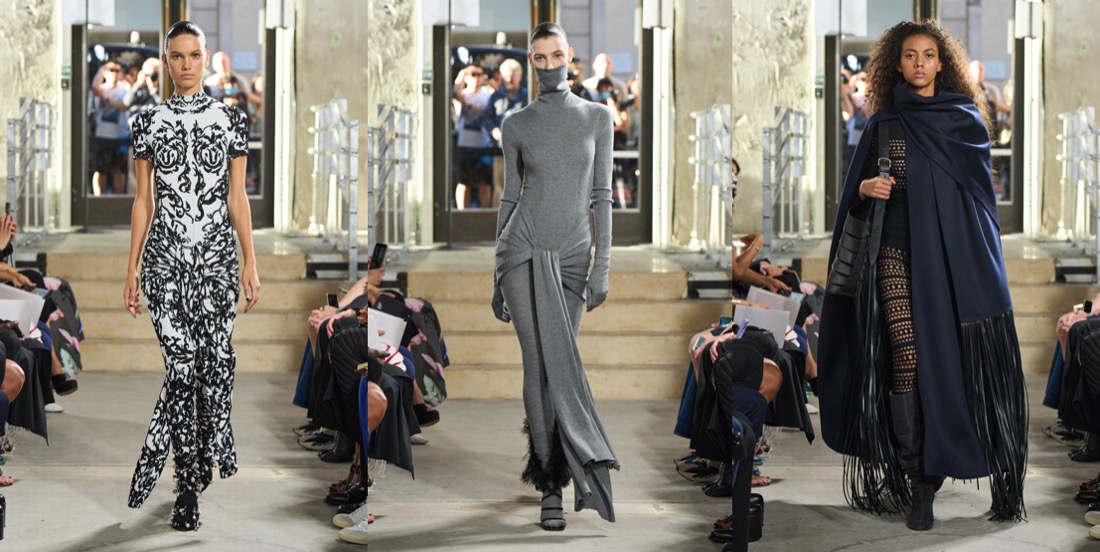
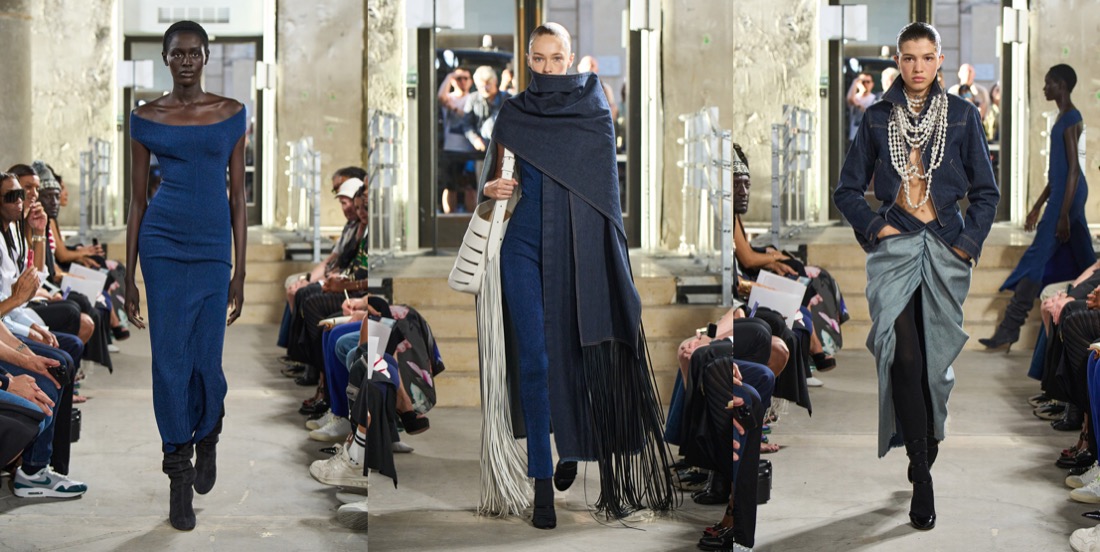
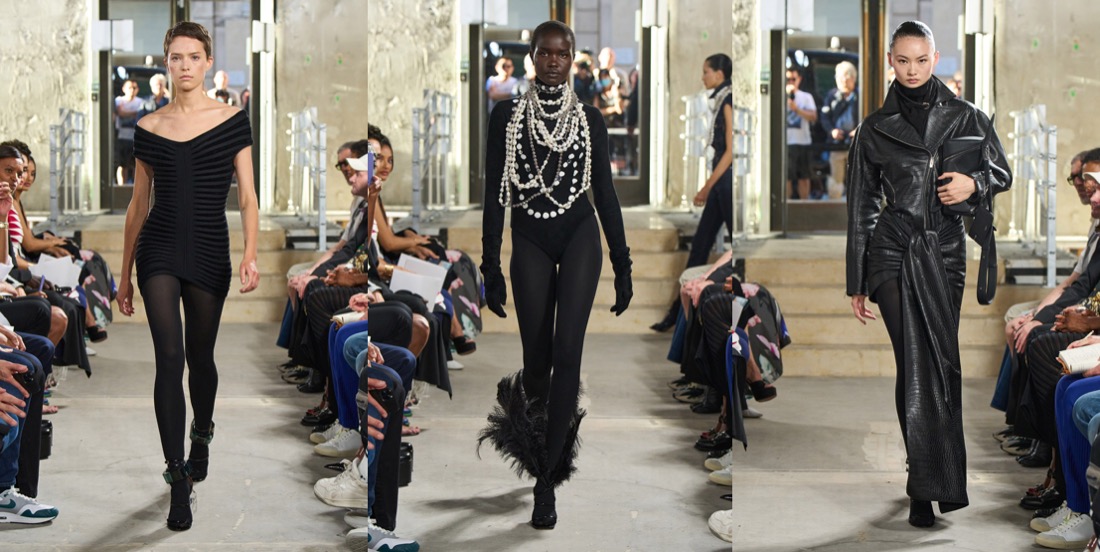
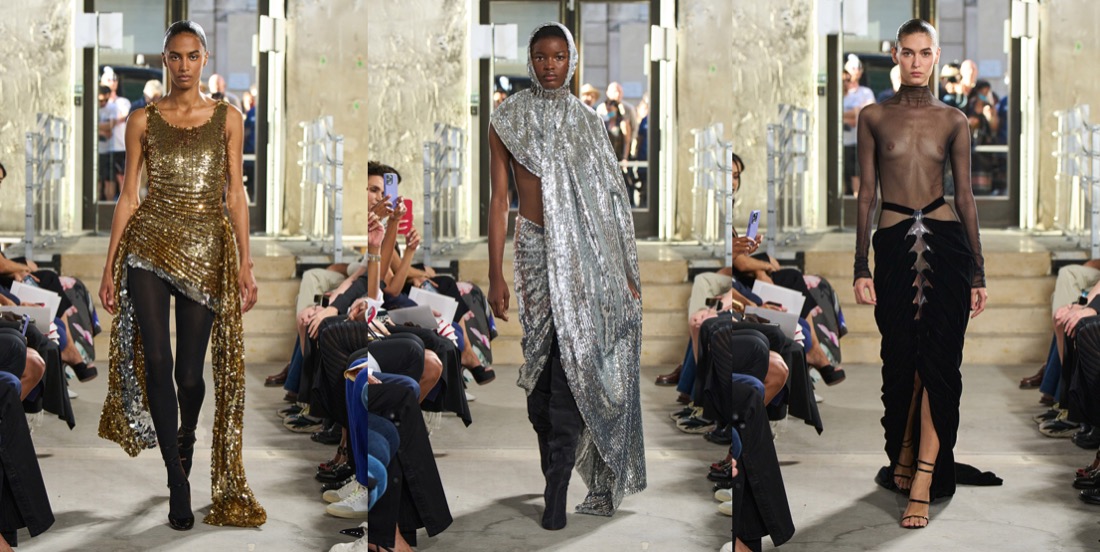
This is Pieter Mulier‘s third season for Alaïa. The Belgian designer has already proved that he understands the codes of Azzedine Alaïa, and is capable to convey them to a contemporary audience with grace, sophistication and refinement. The spring-summer 2023 fashion show, which opened the haute couture week in Paris, was, however, the designer’s most turbulent line-up. It seems that Mulier wanted to tackle far too many Alaïa themes and in the end, the collection read as overcharged and, well, messy. Of course, each garment put separate is a masterful work of artistry and tailoring – we are speaking of Monsieur Alaïa’s studio know-how – but the overall of the collection needed an edit. But let’s start from the beginning.

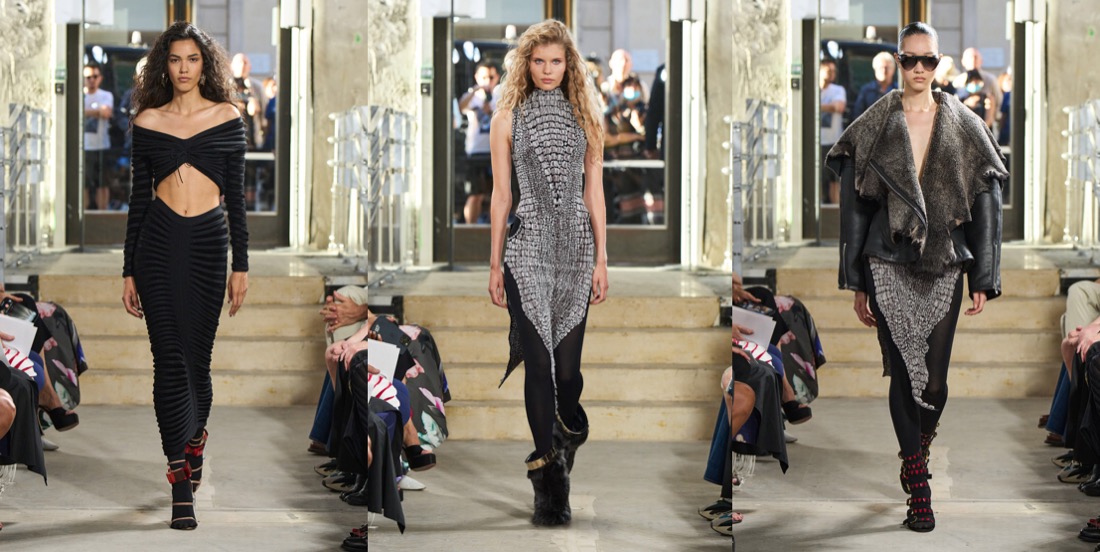
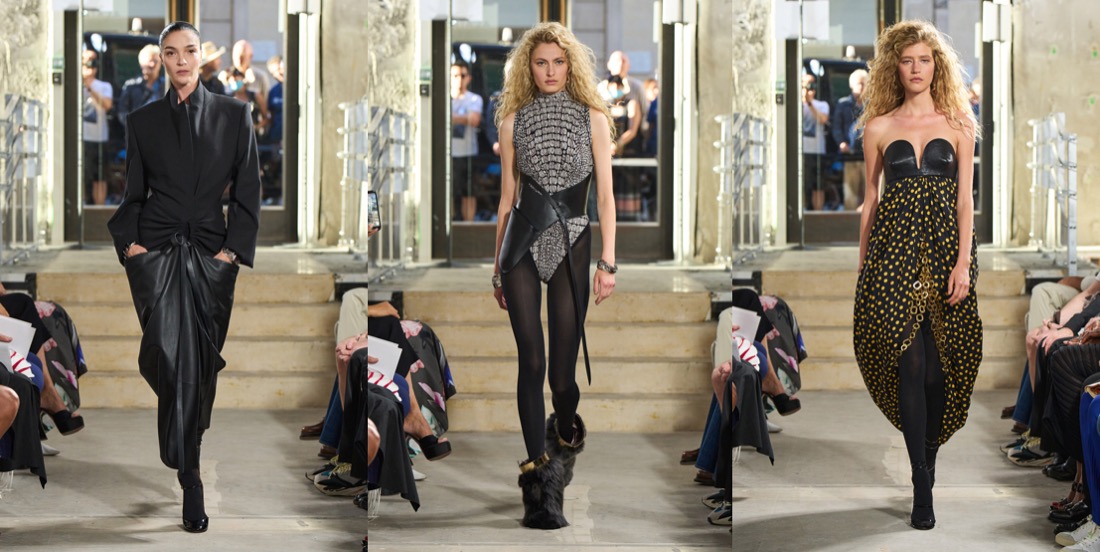
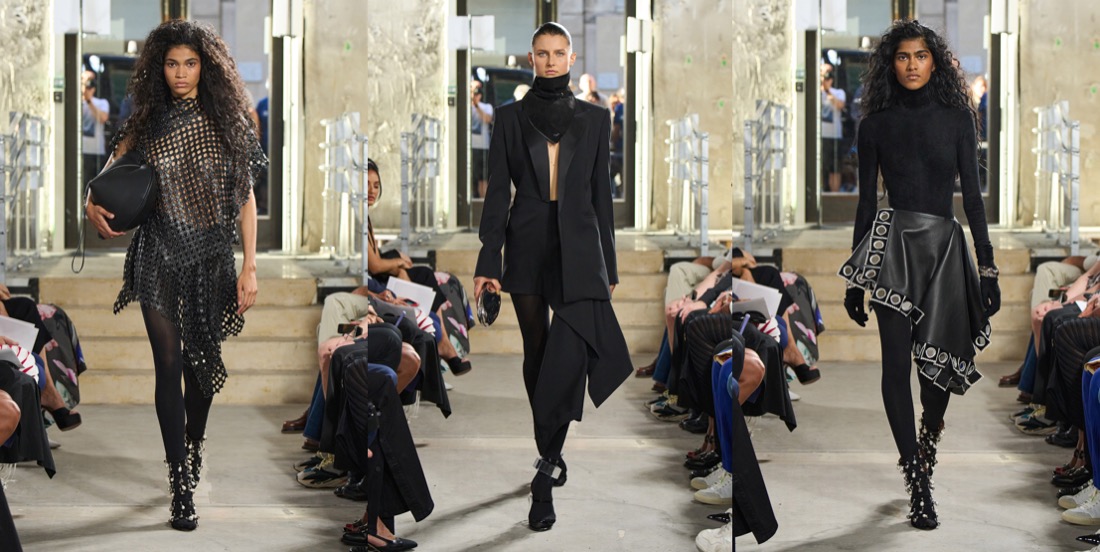
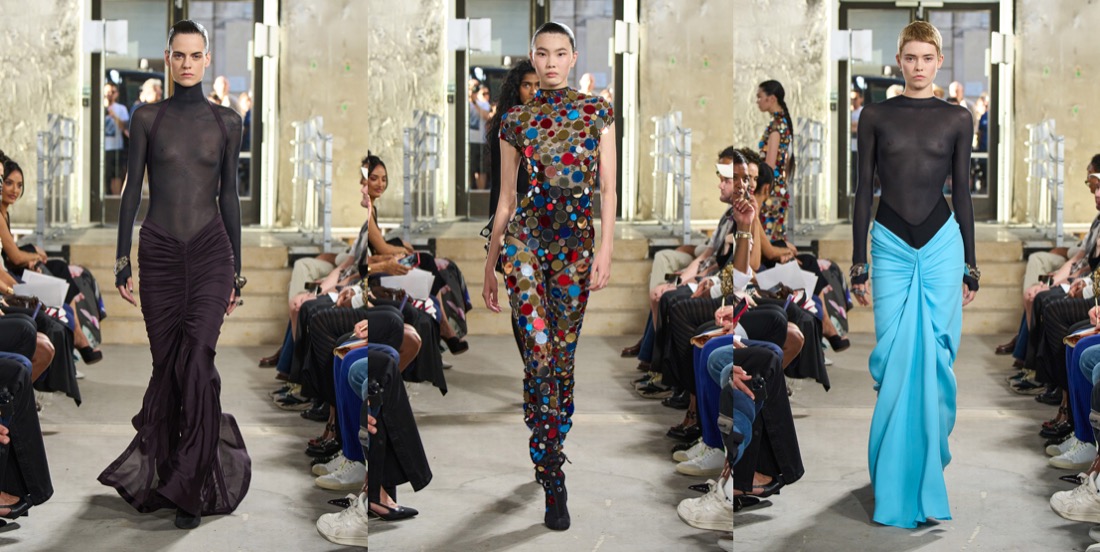
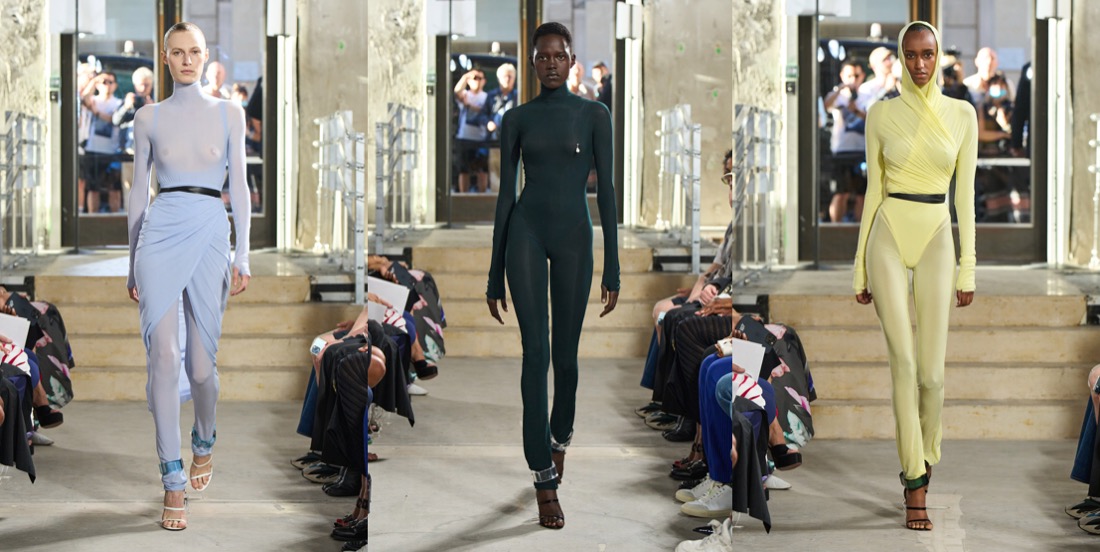
Mulier invited people to the unfinished space that will be the new Alaia store on the Faubourg St. Honoré – an architectural work-in-progress that he saw as the perfect foil for the feeling of his third collection: “something rough and something elegant at the same time.” It crackled with energy; the models collectively channeling a modern vision of the glamazonian power of female physicality that was born in this house in the ’80s. As if to emphasize that it’s dressing the body he’s talking about, Mulier opened with second-skin almost-sheer stretch silk layered bodysuits, the first with a single trompe l’oeil pearl-drop nipple “piercing.” What followed flowed into all kinds of sophisticated twists and turns of draping, wrapping, ruching, and knotting, interspersed with the kind of anatomical knitted body-dresses that are an Alaia wonder. Eyes fell to the footwear: long-haired boots cuffed with huge metallic bangles on cubic lucite heels; black lacquer stiletto heels in the shape of a naked woman’s legs. Mulier has an instinct for the extreme accessory which chimes with today’s hunger for the surreal. The chunky bangles, his own invention, are bound to trigger bounty-hunters, but the suggestive stilettos were reissued Azzedine originals from 1992. Mulier said he’d never had the chance to explore drape in his former jobs (at Christian Dior and Calvin Klein), but if that was ever an ambition, he’s come to the right place. Alaia is staffed with people who have a spectacular and nuanced repertoire of technical skills which enable Mulier to model ideas in 3-D; to make dresses that rely on asymmetry, hip-ruching, suspension, and the North African influences which Alaia used as a source of innovation.

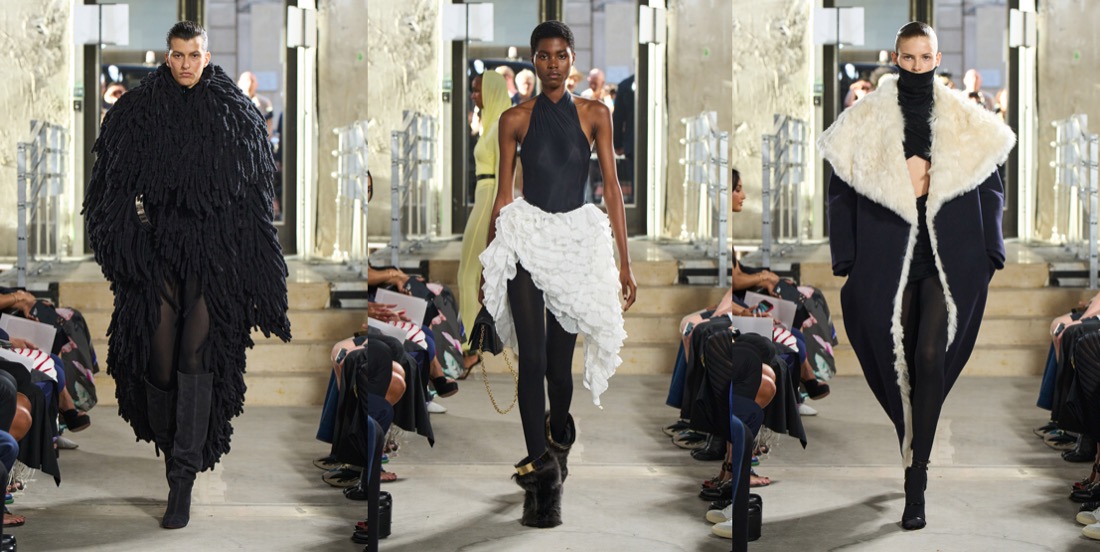
Mulier said he’d been “obsessed with a 1984 show, which not many people know, because Azzedine was basically draping with viscose, and also draping with leather.” In emulating the latter – the leather and shearling – he left edges raw and invented a version of perforated black leather – almost like paillettes – to make a rough-edged t-shirt and tiny skirt that Tina Turner would have worked to the max. The knack of it was to make the complex look almost spontaneous. Again, the craftsmanship amazed, yet the the final result unfortunately felt heavy. There’s a sense that Mulier is learning on the job all the time, and finding the creative balance between respecting the brand’s codes and his own vision of contemporary relevance. It takes time for people to get to know and understand each other in any house where there’s an atelier. The spectacularly erotic finale dress – this one would make Azzedine proud. Somehow, it consisted of a black velvet skirt, suspended from a ribbon-belt, the central drape radiating, by some magic, from a line of vertical geometric transparent paillettes. And on the top, a sheer black long sleeve bodysuit. It looked astonishing enough, walking sinuously towards you, but the real impact of this genius construct was in the back. The draped swoop of the skirt dipped down just a fraction below the line of the bodysuit. Above it was the belt, tied nonchalantly in a bow. As I’ve mentioned earlier: the new Alaïa keeps the extremely high standards of garment-construction. I just wish Mulier would introduce some much-needed lightness to his work, so that these exquisite looks could truly speak, and not fight for space. That’s one of Monsieur Azzedine’s main ethoses: find the right balance.
Collage by Edward Kanarecki.
NET-A-PORTER Limited

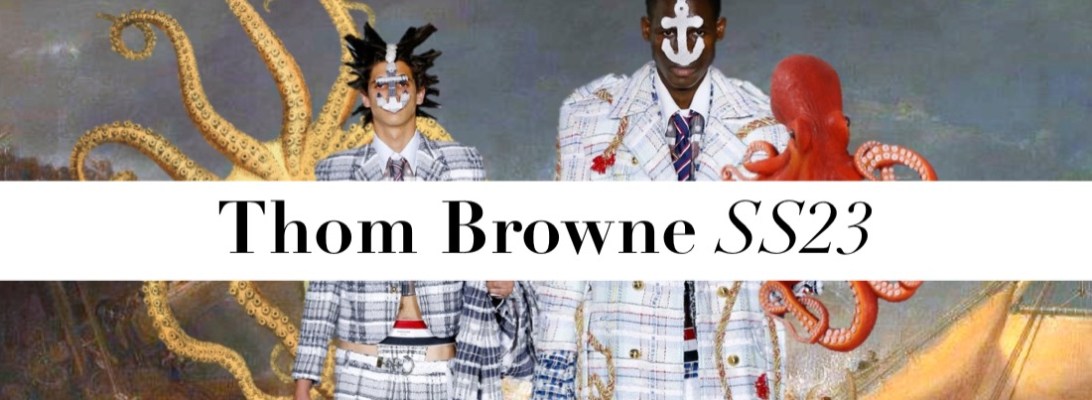
Men’s – Preppy Sailors. Thom Browne SS23

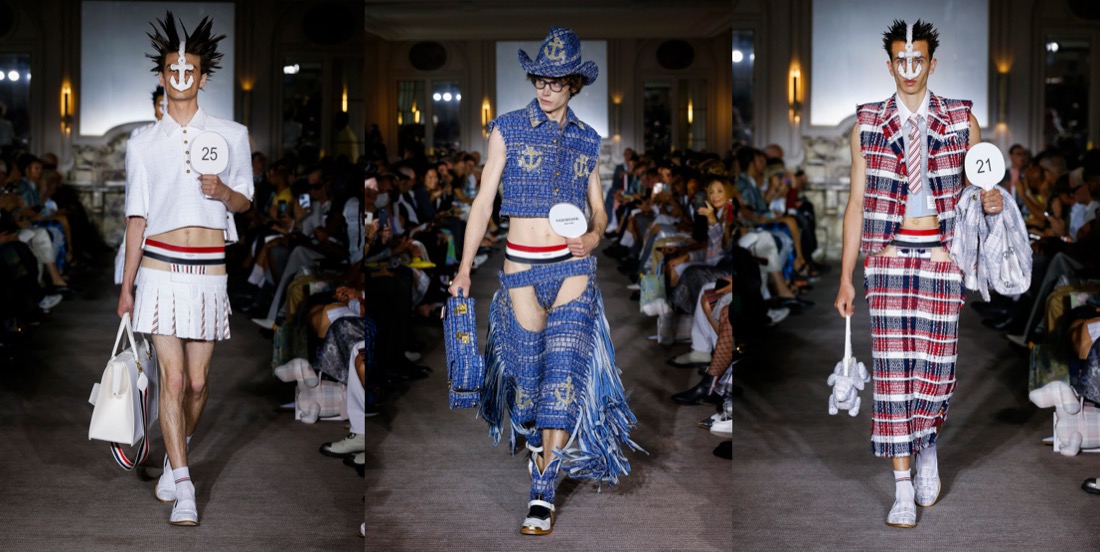
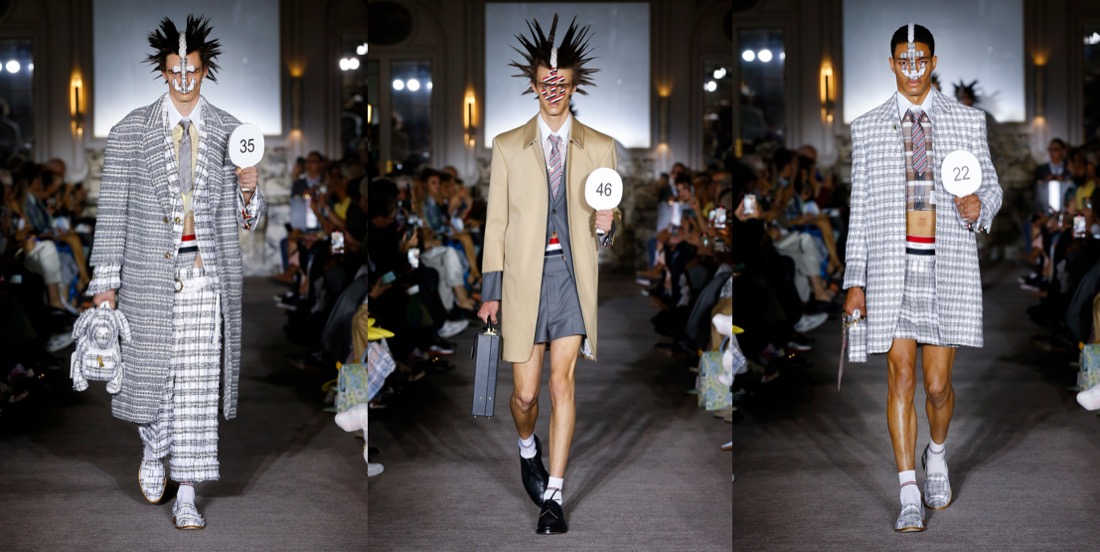
The Thom Browne men’s show started with a chic happening: guests cheered as the likes of Anh Duong, Marisa Berenson and Debra Shaw scrambled to find their seats dressed in the finest TB tweeds. This group of brand muses acted as couture clients in the maison’s mock-up salon, as 34 boys came carrying numbered paddles like the haute couture shows back in the day. Prim and proper suit jackets in delicate fabrics and pastel hues came anchored by barley-there mini skirts (Miu Miu has a serious competition) and jockstraps in red, white and blue. The boys adopted the uniforms of sailors and surfers, as well as tennis players and cowboys, by way of Browne’s signature shrunken and supersized proportions. For spring-summer 2023, the designer headed to the South of France to develop his tweeds, which came perforated with denim, seersucker tulle, leather, lace and multi-coloured ribbon. All of this worked well with the nautical theme seen through a queer lense. The New York-based designer has long been a byword for gender non-conformity, he shrinks and swells masculine and feminine dress, collaging the two to craft an out-there wardrobe that still feels sophisticated and grounded to the idea of strict uniform.

Collage by Edward Kanarecki.

NET-A-PORTER Limited

Graduation. Kenzo SS23

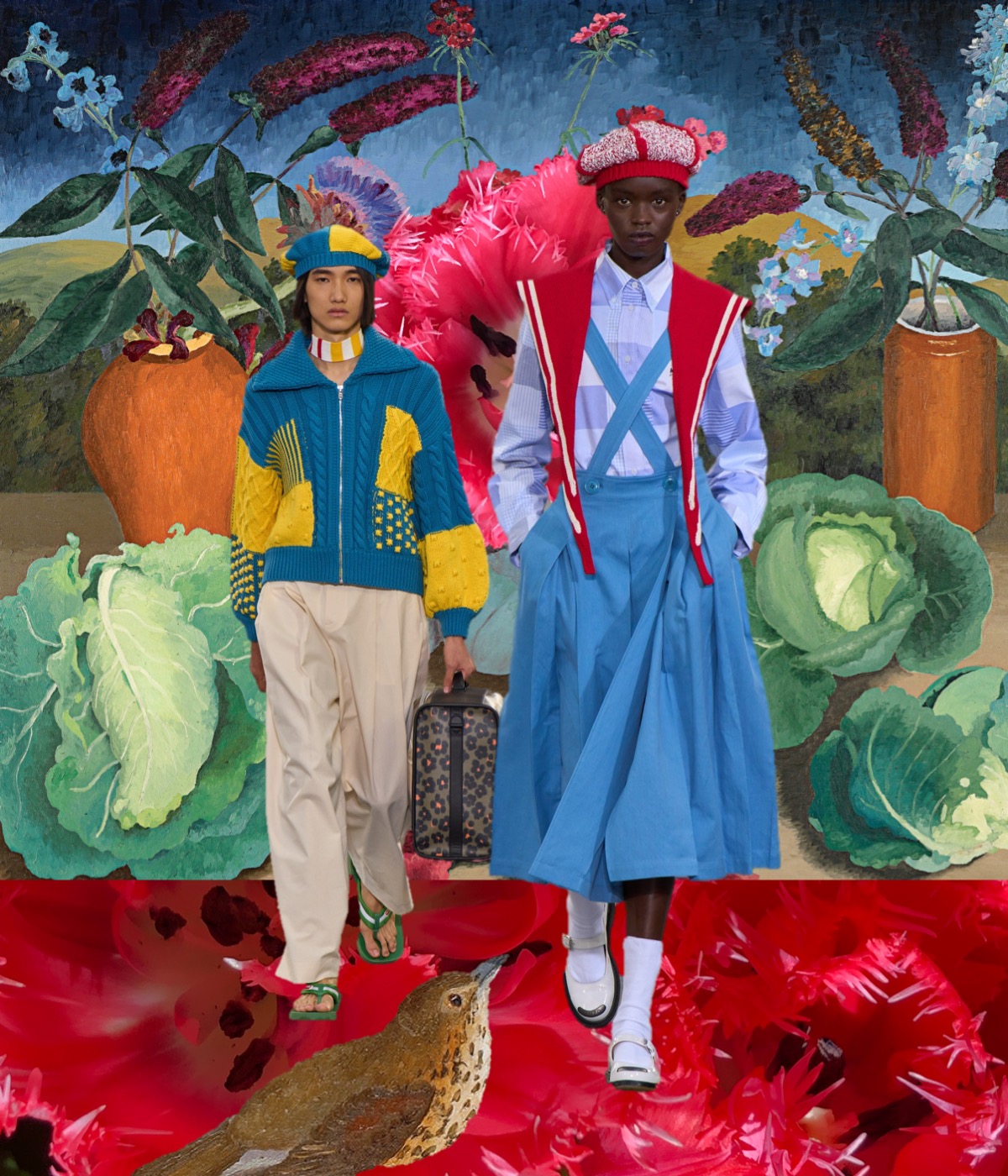
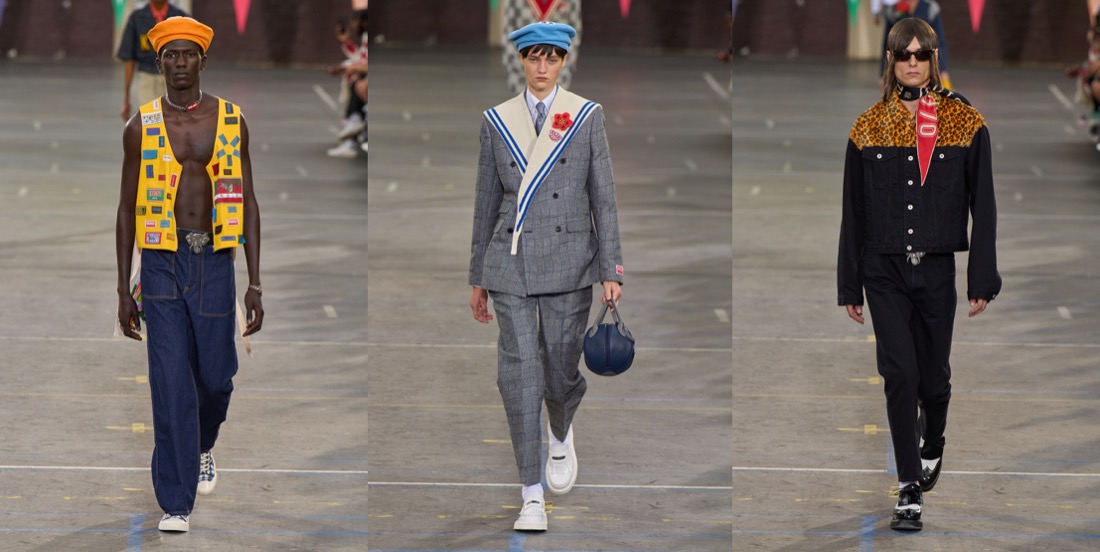
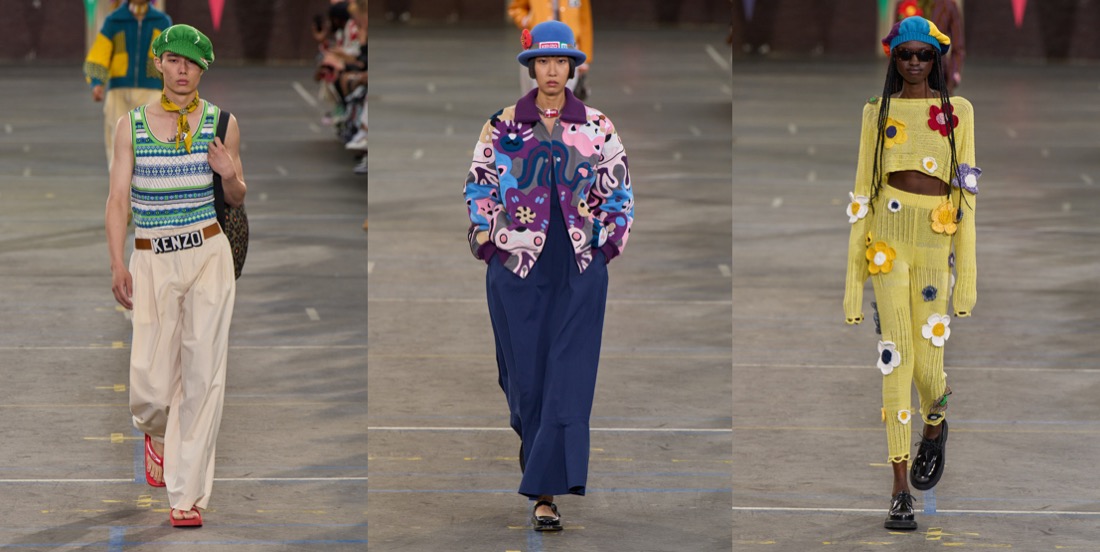
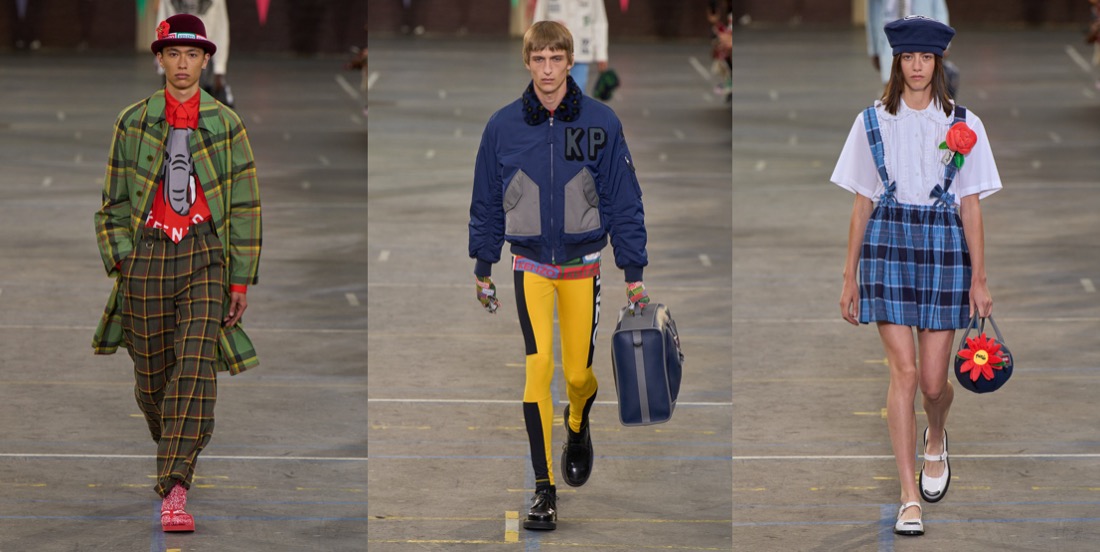
This sophomore collection by Nigo for Kenzo marked a double graduation. The first was that Nigo is increasingly finding the levels and detail of denim (now all sourced from Japan) and workwear production here much more aligned with his expectations as a connoisseur, thanks to evolution within Kenzo. Secondly, a graduation is what this show was staged to remind us of. Nigo said he’d used the concept of a passing out ceremony – inspired by a 1980s show by Kenzo Takada based on a sports day – in order to present an otherwise diverse group of dressed characters under the same banner: this was Kenzo’s class of ’23. Nigo is still understandably steeping himself in the archive of the house’s founder. Waistcoats came patched with an array of long-defunct labels that were reproductions of original Takada-era graphic designs. Similarly the patched naif animalia pieces were based on an archive design. And the womenswear especially – with the notable exception of a wabash and hickory striped denim liner dress in look 19, and look 16’s fabulous unwashed swing skirt – seemed deeply rooted in Takada’s oeuvre. Although this was a continuation of last season’s collection, a new interjection was the armada of naval inspired pieces. As well as literal-ish sailor wear, the maritime scarf was ingeniously integrated into the house’s revived tailoring as jacket lapels. The maritime aesthetic is deeply embedded in contemporary Japanese dress – just look at the school uniforms – but it also served as an interesting point of connection in a collection that was produced by a French house, conceived by a Japanese designer, and which took fundamental points of inspiration from Americana: conceptually, these were much-traveled clothes. This was a collection with pan-generational appeal that spanned continents and cultures: word is that the sales are already reflecting the new wind Nigo has brought to Kenzo.

Collage by Edward Kanarecki.
NET-A-PORTER Limited

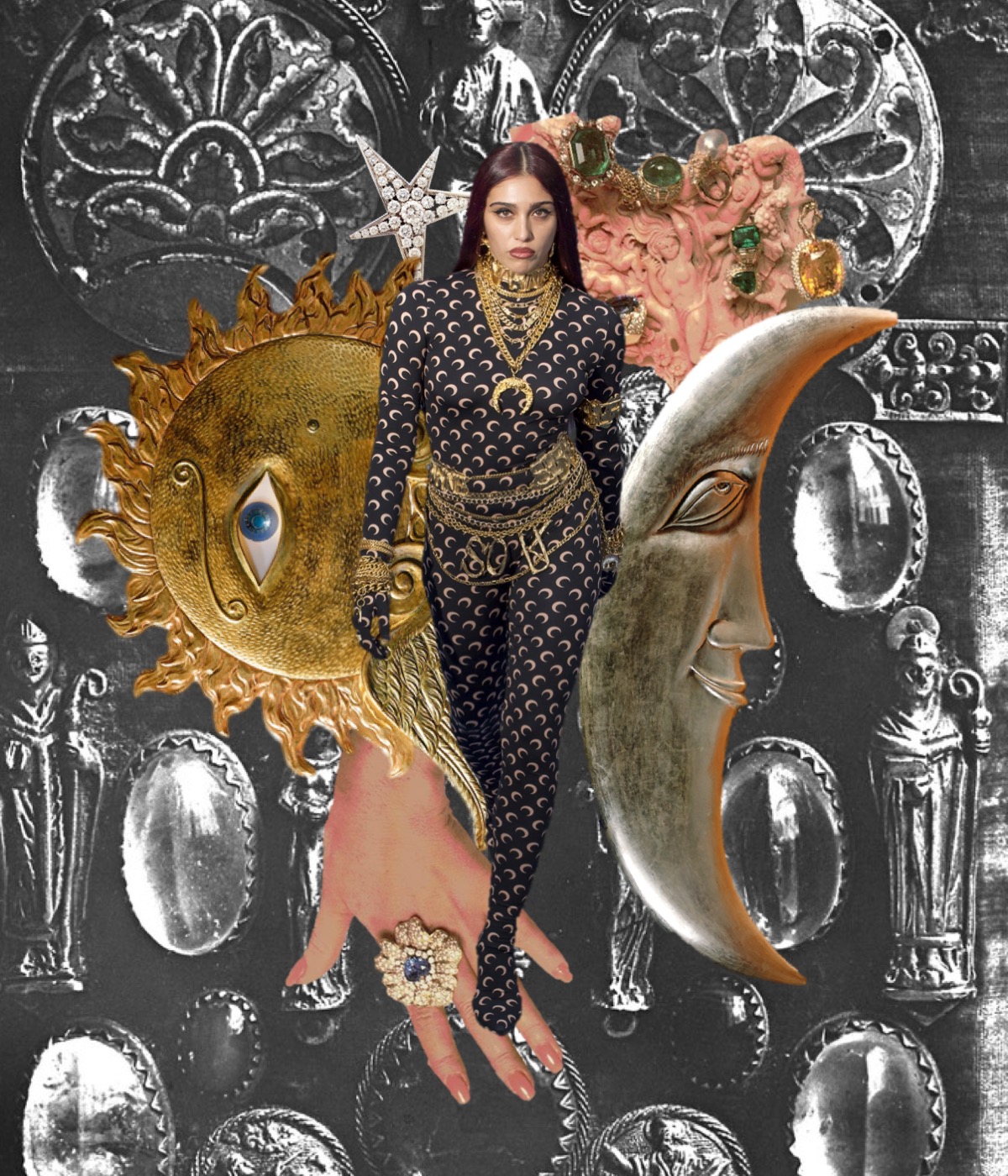
State Of Soul. Marine Serre SS23

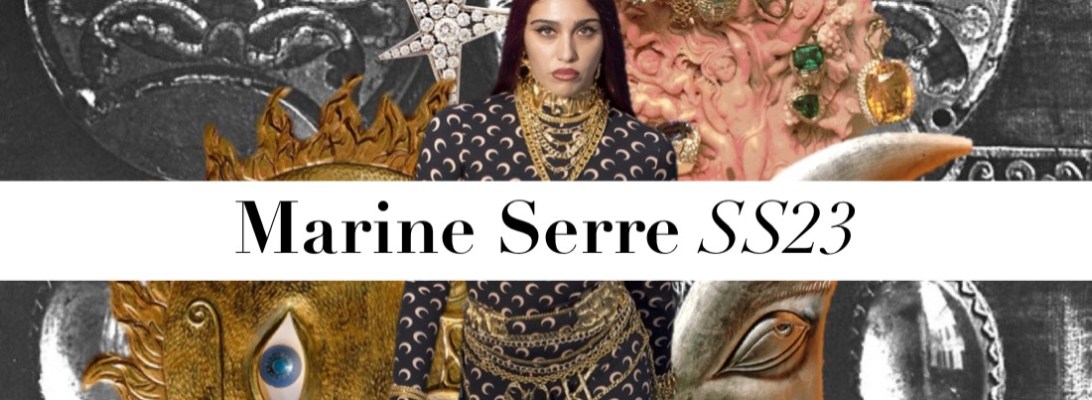
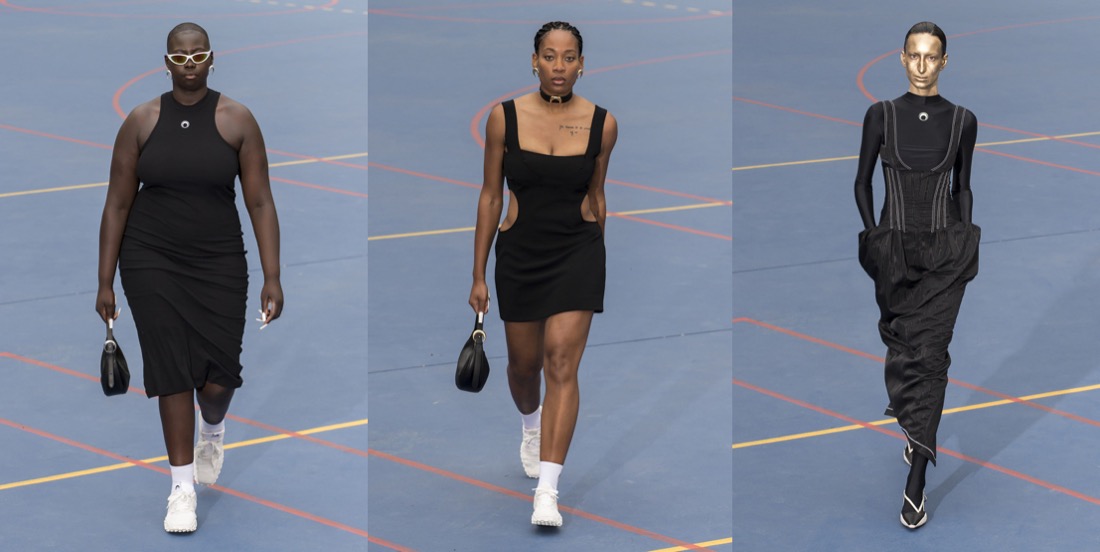
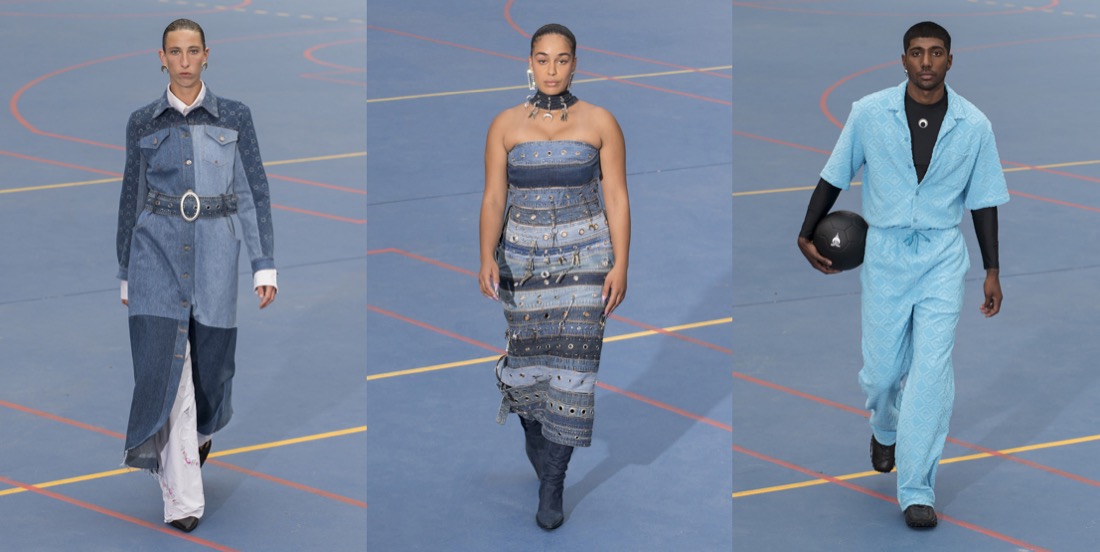
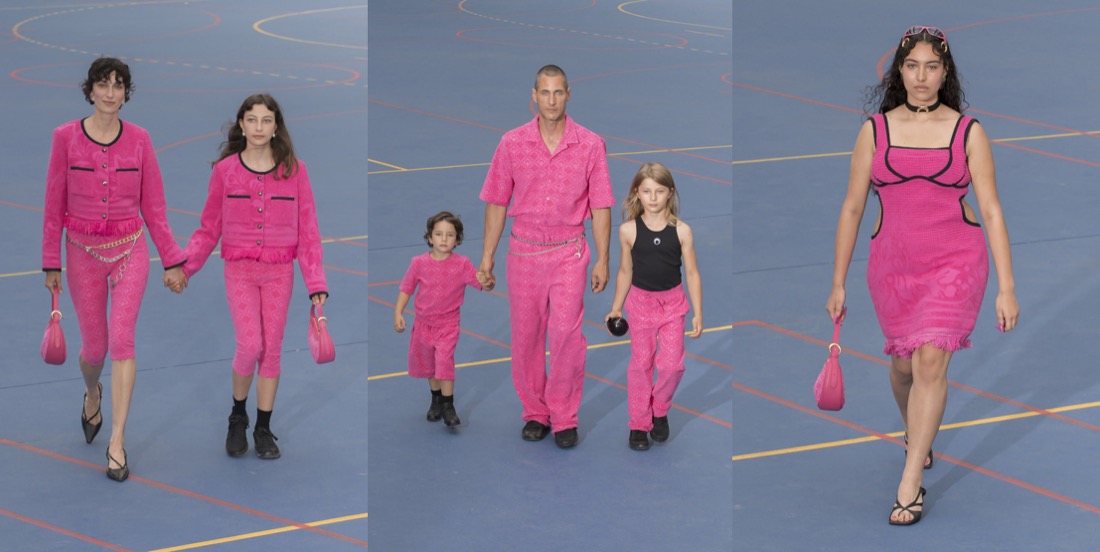
It’s about being present. Putting down your phone. Being with your friends and people you love. Seeing the sun go down and feeling the wind and having a party. Not just a 10-minute show. With all these people coming, I just wanted to give them a good time and to feel like a community – and honestly I think that was really here. So this is what State of Soul means.” This is how Marine Serre explained her show title and concept shortly after that show had ended. The sun was indeed setting, and hundreds of guests, almost a thousand in fact, who had scored public tickets for the show were streaming into a party area where dancing would continue long into the night. When fashion designers elect to hold late night shows on the edge of Paris it is often borne of a wearisome creative insecurity – they wish to make the audience suffer for their art in order to feel reassured they have clout. This was entirely different. Serre was trying to reshape the fashion show in sync with the values transmitted by her brand; inclusive, ethical, positive, human. The show acted as opening ceremony for this gathering of the Serre community, upcycling the concept from sporting jamborees like the Olympics. The models, both professional and amateur, included athletes, families, friends, and a smattering of celebrities including Jorja Smith and Lourdes Leon. The idea of this being in theory a menswear event seemed laughably irrelevant, merely the result of Serre’s canny decision to choose the balmiest fashion week of Paris’s calendar to try this experiment in. The models walked the 400 meter circuit around us in groups that reflected the phases of the collection. The swimwear, made from recycled fibers, had been on offer for a while, the designer said, but never before in a show. Patched denim looks featuring Serre’s crescent moon mark segued into a section of bodycon pieces crafted from shaved pink terry, which on a mother and daughter were worn against two Chanel-esque jackets. This made you wonder whether Serre had even knocked on the door of Paris’s couture fashion week, given the huge amount of handicraft here. That was perhaps most exemplified by the piped dresses made of upcycled towels in green and pink. The fit was so excellent that I wondered if the fabrics had been treated in some way to add stiffness. These were followed by patched dresses made from upcycled T-shirts and a series of witchily alluring silk looks, some featuring prints of the upcycled jewelry pieces that were also part of the collection. Shoes included Serre’s own sneakers and molded sole pumps. “I always try to break the boundary of what the system is wanting you to do. It was the same with the upcycling. Everyone was telling me it was not going to work. I said ‘OK, but let’s try.’ The thing is, if no-one is trying to change the rules then they will never change… In the industry we tend to forget that.

Collage by Edward Kanarecki.

NET-A-PORTER Limited

Weapon-Wear. Mowalola SS23

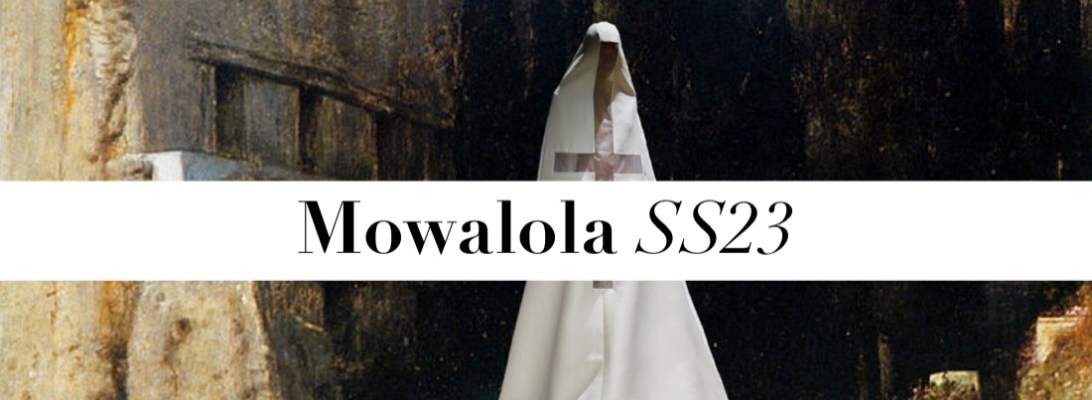
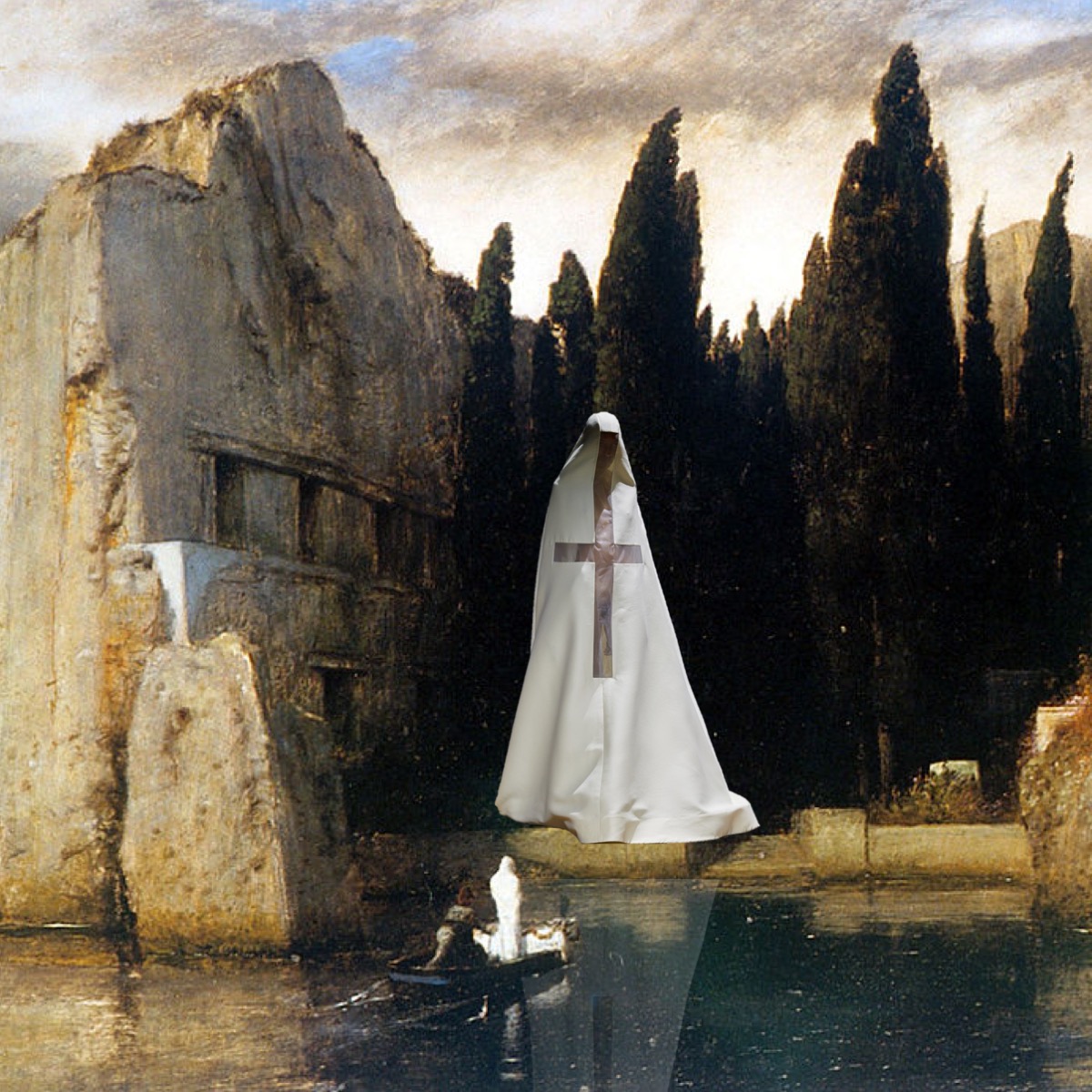
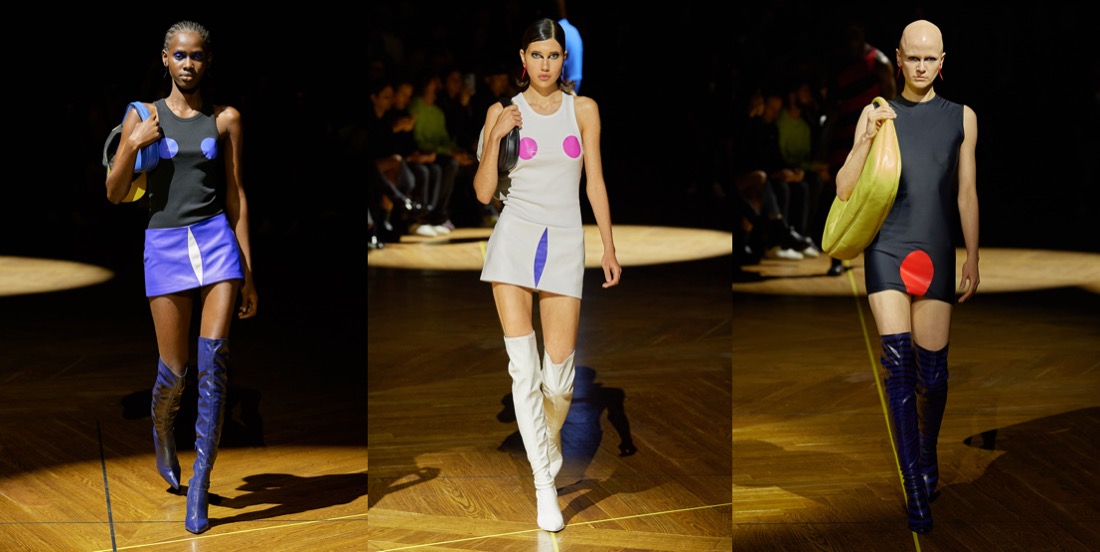
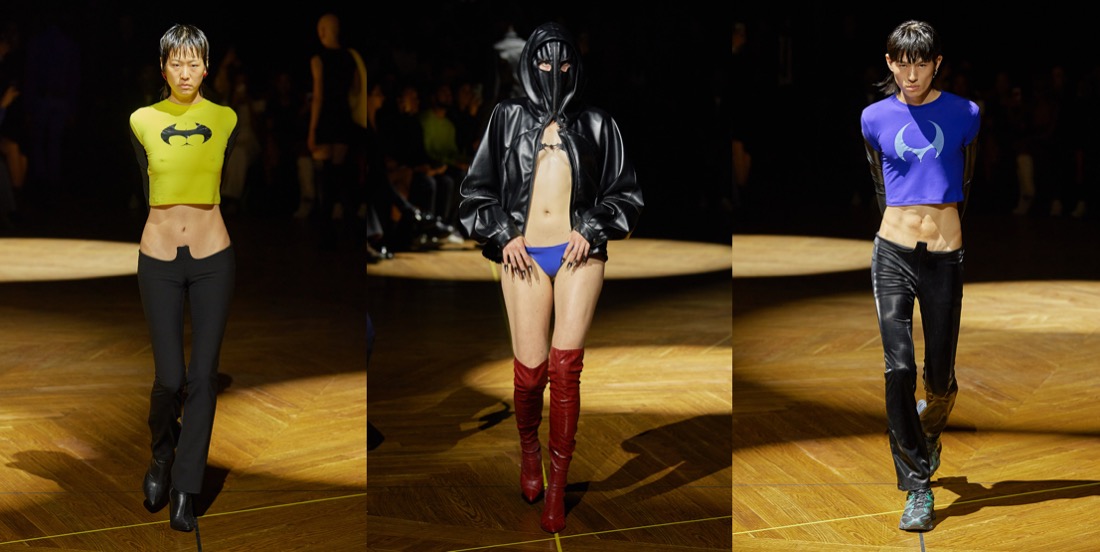
When Mowalola Ogunlesi appeared for her bow after a three-year runway hiatus, the room roared. Ogunlesi has a strong community of fashion lovers who love her – even outside her physical show space, her legions of online fans offered an outpouring of support. That passion bleeds into Ogunlesi’s clothing and her first solo show after participating in Fashion East for several seasons. “Before, I would cut myself off from expressing in certain ways because I thought I shouldn’t do that,” she said before her Paris debut. But the designer learned that “whatever feeds me, I should just do it.” What was feeding Ogunlesi this season was thievery and evolving her aesthetic beyond the trenches, tees, and accessories she is known for. She titled her collection “Burglarwear,” inspired by all types of criminals, from kidnappers to stockbrokers to the priesthood. There were literal renderings of these themes – the show opened with a yellow leather cross harness, closed with a beautiful sheer cross-embellished veil worn over a nude body, and Wall Street suits were cropped to Mowalola proportions in between – but her most interesting propositions were her distortions to the human body. Sexiness has been a staple of the Mowalola look since the inception of her brand – backstage before the show she expressed frustration about gendered views of sex appeal, “that’s why I have women showing nipples and men showing nipples,” a pregnant model in a beaded dress and a male model in some of the lowest rise pants seen this season. But rather than just show off the body, she reshaped it. Inspired by the way kidnappers would zip tie wrists – “the same position if you are wearing handcuffs,” she said – she created garments that held arms clasped out in front. The best was a white dress that pointed the model’s elbows up to the heavens. “I like the idea of weaponizing clothes, weaponizing shoes, weaponizing shoulders, weaponizing elbows,” she said with a smile, “Even my bag… sometimes I have to use my bag as a weapon.” Living as freely and expressing as purely as Ogunlesi does, sometimes require fighting for a space in fashion. She’s definitely up to the task.

Collage by Edward Kanarecki.

NET-A-PORTER Limited