Imperfectly Perfect. Soshiotsuki SS27

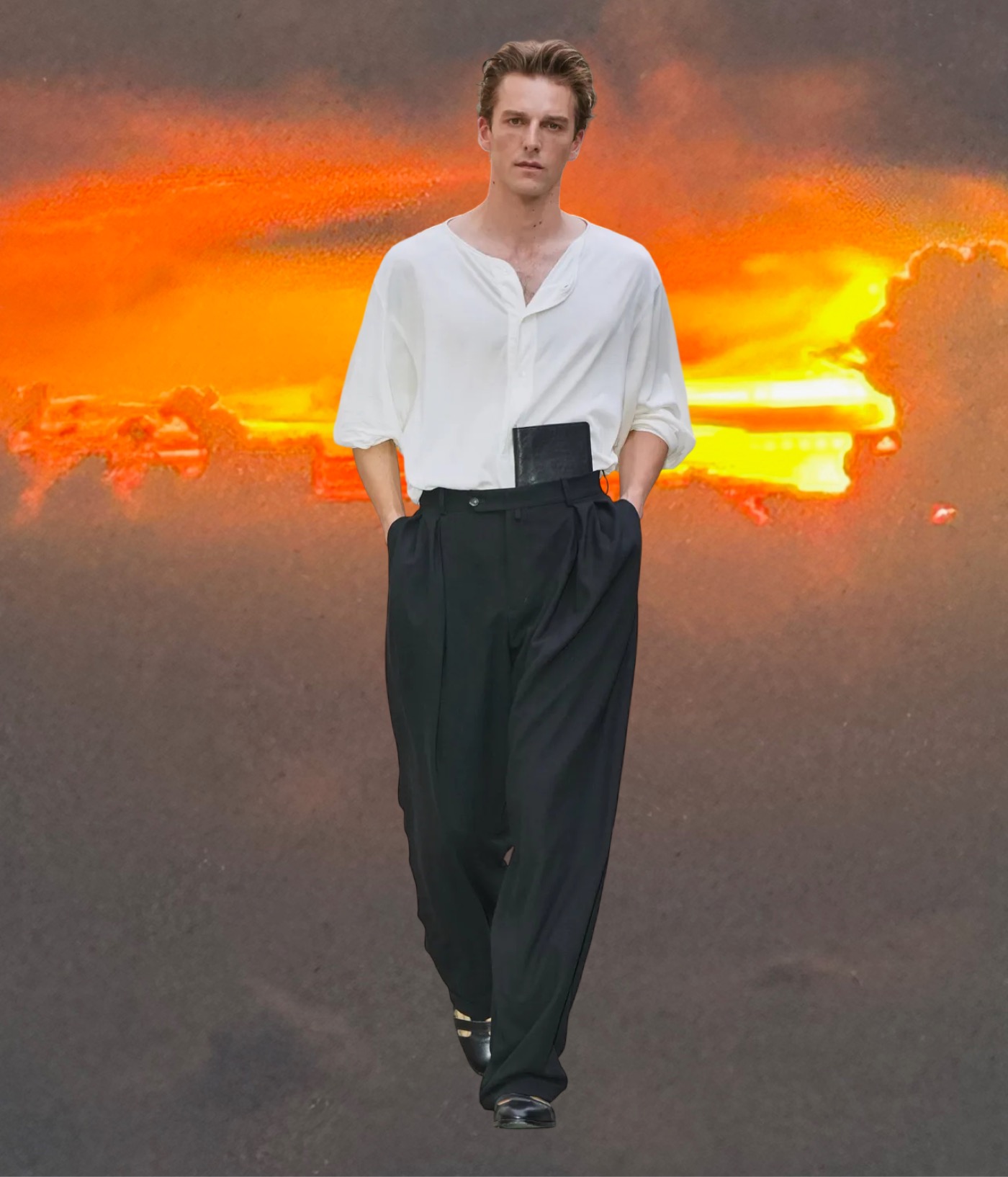
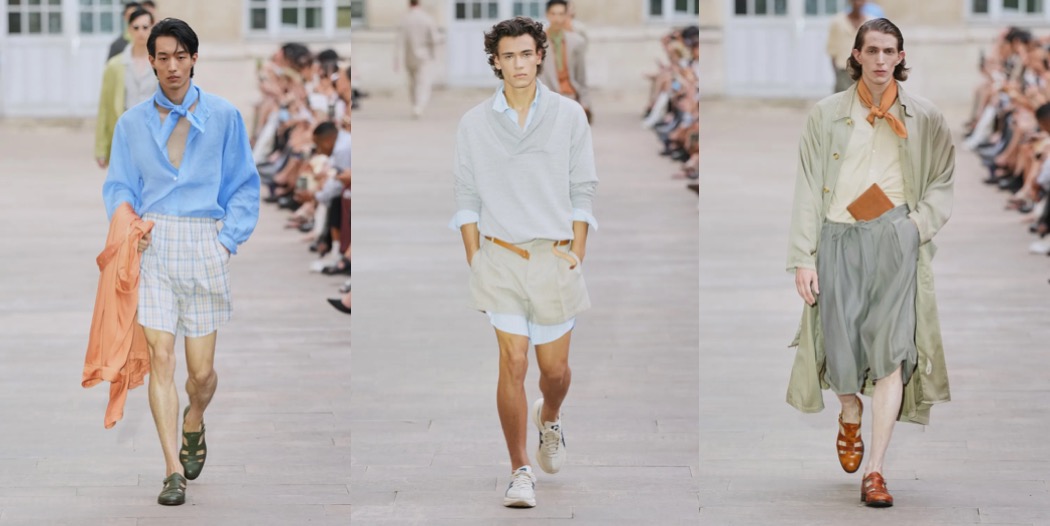
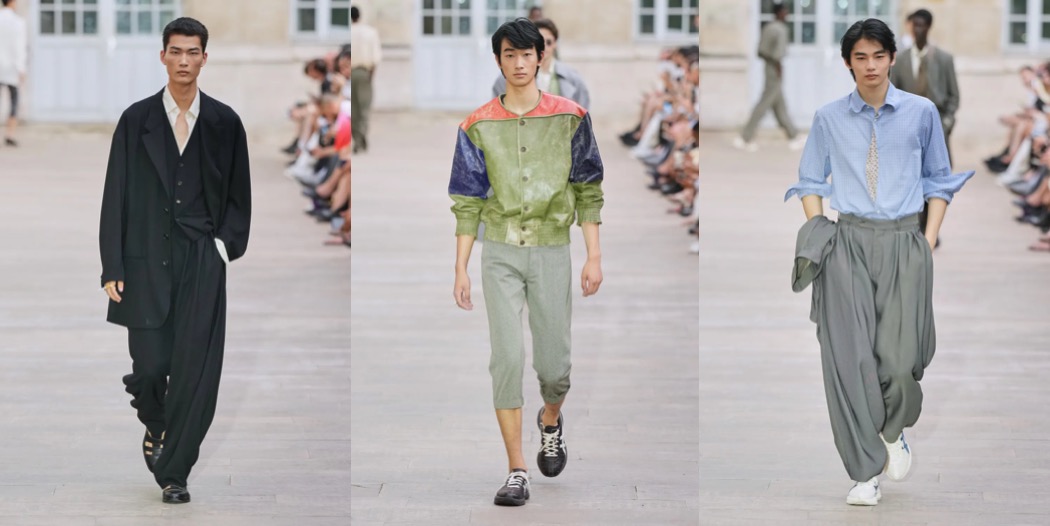
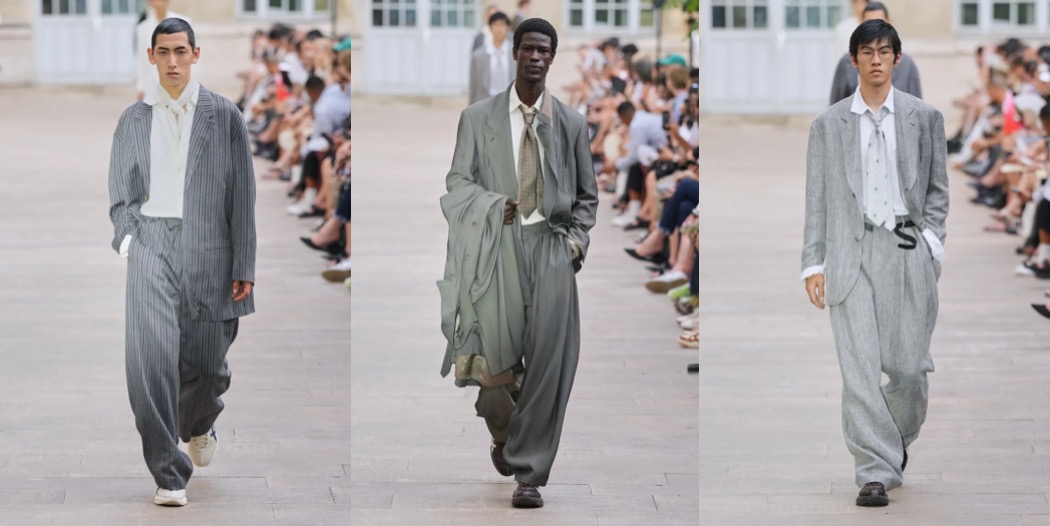
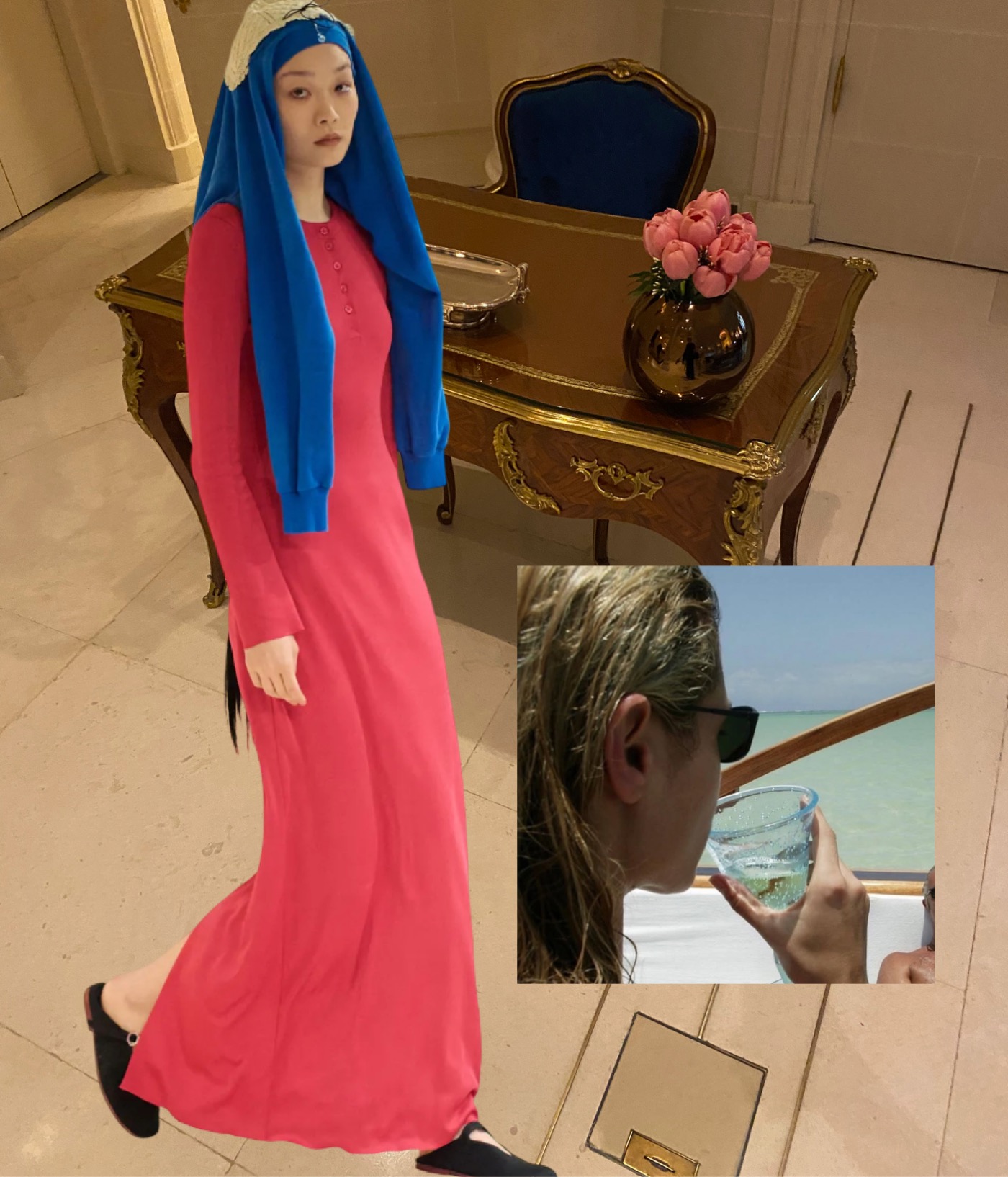
Soshiotsuki‘s spring-summer 2027 collection is remarkably beautiful. It also proves that Soshi Otsuki‘s repertoire extends far beyond his now-signature Japan Bubble Era-inspired tailoring. As the designer put it, “When I was young I never had a chance to go abroad and travel in European style. The collection is like a nostalgia for a memory I don’t have.” That imagined nostalgia – of a strict, office-bound father escaping to a resort somewhere in Italy – gave rise to what Otsuki described as “an intentionally undone mood.”

That sense of effortless imperfection is achieved through incredibly precise – and witty – construction. Checked shirts come with trompe l’œil patterned ties. Hidden jetted pockets tucked beneath jacket lapels let you carry your phone without disturbing the silhouette. Apparently crumpled, unpressed lapels and shirt collars are, in fact, held in place by discreet metallic fixtures. Nothing is accidental. It’s just pure genius.

Reportedly, it’s Dario Vitale who’s heading to Emporio Armani, and I love that rumored appointment. But now I’d really like to see Soshi Otsuki interact with the Giorgio Armani line, because he seems absolutely made for that job.

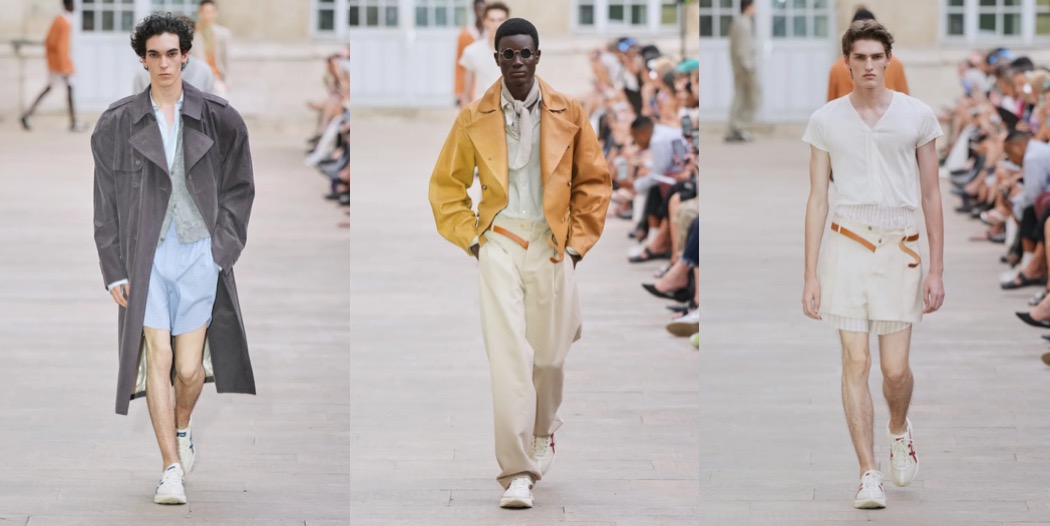
Collage by Edward Kanarecki.
Don’t forget to follow Design & Culture by Ed on Instagram.

Hey, did you know about my newsletter – Ed’s Dispatch? Click here to subscribe.

Party Flaneur. Dior SS27

There’s a sense of undone-ness to Jonathan Anderson’s menswear method for Dior that I really like, even if it occasionally makes his vision for the house seem a little erratic. The image of an aristocratic kid in a pyjama suit and torn denim, stumbling back to his inherited château after a long, very fun night, ripping the wire out of a speaker and plugging his phone into it (very Rianne Van Rompaey opening the Louis Vuitton show in Palm Springs… a niche reference, I know) just to keep the party going, is strangely appealing. READ MY FULL REVIEW HERE.

Collage by Edward Kanarecki.
Don’t forget to follow Design & Culture by Ed on Instagram.

Hey, did you know about my newsletter – Ed’s Dispatch? Click here to subscribe.

Artifice. Saint Laurent SS27

Anthony Vaccarello’s Saint Laurent menswear collection seemed to have it all: a perfectly orchestrated front row amid a Paris heatwave, a new kinky shoe with an elongated toe and transparent construction, and a Fujiko Nakaya water-vapor installation as the show’s backdrop. Yet the clothes themselves felt inflated – not with substance, but with artifice.

It increasingly feels as though Vaccarello is repeating the same tropes: exaggerated shoulders on virtually everything, nylon-like windbreakers paired with tailored trousers, and trench coats rendered stuffy for no discernible reason. The flashes of eroticism are there, certainly, but they can’t speak for themselves; they get choked – though not in a sexy way – by relentless overediting.

I remember reading a few years ago that Vaccarello fantasized about doing an all-gold collection but couldn’t find a way to make it look chic. Well, he still hasn’t. The three final looks in slightly antiqued gold fabric failed to make much of an impact. Perhaps too much gold is inevitably tacky after all.

Collage by Edward Kanarecki.
Don’t forget to follow Design & Culture by Ed on Instagram.

Hey, did you know about my newsletter – Ed’s Dispatch? Click here to subscribe.

The Kids Are All Right. Abra AW26

For Abraham Ortuño Perez, the kids are all right. While designing his autumn-winter 2026 Abra collection, the Spanish designer – who has spent years building his reputation with some of the most imaginative footwear for leading brands – found himself thinking about his niece and nephew rummaging through their parents’ closet, piling on whatever they could get their hands on. He recalls his own childhood with similar fondness: he and his sister played with roles, she the tomboy and he the girly one. “At some point, we kind of blended together.”

That spirit of childlike naïveté – so beautiful, and so fleeting – runs through Perez’s latest ready-to-wear collection. Sack dresses are slashed and patchworked from contrasting materials, while blazers and jackets hang several sizes too big. The playful energy continues in confetti-like dresses, and long gilets crafted from vintage rabbit-fur belts feel like something discovered in an attic treasure chest – exactly the kind of find that would spark a child’s imagination.

We need fun, and Abra is where seriousness goes to die.

Collages by Edward Kanarecki, featuring backstage photos by Jamie-maree Shipton.
Don’t forget to follow Design & Culture by Ed on Instagram.

Hey, did you know about my newsletter – Ed’s Dispatch? Click here to subscribe.

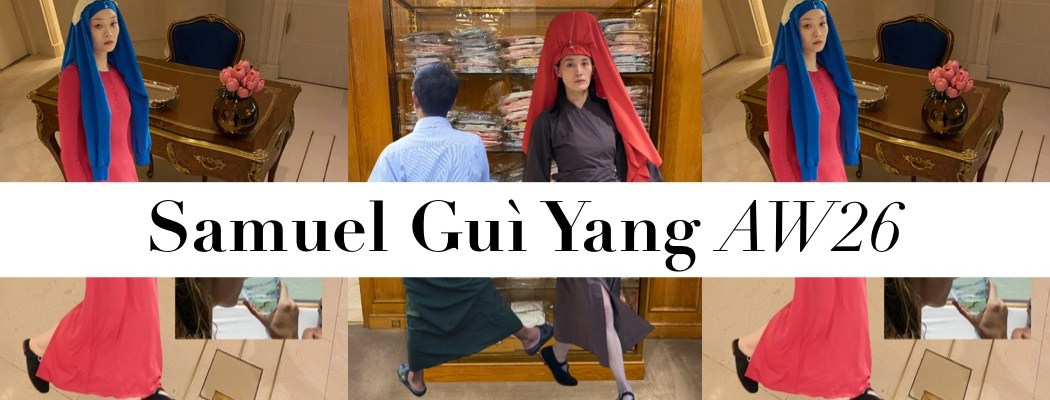
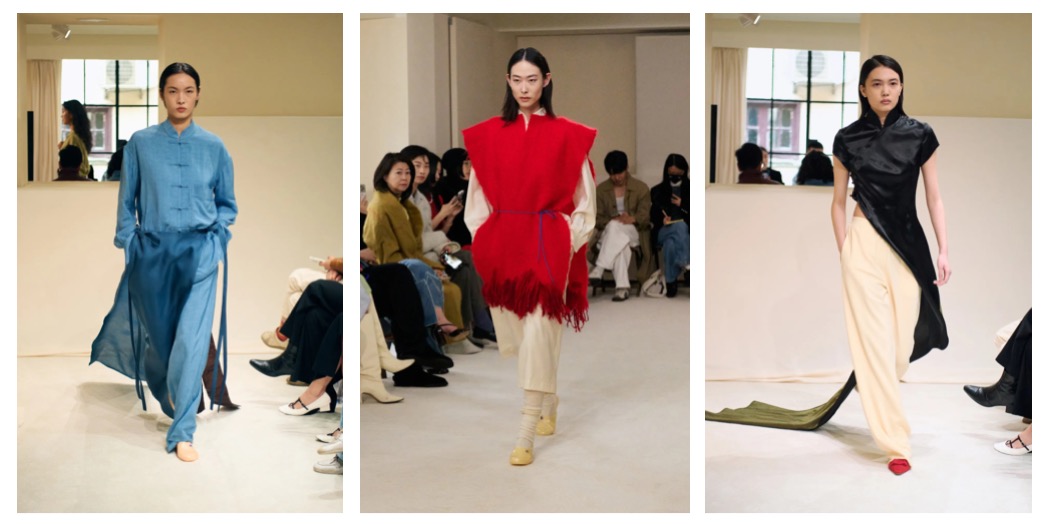
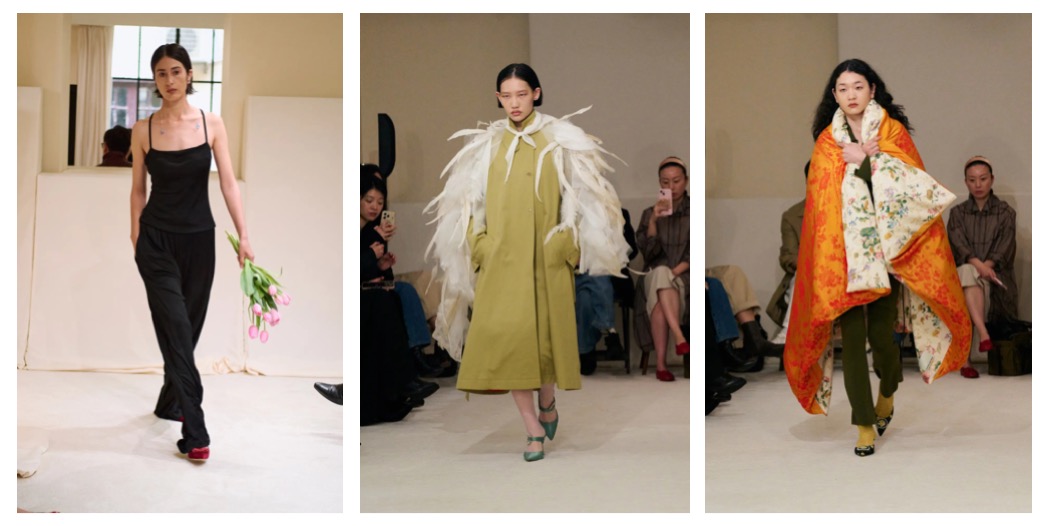
The Beauty Of Fluidity. Samuel Guì Yang AW26

Shanghai Fashion Week is an increasingly important player on the global stage, and the clearest proof of this is the guest show by Maison Margiela. Yet the true highlight of the week is Samuel Guì Yang, a brand I have followed for quite some time and one that has become a genuine magnet drawing audiences to Shanghai. Among all the labels presenting their work, the collaboration between Samuel Guì Yang and Erik Litzen feels the most authentic – and, crucially, not derivative of their Parisian or Lodnon counterparts. The label possesses a distinct aesthetic that cannot be found elsewhere.

As the designers themselves explain, what is often referred to as “Chinese style” encompasses an expansive and complex world: it resists simplification, as it draws equally from history and contemporary life – from the rhythms of the street to color, humor, and everyday experience. This multiplicity informs their refusal to confine themselves to a singular cultural framework; instead, they embrace lighthearted fluidity.

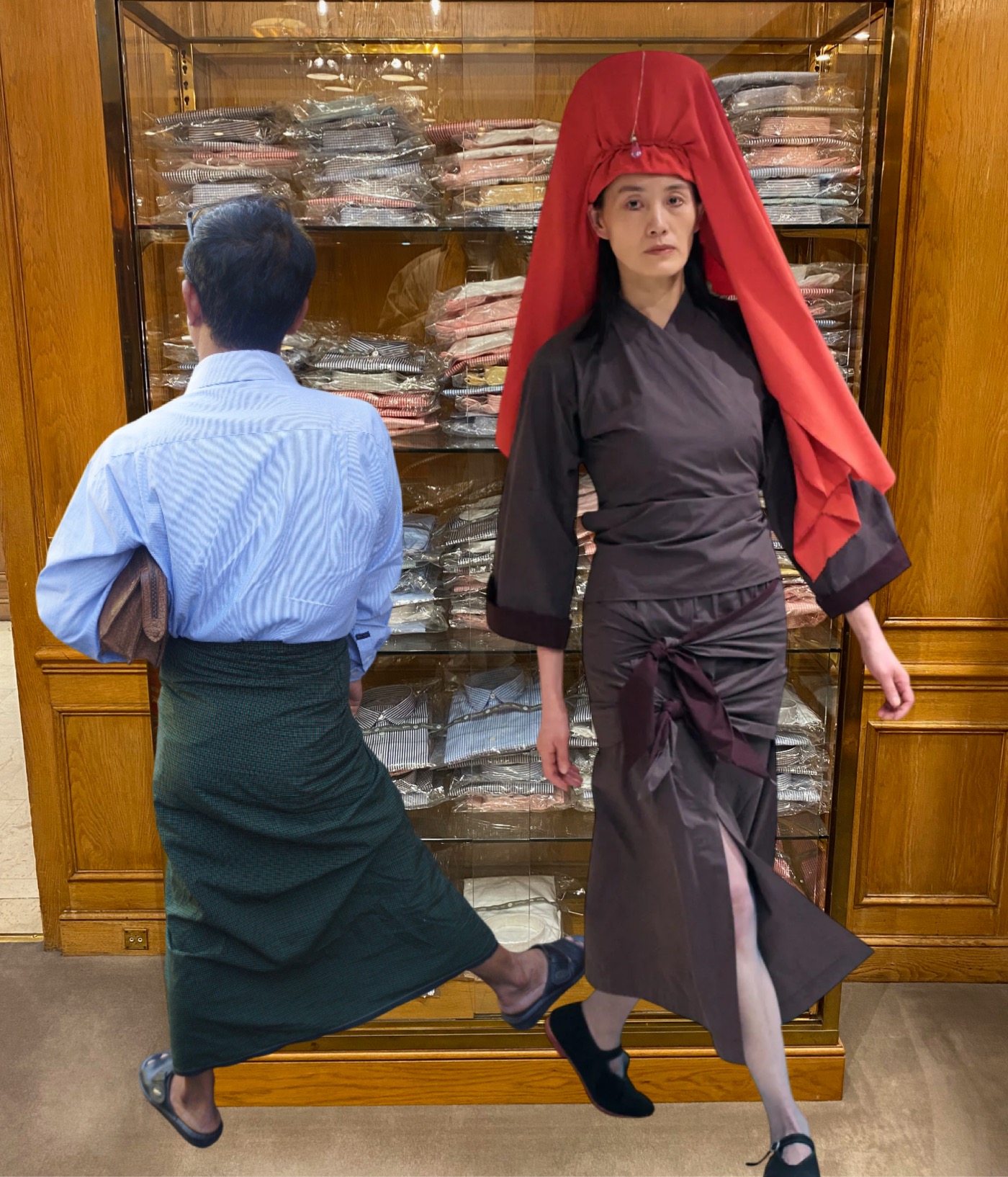
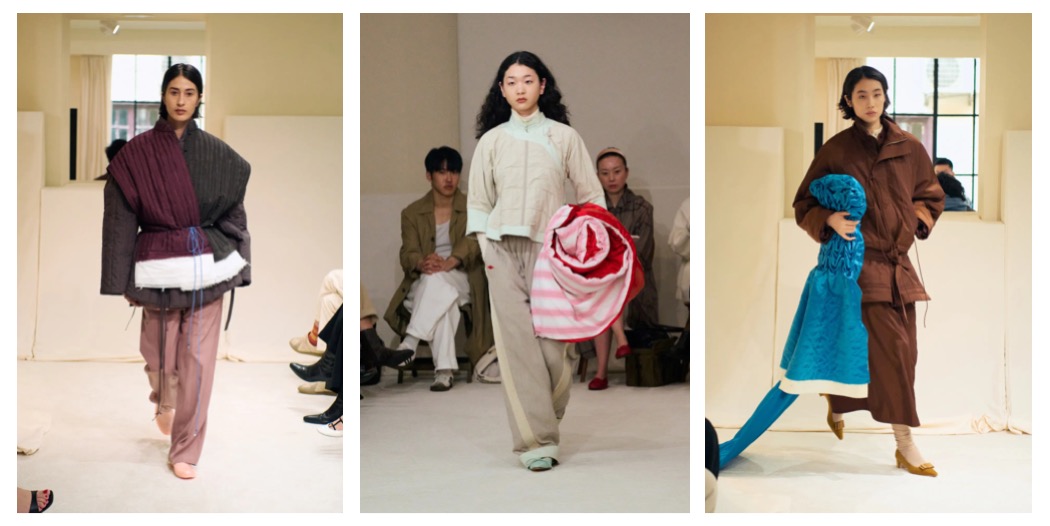
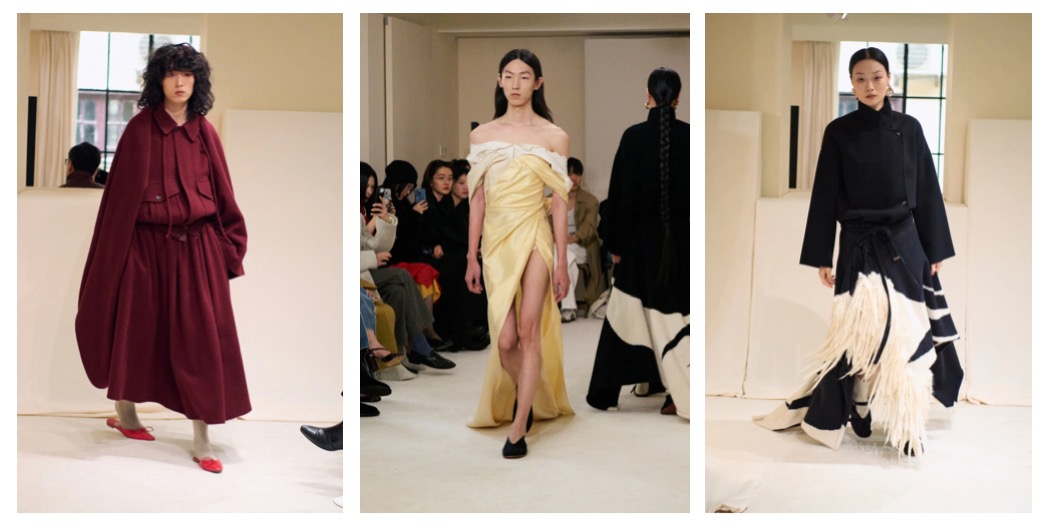
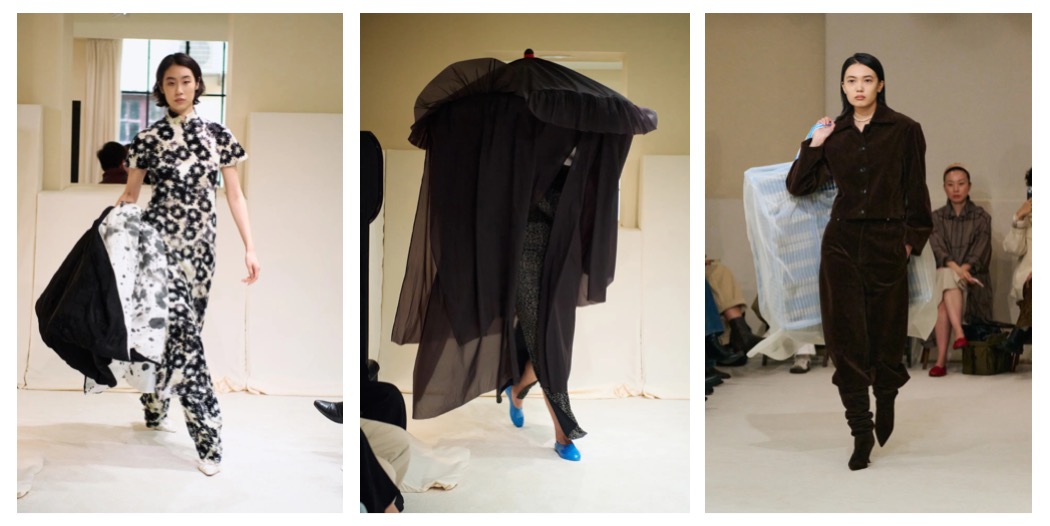
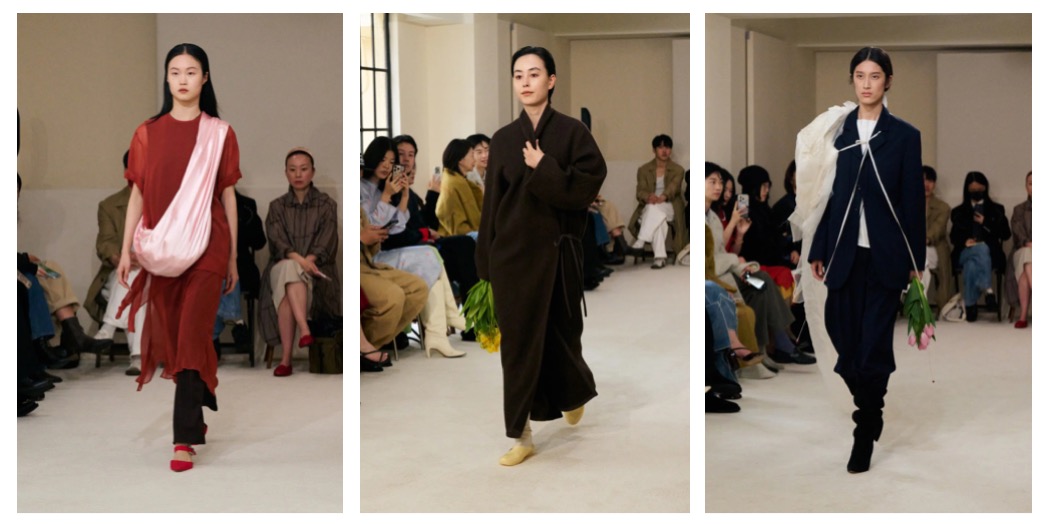
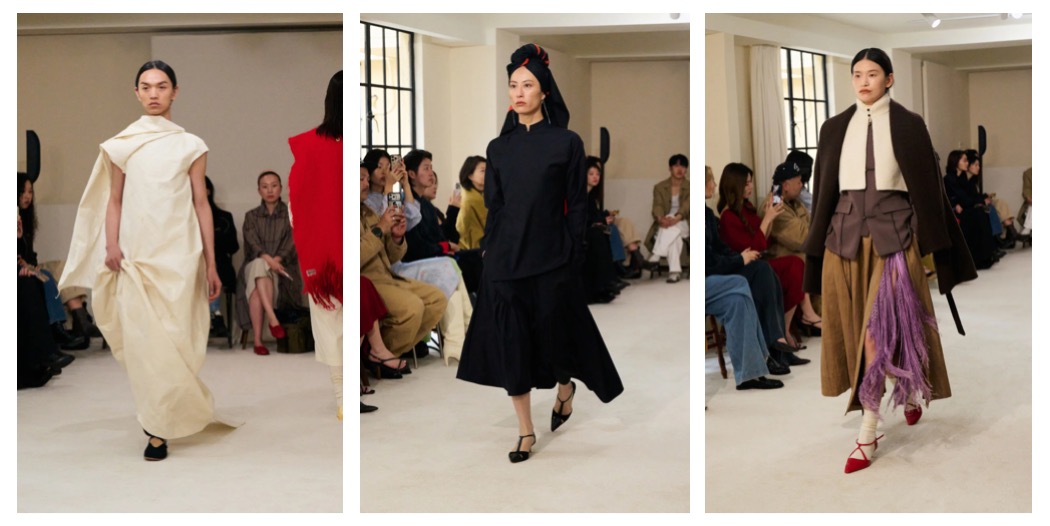
At a time when fashion is increasingly returning to a mode of freely drawing inspiration from global cultures – as seen, for instance, in the autumn–winter 2026 collections of Louis Vuitton and Loro Piana – Samuel Guì Yang stands at the forefront with its nuanced (and very chic) exploration of cultural provenance. A double-faced silk qipao, for example, was cut to fall from the body at the right hip before winding down to the floor like an evening gown. Elsewhere, a fringed poncho was tied with a piece of blue string, achieving a sense of harmonious ruralism. Additional elements – a striking feathered cloaklet layered over a raincoat, headpieces seemingly constructed from repurposed garments, and a square parasol with a trailing black canopy that nearly obscured the entire look – introduced a subtly folkloric dimension without referencing any single tradition directly.

As Litzen notes, his and Samuel’s process begins intuitively, followed by careful refinement to ensure that the results remain respectful and avoid coming too close to specific cultural boundaries. This balance between instinct and critical editing ultimately defines the unique strength of their joint effort.

Collage by Edward Kanarecki.
Don’t forget to follow Design & Culture by Ed on Instagram.

Hey, did you know about my newsletter – Ed’s Dispatch? Click here to subscribe.