Men’s – There’s Optimism. JW Anderson AW20

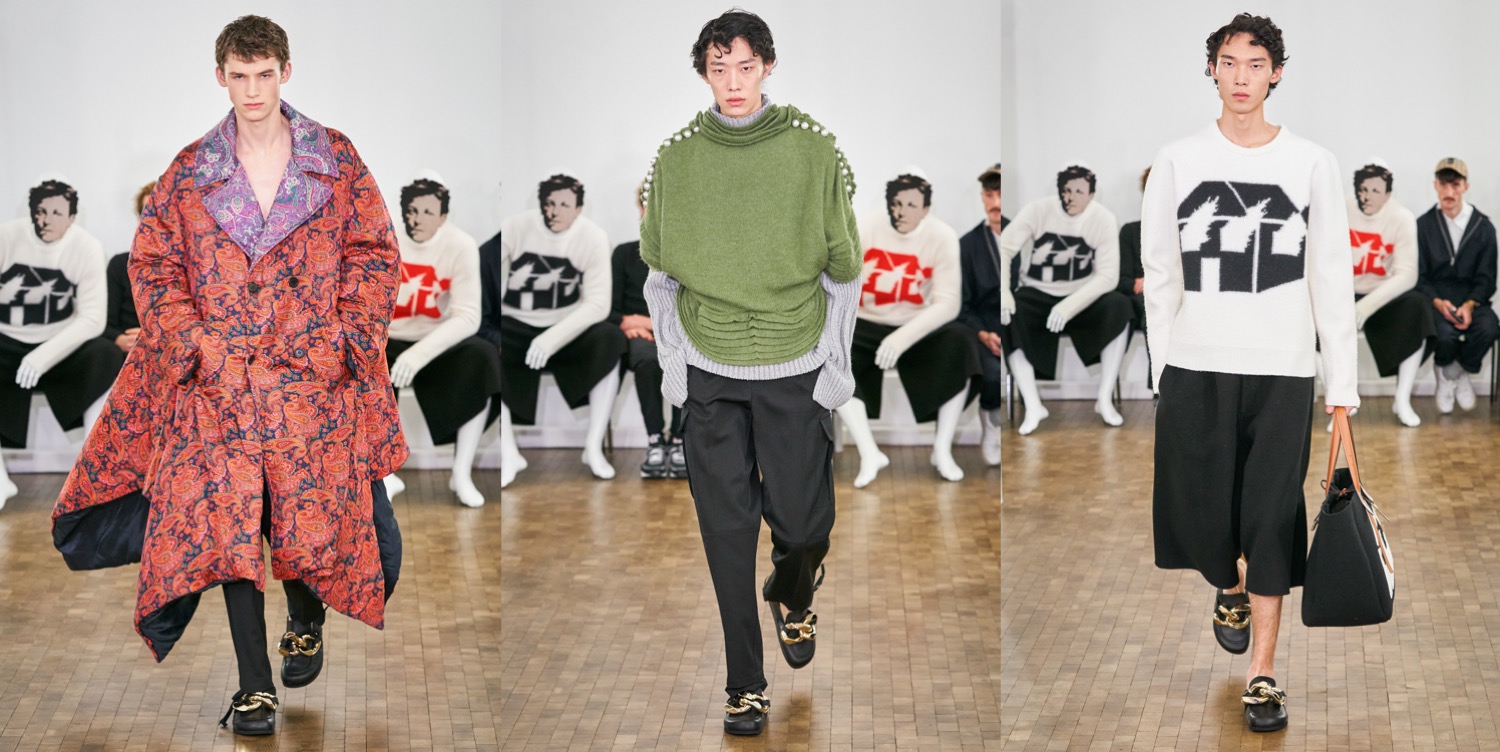
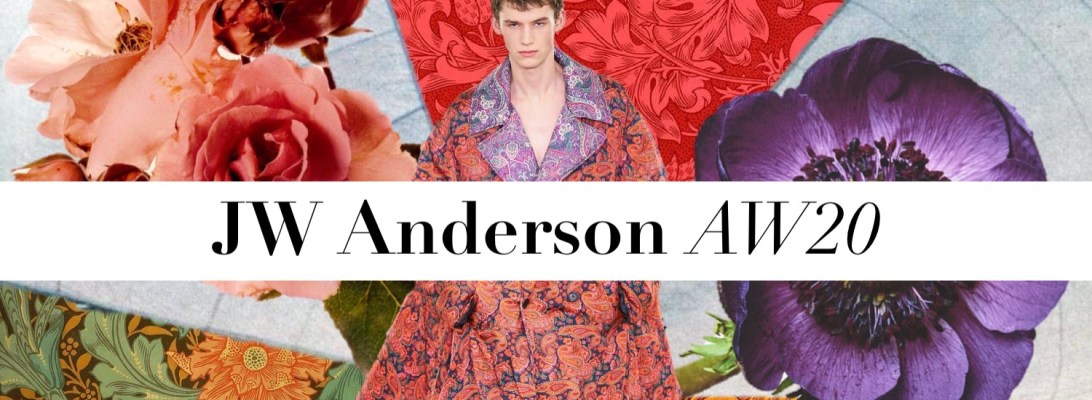
For the autumn-winter 2020 season, here’s where you should go for the best coats: JW Anderson. At his name-sake label, Jonathan Anderson offers gorgeous blanket-wrap poncho-like coats, made in a number of variations: classic grey wool, in paisley print, in hounstooth… some come accessorized with heavy gilt chains swathed as belts (the designer also used them as shoe jewelry and as sewn-on half-necklaces). A pictogram of a house on fire, a print that appeared on knits and in the general imagery of the collection, was Anderson’s take on AIDS activist and mixed-media artist David Wojnarowicz, who sprayed these on derelict East Village buildings in 1982. Anderson is known for bringing almost forgotten art to the ambiance of his shows – both for his own label and at Loewe. But this rediscovery struck a deeper chord for the generations protesting against establishment intransigence in the face of apocalyptic crisis. It resonated in Anderson’s remark at the end of the show. Amid the anguish of the AIDS fatalities in the 1980s and 1990s – which Wojnarowicz documented, fought, and eventually succumbed to – “it felt like the end of the world,” the designer observed. “But it wasn’t. As much as some of it’s really heavy, there’s an optimism. There will be a solution.”

Collage by Edward Kanarecki.
Men’s – Close To Nature Wherever You Are. Phipps AW20

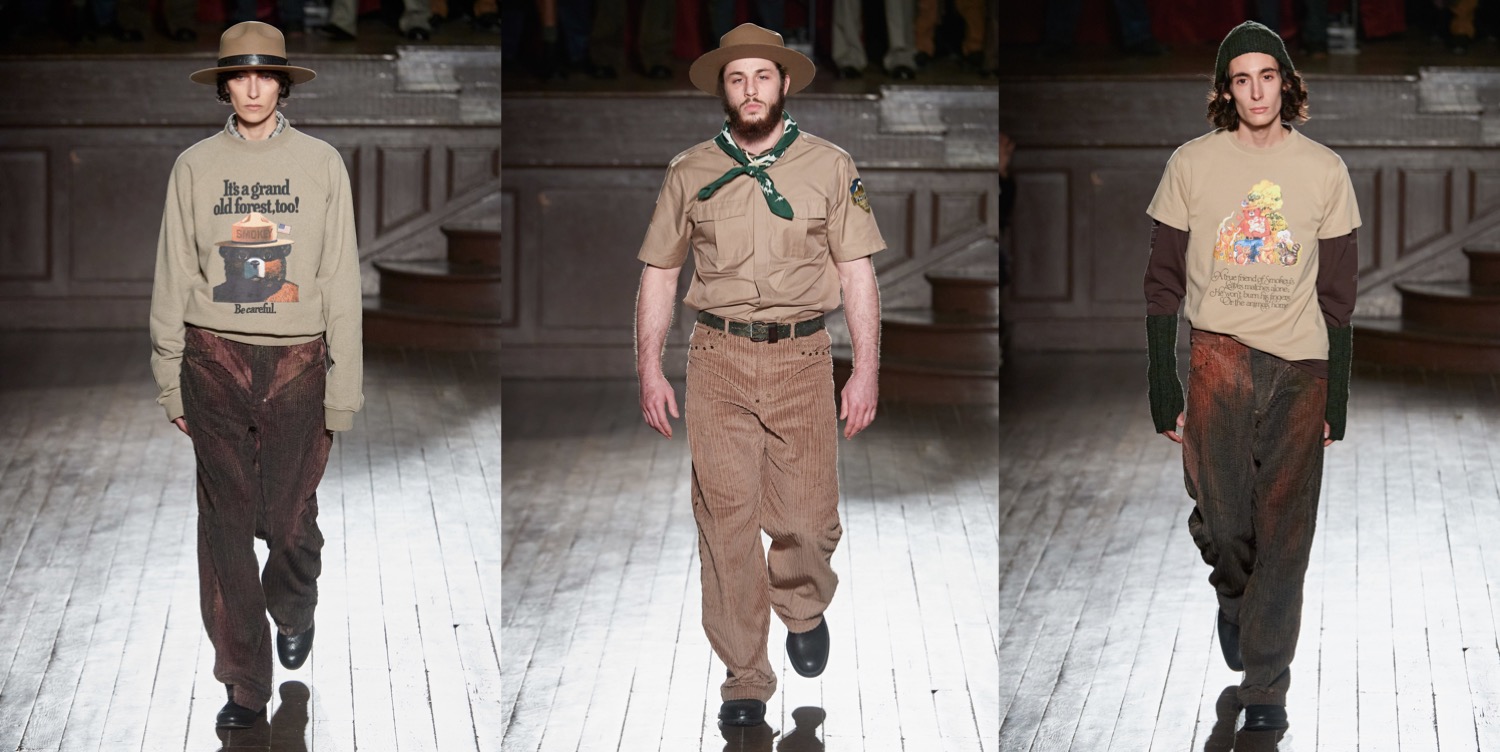
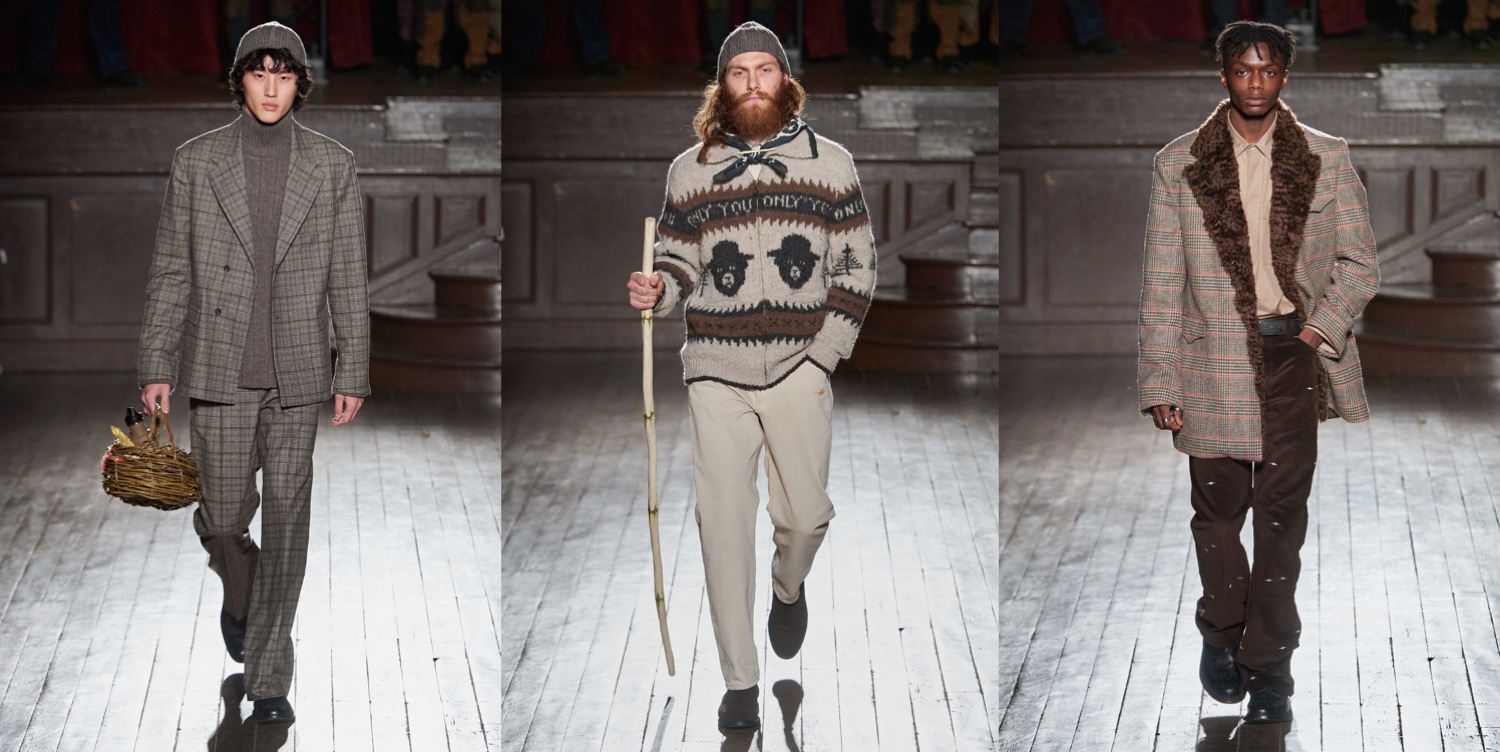
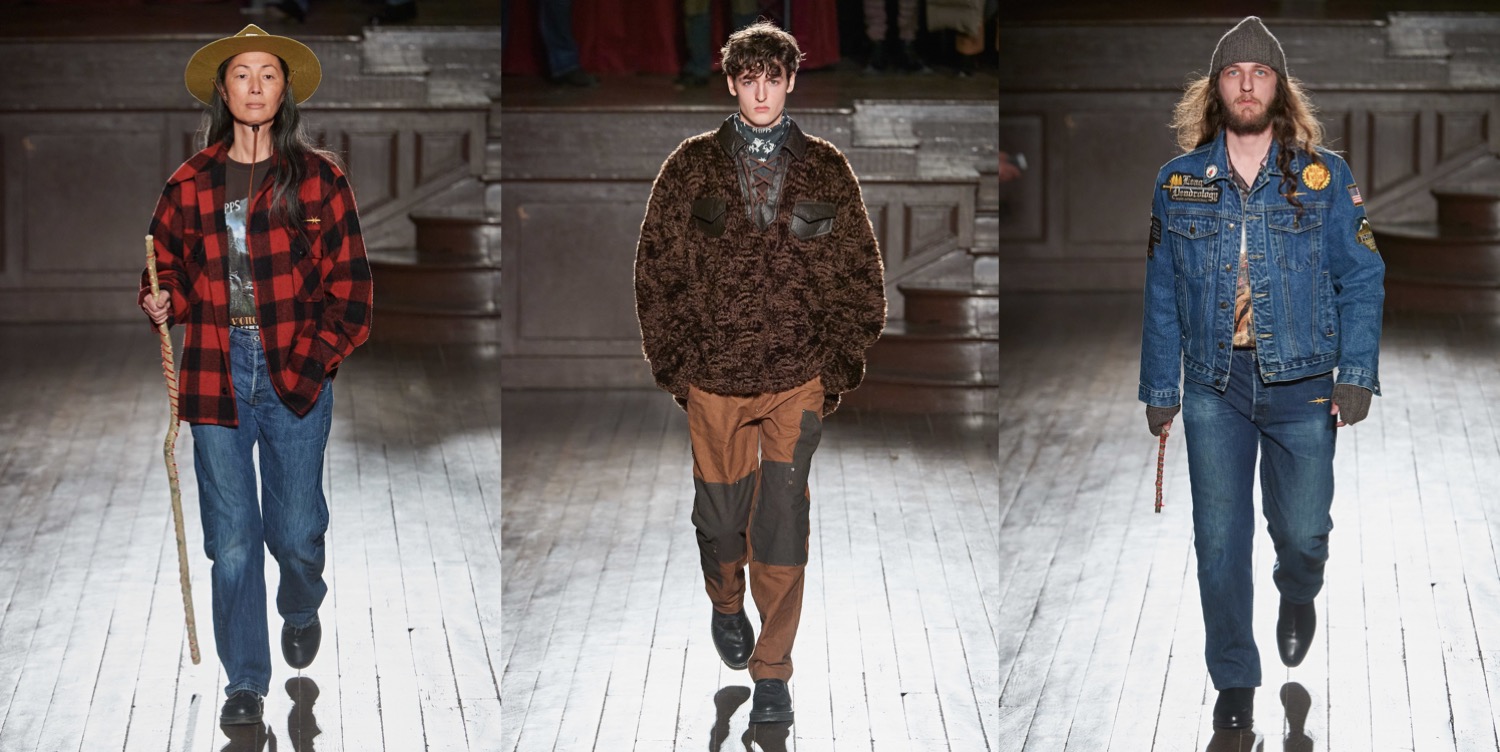
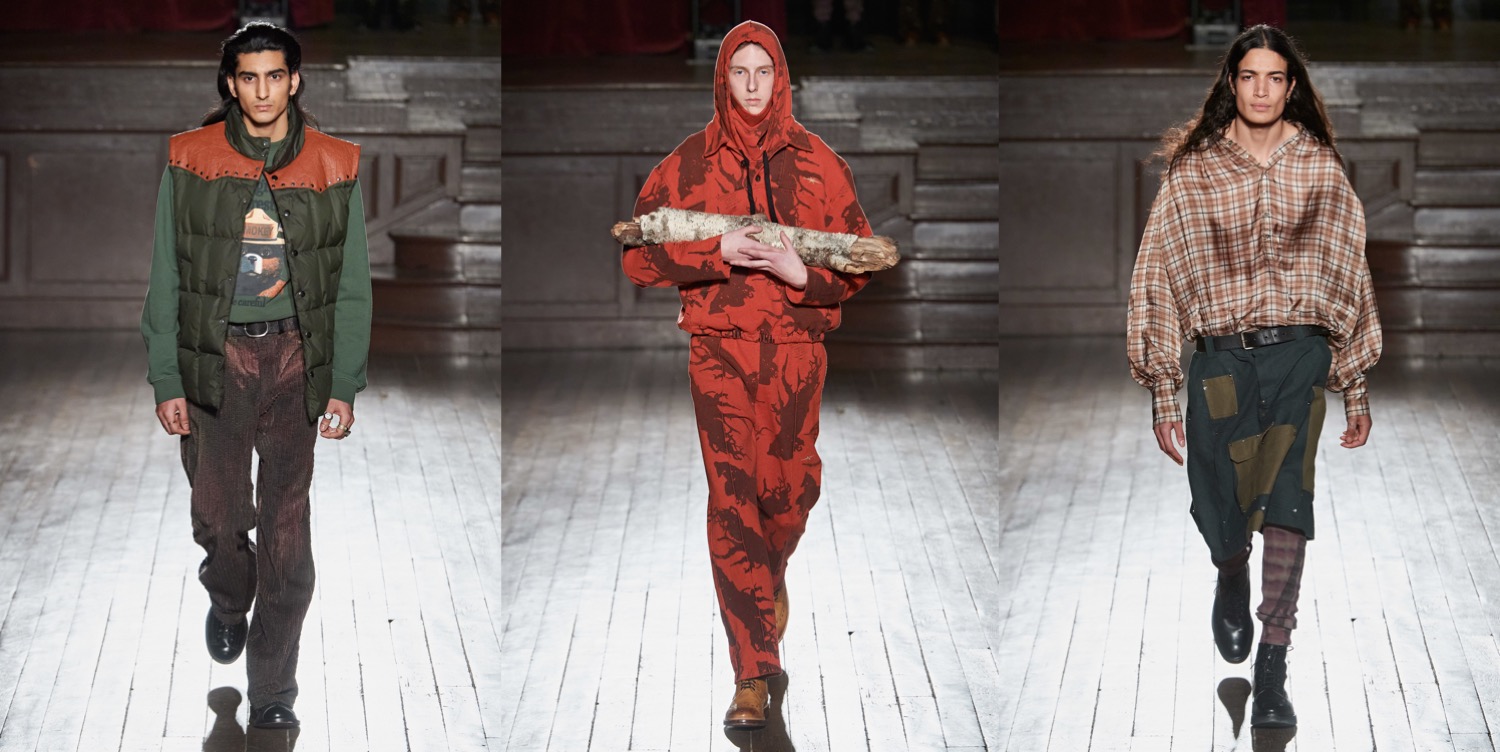
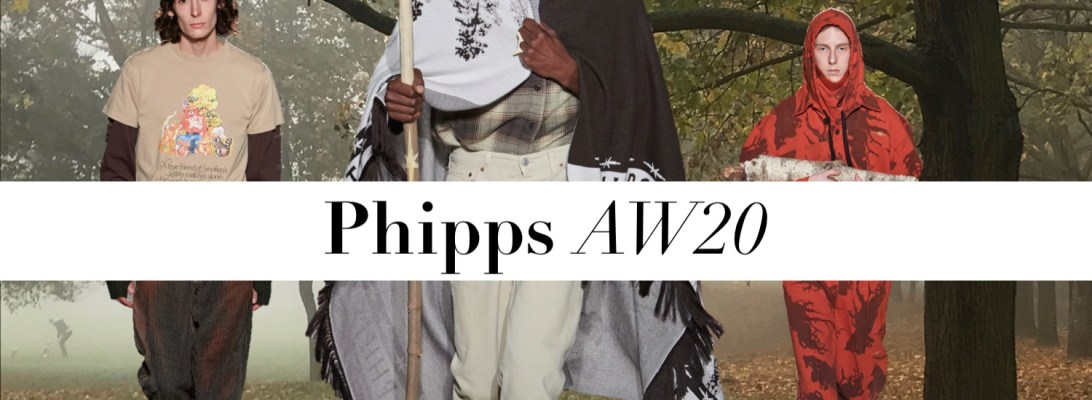
The American brand named Phipps might not be the most “Parisian” and “fashion” of them all. But Spencer Phipps seems not to care. More importantly, since starting his label few years ago, he has been seriously devoted to sustainability (before it was “thing” for the industry). This season’s “Treehugger: Tales of the Forest” collection caught everyone by surprise with a collaboration that has to be Smokey Bear. Even the authorities at the U.S. Forest Service were perplexed at first, the designer said. But once the deal was signed, Phipps had decades of archives to riff on: Smokey turned 75 last year. Despite teen-camping nostalgia and authentic lumberjack style  – one of the models was, in fact, a lumberjack! – the designer noted that this collection was “a big step up in terms of luxury.” Placing a concern for nature within the luxury space is a serious challenge. To get there, Phipps said he tried to focus on suiting in a very smart way, sourcing cloth in northern England and paying close attention to details such as linings and buttons. He also used Steiff (the teddy bear brand) materials for sweatshirts and embellishment. “It’s biodegradable, very artisanal, and it has a luxury appeal,” he mentioned. “It’s not faux fur made from plastics. It’s a more traditional way of working.” Another favourite: the forest shaman spirit behind the huge blankets worn as shawls and whimsy, wooden “accessories”. Phipps’ commitment to slow fashion also prompted him to introduce what he’s calling his “gold label” – a range of curated vintage pieces, embellished and elevated to “treasure items” with a stylized gold star or forest ranger patches. That studied mashup included market-found jeans and flannels, heirloom pieces, and even a pair of jeans Phipps’s mom made back in the 1970s. “I’m just focusing on the lifestyle of sustainability. I’m not making you a new plaid shirt because there are so many out there already, and they’re beautiful,” the designer said. If only the big brands got the memo…

Collage by Edward Kanarecki.

Lanvin 130th Anniversary Capsule

Celebrating its 130th anniversary, Lanvin has created a series of limited edition pieces inspired by its archives. Bruno Sialelli, the promising creative director of the historic maison, has come up with a joyful and mischievous capsule collection to revisit the Parisian fashion house’s heritage. The eveningwear features modern reinterpretations of exceptional pieces from Jeanne Lanvin’s atelier, the footwear is inspired by the iconic and timeless Arpège fragrance bottle of the house, while the apparel is printed with the founder’s drawings. Wearing a blue dress with golden wings, the “Lanvin angel” represented the house during the World’s Fair in New York in 1939, when Jeanne Lanvin presided over. As for the “Mermaid”, the founder presented the multicolored cloak at the international Golden Gate exhibition held in San Francisco in 1939. This is exactly something that the brand missed for a while: celebration of its past.

The 2010s: Phoebe Philo’s Céline.

Believe it or not – I can’t! – but we’re heading towards a new millenium. So, how do you choose the most important collections, designers and labels of the decade? The ones that made an actual impact in the 2010s? Well, it’s not an easy task. It all began in September 2009 with New York’s spring-summer 2010 shows and ended when the autumn-winter 2019 haute couture shows wrapped in Paris. Few thousands of shows, by the way. There will be 19 posts (that’s really the only possible minimum!) reminding about the best – and if not the best, then strongly influencing – moments in fashion.

STELLA skincare sustains your skin’s key functions, whilst boosting vitality and radiance on the outside.

Phoebe Philo‘s Céline.

This one is no surprise to anyone who reads my journal for a longer while. Phoebe Philo’s contribution to 2010s fashion – through the medium of Céline – is exceptionally significant. Phoebe’s fashion wasn’t minimalist as many tend to sum up. It was eclectic. Intelligent. Feminist. Feminine. Intimate. Lasting. Beautiful. From all the photoshop-free Juergen Teller ad campaigns (feauturing Phoebe’s favourite women like Daria Werbowy and Joan Didion) and store interiors (they felt like home!) to the music playing during the fashion shows (Cymande’s “Dove“, Soul II Soul’s “Back To Life“, Method Man and Mary J. Blige’s “I’ll Be There For You / You’r All I Need to Get By”…) and the shockingly rare on-line shop absence for an established label like this, Philo’s Céline was the ultimate favourite of many people (including me) for different reasons. While Phoebe is still off the fashion horizon, just look at all the brands that turn to her collections for inspiration (or actually try to copy her…). Yes, yes, we’ve got Daniel Lee’s Bottega Veneta, Mary-Kate and Ashley Olsen’s The Row, Christophe Lemaire and Sarah Linh Tran’s Lemaire. But I really, really, really hope that 2020 will see Phoebe Philo’s comeback. Dreams come true!

Stella  McCartney Beauty UK

Collages by Edward Kanarecki. Photos by Juergen Teller and Tyrone Lebon.

STELLA skincare sustains your skin’s key functions, whilst boosting vitality and radiance on the outside.

The 2010s: Jonathan Anderson’s Loewe

Slajd1

Believe it or not – I can’t! – but we’re heading towards a new millenium. So, how do you choose the most important collections, designers and labels of the decade? The ones that made an actual impact in the 2010s? Well, it’s not an easy task. It all began in September 2009 with New York’s spring-summer 2010 shows and ended when the autumn-winter 2019 haute couture shows wrapped in Paris. Few thousands of shows, by the way. There will be 19 posts (that’s really the only possible minimum!) reminding about the best – and if not the best, then strongly influencing – moments in fashion.

Jonathan Anderson‘s Loewe.

The most succesful brand rebirth of the decade? Jonathan Anderson’s take on Loewe,  so the story of a sleepy Spanish leather house becoming one of the hottest labels in Paris. Anderson’s vision for the label defines the role of a creative director: everything, from the campaigns (photographed by the designer’s favourites: Steven Meisel, Gray Sorrenti or Jamie Hawkesworth) and branding (revived by M/M Paris) to store interiors and inspiring, visual communication, must be consistent, garden-fresh and, simply speaking, beautiful. But Anderson’s Loewe also thrives thanks to its desirable, yet non-mainstream products. The “Puzzle” bag became one of those timeless it-bags without even one, shouting logo on it. The clothes fascinate with their incredible, artisan detailings. Loewe shoes are the fine balance of pretty and ugly. Eclectic accessories (like Dumbo ears hat or cat face necklace) and capsule collections that rotate around unexpected themes (the best-seller “Paula’s Ibiza” line; the tribute collections to Charles Rennie Mackintosh and William de Morgan). The designer often compares himself to a curator, when explaining his role at Loewe. And this metaphor really fits.

Collage by Edward Kanarecki.