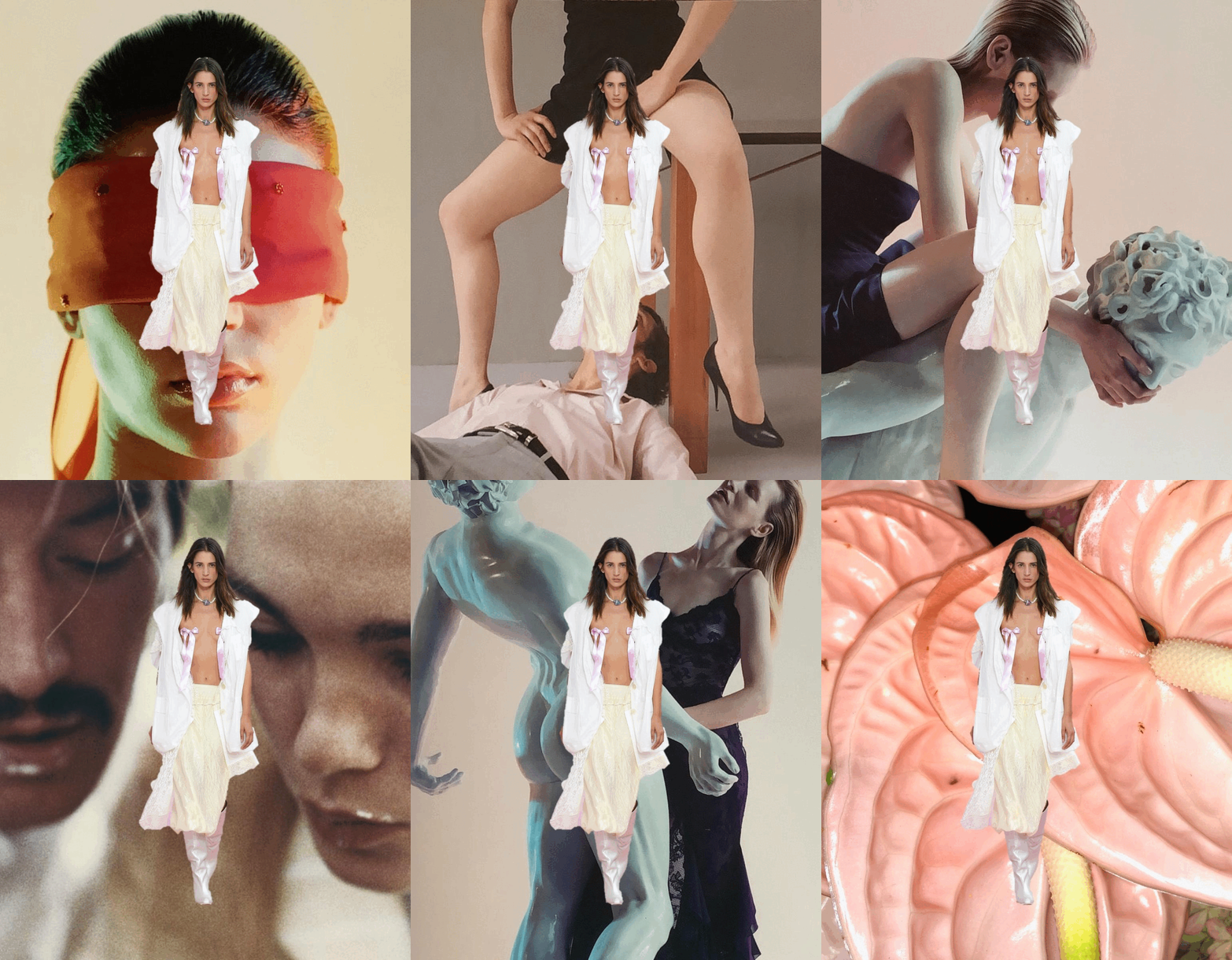
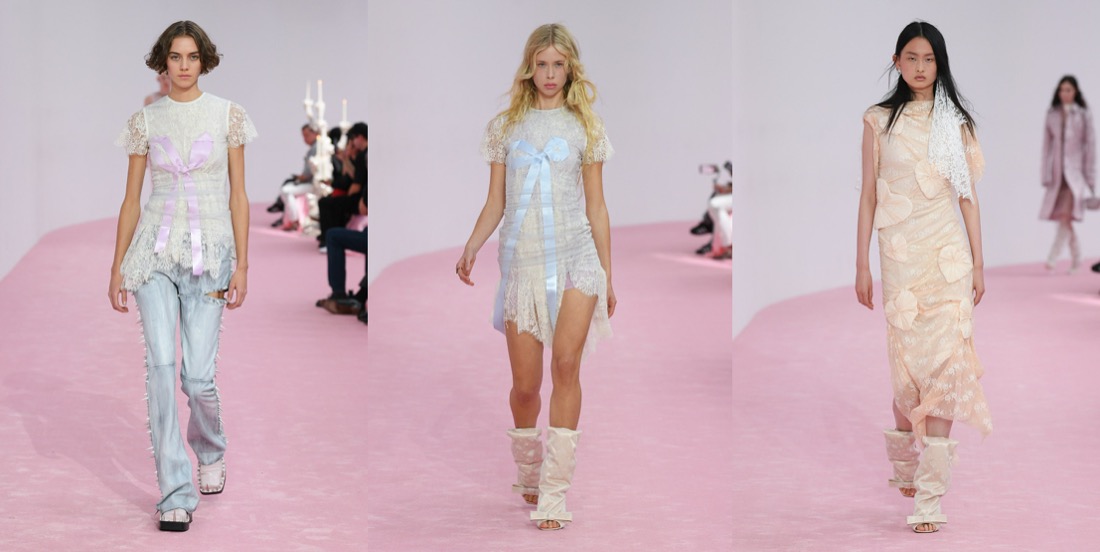
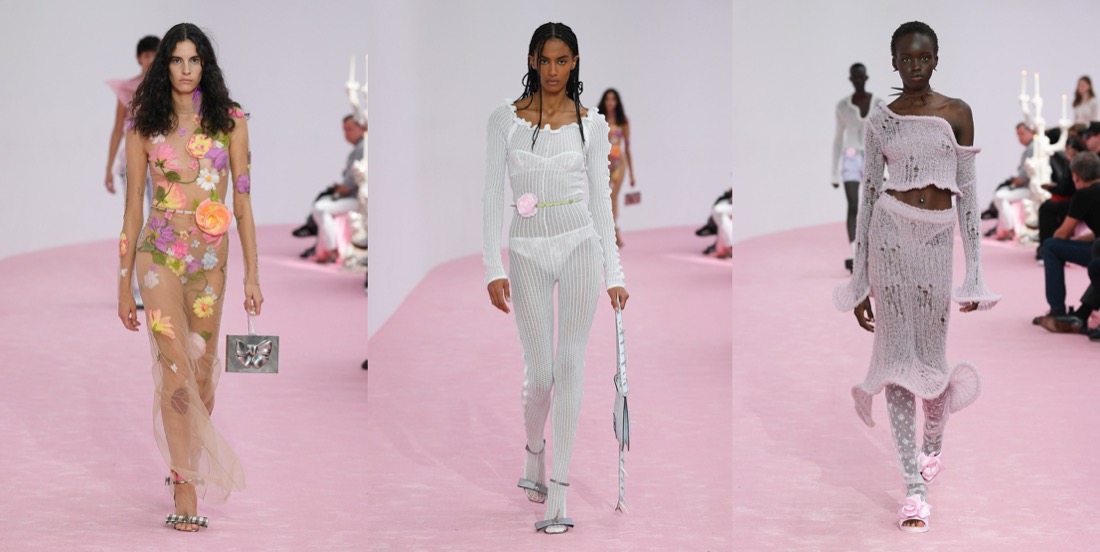
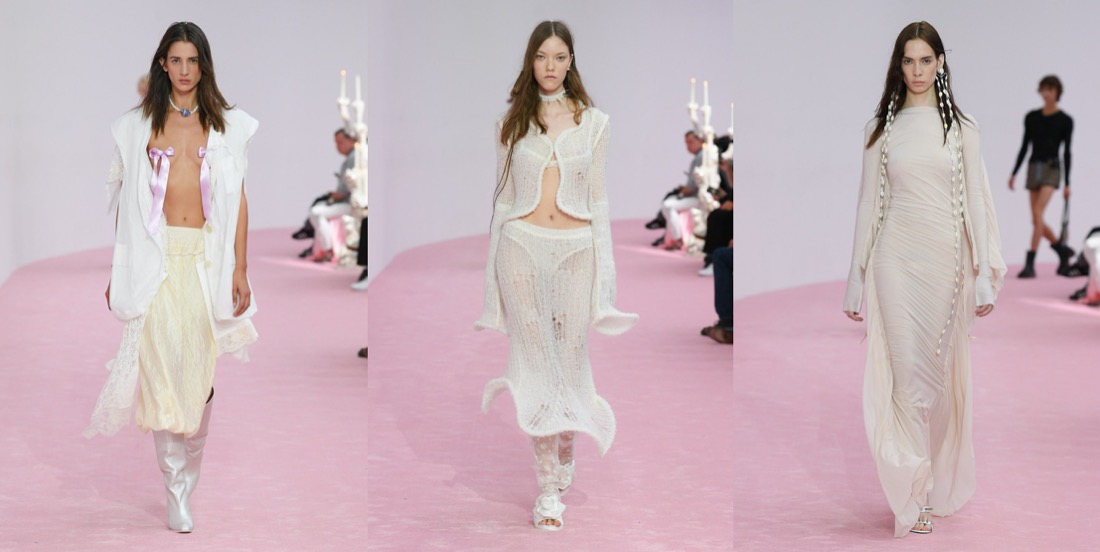
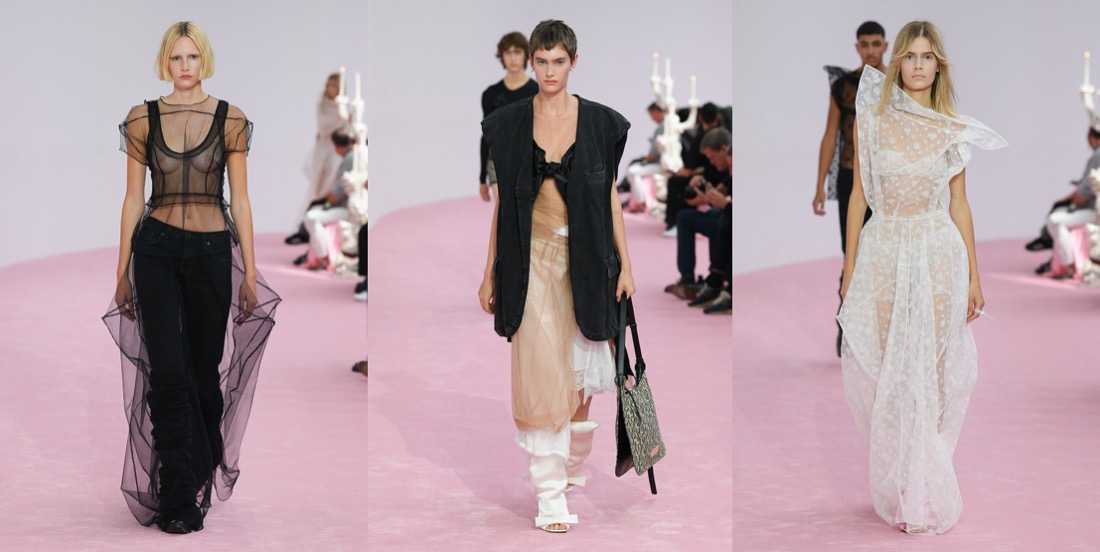
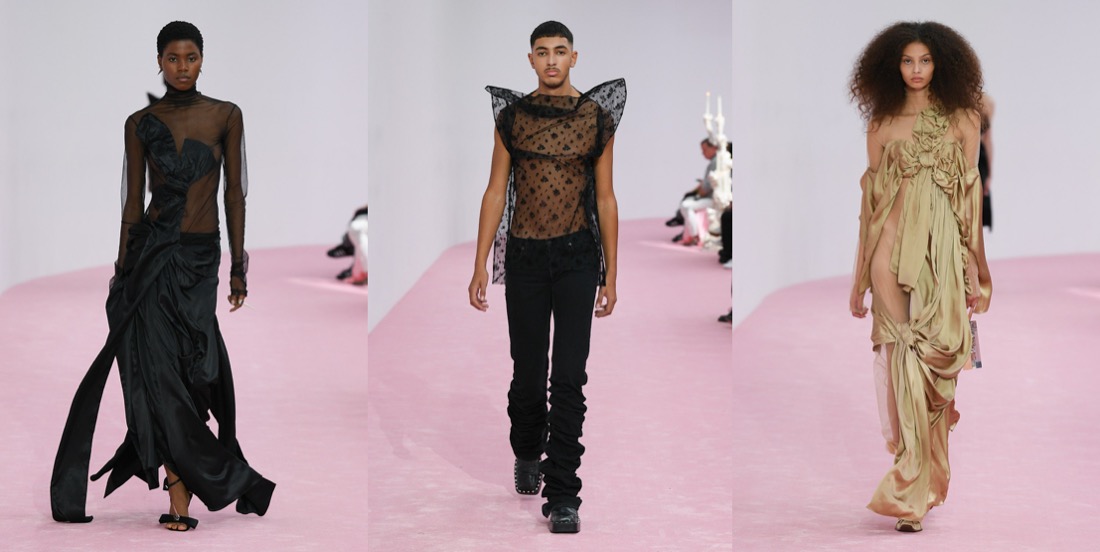
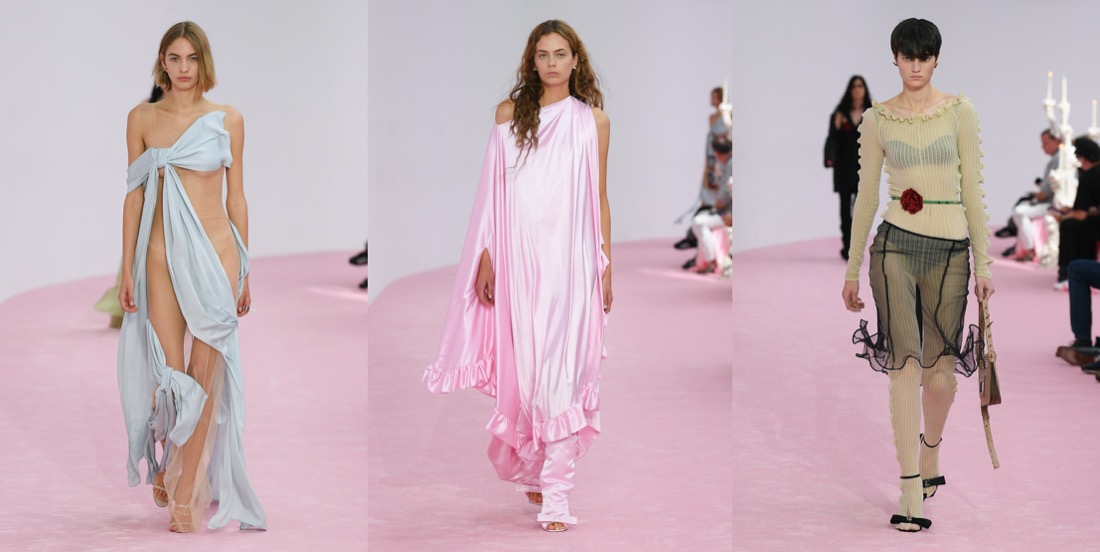
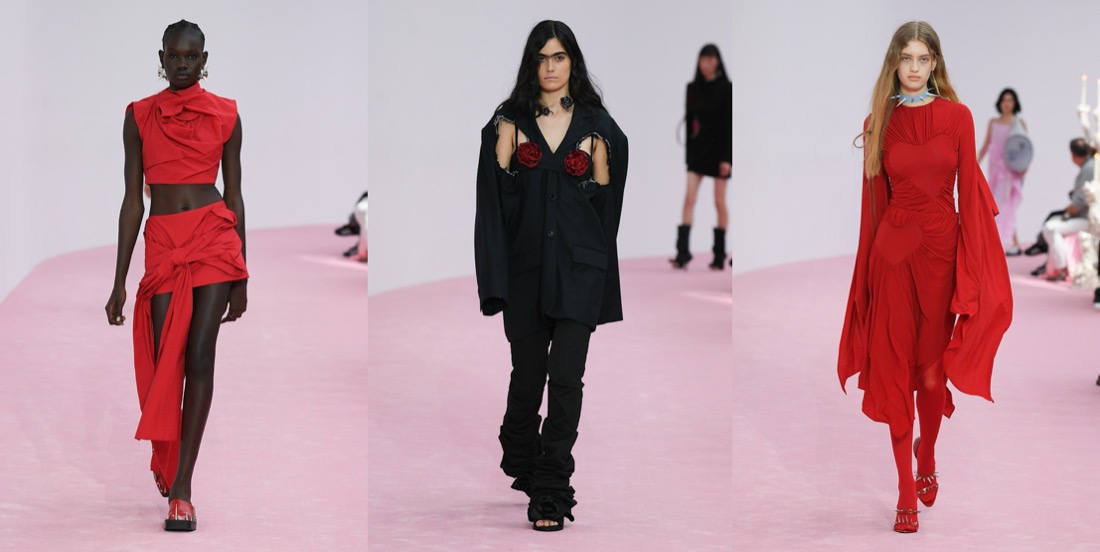
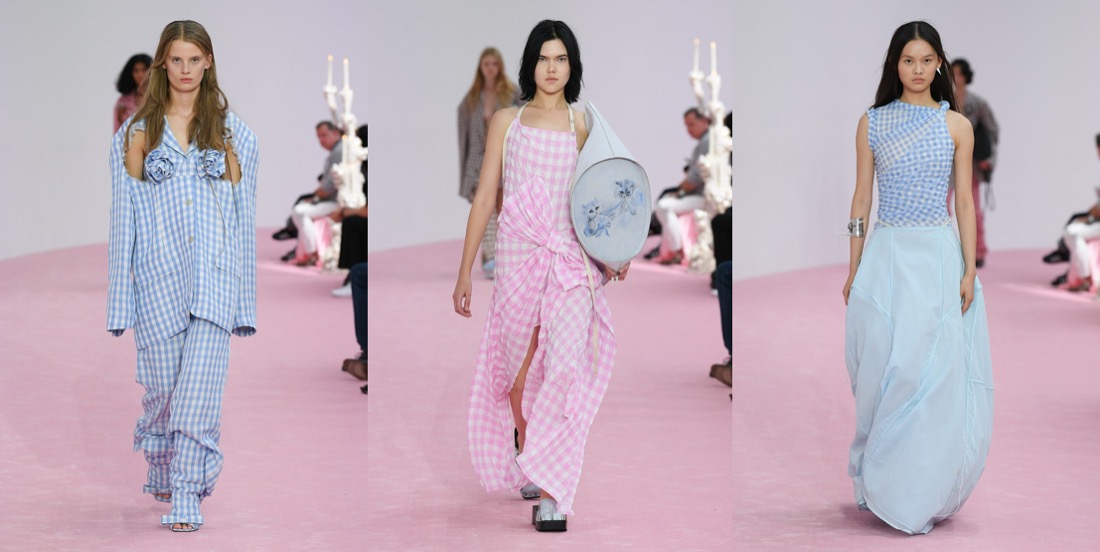
This season, Acne Studios celebrated 10 years of showing in Paris. But also, the spring-summer 2023 offering suggested a new direction for the brand. “Sexy” and “sensual” aren’t really keywords that affiliate with Acne Studios. Jonny Johansson decided to explore this new territory for the label – but don’t expect anything too obvious. We’re speaking of “sexiness” done the Acne-Studios-way: oddly-fitting, raw, mysterious. The Palais de Tokyo venue was carpeted a light pink, and here and there shell-covered candelabra stood at attention among a maze of beds covered in matching satin duvets and pillows. There was a wedding-slash-honeymoon vibe about it. The ostensible bride wore white embroidered tulle in the shape of an elongated pillow case, the corners creating drama around the shoulders, but Johansson said that he was less interested in the affianced than in the crowd of nearest and dearest that might assemble to celebrate them: the bad brother, the mother who lets the bad brother get away with everything, the tipsy aunt, etc. “Weddings are kind of kitsch,” he pointed out. Surely, the pink satin bed sheet dress qualified. Ditto for the pastel bows trapped between layers of lace and tulle, and the gingham suits with bra tops worn over the jackets, each cup boasting a blooming rosette. All that sweetness met its opposite in thrashed leather blazers trimmed with metal spikes.
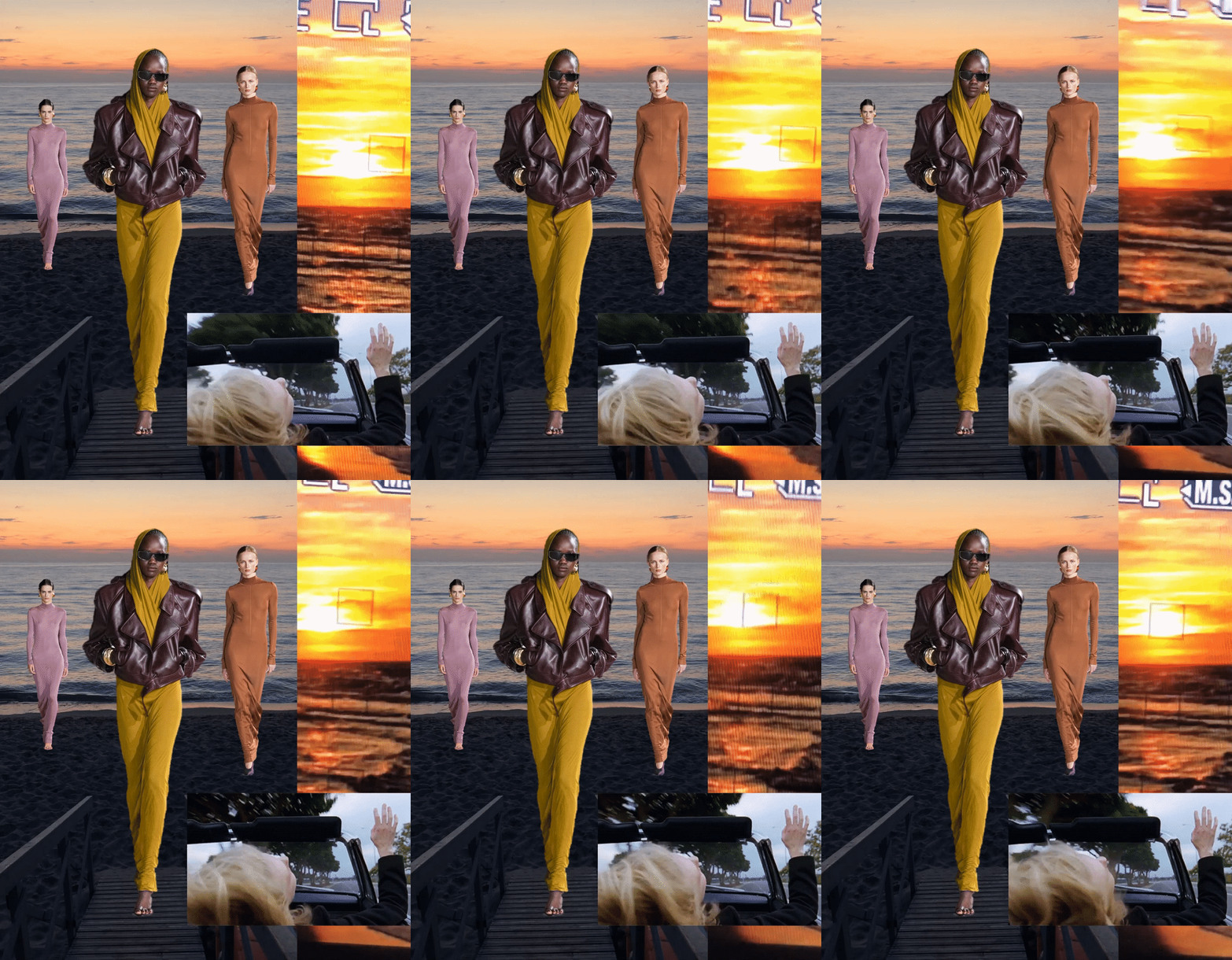
Collage by Edward Kanarecki. Don’t forget to follow Design & Culture by Ed on Instagram!
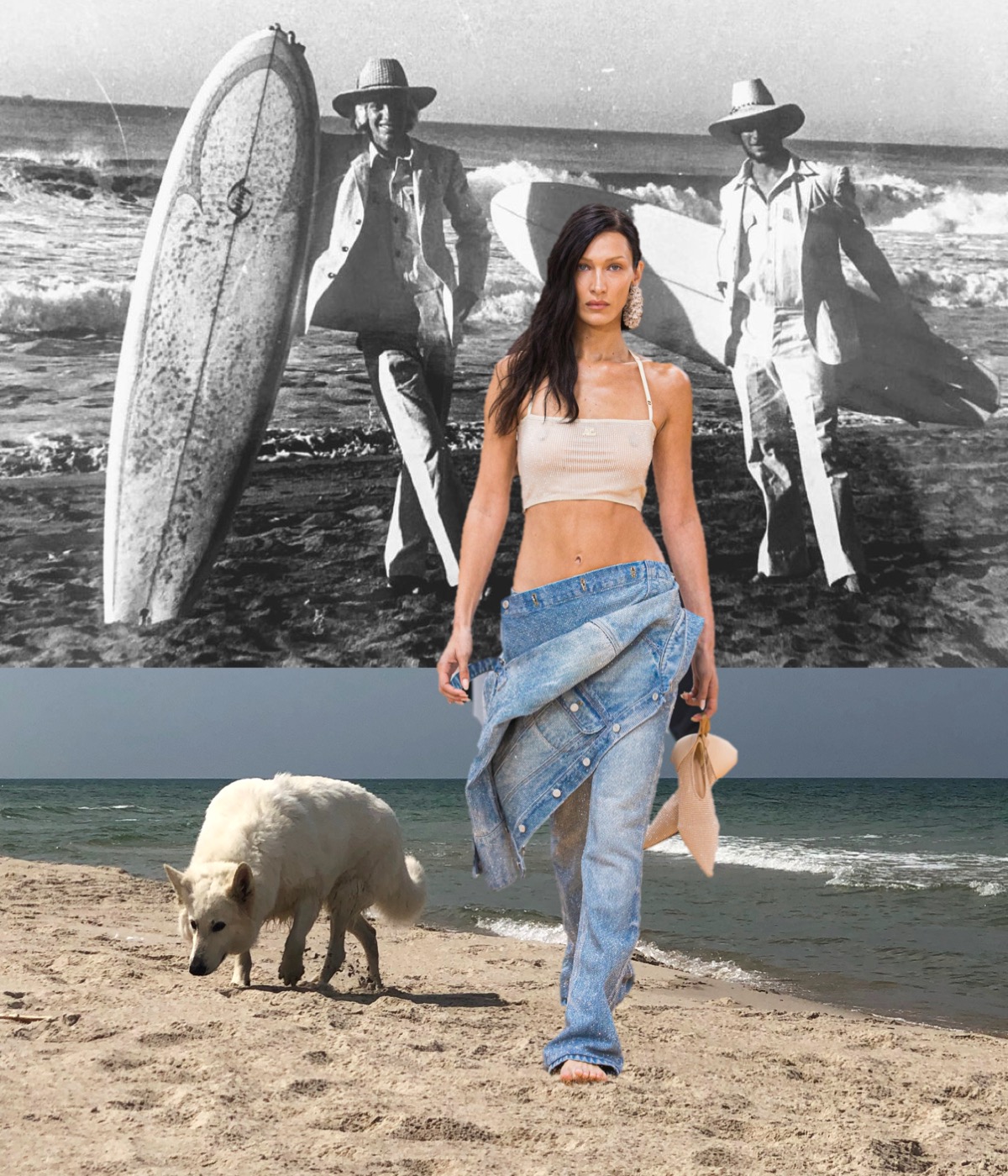
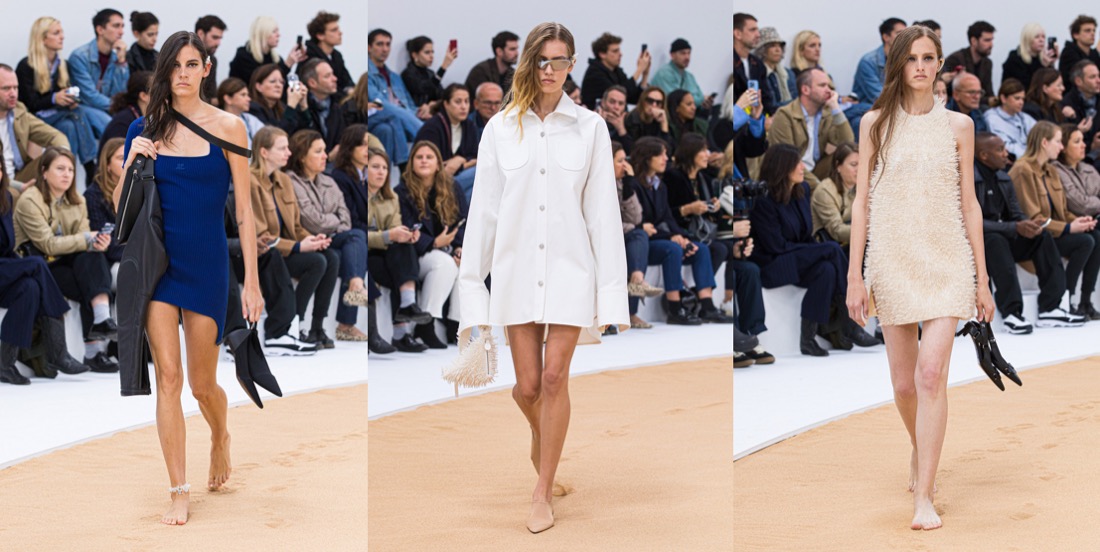
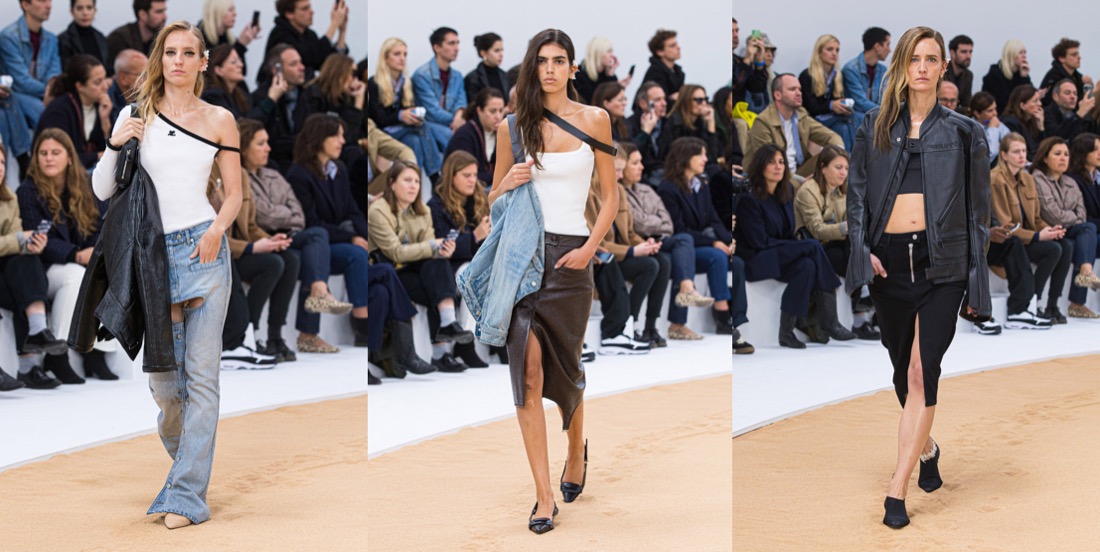
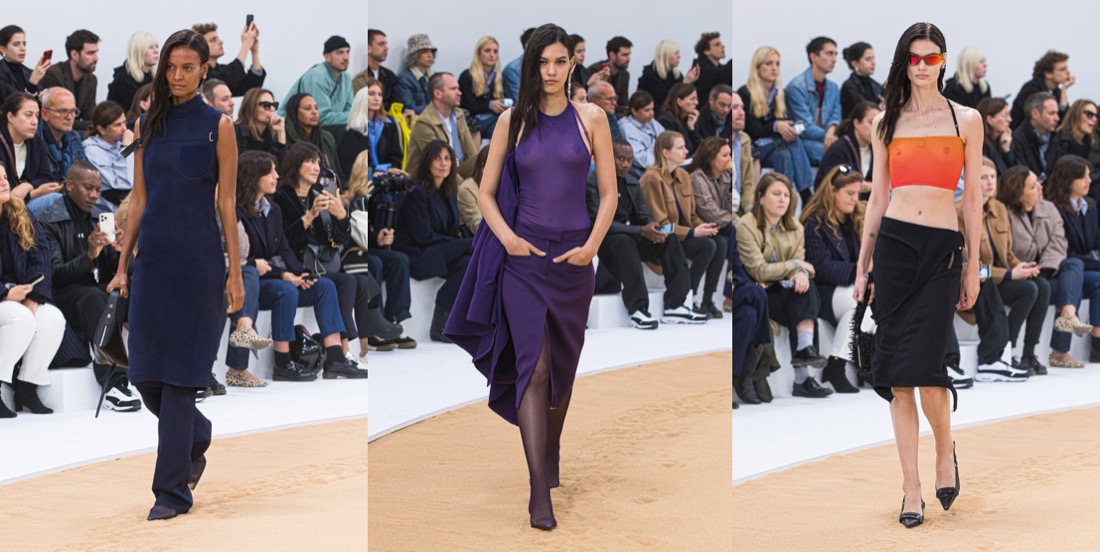
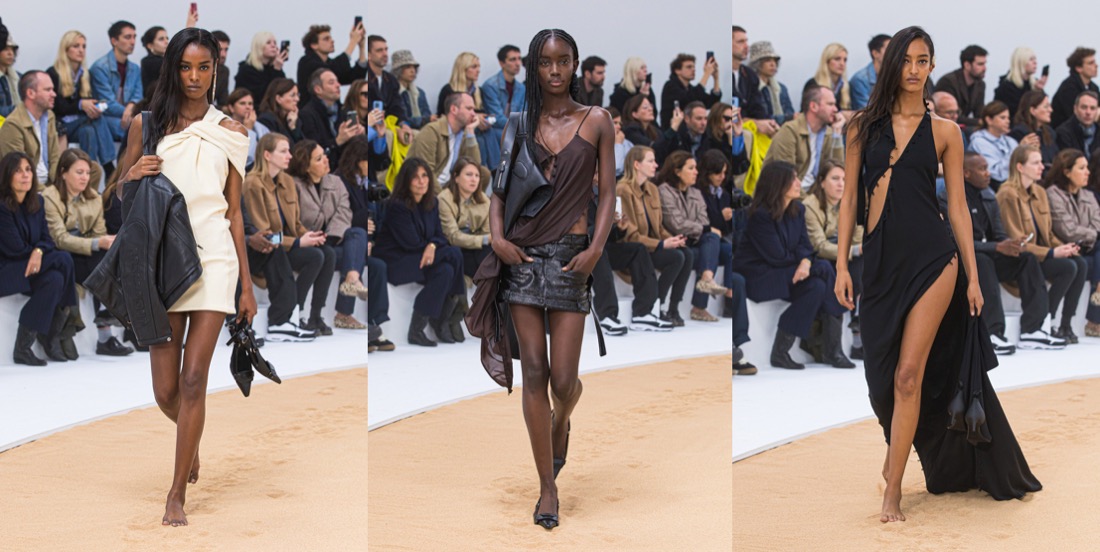
I was on fence with Nicolas di Felice‘s take on Courrèges since his debut collection. But his truly cool spring-summer 2023 offering proved that the designer is capable of making the brand truly his own – without falling down the rabbit hole of Courrèges’ archives. First of all, Di Felice knows how young people want to dress everyday, especially for parties: in body-con separates and dresses that reveal as much as they conceal. His spring show conjured morning-after-a-beach-rave vibes. The set helped tell the story. In an otherwise unremarkable white studio far out of town, a circle of sand had been installed. As the music cued up, more sand began streaming from the ceiling like an hourglass, slowly at first and then faster, so that the accumulating pile started sinking as the models made their slow circuits around it. Having made the house Re-Editions into big sellers, Di Felice is looking beyond the obvious at Courrèges. He dug a vintage scuba jacket out of the archive and used its ergonomic lines to inspire a leather motorcycle coat, for one example, and he’s broken free of the starchy mod shapes so closely linked with the house history. The sensation Di Felice was after for spring was fluidity, thus the surf and scuba motifs, a recurring theme this season, and a “coral” dress made out of silicone. And thus the silhouettes draped and wrapped around the body. Since it was the morning after, models carried their slingbacks in their hands, or wore their jean jackets around their waist like a makeshift shirt (buttons down the back and exterior straps made that possible). Other pieces came with similar built-in straps to make them easy to carry when they come off on the dance floor, on the commute, or at the desert rave.
Collage by Edward Kanarecki. Don’t forget to follow Design & Culture by Ed on Instagram!
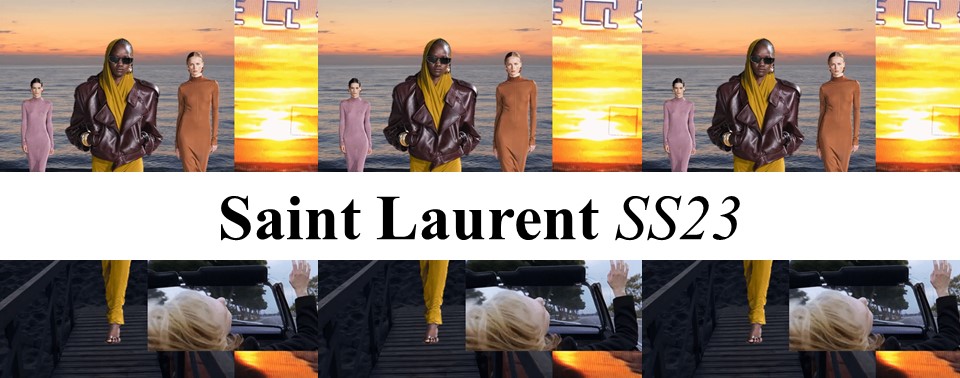
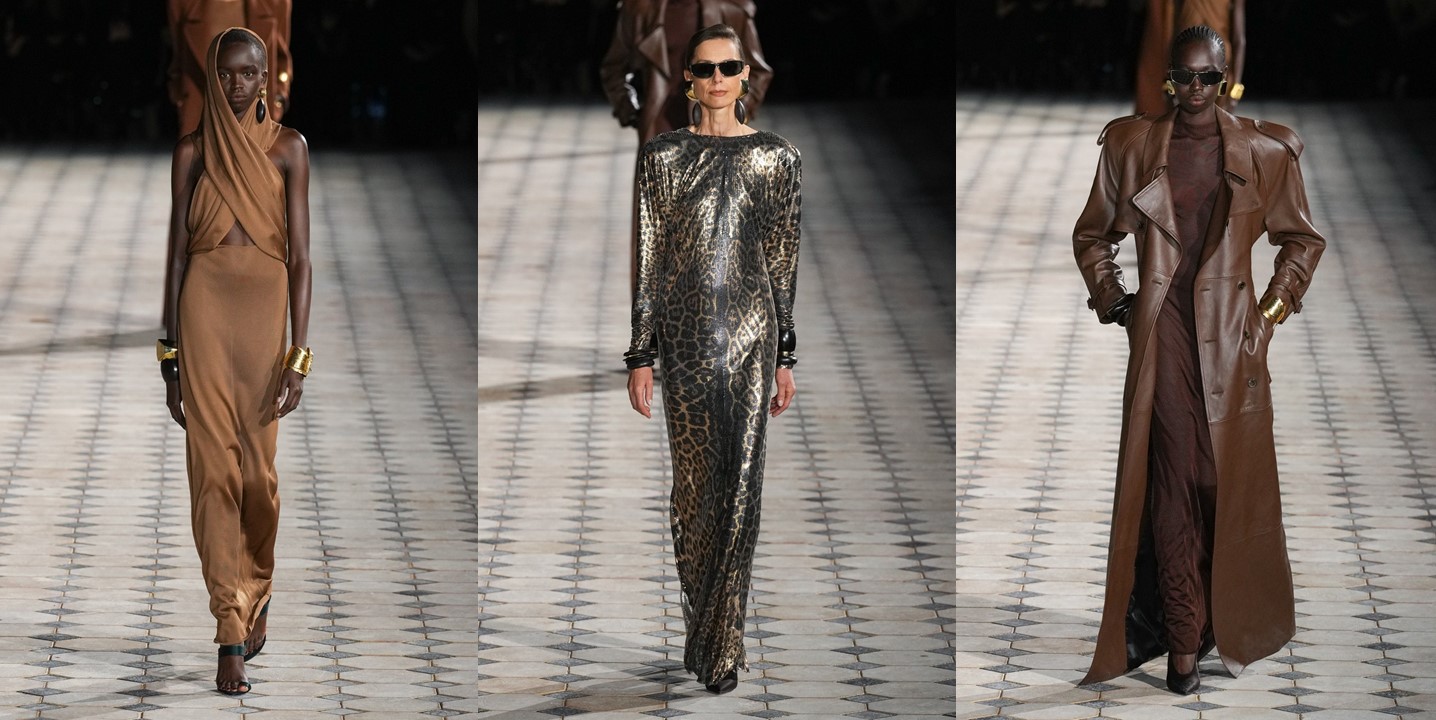
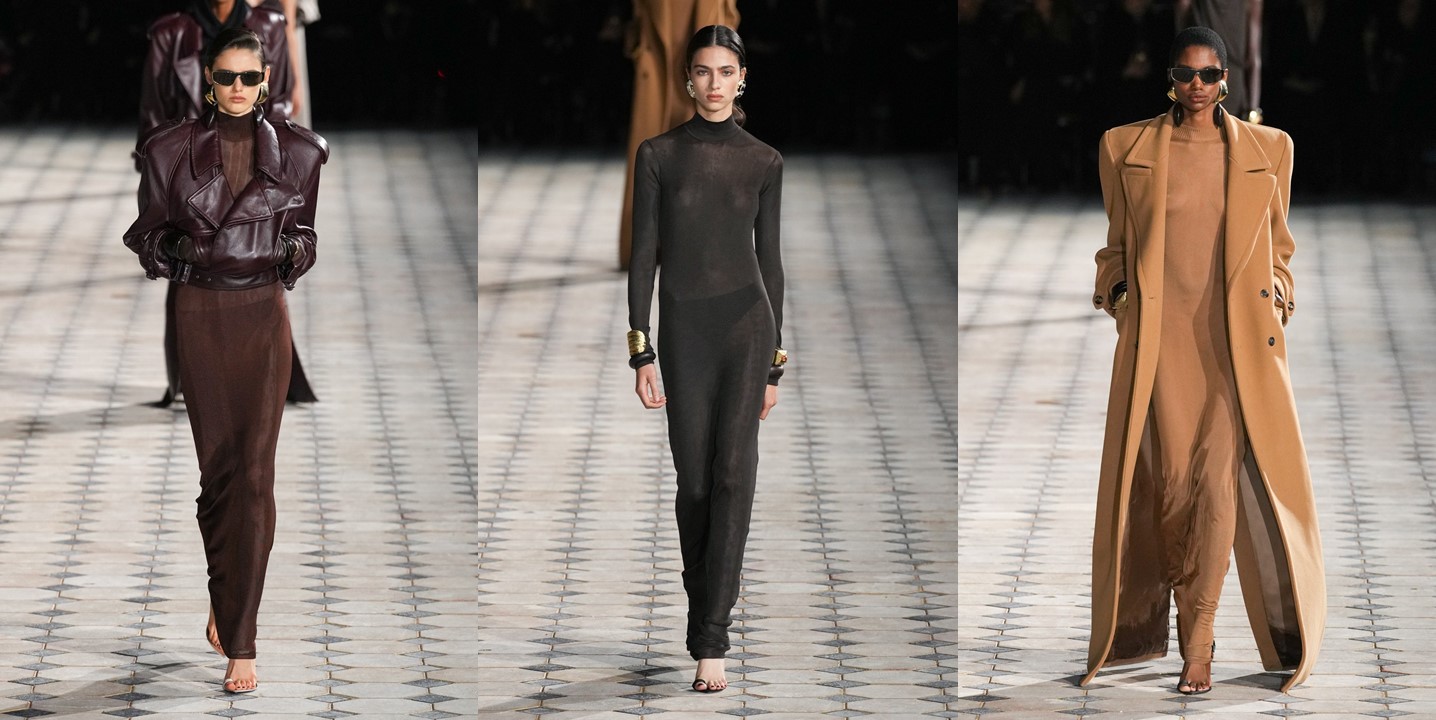
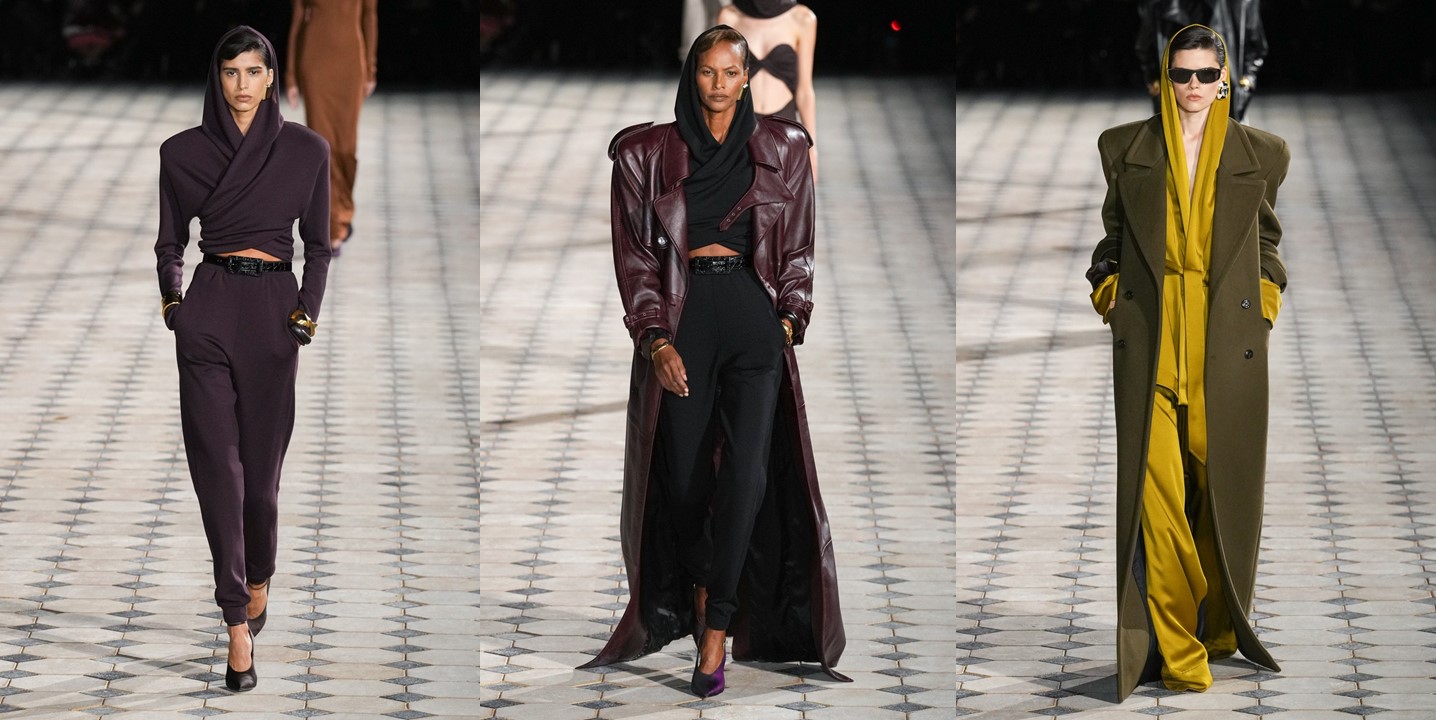
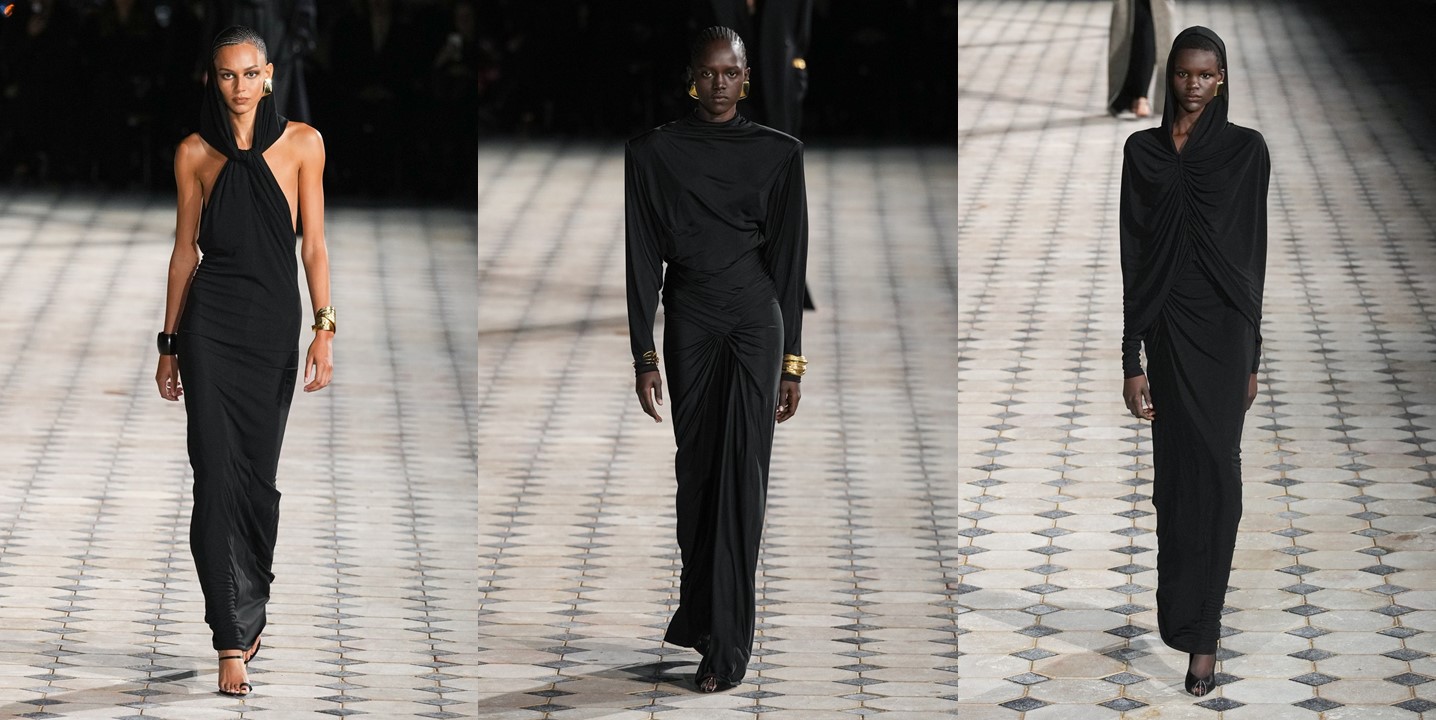
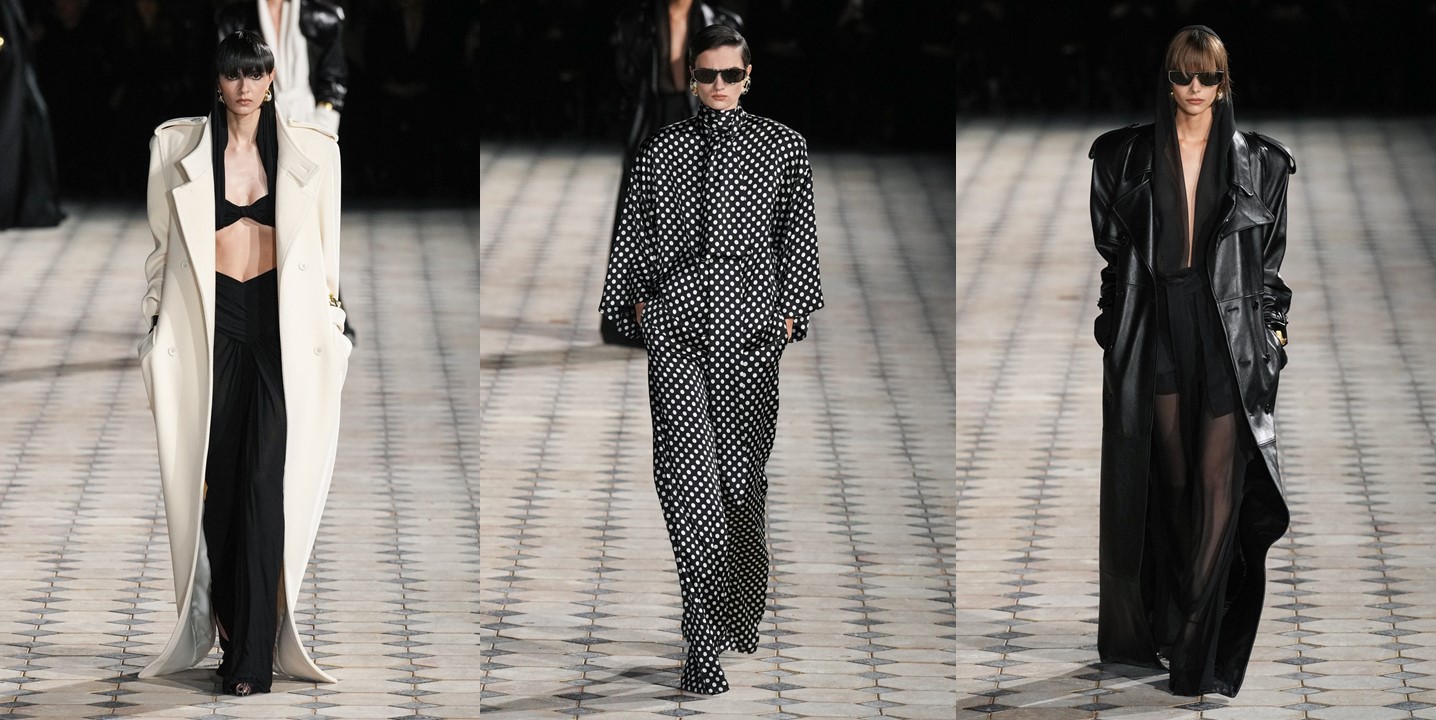
Those latest Saint Laurent collections are impeccable. And the spring-summer 2023 offering is to die for. “To me, the body says what words cannot,” Martha Graham, the revered, radical American modern dancer and choreographer once said. It wouldn’t be crazy to think that’s the kind of statement Anthony Vaccarello, Saint Laurent’s creative director, would concur with. His work for the house has always exalted a corporeal glory; his own view of physicality – strong, celebratory, unapologetic – and the legacy of the house merged to be totally in sync. Graham’s and Vaccarello’s orbits surprisingly spun into each other at his remarkable show, which was staged in the almost dream-like Parisian setting of a grand paved garden replete with cascading fountain. The result: a quietly epic examination of what happens when you both reveal and conceal the body – and the frisson you generate when you make your look long, lean and loaded with attitude. Backstage, just before the show, Vaccarello mentioned that he’d been looking at the groundbreaking way that Graham dressed her company in tubular dresses for her 1930 production Lamentation, costuming which audaciously emphasized every bit of physical agility from her dancers. Vaccarello first discovered Graham, he said laughing, by being a fan of Madonna’s in the 1990s, when the Material Girl had been busy singing Graham’s praises to the sky. But for spring Vaccarello looked back a decade earlier to YSL’s past – the mid-’80s days when models strode those old school elevated podiums in Monsieur Saint Laurent’s hooded, draped, capuche dresses. They were visions of languid elegance, dressed to the nines with myriad jeweled accessories, the maquillage as immaculate as the hauteur they were so gifted at projecting. Vaccarello riffed on all the draping and hooding for a slew of beautifully rendered dresses cut from jersey in two different weights, one heavier and opaque, giving a more constructed look; the other lighter and gauzier, gently veiling the body underneath. Some of these dresses were slipped under sweeping great coats and trenches which fell in narrow columnar proportions from big shoulders in leather or tweed or wool, or with more leather in the form of capacious blouson jackets which nipped inwards as their cut moved towards the waist. Vaccarello’s color palette was gloriously muted but definitive, taken from the clothes shot on Polaroid from YSL fittings back in the day: soft browns, purples, camels, olives and taupes, their tones heightened by the substantial jeweled or Claude Lalanne-esque gold cuffs. There were barely-there sandals and satiny pumps with high cut vamps and gleaming metallic shades. Everything came together to create a look that was finished, polished, considered, and done. But what drives Vaccarello is where we are right now. Despite the historical referencing, his push is to always exist in the present. You can trace that from this collection back through his last few women’s runway shows. It’s a thread which takes you from the bold shouldered blazers and latex of winter 2020 to the Belgian-y swaggering coats and floor-trailing skirts he did for autumn, to last night’s glorious offering. Let’s call what Vaccarello is doing empower dressing. It doesn’t rest on the outward gestures – the width of the shoulders, the height of the heels, or the length of the skirts. Instead, it reflects what’s within, unspoken, but undeniably powerful and potent.
Collage by Edward Kanarecki. Don’t forget to follow Design & Culture by Ed on Instagram!
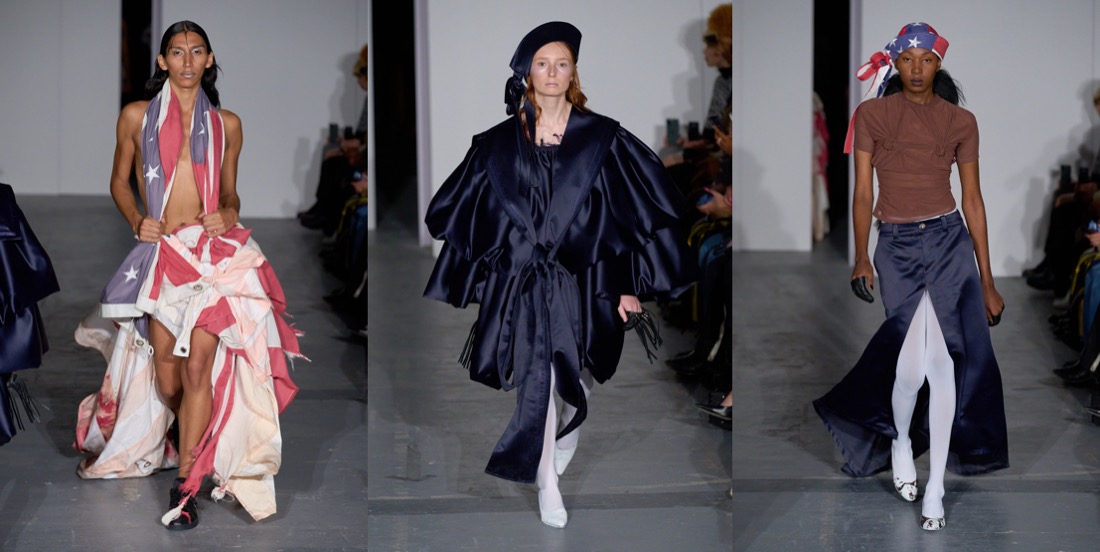
Five years ago, with bold attitude and confidence, Vaquera started out in New York and quickly became the most-talked about and hard to classify emerging brand in town. In 2022, the brand opens Paris Fashion Week and is backed by Dover Street Market, and yet it’s still difficult to put a finger on it. Patric DiCaprio and Bryn Taubensee aren’t doing conventional, mainstream fashion, but somehow manage to keep their avantgarde-ness commercially attainable: think great, over-sized jackets and too-cool-to-be-true denim. “We’ve really been pushing toward having more commercial clothing and that is still really important to us,” Taubensee said backstage of the spring-summer 2023 fashion show. “But it’s also important to remain true to what we did this for, which is expressing ourselves.” Enter American flag dress, made from faded flags that were stolen by DiCaprio’s friends from houses on Fire Island, its construction more ambitious than the one from their debut. A deconstructed wedding dress – safety-pinned at the bodice, spliced down the middle, and worn over pink stretch satin athleisure and denim cut-offs – once belonged to DiCaprio’s mom. They aren’t likely to put these pieces into production, but they are representative of the Vaquera spirit, which is irreverently anti-establishment. That irreverence came across in metallic “polo” shirts stitched with a lassoing cowboy instead of a mallet wielding polo player. Meanwhile, the acid wash denim’s faint yellow cast came from what Taubensee described as soy stain; “we actually use soy sauce,” she explained.
Collage by Edward Kanarecki. Don’t forget to follow Design & Culture by Ed on Instagram!
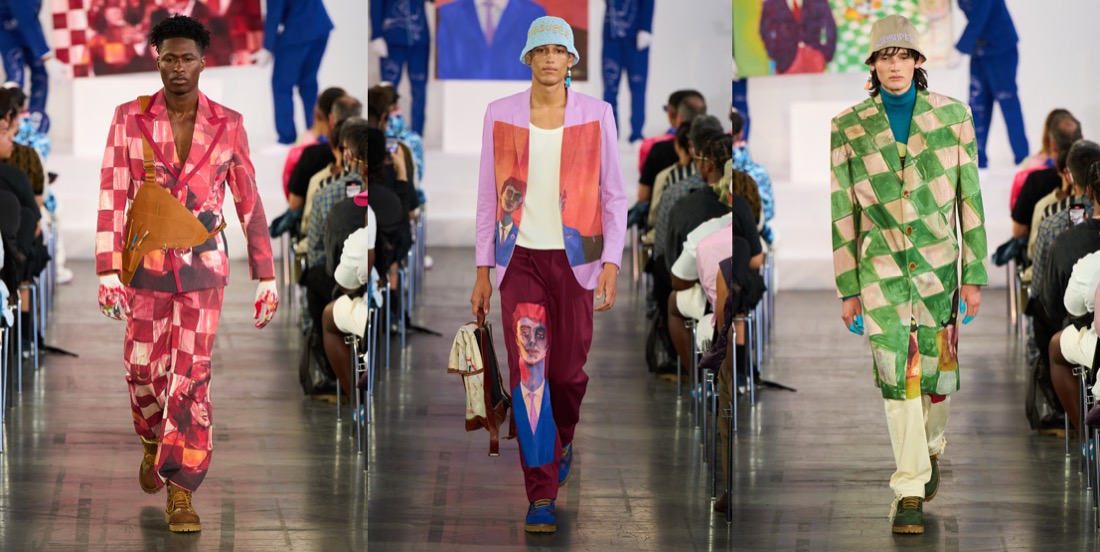
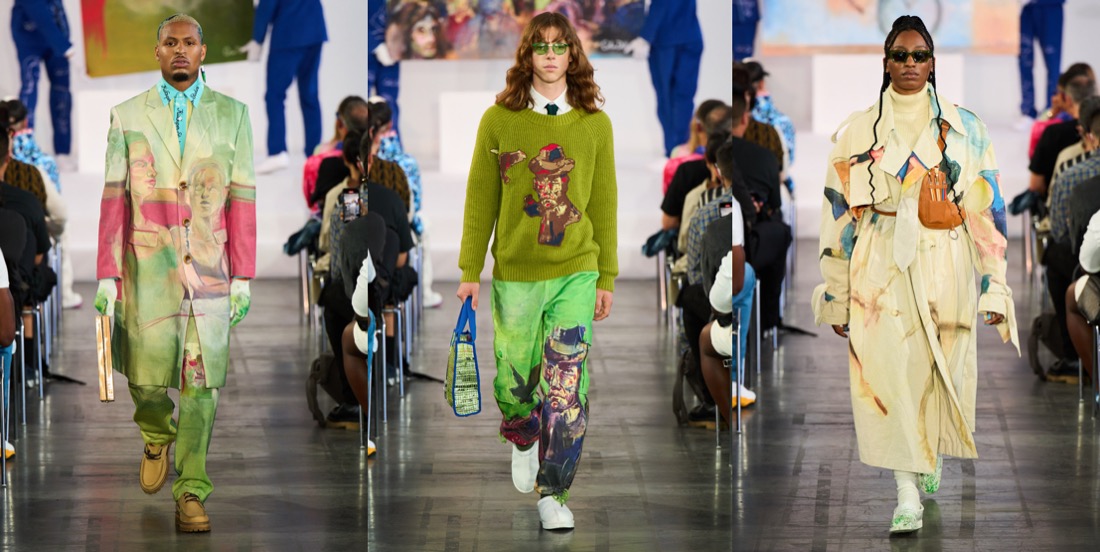
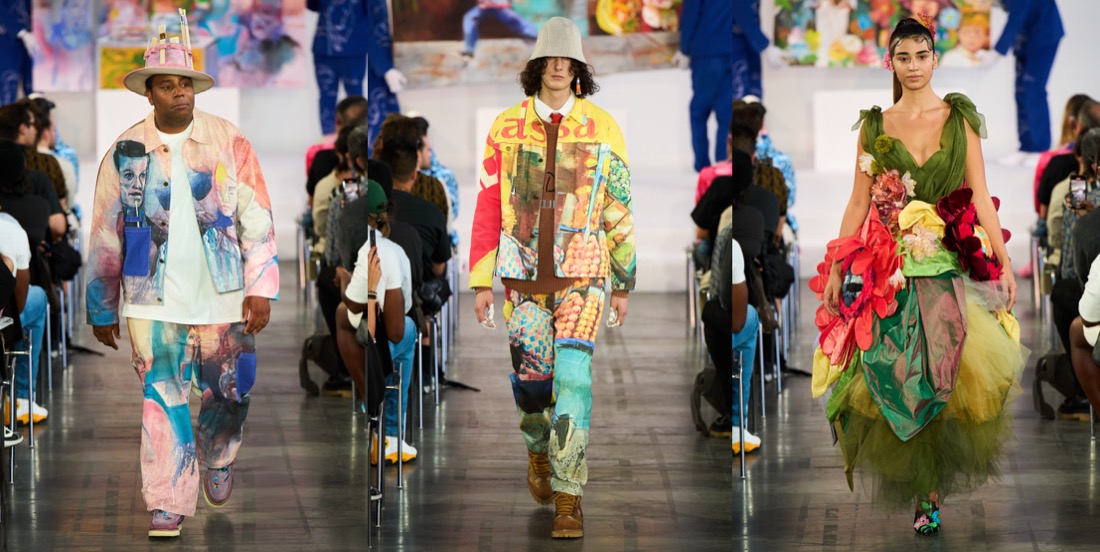
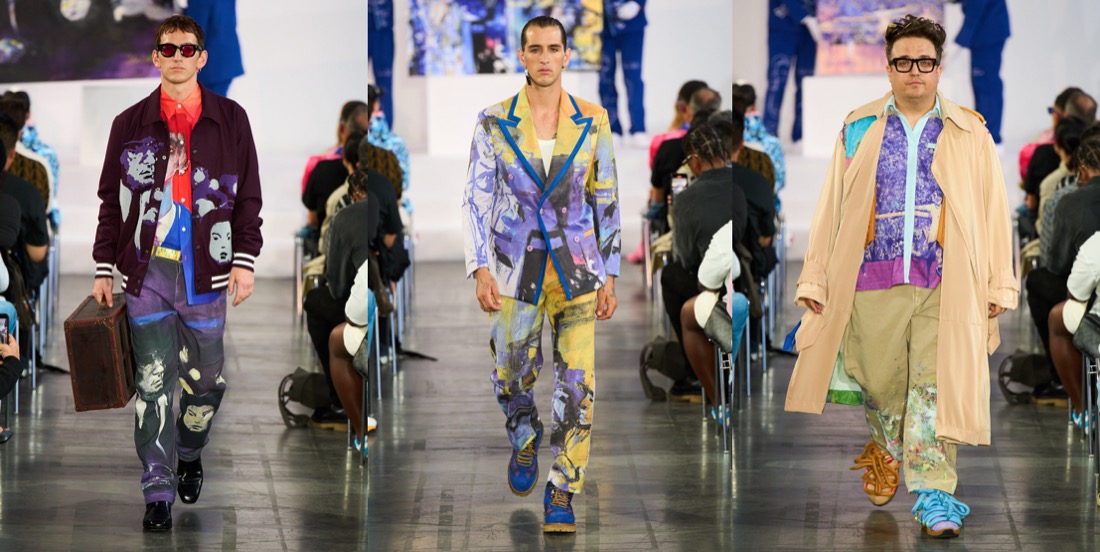
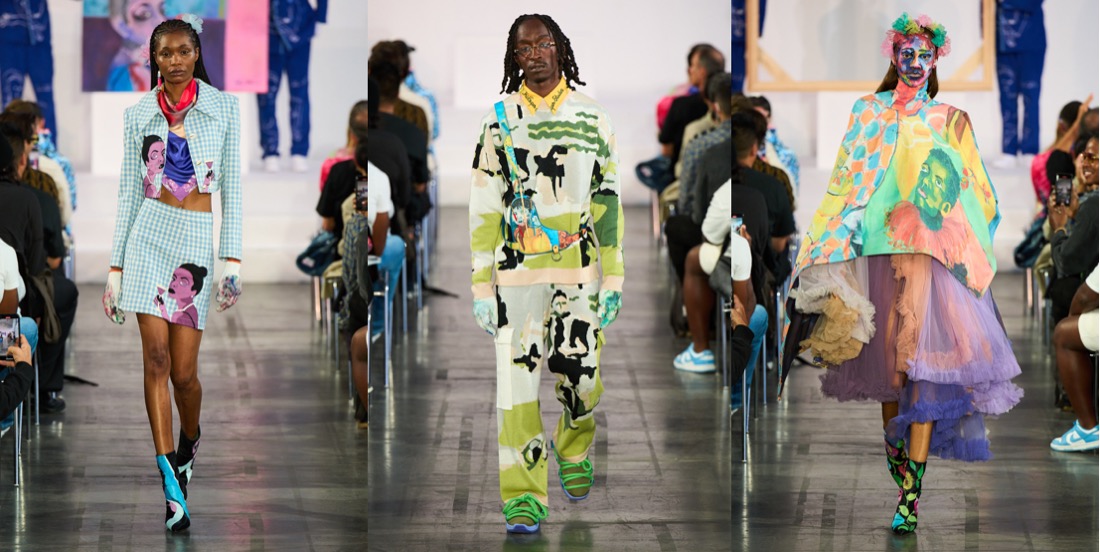
Look 21 in KidSuper‘s spring-summer 2023 collection – a half-realized, elusive portrait on a pink sweater and pale cords – was based on an original painting called Con Artist. It was one of 23 Colm Dillane paintings, which in turn inspired the 23 looks in his KidSuper collection that were auctioned off by Christie’s Lydia Fenet live during his show. As each model walked, the audience had its chance to bid. The big spender was Russ – a close friend of Dillane – who apparently walked away with several paintings including the night’s headline sale, The Girl That Breathes Life Into The Inanimate (Lot and Look 23). After a fierce bidding war, Fenet eventually banged her gavel after Russ’s $210,000 bid went unmatched. In total, the paintings ‘sold’ for $529,000. This was all in itself a piece of performance art designed ingeniously to stretch the boundaries of the fashion show as visual theater. Dillane said afterwards that as he’d prepared for his first on-schedule Paris show, he’d been to some others and had been struck by the divide between audience and subject. “And I was like, how do I get people to interact and participate, and make it an experience. And I had always wanted to do an art show as a fashion show. And thinking about participation in an art show, that’s where the auction idea came from.” The auction was designed to animate the fashion show through artistic intervention. It was clever, fun, and funny. Apart from the clues to the process we were subject to in the names of some of the paintings, Fenet – who is absolutely masterful at extracting serious sums of money with the lightest of rhetorical touches – was apparently representing an auctioneer named Superby’s. We got no indication of her commission. When the final painting – named The Finale – emerged stretched on its frame, there was a hole where the on-canvas face of one of its subjects “should” have been. A model’s painted face loomed through it. Just as Fenet’s gavel went down, the canvas whisked from the frame to reveal itself as the upper layer in her tulle pentimento dress. This show raised many interesting ideas, including the notion of clothing reproduced with original artworks acting as wearable editions of those pieces.
Collage by Edward Kanarecki. Don’t forget to follow Design & Culture by Ed on Instagram!