Men’s – Emotions. Valentino AW20

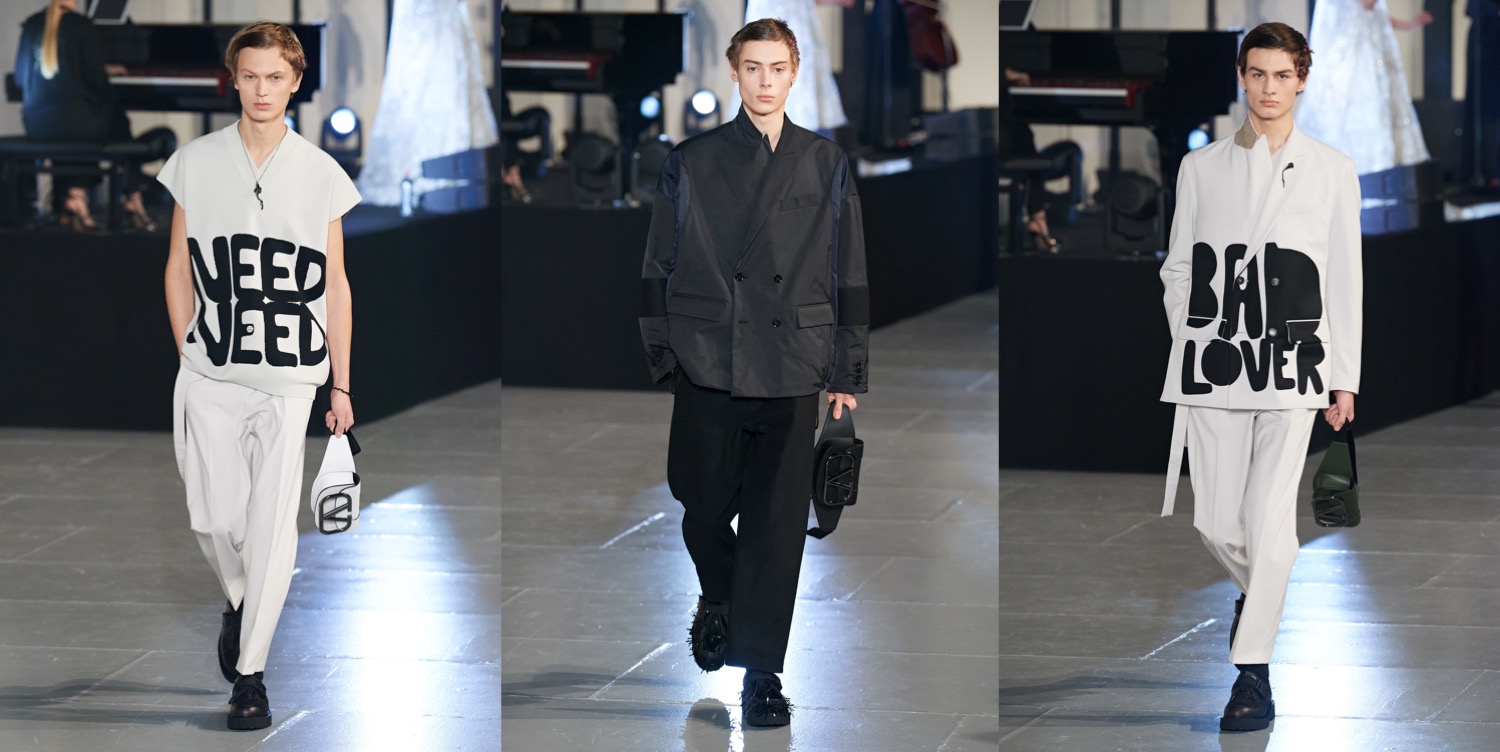
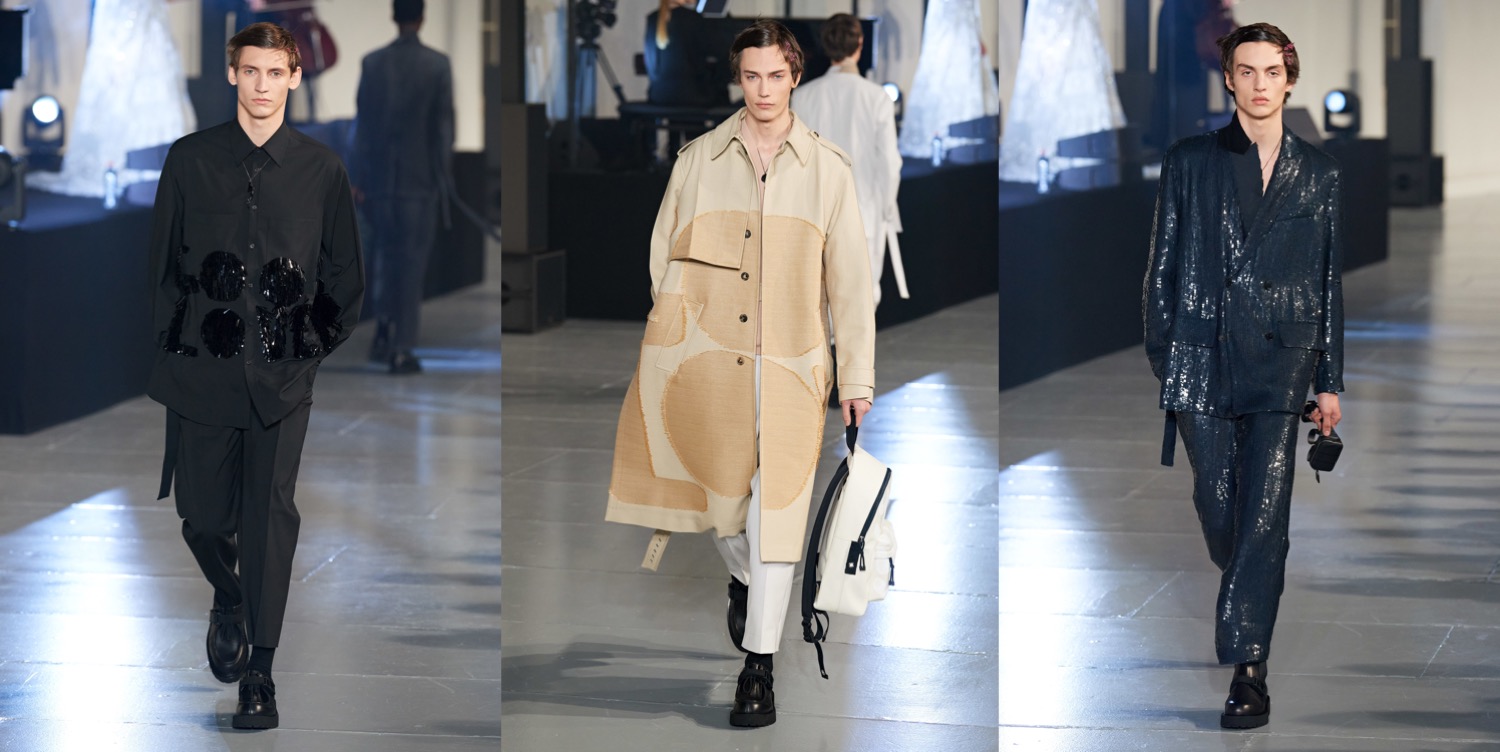
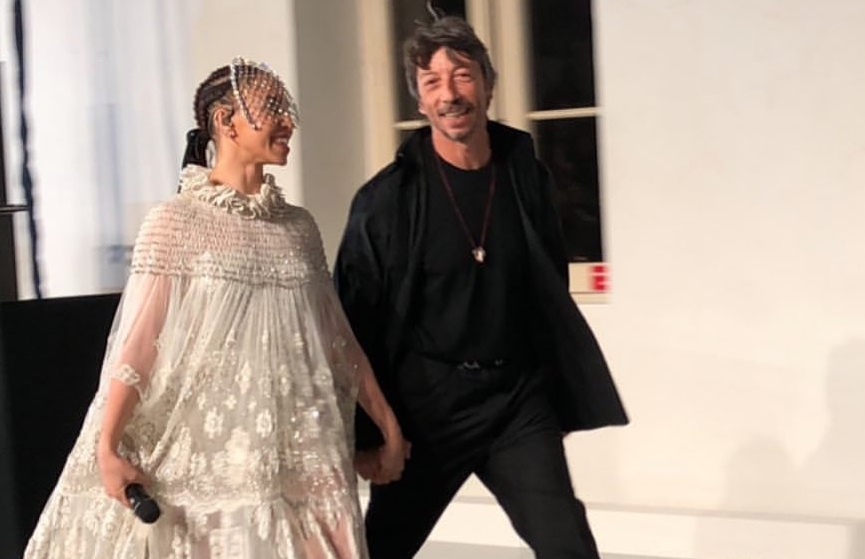
FKA Twigs performed live three of her brand new songs during Pierpaolo Piccioli‘s Valentino autumn-winter 2020 collection for men. Cloaked in iridescent Valentino haute couture with her face half-obscured by a crystal fencing mask, Twigs’s emotional and ethereal performance was a lot of competition to put up against the models who were walking past. Of course, nobody cares about the clothes when you’ve got an intimate concert with one of the most intriguing artists of our century in front of you. Still, when you start focusing on the looks, you see right away that this is one of the best men’s line-up coming from Piccioli. Wearing coats and jackets stamped with photo prints or embroideries of flowers are every guy’s new classic, according to Piccioli (and I completely agree with that!). The designer subtly let feminine notions into the evolving men’s wardrobe: Valentino boys carried small cross-body bags, some utility pouches, but others indistinguishable from the mini-bags on chains that have been gendered as female for generations. The closing look was the precise defintion of the designer’s vision of the new man’s style: a softly tailored suit, entirely covered in navy sequins. Incredible. “Men are changing much more quickly in the last two decades because of women”, Pierpaolo summed up.

Collage by Edward Kanarecki.
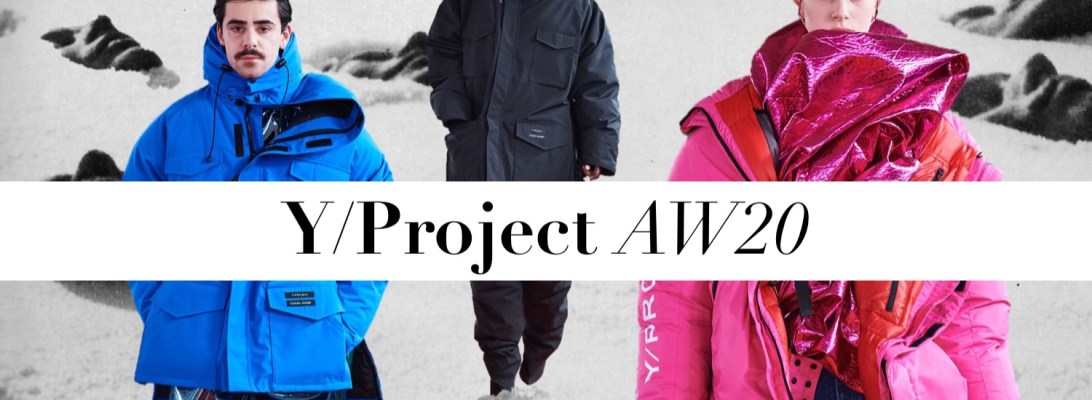
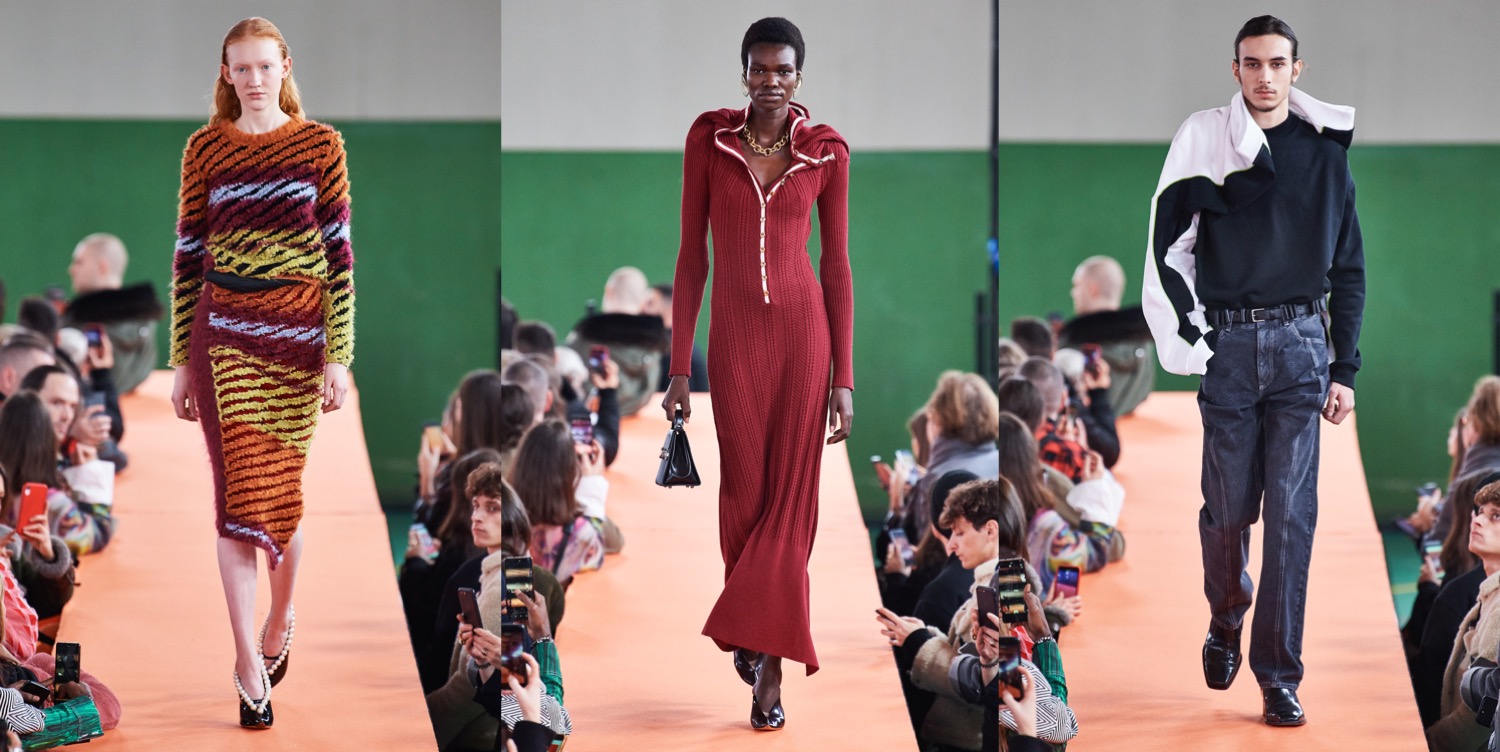
Men’s – Fashion Fun. Y/Project AW20

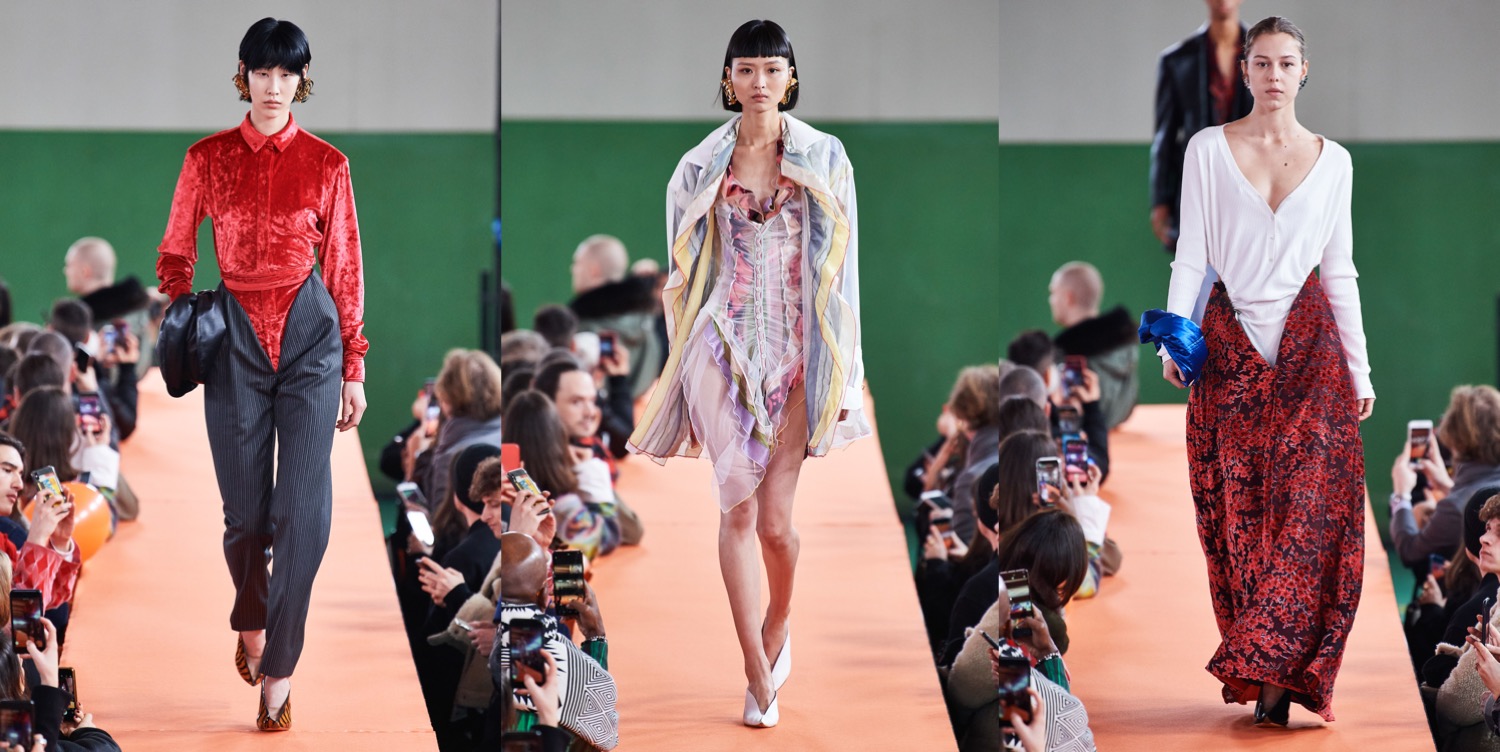
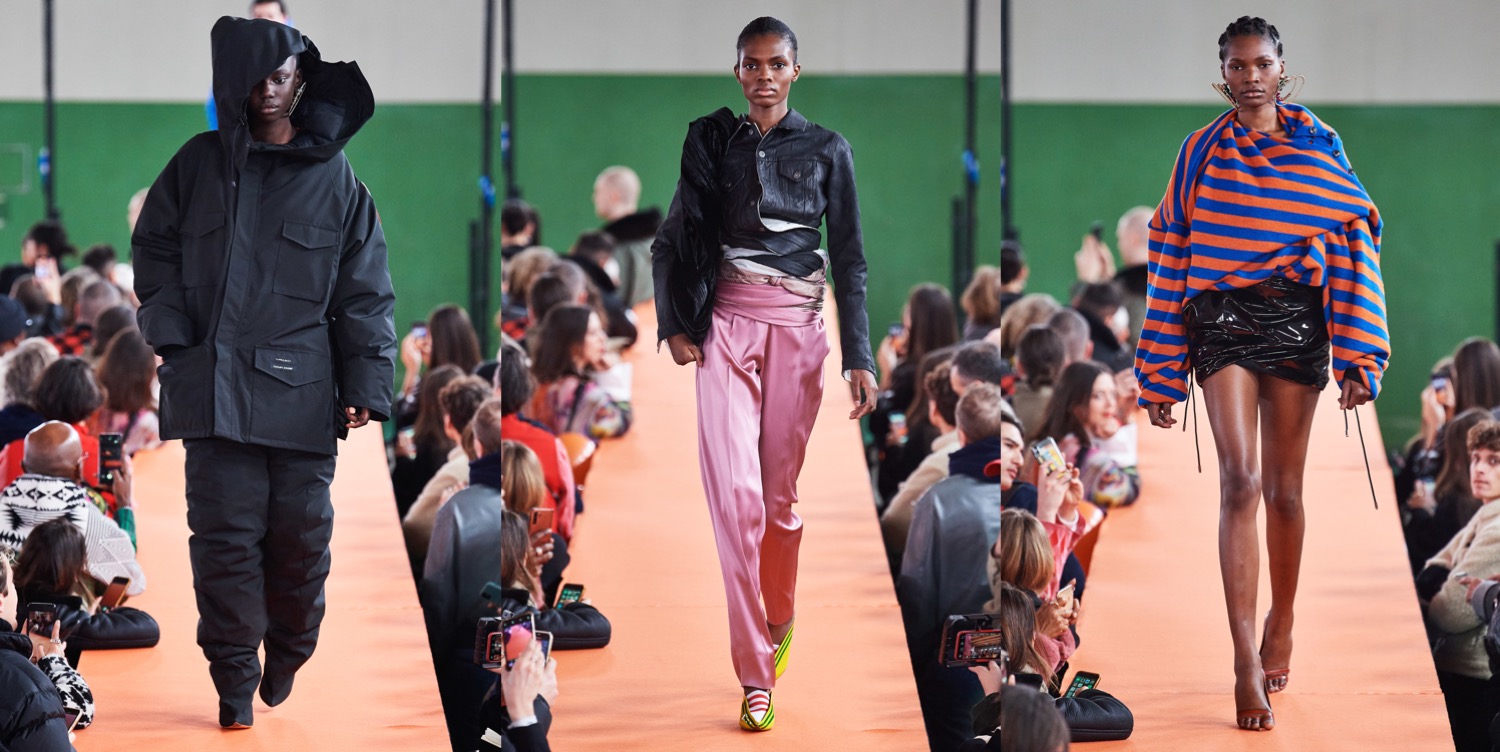
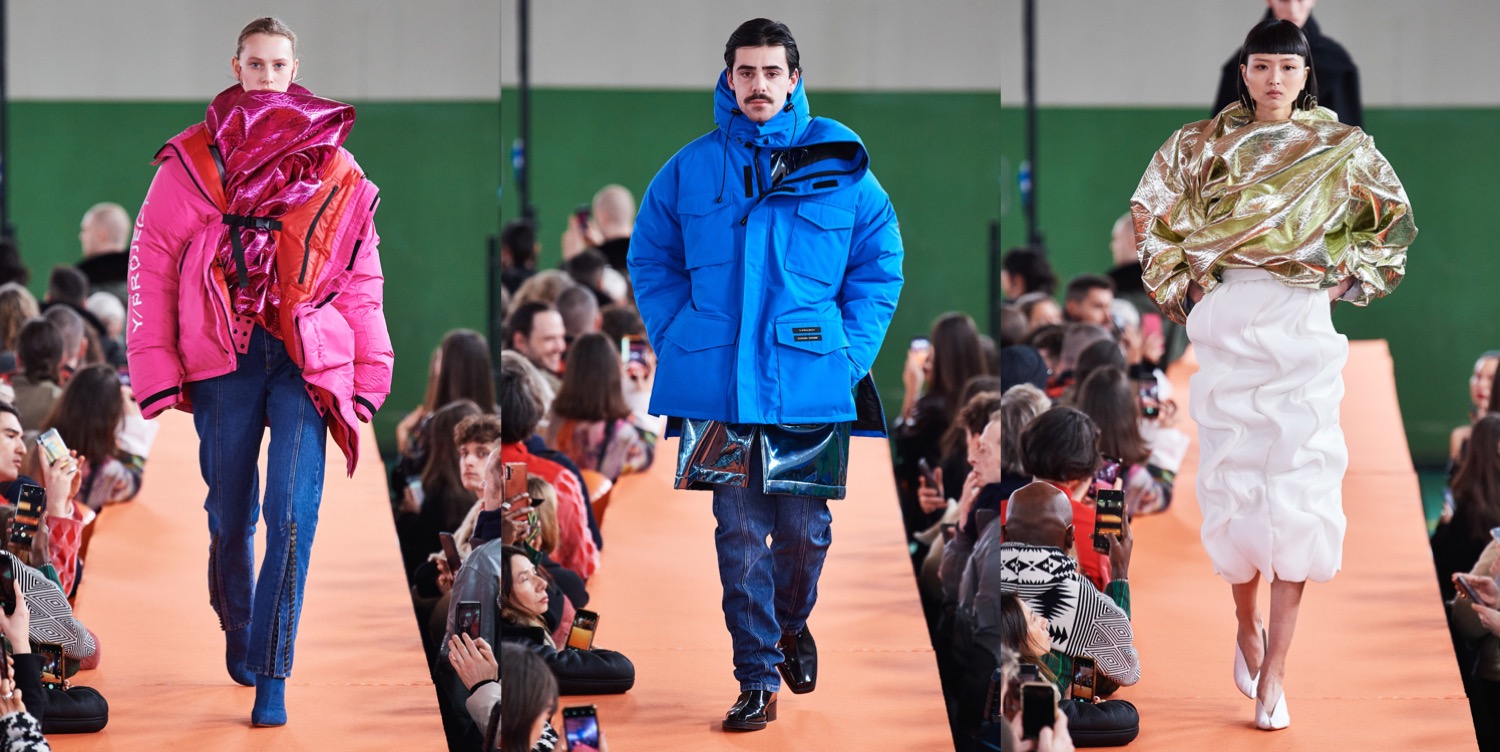
The huge pit packed with orange baloons inside of Y/Project‘s runway had a message: fashion is fun. For the label’s autumn-winter 2020 menswear and pre-fall 2020 womenswear, Glenn Martens wanted to bring on optimism that comes with dressing up. Martens distorts his clothing, amplifying details and suppressing others with a wit and invention that really surprises the eye. This season these distortions included a clash of Elizabethan corsetry against corporate dressing and duvet, winter-sportswear (a collaboration with Canada Goose is coming!). Disemboweled suiting saw strips of satin, sometimes black, sometimes shades of blushy pink, beautifully meshed and promoted to the exterior, a technique carried over into a contoured minidress for women. Martens, as usual, does exciting and far from obvious texture combinations, from mohair knits to heavy velvets. A white lined women’s denim shirt and skirt were mind-bogglingly beaten, twisted, and whipped into what resembled a piece of wearable art. There must be some paranormal force standing behind Glenn’s organic, fluid-like silhouettes.

Collage by Edward Kanarecki.
Men’s – There’s Optimism. JW Anderson AW20

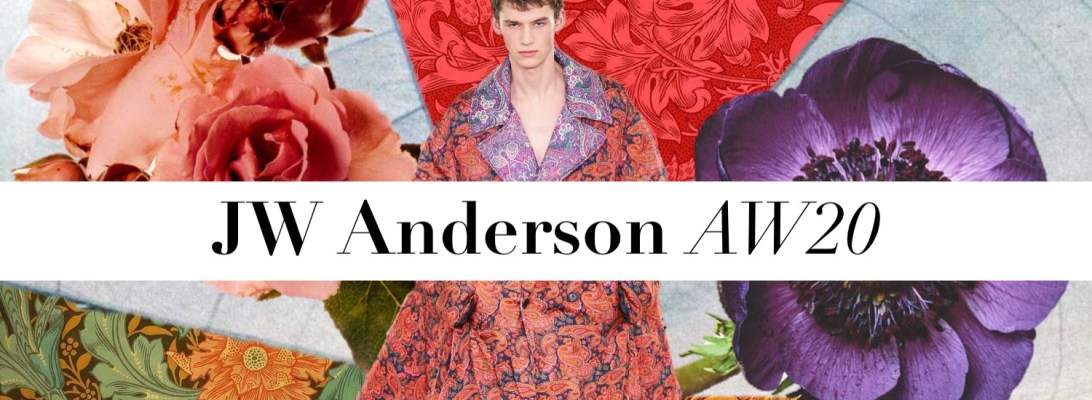
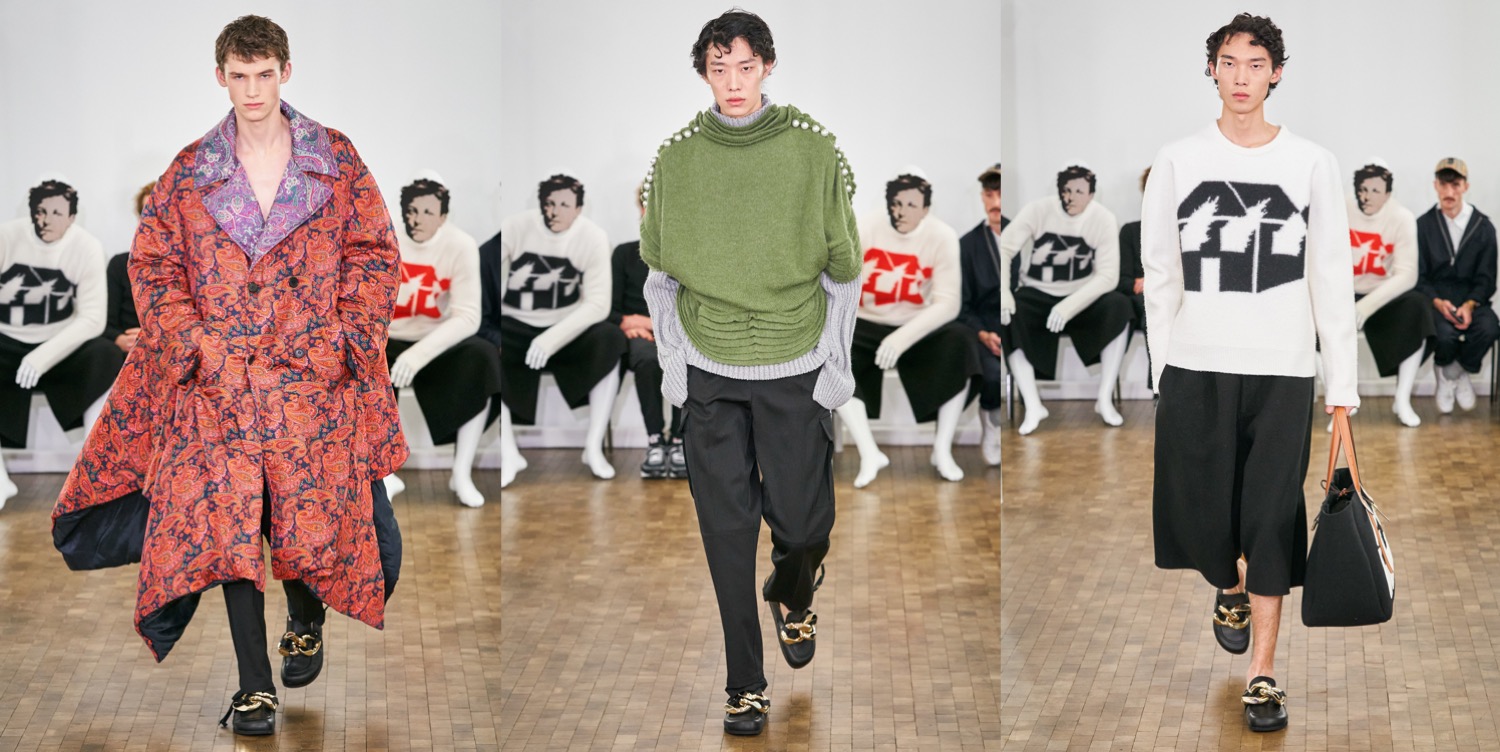
For the autumn-winter 2020 season, here’s where you should go for the best coats: JW Anderson. At his name-sake label, Jonathan Anderson offers gorgeous blanket-wrap poncho-like coats, made in a number of variations: classic grey wool, in paisley print, in hounstooth… some come accessorized with heavy gilt chains swathed as belts (the designer also used them as shoe jewelry and as sewn-on half-necklaces). A pictogram of a house on fire, a print that appeared on knits and in the general imagery of the collection, was Anderson’s take on AIDS activist and mixed-media artist David Wojnarowicz, who sprayed these on derelict East Village buildings in 1982. Anderson is known for bringing almost forgotten art to the ambiance of his shows – both for his own label and at Loewe. But this rediscovery struck a deeper chord for the generations protesting against establishment intransigence in the face of apocalyptic crisis. It resonated in Anderson’s remark at the end of the show. Amid the anguish of the AIDS fatalities in the 1980s and 1990s – which Wojnarowicz documented, fought, and eventually succumbed to – “it felt like the end of the world,” the designer observed. “But it wasn’t. As much as some of it’s really heavy, there’s an optimism. There will be a solution.”

Collage by Edward Kanarecki.

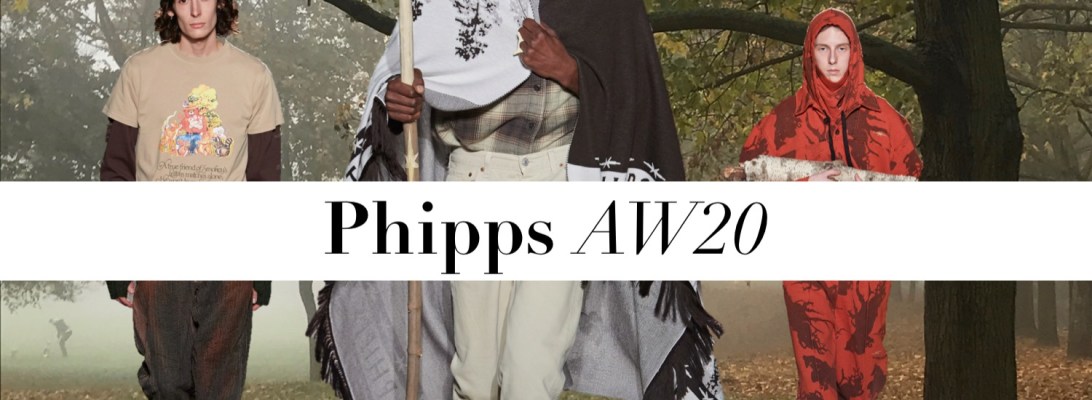
Men’s – Close To Nature Wherever You Are. Phipps AW20

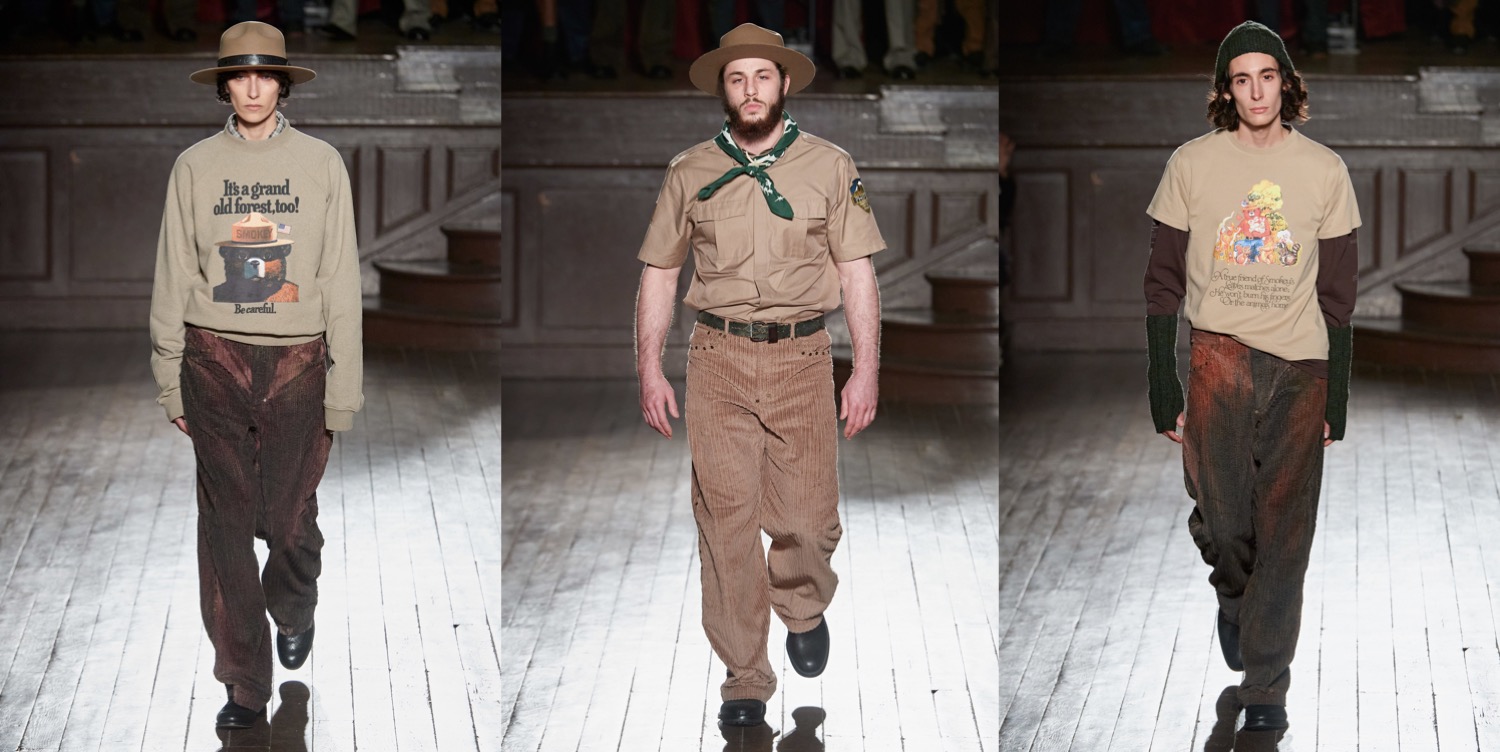
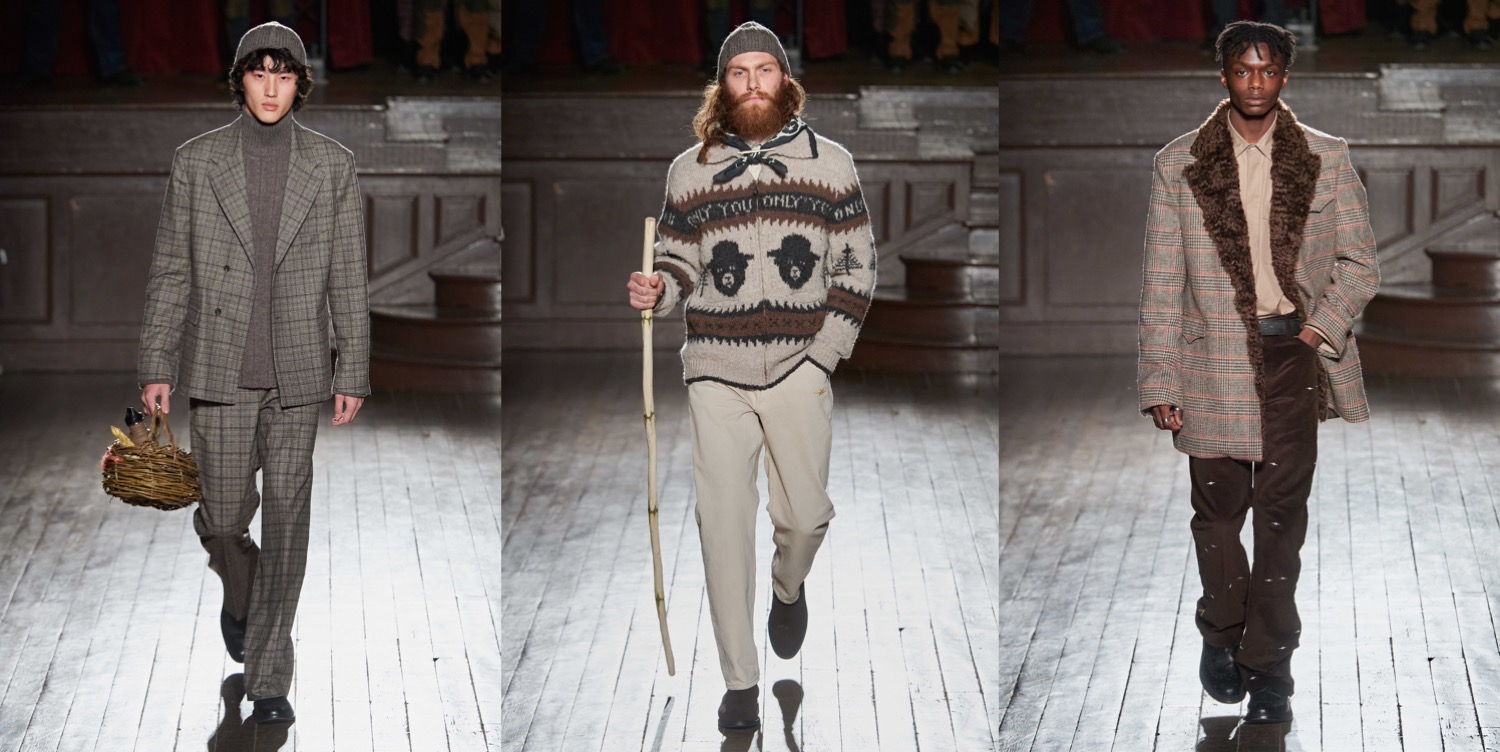
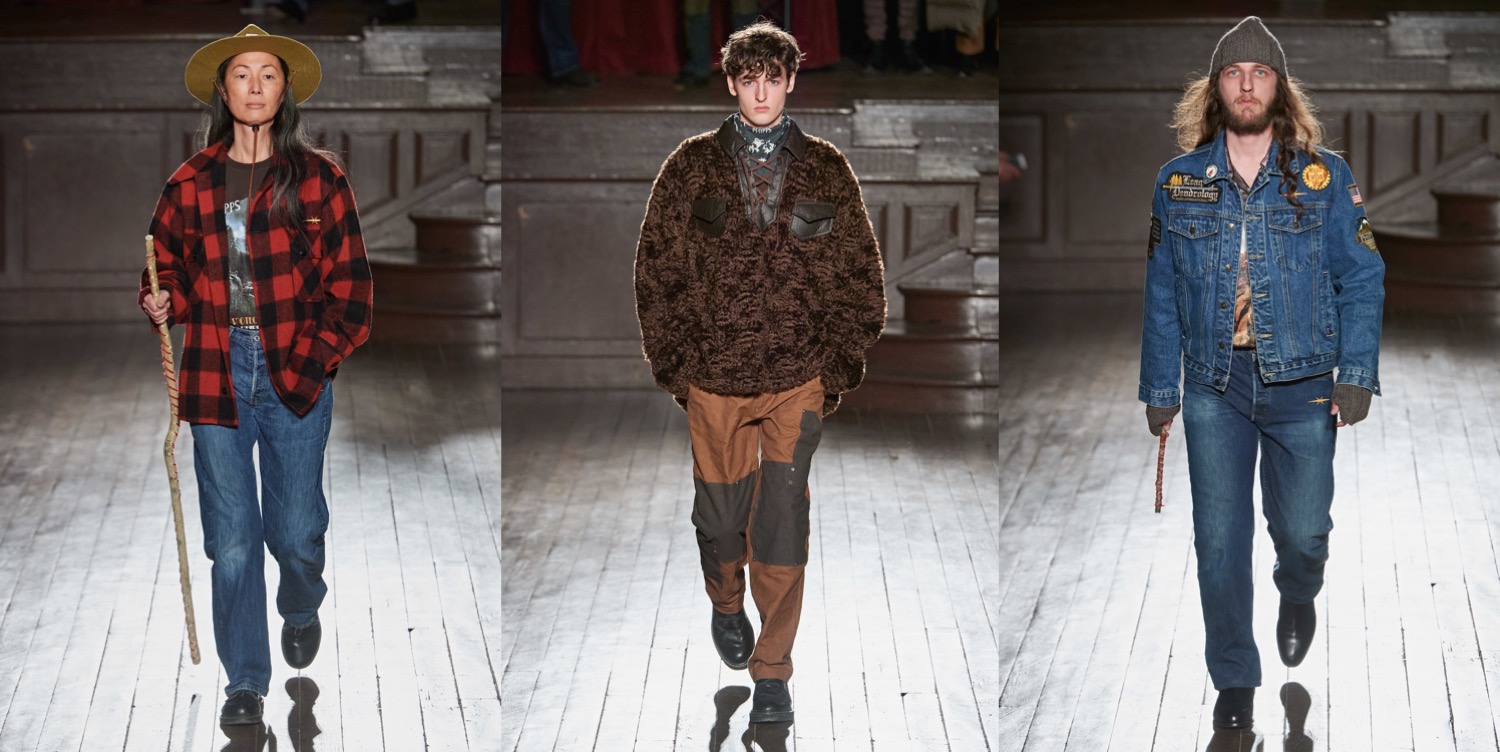
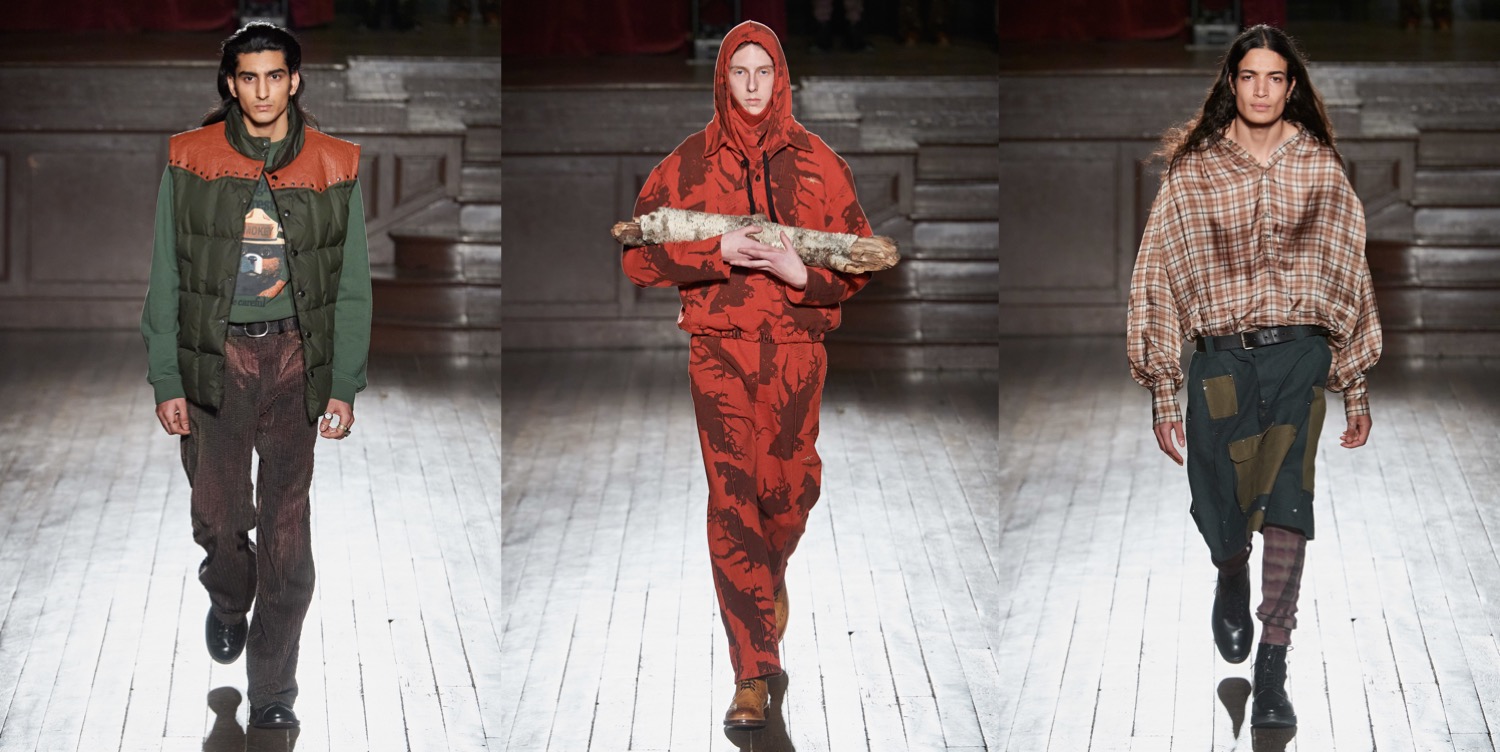
The American brand named Phipps might not be the most “Parisian” and “fashion” of them all. But Spencer Phipps seems not to care. More importantly, since starting his label few years ago, he has been seriously devoted to sustainability (before it was “thing” for the industry). This season’s “Treehugger: Tales of the Forest” collection caught everyone by surprise with a collaboration that has to be Smokey Bear. Even the authorities at the U.S. Forest Service were perplexed at first, the designer said. But once the deal was signed, Phipps had decades of archives to riff on: Smokey turned 75 last year. Despite teen-camping nostalgia and authentic lumberjack style  – one of the models was, in fact, a lumberjack! – the designer noted that this collection was “a big step up in terms of luxury.” Placing a concern for nature within the luxury space is a serious challenge. To get there, Phipps said he tried to focus on suiting in a very smart way, sourcing cloth in northern England and paying close attention to details such as linings and buttons. He also used Steiff (the teddy bear brand) materials for sweatshirts and embellishment. “It’s biodegradable, very artisanal, and it has a luxury appeal,” he mentioned. “It’s not faux fur made from plastics. It’s a more traditional way of working.” Another favourite: the forest shaman spirit behind the huge blankets worn as shawls and whimsy, wooden “accessories”. Phipps’ commitment to slow fashion also prompted him to introduce what he’s calling his “gold label” – a range of curated vintage pieces, embellished and elevated to “treasure items” with a stylized gold star or forest ranger patches. That studied mashup included market-found jeans and flannels, heirloom pieces, and even a pair of jeans Phipps’s mom made back in the 1970s. “I’m just focusing on the lifestyle of sustainability. I’m not making you a new plaid shirt because there are so many out there already, and they’re beautiful,” the designer said. If only the big brands got the memo…

Collage by Edward Kanarecki.

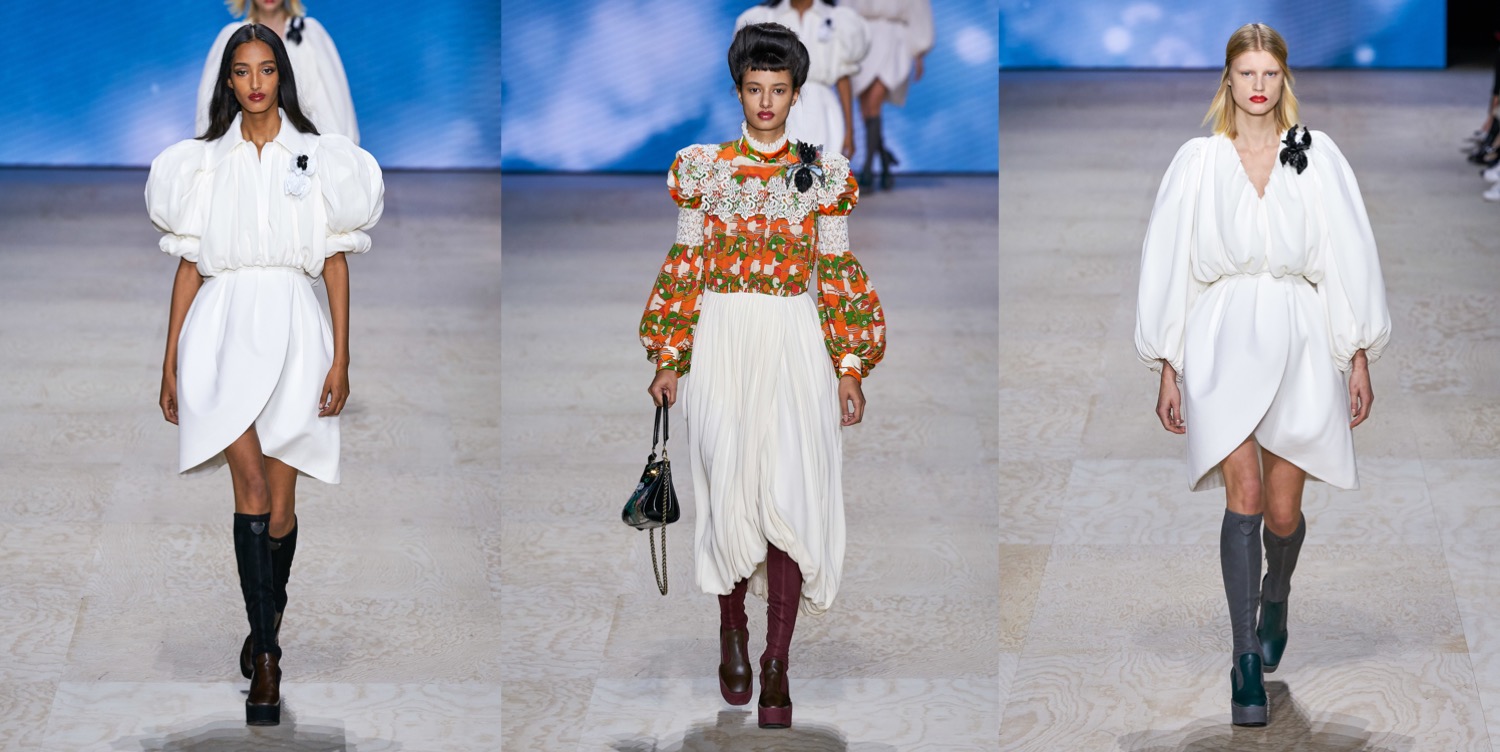
Belle Époque Today. Louis Vuitton SS20

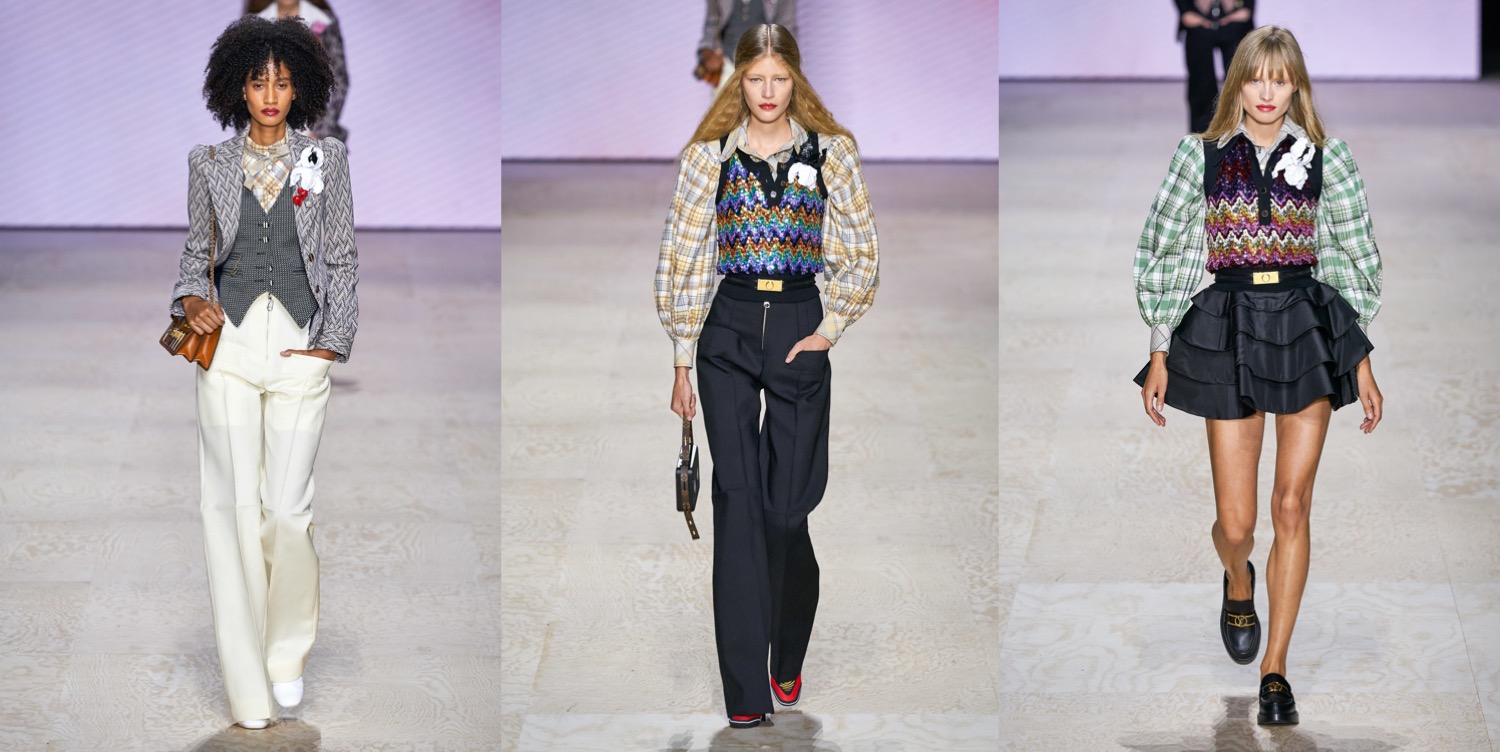
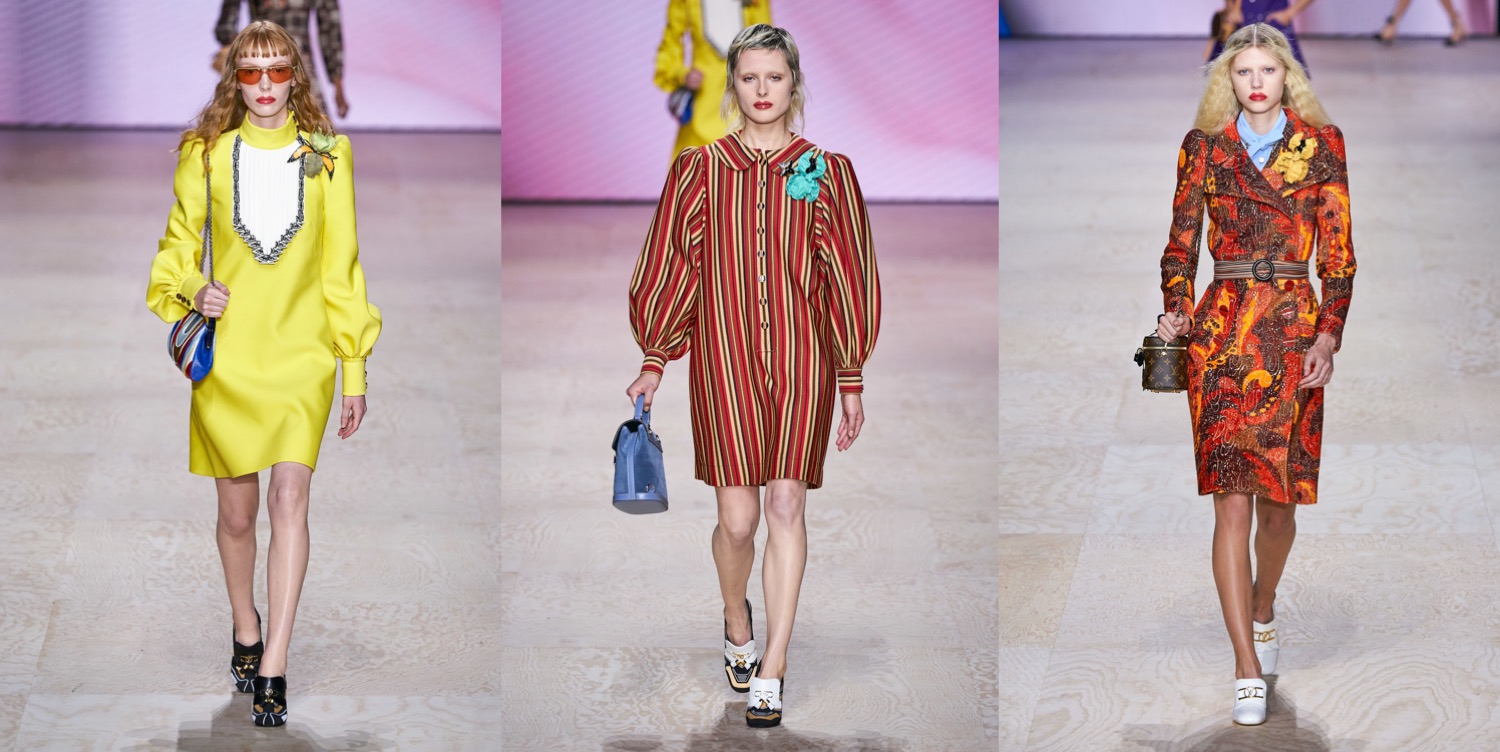
And here is the last collection of Paris Fashion Week: Louis Vuitton. It’s been a season of joyful nostalgia and bold dressing, and Nicolas Ghesquière ticked both boxes with his line-up. For spring-summer 2020 Ghesquière took us to Belle Époque–era Paris after his last season‘s venture to the 1980s. “It’s a part of French history that’s very interesting in art, as well as culturally, in terms of emancipation of women, and, of course, in literature with Proust,” he explained. It’s also a period that more or less coincided with the birth and rise of the house of Louis Vuitton. In the late 1800s, advances in construction and technology ushered in a new era of travel for the elite, to whom Monsieur Vuitton sold his  monogram trunks. There were many Belle Époque references in this collection: the pouf sleeves of shirts; the iris boutonnières, each one different; the Gibson Girl hairdos, and all the Art Nouveau touches, from the psychedelic swirls of a green jacquard coat to the painterly flowers on dresses to a little leather jacket hand-painted with angelic faces. In a way I miss the times when Nicolas did future-wear: we’ve got Gucci, Paco Rabanne and a bunch of other labels that dig in the past for references. Still, the huge screen that featured super-futurist Scottish musician SOPHIE performing an extended version of “It’s Okay to Cry”  while the models walked the runway somehow matched with the clothes’ historical background. And this sort of time-spanning eclecticism is very Ghesquière.

Collage by Edward Kanarecki.