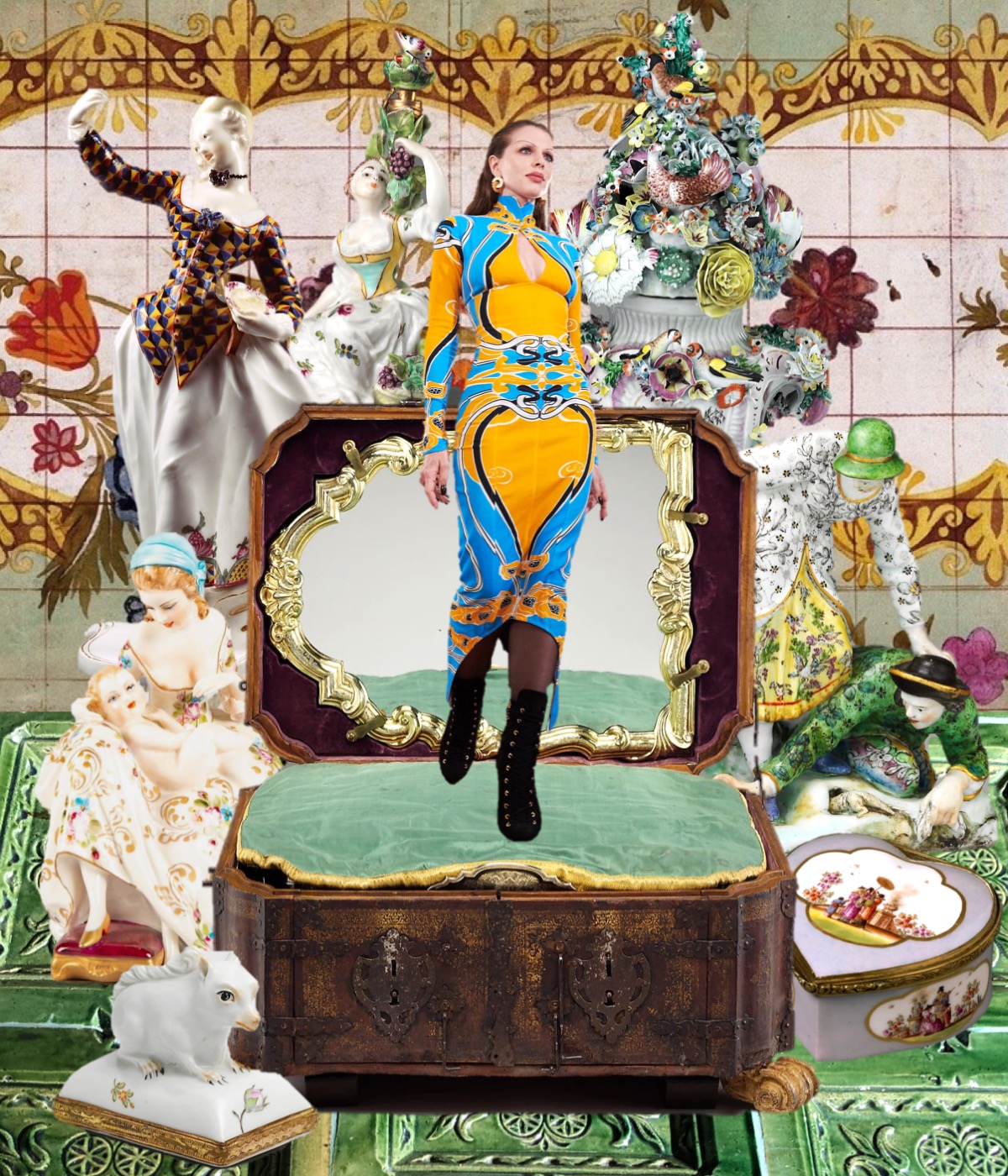
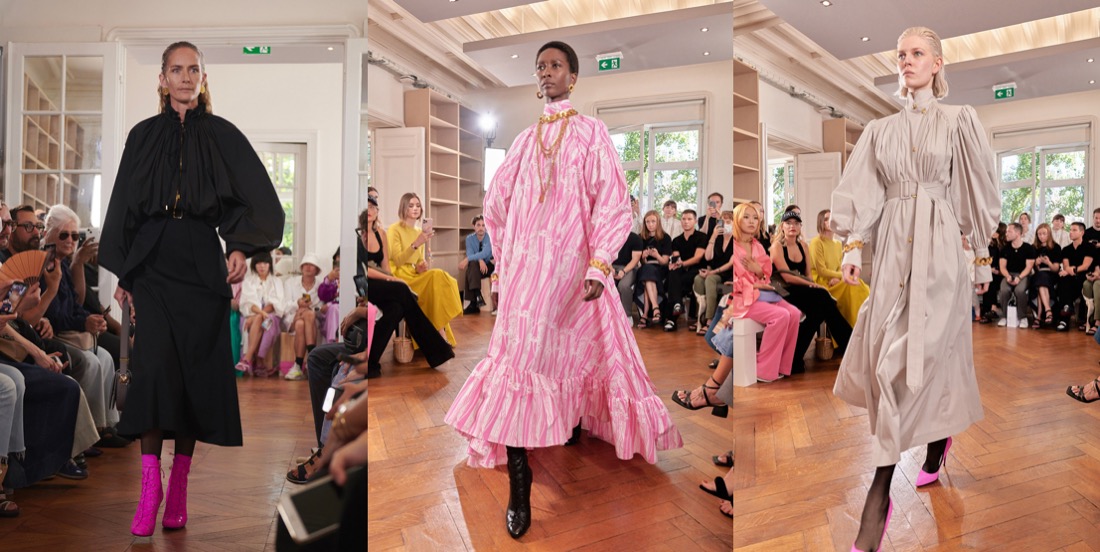
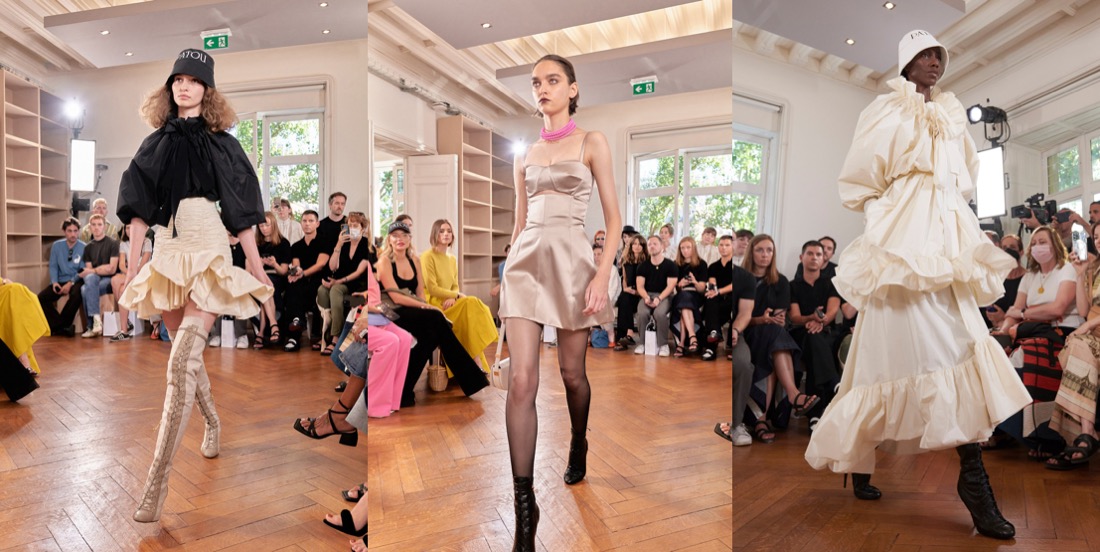
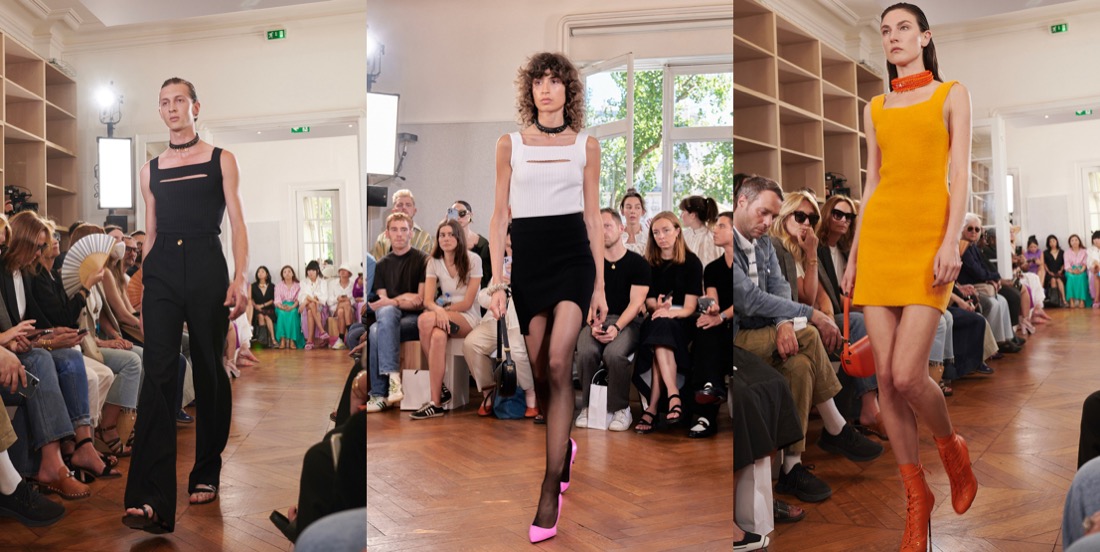
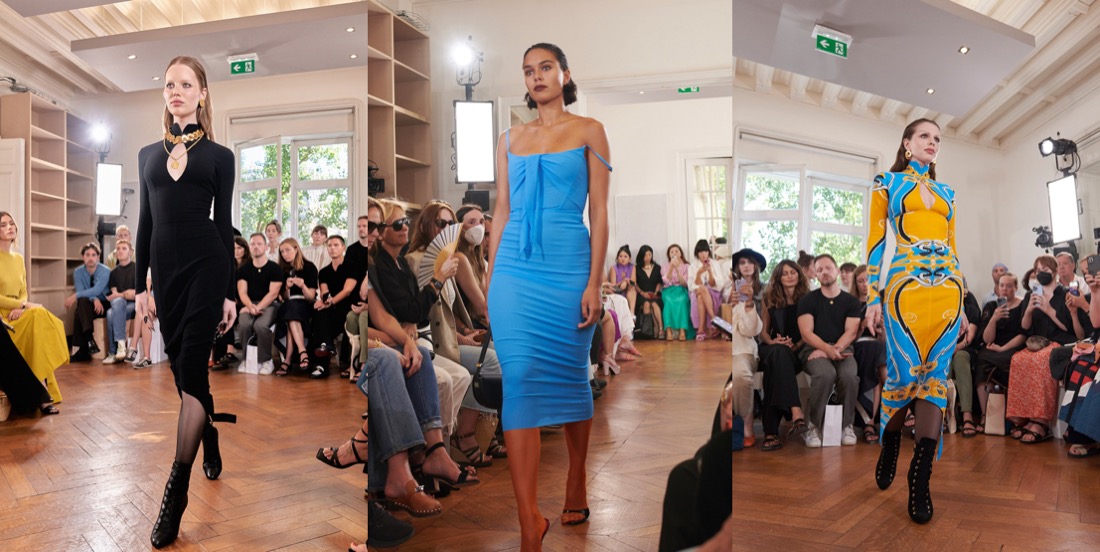
Just before the haute couture fashion week began, Guillaume Henry had his first IRL show for Patou at the brand’s charming headquarters in the Île de la Cité. Over the pandemic, Patou built up its identity as a playful young Parisian brand that’s popular with influencers with a collection that was early into the celebration of exuberant oversized shapes on French themes. Well, post-isolation years, it’s as if Patou has shed its chrysalis and emerged into the sunshine in super slimmed-down body-conscious shape. Tiny mini shifts, hourglass curve-clinging dresses, sexy high waisted bootcuts, little cropped tops. The voluminous flounces had more or less flounced out. And there was Julia Fox, beig THE moment of the spring-summer 2023 presentation. The fact that she topped off the show in a body-dress with an Art Nouveau print is an indication, perhaps, of how far the perception of this brand has penetrated. But Henry always said that his main way of designing is listening to what his coworkers and girlfriends say, clocking who they admire, who they’re talking about, and observing what they’re actually wearing on a daily basis. Which brought him around to the idea of muses – a classification which Fox has redefined in 2022. In Henry’s mind, it was deeper than that – considering that muse culture has very high art French roots. He found photos of young women students carving clay maquettes at the Beaux Arts school in the late 19th century, the time of the Belle Epoque and Toulouse Lautrec, and of female stage and cabaret performers. He wanted to capture something of that in a self-directed way for the worlds young women are inhabiting these days. Well, the collection hardly translated that message, and I honestly missed Henry’s exuberant take on the contemporary Patou wardrobe he has shown us in the previous seasons.
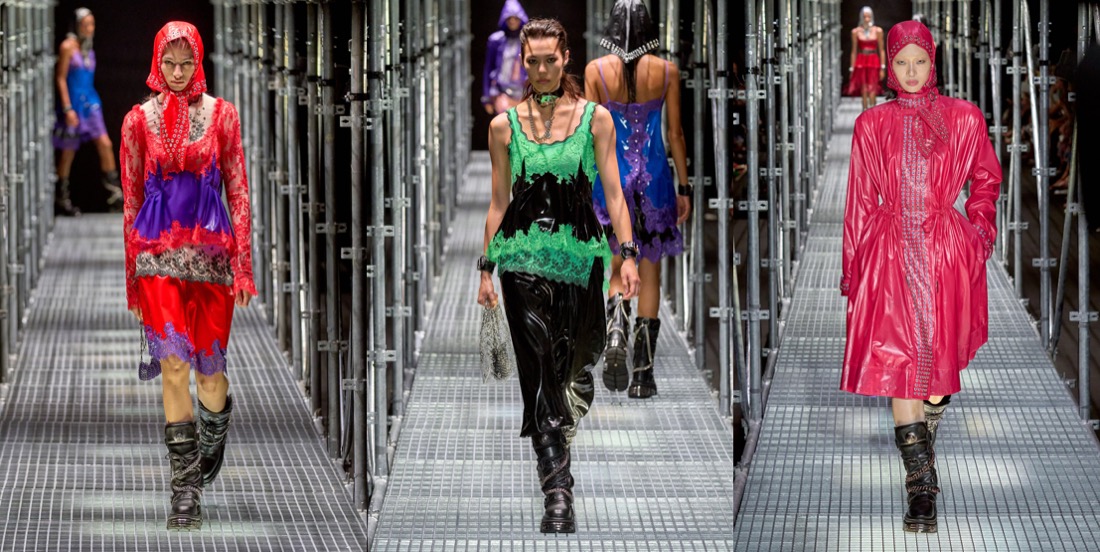
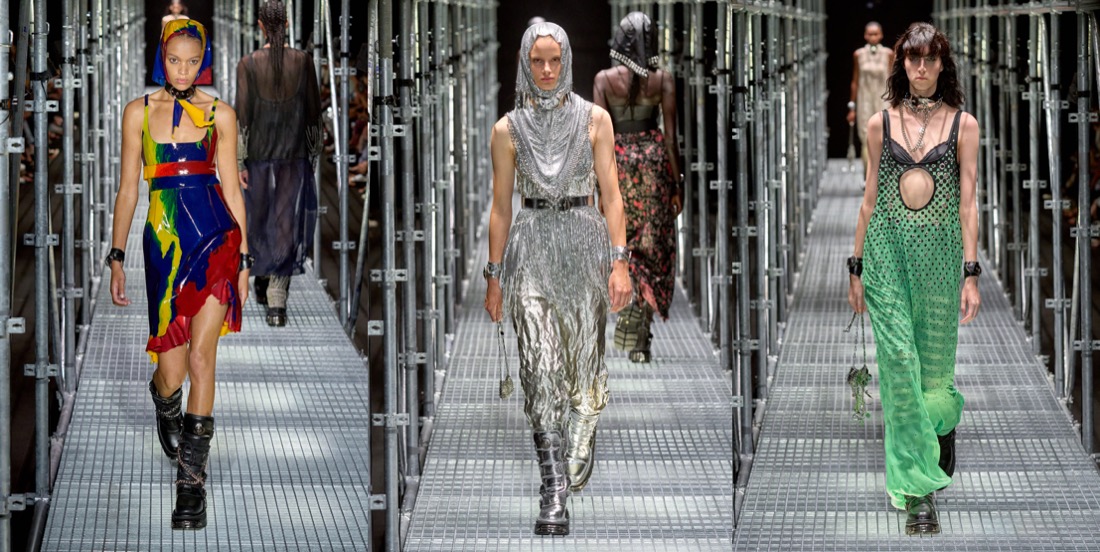
A catwalk built of scaffolding, fenced with metal bars, plenty of grunge notions and kinky latex. Paco Rabanne‘s spring-summer 2023 collection had a surprising twist, as Julien Dossena, the brand’s creative director, departed from his signature romantic-slash-futurist aesthetic. This season, Dossena does not intend to pretend that fashion is detached from what is happening in the world. That’s also why he called this collection “On a Mission.” Latex and PVC, topped with leather straps and chains, looked spicy and highly fetishistic. All the skills of the house went into fabricating a collection which called on the traditional playbook of subversion: grunge slips, punk kilts, fetish rubber, and wipe-clean raincoats, intersected with the house signature silver chain mail. There were also lace, shiny metallic fabrics, experiments with texture and see-through materials that emphasized the power of femininity. The whole “angry Paco” look was crowned with badass, massive combat boots, which were the perfect additions to the tulle ball skirts (very Olivia Rodrigo). Dossena makes no secret of the fact that what’s happening in the world is having a huge impact on him and his work – the war in Ukraine, as well as the U.S. Supreme Court’s decision overturning Roe v. Wade. “It’s about this feeling that there’s going to be a fight, and it’s going to be a long one. So, it’s about expressing that passion and giving clothes for the moment to prepare to fight, because that’s what it’s about: no apologies.”
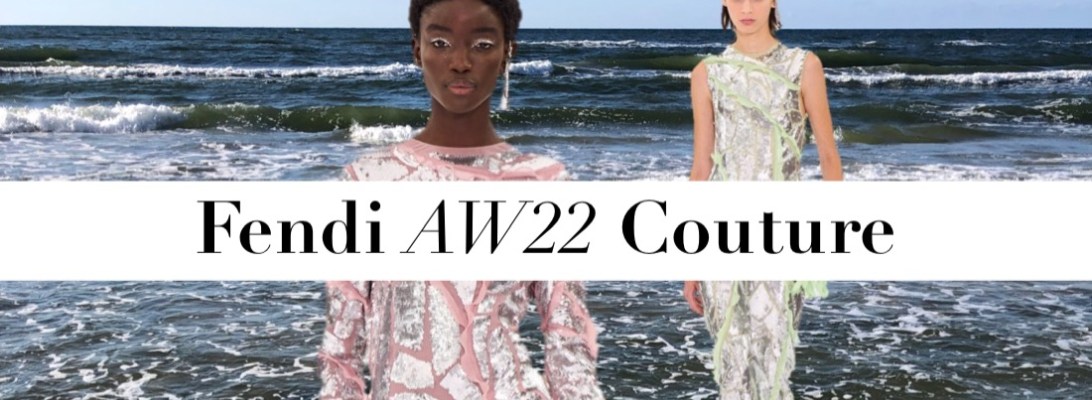
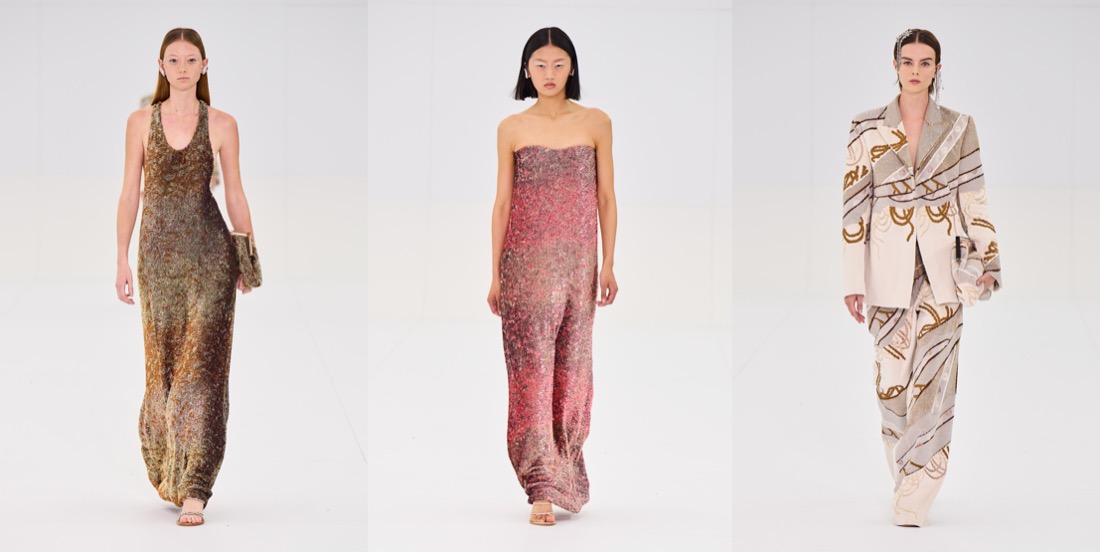
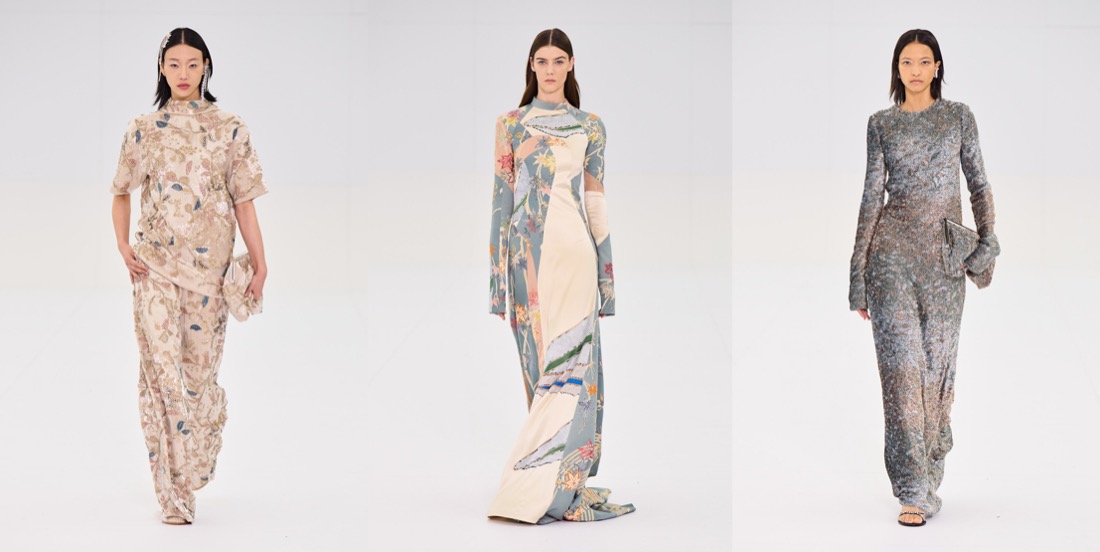
This haute couture season, it seemed that the collections’ backdrops were as important as the clothes. Immense theatralization of the fashion show was a recurring theme, from Schiaparelli to Margiela. So it was quite refreshing to see the total white-cube space as Fendi’s venue. But did Kim Jones‘ couture line-up stand up for itself? “Luxury is the ease of a t-shirt in a very expensive dress.” Karl Lagerfeld coined this permanently true aphorism – one of the sparkling fashion quotes he dashed off in a zillion interviews. Kim Jones didn’t drop it into backstage conversation about his Fendi haute couture collection, but he might’ve, since essentially what he sent out met the Lagerfeldian standard of t-shirt-y elegance; a show of uncomplicated, minimal dressing realized in the most expensive of materials. For starter, a trio of Max-Mara-like looks, two tailored trouser suits and a long turtleneck sweater dress with a slashed skirt and sash in a Vicuna brown. Then came tailoring, and a molded bustier in paler shades of slightly pink-tinged beige: Fendi’s specialty calf leather. And then, calmly on with the abbreviated lines of the t-shirt dressing. There were slim tank dresses, made of rolled metallic bugle-beads, asymmetrical long-sleeved patchworks of Japanese silk kimono fabric commissioned by Jones from traditional makers in Kyoto, and beaded deco-style pajamas. Jones explained in a preview that the pair of outstandingly lovely shimmery silver sequinned bias cut slip dresses had been made from swatches Karl Lagerfeld had commissioned which had been archived and never used. For the finale there were a few spicier, sheer “nude” dresses. In overall, it all looked like a proper couture collection. Not sure it felt like a Fendi one, though, even with all the subtle Lagerfeld references.
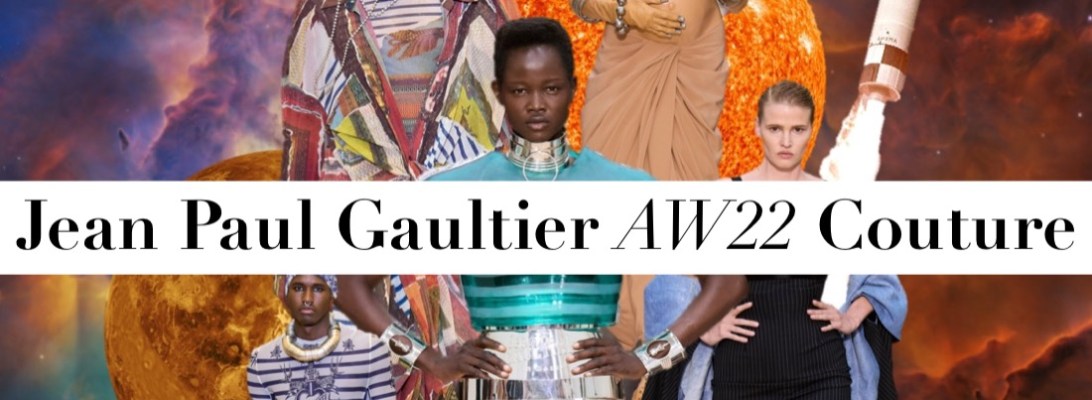
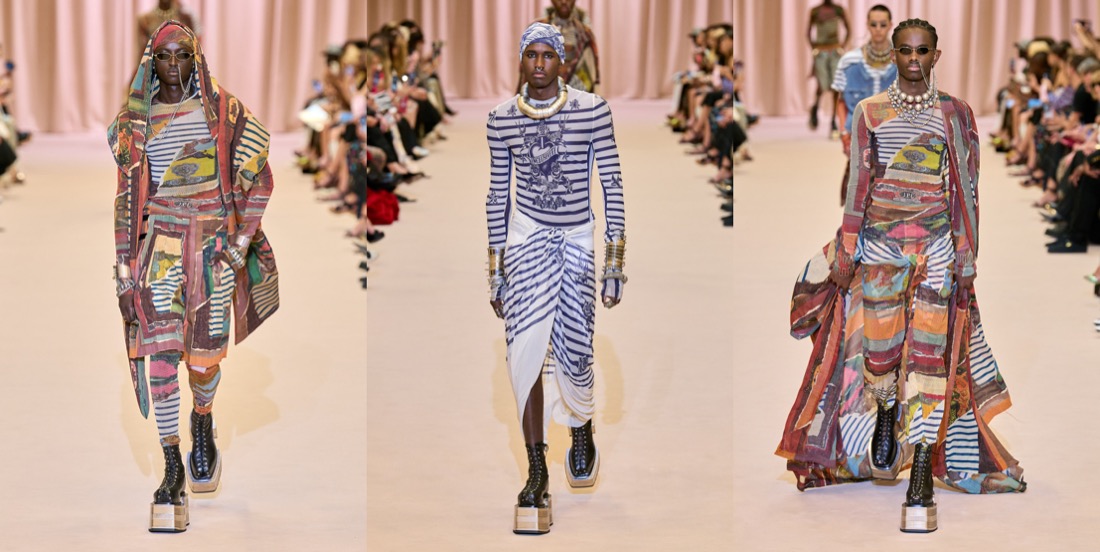
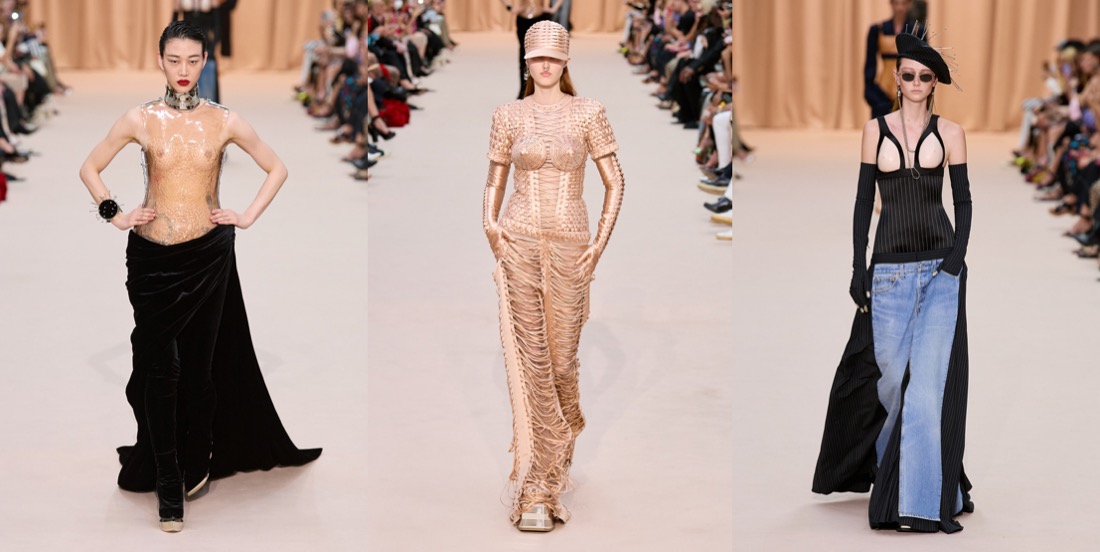
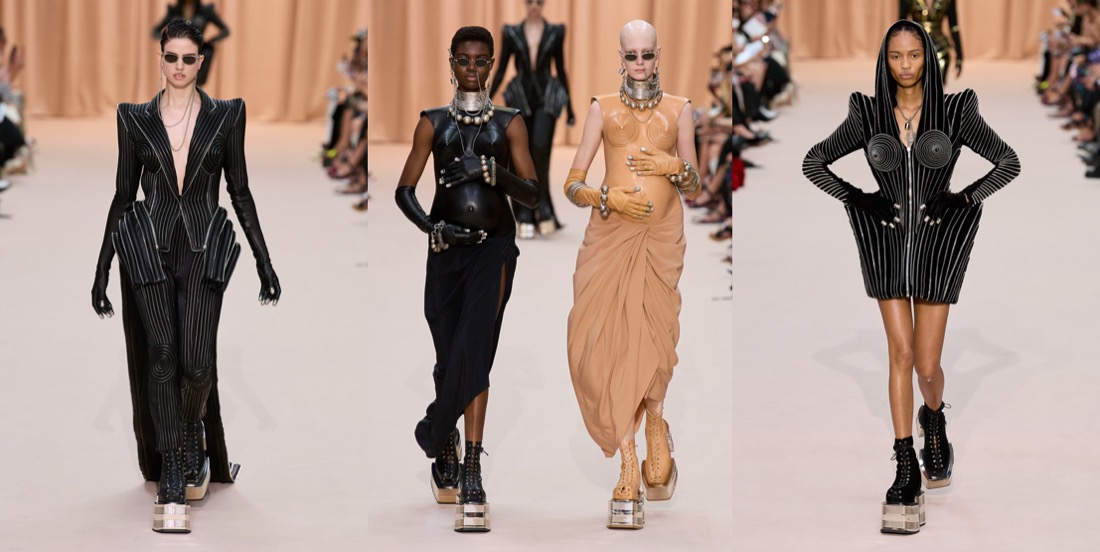
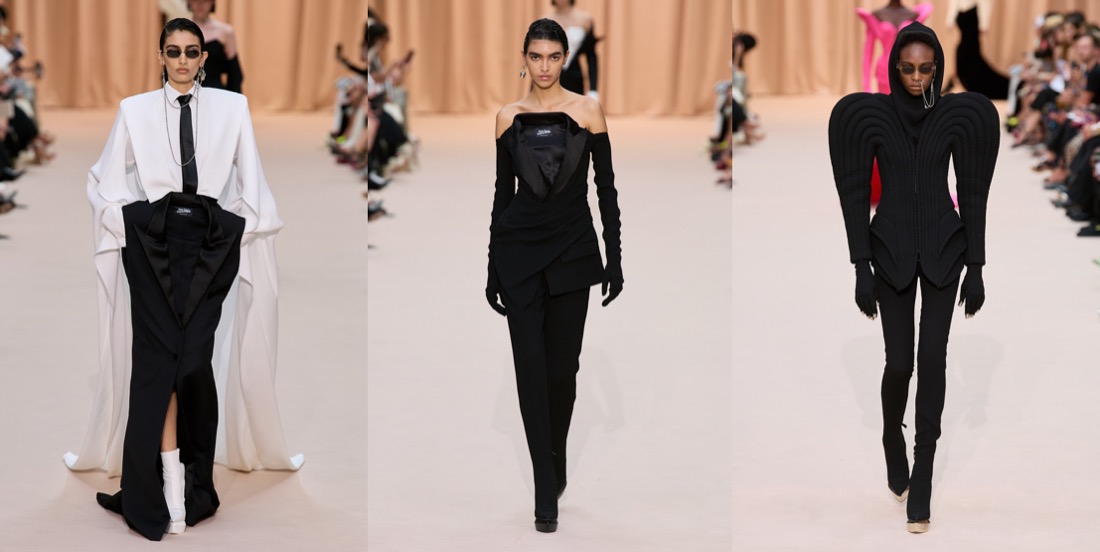
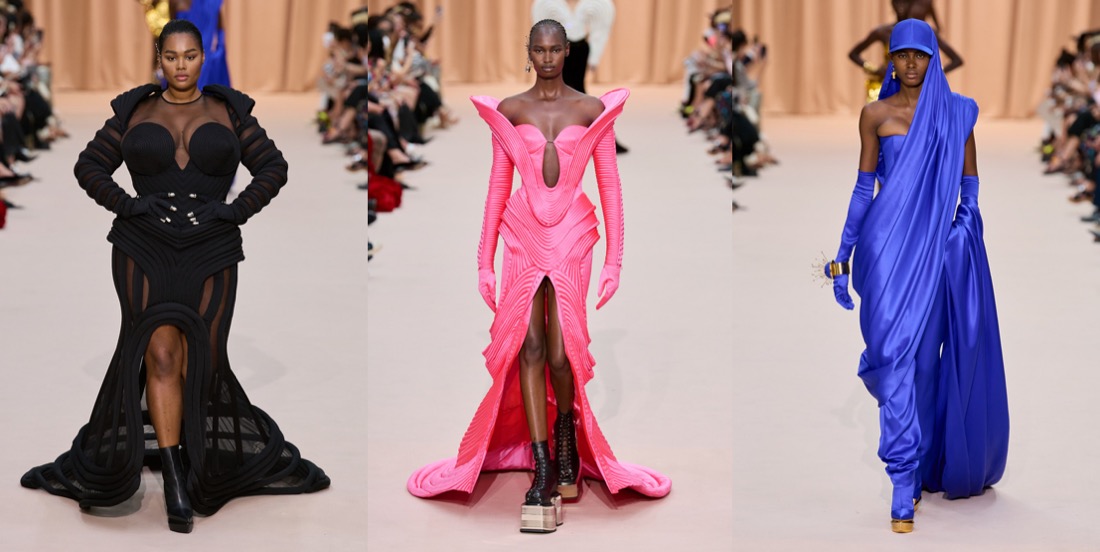
“This show is an open letter to Jean Paul, an open letter of love,” Olivier Rousteing announced in the Gaultier studio before the unveiling of the antic collection that Gaultier had invited him to design as the third iteration of the project that hands the reins of his couture house to a different designer each season. When the two designers first met to discuss the project four months ago, and right after Rousteing had presented his autumn-winter Balmain collection, he confided to Jean Paul Gaultier: “You’re my inspiration. And you broke so many boundaries for me as a kid.” Dressed backstage in a matelot striped top and an asymmetric kilt, Rousteing had clearly taken the brief very seriously. “Jean Paul wrote a fashion book with many chapters,” Rousteing explained. “And the reality is that you need to understand what chapter from Jean Paul is closer to you and the emotions that you obviously are more into.” For Rousteing, this meant a series of very personal snapshots. A memory of his father with Gaultier’s iconic Le Male fragrance in its tin can casing, for instance, or Madonna dressed by Gaultier in a nipple-freeing ensemble for a 1992 amfAR gala. “If you think about that today, we cannot [go there],” Rousteing noted, and in fact his iteration featured trompe l’oeil exposed breasts. “So he was ahead of his time about freedom of expression. Today, we talk about inclusivity, we talk about diversity, we talk about breaking boundaries, we talk about no binaries, no gender. Obviously, Jean Paul was the first one to do it.” Rousteing opened his show with menswear, inspired by the tattoo collection of 1994 that he considers a celebration of diversity, and then broke into one statement womenswear piece after another, playing on the Gaultier themes of corsetry, repurposed denim, and Breton fishermen’s sweaters, among others, many of the looks teetering on platform heels inspired by those tin cans.
And Rousteing reveled in the craftsmanship of Gaultier’s ateliers. In homage, there were garments fashioned from a dressmaker’s tape measures, a heart-shaped pin cushion bodice, and gloves with thimbles for finger tips. And noting the designer’s passion for the liquid draperies of Madame Grès (and the dressmaking genius who worked for her and now for Gaultier), Rousteing worked her iconic techniques into some looks that included a sweeping corseted pink sweatshirt that ballooned into an opera coat in back and draped into a siren skirt in front. Meanwhile, what appeared to be a woven menswear pinstripe was actually an illusion created with insertions of white crepe – a process that took 600 hours. Rousteing revisited Gaultier’s feathery interpretation of matelot stripes, another iteration of the Breton sweater that morphed into a Watteau train in back. In a further celebration of the craftsmanship of the house, the running order of the show listed each premiere main and modeliste responsible for the various elements of each look next to its description. Rousteing stepped out of the studios, however, to create a brace of molded glass bodices made by the expert responsible for the stained glass windows of Notre Dame, no less. Gaultier himself had wanted the collection to be a complete surprise. When the show opened with a soundtrack mashup of Gaultier himself expressing his design ideas to various media outlets through the years, he blushed bright pink. By the end of the show he was beaming. “Zat was fantastic!” he declared, “He took my things and then did it his way – and the technique – fab, fab, fab!”
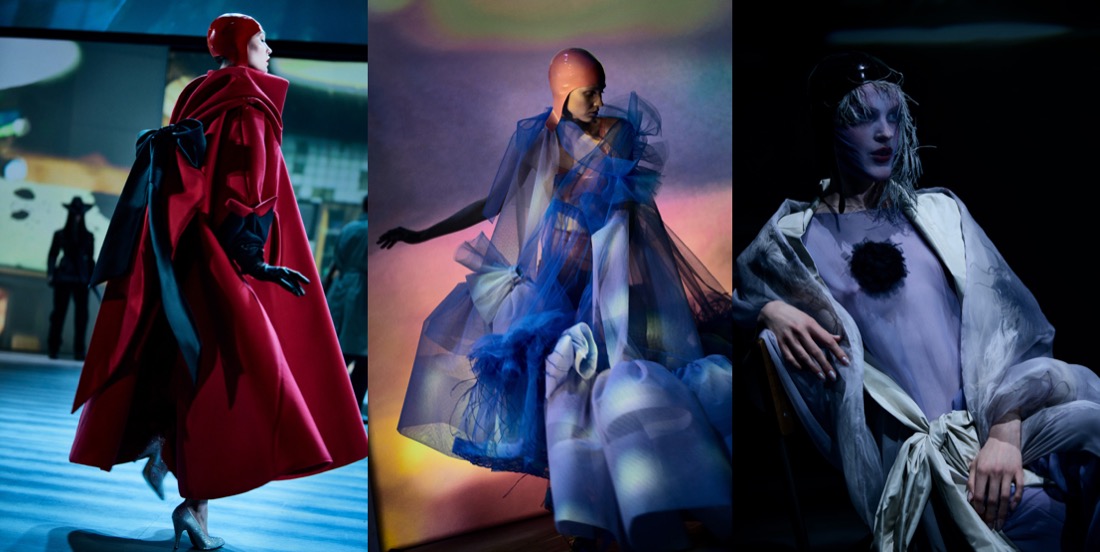
John Galliano delivered one of the most brilliant couture collections of the season. Prompted by his enjoyment of communicating through various digital hybrids during the pandemic, the designer balked at the prospect of returning to the old stripped-down white runway format for his Maison Margiela Artisanal collection. To him, it’s an inadequate arena for expressing the intense, allusive narratives which have always fueled his creativity. An epiphany came when he saw a stage production of Dracula by the British theatre company Imitating the Dog, who in the words of its director, “stitch together” videos of actors in real time. “I thought, wouldn’t it be wonderful to embrace fashion, theater, digital – all the cultures?” The producers collaborated with him to realize Cinema Inferno, the multidisciplinary fantastically-costumed American psycho-drama of dreams and nightmares that played out on stage, screens, and livestream from the Palais de Chaillot. Galliano’s model muses – the talented cast who’ve worked with him throughout the pandemic – plus a few grand supermodels lip-synced to a script following the misfortunes of a desperate pair of young lovers on the run. “They’re Hen and Count, driving through this mythical Arizona desert. They’re shot up,” Galliano narrated. “Then, we have what we call ‘spectral cowboys’ who come to assail them. Representatives of abuse of power, whether it’s the judge, the preacher, medicine, certain toxic relationships, patriarchal societies, and on and on.” In a preview at the theater, astonishing clothes were laid out waiting to embody the bloody, romantic tale in fragile whooshes of pastel tulle, brutally-cut tailoring, and twisted takes on 1950s haute couture and prom-scene Americana. The bad men – who came bristling with guns – had sandstorm-weathered coats whose shadowy, creviced surfaces were created with micro-beading, dégradé jacquard, and flocking. “Because this,” said Galliano, “is haute couture. The highest form of dressmaking!” Unfortunately, the collection’s look-book features only 9 looks – so you are more than welcome to watch the full performance to catch a glimpse of these wearable artworks.
Of course, Galliano has known his way around the highest form of dressmaking since his time at Christian Dior – and even before. Since the days of his eponymous collection, ideas revolving around characters from the 1920s to the ’50s have populated his collections, and the deconstruction and reconstruction of period clothing. So this was in every sense, a show set in Galliano’s mental landscape. This time, though, there was an inescapably darker haunting of trauma and violence behind the stunning sequences of clothes – of nurse’s coats in the mint-greens of hospital scrubs, the watermelon pouffes of the evil mother’s gown, the diaphanous trapeze dresses and abstracted prom dresses constructed from several gowns sewn together. Why choose this time to delve into an American narrative? Superficially, it was about the movies: “Films that have had a huge impact on the man I am today. A Streetcar Named Desire, Natural Born Killers, Suddenly Last Summer.” But beneath that runs a more personal thread. It’s no coincidence that Arizona, where the performance was notionally set, is the state where Galliano underwent rehab in 2011. It’s the place where he faced his demons. Did that make these recurring nightmares swirling around sin, sex, death, and parental and societal abuse subconsciously autobiographical? Galliano nodded. At the end of the show there was a smashed ‘black mirror’ dress, a symbolic reflection of the psychological impossibility of fully escaping memory – even in ‘recovery’ – if ever there was one. “Because, as you see in the show, our protagonists keep falling into these dreams. The whole thing is based on a loop. An endless loop.” There is much more of this self-revelation to come next year when a documentary about Galliano, made by director Kevin Macdonald, will premiere. Galliano says it’s been “like going to confession.”

















 Design & Culture by Ed