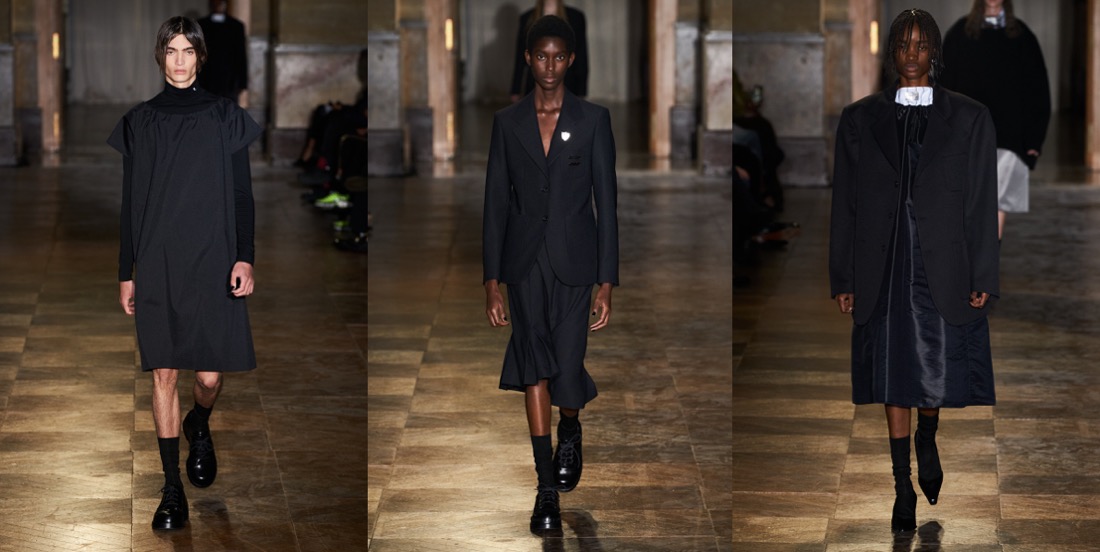
Genderless Uniform. Raf Simons SS22

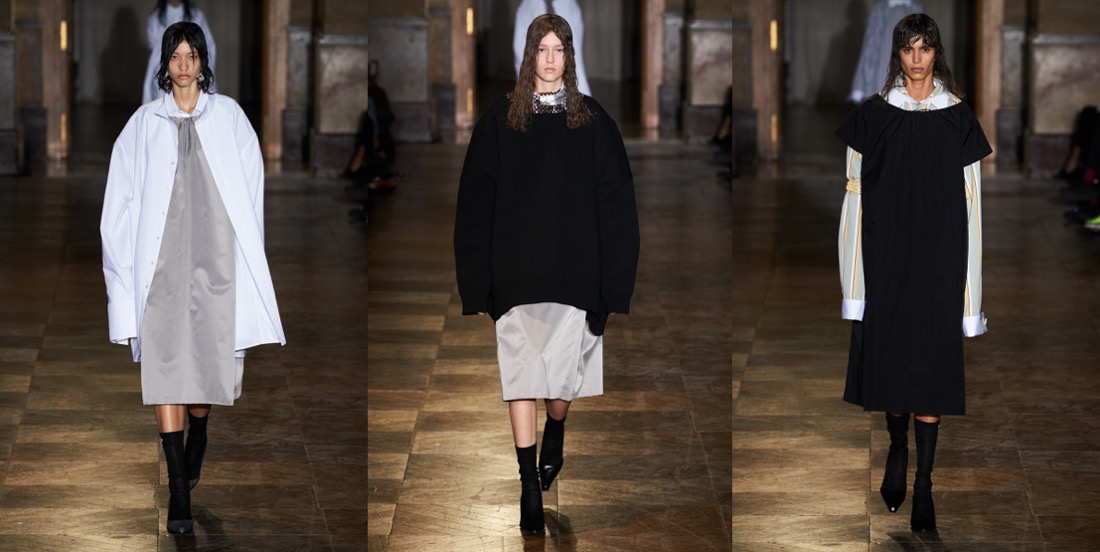
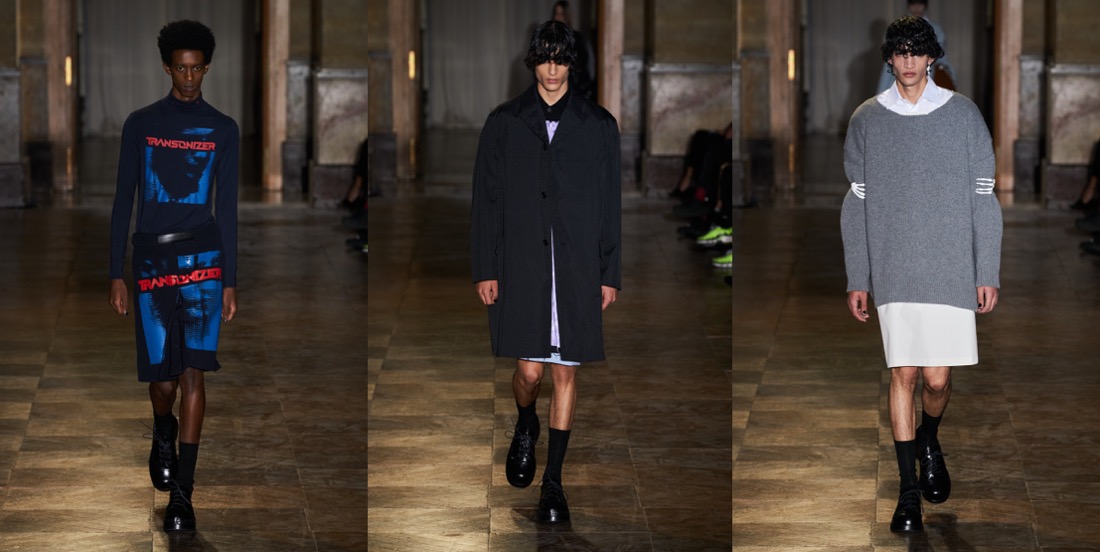
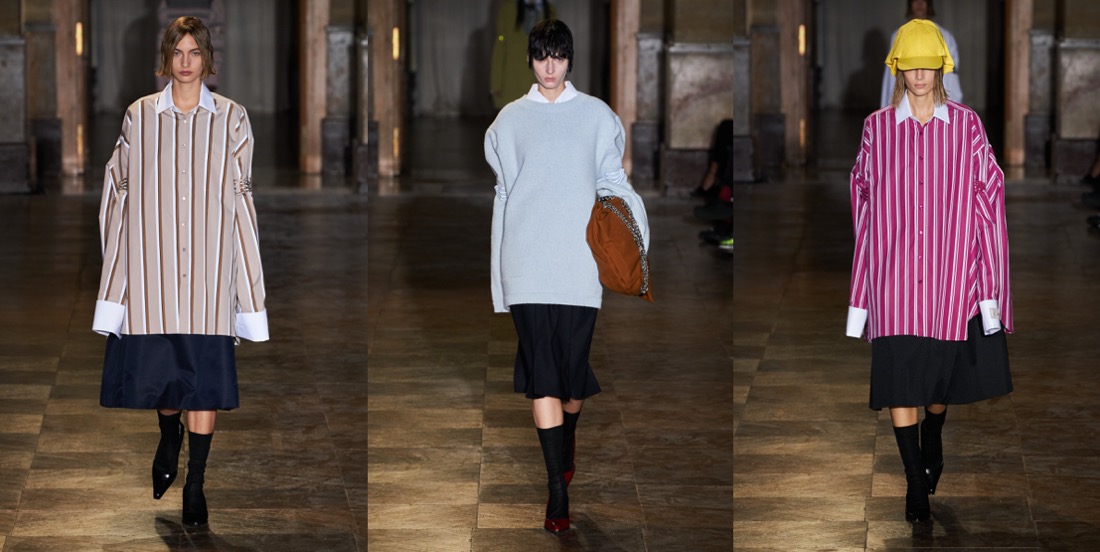
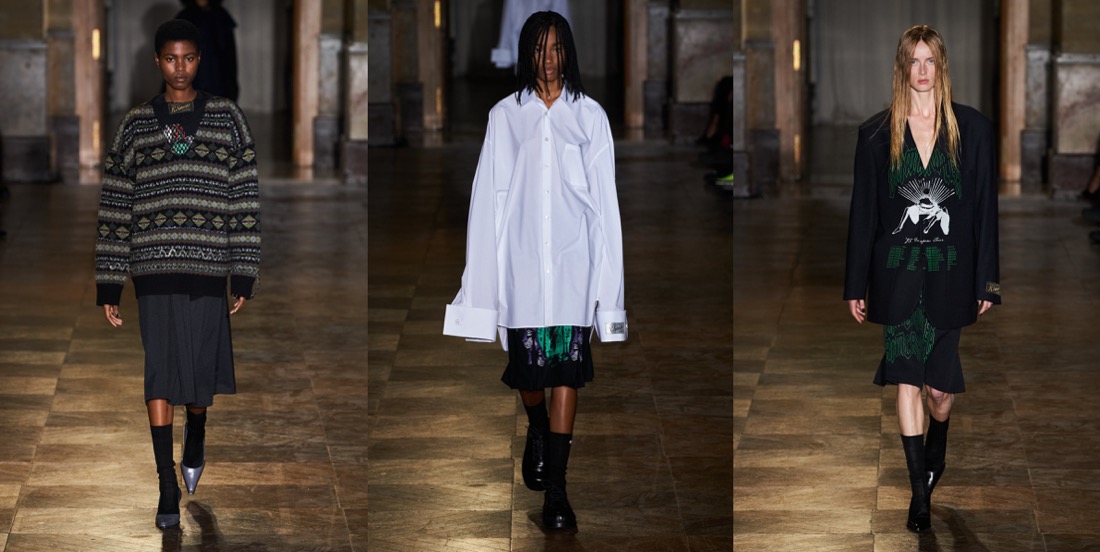
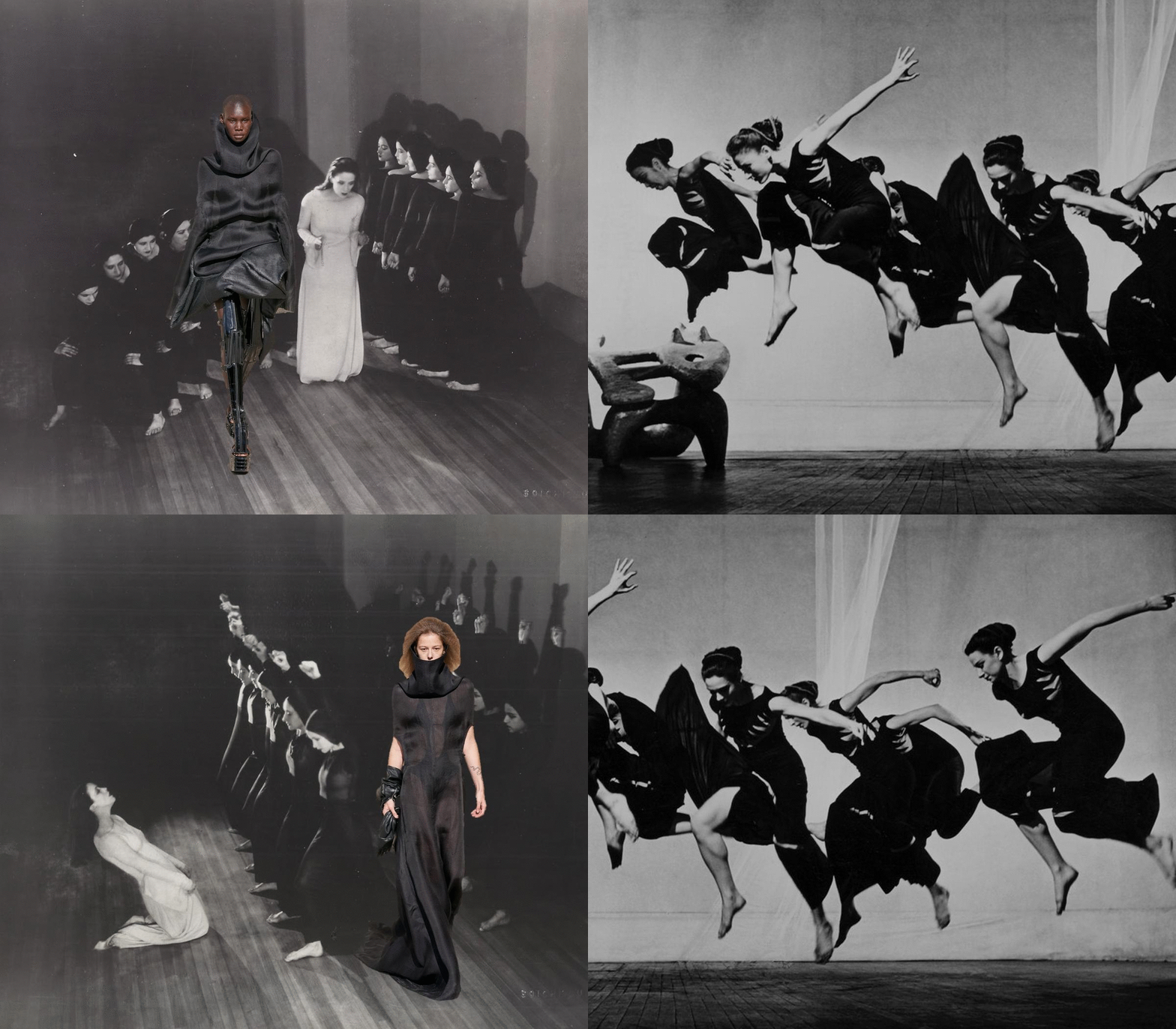
At a first glance, this might have been an unexpectional (which would be an anomaly) Raf Simons collection – a bunch of black and white outfits. But when you look deeper into it, you see what’s so extraordinary about it. Over the last years, genderless dressing has been so prevalent in fashion that it’s almost lost its meaning. We’re so used to seeing boys in dresses that nothing surprises us. In that sense, Raf Simons’s men and women in corporate skirt-suits didn’t send disbelief down the runway at the Bourse de Commerce. But once you actually tried to picture that image unfolding in the real world it was another matter altogether. Simons has always challenged our relationships with conventional dress codes. This collection was his timely reminder that our collective mentality perhaps isn’t quite as far ahead as we’d like to believe. But it was also a compelling study of how those business dress codes could evolve in a real – if still not super near – future. “Right now, I think it’s an important thing because so many men are buying womenswear anyway,” Simons said after the show. “The question is if they’re buying clothes that are made for women, or clothes that are made for both men and women. It’s something I find fascinating to focus on.” Trying to determine the nature of a genderless garment, his research brought him back to where it all begins. “At the birth of a baby, nobody is approaching it like male or female. It’s just a baby. I wanted to work out a shape that works for both in the same way, even if your perception of the girl or the boy dressed in it is different.” Along the way, his silhouette and styling generated a wealth of overtones, illustrating how associative the image of men in skirts and dresses still is to the contemporary eye. Some of the looks had a clinical sensibility about them, which evoked hospital gowns. Some were almost tribal in their uniformity; and others looked ceremonial – religious, even – a fact only intensified by the skeletal hands that clenched the models’ biceps. Simons, who carried the arm rings over from last season, said he considers them a brand symbol, “like Martin has the Tabi boot.” In the context of his dress code rebels, it felt more like the ghosts of tradition trying to cling on to those preordained gender norms tooth and nail. “Maybe it’s autobiographical, I don’t know,” Simons reflected. “I went to a high school that was almost monastic in a way. You were supposed to be this, you were supposed to be that, you couldn’t dress like this, you had to dress like that… It made me think a lot,” he said. This collection was rebellious, but there was also a distinctly Prada-centric character to the clothes and the styling, which made you wonder if the esotericism that permeates the halls of Simons’s other job in Milan hasn’t amplified his susceptibility to ideas of uniformity. “I think it looks more like a uniform on a boy, and more couture on a girl,” he said of his new silhouette. “It’s a very pure, timeless shape.”

Collage by Edward Kanarecki.
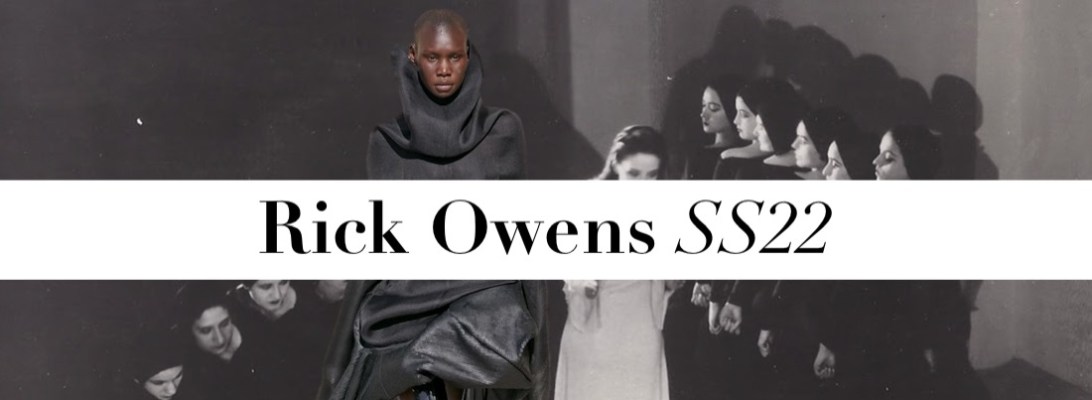
Pursuit of Beauty. Rick Owens SS22

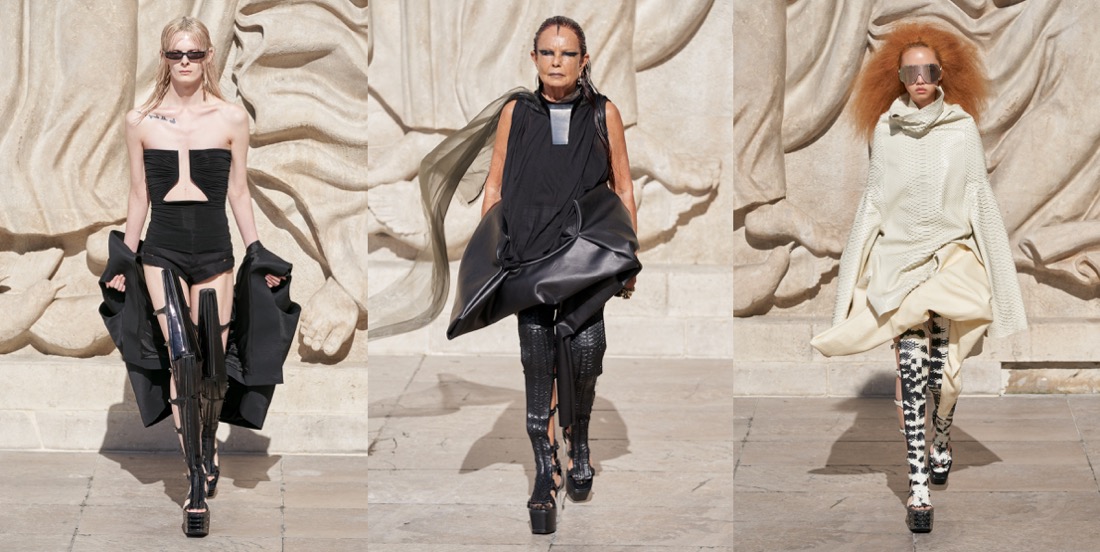
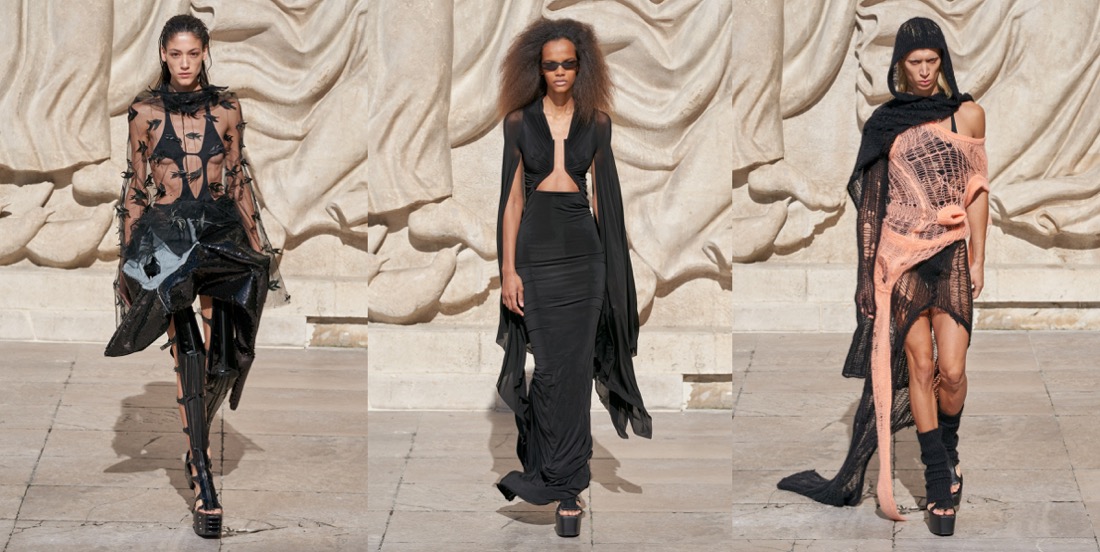
On a gloriously sunny morning, Rick Owens returned in splendour to his grand open air stomping ground at the Palais de Tokyo. It was a comeback that felt like a ritual celebration of survival – and a show of strength – both intensely personal and collectively symbolic. And who else but the high priestess Michèle Lamy, Owens’s spouse, oracle-in-chief and eternal inspiration, to head the triumphal procession? Plumes of white smoke poured from the central fountain. Two black-robed women standing high on a Deco rooftop a hundred feet above scattering something to the winds. It turned out to be “dried jasmine leaves gathered from plants on my Lido terrace, in memory of the Covid shows we had there,” wrote Owens in his show notes. A little earlier he’d explained how, for four seasons at home in Venice, “we showed, performed this ceremony in front of nobody on the beach. And it was the most bonding, beautiful thing. There was a melancholy to it, but there was also kind of this defiance: that we’re going to do our very best under the circumstances. That we’re going to strive for excellence, under any threat.” Going through that period emboldened and sharpened his philosophical resolve about why and how he would make his re-entry to Paris. Amid all the soul-searching about the raison d’être of fashion, its wastefulness and its justifications for its existence, and measuring that against all the trauma and adversity of these times, he had no doubt: this was not to be any timid or apologetic comeback. “I always considered myself somebody that would do anything in the pursuit of beauty, and to maintain a certain standard of beauty – and that was the meaning of life. So we have to flex here,” he said. Who else can signal the siren glamor of old Hollywood draping, sculpt wildly freeform shapes from haute couture materials and fuse it all together into such a modern armory of erotic power? If we’re talking about sex and body-exposure this season – and everyone is – then Rick Owens is the past-master of all that. The empowering art of his cutaways to skin never looked more faultlessly engineered, wired into bra-tops with no central fixing, structured into stretch bodysuits glimpsed through sheer layers and multi-strapped into thigh-high gladiatorial robo-boots. There was a grandeur to it as well: caped dresses with the solemn dignity of robes; his vast-shouldered leather jackets; the off-handedly cool ’30s elegance of his trailingly beautiful bias-cut skirts and dresses. Quite humbly, he put it this way: “I concentrate on making good stuff that has value, that people want to buy and that is worth it. And that is so recognizably me that you can’t get it anywhere else. I was thinking: that is the right thing to do.

Collage by Edward Kanarecki.
Summer 2033. Coperni SS22

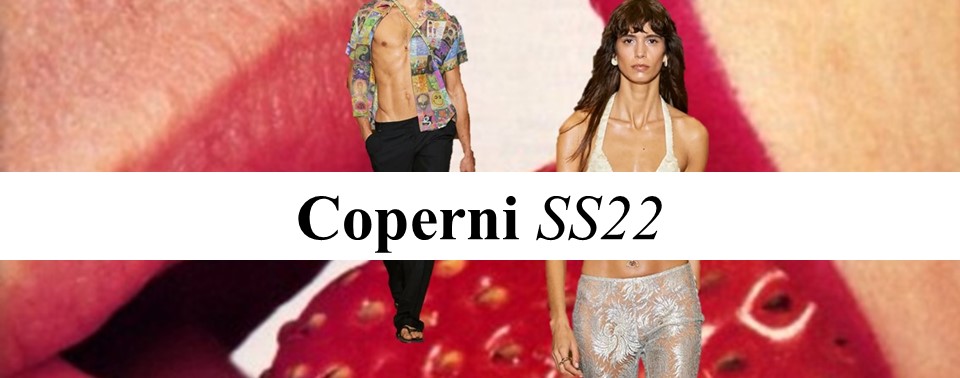
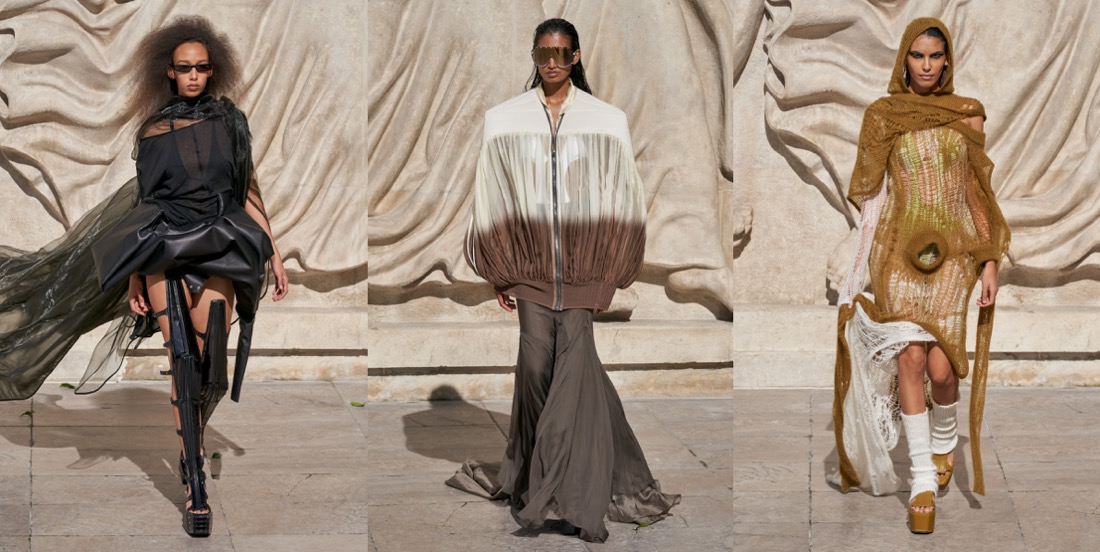
Coperni’s Arnaud Vaillant and Sébastien Meyer named their latest collection “Spring Summer 2033”. As Vaillant observed, “The industry is a nightmare now. But we want to escape and have fun.” By setting their collection not next season but next decade they were at least acknowledging the issues of now while simultaneously evading them. In the middle of the runway was a literal field of hemp, which was related to a sustainable fabric initiative in which the designers are involved. Through these plants Coperni’s 2033 crew walked a sand runway as if, perhaps, making their way down through the dunes to a beach bar like the mighty Sa Trinxa in Ibiza, an island the designers said was a contender for this collection’s imagined location. Tailoring in a beachy environment is often as incongruous as boardshorts in a boardroom, but here Vaillant and Meyer applied this pillar of their work in way that blurred its inherent formality, both through their ingenious deconstructions of the tailoring itself – as in a jacket sliced vertically away above the armpit and suspended on the body by an acetate chain halter neck – as well as the pieces they placed against it. A print collage that included images of Felix the Cat, the yin and yang sign, alien faces and Beavis and Butt-Head was like some ’90s dropout scrapbook. It was used on camp shirts for men and a slip dress hemmed with three layers of the whorled, vaguely molluscoid edging detail that recurred on bra-tops and skirts. A swirly, vaguely psychedelic print was applied to the swimwear and shirting that punctuated much of the first, twistedly conventional section of the show. As we edged to evening, certain pieces began to shimmer a little on the eye – thanks to the treatment given to French lace worn as pants against a bra-top of Indian seashells or another slip dress. This heritage-rooted futurism was true to their Ghesquière-mentored roots, and repeated in a new bag whose shape was inspired by the iPhone photos app icon, named the Origami. This is a collection for the hot lovers from the future.

Collage by Edward Kanarecki.
Outdoors. Courrèges SS22

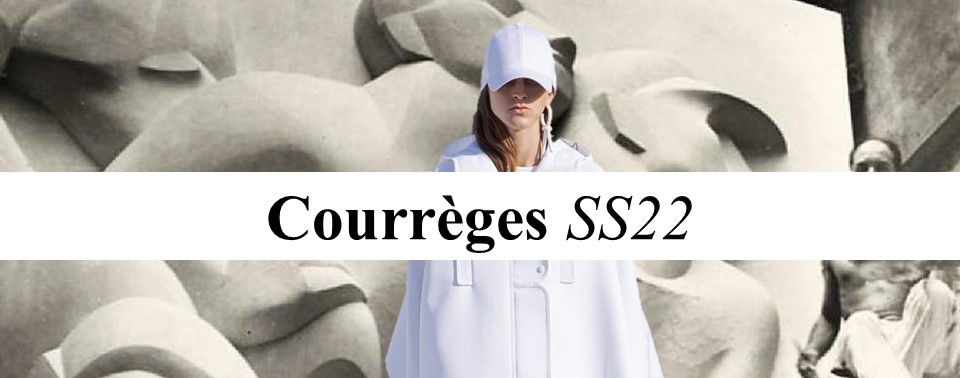
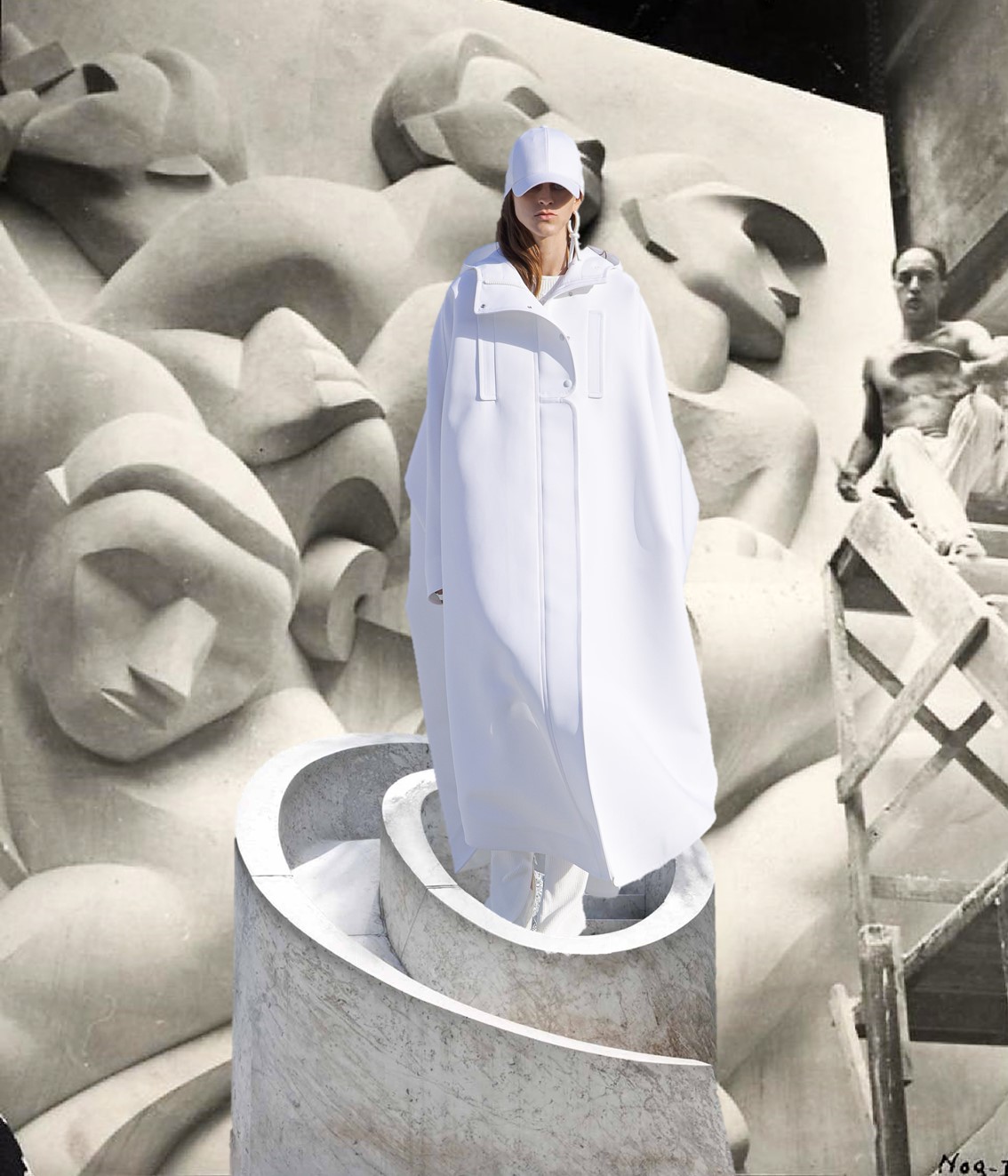
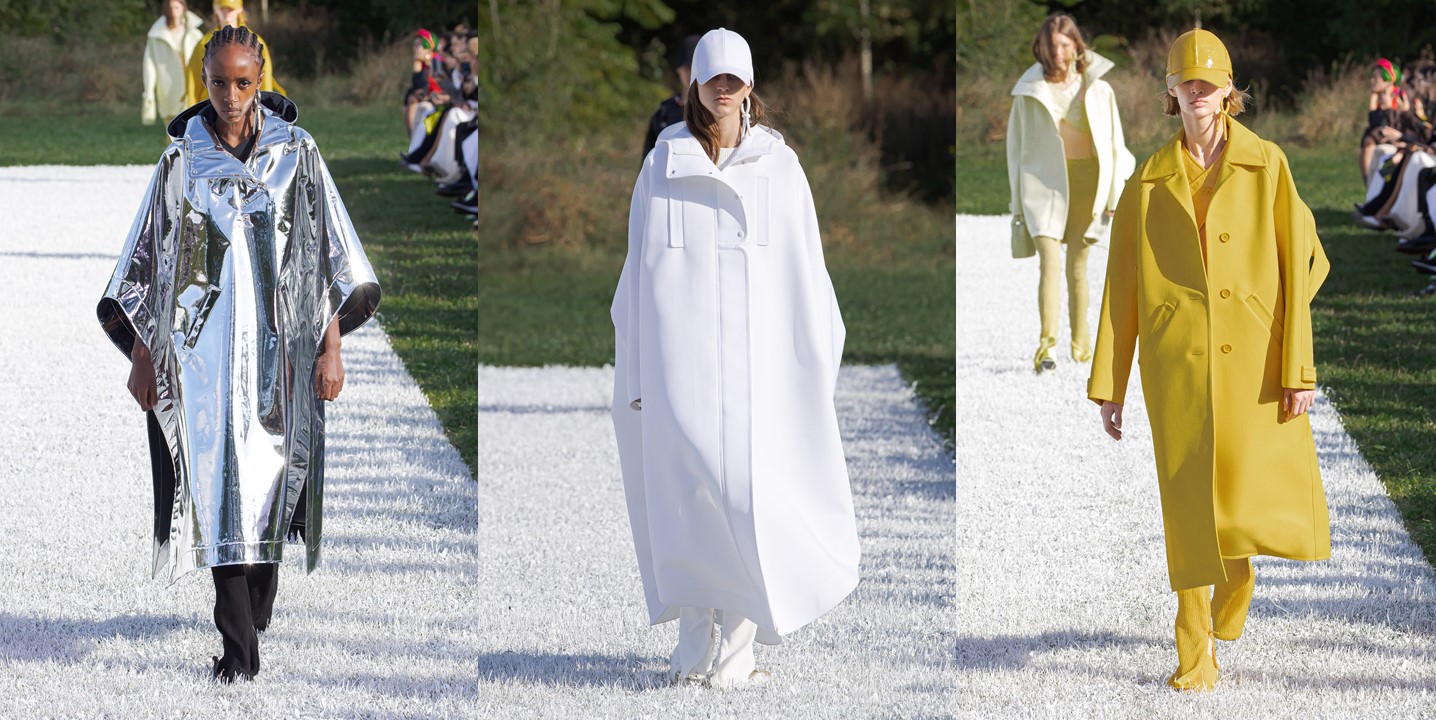
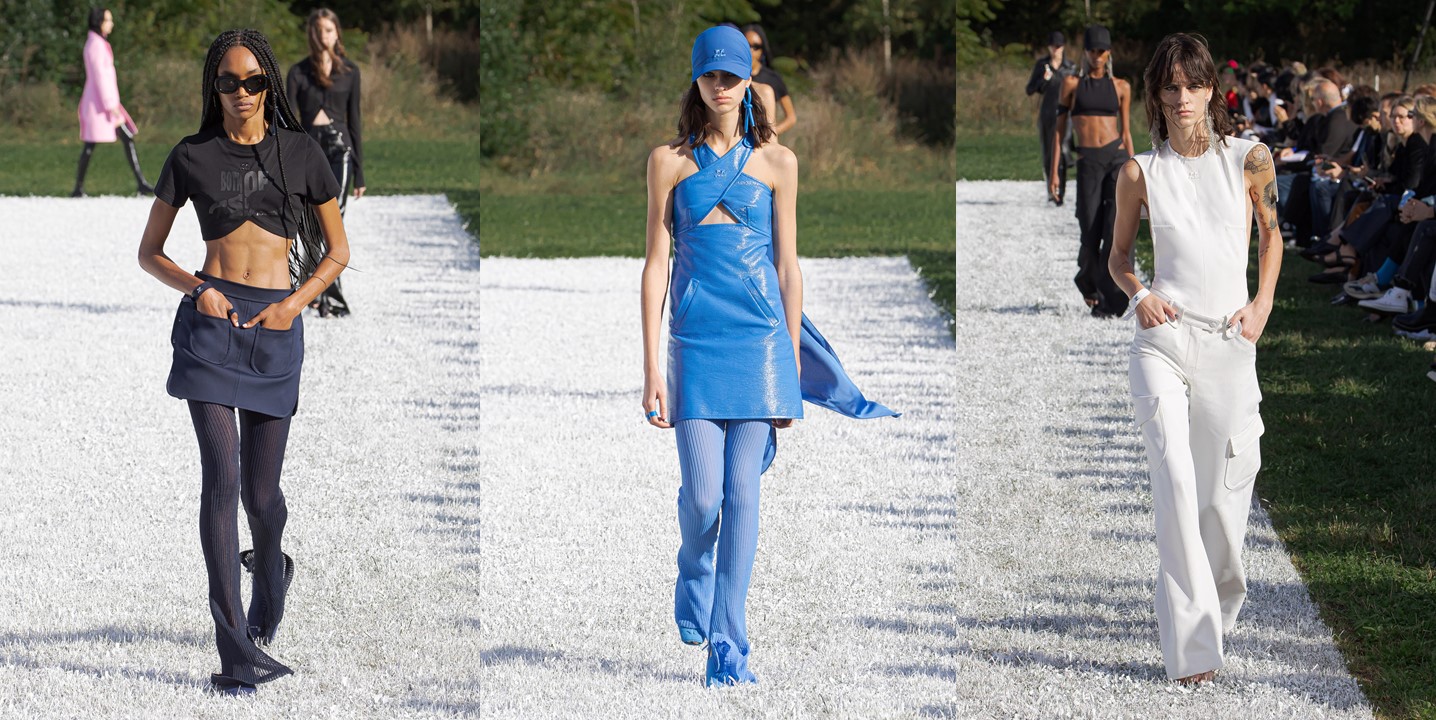
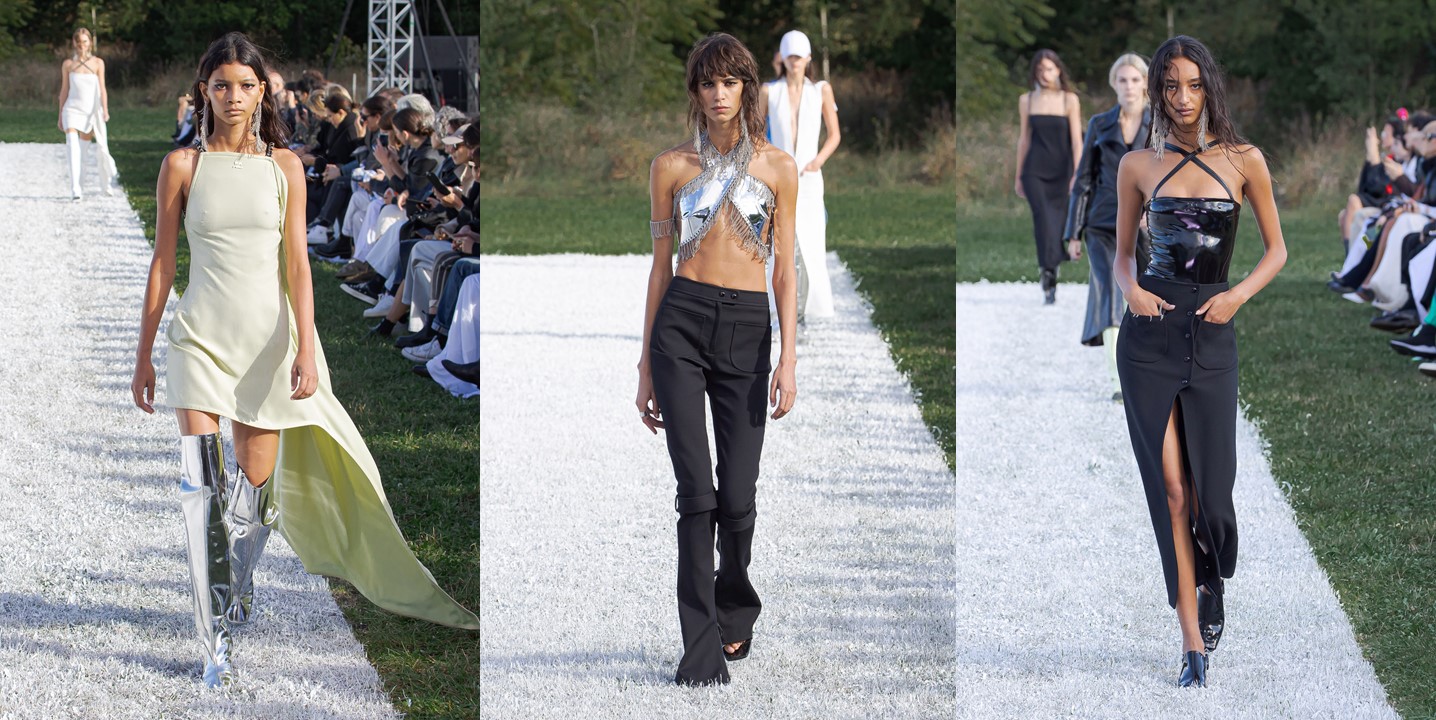
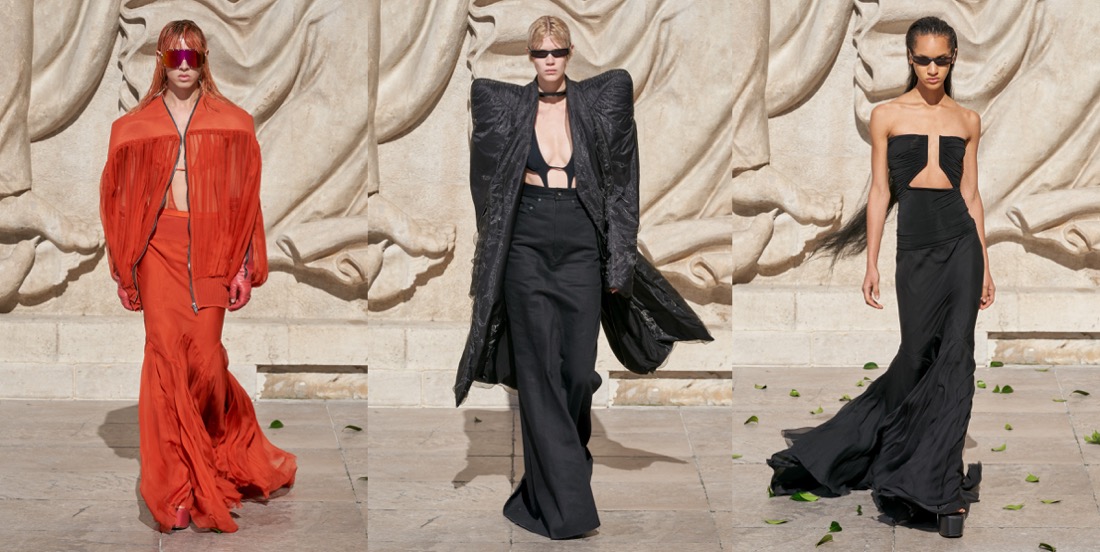
Nicolas Di Felice gradually builds his credentials at Courrèges. For the spring-summer 2022 show, the label invited its guests to Bois de Vincennes. It’s a park a long way from the center of Paris with personal meaning for him – it’s where he and his boyfriend first kissed. The wide-open space also vibed with the mood of the collection, which was space-age rave. “I wanted to work on this idea of an outdoor party,” he said in the backstage tent. On his mood board, pictures of music festival kids were juxtaposed with photos of archival pieces from the brand’s ’60s and ’70s heyday. The opening looks were ponchos of varying dimensions, rainwear being essential to the festivalgoer’s wardrobe. One was a circle, another was a triangle, and a third was a square, and all three cut a strong line as the models made their long walk around the perimeter of the square runway. Di Felice has prioritized outerwear since arriving at Courrèges a year ago, and he was proud to report that he’s already clocked a couple of his jackets in the wilds of Belleville, his neighborhood. Long ribbed-knit pants that flared over chunky-heeled sandals, A-line minis, and the label’s cropped vinyl jackets numbered among the other key pieces. “André Courrèges really wanted to put his fashion in the streets,” said Di Felice. “Everybody talks about him – the future, space age. But space age was a trend. He was a passionate guy; he just wanted to dress women.” Like founder, like creative director. Shift dresses with sternum cutouts and halter bandeaus worn over hip-slung pants were the descendants of a 1976 dress, Di Felice pointed out backstage, but they owed just as much to the arbiters of today, with their exposed abs, as they did to the iconic designer. Same for the baseball caps and shoulder-duster earrings.

Collage by Edward Kanarecki.
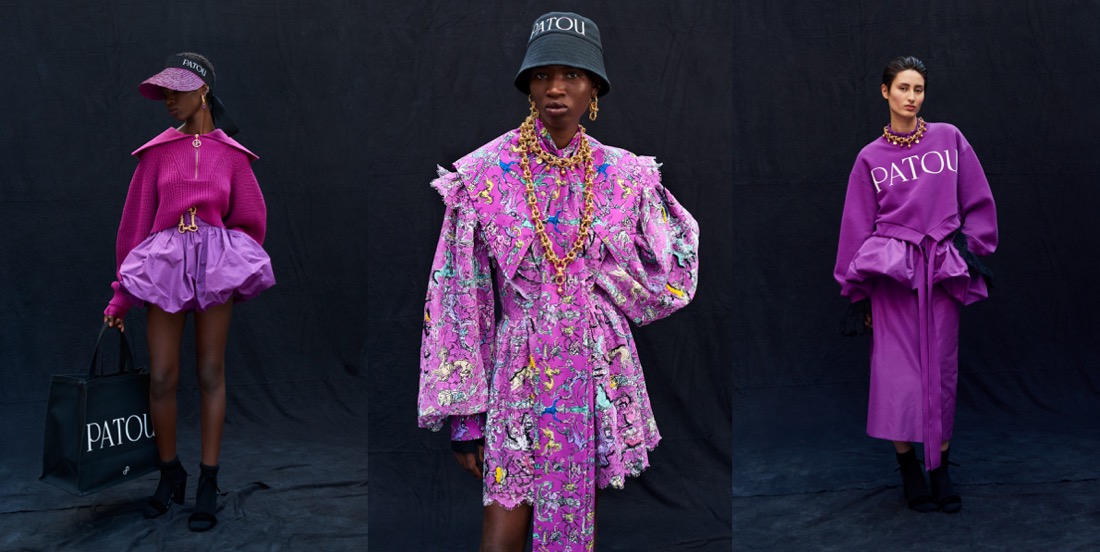
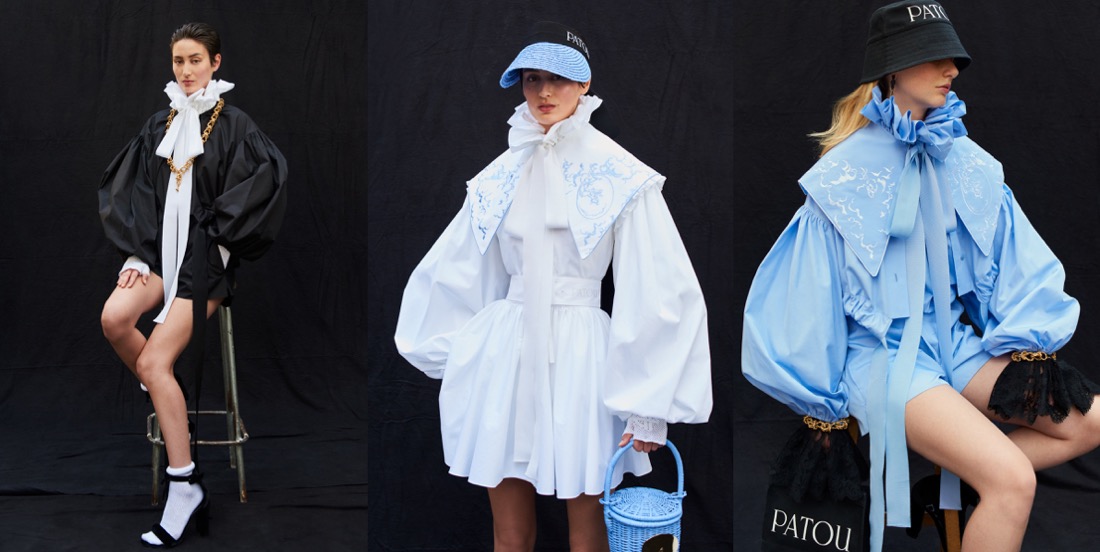
Chic Hero. Patou SS22

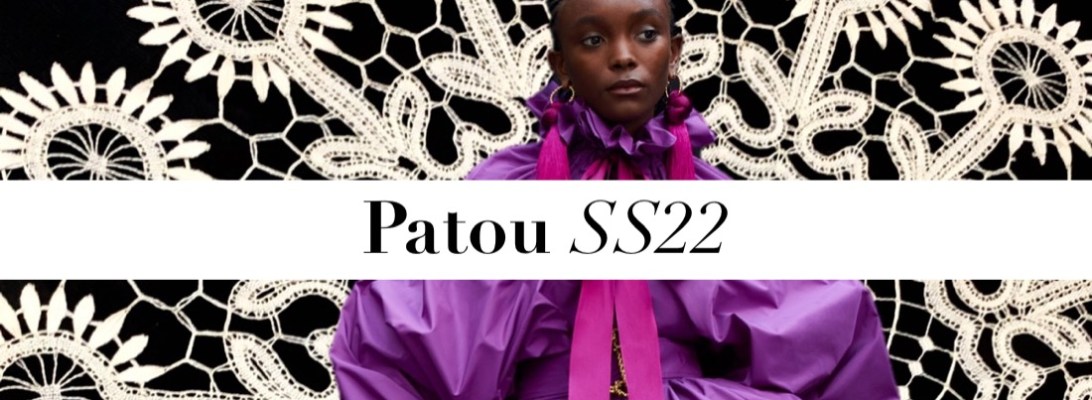
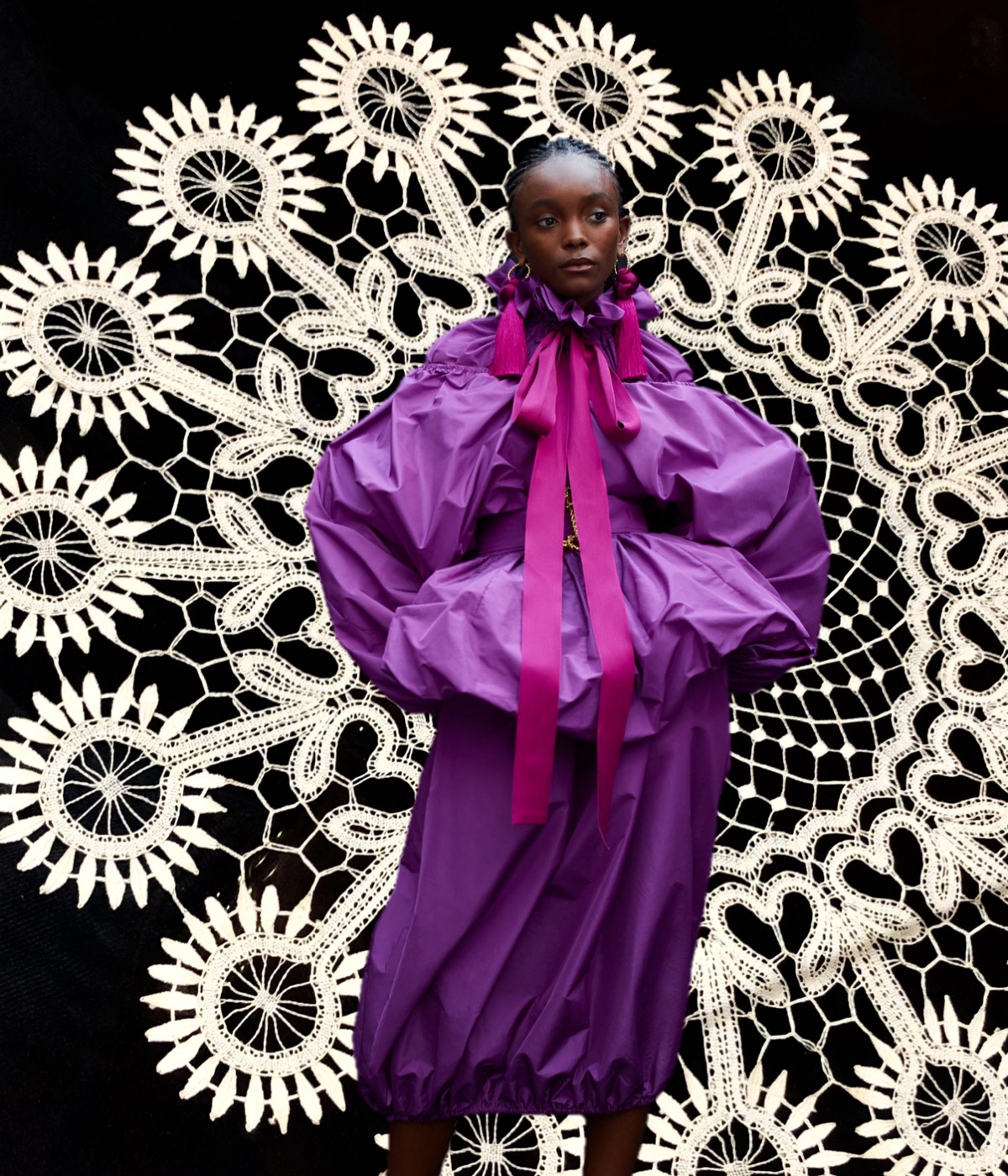
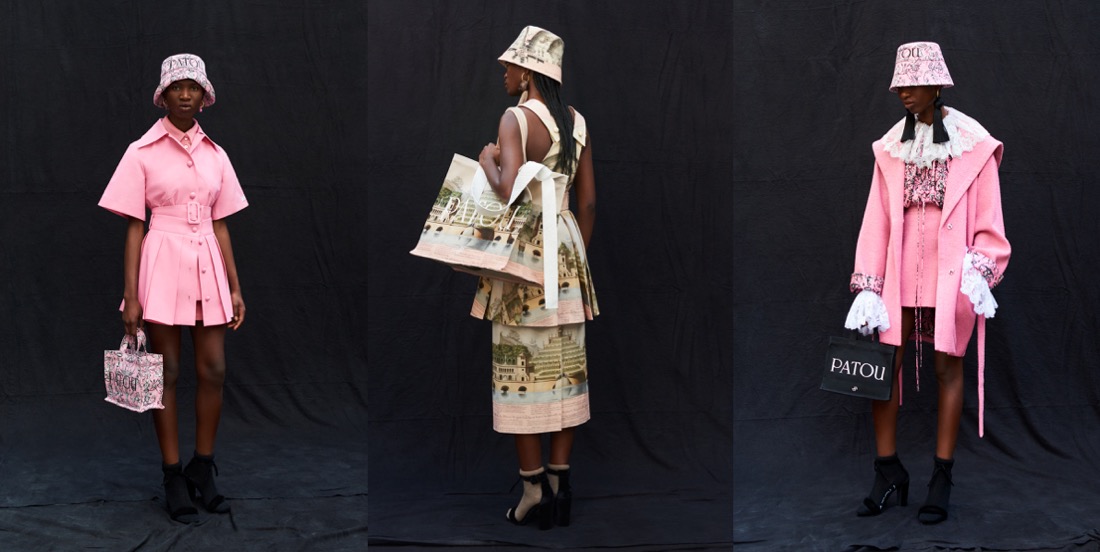
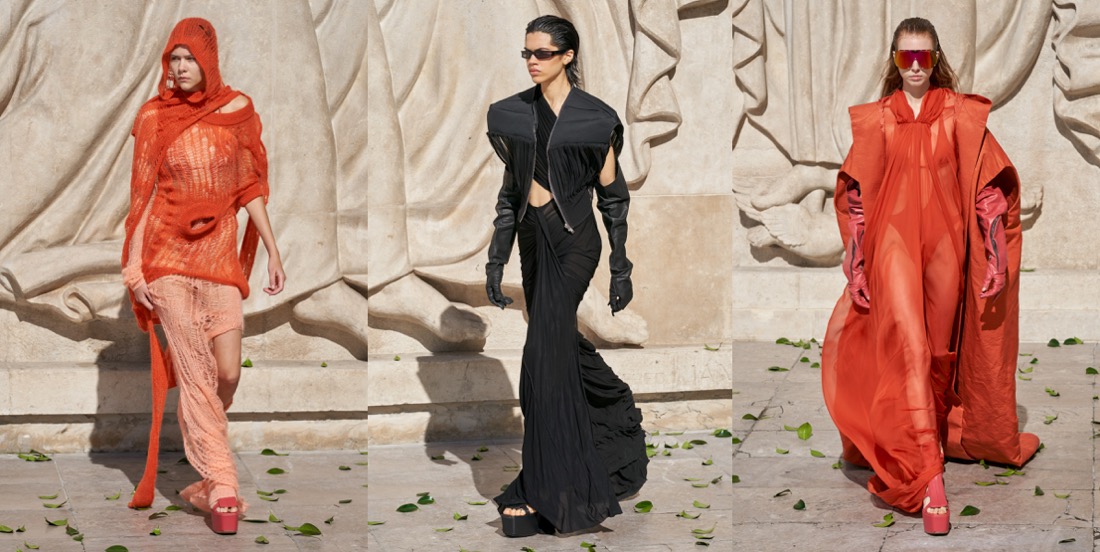
At Patou, Guillaume Henry has been taking a bit of a cavalier attitude towards spring – almost literally. “I really wanted to have this fantasy in mind,” he said. “She could be a musketeer, she could be a princess; she’s the hero of her own life. She’s not necessarily the girl waiting for her prince to come.” He remembered that when he looked out of the Patou studio during the big confinement and saw someone passing who had made an effort to wear something interesting, “I wanted to open the window and applaud.” As he riffed in his effervescent way around the static exhibition of his spring collection he said of lockdown, “I was so bored of yoga pants, you have no idea! Then things started to get better and better. And we knew that we will meet again.“ With the relaunch of Patou, Henry has managed to strike an ingeniously playful balance between exaggerated couture-heritage volumes and clothes that are self-adaptable, affordable and resourced with a care for curbing their environmental impacts. This season’s pie-frill collars, organic lace-trimmed swashbuckling sleeves, pouf-y bubble-shorts harmoniously work with Instagram and TikTok- friendly PATOU logo branding on bucket hats, bags and sweatshirts. Prints this season were sourced from the archives of the great French artist-illustrators Christian Bérard and Gustave Moreau. Keeping an haute flag flying for French fashion while making a wardrobe that girls can wear on the street, for work, at parties, or wherever they fancy is Henry’s thing.

Collage by Edward Kanarecki.