Anatomy Of Couture. Valentino SS22 Couture

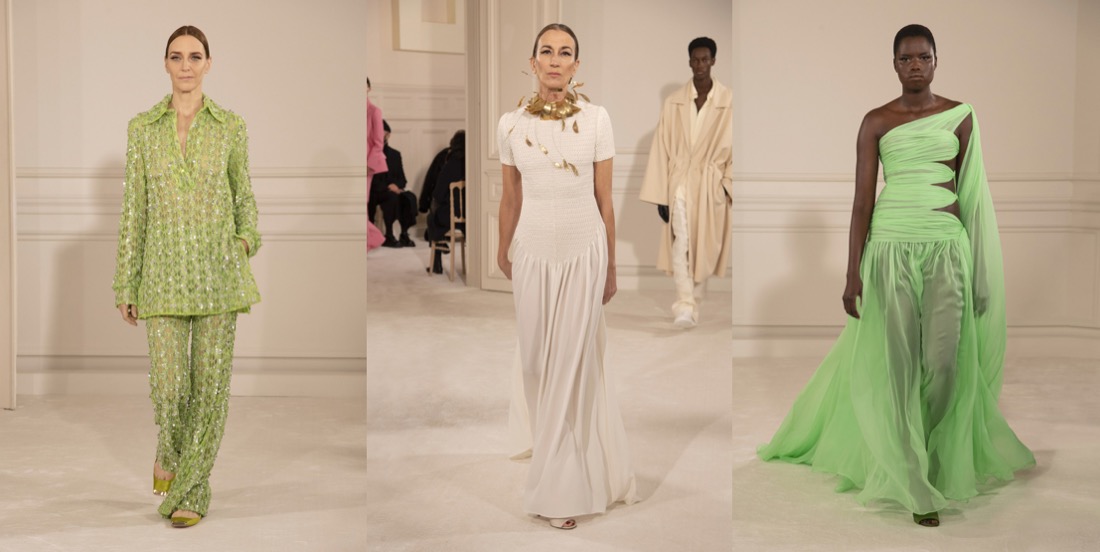
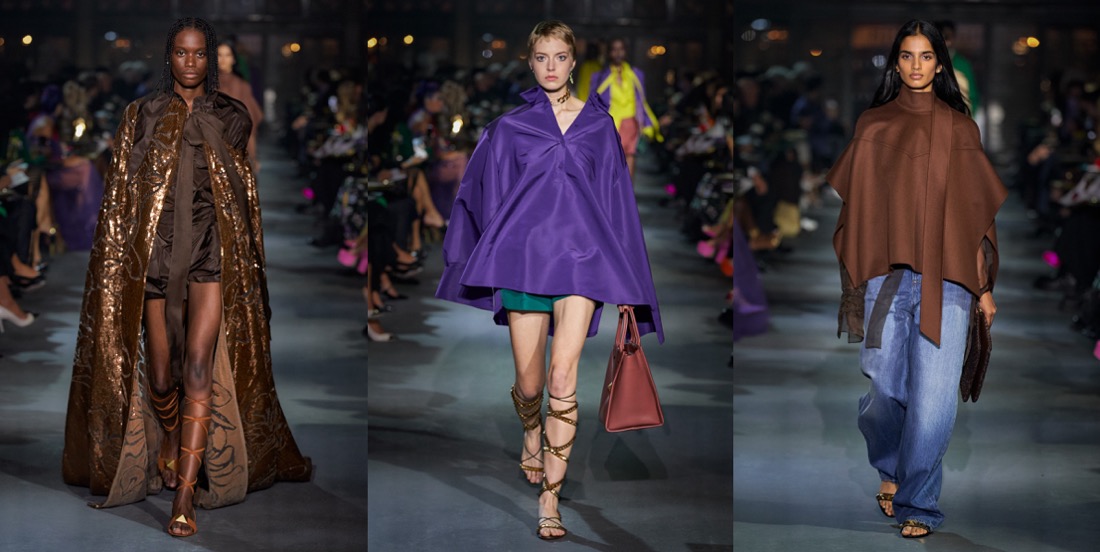
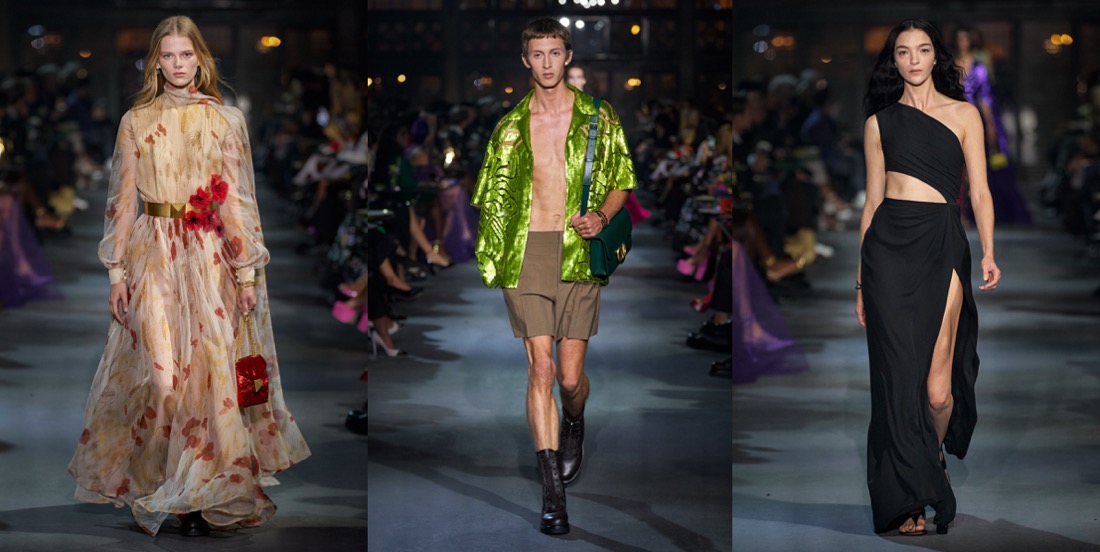
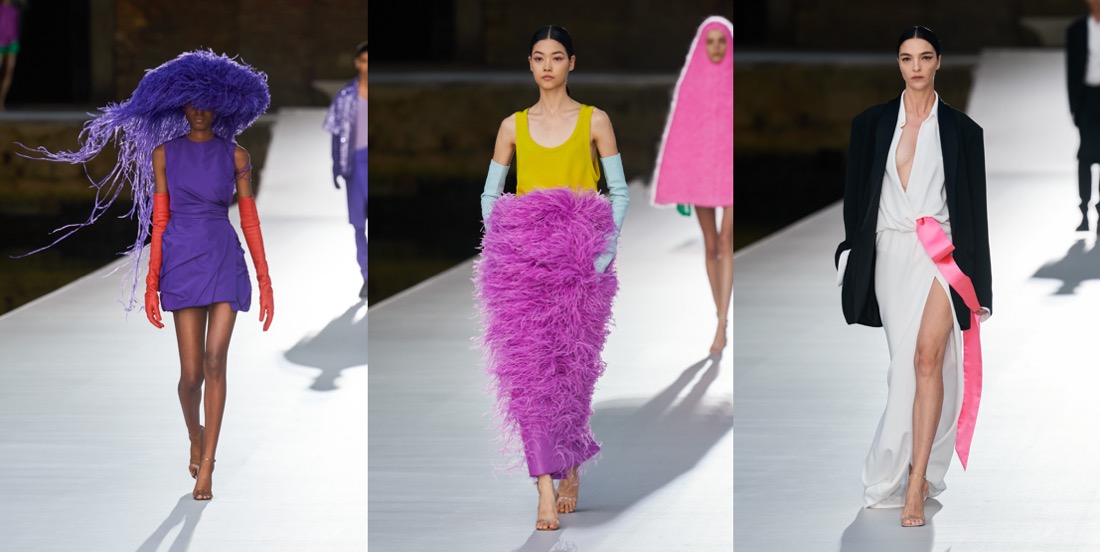
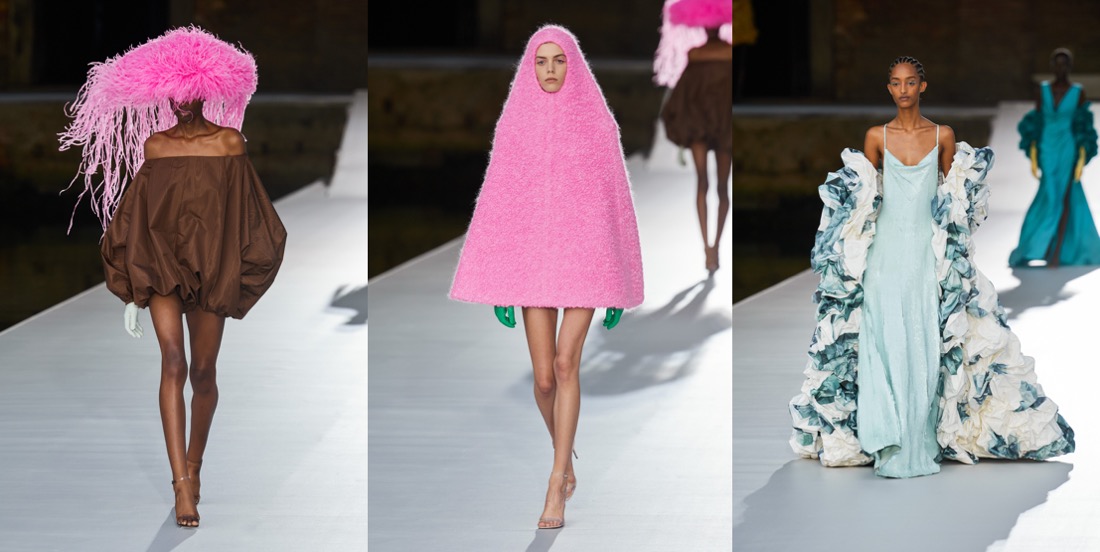
And just like that, Pierpaolo Piccioli is the king of spring-summer 2022 haute couture season. The latest Valentino collection is everything a truly phenomenal couture collection should be, and more. You could see the emotion in the eyes of some of the models as they glided through the maison’s Place Vendôme salons to a specially recorded soundtrack by Anohni. “She was told she’d never walk couture,” Pierpaolo Piccioli said of one of. “In couture you never see these bodies. Never.” It is in large part thanks to Piccioli that haute couture is finding relevance in an age set on breaking the constructs of the past. On his mission to make this elitist corner of fashion matter to the generations dubbed “woke,” he has decided to “keep the codes, but change the values”: to give the broad spectrum of humanity the chance to mirror themselves in haute couture, in place of the waify, white, classical beauty ideal of its past. In front of a distanced audience of just 65, he broke with the skinny stigma of that heritage in a collection titled the Anatomy of Couture. “When you do couture, you have the house model. And you apply the body of the house model to 50 or 60 models on the runway. I wanted to break these rules and embrace the idea of different proportions of body, different sizes, different ages. But it was impossible to do this with just one house model. So, I broke the rules and got 10 house models in with differently proportioned bodies,” he explained. The idea of haute couture was always to adapt silhouettes to the client’s body. But those silhouettes are typically dreamt up, fitted and realized on a tall, slim and young physique. This season, Piccioli changed that model, in more than one way. And in the process, he said, “We got to create new silhouettes.” A partly fuller-figured cast than what you normally see on a couture catwalk did change Piccioli’s silhouette. His signature monastic Roman lines and Hellenistic drapery morphed into shapes that registered more dynamic, more mid-century, more glamorous. Through a Hollywood lens, you might call them sexy. But it wasn’t as if his new cast looked shockingly different in size to the runway norm, which was perhaps testament to his method – and skill. “In runway shows, sometimes there are 50 skinny models and one bigger-sized. I feel like you don’t really relate to that. You don’t believe that. You just tick the box,” Piccioli said.

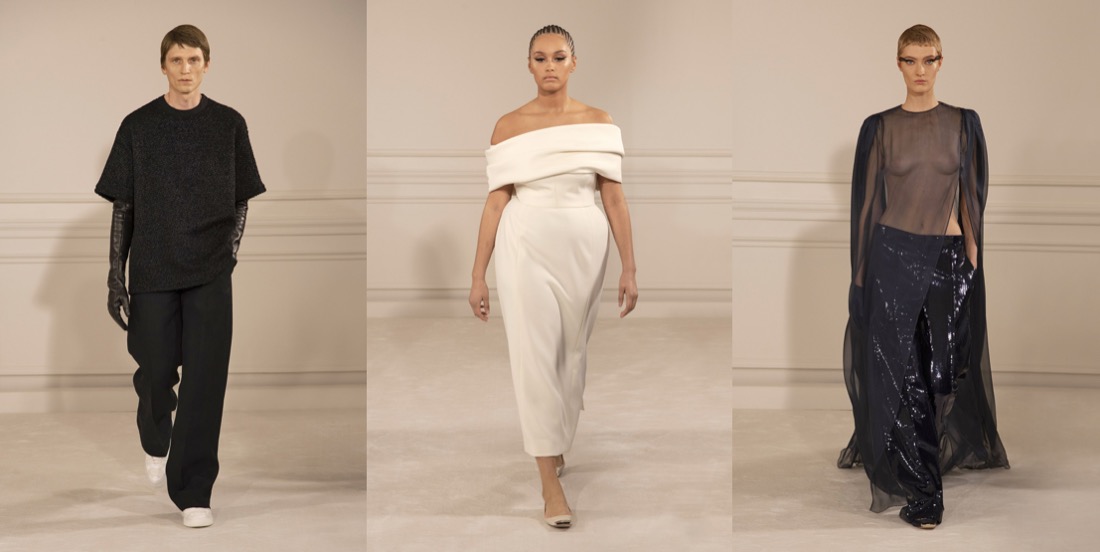
His consistent cast helped to illustrate the power of the craft. The intertwined straps of an ebony velvet gown framed the shoulders of the model and pulled in her waist, the volume of its skirt balancing out the proportions. A chocolate stretch tulle dress covered in two kilos of Venetian glass beads hand-embroidered for three months hugged the body, allowing the beads to shape and support the model’s frame. Piccioli employed his approach to surface decoration, too. A lilac faille gown was adorned with great big bows around the neckline, something that could easily look overwhelming on a fuller figure, but didn’t because of the custom proportions and placements of those bows on that particular neckline. In his couture take on the stretchy body-con favored by the generation who coined slim thicc, Piccioli proposed a neon coral ankle dress, which wasn’t stretch at all, but created through four layers of georgette whose interaction created a natural elasticity that adapted to the body. Throughout, he demonstrated how couture can build a silhouette around the body, and either highlight a person’s shape or manipulate it through dressmaking. It made all the difference, because clothes are construction. One size doesn’t fit all, but one blueprint scaled up or down certainly doesn’t, either. We’ve all seen that in practice on red carpets where people of a different physique to the body that modeled the dress on the runway can end up looking under – or overblown, because the dimensions and adornments of the silhouette don’t take kindly to the scaling process. And then, the confidence goes. “I feel that if you don’t deliver the ideas of power and strength and fierceness with these kinds of shapes, you’re missing the message,” Piccioli said. If body empowerment is something he is sensitive to, it’s also because his own three children are in their teens and twenties: Gen Z-ers raised on social media in an age where body ideals have the added extremity of plastic surgery normalization. “That’s what I share with them,” he said, referring to the connection he felt with his cast through the experiences of being a father to young people today. “This could deliver a strong message for young people who are struggling with something. If she’s beautiful, you can be beautiful,” Piccioli said, gesturing at one of his gorgeous cast members.

For his own generation, the message was the same. “The body modifies with age. They’re still as beautiful but the shape is different. I wanted to capture the beauty of how the body modifies.” Models older than the couture show average – Kristen McMenamy, Marie Sophie Wilson, Lara Stone, Violetta Sanchez, Lynn Koster, Jon Kortajarena – hardly looked out of place. On the contrary, the character that comes with age brought a confidence to their looks. It was never more pronounced than in Piccioli’s most “normal” silhouettes infused with the gestures of haute couture, like Sanchez’s white T-shirt (in silk sablé crêpe) worn with a pearl gray duchesse satin skirt wildly hand-embroidered with silver sequins, or Mariacarla Boscono’s tailored sequinned trousers (silk poplin with hand-embroidery) worn with a dramatic fuchsia stole in faille. Piccioli’s collection was another brick in the legacy he is building for himself as a couturier of change. If used as a laboratory to develop techniques that can inform both the possibilities and values of ready-to-wear, haute couture becomes the most relevant part of a contemporary fashion system. It turns into the think tank of fashion. “Since the Middle Ages, there have always been canons of beauty,” Piccioli said, listing all the body ideals of the times. “Once we’d had enough of all the canons, we discovered that humanity is the only canon that’s valid: freedom; be yourself. That’s the real canon.”

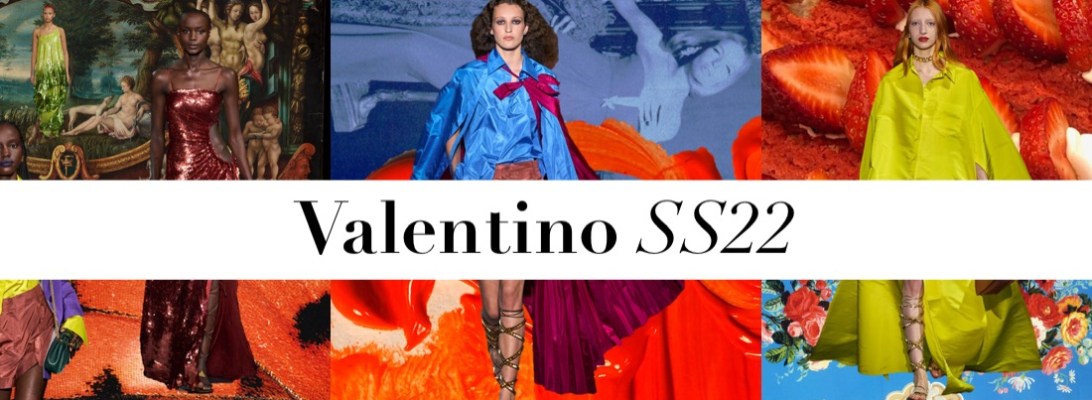
Collages by Edward Kanarecki.

Extraordinary Daywear. Valentino Resort 2022

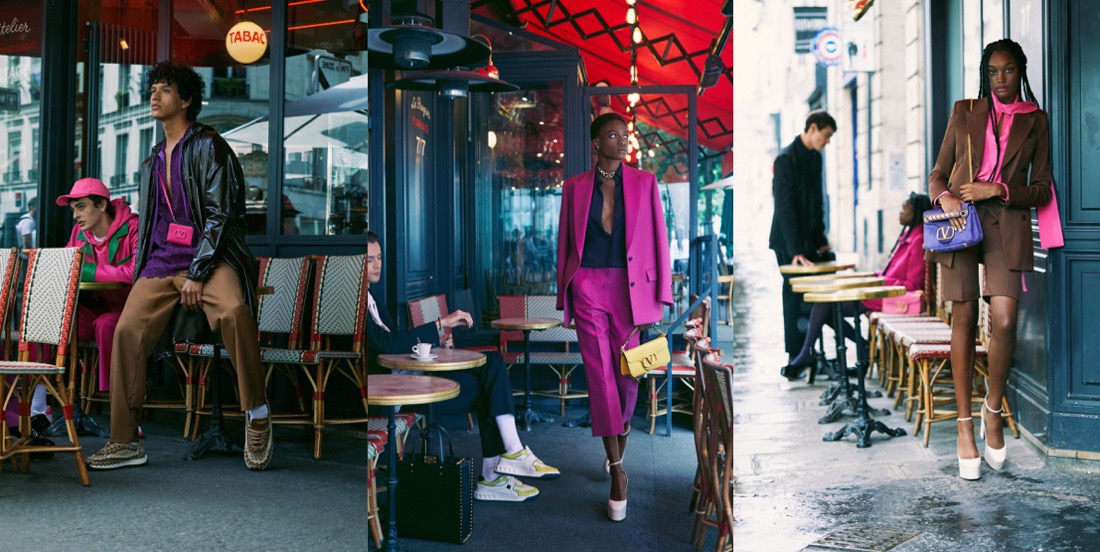
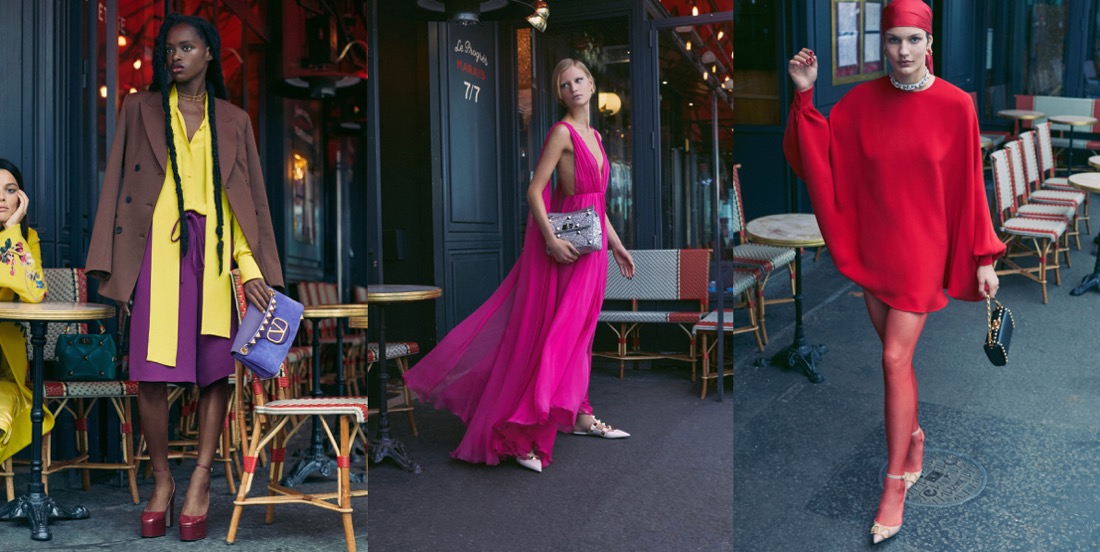
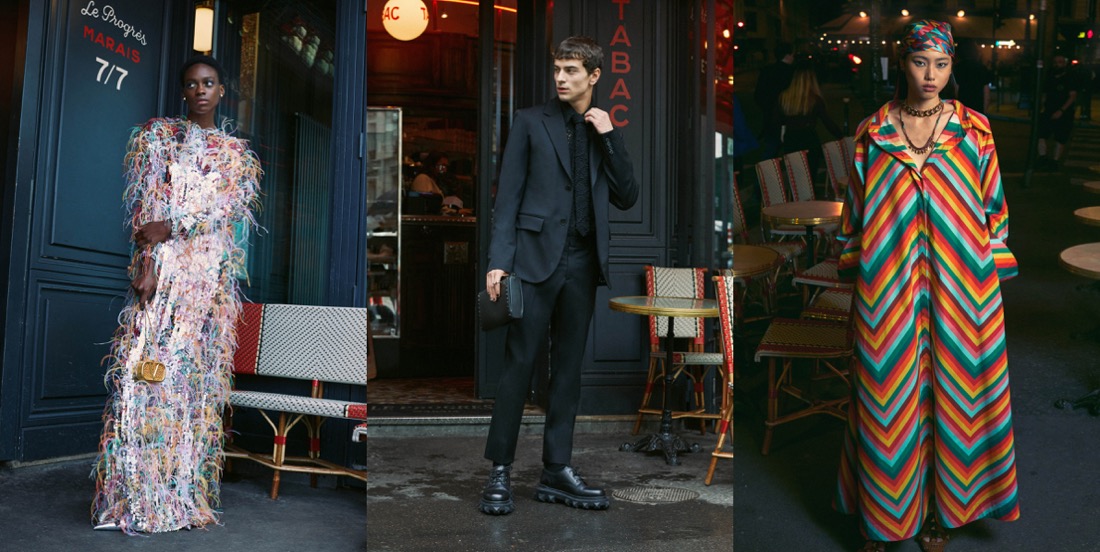
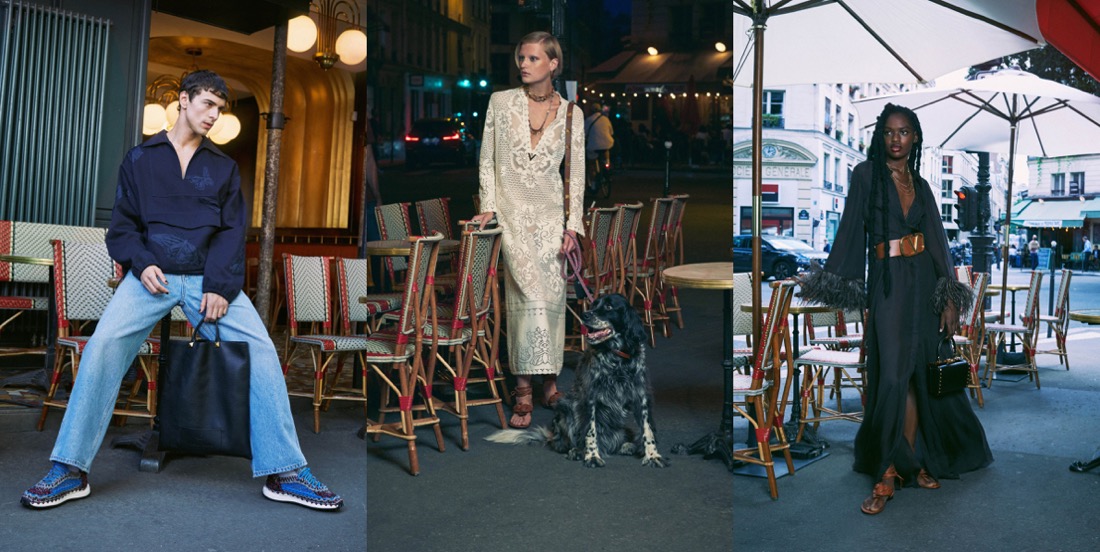
Lately, Pierpaolo Piccioli‘s direction at Valentino is towards creating clothes that celebrate life. Parisian cafés hold a particular charm for the designer these days. The Valentino show he staged last month had models walking out of the Carré du Temple to stroll in the surrounding streets, where people were sitting in cafés enjoying the en plein air experience. For resort 2022, which reads as a sort of prequel to the spring collection, the lookbook was shot in the Marais, a lively arrondissement populated by a hip and diverse crowd, in a café called Le Progrès. Its name resonates with Piccioli’s ongoing practice at the label, which he’s trying to steer forward without detracting from its history. “I want to bring life and a sense of reality into Valentino,” he said over Zoom from his studio in Rome. “Bringing it out of the atelier while retaining the savoir faire of the atelier.” Piccioli has been at the maison long enough to know its codes by heart; he has lived through its glamourous heyday, when Valentino Garavani received guests at his Château de Wideville, whose grounds were as perfectly manicured as the high-maintenance crowd that walked them. It was a world as fabulous as it was secluded and inaccessible. “I don’t want to forget the castle, but you have to be rooted in the present,” he said. “I want to bring the castle to the street, so to speak, and bring the street to the castle.” He calls this process re-signification; he feels that his duty as a fashion designer today is to be the vector of a vision of beauty in tune with the times we’re living in. “Beauty today means diversity and inclusivity; I want to encourage people to embrace it,” he said. Piccioli’s message is calibrated to appeal to younger generations, for which such values are a given; at Le Progrès, the cast included singer and TikTok-er Dixie D’Amelio; model and editor of the online platform the Youth Collective Project Amanda Prugnaud; filmmaker Christian Coppola; and actress Tina Kunakey. Every piece of the collection was treated individually to make it stand out on its own, not only adding to its value, but also allowing for the layered, personal styling which is becoming a sort of signature of Piccioli’s tenure. Shapes were simple and “almost elemental, without any grandeur,” and enhanced by elaborate decorations. A slender, slightly masculine white wool coat was appliquéd with floral ramages cut-out in black velvet, while a simple oversized black tee was intarsia-ed with lace as if a dressy blouse were somehow patchworked onto it. Eccentric flourishes were lavished on everyday pieces – feathers dotted sweats, capes, and svelte minidresses; long braided fringes trimmed ponchos; intricate broderie anglaise techniques appeared on slender, minimal tunics; and romantic blouses were encrusted with precious lace and worn with denim. “I wanted to make what is ordinary more imaginative and fantastical,” Piccioli said. “This is just extra-ordinary daywear.

Collage by Edward Kanarecki.

Celebrate Life. Valentino SS22

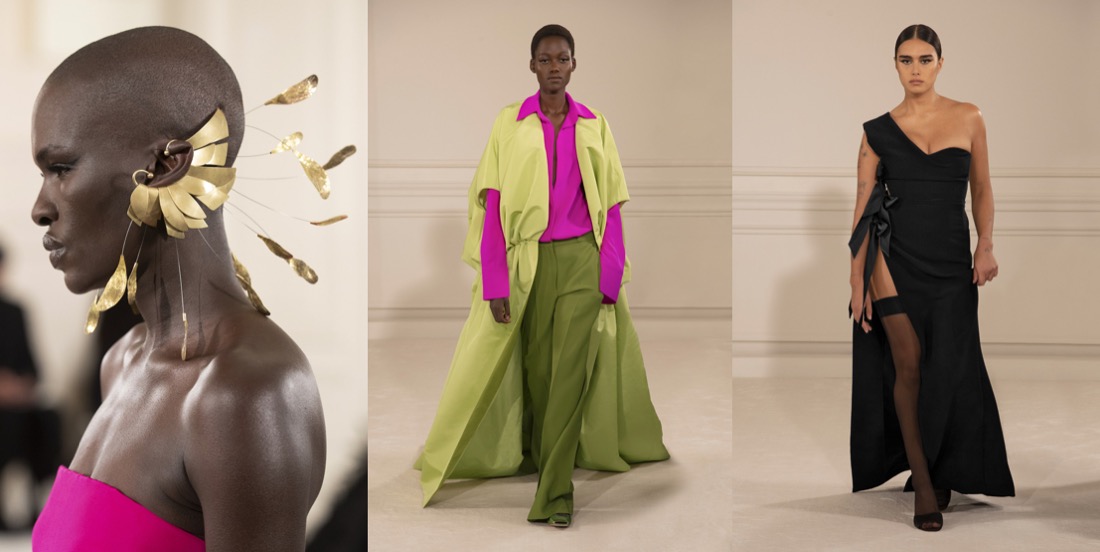
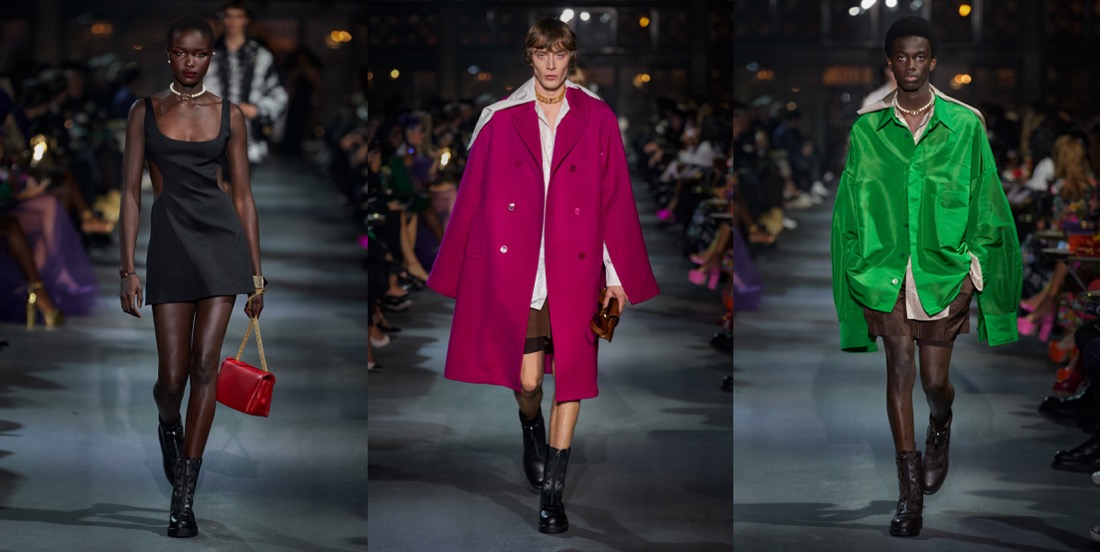
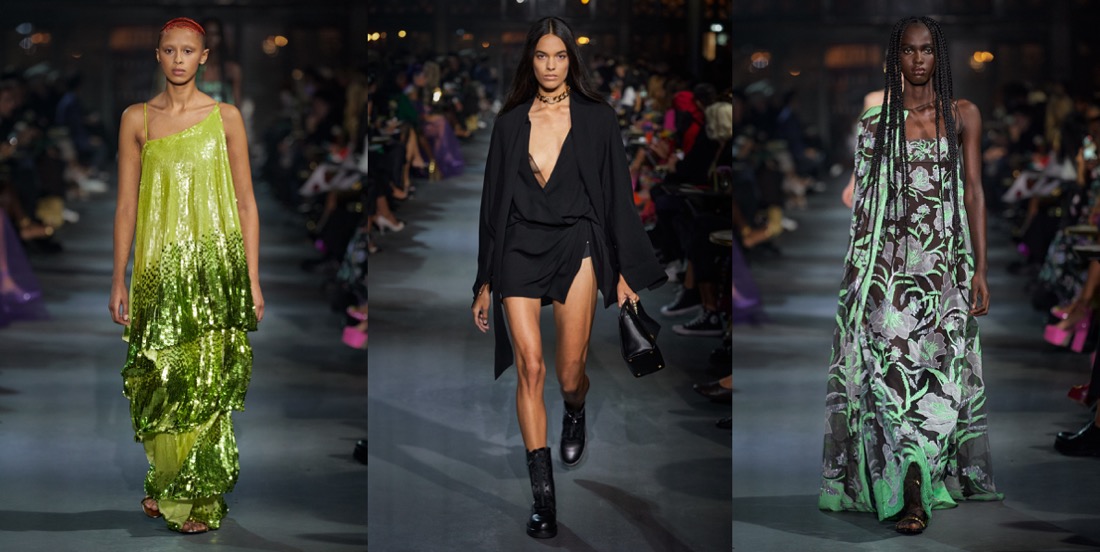
In his brilliant and vibrant spring-summer 2022 collection for Valentino, Pierpaolo Piccioli celebrates life and all its beauty. To mark the return of Valentino’s ready-to-wear to Paris, he took over the old marketplace at the Carreau du Temple, and a row of neighboring cafés and restaurants opposite, to put on a joyful all-gendered show reunion symbolically blurring the distinctions between insiders and outsiders. “It has been such such a tough moment. That’s why I decided to get Valentino into a new dimension: life,” he said, amidst a backstage scene packed with young people who were getting ready to walk along the street for everyone to see, before filing back into the market space where the regular invited audience were seated at café tables. Piccioli, much loved in the industry for his warmth and down-to-earth lack of snobbery, felt the rupture of the past two years meant it has finally come time to put words and fine intentions into action. “I’ve been talking for a long time about making a shift, embracing a new generation, a new world,” he said. “And also to be leading a change. You know, Mr. Valentino took part in engaging with youth in the ’60s. That was a revolutionary time. So I think this is my way of doing that today: keeping the codes and the couture values, and talking about a beauty which is about humanity and a shared wardrobe.” With refreshing candor, he said he didn’t really want to speak about clothes, inspirations, and narratives. “Fashion is about clothes – but it’s also about people wearing clothes. If I had to add words to talk about the storytelling, maybe my mission was not accomplished. Because I want to talk more about our community of people, sharing values – rather than a group of individuals that share the surfaces of a lifestyle. It’s more about celebrating diversity in a joyous way. “ He pitched the production towards embracing Gen Zers with a proposition of a beautiful, casualized couture wardrobe designed to float between genders: lightweight taffeta tailoring in vivid colors, plethoras of dresses from minuscule and cutaway to sweeping, embroidered caftans. There was also classic Valentino symbolism dotted through the collection. The opening look, an organdy flower-embroidered blouse and tiny skirt, referred to Valentino Garavani’s all-white collection of 1968 – immortalized in a photograph of Marisa Berenson. There was a reproduction of a slim, tiger-striped maxi coat, famously worn by Veruschka the following year – and to end with, a pair of floaty, flower-printed dresses from the ’70s. “Well, this is how I used to relate to Valentino when I was a kid myself – I came from far away from it. I dreamed about it through seeing fashion photographs, never the clothes, or the shows themselves,” Piccioli said. A personal memory of his own youth was immortalized in the relaunch of a pair of high-waisted jeans: “This is from the first denim collection Valentino launched in the ’80s, which I had,” he laughed. On the back of the jeans was the very fashion advert – likely Bruce Weber – which had brought Piccioli to buy into the brand in the first place. Democratizing and making a high-flown brand relatable to a new generation of consumers is of course the task and responsibility of pretty much every creative director today. Pierpaolo Piccioli is doing that with grace. It was a sociable, relaxed, celebratory moment where the future he believes in felt real.

Collage by Edward Kanarecki.

La Grande Bellezza. Valentino AW21 Couture

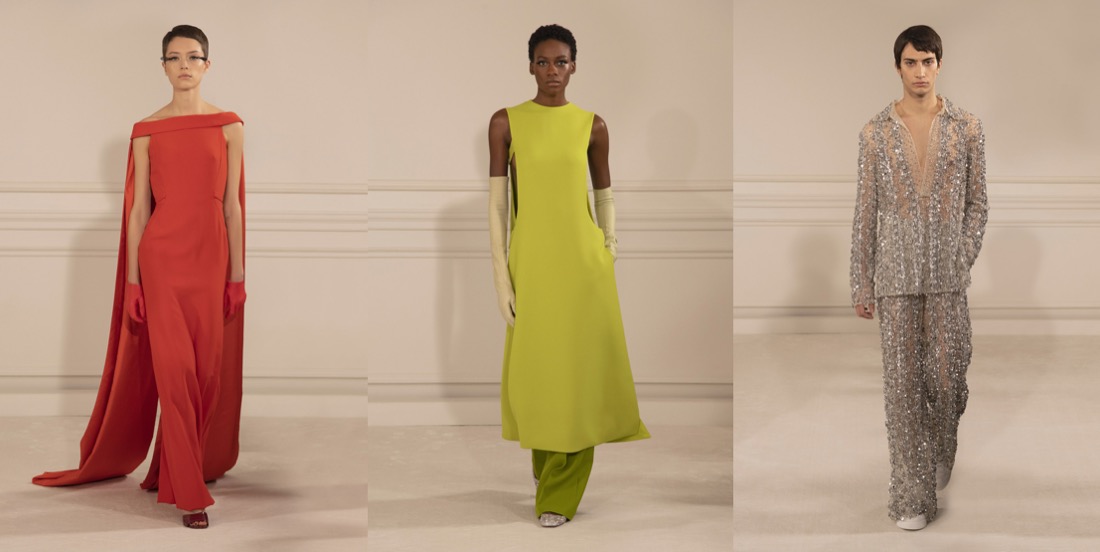
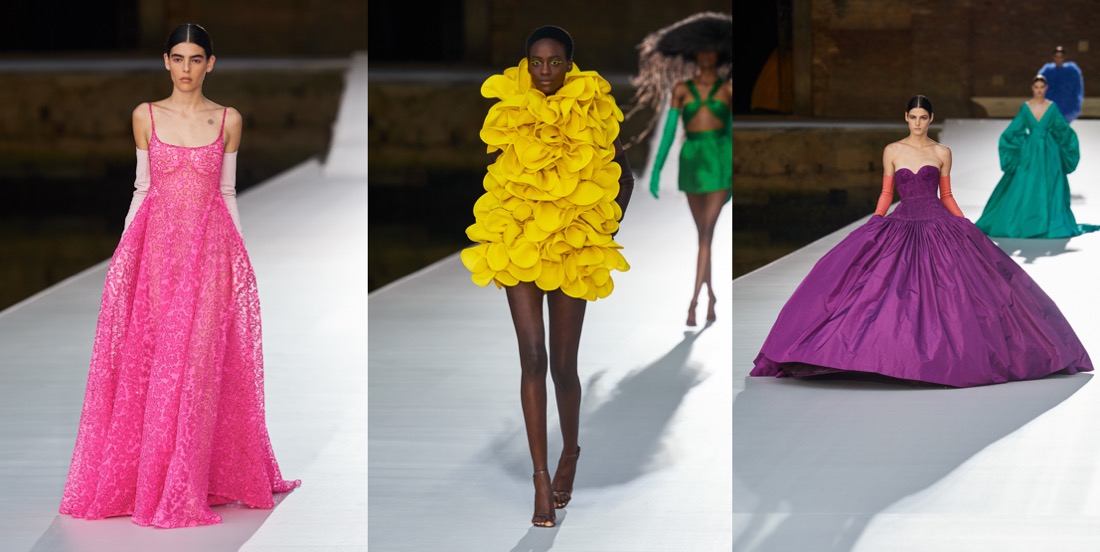
What a show. What a feeling. What a symphony. Celebration of great beauty. Valentino’s creative director Pierpaolo Piccioli set his sublime couture collection in the Gaggiandre, or ship building yard, of Venice. He was drawn to the place’s haunting beauty which he likened to a De Chirico painting with its arches and robust columns. In Renaissance times this place represented the hub of the city’s trading machine, a sophisticated production line that was said to churn out a boat a day. This being Venice and the Renaissance, of course the place – now part of the Arsenale where the city’s art and architecture Biennales are showcased – is as beautiful as it was once productive, having been built (between 1568 and 1573) by Jacopo Sansovino, one of Venice’s most revered architects of the period. Piccioli set his snaking runway under Sansovino’s soaring arches where the ships were once sheltered to be repaired, so that it appeared to float over the water. Guests were bidden to wear white. Luckily everyone did as they were told, and the effect, as the golden light of early evening streaked the water, the stone, tile, and brick, was undeniably poetic. To add to the spine-tingling moment, the collection was serenaded by the British singer Cosima, whose plangent voice gave a powerful twist to Calling You from the 1987 movie Bagdad Cafe, that opened the show. Piccioli brings the ultimate level of gasping wonder to fashion’s color wheel, setting flamingo pink, chartreuse, violet, cocoa, and mallard green ball gowns one after another, for instance. Or he might throw a raspberry double-face balmacaan over darker pink pants and an orchid pink crepe shirt, or a lilac cashmere cape over violet pants, frog green sequin t-shirt, and pea green gloves, and then ground the look with eggplant shoes with the heft of Dr. Martens. These last two ensembles, by the way, are part of the menswear offerings in the collection, in case you were wondering, and very persuasive they were too.

There were 84 looks in the show, and each one was a different proposition, from puffball micro minis, (shaded with Philip Treacy’s giant trembling ostrich frond hats that moved like jellyfish), to trapeze silhouettes, skirts that hit the mid-calf or hovered above the ankle, and slinks of satin and crepe cut to spiral round the body like affectionate serpents. From ball gown to micro mini the effect was one of commanding elegance. The fashion history sleuth will find echoes here of Madame Grès, of Cardin, and Capucci, as well as note taking from Mr. Valentino’s own magnificent oeuvre, but Piccioli takes these iconic moments of design history and makes them uniquely and persuasively his own. Also unique were the artist collaborations, curated by Gianluigi Ricuperati, who assembled a roster of 17 painters, including Jamie Nares, Luca Coser, Francis Offman, Andrea Respino, and Wu Rui. Art and fashion have often united in symbiosis – think of Warhol and Sprouse, or Schiaparelli and Dalí – but here the effect was a celebration of creativity, the hand, and of the nonpareil Valentino workrooms whose talented artisans evoked the source artworks through various cunning means. There were elaborate collages of textiles, for instance 46 in all for Look 6, Kerstin Brätsch’s The If, 2010, (as the Valentino show program notes helpfully noted, alongside the names of the craftspeople in the ateliers who have made them). Meanwhile, the five pieces by Patricia Treib, combined in the ballgown of Look 68, called for 140 meters and 88 different textiles, and took 680 hours to complete. On close inspection even the fine lines of Benni Bosetto’s pencil strokes (Untitled, 2020), that appeared to have been drawn directly onto the pale satin of Look 46, turned out to have been suggested by subtle hand-stitching (a stunning 880 hours of work, if you are counting). The ball gown and cape that closed the show, Look 84, were scrolled with motifs drawn respectively from Jamie Nares’s It’s Raining in Naples, 2003 and Blues in Red, 2004, requiring 700 hours of work, 107 meters of fabric, and custom screens for the hand-printing as it had to be done on such a large scale. The effect was appropriately magisterial. Summing up: total magnificience.

All collages by Edward Kanarecki.

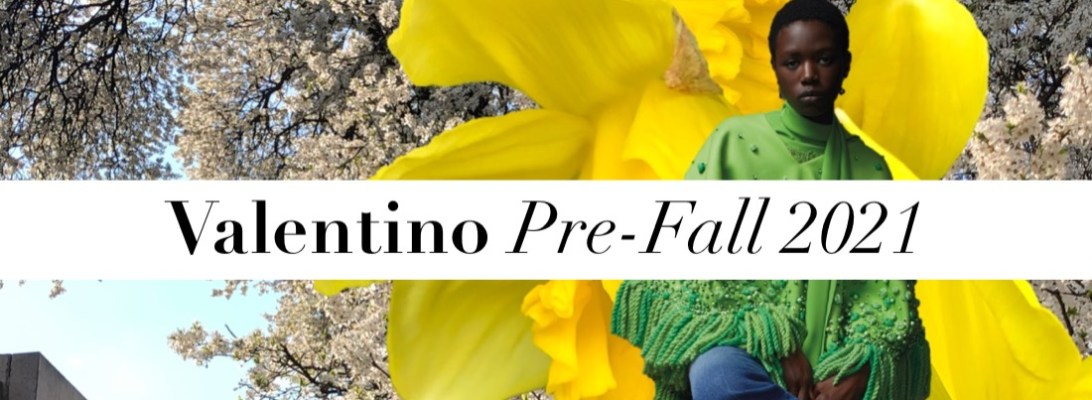
Re-Signification. Valentino Pre-Fall 2021

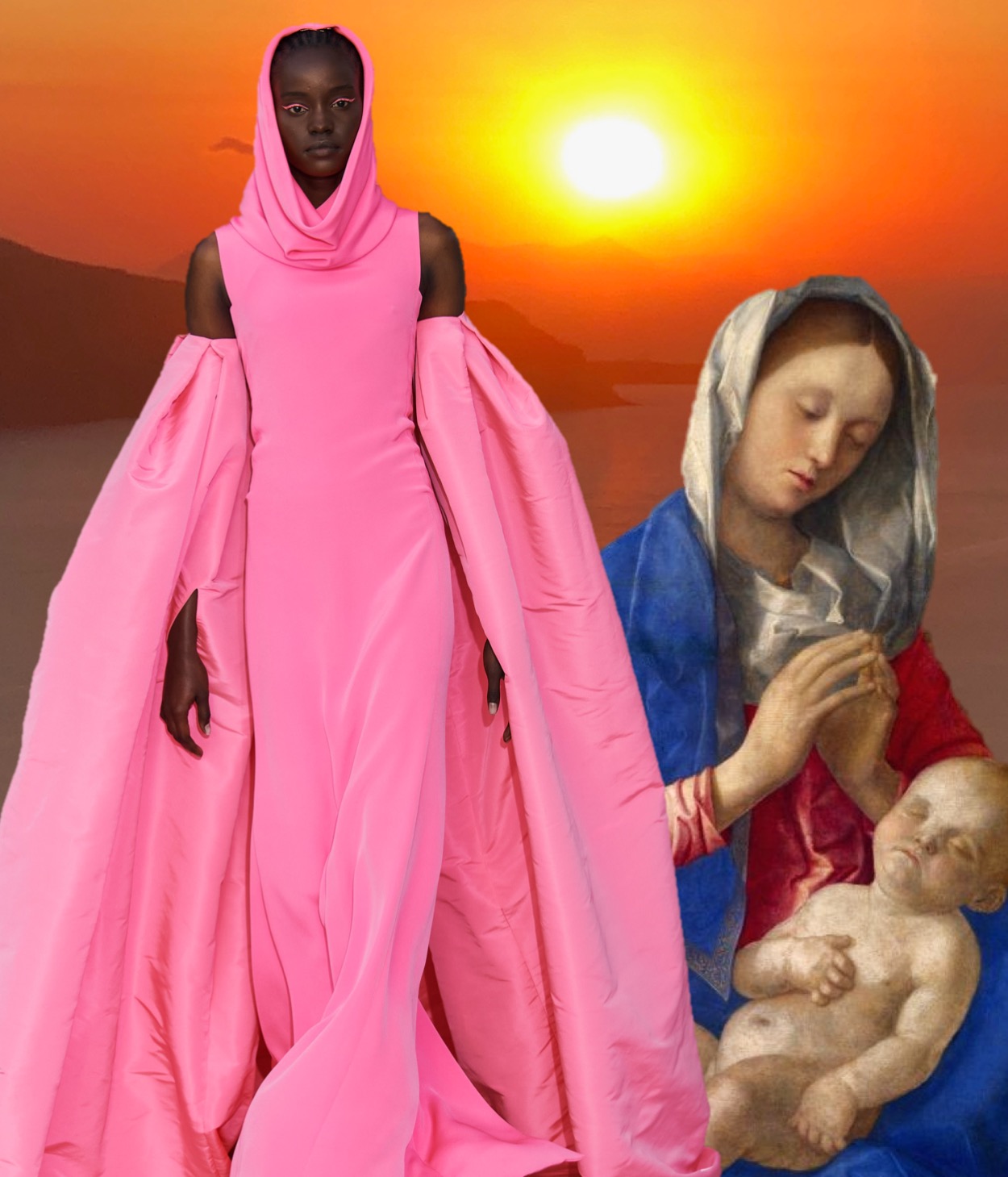
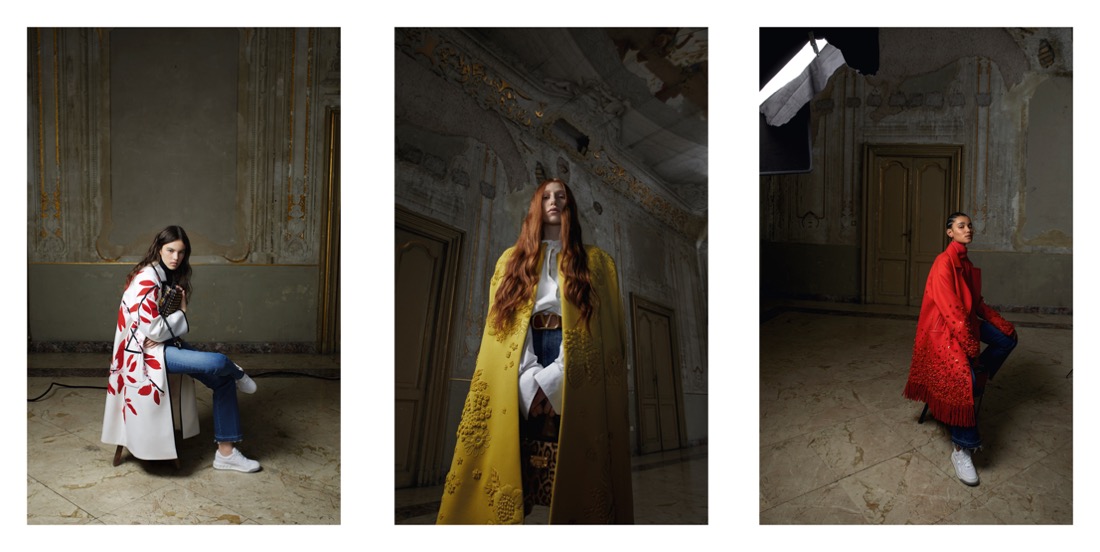
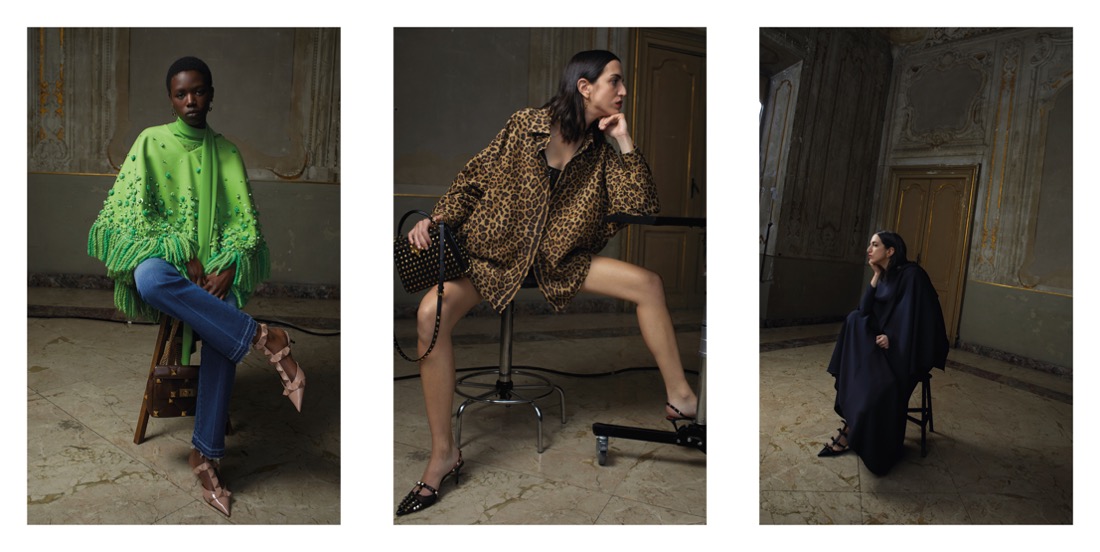
Pierpaolo Piccioli is busy keeping Valentino’s re-signification going, the line of thought about identity, humanity, and radicalism around which he’s been tailoring his practice since last year. “Today, more than ever, aesthetics are determined by identity,” the designer told Vogue while discussing his pre-fall 2021 collection. “To make Valentino’s codes and values pertinent for today, I want to keep a firm hold on its identity while shifting its signifiers, giving them a new attribution.” What does that mean, exactly? “It means giving a more human dimension to Valentino’s lexicon, less obviously glamorous,” Piccioli said. “Not because I condemn red carpet glamour, but because today, there’s the need of a new warmth, of more humanity. So you have to open up those codes, giving them new life and the freedom to speak through more personal, individual interpretations.” And what is more individual, personal, and human than a portrait? For pre-fall Piccioli lensed the look book himself, with a cast of Italian beauties not all of whom are models, but rather friends and young women “with something to say,” he explained. The collection was intended as a series of individual pieces underlining the unique, non-clichéd humanity of each woman and her non-stereotyped representation of femininity. “The way I approached the shoot was a metaphor of what I’m doing at Valentino,” explained Piccioli. “Models for me are individuals, ‘persone’. This is a moment in time where humanity is paramount. The whole cultural discourse about inclusivity, accepting and enhancing diversities, and the freedom of expressing oneself – it’s just about putting humanity front and center as a non-negotiable social, political, and personal value.” Shot in an empty yet decadent Roman palazzo, with chiaroscuro light giving each image a painterly, metaphysical aura, the collection paid a telling homage to Valentino’s culture of couture, even if it consisted mostly of daywear. Dégradé embroideries in macro sequins, wool knots, and beads; handmade taffeta and lace intarsia; bouillonné rosettes and thread-made appliqués; embellishments made through a complex carving techniques – these and other couture flourishes were lavished on clean-cut coats and capes in double cashmere, everyday pieces of luxurious ease. Red roses, an homage to the famous Valentino flamingo dress, were stitched on a sweatshirt in vermilion cady, while a simple shirt in crisp pale blue poplin was inlaid with individually cut florals selected from different types of see-through lace. Summing up, Valentino’s ready-to-wear hasn’t been in such a good place as now for years.
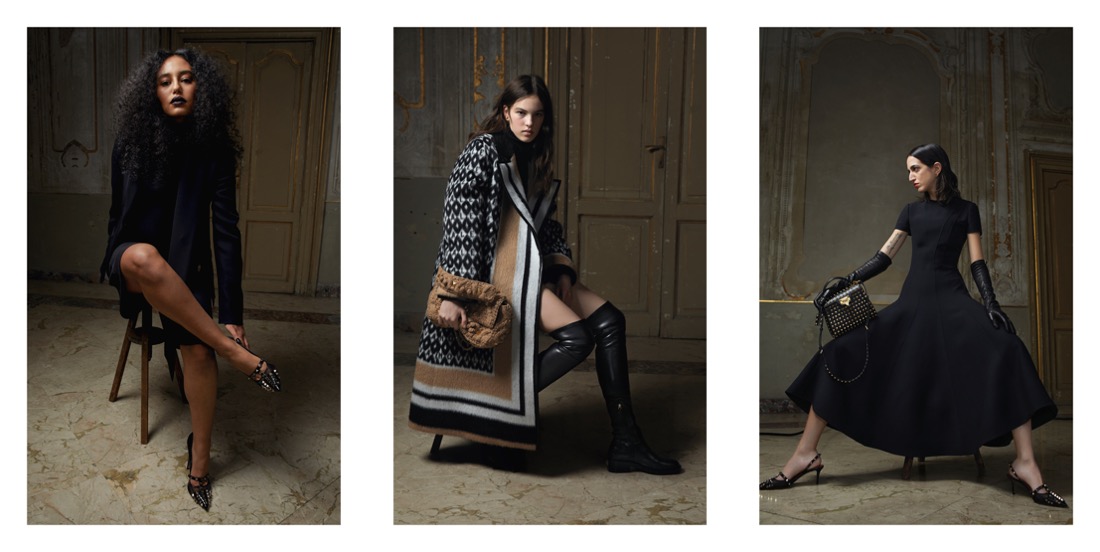
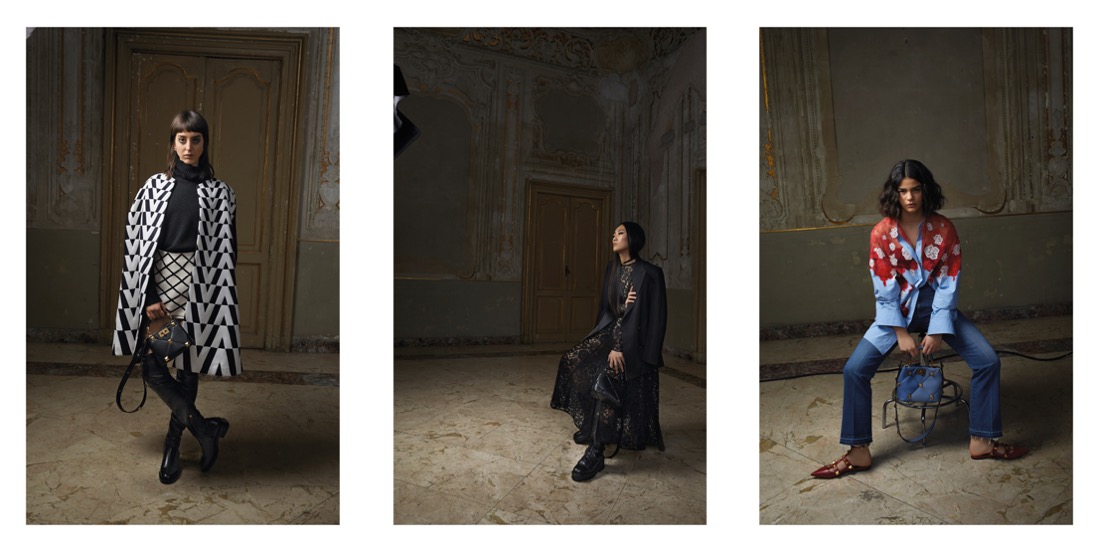
“Live” collage by Edward Kanarecki.