Powerful Beauty. Alaïa AW22

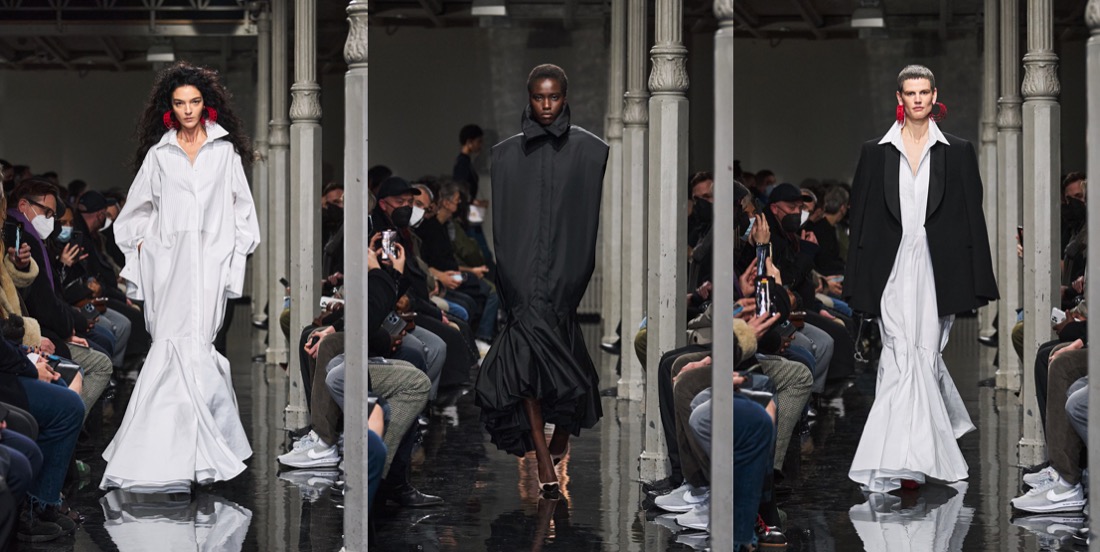
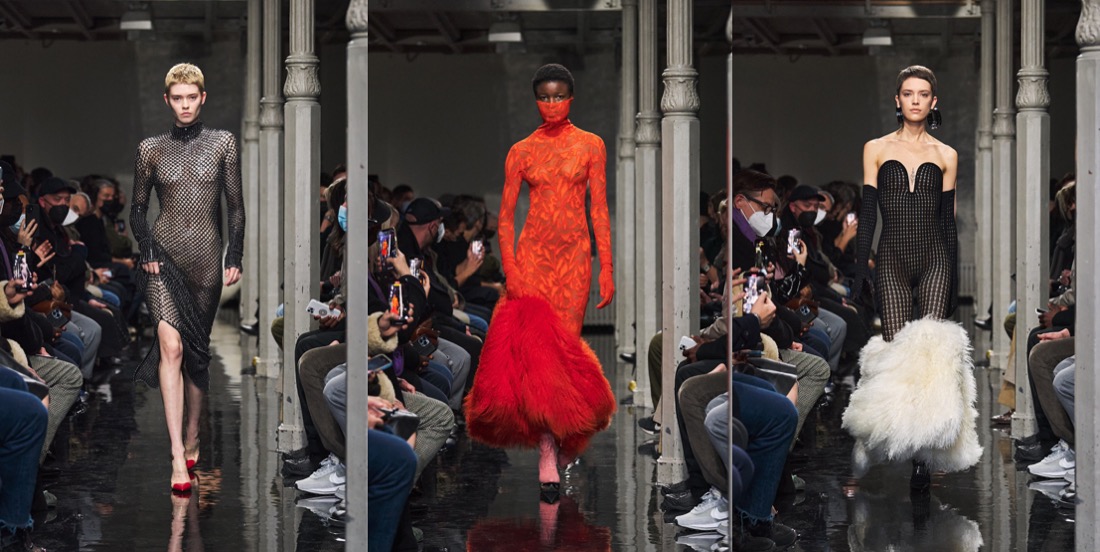
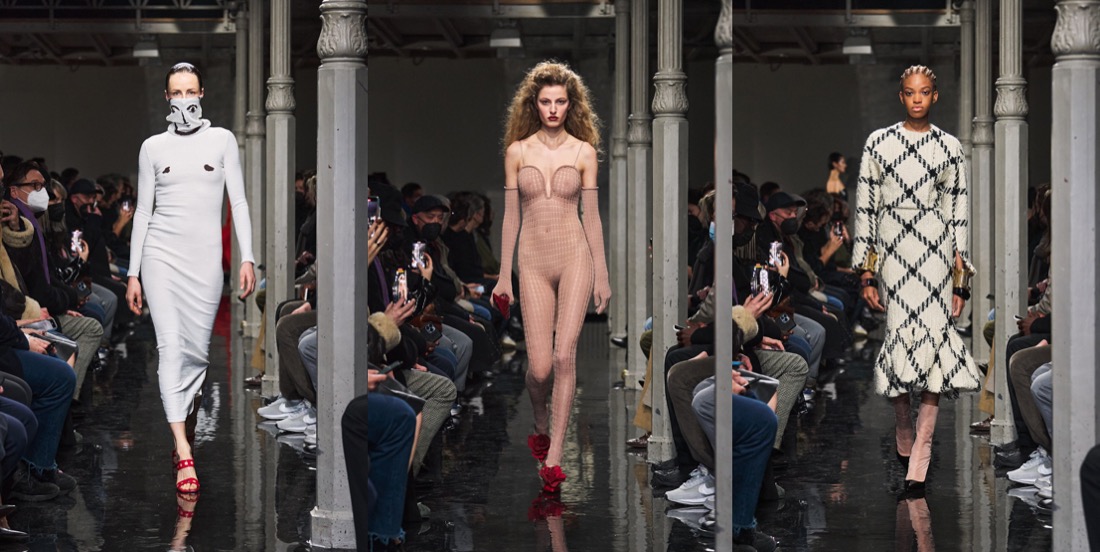
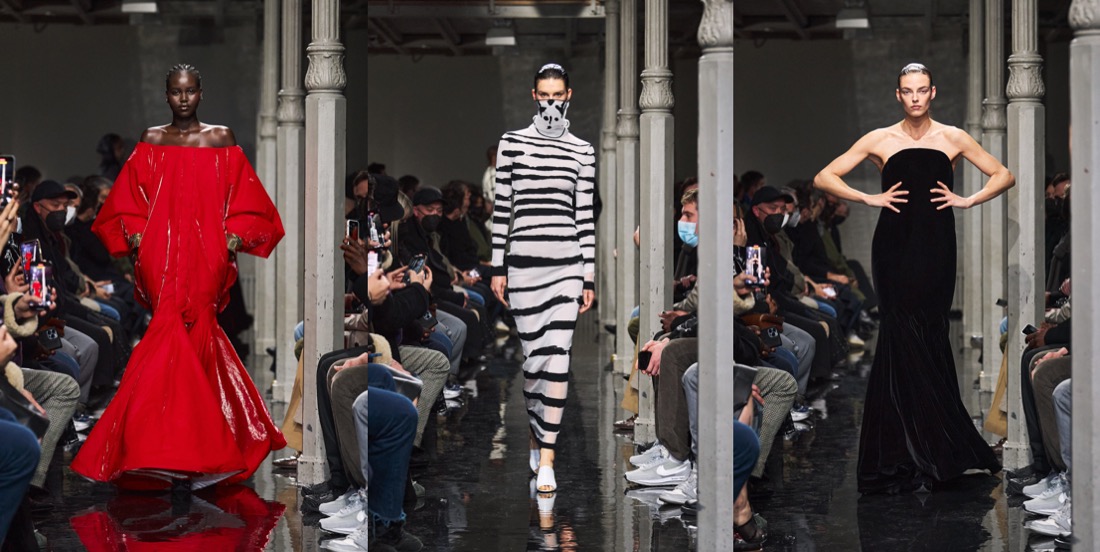
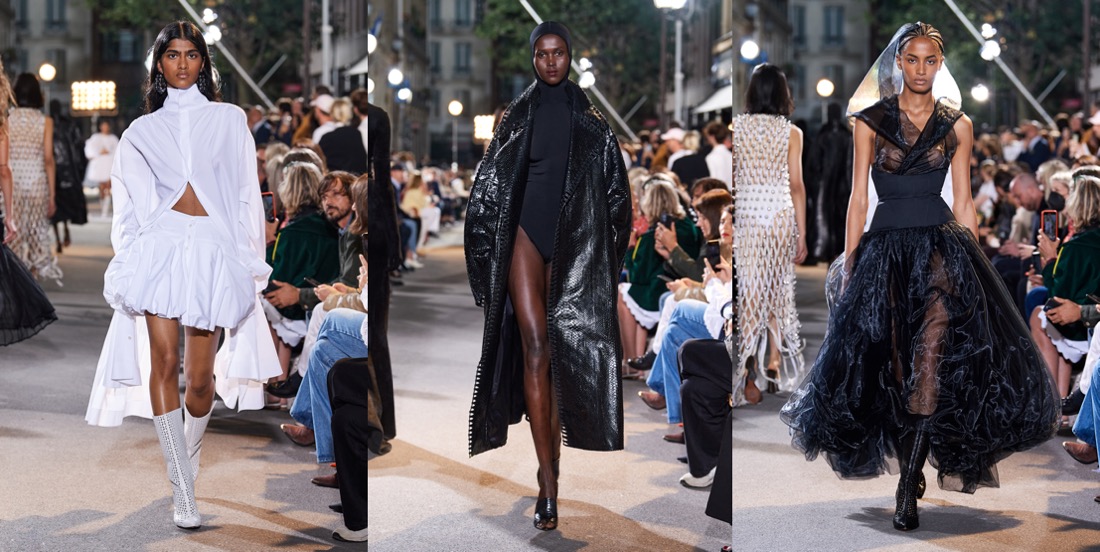
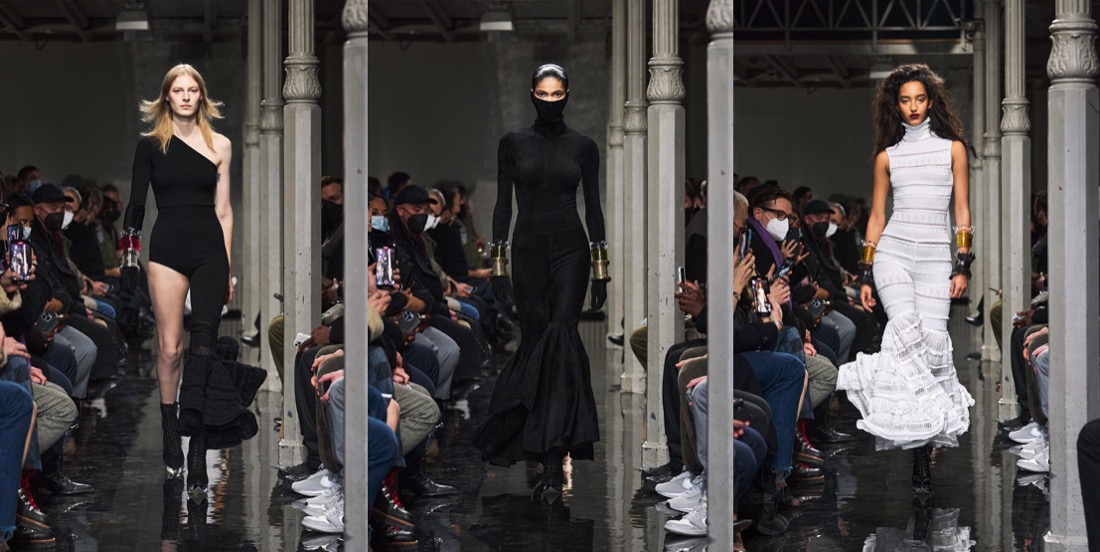
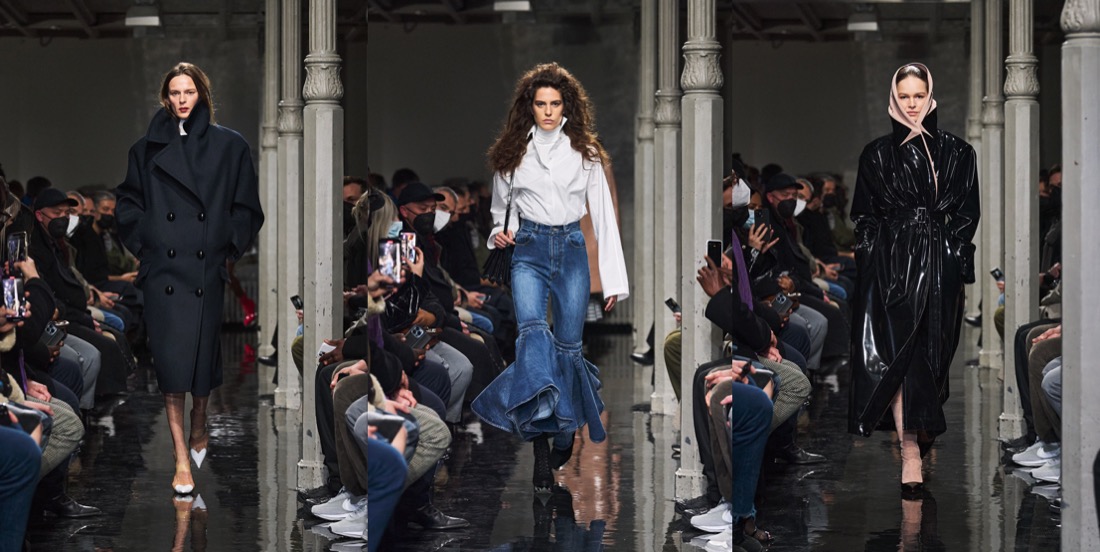
Second collections are always the most difficult to pull off, especially when done for a legendary maison like Alaïa, where the heaviness of legacy might simply overwhelm the most talented designer. Great news: Pieter Mulier nailed it. For autumn-winter 2022, “we translated the DNA of Alaïa with a little bit more of what I like,” he said after the show presented at Azzedine Alaïa’s “cathedral” (the Marais building holding the brand’s atelier, flagship boutique, foundation and the late designer’s home). “It’s basically about beauty. It’s the next step after the last collection: a push forward. I didn’t want a concept. Just beautiful girls and beautiful clothes.” Beyond Alaïa’s loyal following, Mulier is faced with bringing the brand into the consciousness of new generations. His method seems to be this: stick to the codes but turn up the volume. He did so in a collection largely dedicated to bell-bottoms derived from Azzedine Alaïa’s Spanish skirt shapes. Their presence was determined, from denim bell-bottoms to a one-legged jumpsuit bell-bottom and bell-bottoms attached to thigh-high boots that bounced up and down and looked like chopped-off bloomers. The silhouette was echoed in dresses like those of Mulier’s first collection with lively mermaid hems, and in ladylike peplums on skirts that were positively polite compared to their effervescent cousins. While jaunty bell-bottoms are sure to get attention on the daily algorithm scroll of younger generations, there were more intellectually intriguing elements to Mulier’s collection. A series of knitted dresses with face coverings executed in close collaboration with the Picasso Foundation (Azzedine Alaïa was a collector and friend of the family) interpreted ceramics created by the artist in the 1940s through impressive embroideries that turned the models’ physiques into optical illusions. “There’s a rough, pagan beauty about it. Ultimate goddesses,” Mulier said of the dresses. Exactly that component was an interesting contrast in a collection otherwise embodied by upbeat sass and glamour. They kind of cut right through the fun and made you take notice. If they inspired a surrealist streak in the collection, it was there in the biker and flight jackets Mulier morphed into body-con dresses, padding and all, or the dress made entirely out of Alaïa multi-buckle belts. A variety of coats showed what a new Alaïa could also be: big, enveloping shapes borrowed from the gentleman’s wardrobe and sculpted in thick wools, then nipped-in delicately at the bottom of the back to define a feminine silhouette. Mulier said that “the little bit more” he had added of himself to the collection’s genetics was mainly tailoring-focused. That was clear in those coats, but also in louche suits and tuxedos, which accomplished a delicately oversized line that didn’t get overwhelming. Love, love, love!
Collage by Edward Kanarecki.

Down Rue De Moussy. Alaïa SS22

Since the much-mourned passing of Azzedine Alaïa in 2017, the maison was lead by the monsieur’s studio and largely focused on delivering beautiful tribute re-editions. In the beginning of 2021, however, the brand decided to go forward. Stepping onto the Rue de Moussy on Sunday with a debut collection honoring the legacy of Alaïa was a statement which radiated both respect and confidence from Pieter Mulier. Of course, the location couldn’t be more symbolic. Redolent of the culture revered by insiders – it’s the street on which Alaïa opened his first boutique (which up to now is also the label’s studio) and is home now to the Azzedine Alaïa Foundation. Mulier’s arrival came with the serendipitous energy of timing: the fact that right now, there could hardly be anything more relevant, more new, to young women than the post-pandemic surge in desire for ‘body-conscious’ dressing. The term itself was coined to describe the visceral uniqueness of Alaia’s work almost 40 years ago. “For me, it’s about how to explain the codes [Alaïa invented] to a new generation,” said Mulier. All those codes were embodied in the sinuous and slinky dresses, the flippy black skirts, the draped hoods, the flowing silk capes, the black leather – everything using all the techniques of incredible knitwear, body-sculpting cut, and house fabrics. “I wanted to make it democratic again,” is the way Mulier put it, pointing out the cross-references with, say, the leggings “that everyone wears today” or, no doubt, hoodies. But in Alaïa-world, these things are transformed into objects of the utmost sophistication: leggings that are a hybrid of cycling shorts and stockings, head-drapes that become almost goddess-like. “I wanted it to be the opposite of sportswear,” said Mulier emphatically. It’s creating fashion with an ultra-glamour that also has “ease” that he finds interesting. “They don’t like the word ‘sexual’ here, but I do. Because to me, this is the only house in the world which is sexual without being vulgar. It’s actually about pure beauty, and working on the body, which I have never seen anywhere else.

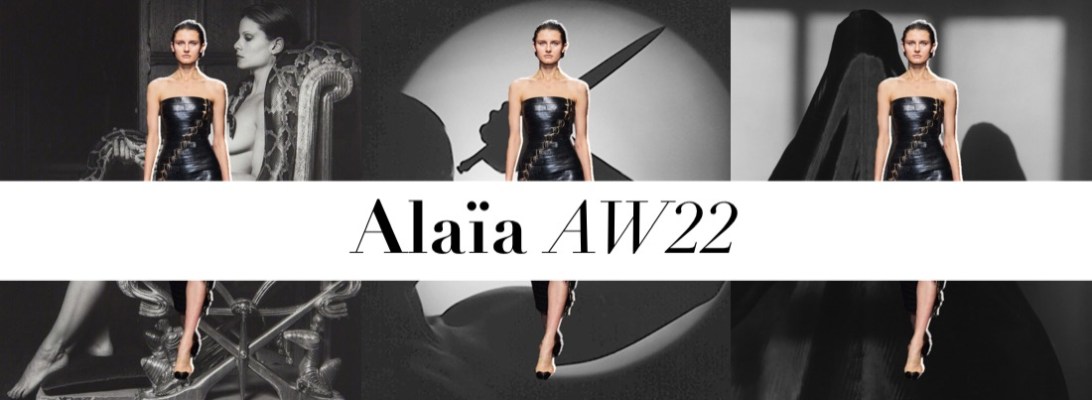
Mulier left his last job at Calvin Klein in 2018, in the aftermath of the departure of Raf Simons, and he said he spent a long time feeling demoralized by the industry. “I thought I wouldn’t do fashion any more. After New York, I really thought it was finished for me,” he said. Though he didn’t have a public profile, Mulier was well known as a highly experienced professional who’d been Simons’s right hand in womenswear at Christian Dior and Jil Sander before that. Several companies came courting, but he was in no frame of mind to pitch his fortunes in with big business again. “I took a long break. I really wanted something small. Something human-scale.” And that is what Azzedine Alaïa, the house, presented. Although owned by the luxury conglomerate Richemont, the house in Paris is still more or less family-scale, populated by the experts who worked with Alaïa and have continued producing the collections since he died. “There’s stuff here I didn’t know was possible,” Mulier exclaimed, pointing out a strapless, corseted black leather dress. “We moulded it out of triple-layer leather, from one hide.” To some pieces, like the iconic perforated leather belt – part of the famous house output for decades – he added his own iridescent twist: “I wanted to put it in the show from the beginning. We found a leather with reflective film, like a mirror. I thought that modernized it in a second,” he said. “That’s the gesture I like: that you don’t touch too much because it’s already perfect. Just with little things.” In the IRL event, there was loud applause from the audience as Mulier ran out to give one embrace to Alaïa’s life-partner Christoph von Weyhe, and another to his own, the designer Matthieu Blazy. It felt like a passing of the flame to a new-generation safe pair of hands who comes with no plan to trample over too many of the boundaries set by the man who famously and stubbornly went against the pressure of industry norms that didn’t make sense to him. For Mulier, that applied to his skeptical approach to all things social media. “I don’t think it’s a house made for social media, even though I’m on it myself,” he observed. “It’s such a small brand, like an artwork that I want to take care of. We’ll build a family slowly.”

“Live” collage by Edward Kanarecki.