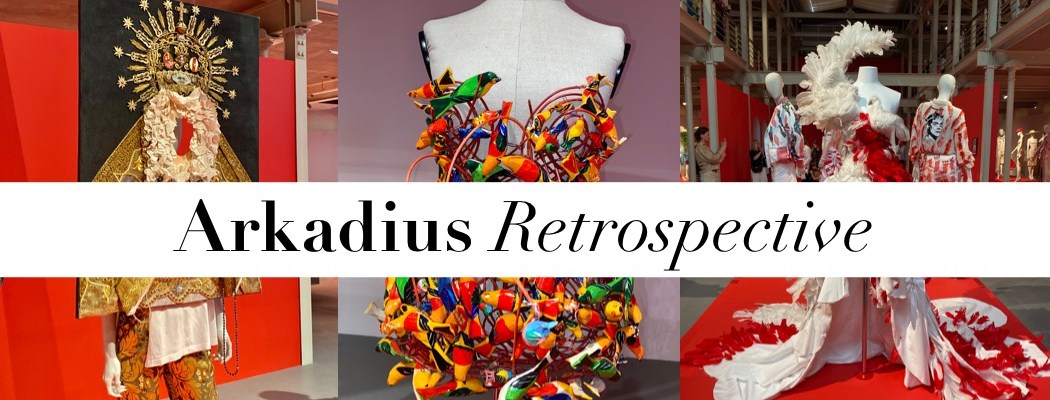
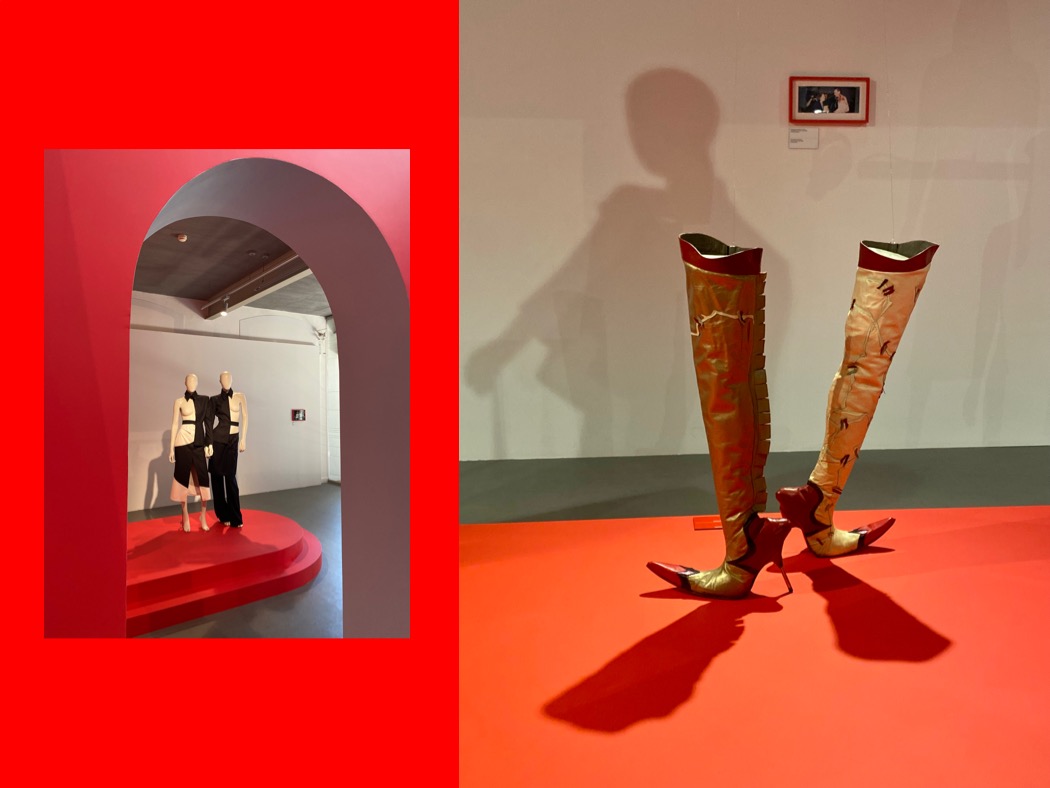
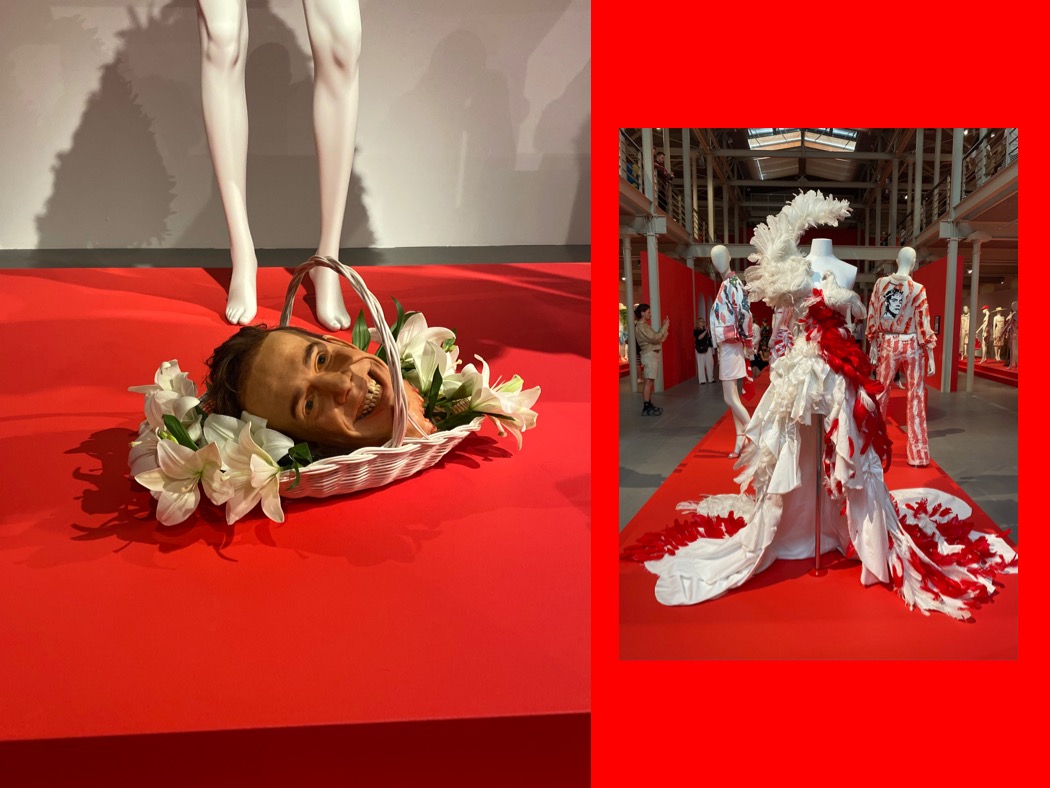
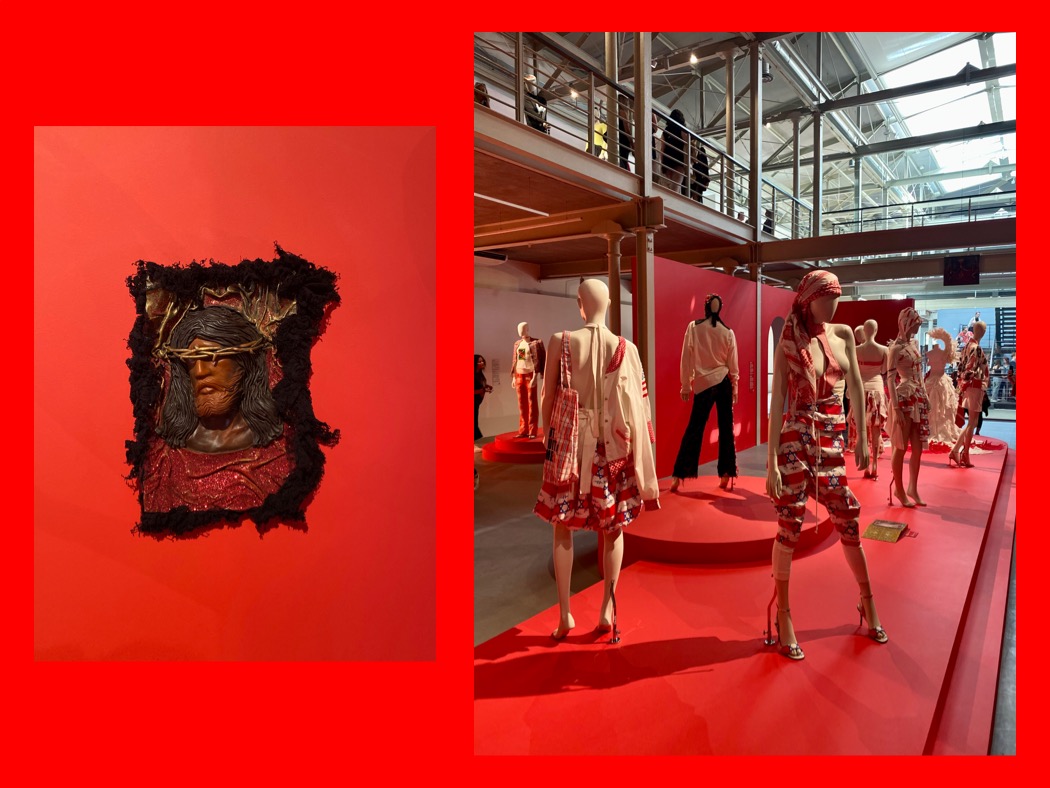
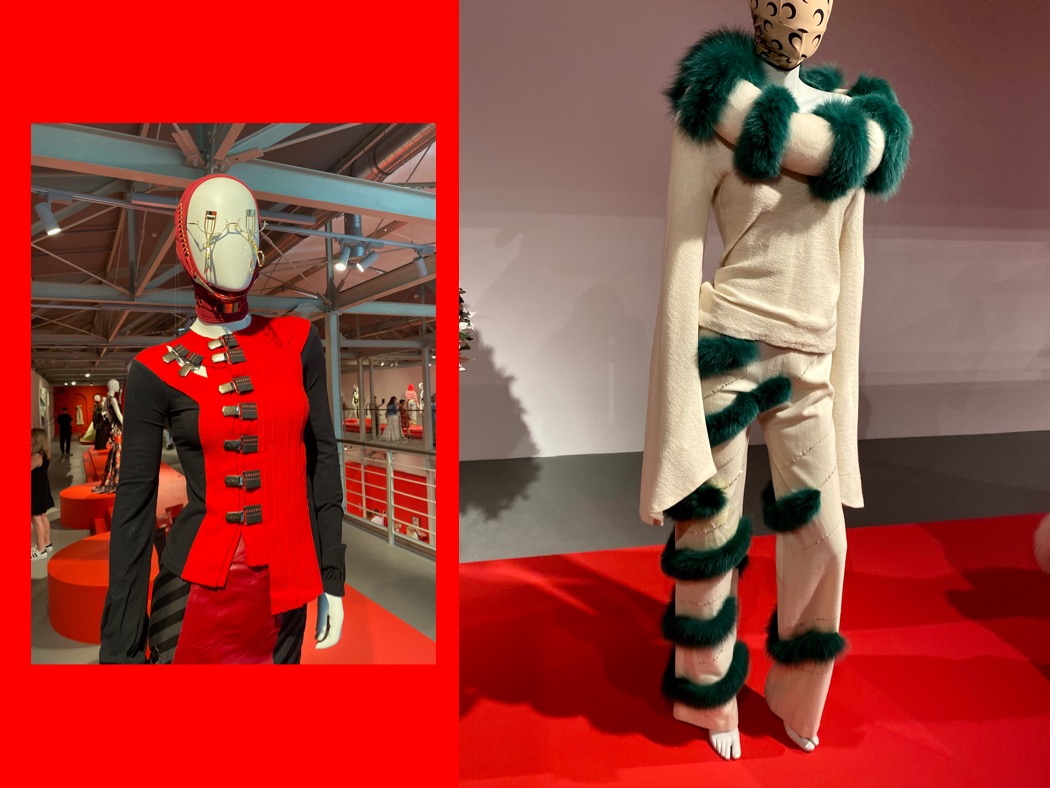
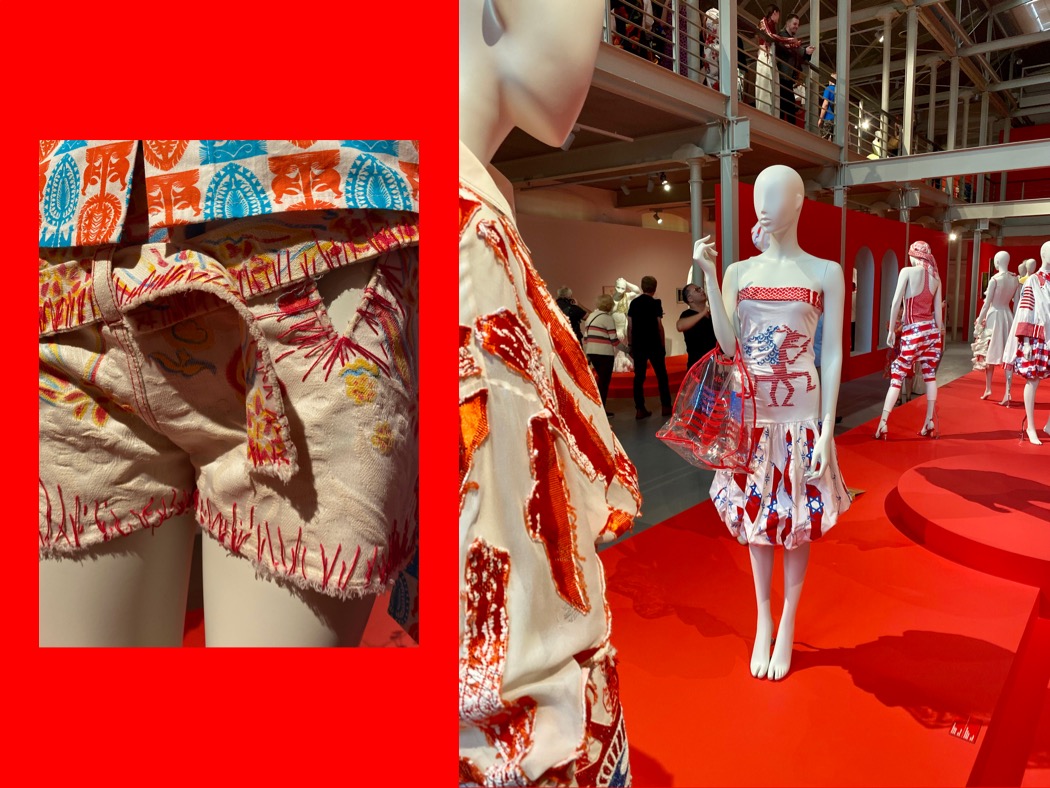
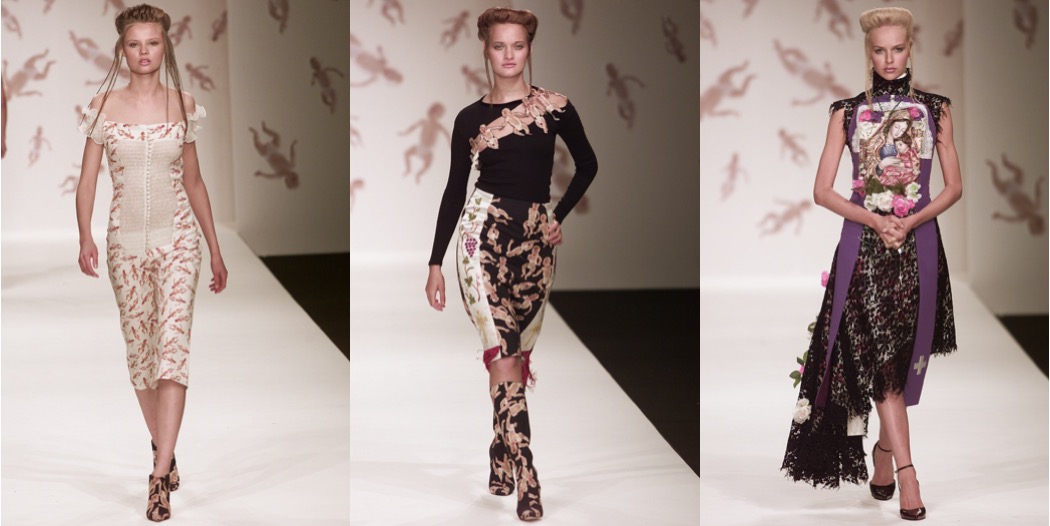
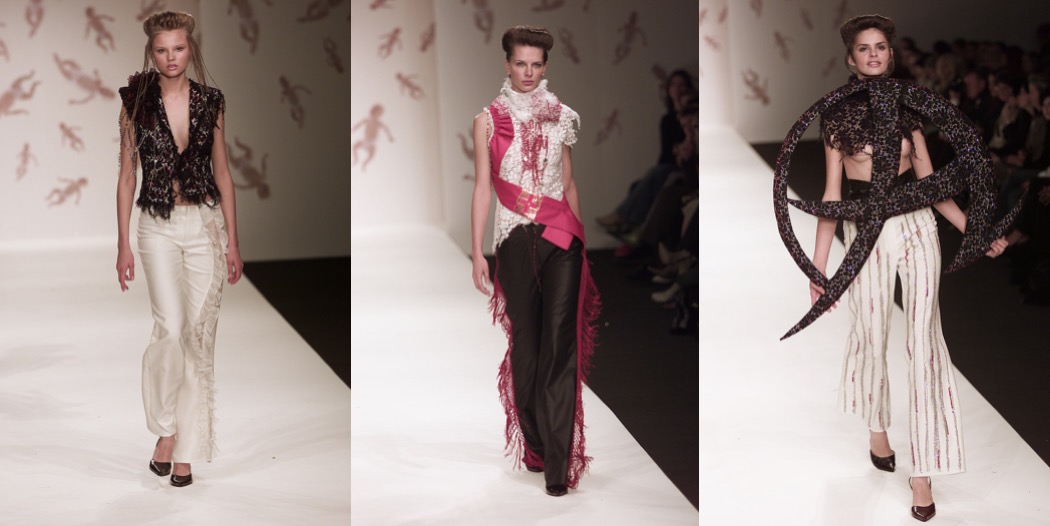
I just can’t emphasize enough how important the Arkadius exhibition atCentral Museum of Textile in Łódź (Poland) is! Seeing all these garments finally IRL, masterfully preserved and in dialogue with works by contemporary Polish artists is a heartwarmingly emotional experience. What makes Arkadius’s oeuvre resonate especially now is its sensitivity towards humanity. He interprets cultures, religions and traditions from around the world in a beautiful and informed way, calling for global peace and love. Also, it’s eternally inspiring to see how the legendary designer and the creative who enamored London in the late 1990s and early 2000s plays with the idea(s) of Polish-ness: folklore, countryside life, Catholic imagination… all creating a joyful, exuberant mosaic of an artist’s creativity. Misunderstood in Poland at first, finally understood in 2020s – better late than never. This is a very significant moment for Polish fashion and I’m absolutely proud and happy to witness it.
The exhibition is open through July 2025 – you’ve got a year to visit Łódź!
You can revisit my interview with Arkadius here where we talk about the “Finale Icon” look from his iconoclastic “Virgin Mary Wears The Trousers” collection.
All photos by Edward Kanarecki. Don’t forget to follow Design & Culture by Ed on Instagram!
Hey, did you know about my newsletter – Ed’s Dispatch? Click here to subscribe!
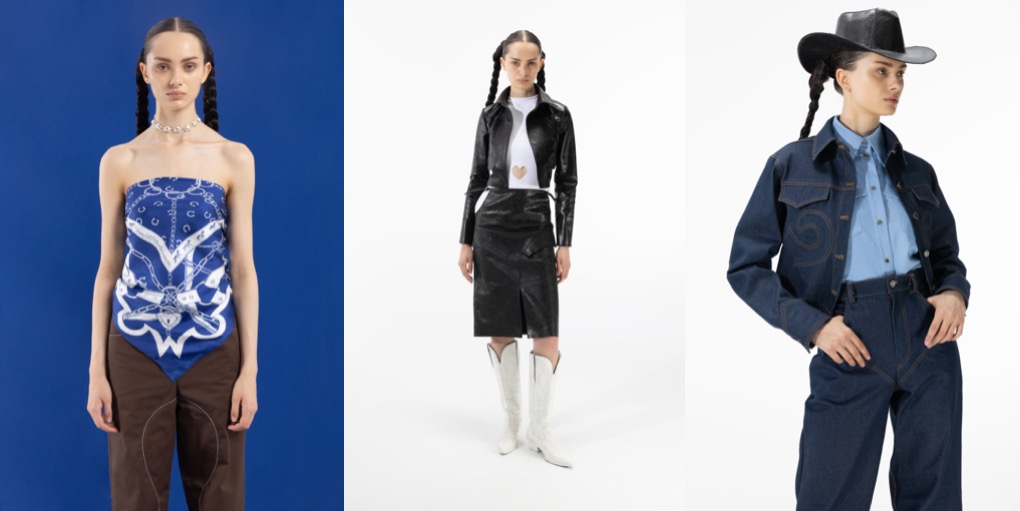
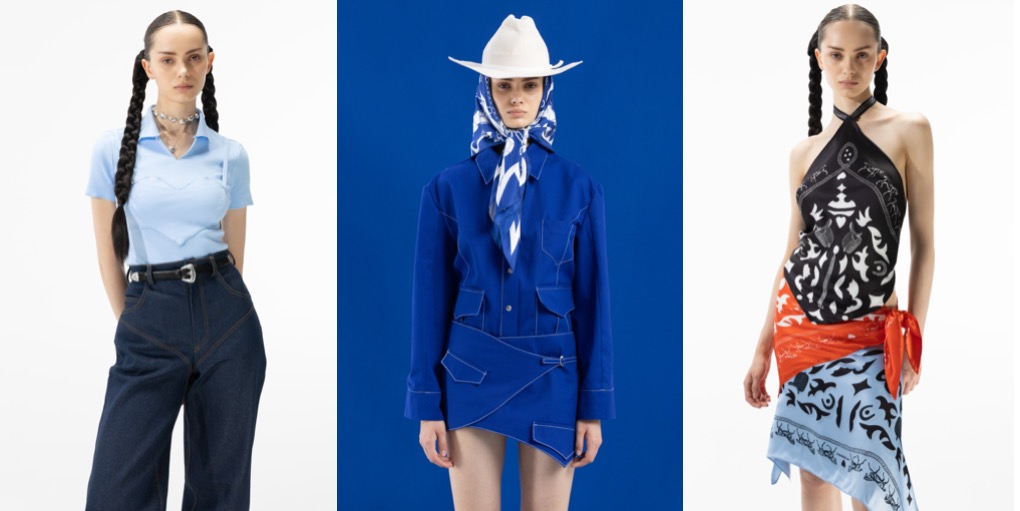
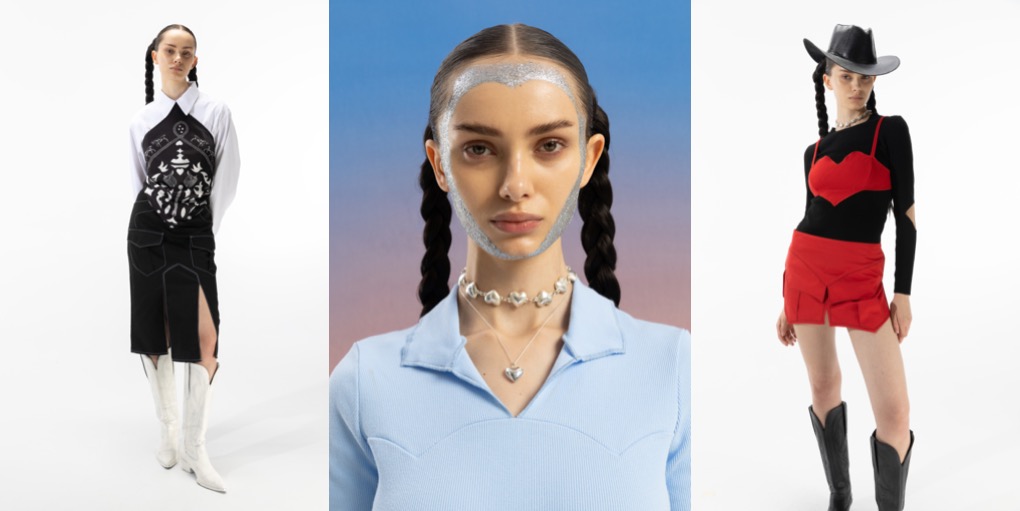
Jan F. Chodorowicz is one of the most exciting, emerging Polish designers right now. With every season, he evolves and expands his visual language, creating collections that orbit around the idea of functionality and utility. The sprig-summer 2024 collection is a further exploration of the codes of workwear, but through a Wild West lens. Chodorowicz focused on the analysis of the cowboy wardrobe, mining it both for its aesthetic and timelessness. Well, is there anything as timeless as the style and clothes we know from all the cowboy films? Think “Midnight Cowboy“, “Brokeback Mountain“, or the recent Almodóvar Western, “Strange Way of Life“. Chodorowicz’s vision of the contemporary cowgirl introduces several new categories for his brand like denim, printed silk and silver finishes. With the heart shape as a central motif, this collection plays with the codes of Americana in a cool, unforced way, delivering sharp clothes for a modern-day woman (who might really love riding a wild mustang).
Collage by Edward Kanarecki. Don’t forget to follow Design & Culture by Ed on Instagram! By the way, did you know that I’ve started a newsletter called Ed’s Dispatch? Click here to subscribe!
Back in July, I defended my MA Thesis in Art History titled “Selected Phenomena of Haute Couture Fashion as a Reception of Early Modern Catholic Pictorial Traditions”. In the thesis, I’ve analyzed one of the most intriguing examples of dialogues between fashion and Catholic imagery in history: Arkadius’ Finale Icon which closed his revelatory spring-summer 2002 collection. For the sake of research and a better understanding of the designer’s intentions, I’ve interviewed Arkadius himself at the beginning of the year. Yes, the legendary designer, the ultimate icon of Polish fashion, the creative who enamored London in the late 1990s and early 2000s.
First, here’s an excerpt from my thesis, where I discuss the designer’s take on Catholic imagination through Finale Icon, an incredible piece of fashion history:
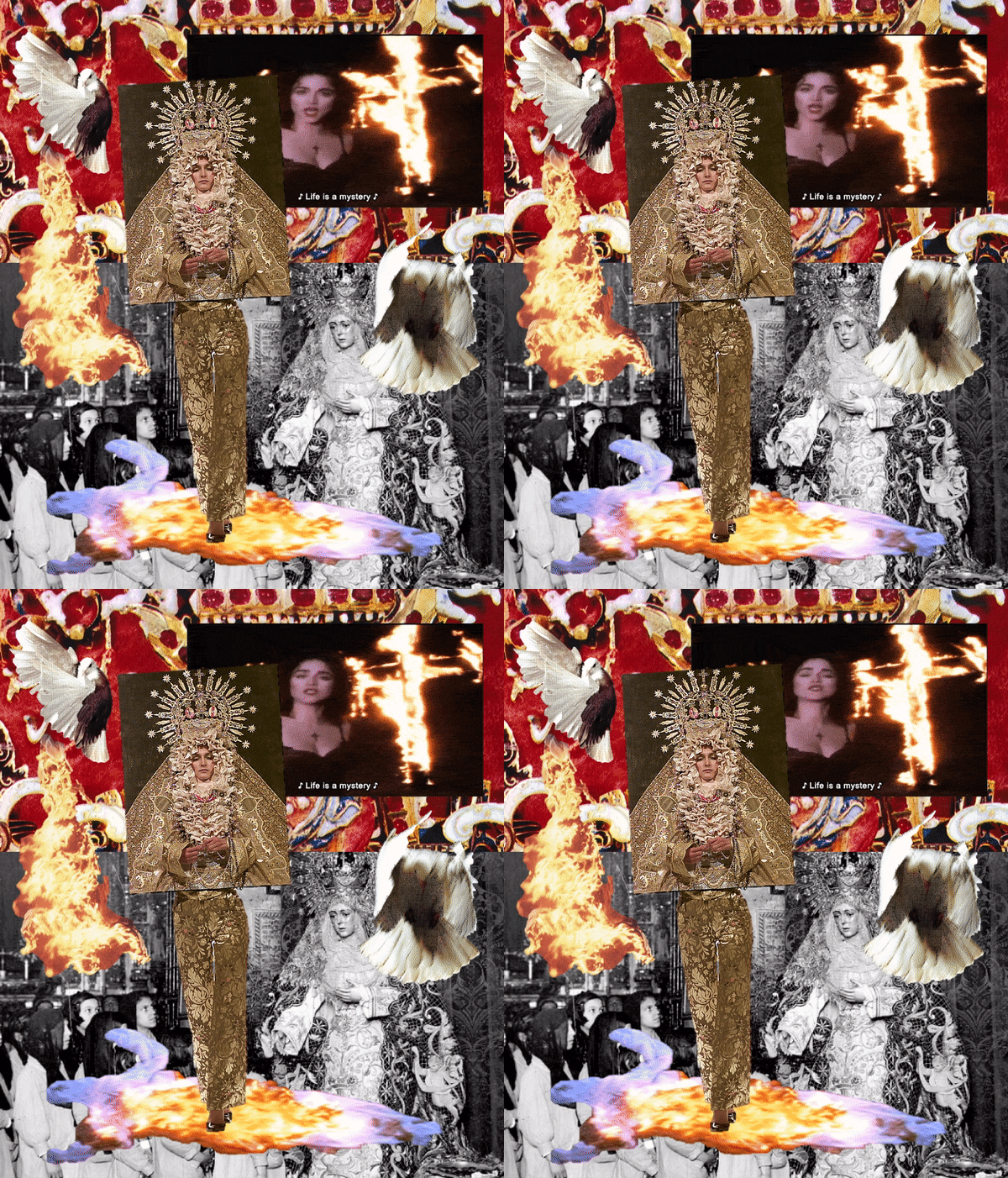
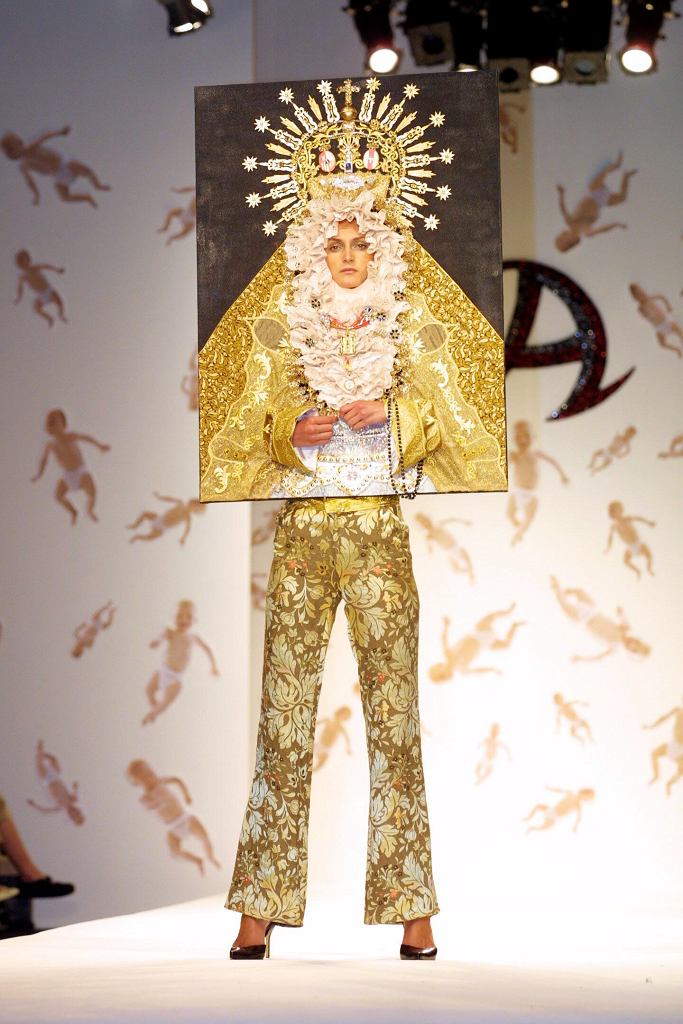
Arkadius’ design, which comes from the Virgin Mary Wears The Trousers collection, was inspired by two different artistic representations of Mary: the statue of the Blessed Virgin of Macarena from the Basilica De La Macarena in Seville and the painting of Our Lady of Czestochowa.
In his work, Arkadius drew inspiration from the world around him, from political events and social phenomena to art and literature. As with Cristóbal Balenciaga [another designer whose Catholicism-inspired work I’ve analyzed in my thesis], images of visual culture related to homeland were an important reference for him. An example of this is the spring-summer 2001 Paulinacollection, where Polish folklore and rural lifestyle proved to be the key references. Polishness as understood by Arkadius, consisting of a cultural landscape built from folk traditions (including Łowicki and Podlasie cut-outs and wicker decorations), was never seen before in such a bold way in the work of any contemporary fashion designer, let alone at London Fashion Week. It seems that the Paulina collection became a starting point for the further deconstruction of Polishness, and the creation of a collection related so intensely to a significant image of native visual culture that is Catholic tradition. In the designer’s own words, “the environment in which we grow up, the society in which we function and the religion we follow shape us in a certain way.” The Virgin Mary Wears The Trousers collection appeared to be a thorough reflection on the phenomenon of religion, which can unite as well as differentiate people.
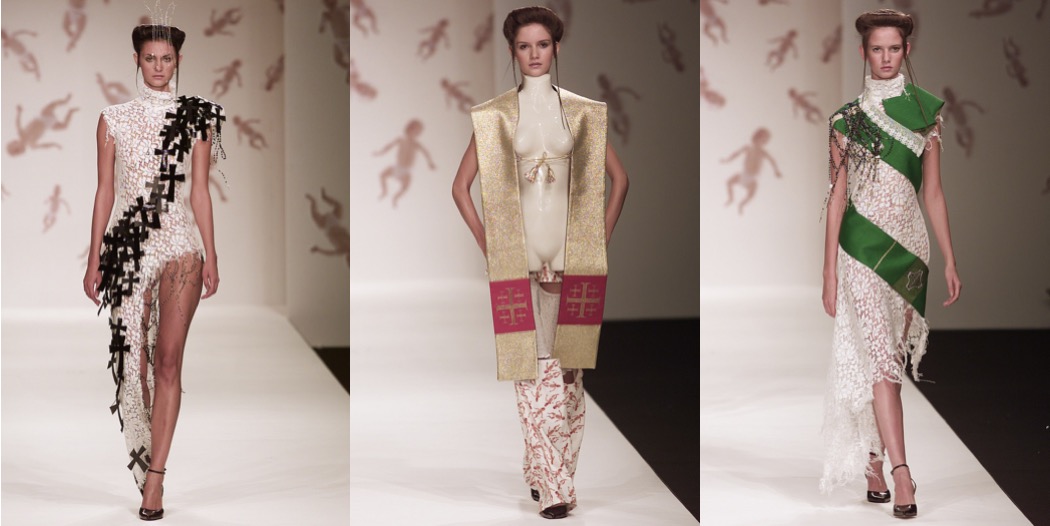
The Polish designer presented looks inspired by liturgical vestments (such as a stole), treated rosaries as decorative trims on dresses, and used ecclesiastical motifs like the Latin cross, the heart-shaped ex-voto and the representation of the white dove in the form of ornate embroidery on jackets and tops. Arkadius “desacralized Catholic images and church ceremonial and transported and exploited their aesthetic qualities for the sake of fashion spectacle”, Dominik Zieliński stated in the designer’s monograph. What interests me most, however, is the final creation in the collection, which Vogue fashion critic Sarah Mower compared to an experience of “religious climax”.
The Finale Icon look largely escapes conventional identifications of garments. Presented on the catwalk by model Kasia Pysiak, the outfit consisted of two essential pieces of “clothing”. The upper part of the ensemble, worn over a black shirt, was a rectangular black canvas stretched over a frame with specially cut holes revealing the model’s face and her protruding hands. The lower part of the outfit was a pair of pants of classic cut covered in opulent, floral pattern. The runway styling was completed with black stilettos created in collaboration with Jimmy Choo Couture. The most important element of the look is the aforementioned canvas, which was modeled on the image of the Virgin Mary as well as on the tradition of decorative dresses placed on representations of Madonnas [a historical Byzantine-Ruthenian tradition]. This part of the ensemble, with its form resembling an icon and depicting on its surface the figure of the Madonna wearing a crown, was hand-finished with gold jacquard fabric, various lace and costume jewelry in the form of cabochons. It was a “controversial combination of the traditional sacred with the modern profane”, Zieliński concluded.
And now here’s the interview regarding Finale Icon – published for the first time here on Design & Culture by Ed!
Ed: Regarding the final look from the Virgin Mary Wears The Trousers show, what influences and inspirations from sacral art played a significant role for you? The book “Arkadius. Fashion That Became Art” mentions the inspiration coming from the Virgin Macarena of Seville. Why was this particular representation of the Virgin important to you? Did you treat that image of her in a “formal” way when creating this garment, or was it more of an initial impetus for the creative process?
Arkadius: The main reason for using the image of the Virgin Macarena of Seville was her global recognition as an iconic religious imagery. This particular image is an actual 3D sculpture and is very well known and a striking work of art, with a very deep sorrow look, tears, which capture the morbid spirit to represent the philosophy of this particular collection. The strength of the image and the entire mood of the collection was also beautifully captured by the model wearing it as the finale of this show.
Ed: Looking at the ensemble, I instantly associate it with “Our Lady of Czestochowa”, and especially with the “ritual” that is so characteristic of this artwork – that is, adorning it with the encrusted dresses. Did such inspiration take place in your creative process? Do you see any dialogue between the runway look, and this very work of art and the Byzantine-Ruthenian tradition associated with it?
Arkadius: Being Polish myself, my original idea was indeed to use the imagine of Matka Boska Częstochowska and not the Virgin Macarena of Seville, but I also knew that our Polish Matka Boska did not have the same global recognition as Macarena. The Finale Icon outfit was directly inspired by the opulence of Macarena figure, with all its intricate details of embroidery, gold and Byzantine richness. This richness is a metaphor of holiness in the Catholic religion, which very often puts more attention to the imagery rather than the spiritual connection as its religious representation.
Ed: The final look is literally related to the title of the collection. The model portrays the Virgin Mary “wearing the trousers” – that is, in a sense, occupying a stereotypically male stance/position. In my thesis, I am interested in the gender stereotypes, so deeply encoded in the Catholic imagination. Designers, through the medium of fashion, subvert them – for example, they create outfits inspired by the vestments of cardinals or bishops, strictly reserved for the male church hierarchy, and use them in women’s collections. Was criticism of the patriarchy one of the more important aspects regarding the creation of this look?
Arkadius: It is a very good question, thank you for this. I don’t think that anybody has ever asked me what was behind the title. This was actually nothing more and nothing less as a tongue-in- cheek or a whimsical exaggeration of our made-up story of who actually wore the trousers in the family. But this comparison also brought attention to a very fast changing family and gender structure and how many women are now actually running families and not men as it used to be in the past. Hence the idea of the title and the recognition of woman’s strength and her actual position in the society in the 21st century.
Ed: The entire ensemble, from the “icon” part to the trousers, is extremely tactile, rich in texture, opulent, like a real sculpture or painting depicting the Virgin Mary. Do the materials used in the creation of the outfit have an ecclesiastical origin or were they upcycled?
Arkadius: All the materials used in this outfit were recycled from already previously owned pieces of fabric. Only the frame of the icon was purchased new. The trousers fabric was bought by me in Grand Bazar in Istanbul, so it had a Byzantine origin. I bought it at the time because I liked it very much and it didn’t have a specific purpose at the time of my purchase. It became useful later on while creating this particular outfit. All the intricate details from the icon part, were used as cut outs from all sorts of other items we already had or had to find in charity shops.
I’m endlessly grateful to Arkadius for providing me with such valuable answers to my questions, and to our mutual friend Julia Strużycka for connecting us!
FYI: If you want to read my full MA Thesis (it’s in Polish) or are willing to publish it in an academic journal, please feel free to contact me at designadculturebyed@gmail.com!
Collage by Edward Kanarecki. Don’t forget to follow Design & Culture by Ed on Instagram! By the way, did you know that I’ve started a newsletter called Ed’s Dispatch? Click here to subscribe!
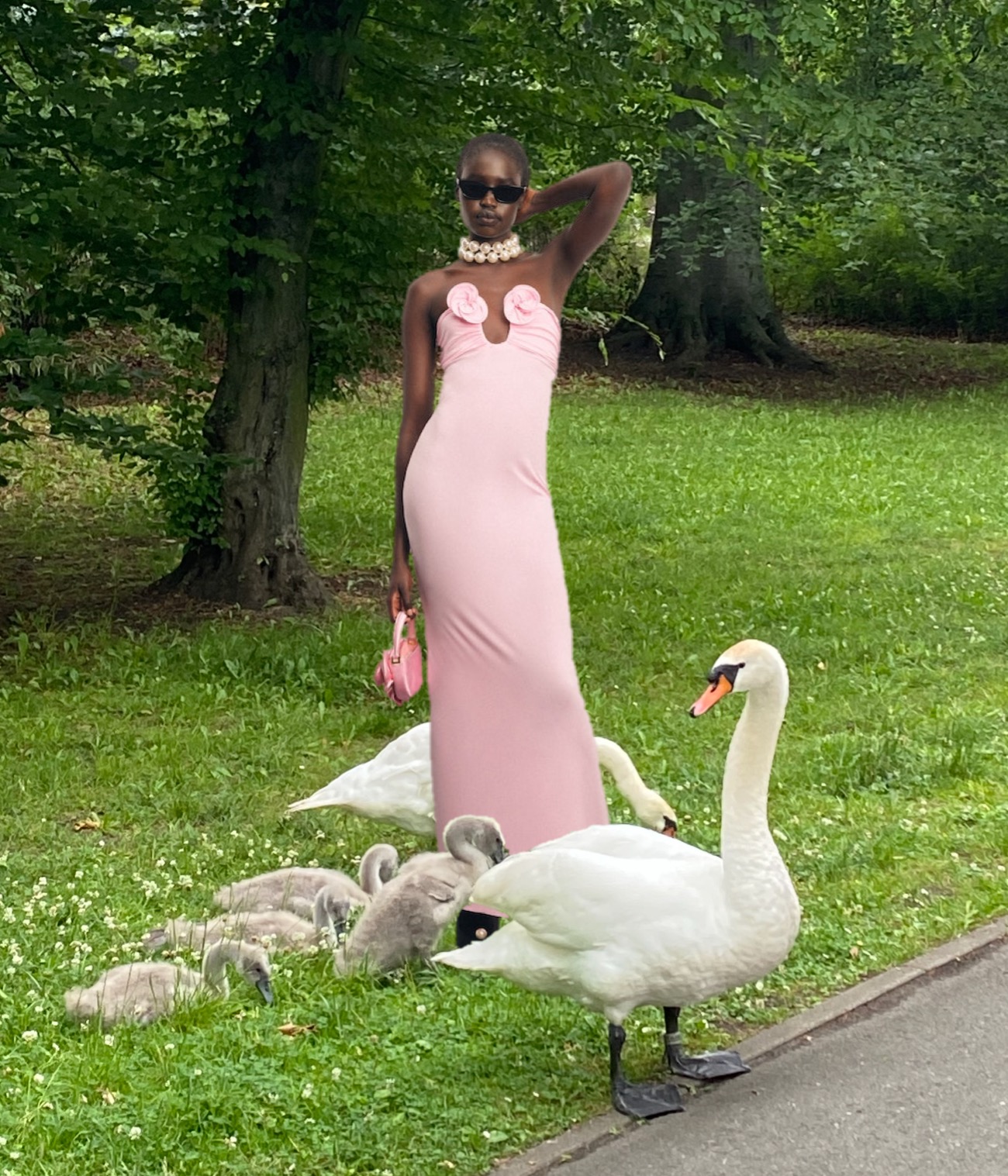
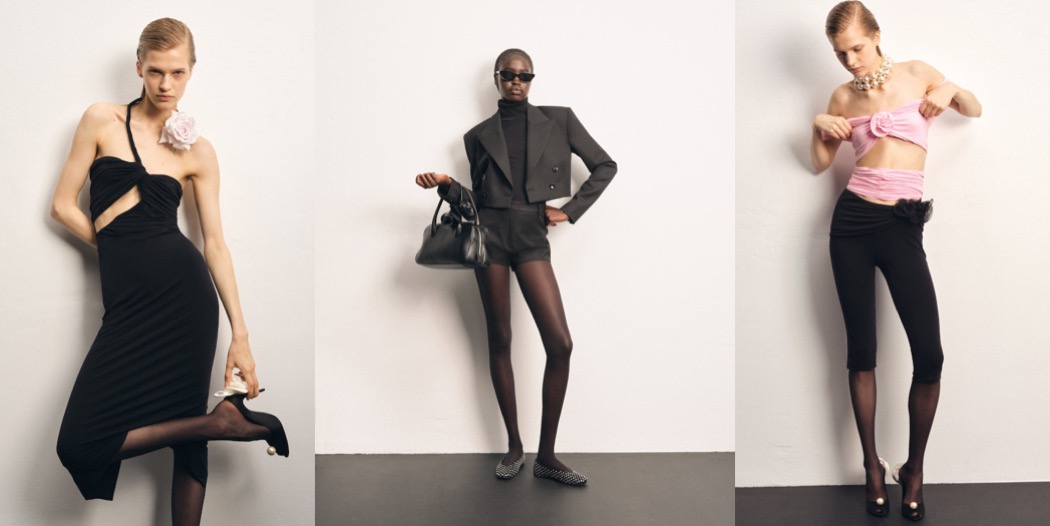
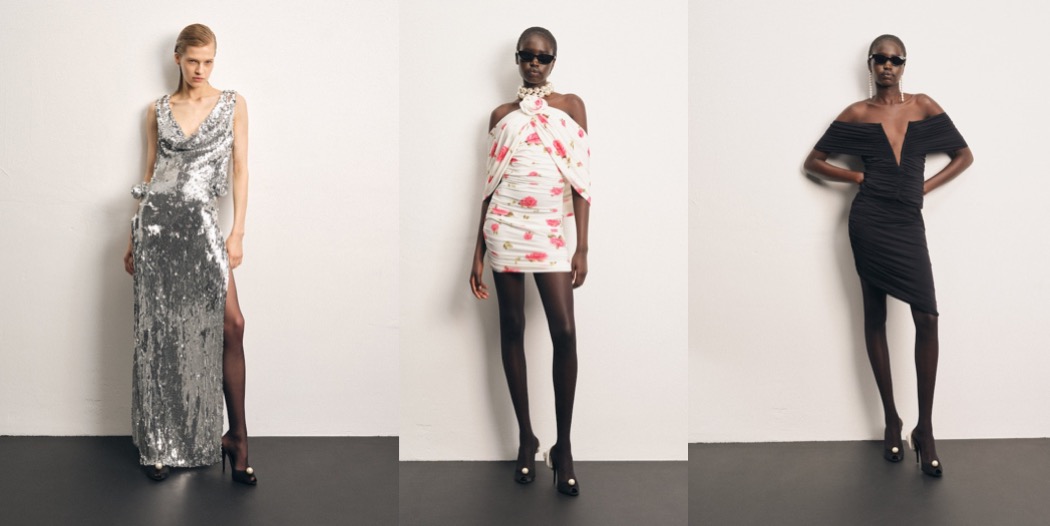
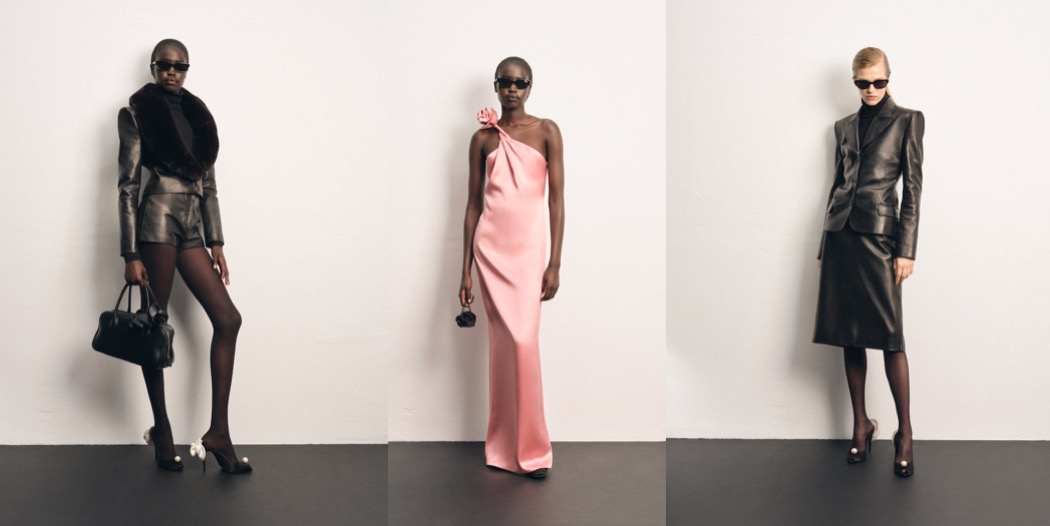
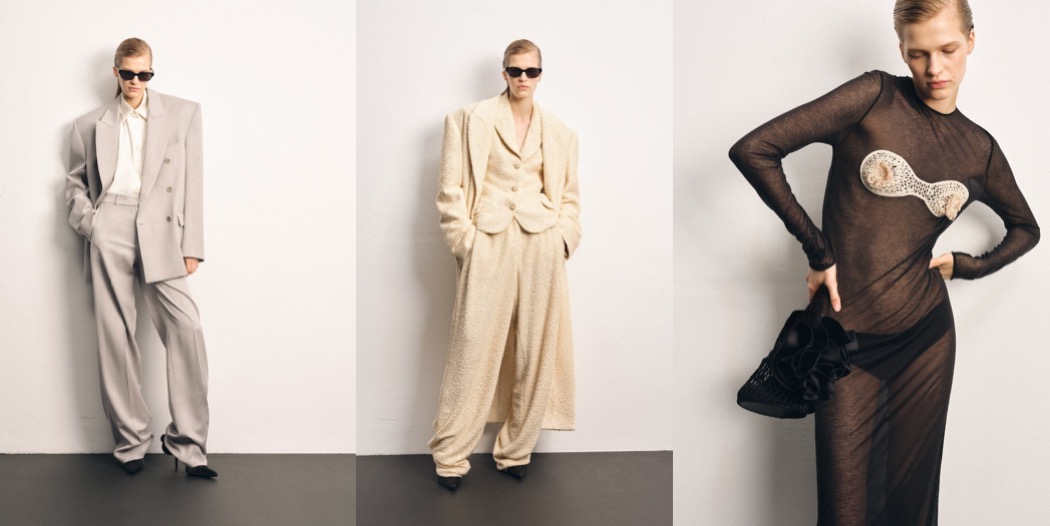
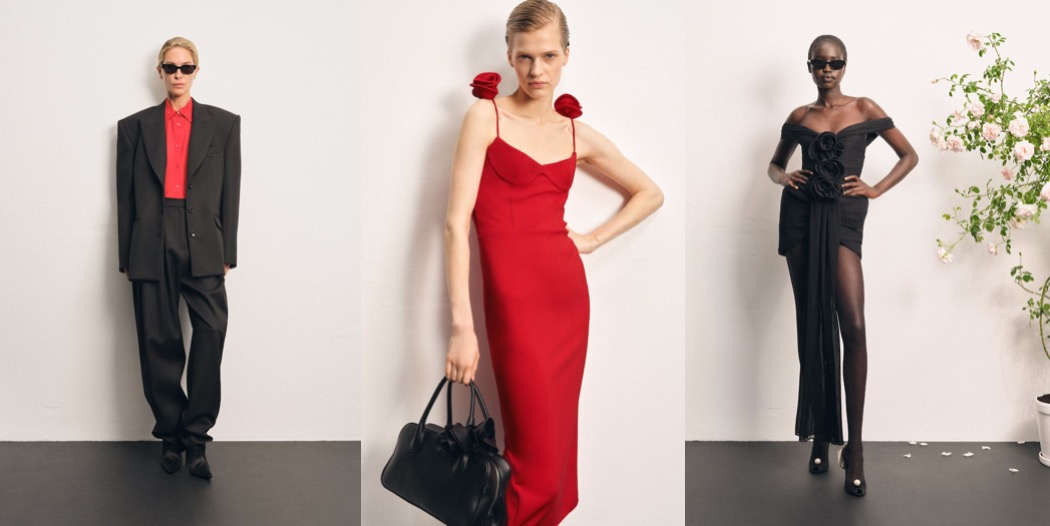
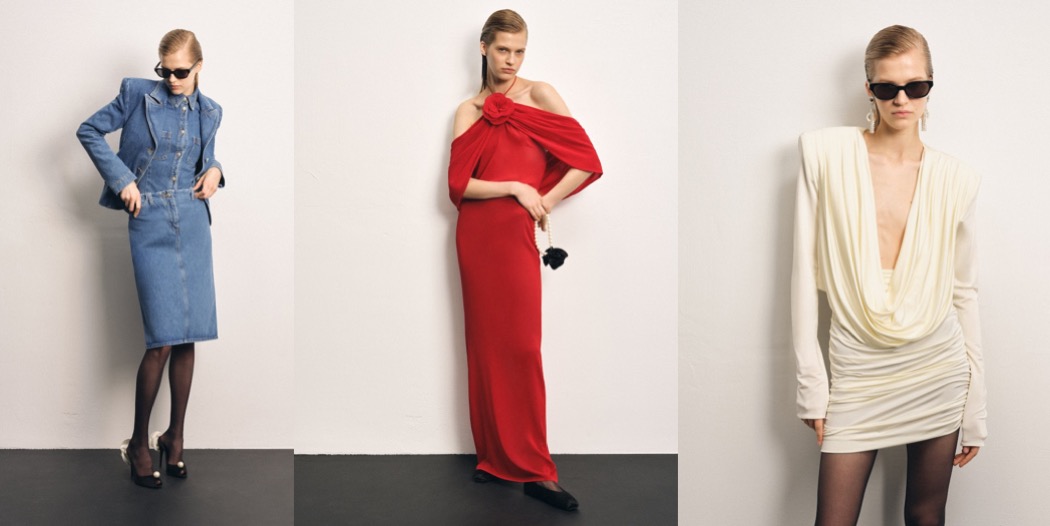
Magda Butrym’s elevated resort 2024 collection reflects the brand’s expanding vocabulary which is a clash of romanticism, femininity and assertiveness. Pure romance was conveyed in the pink column dresses with draped bustiers and shoulder-straps in rose-like shapes. Hot take on femininity can be seen in the gorgeous “revenge” LBD with v-neckline and the sheer knitted gown with hand-crotcheted inserts around the bust. Power-dressing – Butrym’s latest specialty that she keeps on refining – informed the oversized tailoring that took clues from masculine proportions, as well as in the all-leather separates (see the jacket with furry collar!). But the ultimate hero piece status belongs to the silver evening dress, wholesomely splashed with sequins and appliquéd with metallic florals. Magda Butrym wouldn’t be Magda Butrym without bold accessories with – you guessed it – flowers as the main characters. This time, the Polish designer mixes her signature blooms with XXL pearls, which appear on stiletto heels and in the Audrey Hepburn-approved chokers. As always, Butrym’s dream closet oozes with pure chic.
Collage by Edward Kanarecki. Don’t forget to follow Design & Culture by Ed on Instagram! By the way, did you know that I’ve started a newsletter called Ed’s Dispatch? Click here to subscribe!
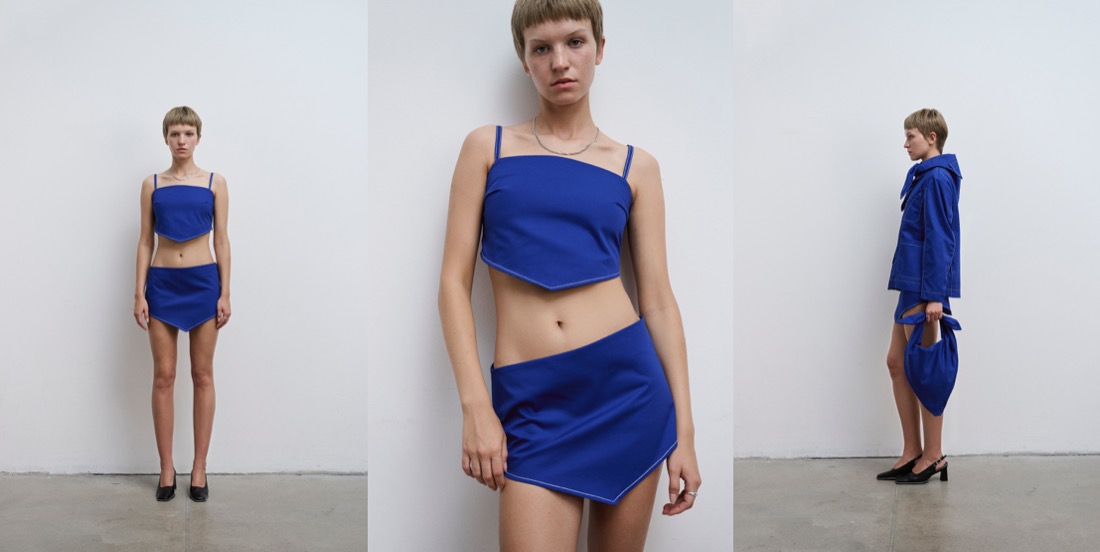
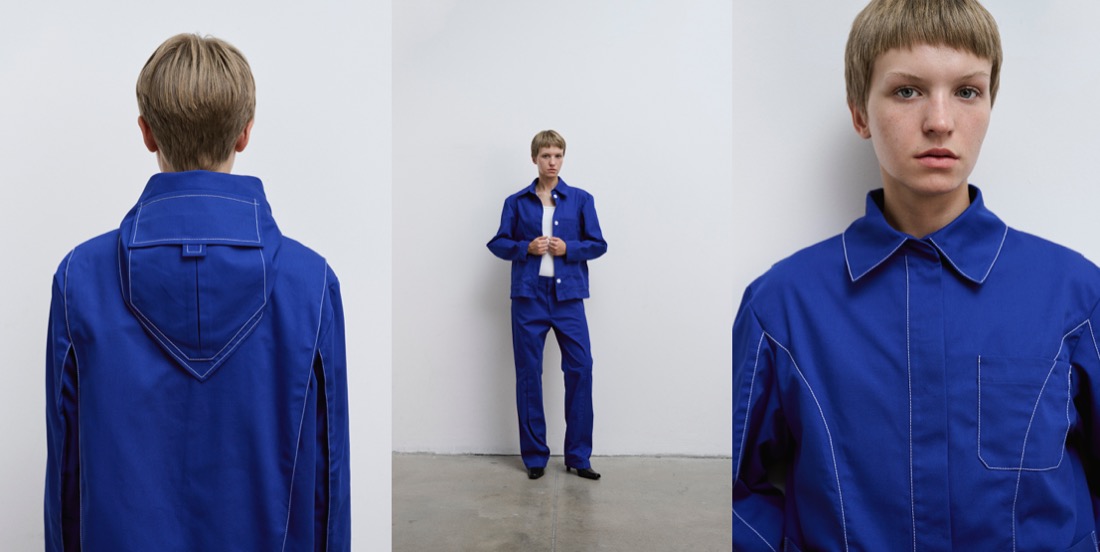
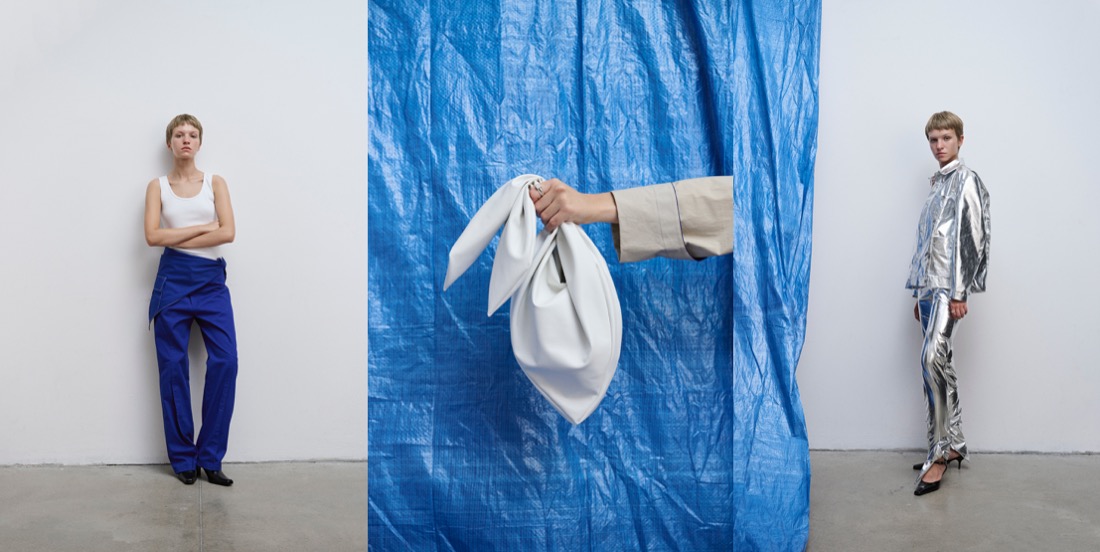
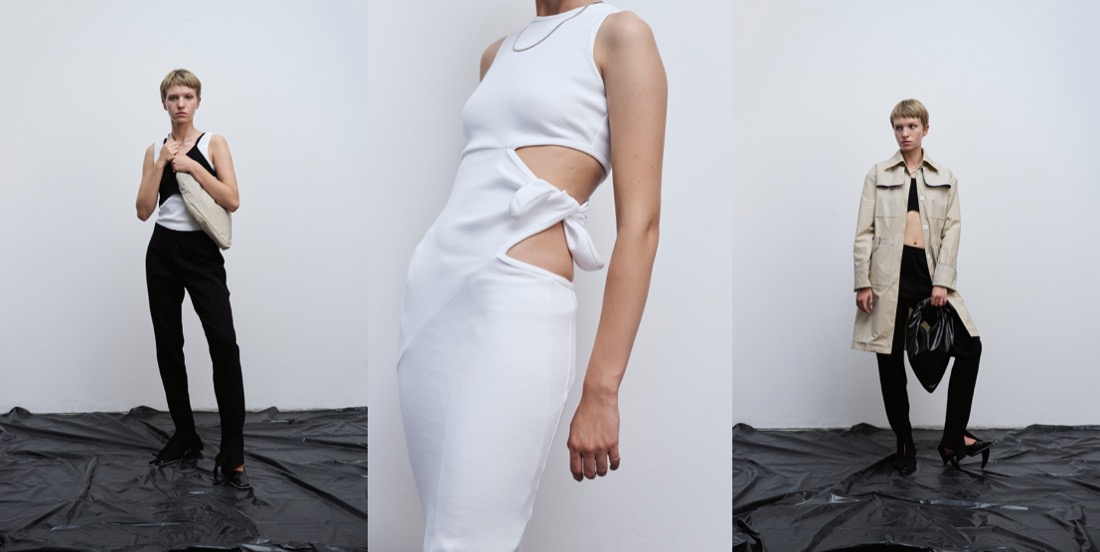
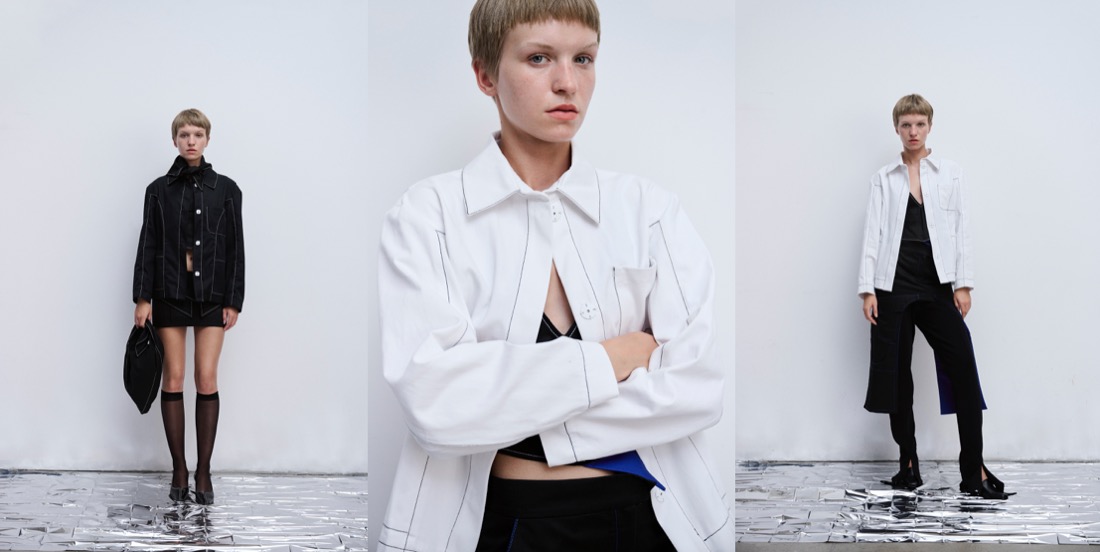
When I was covering Jan Chodorowicz‘s debut collection, “SOCIALI/S/TE”, I was sure this young creative is about to lead a new wave of Polish designers emerging in the fashion industry. Spring-summer 2023 is his second collection, and it was presented to buyers and editors during Paris Fashion Week in the beginning of October. The latest offering explores further the codes of work-wear, a theme which the designer has been exploring since his MA at Central Saint Martins. According to Chodorowicz, the process of re-contextualization of work-wear, its details, materials and functions, lead to their adaptation for the wardrobe of a contemporary woman. As he told Vogue Poland, “so far, my work has been characterized by deep research. This time I worked differently, inspired by the clothes, the design process itself.” That especially shows in the masterful tailoring behind the new season trench coats and cargo pants (in the designer’s signature color of deep blue). The white tank-top, a genderless building-block of any utilitarian-wardrobe, is having a moment too in the collection. Still, the subtle, cultural references are present, and the designer really knows how to interweave them into his garments without going too literal. The unexpected pop of silver, in form of a shirt-and-pants set, is the result of profound inspiration with the film “Volcano of Love” (directed by Sara Dosa), which tells the story of a 1960s couple who traveled the world and identified volcanoes. To get close to the craters, they wore silver-coated suits. “For them it was work attire,” Jan sums up. The collection affiliates with the idea of a work-uniform of artists, especially of such sculpture mavericks as Alina Szapocznikow and Barbara Hepworth. According to the designer, the uniform you wear while creating something doesn’t necessarily have to mean one, monotonous look. That’s why his spring-summer 2023 is a proposal of clothes you can easily mix-and-match during that absorbing and exciting process of creative pursuit.
Collage by Edward Kanarecki. Don’t forget to follow Design & Culture by Ed on Instagram!





















 Design & Culture by Ed