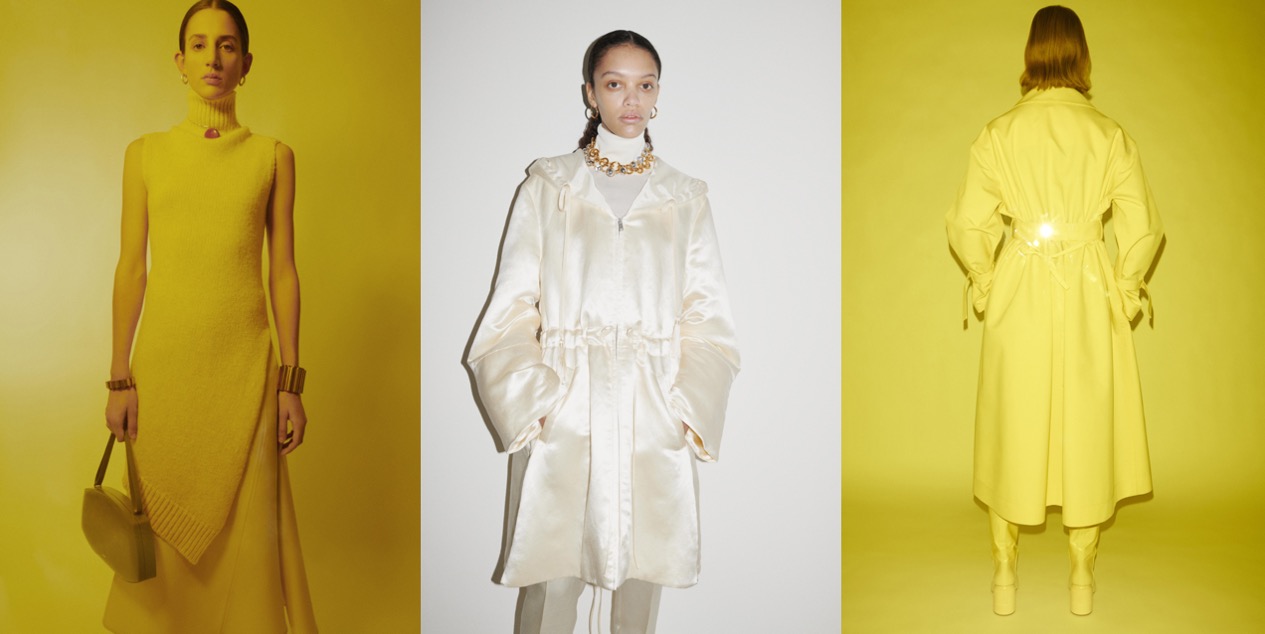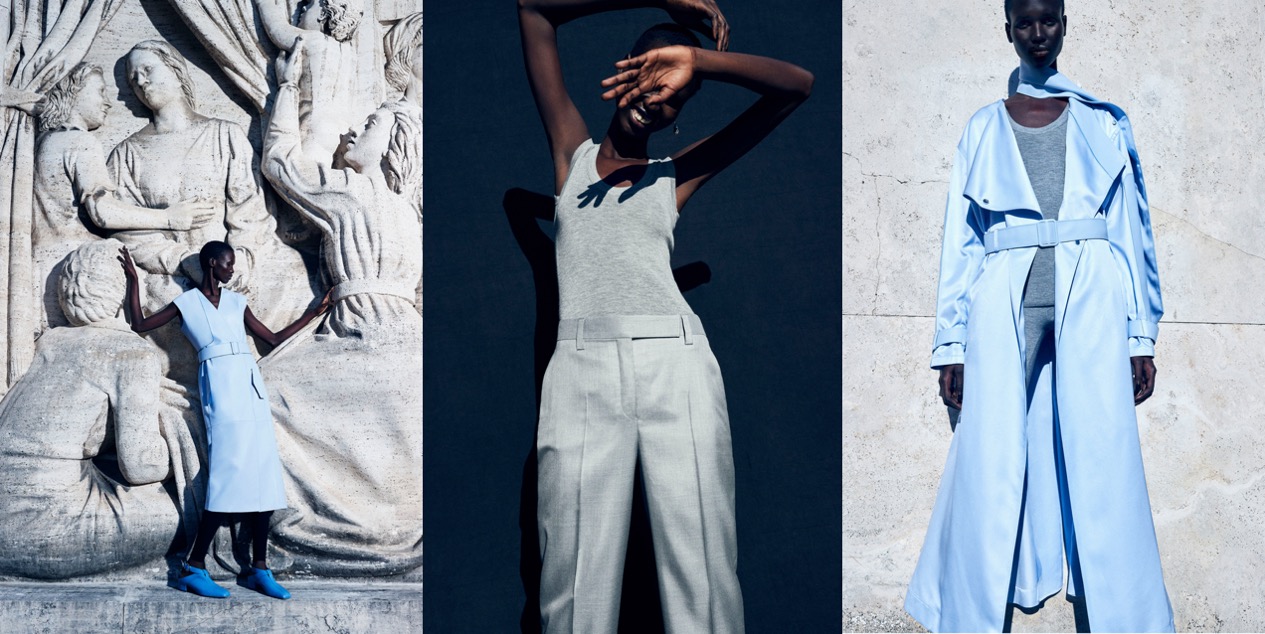
Beautiful And Practical. Jil Sander Pre-Fall 2021

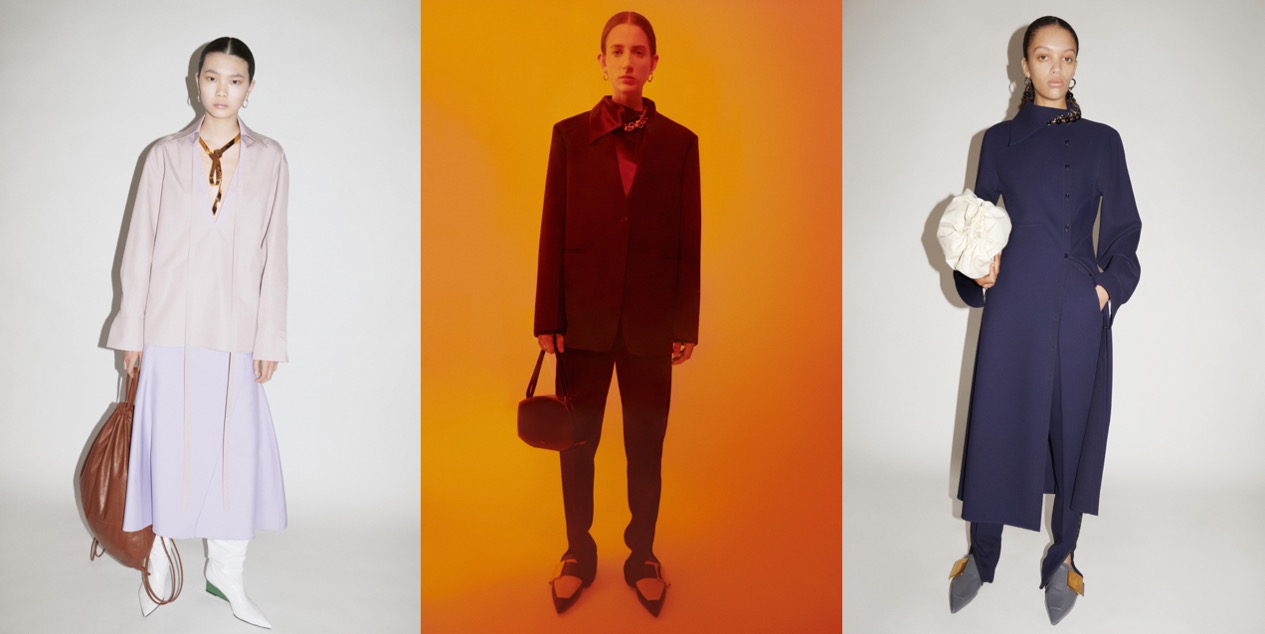
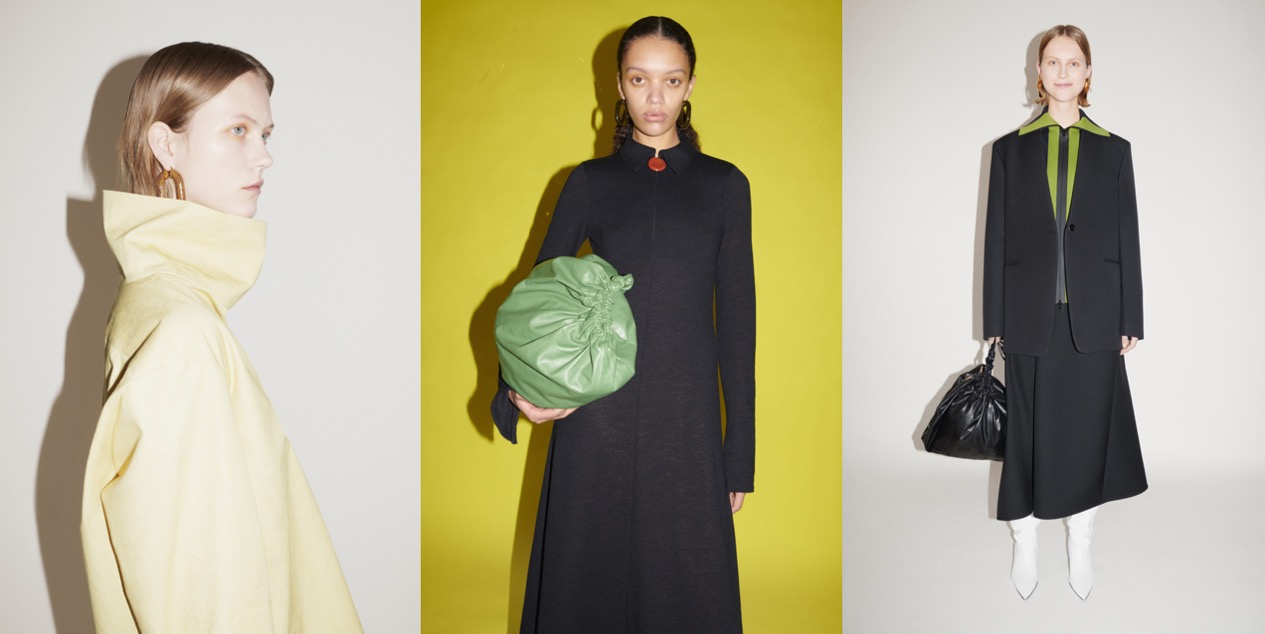
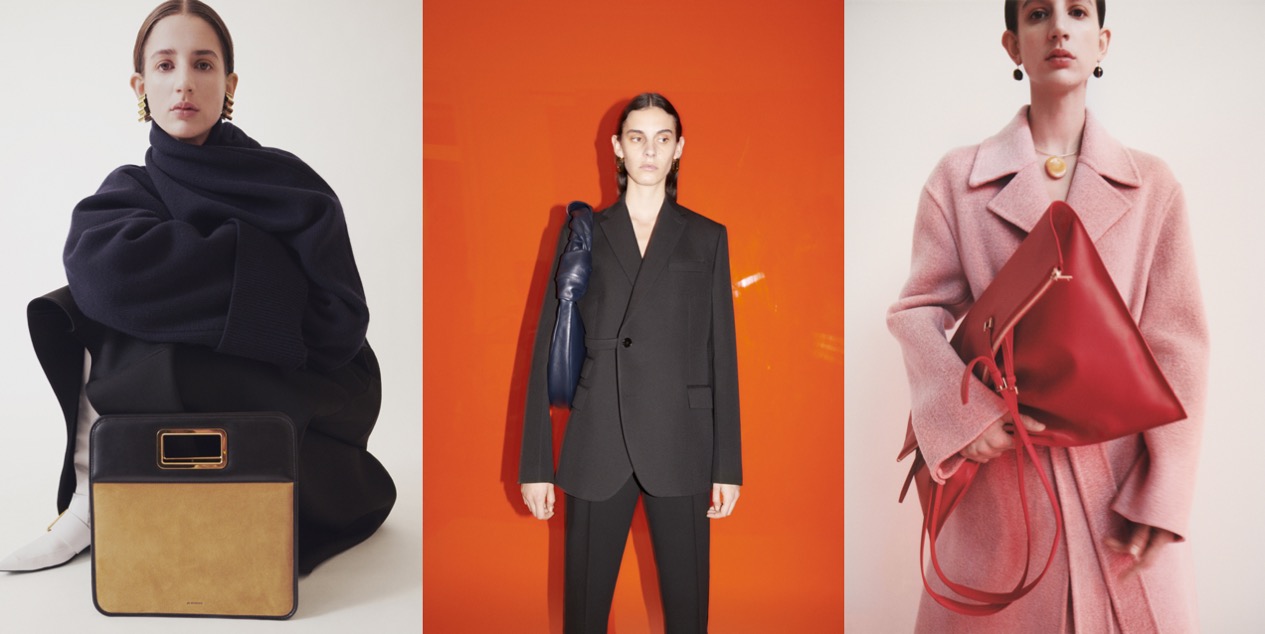
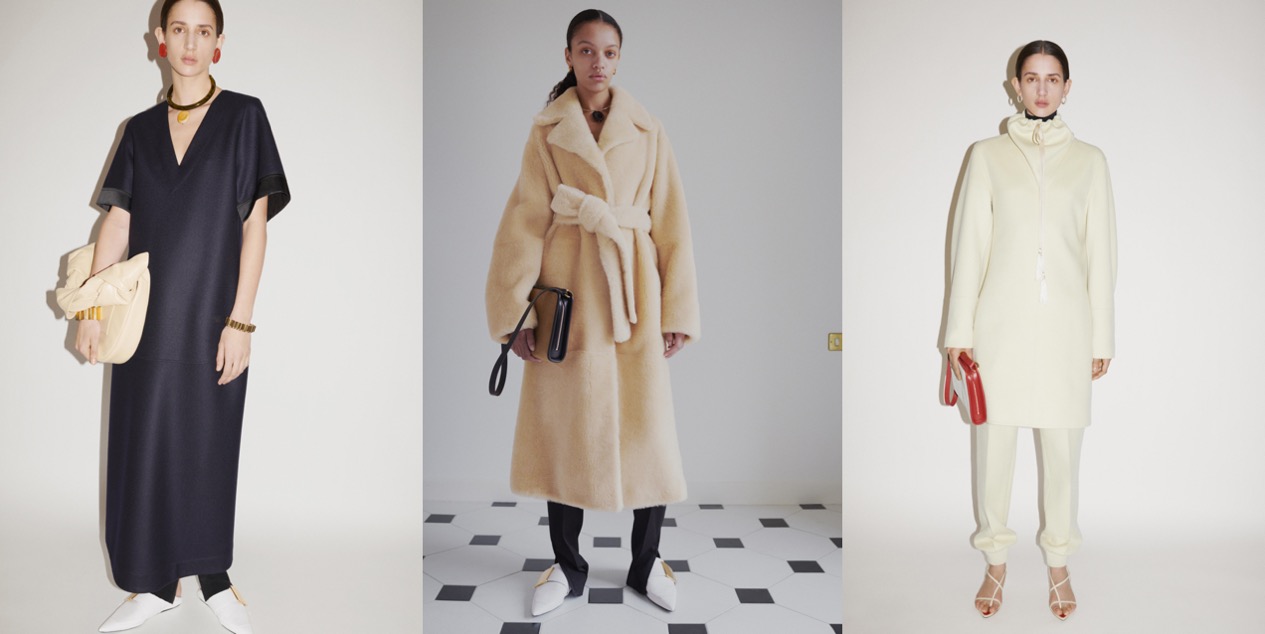
Lucie and Luke Meier‘s Jil Sander always feels like blank canvas, in a good way. No non-sense references, just delightful, soft minimalism that will never be “out”. And, you will love it even while staying at home. “Fashion is always a commentary,” reflected Luke. “It’s actually a very reactionary phenomenon, in that it reacts towards the zeitgeist, the moods and emotions of people or else towards a certain music or artist. So it’s only right that now you feel that need for ease in collections. What’s happening, it’s just impossible to ignore no matter how much designers are prone to live in a sort of creative bubble.” Lucie chimed in during a Zoom call with Vogue from the Jil Sander showroom: “This is presently the world we have to face, so we felt that in our work, it is really important that we’re not totally in dreamland. Our reality dictates today a different approach, whereas in other moments as a designer, you gravitate more towards a different set of references and inspirations. But we really felt that this is now and you just can’t ignore the different way we’re interacting together.” Having quarantined in their apartment in Milan, the Meiers wanted the collection to convey a more homey feel, albeit rendered with their exacting sophistication. To further channel the message, the look book was shot in an apartment, a modernist space mirroring the polished minimalism they favor (this part felt quite Bottega-Veneta-ish). Sensitive to the mood-lifting role fashion has to play now, they introduced a touch of spirited softness, a sort of feel-good factor which complemented the collection’s yin-yang dynamic between the ease of sporty practicality and the elegance of their chic, angular tailoring. Case in point: slightly oversized masculine blazers, whose straight-cut precision was contrasted by the delicately embroidered circle skirts and slender yet luscious dresses they were worn with. This year’s ubiquitous track pants were elevated in soft Nappa leather and worn under a collarless, sharp-cut jacket. It made for a cool silhouette, a kind of of-the-moment alternative to the classic tailored pantsuit. The intimacy, warmth, and protection we’re all craving inspired a series of great knitted pieces. An oversized wool-silk sweater was wrapped with a huge matching scarf, while a form-fitting, sporty ribbed dress opened to reveal soft cashmere leggings underneath, its exaggerated collar becoming an enveloping cape when unzipped. Artsy Bauhaus-inspired jewelry, including golden ribbon-shaped portrait necklaces and sculptural bracelets, added a dash of vibrance, while oversized bags in luxurious, supple leathers looked comforting and pillowy in a tactile, playful way. “Let’s be realistic—fashion isn’t going to cure the problems we’re in today,” the Meiers concluded. “But if putting on something beautiful elevates our mood a little, if we can provide something that’s inspiring as much as it’s practically useful, that’s then us doing a good job.

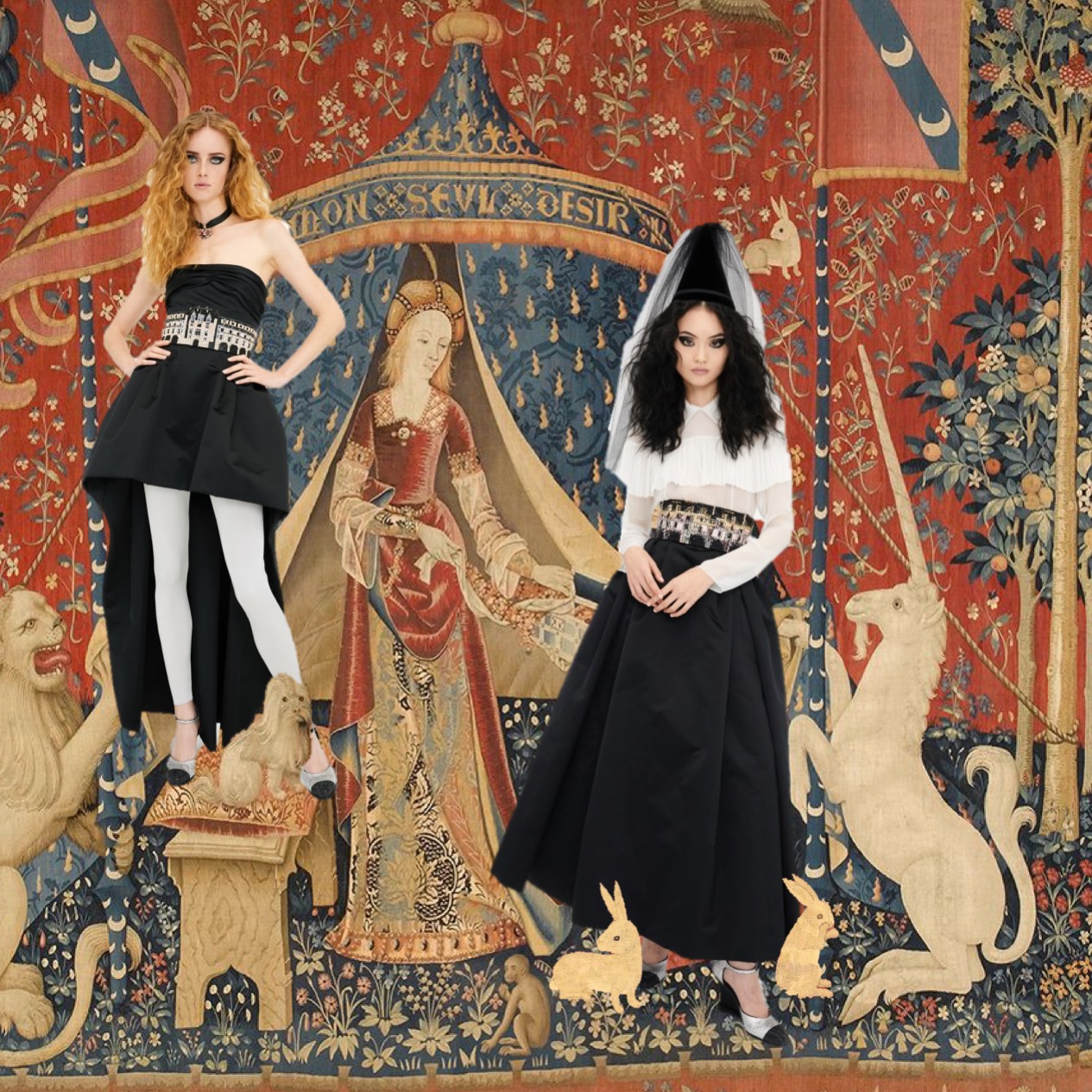
Collage by Edward Kanarecki.

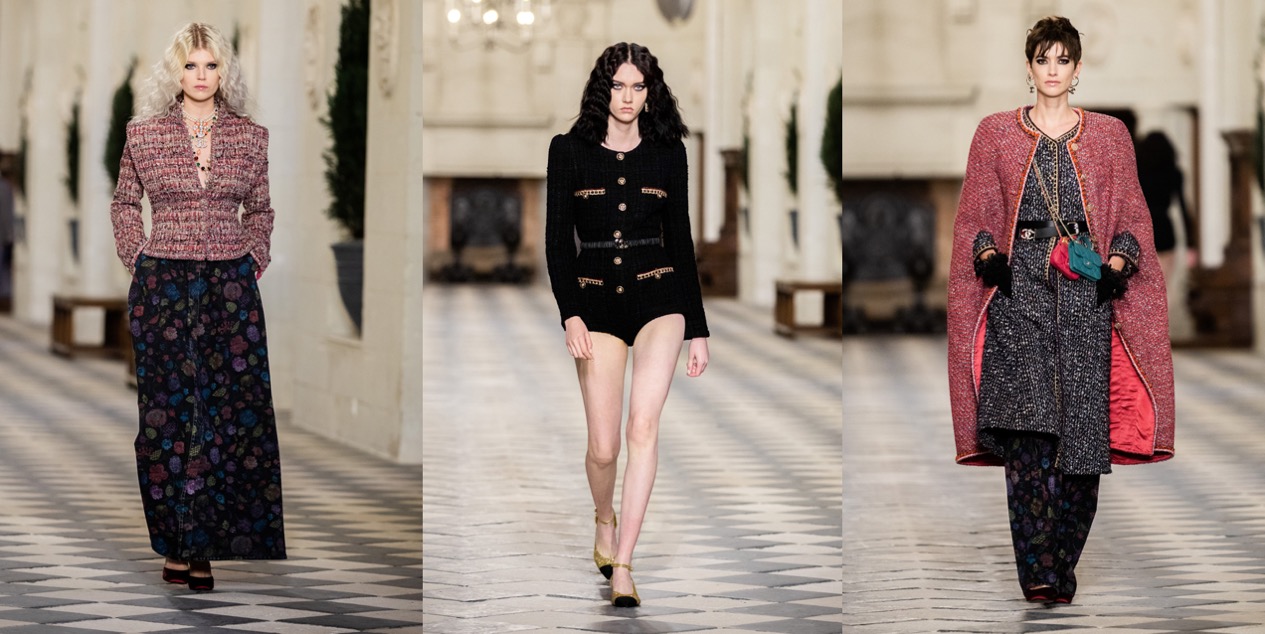
Eternal. Chanel Pre-Fall 2021

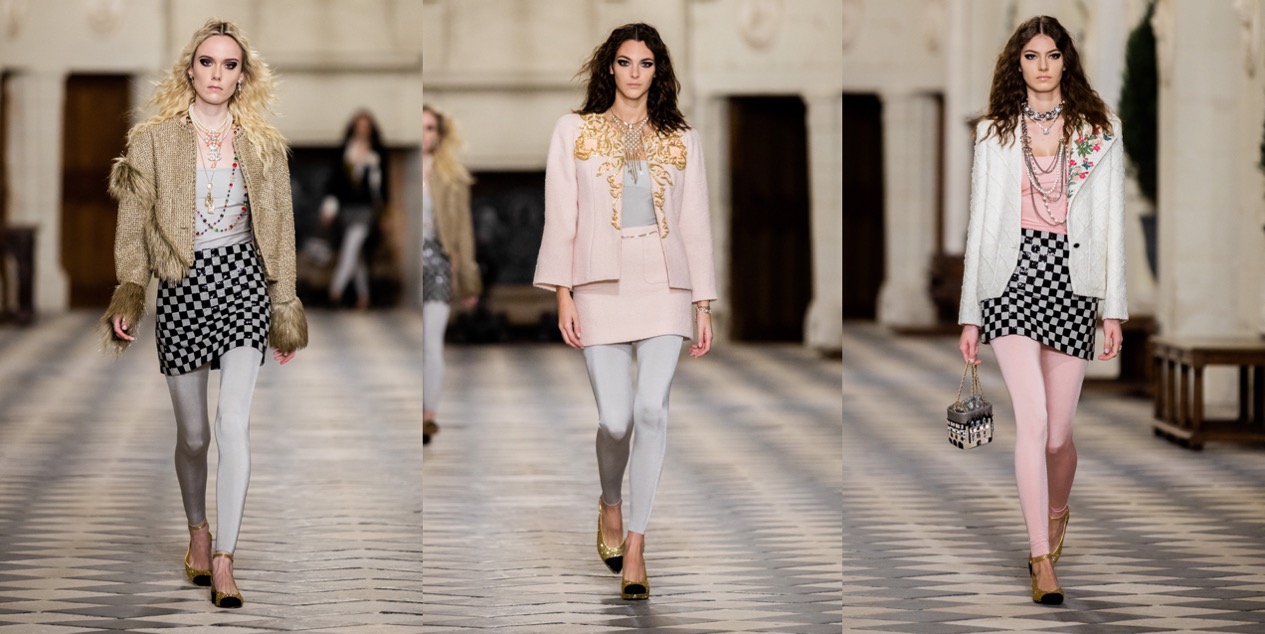
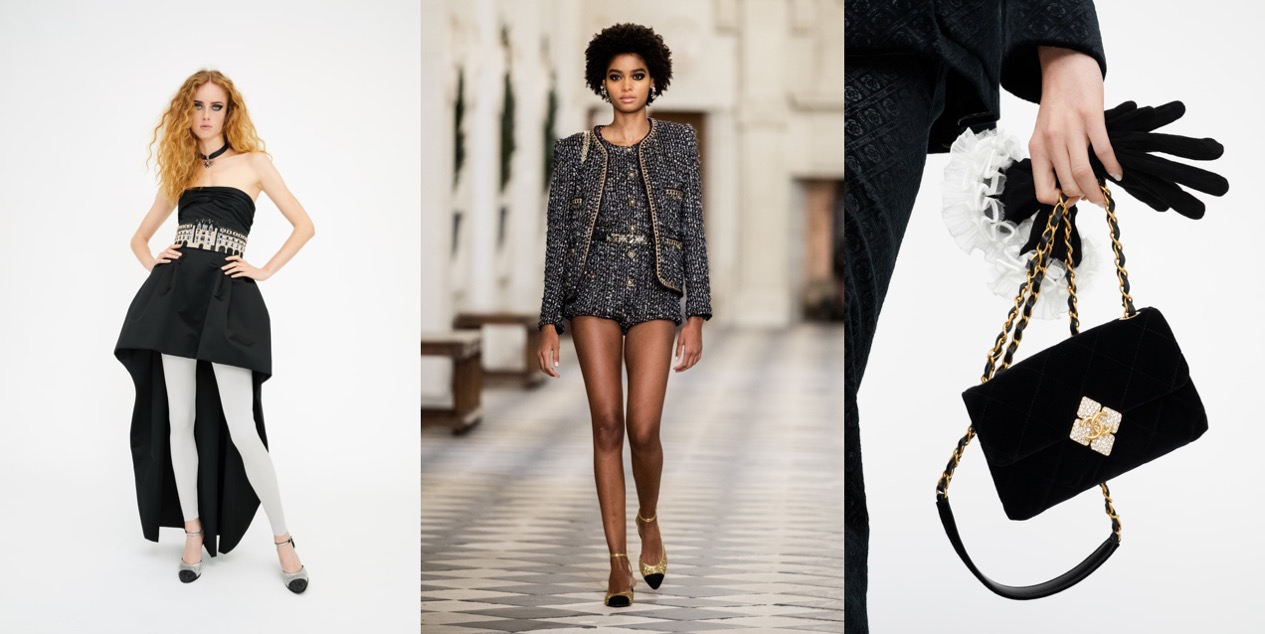
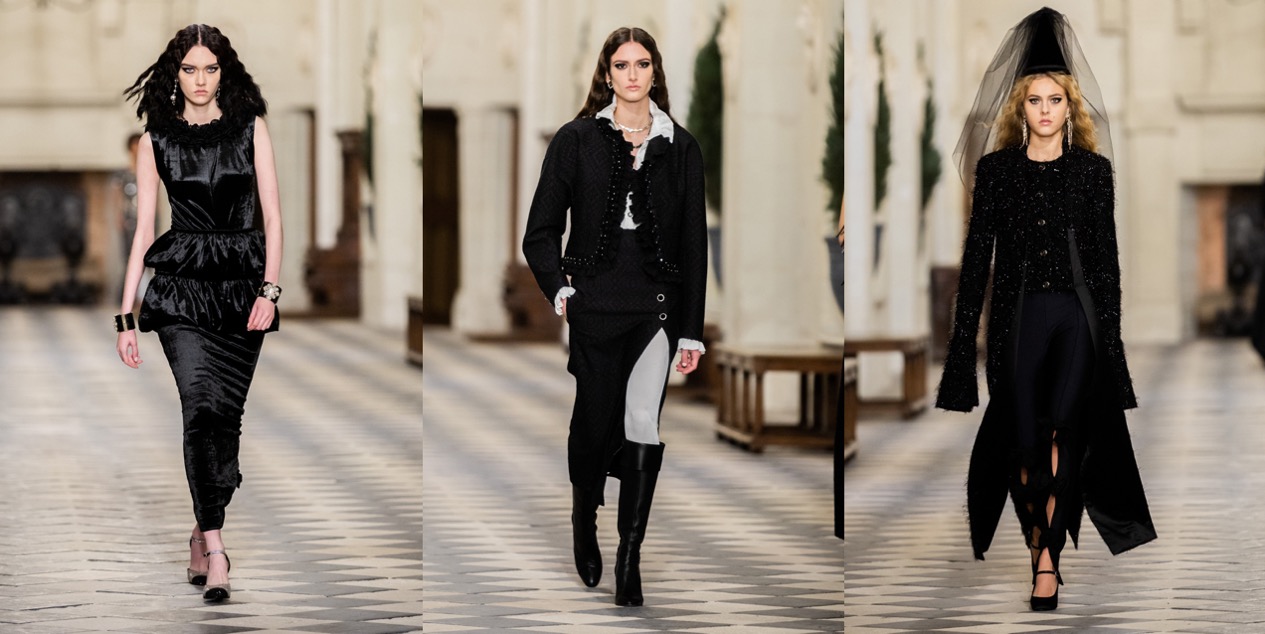
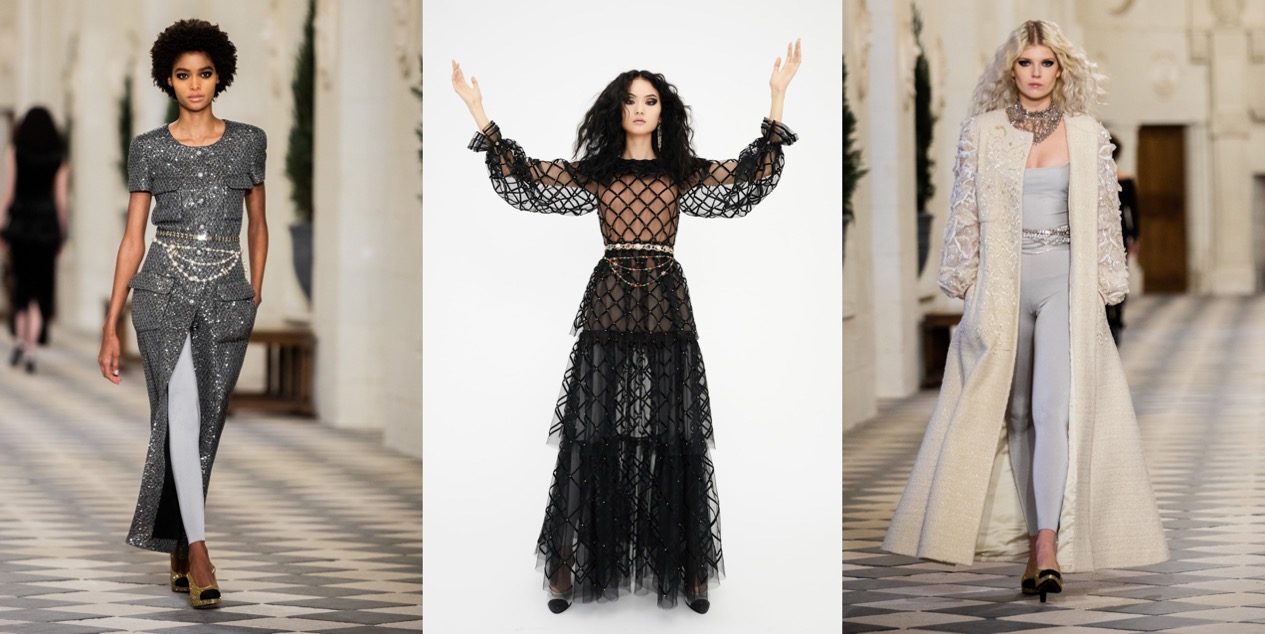
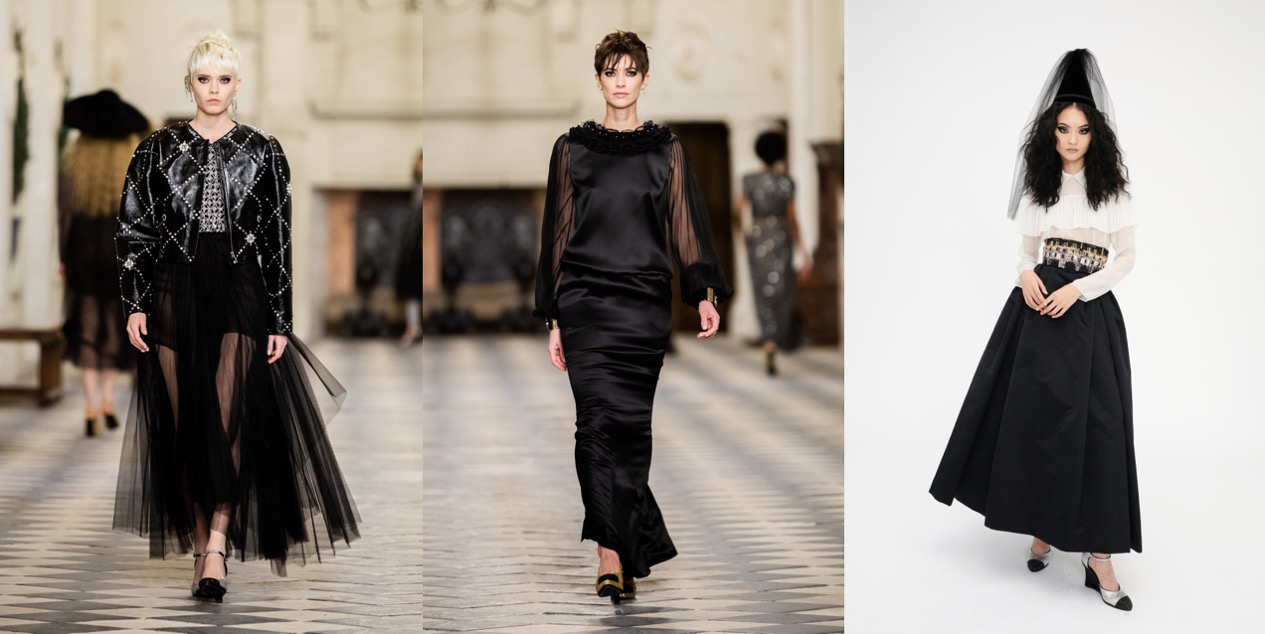
Virginie Viard‘s Chanel seems not to care about being “cool” or “relevant” – maybe that’s why her vision is often underrated and simply mistunderstood. Her Chanel is eternally… Chanel. And I think that’s why I learned to love it. This collection highlights the creative dialogue between Virginie Viard and the Maisons d’art, enhancing the creations of the house. This year, the Métiers d’art collection was held at the Château de Chenonceau, located in the Loire Valley and also known as Le Château des Dames. The show was nearly guest-less due to COVID-19 – there was only Kristen Stewart, the brand’s ambassador, in the audience (this had to be fun!). Le Château des Dames’s history is closely linked with the legendary women who alternately lived there: Katherine Briçonnet, Diane de Poitiers, Catherine de’ Medici, Louise de Lorraine, Gabrielle d’Estrées and Louise Dupin. In the second half of the 16th century, the queen of Italian origins, Catherine de’ Medici gave this residence the splendour of the Renaissance. As proof, numerous inscriptions of her monogram remain visible in the castle’s décor: two interlaced Cs that bear an astounding resemblance to the double C that Gabrielle Chanel presented as early as 1921 on the stopper of the N°5 perfume. Beyond the emblematic CC, echoes of the castle’s rich history meet the world of Chanel in the black-and-white hues of the tiling in the “Royal Gallery“, the appearance of the lion, Gabrielle Chanel’s beloved symbol, embroidered tapestries and in the ordered lines of the castle’s gardens. What about the collection? It’s pure elegance and craftsmanship, all created with the skills of Métiers d’art artisans: paruriers from Desrues, feathermakers from Lemarié, milliners from Maison Michel, embroiderers from Lesage and Atelier Montex, shoemakers from Massaro, goldsmiths from Goossens, glovemakers from Causse Gantier and pleaters from Lognon, in Paris and in France. The collection was a balance of princess style and something a bit darker. The chess board sequin miniskirts (and matching purses) worn over shiny lycra (or bejeweled stretch velvet) leggings, an amazing woven tweed ball skirt paired with a black sweater with Renaissance white flower motifs growing up the arms, capes, poet blouses, ruffled gauntlet gloves, and massaro’s D’Artagnan boots for a bit of 16th-century dress-up swagger. There’s a lot to love about this collection, especially seen through the lenses of Juergen Teller. Viard, as she explained, took inspiration from Lagerfeld’s fall 1983 trompe l’oeil “shower” collection for Chloé that featured embroidered faucets and showerheads spouting crystal water sprays. Her own playful trompe l’oeil, developed with the inventive embroidery house of Montex, reimagines the castle in Lego-like sequin bricks, used as cummerbund sashes that cinch the waists of full satin ball skirts worn with fragile organza blouses flourished with some of those Catherine de Medici–via–Coco Chanel ruffled collars. The chateau’s tapestries inspired intarsia knits and Lesage embroidered evening sweaters. Lemarie, meanwhile, famed for their feather and artificial flower work, are responsible for the trellis of black ribbons laid over translucent organza that evoke Chenonceau-era court dress with a light 2020 touch. That dialogue across the centuries is also expressed in the playful drama of a floor-length black velvet coat that opens to reveal a pale tweed body, gilt buttoned like a traditional Chanel jacket. Delightful.

Collage by Edward Kanarecki.
Balancing Act. Salvatore Ferragamo Pre-Fall 2021

Pre-fall 2021 collections are gradually popping up (yes, the industry still wants you to think about next year’s autumn in this year’s winter). Paul Andrew likes to put things in context; he has so far used films and historical locations to frame his fashion narrative. In keeping with that practice, he shot the Salvatore Ferragamo pre-fall lookbook in Florence at Manifattura Tabacchi, a former cigarette factory built in the modernist style of the 1940s, which was recently rescued from a state of disrepair to become Polimoda’s campus: “It’s a progressive, creative place full of life and enthusiasm, with lots of young people hanging around,” he told Vogue during a Zoom call from his Florentine studio. It proved an apt location to convey the collection’s feel. “I want to bring joy and beauty to this world.”Andrew isn’t alone in his desire for turning toward the positive; nor is he alone in the urge to contextualize collections within a larger frame. Social and cultural issues have become non-negotiable parameters for every fashion designer who wants his creative work to resonate with a broader audience. Customers more than ever buy into conscious creativity – ethical, responsible, value-driven. Andrew is playing his part, steering Ferragamo into sustainable territory and keeping his commitment to responsible practices – reducing waste by choosing deadstock leathers; using recycled nylons and certified natural fibers; editing collections with a tighter focus. Doing less but better has become his mantra, a belief that has him embracing a timeless, nondisposable aesthetic. Collections are built around high-quality investment pieces that have longevity and durability, while retaining a strong contemporary appeal. This pre-fall collection is a good example of his new approach. The chic purity of line and the slender construction Andrew favors looked timeless indeed; what made the offering distinctive was its focus on tactile leather dressing offered in many variations, highlighting the artisanal expertise of the Florentine house. Shapes and silhouettes for both the men’s and women’s lines conveyed a feel of ease and comfort, while retaining their sophistication. He didn’t shy away from the occasional statement piece either. Ample A-line and wrap dresses featured adjustable matching belts or scarves, changing them into more form-fitting shapes; slender tunics and elegant shirtdresses were often worn over matching trousers or lightweight cashmere leggings. A leather circle skirt patchworked in a bold geometric archival motif added a decorative flavor, as did the contrasting hand-painted edgings on a softly architectural nappa coat dress. “I’m really thinking of what customers will want and desire after this COVID nightmare will be over,” he mused. “We’re keeping our fingers crossed that they’ll be back in stores and eager to be dressed up and to buy and invest in fashion. But they’re not going back to the old ways.” Things have to be shaken up and changed, then. “My feeling is that people will continue to be more casual, after months at home Zooming in their pajamas I’m not sure they’ll be suddenly dying to be in form-fitting garments again,” he said. “So it’s a balancing act. Whatever you do, there must be some casualness and ease combined with high-values and sophistication, refinement, beauty. But mostly, it has to have a certain vibrance – and to bring joy.

Collage by Edward Kanarecki.