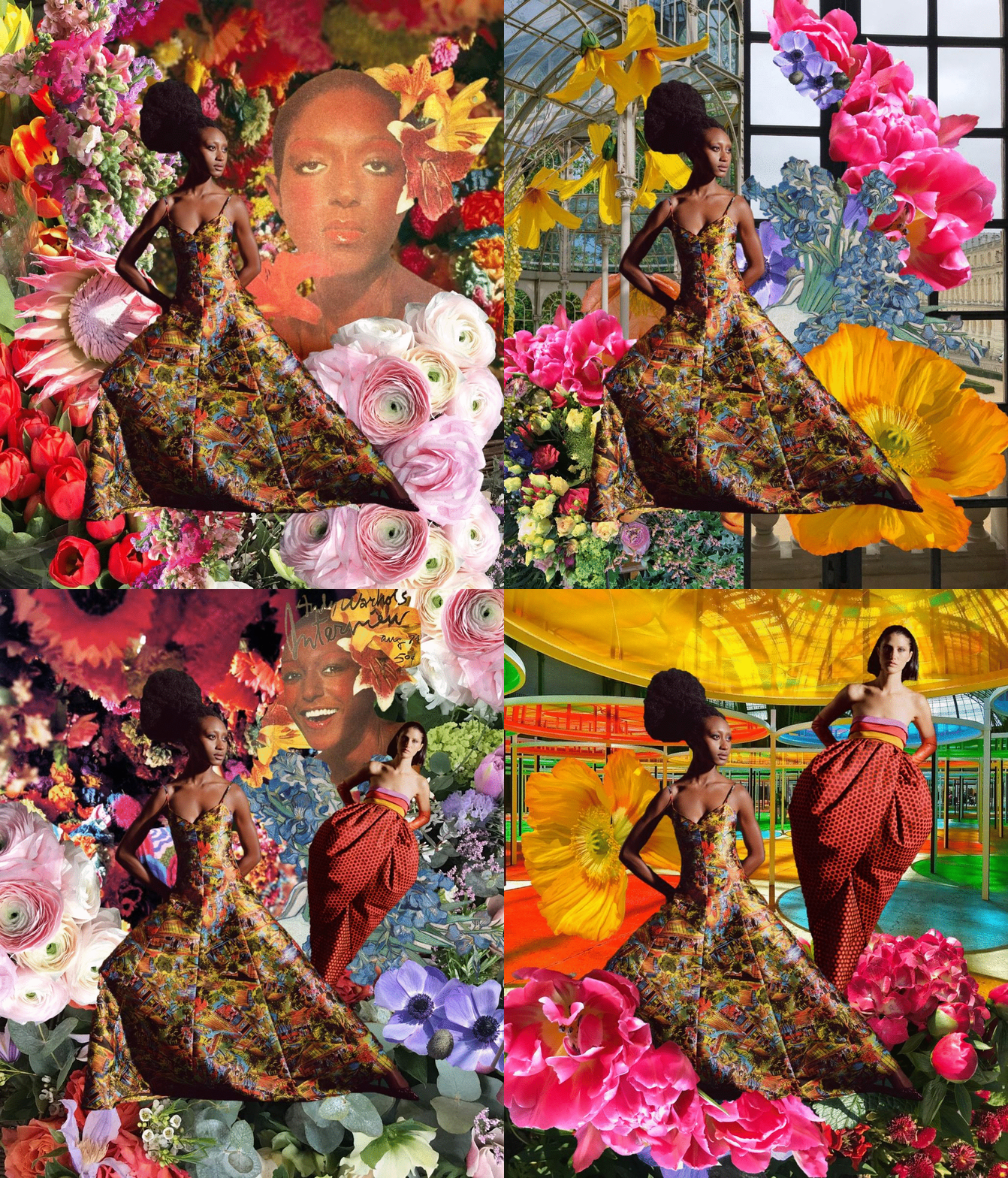
Re-Emergence. Christopher John Rogers Resort 2022

Christopher John Rogers‘ ecstatically bold clothes make you smile. They are also perfect for all sorts of celebratory moments. So no wonder why the New York-based designer’s resort 2022 collection is the ultimate re-emergence wardrobe. “I wanted it to be visceral and come from my heart. I felt like we’ve developed so many house signatures we didn’t need to reference a specific era or themes. This was more about cutting clothes and providing people with opportunities to enjoy dressing up,” Rogers told Vogue. “Last year, as I was designing it, I thought if I’m only going to make one more collection, what would it look like? And the answer wasn’t informed by the past or what I thought buyers might want. I love fashion, and I’m a fan of fashion, so that came through in the clothes.” By focusing on enjoyment and reinventing customer favorites, Rogers was able to deep dive into several motifs. Sections of the collection were devoted to variations of punchy colors like slime green and tangerine orange, while rainbow prints with an optical illusion vibe made their way onto various separates. This gradual exploration of specific colors and patterns kept things playful. When you have multiple looks in similar shades, the little things become paramount, and Rogers went out of his way to make each piece feel special. He doesn’t just give you a sequined slip dress or puffer coat; he’ll throw geometric diamonds on the dress’s bustline line and make the outerwear a reversible cocoon with one side covered in a Dippin’ Dots-worthy circle print. Rogers wants his pieces to trigger an emotional response in those who wear them, one that challenges the ephemerality of fashion’s seasonal cycle. “We want these to be things our customers cherish, that they can wear and live in,” he says. “These aren’t pieces you wear once and forget; they’re meant to be treasured, clothes that can grow and evolve with you over time.” The focus on wearability and construction meant that some of the proportions here were subdued compared to what we’ve come to expect from the label. No one does extreme volume and color the way Rogers does, and it’s made him an eveningwear fixture for forward-thinking women (big hopes the Sex & The City reboot will feauture Rogers’ pieces along other New York-based designers!). While there were several red carpet-worthy looks – a technicolor paillette-covered dress with flapper flair and a ballgown with an artsy barbecue theme print were two standouts – this season daywear almost eclipsed the after-hours fare. Casual suits that mixed pinstripes and plaid, LBDs with hints of rainbow knit worked into their pleats, and sweater dresses with candy-hued stripes were lighthearted fun that managed to feel polished and grown-up. After a year in confinement that played out in shades of gray, reemergence demands office wear with oomph, and Rogers offered an example of how that might look.
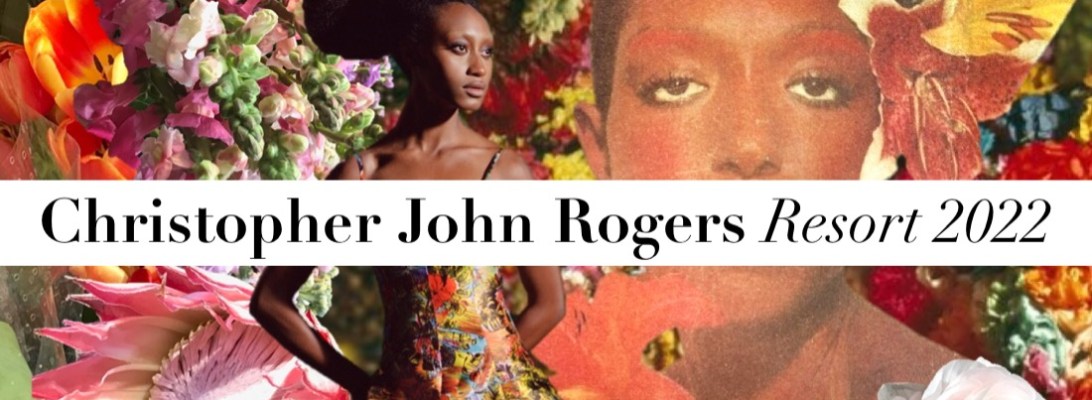
“Live” collage by Edward Kanarecki.

Cocteau And Coco. Chanel Resort 2022

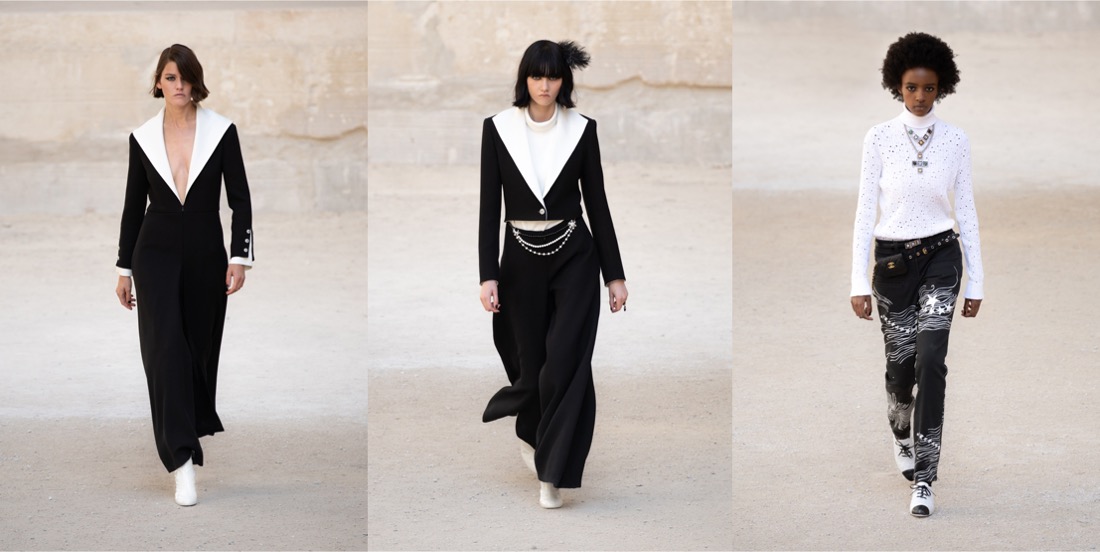
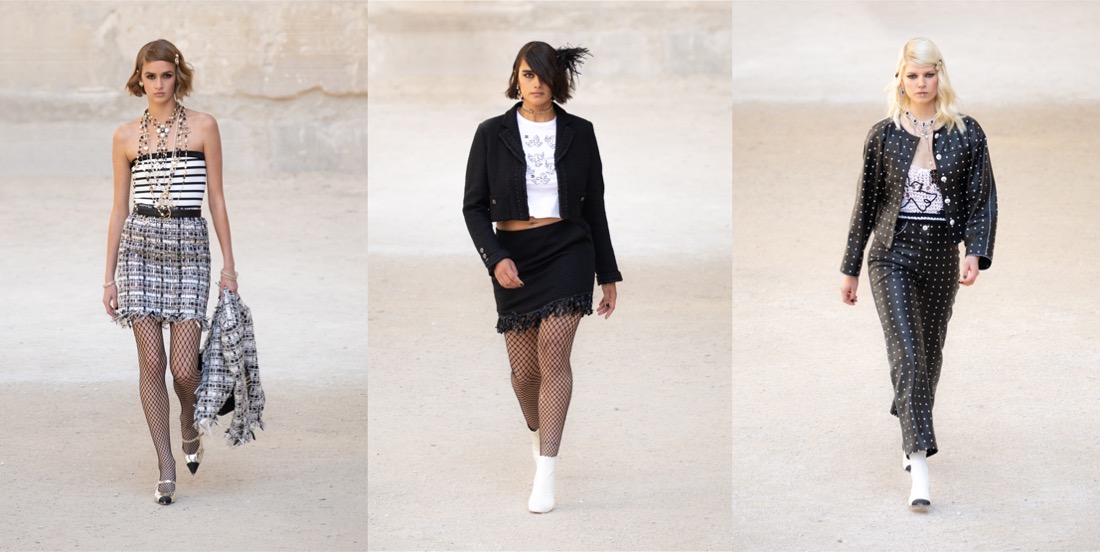
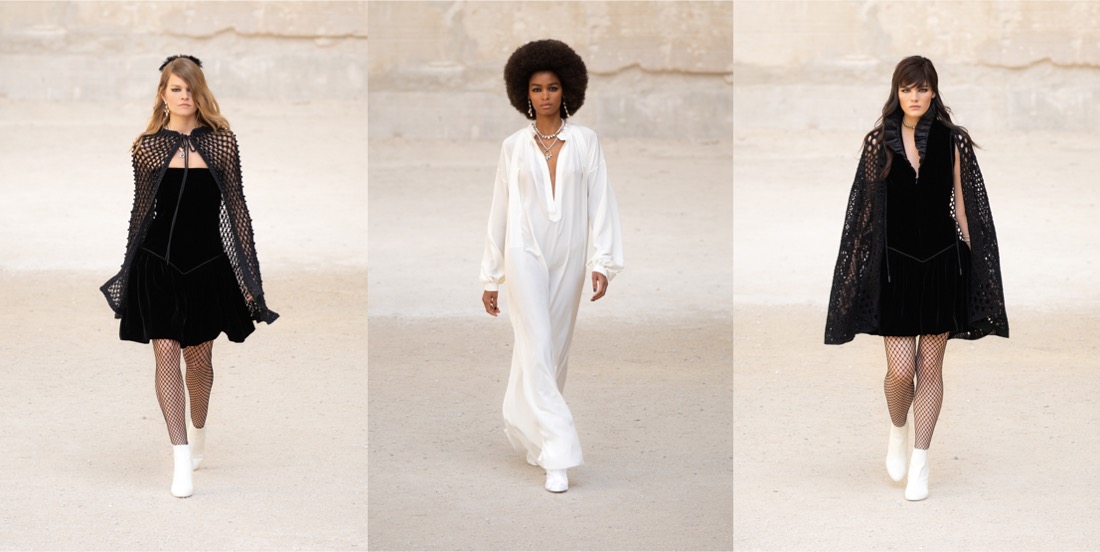
Virginie Viard‘s Chanel is like a sinusoid – one time it’s bizarrely unedited and clumsy, and then it’s fantastically light and super chic. Her resort 2022 has both, although the latter fortunately prevails. The fashion show was a digital, cultural trip, where the clothes worked really well. Viard sought inspiration in Provence, the most beautiful region in the south of France lapped by the marshy Camargue and crowned by the hills of Les Baux-de-Provence, considered one of the area’s loveliest villages. Specifically, she set the collection in the Carrières de Lumières (Quarries of Light) in Les Baux, a series of chalky, cave-like rooms – the spaces left behind after centuries of excavations. In 1960, however, Jean Cocteau – the artist, poet, and filmmaker who cast a long shadow across the worlds of culture and style in 20th century France – used these quarries as a setting for his hauntingly beautiful movie The Testament of Orpheus. It’s “so modern, so fresh, and so strong,” says Viard, who watched the movie, which features Cocteau himself, with cameos from his lover Jean Marais, Pablo Picasso, and Yul Brynner, among others, as she began working on the season. “The movie really inspired the collection,” Viard added. “When I came to see the quarry again – I’d been years ago, before it was used for the son et lumiere – I saw that the clothes had to be strong, and black and white. Otherwise we could be in Petra or Egypt. I love ruffles for the couture,” she continued, “but I thought it would not look modern here. Coco Chanel counted Jean Cocteau amongst her intimates; he produced some evocative portraits of her and illustrations of her clothes, and in turn she costumed productions of his plays AntigoneOrpheus, and Oedipus Rex. The friends would often hang out in Chanel’s daytime apartment on the Rue Cambon, and Viard was excited to read the letters that Cocteau sent to Chanel. The apartment has recently emerged from an extensive restoration, and Viard sought inspiration in the very personal bestiary that Chanel assembled there: The lions for that famous Leo, camels, doves of peace, fauns, and the female sphinxes that all appear in objects and sculptures in the apartment have been reimagined as graphic prints on denim with a hand-painted look, and as lucky charms used as embroidery in the new collection.

In this cocktail of references, Viard as well worked with both Mod and Punk references: striking black and white miniskirts, suits and coat dresses trellised with window pane blocks of small concrete beads, and styling flourishes like fishnet stockings had a Mod sensibility. Accessories including zippered leather holster belts worn at the waist or thigh, handbag chain suspenders, and dog collars read as Punk, as did details like the rock and roll leather fringing on a shimmy dress, and the raw finishing used to hem the skirts and cuffs of caviar tweed suits and crochet minidresses (a Jean Cocteau sketch of a 1920s fringed Chanel dress was the starting point for these designs). The late Stella Tennant’s patrician Punk attitude inspired the lip piercing jewelry, as did Ines and Vinoodh’s photographs of the model Lola in Chanel’s apartment; Viard was thinking of a memorable Mario Testino image of Tennant dressed as a punk with her ball-gowned grandmother, the Duchess of Devonshire, at Chatsworth, her family’s storied stately home. Meanwhile the graphic suits—with a new jacket silhouette featuring a bloused body and fitted peplum—were drawn with the definite lines of Cocteau’s ink brush and pen drawings. There was more softness in the collection in ivory lace dresses scattered with embroidered good luck charms, and wide-legged, high-waisted white linen pants and cotton sweatshirting dresses embroidered with the wild flowers of Provence – lavender, thyme, Cosmos daisies, ranunculus, blue felicia, and scabious, among others. The only colors in the collection appear in 100% sustainable tweeds created by the embroiderer Lesage in what Viard described as a “Cézanne” palette, and used for skimpy, rough-fringed minisuits. For the finale, the short black velvet dresses, each worn with crochet and macramé capes, provided a theatrical flourish of which Cocteau would surely approve. And there’s a pragmatic reason for all those white ankle boots: “It’s better not to have a long black dress or black shoes if you are walking in a quarry all day!” confided Viard with a laugh.

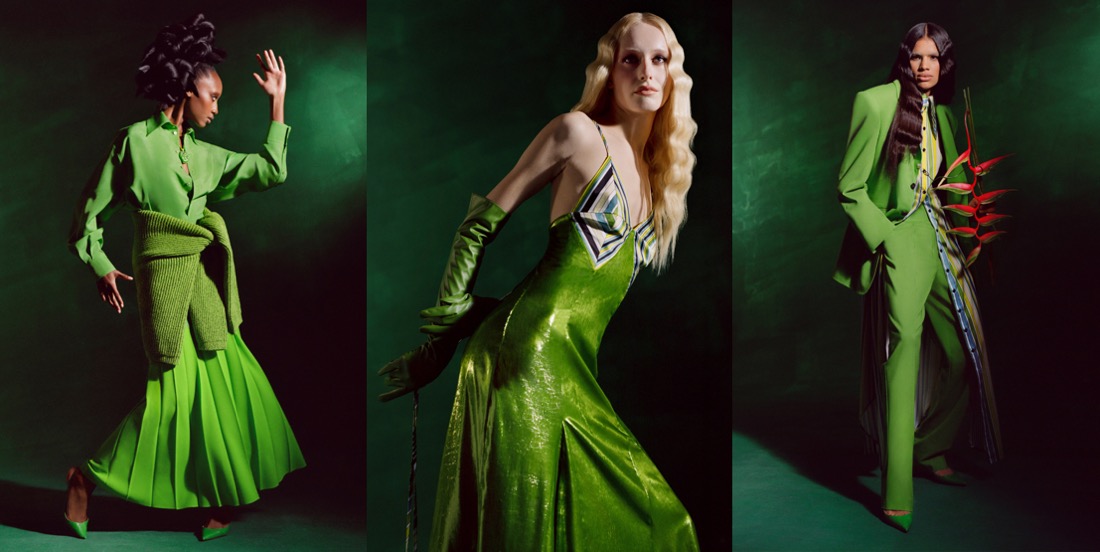
“Live” collage by Edward Kanarecki.