COS x Tabata Shibori

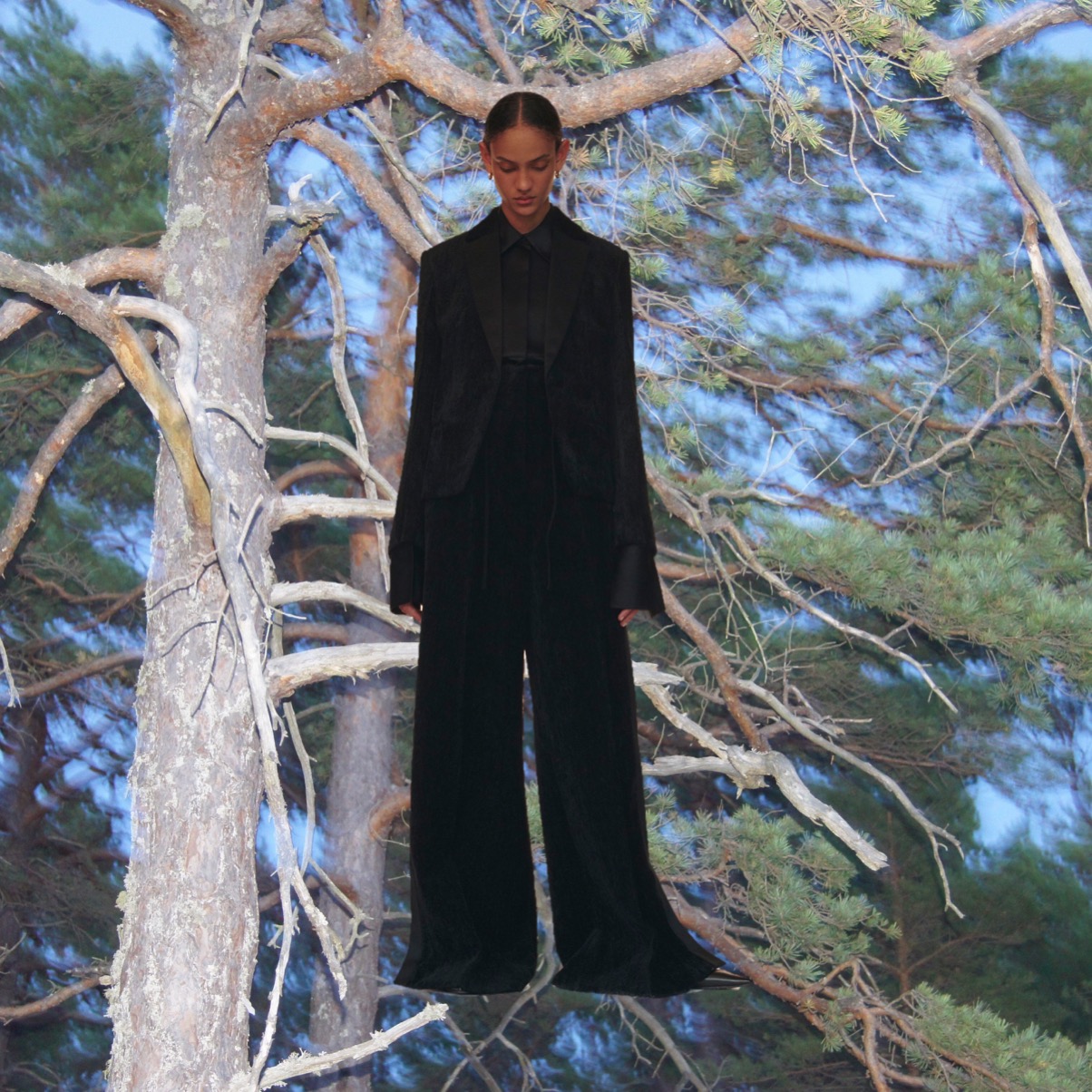
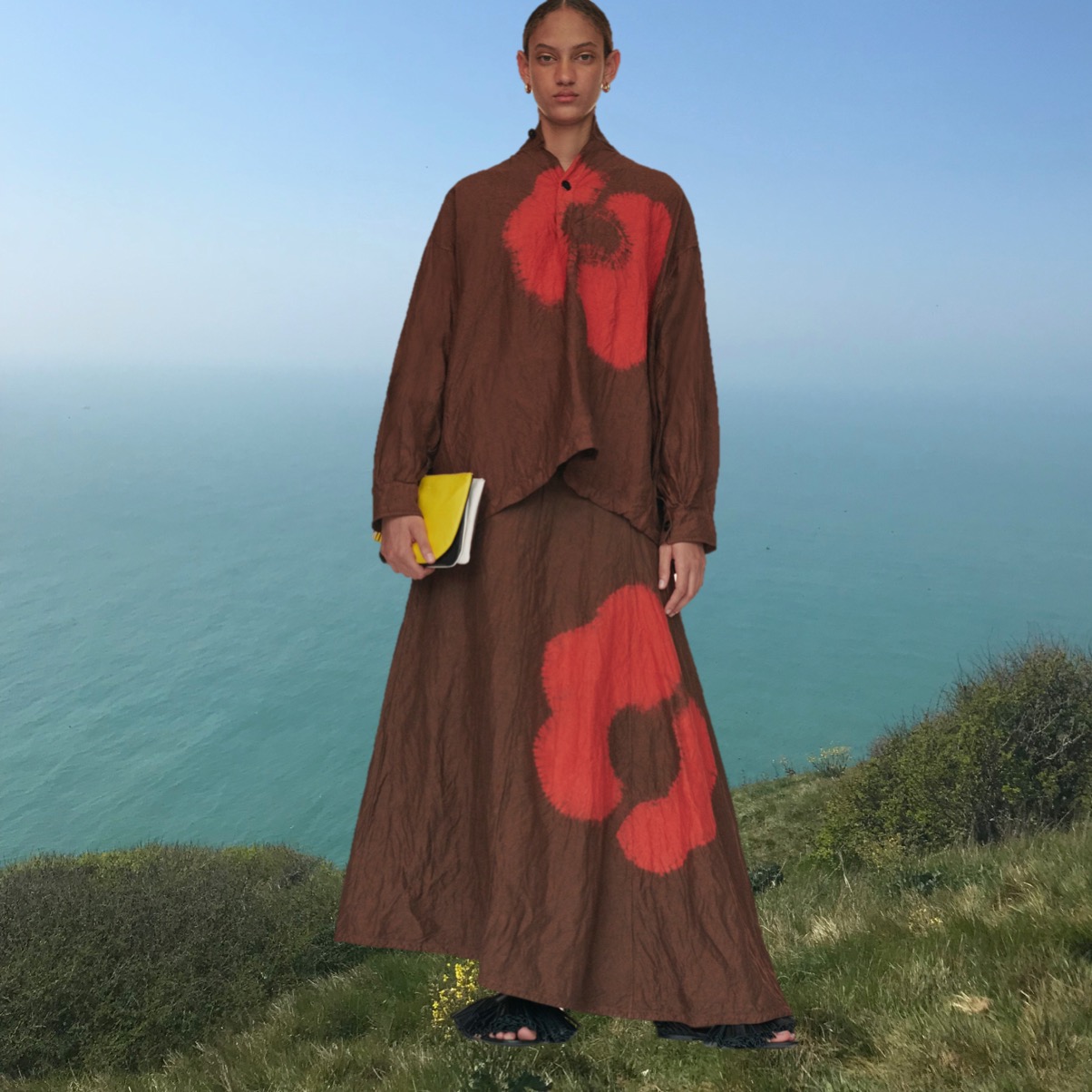
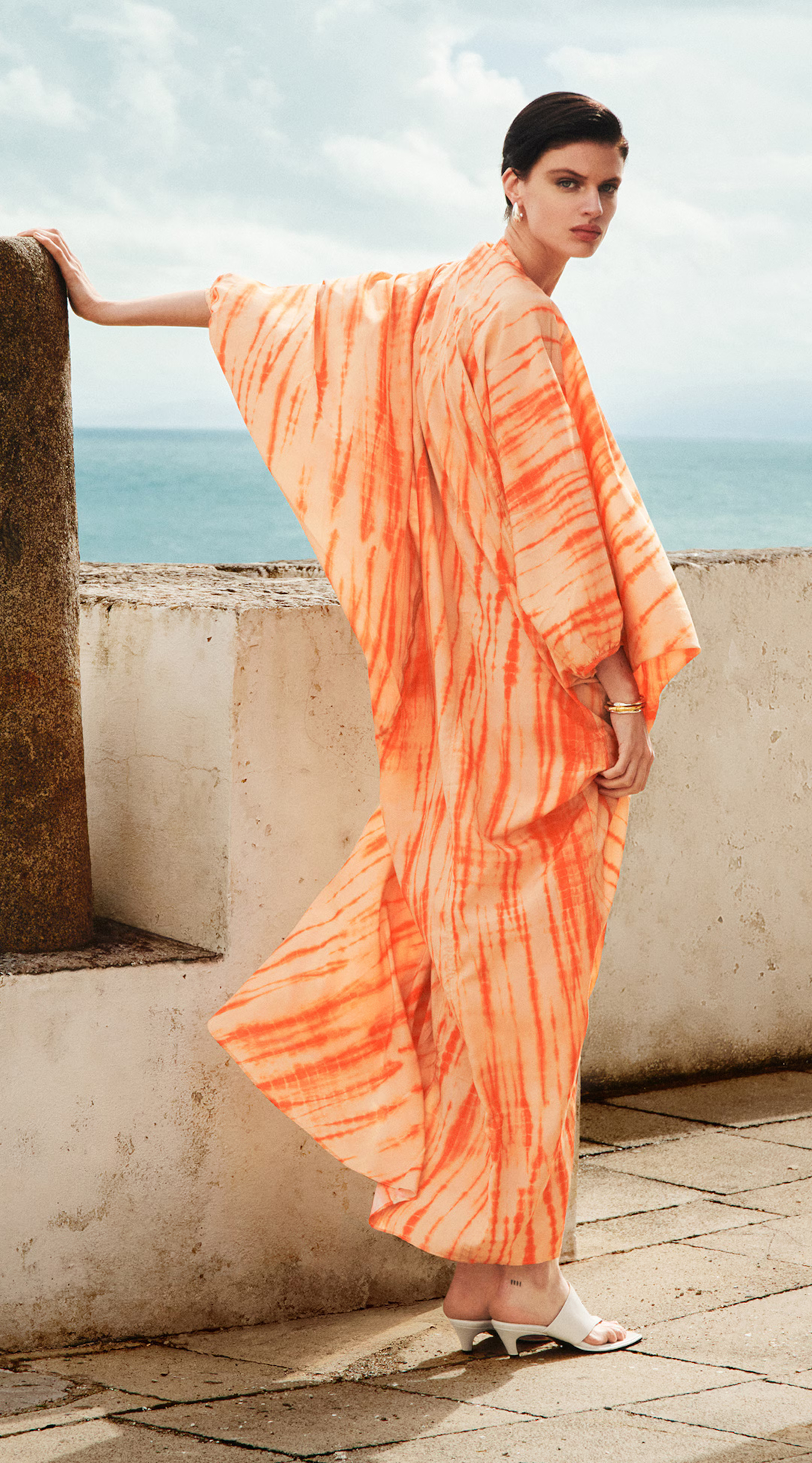
COS really nailed it with their new capsule collaboration by celebrating the art of shibori – and giving long-deserved recognition to Kazuki Tabata and his traditional workshop. Shibori, the Japanese term meaning to squeeze or wring, originates from the simple practice of resist-dyeing to create a mesmerizing array of colors, designs and patterns.

Emerging in Japan during the 8th century, its popularity grew exponentially in the city of Kyoto, in the country’s largest island of Honshu, where clean water and large surrounding rivers are said to have inspired many of its residents to start local shibori workshops. Centuries later, that includes Mr Kazuki Tabata, who prides himself on practicing Kyoto’s distinctive hand-dyeing methods through his maison, Tabata Shibori.

A former salary man specializing in sound engineering, Kazuki began his career in shibori after the passing of his uncle who worked in the family business as a traditional craftsman, which the Ministry of Economy, Trade and Industry certifies after at least 12 years of experience and succeeding written and practical exams. Kazuki, meanwhile, self-taught using the dyeing tools that were nearly thrown away, applying the technical skills of his formative studies in sound and lighting, its disciplines and aspects of collaboration, to inform his shibori creations. The artisan describes the compatibility between shibori dyeing and fabric as ‘necessary’, often favoring fibers such as cotton, linen and silk with character and depths best suited for effective dye penetration. Distinguished by the patterns or forms created from tying fabric, Kazuki specializes in methods such as kasa maki shibori, which resembles a wrapped umbrella, boshi shibori, resembling a hat, yukihana shibori, resembling snowflakes, and a unique technique known as tako boshi shibori, where the tied shape resembles an octopus. The dyes draw from traditional Japanese colours and hues found in nature throughout the four seasons.

Through this collaboration, the London-based brand and the artisan workshop co-created summer-perfect pieces for women and men that showcase exceptional craftsmanship while reflecting the rich cultural heritage and innovative spirit of Japan. The collection is available starting today!

Here are my favorite pieces from the capsule which you can shop now…

ED’s DISPATCH:


Elasticated Wide-Leg Trousers in Beige


Oversized Silk Kaftan Dress


Longline Single-Breasted Blazer


Collared Shirt Jacket in Beige


Elasticated Bermuda Shorts


Relaxed Short-Sleeved Shirt

Magical Realism. Altuzarra SS23

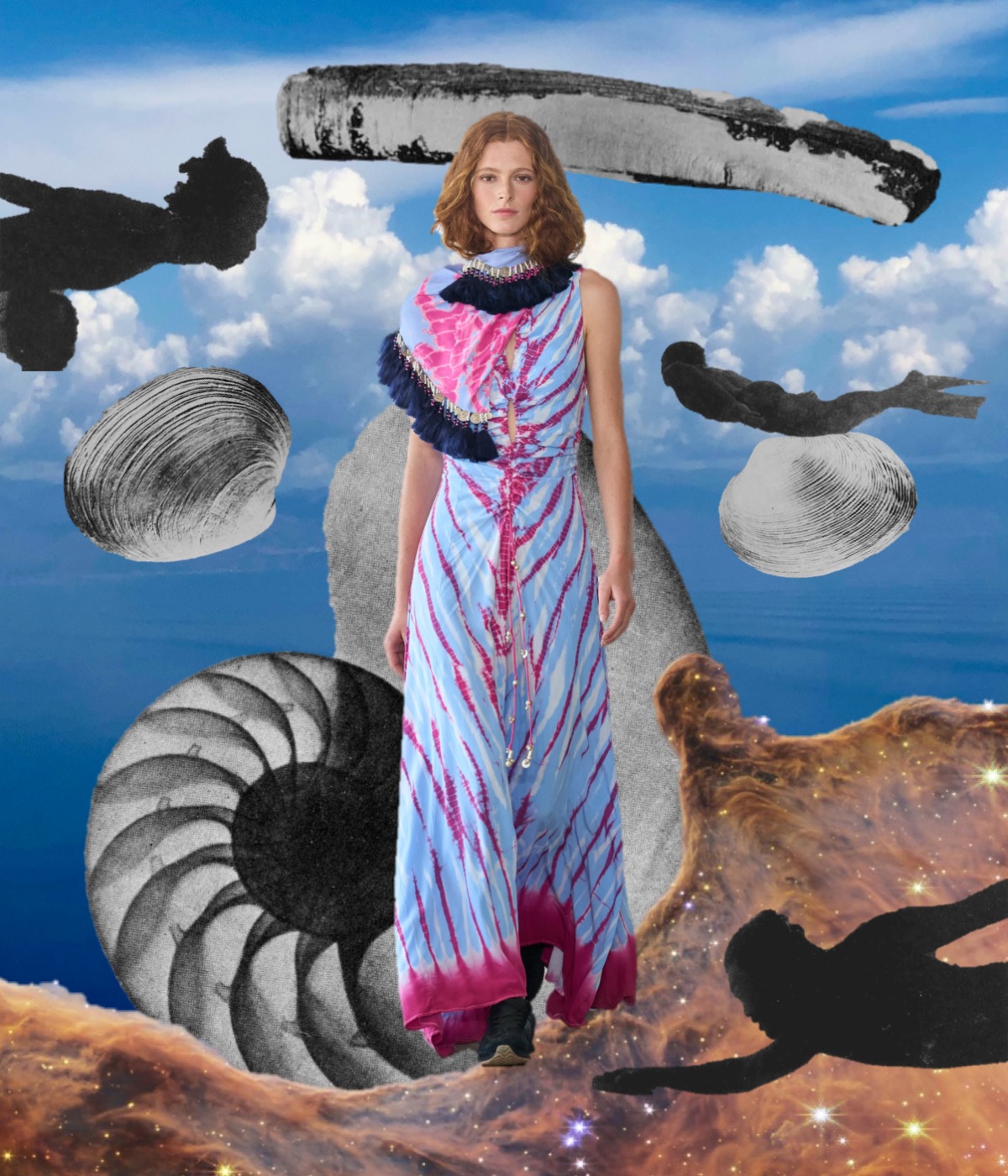
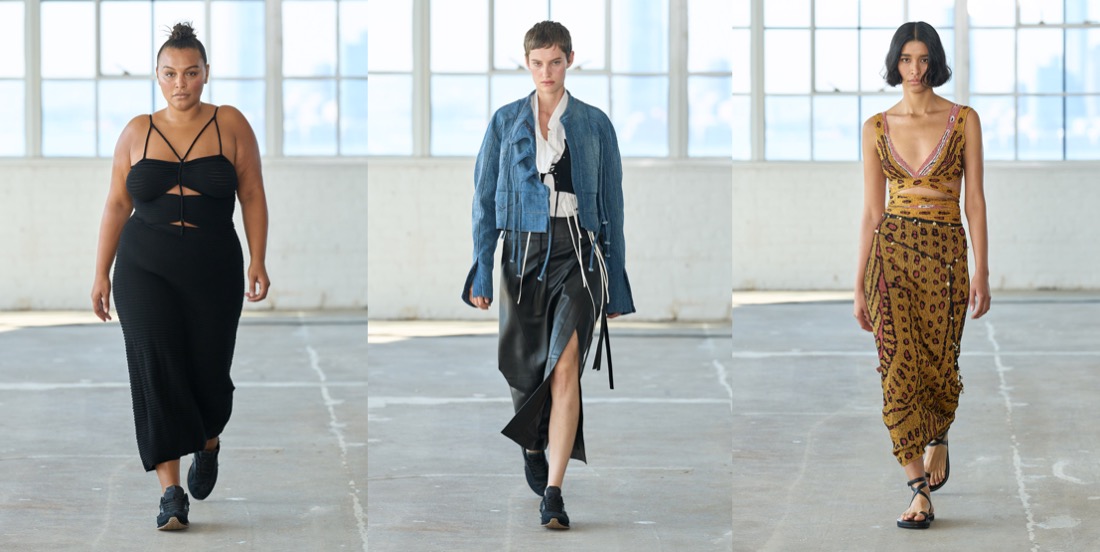
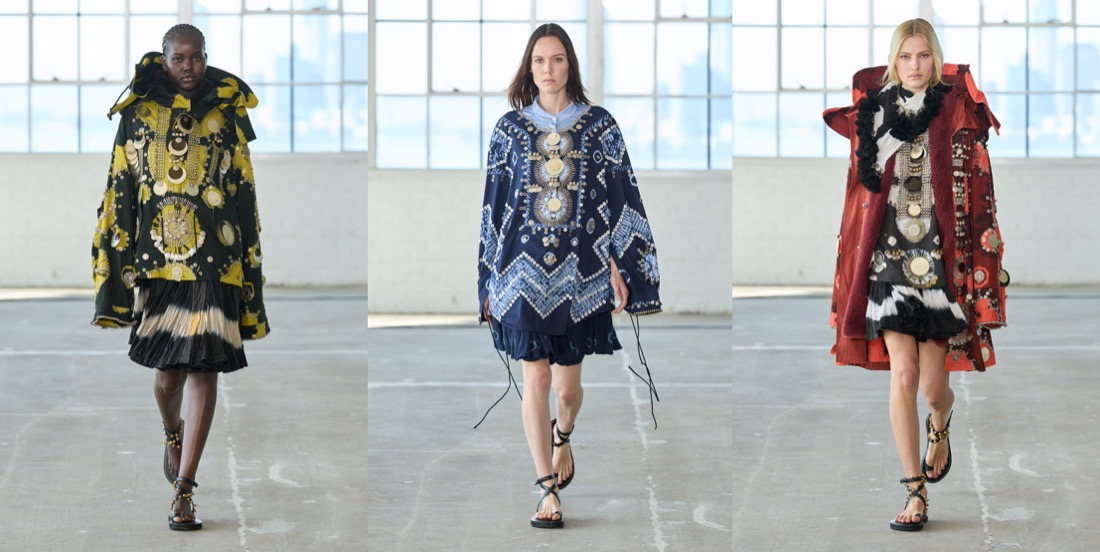
I haven’t seen an Altuzarra show in a while, but I follow Joseph Altuzarra‘s side project, Altu, which is a genderless label offering timeless essentials in a cool, off-duty, gritty aesthetic. To sum it up, it’s quite the opposite of the ultra-feminine style of the designer’s main label. But it seems to me that developing Altu let Joseph take a new perspective at Altuzarra. The spring-summer 2023 line-up shows a more relaxed, laid-back approach, and I like it. Well, maybe the first part of the collection is too isnpired with last summer’s Prada silhouette, but the second section is truly eye-pleasing. “The world feels so alien and scary. I’ve been interested in how people in the past have made sense of things,” Altuzarra said at a preview. “Finding tangible reasons for why things are happening is what people would do, and that’s what I’ve been expressing through the collections.” For spring he said he wanted to explore “this idea of a trip and nature as an entry point for psychedelic experiences.” A couple of books, The Teachings of Don Juan and Desert Solitaire, both written in the late ’60s and both delving into mysticism, proved inspirational. The show played out like a journey – or maybe a vision quest – starting with preppy-ish classics like striped shirts, cable sweaters, and minis that Altuzarra tweaked and twisted until they looked neither preppy nor classic. He topped them with boxy blazers or parkas, and accessorized the looks with retro Keds sneakers. The shibori-dyed dress of look 19 is where woman meets nature. Tie-dye and coin embroidery are two Altuzarra signatures, and he doubled down here, sending out a parade of exquisite dresses whose intricate craftsmanship is near unrivaled in New York. Most ambitious was the series of body-skimming numbers that were first tie-dyed, then pleated and twisted; their patterns looked like exotic skins. Other dresses were sewn first, then dyed. “It’s all done on a final garment. You basically can’t mess up, because if you do, you have to redo the whole thing,” he said. They take almost two months to make.

Collage by Edward Kanarecki.
Don’t forget to follow Design & Culture by Ed on Instagram!

NET-A-PORTER Limited

Men’s – Humanity and Craft. Loewe SS21

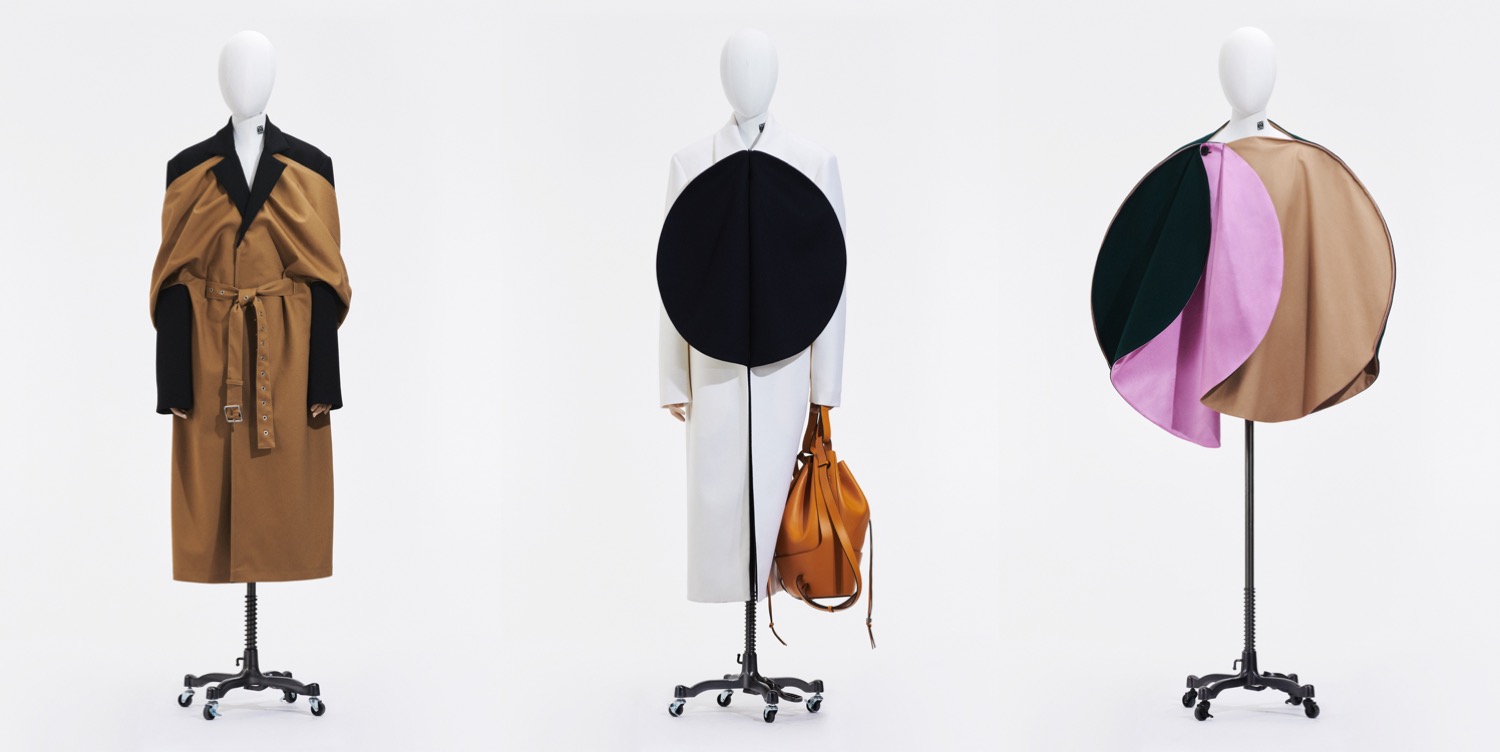
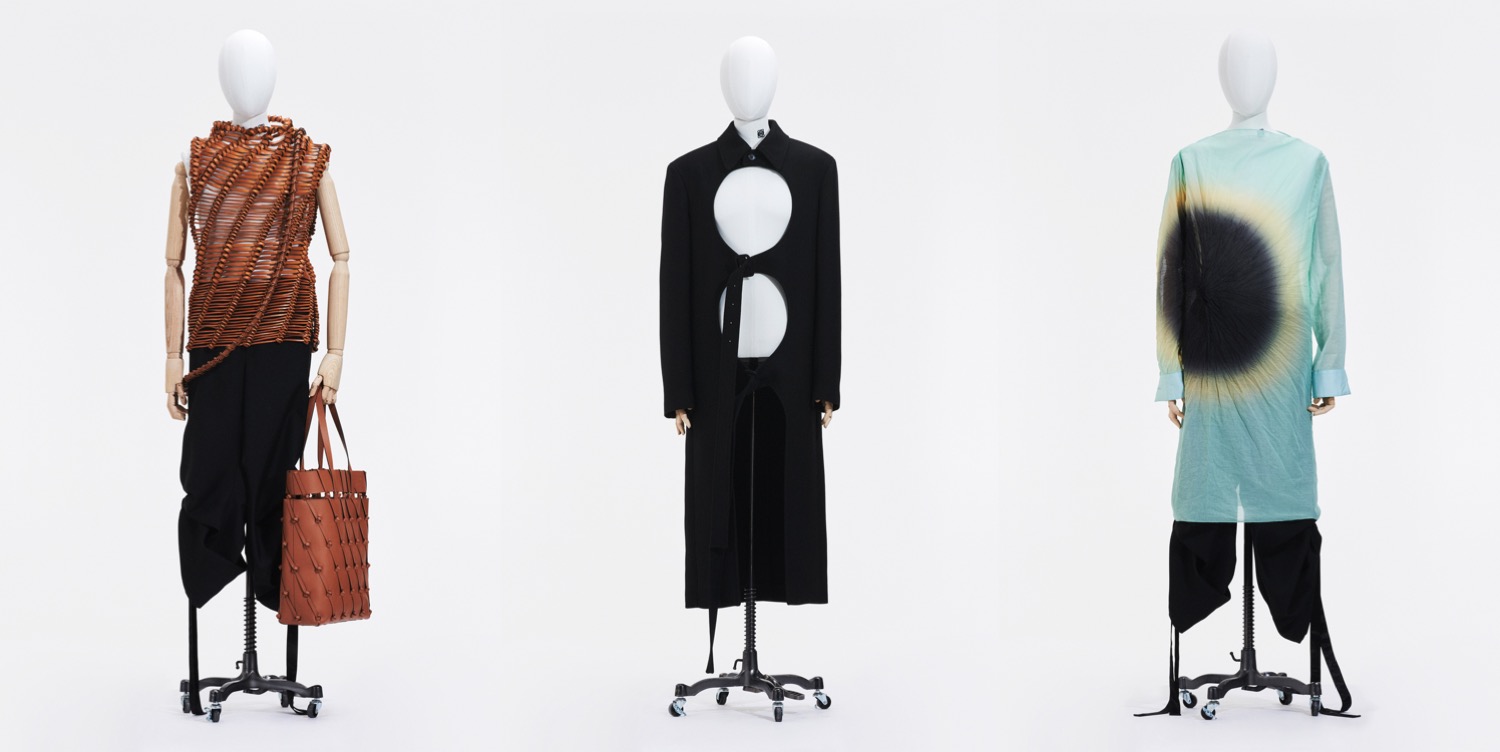
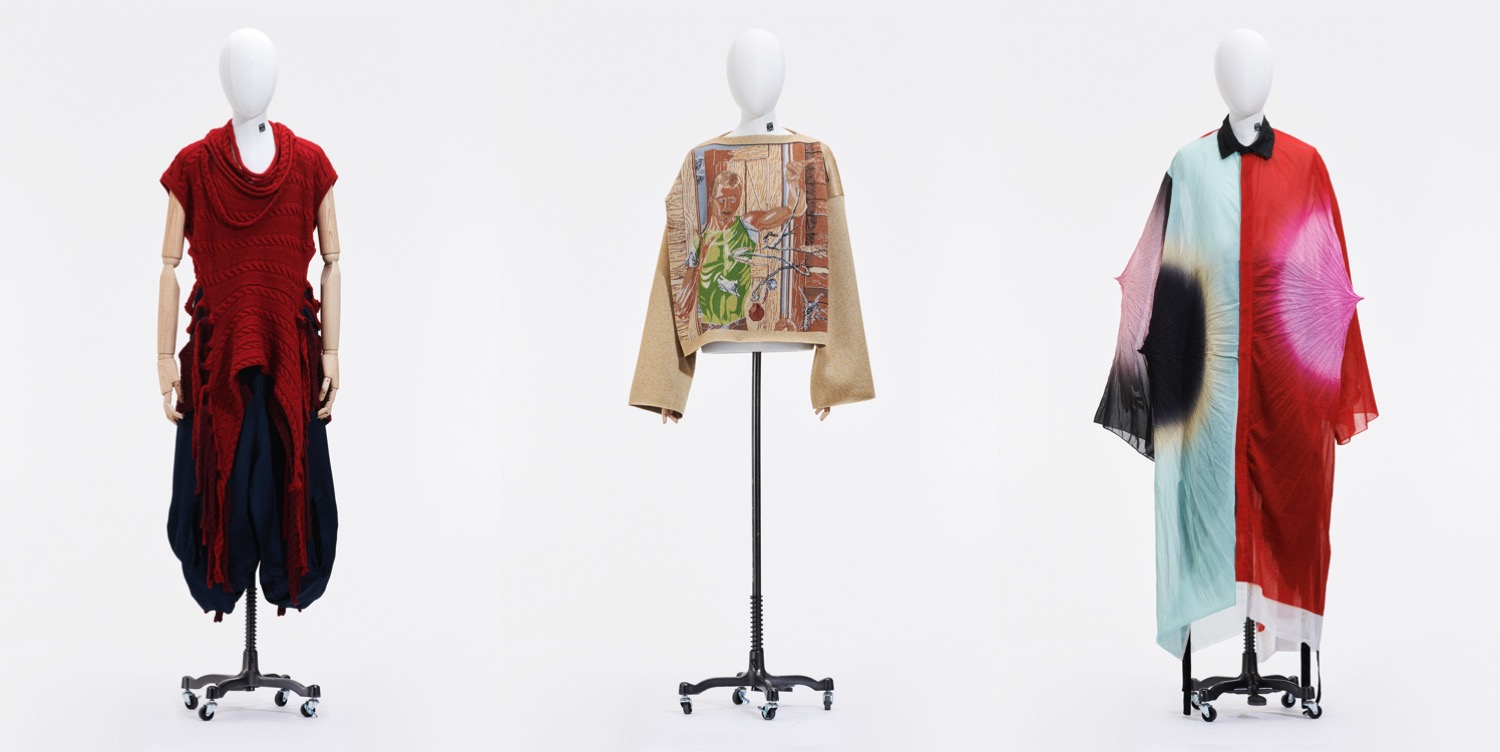
What Jonathan Anderson orchestrated yesterday around the launch of Loewe’s men’s spring-summer 2021 collection (and women’s pre-collection) felt like a long-needed quantum leap into the new world of open-ended possibilities. Where would a designer who’s always talked about Loewe as ‘a cultural brand’ and his links with artists and artisans go? How can the truth of tactility and emotion be felt when digital is the only option? On one level, what he came up with felt like dipping into a 24-hour Jonathan Anderson-curated worldwide live summer festival of arts, crafts, and conversations on Loewe’s Instagram page and website. “My whole thing is to do something in each time zone,” he told Vogue from his London home via Zoom. The program rolled from Beijing time onwards, connecting with (amongst others) crafts-collaborators Kayo Ando, who showed the art of Shibori, paper artist Shin Tanaka from Japan and the basketweave artist Idoia Cuesta in Galicia, Spain. There was music curated by Adam Bainbridge (aka Kindness), who showcased a calming ‘medley’ comprising different versions of Finnish musician Pekka Pohjola’s Madness Subsides, performed by Park Jiha in Korea, performer and producer Starchild, French-Malagasy pianist and bandleader Mathis Picard, and American harpist Ahya Simone. Lots more roved through live chats between Anderson and the actor Josh O’Connor, and, later, a conversation with contemporary textile artists Igshaan Adams, Diedrick Brackens, Anne Low, and Josh Fraught. And on another level, there was the Loewe Show-in-a-Box, a cache of paper-art discoveries delivered as a tactile substitute runway experience to the doorsteps of the industry insiders (it was a grander follow-up to the JW Anderson show-box he sent around last week). Inside was a pop-up show set, a flip-book of photos of the clothes on mannequins, a paper-pattern of one of the garments, print-outs of sunglasses to try on, textile samples, a set of paper pineapple bags and looks to stick together to make your own 3D ‘models,’ and a pamphlet listing Anderson’s art history inspirations. Slipped alongside was a packet of cut-out paper portrait silhouettes he’d had made of Loewe staff members. “I like that they’re kind of immortalized in this moment,” he said.

What about the collection? With their sculptural volumes, twisting, looping, and wrapping forms, the line-up read as Anderson’s push to convey the 3D presence of garments through the limitations of a flat, 2D medium of communication. Some of his references had been taken from El Greco and Velázquez, and his absorption of high Spanish art in the Prado in Madrid; others from his admiration of Issey Miyake’s pleats, and from wanting to showcase the painstaking handcrafts his collaborators bring. The leather-workers helped him evolve a basket-weave top and a soft, suspended bag that folds itself around one side of the body like an apron. The Japanese Shibori print radiates from the side of a tunic.“I have actually really enjoyed this process. It has made me be way more humble about who I am in this industry,” he concluded. “If I look at before the pandemic, I was slightly struggling. I was going out to prove that we are doing something. I think what’s been good about doing this is that I’m closer to the people who make the bags, to the pattern cutter.” Holding it all together in the digital space is turning out to mean more sharing of the glory, less behind-closed-doors mystique, more proof of the humanity, time and ingenuity that goes into making things, he believes. “I think that fashion now has to get rid of all the layers and just say, ‘This is what this brand does, and we’re going to do it with conviction.’ It has to be real. I think it’s bigger than the collection. I’m really proud of it because it’s very honest, it’s our humility. And it’s actually about finding that I love what I do.”

Collage by Edward Kanarecki.

Elongated and Lean. Jil Sander Resort 2020

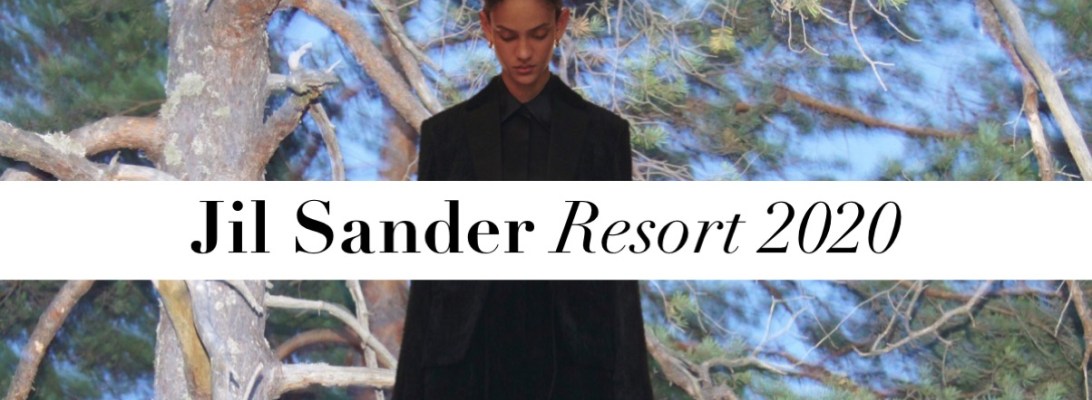
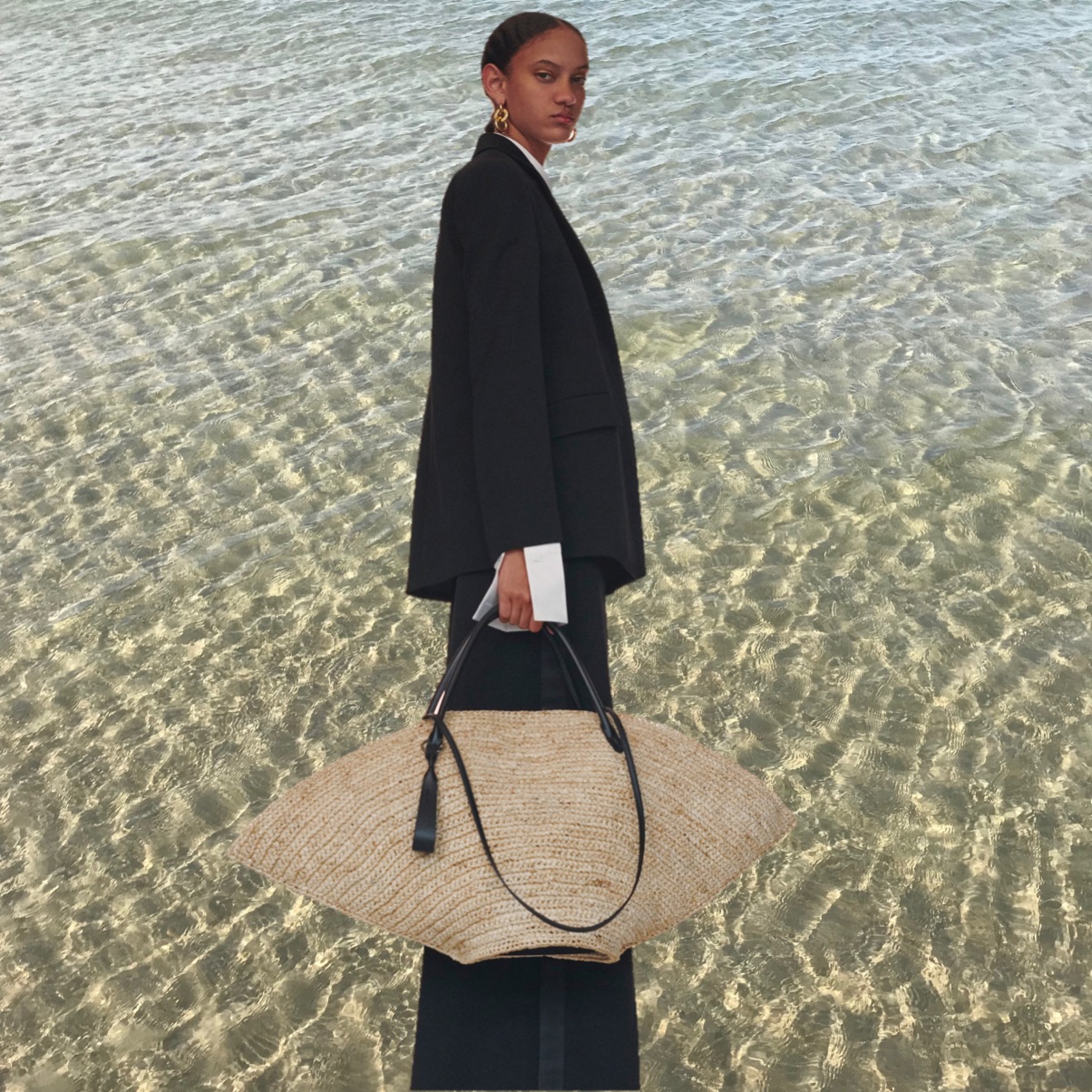
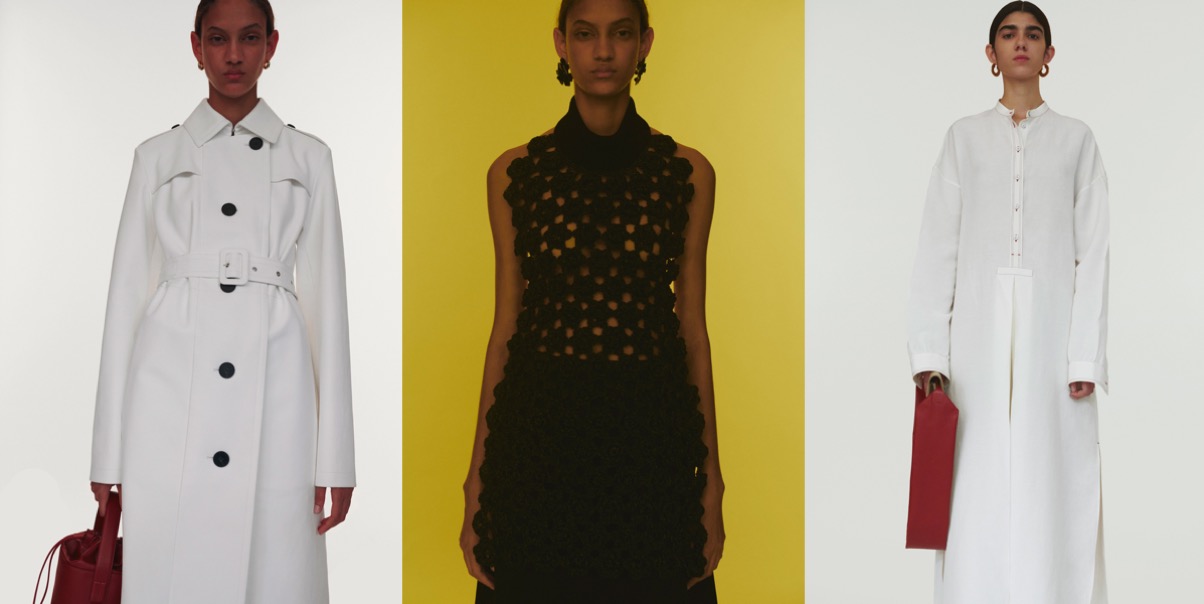
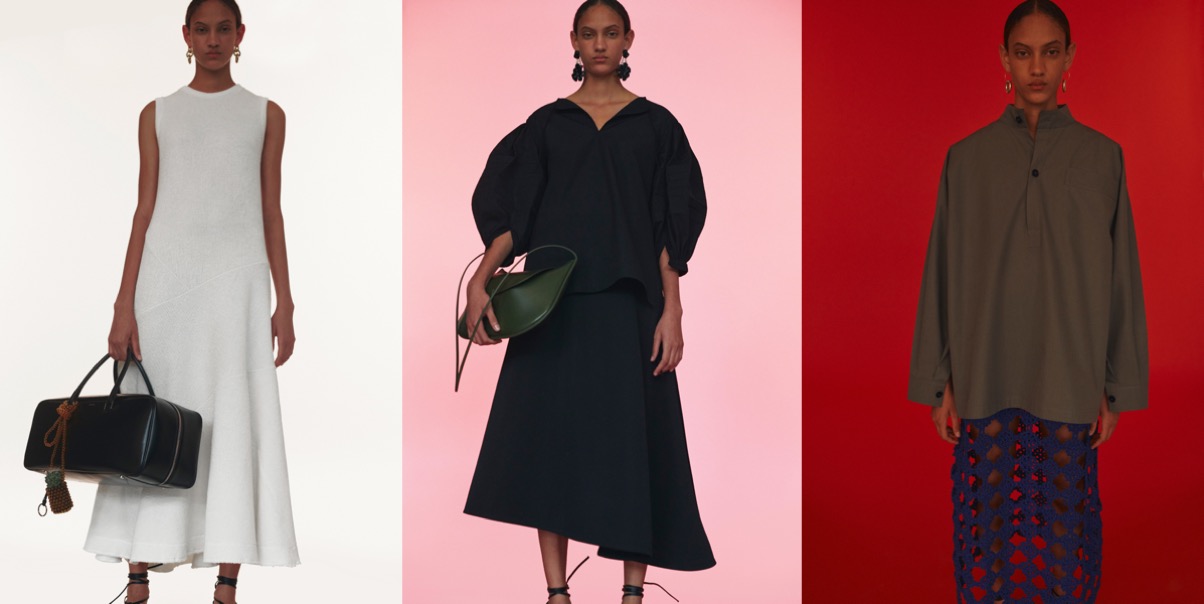
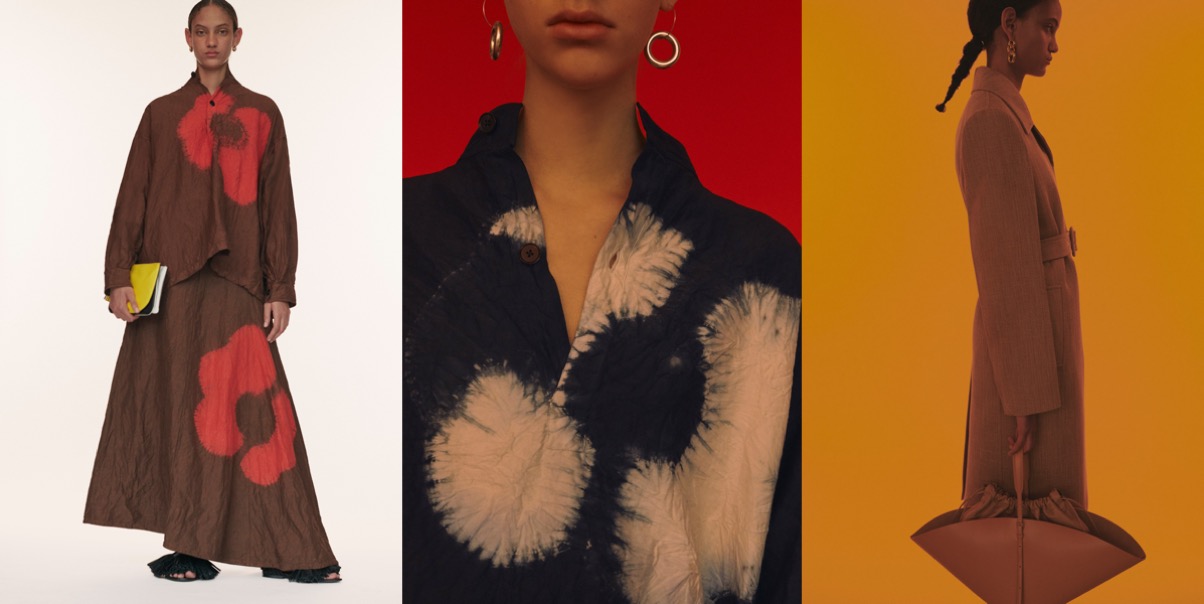
What Lucie and Luke Meier do at Jil Sander is so, so beautifully balanced and considered. Their resort 2020 look-book is one of their best collections to date, and they prove their comprehension of the brand’s heritage in every aspect, from impeccable tailioring to feminimine-slash-minimalist day-wear. “The silhouette is very elongated, very lean,” one of the designers mentioned to the press. “It follows the body line, but then it breaks with a playful gesture, like tying something around the waist, be it a belt, a sweater, or a leather waist bag. Trying to convey a sense of lightness and movement.” Also, I really love the element of nature that reappears in Meier’s collection season-to-season. Raffia-crocheted skirt and straw basket bags are one way to approach plastic-free, eco-friendly fashion. Tie-dye Shibori techniques, used as decorative elements on over-sized cotton shirtdresses, blouses and skirst, are artisan handworks that need no chemicals in production. Big yes to everything this collection delivers.

Collages by Edward Kanarecki.