Lose Yourself. Paco Rabanne SS19

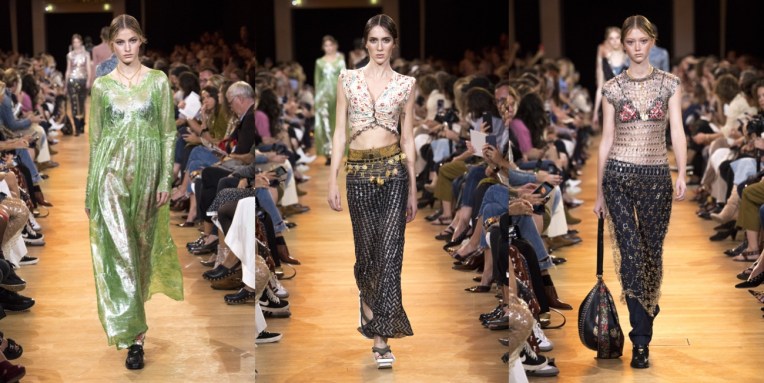
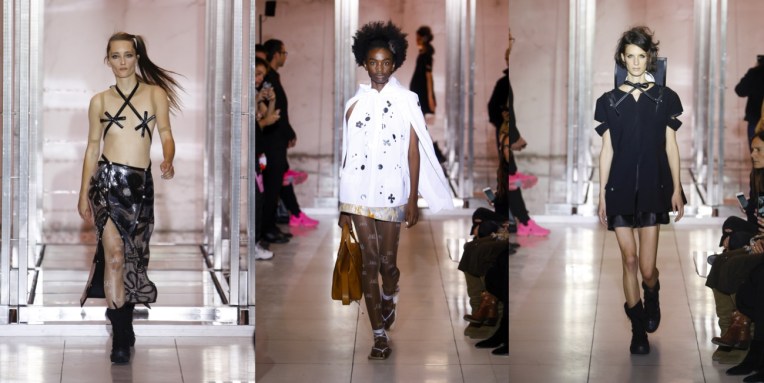
Julien Dossena and Paco Rabanne are a match made in heaven. The spring-summer 2019 collection is, simply speaking, superb. And, what’s most surprising for a designer who works at such historically distinct brand like Paco Rabanne, the collection wasn’t a literal archive revisit. Dossena focused mainly on Rabanne’s signature chain-mail, but refreshed it completely, so it looked incredibly light and perfect for summer. Similar to Natacha Ramsay-Levi’s Chloé this season, Julien also went for the nomadic theme. Just like her, he didn’t deliver anything overly direct or vague. No boho trends here. Rather think coin necklaces and belts, embellished bras worn under chain-mail dresses and refined sarongs. All that worn in a carefree, not too over-styled manner (Marie Amelie Sauve, love you). It’s bohème, but finally done the good way in 2018. The question is: was Julien travelling somewhere far this summer? The answer is: nope. “I didn’t really get enough time away,” he said, “so I thought more about inner travel—in the mind. About a wardrobe of someone’s souvenirs mixed with her own classics.” Spiritual, diverse, but resonating with a contemporary wearer. The last is something Paco always intended to highlight in his collections.
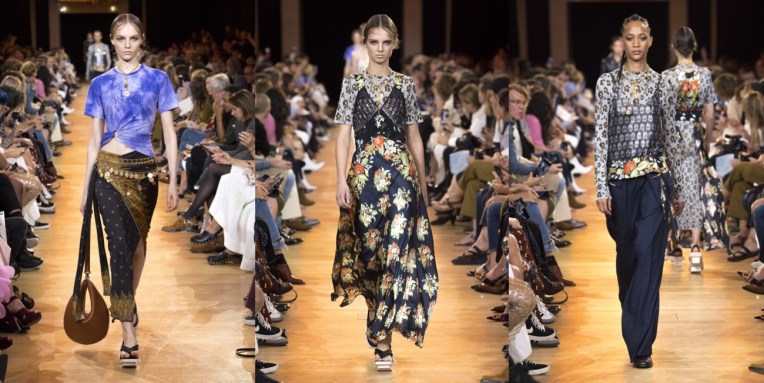
Collage by Edward Kanarecki.

Woman. Chloé SS19

Slajd1-kopia 7

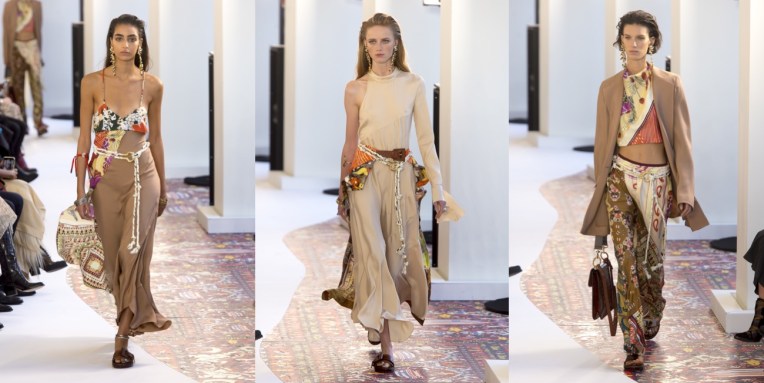
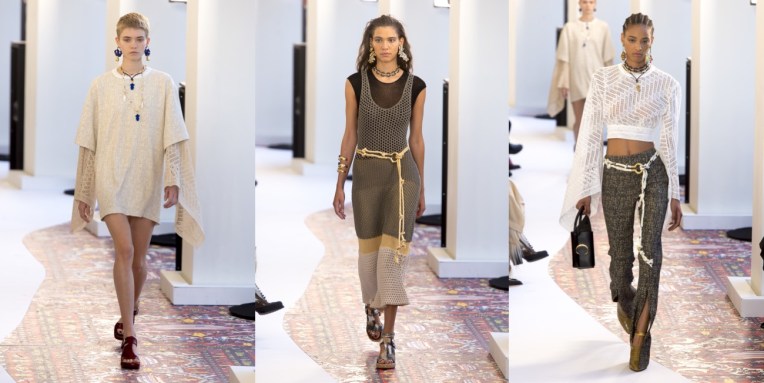
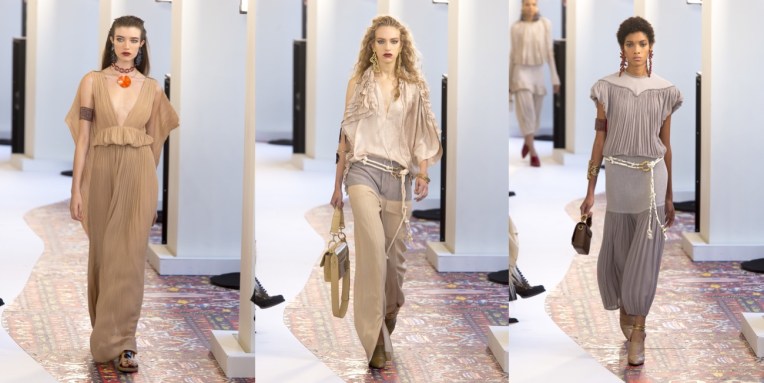
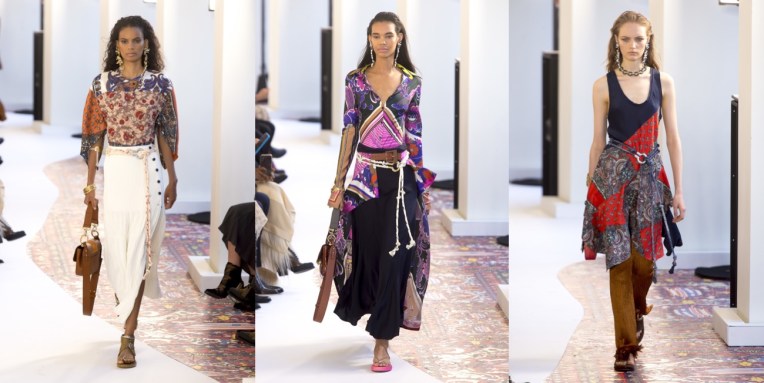
Natacha Ramsay-Levi’s third runway season for Chloé was a lot different from the first two, but felt distinctly like her. That’s already a sign – this woman has her own, complex style that she develops and develops, without losing some sort of personal idiosyncrasy. For spring-summer 2019, the designer investigated her more eclectic aesthetic. Think breezy, summery feel with 70s prints, amulet jewels and flowy dresses. The collection had something nomadic about it, but Natacha escaped the clichés of boho style. Tie-dye t-shirts worn with fringed mini skirts looked festival-ready, while the scarf tops, pants and dresses looked light and easy. There were also rope belts; paisley patterns all over silk pantaloons; knitted pullovers worn over loosely fit, crotchet blousons. Ramsay-Levi respects Gaby Aghion’s (Chloé’s founder) liberated femininity that was never based on regular ‘prettiness’ or specific beauty canon. The current Chloé designer’s femininity is equally strong and multi-faceted. While others do princess dresses for the closing look, Natacha sent down a pleated, maxi-length gown suited for a Goddess (note that gorgeous collar and the Grecian bracelets). To sum up: the ready-to-wear is completely desirable, the accessories are on point. With this collection, Ramsay-Levi proves once again that she’s a skilled designer, who’s capable of creating a consistent, yet simultaneously exciting vision of the brand. This seems to be shockingly rare in the industry, especially when you browse the majority of this season’s line-ups. Bravo, Natacha!

Slajd06Slajd07Slajd08Slajd09Slajd10Slajd11Slajd12

Collage by Edward Kanarecki.


Yolanda’s Debut. Courrèges SS19

Slajd1-kopia 6

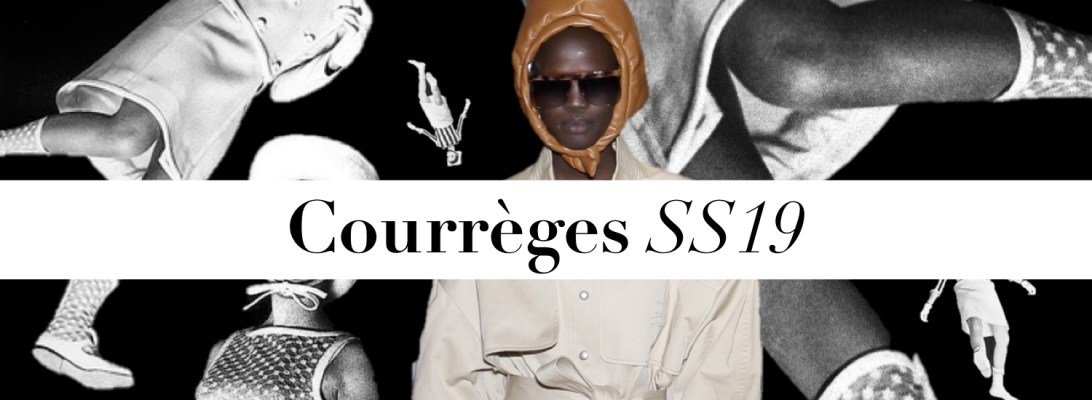
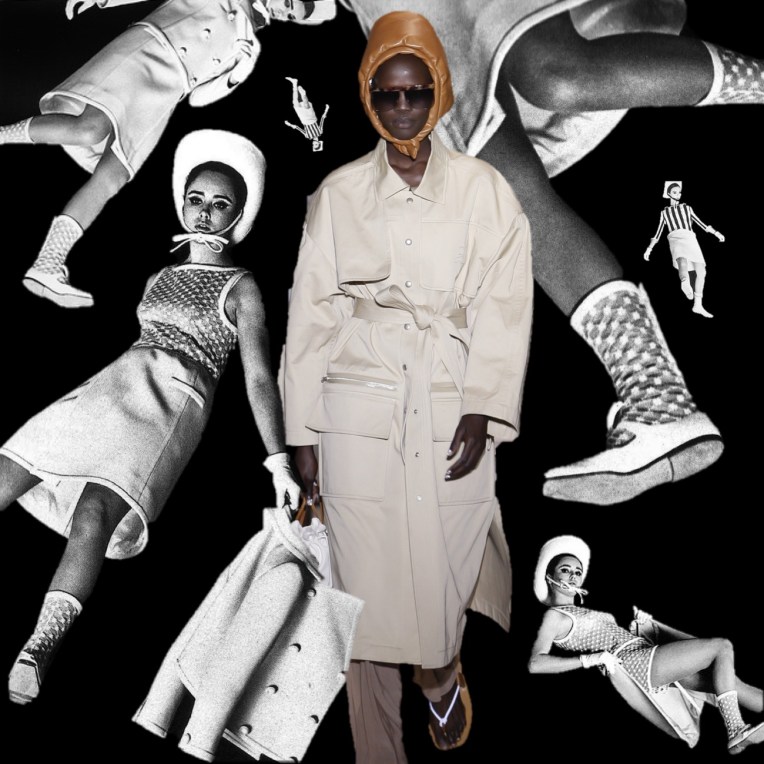
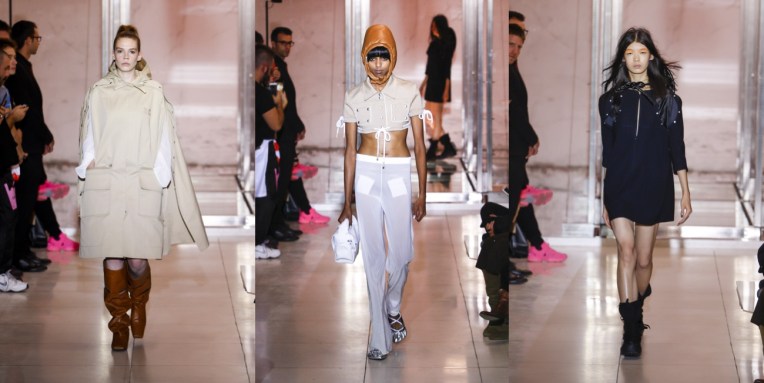
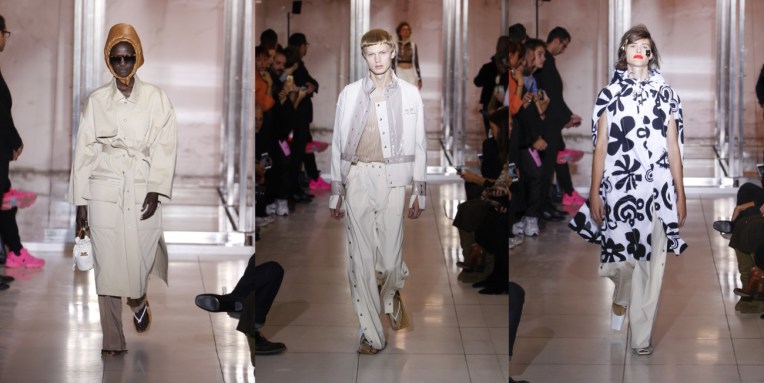
Arnaud Vaillant and Sebastien Meyer’s few year stint at Courrèges took the brand to the contemporary fashion agenda, but not entirely – it seemed that the editors mildly liked it, but the clients weren’t convinced to buy their jackets and mini-skirts. Will Yolanda Zobel be the person to lead Courrèges in the proper direction? Debuts are always difficult, especially at a brand that hasn’t seen a heyday since the 70s. Zobel had good intentions. She showed at the brand’s flagship; the guests were standing, while some models danced down the runway; the mood was fine, filled with energy and optimism. The new eco-focused project coming from the designer – the pop-up shop that recently opened next door to the flagship to sell off the house’s remaining unsustainable vinyl – was also a promise of Courrèges’ prosperity in 2018. But then, the actual clothes appeared on the runway. Yolanda helplessly lost herself in the brand’s archives. Courrèges was known for A-line mini-dresses and the ones from the past really looked appealing. The new versions are rather appalling. Uncomfortably looking shorts; some boxy crop-tops with too many pockets; odd logo tights; tight sequined dresses styled with cumbersome boots. The worst was the bondage stuff, that made the models look imprisoned, rather than liberated. Andre Courrèges wanted to create a wardrobe for the modern times, with a futurist, sci-fi twist. At this moment, Yolanda misses on that with her edgily cosmic “costumes”, not clothes. Still, I’m not crossing Courrèges out of the sight. Let’s all hope that was just the first, unsuccessful trial.

Slajd01Slajd02Slajd03Slajd04Slajd05

Collage by Edward Kanarecki.


One Universe. Lemaire SS19

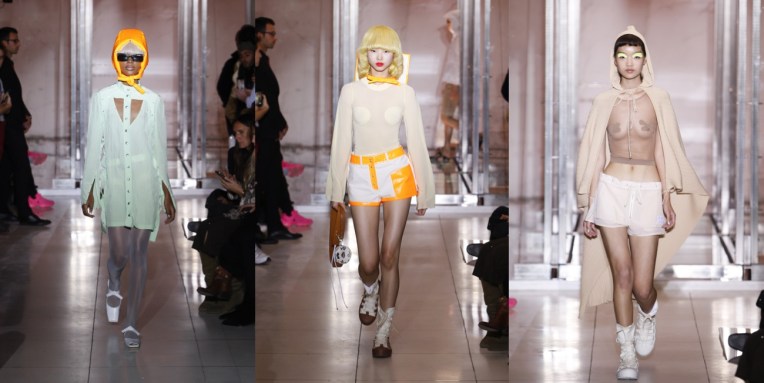
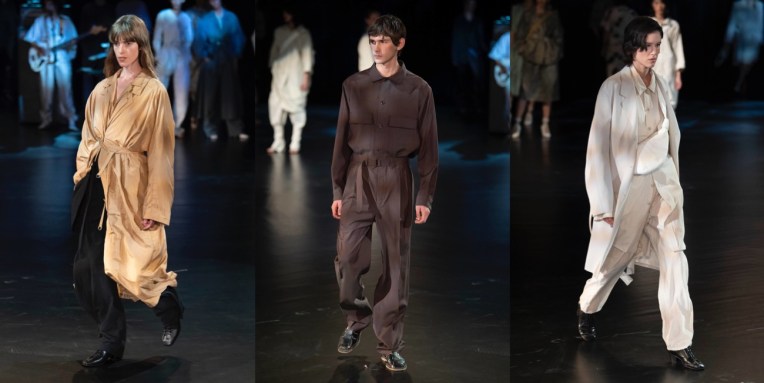
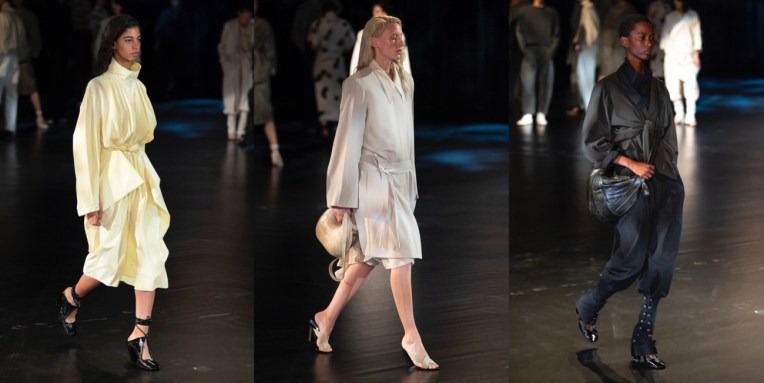
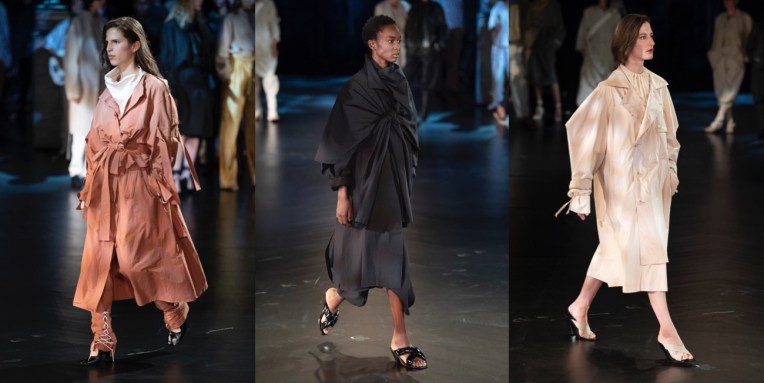
For Christophe Lemaire and Sarah Linh Tran, women’s and men’s wardrobe is one universe. That’s why they presented both on one runway this season. In terms of clothes, this was a classic Lemaire collection, without much risks. Shirt dress in cotton ventile, double breasted jacket, baggy skirt in pigment dye poplin, oversized, knotted trench coat (as seen on Tasha Tilberg), linen sailor pants, large bum bags in nappa leather… clothes that are in constant demand. Majority of the looks is genderless (for example the coats, that are cut in the same way for both women and men). I adore Lemaire, but I wish the designers tried new territories next time – this collection looks very much like their last few seasons, just kept in different colour palette. If not for the live music and the models’ eventual dancing, that would be a rather stiff presentation, gone completely unnoticed in the Paris fashion week crowd.

Collage by Edward Kanarecki.
New Elegance. Dries Van Noten SS19

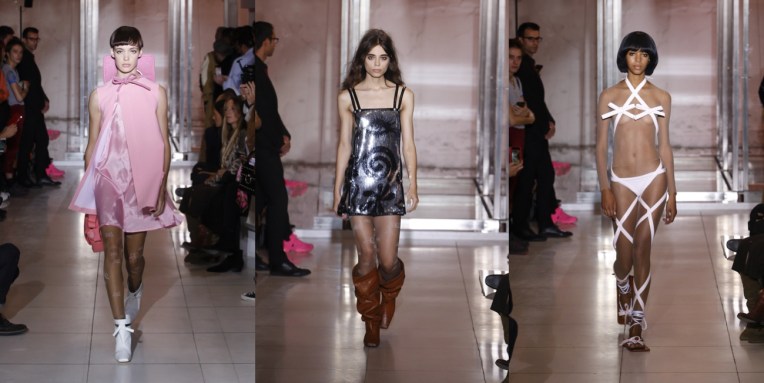
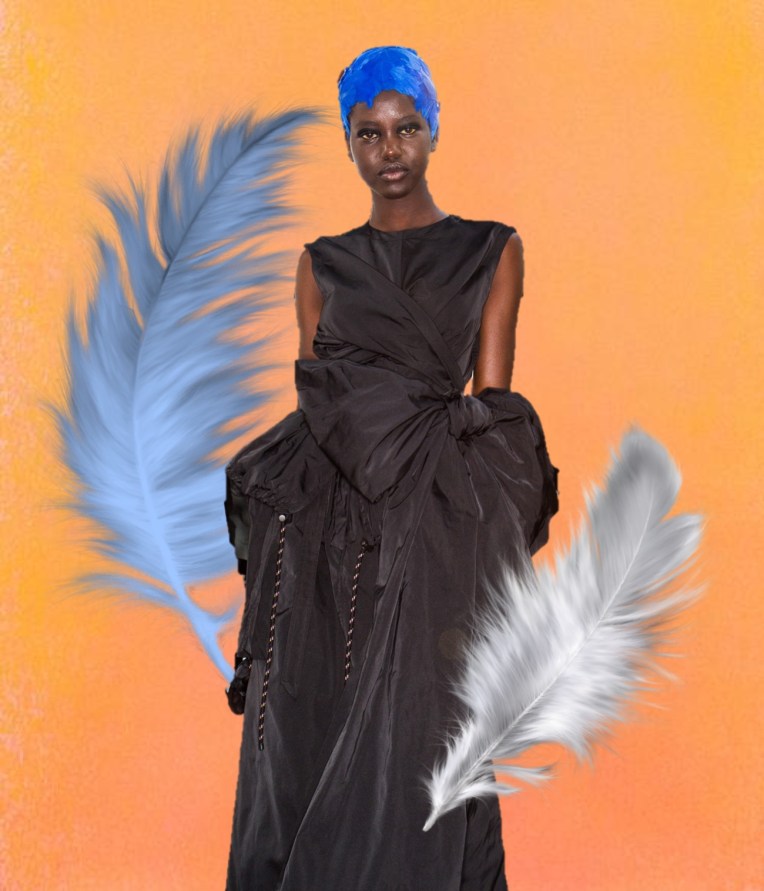
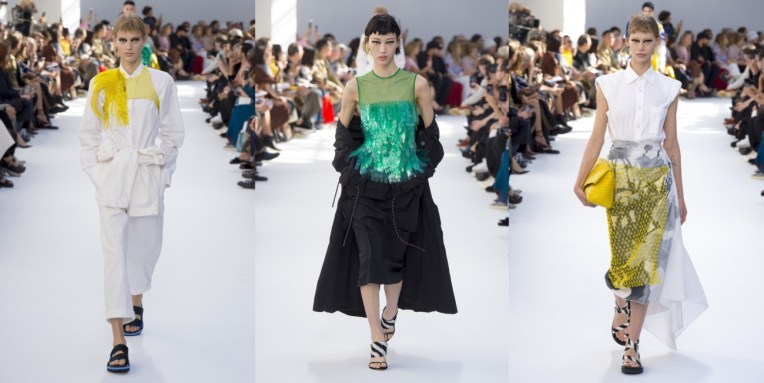
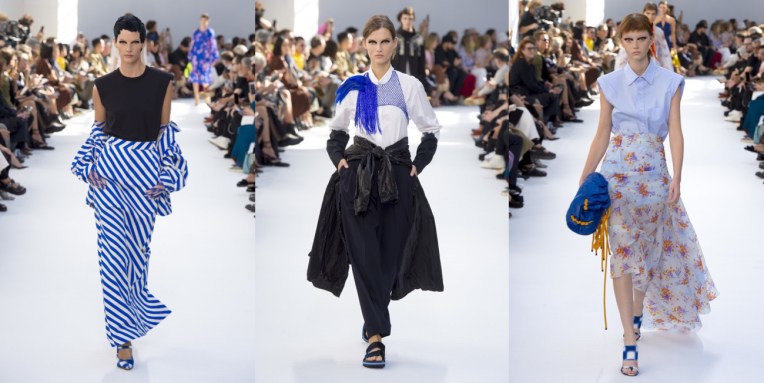
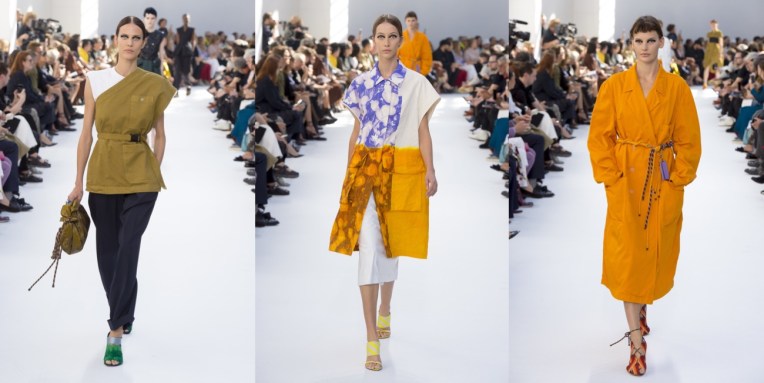
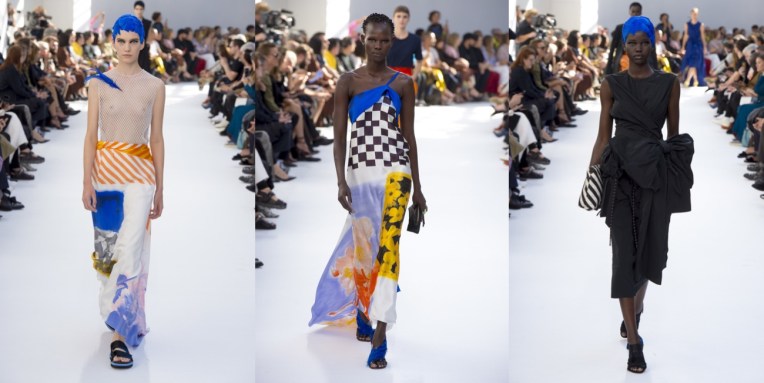
“A gesture of couture, but not in a retro way—the way she stands, holds her bag, all these things,” is how Dries Van Noten explained the modern elegance he presented in his spring-summer 2019 collection. A sheer top with yellow sequins that from distance looked like canary feathers; impressive, beaded mesh work that topped white, crisp shirts; evening-wear that looked like patched out of silk foulards. The Belgian designer as well played with draping, ending up with a grown-up offer of chic business-wear. Some sort of street attitude was delivered in form of colourful, PVC coats. This was Van Noten’s best collection since his much celebrated 100th show – all the garments, playful and all, looked like they are absolutely ready to be worn on the daily basis. Well, maybe the colourful feather headdresses would be a hard bit to repeat at home. But on the runway, it looked sublime.

Collage by Edward Kanarecki.